The jellyfish tattoo is one of those pieces that hits different depending on the person wearing it. On the surface it looks ethereal, almost dreamy. But the meaning behind it is grounded: grace under pressure, going with the flow without being a pushover, surviving on your own terms.
People gravitate toward jellyfish ink because the creature itself is genuinely fascinating. No brain, no heart, no bones, and yet it’s been drifting through oceans for over 500 million years. That kind of quiet resilience reads. If you’re drawn to this piece, you’re probably drawn to the idea of moving through life without forcing it.
Core Symbolism: What a Jellyfish Tattoo Actually Means
The most common meaning is adaptability. Jellyfish don’t fight the current, they move with it, and they thrive. That translates into a tattoo about going with the flow, trusting the process, not white-knuckling every situation. A lot of people getting this piece are coming out of a rough stretch and choosing to stop resisting.
The second big thread is self-protection. Jellyfish are peaceful to look at but they sting. That duality, beauty plus defense, resonates with people who’ve had to build walls after being hurt. It also carries meanings of mystery, intuition, and surviving in deep, uncertain waters. All of that tracks with why it’s stayed popular well past trend cycles.
Cultural and Historical Context
The animal with no brain, no heart, and 500 million years of survival, that's the energy.
In Japanese culture, jellyfish carry specific weight. The Japanese word ‘kurage’ is associated with formlessness and adaptability, values that tie into Buddhist ideas about impermanence and going with the flow of life rather than clinging to fixed outcomes. Japanese tattoo traditions have depicted ocean creatures for centuries, and jellyfish fit naturally into that visual language, especially in tebori or traditional irezumi-influenced work.
In broader Asian symbolism, jellyfish are sometimes linked to good luck and long life because of how long the species has existed. In Western contexts, the meaning is more personal and psychological, centered on mental health, resilience, and emotional intelligence. There’s no single fixed mythology around jellyfish tattoos, which honestly gives wearers more room to make the meaning their own.
Popular Design Variations
Neo-traditional jellyfish tattoos are huge right now. Bold outlines, saturated jewel tones, thick tentacles with clean shading. They read from across the room and hold up through the years. Traditional American style is less common but works well in a sleeve or as a standalone statement with a solid black outline and flat color fill.
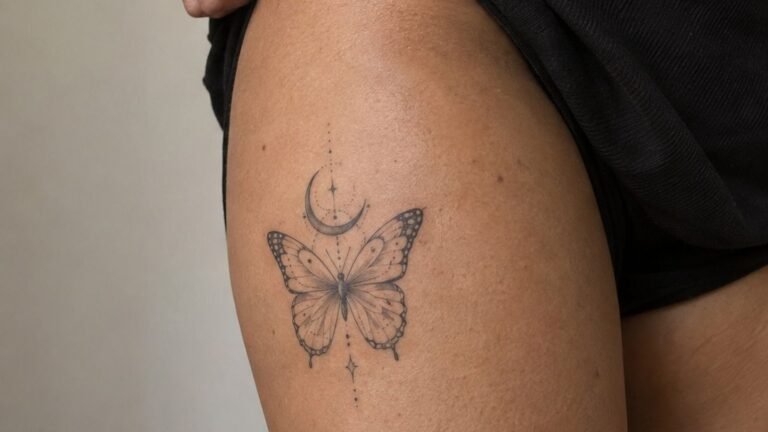
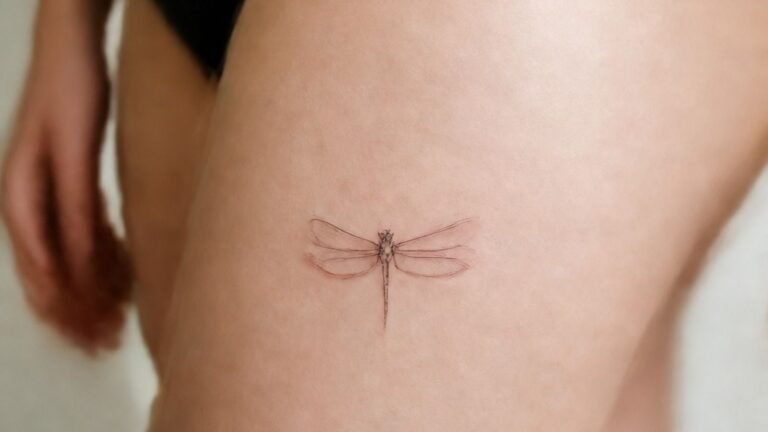
Fine line jellyfish are the other major camp. Intricate stippling, delicate tentacle work, sometimes watercolor washes bleeding out from the bell. These look stunning fresh but require a skilled artist who knows how fine line heals. Tiny crispy lines in low-wear spots like the forearm or upper back hold better than the same work crammed onto a wrist or ankle where friction is constant.
Color vs Black and Grey
Color jellyfish tattoos pop hard. Bioluminescent blues, purples, and pinks are the go-to palette because they mirror what the creature actually looks like in deep water. A skilled artist can whip shade the tentacles to give them that translucent, glowing quality. On lighter skin tones, saturated violets and teals hit immediately. On deeper skin, you want bold pigments and strong contrast rather than pastels that’ll fade into the skin.
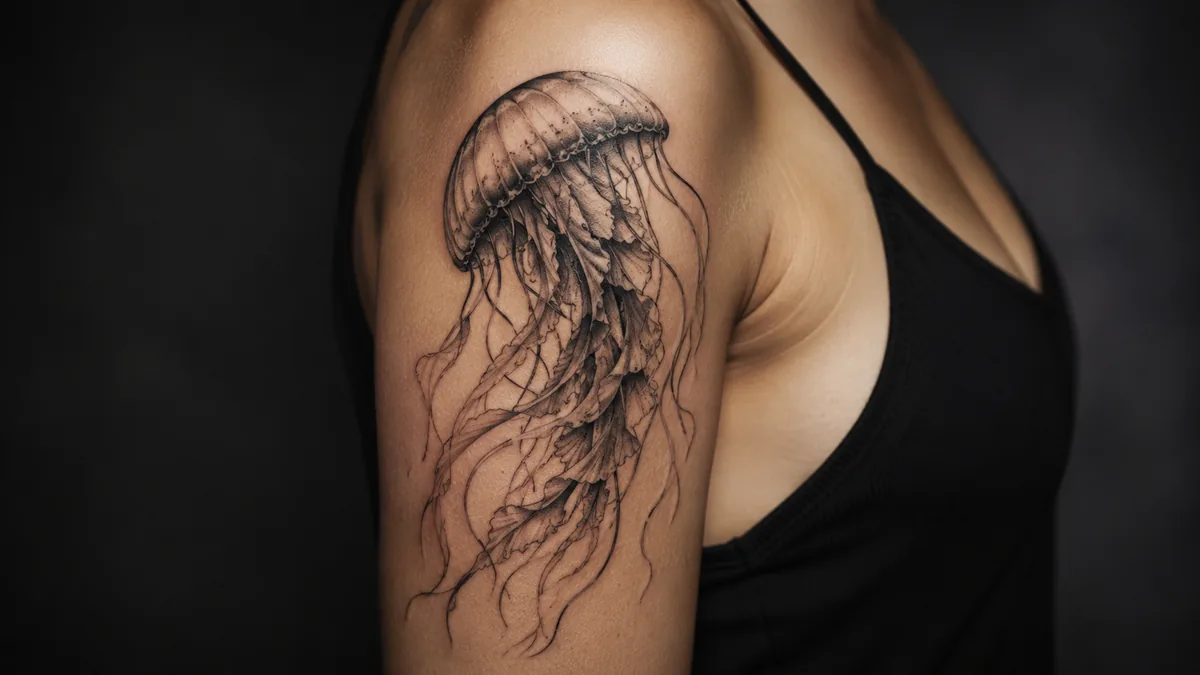
Black and grey jellyfish are just as strong if not stronger in some ways. The bell translates well into grey wash, and the tentacles become flowing ribbons of shaded detail. This style reads more moody and introspective, which fits the deeper symbolic meanings around mystery and emotional depth. It also ages more predictably than color work, which matters if you’re planning a big piece or a sleeve.
Best Placements and How It Ages
The thigh is the best real estate for a jellyfish. You get room for the bell and a long vertical drop for the tentacles, the composition works naturally, and the area is low-wear with consistent skin tone for great healing. The upper arm and outer forearm are solid second choices. Back pieces let you go big and really stretch the tentacles out, which looks incredible but costs more time in the chair.
Ribs and sternum are popular but spicy. Expect the session to be a grind and the heal to take attention. Fine line jellyfish on the wrist or ankle look great fresh but blowout risk is real on bony, high-movement spots. Bold will hold anywhere. If your artist does thick outlines and solid shading, the piece stays legible for decades. If it’s all hairlines and negative space, prioritize low-wear, low-movement placement or plan for touch-ups.
Who Gets Jellyfish Tattoos and How to Make It Personal
This piece attracts a wide range of people. Surfers and ocean lovers get it as a straight-up tribute to the sea. Folks in recovery or coming through anxiety or depression get it for the resilience and flow symbolism. Creatives and free spirits are drawn to the visual freedom, there’s no rigid form to a jellyfish so the design can breathe and move however the artist and client want it to.
To make it personal, talk to your artist about what specific meaning you’re bringing to it. Want to add a birth flower twisted into the tentacles? A date worked into the bell? A specific color that means something to you? All of that is fair game. The jellyfish silhouette is flexible enough to carry extra elements without getting cluttered. Bring reference, be honest about placement, and let a good artist build something that actually fits your body rather than just copying flash.