The bumble bee tattoo punches way above its size. Small insect, big meaning. People get stung by the idea of it because the bee carries real symbolism that lines up with how they see themselves or what they’ve pushed through.
the bumble bee stands for hard work, community, and the kind of stubborn persistence that defies logic. Aerodynamically, the bee shouldn’t be able to fly. It does anyway. That’s not a marketing line. That’s why people get this tattoo.
Core Symbolism: What the Bumble Bee Actually Means
The bumble bee tattoo carries a tight cluster of meanings: industriousness, loyalty, fertility, and resilience. These aren’t invented. Bees have built this symbolic weight across centuries because of what they actually do. They work constantly, they protect their colony, and they die if they sting you, which reads as sacrifice. That hits different for a lot of people.
The other big one is the idea of impossible things getting done anyway. The bumble bee’s body-to-wing ratio should make flight impossible by basic aerodynamics. People latch onto that hard, especially survivors of illness, burnout, grief, or addiction. The bee becomes a shorthand for ‘I kept going when I shouldn’t have been able to.’
Historical and Cultural Background
Built to be told it can't fly, it flies anyway.
Bees have carried weight across real cultures for thousands of years. In ancient Egypt, the bee was a royal symbol tied to the pharaohs of Lower Egypt. Napoleon chose the bee as his imperial emblem, favoring it over the fleur-de-lis as a symbol of the French Empire’s industry and organized power. Celtic traditions associated bees with hidden wisdom and the boundary between the living and spirit worlds.
In Greek mythology, bees were linked to the Muses and to Demeter, the goddess of harvest and fertility. Honey itself was considered sacred, even connected to the dead and the afterlife. None of this is made up. These associations filtered into folk symbolism over time and feed into the tattoo’s modern meaning, even when the person getting it has no idea about the historical layer.
Who Gets Bumble Bee Tattoos and Why
A lot of women get this tattoo, and there’s a reason for that. The bumble bee colony is matriarchal. The queen runs everything. Workers are female. The social structure centers female labor and leadership, which makes it a natural fit for women who want something that signals strength without spelling it out in block letters.
That said, this isn’t strictly a feminine tattoo. Athletes get it for the work ethic angle. Teachers, nurses, and community workers connect to the collective loyalty piece. Manchester, England has deep cultural ties to the worker bee as a city symbol after the Industrial Revolution, so you’ll see UK-connected people wearing it as identity ink. And plenty of people just survived something hard and want the bee on their skin as a permanent reminder.
Design Variations: Realistic, Traditional, and Fine Line
The traditional American style bumble bee is a classic. Bold outlines, saturated yellow and black, maybe a banner underneath. It reads clean from across the room and bold will hold over time, which is exactly what you want on a design with that much yellow. Yellow notoriously fades faster than darker pigments, so solid black linework carrying the design matters a lot here.
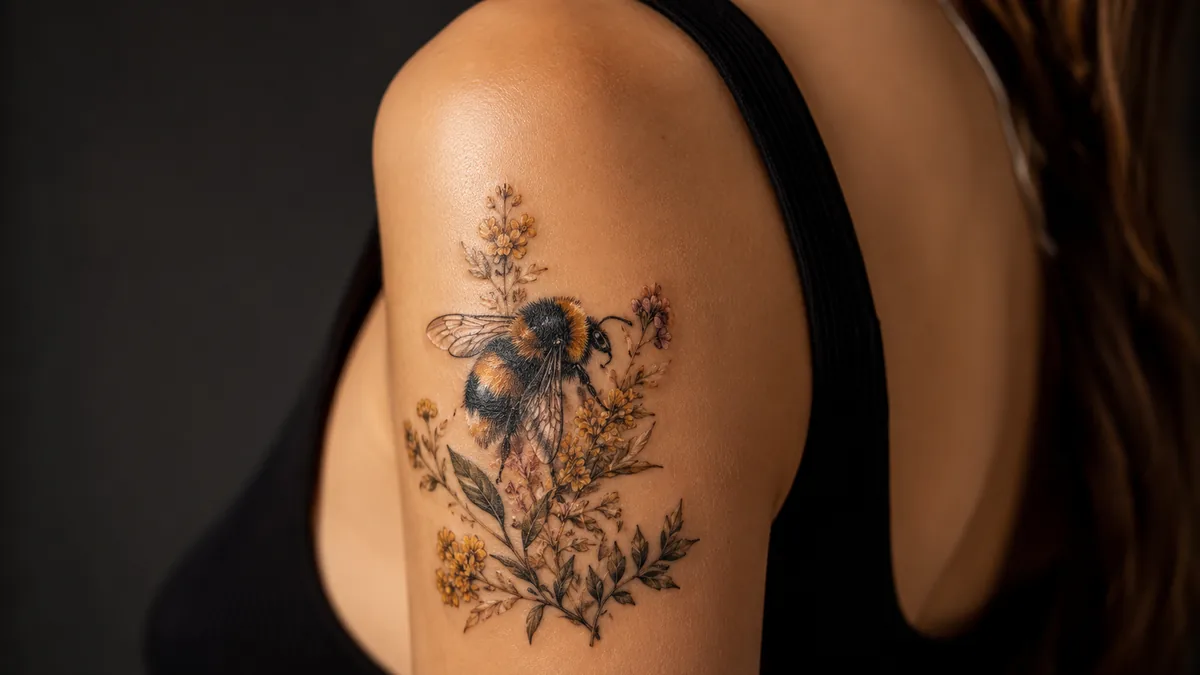
Realistic bumble bees with fine line detail are extremely popular right now. Crispy linework, subtle whip shade on the wings, maybe some botanical elements around it like lavender or clover. These look stunning fresh. The tradeoff is they require solid placement and a skilled hand to age well. Neo-traditional is a good middle ground, giving you structure without going fully old-school. Watercolor-style bees exist, but that style blurs and fades hard, especially in high-wear zones.
Color vs. Black and Grey
Color bees pop immediately. Saturated yellow and black with maybe some orange-gold shading gives you maximum visual impact. The risk is yellows and lighter colors fade faster, especially with sun exposure. If you’re going color, commit to a skilled artist who knows how to pack pigment properly and plan for touch-ups every few years depending on placement.
Black and grey bumble bees are underrated. A well-executed B&G bee with detailed wing texture and soft shading can look just as rich without the fade anxiety. Micro-realistic black and grey bees with fine line wings are especially solid for placement on softer skin areas like the inner arm or ribcage where color saturation tends to be inconsistent. Both approaches work, but your artist’s strength in each style matters more than the style itself.
Placement: Where It Works and How It Ages
Bumble bees are versatile for size, which makes placement flexible. Forearm, upper arm, and outer thigh are low-wear, relatively flat zones that hold detail well over time. The wrist, ankle, and hand are high-wear and high-sun-exposure spots. Fine line bees in those areas will spread and soften faster. If you’re set on wrist or hand placement, go bolder than you think you need to.
Behind the ear, ribcage, and sternum are popular spots for smaller bees, but they’re spicy for pain and tricky to execute. The curved surface behind the ear distorts fine detail, and ribs are notoriously rough to sit for. Inner bicep and shoulder blade are reliable middle-ground options, good surface, manageable pain, and easy to hide or show depending on what you’re wearing. Wherever you put it, size it to the placement, not the other way around.
Adding Personal Meaning: Flowers, Text, and Context
The bumble bee plays well with botanical elements. Lavender, wildflowers, clover, and honeycomb are all common pairings that reinforce the natural, industrious, or fertility angle. Roses next to a bee add a beauty-and-danger read. Sunflowers push toward the joy-and-optimism direction. If you want something more grief-related, a single bee with a specific birth flower or initials underneath is clean and readable without being heavy-handed.
Text is another route. A short quote, a date, or a single word underneath a well-placed bee can anchor the meaning without over-explaining. Keep it short. Long quotes tattooed under small subjects look cluttered and age poorly as letterforms spread. If you’re designing a sleeve or a larger piece, the bee can anchor a full nature scene or a memorial composition. Think about what story the bee is part of, not just the bee itself.