A panther tattoo usually means strength, courage, protection, silent power and a graceful, controlled kind of confidence. The black panther reads as a guardian that moves in the dark, which is why it works for people who want power without looking loud.
Quick answer: A panther tattoo means strength, courage, protection and quiet power, with a strong streak of grace and femininity. Old-school crawling panthers lean aggressive and nostalgic; realism and neo-traditional panthers lean personal and totemic. Black and grey suits the night symbolism; color suits old-school flash.
What a Panther Tattoo Actually Means
The panther is a solitary hunter, so the core meaning is self-reliant strength. It carries courage and personal power, but the kind that does not need to announce itself. People read it as a guardian symbol, a protector of family or territory that watches your back.
There is also a softer side that often gets missed. The same grace and muscle that make the panther dangerous also make it a symbol of femininity, sensuality and maternal protection. A mother panther defending her cubs is as much a part of the meaning as the predator stalking through the dark.
Because the black coat ties the animal to night, shadow and the subconscious, the panther also works as a symbol of transformation. It can stand for moving through fear, facing the dark side of yourself and coming out steadier. That is the version people pick when the tattoo marks a hard chapter they survived.
How Style Changes the Meaning
Old-School Crawling Panther
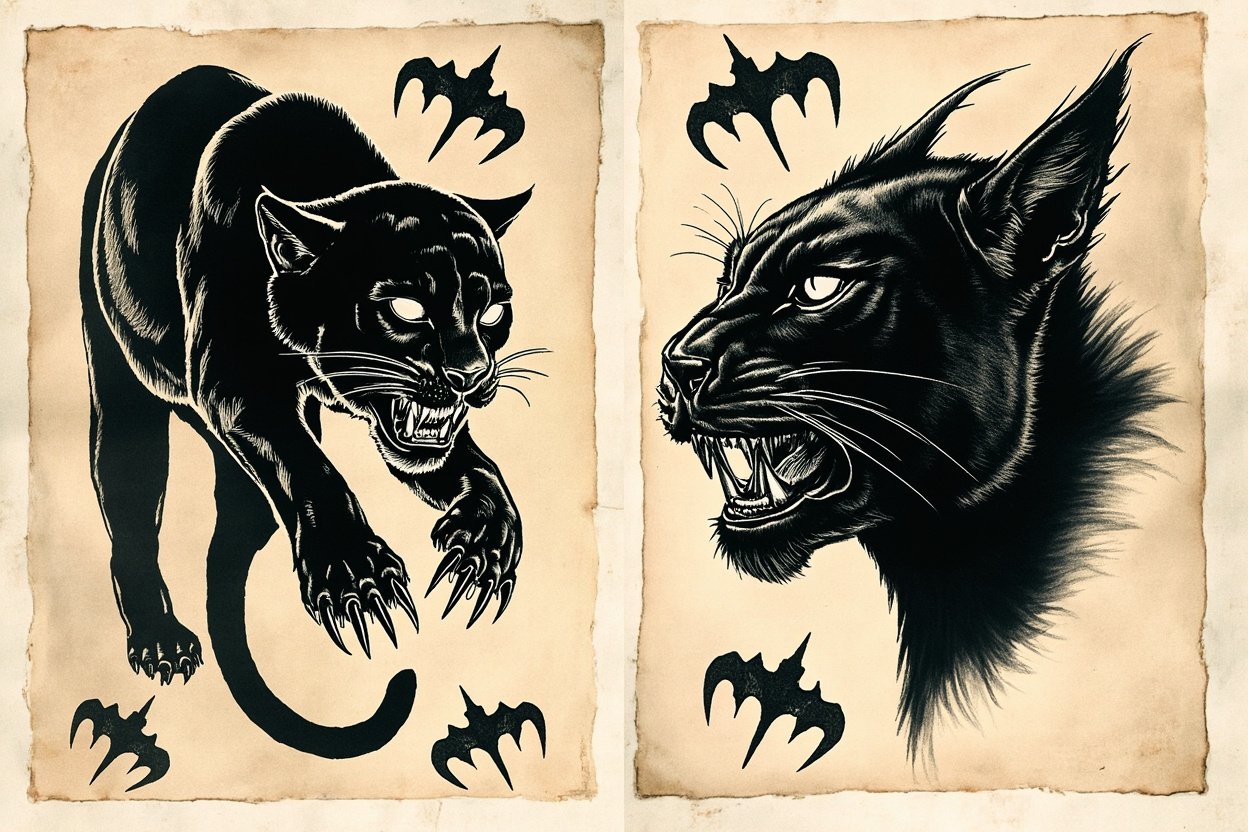
The crawling panther is one of the great classics of American traditional tattooing. It is usually drawn in profile, back arched, claws out and mouth open, climbing up the limb as if it is coming for you. This design emerged from shop flash culture, often linked to the early to mid-20th century, and became closely associated with the bold, graphic style that defined traditional American tattooing.
Visually it leans on heavy black outlines, very little shading and a tight, readable shape. The classic palette stays simple: solid black body, a red mouth, sometimes touches of yellow or green. That restraint is why these designs age so well. They do not depend on fine texture that blurs over the years.
Symbolically this version is the aggressive, warrior side of the panther. It reads as grit, resilience and old-school toughness, with a biker and sailor history baked in. If you want a nod to tattoo heritage and an image that looks built rather than precious, the crawling panther is the move.
Realistic Panther
Realistic panthers keep the strength and protection meaning but trade the shop-flash energy for a personal totem feel. A realistic panther leans on the eyes, the fur and the light, so the message becomes presence and quiet intensity rather than open attack.
The trade-off is space. Realism needs room to breathe. Shrink it onto a small forearm and the detail collapses into a dark shape. If you are set on a small panther, an old-school silhouette will serve you better than a miniature portrait. For black panther realism, ask your artist to leave the fur highlights unpigmented (bare skin) rather than packing in white ink, which muddies and blows out within two years.
Neo-Traditional Panther
Neo-traditional sits between old-school and realism. It keeps bold structure but adds richer color and decoration: flowers, a moon, a crown, jewels or other mystical cues. That is the lane people use to push the feminine, regal or witchy reading of the panther. It also holds up well at large size on a thigh, shoulder or full back.
The risk here is decoration drowning the animal. Too many ornamental elements and the panther becomes wallpaper instead of a presence. Keep the silhouette strong even when you add around it.
Color and Black and Grey
Black and Grey
Black and grey suits the night symbolism best. The panther already lives in shadow, so stripping out color reinforces that reading: transformation, the subconscious, moving through difficulty without spectacle. The danger is flat grey with no real contrast. A good artist builds depth through temperature shifts (cool black versus warm grey) and leaves skin breaks for the shine in the eyes or the catch on the fur.
Color
Color suits old-school flash. The classic crawling panther wants that red mouth, maybe green eyes or yellow accents. Neo-traditional panthers can go further: jewel tones, purple shadows, gold crowns. But going full-color jungle green or purple background on a panther head in old-school style breaks the flash aesthetic. Those non-traditional fill colors age into a muddy blob within a decade. Pick your palette with the style in mind, not just what looks good on the screen.
Placement and Practical Concerns
Where It Works
The chest gives a panther room to stretch across muscle, which suits the crawling pose. The thigh holds large neo-traditional or realistic pieces with space for surrounding detail. The forearm works for old-school crawling designs that wrap slightly, though you need to watch the body curve so the crawl does not read flat. The shoulder and upper arm are classic for both styles.
Where to Think Twice
Fingers are poor for realism. The detail collapses, the ink falls out, and the panther becomes a smudge. Ribs and spine carry high pain and awkward healing, plus the stretch and compression of the torso can distort a carefully rendered face over time. Hands are possible for bold old-school silhouettes but risky for anything with subtle shading.
Pain and Healing
Pain is moderate overall, higher on bone and thin skin. Ribs, spine, and hands will test you. Healing follows standard tattoo timelines: surface closure in two to four weeks, with the color and line settling over months. The long-term look depends more on aftercare and sun protection than on any magic healing window.
What to Remember
A panther tattoo is not one fixed symbol. The same animal reads as heritage flash, personal guardian, or night totem depending on how you draw it and where you place it. Old-school crawling panthers honor tattoo history and read tough. Realism and neo-traditional lean personal, mystical, or quietly intense. Black and grey deepens the shadow meaning; color serves the traditional or decorative reading.
The common thread is self-contained power. A panther does not hunt in a pack and does not need to announce itself. That is the quality people want on their skin: capable, watchful, not performing for anyone. Choose the style that matches which side of that you want to carry, and give it enough space to hold its shape for decades.
Frequently Asked Questions
What does a black panther tattoo mean?
Strength, protection, silent power, and grace. The black coat ties it to night and shadow, so it also carries transformation and facing fear without spectacle.
What is the difference between old-school and realistic panther tattoos?
Old-school crawling panthers use bold outlines, simple color, and read as tough heritage pieces. Realistic panthers focus on eyes, fur texture, and light, reading as personal totems or quiet intensity.
Where should I place a panther tattoo?
Chest, thigh, forearm, and shoulder work well. Avoid fingers for realism due to detail collapse, and think carefully about ribs and spine due to pain and long-term distortion.
Do panther tattoos age well?
Old-school panthers age best because they rely on strong outlines and simple shapes. Realism and heavy color need more space and careful aftercare to avoid blurring or muddying over time.