Bee tattoos can mean hard work, loyalty, community, sweetness, fertility, protection, or a small creature carrying more force than expected.
Quick answer: A bee tattoo usually means work ethic, community, loyalty, sweetness, or protection. It pairs naturally with flowers, honeycomb, fine line, blackwork, and small wrist or ankle placements.
Bee Tattoo Meaning meanings by design choice
Meaning is not only the symbol. It changes with style, placement, color, scale, and the story you bring to the appointment.
| Direction | Best use | Watch out for |
|---|---|---|
| Tiny bee | Small meaningful mark | Wing detail risk |
| Bee and flower | Nature and growth | Can feel cute |
| Honeycomb | Community and structure | Geometry matters |
| Bold black bee | Graphic insect symbol | Needs clear wings |
| Bee memorial | Sweet personal memory | Keep it specific |
How to make it work on real skin
Every bee tattoo is a quiet agreement: no sweetness without the work.
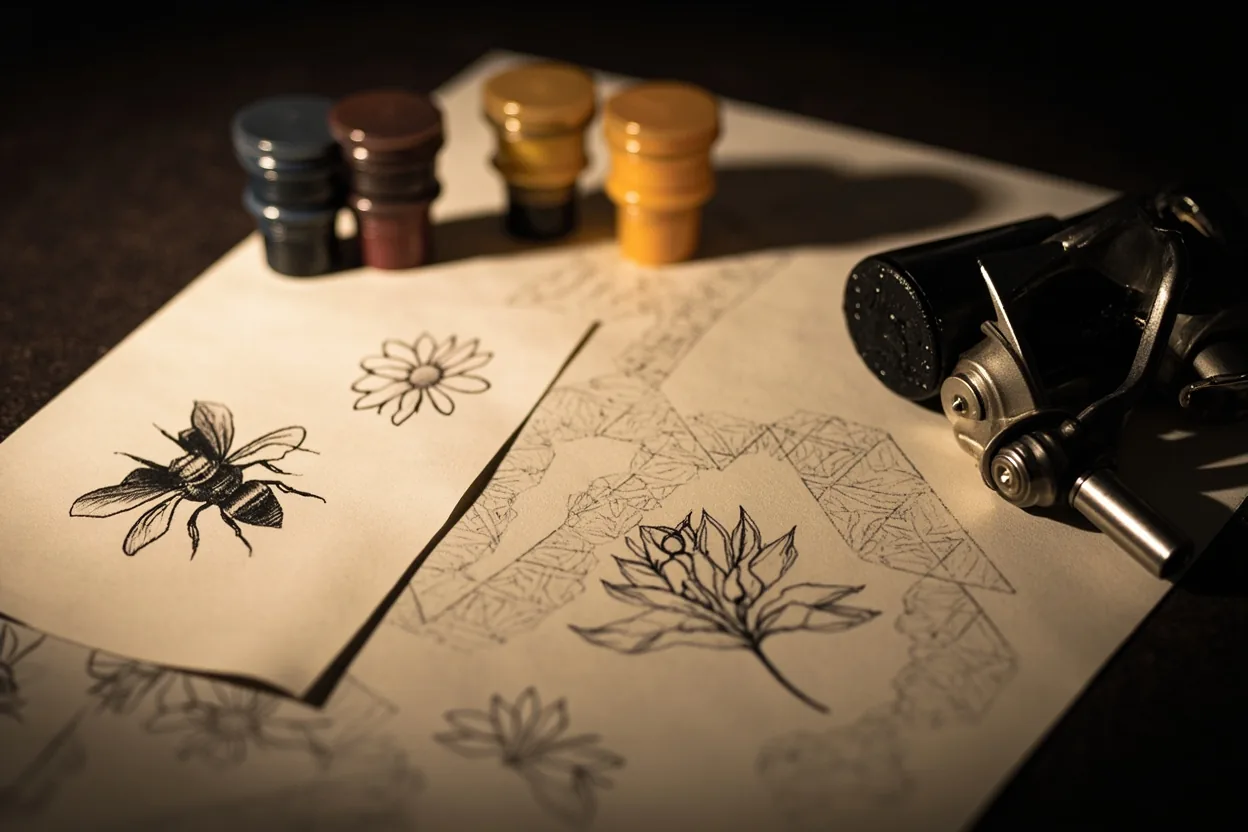
Bee tattoos work because the silhouette is clear. Wings, body stripes, and antennae need enough space to stay readable.
Pairing a bee with a birth flower or favorite flower can make it personal without needing words.
Bee Tattoo Meaning: Work, Community and Sweetness: style, scale, and aging
For this tattoo to hold up, the symbol needs a clean silhouette first. Detail can support the meaning, but it should not be the only reason the design works.
Ask for healed examples in a similar size and style. The fresh version should look good, but the healed version is what you will actually live with.
- Keep stripes simple.
- Use flowers only if they add meaning.
- Ask for healed small animal work.
- Avoid tiny wing texture.
Mistakes to avoid
Do not make the bee too small for the wings to read.
Do not add honeycomb behind everything if the tattoo is already busy.
What this symbol should say before it looks cool
The best bee tattoo meaning designs start with one clear meaning, then choose the style around it. If the meaning is protection, grief, rebirth, loyalty, love, or direction, the tattoo should make that readable through shape, placement, and restraint.
Compare the main variants first: Tiny bee, Bee and flower, Honeycomb, Bold black bee, and Bee memorial. Each version changes the story. A tiny symbol can feel private. A bold traditional version can feel public and declarative. A realistic version asks for more space and a better specialist.
| Reference to compare | What to inspect | Decision rule |
|---|---|---|
| Tiny bee | Small meaningful mark | Wing detail risk |
| Bee and flower | Nature and growth | Can feel cute |
| Honeycomb | Community and structure | Geometry matters |
| Bold black bee | Graphic insect symbol | Needs clear wings |
| Bee memorial | Sweet personal memory | Keep it specific |
Placement changes the meaning
Visible placements make the symbol part of how strangers read you. Private placements make it feel more like a reminder. Joint and hand placements add attitude, but they also add fading risk. Rib, inner arm, shoulder, back, and thigh placements give the artist more room to keep the symbol legible.
If the symbol has cultural, religious, prison, memorial, or mental-health associations, do not rely on the prettiest image. Ask what the symbol has meant historically and what it might signal outside your own circle.
How to make the design less generic
Add specificity with one detail, not five. A date, birth flower, direction, color choice, pose, or small secondary symbol can make the design yours. Too many additions usually weaken the meaning and make the tattoo harder to read.
Visual reference note: Bring one reference for meaning, one for style, and one for placement. Do not ask the artist to copy one tattoo exactly; ask them to build a version that fits your body and story.
Reader questions before you book
Can one symbol have different meanings?
Yes. Tattoo meaning changes by culture, style, color, placement, and personal context. The design should make your intended meaning easier to understand, not more confusing.
Should I add words to explain the meaning?
Only if the words matter on their own. A strong symbol usually does not need a label, and tiny lettering can age worse than the image.
What if the symbol is trendy?
Use trend as a starting point, then test whether the meaning still matters without the outfit, filter, or moodboard around it.
How do I make it personal without clutter?
Use one personal anchor: a date, flower, object, color, placement, or style choice. One precise cue beats a crowded collage.