
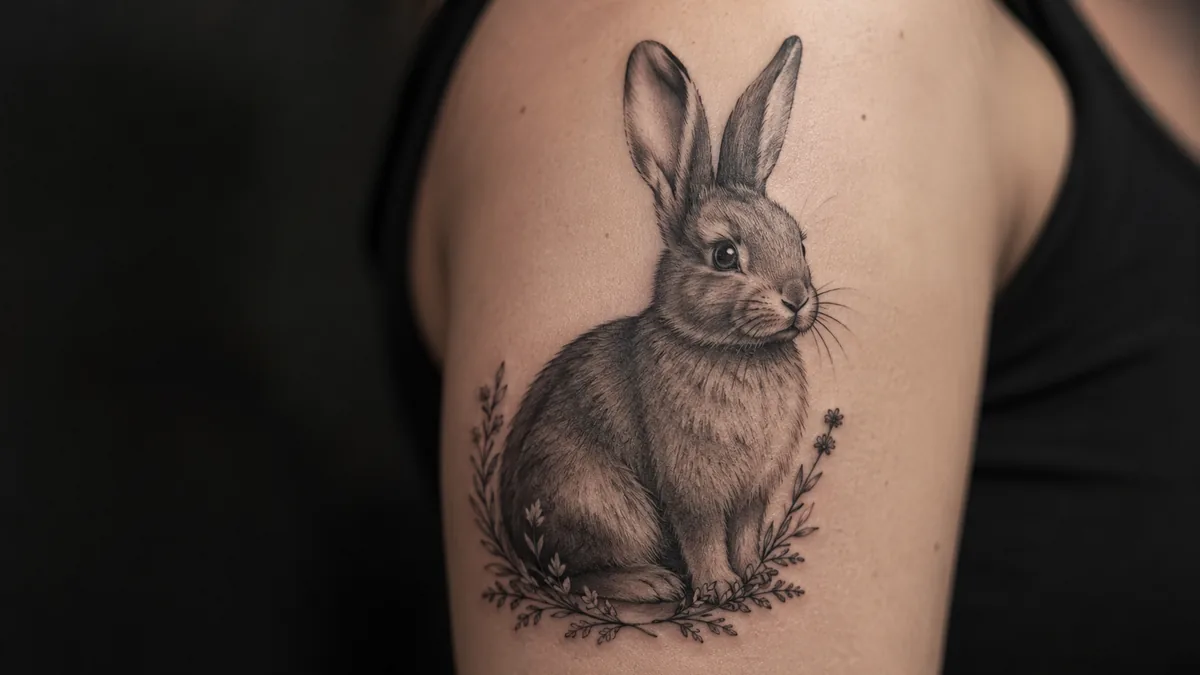
Bunnies don’t get enough credit. People think it’s a cute, soft choice, but the symbolism runs deep. Fertility, luck, speed, transformation, trickster energy, even the moon. A bunny tattoo can carry serious weight if you know what you’re putting on your body.
The rabbit has meant something to humans across cultures for thousands of years. That carries over into tattoo culture. Whether you want a delicate fine-line piece on your wrist or a bold traditional rabbit on your forearm, understanding what the image communicates helps you build something that actually means something.
Core Symbolism: What a Bunny Tattoo Actually Means
Rabbits are most commonly associated with fertility, abundance, and new beginnings. That comes from their biology, fast reproduction, constant movement, survival instincts. People getting a bunny tattoo around a new chapter in life, a new baby, or a major personal shift are tapping into that energy. It’s one of the most natural fits in tattoo symbolism.
Luck is the other big one. In Western culture, rabbit’s foot as a good luck charm is deeply rooted. A rabbit tattoo extends that into permanent territory. Some people add a four-leaf clover or dice to lean into the luck angle hard. Others keep it clean and let the rabbit speak for itself. Both work.
Cultural and Historical Background
Soft subject, serious meaning, the bunny holds more symbolism than most people expect.
In East Asian traditions, the rabbit sits on the moon. Chinese and Japanese folklore both feature a rabbit pounding rice cakes or medicine in the lunar palace. This is real mythology, not invented. Moon rabbit tattoos are a specific, intentional reference to that tradition, usually rendered in illustrative or Japanese woodblock-inspired styles with crescent moons and clouds.
In Native American storytelling, the rabbit is often a trickster figure, clever, resourceful, a survivor who outsmarts bigger opponents through wit rather than brute force. Celtic traditions associate the hare with transformation and the otherworld. In European folklore, hares tied to the spring equinox feed directly into the Easter rabbit symbol. These are distinct readings and the design you choose signals which one you’re referencing.
Rabbit vs. Hare: Does the Difference Matter?
In tattoo culture, most people use rabbit and hare interchangeably. But if you want to be precise, hares are wilder, more solitary, more associated with speed, madness, and lunar mythology. Think the March Hare from Alice in Wonderland, unhinged and electric. A jackrabbit or hare with long ears and a lean build reads differently than a round domestic bunny.
The domestic bunny reads warmer, softer, tied to home, childhood, and comfort. That’s a totally valid thing to put on your body. A lot of people tattoo a rabbit to honor a pet they lost. That’s real sentiment and it’s worth designing intentionally for it. A portrait-style piece in black and grey nails that memorial angle better than a graphic or cartoon style.
Popular Design Styles and Variations
Traditional American style gives you a bold, solid rabbit with thick outlines, limited color palette, and strong contrast. It holds up over decades because the lines are built to last. Neo-traditional adds dimension and decorative elements like florals or geometric framing without losing that bold structure. Both read well from across the room and age clean.
Fine line is huge for bunny tattoos right now. Delicate, detailed, single-needle work. It looks stunning fresh but needs a low-wear placement to survive. Illustrative and whimsy styles, think storybook rabbit in a forest or a geometric rabbit with mandala elements, are popular for people who want something more personal and narrative-driven. Japanese style with solid blacks and clean color saturation is another strong option, especially for the moon rabbit concept.
Color vs. Black and Grey
Black and grey is the go-to for most rabbit tattoos, especially fine line and realism. A grey-washed rabbit with soft whip shading has a timeless quality. It heals predictably and ages well on most skin tones. Memorial pieces almost always work better in black and grey because the softness fits the emotion.
Color opens up a different conversation. A white rabbit tattooed in color is technically difficult because white ink alone doesn’t read well on most skin. You need a light background or negative space technique. Saturated color in traditional style, red background, black outline, bold fills, hits completely differently and carries a louder, more graphic energy. Know what mood you’re building and choose your palette around that, not the other way around.
Best Placements and How Rabbit Tattoos Age
The inner forearm, upper arm, and thigh are solid placements for rabbit tattoos. Medium to large pieces need that real estate to breathe. Fine line work on the wrist or ankle looks great but that’s a high-wear zone. Expect fading faster and plan for a touch-up. Ribs and sternum are spicy and give you a larger canvas but the pain is real and fine line can blowout slightly on soft tissue.
Bold traditional rabbit tattoos on the forearm or calf age the best of anything in this subject. The thick lines hold their shape for decades. A small fine-line rabbit behind the ear or on a finger looks clean fresh but fades and blurs fast on those high-friction zones. Your artist should tell you this upfront. If they don’t mention aging by placement, ask.
Who Gets Bunny Tattoos and How to Make Yours Personal
People drawn to rabbit tattoos tend to fall into a few camps. Parents tattooing something tied to a child, people marking a new life chapter, collectors who love the folklore angle, and people memorializing a pet. It’s a versatile subject with enough symbolic range that it doesn’t box you in.
Making it personal comes down to your reference choices. Adding a birth flower, a specific moon phase, a name, or a scene that connects to your story transforms a rabbit into something no one else has. Talk to your artist about that before you pull a reference off Pinterest. A good artist will help you build the concept rather than just copy an image. That’s the difference between a tattoo you wear and one you love.









