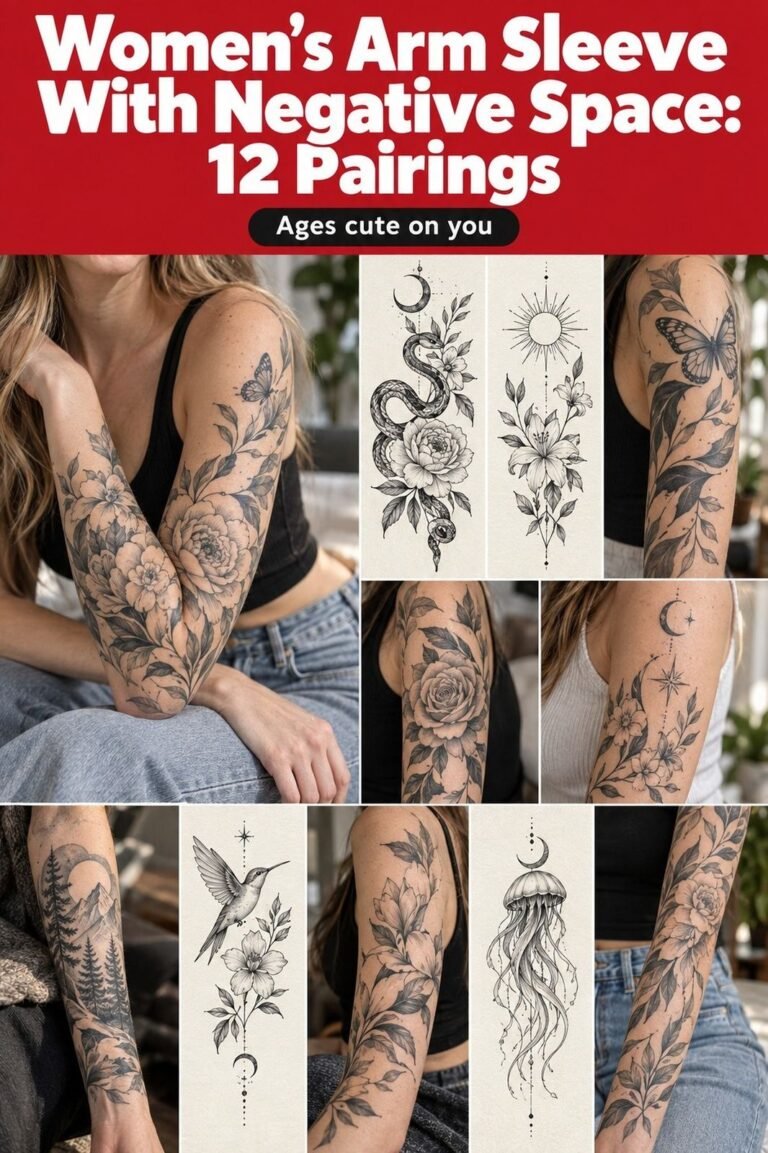
Back tattoos give a woman more uninterrupted skin than almost any other placement, which is exactly why they reward planning. The spine, the shoulder blades and the upper back each handle pain, movement and aging differently, so the smart move is to match the design to the zone rather than force a drawing onto the wrong stretch of back.
Quick answer: Back tattoos for women work best when the design follows the anatomy: ornamental and floral pieces run cleanly down the spine, mirrored or single motifs sit well on the shoulder blades, and the central upper back is the most comfortable, tattoo-friendly zone. Pain climbs sharply over the spine, shoulder blade bone and lower back; the cushioned mid and outer upper back stays moderate.
How much back tattoos actually hurt, zone by zone
The back is not one pain level. It is a map. The needle hurts most where skin sits thin over bone and where nerves run close to the surface, and it eases off wherever muscle gives you a cushion. Knowing the difference is the difference between sitting through a session calmly and tapping out at hour three.
Directly over the spine is one of the sharper areas on the whole body, commonly rated around a 7 to 8 out of 10, because the skin is thin over the vertebrae and the bone vibration travels. The lower spine and the area near the tailbone can spike higher, toward an 8 to 9, with a buzzing, fatiguing feeling that builds over a long sit. The shoulder blade sits in the same rough range when the needle passes right over the bone edge, but the pain drops to a manageable 4 to 6 as soon as the design moves a little off the bone and onto surrounding muscle.
The kindest zone is the central upper back between the shoulder blades, away from the spine. There is real muscle and tissue cushioning there, so most people describe it as moderate, often a 4 to 6, which is why it earns the label tattoo-friendly. The catch is that anything creeping back toward the spine climbs again as the tissue thins out. A full back piece, then, feels like a tour: outer mid-back and upper back muscle stay comfortable, while spine, scapula and lower back hit the high notes.
| Back zone | Typical pain (1-10) | What it feels like | Best suited to |
|---|---|---|---|
| Spine (upper) | 6-8 | Sharp, bony vibration | Vertical ornamental, fine-line botanical |
| Lower spine / tailbone | 8-9 | Buzzing, fatiguing | Short script, small ornamental finials |
| Shoulder blade (on bone) | 7-8 | Scratchy over bone edge | Mandala, mirrored florals, wings |
| Central upper back | 4-6 | Pressure and burn | Large florals, statement pieces |
| Outer mid-back | 3-5 | Most comfortable | Full back background, filler |
One honest caveat: placement is only half the story. A tired nervous system, the day of your cycle, the artist’s machine setup and if you are getting fine lines or heavy color packing can all shift the experience more than the map suggests. Long sessions also turn moderate zones sharp by the third or fourth hour, so for a big piece, plan for multiple sittings rather than one heroic marathon.
Designing with the back, not against it
The back is the one placement where you can go big and still keep it entirely yours.
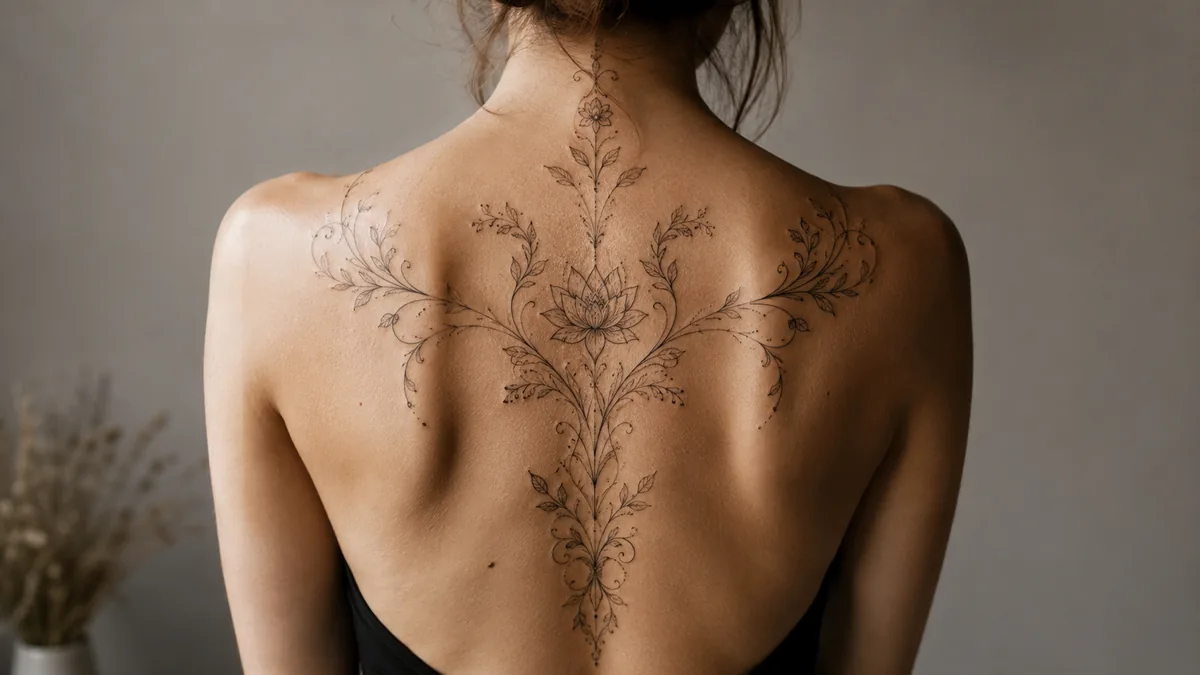
The reason back tattoos either look effortless or look stuck on comes down to one thing: whether the design respects the body underneath it. The spine is a natural axis of symmetry, perfect for anything vertical and repeating. The shoulder blades are two nearly flat frames that beg for mirrored or self-contained motifs. The sides of the back curve, which suits stems, snakes and lines that hug the silhouette instead of cutting across it.
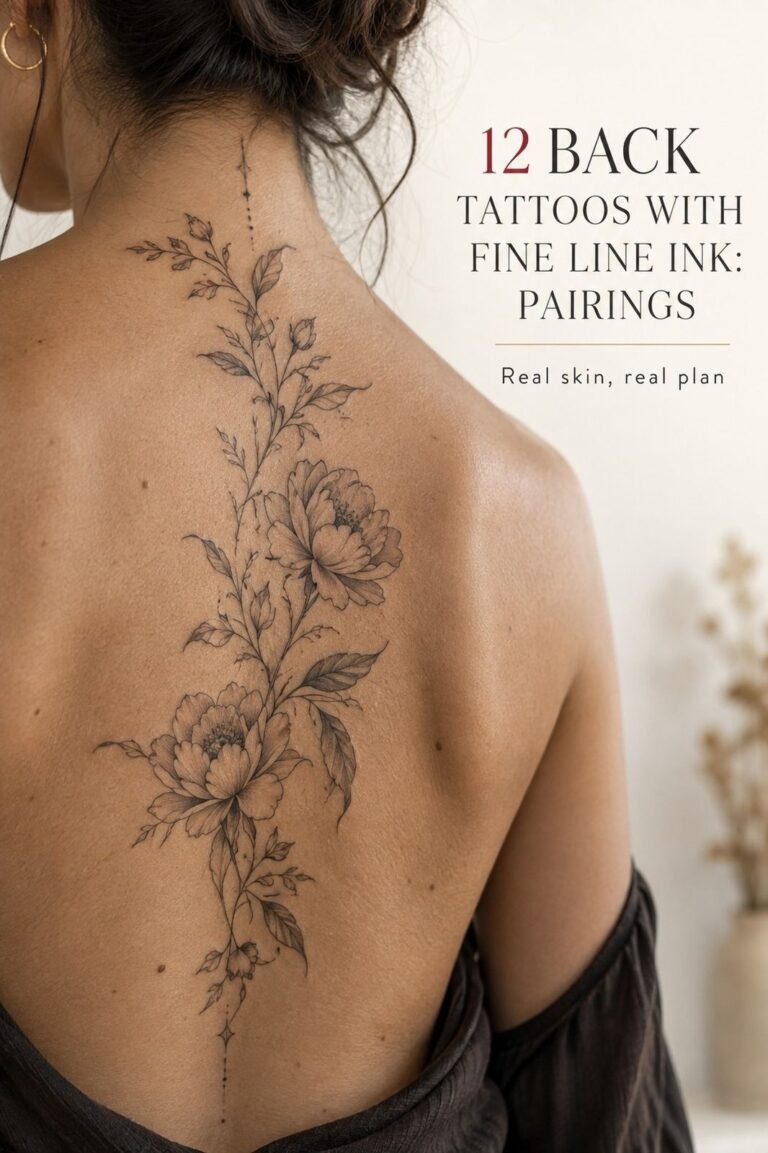
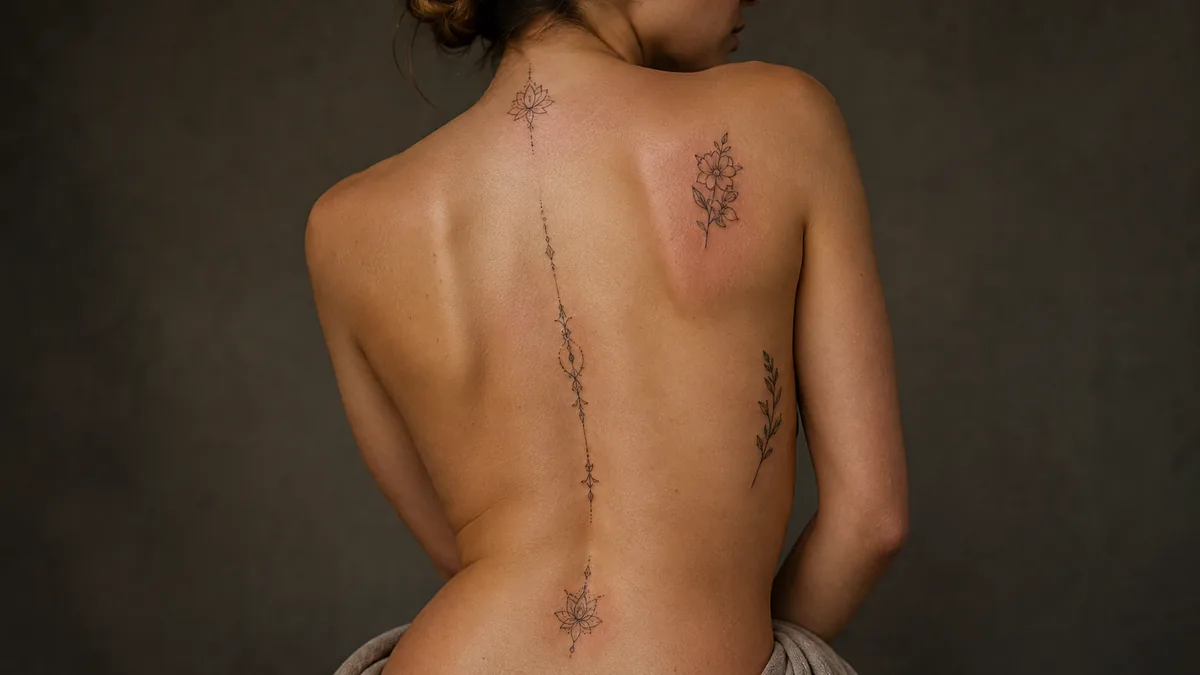
A spine piece works when it reads as a single column. Arabesques, lace, dotwork or a chain of small ornaments aligned on the vertebrae will always look more intentional than a busy drawing that wanders off the centerline. A useful trick is to start narrow between the shoulder blades and let the design widen slightly toward the mid-back, which follows the body and visually slims the waist. For something current, fine-line ornamental with a touch of dotwork or a single accent color keeps the result modern and airy.
Floral and botanical work is the most popular request on the back, and it scales beautifully. On the spine, think a vertical stem, a sakura branch or a chain of small blooms. On a shoulder blade, a single off-center bouquet that respects the triangular shape of the bone reads cleaner than two stiff mirrored copies. For a full back, a botanical composition that flows from the shoulders down to the lower back, built around a light central stem with branches reaching outward, holds together far better than scattered elements that leave one side looking like a stain.
Mandalas and sacred geometry love the flat upper back, radiating out like a rosette. Wings sit most believably on the shoulder blades, because anatomically that is where wings belong, and a snake reads best when its body literally traces the line of the spine. If you are still narrowing down the look, the placement-led idea gallery is a good place to see how the same motif changes from spine to scapula, and a dedicated spine tattoo ideas roundup covers the vertical column in more depth.
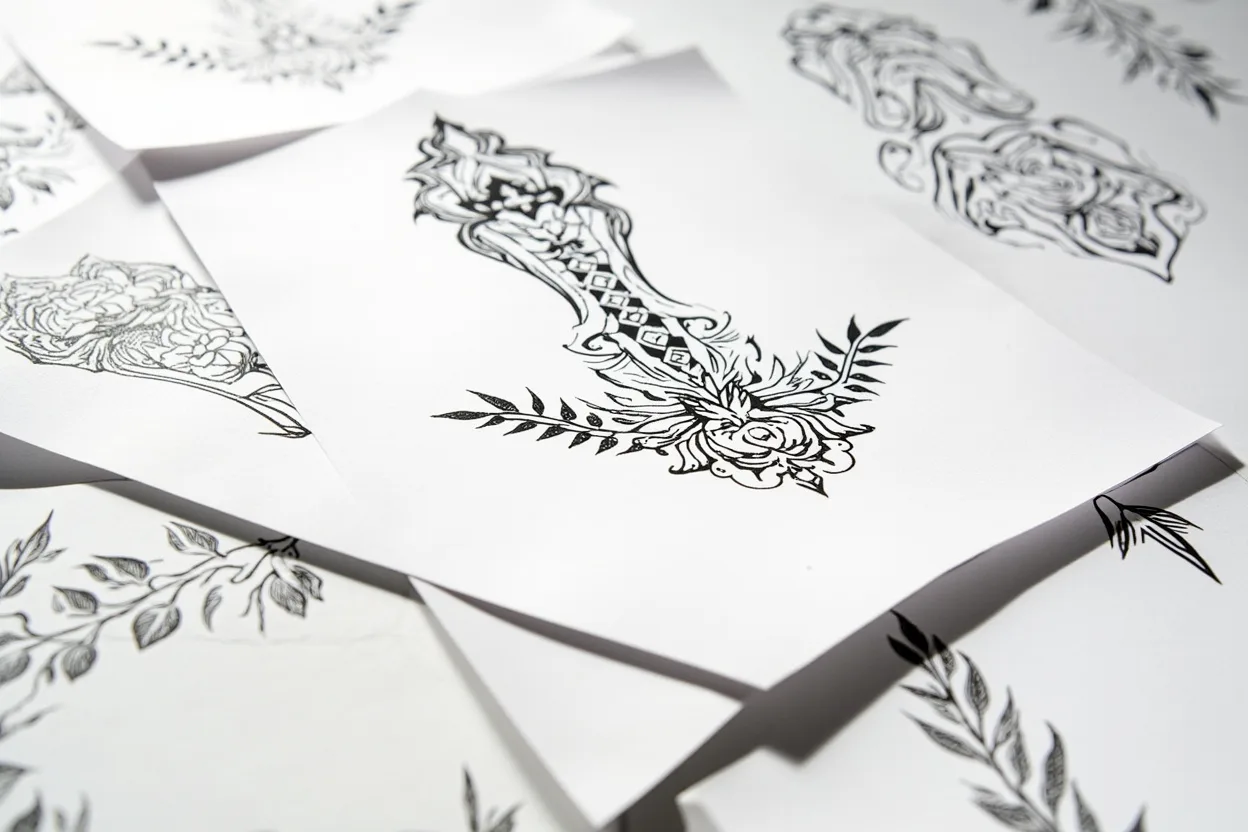
Artist brief: Ask your artist to draw the stencil straight onto your back and check it in a mirror before any ink. The spine should look centered standing and sitting, and a shoulder-blade piece should still read when you raise your arm. Symmetry on paper means nothing if it skews on a moving body.
Style choices that flatter the female back
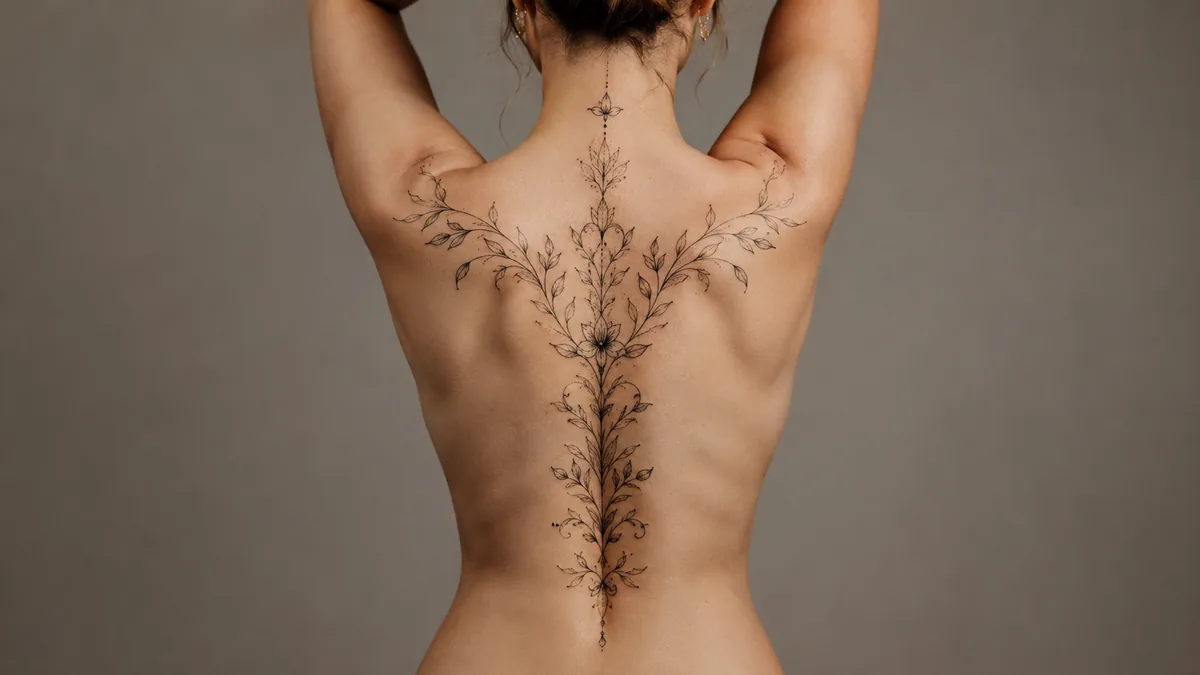
Fine-line and single-needle work has carried the back-tattoo trend for women, and for good reason: thin, elegant linework follows the long lines of the spine and the curve of the ribs without overwhelming them. It is delicate, but delicate has a cost. Ultra-fine detail and very pale shading diffuse over the years, so a hair-thin spine piece needs an artist who knows how to lay a line that will still be there in a decade.
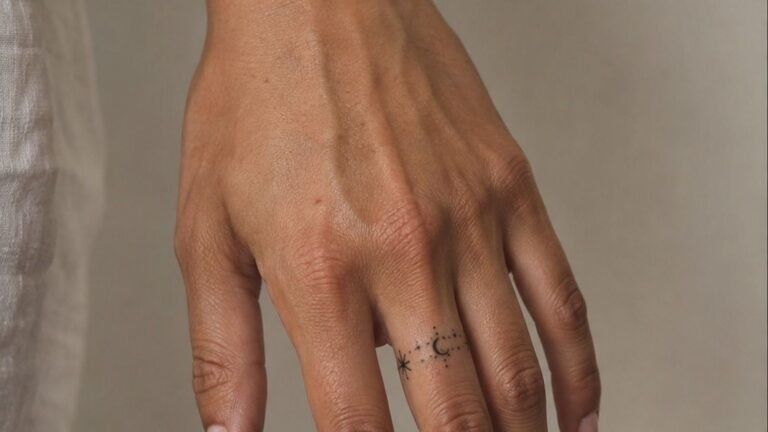
Ornamental and lace styles are the opposite bet. They are built from repeating shapes and negative space, which the back has in abundance, and they hold up well because the structure stays readable even as the skin ages. Blackwork and bold florals give you weight and longevity, which matters for a statement upper-back piece meant to be seen. If your taste runs quieter, a small ornamental finial at the base of the neck or a short row of fine-line blooms can do a lot without committing to a full panel; the small and minimalist tattoo guide covers how to keep tiny designs from blurring.
Whatever style you choose, two rules protect the result. Bold, slightly larger linework and solid shapes age better than micro-detail and pastel washes. And the back is forgiving on longevity compared with hands, neck or knuckles, because the skin is thicker and rarely abraded day to day. The one thing that will undo all of it is sun. UV breaks down pigment faster than anything else, so consistent high-SPF cover is not optional if you want the piece to stay crisp.
Healing a back tattoo when you can’t see it
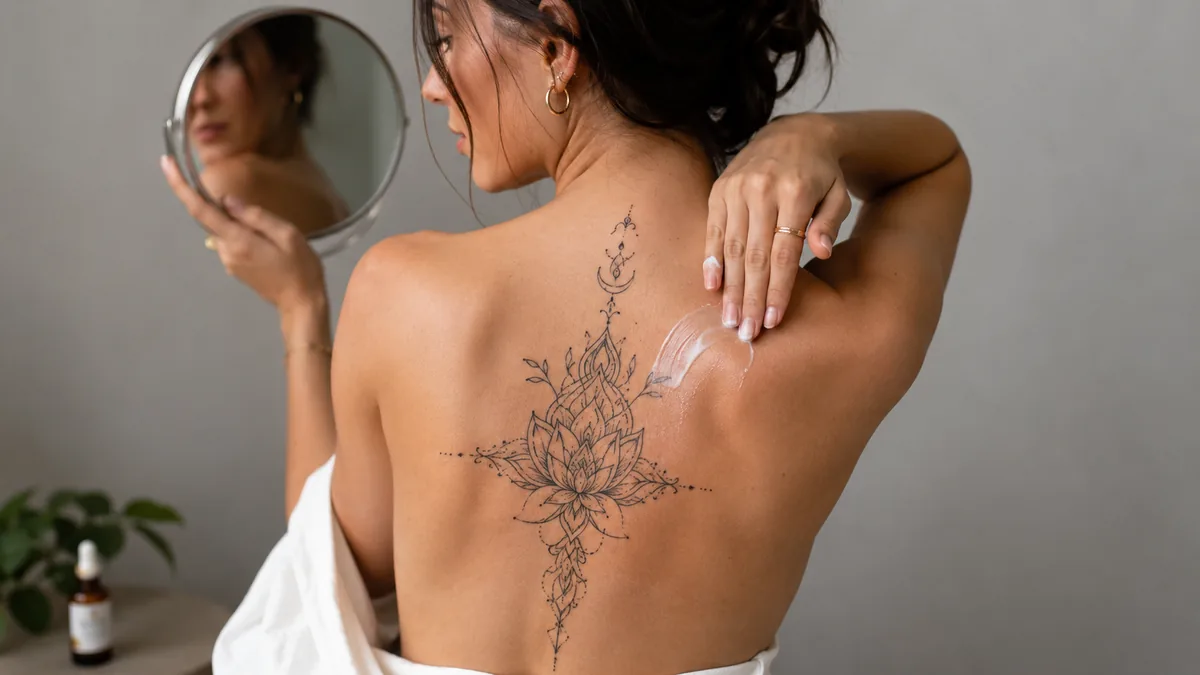
The back has one stubborn problem: you cannot reach it or watch it heal. That makes the first 48 hours, and a second pair of hands, more important than usual. Clean it, follow your artist’s wrapping advice and use a thin layer of the right ointment rather than a thick smother. The early days decide whether you keep your pigment or lose it to heavy scabbing.
Sleep is the quiet saboteur of a back tattoo. Most people sleep on their back, and pressure plus friction against the sheets will pull early scabs and irritate fresh ink. Switch to your side, prop yourself with pillows, and keep your bedding clean and your fabrics soft and loose. Heavy workouts come with the same warning: sweat, stretching and a backpack rubbing across a healing piece will blur fine lines, so keep activity light until the top layer has closed. The full routine, including how long to wait before the gym, sits in the tattoo aftercare guide.
Planning a piece you won’t regret
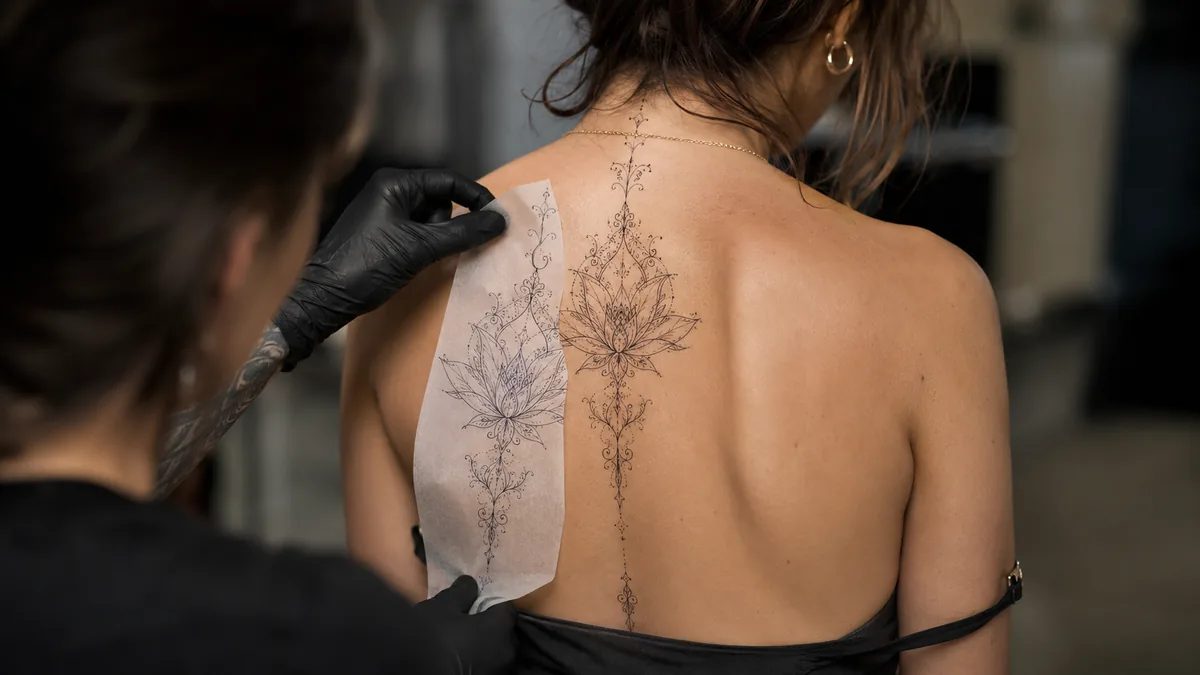
A back tattoo for a woman is rarely a walk-in decision, and it should not be. The bigger the canvas, the more a session plan, a budget and a clear emotional direction pay off. Decide first whether you want a discreet vertical spine piece, a single shoulder-blade motif or a full back project that grows over several sittings, because each one has a different pain curve, cost and timeline.
Bring references, but bring the right kind: one or two images that capture the feeling you want, not a folder of fifteen designs that drag the artist in every direction. A custom piece that fits your back will always beat a flash design squeezed onto the wrong shape. If you are mapping out sessions, money and the order of operations for a larger build, the tattoo planning guide walks through how to stage it without burning out.
Reader questions before you book
Where on the back hurts the least for women?
The central upper back between the shoulder blades, away from the spine, is the most comfortable, usually a 4 to 6 out of 10 thanks to muscle cushioning. The outer mid-back is even gentler. Pain climbs over the spine, the shoulder blade bone and the lower back near the tailbone.
Do back tattoos age well?
Yes, comparatively. The back has thicker skin and little daily abrasion, so it ages better than hands, neck or knuckles. Bold linework and solid shapes hold up best; ultra-fine detail and pale shading blur over the years. Sun exposure is the biggest cause of fading, so keep the area covered or use high SPF.
What style suits a spine tattoo?
Anything vertical and repeating: ornamental arabesques, lace, dotwork chains, a fine-line botanical stem or a snake whose body follows the vertebrae. Keep it centered and let it widen slightly toward the mid-back to flatter the waist.
How do I sleep after a back tattoo?
On your side, with pillows to keep pressure off the fresh piece. Sleeping flat on your back pulls early scabs and irritates the ink. Keep your sheets clean and your sleepwear loose and soft for the first week or two.