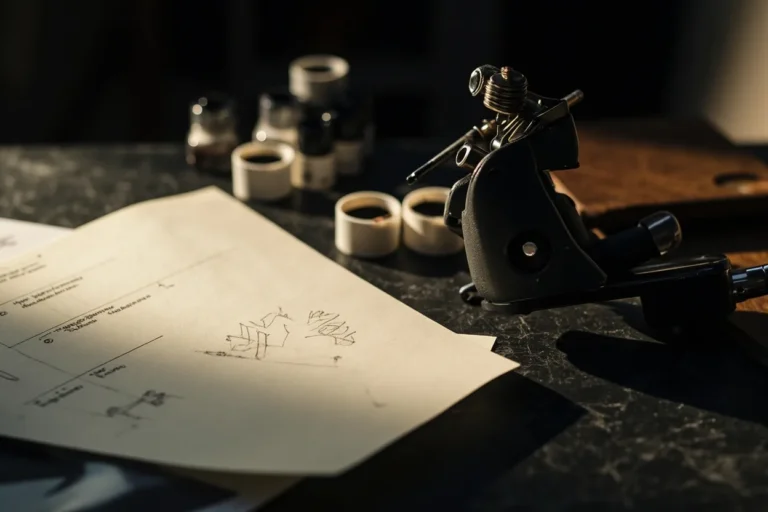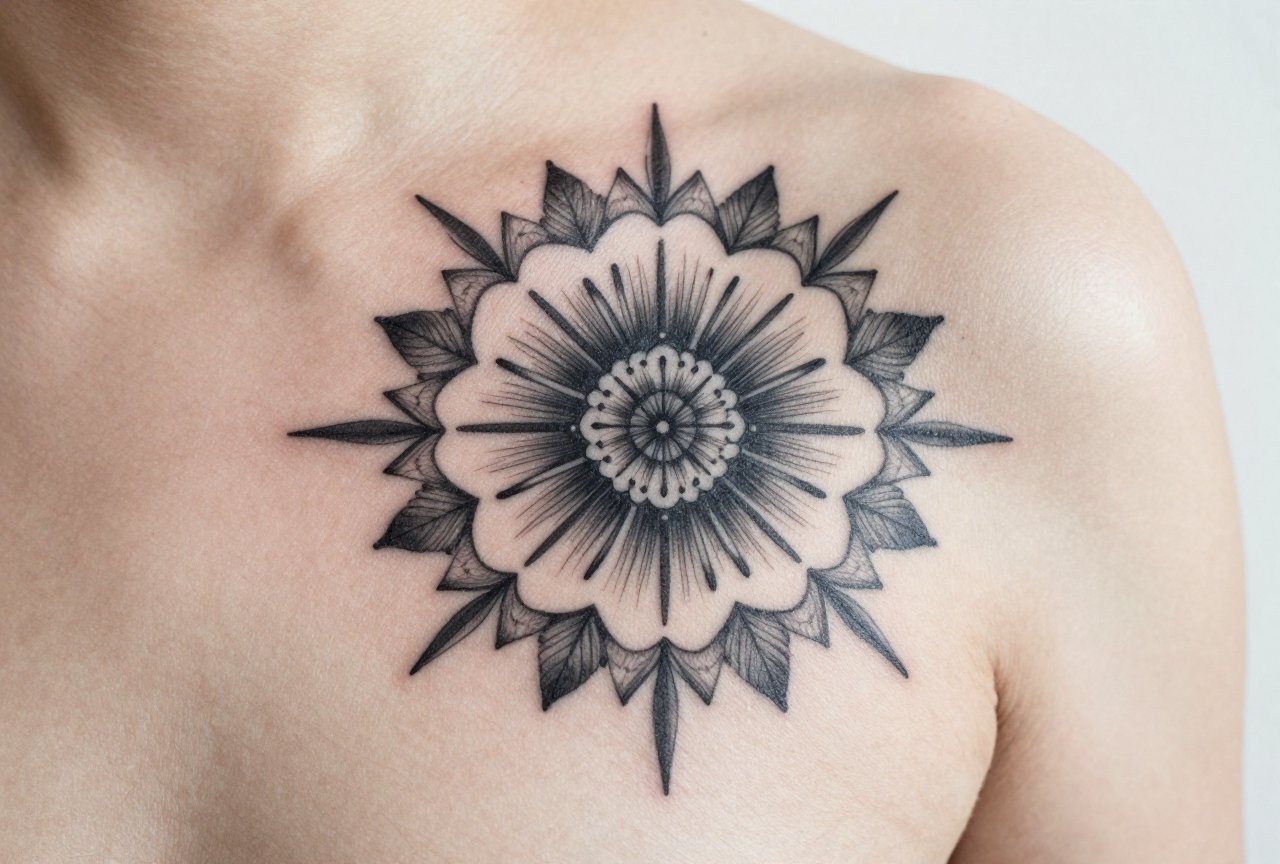
I’ve had clients walk in with napkins, phone notes, and once, a sketch on a pizza box. That’s the stuff I love. Creating your own tattoo design free isn’t about being a professional artist; it’s about knowing what you want and understanding how that idea lives on skin. After fifteen years in shops, I can tell you the best tattoos I’ve done started with someone’s genuine scratch, not a Pinterest screenshot. Let me walk you through how to make your own design actually work.
Popular Styles That Work for DIY
Some styles forgive rough hands. Others demand technical precision you probably don’t have yet. Here’s what translates well from your sketchpad to my needle.
Line Work and Minimalism
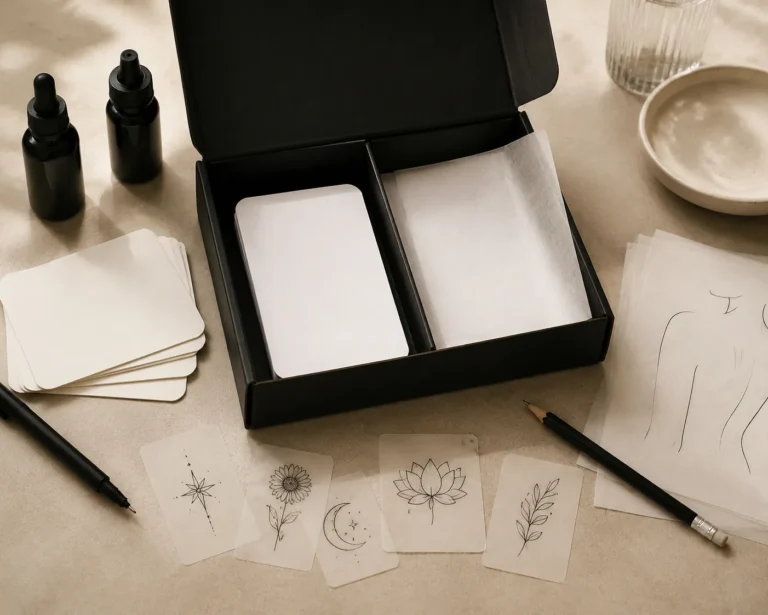
Single needle, clean lines, lots of negative space. I’ve tattooed countless stick-figure-style cats, tiny botanicals, and handwritten words that clients drew themselves. The trick? Keep it bold enough that one wobble doesn’t ruin the whole piece. I tell people: if your design looks good at the size of a quarter, it’ll probably tattoo clean. Minimalism ages beautifully too, no muddy shading to blur out over five years.
Blackwork and Tribal Influences
Big solid blacks hide imperfections. I’ve seen clients bring in geometric patterns they mapped on graph paper, and the results punch hard. Tribal-style designs (and I’m talking contemporary interpretations, not cultural appropriation) rely on rhythm and flow rather than fine detail. You can sketch these with a Sharpie, scan them, and I’ll adjust the weight for needle grouping. We see this a lot with first-timers who want something substantial but drew it themselves.
- American traditional: bold outlines, limited palette, easy to sketch
- Dotwork: stippled gradients that forgive uneven hands
- Script and lettering: your handwriting, digitized and cleaned
- Abstract brushstroke: intentional messiness that looks deliberate
Design Ideas That Start Personal
The free part isn’t just about money, it’s about freedom from generic flash. Your dog’s actual paw print. The coordinates of your grandparents’ farmhouse, in your own shaky numerals. A flower you saw on a hike, drawn from memory.
Mapping Your Memories
I tattooed a guy’s self-drawn map of the lake where he proposed. Wobbly shoreline, a wonky heart where the dock stood. We simplified it, but the bones were his. That’s the design clients stare at for decades, not because it’s technically perfect, but because they remember drawing it at the kitchen table. Start with what you can’t stop thinking about. The visual will follow.
Combining Found Elements
None of us invent in a vacuum. Grab public domain botanical prints, old sailor drawings, your kid’s artwork. Collage them in free software like GIMP or Photopea. I had a client layer her grandmother’s recipe card handwriting over a stock lily illustration. Free. Meaningful. Totally hers after the layering. Just don’t grab someone’s copyrighted piece and call it yours, that’s shop drama nobody wants.
- Trace objects that matter: keys, leaves, your actual handwriting
- Use free font sites for lettering bases, then distort them
- Convert photos to high-contrast line art using free online tools
- Draw on your phone with free apps like Autodesk SketchBook
Best Placements for Self-Designed Work
Where you put it affects how your design reads. Flat skin preserves detail. Curved or moving skin distorts. I learned this the hard way early in my career, gorgeous design, wrong spot, looked like a smear in six months.
Forearms and calves are forgiving canvases. Flat enough for detail, visible enough for you to enjoy. I’ve tattooed hundreds of client-drawn pieces there. Ribs and feet? Those spots punish complexity. Your intricate mandala drawn on graph paper will warp across ribs with every breath. Simplify for those areas, or pick somewhere else.
Inner bicep and thigh hold medium detail well. They’re also easier to heal, less bumping, less sun. In my chair, I watch people instinctively touch their fresh forearm tattoos. Thigh? They mostly leave it alone. That matters for how your free design settles in.
Color Choices That Save Money and Headaches
Every color in your tattoo costs more in time and ink. More time in the chair, more money from your pocket. Designing with limited color isn’t just free, it’s smart.
Black and Gray Longevity
Black ages like leather. Gray wash softens beautifully. I’ve watched fifteen-year-old blackwork look almost fresh while colorful pieces beside it faded to haze. If you’re designing free, design in black. One bottle of ink, one needle setup, less time, less cost. Your artist can always add color later if you change your mind.
Strategic Color Pops
When you do want color, make it count. One red rose in a black and gray sleeve. One teal eye in an otherwise monochrome animal. I call these “money shots”, the single color element your eye goes to. Design these intentionally. Don’t sprinkle color randomly; that’s how amateur work reads. Pick one moment of impact.
- Black and gray: timeless, cheaper, faster sessions
- One-color accent: strategic and striking
- Full color: plan for touch-ups and higher cost
- White ink: mostly invisible on darker skin, skip it for DIY designs
Tips for Choosing and Refining
Your design isn’t finished when you like it. It’s finished when it works on skin. Here’s how to bridge that gap without paying a designer.
Test at Actual Size
Print your design at the exact size you want it. Tape it to your body. Live with it for three days. Sleep on it. Shower with it. I’ve had clients do this and come back saying “thank god, that placement was annoying” or “actually, I want it smaller.” This costs nothing and saves you from my cover-up queue later.
Know When to Hand It Over
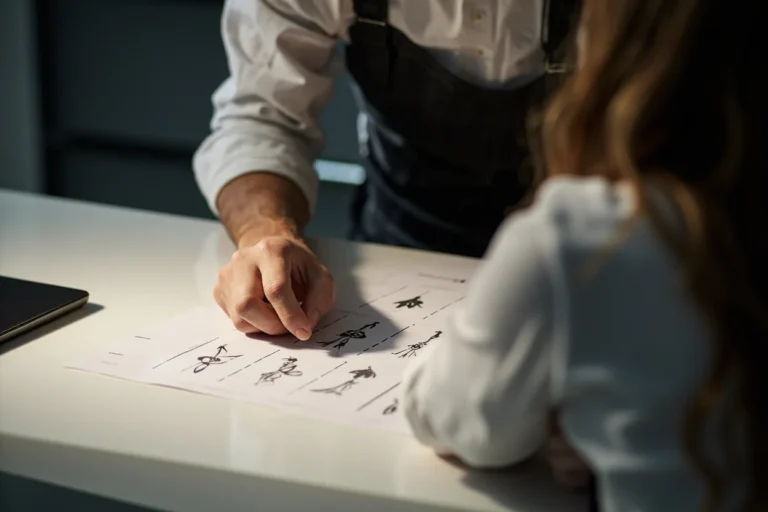
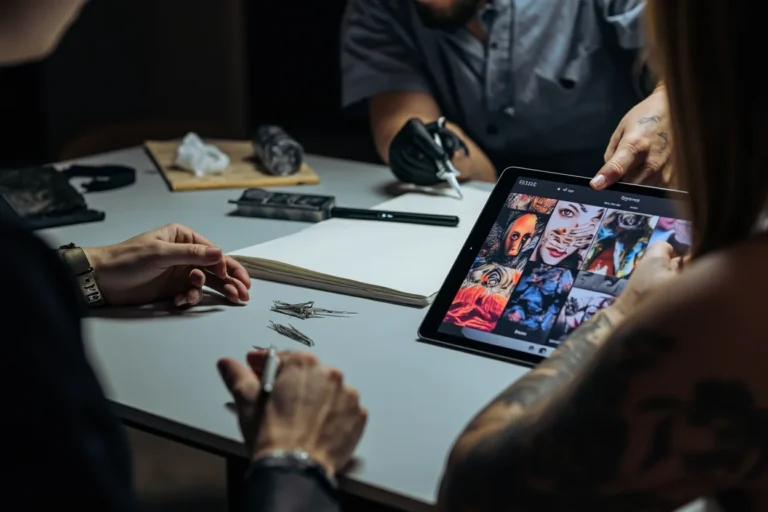
Free design doesn’t mean zero collaboration. Bring me your sketch, your reference, your mood board. I’ll tell you straight: “This line won’t hold,” or “let’s thicken this so it doesn’t bleed out.” Good artists don’t steal your idea, we translate it. I’ve redrawn client sketches a hundred times while keeping their spirit intact. That’s part of the service. Don’t be precious about every line. Be protective of the meaning.
- Draw at 300 DPI or higher if digital, pixelation kills detail
- Avoid tiny text under 10pt equivalent; it blurs
- Mirror your design; you’ll see it flipped on your skin
- Leave breathing room around the edges; don’t crowd the composition
Final Thoughts
Creating your own tattoo design free is absolutely possible, and some of my favorite pieces in the shop started exactly that way. The tools are free. The software is free. The only investment is your time and honest attention to what actually works on human skin. I’ve tattooed lawyer’s doodles and art school portfolios, and I promise you, the emotional connection matters more than technical polish. Draw it. Test it. Bring it in. We’ll make it permanent together.
Frequently Asked Questions
Do I need to know how to draw well to design my own tattoo?
Not at all. I’ve tattooed plenty of rough sketches that we cleaned up together. What matters is the idea and personal meaning. Simple shapes and bold lines actually tattoo better than complex shading anyway.
What free apps work best for tattoo design?
Autodesk SketchBook, GIMP, and Photopea are all solid free options. For phone drawing, Procreate Pocket has a free tier, and even Notes app sketches can work as starting points. I just need something I can see clearly to adapt.
How do I know if my design is too detailed for a small tattoo?
Print it at actual size and hold it arm’s length. If you can’t distinguish the main elements in three seconds, it’s too busy. I usually tell clients to pick the one thing their eye should hit first and build around that.
Will my artist be annoyed if I bring my own design?
Most artists love it when you bring original work. What annoys us is when you demand exact replication of someone else’s tattoo. Your own sketch? That’s collaboration. Just stay open to technical adjustments so it actually works on skin.
More Tattoo Ideas
- Design Your Tattoo Online Free: A Real Artist s Guide
- Dexter Tattoo Ideas for True Fans
- Film Tattoo Ideas for Movie Lovers
- Explore more