I’ve had the Bride of Frankenstein in my chair more times than I can count. Not literally, though that’d make for a hell of a story, but her portrait, his bolts, that flat-top skull. Frankenstein tattoos hit different than other horror ink. There’s something about the melancholy, the stitched-together humanity, the way Mary Shelley’s creature still resonates two centuries later. I’ve tattooed full back pieces of the Karloff face and tiny lightning bolts behind ears. Here’s what actually works on skin, what ages well, and where artists get excited about drawing this stuff.
Popular Styles
Not every style suits the Monster. I’ve seen gorgeous pieces go sideways because someone picked neo-traditional for a hyper-realistic reference and wondered why it looked off. Here’s how different approaches actually land.
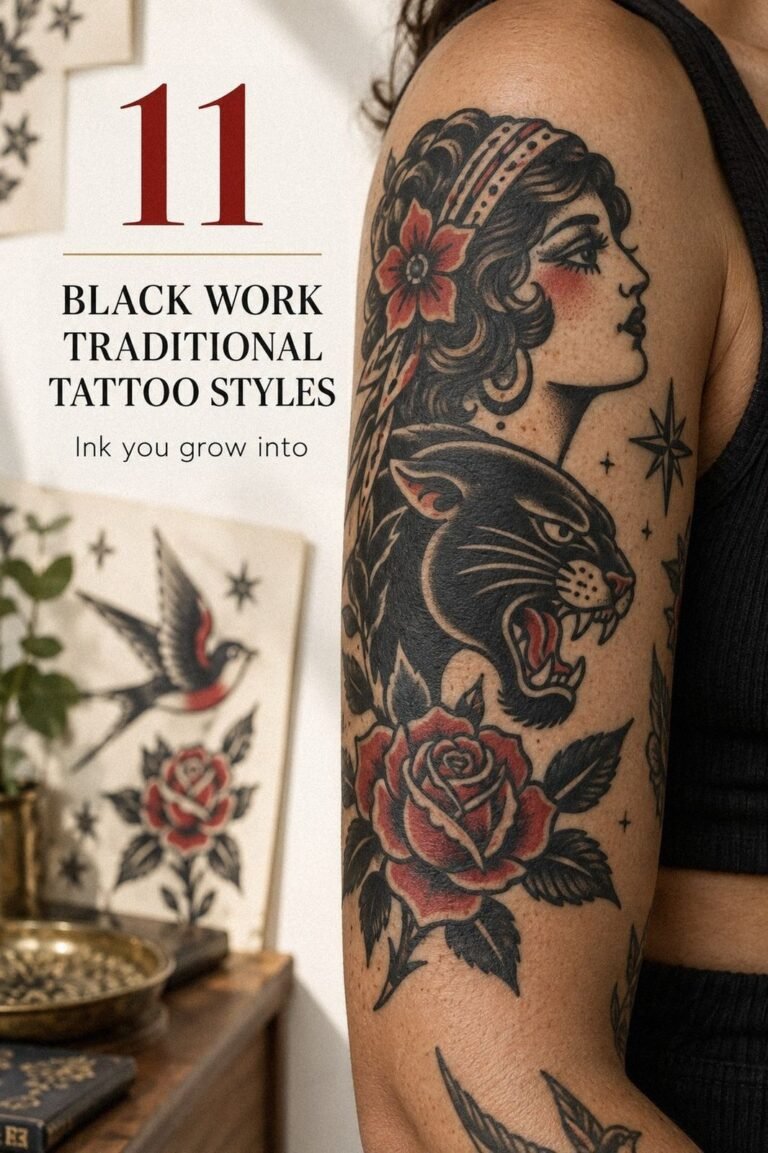
Traditional and Neo-Traditional
The classic American traditional Frankenstein, bold black outlines, limited color palette, that green-grey skin with red lips and maybe a blue suit, this is shop-floor reliable. The heavy lines hold. The simplicity reads from across the room. I’ve done probably thirty traditional Frankenstein heads, and they heal like tanks. Neo-traditional lets you push the color further: jewel tones, decorative elements, maybe roses or a banner with a quote. The structure stays readable, but you get more artistic freedom.
Black and Grey Realism
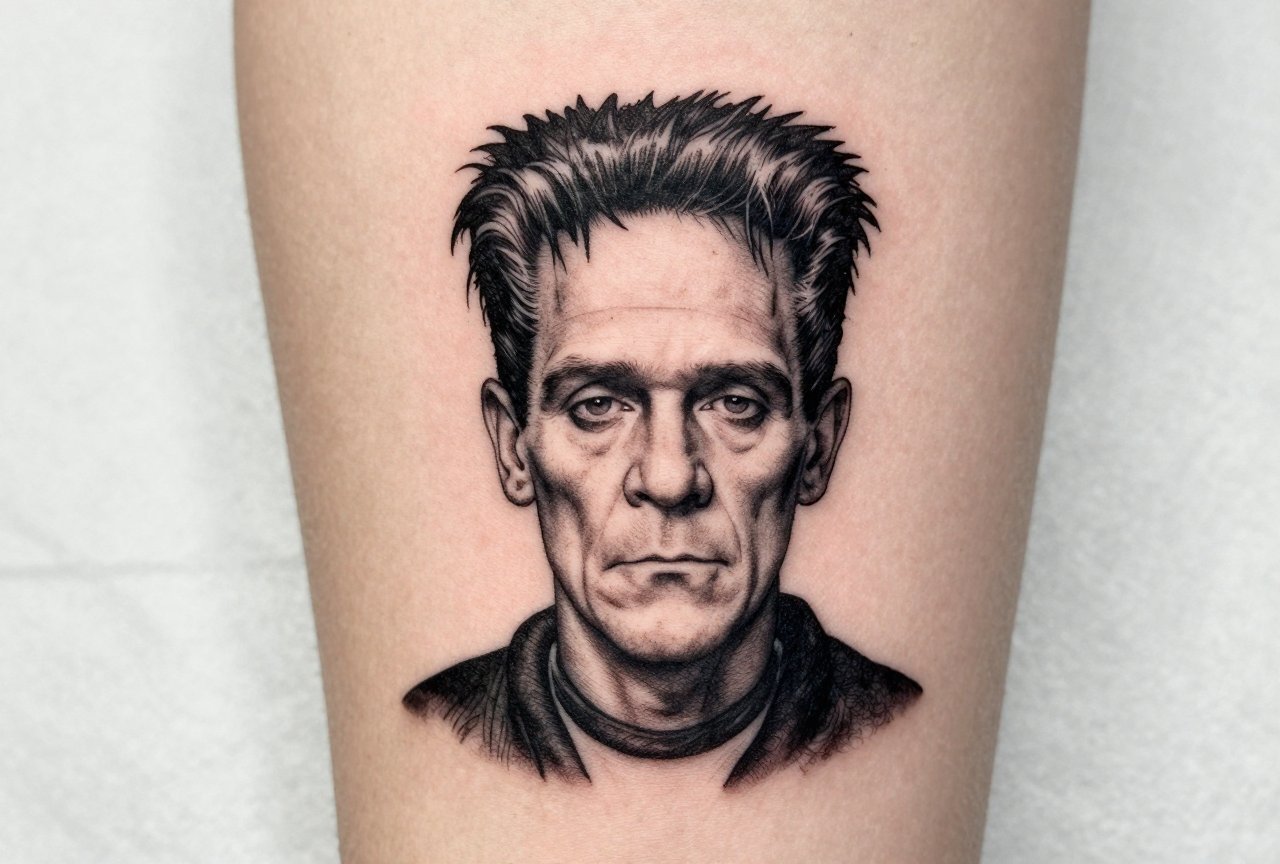
This is where Karloff’s face lives. The sunken eyes, the flat head, those scars. I’ve spent six hours on a single portrait that captured every wrinkle from the 1931 film. Realism demands good skin, older clients, sun-damaged skin, it’ll blur faster. But done right, on a forearm or calf with proper aftercare, a black and grey Frankenstein portrait is stunning. The shadows in the eye sockets, the way light hits that forehead ridge, artists love this stuff. We fight over who gets to draw it.
Illustrative and Fine Line
Fine line Frankenstein work is having a moment. Delicate lightning bolts, tiny stitched hearts, the creature’s profile in whisper-thin black. I did one last month, a single needle outline of the monster reading a book, tucked on a client’s inner bicep. Beautiful. But I was honest with her: in five years, those hairlines will soften. Fine line ages like watercolor, not oil paint. Go in with eyes open.
Design Ideas
The imagery pool is deeper than most people think. I’ve watched clients walk in with “just the face” and walk out with something way more personal.
- The Karloff Portrait: Still the gold standard. That heavy brow, the resigned eyes, the neck bolts. Iconic for a reason.
- The Bride: Those Nefertiti waves, the white streak, that expression of shock and sorrow. She works as a companion piece or solo. I’ve tattooed her on partners who wanted matching-but-not-matching horror ink.
- Stitched Anatomy: Hearts, brains, limbs with visible sutures. Good for clients who want the theme without the full portrait.
- The Laboratory Scene: Tesla coils, arcing electricity, the creature on the table. Complex, narrative, usually larger scale.
- Literary Quotes: “Beware; for I am fearless, and therefore powerful.” Simple text, sometimes paired with minimal imagery. I tell clients: script ages faster than images. Plan for touch-ups.
- Reimagined Mashups: Frankenstein’s monster as a pin-up, in a suit, holding a coffee cup. I’ve done him as a dad figure pushing a stroller. The juxtaposition kills.
Best Placements
Where you put it changes everything. I’ve watched a perfect design die on a bad spot, and mediocre art sing because the placement was smart.
High-Visibility Spots
Forearms, calves, upper arms, these get the most attention and the most sun. Frankenstein portraits here need bold lines. I’ve had to thicken up designs that would have been gorgeous on a thigh but would blur into soup on a forearm in three years. The outer forearm specifically: prime real estate, but it moves, it flexes, it sees everything. Plan for that.
Hidden or Intimate Areas
Ribs, sternum, inner bicep, back of the neck. These hurt more. The skin stretches differently. But I’ve done some of my best Frankenstein work on ribs, a full creature rising from a slab, the ribs themselves becoming the laboratory table. Clever. Personal. The pain is part of the story for some clients. They want to feel it.
Thighs and upper arms give you the most real estate for detail. I’ve done a full Bride sleeve that started at the shoulder and told her creation story down to the wrist. That’s a commitment. That’s a client who knows what they want.
Color Choices
The green question. Everyone asks: is Frankenstein’s monster actually green?
In the 1931 film, it’s more grey-green, almost corpse-like. But tattoo culture has claimed a specific mint-to-forest green range. I’ve mixed custom greens for years. Too yellow and it looks sick in the wrong way. Too blue and it reads alien. The sweet spot is muted, slightly desaturated, with enough black in the mix to hold contrast as it ages.
- Classic green with red accents: The mouth, maybe a heart. High contrast, readable from distance.
- All black and grey: Timeless. The scars read as texture, the bolts as geometry. No color to worry about fading.
- Full color cinematic: I’ve done pieces referencing the Hammer films, more saturated, almost comic book. These pop but need more maintenance. Touch-ups every few years.
- Negative space and red only: A black silhouette with just the scars and eyes in red. Striking. Modern. Heals clean.
We see this a lot: clients wanting “just a little color” without understanding that color demands commitment. Unfinished color looks worse than no color. I always have that conversation before the needle touches skin.
Tips for Choosing
After fifteen years, I’ve got opinions. Here are the ones that actually help clients.
Reference Quality Matters
Bring me a blurry screenshot from a streaming service and I’ll tattoo it, but I’ll also tell you it’s going to look like a blurry screenshot. High-res film stills, original poster art, book illustrations, these give us something to work with. I’ve had clients bring in Boris Karloff’s actual makeup test photos. That’s a gift. We can build something unique from that.
Think About the Long Game
That intricate lab scene with sixteen tiny figures and readable text on a 3-inch patch? I’ve done it. I’ve also done the cover-up five years later when it became grey mush. Scale appropriately. Detail needs space. I usually tell clients: if you can’t cover it with your hand, it’s probably too small for what you’re asking.
Also: your lifestyle. I tattooed a gorgeous Frankenstein throat piece on a musician. He loved it. His corporate day-job boss did not. We talked about that beforehand. He was ready. Most people aren’t.
- Find an artist who actually wants to do horror. You can feel the difference in the line work.
- Budget for the artist you want, not the artist you can afford this month. This is permanent. Save longer.
- Healing a Frankenstein piece means keeping those fine scar lines clean. Don’t pick. Don’t sunbathe. I’ve seen beautiful stitched details ruined by impatient healing.
- Consider the emotional weight. The monster is tragic. Some clients connect to that deeply. Others just like Halloween. Both are valid, but know which one you are.
Final Thoughts
Frankenstein tattoos endure because the source material endures. It’s not just a monster movie. It’s about creation, rejection, loneliness, humanity. I’ve had clients cry in my chair talking about why they chose this image. I’ve had others laugh and say “I just think he’s neat.” Both are true. Both make for good tattoos.
The best Frankenstein ink I’ve done wasn’t the most technically perfect. It was the most personally connected. A single bolt on a wrist where a client had surgery. A stitched heart covering self-harm scars. The full Karloff on a horror collector who’d waited decades to commit. In my chair, the monster becomes whatever you need him to be. That’s the real magic. That’s why we keep drawing him.
Bring good references. Listen to your artist about sizing and aging. And come in knowing why you want him on your skin. The rest we can build together.
Frequently Asked Questions
How much should I expect to pay for a detailed Frankenstein portrait?
A quality black and grey portrait on a forearm or calf usually runs $400-$800 depending on your area and the artist’s rate. Full color or larger pieces can hit $1,500+. We charge by time or flat rate, and good horror realism takes time.
Will the green ink in my Frankenstein tattoo turn weird colors as it ages?
Quality green pigments have improved massively. The bigger issue is fading to a softer, less saturated version of itself. Sun exposure is the real enemy. A healed green that gets blasted by UV will shift olive or brownish over years. Sunscreen, always.
Can I combine Frankenstein imagery with other horror characters?
Absolutely, and it’s common. I’ve done sleeves with the Universal monsters interacting, Dracula’s hand reaching toward the creature, the Bride and Wolfman back-to-back. The key is finding an artist who understands the tonal match, some mashups feel natural, others feel forced.
Is the neck bolt placement actually accurate to the original story?
Nope, and I love telling clients this. The bolts are pure 1931 film design, Jack Pierce’s makeup genius. In Shelley’s novel, there’s no mention of neck electrodes. But the bolts are so visually iconic that they’ve become inseparable from the character. Tattoo what resonates, not what’s accurate.
More Tattoo Ideas
- Got Tattoo Ideas That Actually Work
- Heavy Metal Tattoo Ideas That Actually Rock
- Howl s Moving Castle Tattoo Ideas
- Explore more