We’ve all been there. You’re scrolling at 2am, you see a killer backpiece on some artist’s Instagram, and suddenly you’re wide awake muttering “I got tattoo ideas now.” I’ve watched it happen in my chair a hundred times. Someone walks in with a screenshot and a dream, and half the time that dream needs some serious editing before it becomes skin-ready. Here’s the real talk on making those late-night inspirations actually work on a human body.
Popular Styles That Hold Up
Not every style ages like you hope. I’ve tattooed enough ten-year-old pieces to know what turns to mush and what stays crisp.
Traditional and Neo-Traditional
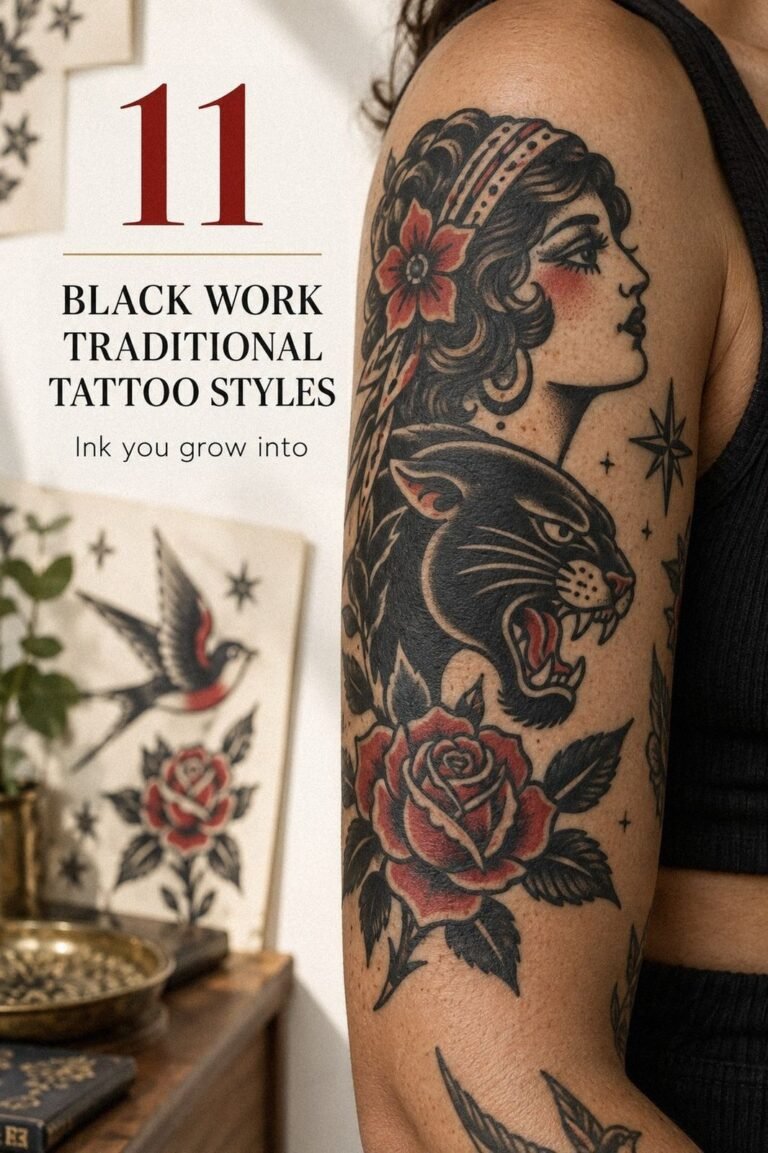
Bold lines. Saturated color. These are the cockroaches of tattoo styles, they survive everything. The heavy black outlines act like a fence keeping the color where it belongs. I’ve got traditional eagles on clients that look basically identical to day one, and they’re pushing fifteen years. Neo-traditional gives you more flexibility with subject matter, portraits of pets, weird still-life stuff, ornate decorative elements, while keeping that same structural integrity.
Blackwork and Fine Line
Blackwork is having a massive moment, but there’s a trap. Solid black geometric patterns? Gorgeous. But I’ve seen too many people go for “delicate fine line” because it looks so clean on Pinterest, then watch it fade to a gray smudge in three years. Fine line can work, but it needs to be chunky enough, think sewing needle, not hair. And it needs to live somewhere protected. More on that below.
- Japanese (Irezumi): The gold standard for large-scale work. Flows with the body, ages incredibly well, but requires a specialist. Don’t let your buddy who mostly does roses attempt a koi sleeve.
- Realism: Black and gray realism ages better than color realism. Color portraits need touch-ups. That’s not opinion, that’s what we see in every shop I’ve worked.
- Illustrative: My personal sweet spot. Combines the boldness of traditional with the detail people actually want. Think graphic novel, not photograph.
Design Ideas That Translate
Here’s where I earn my keep as the bearer of bad news. Your idea might be brilliant, but it needs to be tattooable.
Text and Lettering
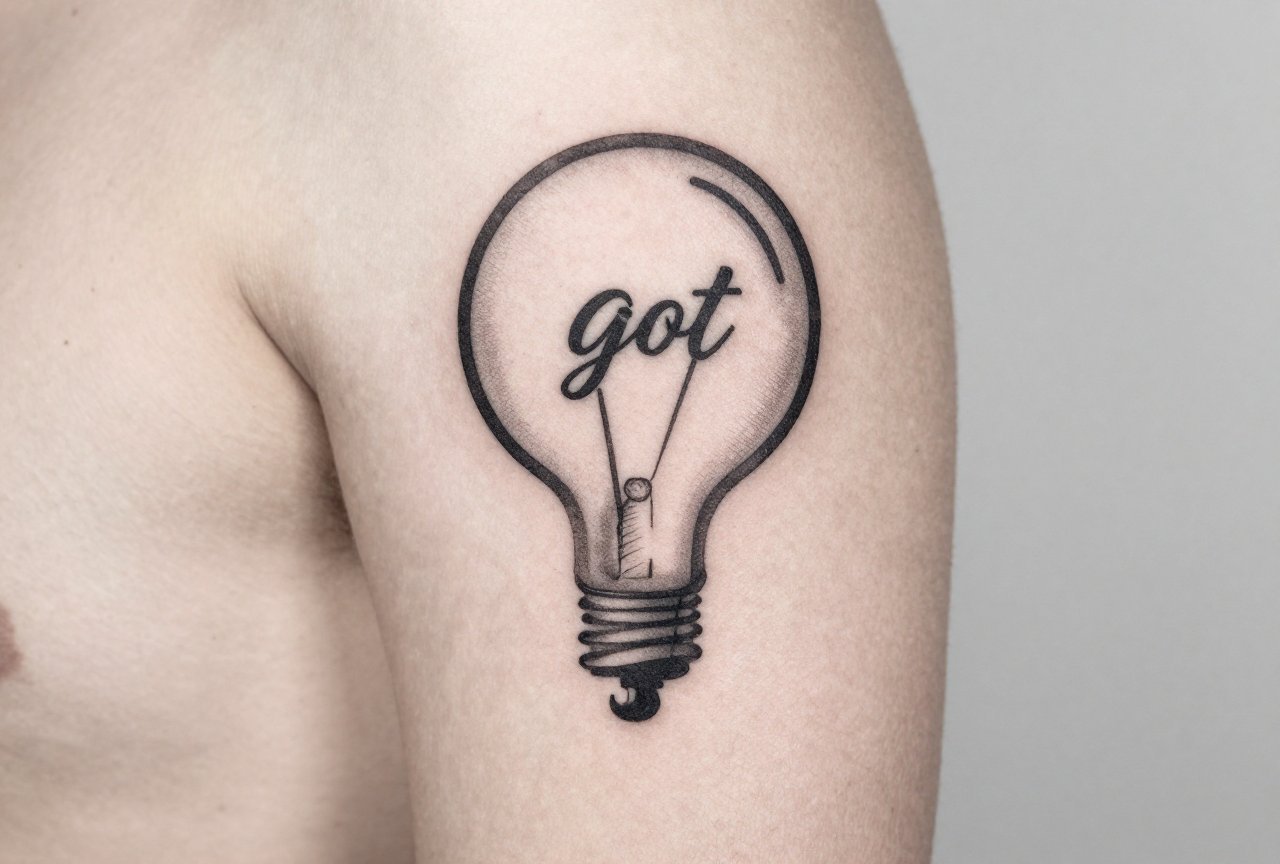
Everyone wants a quote. I get it. But script is brutal for longevity. Thin cursive? In five years that “breathe” on your wrist looks like “brcthc.” I tell clients: go bigger than you think, choose a serif or bold sans-serif, and keep it short. One word hits harder than a paragraph anyway. If you must do a phrase, the ribs or outer forearm give you enough real estate for it to age gracefully.
Flora and Fauna
Roses, snakes, lions, moths, the classics are classics for a reason. They read immediately at a glance, which is what you want from skin. I’ve tattooed probably two hundred snakes in my career. They wrap around limbs perfectly, the scales give texture that hides minor aging imperfections, and they carry about fifty different meanings so people always feel connected. Botanical work is huge right now, but again: leaves need veins thick enough to survive. That hyper-detailed scientific illustration? Beautiful on paper, muddy on skin in a decade.
- Animals in motion > animals static. A running wolf carries energy; a posed wolf looks like a logo.
- Flowers with open composition (stems trailing, petals scattered) flow with body curves better than tight bouquets.
- Skulls work anywhere, any style, any size. The ultimate flexible design element.
Best Placements for the Long Haul
Where you put it changes everything. I’ve watched identical designs age completely differently based on placement alone.
The Winners
Upper outer arm. Thigh. Calf. Upper back, away from the spine. These spots don’t stretch much, don’t sun as badly, and the skin stays relatively stable. I did a full traditional sleeve on a guy who works construction, and the outer arm portions look fresh while the inner elbow, despite my warnings, needed a touch-up in two years. That’s just biology. Skin moves, skin rubs, skin suns.
The Compromises
Hands, feet, ribs, inner bicep. We see these requests constantly. I’ll do them, but I’m having a conversation first. Hand tattoos? I need you to have substantial work already. No artist wants to be your first tattoo on your hand, it’s a commitment you can’t hide, and it fades fast. The constant washing, the sun exposure, the sheer mechanical wear. I’ve seen beautiful hand work go soft in three years. Ribs? They hurt like hell, they move with every breath, and they’re a nightmare to heal because you can’t stop moving. But they look incredible when done right. Just know what you’re signing up for.
- Behind the ear: Trendy, painful, often doesn’t hold. The skin’s thin and weird there.
- Collarbone: Stunning placement for the right design. Horrible for anything with straight lines, your collarbone isn’t straight, and the tattoo will warp to follow it.
- Ankles: Socks rub. Shoes rub. I’ve watched so much ankle work just… disappear.
Color Choices: What Lasts vs. What Fades
Black and gray is the safest bet for longevity. I know, I know, you want that teal, that coral, that perfect sunset gradient. We can do it. But let’s be honest about the timeline.
Yellow and white are the first to go. They don’t disappear completely, but they sink into the skin tone and lose their punch. Red holds surprisingly well. Blues and greens are middle of the pack. That bold turquoise you love? In eight years it’s probably more “muted ocean” than “tropical water.”
Here’s what I tell people who want color: commit to sunscreen. Not sometimes. Every time. The number one factor in how your tattoo ages isn’t the artist, isn’t the ink brand, it’s how much sun it gets. I’ve got a client, retired firefighter, full color Japanese backpiece. Twenty years old, still looks five years fresh because he wears SPF 50 like religion. Meanwhile his buddy with the same artist, same time period, who “doesn’t really burn,” has a backpiece that looks like it was done in a different decade entirely.
- Black and gray: timeless, low maintenance, reads from distance.
- Color: higher impact initially, requires more planning for aging, demands sun protection.
- “Watercolor” style without black lines: I’ve done them, but I warn every single person. It’s a five-to-seven-year look, not a lifetime look. Plan for that reality.
Tips for Choosing: The Shop Conversation
When someone sits in my chair with “got tattoo ideas” energy, I have a few questions I always ask. You should ask yourself these too.
The Honesty Check
Why this? Not why a tattoo, why this specific image, this specific placement, this specific time? The people who can answer clearly tend to sit better, heal better, and love the result longer. The ones who mutter something about “it just spoke to me” sometimes work out great, sometimes come back for cover-ups. I’ve learned not to judge the reason, but I do want you to have one.
The Artist Match
Every artist has a lane. I can do traditional, I can do illustrative, I can make blackwork sing. Realistic portraits? I’ll refer you to my colleague who lives for that. Don’t ask a sushi chef to make pasta. Look at portfolios, find someone whose healed work (not just fresh photos!) makes you feel something, then trust their input. The best sessions I’ve had are collaborative, your idea, their technical knowledge, meeting in the middle.
- Bring reference, not blueprints. Three images you like help me more than one image you want copied exactly.
- Size matters. Small tattoos blur. It’s physics. Go slightly bigger than your comfort zone.
- Think about your future self, but don’t paralyze yourself trying to predict them. The person who’ll have this tattoo in thirty years is still you.
- Budget for quality. A good tattoo isn’t cheap. A cheap tattoo isn’t good. The cover-up costs more than doing it right the first time.
Final Thoughts
“Got tattoo ideas” is a fun place to be. The possibilities feel endless, the excitement is real, and you’re probably losing sleep scrolling. I’ve been there too, on both sides of the needle. The difference between a tattoo you love and one you tolerate often comes down to patience, waiting for the right artist, the right design refinement, the right moment when you’re not just reacting to a mood but choosing something with intention.
Walk into a shop with respect, listen to the professionals who’ve watched ink age on actual human bodies, and be willing to kill your darlings if they won’t work on skin. The best tattoos I’ve ever done weren’t the ones where I said yes to everything. They were the ones where the client and I pushed the idea until it became something that could live and breathe on their body for decades.
Your ideas are the starting point. The craft is making them real. Find someone who cares about both.
Frequently Asked Questions
How do I know if my tattoo idea is too detailed for the size I want?
A good rule: hold your design at arm’s length. If you can’t immediately tell what it is, it needs to be bigger or simpler. I always tell clients to zoom out on their phone screen, if it becomes mush, so will the tattoo.
Should I bring my own drawing or let the artist design it?
Bring references of what you like, but let the artist redraw it for tattoo application. I’ve seen beautiful illustrations that would heal terribly because the lines were too close or the shading too subtle for skin. Trust the translation process.
How far ahead should I book with a good artist?
Most artists I know are booking two to six months out. The ones worth waiting for usually are. Rush appointments or “walk-in availability” for complex custom work often means you’re compromising on something, skill, experience, or their full attention.
Is it okay to get tattooed while traveling or should I wait until I’m home?
The healing period is two to three weeks minimum. You’ll need to keep it clean, out of sun, out of pools and oceans. I’ve tattooed travelers, but they need to plan their trip around the aftercare, not the other way around. Go home first if you can.
More Tattoo Ideas
- Heavy Metal Tattoo Ideas That Actually Rock
- Iceland Tattoo Ideas: Volcanic Ink for True Wanderers
- Image Designs Tattoo Ideas
- Explore more