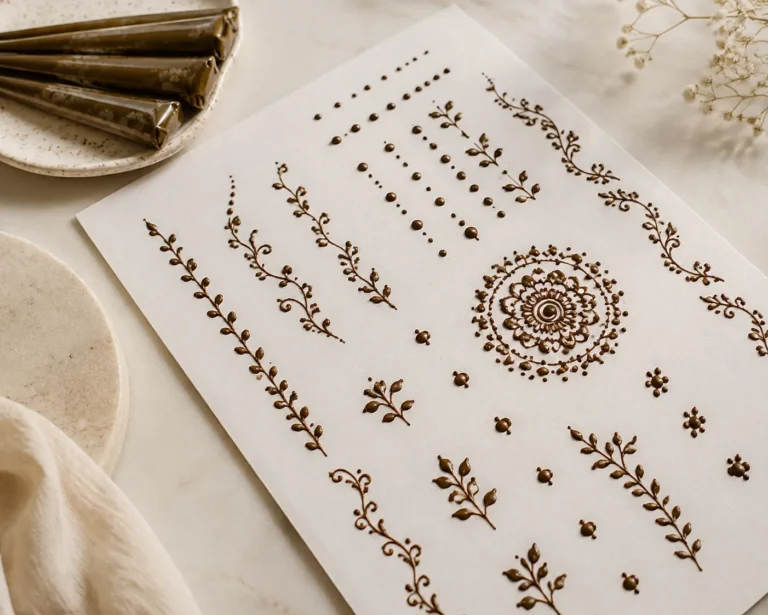
I almost talked myself out of my first Rajasthani mehndi application because I thought every detail had to be microscopic. Bad call. You want that intricate ornamental rhythm, but you also need breathing room so the paste can dry cleanly and the stain stays readable.
My one rule: keep the layout delicate in its spacing, not weak in its presence. Henna is applied through a cone, left to dry, and removed after the paste has done its work.
The stain usually starts orange-red, deepens on the second day, then fades gradually. That tiny gap between motifs matters!
- Rajasthani Mehndi Full-Hand Design
- Full-Hand Indian Mehndi Sleeve
- Rajasthani Mehndi Finger Band
- Traditional Rajasthani Mehndi Wrist Design
- Rajasthani Mehndi Mandala Palm Design
- Trending Rajasthani Mehndi Fine-Line Design
- Rajasthani Mehndi Bridal Motif
- Rajasthani Mehndi Peacock Design
- Rajasthani Mehndi Elephant Symbolism
- Rajasthani Mehndi Floral Forearm Design
- Rajasthani Mehndi Jaali Linework
- Rajasthani Mehndi Arabic Fusion
- Rajasthani Mehndi Half-Sleeve Layout
- Rajasthani Mehndi Back-Hand Placement
- Rajasthani Mehndi Ankle Cuff
- Rajasthani Mehndi Minimalist Wrist Design
- Rajasthani Mehndi Bold Pattern
- Rajasthani Mehndi Matching Hand Designs
- Rajasthani Mehndi Temporary Paste Design
1Rajasthani Mehndi Full-Hand Design
Build a full-hand layout around one clear center, then let the fingers carry lighter detail. Your full-hand layout works best when the palm and fingers share one visual rhythm instead of competing for attention. A central mandala, paisley, or floral rosette can give the composition a graceful anchor.
You’ll get a more ornate read with petals, dots, and open skin between bands. Skip packing every gap with micro curls. That’s how a beautiful pattern loses its clarity once the paste dries and the stain develops.
Keep the cone pressure steady, especially around the lemon-sugar seal. A thin seal brushed over dry paste can help keep the design in place while the stain develops. Leave the paste on for about one to two hours, or longer if your mehndi artist recommends it.
2Full-Hand Indian Mehndi Sleeve
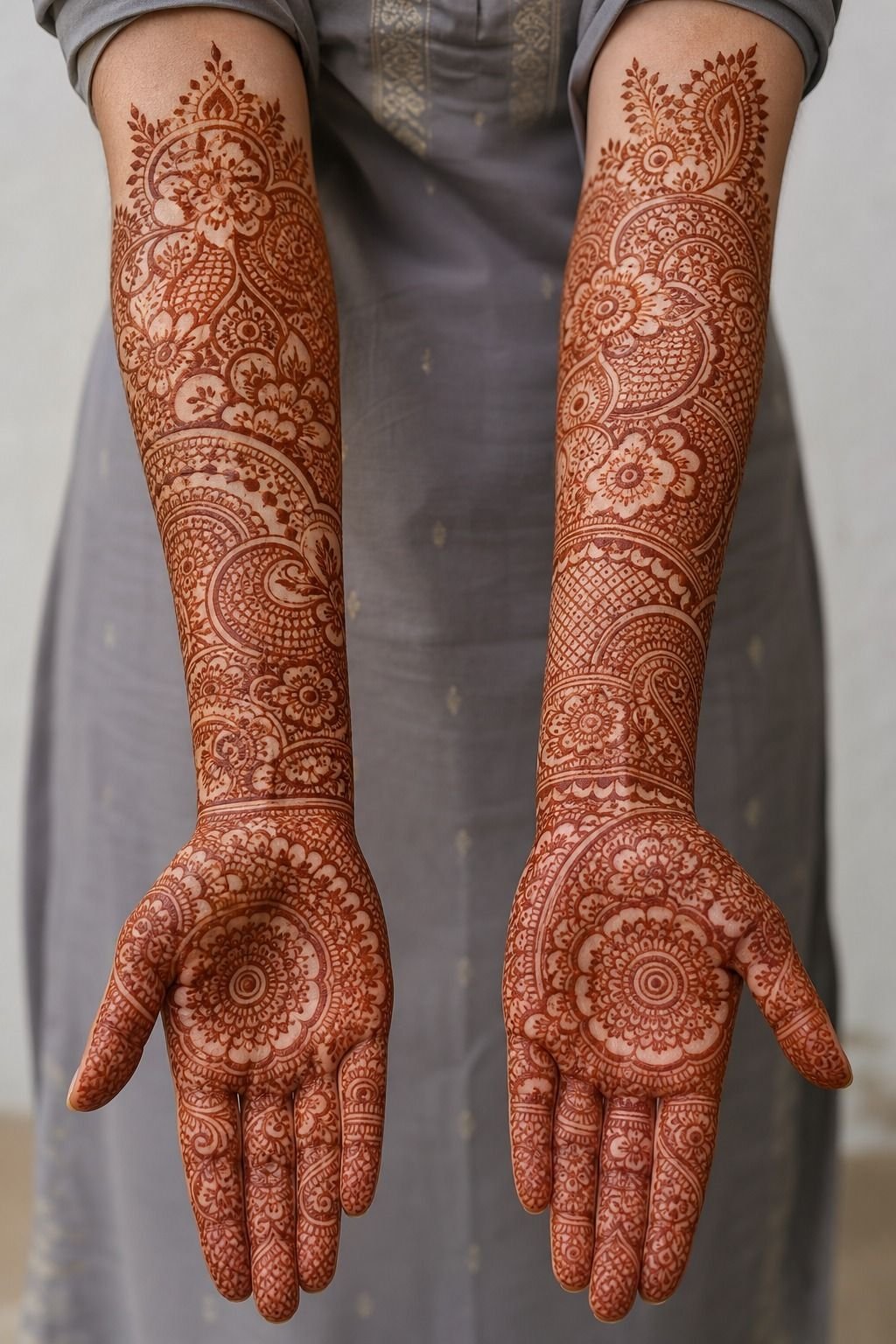
Treat both hands like one connected composition, not two identical worksheets. A paired-hand composition can repeat the same flower family, paisley direction, or border without copying every detail. The result feels symbolic and intentional when each hand has its own small variation.
3Rajasthani Mehndi Finger Band
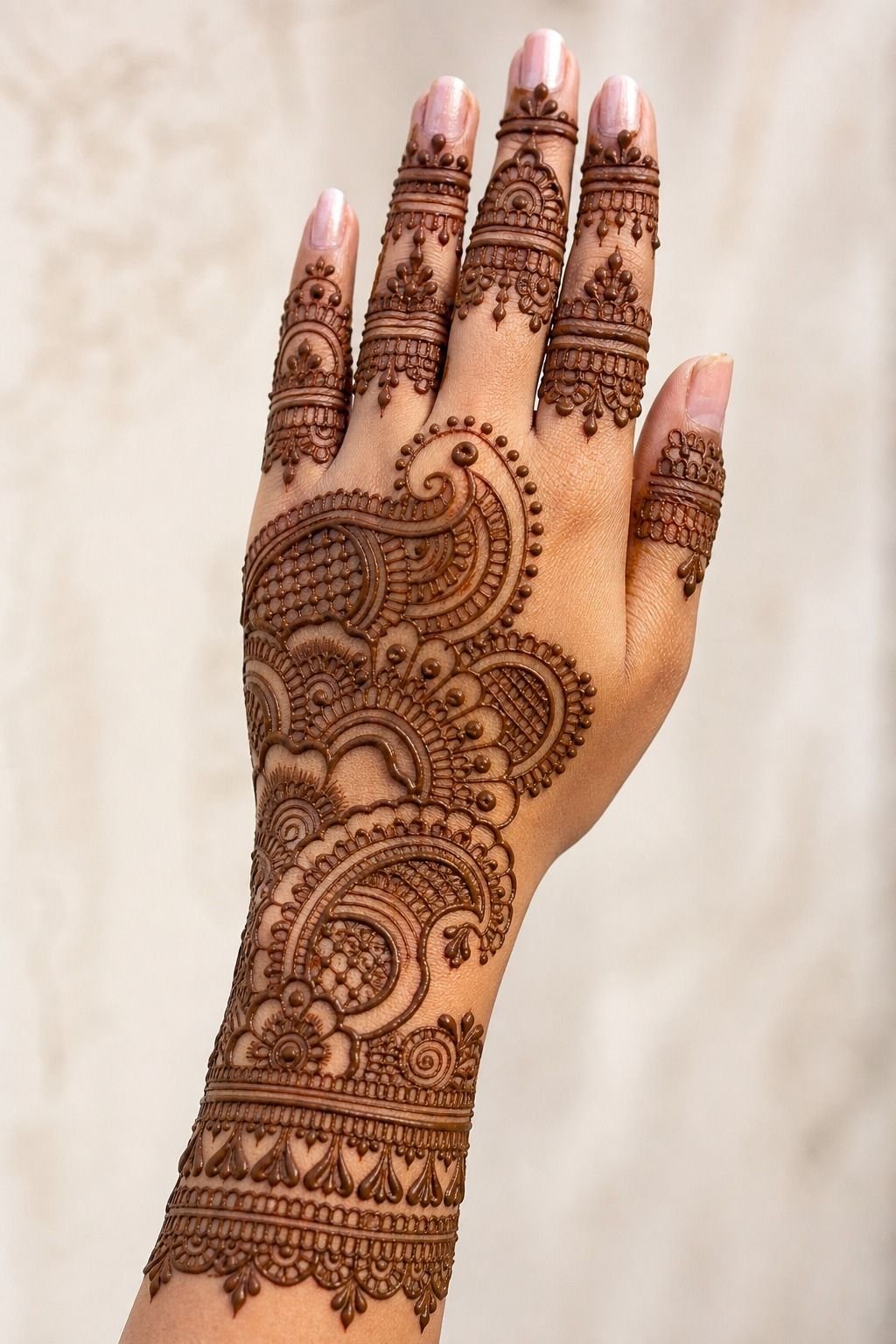
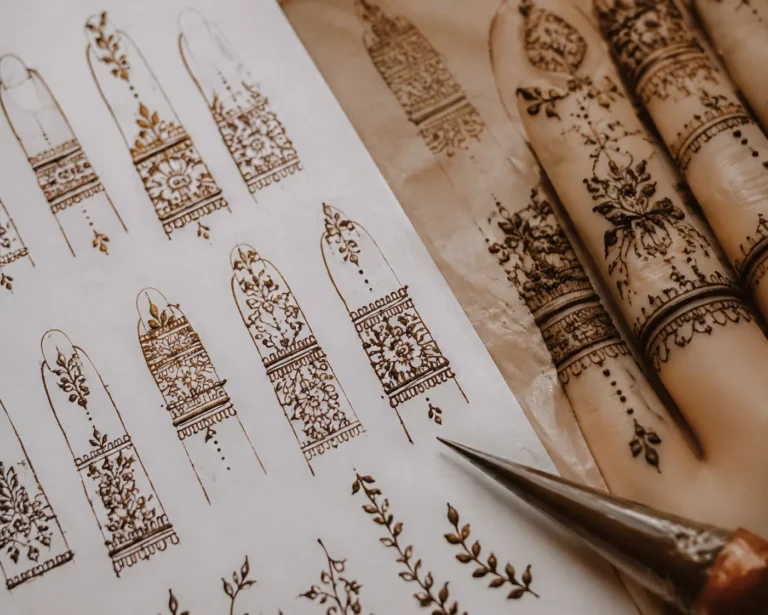
Use finger bands when you want the Rajasthani feel without covering your whole hand. A finger-band rhythm can combine dots, scallops, tiny leaves, and one open section so the design stays legible from a distance.
On olive or deep skin, a natural henna stain creates a warm reddish-brown contrast that changes as it develops. It may look bright orange at first, then become darker over the next day. Don’t judge the final shade immediately after removing the paste.
Your fingers are high-wear zones. Handwashing, sunlight, friction, and everyday movement can make the stain fade sooner there.
Keep each band wider than a skinny ring, and avoid stacking five tiny borders together. One bold band per finger usually looks more polished than an overloaded set.
4Traditional Rajasthani Mehndi Wrist Design
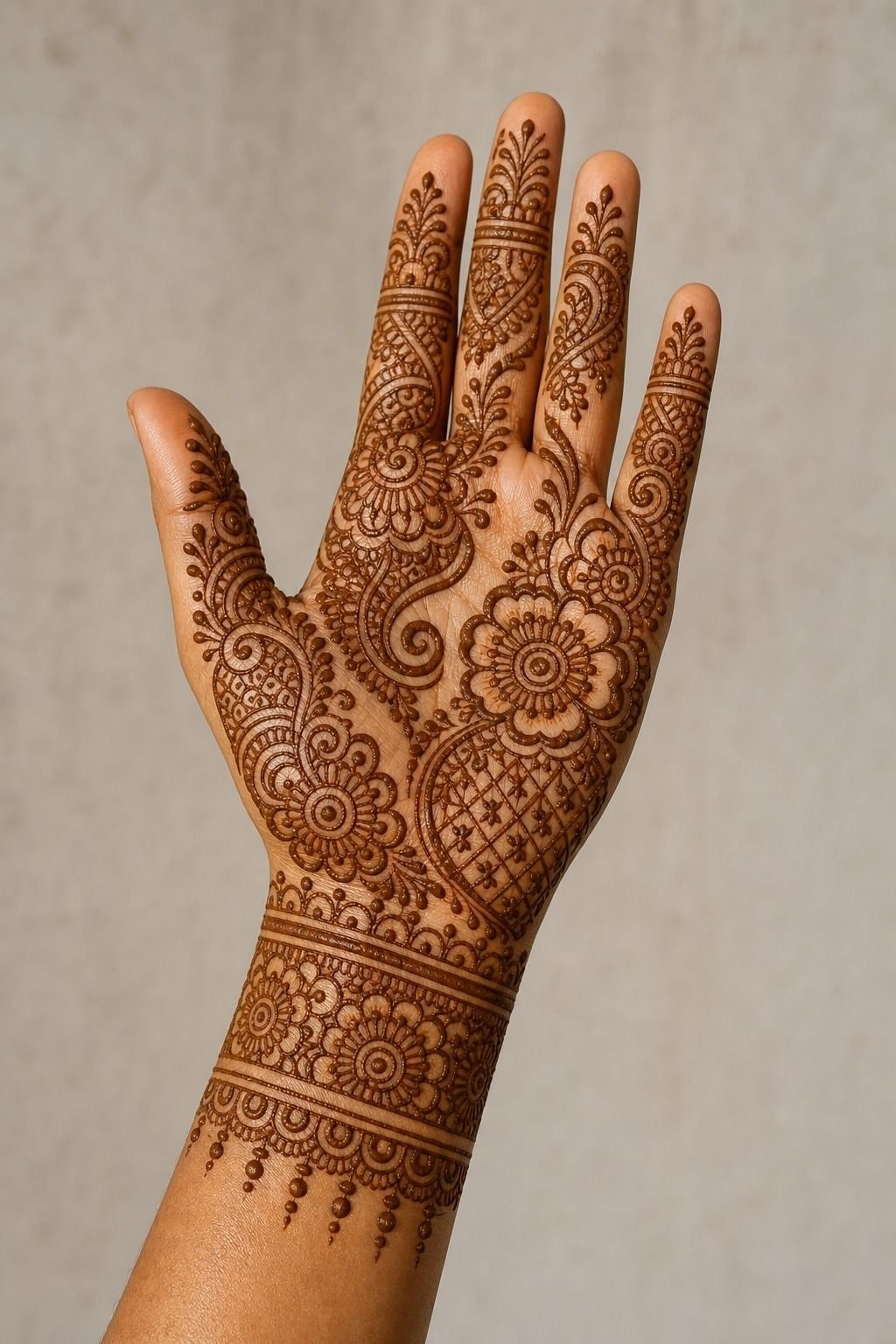
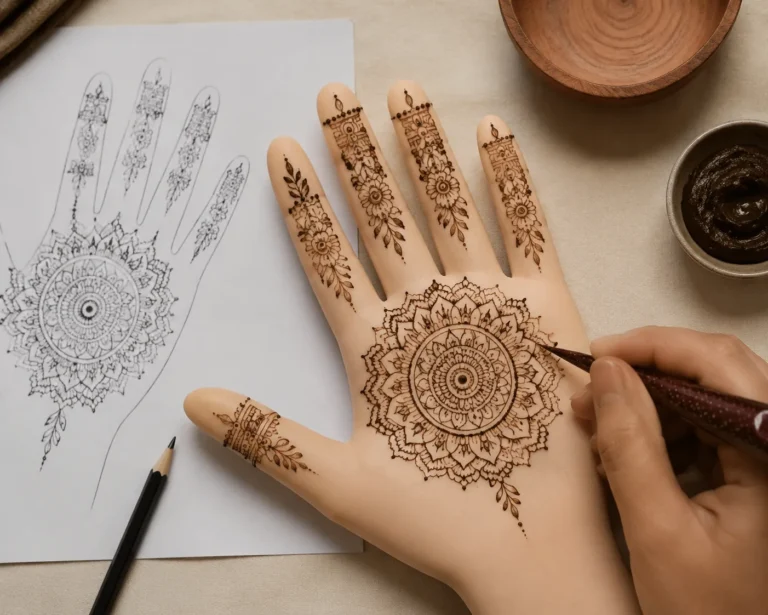
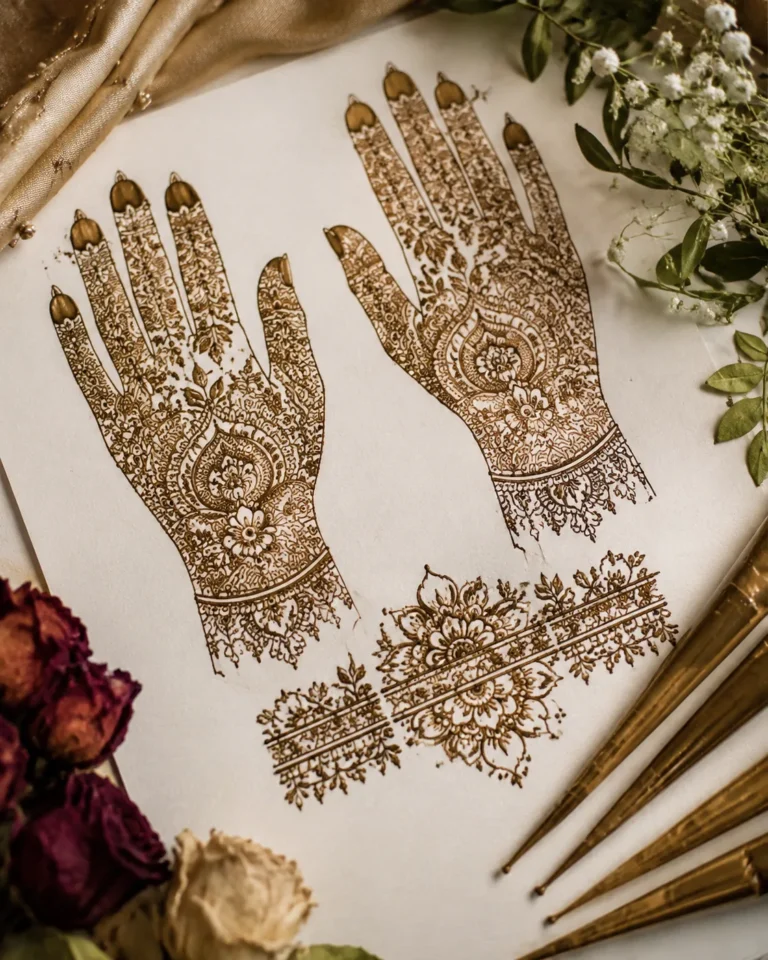
Anchor the pattern at your wrist, then taper the design toward the fingers. The traditional palm-and-finger image makes this placement feel intentional because the wrist acts like a clean cuff instead of a random ending point. A wrist cuff can be about one to one and a half inches tall while still feeling detailed.
I’d skip a super-fine lace edge here. Your wrist bends constantly, and crowded paste lines can merge before they dry. One clear pull does more than ten fuzzy passes.
Give every motif enough space to keep its shape.
Ask your mehndi artist about cone tip size, paste freshness, and recommended drying time. If you’re applying it yourself, practice the pressure on paper first. The line should flow evenly, without sudden blobs or broken trails.
5Rajasthani Mehndi Mandala Palm Design
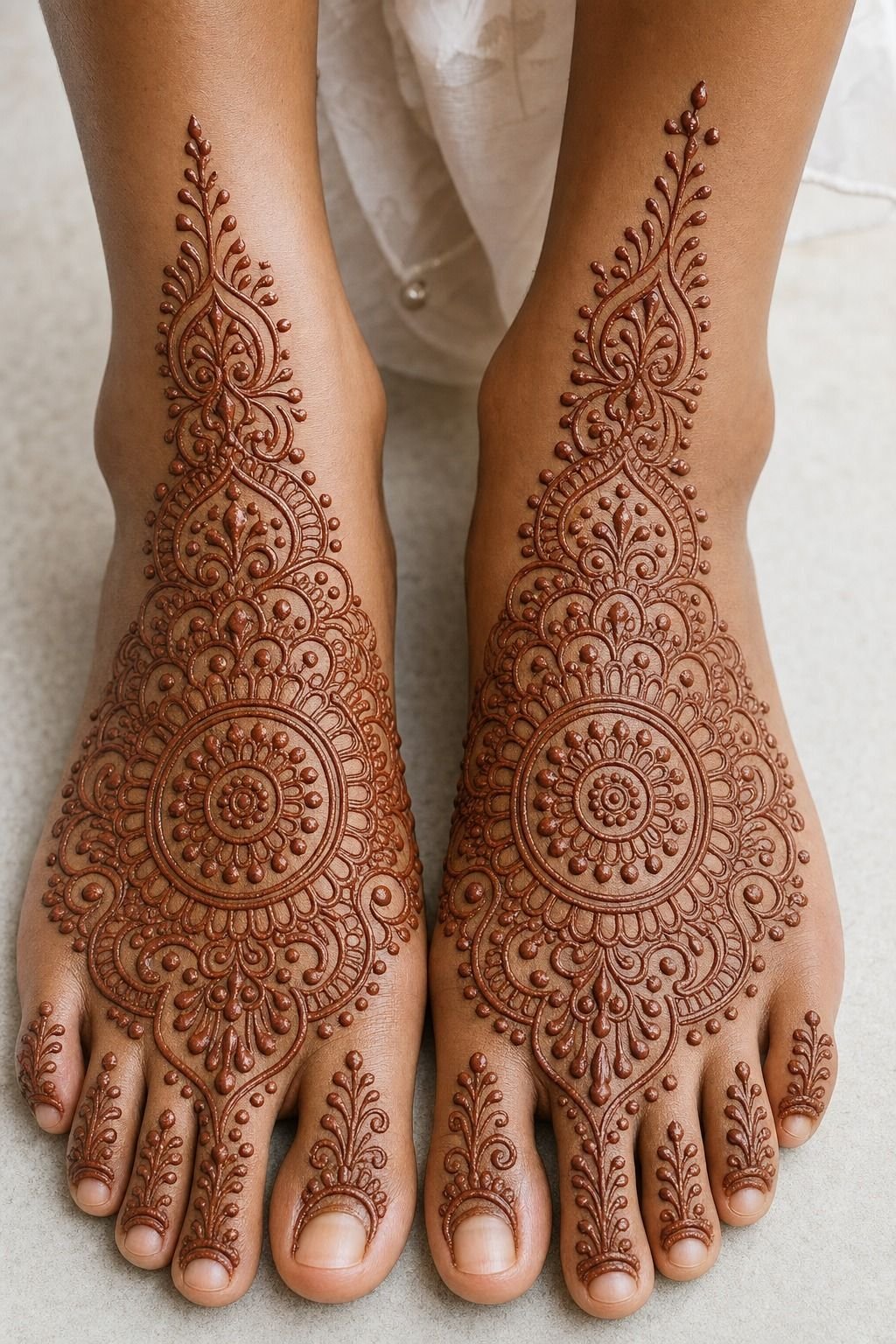
Let the mandala sit where it can read from across the room: centered on the palm or broadened onto the top of the foot. A mandala center needs petals large enough to remain recognizable as the stain develops and gradually fades.
Palm skin sheds quickly, so a palm design may fade faster than one on the forearm. That doesn’t make it less meaningful. It simply makes the placement ideal for weddings, Eid, Diwali, sangeet celebrations, or any occasion when you want an expressive design for a limited time.
For a lower-maintenance version, place the eucalyptus oil only around the dried paste if your artist recommends it and your skin tolerates it. Never use essential oil directly without proper dilution. A warm, well-prepared paste and patient drying matter more than chasing a dramatic shortcut.
6Trending Rajasthani Mehndi Fine-Line Design
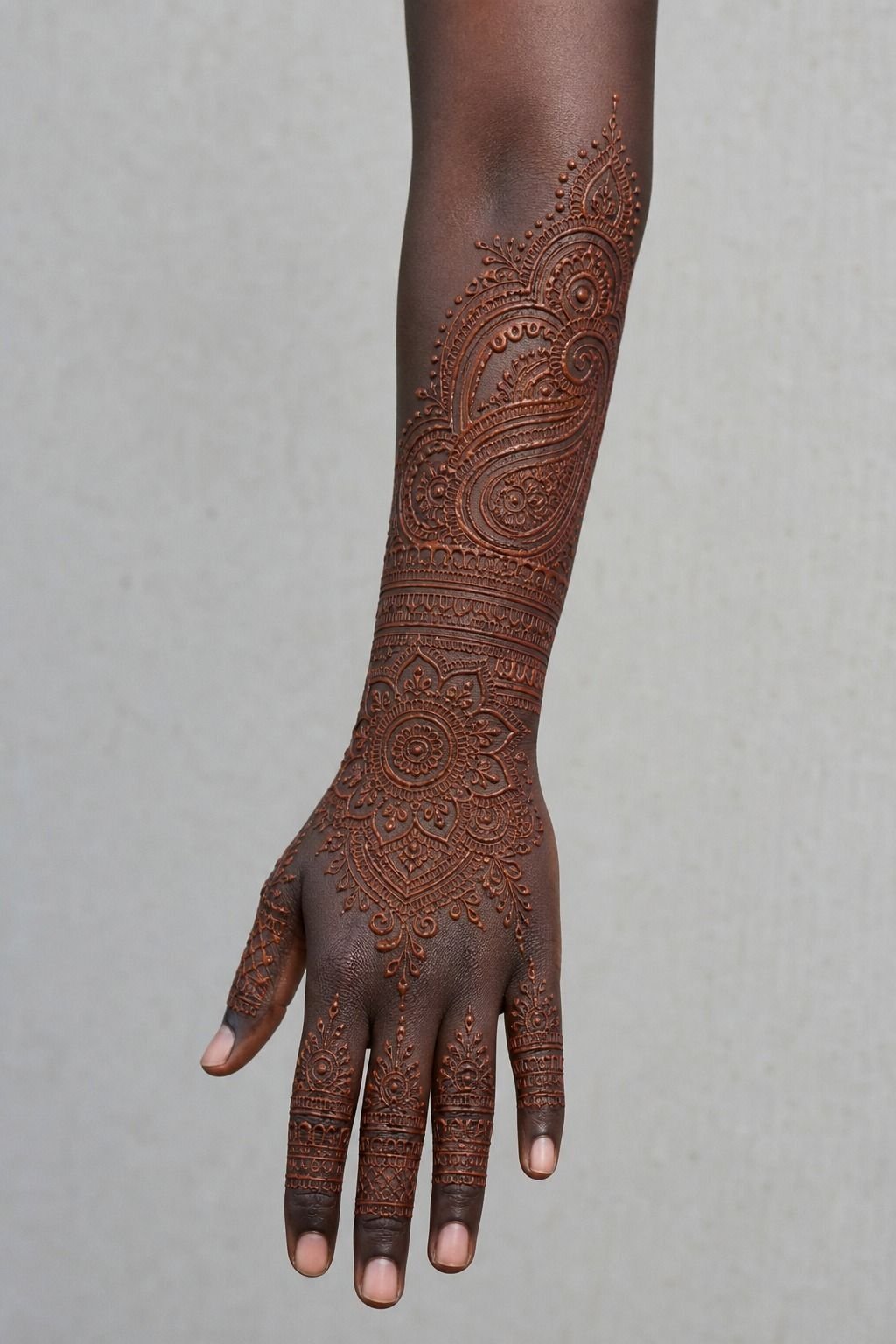
Stretch fine-line mehndi from the hand up the forearm when you want flow. The fine-line jaali can begin with a small floral center, then open into vines, paisleys, and geometric windows. Keep the direction consistent so the design feels flowing rather than fragmented.
Your forearm gives delicate details more room than your fingers. Use small petals, but don’t chase impossible micro-detail from a reference image. The paste needs enough separation to dry cleanly, and the stain needs enough skin around it to remain readable.
A fresh paste consistency makes a huge difference. If the mixture is too loose, lines spread; if it is too dry, the cone skips. A good cone should produce a steady trail with gentle pressure and no gritty breaks.
You can compare simpler versions in these very simple mehndi designs.
7Rajasthani Mehndi Bridal Motif
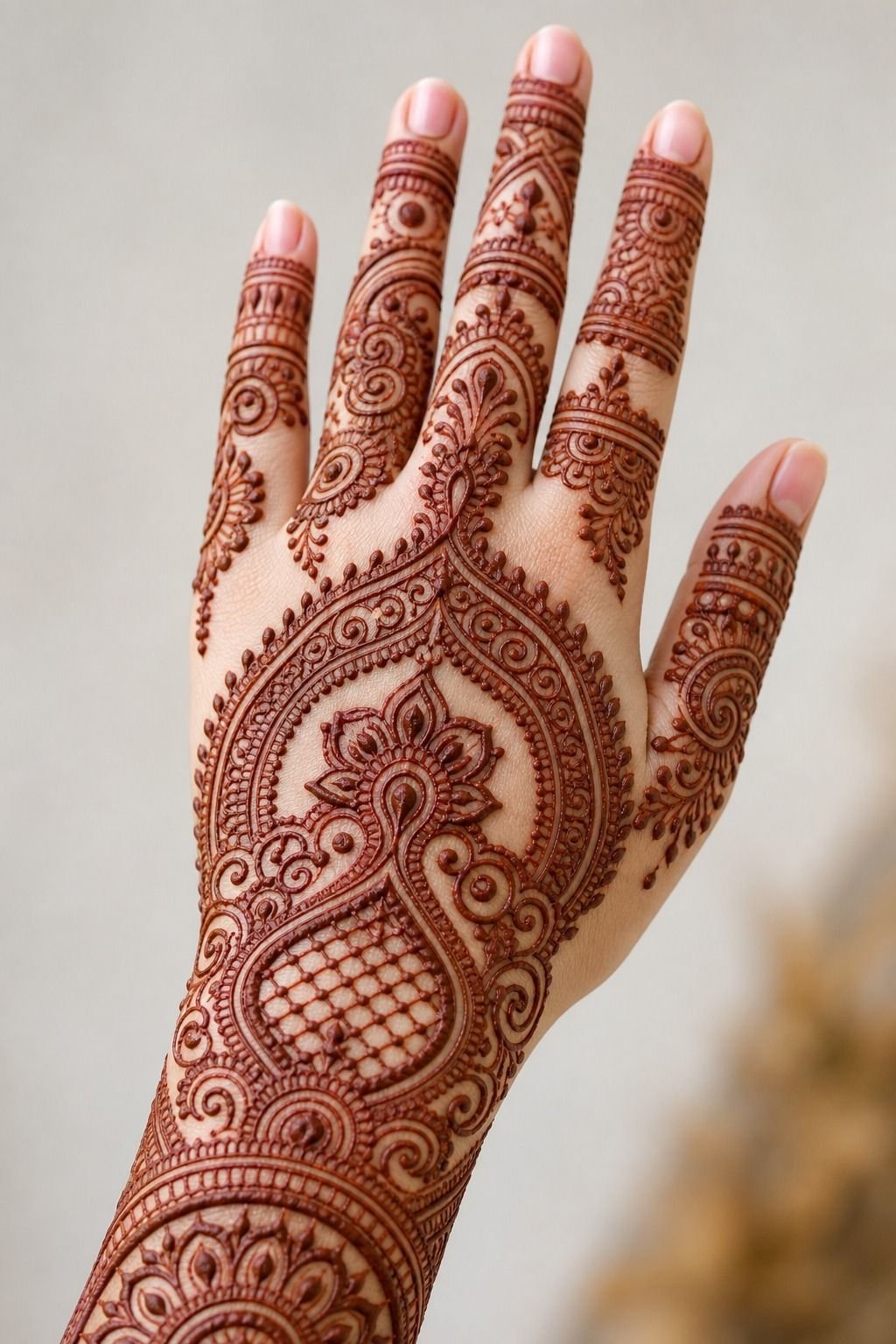
Frame a bridal motif across the back of your hand if you want the image’s dressed-up energy without full coverage. A bridal motif can combine flowers, paisleys, jaali windows, and a small central symbol. It feels sacred when the pattern connects to the ceremony instead of acting like random decoration.
8Rajasthani Mehndi Peacock Design
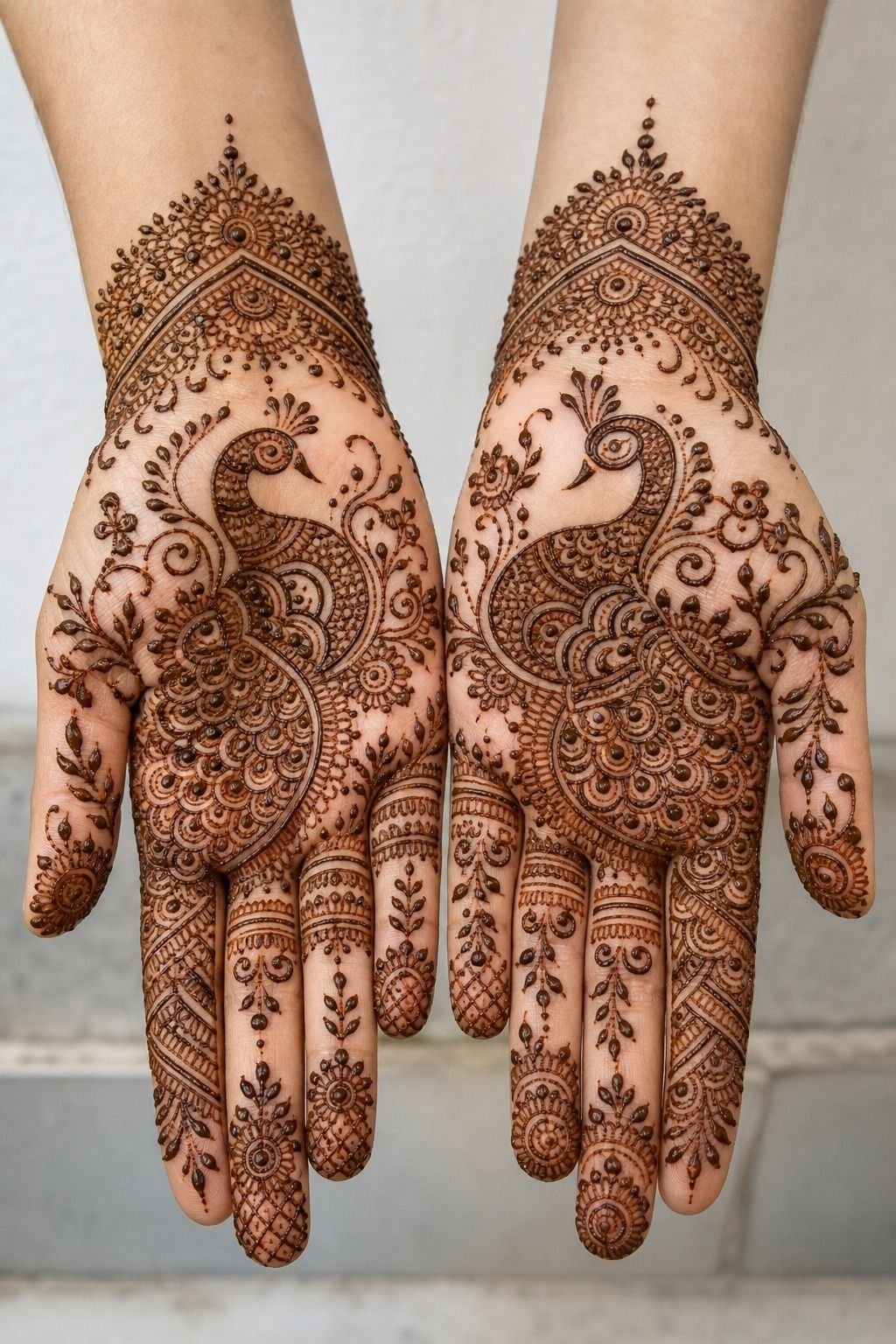
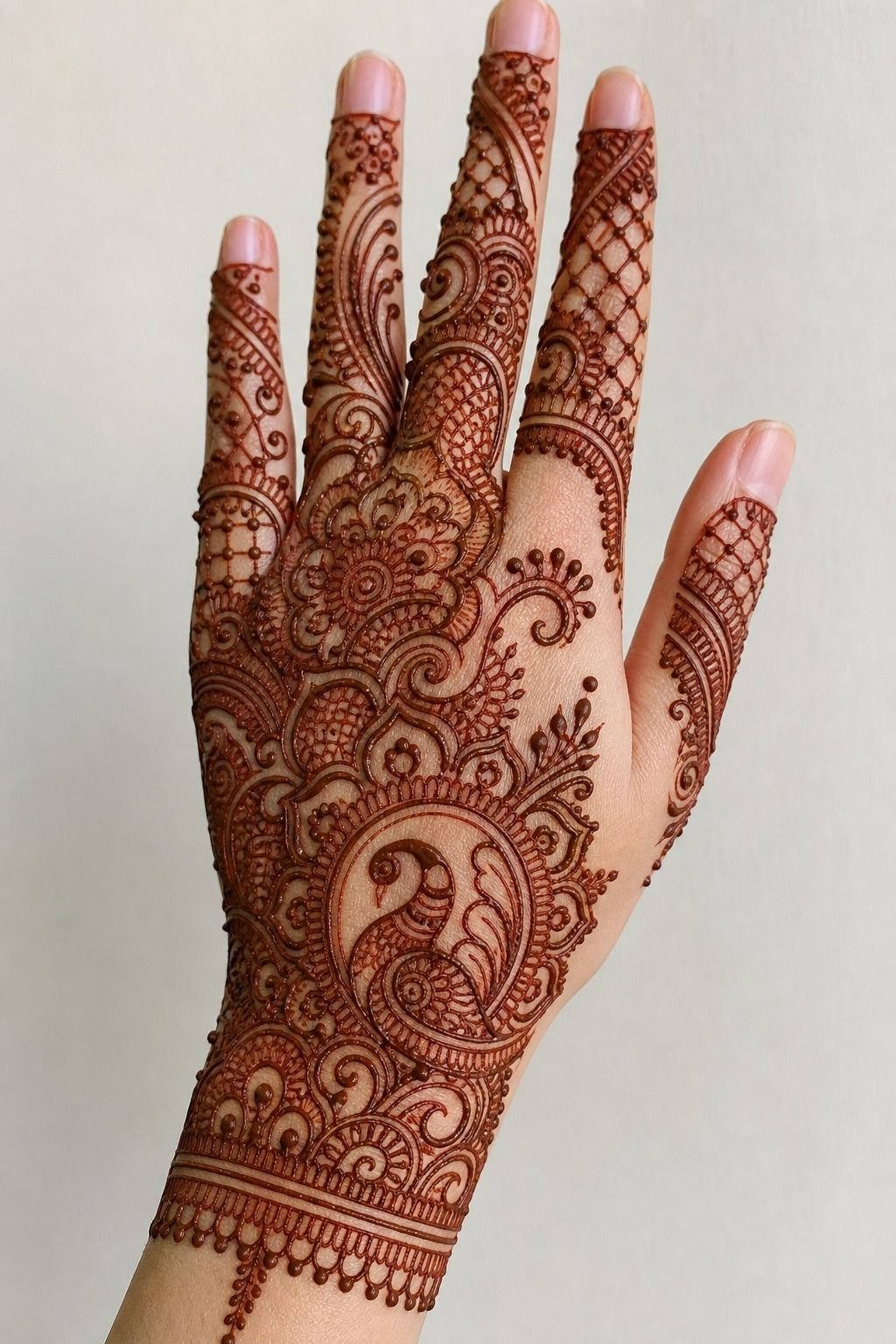
Make the peacock your hero shape, not a hidden detail. In the image, both palms give the bird enough room to show its feather rhythm. A peacock silhouette should be readable first, with the body and head clearly separated from the surrounding florals.
A peacock can look captivating without fifty individual feathers. Use curved lines, open skin, and a feather rhythm that grows from the body toward the tail. The most successful designs feel striking because they edit detail instead of adding it everywhere.
Keep the paisley tail connected to the main body with a clear curve. Avoid squeezing every feather into a narrow strip. A slightly larger motif gives the stain room to show its shape before it begins fading.
Browse these peacock mehndi designs before you settle on a tail shape.
9Rajasthani Mehndi Elephant Symbolism
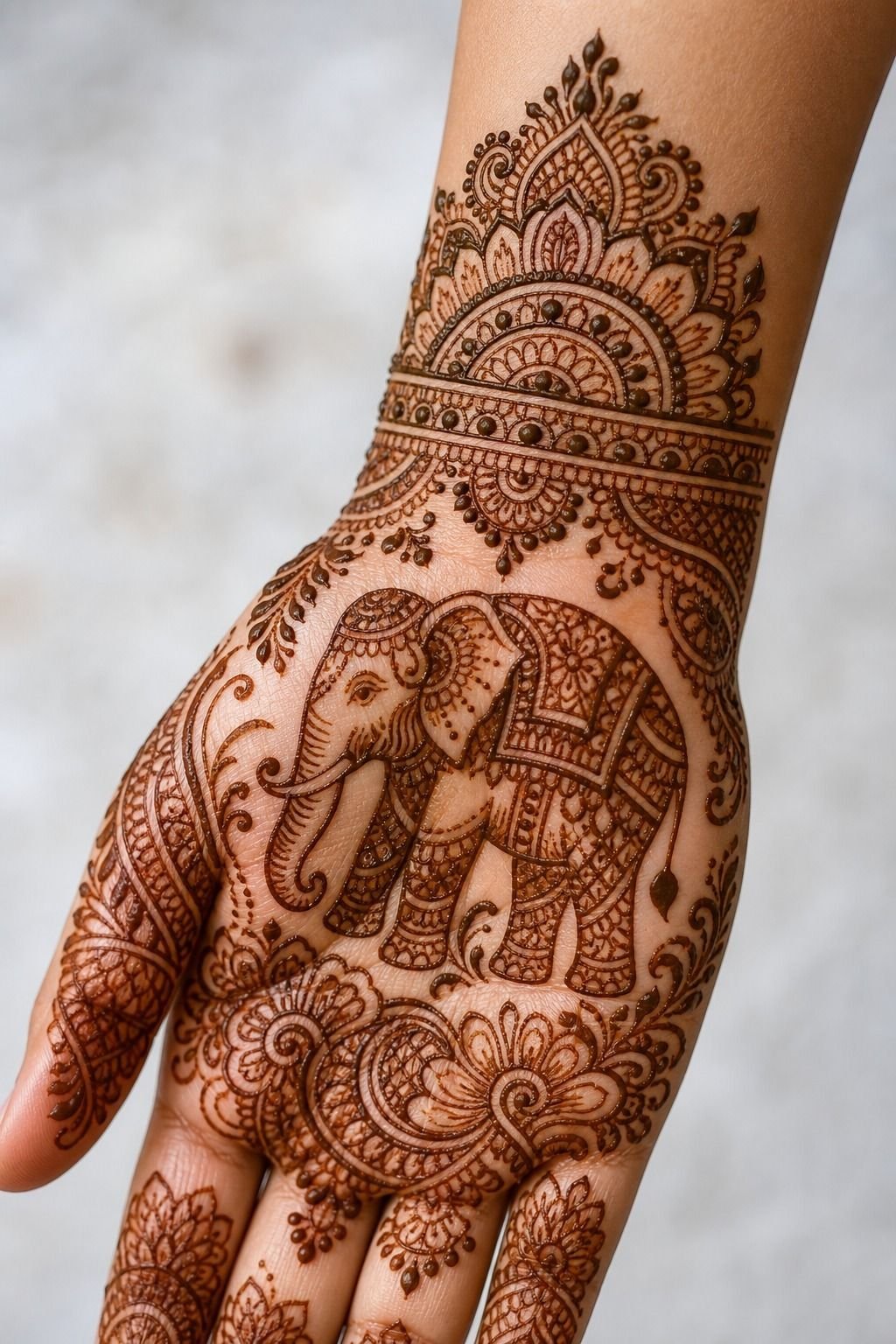
Choose an elephant only if you like the meaning and the silhouette. An elephant motif can represent strength, celebration, protection, or family, depending on the story you want the design to carry. Keep the outline clear and surround it with classic Rajasthani borders rather than burying it under extra detail.
10Rajasthani Mehndi Floral Forearm Design
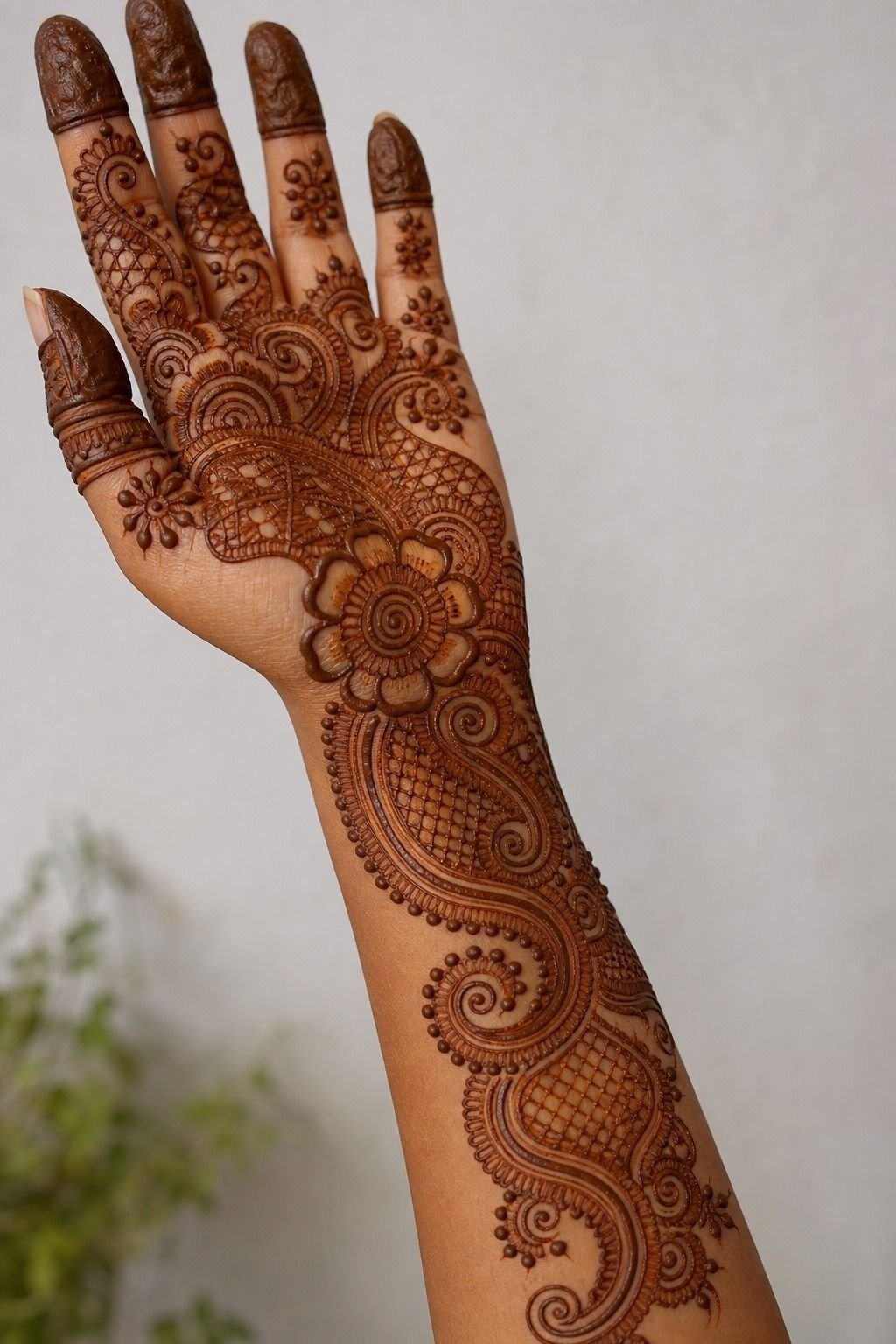
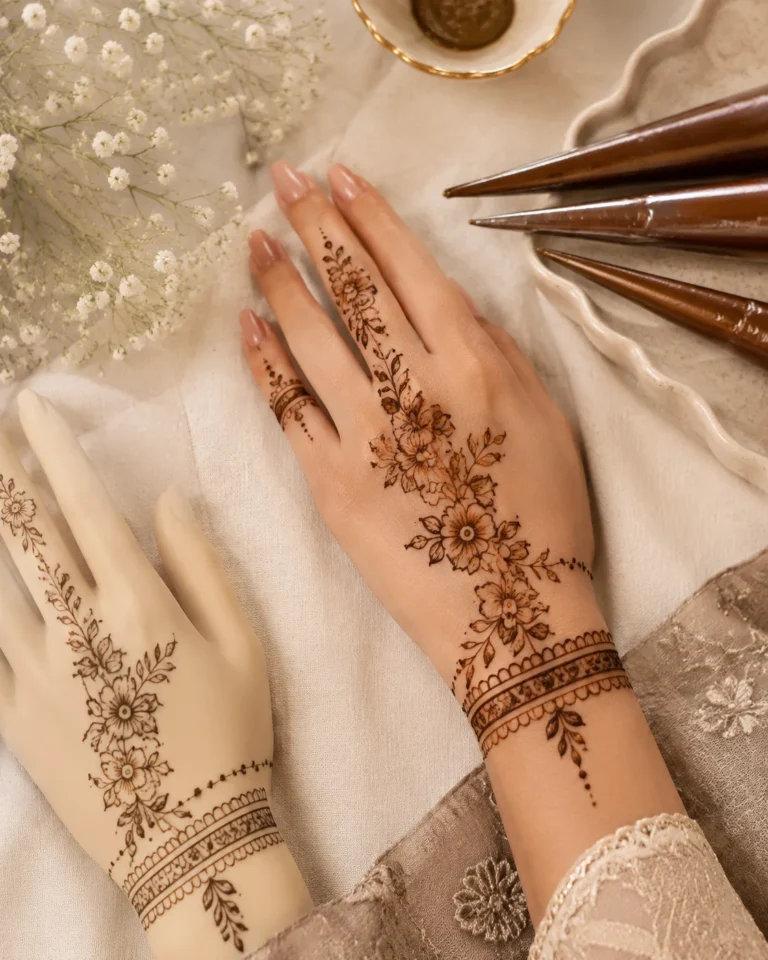
Run floral mehndi up your forearm if you want a placement that gives the pattern room to breathe. A floral forearm trail can begin with one open flower near the wrist and grow into leaves, paisleys, and small dots toward the elbow.
Use a long stem, three open flowers, and soft dots that echo the golden-tan hand image. Open petals usually stain more clearly than dense clusters. The spacing also gives the design a vibrant look while the color moves from fresh orange to deeper brown.
Choose a fresh natural henna powder from a reputable source and check the ingredient list. Avoid products marketed as “black henna,” since some contain additives that can cause serious skin reactions. Patch testing is sensible, especially if your skin is sensitive.
For an easier starting point, see these simple mehndi designs for the front hand.
11Rajasthani Mehndi Jaali Linework
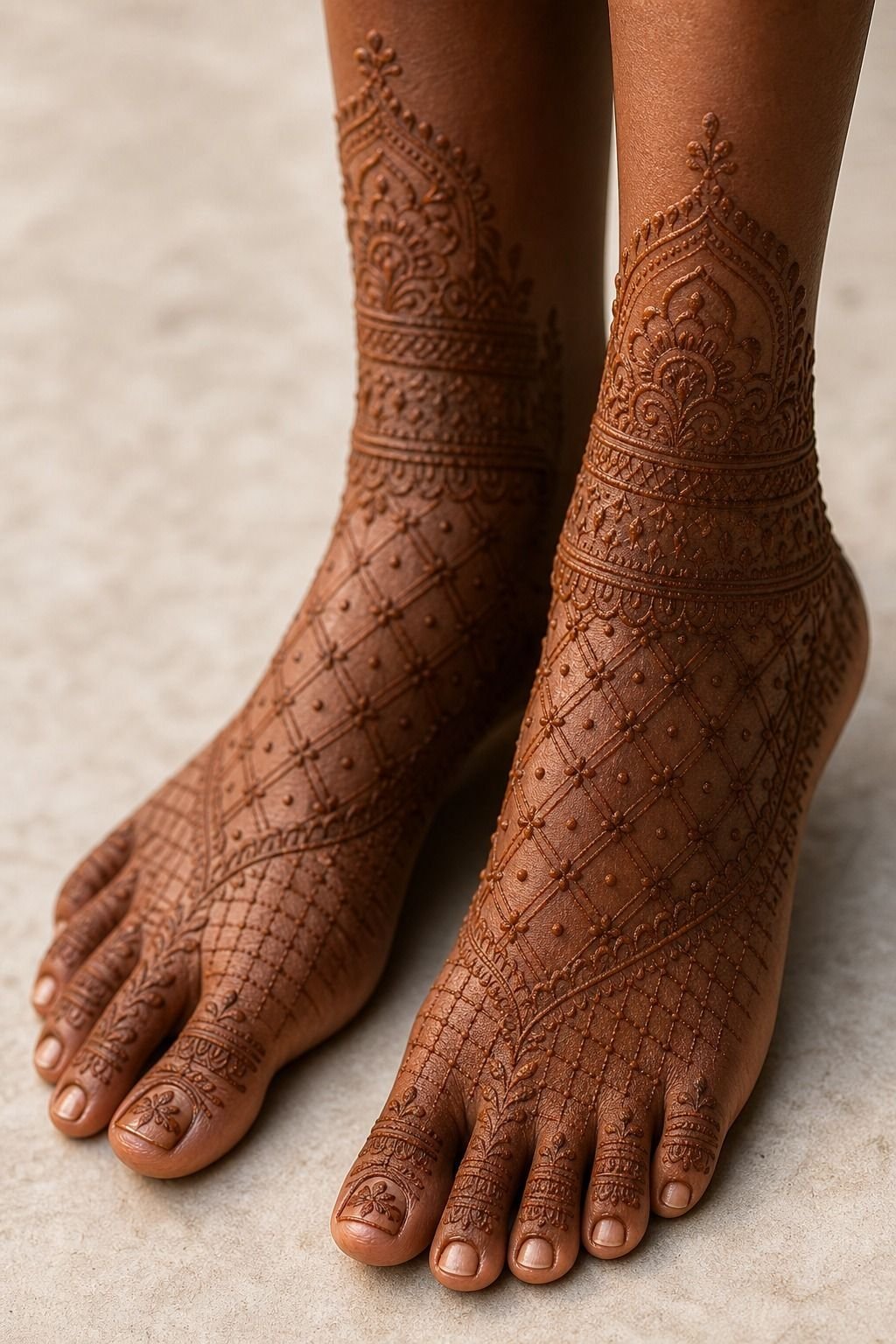
Build a jaali grid with wider windows than you think you need. A jaali grid looks more crisp when each opening has room around it, especially on the palm where the skin folds and the stain develops unevenly. Add tiny dots only after the main structure is complete.
12Rajasthani Mehndi Arabic Fusion
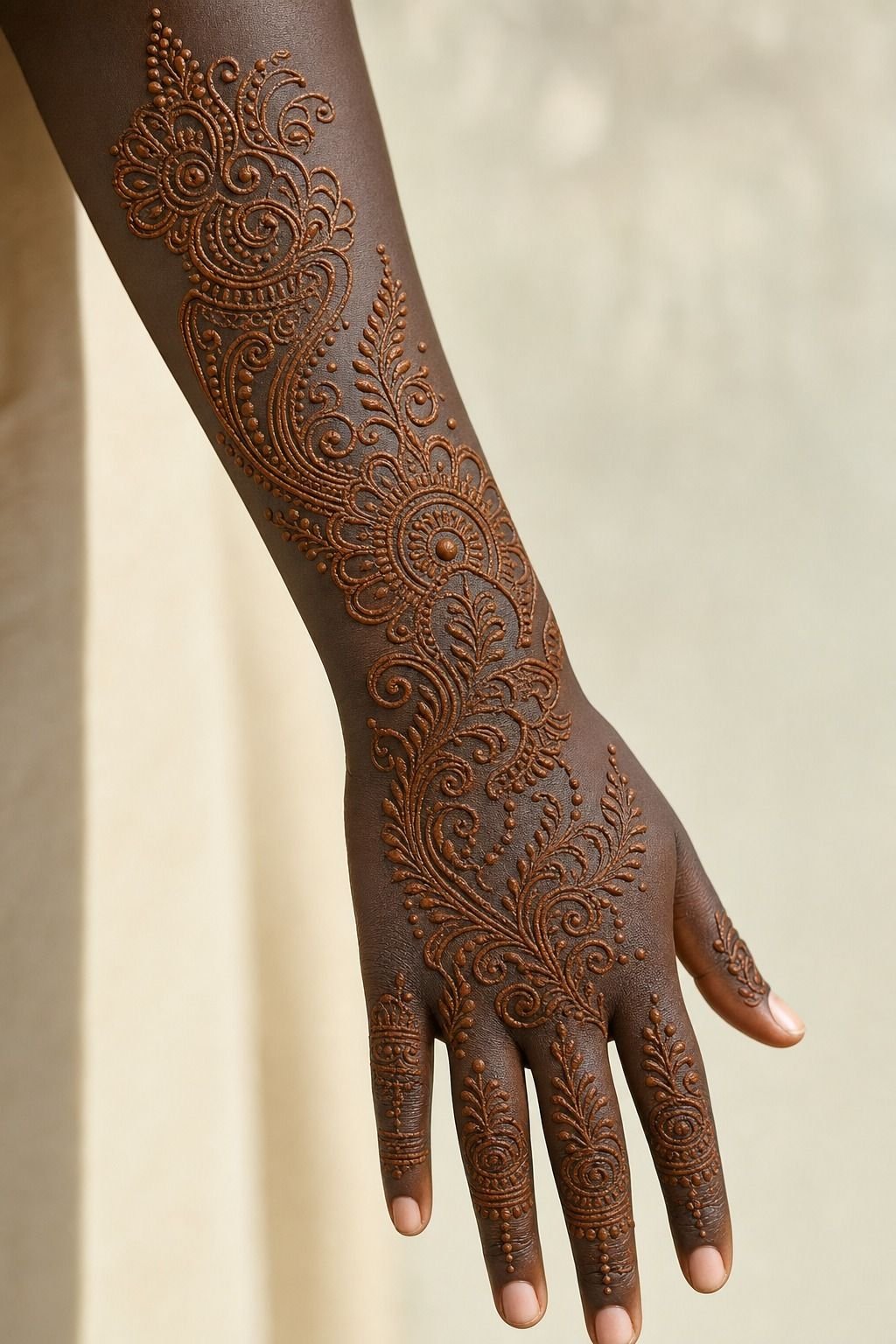
Mix Arabic-inspired trailing florals with Rajasthani geometry when you want a looser forearm piece. Arabic-inspired florals can bring a romantic sweep, while Rajasthani borders add structure. The hand-to-forearm movement is the key.
Let the vines travel in one direction, like they’re catching a breeze, instead of stopping in hard little boxes. A Rajasthani geometry panel can act as the visual counterweight to those open trails. The contrast feels expressive without becoming crowded.
You can use arabian mehndi designs as a vibe reference, then ask your artist to create a custom layout around your arm. Don’t copy a cultural pattern blindly from a pin. Bring references, explain what you love, and let the artist build a personal design that fits your anatomy.
13Rajasthani Mehndi Half-Sleeve Layout
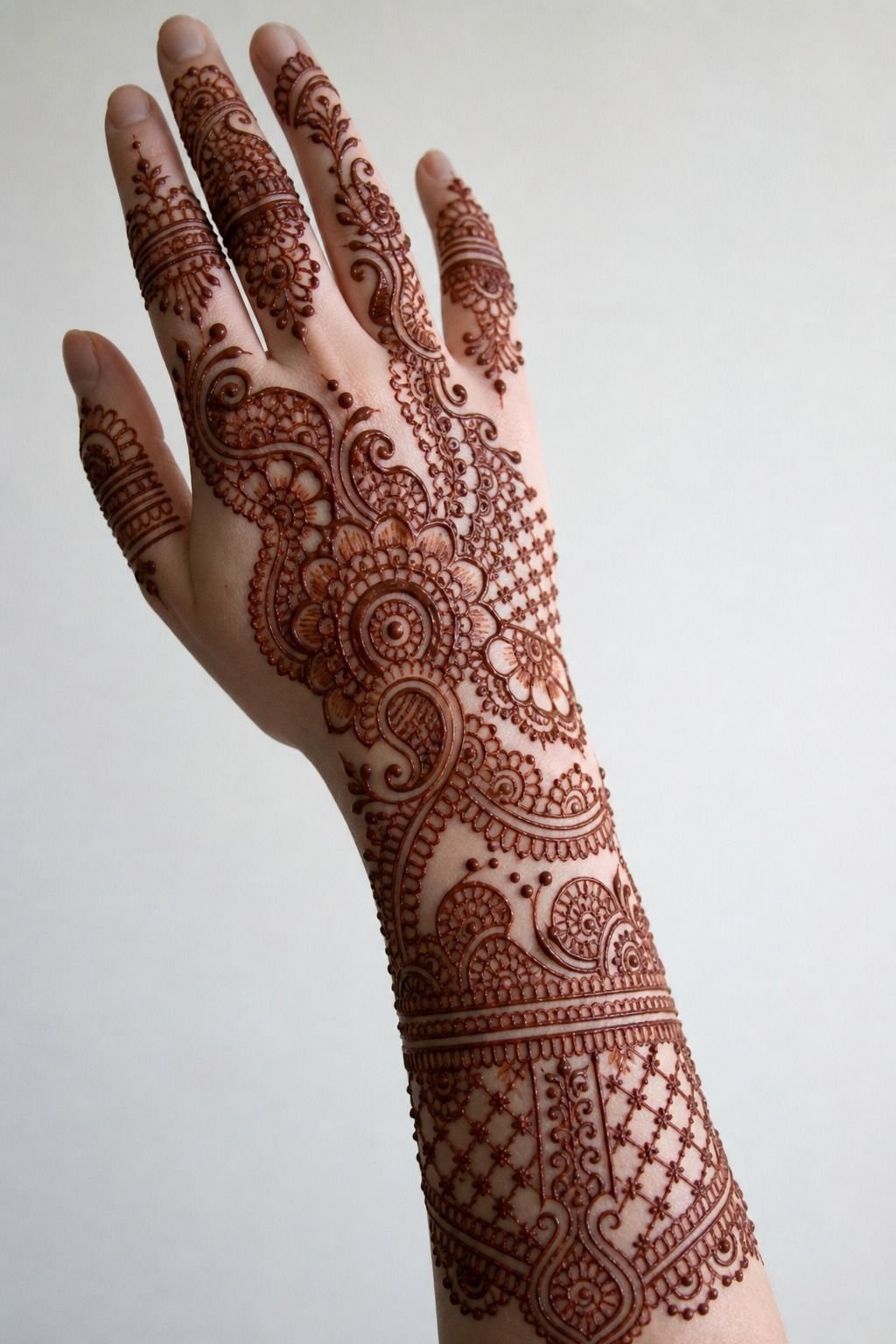
Map the half sleeve in zones: hand, wrist, lower forearm, then a soft ending before the elbow. The Three-Zone Flow Method gives your eye a clear path instead of one giant wall of detail. It also makes the application easier to plan.
Use a dense paisley panel at the wrist, open florals on the forearm, then one larger statement shape near the upper edge. The composition can feel powerful without filling every inch.
Don’t force the pattern into the elbow crease. That area bends, rubs, and can make wet paste shift before it dries. End the layout with an understated border or a few separated leaves.
14Rajasthani Mehndi Back-Hand Placement
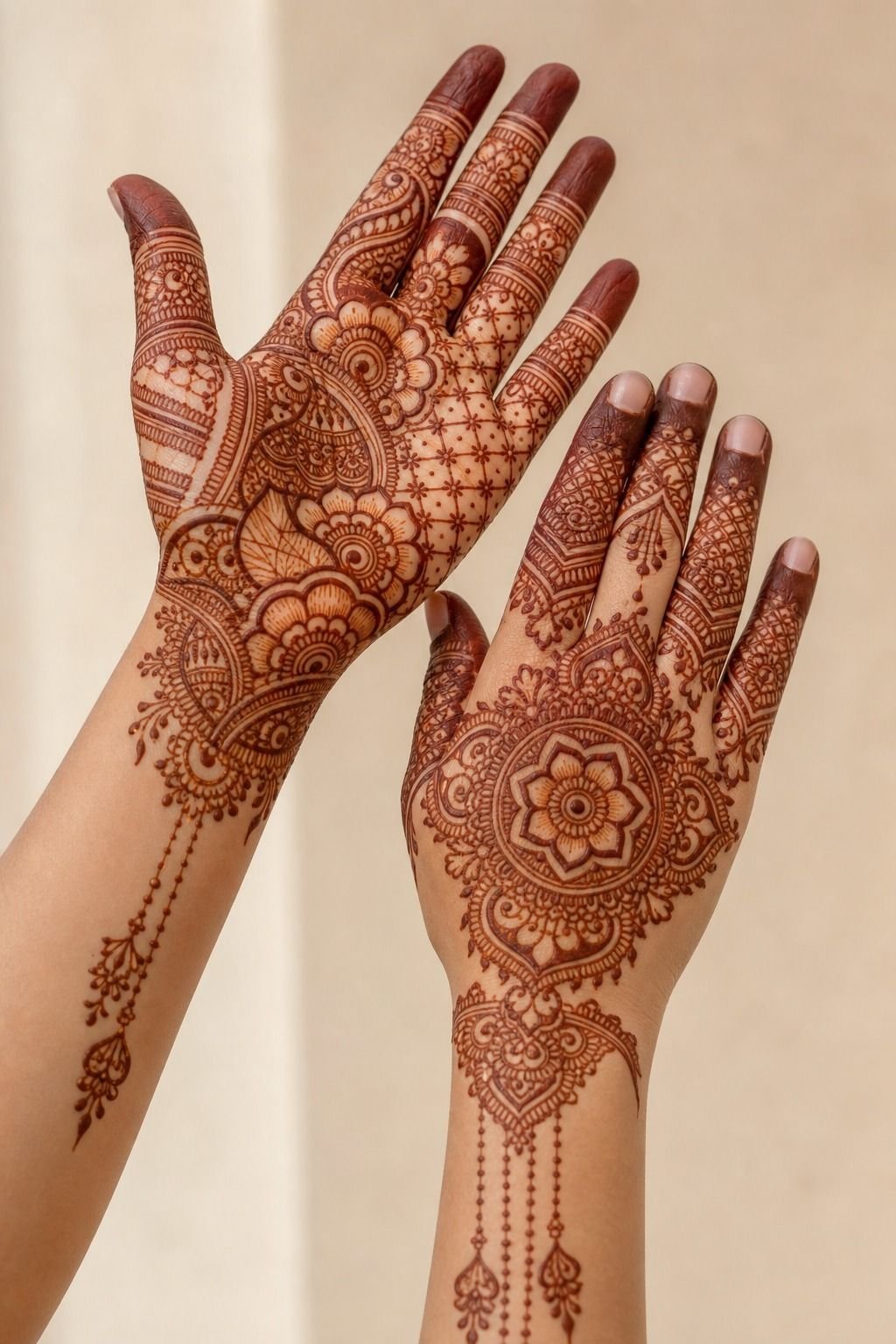
Place your strongest motif on the back of the hand if visibility is the point. A back-hand medallion reads quickly because the center stays broad and the fingers stay lighter. You’ll see it all day, which is lovely if you enjoy a design that feels iconic to you.
Hands are high-wear, full stop. Washing, sanitizer, sunlight, and friction can make the stain fade faster near knuckles and finger sides. Use skin-safe paste from a trusted source and keep the design open enough to remain recognizable.
I’d choose a floral center over a tiny quote. It reads quickly, has fewer fragile details, and doesn’t depend on lettering staying perfectly clear. A dainty border around the medallion can make the placement feel complete.
15Rajasthani Mehndi Ankle Cuff
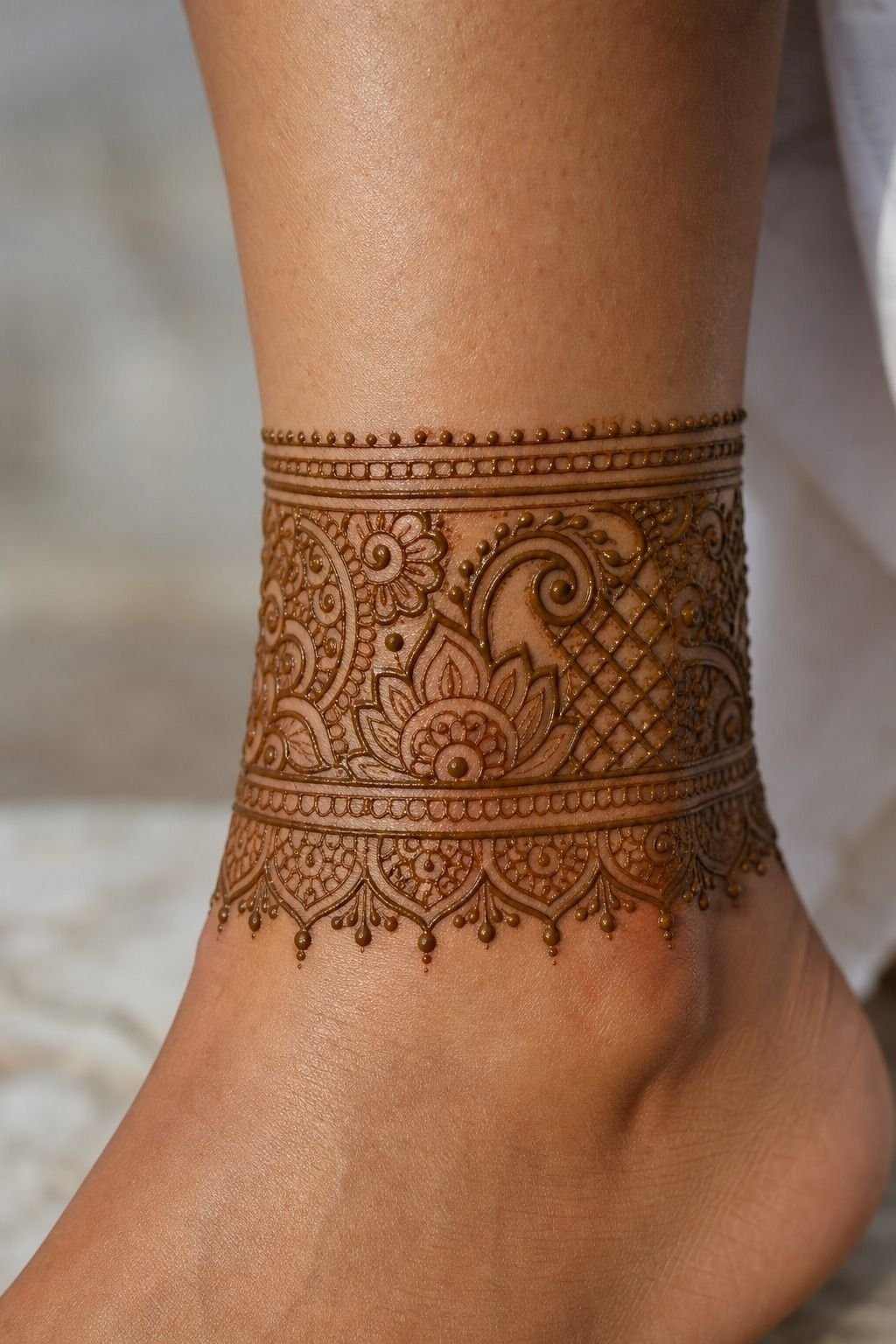
Wrap an ankle cuff around the leg, not too low across the foot. An ankle cuff can combine scallops, paisleys, and a central floral break. It feels feminine and stylish while remaining easy to cover when the occasion ends.
16Rajasthani Mehndi Minimalist Wrist Design
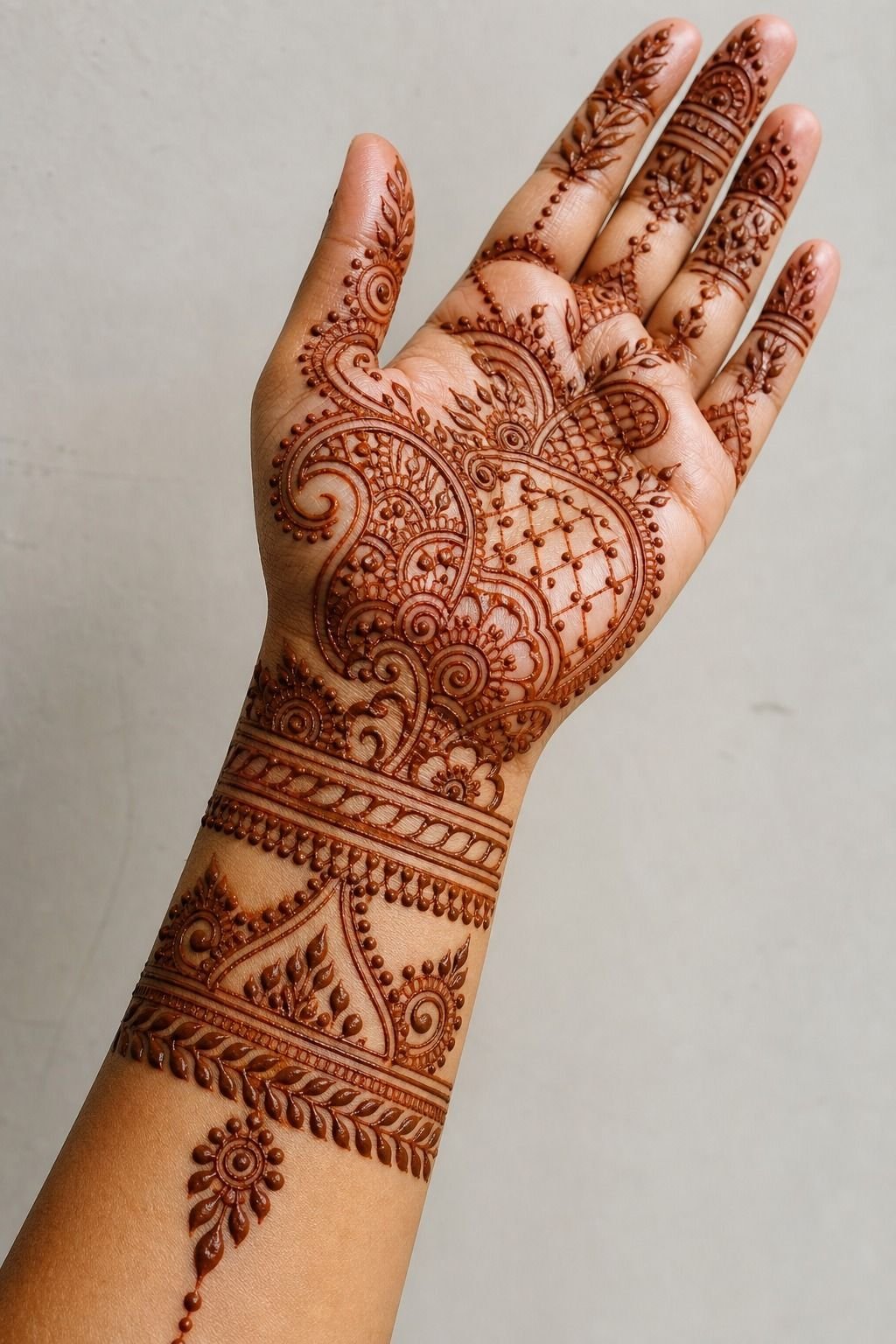
Strip the idea down to one paisley, three dots, and a curved leaf stem. A minimalist paisley can feel intentional without covering the whole wrist. The design looks especially sleek when the cone lines stay even and the empty skin remains part of the composition.
Don’t shrink it until it disappears. A very tiny pattern can blur visually when the stain spreads slightly during drying. Move it a little up the forearm if you want more breathing room and a clearer silhouette.
Use forearm placement for a longer-lasting visual read, then let the stain develop naturally. Keep the paste on for the recommended time, avoid rubbing it away, and expect the deepest color on the second day.
17Rajasthani Mehndi Bold Pattern
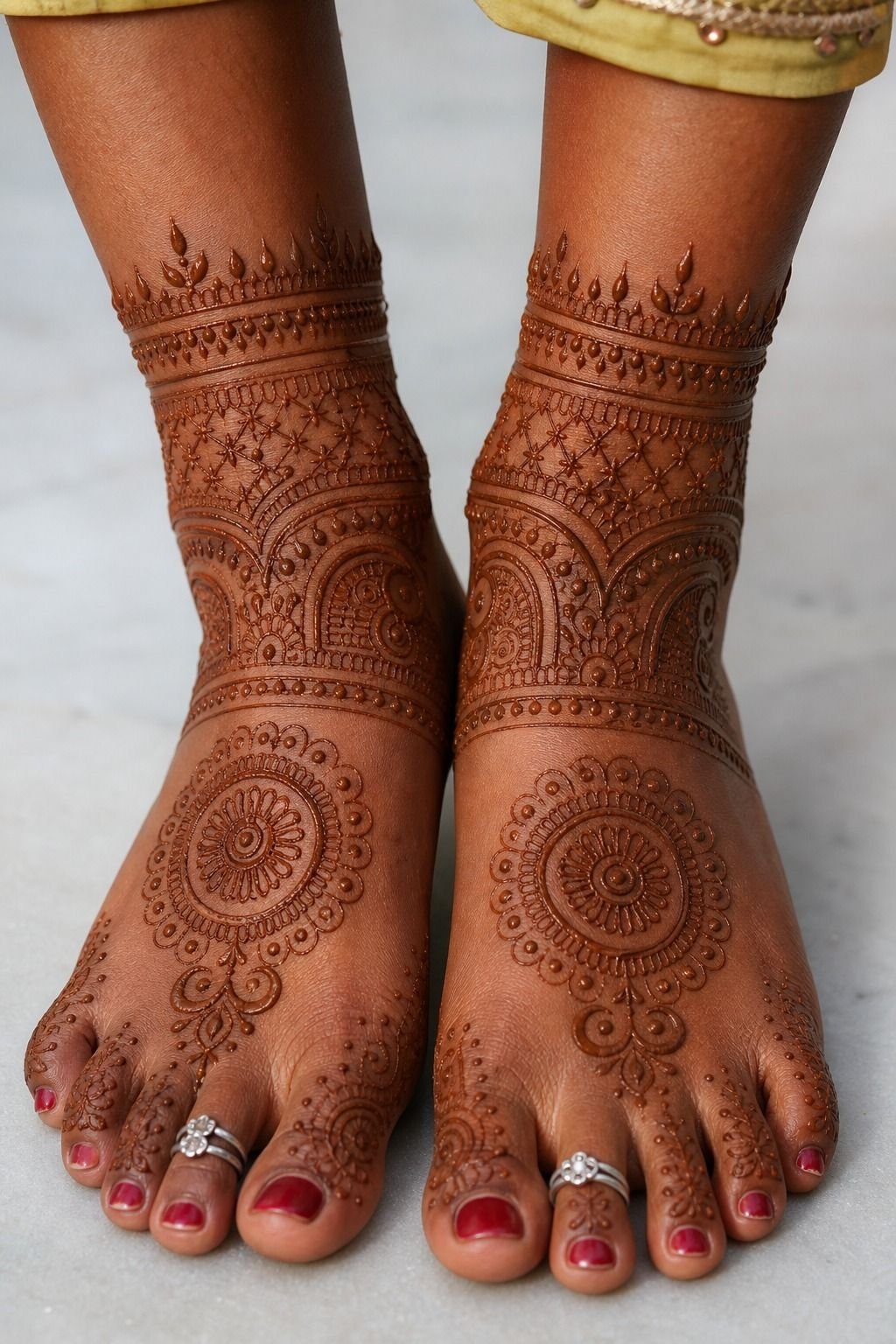
Choose a deep-brown stain when you want the richest traditional contrast. The color will vary with paste quality, skin chemistry, warmth, and drying time. A deep brown stain can look daring without requiring heavy coverage.
Keep the main lines clear, then use dots and fine jaali details as accents. The strongest designs balance density with open skin. That balance gives the pattern a timeless quality as it gradually fades.
Your cone should be comfortable to hold and easy to control. A narrow paste cone works well for delicate lines, while a slightly wider opening helps with larger petals and borders. Practice your pressure before starting the final design.
18Rajasthani Mehndi Matching Hand Designs
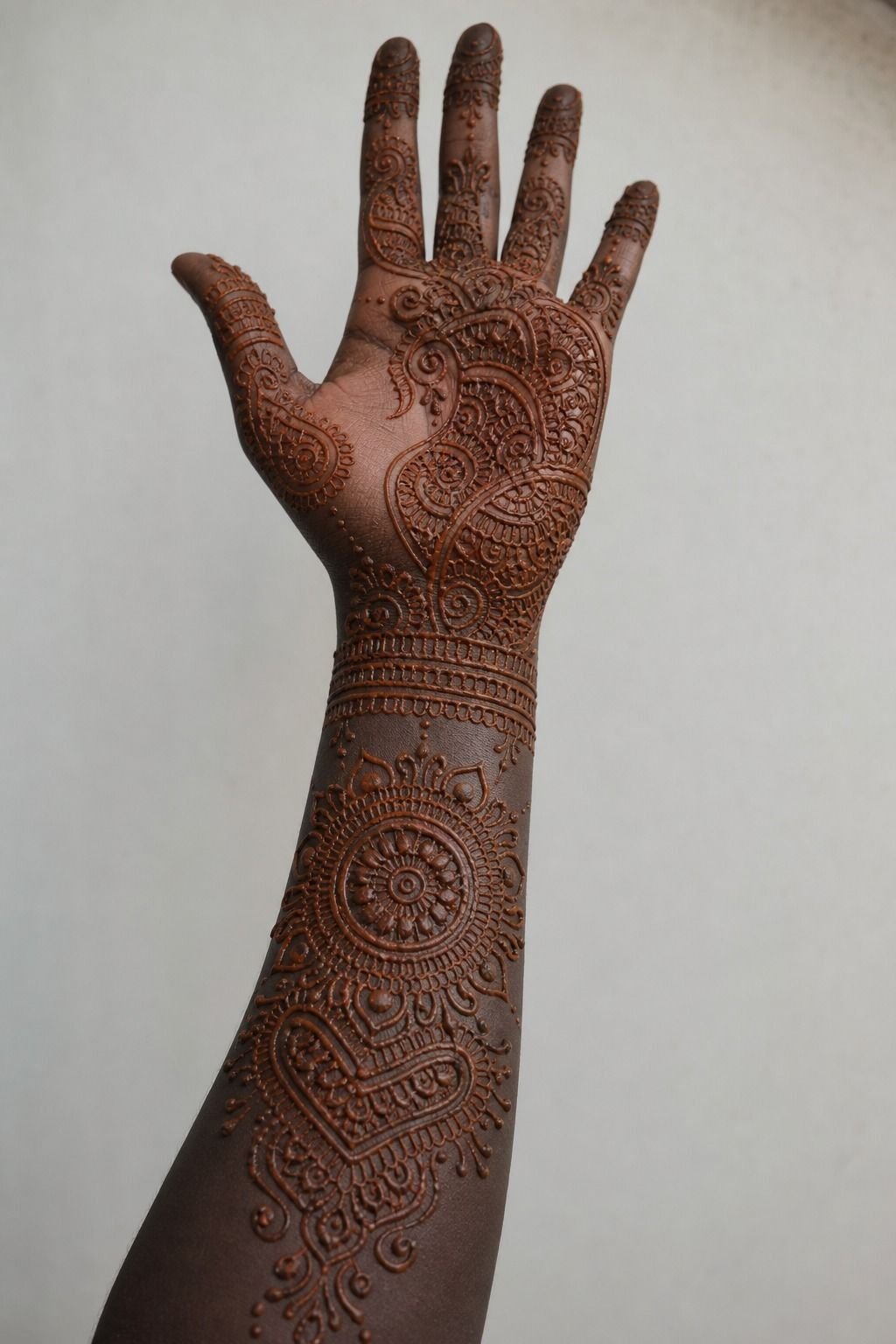
Match the hands by balance, not by making them clones. Matching hand designs can repeat the same flower or paisley family, then reverse the direction on each side. Your hands will look harmonious when they rest together.
The Twin-Flow Layout works best when one hand has slightly more density than the other. Why?
Your dominant hand takes more washing and friction, so its stain may fade sooner. Give it cleaner, stronger shapes and put the softer detail on the other side.
See more paired inspiration in these stylish mehndi designs for the front hand.
19Rajasthani Mehndi Temporary Paste Design
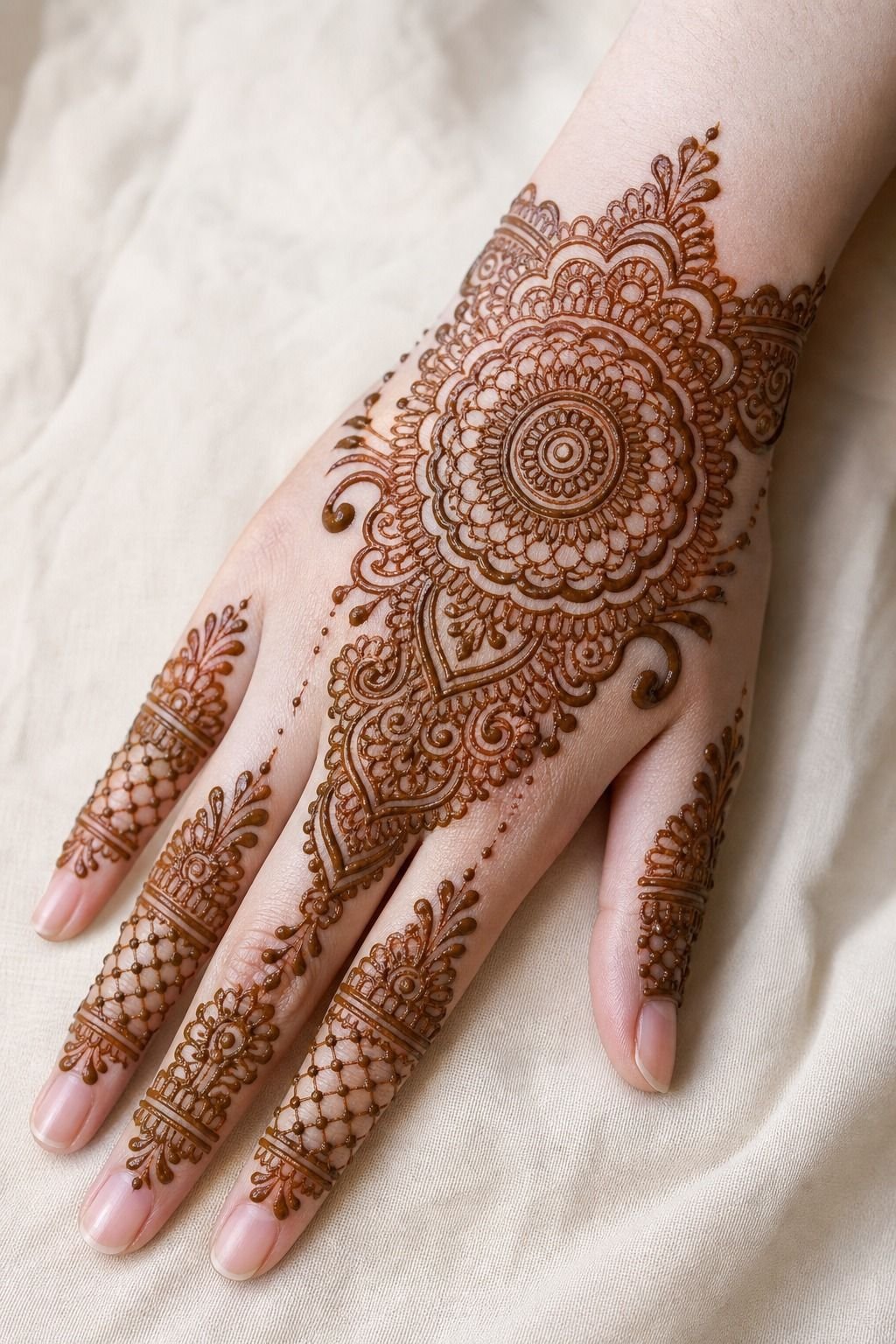
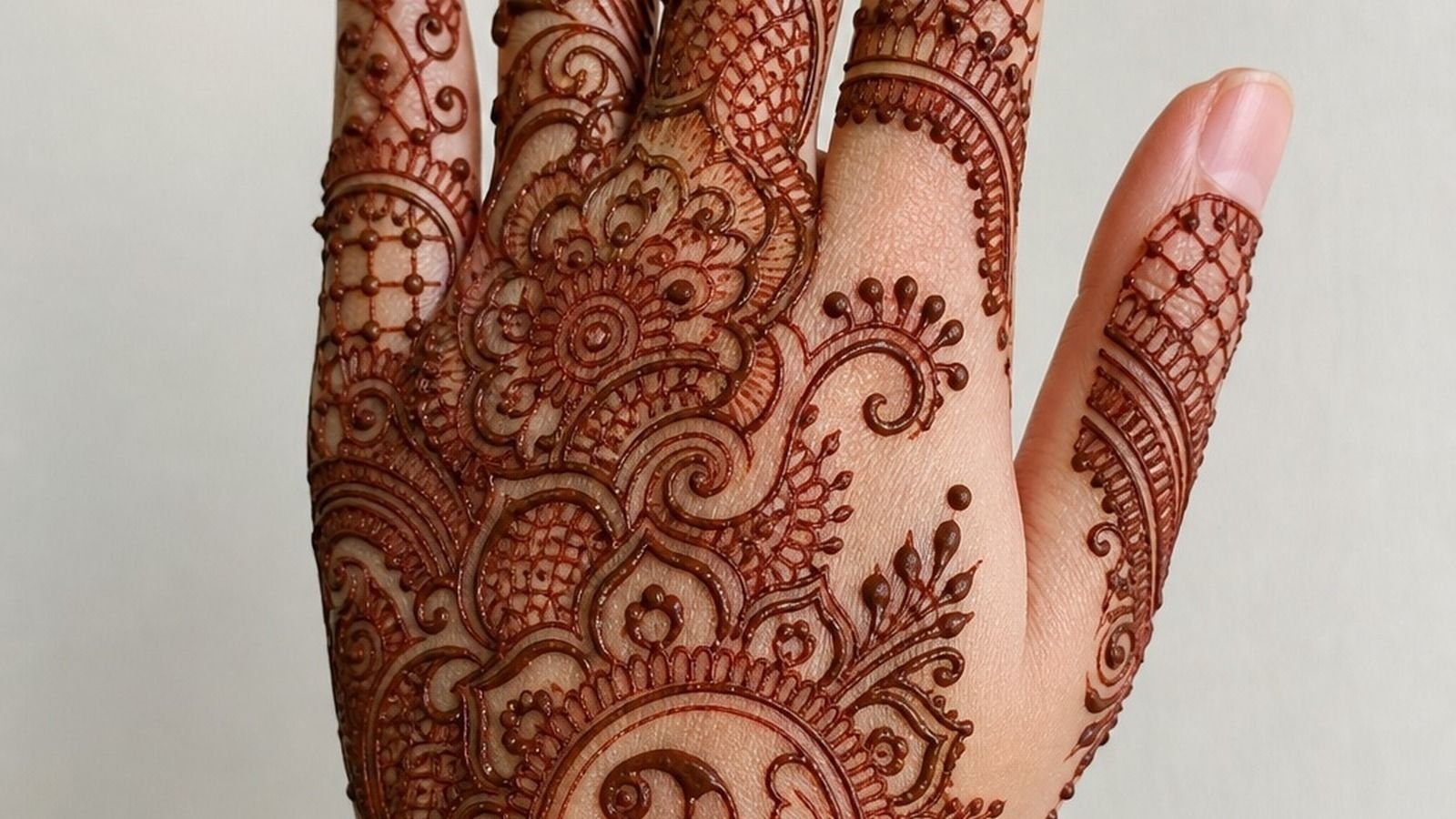
Test your layout with real henna before the occasion. The reddish-brown back-hand image is exactly what a trial run should show you: scale, placement, and whether you still love seeing the design on your skin after several days. Henna is not a tattoo.
Use natural henna paste from a reputable source, not “black henna” formulas that can cause serious reactions. You’ll learn whether a full-hand pattern feels exciting or whether a wrist cuff is enough. The stain will darken after the paste comes off, so wait until the second day before judging the color.
A lemon-sugar seal can help keep dried paste attached while the stain develops, but it shouldn’t leave your skin dripping or irritated. Remove the dry paste gently by scraping or rubbing it away. Avoid water for a while afterward if your artist recommends it.
What Your Budget and Stain Window Look Like
Your final price depends on the size, placement, detail, occasion, and experience of the mehndi artist. A custom occasion design may cost more than a quick festival motif because planning and application take longer. You’re paying for clean execution and a thoughtful layout.
A full-hand application can require patience, especially when the design includes tiny paisleys, florals, and symmetrical borders. Full-hand application usually costs more than a few finger bands because it takes more time and paste.
The stain itself is temporary. It dries in roughly one to two hours, darkens on the second day, and commonly fades within one to three weeks. Your freshly mixed paste should have a smooth, workable consistency and a clearly listed ingredient profile.
Here’s a realistic price range for common Rajasthani mehndi options:
My No-Bullshit Rule for Mehndi-Inspired Designs
I love Rajasthani mehndi when the person wearing it understands that the pattern is temporary, ceremonial, and full of movement. You can honor the florals, jaali patterns, peacocks, elephants, and symmetry without expecting every online image to translate perfectly onto your hand. Your skin has folds, texture, and its own striking shape.
I’ve had clients arrive with a hand covered in screenshots, every gap filled with microscopic swirls. They’re usually nervous that removing one detail means losing the whole idea. It doesn’t.
You’re giving the design room to breathe. A fierce central motif can feel more expressive than a crowded palm.
A good mehndi artist should show you how they’ll simplify a border, enlarge a petal, or leave space around a symbol. Fresh paste can look ethereal, but the final stain reveals whether the structure was clear. Ask questions before the cone touches your skin!
I’d also skip asking for a Pinterest-exact copy. References are for vibe, scale, and flow.
Your artist should redraw the piece for your hand, your forearm, your ankle, and your occasion. That respectful route usually creates something more meaningful and memorable anyway.
What People Always Want to Know
How much do Rajasthani Mehndi Designs usually cost?
A small Rajasthani mehndi design usually costs about $15 to $40, while a bridal or full-hand application may range from $75 to $300. Clean application is worth paying for. Your location, artist experience, detail level, and occasion will shape the final number.
Are Rajasthani Mehndi Designs a good idea for a first application?
Yes, especially if you choose a simple layout on the forearm, hand, or ankle. A clear motif gives you room to grow. You can start with one paisley, flower, or cuff, then choose a fuller design for a later celebration.
How do I choose a mehndi artist for Rajasthani Mehndi Designs?
Look for healed-looking stain results, clear ingredient information, and photos taken after the paste has been removed. A clean portfolio shows real skill. Your mehndi artist should explain drying time, aftercare, color development, and whether they offer custom layouts or traditional motifs.
How much do Rajasthani Mehndi Designs fade?
Hands and fingers often fade faster because of washing, sunlight, friction, and frequent movement. Forearms and ankles may retain visible color longer. Placement changes everything. The stain usually darkens on the second day, then gradually lightens over one to three weeks.
How long does a Rajasthani Mehndi Designs application take to dry and fade?
The paste generally needs one to two hours to dry before removal, although intricate bridal work may need more patience. Gentle aftercare protects the stain. Keep the paste undisturbed, remove it carefully, and expect the richest color on the second day.
What’s the best placement for Rajasthani Mehndi Designs?
Your outer forearm is a strong all-around pick for visibility and design space. It gives your pattern room to breathe. Hands look dramatic and ceremonial, while ankles offer a more private option that still suits ornamental cuffs.
Where I’d Start First
If I had to pick one, I’d start with the floral forearm layout. Your mehndi artist gets enough skin to keep the petals open, so the design remains playful and readable as the stain develops.
Pin that shape for later and compare it with these modern mehndi designs. Start there!