Bridal mehndi designs are not just more henna. They are longer sessions, denser patterns, cultural references, timing decisions, and photos that will be looked at for years.
Quick answer: Good bridal mehndi designs include full-hand florals, mandalas, Arabic vines, peacock motifs, personalized initials, wrist-to-arm extensions, and balanced front/back layouts planned before the event week.
Bridal mehndi design directions
Bridal mehndi should match the outfit, event schedule, and how much density the bride actually wants.
| Option | Best use | Keep in mind |
|---|---|---|
| Full-hand floral | Classic bridal coverage | Long session time |
| Peacock motif | Traditional statement | Needs skilled detail |
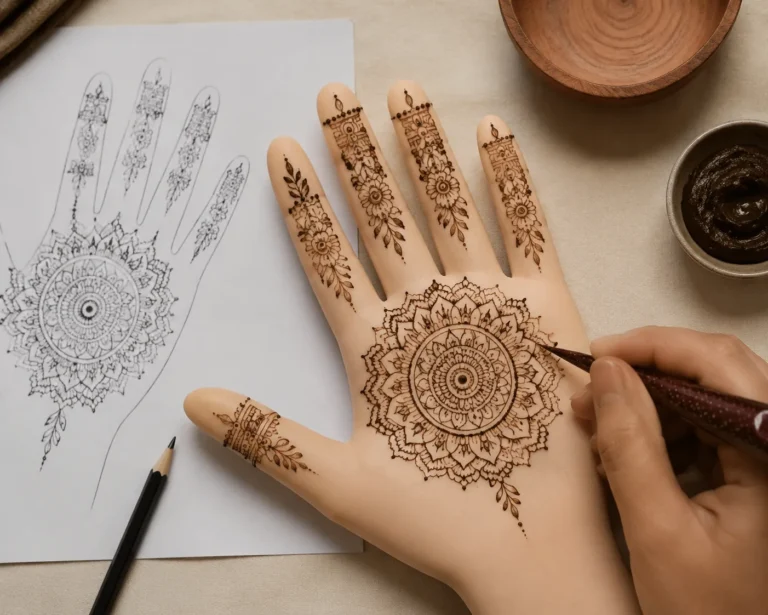
| Mandala center | Balanced palm focus | Can feel too simple alone |
| Arabic bridal | Flowing negative space | Less dense than full fill |
| Personal initials | Hidden detail | Keep it readable |
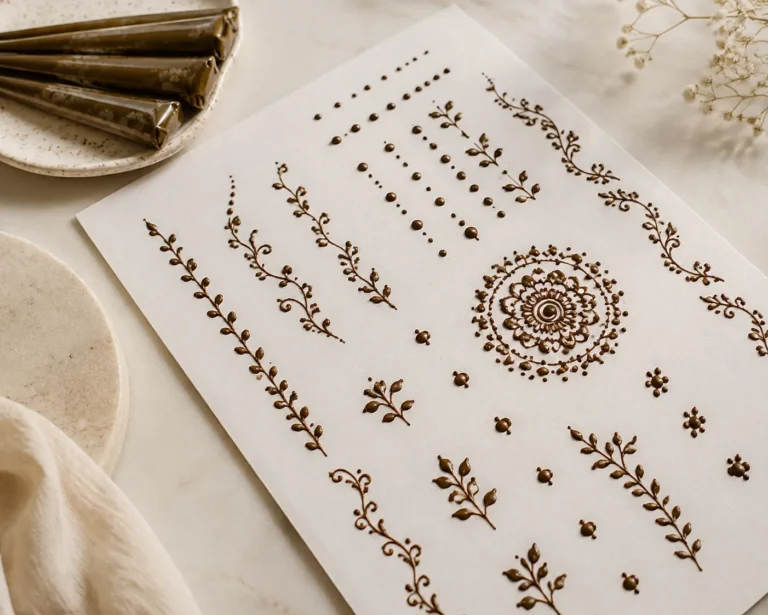
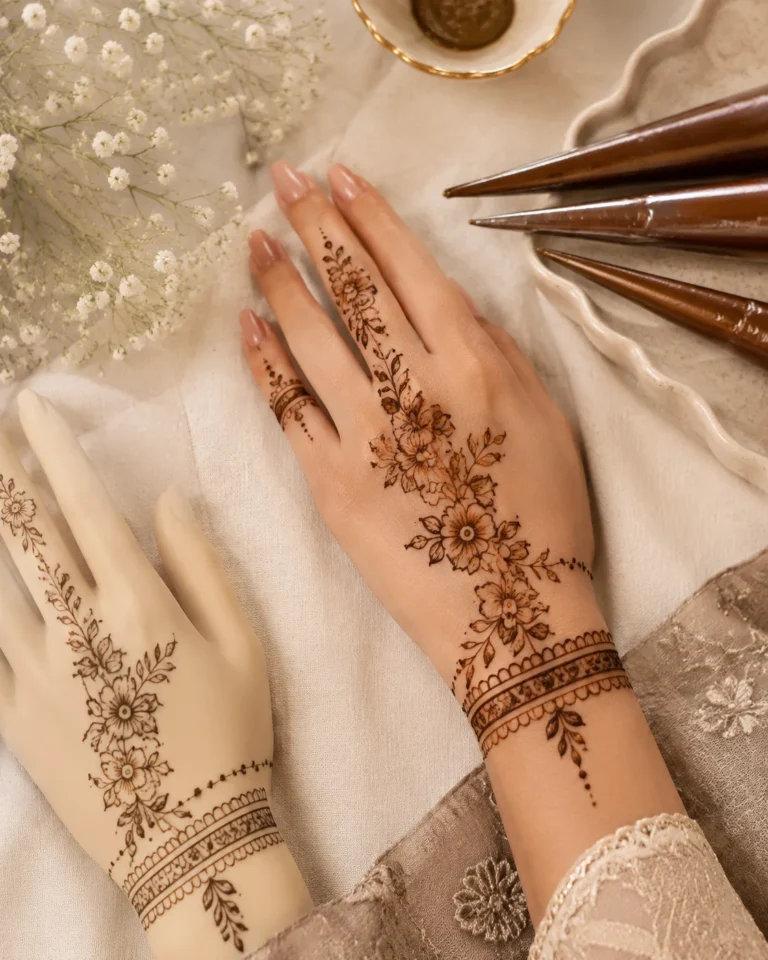
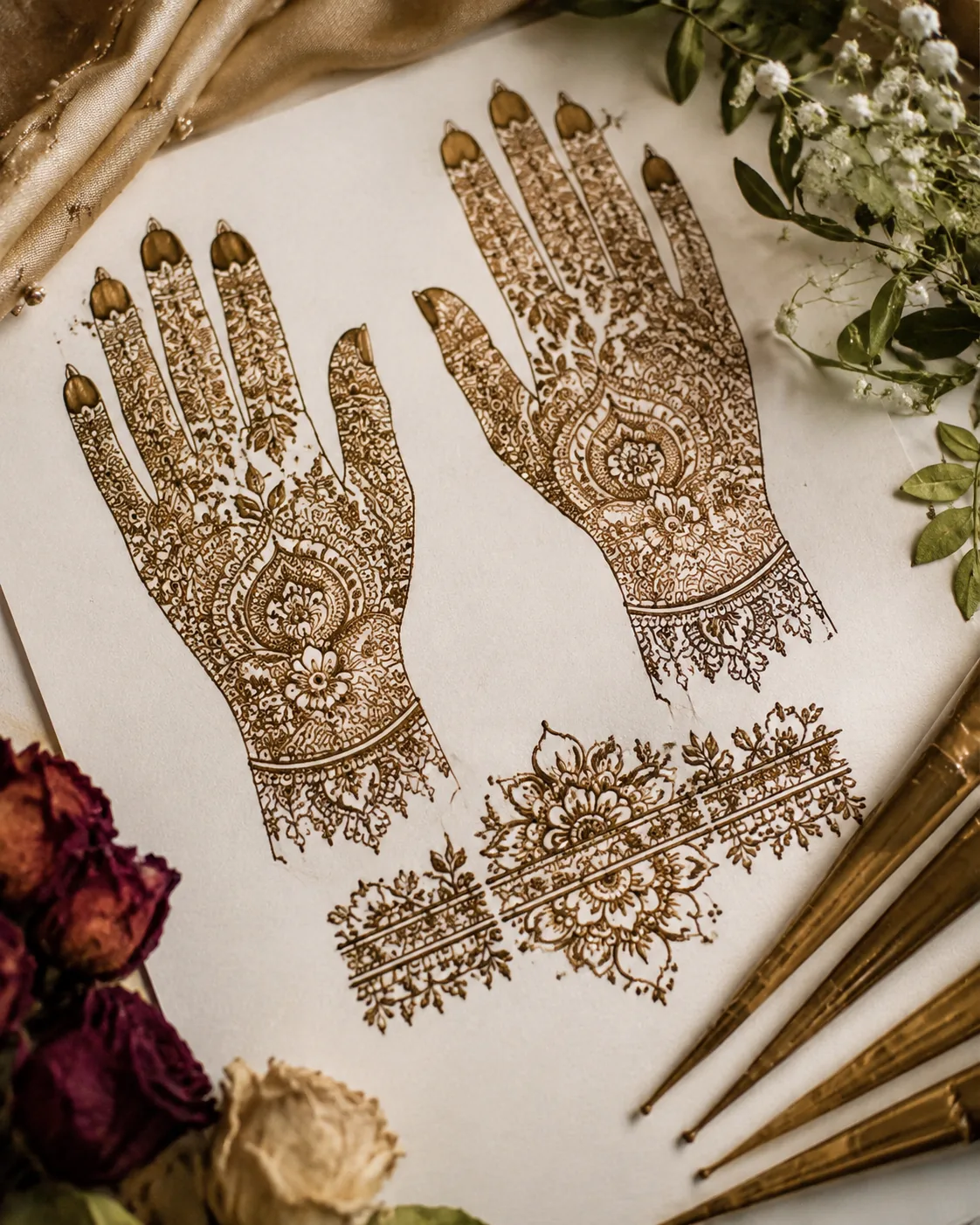
Bridal mehndi breaks into a few clear directions. Traditional Indian bridal designs run dense, covering the full hand and up the forearm with fine-line florals, paisleys, and hidden groom initials worked into the negative space. Arabic-style bridal mehndi uses more open layouts, bold leaves, and a lot of bare skin between motifs. Indo-Arabic fusion sits in the middle, mixing the density of the Indian style with the clean negative-space breathing room of Arabic.
Pakistani bridal designs tend to go heavier on geometric patterns and floral repeats, with a more uniform fill from fingertips to wrist. Gulf-style bridal mehndi stays minimal, almost graphic, huge bold flowers with thick outlines that read from across the room. Know which direction you want before you sit down, because switching mid-session is rough on your artist and your schedule.
What makes this work on real skin
Bridal mehndi as a tattoo is not decoration, it is architecture worn on skin.
The best bridal mehndi has a clear plan for density. Dense fingers, open palms, heavy wrists, and arm extensions all create different moods.
Timing matters. Bridal henna should be scheduled so the stain can develop without rushing drying, sleep, clothing, or ceremony prep.
Henna stains darkest on high-heat, high-callus zones. Palms and the inner wrist take a deep burgundy to near-black stain. The back of the hand and the outer forearm go lighter, closer to terracotta orange. Fingertips and areas with thicker skin saturate really well. Upper arm and shoulder placement stays lighter and fades faster, so dense fine-line work there will look washed out within a week.
The quality of your paste matters as much as placement. Fresh paste mixed with eucalyptus oil and lemon-sugar aftercoat will stain two to three shades deeper than a tube of pre-mixed grocery-store henna. Leave the paste on a minimum of six to eight hours, overnight if you can. Skin that is warm from a bath takes color better. Dry, chapped skin absorbs unevenly and produces a patchy result.
Before you book or apply it
Book early, ask for real bridal examples, and confirm paste safety before the wedding week.
- Ask how long the full design takes.
- Ask what paste is used and whether it is natural henna.
- Ask how initials or personal motifs will be hidden.
- Ask for photos of healed or developed stains, not only fresh paste.
Book your bridal mehndi appointment two to three days before the wedding, not the morning of. The stain starts orange and oxidizes over 48 hours to reach peak depth. If you apply it the day before, you will be at ceremony with an orange hand instead of that deep reddish-brown. Also avoid waxing or exfoliating within 24 hours of your appointment because freshly stripped skin absorbs inconsistently.
Communicate the coverage you want upfront. Full traditional bridal coverage from fingertips to elbow takes four to six hours for both hands and feet combined. Budget accordingly. Bring reference images but also be honest about your sitting tolerance. Fine-line dense work on both feet is spicy, especially around the ankle bone and top of the foot. If you have a low pain threshold, discuss which zones to simplify before the session starts.
Mistakes to avoid
Avoid changing the full design at the last minute. Bridal mehndi is too detailed for vague direction.
Do not chase an unnaturally black stain. Products marketed as black henna can be risky.
Safety source note: This guide keeps safety advice conservative and points readers to primary public-health or dermatology sources.
Biggest mistake is washing the paste off too early. A lot of brides panic at the cracking and rinse at the two-hour mark. That stain is still developing. Scrape the dry paste off with your hand or a butter knife, never water, then seal the design with a balm or coconut oil and leave it alone. Water contact in the first hour after removal will halt oxidation and leave you with a pale stain.
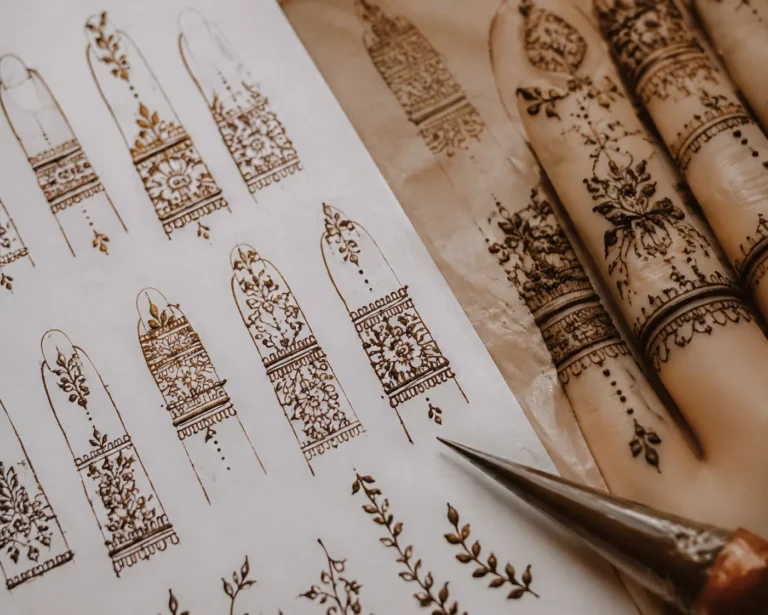
Choosing a design that is too fine and detailed for your placement zone is a close second. Micro-fine linework on the back of the hand fades and blurs within days because that skin folds and creases constantly. Bold outlines with solid fill hold their shape longer and stay legible through the whole event. Also skip black henna entirely, that stuff contains PPD, causes chemical burns, and will scar. Real henna is never actually black.