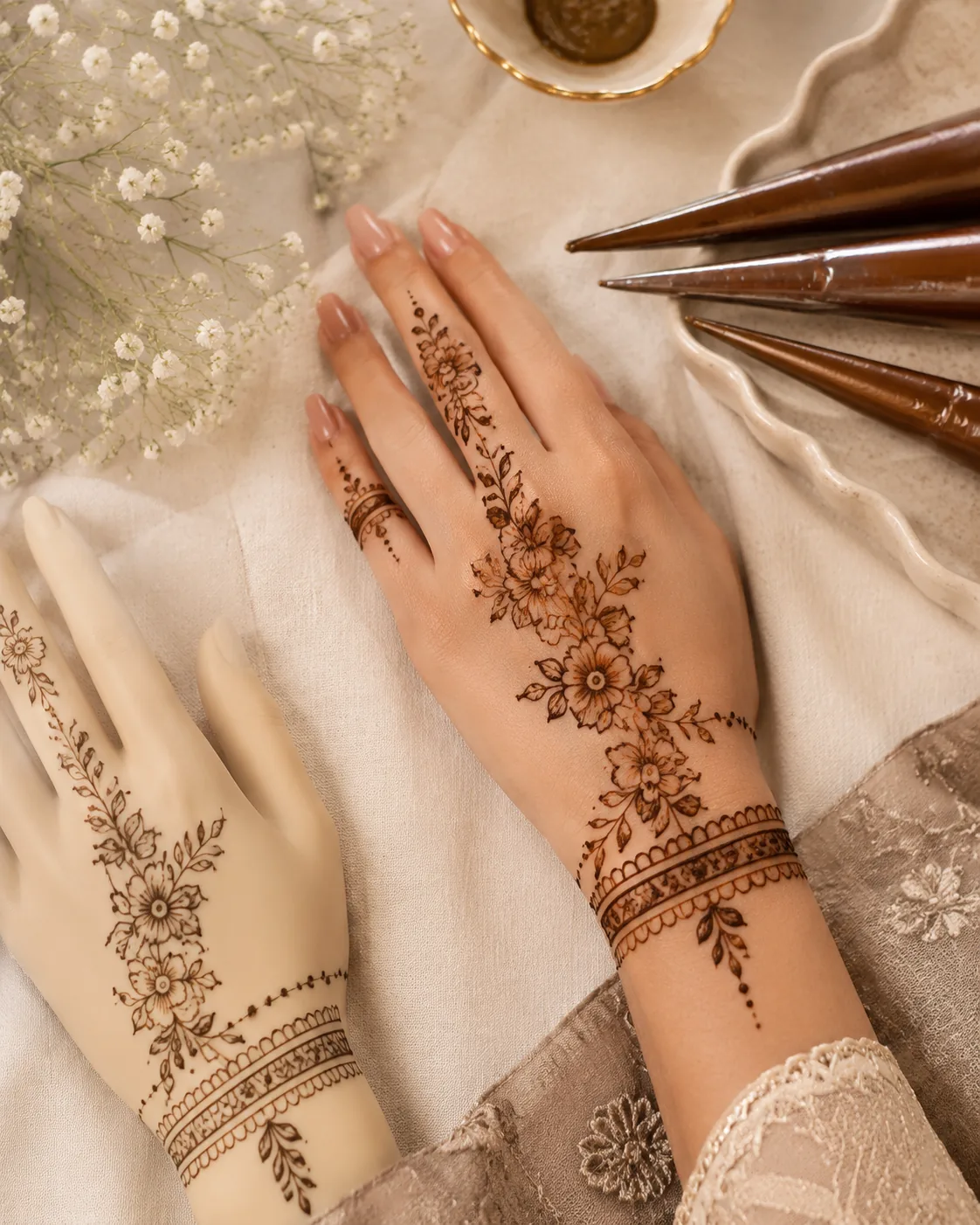
Back hand mehndi designs can be more jewelry-like than palm designs. The pattern has to work with fingers, knuckles, tendons, and the wrist rather than covering a flat surface.
Quick answer: Good back hand mehndi designs include bracelet cuffs, finger trails, floral diagonals, mandala centers, Arabic vines, ring-style motifs, and negative-space patterns that frame the hand.
Back hand mehndi styles
Back hand designs often look best when they move like jewelry.
| Option | Best use | Keep in mind |
|---|---|---|
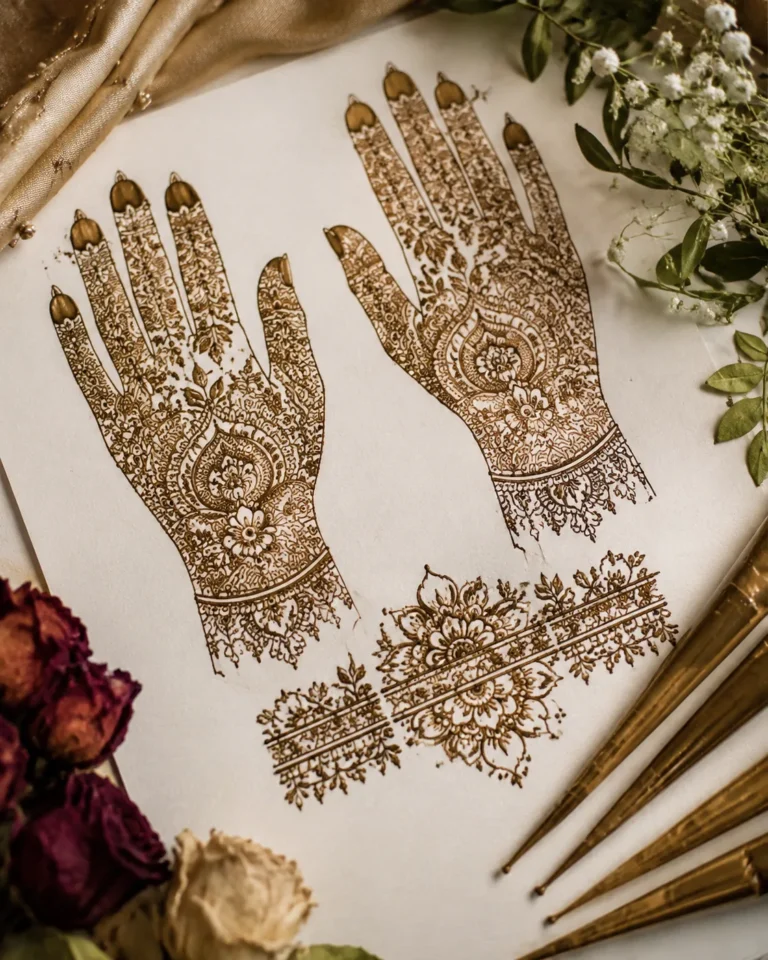
| Bracelet cuff | Wrist-focused design | Keep bands clean |
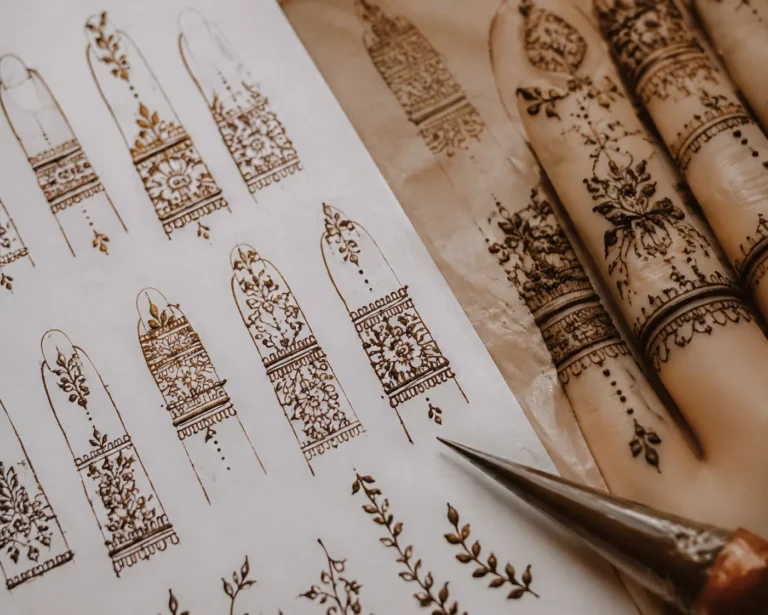
| Finger jewelry | Ring and chain effect | Lines must stay delicate |
| Floral diagonal | Elegant event look | Needs flow across knuckles |
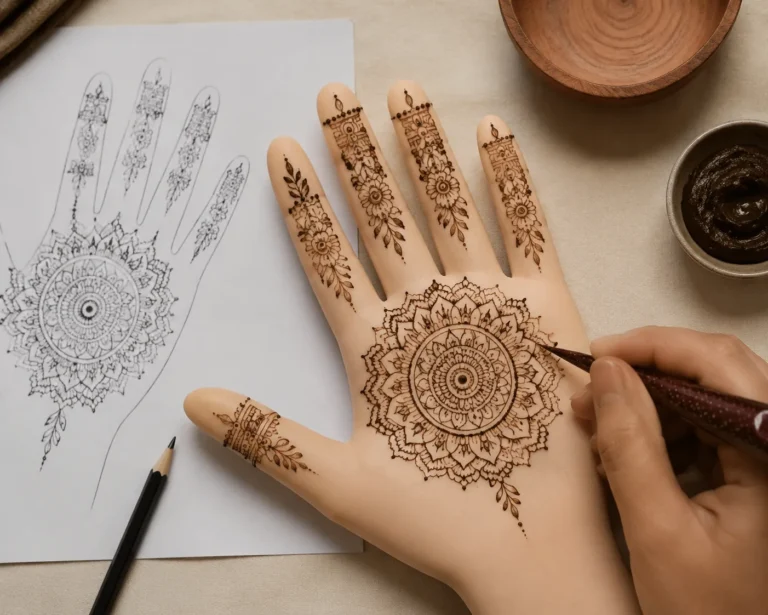
| Mandala center | Balanced back hand | Do not make it too large |
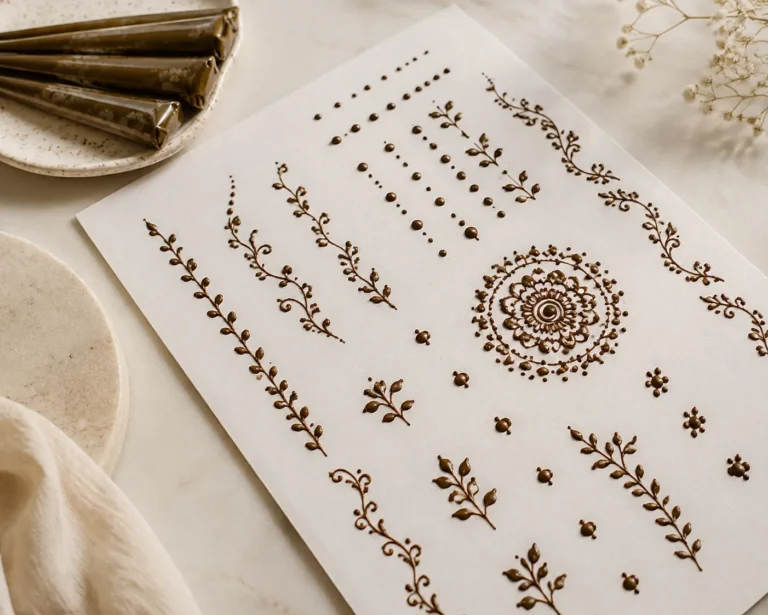
| Minimal dots and leaves | Everyday henna | Spacing carries the design |
Back hand mehndi breaks into a few distinct camps. You’ve got full coverage florals, where roses, lotuses, and mandalas blanket the entire dorsal surface from wrist crease to knuckles. Then there’s the minimalist net style, thin geometric lines connecting at the wrist and fanning out like lacework. Rajasthani work stacks dense paisley and peacock motifs with heavy fill, while Arabic-style mehndi leaves more negative space and lets bold vine strokes breathe.
Indo-Arabic fusion is probably the most requested right now because it hits both worlds. You get the flow of Arabic strokes with the detail density of traditional Indian work. Bracelet-style mehndi focuses only at the wrist and upper knuckle band, keeping the center of the hand open. Each style reads differently depending on skin tone, and the contrast is everything on deeper complexions where fine lines can get lost fast.
What makes this work on real skin
The back of your hand is a canvas that moves, every gesture shows the art.
The back of the hand has visible structure. Use that structure instead of fighting it. A vine can follow the finger line, and a bracelet can frame the wrist.
Back hand mehndi is also easier to photograph, which is why crowded designs can look tempting. The cleaner ones often age better through the stain period.
The back of the hand is one of the best surfaces for mehndi. The skin there is relatively thin over flat bone structure, so paste sits clean and stains deep. You get crisp lines without the blurring you’d see on the palm or inner wrist where skin folds constantly. The metacarpal region especially, that flat stretch between knuckles and wrist, holds detail like a champ and shows the finished design straight-on when you extend your arm.
Skin prep is real. Dry, exfoliated skin takes henna more evenly than skin loaded up with lotion or oil. The melanin content in your skin determines the final depth, darker fitzpatrick types often stain mahogany red-brown, lighter skin tones land more orange. The back hand also warms up nicely, heat accelerates the dye release, so wearing the paste for four to eight hours without washing it off gets you the darkest result. Skip the moisturizer the day you apply.
Before you book or apply it
Check whether the design needs to be formal, bridal-adjacent, or casual before choosing density.
- Match finger density to wrist density.
- Leave skin around knuckles where needed.
- Use one main flow direction.
- Avoid unsafe black henna products.
If you’re doing a henna application, nail down the occasion timing. The stain darkens over 24 to 48 hours after paste removal, peaking around day two. Book your session two days before your event, not the morning of. If you’re going the permanent tattoo route inspired by mehndi patterns, understand that fine line work on the back hand is a high-wear zone. You’re gripping things, washing your hands constantly, the skin flexes with every finger movement.
For permanent tattoo clients, budget accordingly. A detailed full back hand mehndi-style tattoo from a skilled artist runs $200 to $500 depending on size and complexity. Bring reference photos of both traditional mehndi patterns and any tattoo interpretations you love. Tell your artist your skin tone so they can adjust line weight. Hairline lines on the back hand can blow out or fade uneven within a couple years, a slightly bolder approach heals cleaner and holds longer in that zone.
Mistakes to avoid
The common mistake is making the fingers too heavy and the wrist too empty, or the opposite. Balance matters.
Avoid tiny detail over every knuckle if the design needs to stay crisp while the hand moves.
Safety source note: This guide keeps safety advice conservative and points readers to primary public-health or dermatology sources.
Don’t rush the paste removal on henna. Peeling it off after two hours because it’s inconvenient tanks your stain depth. Flake it off dry, don’t rinse with water first. The other big one is water contact in the first 24 hours after removal. Washing dishes, sweating through a workout, swimming, all of it pulls the stain out before it’s fully oxidized. Wear a food-safe wrap if you need to do anything wet in that window.
On the tattoo side, the back hand is not where you want to test an artist’s fine line skills for the first time. Blowout risk is real here because the skin is thin and moves constantly. Look at healed photos of their hand tattoo work specifically, not just fresh shots. Fresh tattoos always look cleaner. Also avoid overloading the design with detail between the knuckles, that skin compresses every time you make a fist and fine lines there fade faster than anywhere else on the hand.