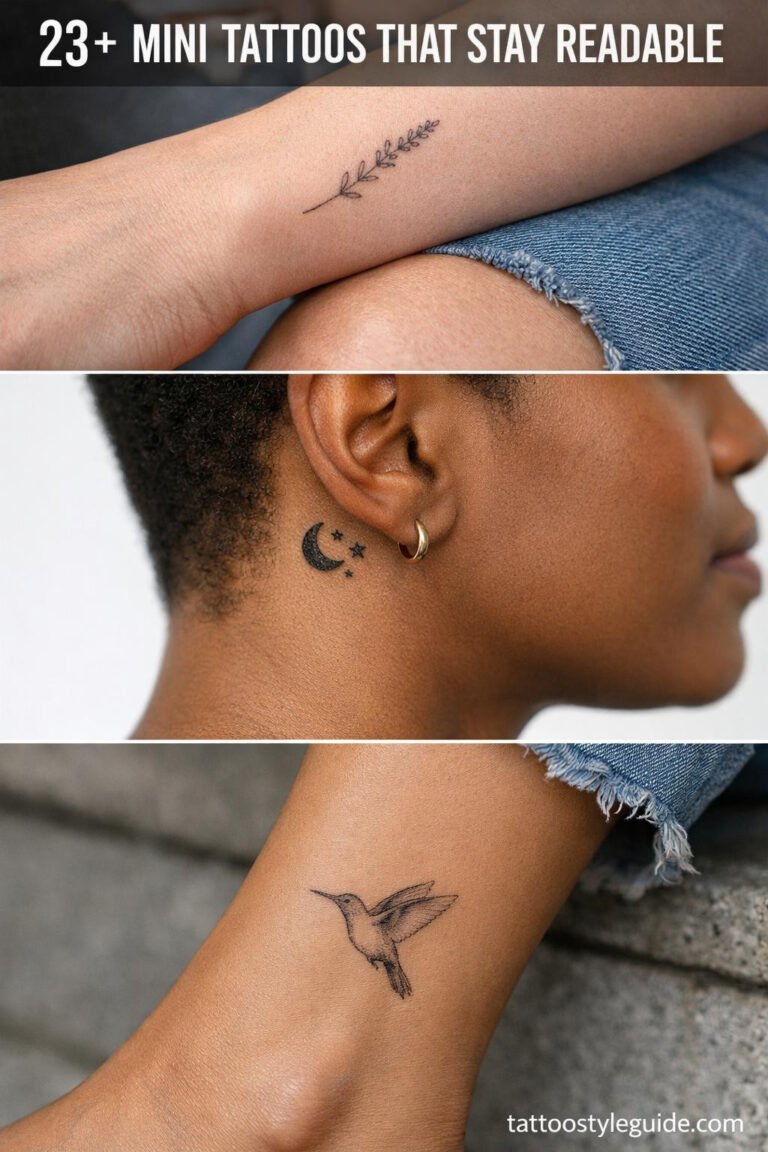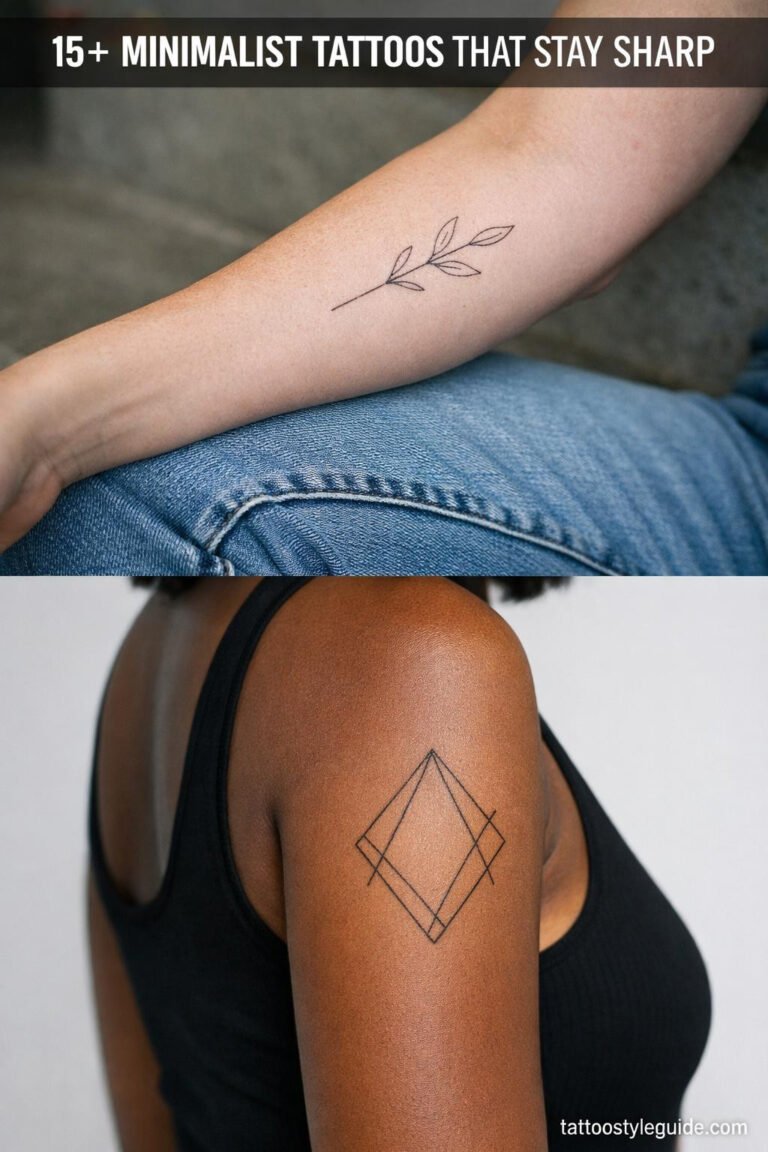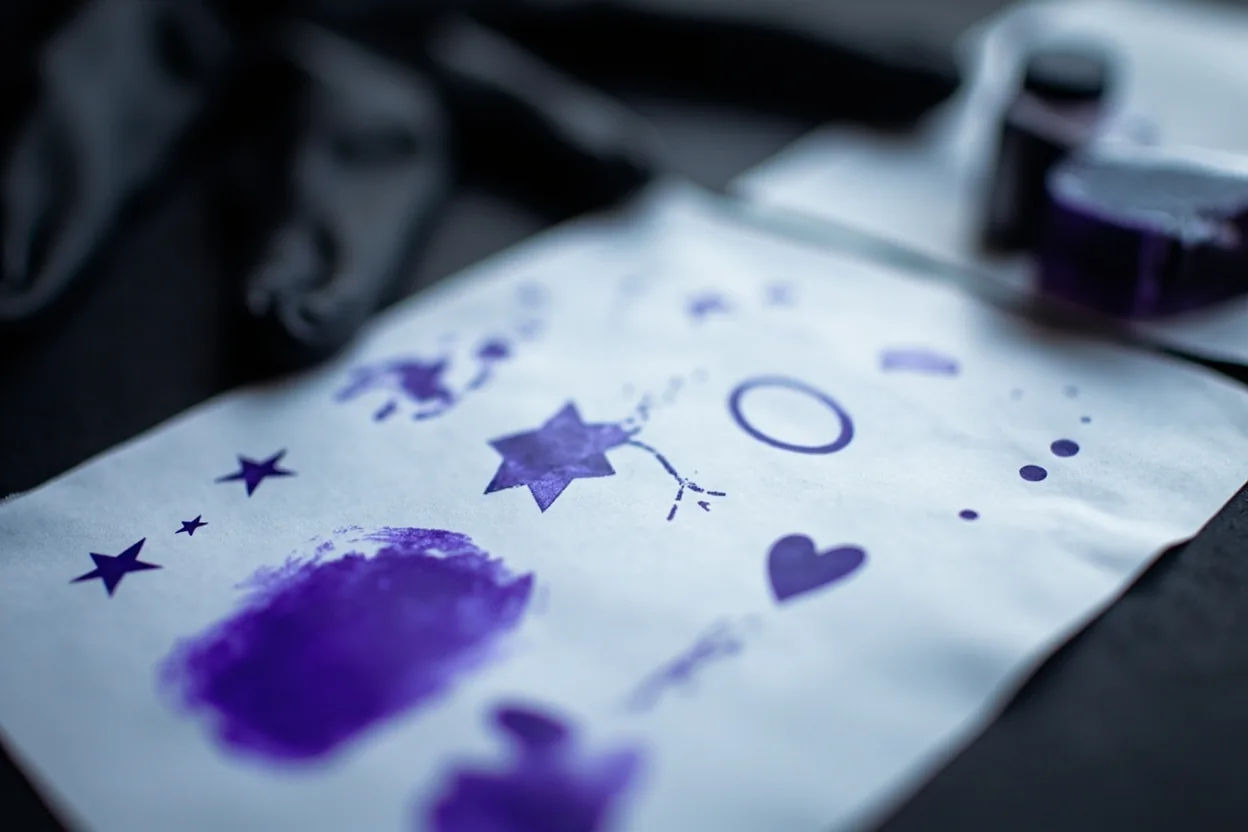
Finger tattoo ideas need a different standard from arm or leg tattoos. The skin is high-friction, highly visible, and difficult to keep perfect.
Quick answer: Finger tattoo ideas that last longer include dots, small stars, simple rings, short initials, tiny hearts, small symbols, and bolder minimalist marks placed away from the highest-rub zones when possible.
Finger tattoo ideas by risk
Every finger tattoo carries risk, but the design can make that risk worse or better.
| Idea | Best use | Watch-out |
|---|---|---|
| Dot set | Minimal mark | Can fade unevenly |
| Tiny star | Simple symbol | Point detail softens |
| Ring band | Decorative line | May break at joints |
| Initial | Personal mark | Use enough spacing |
| Small heart | Clear shape | Keep it bold |
Low-risk placement means the side of the finger, mid-shaft, away from knuckles and the palm crease. A small solid blackwork shape there, a simple band, a botanical sprig with thick stems, that stuff holds. High-wear zones are knuckle tops and the inner finger. Skin folds constantly there, the ink spreads under pressure, and fine line work blows out within months. Bold geometric or single-needle work on the knuckle top looks crispy day one, then reads muddy by year two.
Ring finger tattoos are the highest-risk of the set because of the grip and constant rubbing. If you want a band there, go thick, go saturated black, no color gradients. The side of the index finger is surprisingly stable if the design stays tight. Palm-side placements on any finger are a near-guaranteed fade job inside six months. That skin regenerates fast. It will eat your ink.
Finger tattoos are not low maintenance
Fingers eat ink. Design for that fact or plan to be back.
A finger tattoo may need touch-ups, and some studios will warn that they do not guarantee the result. That honesty is a good sign.
The more detailed the design, the more disappointment you invite. Use the finger for a mark, not a miniature illustration.
Finger tattoos need touch-ups. Count on it. Most artists factor one free or reduced-cost touch-up into the price because the healing is brutal compared to the upper arm or thigh. The skin is thin, constantly moving, exposed to sun and water all day. You wash your hands dozens of times, you grip things, you scratch surfaces. That’s all working against fresh ink. Weeks two through four are where most people lose line crispness if they don’t protect it.
Aftercare here is more demanding than a shoulder piece. Keep it moisturized, avoid prolonged soaking, stay out of pools for at least three weeks. Dish soap, hand sanitizer, rubbing alcohol, those strip the surface repeatedly and drag pigment out while it’s still setting. If you work with your hands in a trade, construction, kitchens, medical, expect accelerated wear. That’s not the artist’s fault. It’s friction and chemistry.
What the artist should tell you
If the consultation sounds too easy, slow down.
- Ask how the studio handles finger touch-ups.
- Ask which side of the finger holds ink better.
- Ask whether the design is too delicate.
- Ask how to protect the tattoo while it heals.
A solid artist should tell you upfront which designs will NOT survive on fingers. If they say yes to anything you bring in without a honest conversation, that’s a red flag. Fine line florals with hairline strokes, watercolor-style fades, portraits, tiny script in a cursive font smaller than six millimeters tall, all of those are likely to blow out or turn into a blur before your two-year anniversary. An honest artist will steer you toward bolder lines and simpler shapes.
They should also tell you their policy on touch-ups before you book, not after. Ask directly. Some studios include one session, some charge a reduced rate, some treat it like a brand new appointment. You should also hear about needle depth. Fingers require a lighter hand. Go too deep and you guarantee blowout. Too shallow and the ink won’t anchor. That balance is skill-dependent, so experience with hand and finger work specifically matters.
Finger tattoo regret triggers
People regret finger tattoos when they expected a permanent jewelry look and got a patchy healed result.
If the exact crispness matters more than the idea, choose wrist or forearm instead.
The number one regret trigger is going too small with too much detail. People see insane micro-realism finger work on Instagram and book it, not realizing those photos are taken day-of, before any healing. Two years later that butterfly wing or tiny portrait is a smudge. The second trigger is placement that didn’t account for visibility. Knuckle tattoos read from across the room when you want them to, but they also read in job interviews, family dinners, every handshake.
Color work is the third regret factory on fingers. Pastels, white ink, yellow, light pink, those fade to near-invisible on most skin tones within a year. Black and grey or fully saturated black hold far better. And script is a gamble. Even clean lettering in a bold font can lose letter separation when the skin heals and the lines settle. If you want words, go block letters, at least four millimeters tall, spaced wide. Anything tighter tends to merge.