Hands are one of the most visible, most loaded places you can get tattooed. A hand piece can carry protection, faith, identity or pure flash energy, but the same skin that shows it off also fades it fast and hurts more than almost any other spot. This guide covers meaning by zone, real pain, why hands age the way they do, and the styles that actually hold.
Quick answer: Hand tattoos work best when the design is bold and simple, because palms and fingers shed ink fast and need touch-ups. Expect a high pain level, plan for fading, and choose strong outlines or solid blackwork over fine detail. Knuckle lettering, finger symbols and ornamental backs of the hand age better than tiny script or fine-line realism.
Hand tattoos by zone
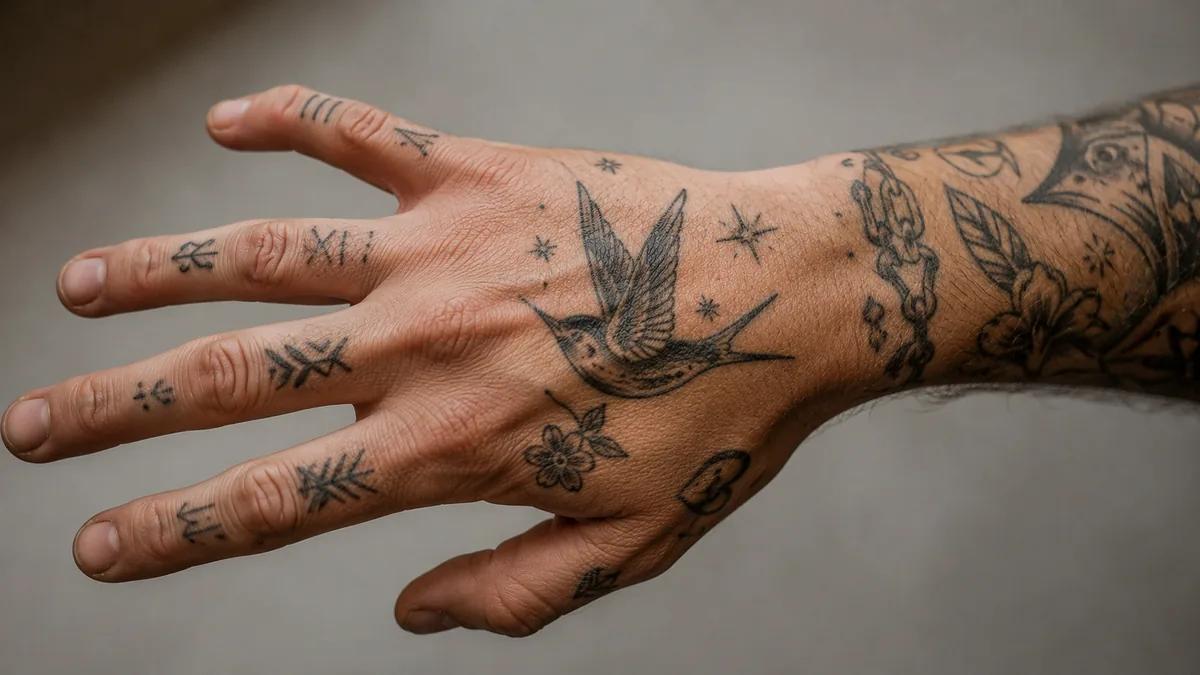
The hand is not one canvas. The back of the hand, the fingers, the knuckles and the palm all behave differently, and the right choice depends as much on healing as on looks.
| Hand zone | What works | Longevity | Pain |
|---|---|---|---|
| Back of the hand | Ornamental, blackwork, single bold image | Good with bold lines | High |
| Fingers (top) | Small symbols, short words, simple bands | Moderate, expect touch-ups | High |
| Knuckles | Block lettering, four to eight letters | Good if bold | Very high |
| Sides of fingers | Tiny script, dates, micro symbols | Fades fast | Very high |
| Palm | Bold single symbol only | High-failure, frequent redo | Very high |
What hand tattoos actually mean
Your hands never stop moving, neither does the ink trying to leave them.
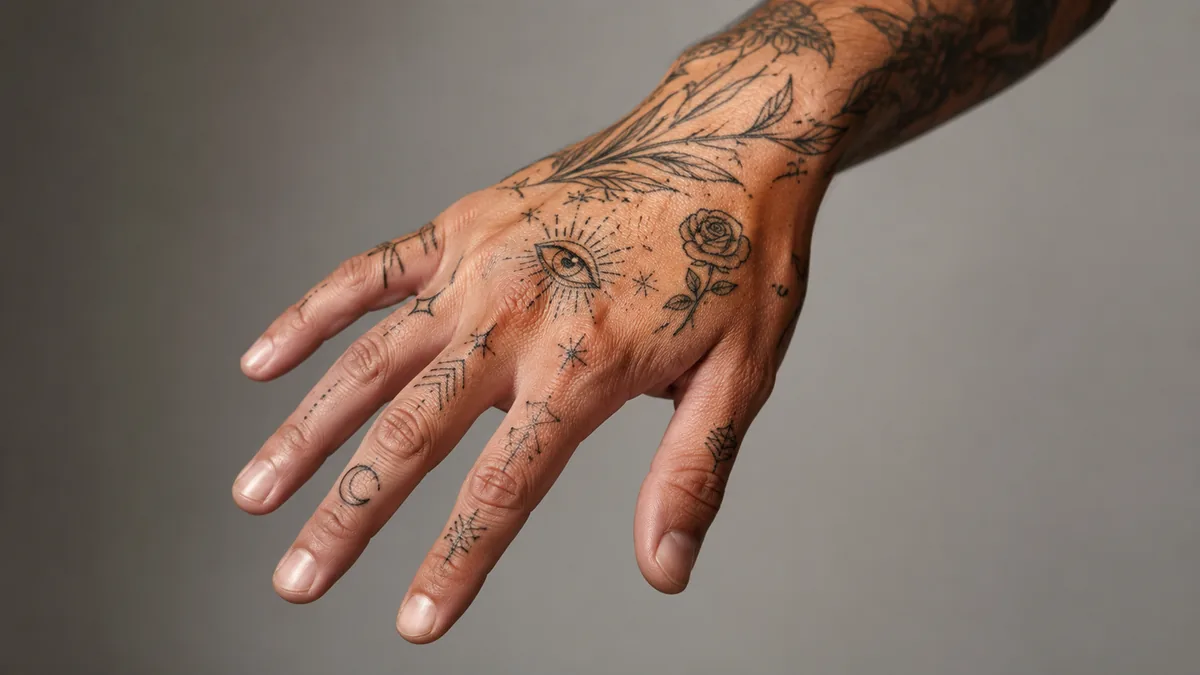
The hand has carried meaning in tattoo culture for a long time, and most of it is tied to visibility. You cannot hide a hand tattoo, so historically it marked commitment, status or belonging. That is why so many hand symbols read as statements rather than decoration.
In Western sailor tradition, knuckle phrases like HOLD FAST were thought to give a firm grip on the rigging and act as a small charm for courage at sea. The placement was the point: hands that worked the ropes carried the words that kept them safe.
Other traditions treat the hand as protective or sacred. The Hamsa hand is widely recognized across Middle Eastern and Mediterranean cultures as a guard against the evil eye, linked to blessing and protection. Henna and mehndi cover the hands and palms for weddings and festivals, where flowers signal joy and the palm itself can mean offering. Knuckle and finger lettering also runs deep in prison and gang contexts, where short acronyms signal toughness or affiliation.
None of this means your hand tattoo has to reference a tradition. But the hand reads as deliberate. A symbol there feels chosen in a way the same symbol on a thigh does not.
Hand tattoos hurt, and here is why
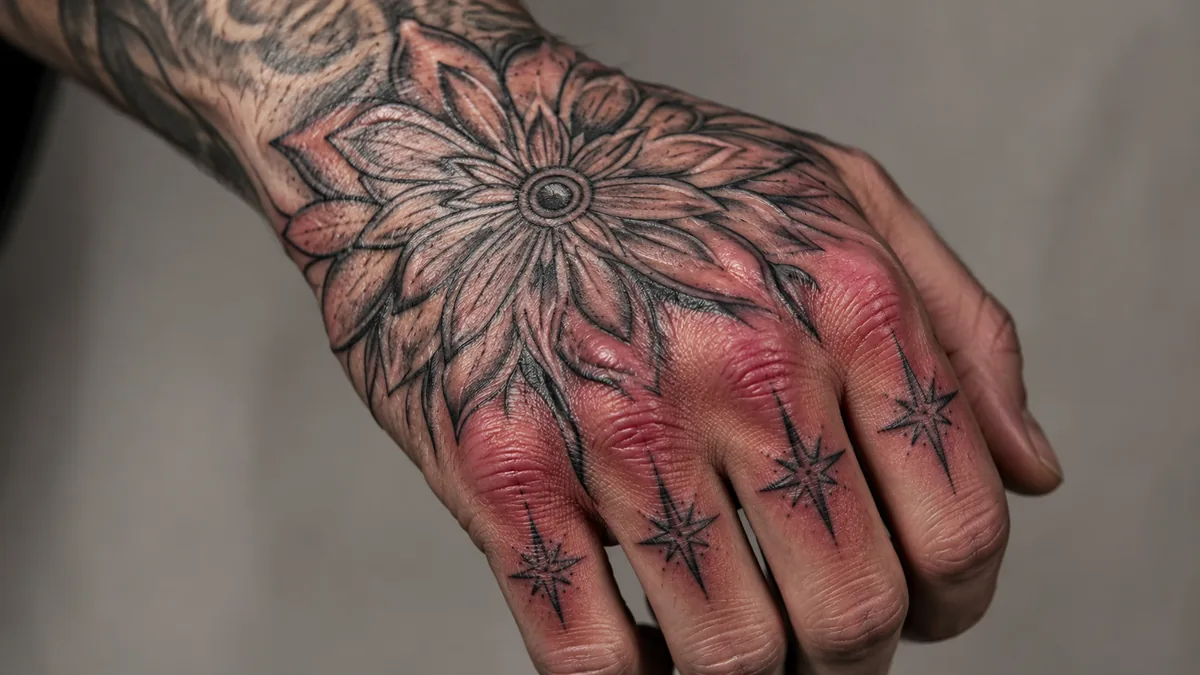
Hands and fingers sit near the top of almost every tattoo pain chart. The skin is thin, there is very little fat over the bones and tendons, and the area is packed with nerve endings. The needle has nothing to cushion it, so the sensation stays sharp the whole way through.
Most people rate hand and finger work somewhere in the seven to nine out of ten range, closer to ribs and feet than to a fleshy upper arm. The one mercy is size. Most hand and knuckle pieces are small, so the session is usually short even if every minute is intense.
Knuckles and the sides of the fingers are the worst of it because the needle is working right over bone and joint. If pain is a real concern, the back of the hand is the most tolerable zone and a full finger wrap is the least.
Why hand tattoos fade faster than the rest
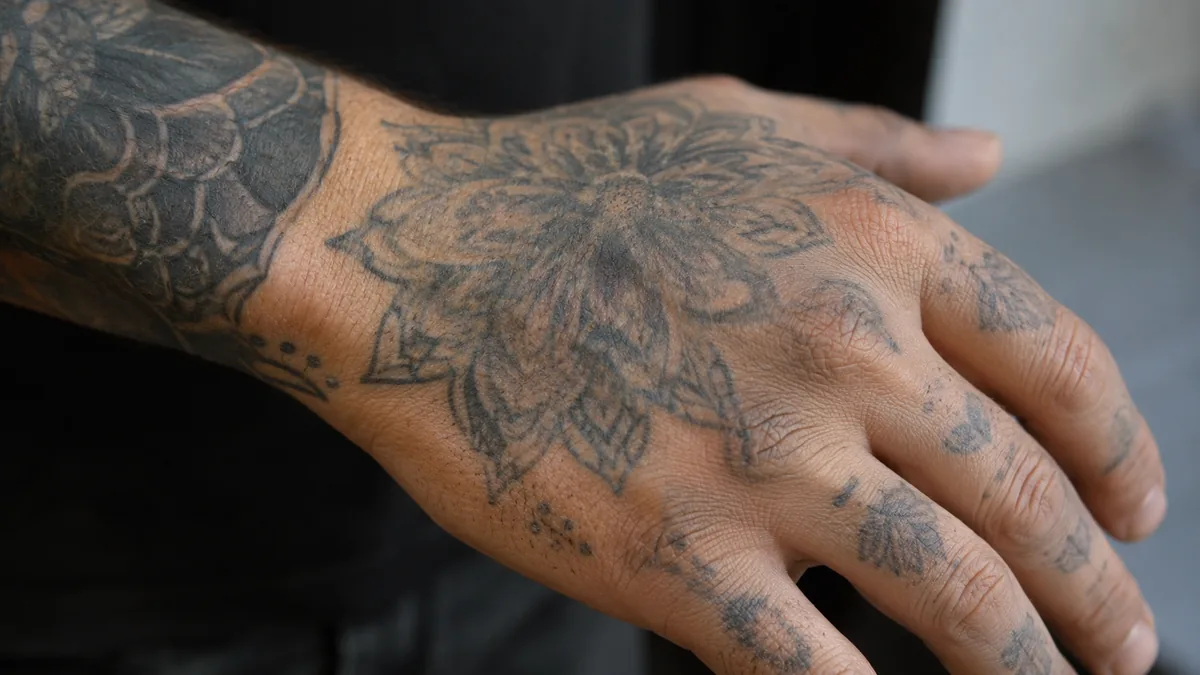
This is the part people regret missing. Hand tattoos fade faster than almost anywhere else on the body, and the palm and sides of the fingers are the worst offenders. The skin there regenerates much faster than normal skin, so pigment in the upper layers gets shed within months instead of years.
Then there is daily life. Hands get washed constantly, scrubbed with soap and detergent, and dragged across surfaces all day. That friction wears the tattoo down mechanically while the cleaning agents strip the oils that keep skin healthy. Add steady sun exposure, since most people never sunscreen their hands, and UV light breaks the pigment down on top of everything else.
There is also a technical trap. If the artist works too shallow on a palm or finger pad, the ink sheds quickly. If they go too deep to compensate, you get blowouts and patchy healing. This is why a lot of studios call palm and full finger work high-failure zones and will tell you up front to expect regular touch-ups or to skip intricate designs there entirely.
The honest takeaway: treat a hand tattoo as something you maintain, not something you set and forget. Budget for a touch-up, keep it out of the sun, and pick a design that still reads even after it softens.
Styles that hold up on hands
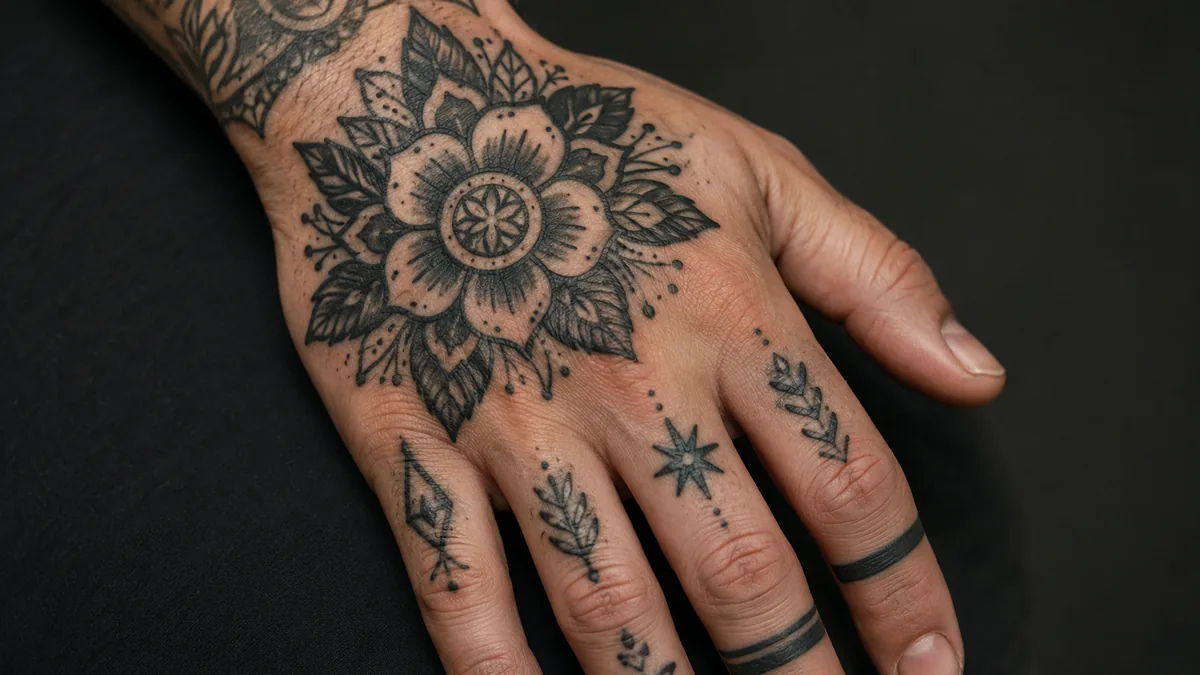
The old shop rule is bold will hold, and nowhere is it more true than on hands. Heavy outlines and solid fills survive the friction and fading that destroy delicate work. Traditional and old-school designs were built to stay readable for decades under rough conditions, which makes them a natural fit here.
Blackwork is one of the most durable choices because large solid black areas keep their shape even as edges soften. Bold geometric patterns and mandalas can age well too, as long as the lines are thick enough and the spacing is generous. Neo-traditional works when the artist keeps it bold and resists the urge to pack in micro detail.
What struggles is predictable. Ultra fine line, very tiny script and hyper-detailed realism break down fastest on fingers and the back of the hand. The edges blur, the small details clump together, and the constant movement of the skin pulls everything out of register. It can look perfect the day you leave the shop and lose its shape within a year.
If you love fine line, the hand is the wrong canvas. Move it to the inner forearm or ankle and keep the hand for something built to last.
Hand tattoo ideas by zone
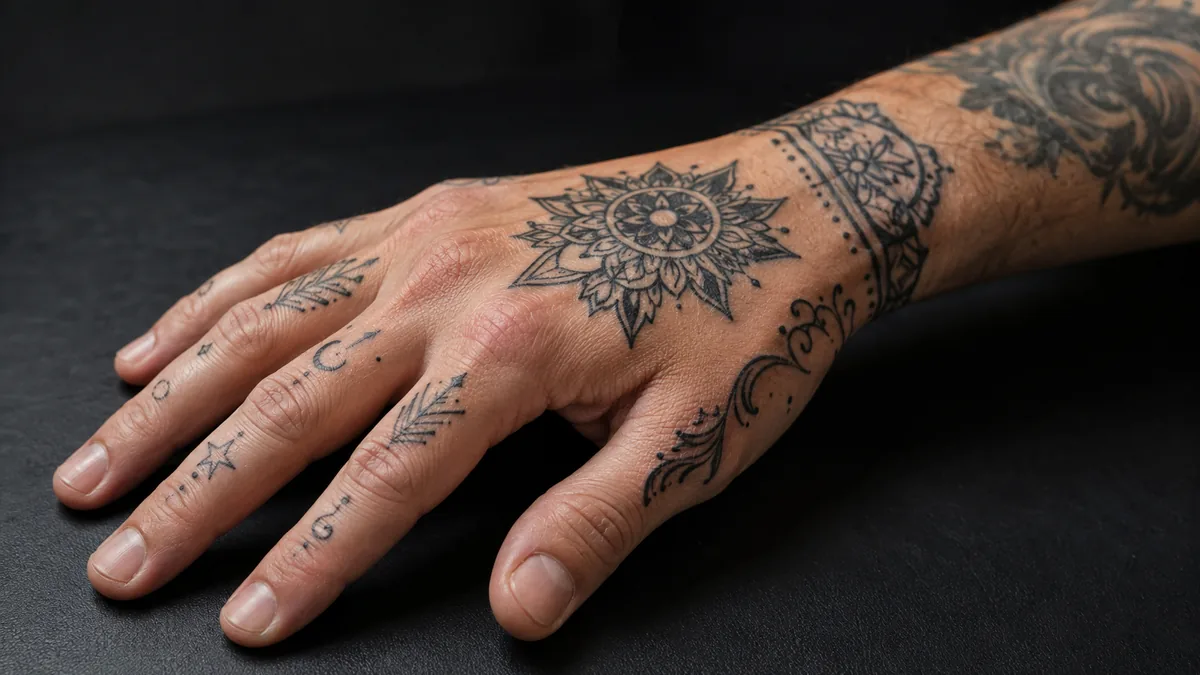
Knuckles are made for short words and block letters. Four letters across one hand or eight across both is the classic format, and the lettering needs to be bold and blocky to survive. Skip thin or cursive fonts here.
The back of the hand is your best canvas for a single strong image: an ornamental piece, a bold animal, a blackwork pattern or a Hamsa. It has enough flat space and heals more reliably than fingers or palm. This is where a hand tattoo can actually look like a finished design instead of a fragment.
Fingers suit small symbols, short bands or simple line work. A single symbol on one finger reads cleaner than a busy scene crammed onto a knuckle. Accept that finger ink fades and plan to maintain it. The palm should be treated as a bold-symbol-only zone, and even then with the expectation of repeat sessions.
Choosing the right artist
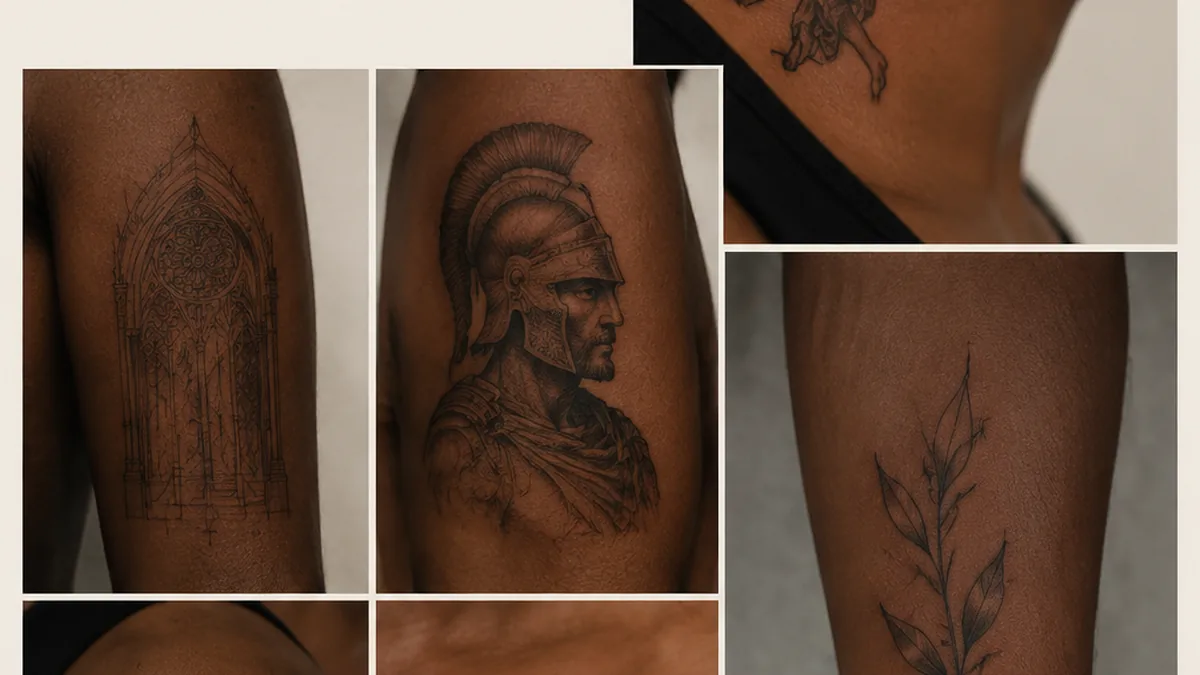
Hand work separates good artists from confident beginners, so this is not the placement to gamble on. Ask specifically for healed hand and finger photos, not fresh ones. Fresh hand tattoos almost always look crisp. The real test is what they look like a year later.
A good hand artist will talk you out of bad ideas. If they push back on tiny script across a knuckle or a fine-line portrait on the back of the hand, that is a sign they care about how it ages, not just how it photographs that afternoon.
Get the depth and saturation right the first time and you set up a tattoo that survives the touch-ups instead of needing a rescue. Read through tattoo planning and aftercare before you book, because hand healing is less forgiving than almost anywhere else.
Artist brief: Ask for healed hand and finger photos, not fresh ones. Push for bold lines and solid fills, keep lettering blocky, and agree on a touch-up plan before the needle starts. The back of the hand is your safest canvas; treat fingers and palm as maintenance zones.
Reader questions before you book
Do hand tattoos hurt more than other placements?
Yes. Thin skin, little fat and dense nerve endings put hands and fingers among the most painful spots, usually rated seven to nine out of ten. Knuckles and finger sides are the worst because the needle works over bone and joint.
Why do hand tattoos fade so fast?
The skin on palms and fingers regenerates much faster than normal skin, so pigment sheds quickly. Constant washing, friction and sun exposure speed it up further. Most hand tattoos need touch-ups, especially on the palm and sides of the fingers.
What style lasts longest on hands?
Bold work lasts longest. Traditional, blackwork and bold geometric designs hold their shape, while fine line, tiny script and detailed realism blur and clump fastest. The rule is bold will hold.
Where on the hand ages best?
The back of the hand is the most reliable canvas with bold designs. Knuckle block lettering holds well. Sides of the fingers and the palm fade fastest and need the most maintenance.