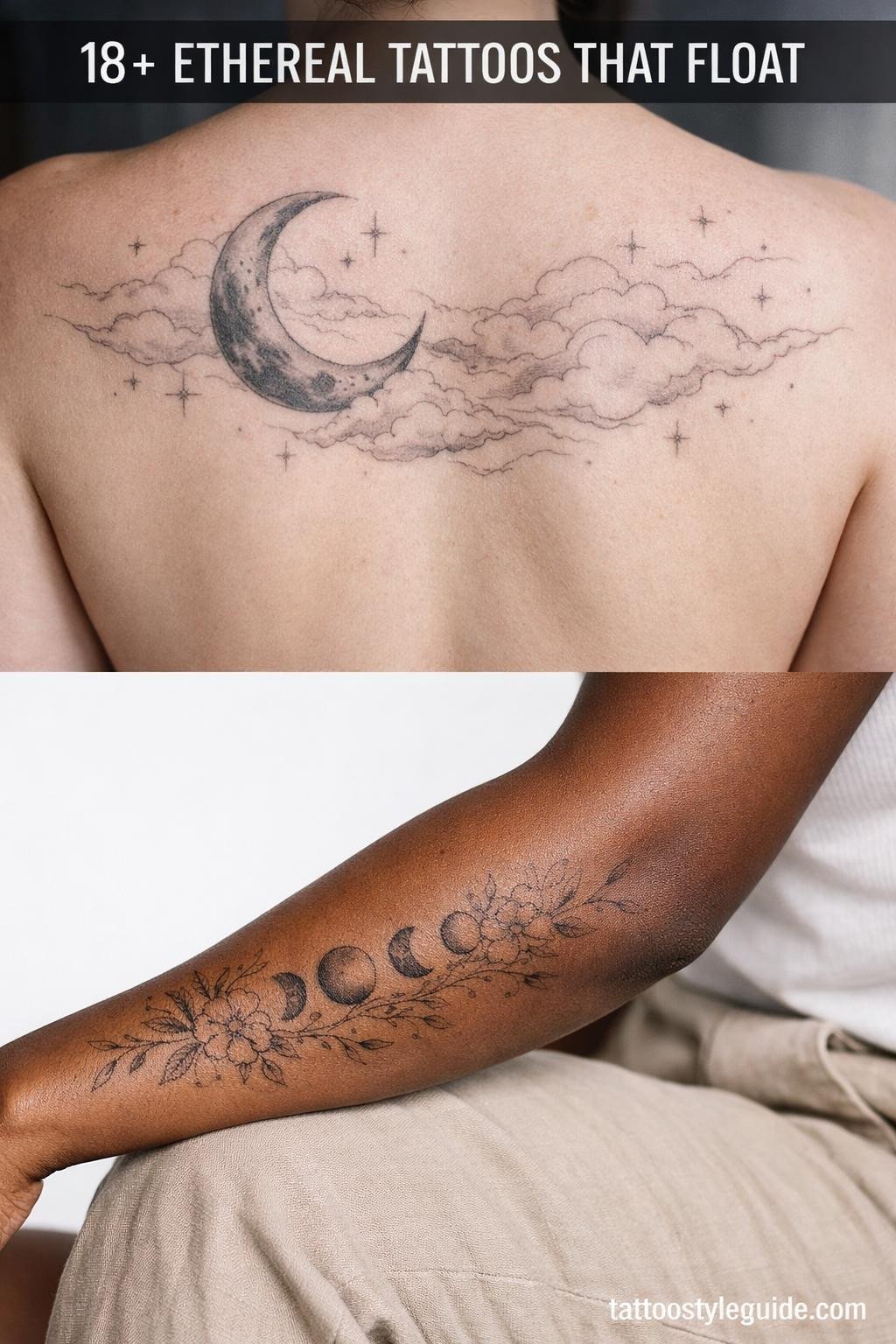
Ethereal tattoos are harder to execute than they look. The soft edges and dissolved forms that define the style demand precise control over grey wash dilution and ink saturation. When an artist loses that control, the design reads muddy, not otherworldly.
The strongest pieces in this category share one technical trait: clean linework underneath the softness. The floating quality comes from what surrounds the line, not from avoiding it.
Plant Spirit Flash With Mandala Frame and Wet Ink Wash
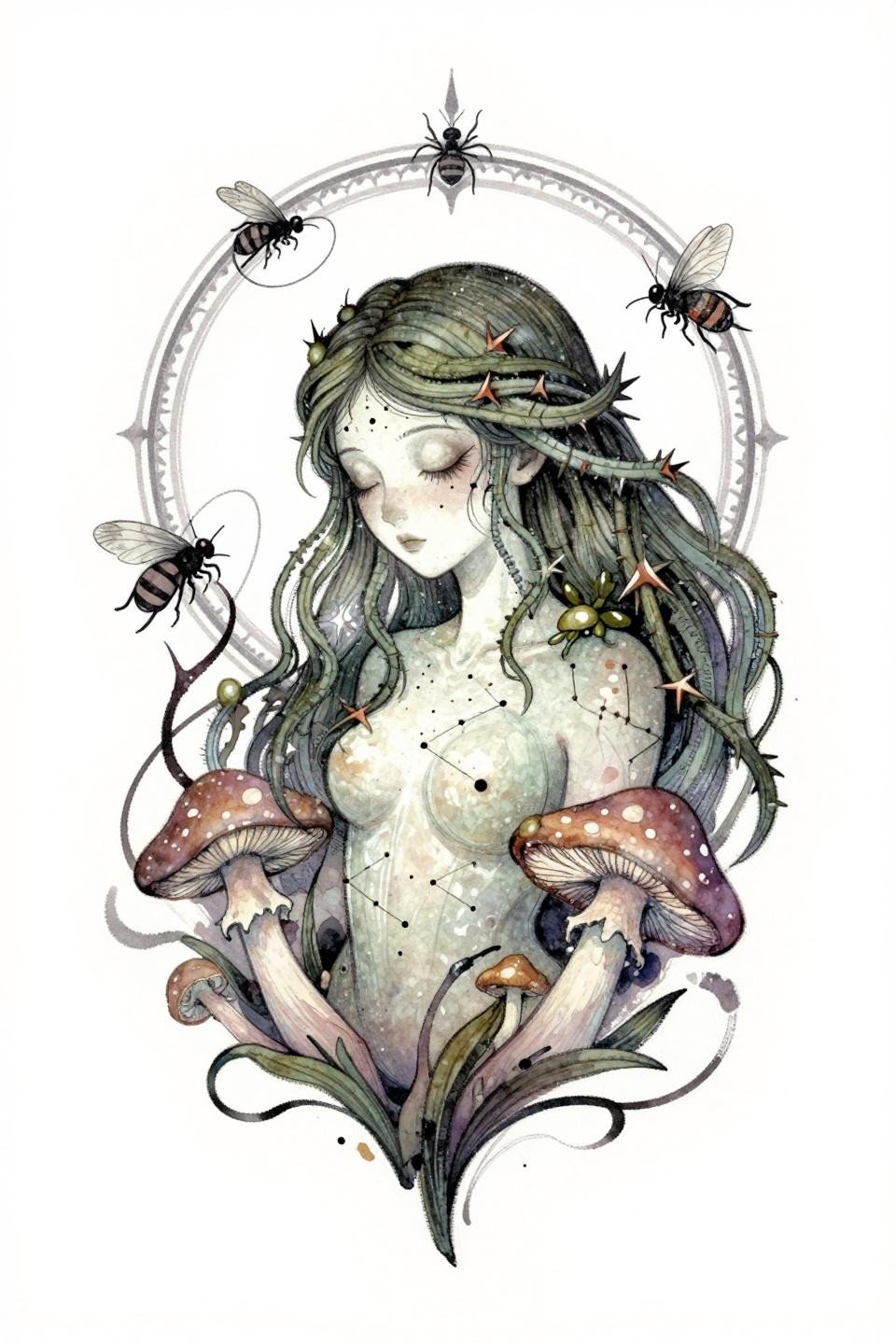
A nocturnal plant spirit centered in a circular mandala frame, rendered in sak yant brush calligraphy with watercolor washes of sage, dusty rose, ochre, and pale violet sitting loosely over precise fine linework.
The wet ink quality here only holds if the artist controls water-to-pigment ratio at the source. On olive skin, those muted tones shift warm, so the sage reads closer to khaki at year three.
Moth Goddess in Micro Realism: Where the Figure Dissolves
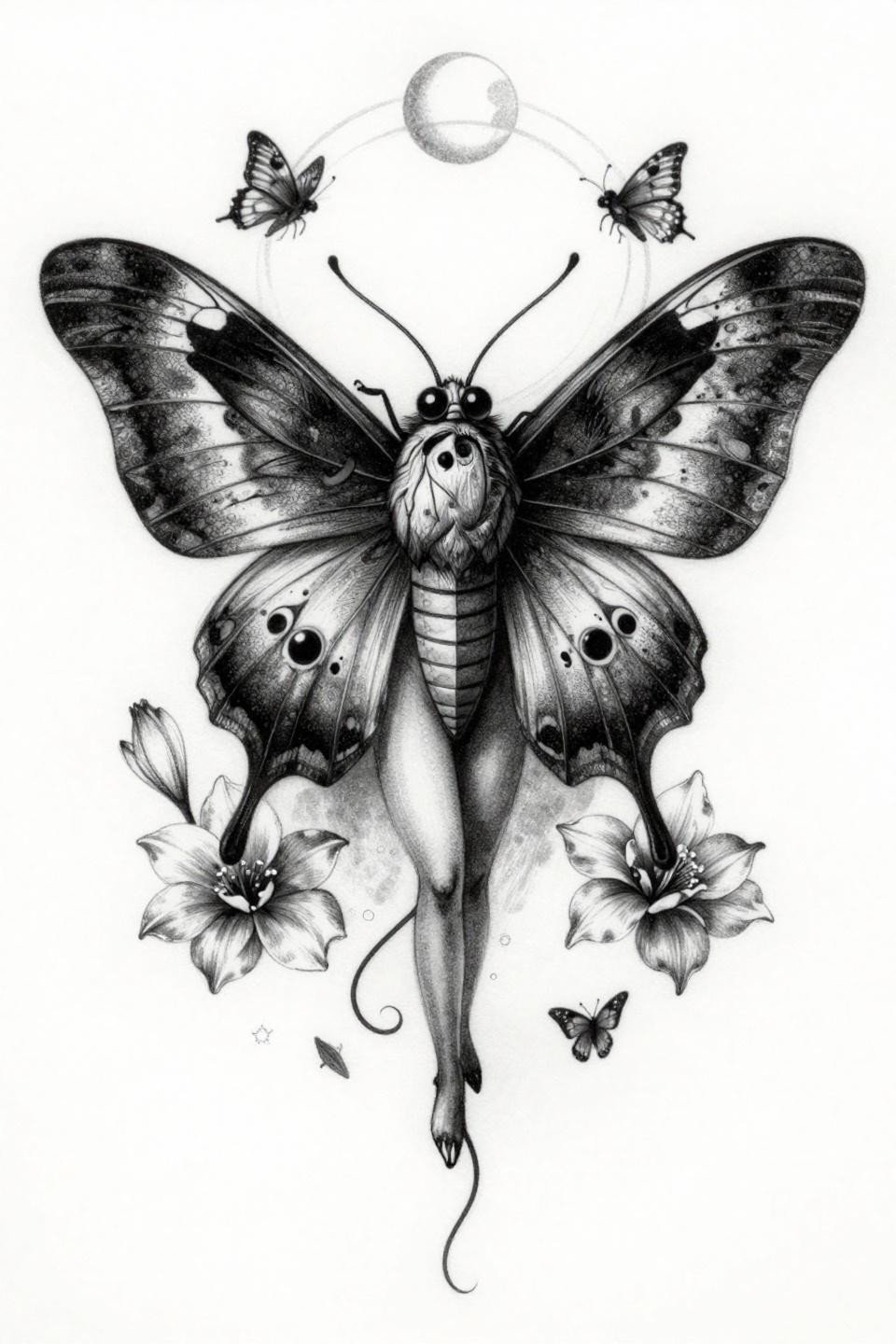
A moth goddess figure built entirely from single-needle 1RL hairline strokes, the upper form dissolving into ink-black wing membranes with microscopic stipple shading and open negative space carrying the composition.
Single needle work at this density requires an artist who controls machine speed, not just pressure. Check their healed portfolio specifically. Fresh shots of this style almost always lie.
Tribal Geometric Alchemist With Angular Quartz Crown
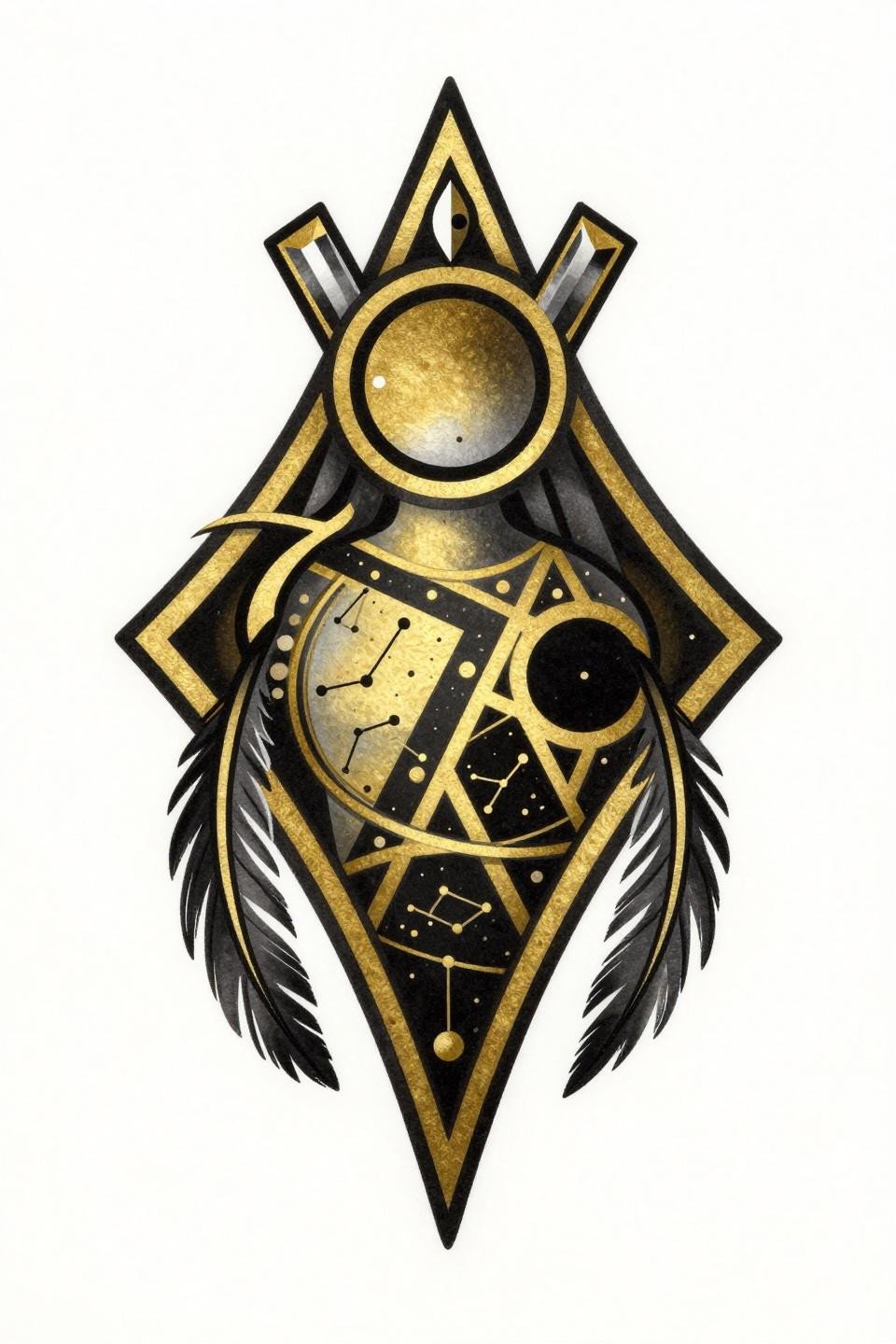
A celestial alchemist figure set in a diamond frame with bilateral symmetry, the torso revealing geometric constellation pathways, executed with bold 2-3pt outlines and flat gold metallic fills against solid black.
Bold outlines at this weight are the longevity signal. On any skin tone, this reads with the same contrast at year ten as year one, provided the black fills were properly saturated in layered passes.
Traditional Apothecary Cabinet With Deep Teal and Copper
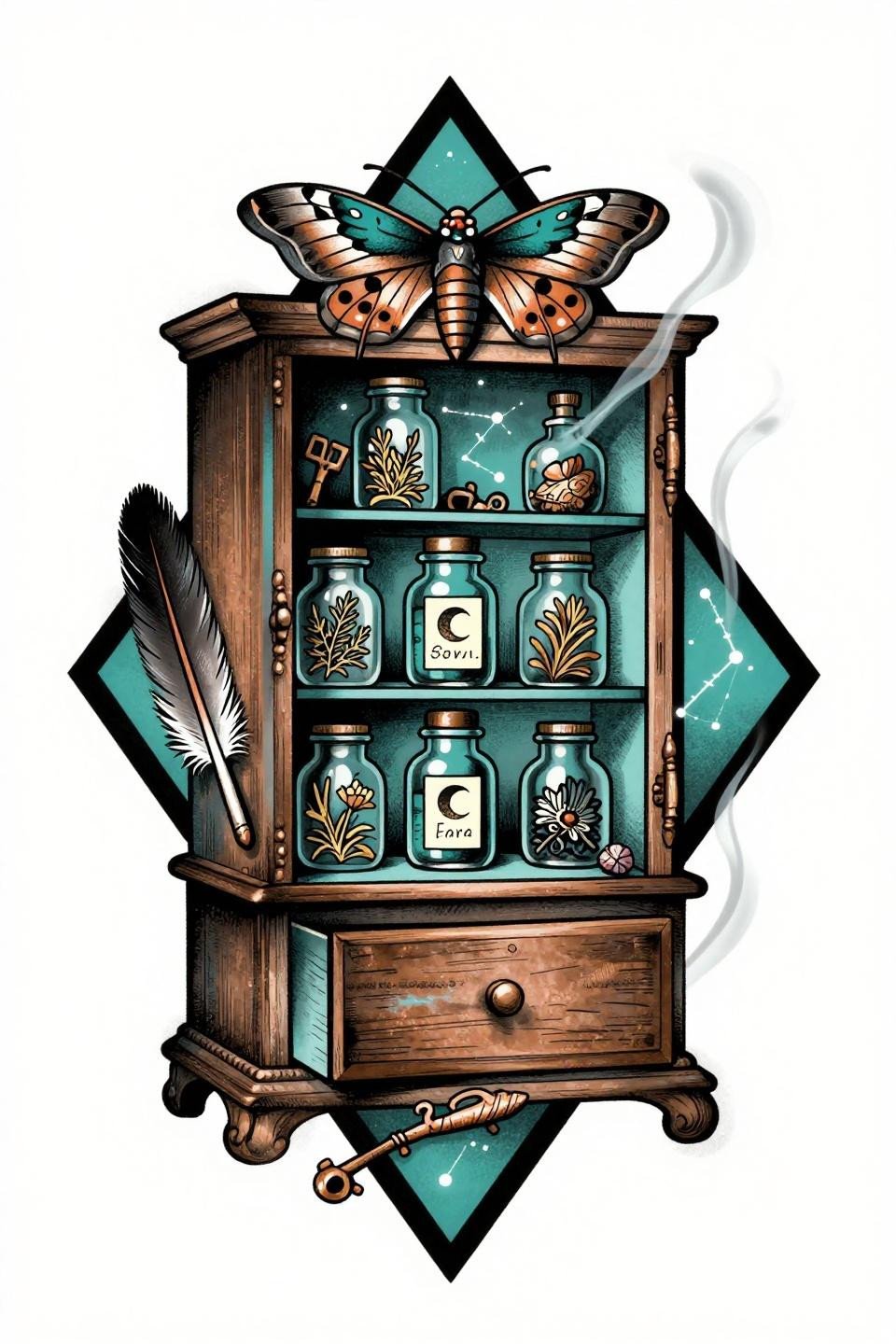
An apothecary cabinet loaded with dried herbs, moon-labeled bottles, and orbiting constellation moths, rendered in old school traditional linework with deep teal fills and copper metallic accents inside a diamond frame.
Traditional flat fills at this color depth age predictably. Teal shifts slightly greener over a decade, but the copper accent placement against black outlines maintains visual separation longer than most color combinations.
Art Deco Occult Figure With Void Ribcage Geometry
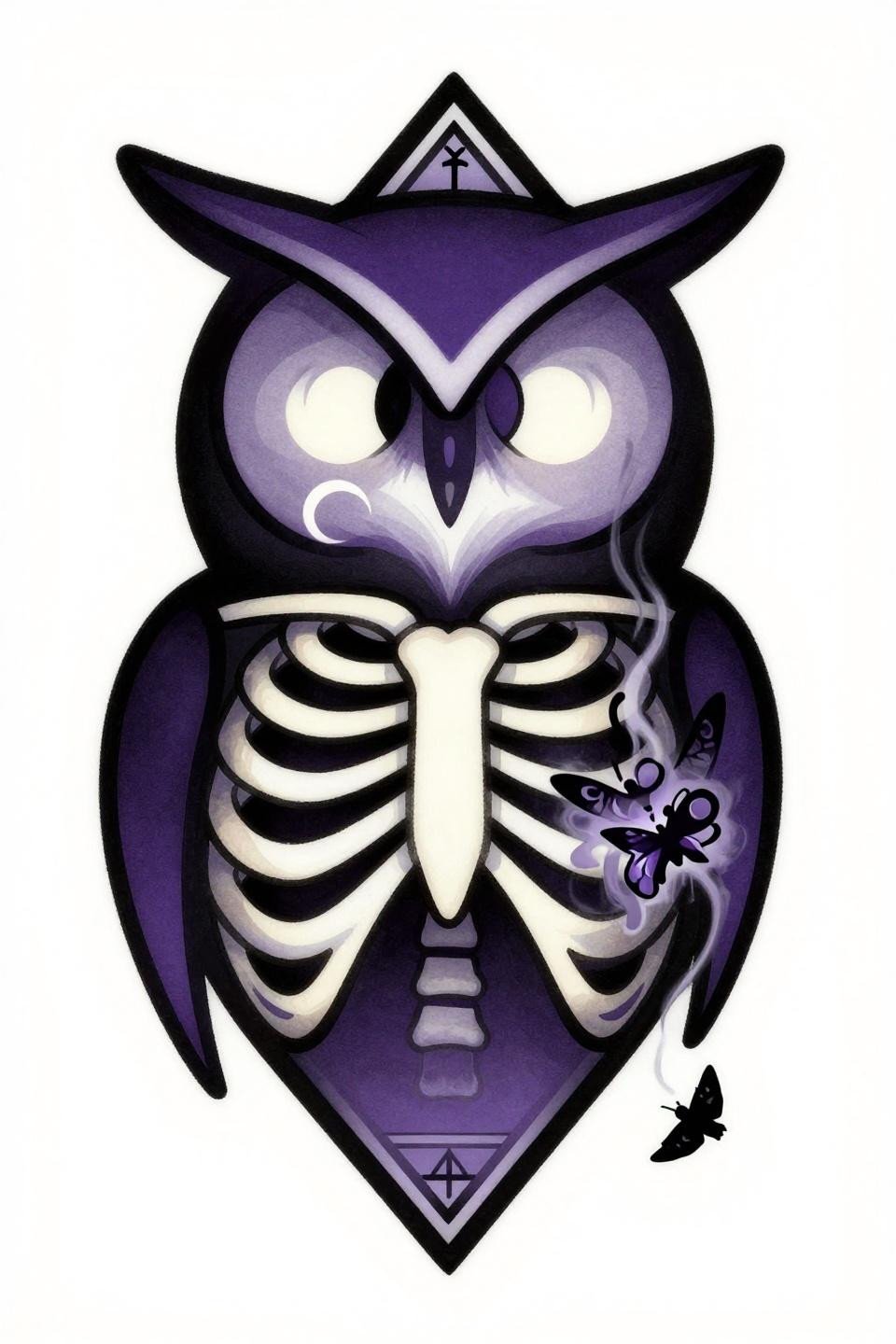
An art deco occult figure with a skeletal ribcage rendered as interlocking geometric void shapes, the torso dissolving into moth silhouettes, framed in a sharp diamond border with flat deep violet and obsidian fills.
The art deco proportions here, elongated figure with angular border geometry, suit sternum and spine placements where the vertical axis of the composition maps directly onto the body’s own structure.
Trash Polka Celestial Moth With Bilateral Mirror Symmetry
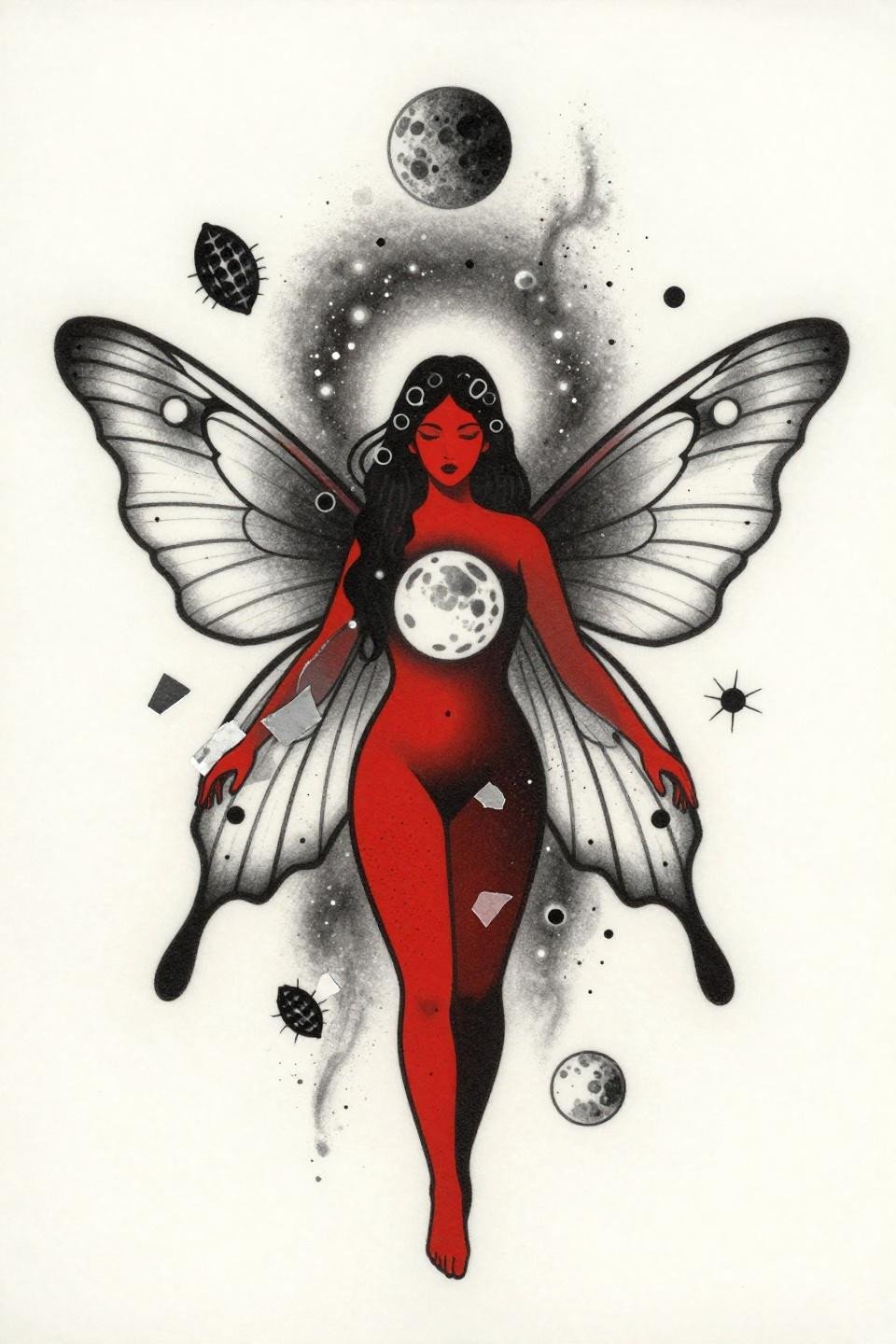
A moth-winged celestial figure dissolving into stellar dust, built on strict bilateral symmetry, with trash polka collage fragments integrated alongside crimson and solid black fills.
Trash polka ages well only where the black fields saturate completely. The crimson fills are the variable. Red ink on skin shifts warmer and lighter by year five, so the contrast balance between red and black changes.
Ignorant Style Bone and Wildflower With Raw Linework Energy
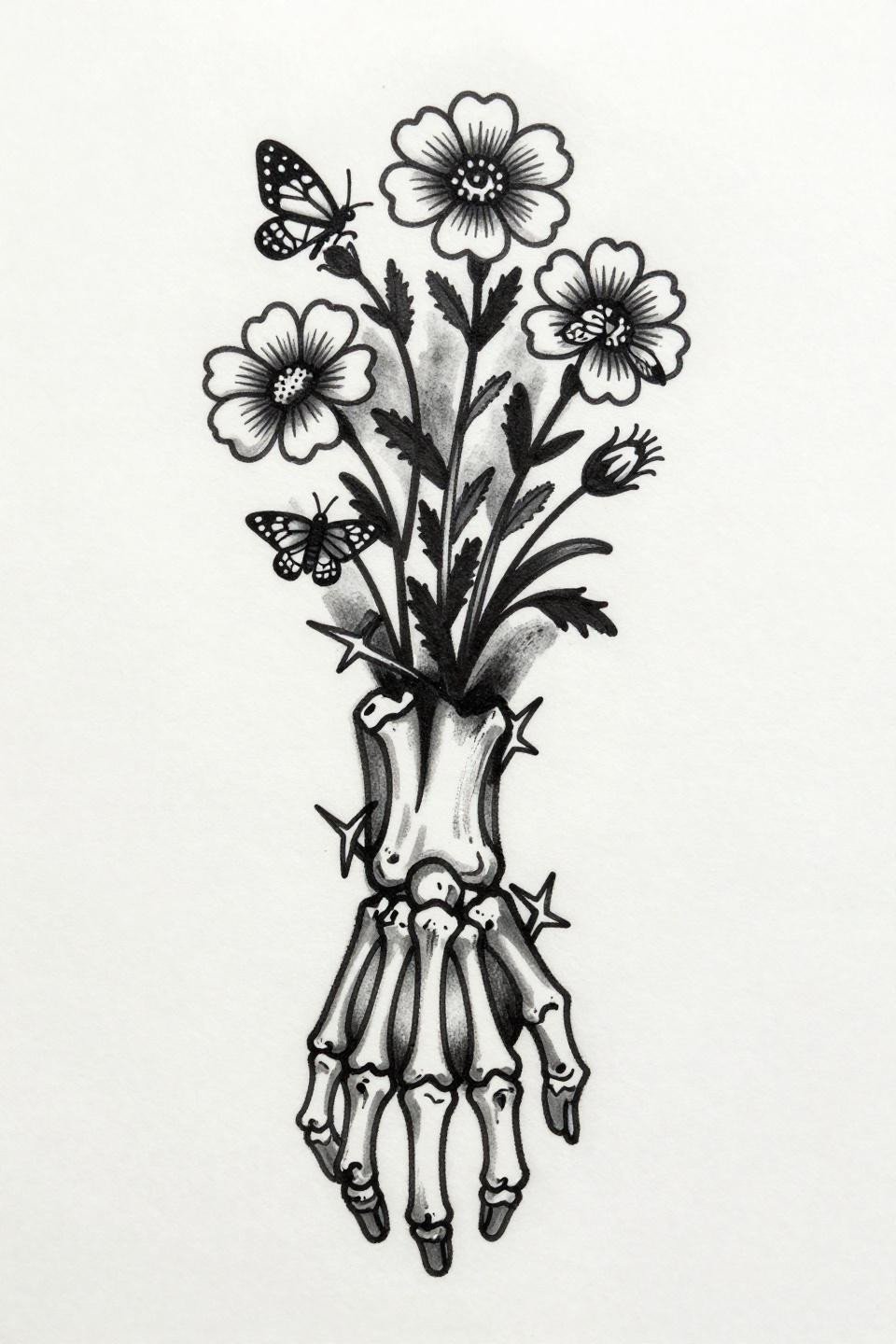
Skeletal forearm bones with wildflower stems sprouting from finger joints, rendered in intentionally crude 3-4pt outlines with flat black fills and raw asymmetric energy that rejects polish as a deliberate choice.
Ignorant style reads as effortless but demands an artist who understands exactly how imperfect to be. Lines that wobble from inconsistency look different from lines that wobble from intentional stylistic control, and collectors learn to spot the difference fast.
Single Continuous Line Goddess With Aurora Hair and Crystal Forms
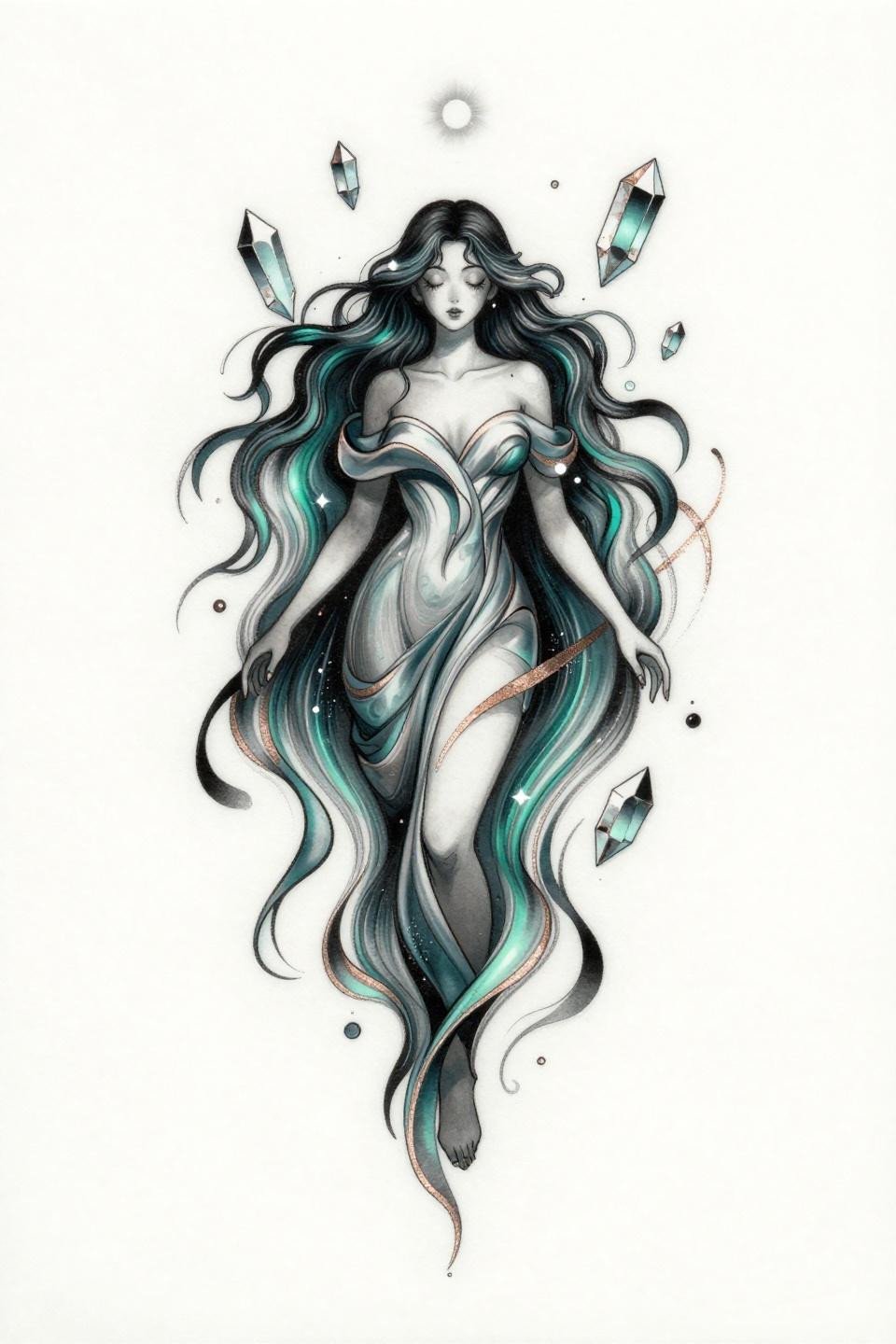
An elongated figure dissolving into silk ribbons and aurora waves, drawn as one unbroken calligraphic mark with wet ink line weight variation and copper metallic accent points at geometric forms.
Continuous line work of this complexity requires the artist to plan every directional change before touching skin. The tell is the curves. No wobble at direction changes is the skill signal to verify in their healed work.
Irezumi Water Spirit With Jellyfish Tendrils and Third Eye
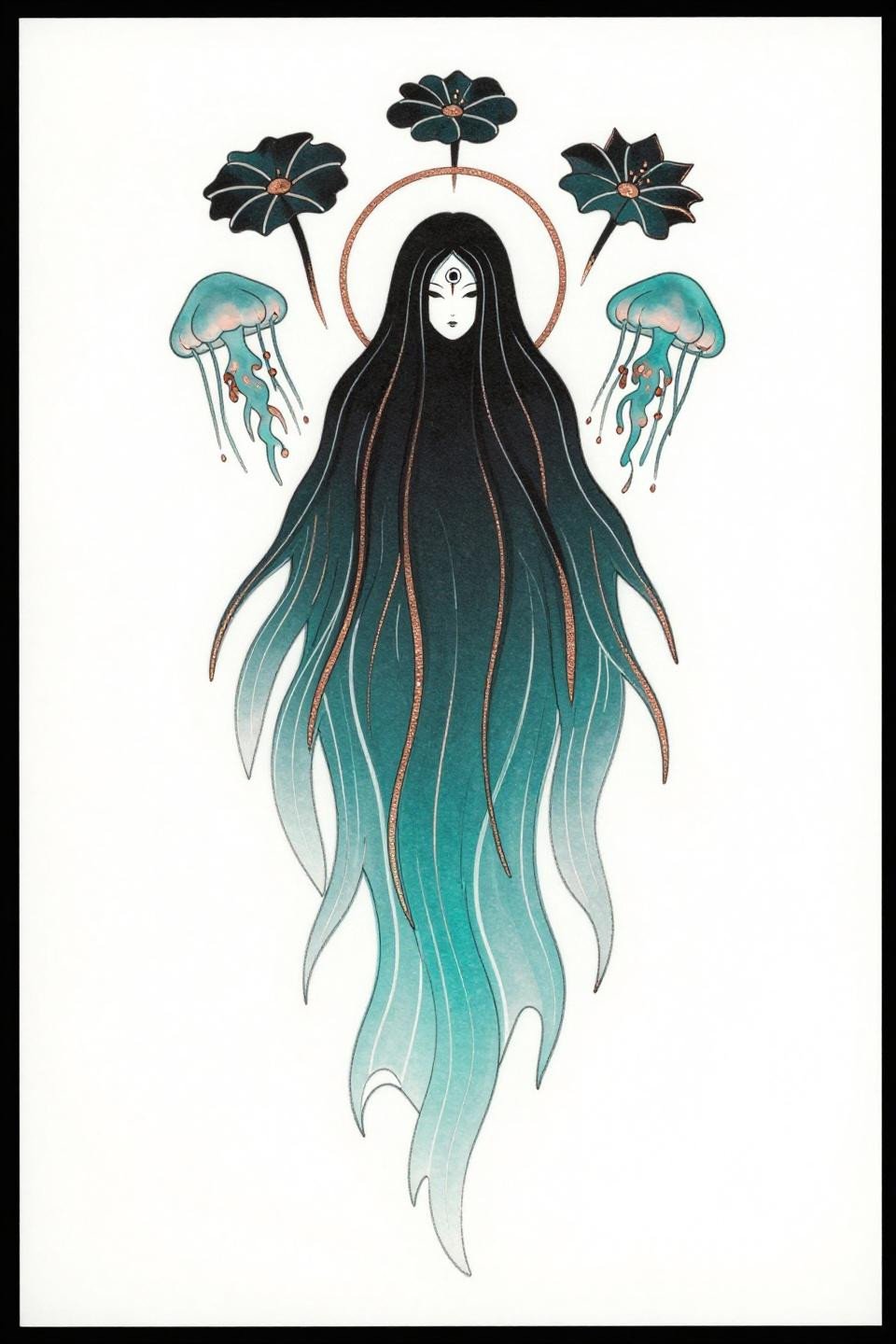
A water spirit figure with elongated translucent fins and a third eye marking, surrounded by bioluminescent jellyfish tendrils, built on irezumi bilateral symmetry with bold 2-3pt black outlines and deep teal flat fills.
Irezumi-structured designs like this place well on the thigh or upper back where the body’s natural curves support the centered vertical axis. Flat fills with no patchiness are the separator between veterans and beginners here.
Etching Woodcut Forest Spirit in Crosshatch and Green Gold
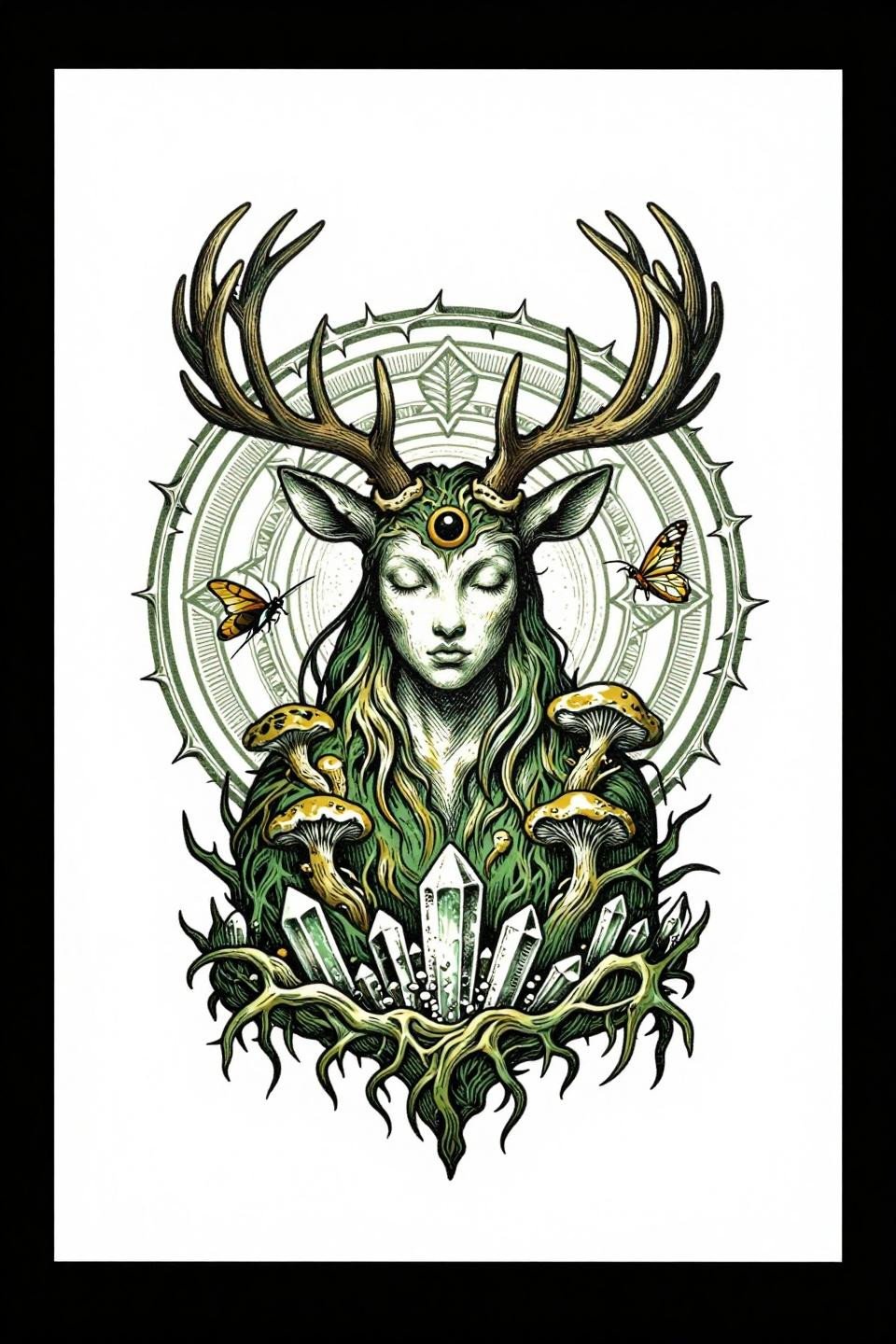
An antlered forest spirit dissolving into crystal clusters and bioluminescent fungi, set in a circular mandala with dense crosshatch parallel line engraving in forest green and gold over black.
Crosshatch shading at this density holds contrast longer than grey wash on most skin tones. The tightly packed parallel lines read as tonal value even as individual strokes broaden slightly with age.
Celtic Knotwork Lunar Deity With Triquetra Ribcage
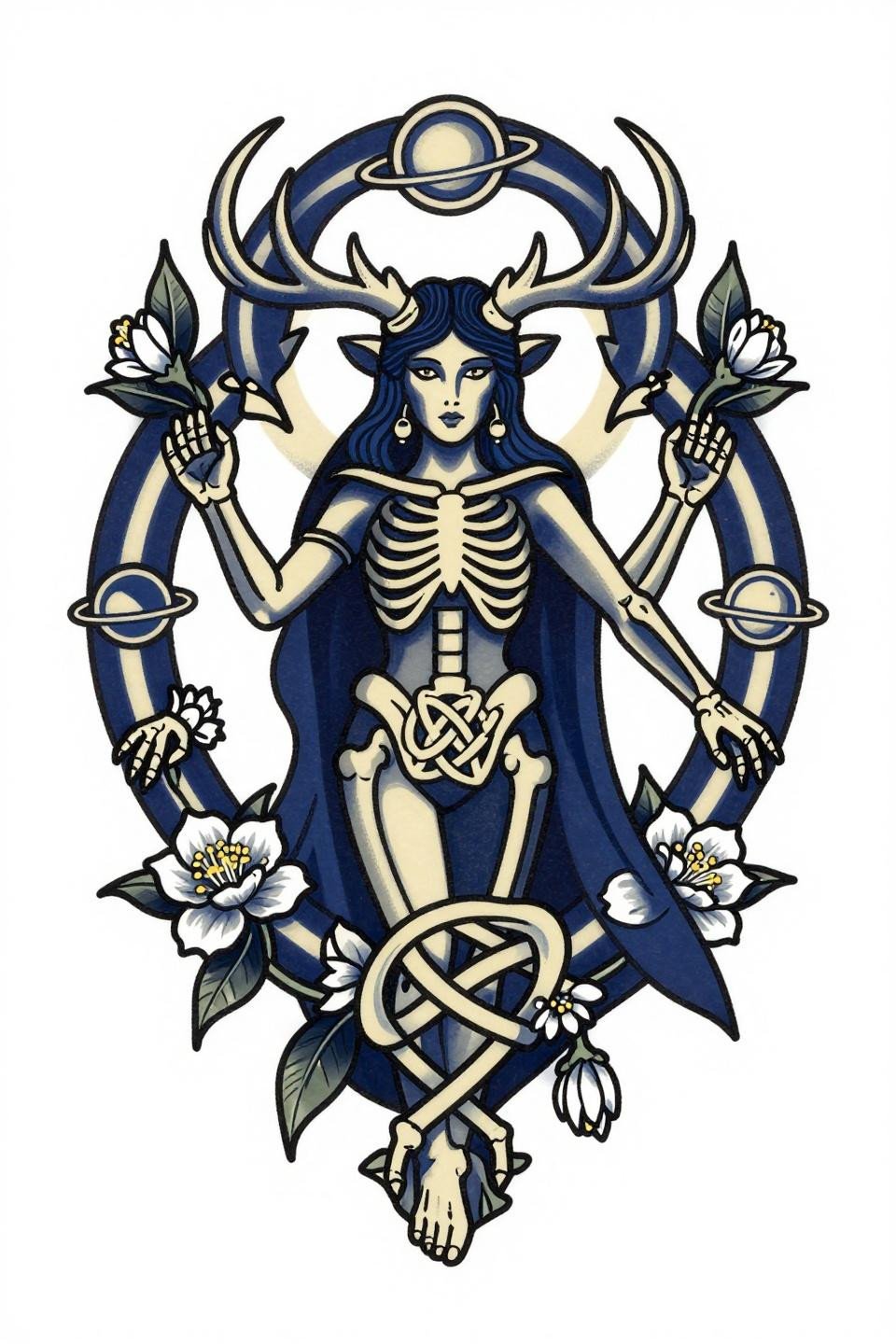
A lunar deity with branching antlers and a ribcage rendered as interlocking triquetra knotwork, orbiting planetary symbols in a circular border, with flat navy and warm cream fills inside bold 2-3pt black outlines.
Celtic knotwork geometry is unforgiving on skin. Any line inconsistency in the interlocking structure reads immediately. Request linework-heavy healed reference from your artist before committing to this design.
Surrealist Forest Nymph Dissolving Into Birch Saplings
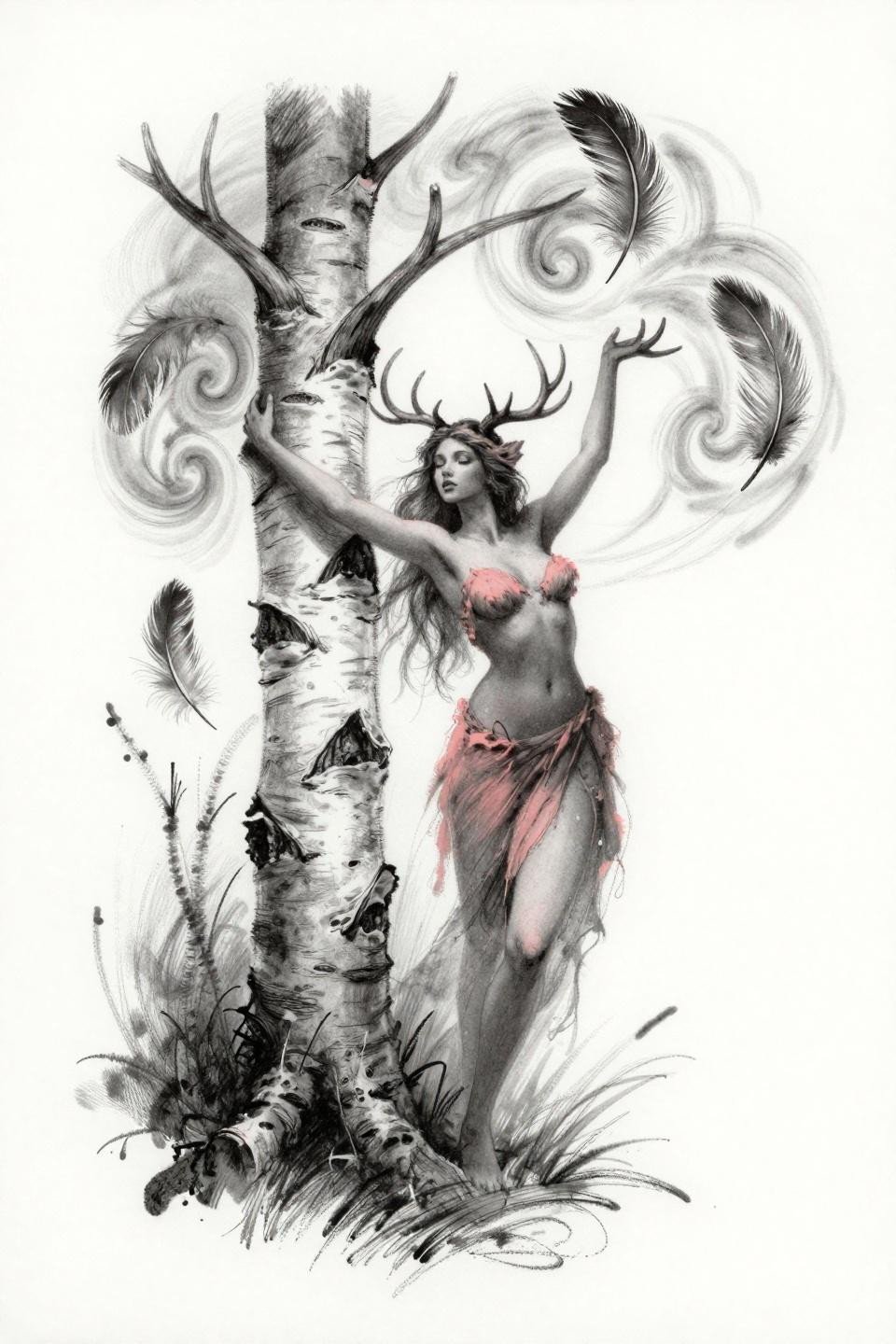
A forest nymph dissolving upward into birch saplings and floating feather fractals, executed in whip shading gestural strokes with coral pink and charcoal grey on an open white field.
Gestural shading like this lives or dies by the negative space decisions. The open areas carry as much visual weight as the marks, which is why ornamental styles with deliberate negative space require more planning than they appear to.
Neo-Traditional Celestial Priestess With Nebula Dissolution
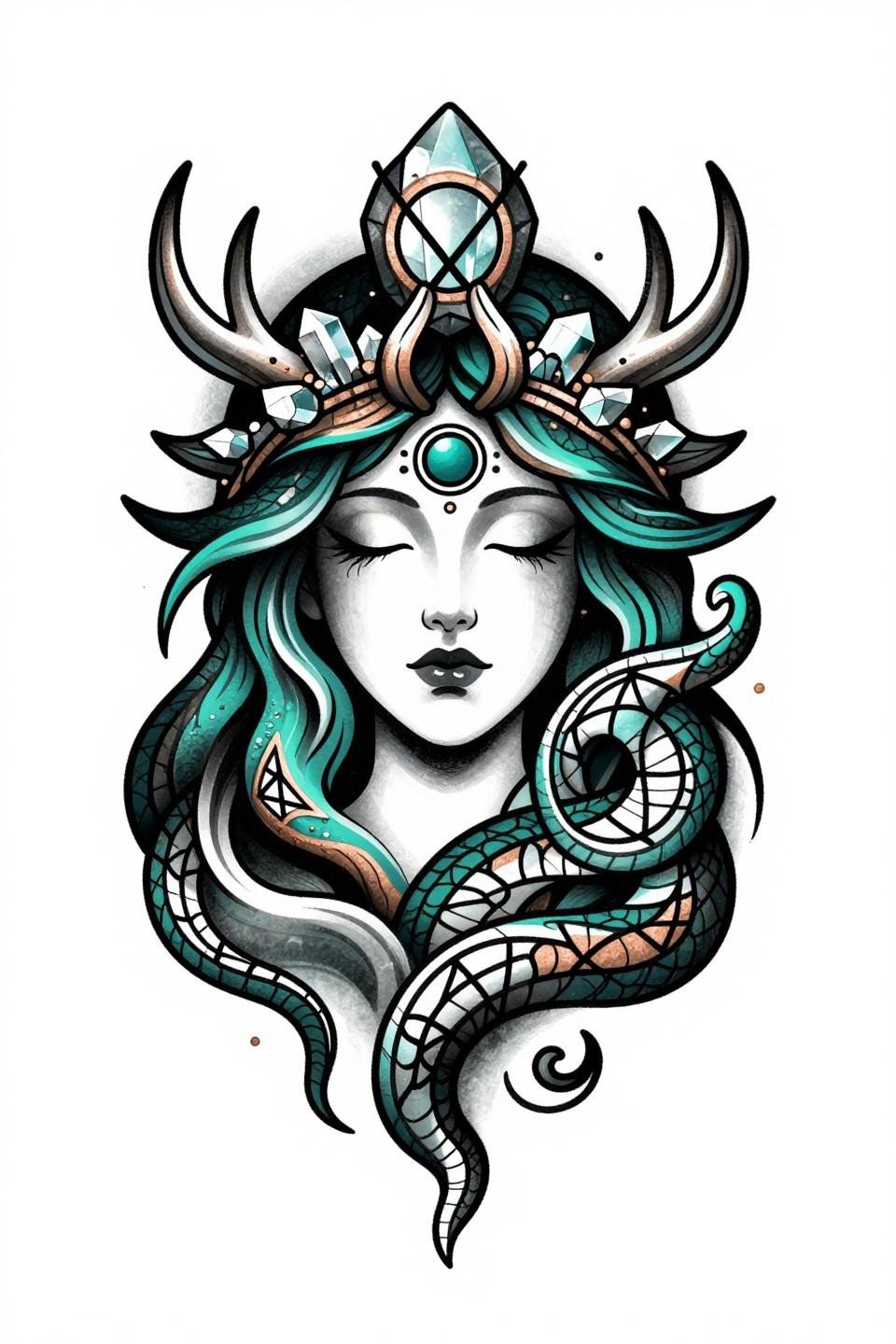
A celestial priestess face with a crystal antler crown and form dissolving into nebula clouds, a serpent forming sacred geometry sigils below, rendered in neo-traditional flat color with deep teal and copper metallic accents.
Neo-traditional at this color weight suits lighter to medium skin tones best. On darker skin, the teal loses separation from the black outlines at depth, and copper reads closer to gold, which changes the color hierarchy.
Botanical Moon Phase Mandala With Mycelium Root Systems
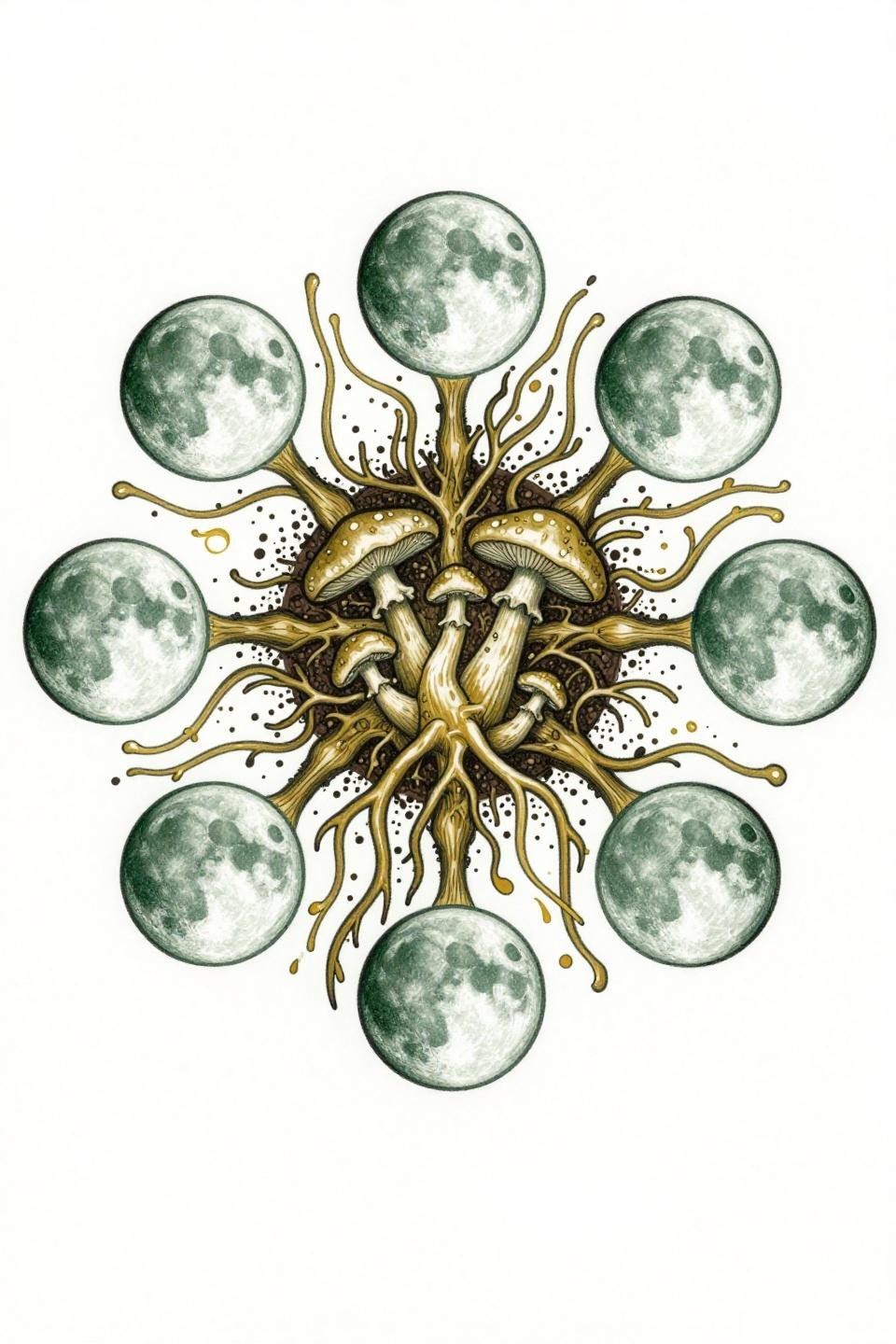
Eight moon phases in mandala formation threaded together by crystalline root systems and dense mycelium networks, executed in compass-drafted vector precision linework with flat forest green and gold fills.
Protected placements like the sternum or upper back give this mandala format its best shelf life. Placed on high-movement areas, the fine connecting linework between phases is first to spread.
Dark Feminine Blackwork Dotwork Anatomy With Lunar Palm Lines
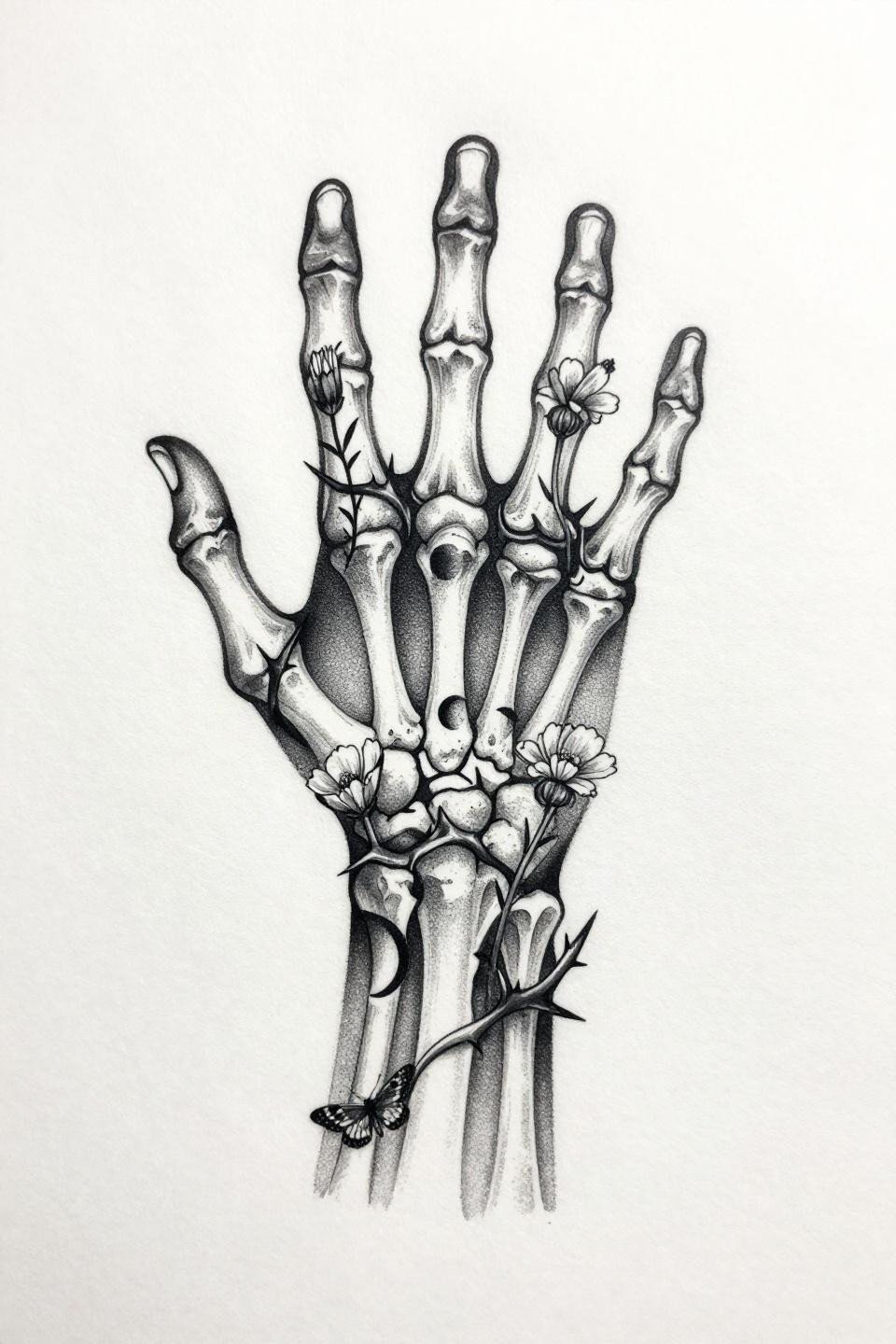
Skeletal forearm anatomy with wildflowers growing from fingertip bones and a lunar phase sequence embedded along the palm lines, shaded in stipple dot gradient that runs from 90% density at center to open at edges.
Consistent dot size across the full gradient is the skill signal to look for here. Dot size variation that doesn’t follow the tonal logic reads as inconsistency, not technique.
Watercolor Flower Goddess With Dandelion Seed Dissolution
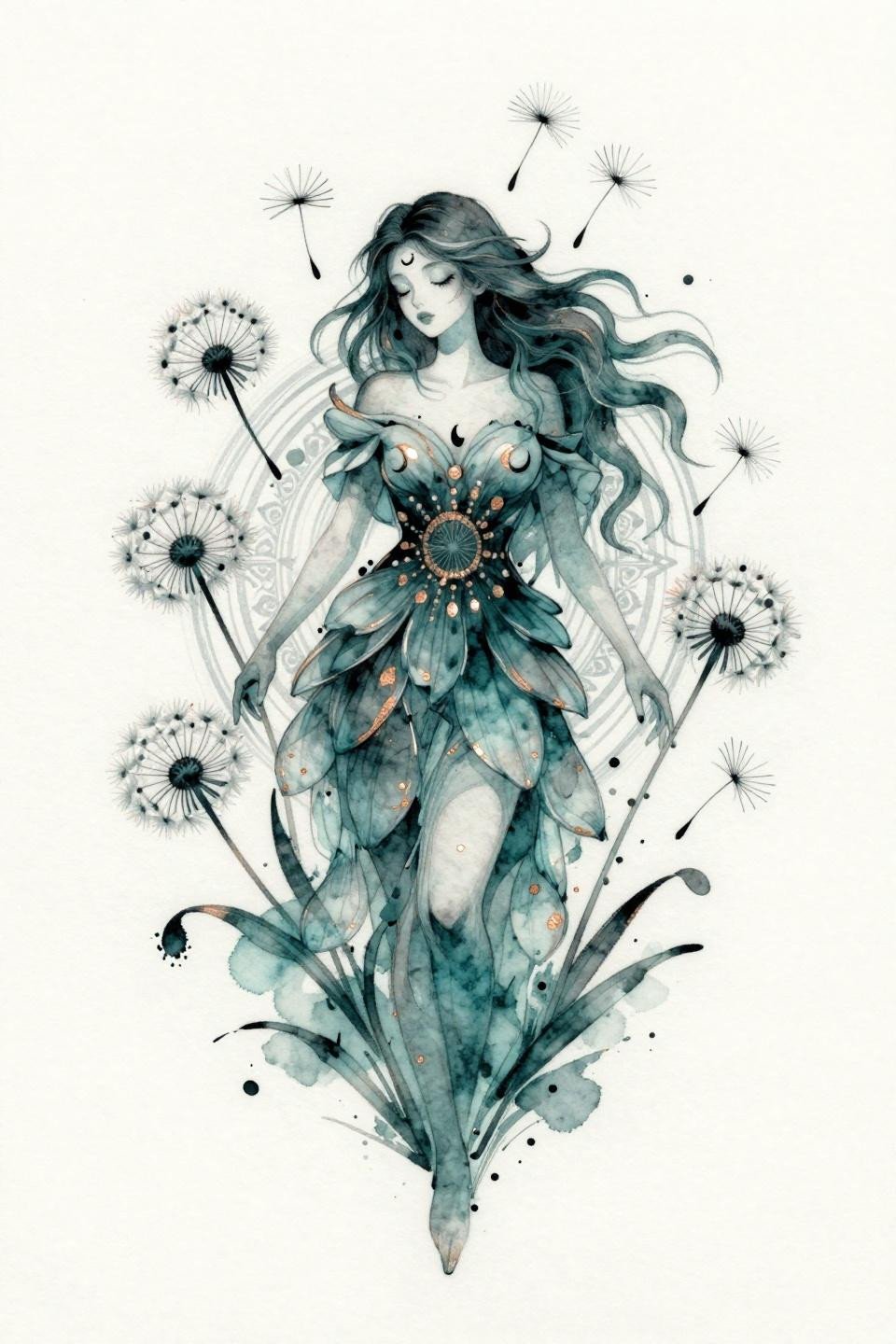
A flower goddess dissolving into dandelion seeds, with a clean calligraphic ink skeleton holding the form while watercolor bleeds in deep teal and copper metallic washes sit loosely behind the line structure.
This is how watercolor tattoos should be built. The anchoring outline prevents the color fields from reading as formless blurs by year three to five, which is the failure point of outline-free ornamental styles on skin.
Fine Line Constellation Goddess With Astral Hairline Strokes
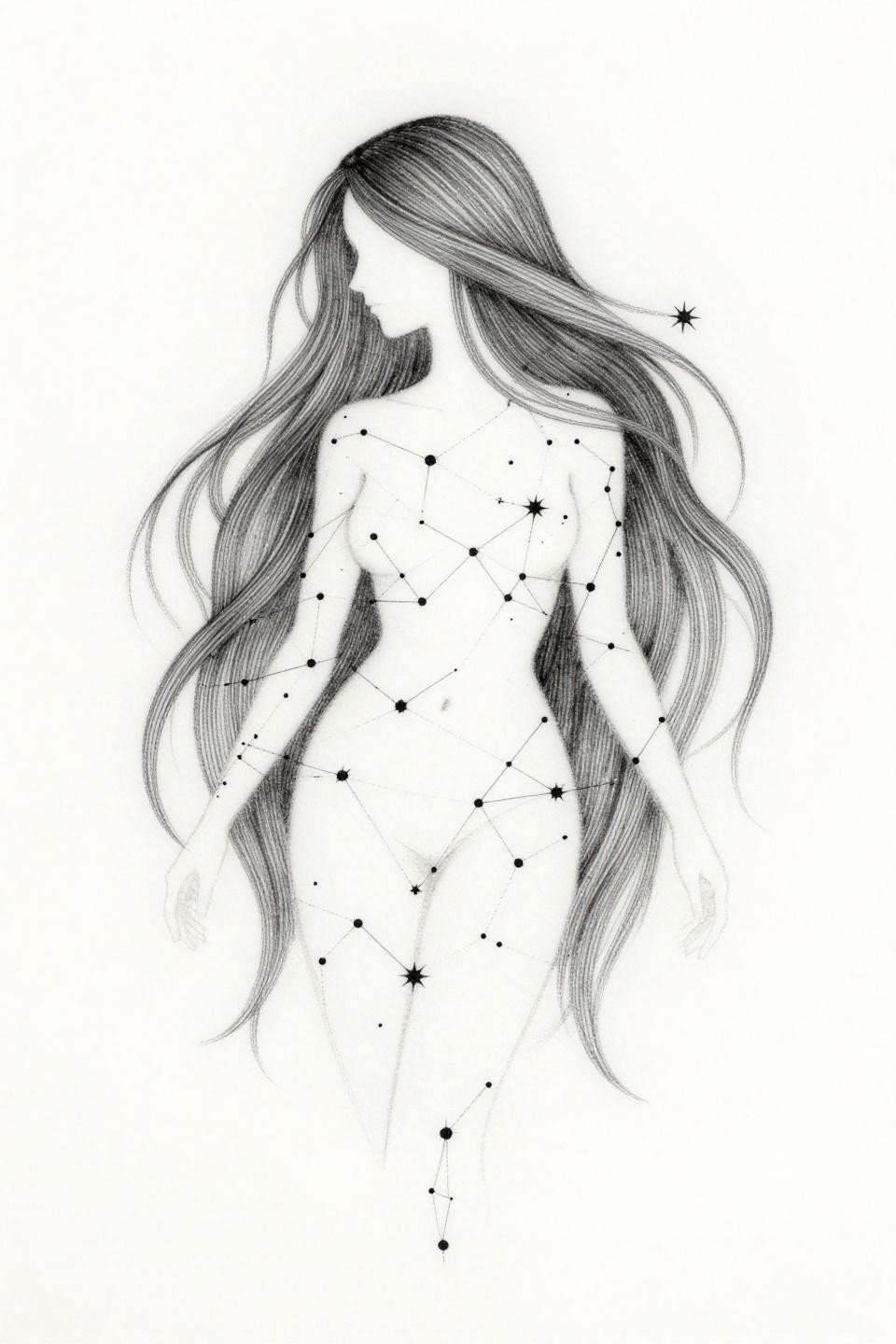
An abstract goddess silhouette built from connected constellation points, the face implied by sparse line placement and the hair dissolving into astral lines, all executed in 0.5mm single-needle hairline strokes.
Minimalist fine line at this weight needs even negative space distribution around the figure or the implied form collapses visually. On lighter skin tones this reads crisp. On olive and darker tones, the weight needs to increase to maintain contrast.
Art Nouveau Moon Forest With Indigo and Crimson Wet Line
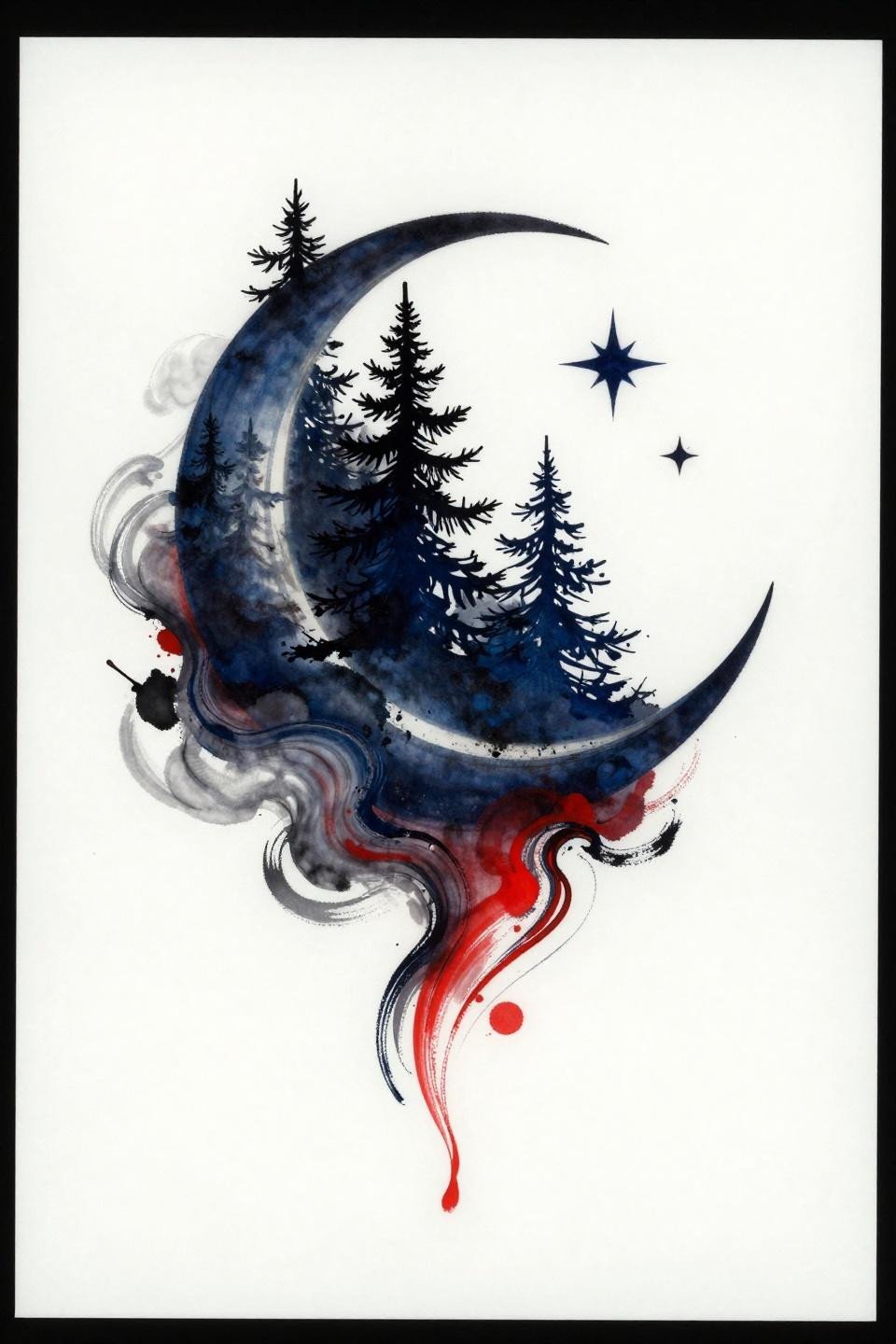
A crescent moon cradling a dense pine forest in its curve with gossamer cloud wisps between treetops, drawn in fluid art nouveau line weight variation in deep indigo and crimson on open white.
The dramatic negative space in this composition is load-bearing. Placement on the upper arm or forearm keeps the surrounding skin acting as part of the design rather than competing with it.
Pick three to five of these based on placement and skin tone first, style second. Send those specific references to your artist as a direction, not a menu. The cleaner the brief, the better the result.