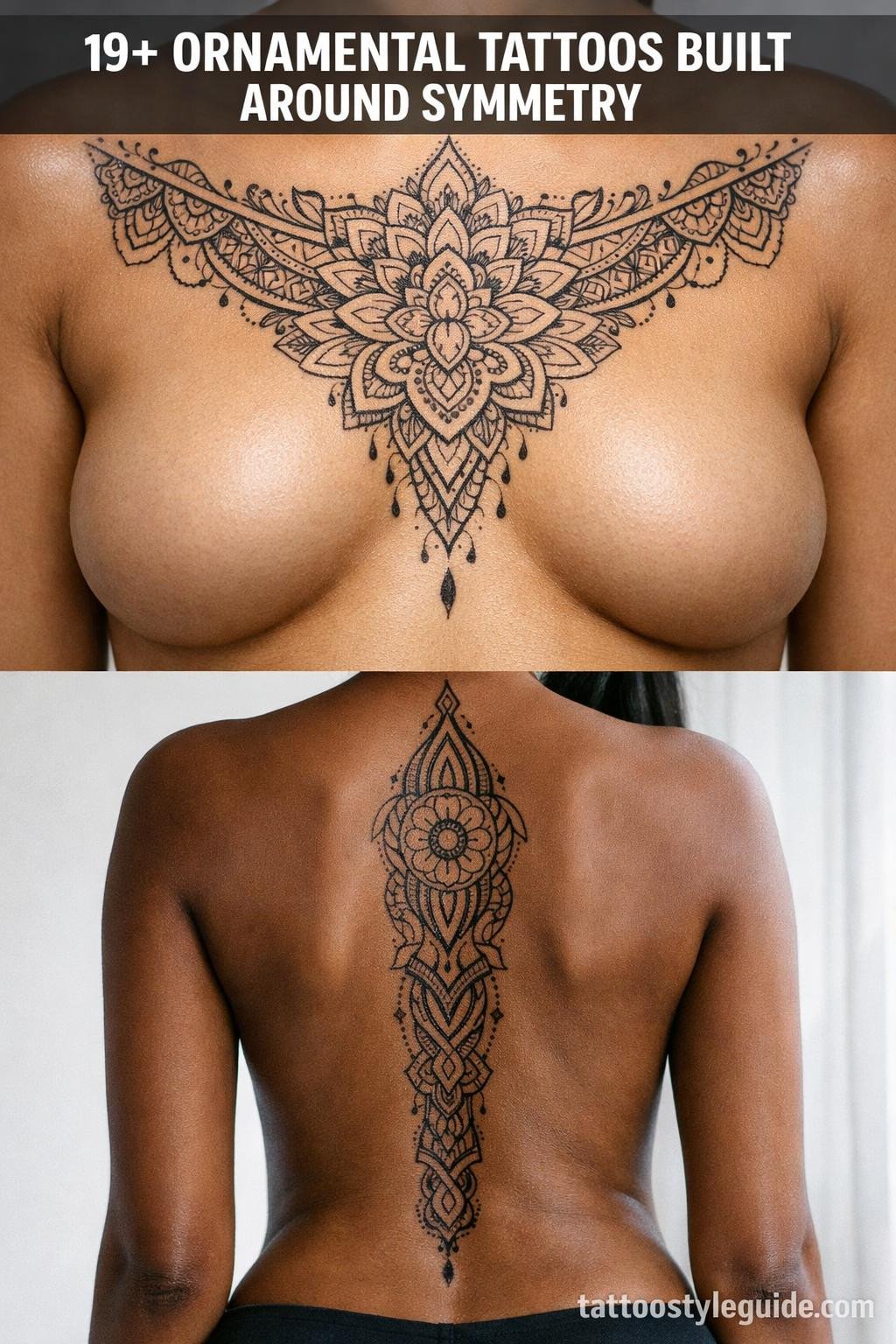
Ornamental tattoos punish lazy symmetry. A single misaligned petal or a slightly off-center geometric node reads wrong immediately, and unlike illustrative styles, there’s nowhere to hide the mistake in the composition.
What separates a strong ornamental piece from a decorative mess is structure. Every element should lock into a geometric logic, whether radial, bilateral, or axial. The designs below each commit to one system and hold it through every layer.
Phoenix Geometry: When Feathers Follow a Grid
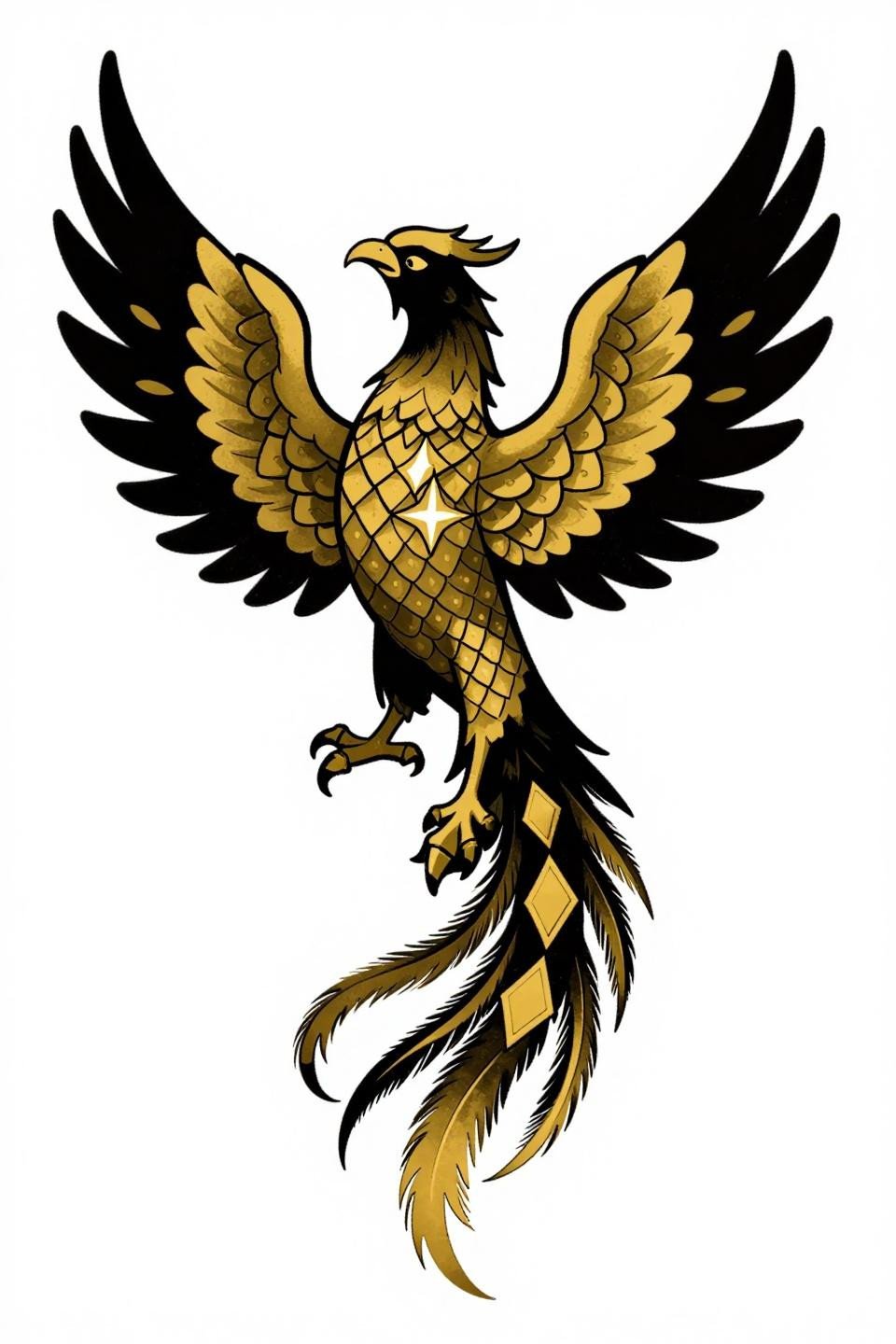
This surrealist phoenix uses geometric diamond paneling across the tail feathers to force organic subject matter into hard ornamental structure, anchored by a four-pointed star form at the chest.
The asymmetric diagonal arc is a collector-level choice. It reads as movement on a flat back or chest piece without requiring a fully symmetrical canvas.
Grey Wash Mandala That Earns Its Dimension
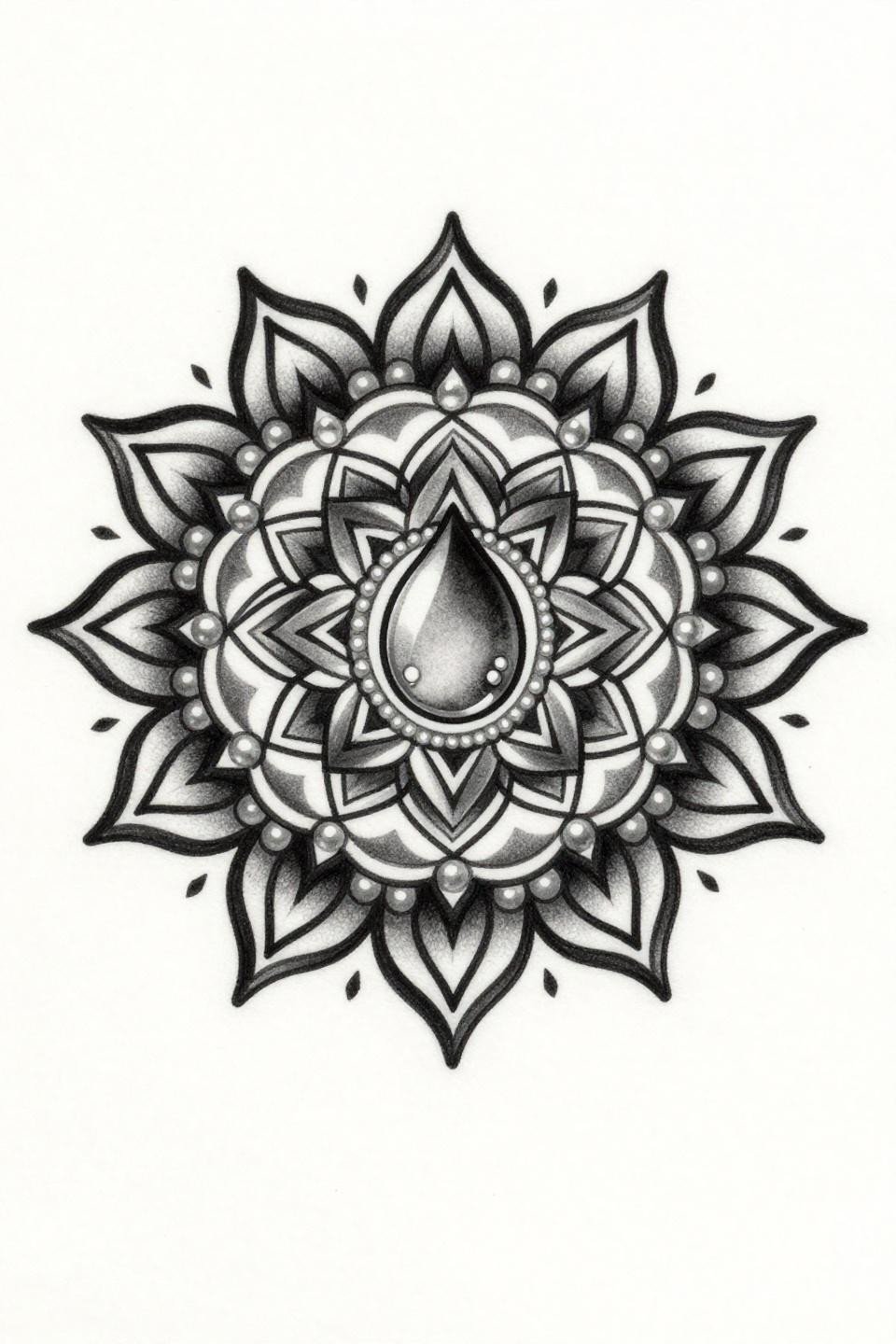
A chicano grey wash sunburst mandala with nested flower-of-life geometry and a pearl-studded scallop border, rendered in dense-to-open whip shading that builds real tonal depth without color.
Grey wash diluted this precisely ages cleanly on light to medium skin tones. On olive or deeper skin, the midtones compress over time, so the artist needs to build more contrast at the initial session.
Ouroboros Mandala and the Problem of Imperfect Lines
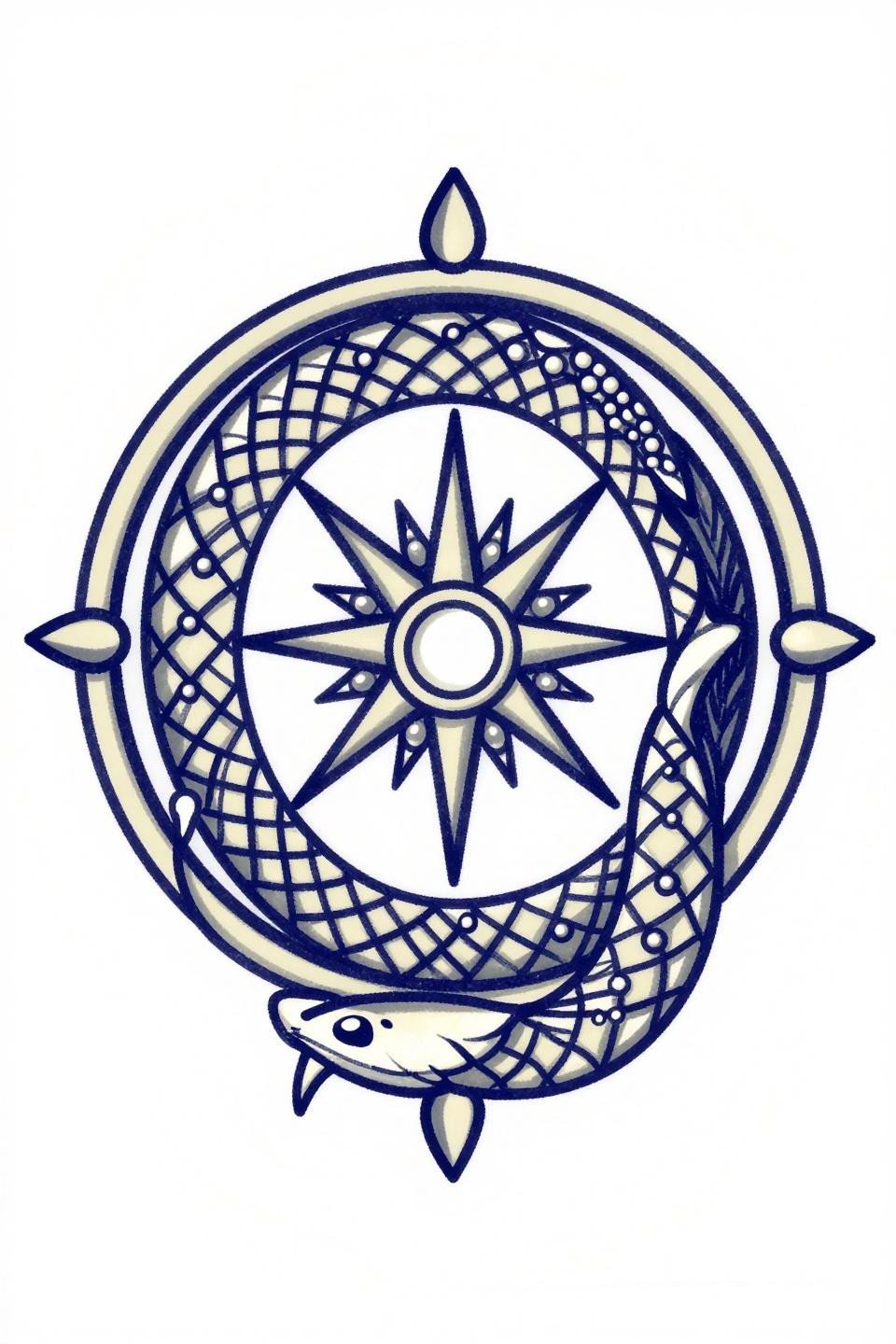
An ignorant-style ouroboros in a circular mandala frame, using deliberately imperfect 3-4pt navy outlines to subvert the precision ornamental work typically demands, with chunky diamond scales and crescent moon border details.
This style is a harder sell to clients who expect clean ornamental symmetry, but the raw linework actually holds better over time than single-needle work in high-friction placements like the forearm or wrist.
Griffin in Single Needle: The Scale Risk
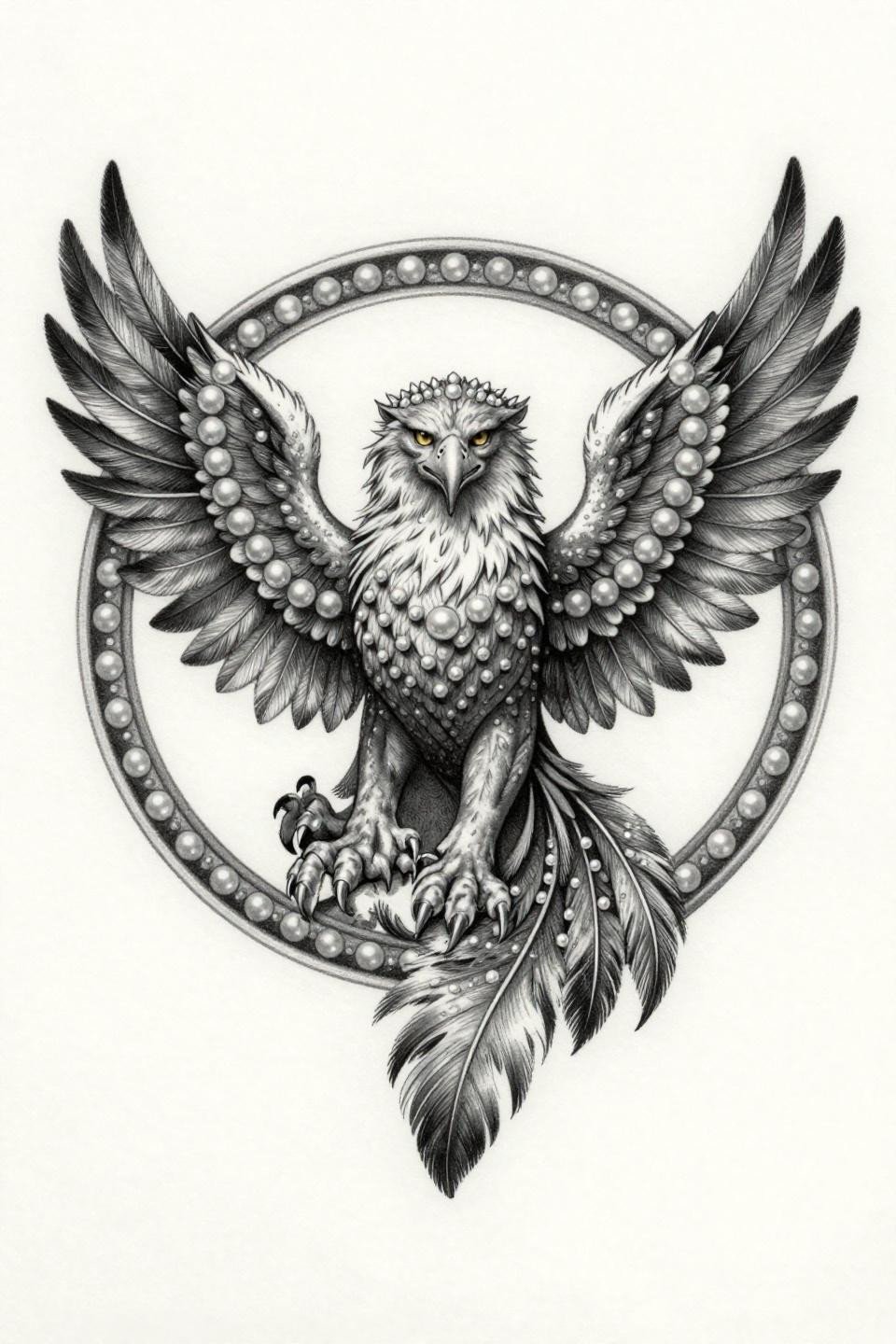
A micro-realism griffin set within a circular mandala frame, with pearl-studded individual feathers rendered in hairline 0.5mm single-needle strokes and open negative space carrying the dimensional contrast.
Single-needle work like this needs to stay large enough to survive. Scale below 4 inches on the chest or thigh and the feather detail closes up within five years. Check the artist’s healed portfolio before committing.
Compass Rose With Traditional Weight and Teal Ink
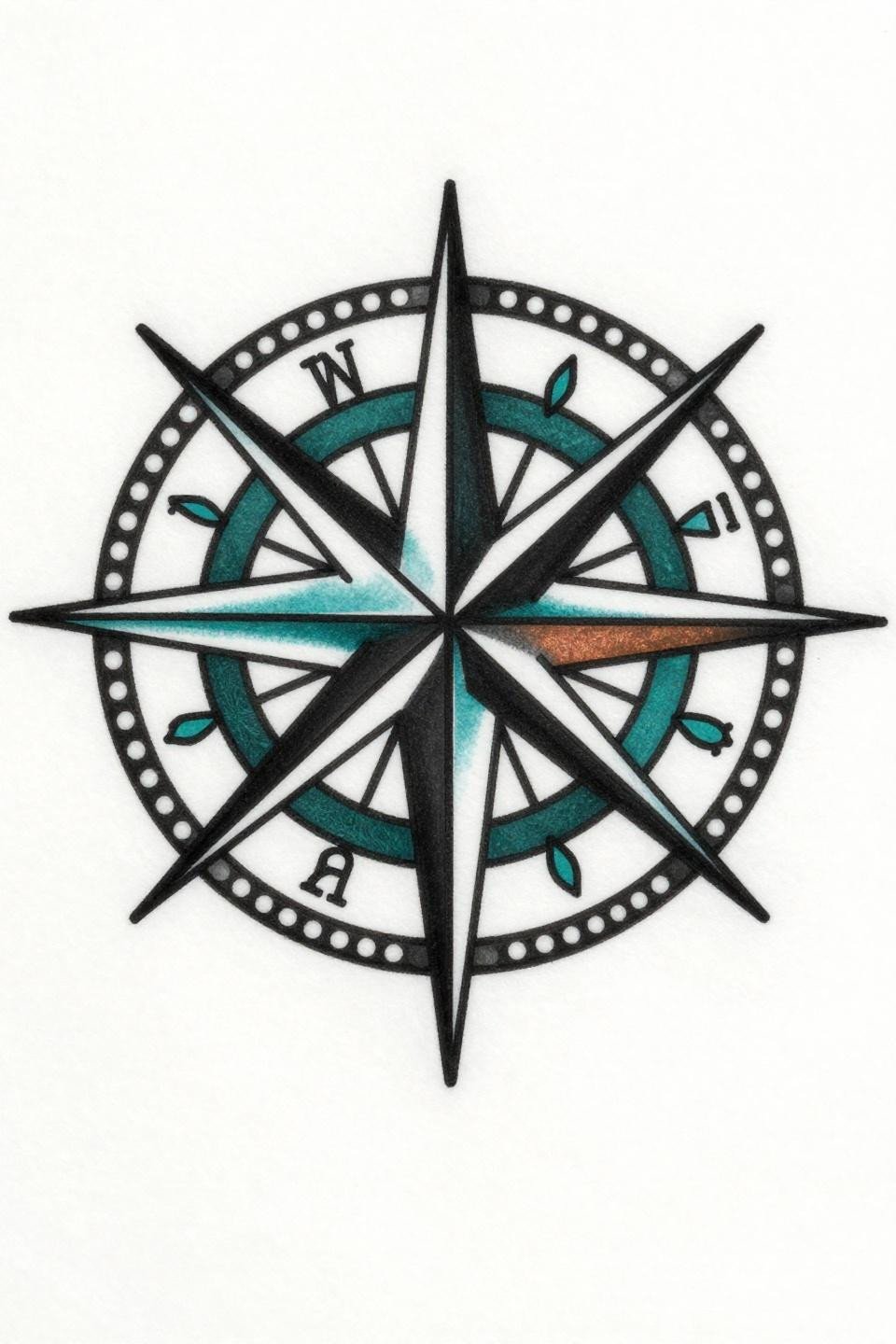
A traditional American compass rose with an eight-pointed star core, cardinal symbols, and a pearl-beaded border, executed in bold 3-4pt outlines with deep teal and copper fills.
Traditional weight outlines are the longevity signal here. The 3-4pt line holds its edge for a decade-plus, and teal ink sits more stably in skin long-term than cyan-heavy blues that shift green over time.
Lyre Mandala and the Sketch Style Tension
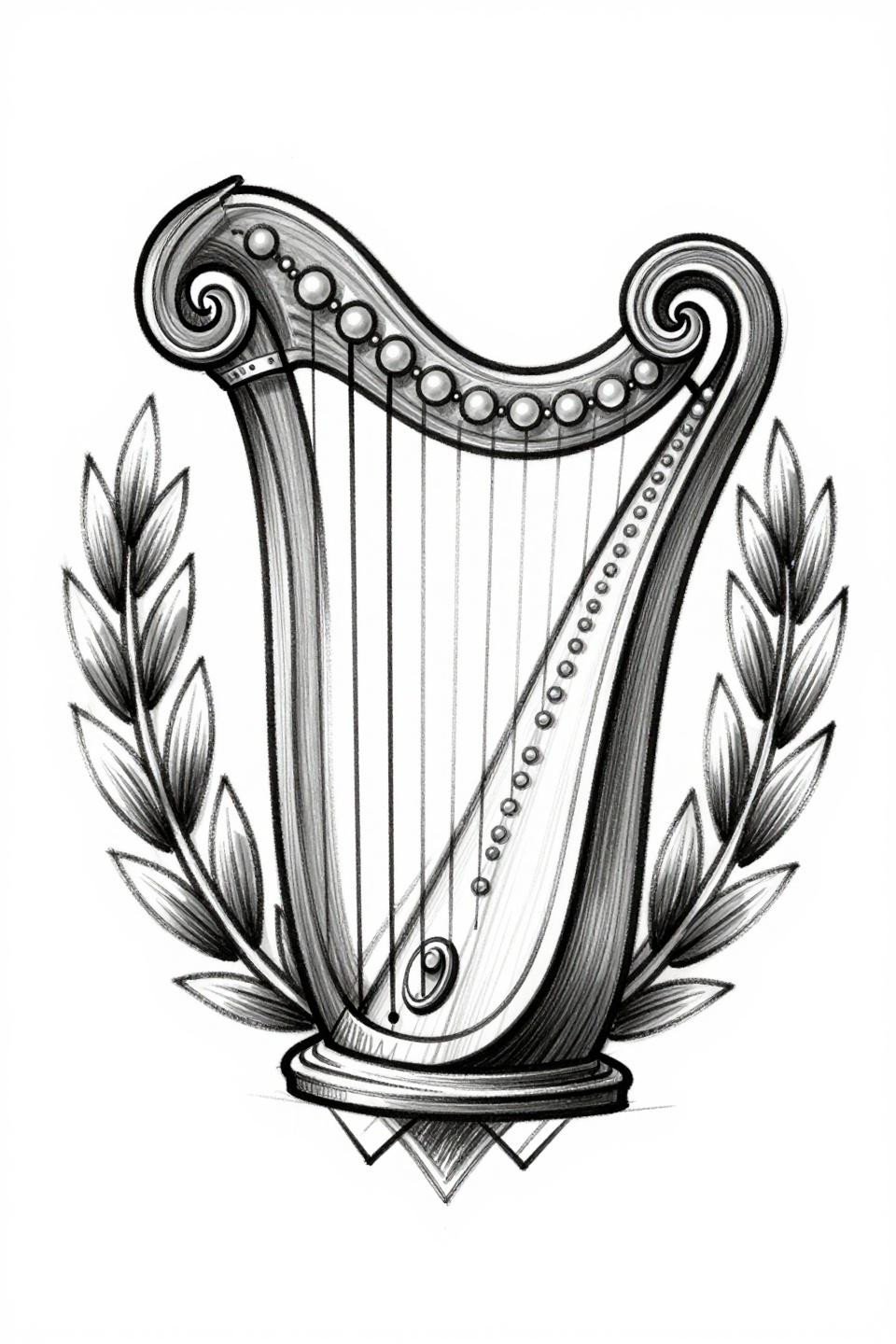
A sketch-style ornamental lyre set in a diamond frame with pearl-studded strings, laurel wreath, and spiral finials, using gestural varied line weight to give an architectural subject organic energy.
The diamond frame is a strong sternum or spine placement anchor. It creates a natural focal axis that aligns with the body’s vertical symmetry, which keeps the composition readable in motion.
Trash Polka Serpent: Where Symmetry Breaks on Purpose
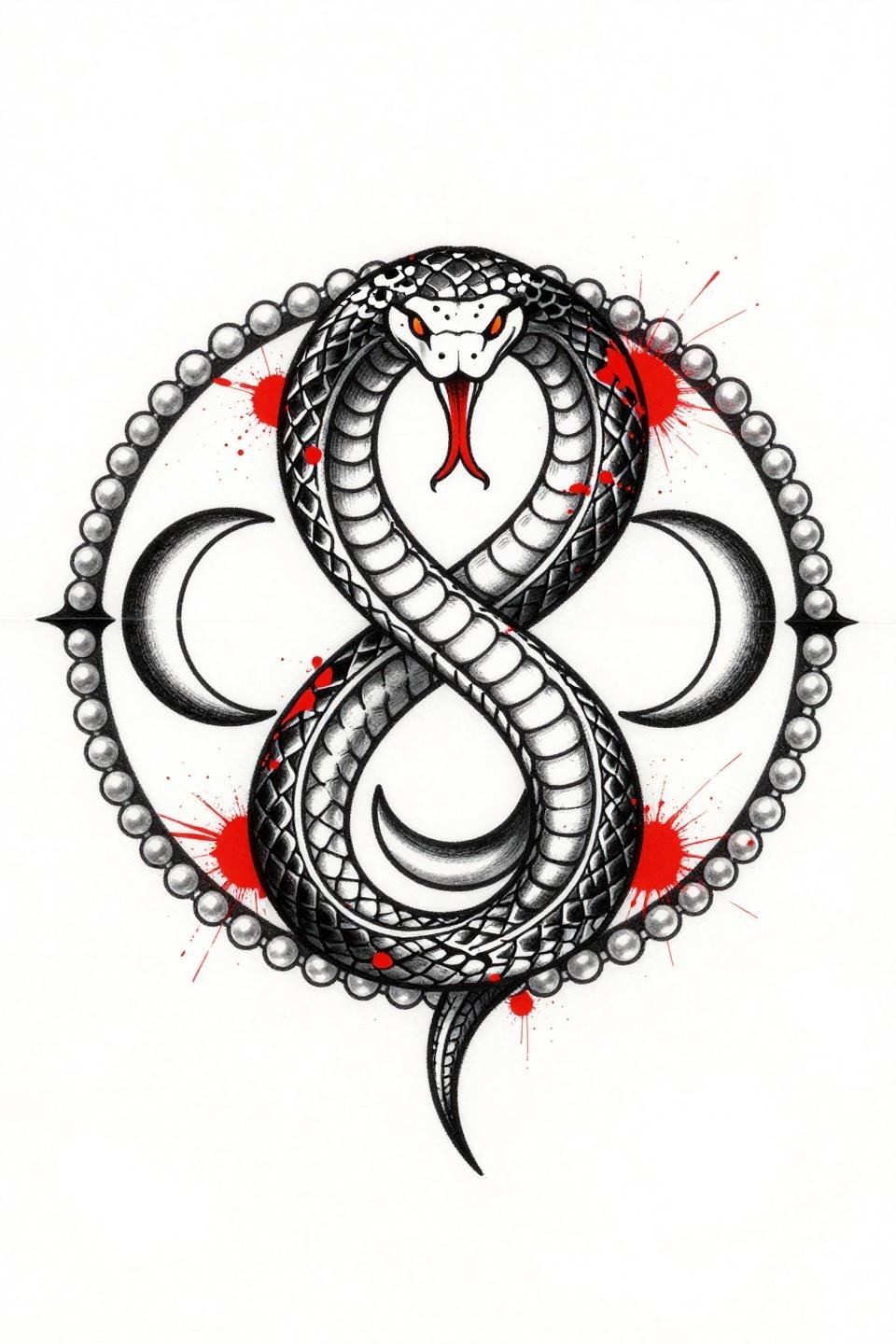
A trash polka serpent coiled in a figure-eight infinity knot with a pearl-beaded circular border, where crimson red splatter and gestural ink bleed deliberately fracture the mandala’s symmetry.
This is a high-contrast reference suited to experienced collectors. The red bleeds will soften and shift slightly over time, so an artist needs to oversaturate the crimson fills at application to account for that fade.
Neo-Traditional Rose With One Color Doing All the Work
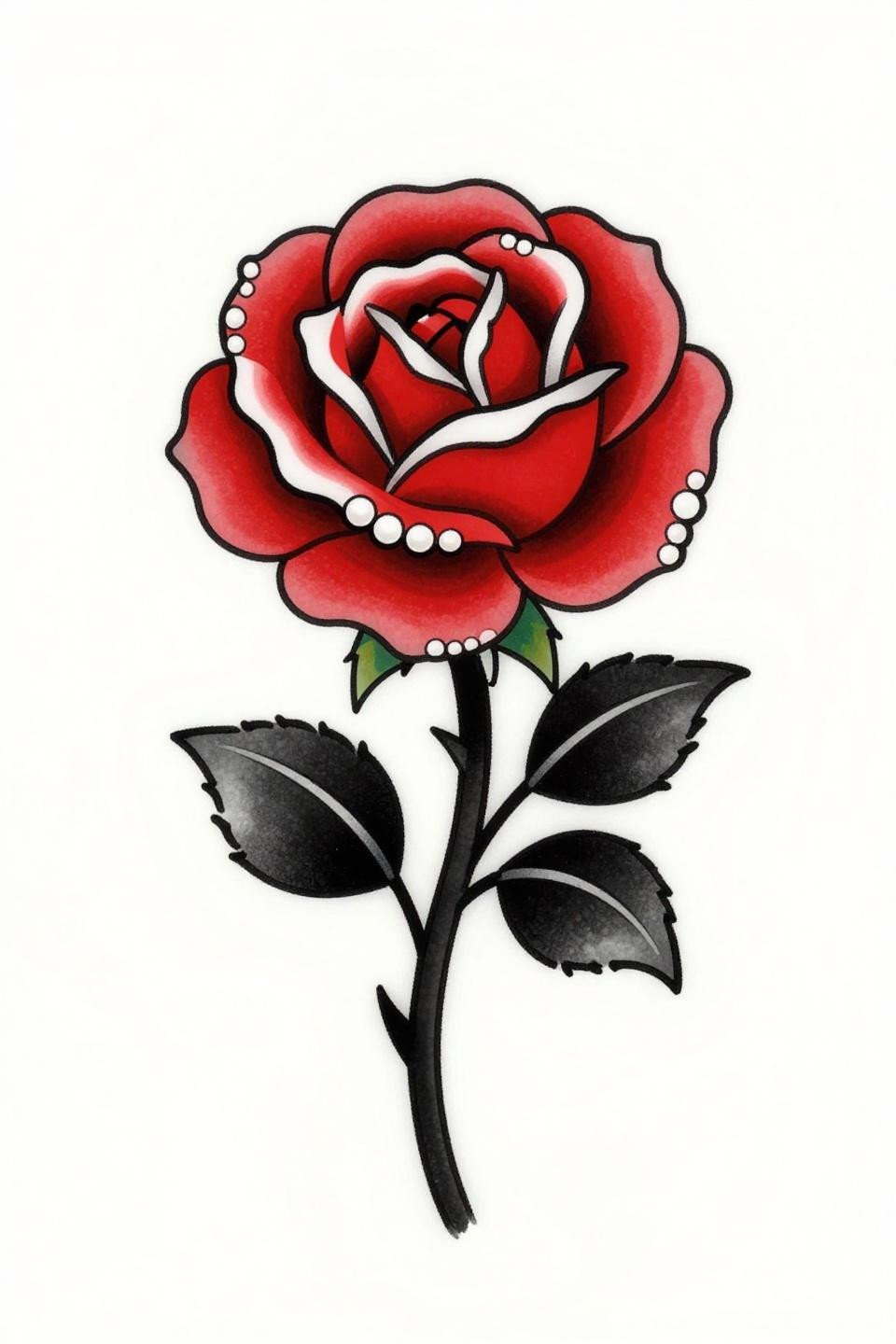
A neo-traditional ornamental rose with concentric petal layers, pearl-beaded edges, and a ribbon banner, built on bold 2-3pt black outlines with crimson as the single accent color.
Single-color restraint like this reads stronger than multi-color ornamental roses on most placements. Upper arm or thigh gives this vertical composition room to breathe without distortion at the joints. Pair it with henna designs with ornamental elements for a cohesive sleeve concept.
Sak Yant Structure and What Makes the Script Work
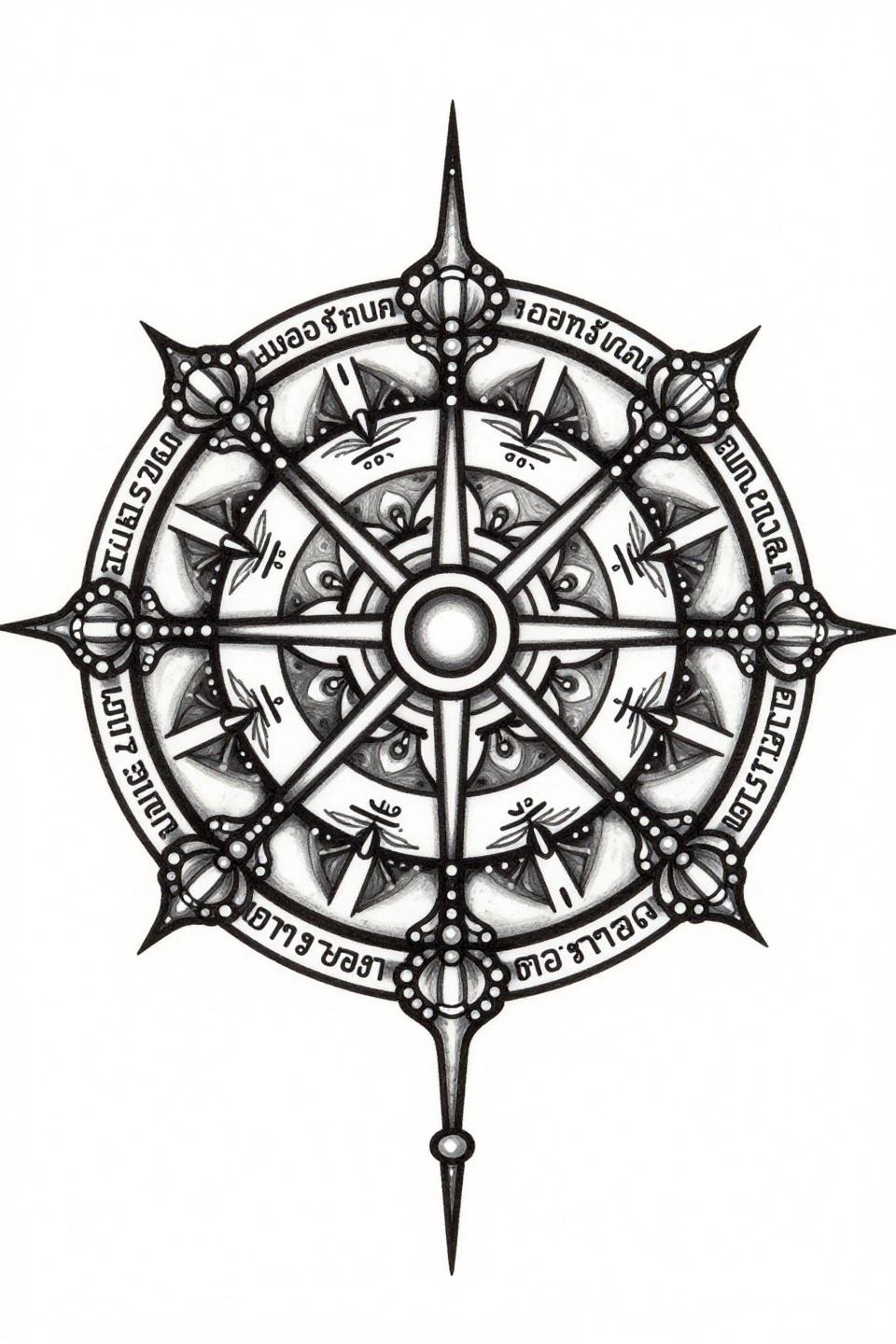
A sak yant-influenced yantra mandala with nine concentric rings of Thai script, radiating spear-tip petals, and protective sigils at cardinal points, in flat black ink with grey wash midtones.
The script rings are the structural lock in this composition. Without consistent letterform size across all nine rings, the radial symmetry collapses visually. This is a piece that reveals an artist’s drafting precision before a single curved line is drawn. For more on this territory, explore modern spiritual tattoo symbolism that carries similar geometric logic.
Peacock Watercolor: What the Outline Is Actually Doing
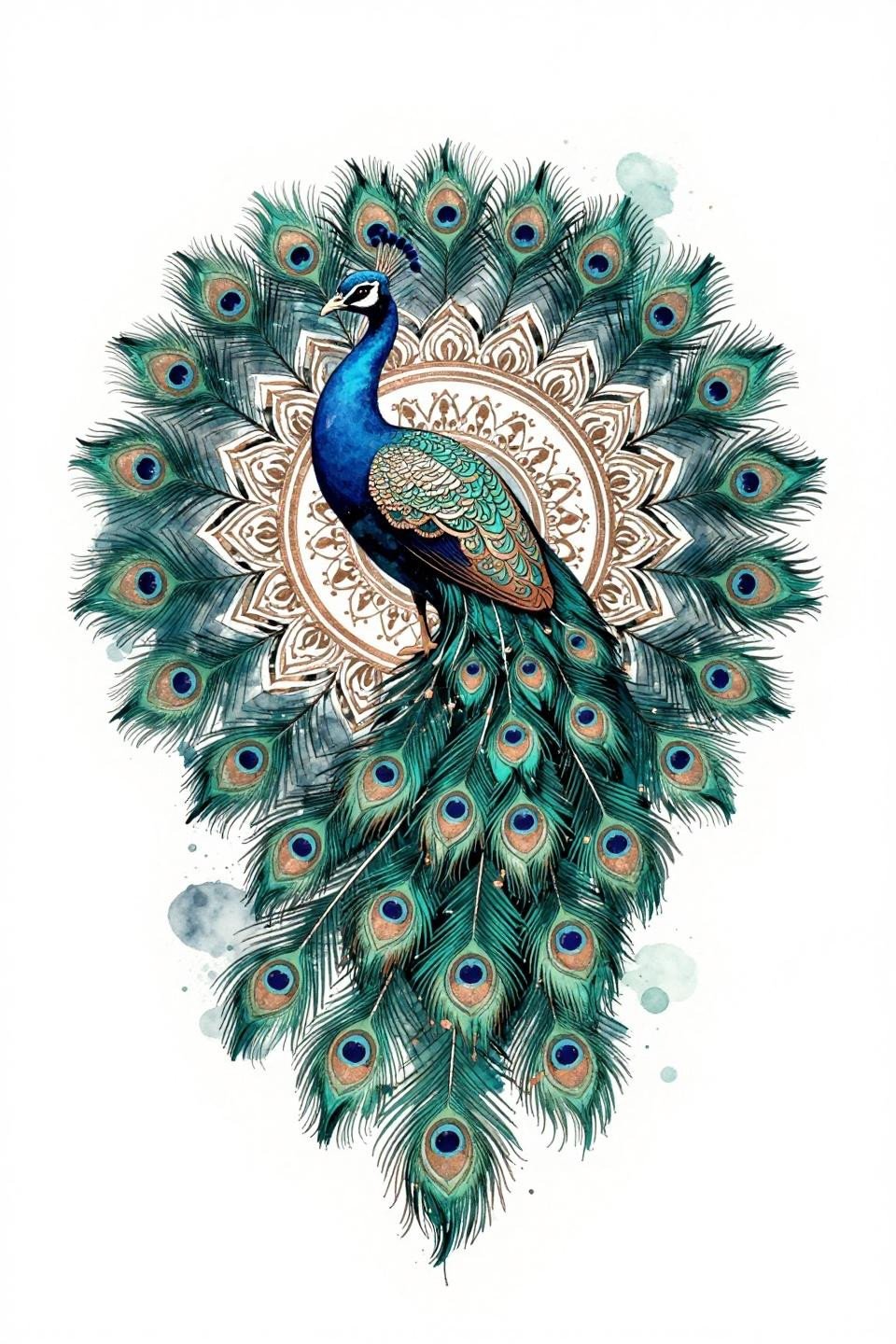
A watercolor peacock with tail feathers fanned into a circular radial mandala, using calligraphic brush marks with wet color bleed behind a clean line skeleton in teal and copper.
Watercolor without an anchoring outline blurs significantly by year three to five, but this composition’s clean line skeleton is carrying the structure. The color bleed is decorative. The line is the tattoo.
Single Line Peacock Mandala: Continuity as Technique
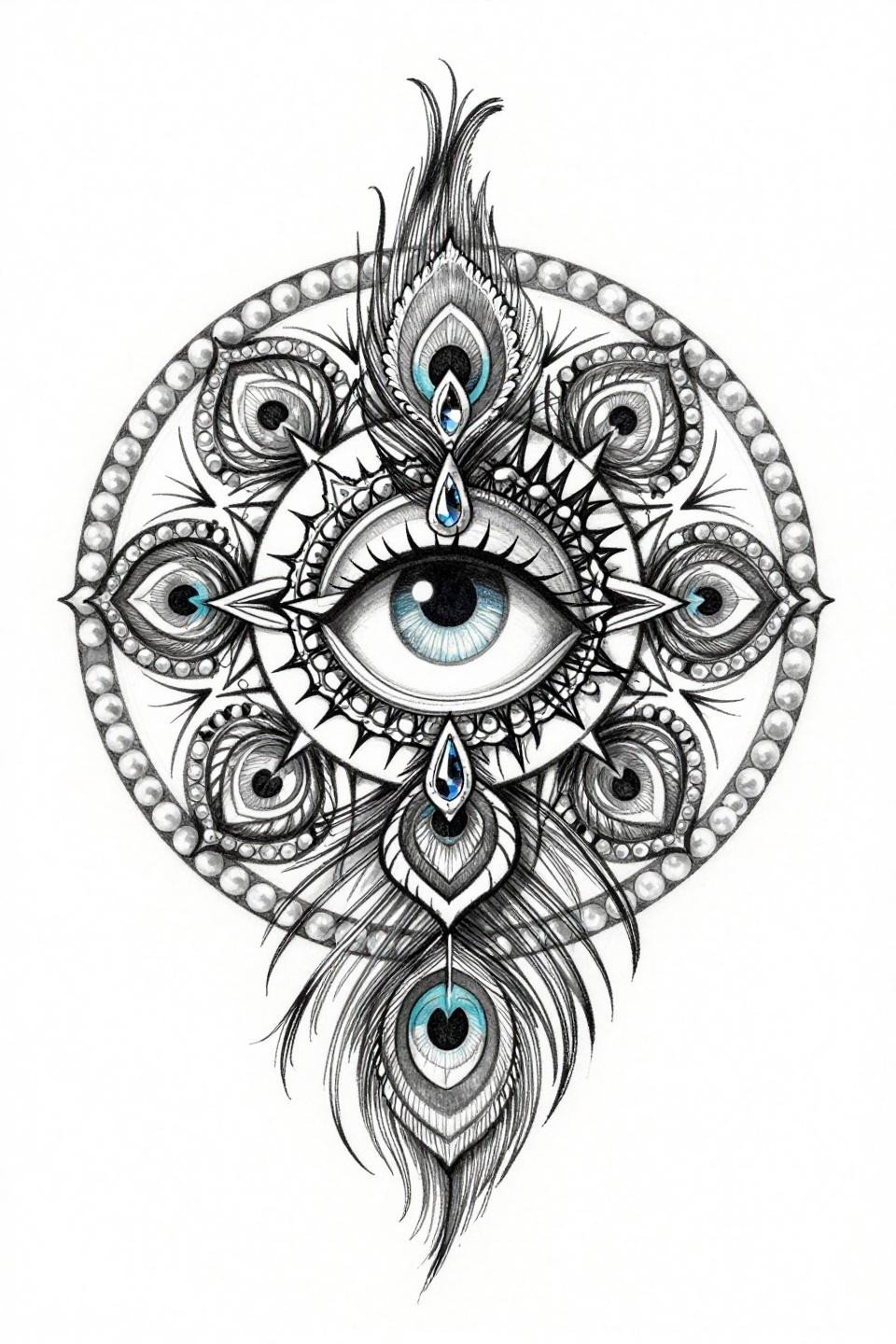
A peacock feather mandala built from a single unbroken continuous line with fluid weight variation, nested eye-within-eye core, teardrop gem focal point, and pearl-studded circular border.
The technical ask here is severe. Any hesitation in the artist’s hand speed creates a visible weight inconsistency that breaks the single-line illusion. This is a portfolio piece, not a first commission.
Baroque Wreath Etching and the Crosshatch Longevity Question
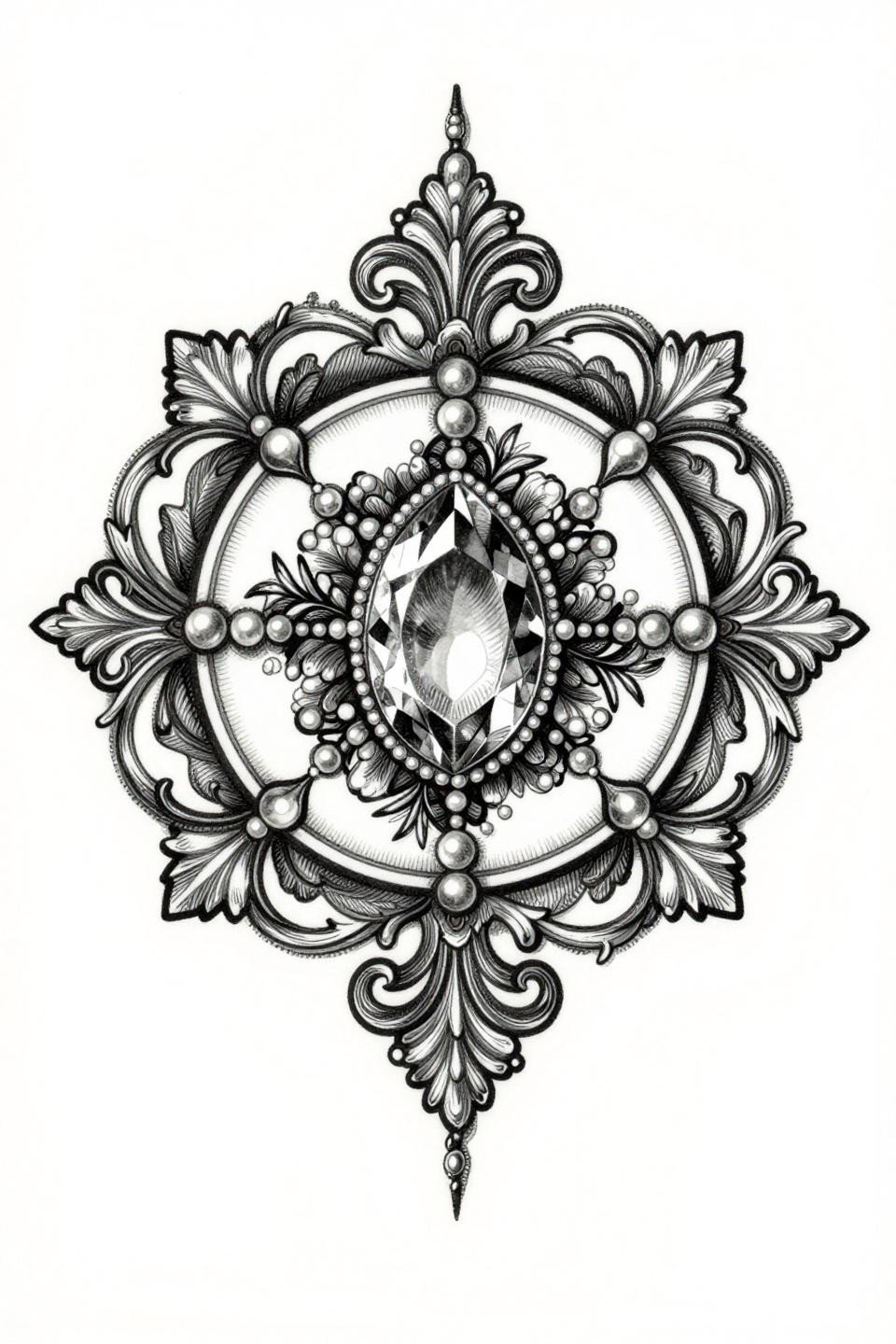
A baroque wreath mandala in etching woodcut style, with parallel line engraving and crosshatch shadow fields building tonal depth through line density rather than grey wash or solid fills.
Crosshatch tattooing compresses faster than solid black on lower back or hip placements due to constant skin flexion. Upper back or sternum gives this style its best shelf life by reducing mechanical stress on the fine line structure. For a related reference on pattern density, see mehndi patterns for spiritual inspiration that use the same layered approach.
Dotwork Star Mandala: Reading the Gradient at Year Five
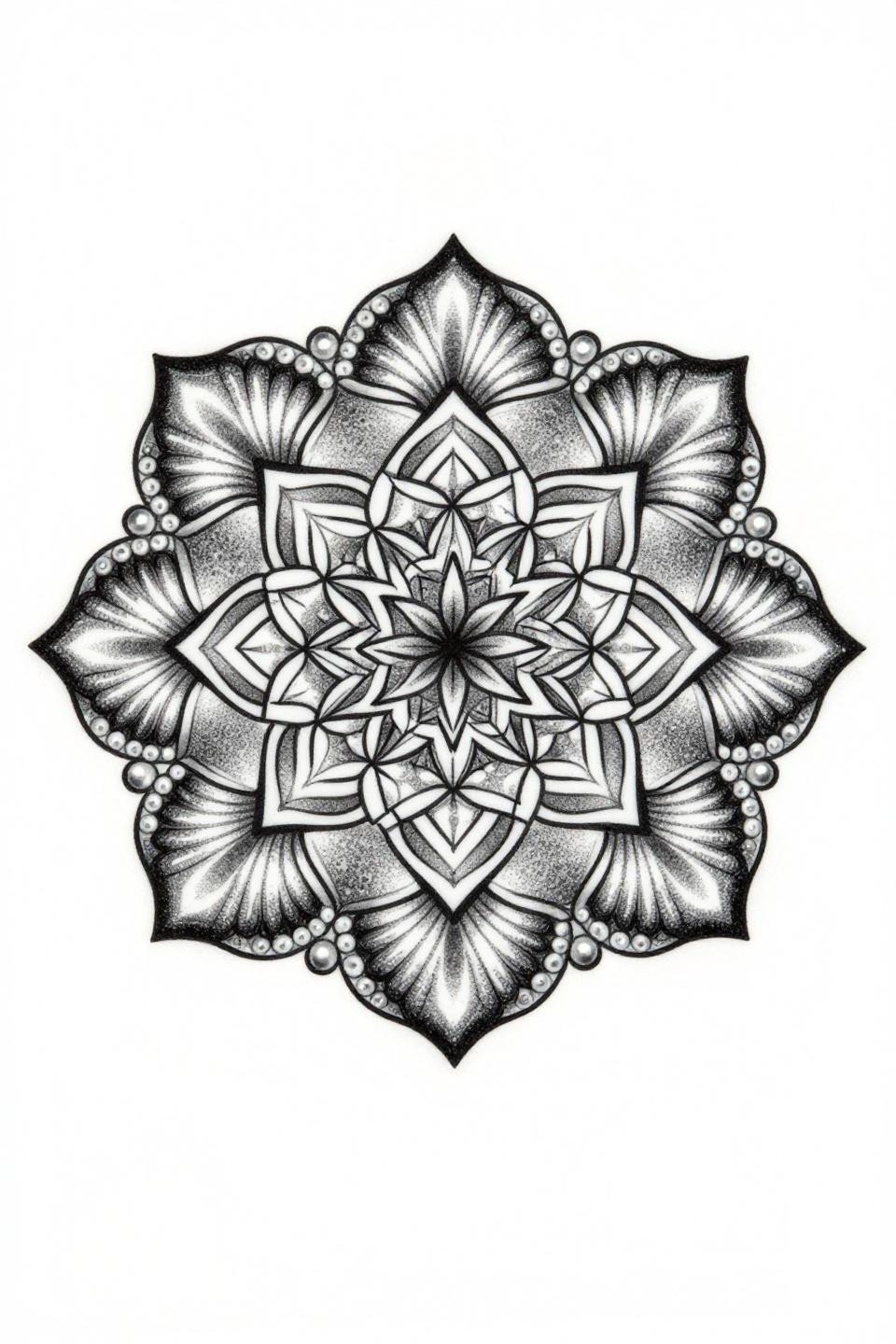
A twelve-pointed star radiating through nested flower-of-life hexagons to a scallop shell outer ring, rendered in stipple dot gradient that runs from 90% density at center to open field at edges.
Look for consistent dot size across the full gradient in the artist’s healed reference shots. Uneven dot sizing reads as noise by year five, when the tightest areas begin to merge into solid patches.
Botanical Mandala Built Without a Single Outline
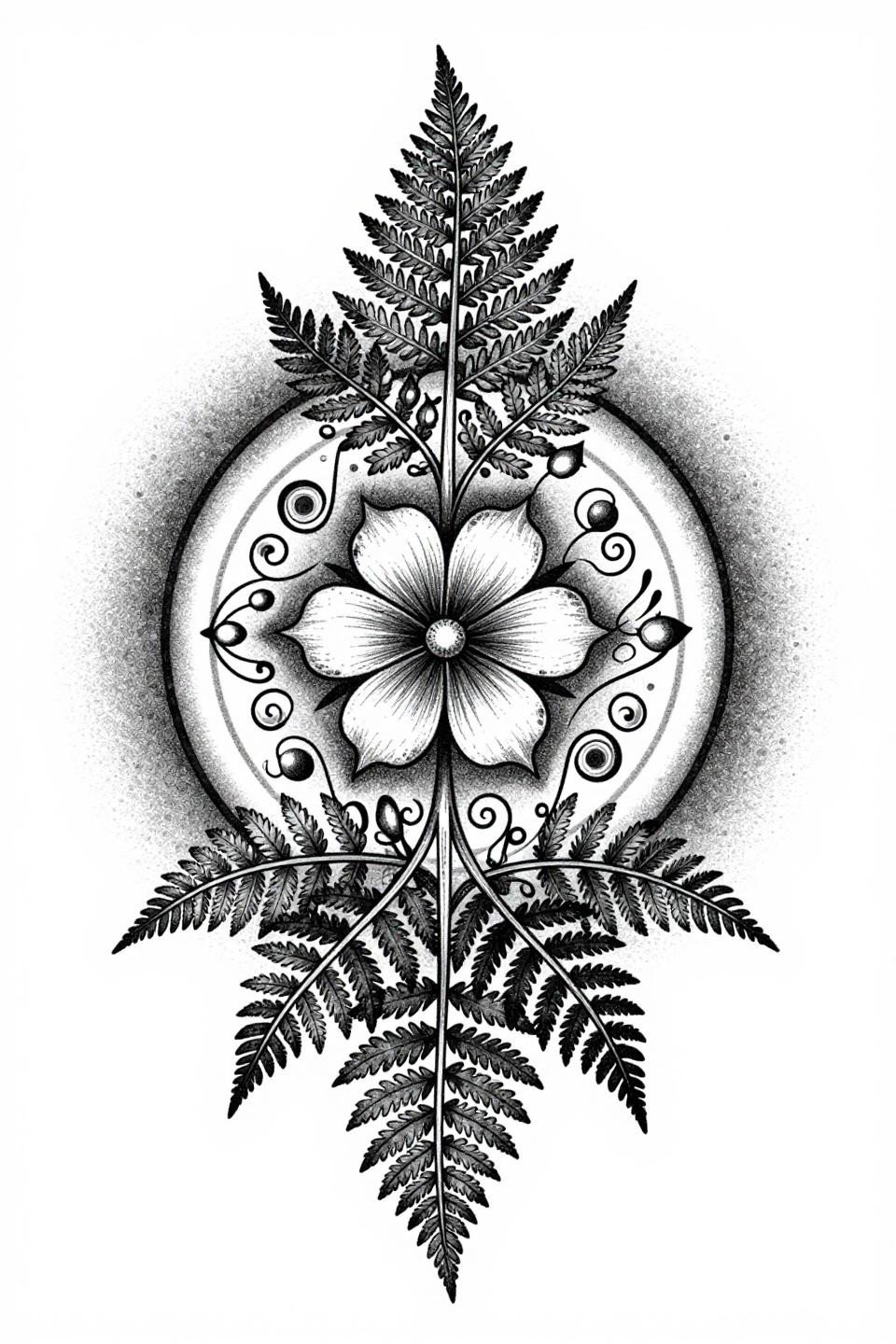
A botanical fern mandala with a four-petal flower center and spiraling tendril rings, structured entirely through stipple shading with no outlines, relying on dot density to define every edge.
Outline-free stipple work is significantly harder to maintain at small scale. This design needs at least five inches in diameter to keep the fern frond detail readable as it heals and settles into the skin.
Triquetra in Tribal Weight: Negative Space as Structure
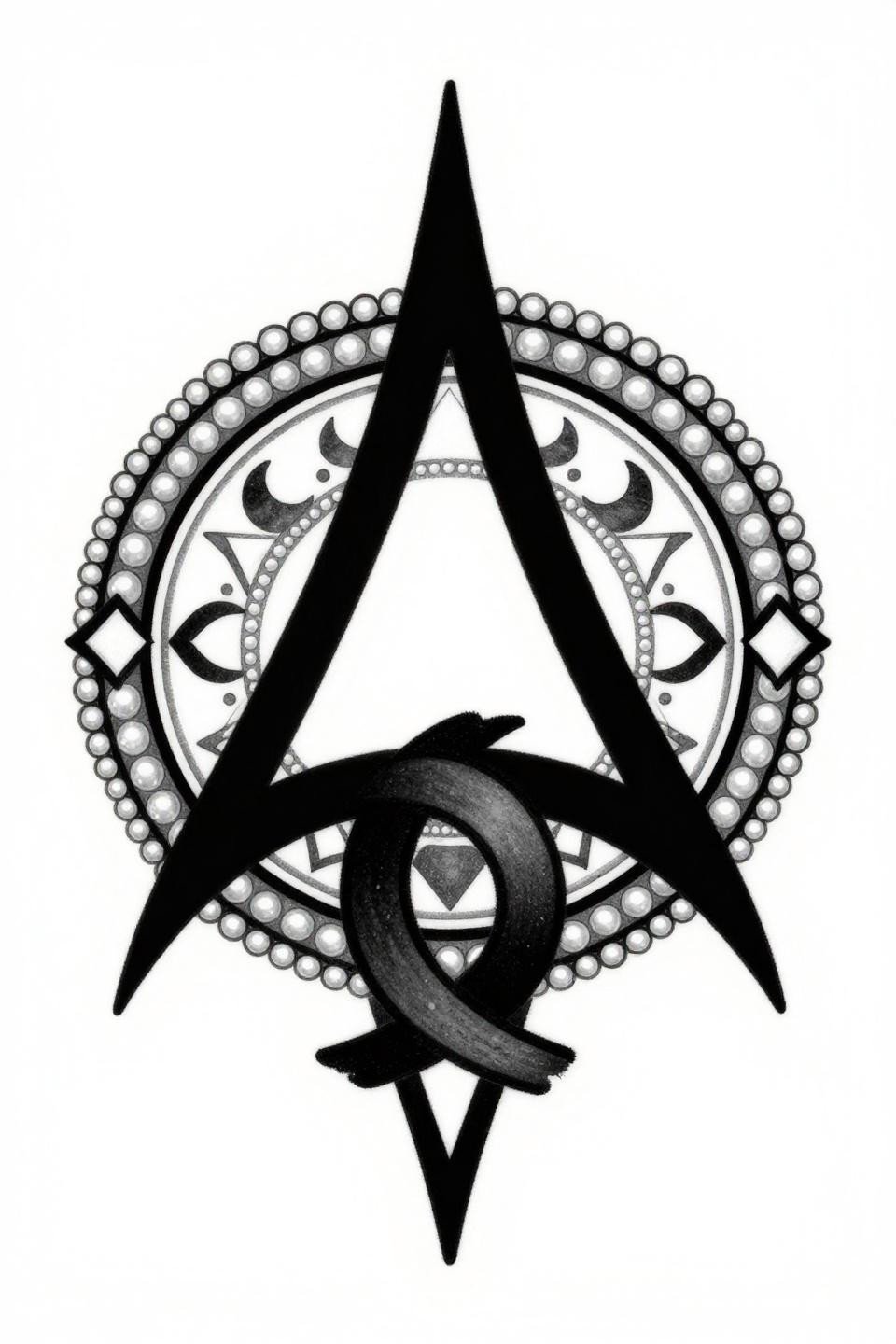
A tribal geometric triquetra with three interlocking arcs, a central triangular void, and a pearl-stud border mixing diamond and crescent moon phases, executed in flat black fills with stark negative space carving.
Negative space this tight needs an artist who commits to full saturation in a single pass. Patchy black fills show immediately against the white skin channels, and touch-ups rarely match the original density evenly.
Irezumi Lotus Mandala and Block-Style Japanese Geometry
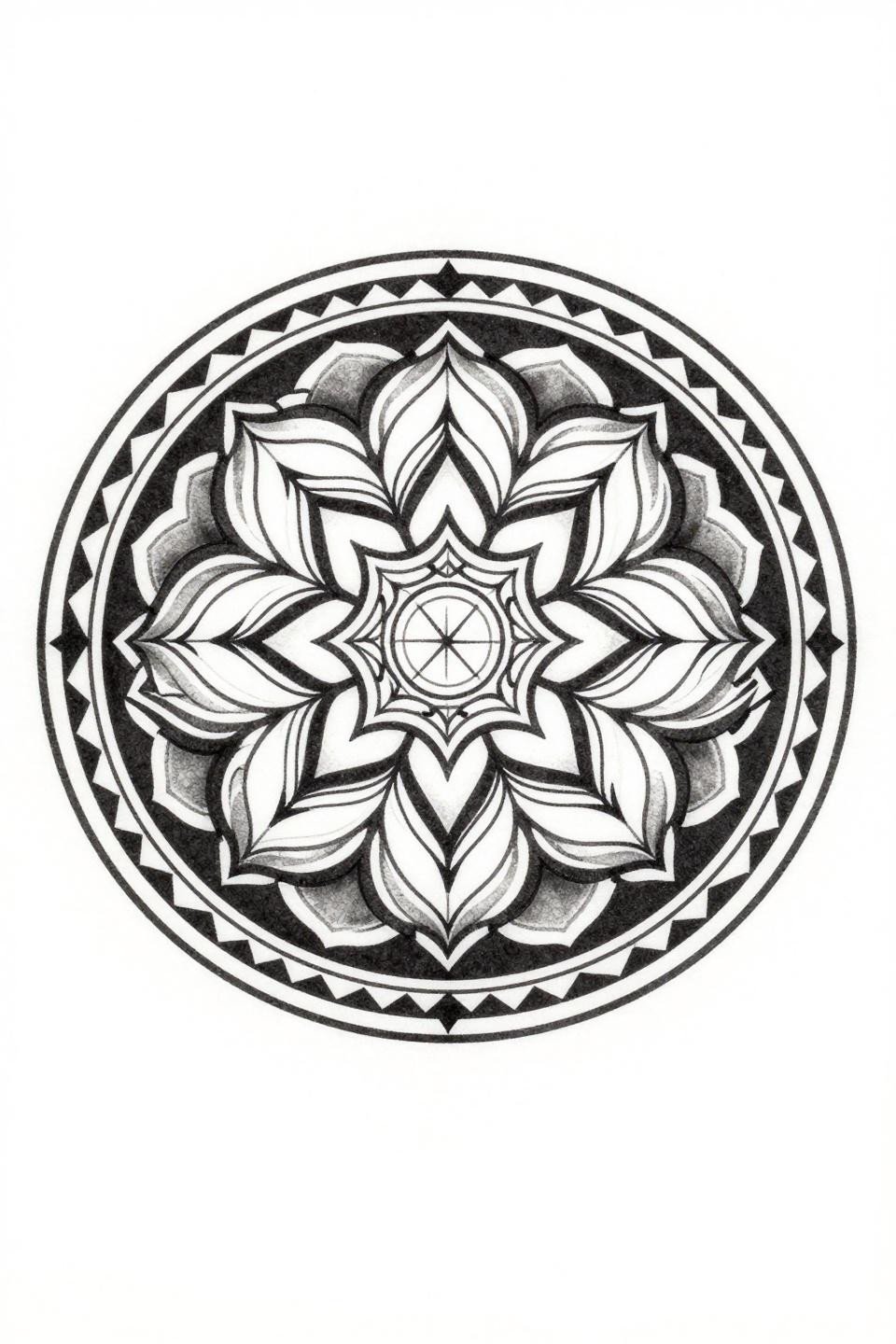
A Japanese irezumi mandala with nested lotus petals, an eight-pointed star core, and concentric circle borders edged with triangular tooth patterns, using flat black fills with no grey wash.
The no-grey-wash decision is deliberate irezumi logic. Black and white contrast at this ratio holds its graphic punch indefinitely when placed on the upper back or thigh, where sun exposure is minimal.
Celtic Knotwork Medallion and the Diamond Frame Problem
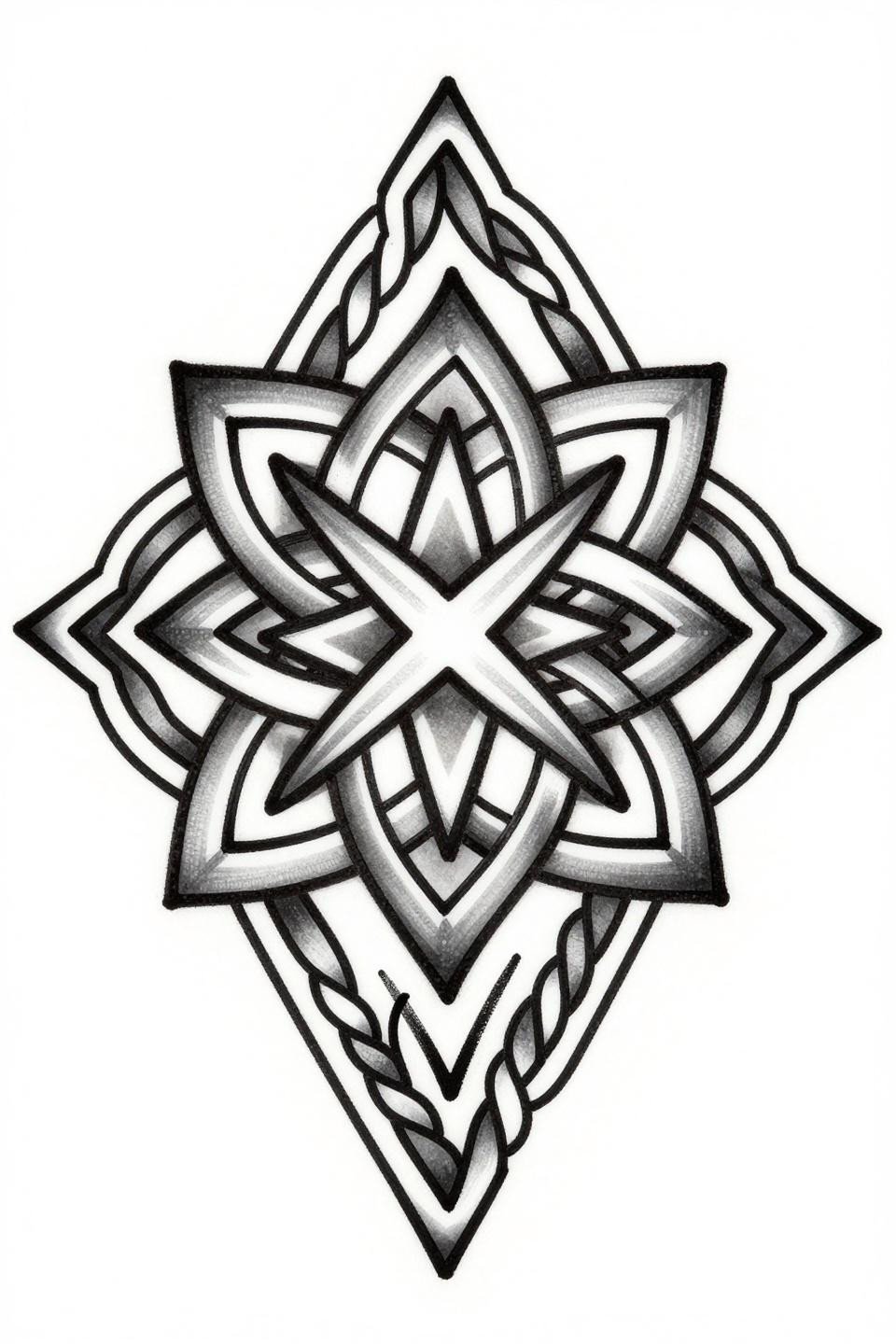
A Celtic knotwork medallion in a diamond frame, with interlocking ribbon patterns, a four-pointed star center, and a twisted rope border rendered in bold 2-3pt outlines with flat black fills.
The diamond frame’s sharp angular corners are a placement test. On a flat surface like the outer forearm or upper back, they read clean. On curved anatomy like the shoulder cap, the corners distort and the rigid geometry loses its edge.
Art Nouveau Wreath Where the Hairline Carries Everything
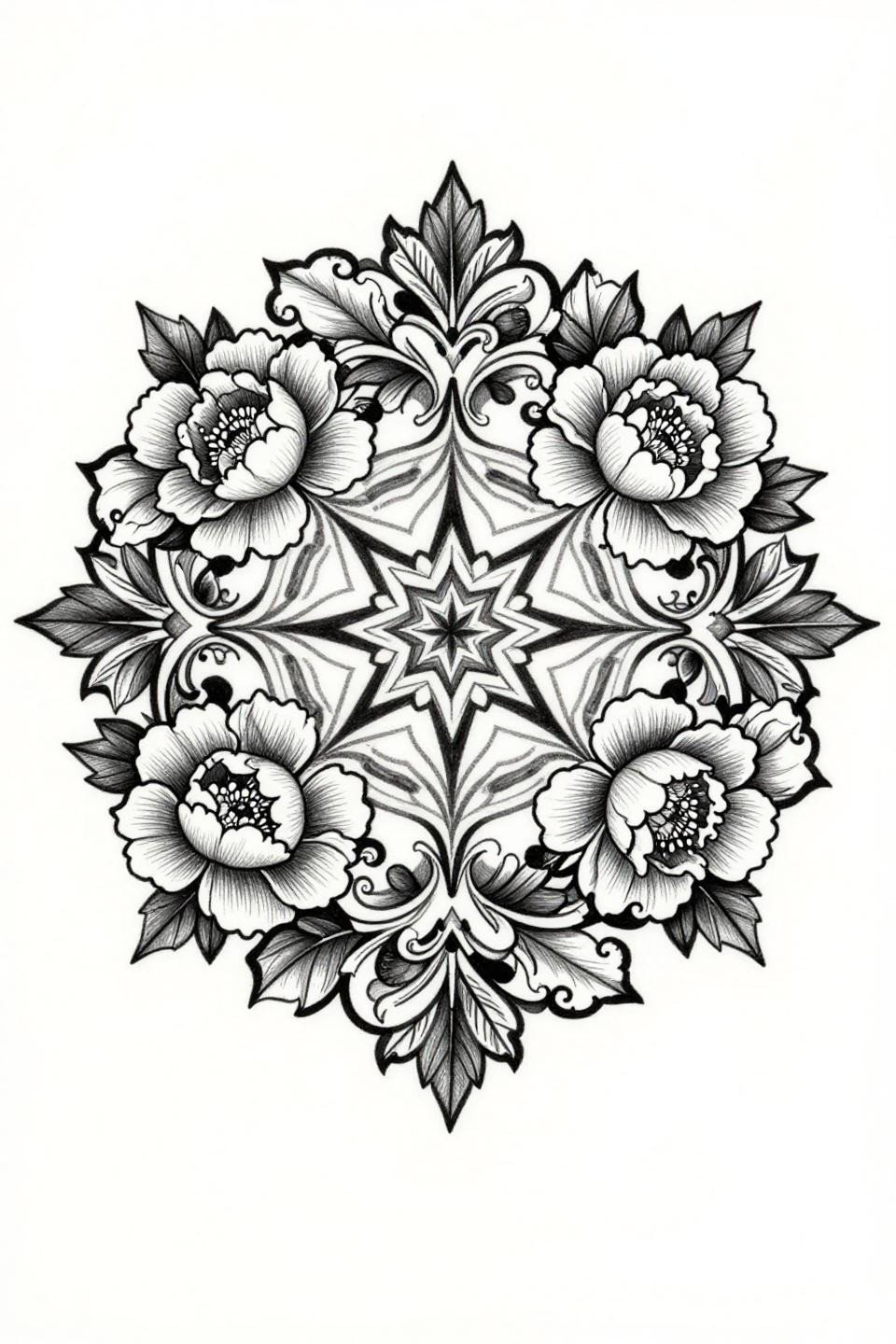
An Art Nouveau floral wreath mandala with bilateral acanthus leaves, four peonies at cardinal points, and a geometric star center connected by hairline 0.5mm single-needle filigree scrollwork.
Art Nouveau’s organic curves are more forgiving than strict geometric ornamental work, but the hairline scrollwork connecting the blooms is the most vulnerable element. Protected placement on the sternum or upper back extends its readable detail by years.
Sacred Geometry Eye Mandala in Art Deco Structure
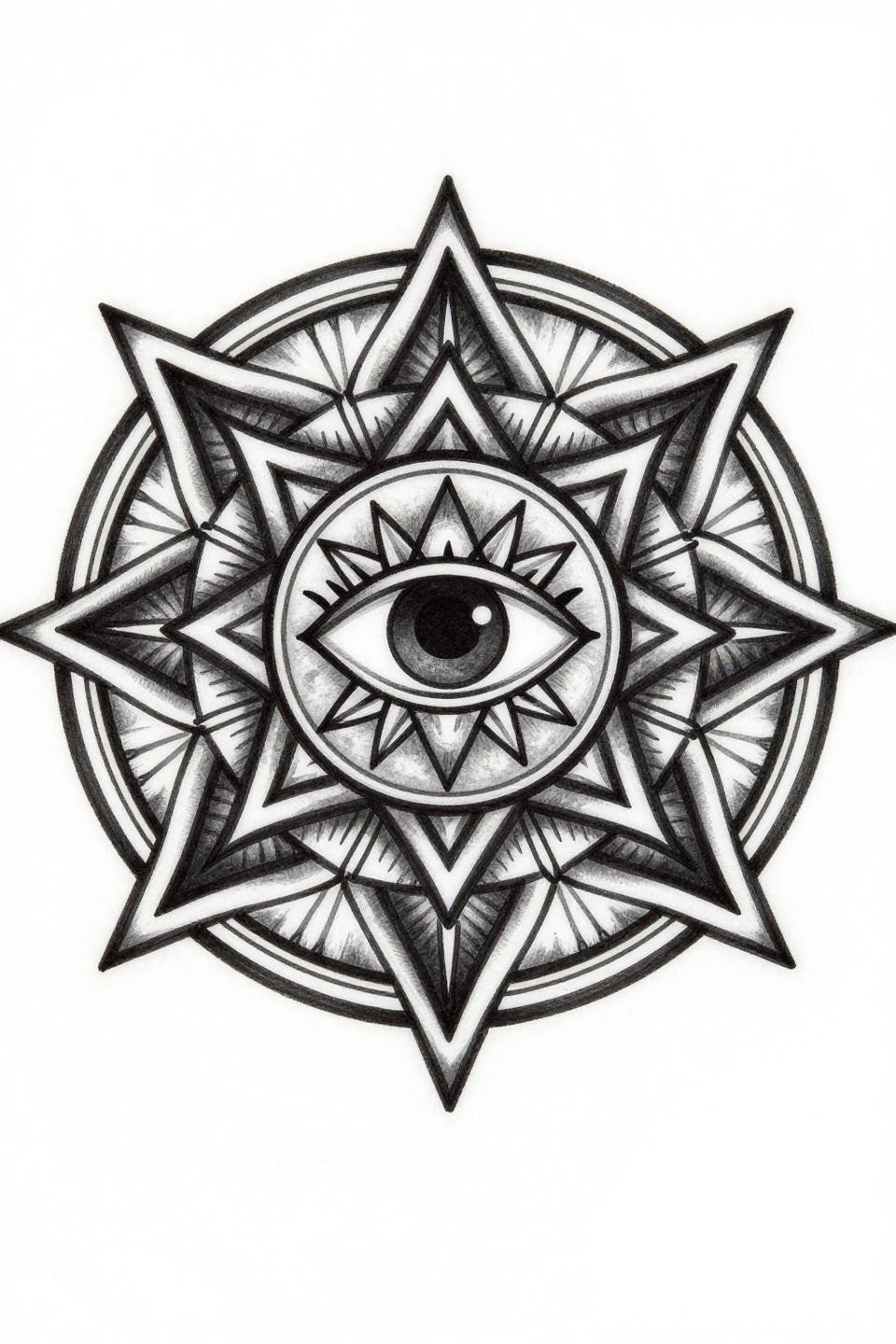
An art deco sacred geometry mandala with interlocking circles, nested inward-pointing triangles, and an all-seeing eye focal center surrounded by sharp radiating ray lines.
The all-seeing eye reads across cultural contexts from Freemasonic to Egyptian to general spiritual symbolism. Clients who want the geometry without the symbol connotation can substitute a teardrop gemstone without compromising the composition’s radial logic.
Narrow this collection to three references before the consultation. Pick by placement first, design second. An ornamental piece that fits the anatomy reads better than one that forces the body to conform to the geometry.