
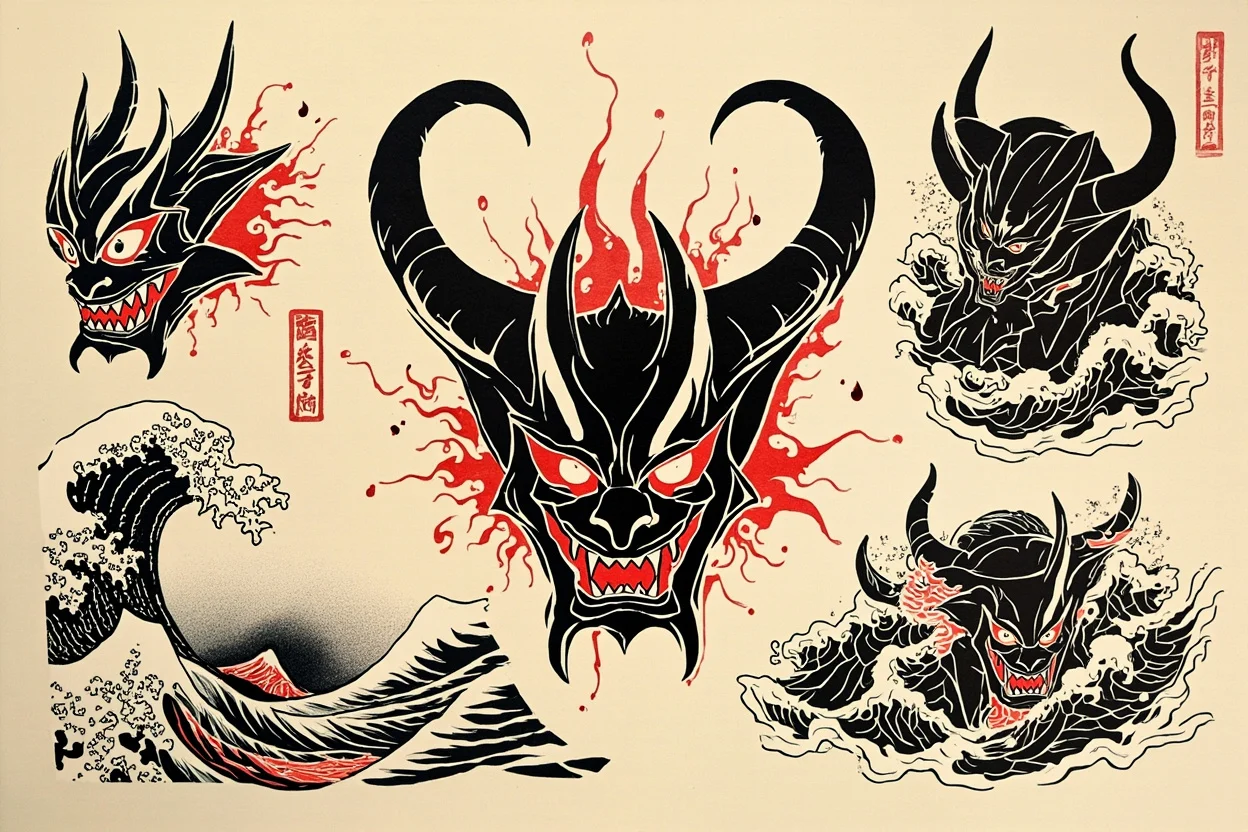
An oni mask tattoo wears the face of a Japanese demon on purpose. The oni is an ogre-like yokai with horns and fangs, feared as a bringer of disaster, yet the mask is worn to push that danger outward. It usually reads as protection against evil, raw strength, punishment for the wicked, and a reminder that the same force can guard or destroy depending on which way it faces.
Quick answer: An oni mask tattoo usually means protection against evil, strength, punishment of the wicked, and the split between good and evil inside one person. In irezumi the demon face is a guardian motif, not a villain, and it works best with enough scale for the horns, fangs and glaring eyes, plus waves or clouds to anchor it.
How to Read an Oni Mask Tattoo
The oni is one face with several stories. Posture, color and the symbols around it decide whether the mask reads as a guardian, a warning, or a mirror.
| Reading | Best design move | Watch out for |
|---|---|---|
| Protection against evil | Front-facing mask, fierce glare, talisman energy | A weak expression kills the guardian read |
| Strength and resilience | Heavy horns, strong jaw, bold black outline | Too much background hides the face |
| Punishment of the wicked | Bared fangs, hard eyes, red intensity | Reading as cartoon villain instead of judge |
| Facing your inner demons | Single mask, quiet placement, restrained color | Loading it with unrelated symbols |
| Irezumi composition | Oni with waves, clouds, peonies or a hero | Treating it as a sticker instead of a scene |
Protection: The Mask as Guardian
The protective read comes from folk practice. During Setsubun, households throw beans and shout that demons go out and good fortune comes in, symbolically driving misfortune from the home. Fierce oni faces also appear on roof tiles and charms, installed as talismans to scare other bad luck away.
An oni mask tattoo borrows that logic. You put on the demon face so harmful forces meet something more frightening than themselves and back off. The mask points the demon outward, like a guard dog aimed at the world rather than at you.
If protection is your core meaning, the expression has to carry it. A flat or soft mask loses the guardian energy. The glare, the horns and the bared teeth are what make the face read as a threat to threats.
Strength and Punishment
Heavy horns and a strong jaw read as physical power. The oni punishes the wicked in folklore, and that judicial aspect carries into the tattoo. Bared fangs and hard eyes suggest someone who delivers consequences.
The danger here is tipping into cartoon villainy. The punishment read works when the mask still looks composed, almost ritualistic. Wild excess reads as chaos, not authority.
The Inner Demon
A single mask in a quiet placement, with restrained color, shifts the meaning inward. This is not about scaring enemies. It is about owning what you struggle with: rage, addiction, cruelty, fear. The mask becomes a reminder that you are watching yourself.
What the Oni Actually Is in Japanese Folklore
The oni does not just scare evil away. It is what evil fears.
The oni is a yokai, a spirit being from Japanese folklore rather than a theater character. It is drawn as an ogre with horns, fangs, wild hair and a furious face, traditionally feared as a bringer of disaster, plague and punishment, and tied to the fate of wicked souls in the afterlife.
That fear is only half the story. Over time the oni also became a protective figure, often linked to the idea that the demon makes invisible threats visible enough to be driven away. Some mountain traditions describe oni as guardian spirits who ward off other evil forces, though these stories vary by region and period.
This is why the mask is not simply a devil face. Japanese culture does not read the oni as a Western devil. It is closer to a dangerous guardian: terrifying when it turns on you, useful when it stands at your door.
Oni Mask vs. Hannya Mask
People mix these two up constantly, and in irezumi the difference matters.
The hannya is a Noh theater mask representing a woman transformed by jealousy and grief into a demon. It is specific, female, and anchored in a particular emotional narrative. The face is white or pale, with sharp horns, sunken eyes, and a mouth that can appear almost sorrowful from some angles.
The oni mask is broader, more primal, and not tied to a single story. It is male or neutral in most depictions, heavier in the jaw and brow, and carries a sense of brute force rather than tragic descent. The hannya weeps and rages; the oni smashes and guards.
If you want jealousy, betrayal, or the pain of love turned toxic, the hannya fits. If you want protection, strength, or the raw duality of good and evil force, the oni is the right choice. Artists who specialize in Japanese work will know the distinction immediately, and bringing the wrong reference can derail your consultation.
Design Choices That Make or Break the Tattoo
Color: Red, Blue, and Beyond
Red oni are the most common in popular imagery, and the color reads as passion, rage, and active threat. Blue or darker oni appear in some traditions and can suggest coldness, calculation, or a more controlled menace. Green and other colors exist but are less common in classic irezumi.
Know which energy fits your intent before you book. A red mask that should read as controlled guardian can feel too chaotic if the expression is wrong. A blue mask meant to suggest calm power can look merely decorative if the horns and fangs are underdrawn.
Scale and Placement
The oni face needs room. The horns, fangs, and glaring eyes collapse into confusion at small sizes. Upper arm, thigh, back panel, and chest are the traditional placements for a reason. They give the artist space to build the mask with proper weight and to surround it with the waves, clouds, or peonies that ground it in Japanese composition.
Hands, throats, and ribs are possible but painful and restrictive. The throat in particular distorts the face as you move. If you must go small, simplify rather than compress: a strong outline mask with minimal interior detail reads better than a crowded face at two inches.
Background and Context
An oni mask floating alone on skin reads as a sticker. In irezumi it belongs to a scene: waves, wind bars, clouds, cherry blossoms, peonies, or a warrior figure. These elements are not decoration. They tell the viewer whether the oni is emerging from chaos, standing guard, or being confronted by a hero.
Talk through the full composition with your artist, not just the face. The mask should have a relationship to what surrounds it.
Working With an Irezumi Specialist
Japanese tattooing is not a style you can pick up from a weekend seminar. The horn placement, fang count, and eye bulge in an oni mask come from centuries of visual tradition, and a specialist will notice if you bring in a watered-down reference scraped from stock image sites.
Look for artists who apprentice in Japanese methods or who show consistent, respectful work in the tradition. Edo-period woodblock prints by Utagawa Kuniyoshi and others are solid reference points for the architecture of the face. Bring these, not Pinterest composites, to your consultation.
Be prepared for the time and cost. A proper oni mask as part of a larger irezumi piece can take multiple sessions. The investment matches the permanence.
What to Remember
The oni mask is a guardian face, not a villain face. Its power comes from ambiguity: the same demon that punishes the wicked can protect the righteous, and the same rage that destroys can also warn away harm. Your design choices, color, expression, scale, and surrounding symbols, decide which side of that ambiguity your tattoo lands on.
Get the expression right. Give it enough scale. Anchor it in a composition that makes sense. And work with someone who understands the tradition well enough to know why the horns curve the way they do. The oni mask has lasted centuries because it carries real weight. Your tattoo should too.
Frequently Asked Questions
Does an oni mask tattoo mean I worship demons?
No. In Japanese tradition the oni is not a religious figure to be worshipped. It is a folkloric spirit, often used as a guardian symbol. The tattoo borrows the protective logic of talismans and festival ritual, not any devotional practice.
Can I get an oni mask tattoo if I am not Japanese?
The question is less about permission and more about respect and accuracy. Work with an artist who understands irezumi tradition, avoid mixing unrelated symbols, and approach the motif as a specific cultural form rather than a generic cool demon face.
What is the difference between red and blue oni masks?
Red oni typically read as passionate, raging, and actively threatening. Blue or darker oni often suggest cold calculation, controlled menace, or a more reserved guardian energy. These associations are common in popular tradition but not rigidly fixed, so discuss intent with your artist.
How painful is an oni mask tattoo?
Moderate to high, depending on placement. Ribs, hands, throat, and anywhere near bone or thin skin hurt significantly more. Upper arm, thigh, back, and chest are more manageable for most people.
How long does an oni mask tattoo take to heal?
Linework generally heals in 3 to 5 weeks. Heavy color fill, common in irezumi, can take 6 to 8 weeks. Follow your artist’s aftercare instructions and do not rush the process.









