Dark & Gothic
Real dark work is built on contrast. Deep blacks that hold. Negative space used on purpose. Subject matter that earns the mood instead of borrowing it from an Instagram filter.
Gothic Isn't Just Black
The dark and gothic tattoo world is broader than solid black ravens and cemetery scenes. Yes, those exist and they can be great. But the genre also includes dark romanticism (wilting roses, decayed architecture, memento mori still lifes), occult symbolism (alchemical symbols, celestial diagrams, esoteric geometry), and horror-influenced imagery (Baroque skulls, anatomical illustrations, macabre surrealism).
Color has a place here too. Deep oxblood reds, muted purples, dark greens, and antique golds can add depth to gothic pieces without compromising the dark aesthetic. The key is staying in a low-saturation, high-contrast palette. Neon colors would break the mood. But carefully placed dark color accents can make a gothic piece feel more dimensional than pure blackwork alone.
Aging and Maintenance for Dark Styles
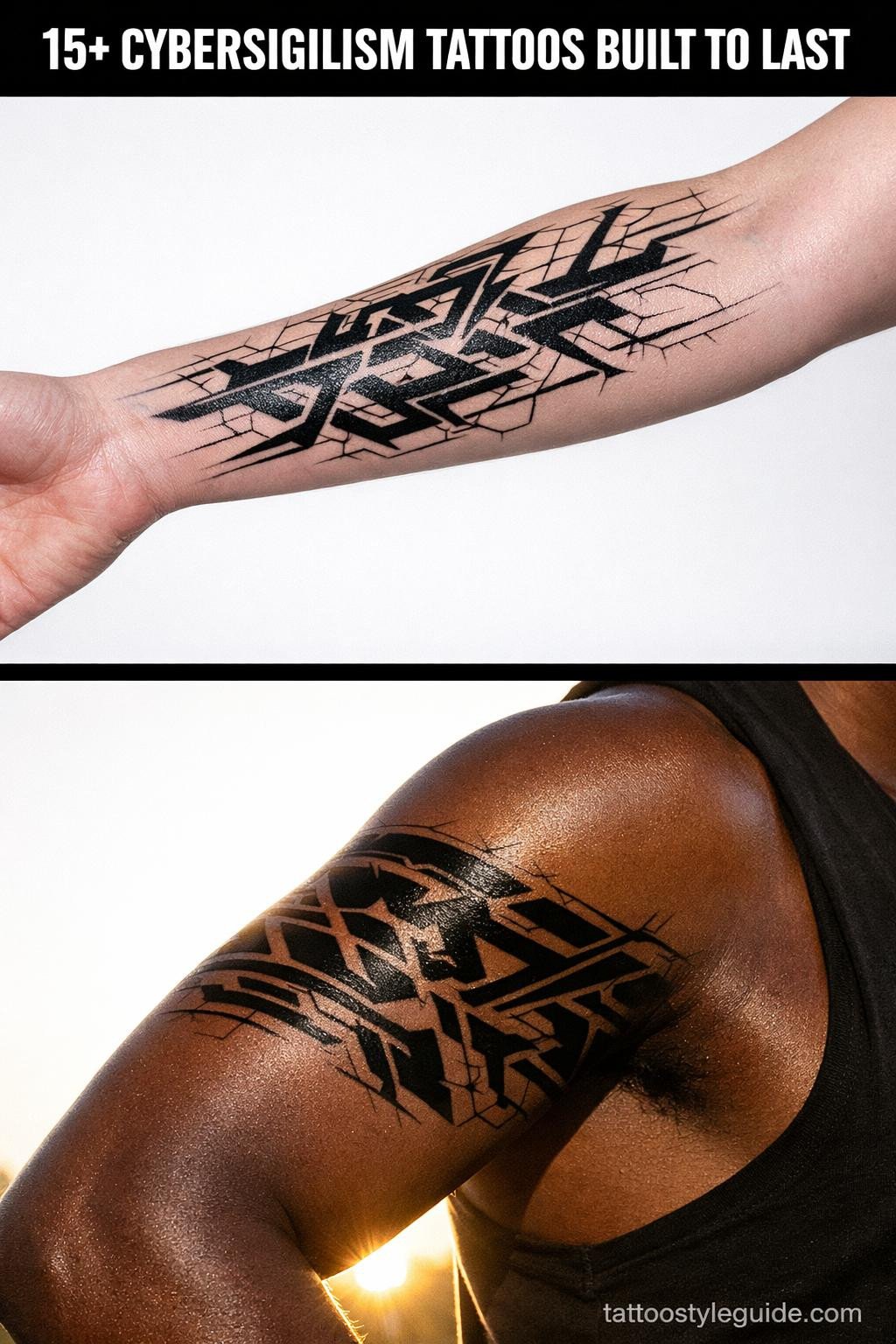
Dense black tattoos hold remarkably well over time. The heavy ink saturation means that even as some fading occurs, there’s enough pigment in the skin to maintain impact. This is one of the most durable tattoo aesthetics. A well-executed blackwork piece from 20 years ago often still looks solid today.
The main concern is sun exposure. UV light breaks down all tattoo pigments, but it’s most noticeable on large solid black areas where the ink can shift toward a dark blue-green tone over decades. Regular sunscreen on exposed tattoos makes a significant difference. Touch-ups are rarely needed for the first 10-15 years if the original work was done well with quality ink and proper technique.
Frequently Asked Questions
Do all-black tattoos turn blue or green over time?
Some shift is possible, especially with older ink formulations and heavy sun exposure. Modern quality black inks are more stable than what was available 20 years ago. The shift, when it happens, is usually subtle: more of a very dark blue-grey than a bright green. Consistent sunscreen use on your tattoos is the single best thing you can do to prevent color shifts in black ink.
What's the difference between gothic and dark art tattoo styles?
Gothic tends to reference specific visual traditions: medieval architecture, Victorian mourning imagery, religious iconography, and horror aesthetics. Dark art is a broader category that includes gothic but also covers surreal, horror, occult, and macabre imagery that doesn’t necessarily reference the gothic tradition. There’s heavy overlap. Most people use the terms interchangeably, and most artists who do one also do the other.
Can gothic tattoos be small?
Yes, but choose subjects carefully. A small dagger, a crescent moon, a tiny skull, or an alchemical symbol can work at 1.5-3 inches. Elaborate gothic scenes (cathedral windows, detailed skeletons, complex compositions) need more space to maintain their impact. Gothic micro-tattoos exist but they sacrifice the detail that makes the style compelling.
How do dark tattoos look on darker skin tones?
Exceptional, actually. Dense blackwork creates a subtle dimensional effect on deep skin tones that looks almost carved or embossed. The contrast is different from light skin but equally striking. Dotwork and texture-based gothic designs read especially well. Some fine-line gothic details may be harder to see, so bolder execution tends to produce the best results on deeper complexions.
Explore More
Not Sure Which Style Fits You?
Answer 5 quick questions and get a personalized tattoo style recommendation based on your taste, pain tolerance, and budget.
Take the Style Finder Quiz →How Much Will Your Tattoo Cost?
Get an instant estimate based on size, style, placement, and detail level. No email required.
Calculate Your Price →500,000+ Tattoo Ideas Curated Daily
Don’t Regret Your Tattoo
Most tattoo ideas look good online.
Not all of them look good on skin.
We help you choose designs that actually last.
No spam. Just real tattoo inspiration.