
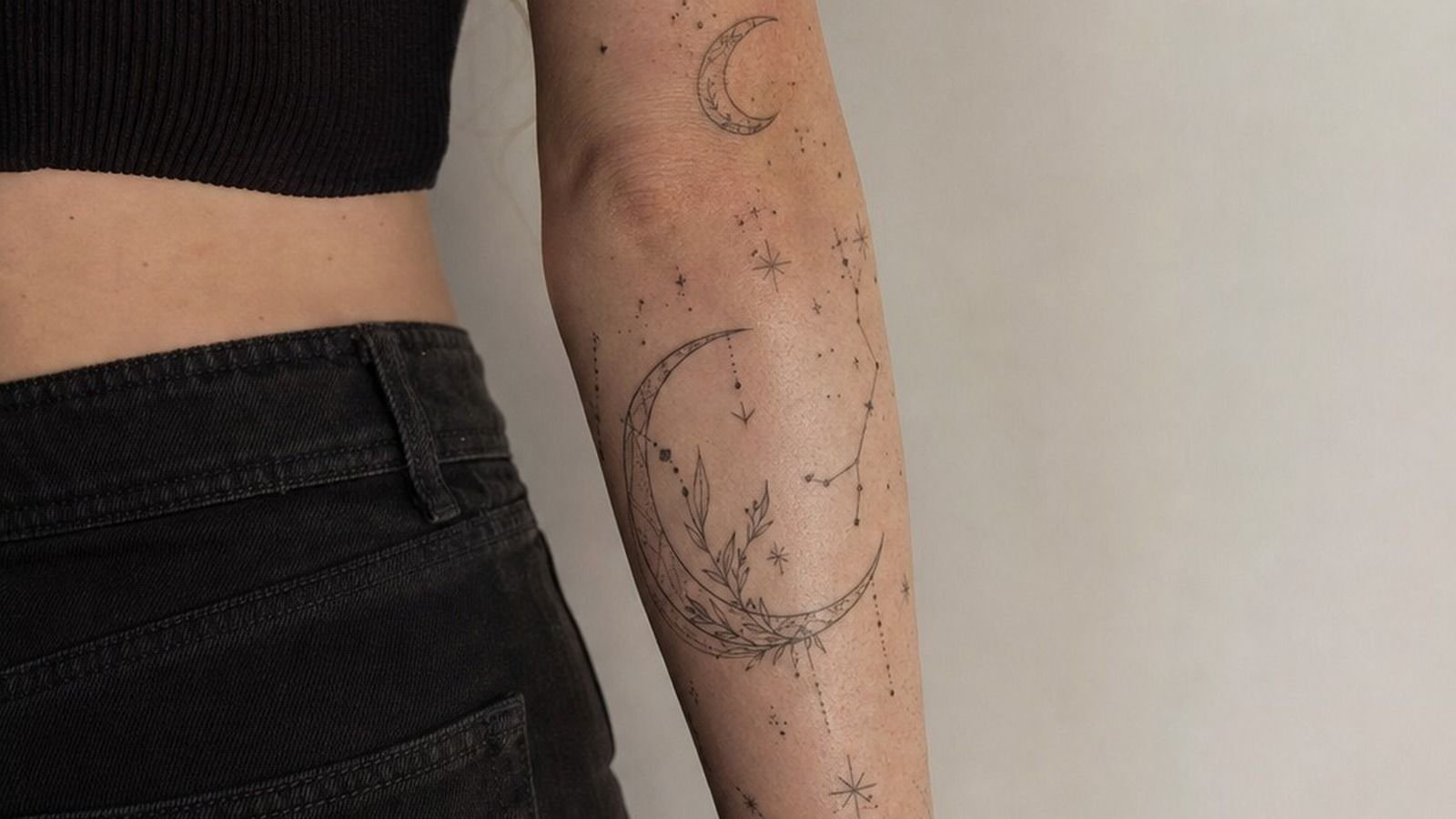
Moon tattoo ideas work best when you design for skin, not just a saved pin. I’ve watched tiny details turn fuzzy because the placement was wrong or the artist copied a reference too literally. Start with a clean shape, give it breathing room, and your moon will still read from across the room years later.
- Start With A Crescent And Fine-Line Stars
- Pick A Cute Moon With Tiny Florals
- Place A Luna Tattoo Along Your Forearm
- Choose A Meaningful Moon With Initials
- Plan A Moon Phase Wrist Tattoo
- Add Botanical Details To A Crescent Moon
- Keep A Small Moon Tattoo Delicate
- Pair A Moon With A Sun Symbol
- Select Red Ink For A Minimal Moon
- Design A Unique Moon With A Face
- Match Crescent Tattoos With A Close Friend
- Anchor A Watercolor Moon With Clean Linework
- Build A Celestial Moon Sleeve Accent
- Choose Black-And-Grey Shading For Depth
- Place A Moon Behind Your Ear
- Plan Moon And Birth Flower Symbolism
- Check Fine-Line Detail Against Your Placement
- Protect Your New Moon Tattoo While Healing
1Start With A Crescent And Fine-Line Stars
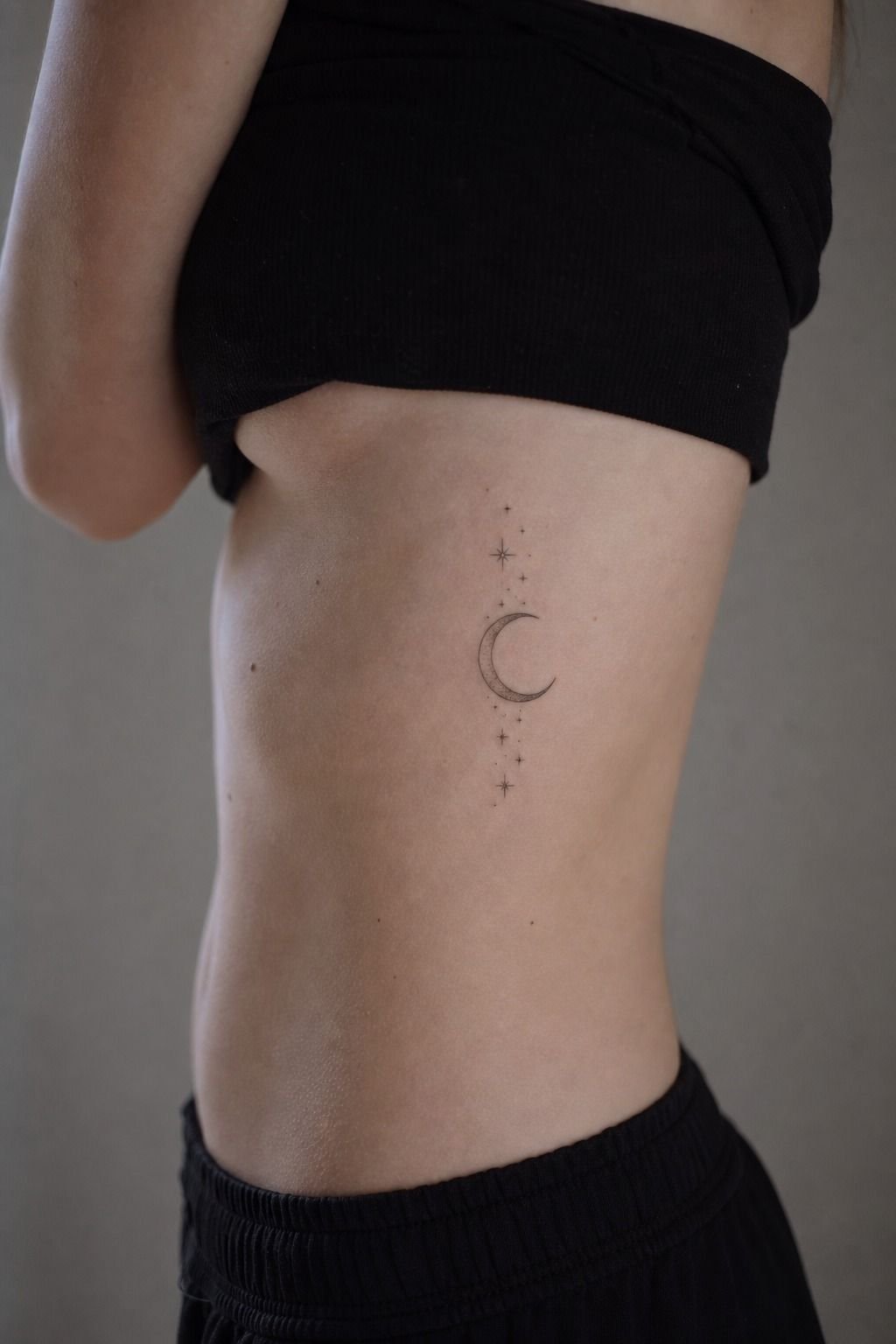
Start with one single-needle crescent and keep the stars spaced wide enough that each point has room to heal. On the ribs, your skin moves every time you breathe, so I’d keep the crescent around 2 to 3 inches and skip a dense galaxy fill.
You want crispy and confident lines here, not ten fuzzy passes. A cool black Dynamic Black ink crescent with three to five tiny stars feels soft and airy on fair pink skin.
But don’t make every star microscopic. That size on ribs can still heal clean, but crowded dots will become visual noise.
For symbolism ideas, look through this crescent moon tattoo meaning guide. Your reference should show vibe, not become a photocopy.
2Pick A Cute Moon With Tiny Florals
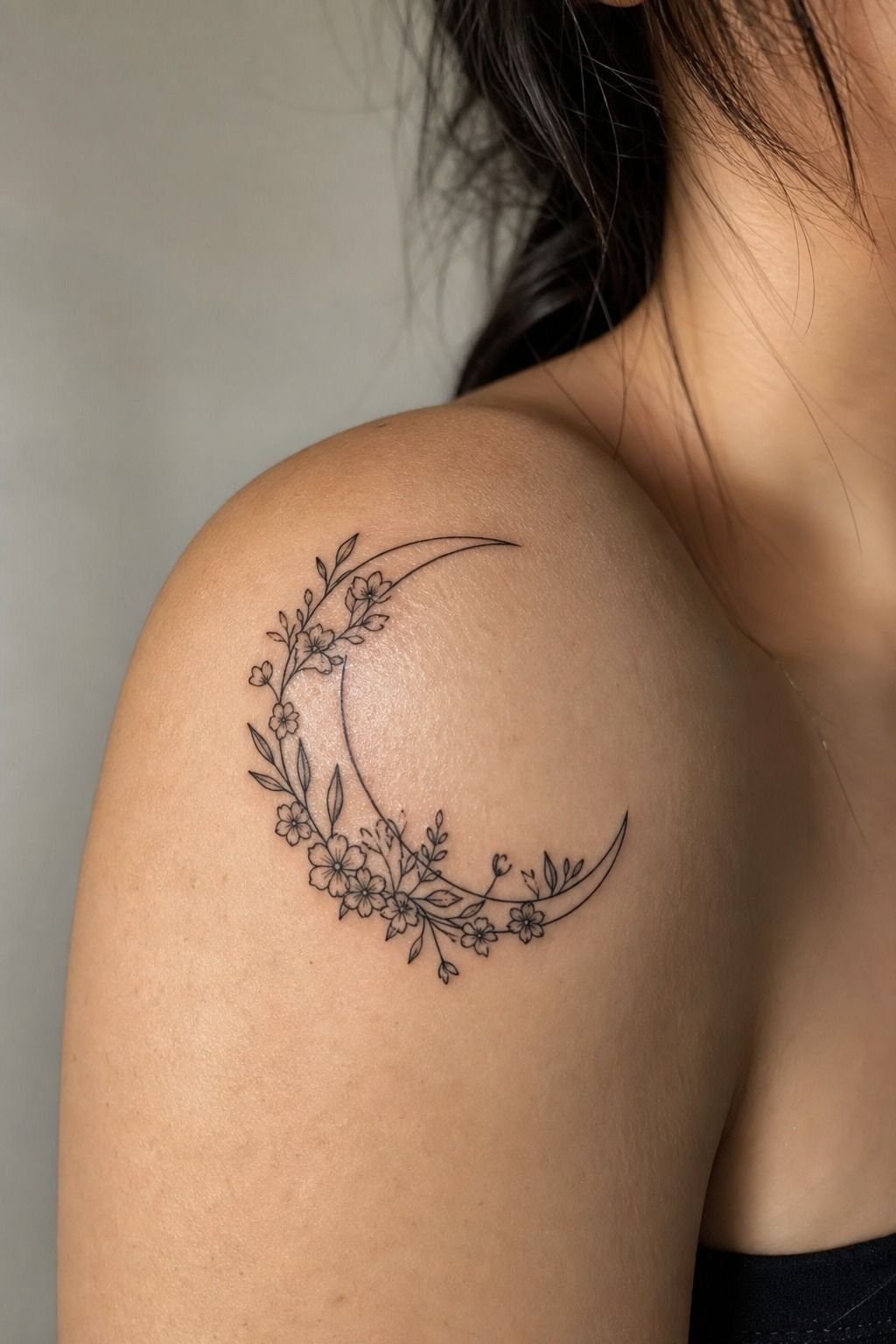
Pick a cute-moon-tattoo design with a simple floral edge, like two open blooms and a few leaves, instead of wrapping the whole moon in petals. Your shoulder gives you a calmer, low-wear canvas, and you can let the flower stems follow the round cap of the deltoid.
I’d choose black-and-grey grey wash over pastel flower shading. It heals softer, and your moon stays readable after the delicate petals settle. A 3-inch design gives your artist enough room for petal separation without turning the center into soup.
Ask for healed photos from the artist, not just fresh work. Fresh tattoos look bright because the skin is irritated. Healed work tells you whether their fine line stays clean.
3Place A Luna Tattoo Along Your Forearm
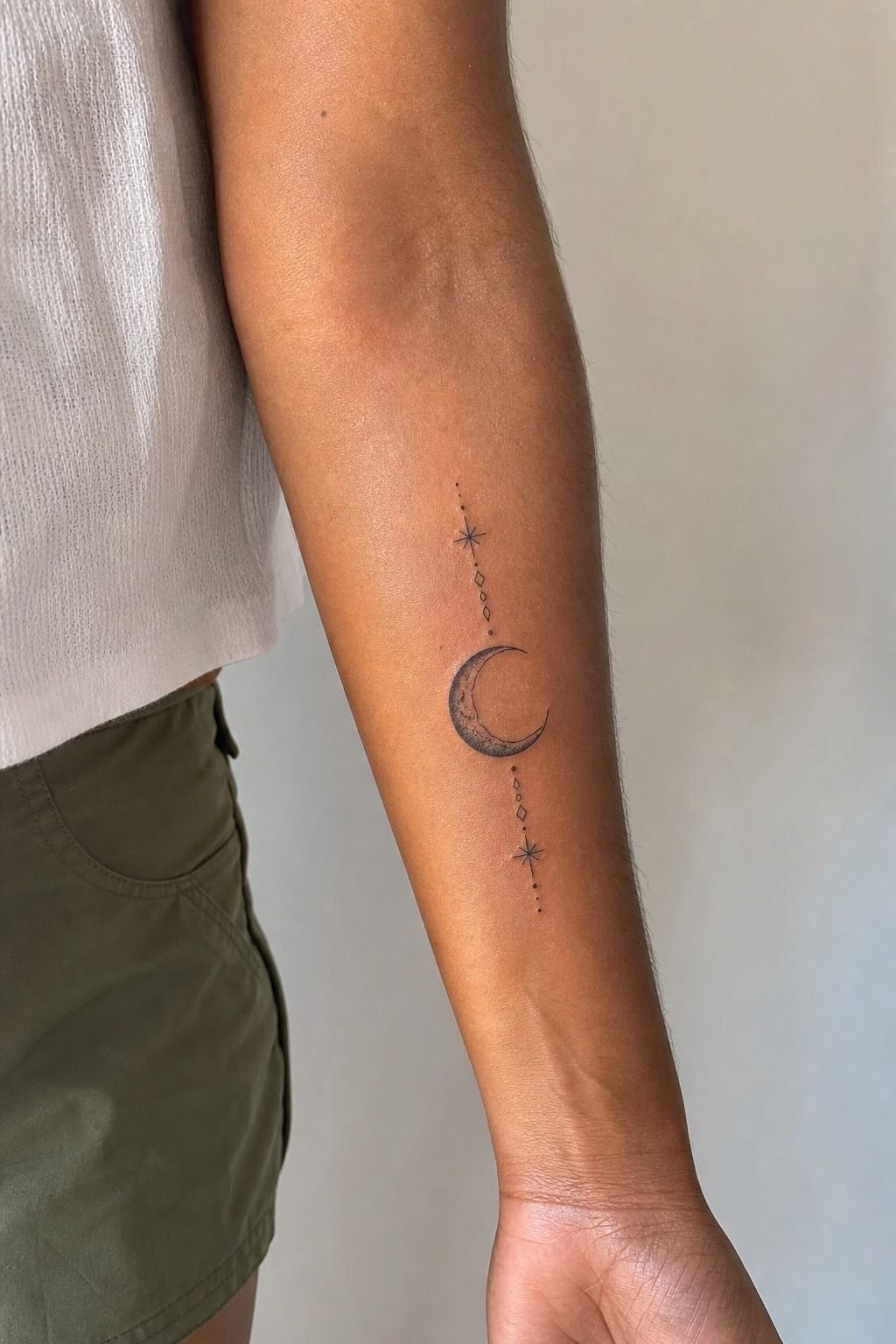
Place your luna tattoo on the outer forearm if you want to see it often and keep maintenance low. Your forearm is a chill placement compared with ribs, sternum, or feet, and the flatter skin gives a clean line a better shot at aging nicely.
Use the wrist-to-elbow direction. A vertical crescent, small stars, and one trailing branch should flow with your arm instead of sitting sideways like a sticker. Eternal Ink black or another solid black pigment is your best friend for longevity.
But skip the inner wrist if your design needs hairline detail. It gets more sun, rubbing, and movement. If you want more celestial options, this sun moon and stars tattoo collection gives you a stronger starting point.
4Choose A Meaningful Moon With Initials
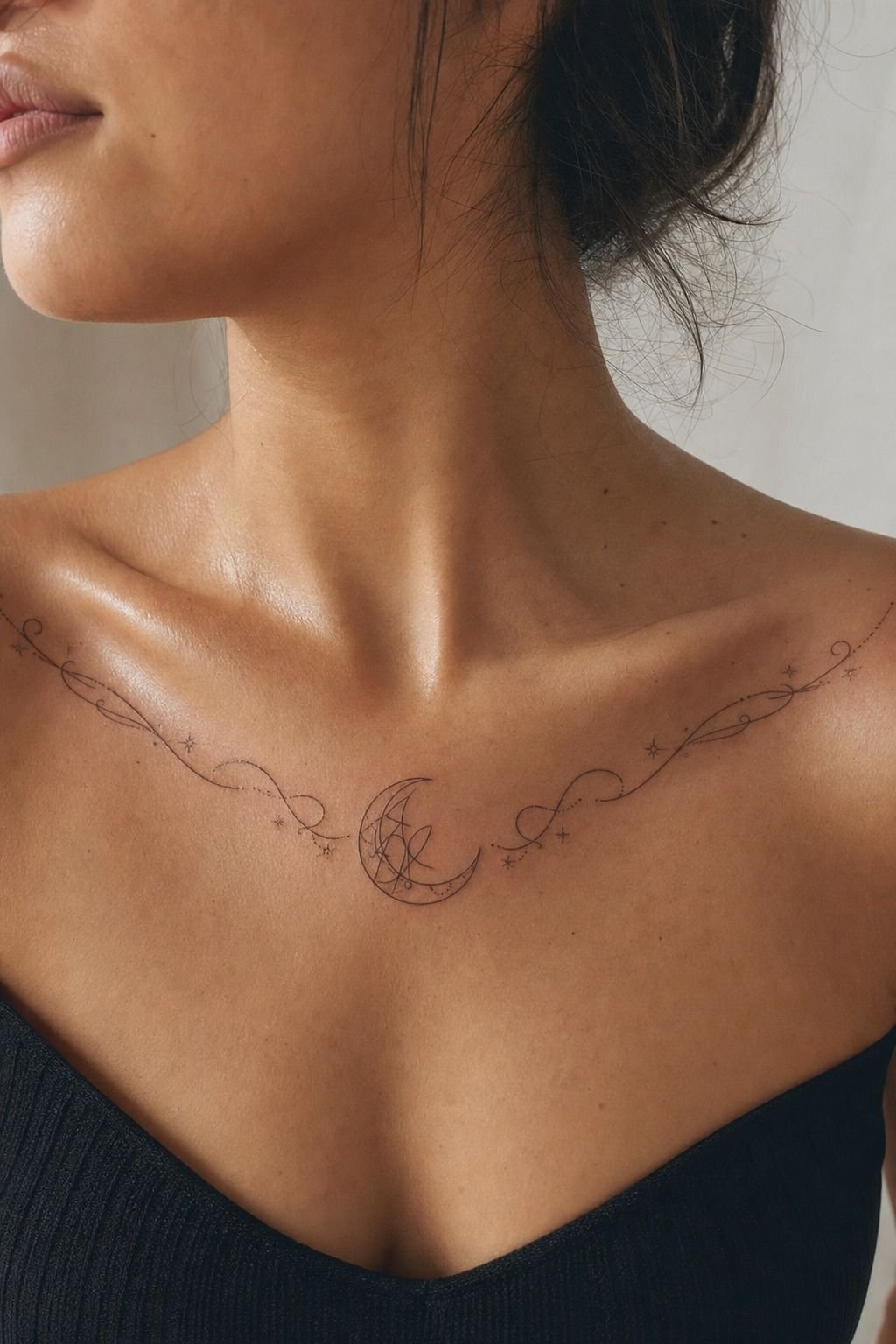
Choose initials only if they stay secondary to the moon.
5Plan A Moon Phase Wrist Tattoo
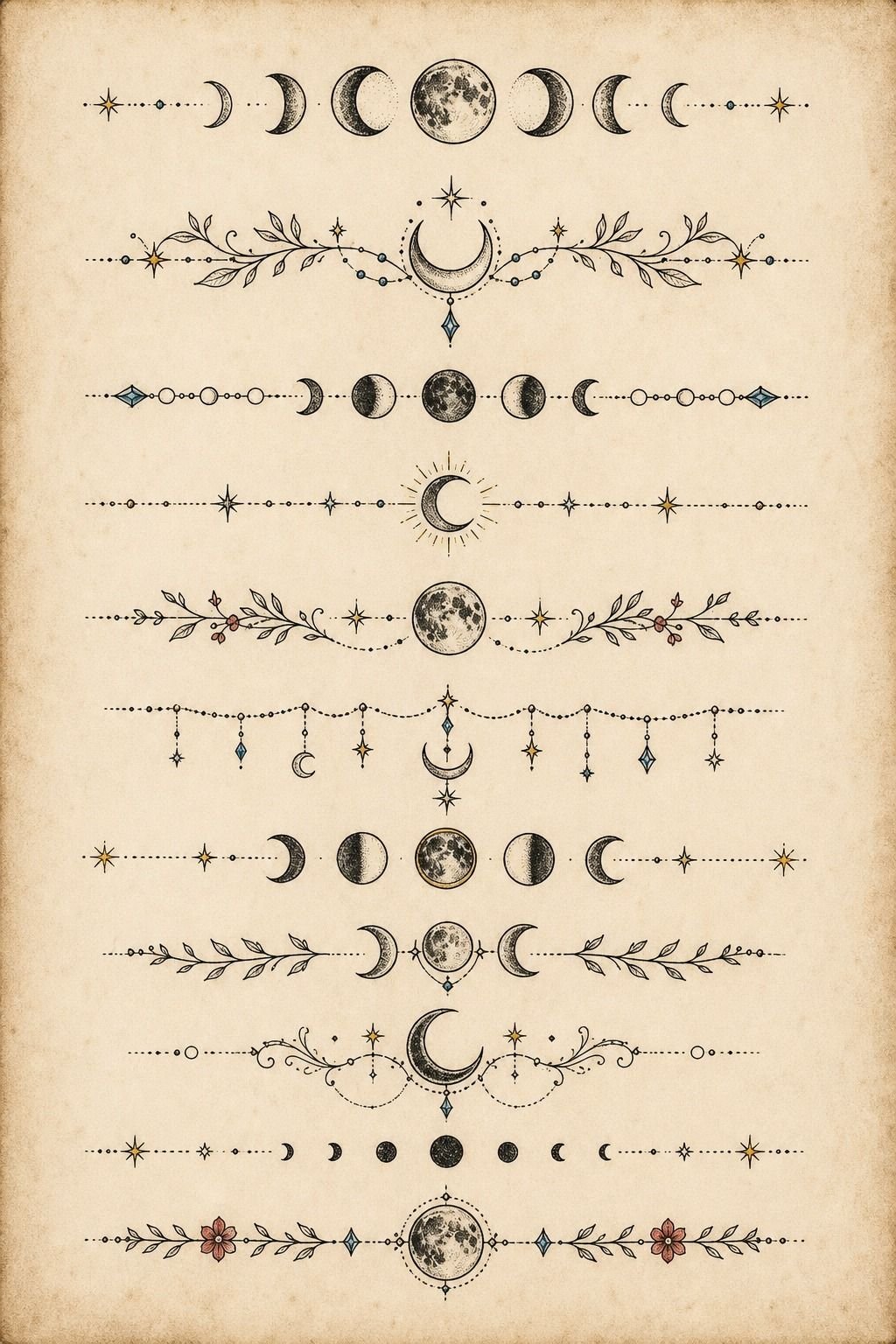
Plan the moon phase wrist tattoo on paper before you commit. A flash sheet is useful because you can compare five to seven phase layouts without getting attached to the first one you see. Pick a sequence with clear gaps between each moon.
The flash-sheet layout should show full moon, crescents, and new moon as separate shapes, not a continuous grey smear. On your wrist, I’d bump the design up toward the lower forearm, where it breathes and gets less chewed up by watches and sleeves.
Read moon phases tattoo meaning before you choose a sequence. You should know whether you’re marking change, cycles, grief, or simply love the shape.
6Add Botanical Details To A Crescent Moon
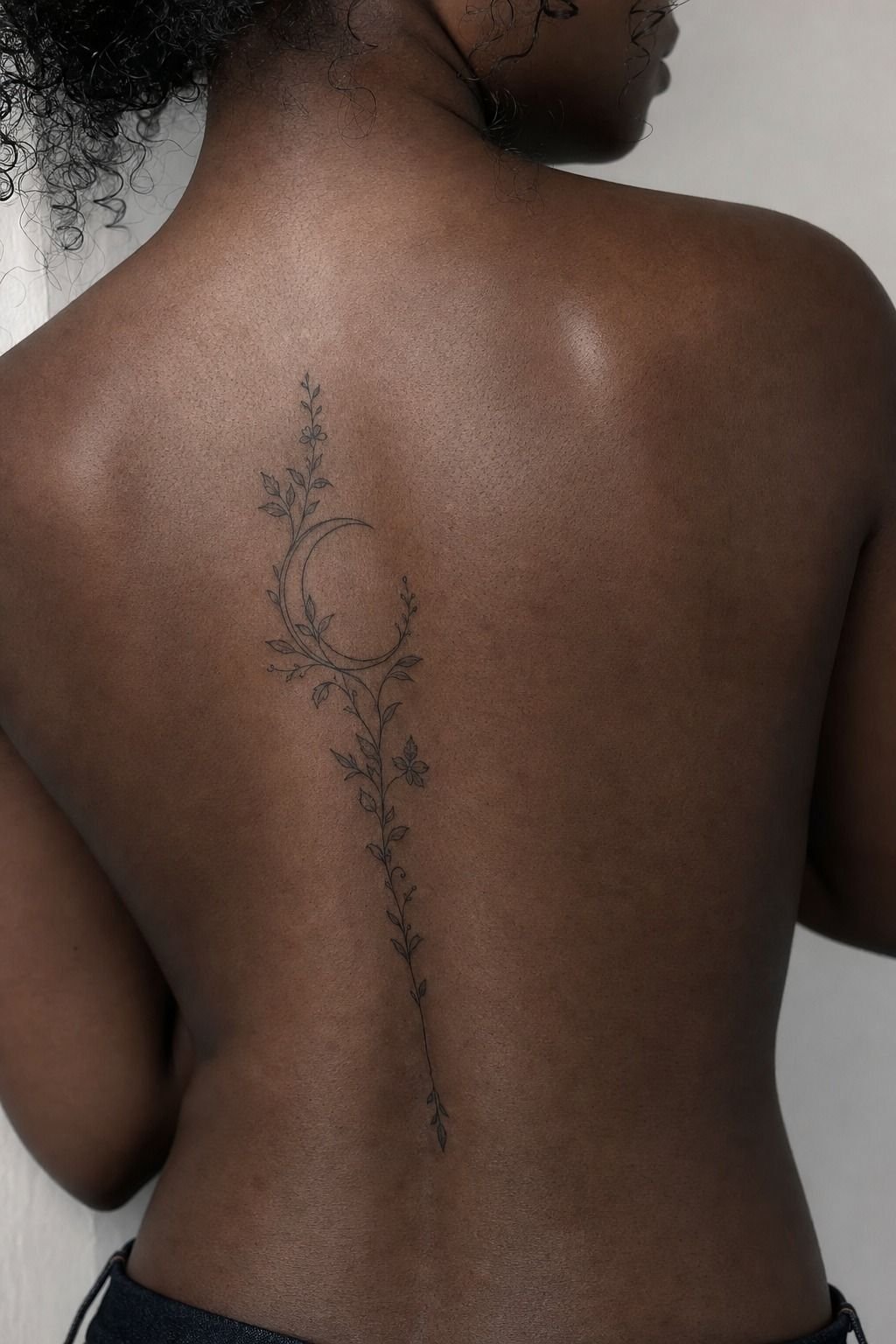
Add botanical details that climb with your spine, not a bouquet pasted onto it. Your back gives you more room than a wrist, so use one crescent with a stem of fine-line eucalyptus or birth-flower leaves that taper toward the shoulder blades.
On deep ebony skin, contrast matters. I’d ask for confident black lines and selective pepper shading, not faint grey outlines that disappear once healed.
Black will hold. Color is spice.
And don’t overstuff the crescent. Three leaves with open negative space read more refined than eighteen tiny leaves fighting for attention. Your tattoo should still make sense from a few feet away, not only in a macro photo.
7Keep A Small Moon Tattoo Delicate
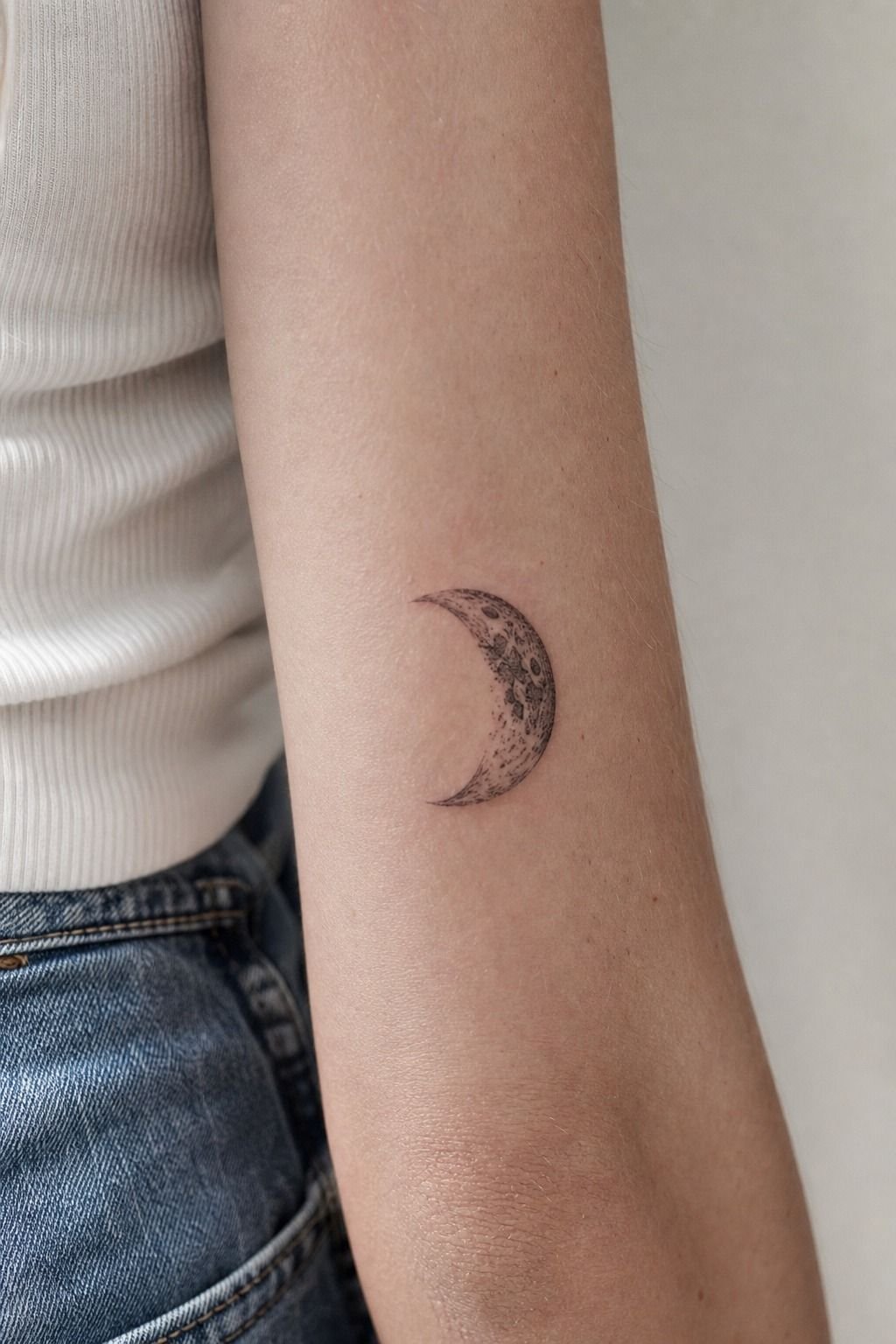
Keep a small moon tattoo delicate by simplifying it early. Your forearm can carry a 1-inch crescent, but it can’t carry a moon face, twelve stars, floral stems, dates, and a quote at that same size. That’s how little tattoos become soup.
Choose one clean pull for the crescent and maybe two solid dots nearby. If you want a gentle, subtle look, leave skin breaks instead of asking for whisper-thin shading. Your artist can make minimal work feel intentional without scraping the skin fifty times.
I’ve had clients add detail at the appointment because they worried the tattoo looked too plain. It almost never helped. Let the empty skin do part of the work.
8Pair A Moon With A Sun Symbol
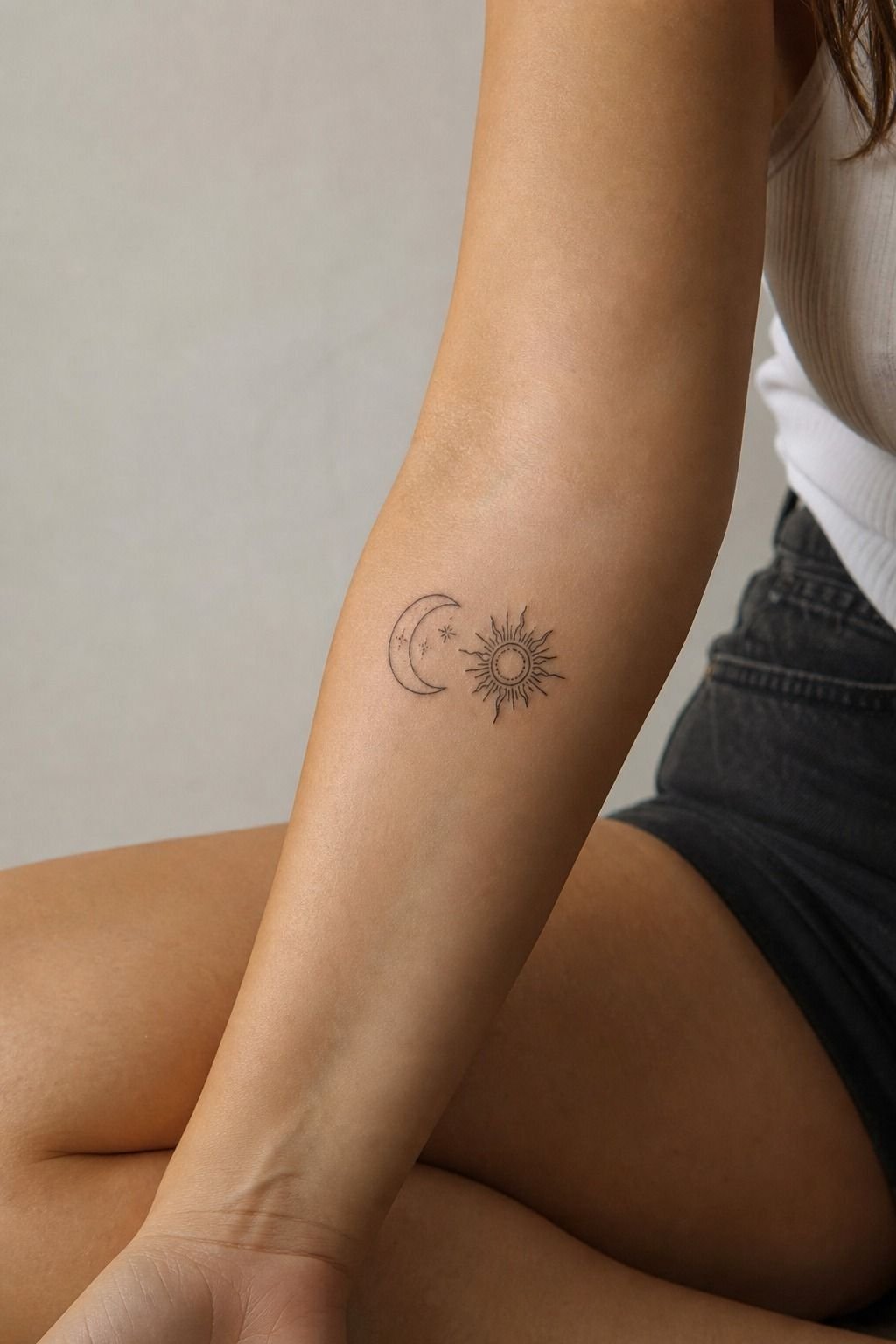
Pair a moon with a sun symbol when you want a balanced piece that reads clearly on your inner forearm.
9Select Red Ink For A Minimal Moon
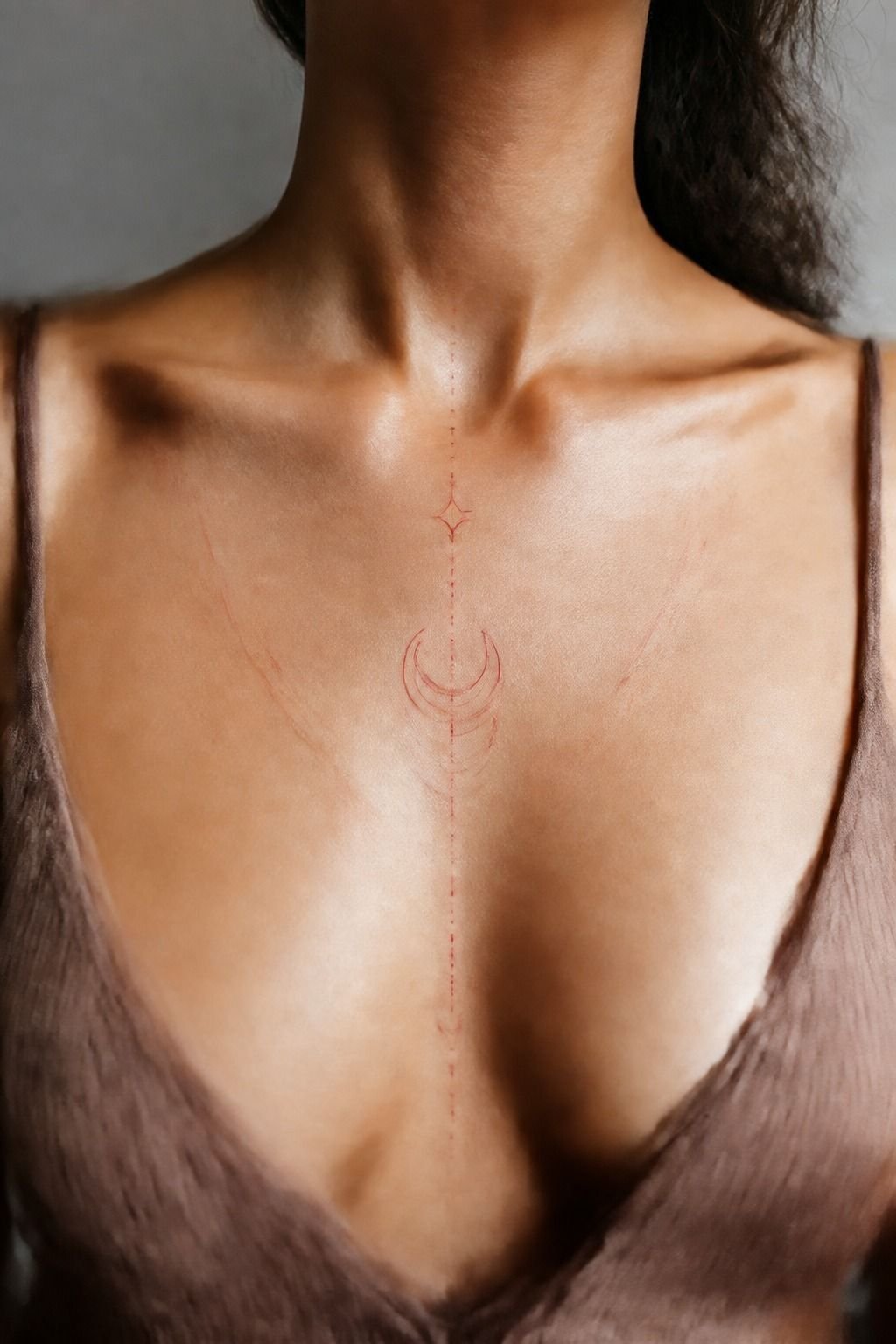
Select red ink for a minimal moon only after you’ve seen healed red work on skin close to yours. A sternum crescent can look captivating and intimate, especially when it wraps with the natural chest line, but the sternum is spicy and red ink needs a steady hand.
Ask your artist what red pigment brand they use and whether they’ve had clients report irritation. You don’t need to panic, but you do need a real conversation. Your design should stay simple: a 3-inch crescent, one thin orbit line, maybe a small star.
And please don’t pick red because it photographs trendy. Pick it because you want that color on your skin after the novelty wears off. Sun protection matters even more if you want the red to stay bright.
10Design A Unique Moon With A Face
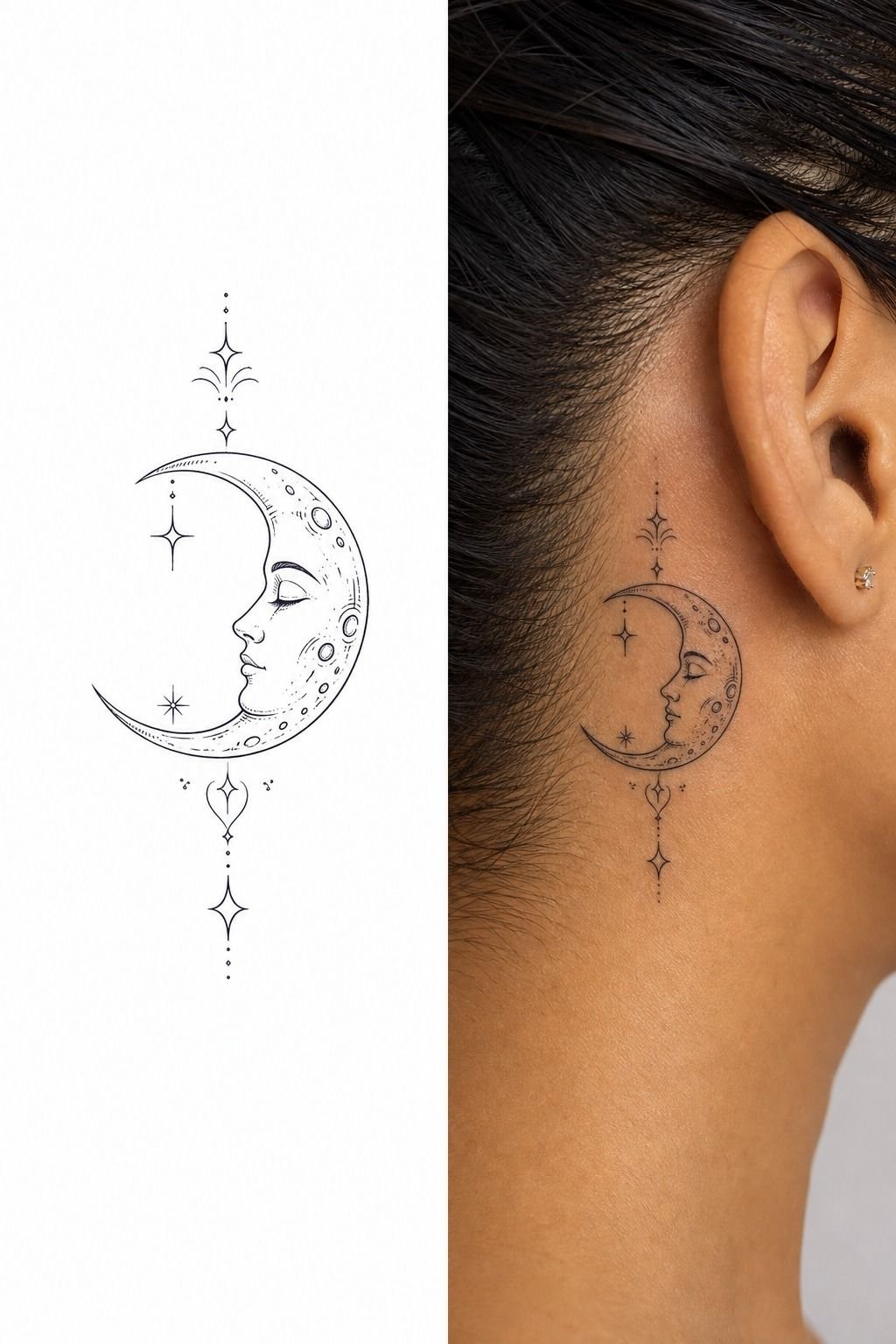
Design a unique-moon-tattoo face with a stencil first, then compare it with a healed example.
11Match Crescent Tattoos With A Close Friend
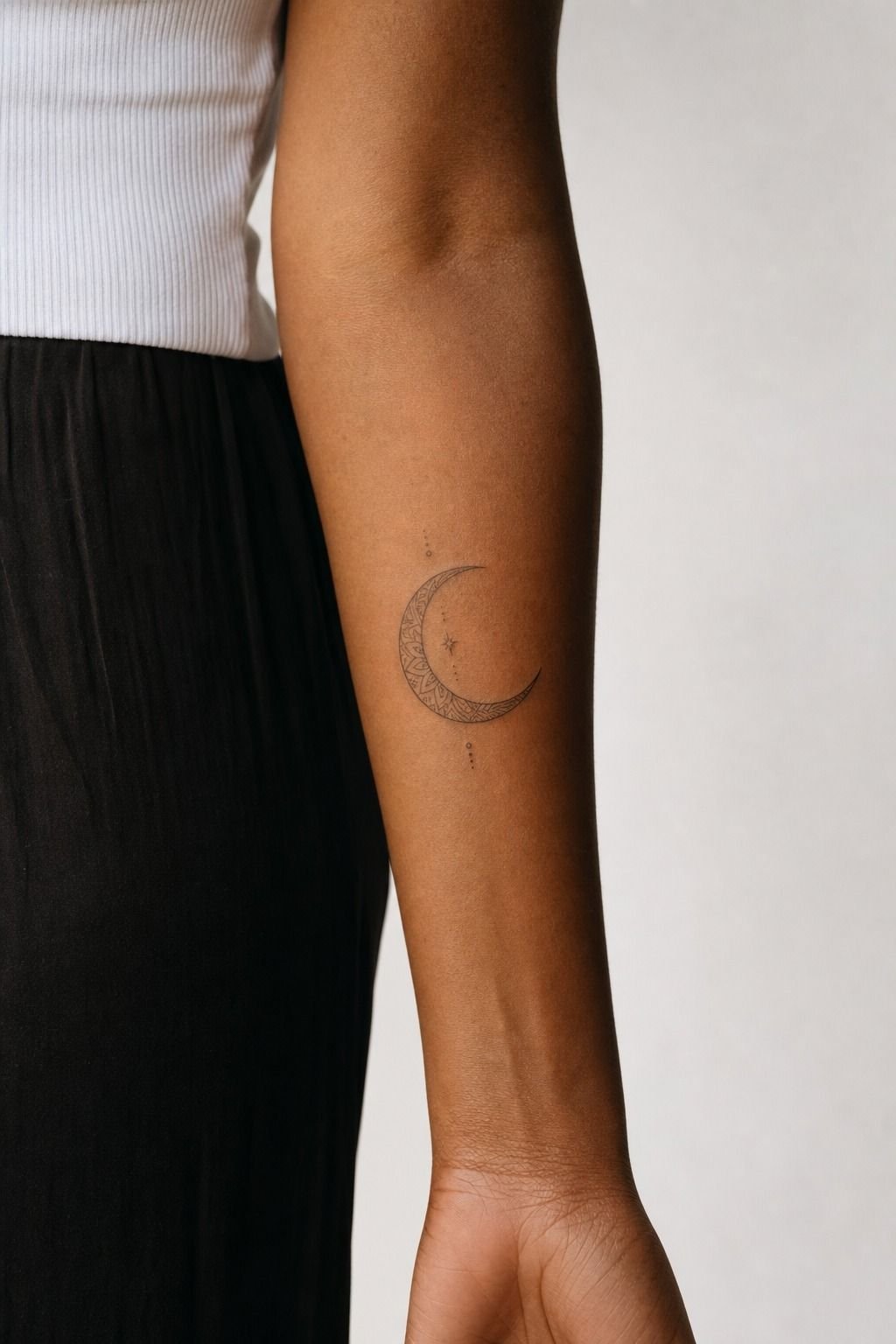
Match crescent tattoos with a close friend by agreeing on the concept, not demanding identical skin placement. Your inner forearm might be ideal, while your friend’s shoulder may suit their lifestyle and pain tolerance better. Matching doesn’t mean cloned.
Use the same crescent silhouette and let each person choose a different star count, flower, or direction. That gives you a shared visual language while keeping the tattoos personal. A calm, simple design also heals more evenly across different skin tones.
But don’t book matching tattoos with an artist whose portfolio is all heavy blackwork if you want delicate fine line. Your artist’s specialty matters more than their follower count. Tiny matching pieces deserve clean execution too.
12Anchor A Watercolor Moon With Clean Linework
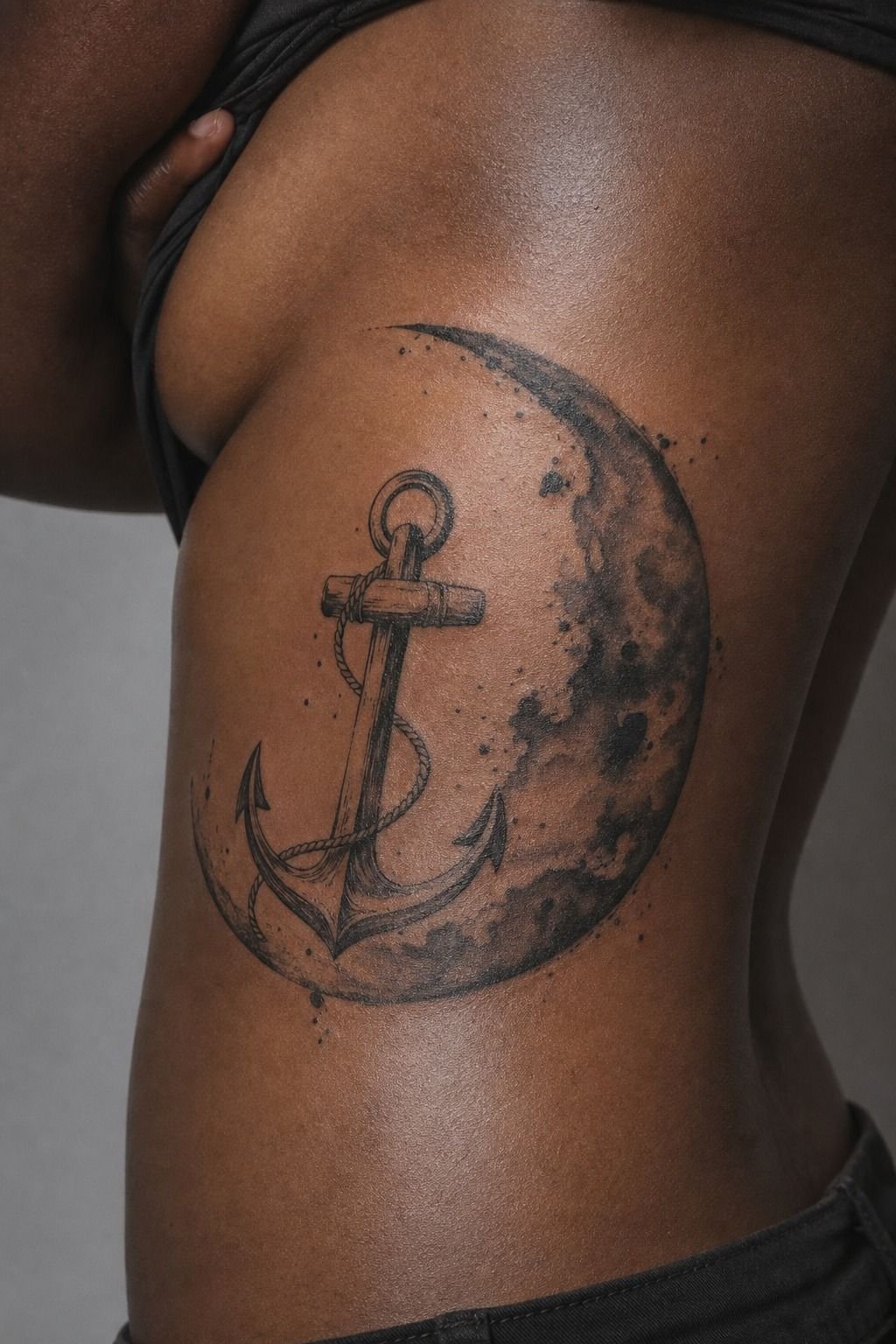
Anchor a watercolor moon with clean linework or it’ll lose its structure fast. On ribs, a wash of violet, blue, or soft pink can look enchanting against deep skin, but your crescent needs a black outline and a few firm dark points to stay legible.
Ask for watercolor pigment applied lightly around the shape, not packed like a solid sticker. Your artist should build color without overworking the skin. Lines feel sharper, shading is a dull burn, and color packing is usually the spiciest part.
The Two-Anchor Rule is simple: one black crescent edge and one black focal detail, like a star or orbit. Without those anchors, your tattoo may heal pretty but vague.
13Build A Celestial Moon Sleeve Accent
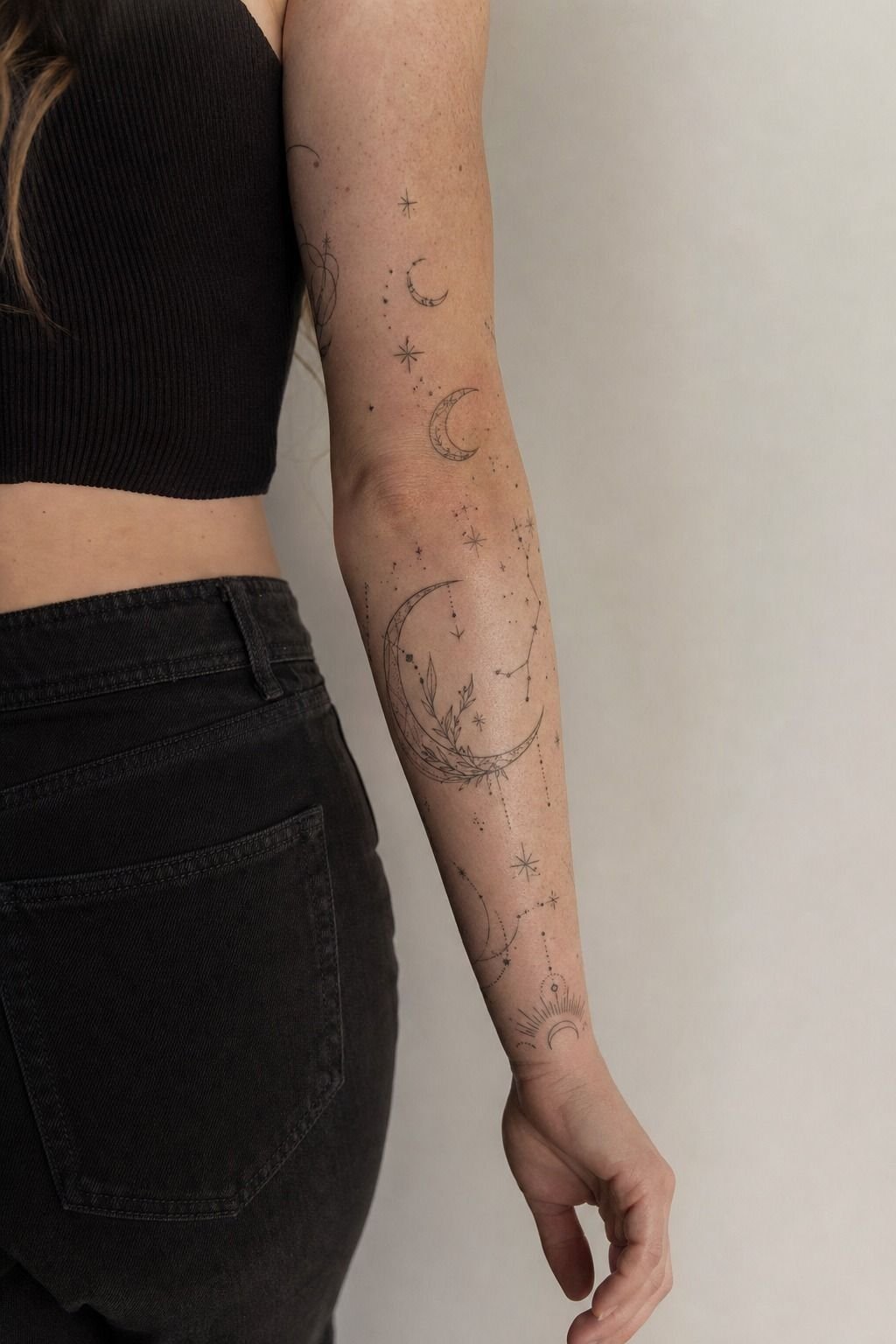
Build a celestial moon sleeve accent as a connector, not the whole show.
14Choose Black-And-Grey Shading For Depth
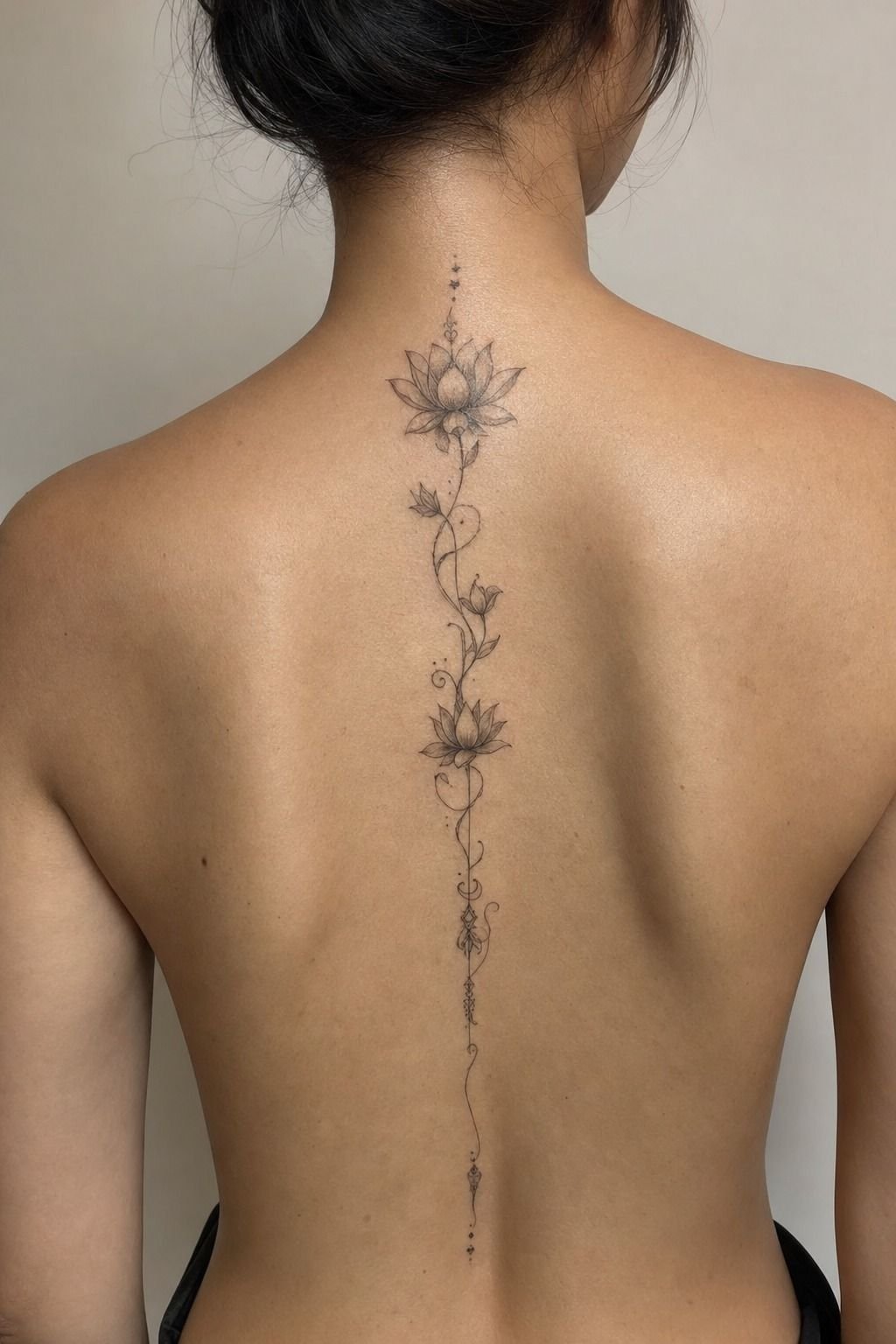
Choose black-and-grey shading when your spine placement needs depth without loud color. A vertical moon can follow the centerline beautifully, but you should use soft whip shade around craters rather than dense grey fill from top to bottom.
The Three-Value Moon Method works: bare skin for highlight, grey wash shading for texture, black for the deepest crater edge. Your tattoo stays soft and serene, while the contrast keeps it from healing flat. On warm ivory skin, that tonal shift can look especially clean.
But keep your artist from rendering every crater. Your spine moves, and this is not a poster. A few well-placed crater marks will age nicer than a hyper-detailed lunar map.
15Place A Moon Behind Your Ear
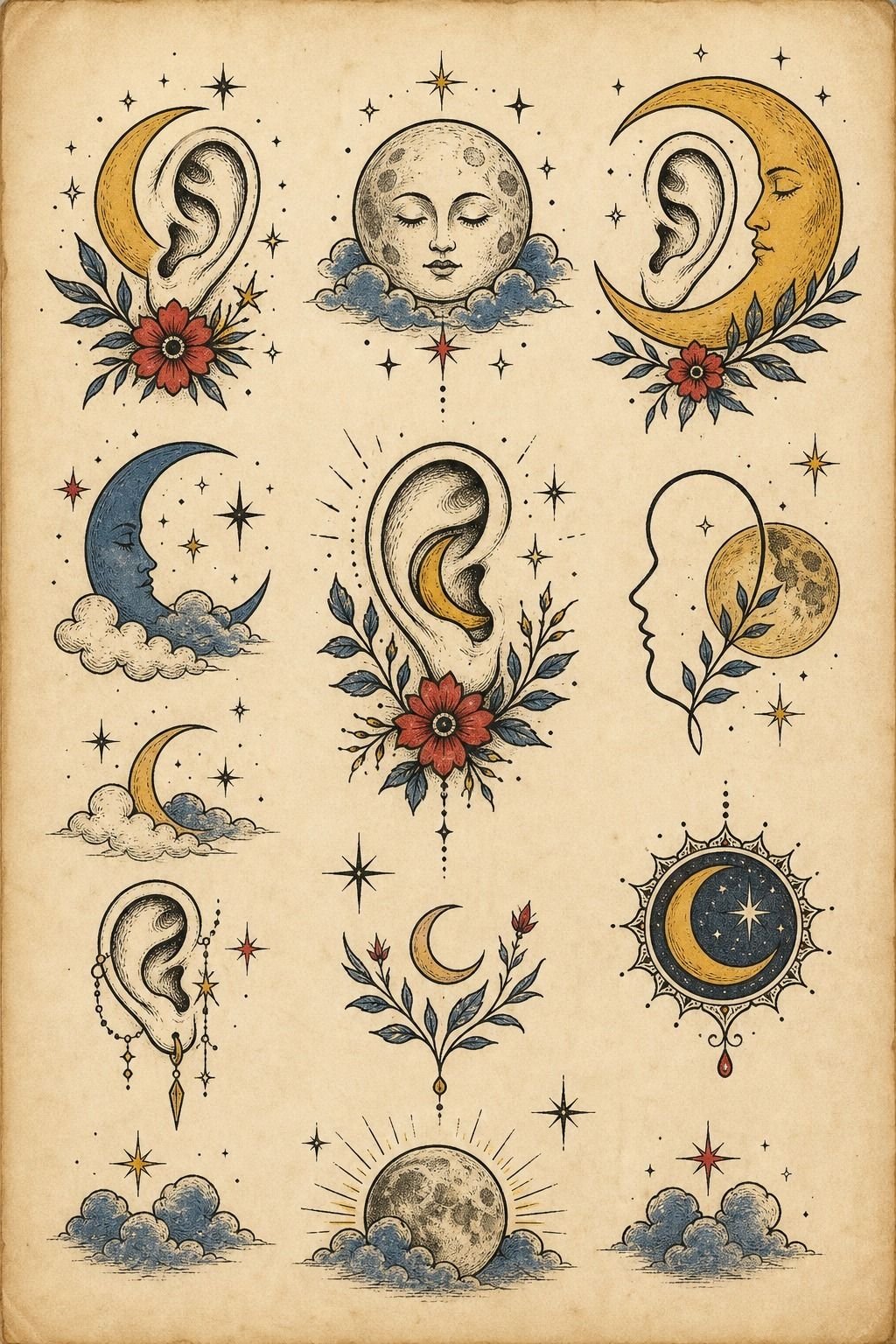
Place a moon behind your ear only if you’re fine with a small tattoo that needs patience.
16Plan Moon And Birth Flower Symbolism
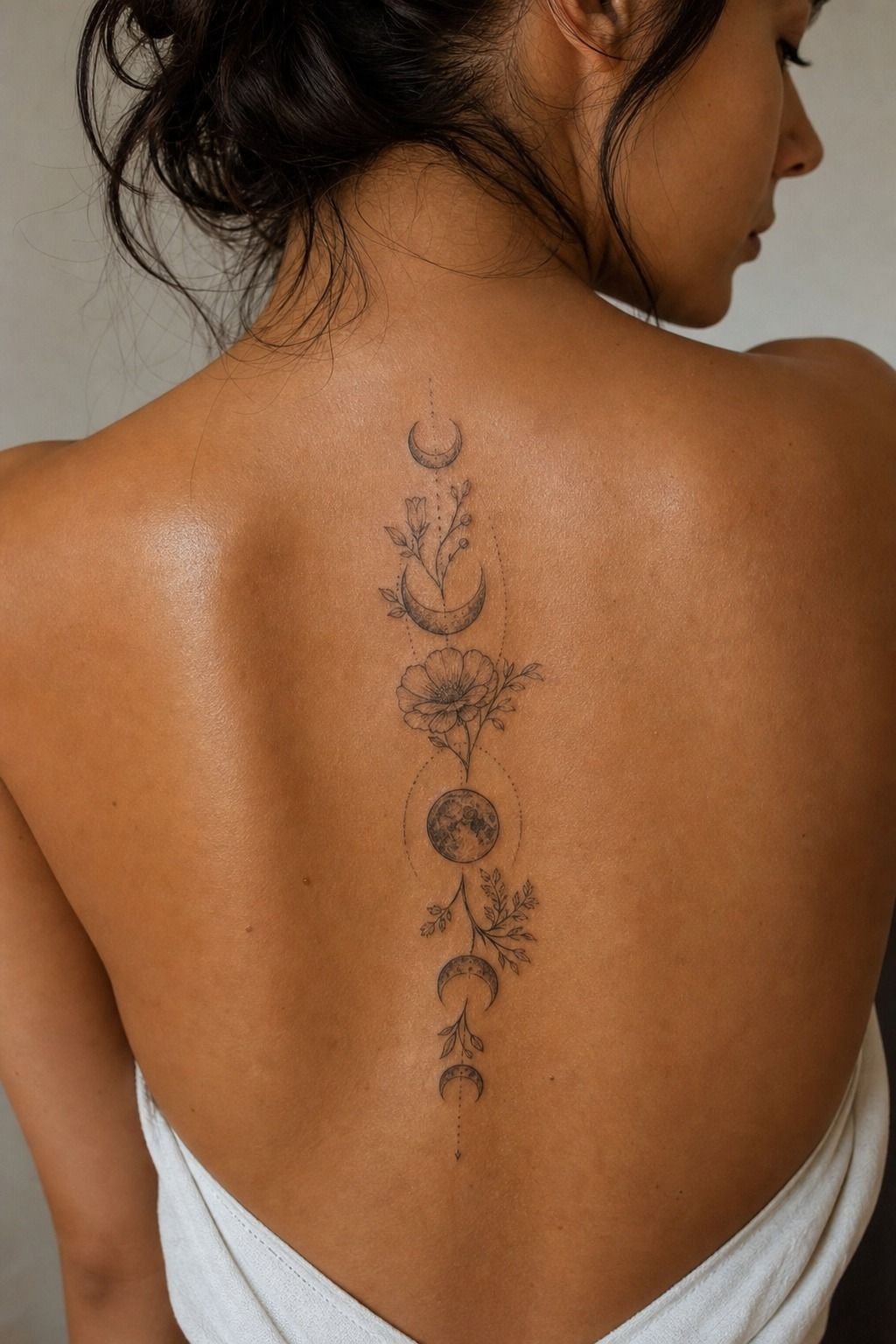
Plan moon and birth flower symbolism by choosing one flower with a silhouette that still reads after healing. Your upper back gives you room for a crescent and a botanical stem, so this is where a meaningful-tattoos concept can have some breathing room.
Use botanical linework with open petals and a stem that follows your shoulder blade. You can place the moon above the flower, or let the crescent cradle it. Either works, but I prefer the cradle layout because your eye lands on the moon first.
Want the meaning to carry more weight? Read this meaningful moon stars tattoo meaning.
Your tattoo doesn’t need a public explanation, though. It just needs to feel true to you.
17Check Fine-Line Detail Against Your Placement
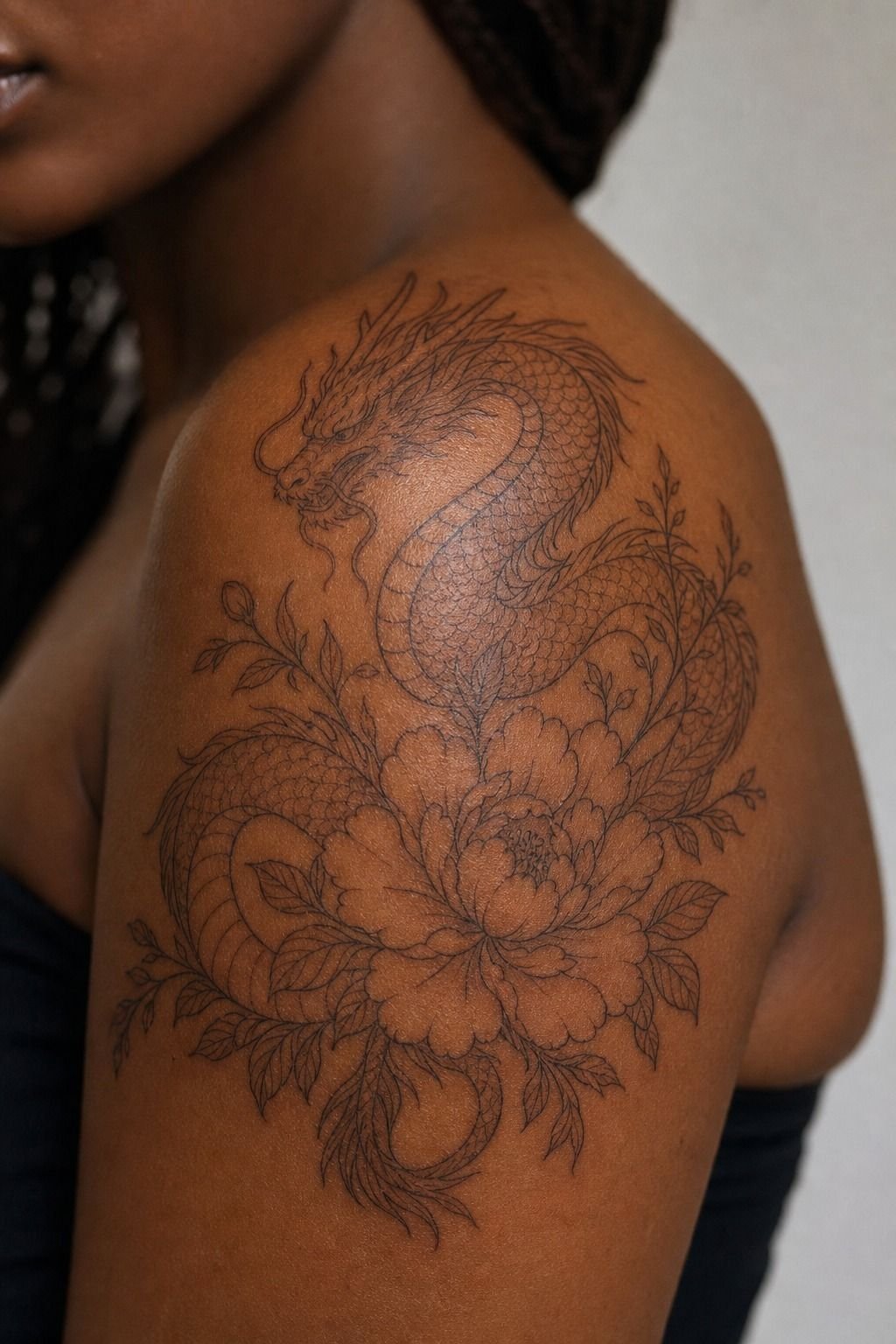
Check fine-line detail against your placement before you approve the stencil. Your shoulder can handle more detail than your wrist because it’s lower wear and has broader, steadier skin. That doesn’t mean you should turn every moon into a miniature astronomy textbook.
Ask your artist to show the design at actual tattoo size, printed on matte stencil paper. Hold it at arm’s length. Can you still tell it’s a moon?
If not, simplify. That’s your answer.
But don’t confuse delicate with weak. Fine line can be bold in its own way when the lines are crispy, the spacing is generous, and the contrast is clear. Your future self will thank you.
18Protect Your New Moon Tattoo While Healing
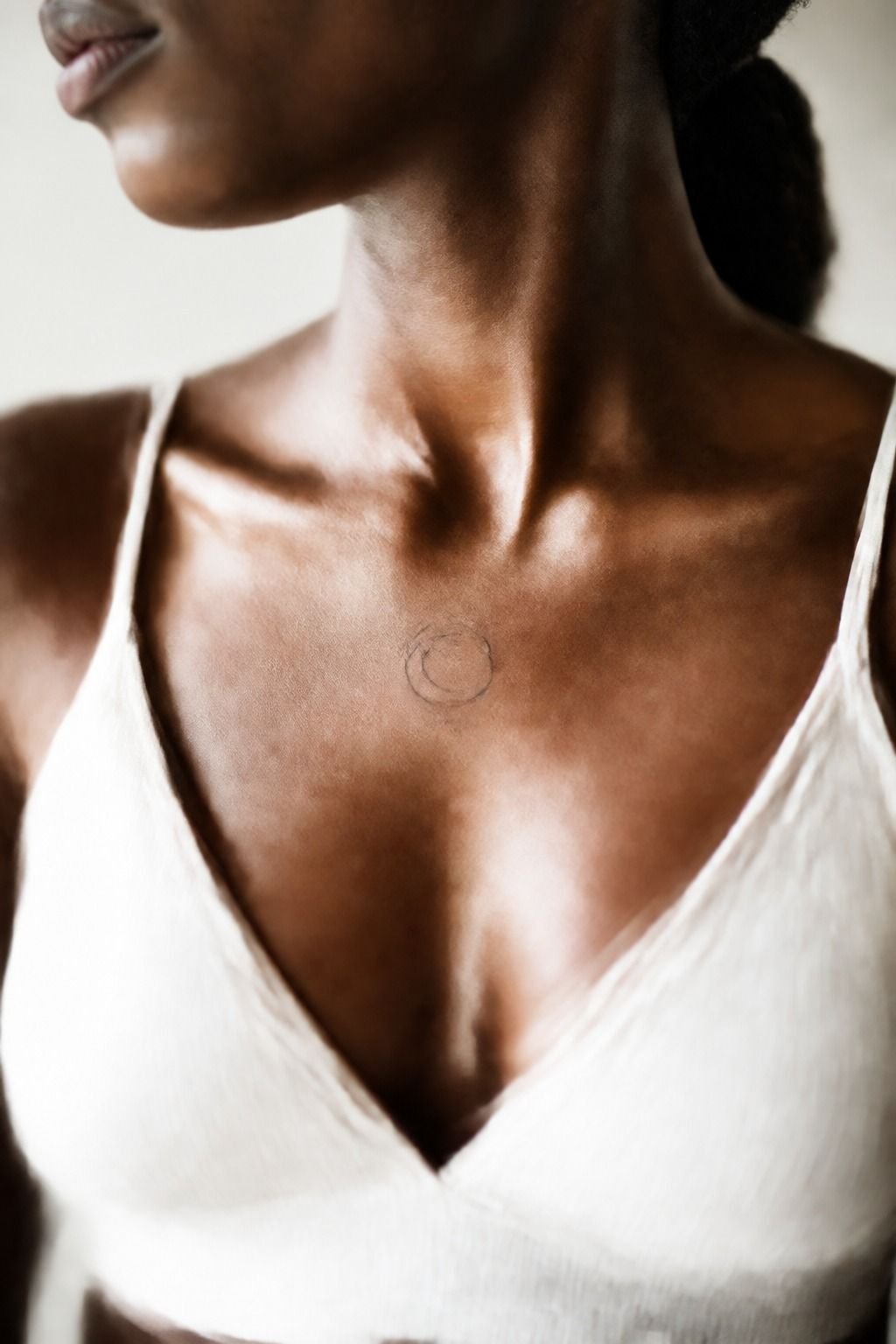
Protect your new moon tattoo like an open wound for the first few days, because that’s what it is. Wash it with gentle unscented soap, pat it dry with a clean paper towel, and use a thin layer of fragrance-free ointment or lotion approved by your artist.
You’ll usually see surface healing in about 2 to 3 weeks, while deeper healing can take 2 to 3 months. It’ll peel like a sunburn.
Don’t pick the flakes or you can pull color out. No pools, no hot tubs, no baking it in direct sun.
And avoid gym friction on a sternum piece if you can. A clean tattoo heals nice. A sweaty, rubbed-up tattoo can get irritated fast.
Why I Push Simple Moon Designs First
I’m not against ornate moon tattoos. I love a well-built lunar face, a botanical crescent, and a full phase sequence when the body part can carry it.
But I’ve also watched people walk into a studio with a Pinterest folder full of tiny miracles and no sense of scale. They want every element because every element means something.
I get it. Your tattoo can hold a lot emotionally.
It just can’t always hold a lot physically.
The part I push hardest is planning around wear. A forearm moon gets sunlight, sleeves, and movement, but it gives your artist a friendly enough surface to make clean choices.
Ribs are gorgeous, yet they move constantly and hurt more than most people expect. Behind the ear is charming, but it’s not a forever-fresh placement without occasional maintenance.
That’s not a scare tactic. It’s just skin.
I also think people overvalue the fresh photo. Fresh ink is dramatic because it’s dark, swollen, and surrounded by irritated skin.
Healed tattoos are the real portfolio. You want to see whether the artist can make soft pepper shading heal velvety, whether their thin lines stay separate, and whether their black is saturated without looking chewed up.
That’s the work.
If you’re torn between a small detailed design and a slightly larger simple one, I’ll pick the larger simple one every time. It’s not less meaningful. It’s more likely to stay yours, clearly, for years.
The Questions Worth Answering First
How much does a Moon Tattoo Ideas usually cost?
Most moon tattoo ideas cost about $100 to $300 for a small to medium design, depending on placement and artist. A clean minimum-size design may still hit a shop minimum of roughly $50 to $100, while hourly artists often charge about $100 to $250.
– Simple crescent – Fine-line florals – Placement complexity
Are Moon Tattoo Ideas a good idea for a first tattoo?
Yes, a simple moon is a solid first tattoo because you can choose a tolerable placement and keep the linework clear. Outer forearm, shoulder, and calf placements are usually easier than ribs or sternum. Your artist can scale it to your comfort level.
How do I choose a tattoo artist for Moon Tattoo Ideas?
Choose an artist with healed fine-line photos, clean linework, and a studio that takes hygiene seriously. Healed portfolio proof matters more than viral fresh tattoos. You should also check whether their floral, lettering, or celestial work matches your exact direction.
How much do Moon Tattoo Ideas hurt?
Pain depends heavily on placement. Outer arm, calf, and shoulder are usually more tolerable, while ribs, feet, hands, and sternum feel spicier. Lines feel sharp, shading feels like a dull burn, and you can always tap out for five.
How long does a Moon Tattoo Ideas take to heal?
Surface healing usually takes about 2 to 3 weeks, while full healing can take 2 to 3 months. Gentle washing and sun avoidance protect the result. You should skip pools, picking, and tight rubbing clothing while your tattoo peels.
What’s the best placement for Moon Tattoo Ideas?
Outer forearm and upper shoulder are the best all-around placements for most people. They offer clear visibility and better aging than high-wear zones. If meaning matters more than visibility, collarbone and upper back can be excellent too.
Where I’d Start First
If I had to pick one step, I’d start with a 2-to-3-inch black crescent on your outer forearm. It gives the linework enough air to stay crisp, while avoiding the brutal wear of fingers and wrists. Pin your favorite shape, then bring your artist references for vibe.









