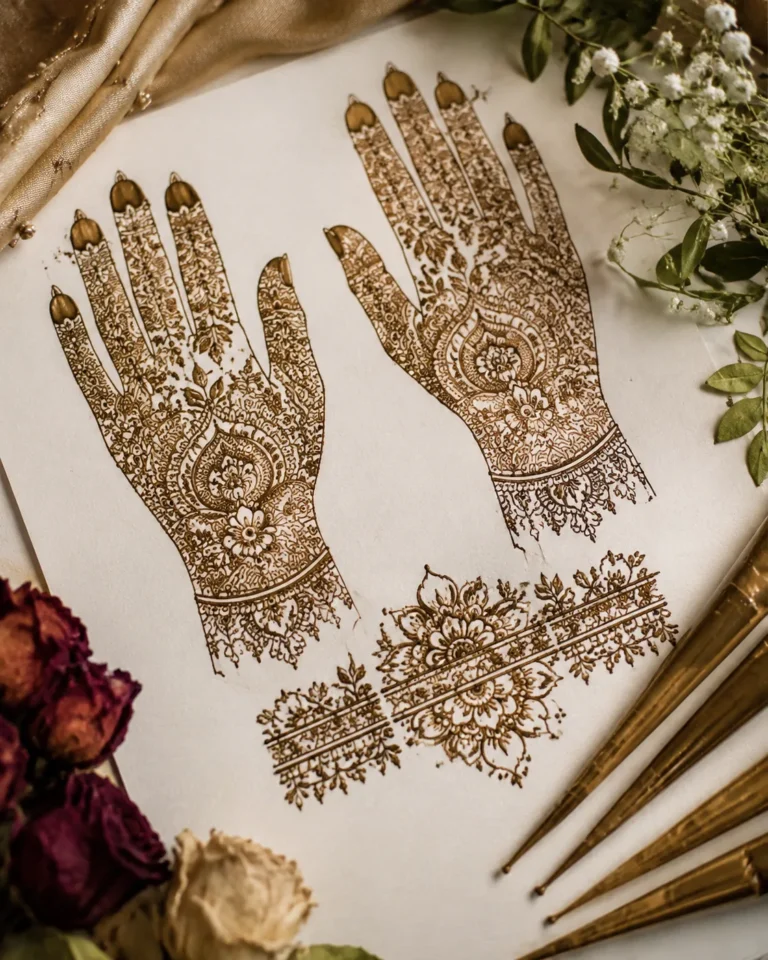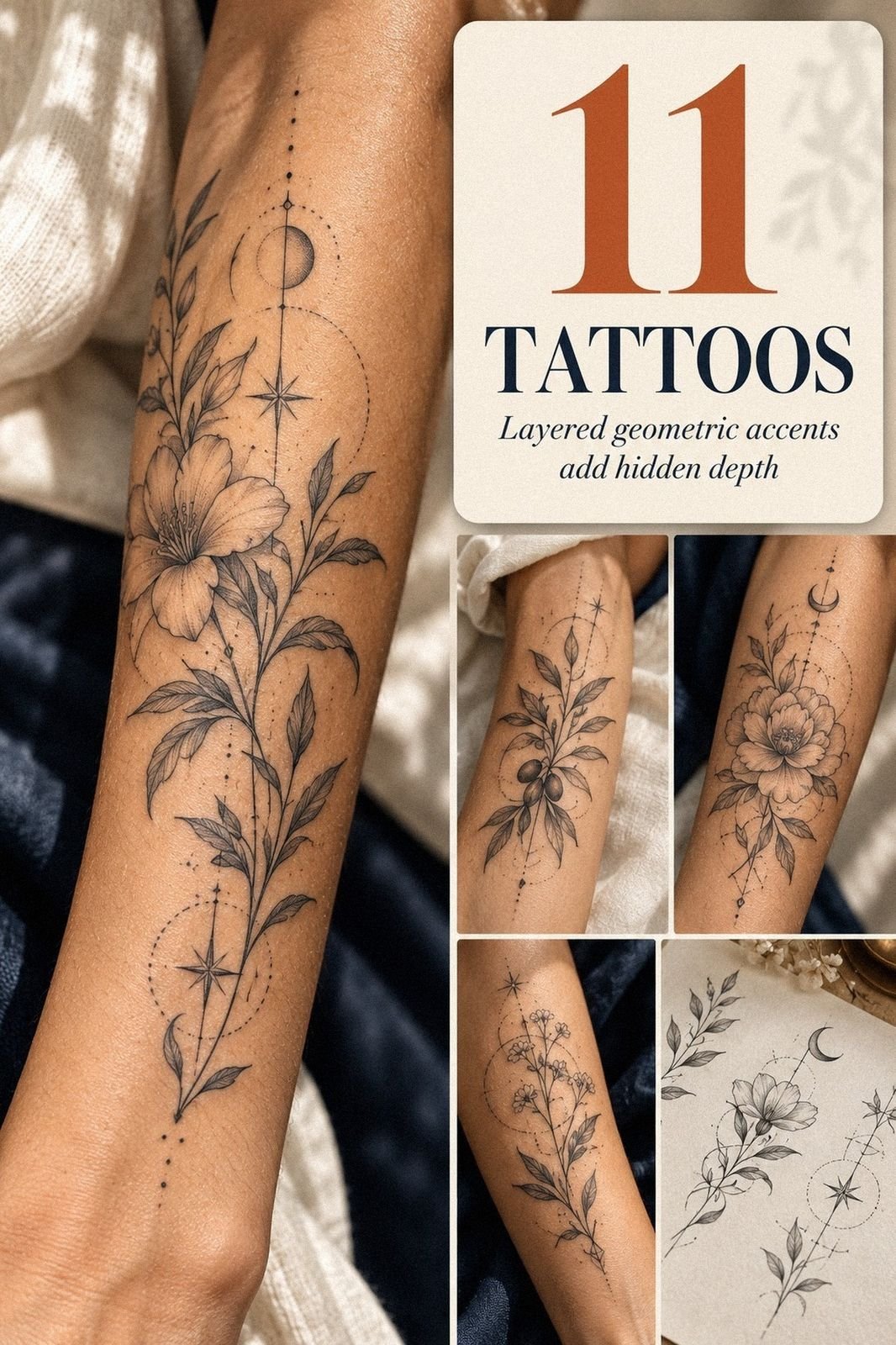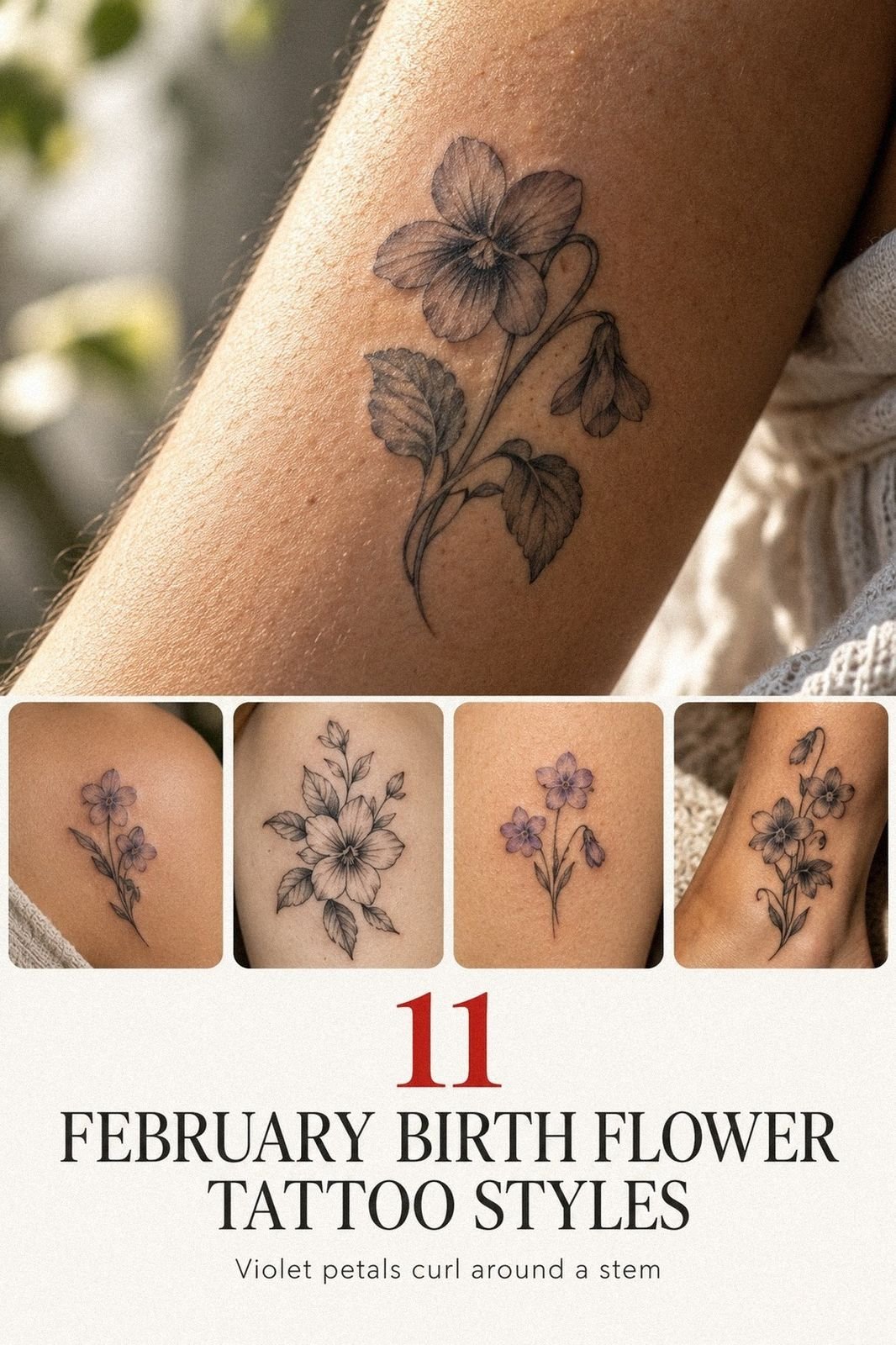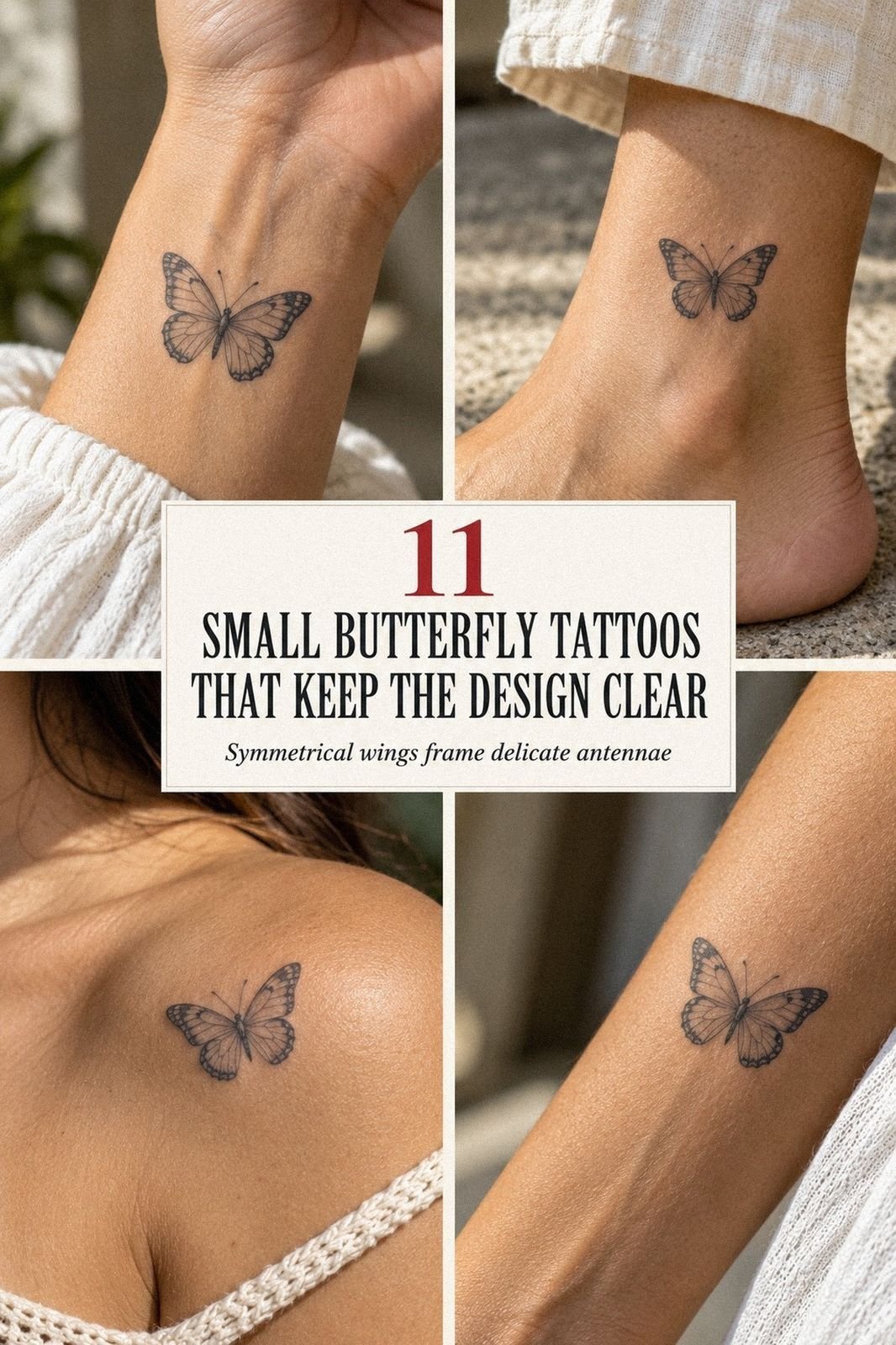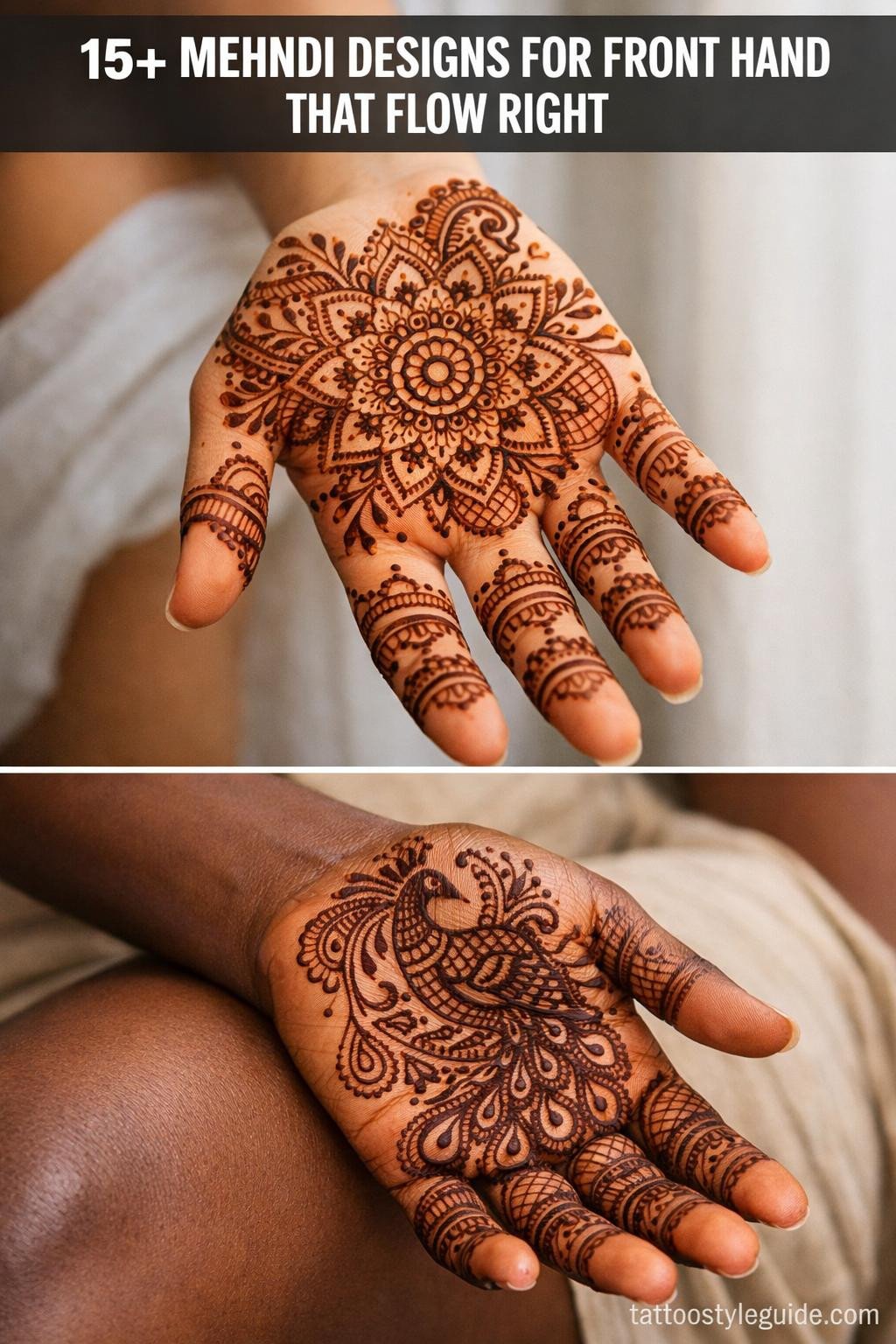
Front hand mehndi placement is the most compositionally demanding surface in henna work. The knuckle breaks, finger joints, and wrist flex all fight against dense linework, which means designs that look sharp as references often lose coherence on skin within days. The ones in this collection are built around structural logic, not just pattern density.
What separates a reference worth using from one that wastes a consultation: negative space distribution. Designs with deliberate open areas breathe on the hand. Designs packed edge to edge read as grey mud by week two.
Triangular Flow: Why Apex-Down Compositions Work on the Palm
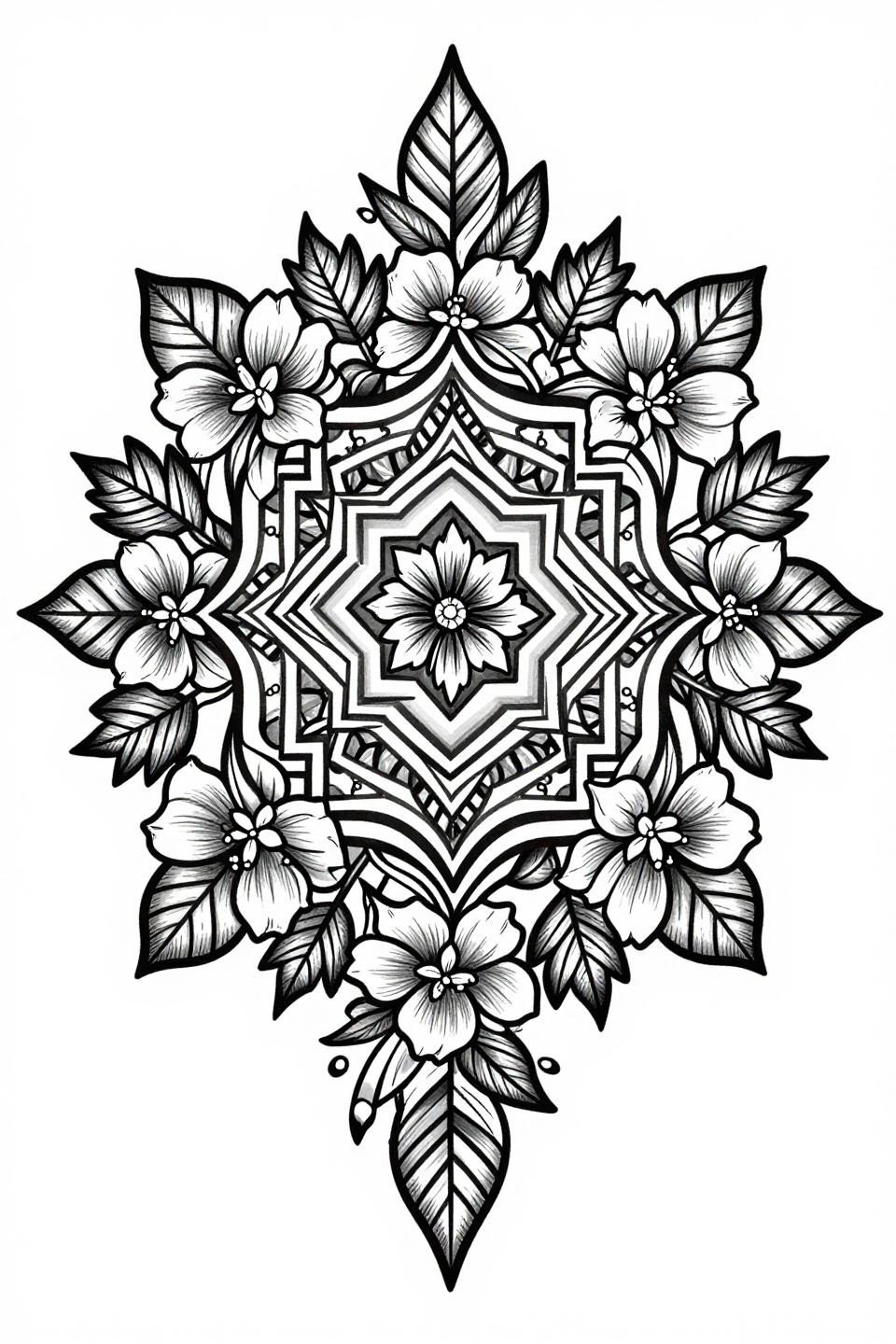
This neo-traditional flash uses a downward-pointing triangular composition with a central hexagonal lattice and radiating jasmine clusters, all held together by bold 3-4pt black outlines. The apex pulls visual weight toward the wrist, which reads naturally with the hand’s tapered shape.
For simple mehndi designs for beginners, this kind of clear geometric anchor is the right starting point. It gives the eye a center before following the vines outward.
Mandala Sketch Flash: Where Gestural Line Meets Radial Order
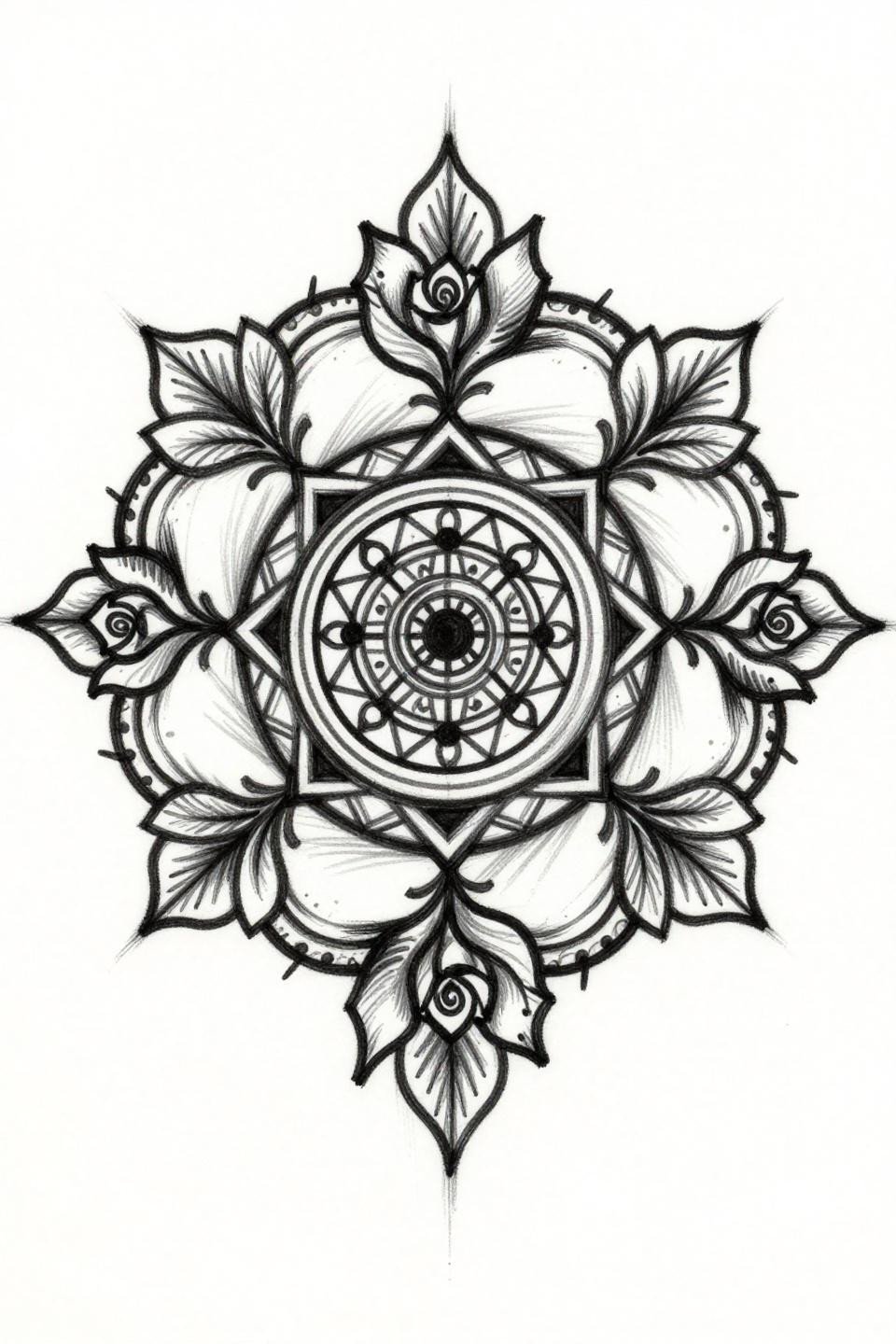
Raw sketch linework with varied-weight outlines gives this mandala a hand-drawn tension that precise compass work can’t replicate. The spiral rose blooms at each radial arm break the symmetry just enough to feel organic rather than mechanical.
Full hand coverage like this requires an experienced hand. Consistent dot size across the outer diamond band border is the technical signal to check before committing to any artist using this reference.
Wet Ink Diamond: What Calligraphic Bleed Does for Floral Structure
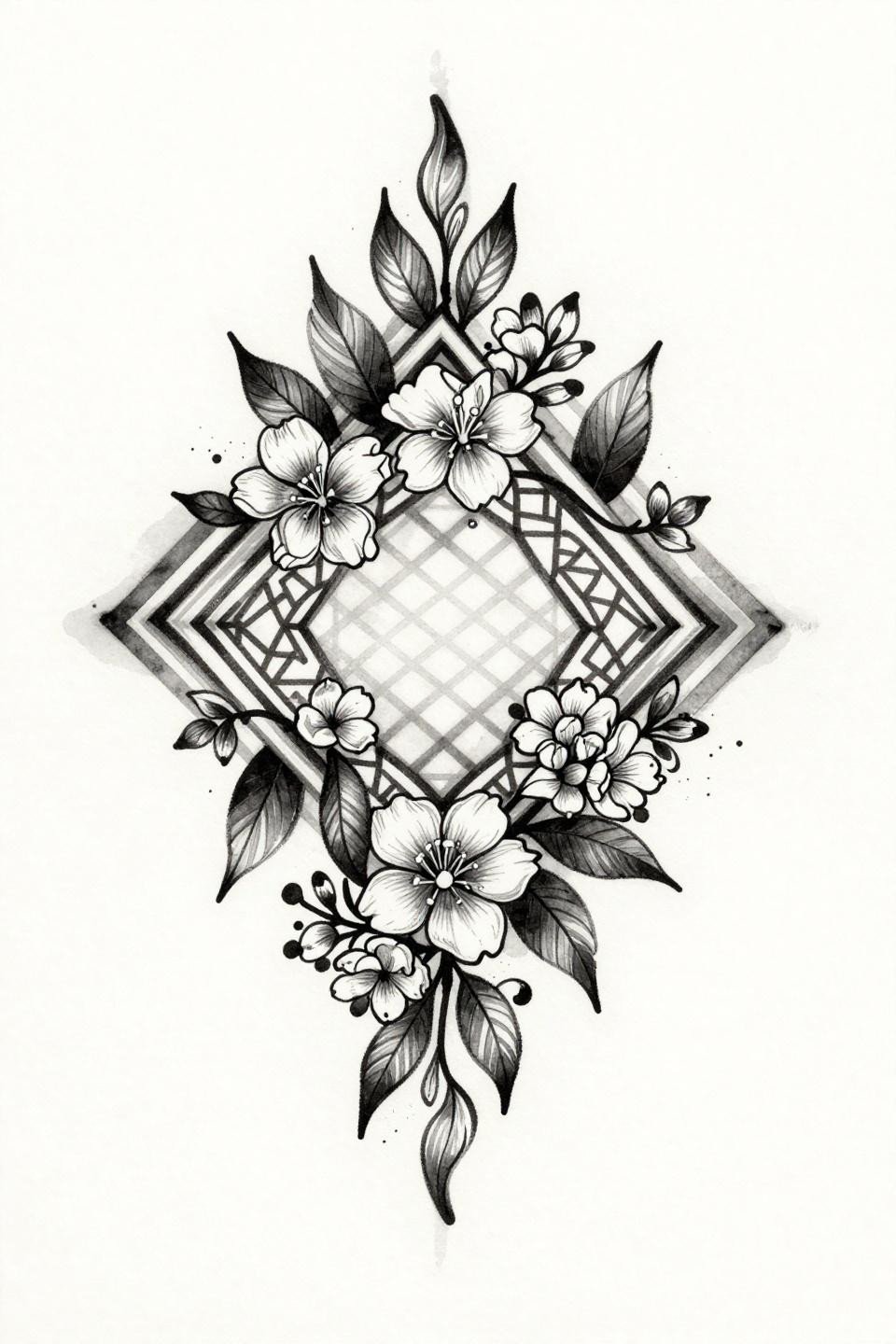
This watercolor-splash interpretation uses wet ink bleed edges against a controlled diamond frame, creating contrast between loose organic marks and hard geometric structure. The grey wash dilution from dense center to open edge preserves midtone range without muddying the linework.
Watercolor-influenced henna references translate best when the artist anchors every soft passage with at least one firm outline. Without that anchor, the bleed effect disappears on skin within the first week.
Stipple Gradient Mandala: Density That Reads at Every Scale
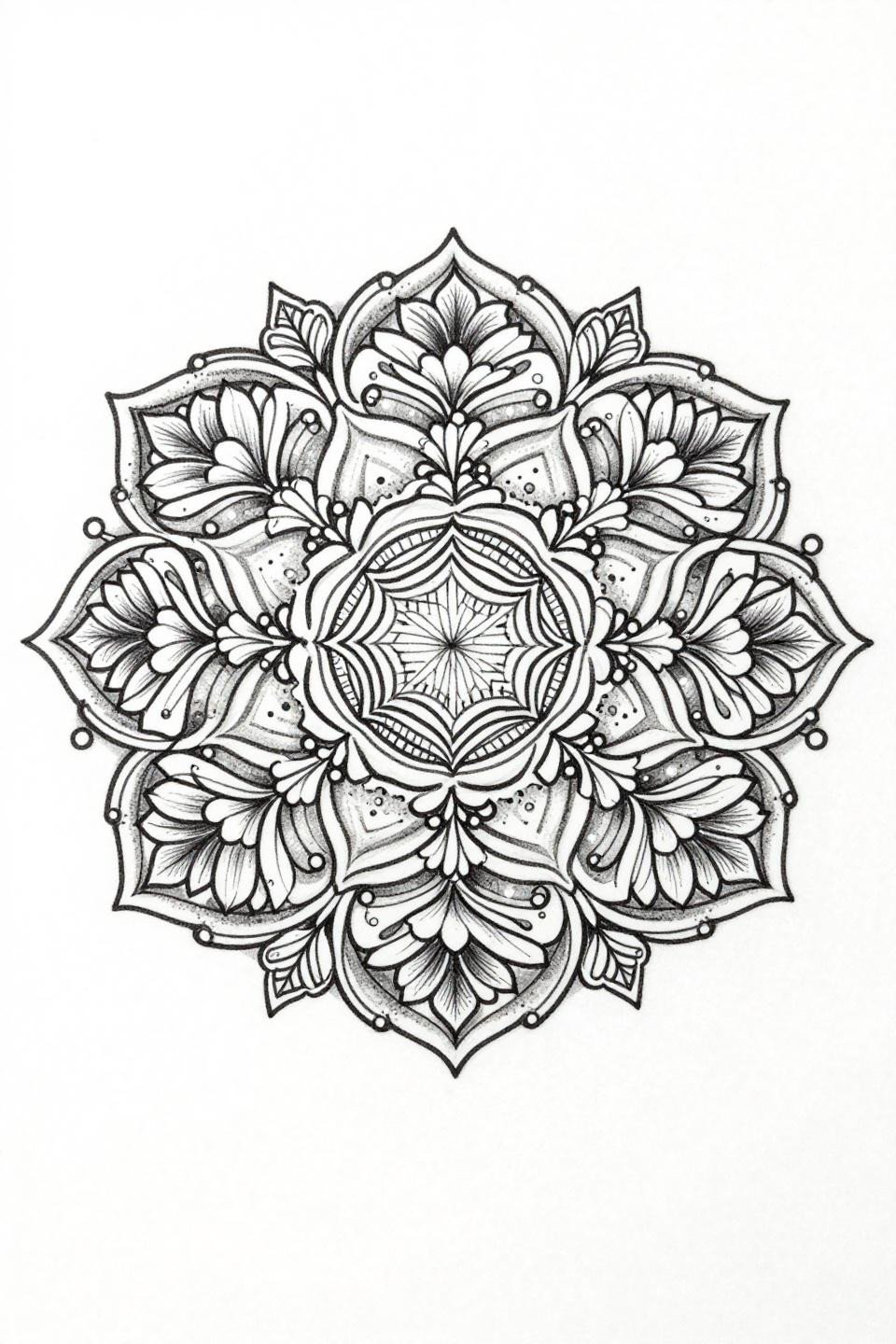
Fine line single-needle style with a stipple dot gradient running from 90% density at the mandala center to fully open at the outer floral sprays. The lotus spiral arrangement creates visual rotation without any curved fill, which is harder to execute than it looks.
On lighter skin tones this reads with sharp contrast. On olive and darker skin tones, the fine open stipple at the edges needs bolder transitional weight to maintain the gradient effect. Check the artist’s healed portfolio before using this as a reference on deeper skin.
Stacked Peacock-Eye: The Woodcut Approach to Vertical Compositions
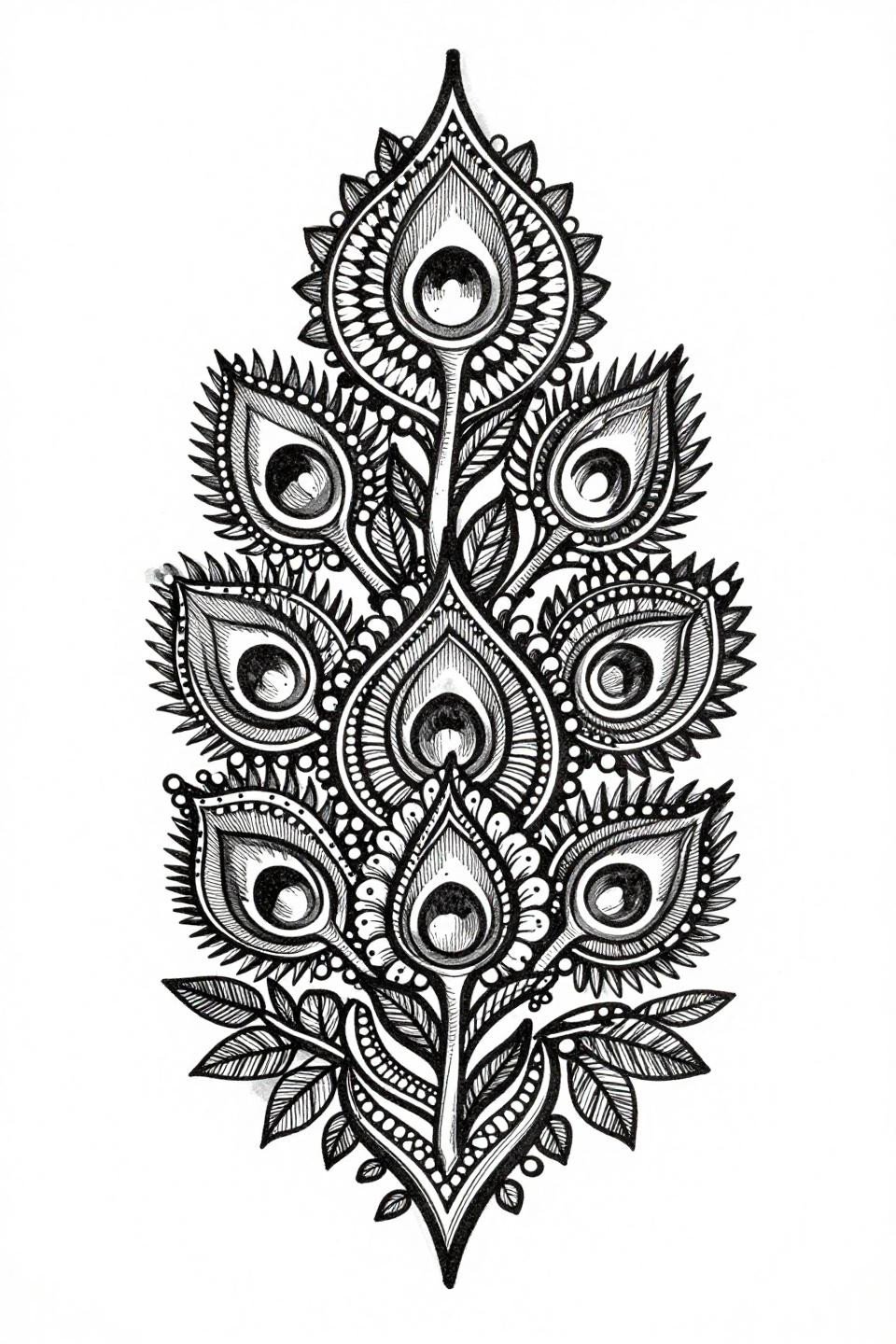
Woodcut-style parallel line engraving with dense ruled shadow mapping gives this stacked peacock-eye composition an unusual depth for a flat henna reference. The vertical arrow-flow layout follows the natural axis of the forearm, which keeps the design from appearing to float.
This is the kind of reference that benefits from modern mehndi design inspiration rooted in cross-cultural technique. The woodcut line quality is borrowed from printmaking, not traditional mehndi, and that’s exactly what makes it current.
Irezumi Structure Behind Arabic Geometry: An Unlikely Pairing
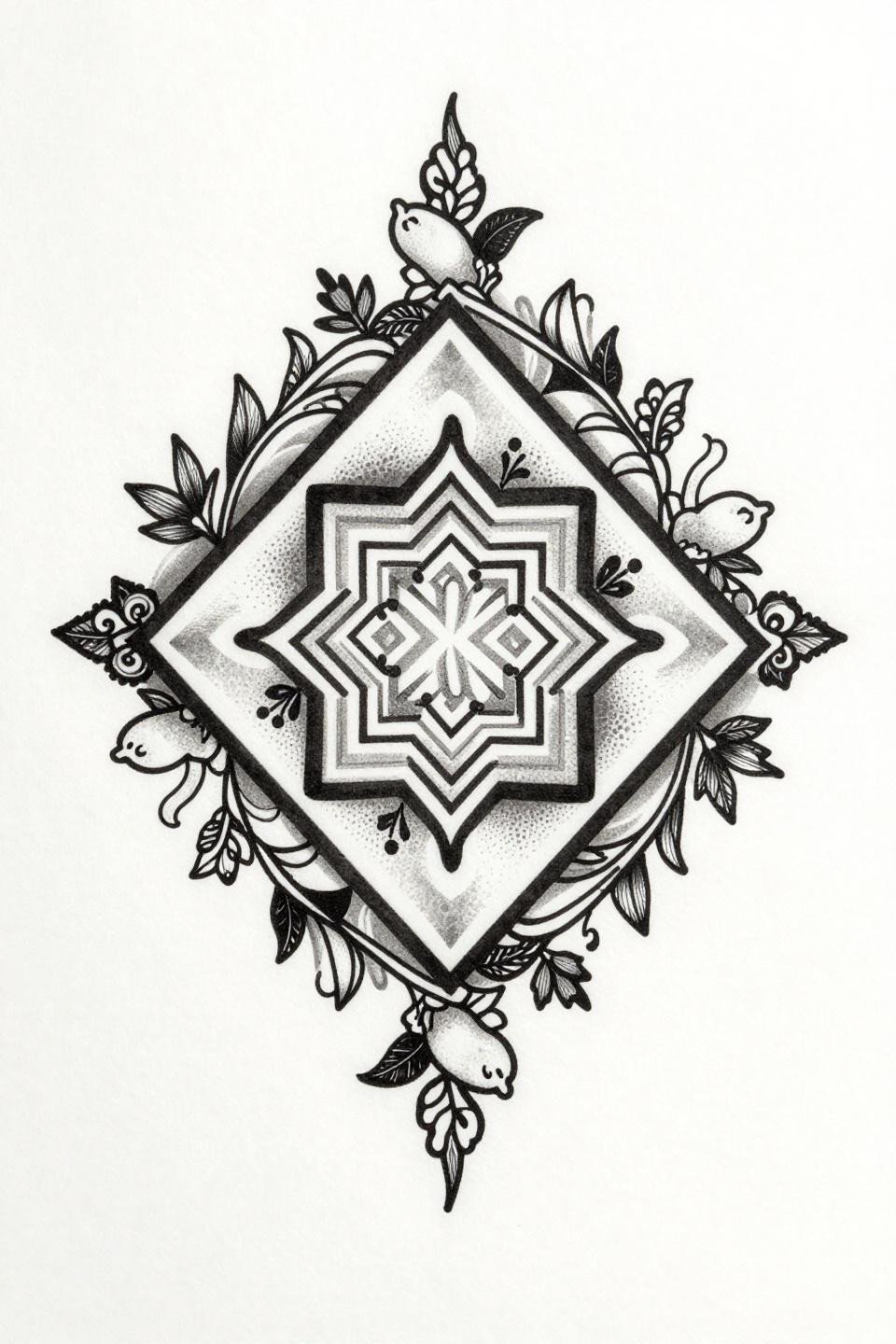
Japanese Irezumi framing applied to Arabic vine-scroll geometry creates a structural clarity that straight Arabic mehndi often lacks. Bold 2-3pt outlines at this weight hold clean for a decade in permanent ink, and they translate equally well in henna cone work on the front hand.
The flat ink fills inside the diamond frame give the eye a resting point between the more detailed botanical passages. That rest-and-detail rhythm is what prevents visual fatigue on a dense front-hand composition.
Continuous Line Peacock-Eye: One Stroke, No Lifts, Maximum Precision
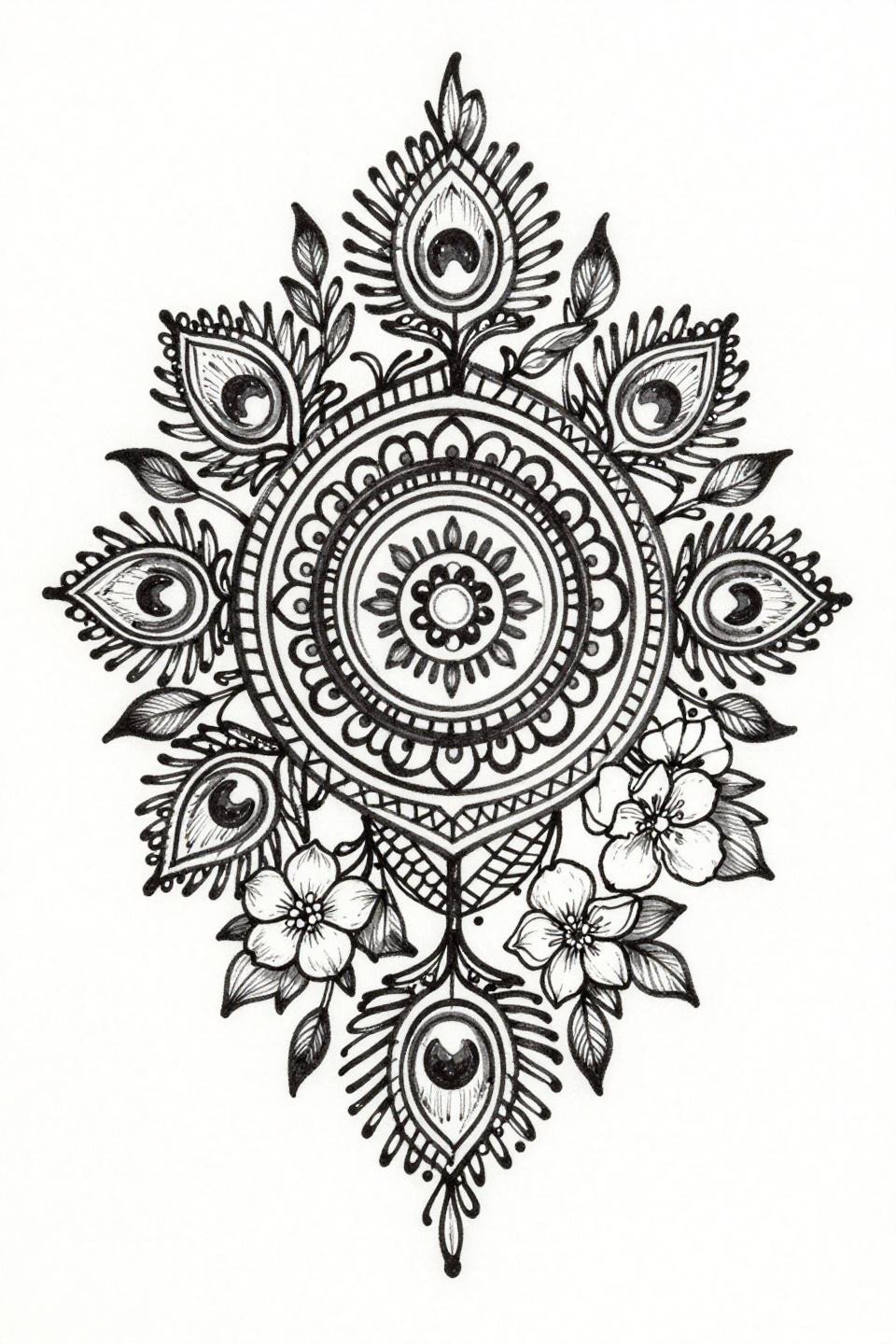
The single unbroken line technique applied to nested concentric peacock-eye mandalas demands absolute control over cone pressure and travel speed. The geometric lattice band dividing the composition horizontally gives the eye a clear midpoint and keeps the bilateral symmetry readable at a glance.
This is a high-skill signal design. The tell is the curves: no wobble at direction changes, especially where the vine columns meet the outer jasmine clusters. Use this reference to screen artists, not just inspire them.
Opposing Peacocks and the Case for Mirrored Silhouette Work
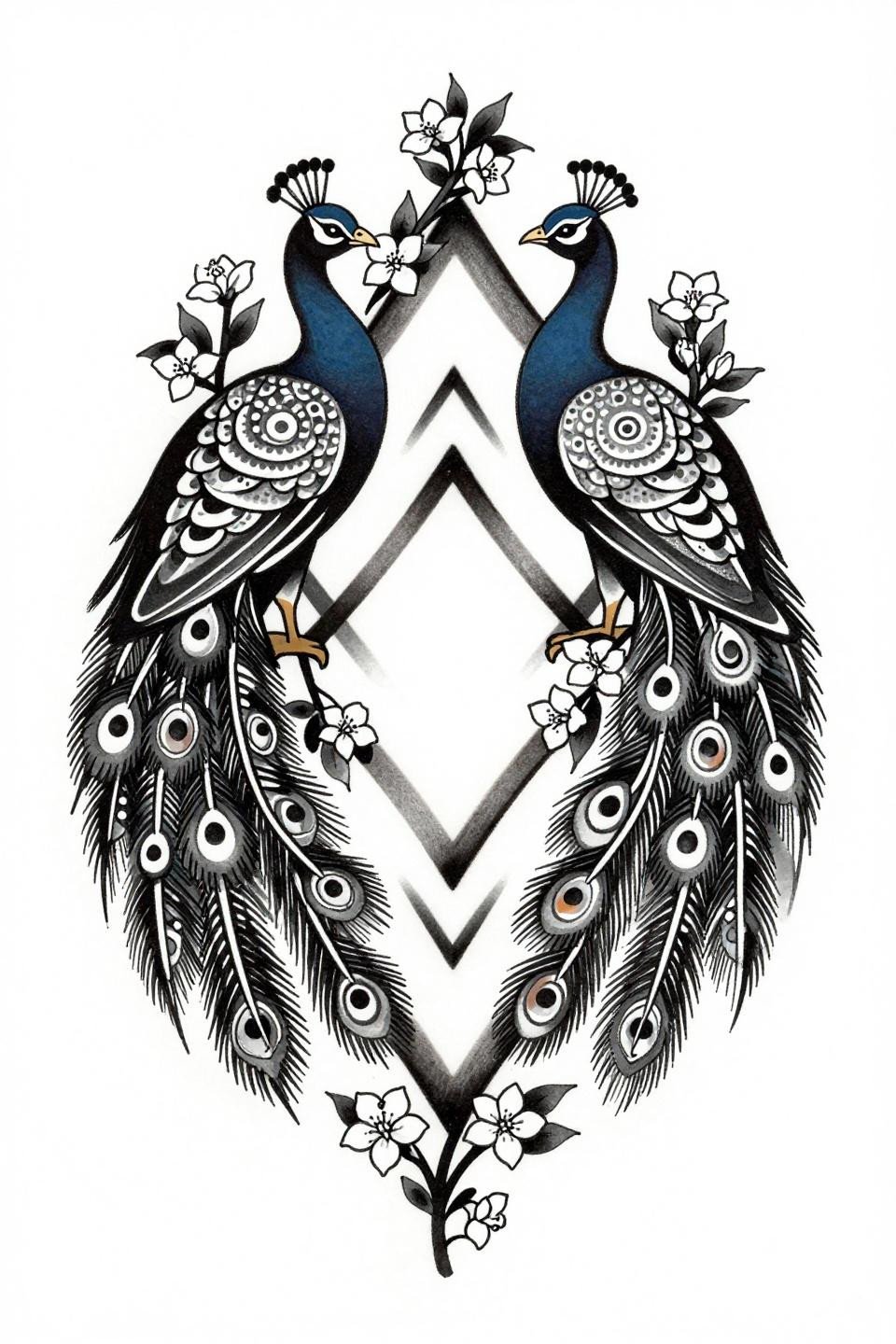
Traditional American flash construction applied to opposing peacock silhouettes produces a composition with real structural weight. The dot-fill mandala circles in the tail feathers bridge the gap between the two birds without requiring a central focal motif.
Simple Arabic front hand references benefit from this kind of bilateral silhouette anchor. It gives even a less experienced artist a clear compositional guide, which reduces interpretation errors during application.
Tribal Geometry Meets Botanical Flow: Reading Asymmetry as a Feature
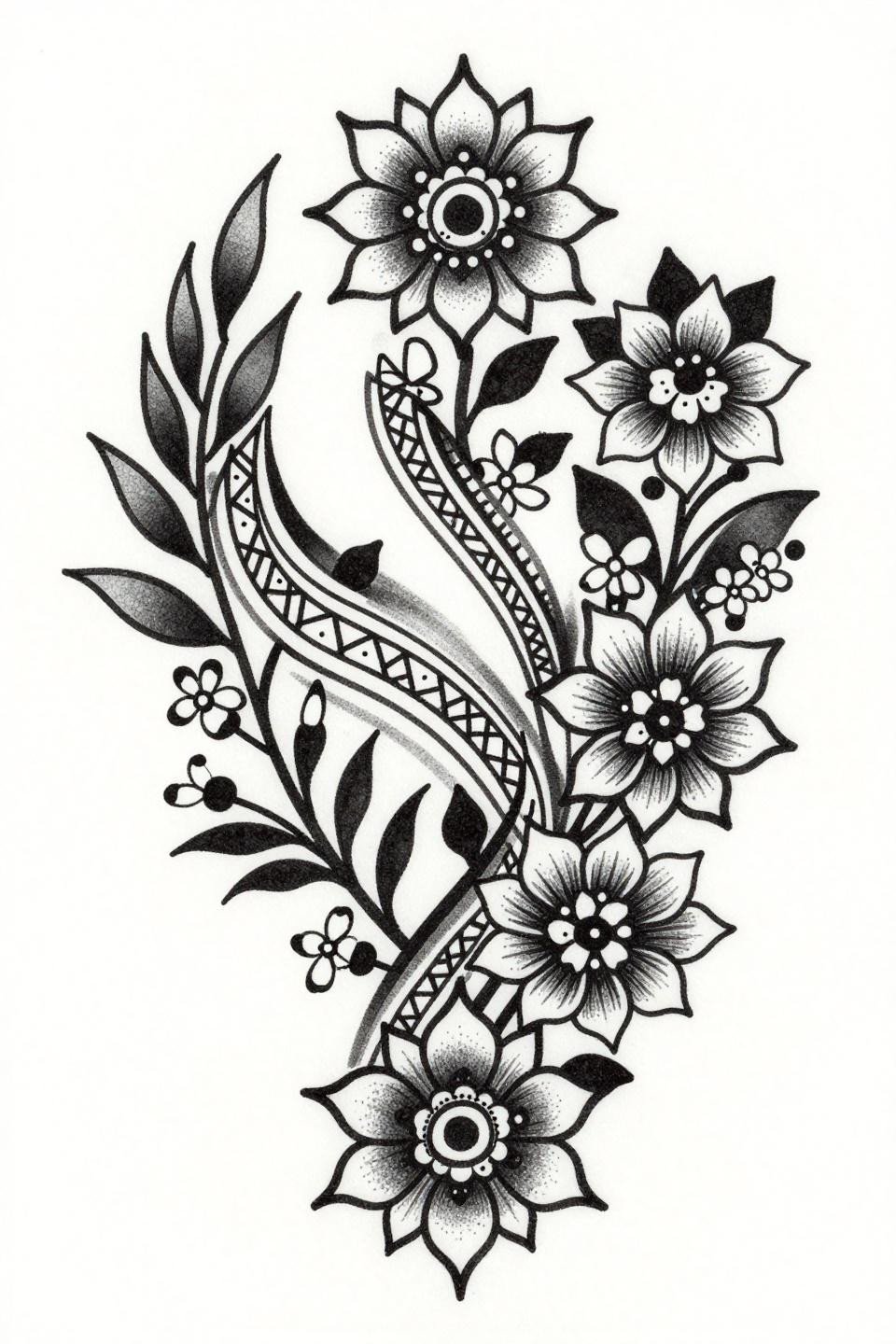
Tribal geometric construction with stipple-filled lotus centers and solid flat black passages creates a high-contrast reference that reads well on a range of skin tones. The asymmetric left-to-right composition is unusual for front hand mehndi and immediately separates this from symmetrical template work.
Check for consistent dot size across every stipple-filled center. Uneven dotwork at this density signals speed over precision, which will show in the final application. This is one to use for henna designs for special occasions where execution quality matters most.
Art Nouveau Mandala: Crosshatch Shadows in a Radial Format
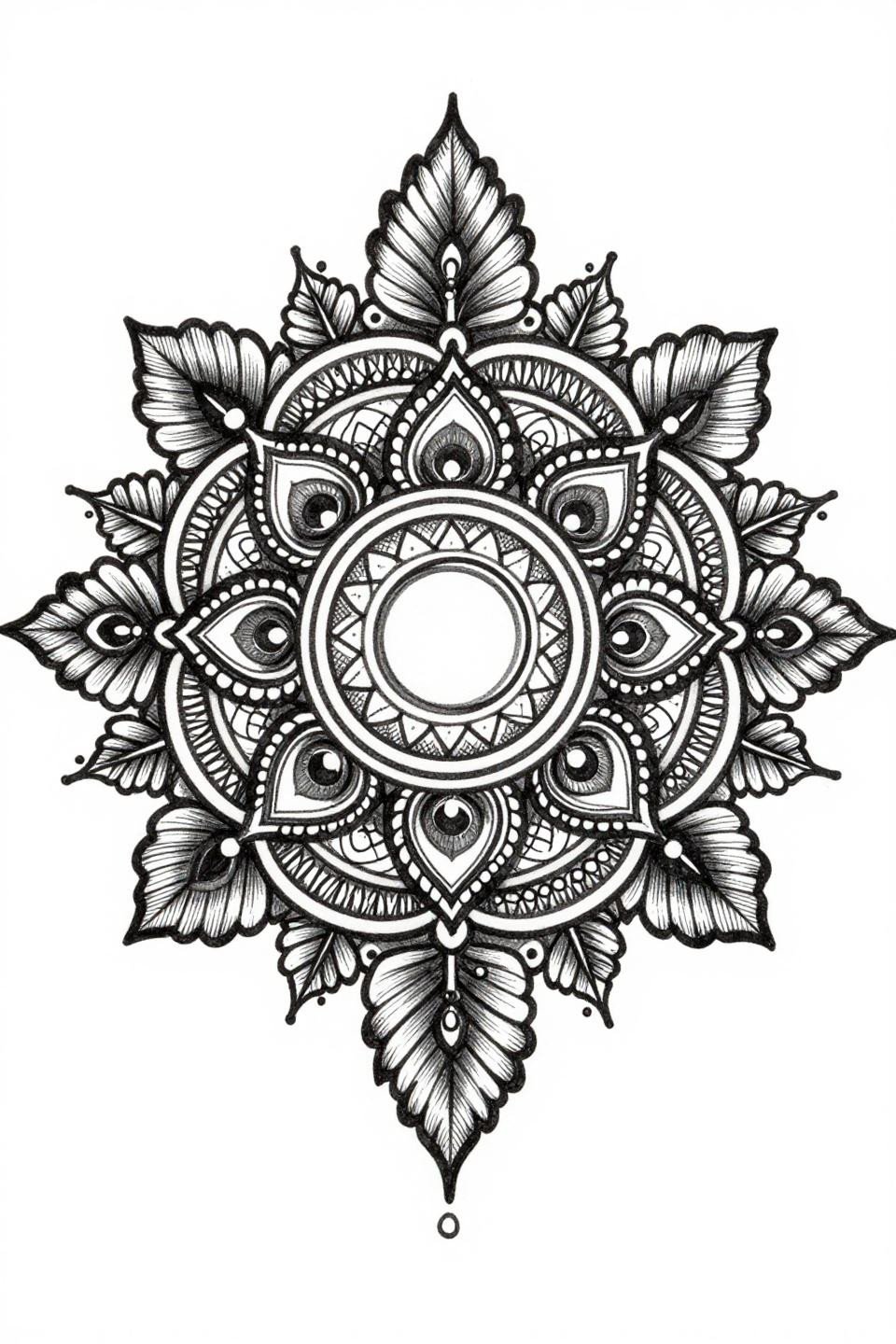
Art nouveau construction with crosshatch etching shadows gives this radial mandala a dimensional quality that standard flat-fill mehndi references never achieve. The curvilinear vine tendrils connecting each peacock-eye element create a continuous visual circuit around the outer medallion.
New front hand designs worth using tend to borrow structural logic from outside the mehndi tradition entirely. This one pulls from architectural etching, and the result is a reference that reads as genuinely original rather than a recombination of standard motifs.
Botanical Peacock: Hairline Work and the Limits of Open Negative Space
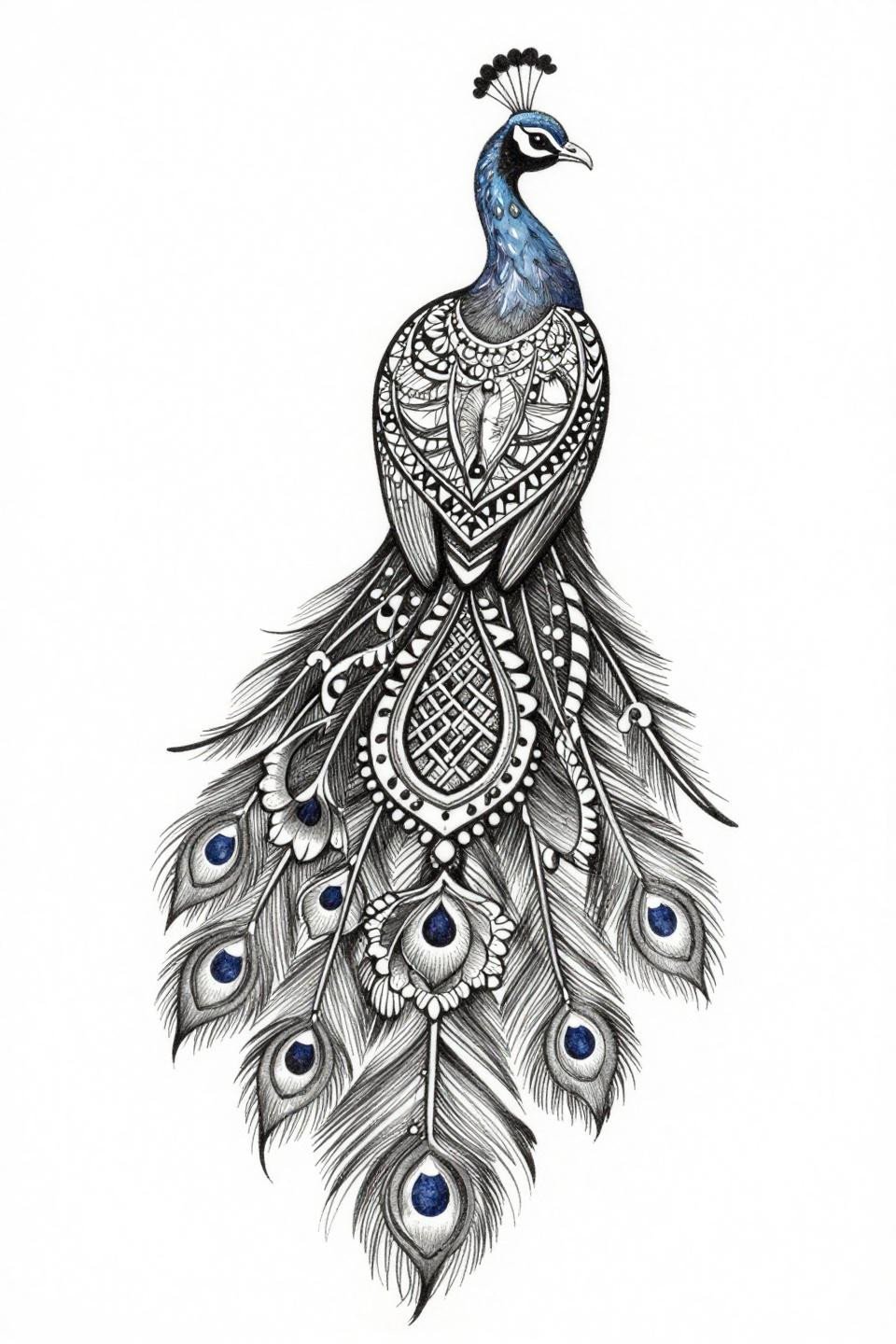
Botanical scientific illustration style with hairline 0.5mm single-needle strokes and open negative space is the most technically demanding approach in this collection. The naturalistic peacock with unfurled tail plumage relies entirely on proportion accuracy, there is no dense fill to correct an error.
This reference works best on the front hand for experienced henna artists who apply freehand without tracing. Protected placement and minimal hand movement during drying time are non-negotiable for preserving the fine stipple dotwork at the design center.
Pull 3 to 5 of these references based on your hand’s actual proportions, not just which composition you prefer flat on paper. Scale matters more than style choice. Send the shortlist to your artist before the appointment and ask specifically which one suits the coverage area you have in mind.