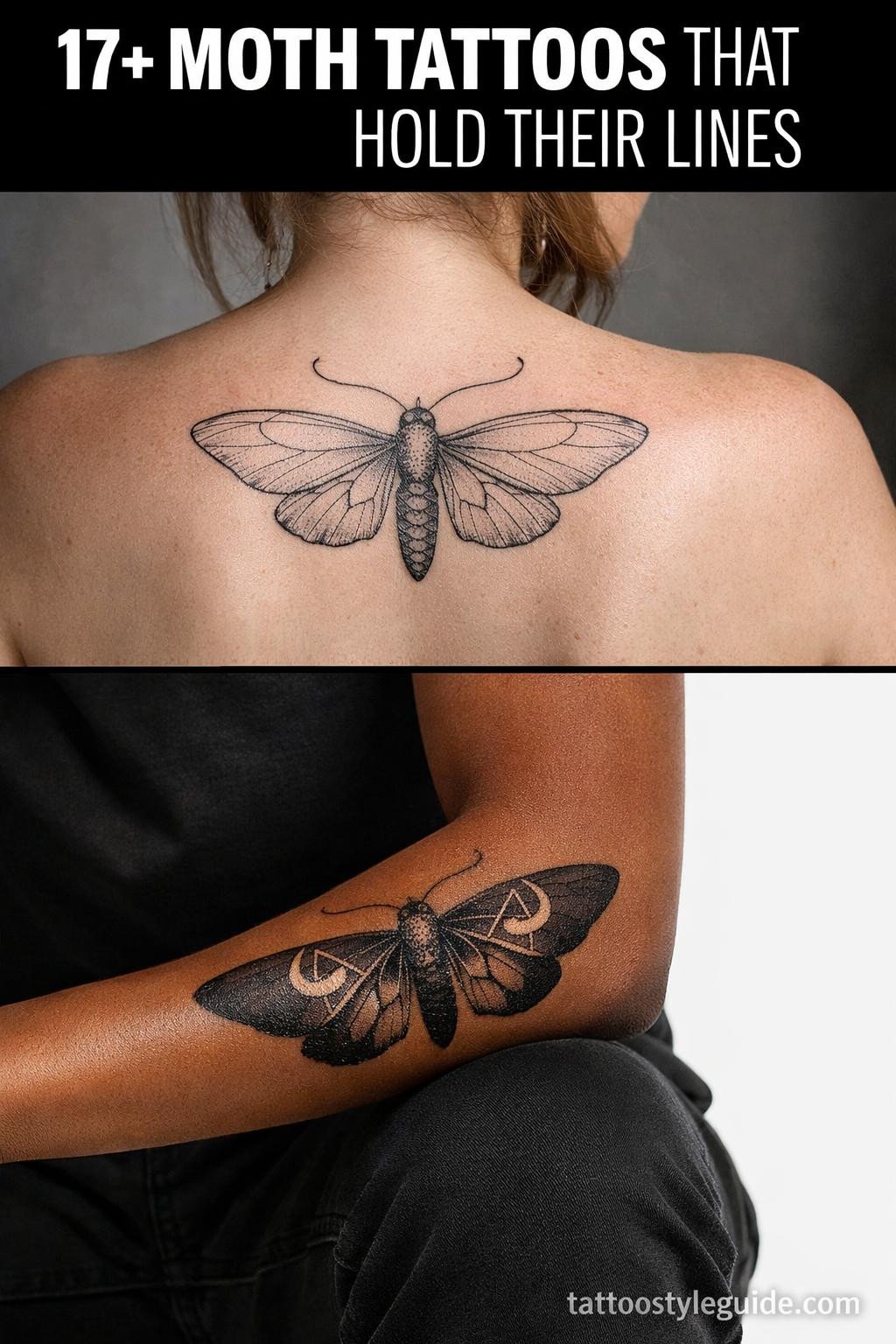
Moth tattoos carry more technical complexity than most collectors expect. The bilateral wing symmetry demands an artist who executes mirror geometry consistently, and the layered wing structures, eyespots, forewing-over-hindwing depth, require shading skill most flash references undersell.
The style range here is wide on purpose. Celtic knotwork to single-line minimalism, irezumi to ignorant style. Each approach changes the aging equation entirely.
Celtic Knotwork Frames a Cecropia in Unexpected Ways
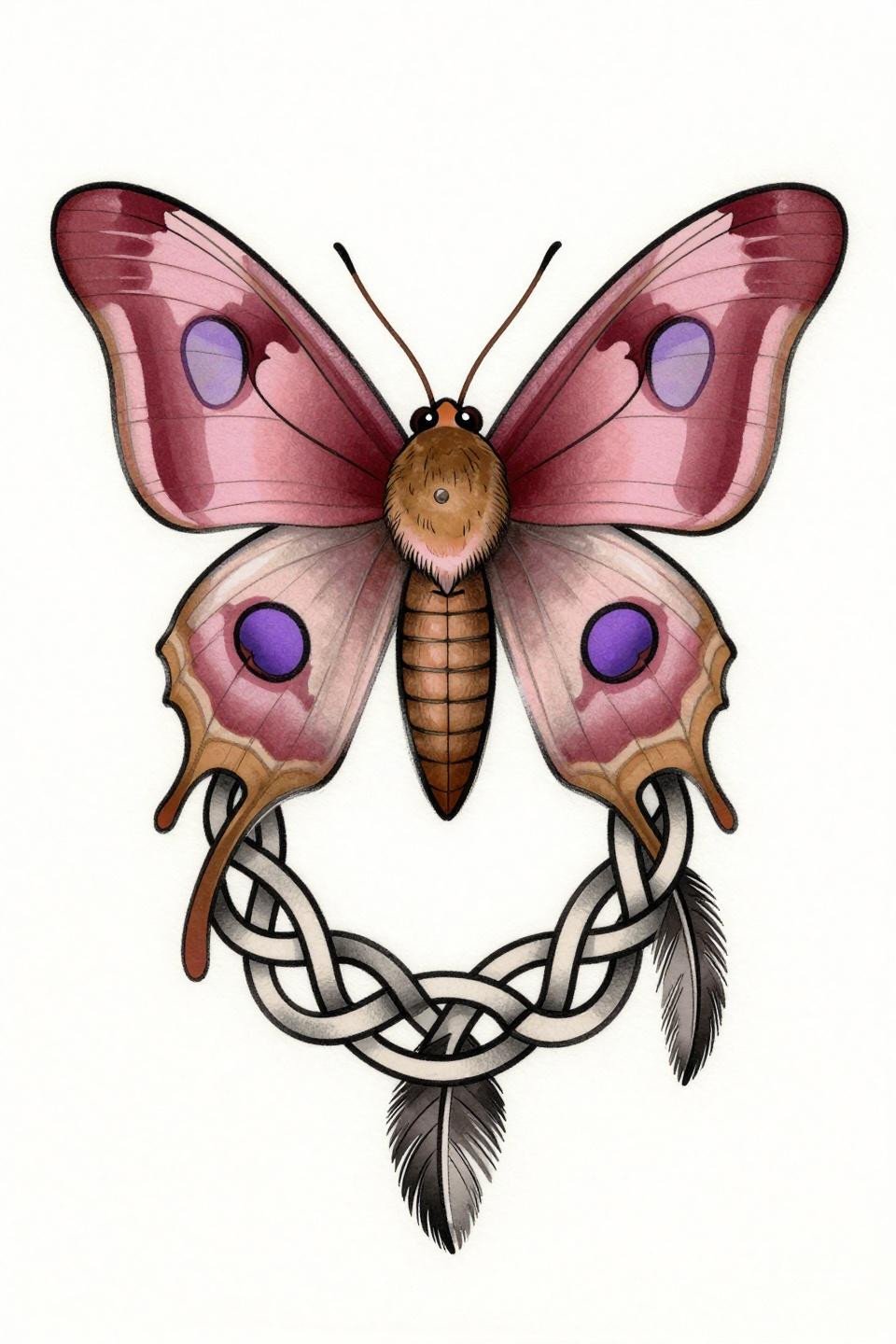
A Cecropia moth in inverted hanging position with wings spread downward, framed by interlocking Celtic knotwork borders along the wing perimeter. The bilateral mirror symmetry here is structurally locked by the knotwork frame, which forces compositional discipline on both sides.
Bold 2-3pt outlines at this weight hold clean for 10+ years, and the flat rose fills age predictably on lighter skin tones without muddying the burgundy crescent details. This is a protected-placement design, sternum or upper back.
Art Deco Geometry Changes What a Closed-Wing Moth Can Do
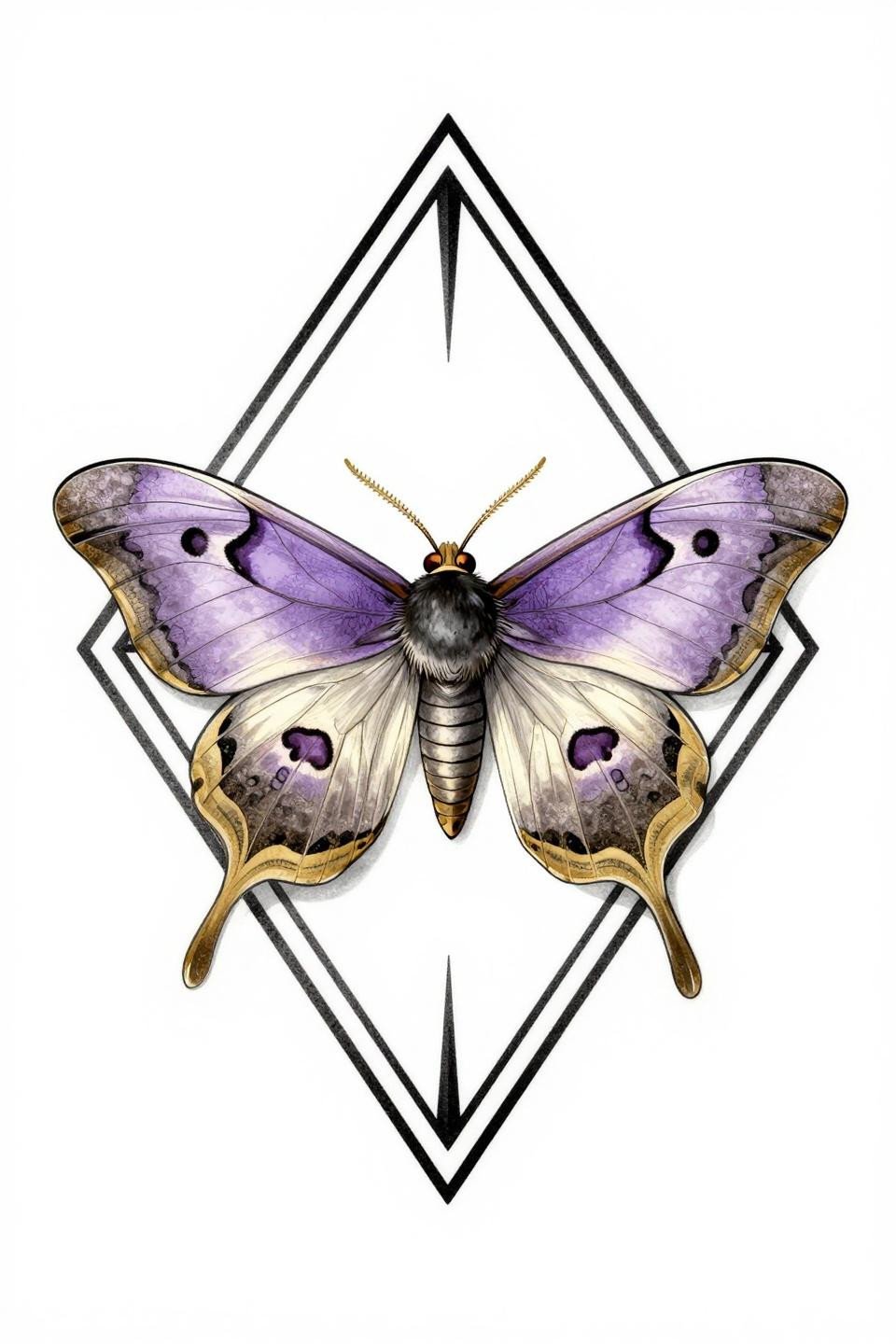
A Saturniid moth in closed-wing vertical pose, set inside a diamond frame with compass-drafted celestial geometry. The vector-precision linework reads as an art deco piece first and a moth second, which is a deliberate collector choice, not a beginner oversight.
Burnished gold fills age differently than standard pigment yellows. Ask your artist what gold ink brand they use and check their healed work portfolio before committing, not just fresh shots.
The Mandala Frame That Pushes a Sphinx Moth Into Surrealism
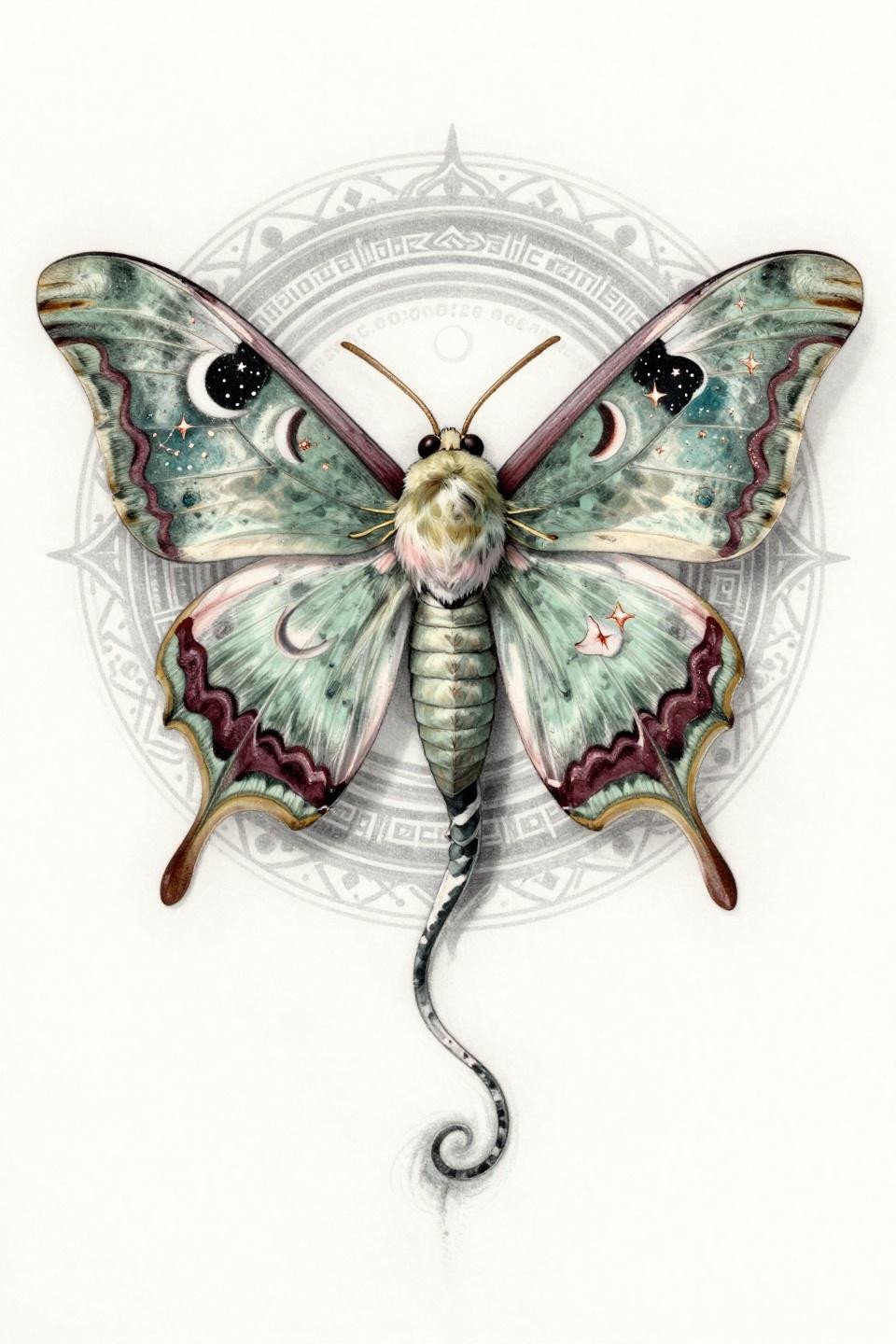
A Sphinx moth in dorsal spread-wing position, hindwings carrying a crescent moon and star constellation overlay, with the proboscis dissolving into a cosmic pathway. The grey wash dilution from dense to open midtones gives this piece tonal range that flat-fill styles cannot match.
Copper metallic accent ink has a shorter saturation lifespan than standard pigments. This design works best as a chest or thigh placement where sun exposure stays low.
Sak Yant Structure Applied to a Silk Moth Makes Spiritual Sense
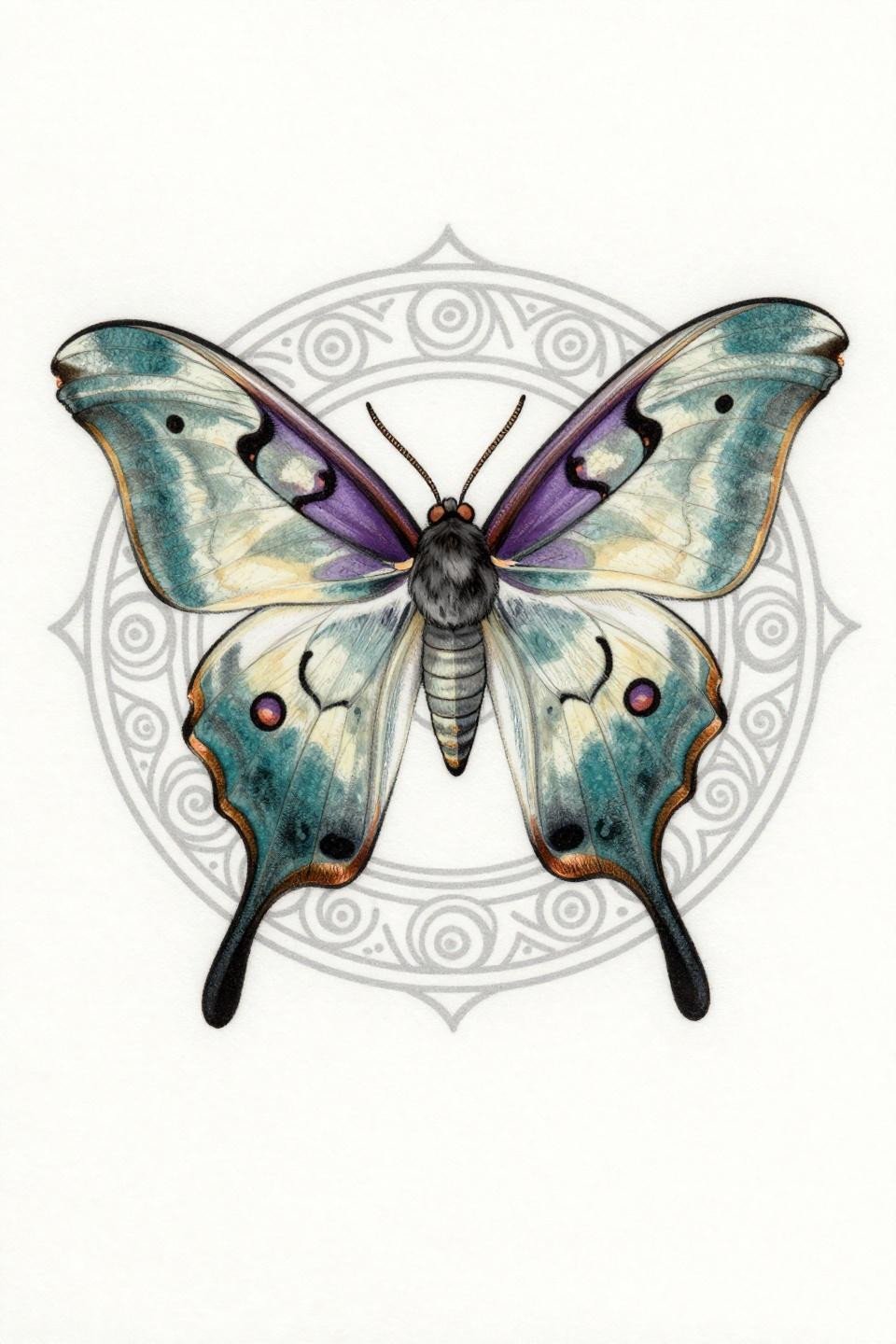
A Saturniid silk moth in closed-wing resting pose centered inside a circular mandala with sacred protective spiral geometry, rendered in bold 2-3pt outlines. The Sak Yant compositional logic, radiating protection geometry from a central figure, maps onto moth symbolism with unusual coherence.
The deep teal ink with copper accent creates a colorway that reads differently on olive skin versus fair skin. On olive and darker tones, the teal holds contrast better than lavender-based alternatives would.
Traditional American Flash Proves the Ascending Pose Is Underused
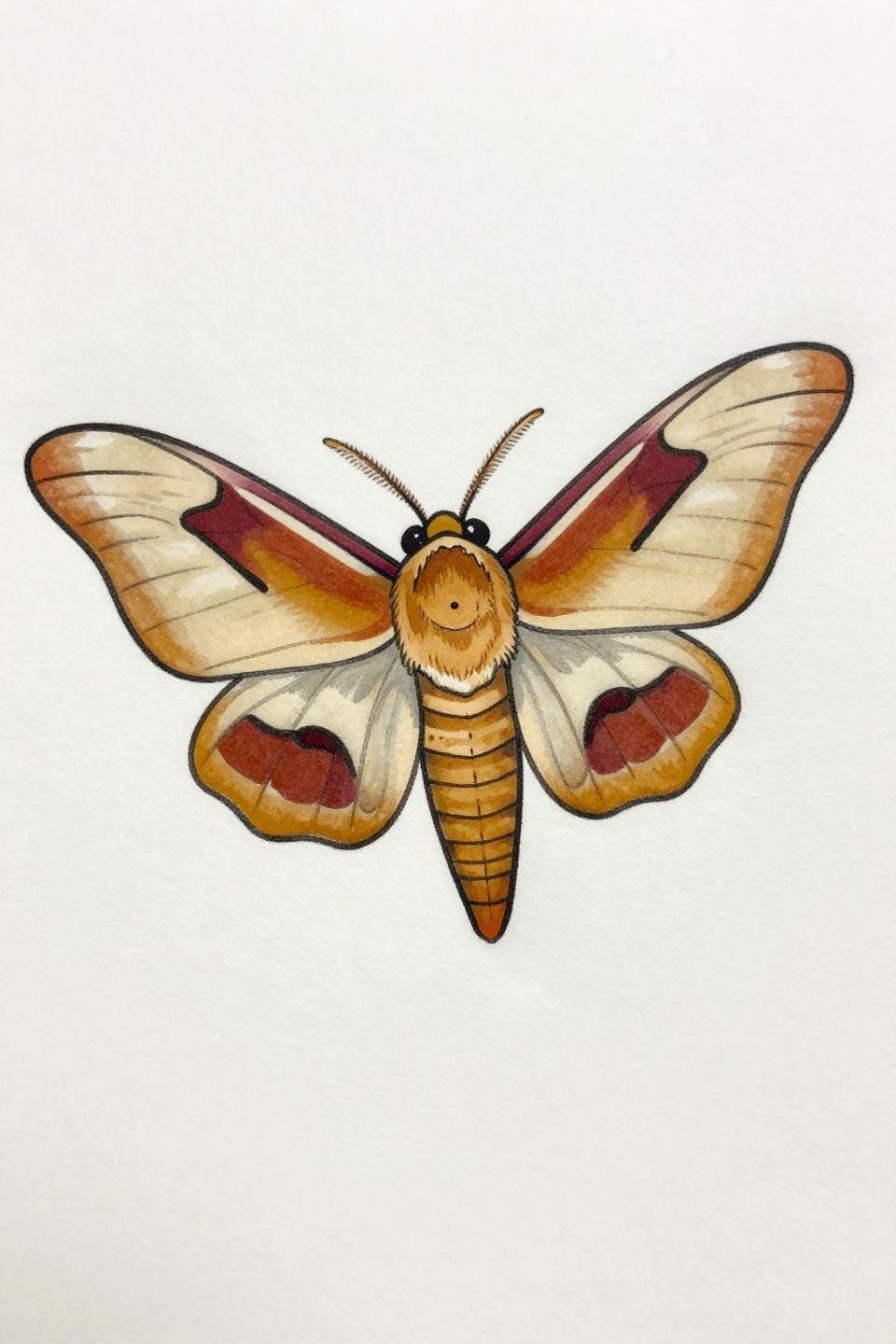
An Ailanthus silkworm moth in ventral ascending pose, wings at 45 degrees with flat cadmium rust, amber, and cream fills behind bold outlines. The traditional American flat fill approach makes this the most placement-flexible design in the collection because bold outlines survive skin aging on any body zone.
Finger and wrist placement would need touch-ups every 2-3 years minimum with this much flat color. For longevity, upper arm or calf placement is the practical call.
Fine Line Single Needle Work Rewards Patience, Not Flash Impulse
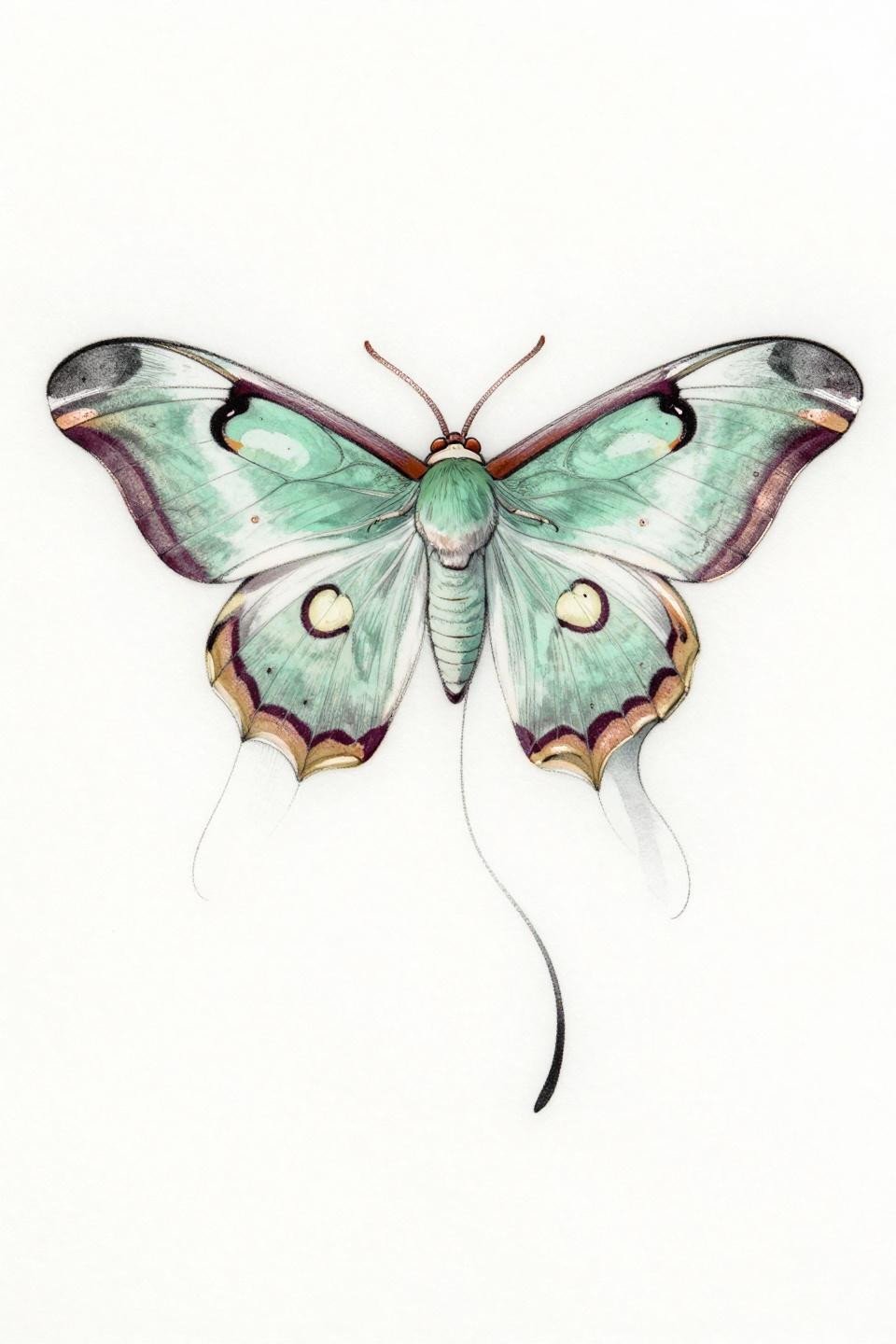
A Rothschild’s silk moth in inverted hanging pose, jade-green primary wings with plum-rimmed cream eyespots, executed in hairline 0.5mm single-needle strokes with open negative space throughout. Single needle 1RL work at this detail level requires an artist who controls hand speed consistently across a multi-hour session.
Fine line moth tattoos on ribs or sternum get the best shelf life. The same design on a forearm sees significantly faster line spread from sun and friction.
Geometric Tribal Framing Turns Eyespots Into the Whole Point
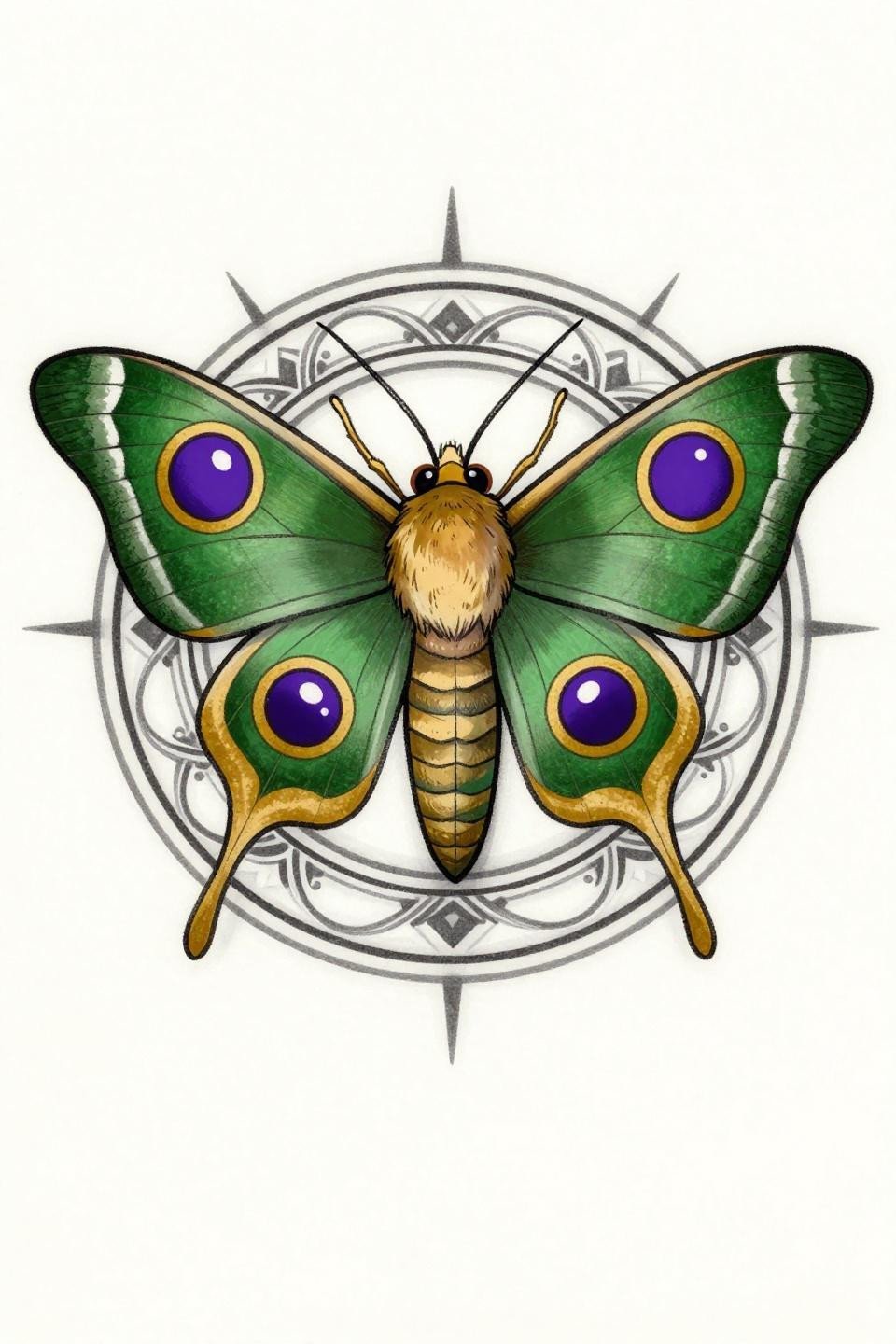
A Polyphemus moth in dorsal ascending pose, prominent eyespots with concentric violet and gold rings, set inside a circular mandala radiating outward in tribal geometric structure. The mandala radiating frame directs attention toward the eyespots, which is where this species earns its visual power.
Flat forest green and gold fills at this scale work well on back and thigh placements. The geometric frame provides natural edge containment, which helps the design age without bleed-blur softening the outer geometry.
Ignorant Style Finds the Io Moth’s Natural Asymmetry
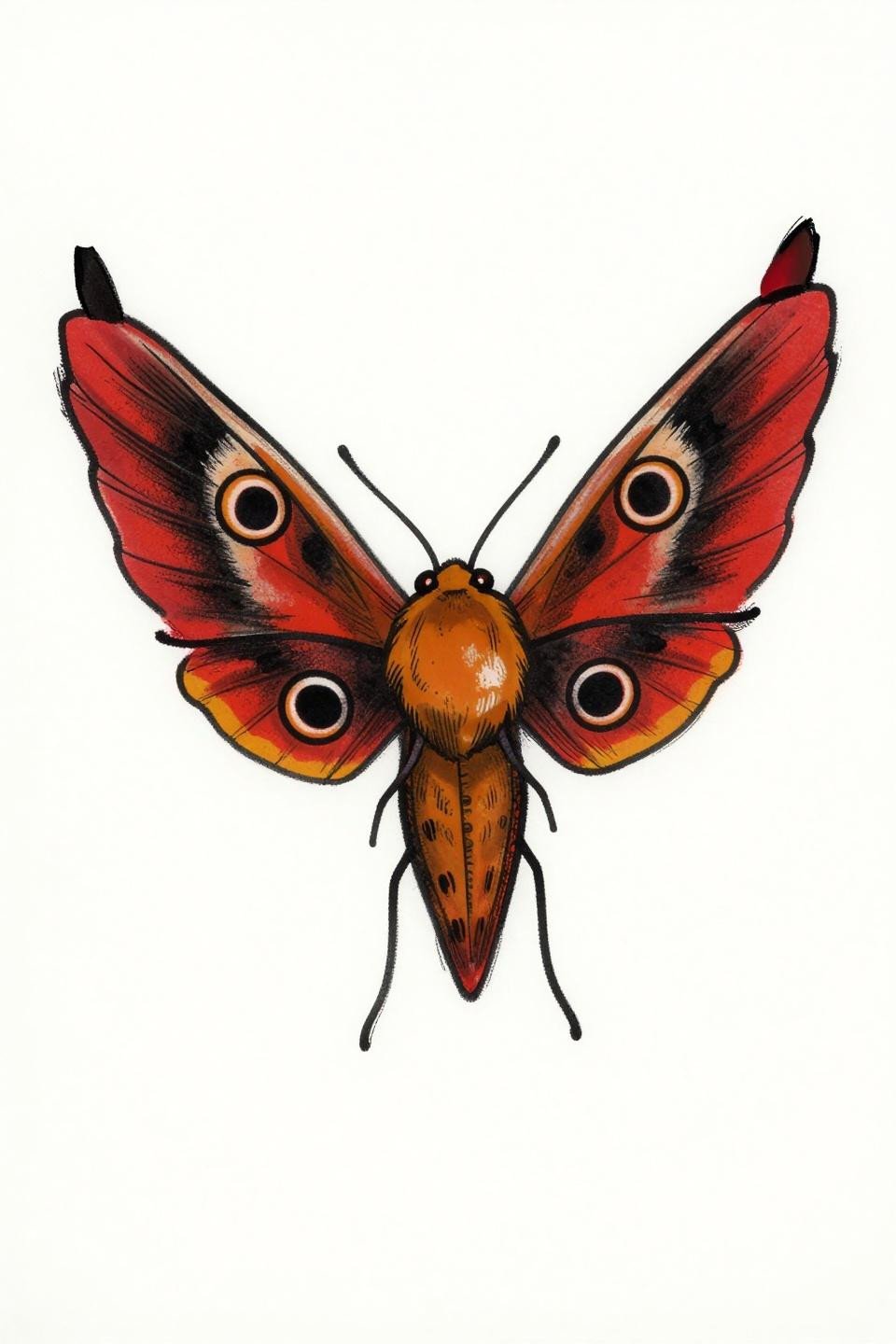
An Io moth in asymmetric freefall, wings splayed unevenly with prominent peacock eyespots and raw 3pt outline work carrying intentional inconsistency. Ignorant style linework is not sloppy execution. It is a controlled aesthetic choice that requires an artist who understands exactly where to break the rules.
The crimson eyespot accents age faster than black-based fills. Budget for a refresh at the 5-7 year mark if placed anywhere with frequent sun exposure.
Trash Polka Gives the Luna Moth Its Most Aggressive Form
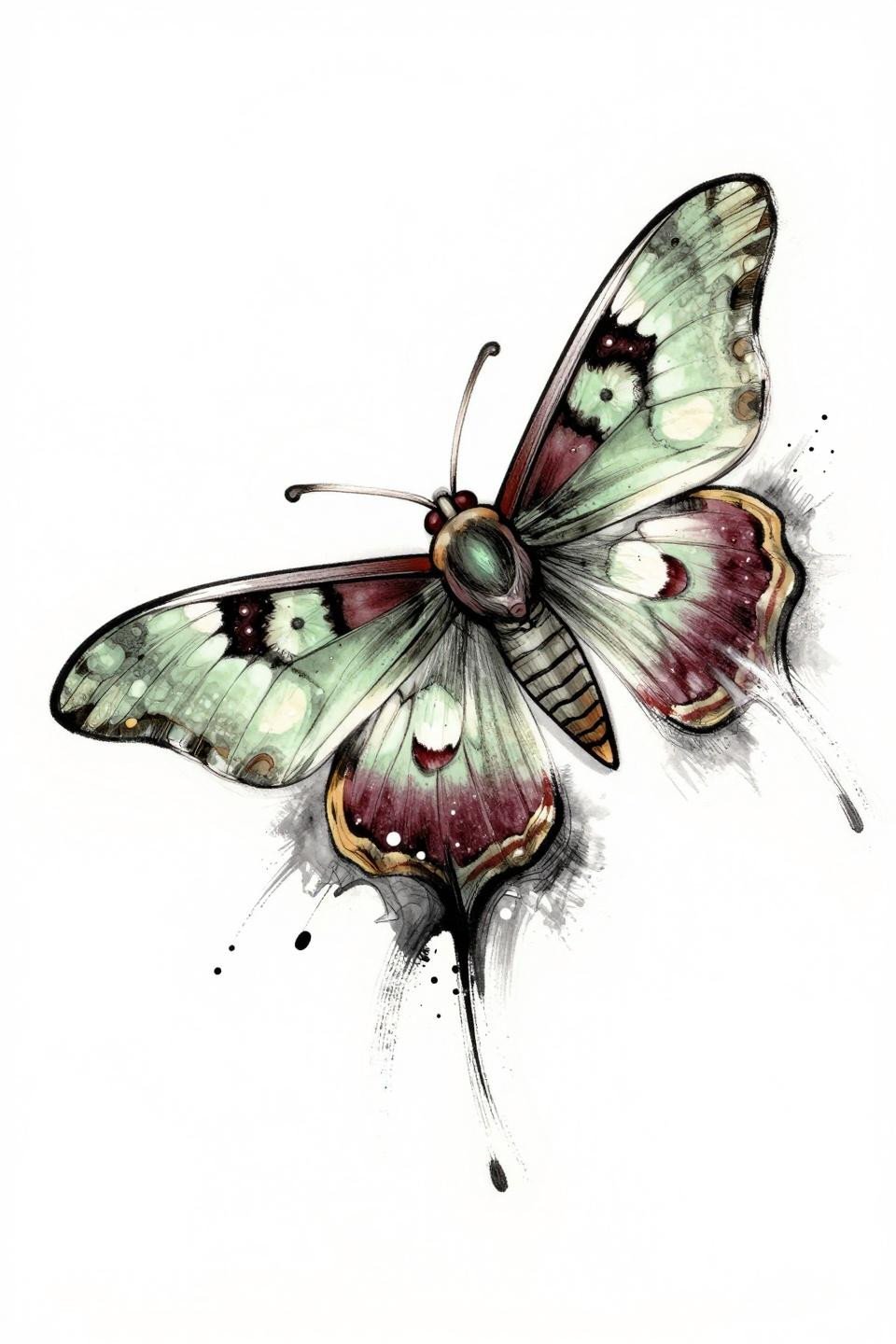
An Actias luna moth in asymmetric freefall with ink splatter morphing into organic wing edges, executed entirely in dense black and grey wash with no color. The whip shading stroke direction here creates movement that static symmetrical moth designs structurally cannot achieve.
Black and grey trash polka ages cleaner than the red-and-black variant because there are no pigment decay variables. Grey wash dilution from dense core to open edges reads well across fair and medium skin tones alike.
Woodcut Crosshatch Makes Wing Venation the Technical Centerpiece
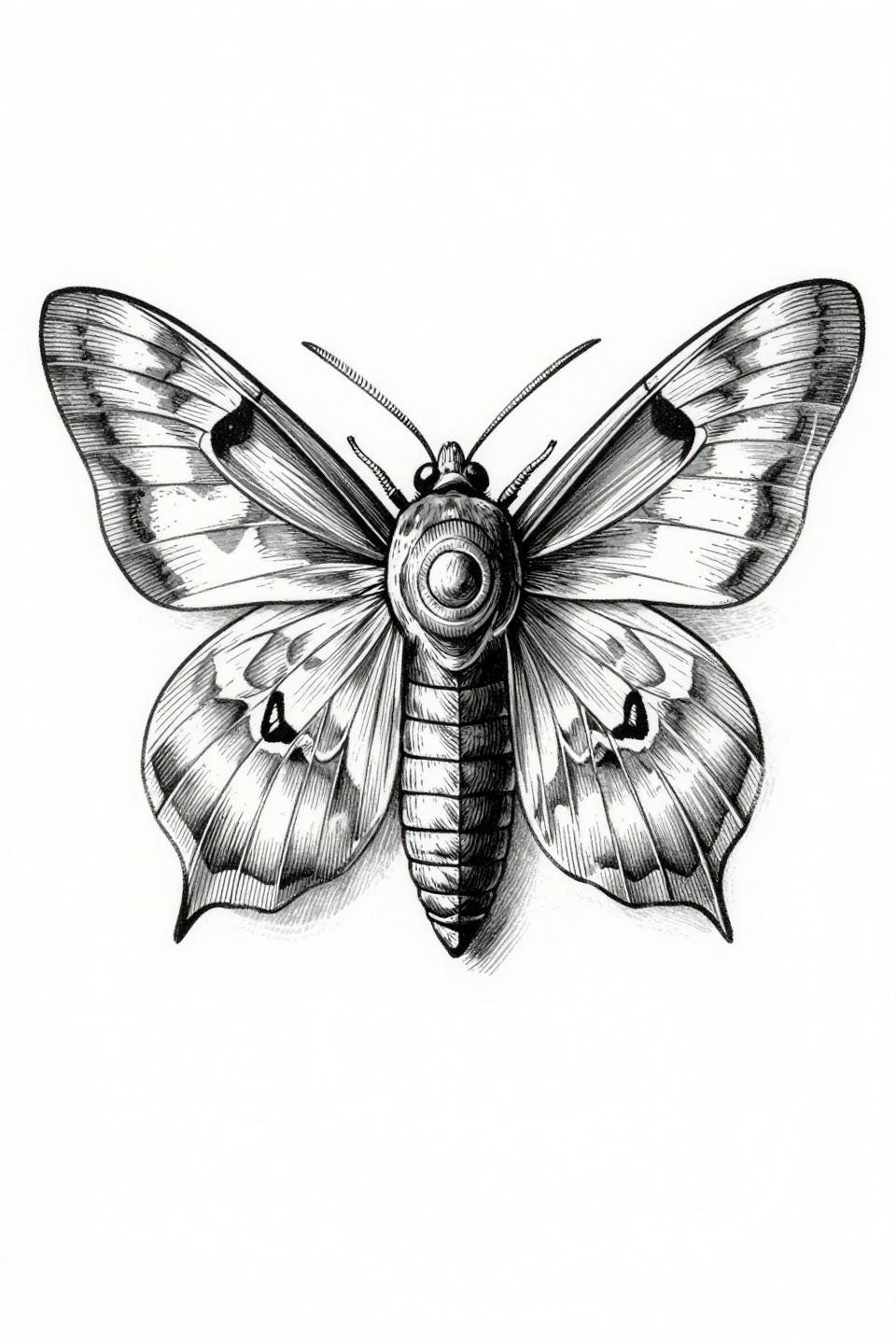
A leafroller moth in dorsal view inside a circular mandala, rendered in parallel line engraving and crosshatch shadow with microscopic wing scale texture visible. The crosshatch tonal structure does the depth work that grey wash handles in other styles, producing a fundamentally different aging trajectory.
Engraving-style linework holds detail longer than grey wash on most skin types because the contrast is structural, not tonal. On olive and darker skin tones, this technique maintains legibility better than diluted wash approaches.
Botanical Profile View Changes How a Sphinx Moth Sits on Skin
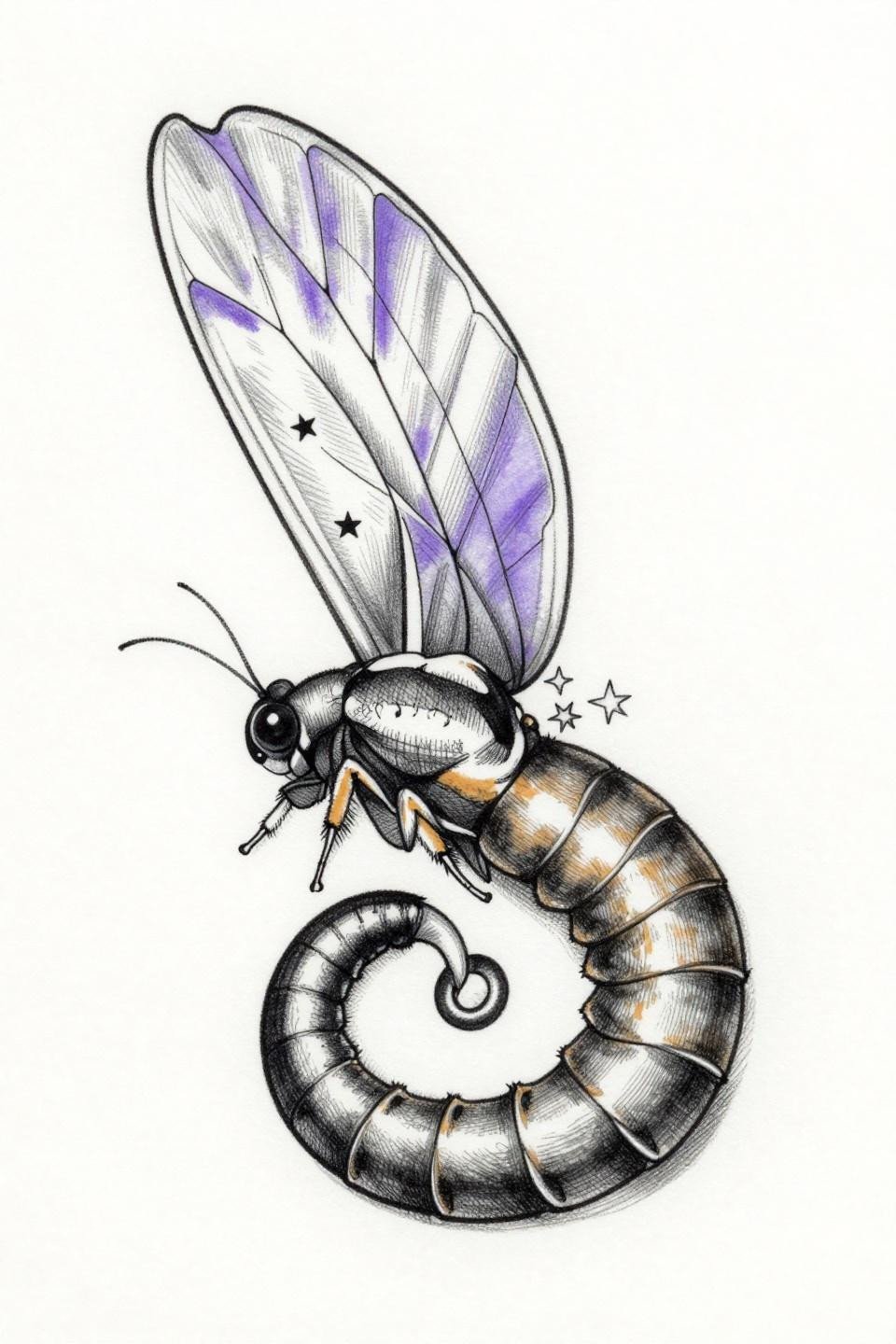
A Sphinx moth in anatomical profile with semi-folded wings, coiled proboscis, and three small stars clustered near the thorax, executed in 0.3mm ruled hatching strokes. The botanical scientific illustration approach gives a moth tattoo asymmetric vertical flow, which suits ribcage and forearm placements that standard dorsal-spread compositions cannot fill efficiently.
Look for consistent parallel line spacing across the full gradient in the artist’s portfolio. Irregular spacing in healed work reveals inconsistent needle speed, which is the primary technical failure point in this style.
Death’s Head Hawk Moth Frontal View Is a Different Conversation
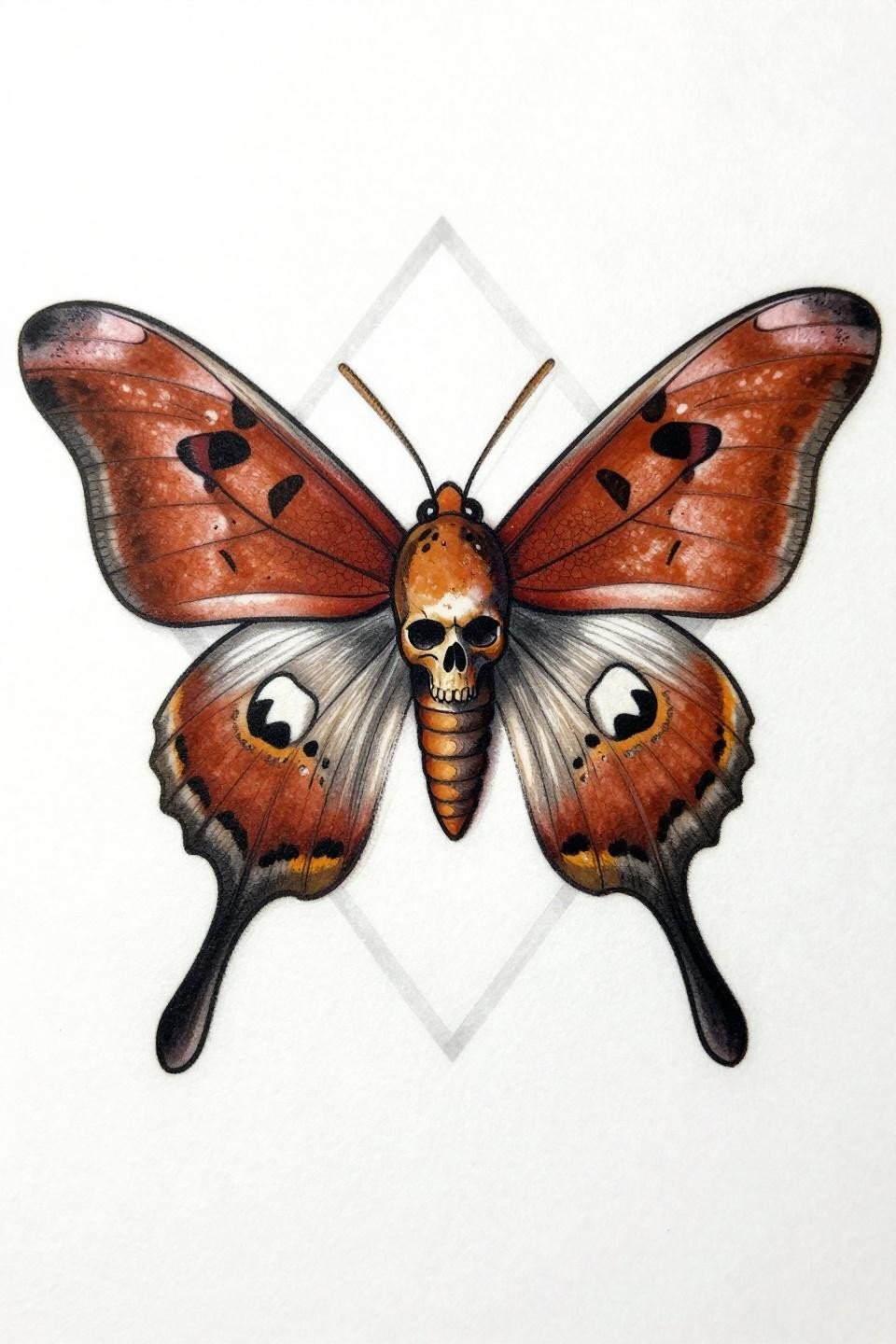
An Acherontia atropos death’s head hawk moth in frontal position, skull-like thorax markings prominent, wings folded in tent formation inside a diamond frame with neo-traditional grey wash midtones. The skull thorax marking on this species makes it the one moth that carries gothic symbolism without additional design elements forcing the reading.
Neo-traditional grey wash at this tonal range reads cleanest on fair to medium skin. On deeper skin tones, the midtone contrast compresses and the skull marking loses definition without a bolder outline weight adjustment.
Watercolor Diffusion on a Resting Pose Requires Anchoring Logic
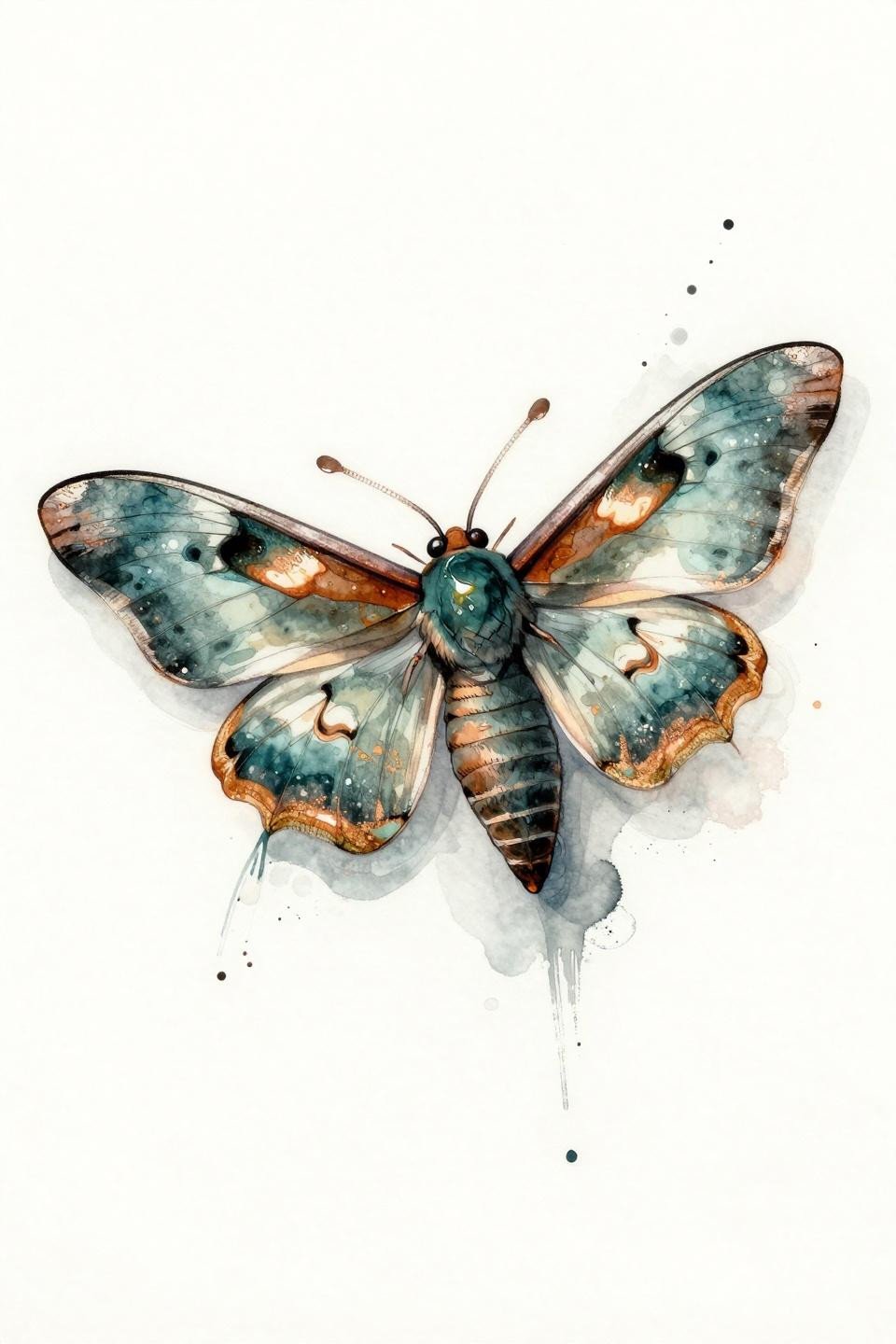
A Saturniid moth in lateral resting pose with tent-like wings over a segmented abdomen, rendered in calligraphic brush marks with deep teal and copper metallic watercolor diffusion bleeding outward. Watercolor without an anchoring outline blurs by year three to five on most placements, and this design sits right at that edge.
Request a black ink anchor layer beneath the watercolor diffusion zones if you want this to hold past the five-year mark. Artists who skip the anchor are optimizing for the fresh photo, not the healed result.
Irezumi Motion Lines Solve the Static Moth Problem
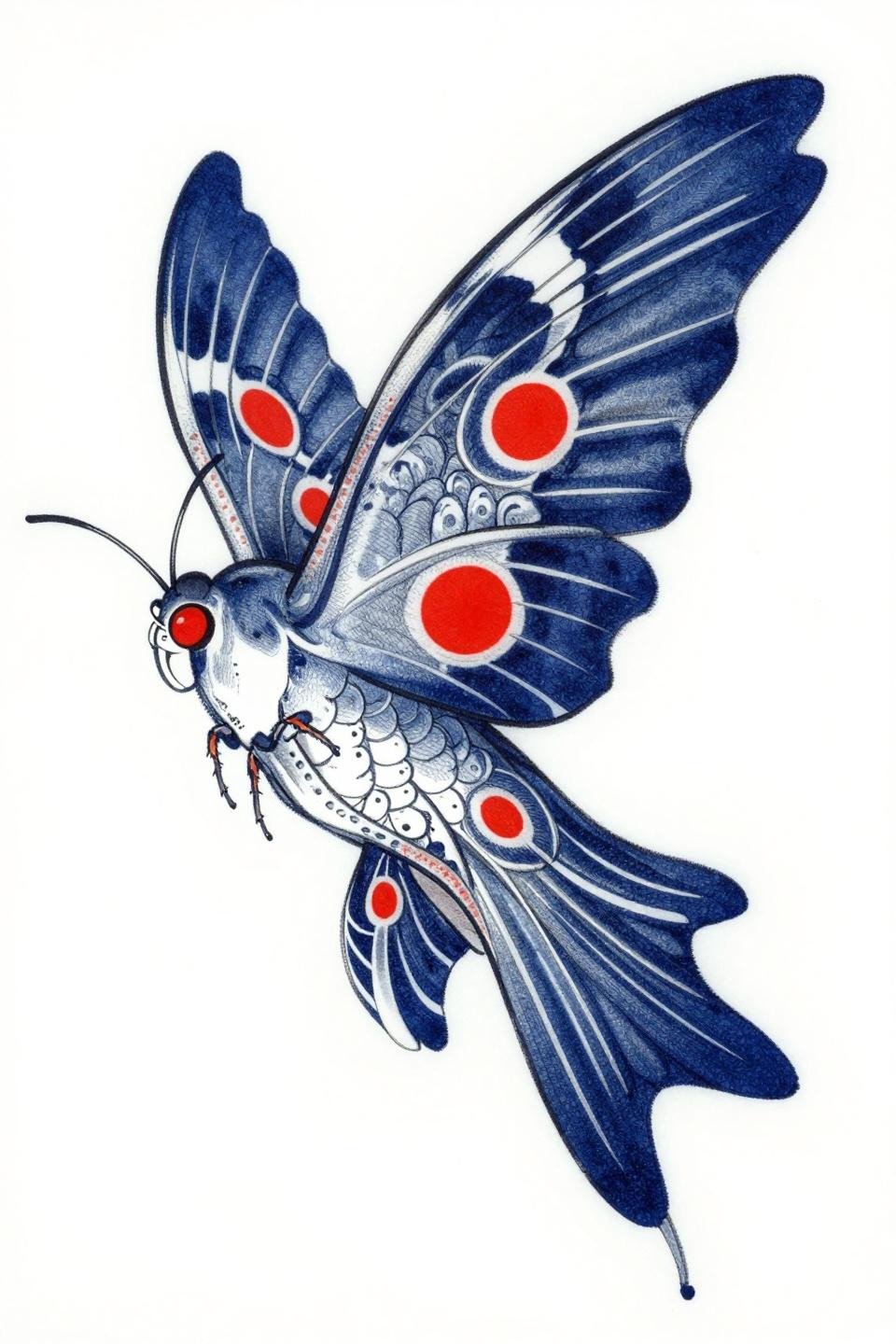
A Polyphemus moth in three-quarter aerial descent with wings half-folded mid-dive, irezumi curved motion lines and whip shading brushwork in deep indigo wash with a crimson eyespot accent. The irezumi diagonal flow composition solves a structural problem most moth designs ignore: moths photographed flat read as static, but moths in implied motion fill body contours with energy.
Indigo wash ages with a slight blue-shift toward grey over five to ten years. This is predictable and actually flatters the design as the crimson eyespot retains relative warmth against a cooling background.
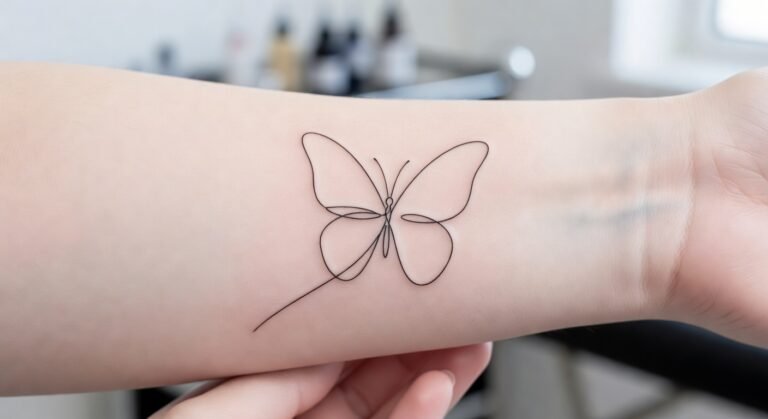
Single Continuous Line Work Is the Most Demanding Technical Format
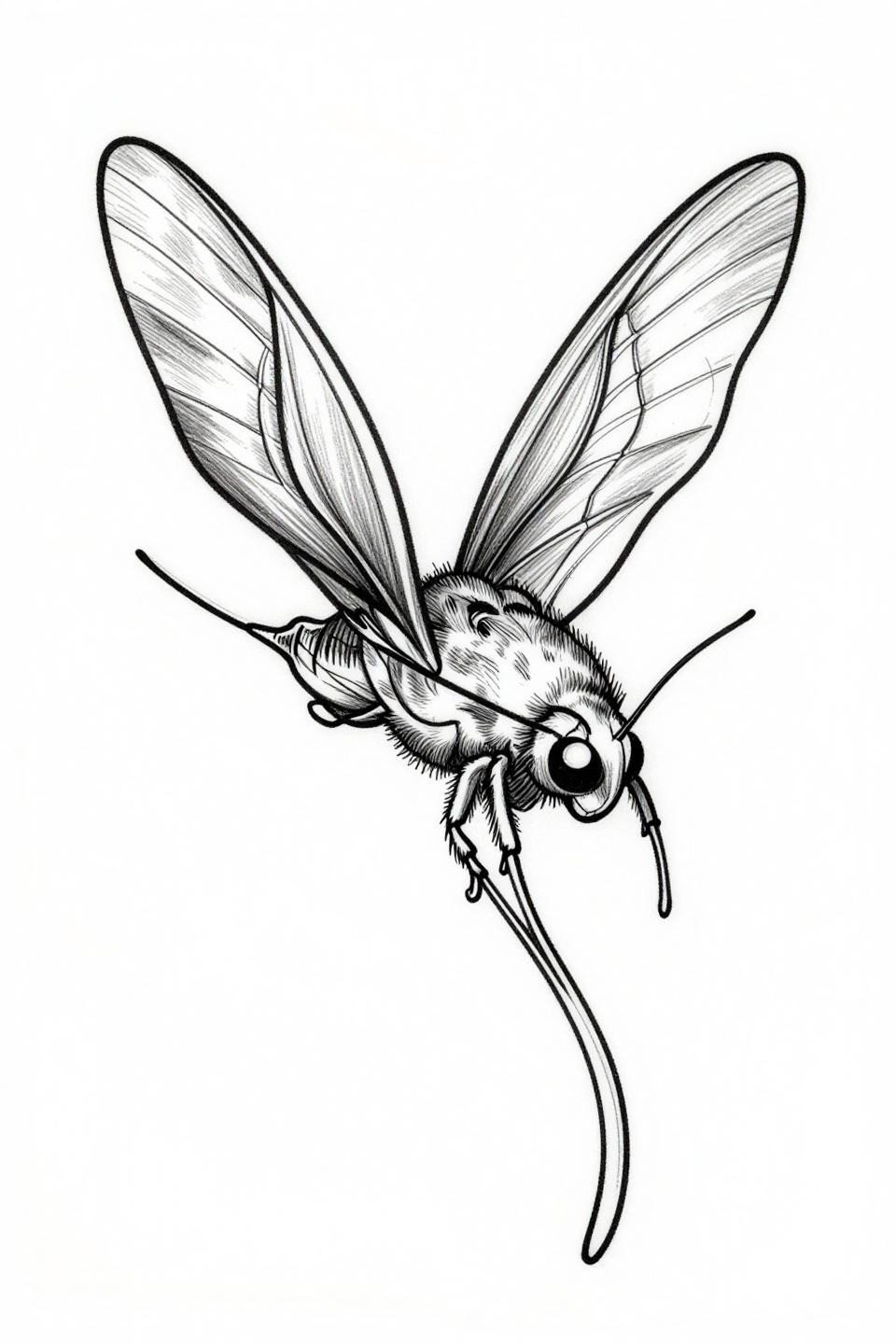
A moth in ascending diagonal flight, translucent wings with visible venation, executed in a single unbroken 0.5mm hairline with no fill and maximum open negative space. The single continuous line format has zero margin for correction because any hesitation or speed change reads as a wobble in the finished piece.
This is the artist-skill-signal design in the collection. Request a video of the artist executing continuous line work before booking. Fresh photos reveal nothing about hand control at speed.
Blackwork Dotwork Profile Proves Stipple Gradient Is Earned, Not Applied
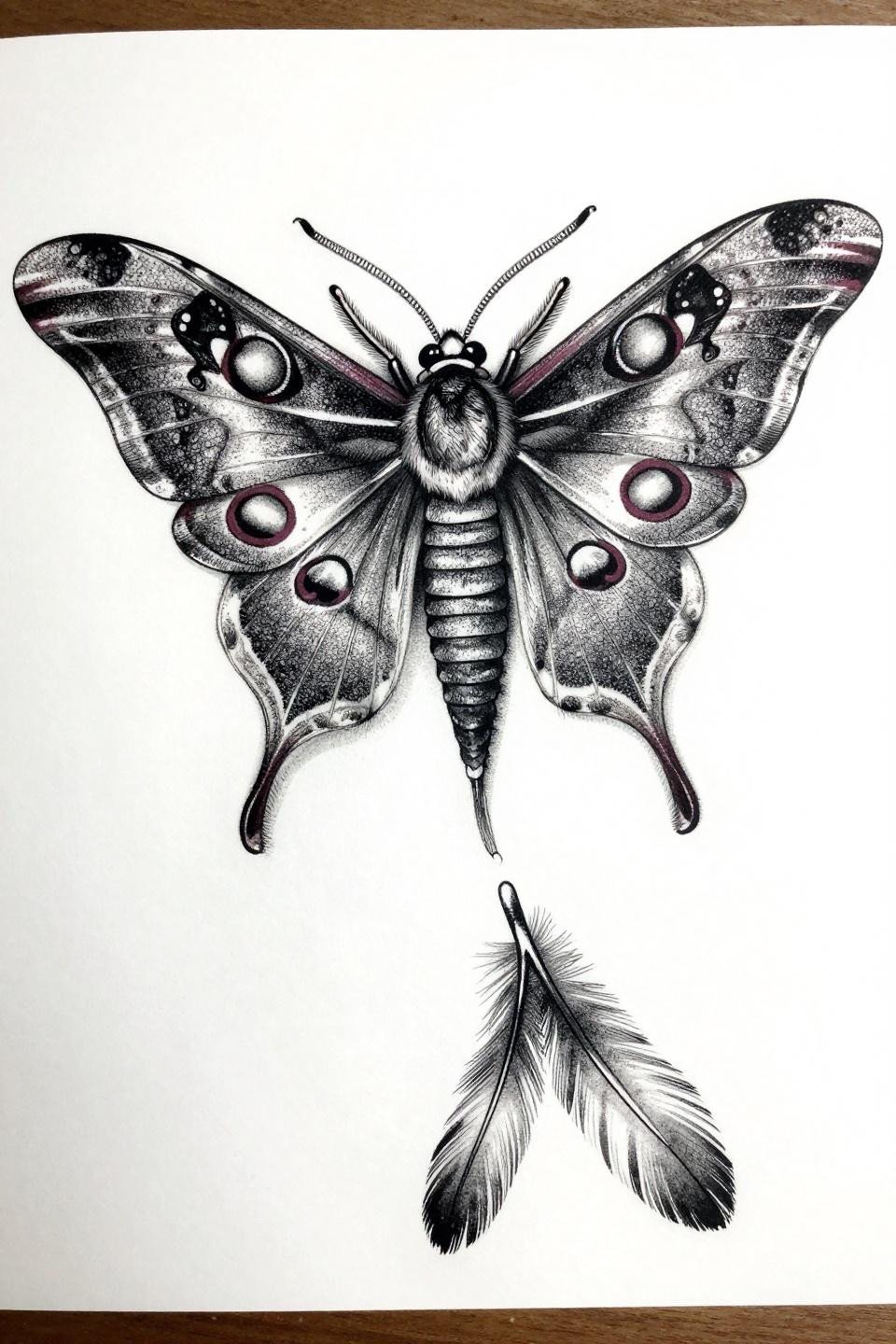
A Cecropia moth in left-facing profile, layered primary wings with window-pane eyespots, executed in stipple dot gradient running dense at the thorax core and opening toward wing edges. The stipple density transition from 90% to open is what separates a technically competent dotwork artist from one who just places dots without tonal logic.
Blackwork at full saturation holds density indefinitely when the artist commits to layered passes. The open wing-edge zones here will soften slightly with age, which only sharpens the contrast against the dense core.
Art Nouveau Luna Moth Bilateral Symmetry With Celestial Integration
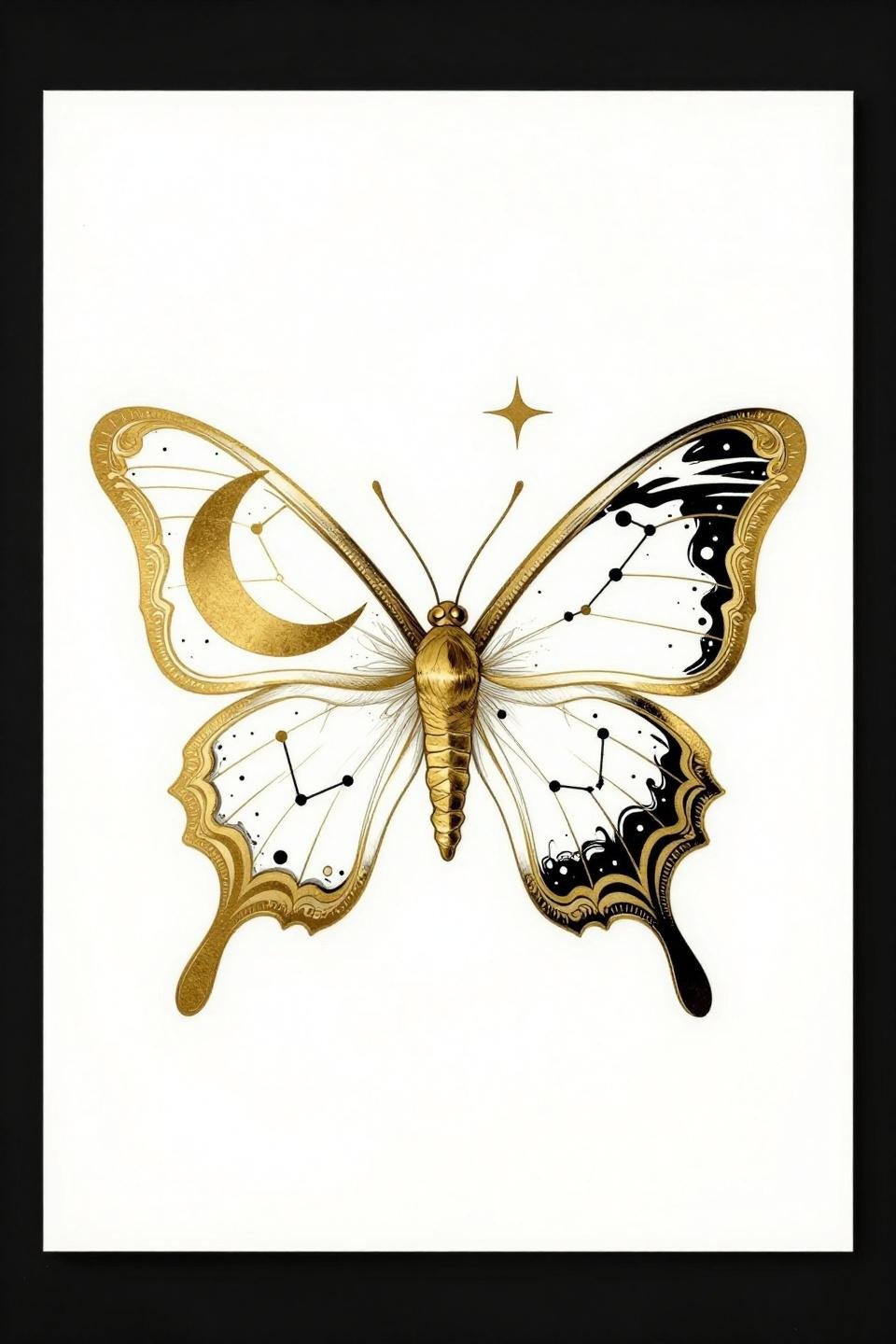
A Luna moth in symmetrical dorsal view with a crescent moon integrated into the left forewing and constellation dots across both wings, bordered by art nouveau flourish framing in flat gold and black. The integrated crescent moon placement inside the forewing shape is compositionally tighter than floating celestial elements placed around a moth, which is the weaker approach most artists default to.
Flat gold metallic ink reads strongest on fair to light-medium skin tones. On deeper skin tones, request that the artist increase the surrounding black field weight to maintain the gold-to-dark contrast ratio as the metallic pigment softens over time.
Filter these references by placement first, then skin tone, then style. A Celtic knotwork piece built for a sternum will not translate to a forearm without compositional rework. Pick two or three that match your actual placement and send those to your artist as direction, not a full mood board.