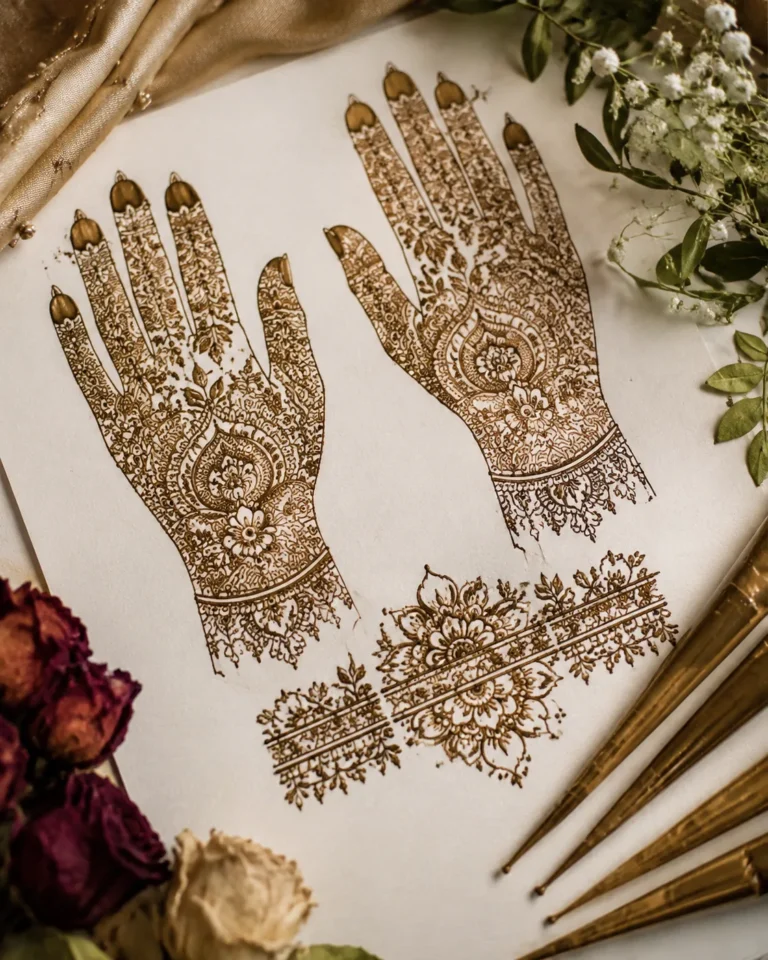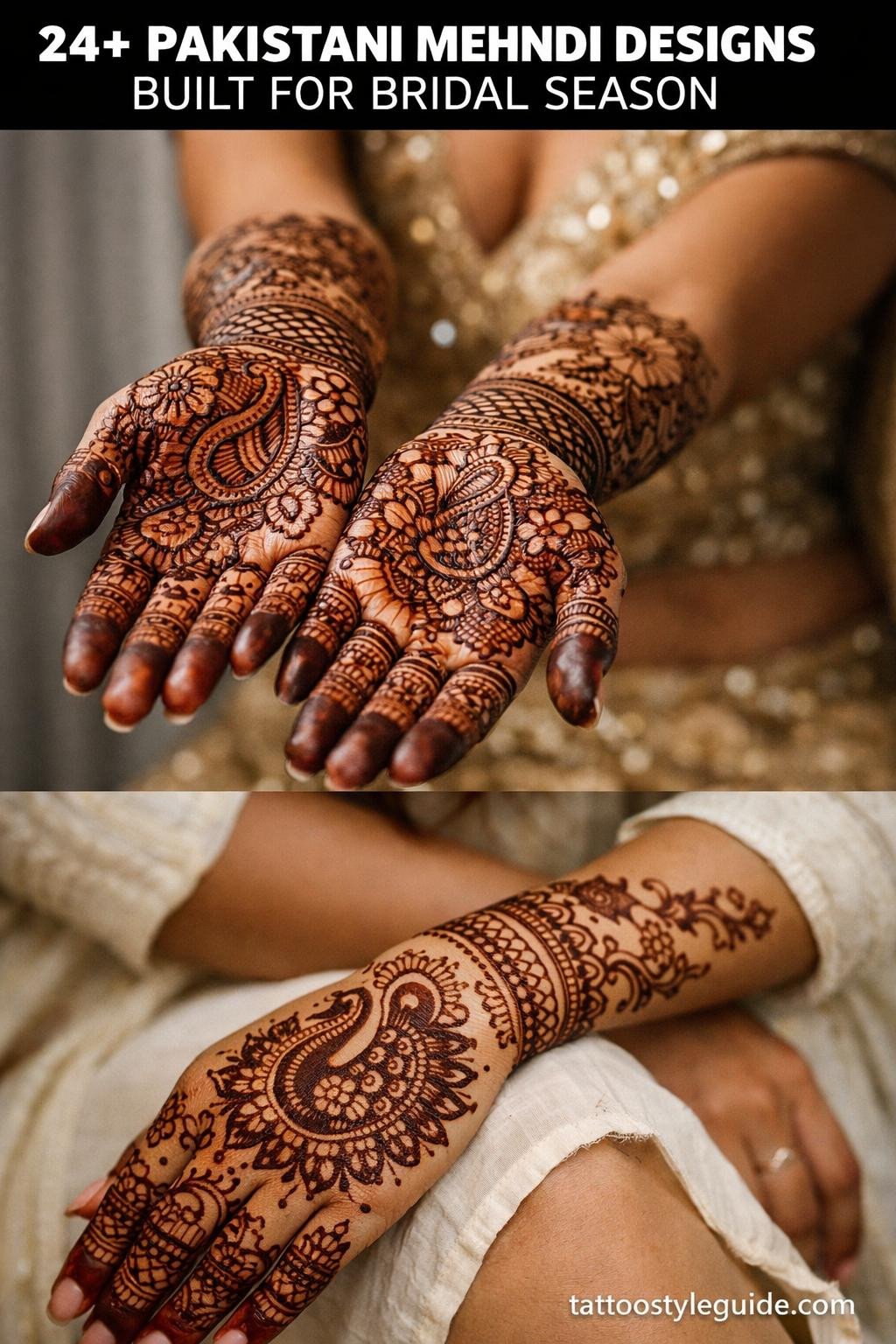
Pakistani mehndi designs are one of the few art forms where density is the point. Sparse coverage reads as unfinished. The geometry needs weight, the motifs need layering, and the negative space has to be carved with intention, not left by accident.
What separates a reference worth saving from one worth skipping: structural logic. The best Pakistani compositions hold a clear center, disciplined borders, and motif hierarchy that reads at arm’s length. These 24 flash references cover the full range, from delicate minimal work to bold, dark paste saturation.
Front Hand Geometry Built Around a Hexagonal Star
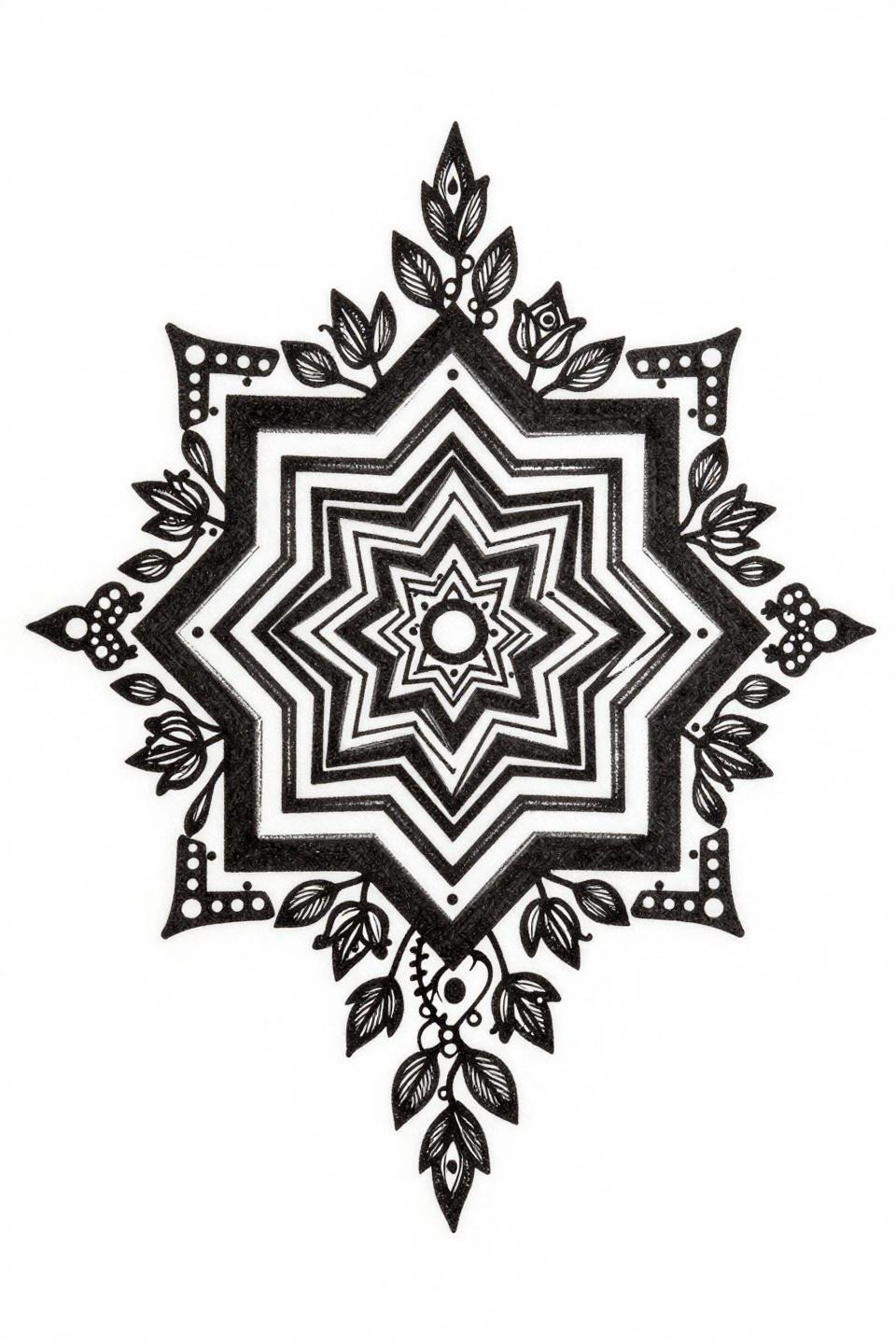
Linocut block-cut linework frames a hexagonal star center, with diamond lattice rays and stacked almond leaf tiers building outward into Pakistani corner flourishes. Negative space carving here is deliberate, the white areas are shaped, not leftover.
This reference works directly for front hand placement because the diamond frame respects the natural proportions of the palm. Bold parallel hatching at this weight holds clean for 10+ years on well-prepped skin.
Delicate Restraint in a Dense Paisley Stack
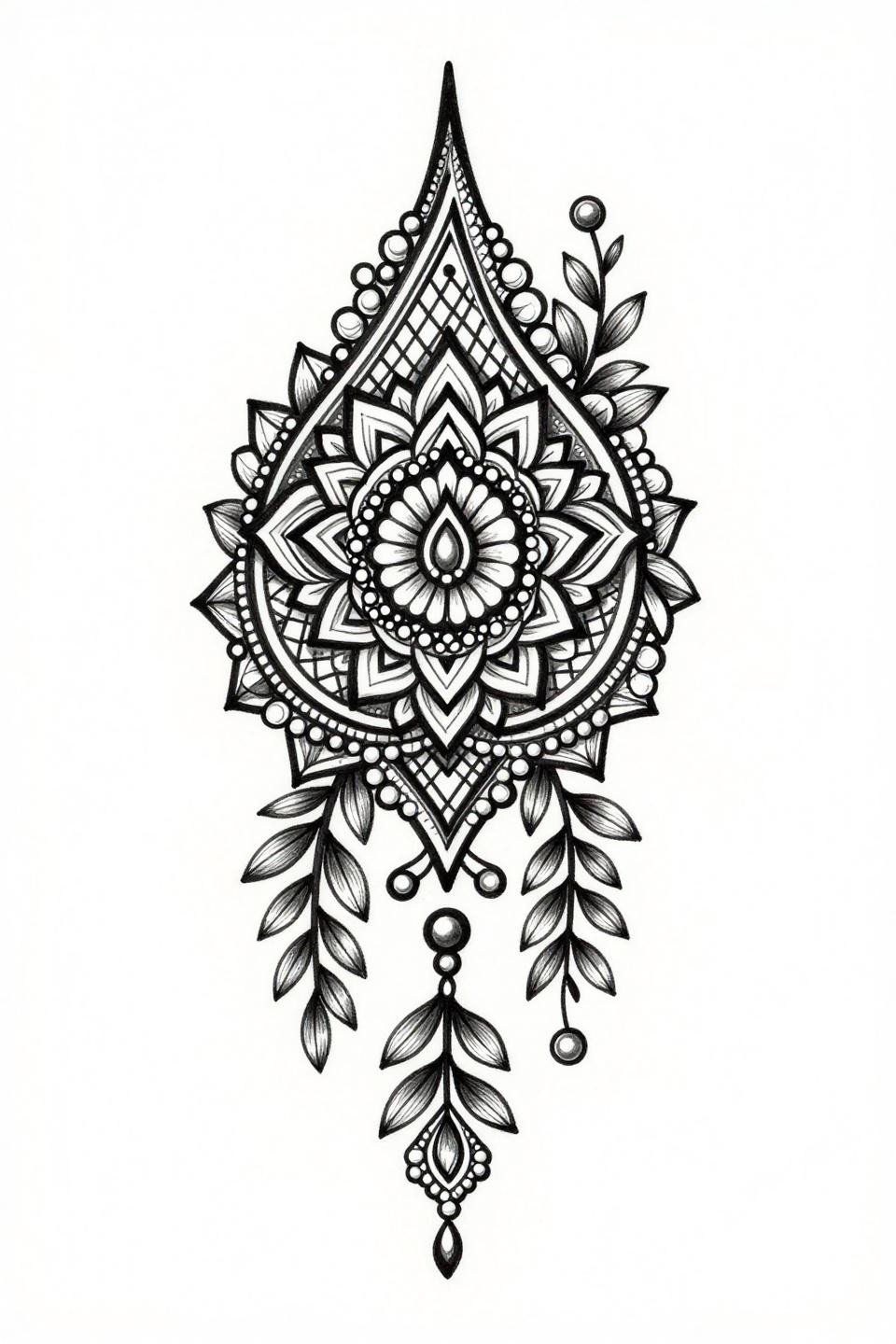
A fine cone-tip approach strips the composition to pure line, no fills, no tonal blocks, just calligraphic ribbon flow moving from teardrop paisley through jasmine vine tendrils down to pearl chevron corners.
On lighter skin tones this reads crisp. On olive and darker tones, the fine lines need bolder weight to maintain contrast over time. Use this as a layout reference, not a direct transfer.
Old School Flash Logic Applied to Traditional Motifs
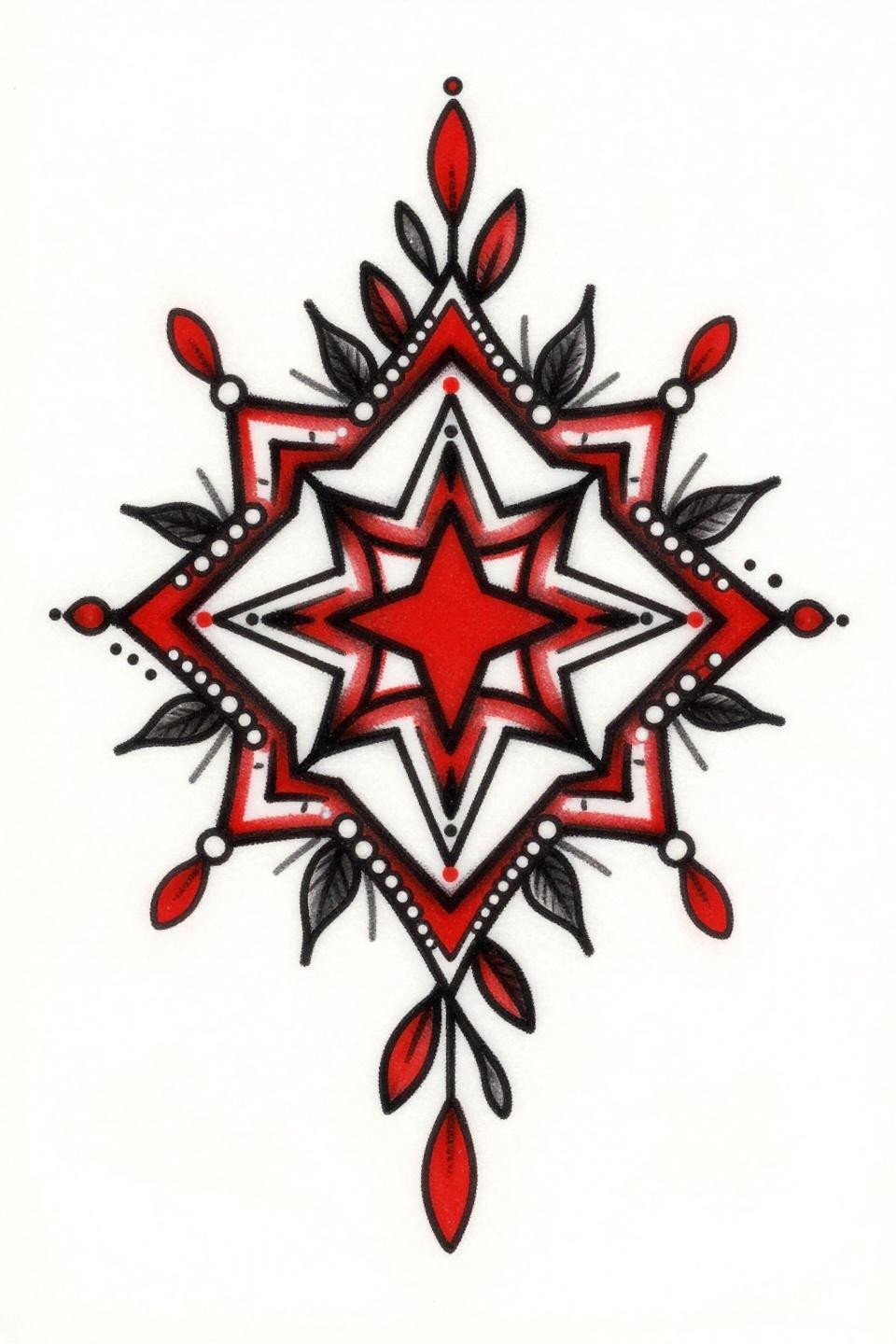
Traditional American flash structure applied to Pakistani geometry: bold 3-4pt outlines, flat fills, and a single crimson accent color that cuts through the black without competing. The hexagonal star center anchors the diamond frame composition with the same logic that makes sailor flash readable at distance.
This is one of the cleaner references for artists who work primarily in Western traditional but are being asked to adapt South Asian motifs. The outline weight is the longevity signal here.
Micro Realism Where Petals Meet Pearl Geometry
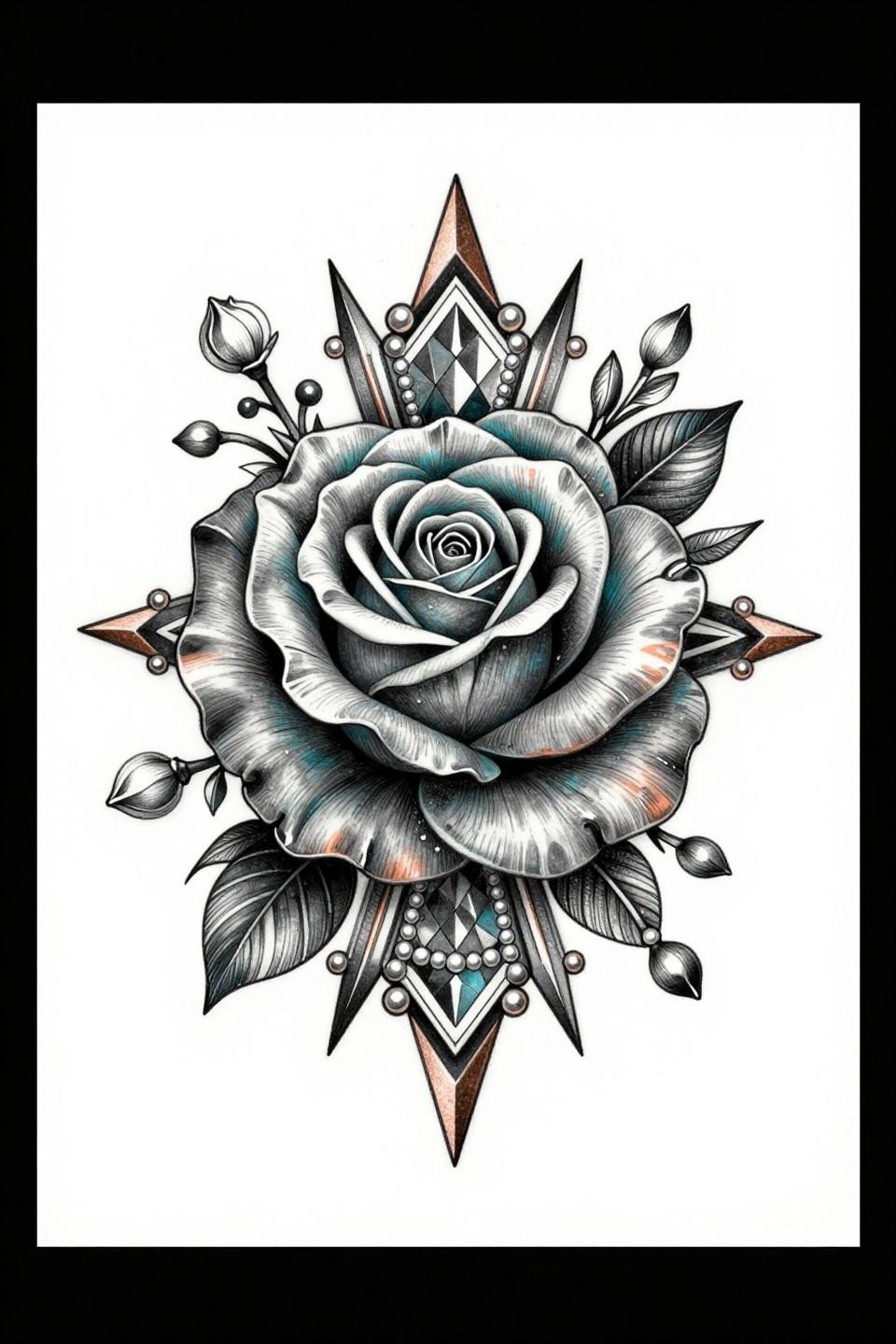
A photorealistic rose center sits inside strict geometric diamond lattice, pairing fine cone-tip hairline strokes with reddish-brown stain accents to push the bridal mehndi vocabulary into fine art territory. The almond leaf cascades and Pakistani corner flourishes keep the structure grounded.
Deep teal ink ages differently than black on varying skin tones, so check your artist’s healed portfolio specifically for color work, not just fresh shots. Copper metallic accents can oxidize to a warm brown within 5-7 years on high-UV placements.
Engraving Crosshatch Turns Geometry into Relief
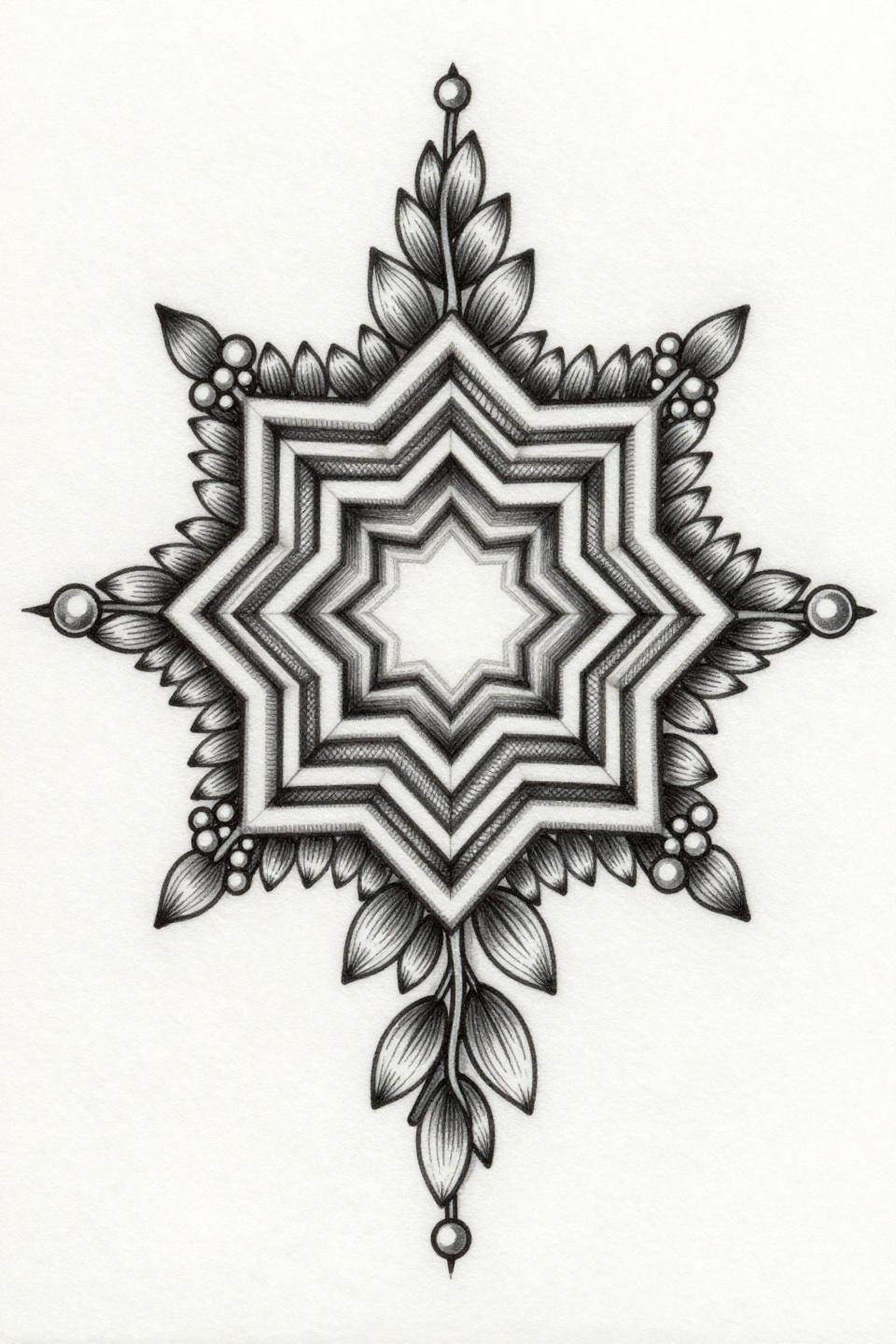
Tight diagonal crosshatch engraving builds sculptural tonal depth around a hexagonal starburst center, with cascading almond leaf tiers and interlocking pearl chevron borders. Grey wash dilution from dense core to open edge creates volume without any color.
This technique signals artist confidence. Consistent crosshatch density across a full composition is harder to maintain than flat fills. Look for even line spacing at the corners as the key quality indicator.
Navy Geometry and the Vertical Bridal Stack
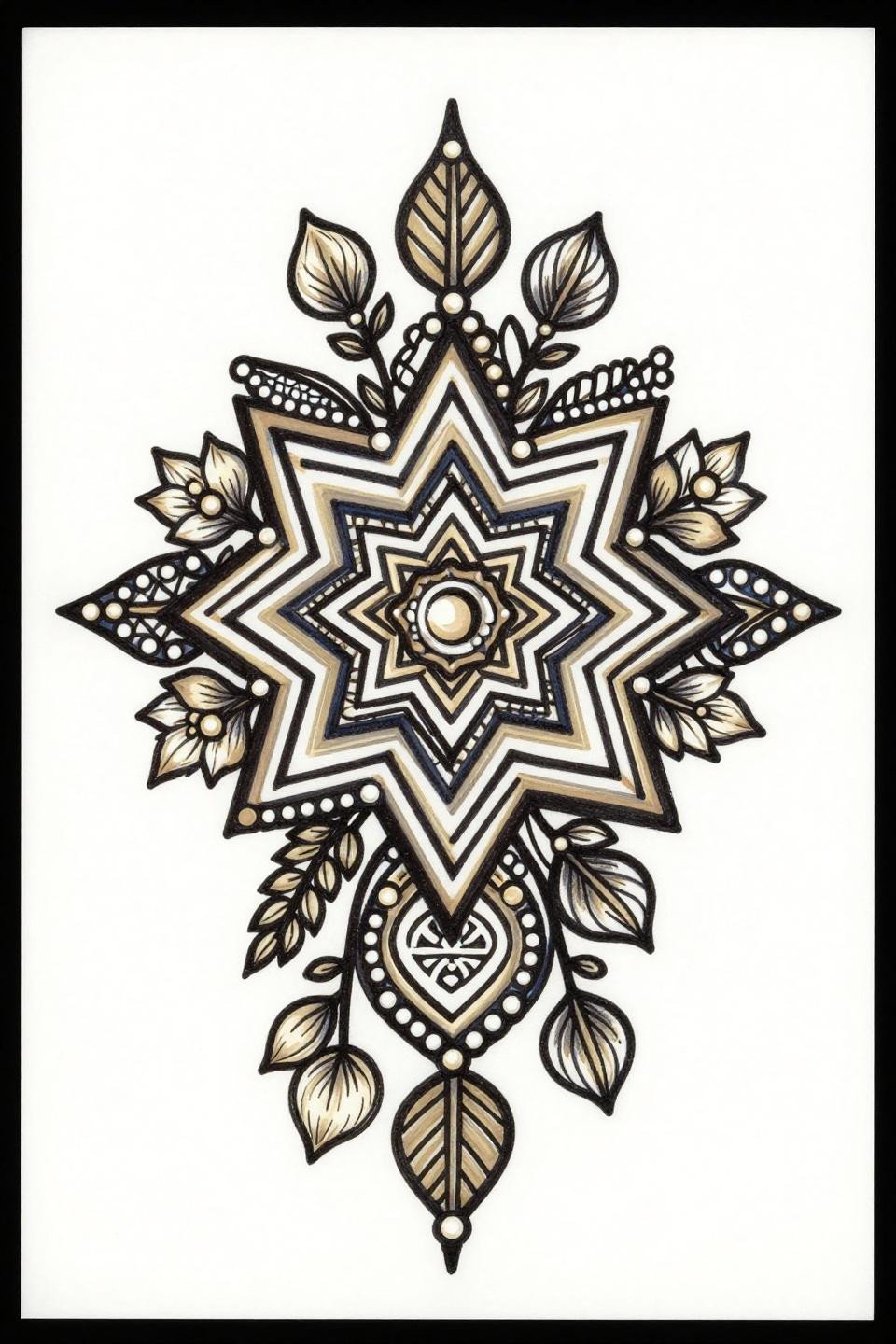
Vertical tier stacking with navy and cream flat fills gives this star polygon composition a formal bridal weight. Bold 2-3pt black outlines hold the color separation clean, and the jasmine vine terminals at each tier anchor the eye before it drifts.
Check out latest simple mehndi design ideas if the density here reads as too heavy for your placement. Vertical composition like this is specifically built for forearm length, not back-of-hand application.
Chicano Wash Technique on a Bridal Mandala
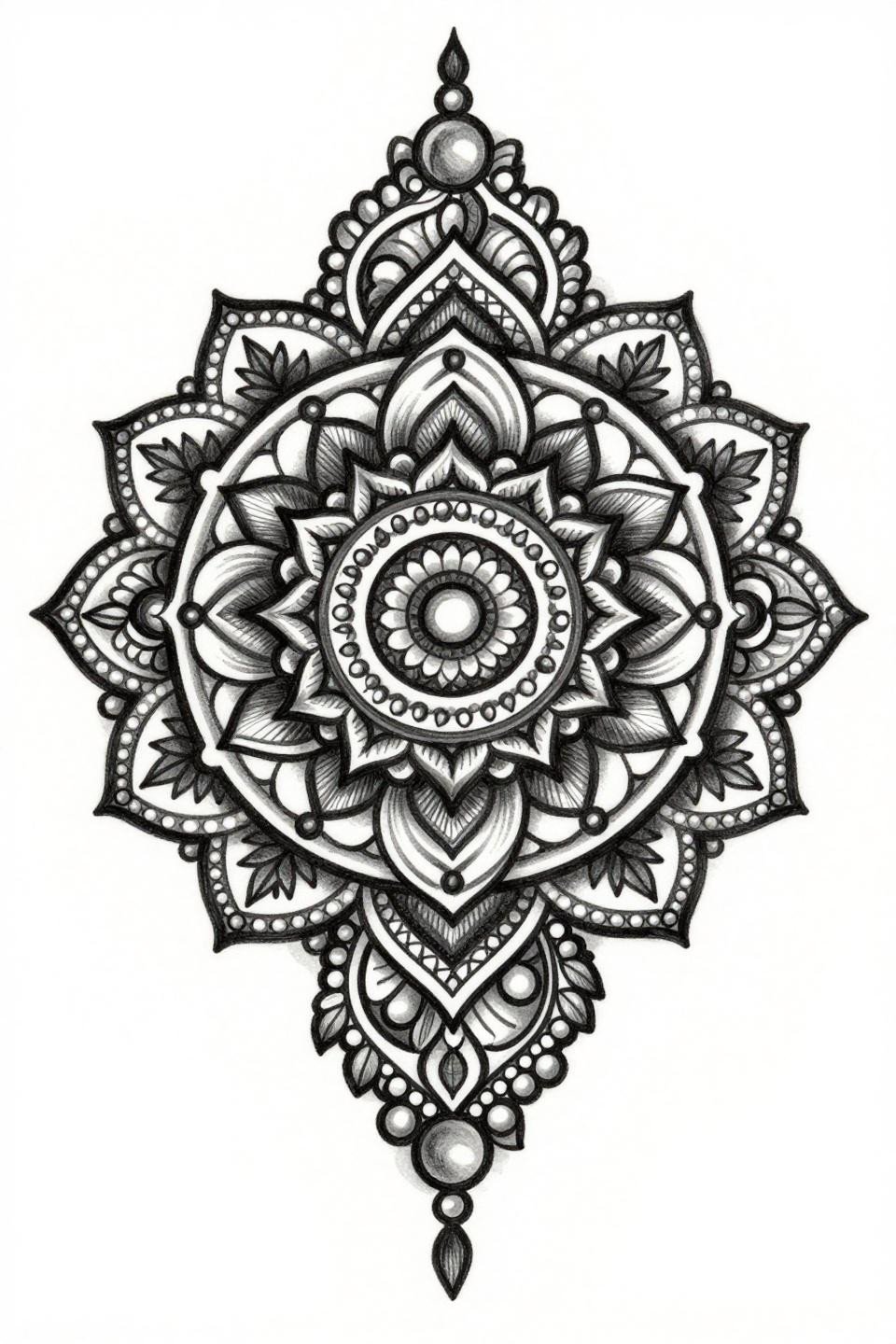
Whip shading strokes build sculptural depth across a bilateral mandala, moving from dense shadow at the sunburst center through open midtones at the Pakistani corner flourishes. The grey wash gradient here achieves dimension that flat black cannot.
Grey wash on olive skin tones ages to a warm, slightly golden tone over 5-8 years. On cooler-toned skin, it holds neutral grey longer. This matters when choosing between this reference and a flat black version.
Tribal Geometry With Forest Green Anchors
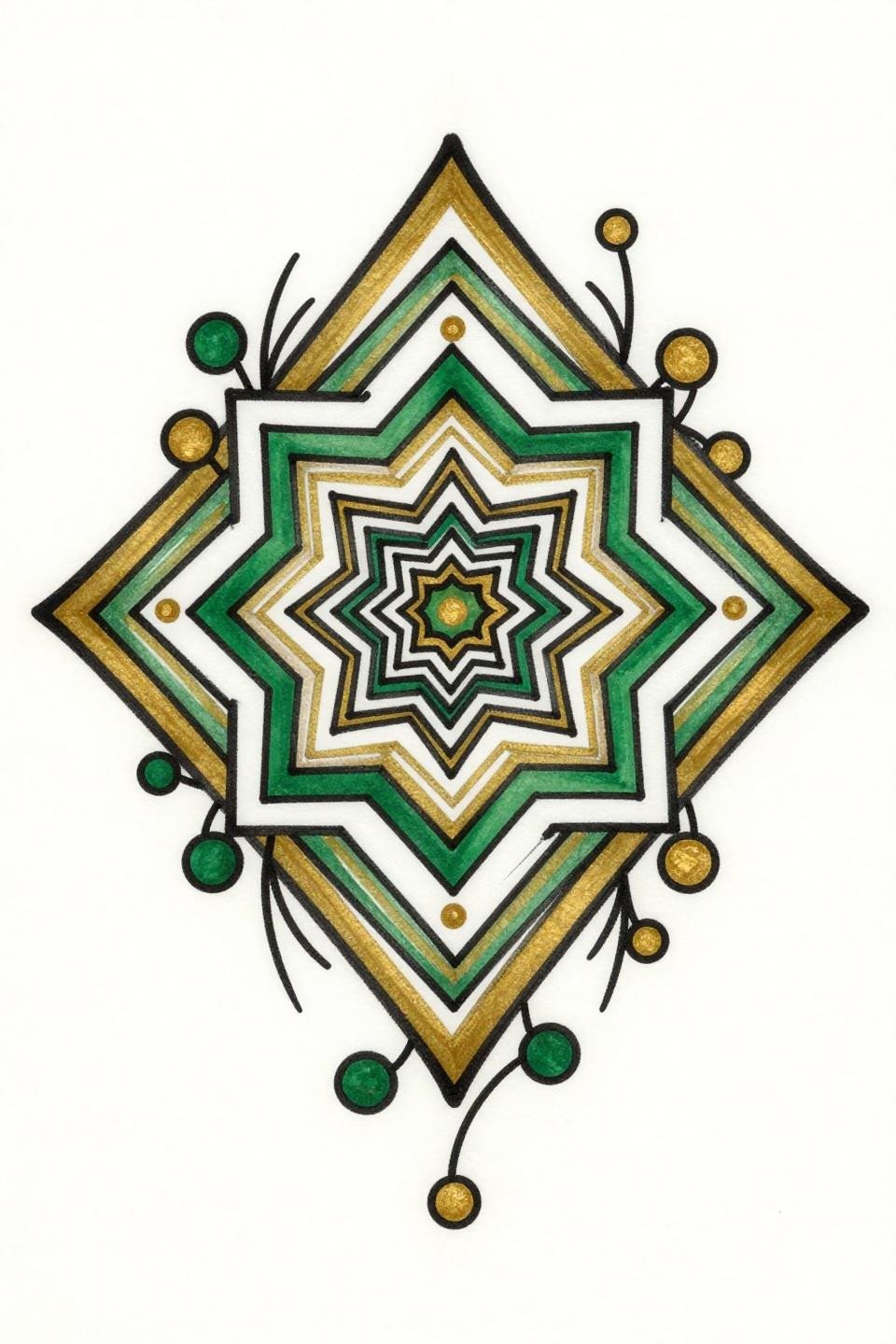
Forest green and gold flat fills inside a tribal geometric framework make this front hand reference land closer to ceremonial than decorative. Chevron border bands and diamond lattice carry the structural weight while the vine tendrils soften the edges.
Protected placements like the upper back or sternum give flat-fill color work its best shelf life. Front hand placement on this design means budgeting for a color refresh every 3-4 years minimum.
Ignorant Style Reframes the Classic Paisley
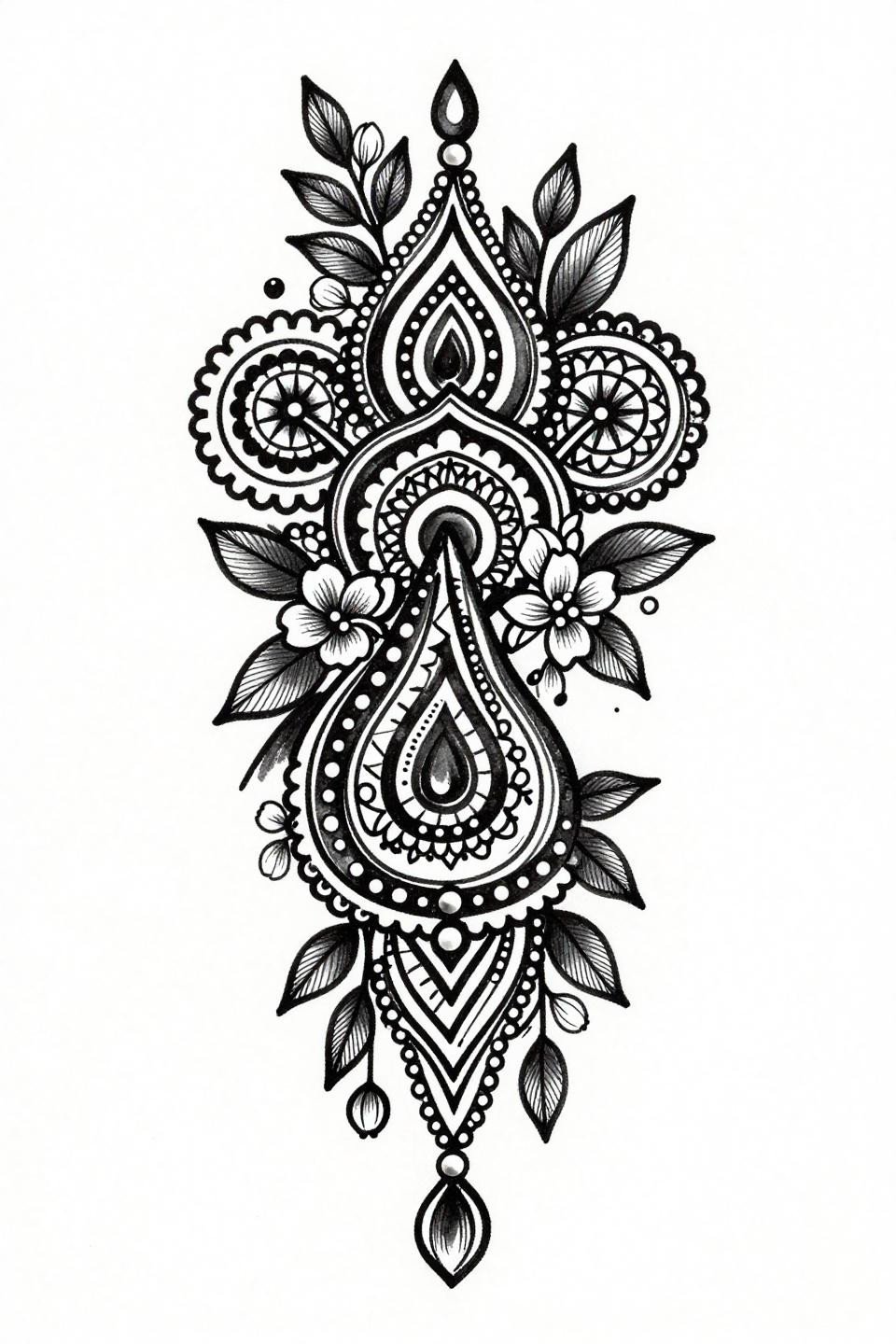
Crude bold outlines and deliberate line imperfection strip the paisley down to its essential shape, losing the polish but keeping the asymmetric compositional logic that makes Pakistani layouts work. Visible irregularity here is technique, not error.
This reference is useful for collectors who want the motif vocabulary without the formality. Modern mehndi designs for contemporary brides explores this tension between tradition and reduction in more depth.
Art Deco Lotus Mandala Framed in Gold and Black
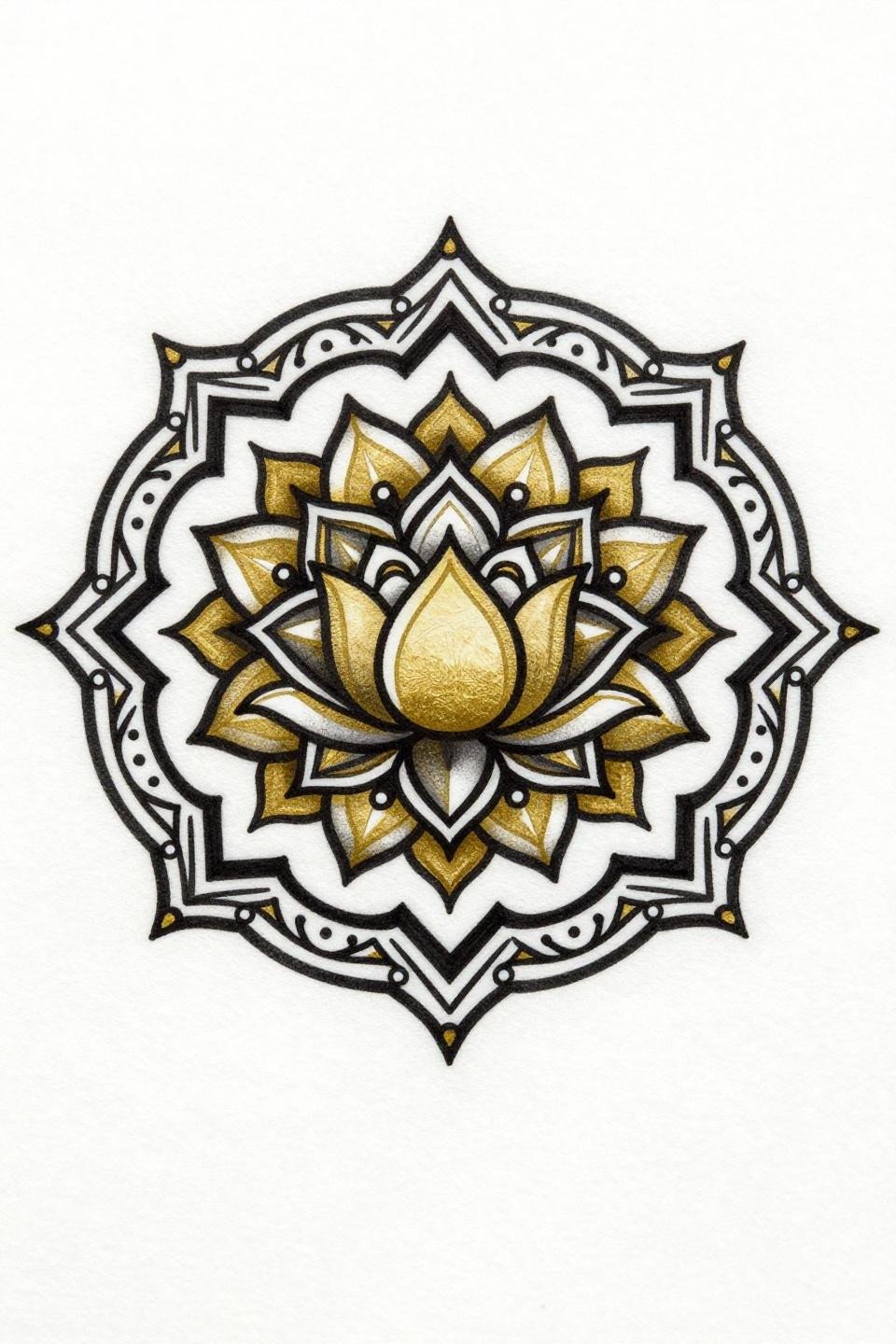
Art deco geometry applied to a lotus mandala center, with triangular starburst rays, interlocking diamond border bands, and flat gold and black fills that maximize contrast. Pearl dot accents at the corner flourishes are the detail that separates this from a generic mandala.
Metallic-looking accents in a mehndi design are decorative rather than lasting color, but as a reference this reads as a pure layout guide. The bilateral symmetry and clean negative space carving are what an artist actually needs from this sheet.
Sak Yant Sacred Ray Structure on a Peacock Profile
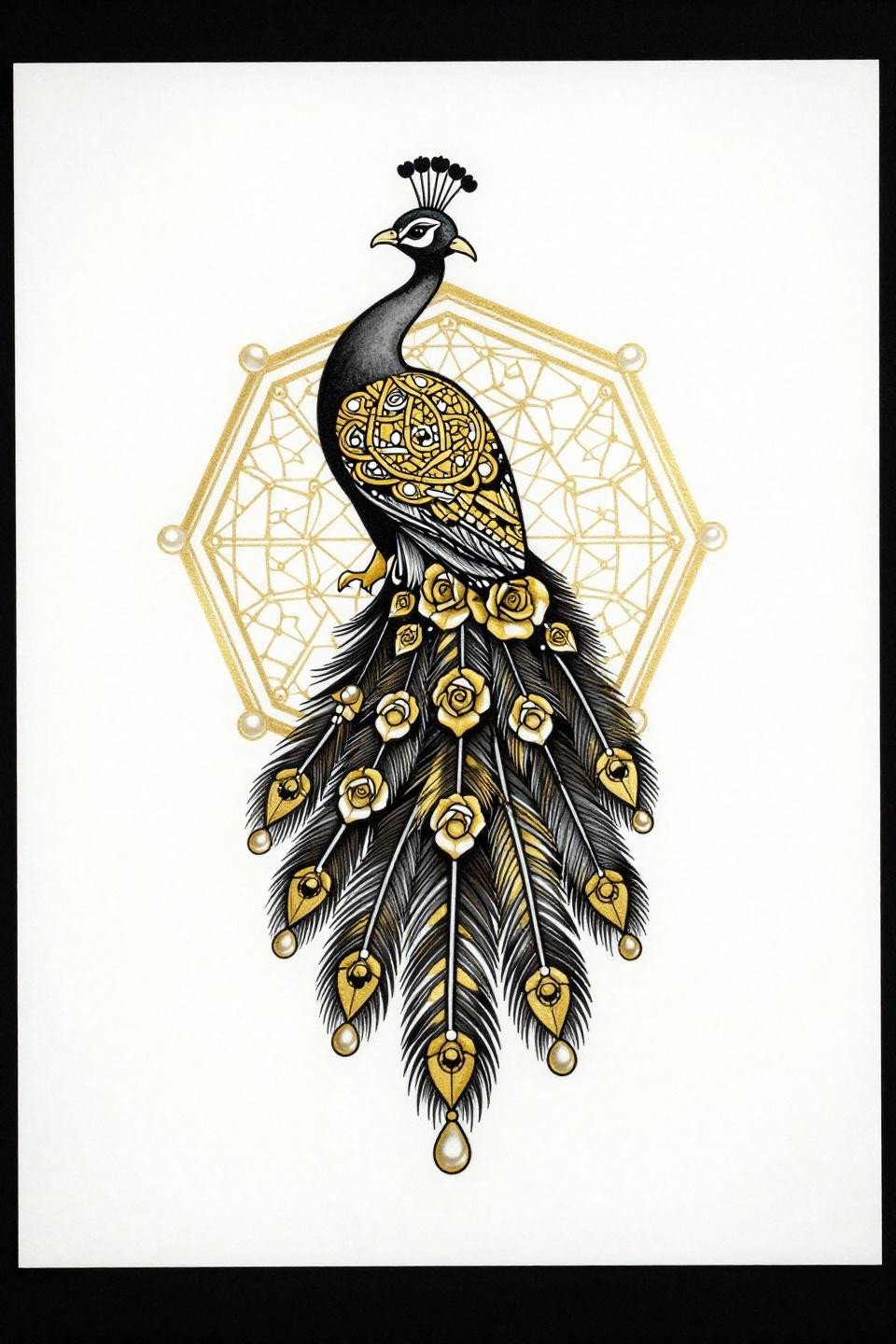
A forward-facing peacock profile uses Sak Yant radiating ray structure for the tail feathers, fusing Thai sacred geometry with Pakistani floral lattice and chandelier pearl-drop terminals. The hexagonal grid background holds the composition tight.
This is a reference for artists with experience in both freehand and stencil traditions. The sacred ray precision needs the same cone control as intricate mandala work, with tight consistent spacing and no wobble at the curve points.
Neo-Traditional Medallion With Gold Sunburst Core
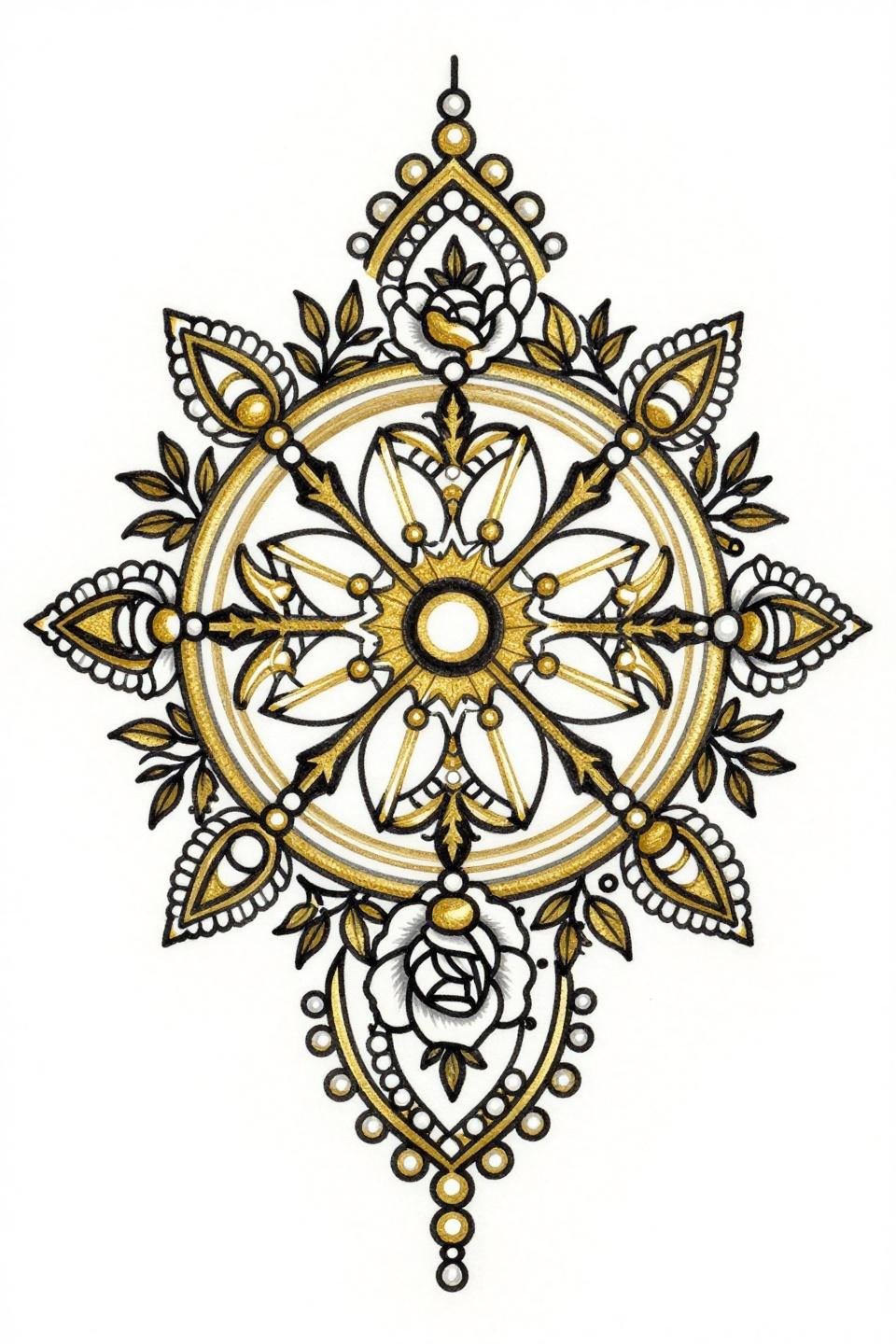
Neo-traditional linework at bold 2-3pt weight frames a teardrop paisley medallion with a radiating geometric sunburst and interlocking rose vine lattice. Triangular band corner flourishes with pearl-drop accents close the circular composition without crowding the negative space.
For traditional henna design inspiration that translates this medallion scale into wearable placement, the key is matching the motif diameter to the target body surface before finalizing size with your artist.
Trash Polka Aggression Meets Chandelier Pearl Structure
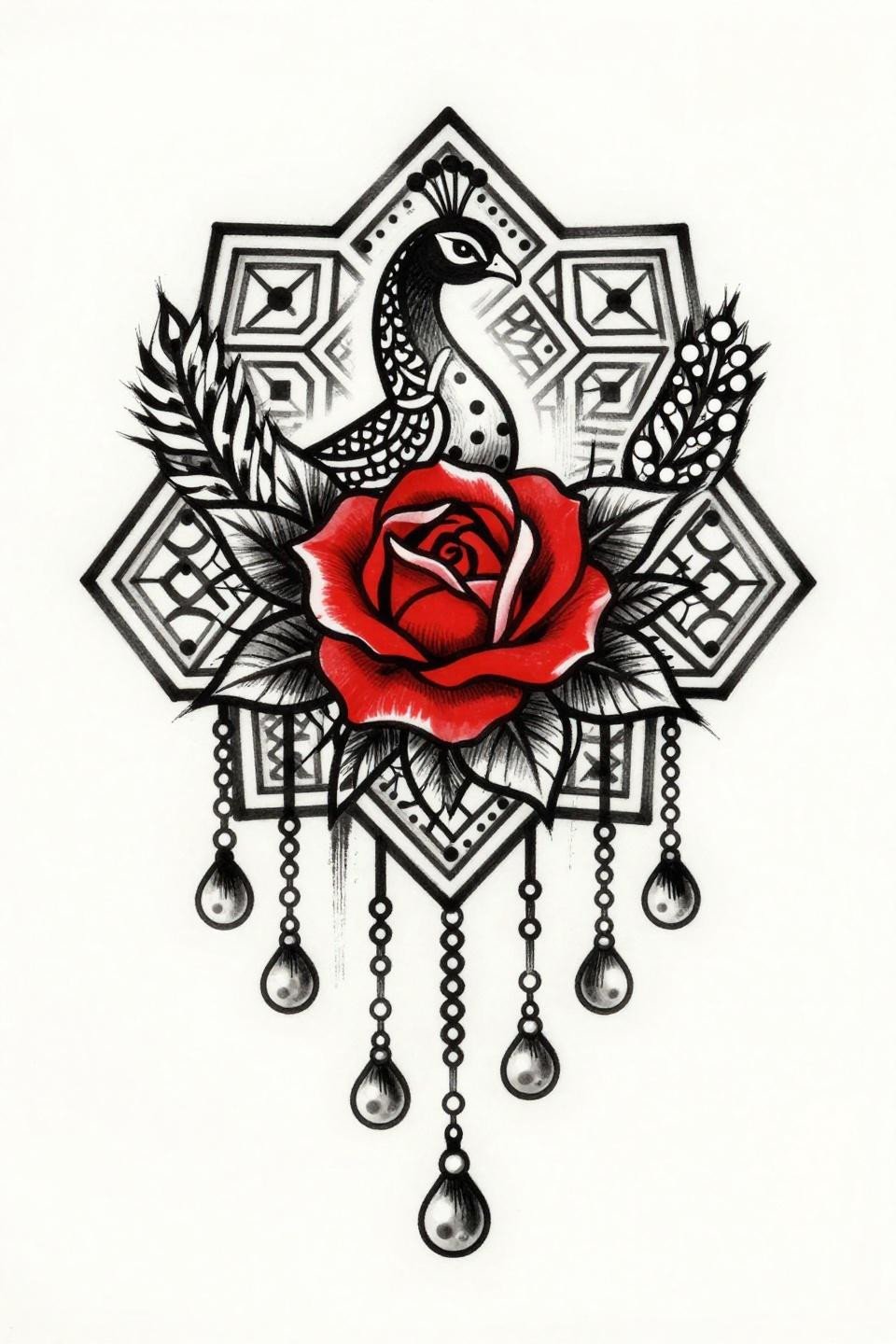
Aggressive whip shading and raw gestural smear marks push the peacock and rose ornamental motif into trash polka territory, with a single crimson accent cutting through the dense black. Chandelier droplet structure with pearl terminals keeps the composition anchored at the bottom.
The diamond frame here is doing structural work. Without it, the gestural elements would read as chaotic rather than intentional. This is a reference for experienced mehndi artists and brides, not a first application concept.
Watercolor Diffusion on a Bridal Sunburst Mandala
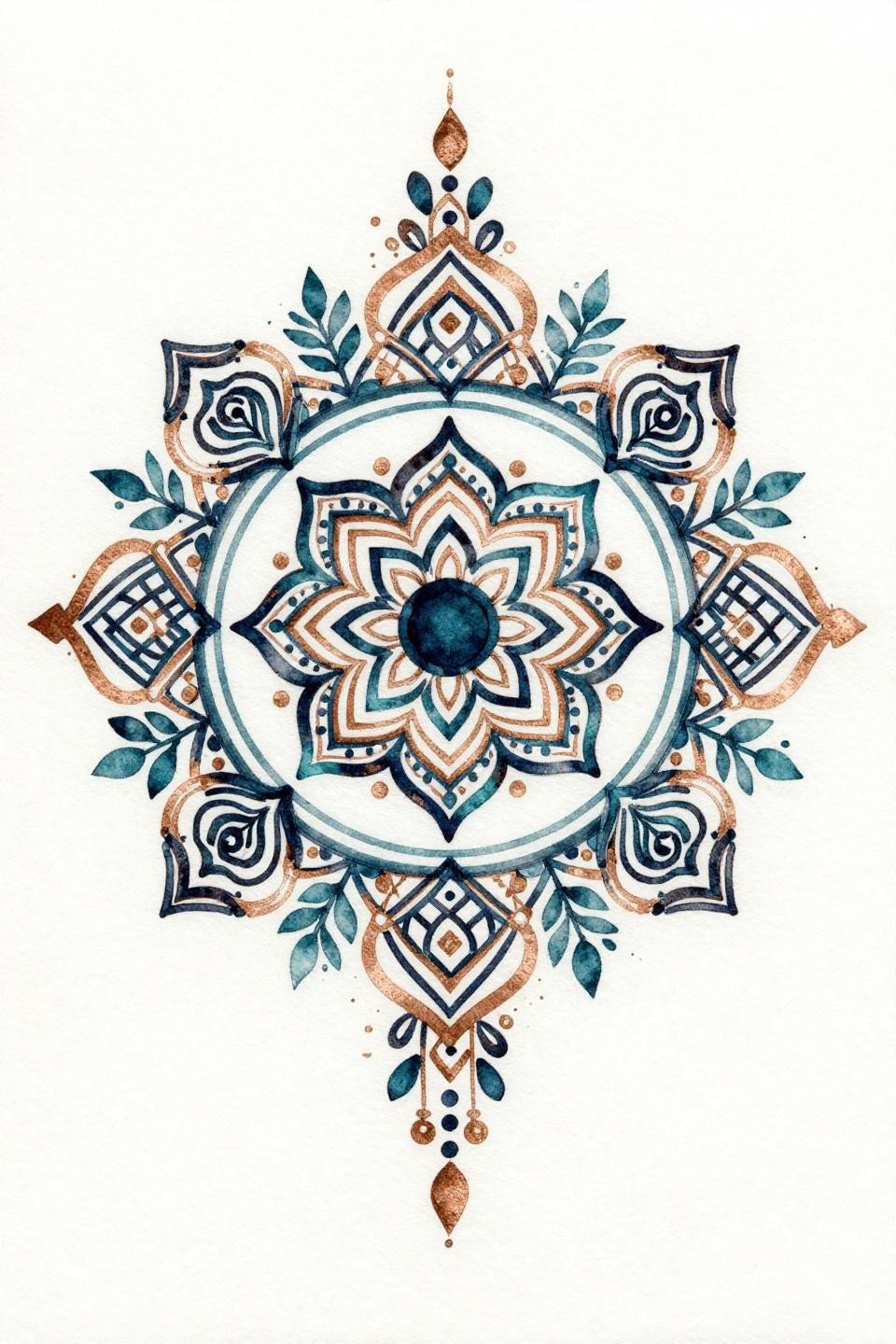
Wet watercolor diffusion edges bleed outward from a central sunburst mandala, with deep teal and copper metallic accents replacing the standard black fill. Calligraphic brush marks define the Pakistani corner flourishes before the color dissolves into open paper.
Watercolor-style softness without an anchoring outline can blur as the paste dries. As a mehndi or henna reference this poses no long-term aging concern, but apply the design directly with a fine cone and establish a confident line structure first.
Sketch Raw Quality With Geometric Structural Precision
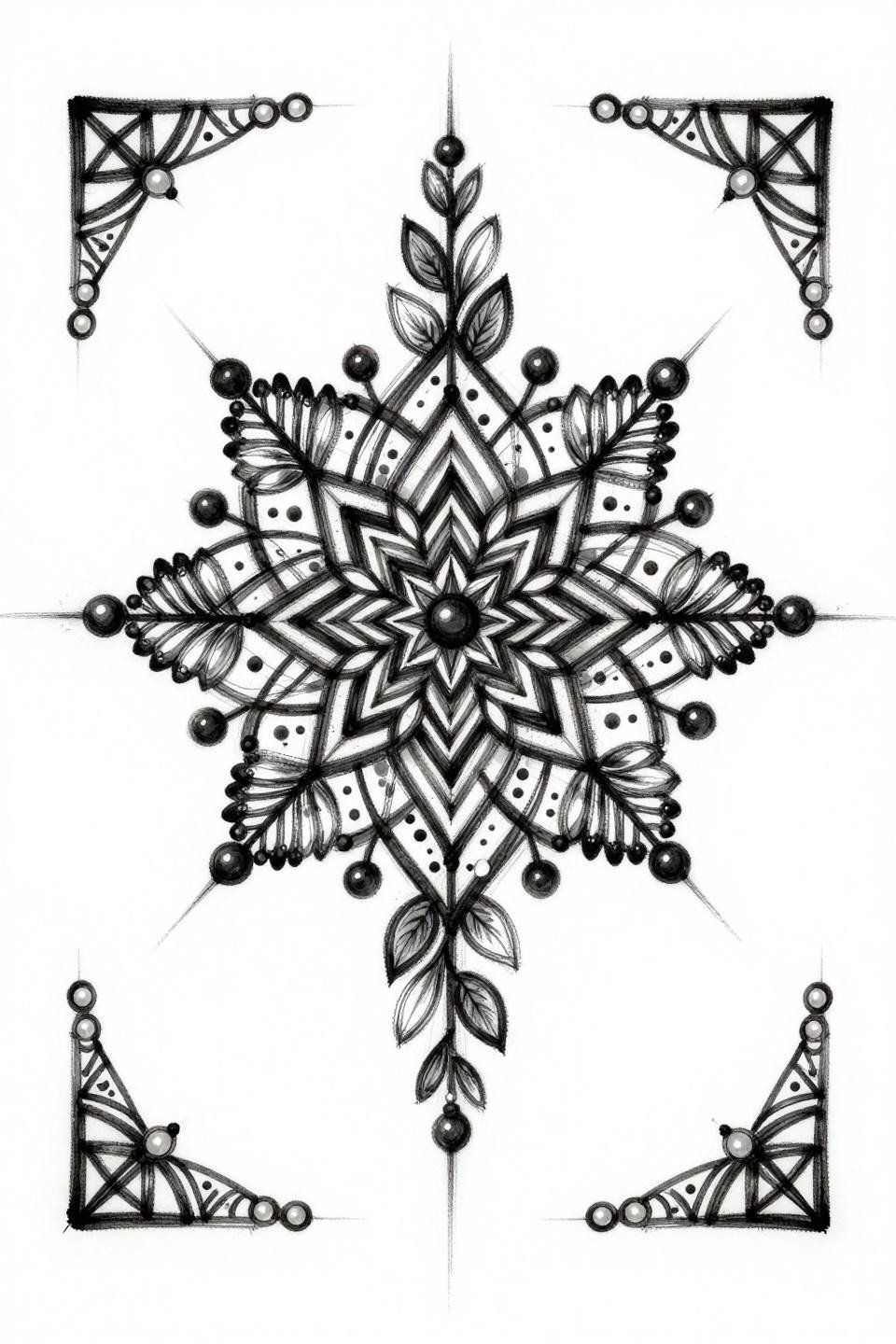
Loose gestural brush ink strokes coexist with tight geometric precision in a star polygon composition, with asymmetric cascading leaf motifs and spherical bindi terminal nodes giving the sketch quality a deliberate endpoint. Grey wash midtones add depth without committing to full tonal rendering.
The tell on this style is whether the curves hold direction without wobbling. Check the vine tendrils at their tightest radius. Consistent arc control at speed is what separates this from accidental messiness.
Fine Line Lotus Mandala That Lives in Open Space
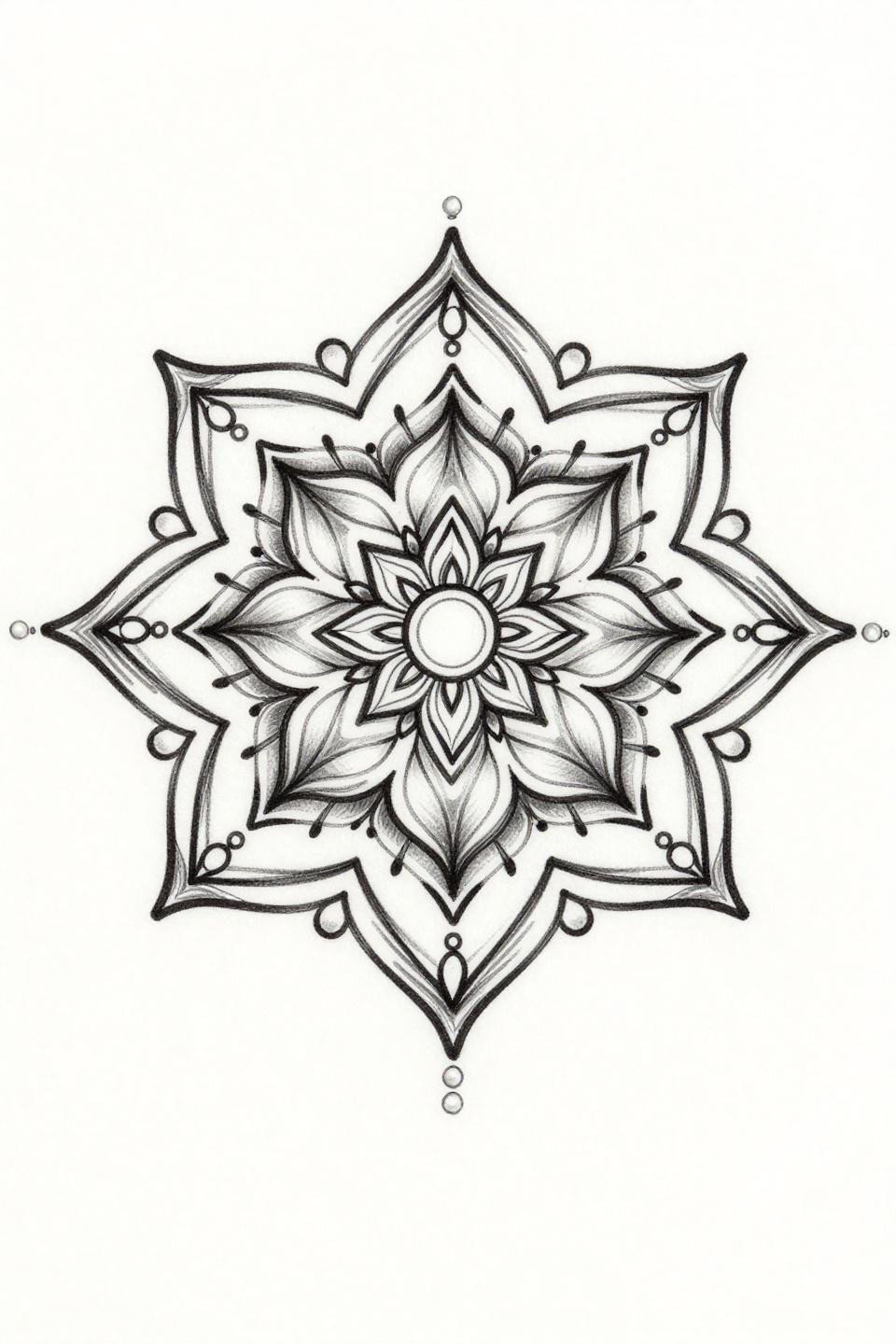
Zero fill, open negative space, and hairline 0.5mm single-continuous-line calligraphic strokes define the lotus mandala center. Bilateral symmetry holds the composition together when density cannot.
Fine cone-tip work like this needs an artist who controls hand speed precisely. The stroke weight variance that reads as organic on paper becomes a visibility problem on skin if the lines become too thin or uneven while the paste is applied.
Etching Relief on a Dual-Tiered Mandala Centerpiece
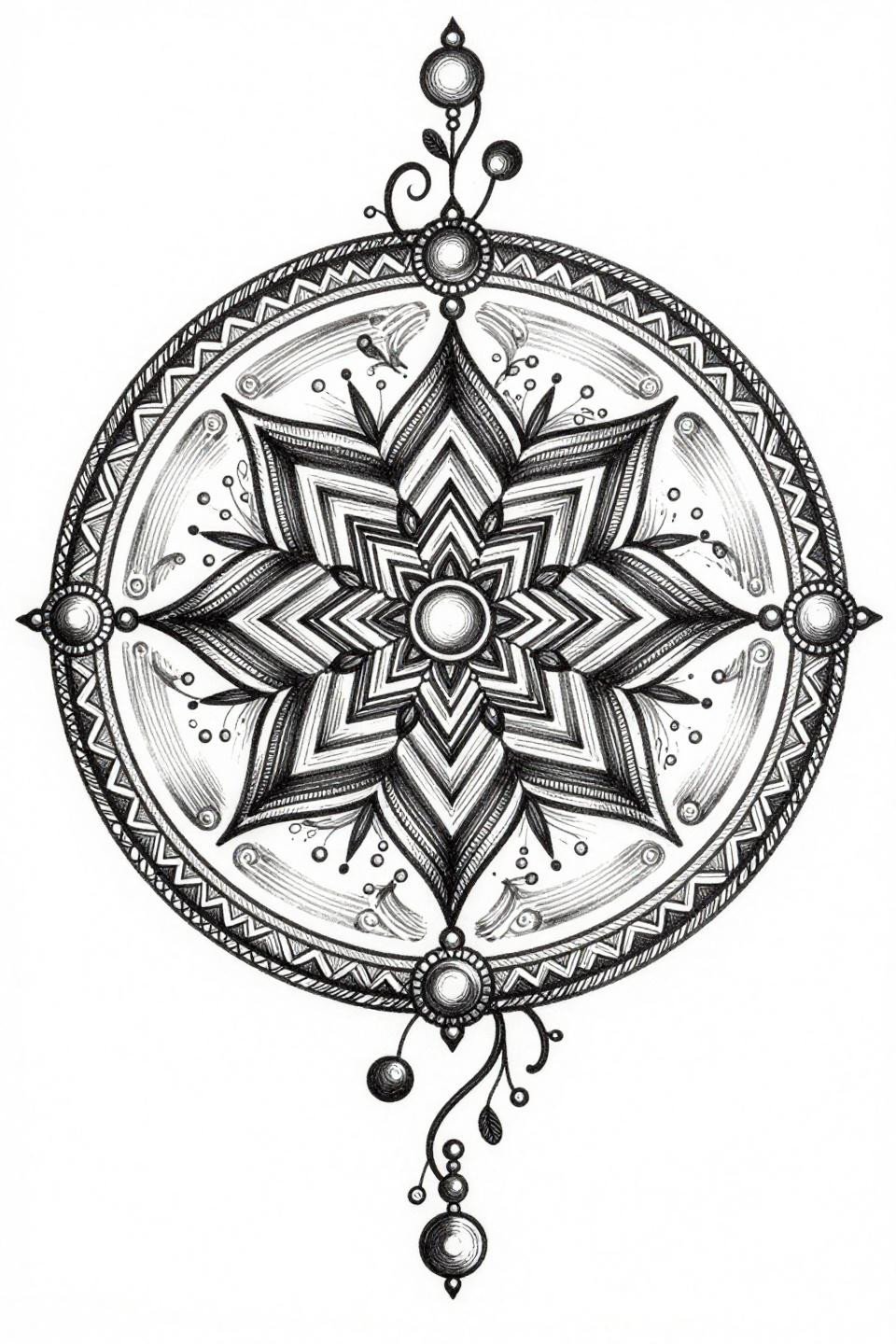
Directional crosshatch hatching and parallel line engraving build a dual-tiered mandala with genuine tonal range, from deep shadow at the geometric starburst core to open grey at the pearl-drop scroll borders.
This woodcut reference rewards larger scale application. At palm diameter or smaller, the crosshatch density compresses into visual noise. Upper arm or thigh placement gives the tonal range room to separate correctly.
Celtic Interlace Absorbs the Peacock and Lotus Together
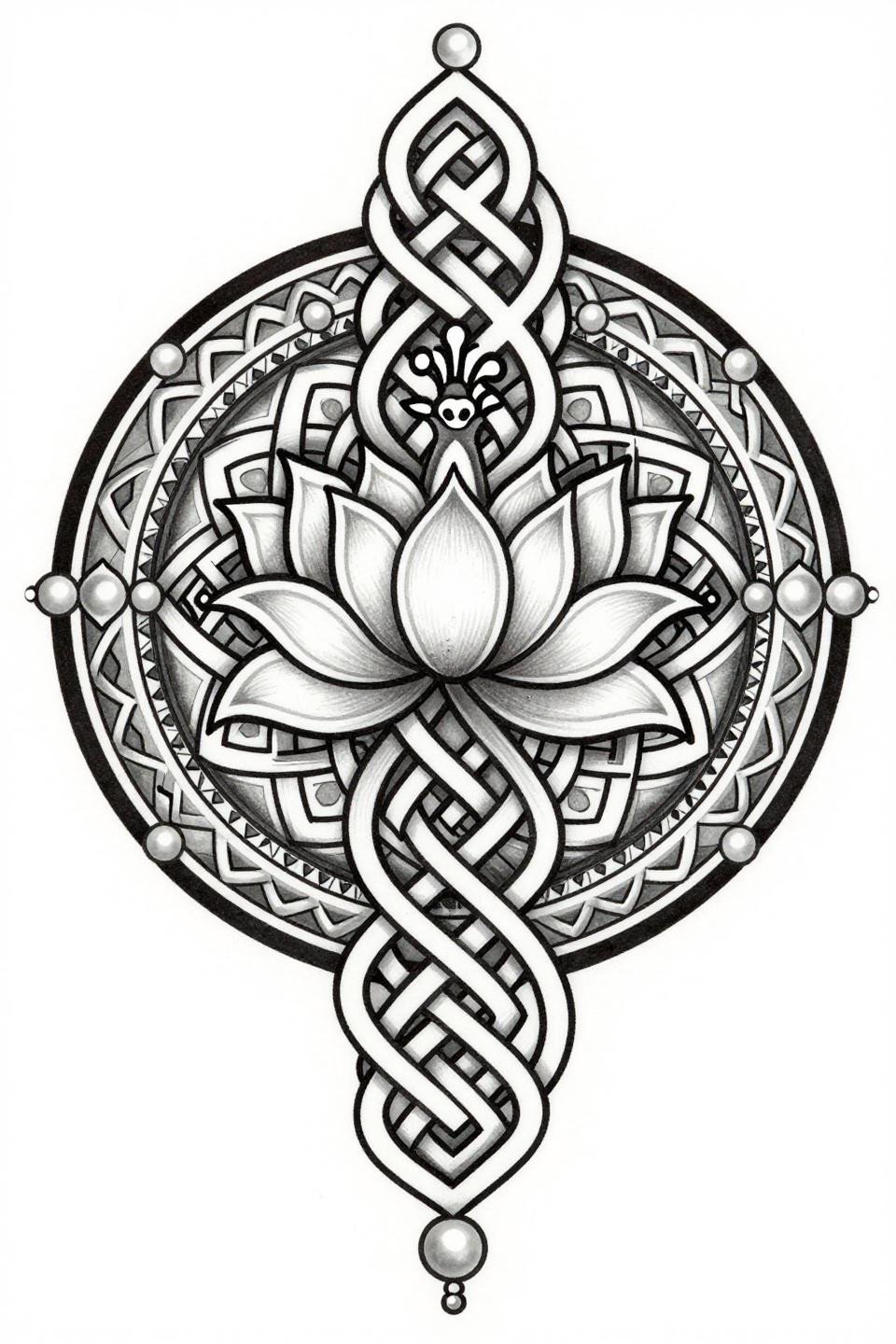
Continuous Celtic interlace absorbs both peacock and lotus motifs without losing either, using hexagonal lattice fills and pearl-drop circular terminal nodes to translate Pakistani ornamental vocabulary into knotwork logic. Bold 2-3pt black outlines hold the bilateral symmetry at every intersection.
Flat fills with no patchiness separate veterans from beginners on complex interlace compositions. Request healed portfolio shots specifically for multi-motif knotwork before booking this style.
Japanese Irezumi Weight on a Paisley Mandala
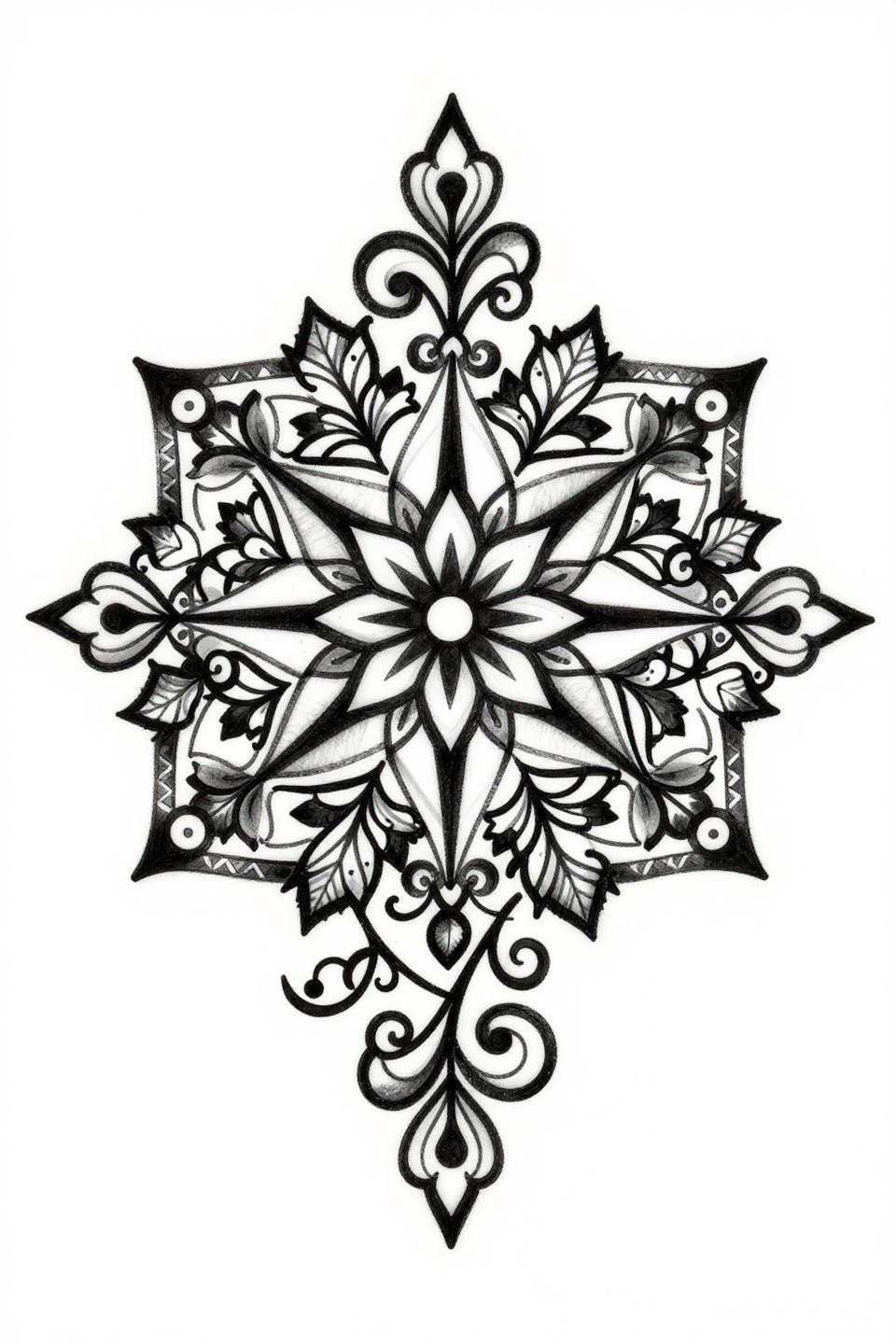
Bold 3-4mm black outlines with flat black fills and crisp negative space give the teardrop paisley mandala the structural weight of Japanese irezumi. Chevron corner accents and circular bindi terminals define the edge without additional ornament.
Blackwork at full saturation holds density indefinitely when the artist commits to multiple layered passes. This reference is particularly strong for darker skin tones where fine line alternatives lose contrast over time.
Blackwork Dotwork Rose Lattice Without a Single Outline
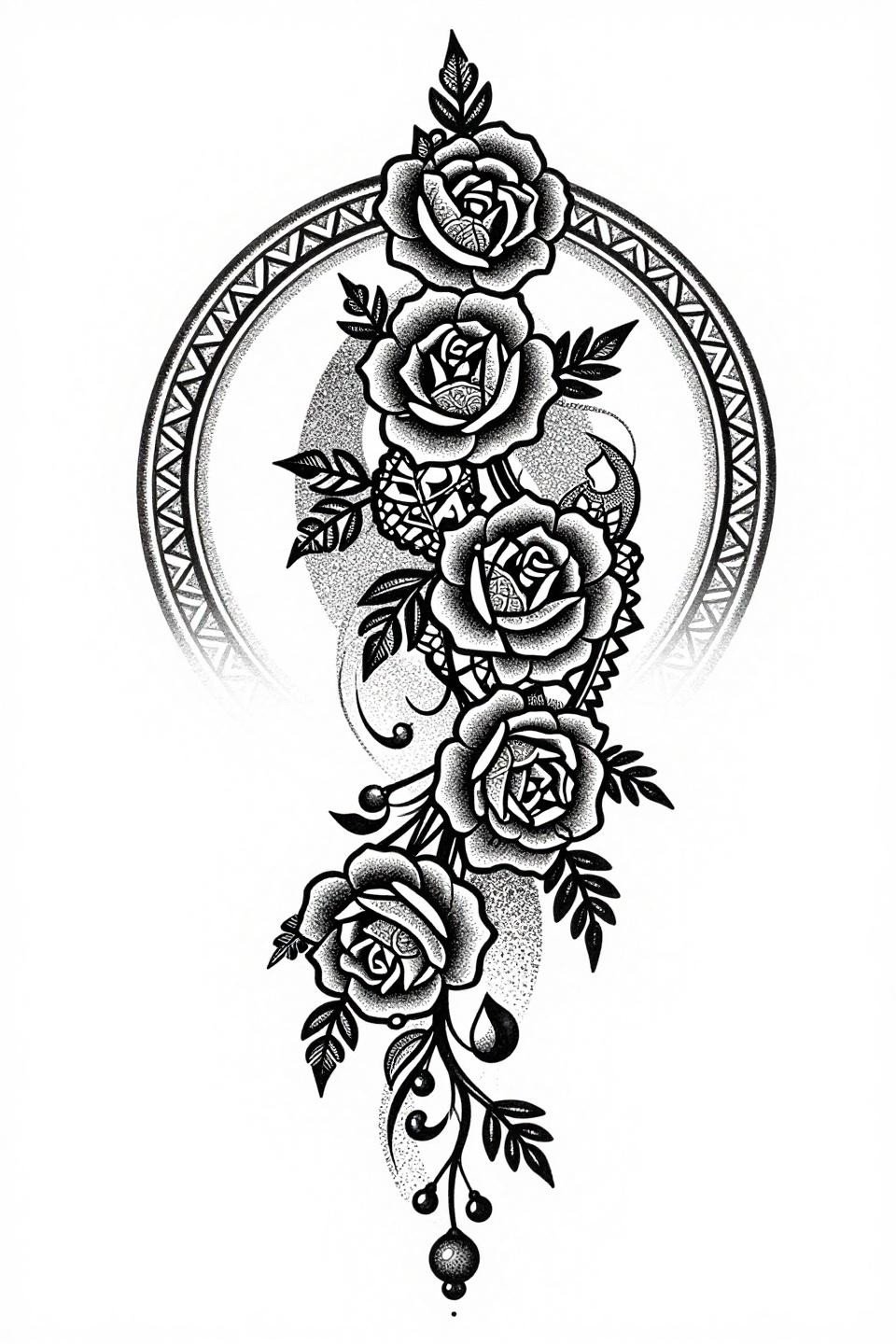
No outlines. The entire composition is built from stipple dot gradient, dense at the rose bloom core and opening at the chevron border edges. The form emerges from density shift alone.
Look for consistent dot size across the full gradient as the primary quality signal in dotwork. Dots that grow larger toward the edges rather than spacing further apart indicate a less controlled hand technique.
Traditional American Peacock in a Diamond Lattice Frame
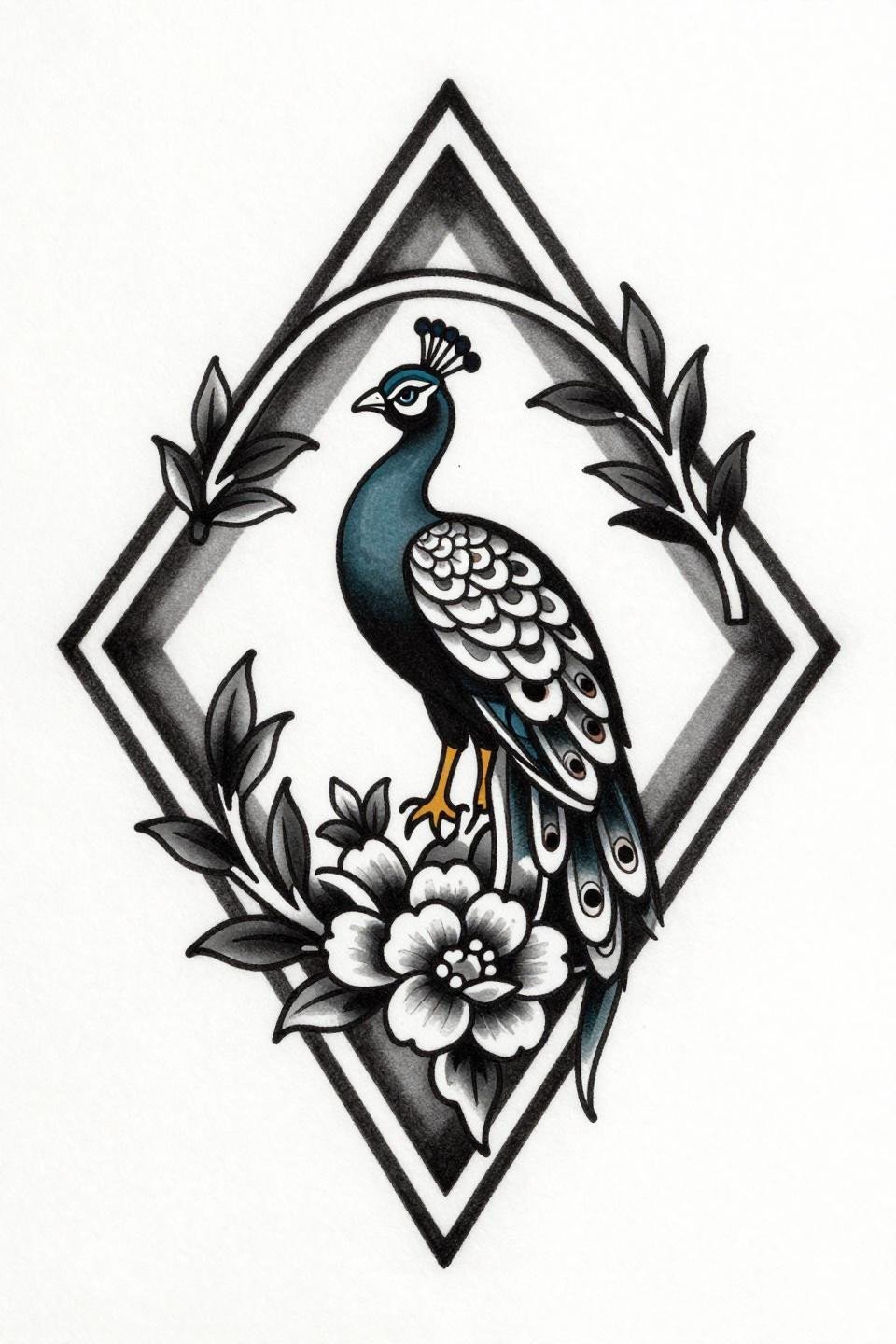
Traditional American structure frames a centered peacock profile inside a diamond lattice border, with geometric chevron outer bands and floral cascade fills between grid cells. Open white negative space at the diamond intersections keeps the composition readable at distance.
Bold 2-3pt outlines at this weight hold clean for 10+ years. The flat black fills require full saturation passes, so budget session time accordingly.
Art Nouveau Mandala With Filament Vine Perimeter
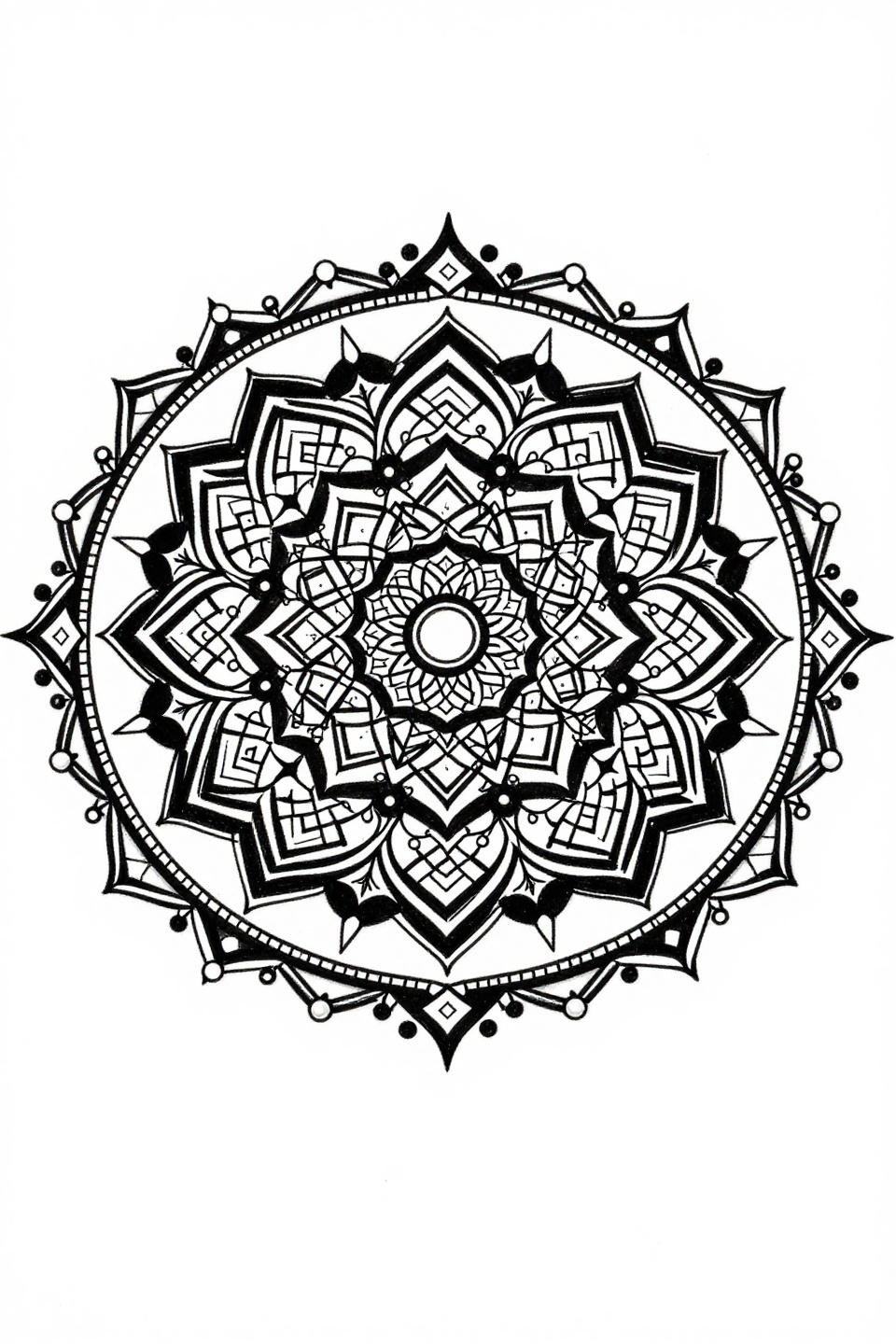
Art nouveau organicism shows in the delicate filament vines and pearl-drop terminals that frame a symmetrical hexagonal lattice mandala. The radial symmetry and Pakistani chevron border bands hold the organic perimeter from dissolving into decoration.
This composition scales cleanly from wrist diameter to shoulder cap. The filament vine weight needs to stay above 0.5mm effective line to survive placement on high-movement areas like the wrist.
Botanical Stipple Arabesque With Paired Paisley Logic
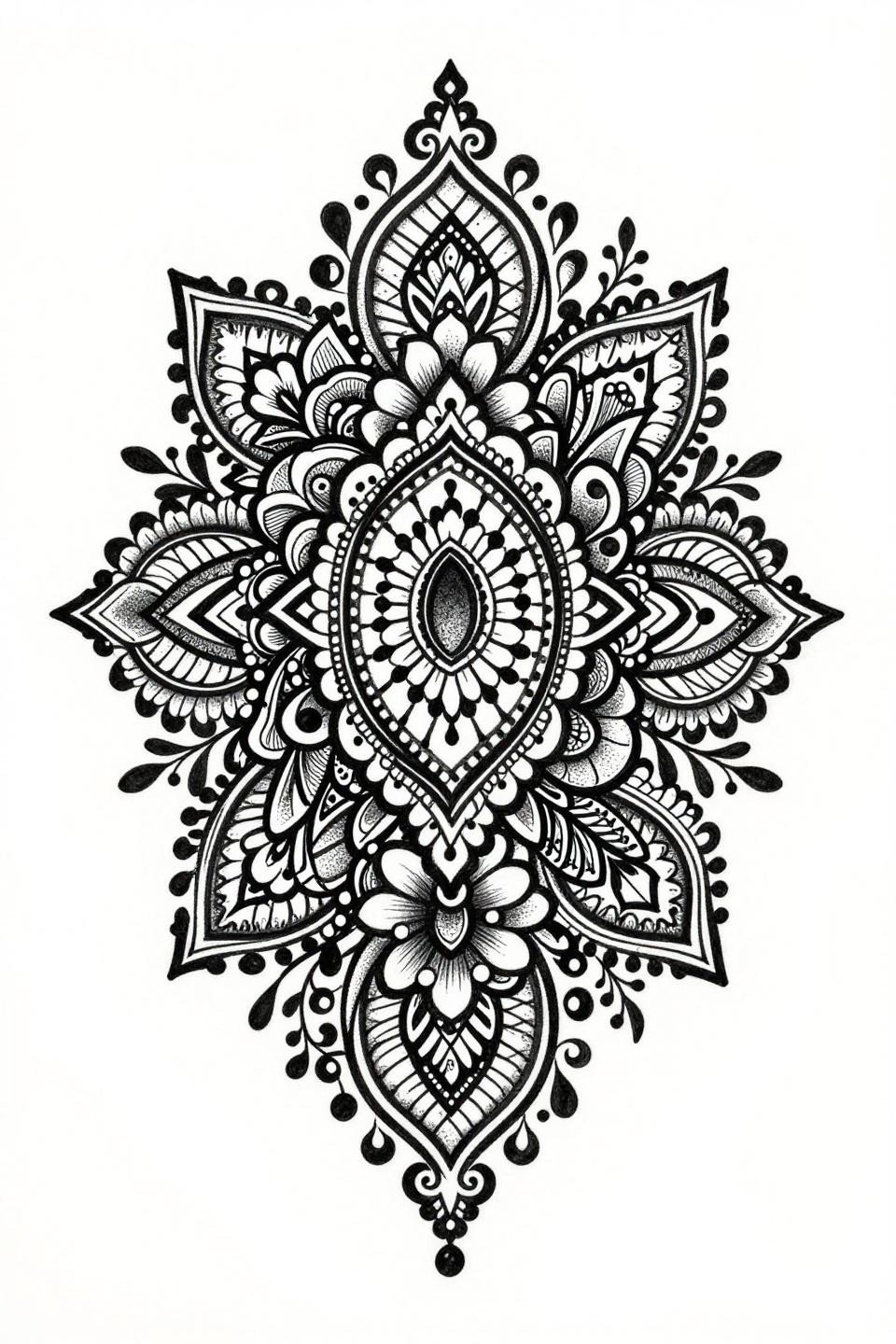
Botanical scientific illustration discipline applied to a dense floral arabesque, with interlocking paisley motifs and stipple dot gradient that goes from tight concentration at center forms to open air at the Pakistani scroll border edges. No grey wash, all dot-based tonal range.
The asymmetric flowing composition here adapts well to forearm or calf placement. Dot stipple without grey wash reads cleaner than mixed technique on olive and darker skin tones at year five and beyond.
Peacock Botanical Line Study With Chandelier Cascade
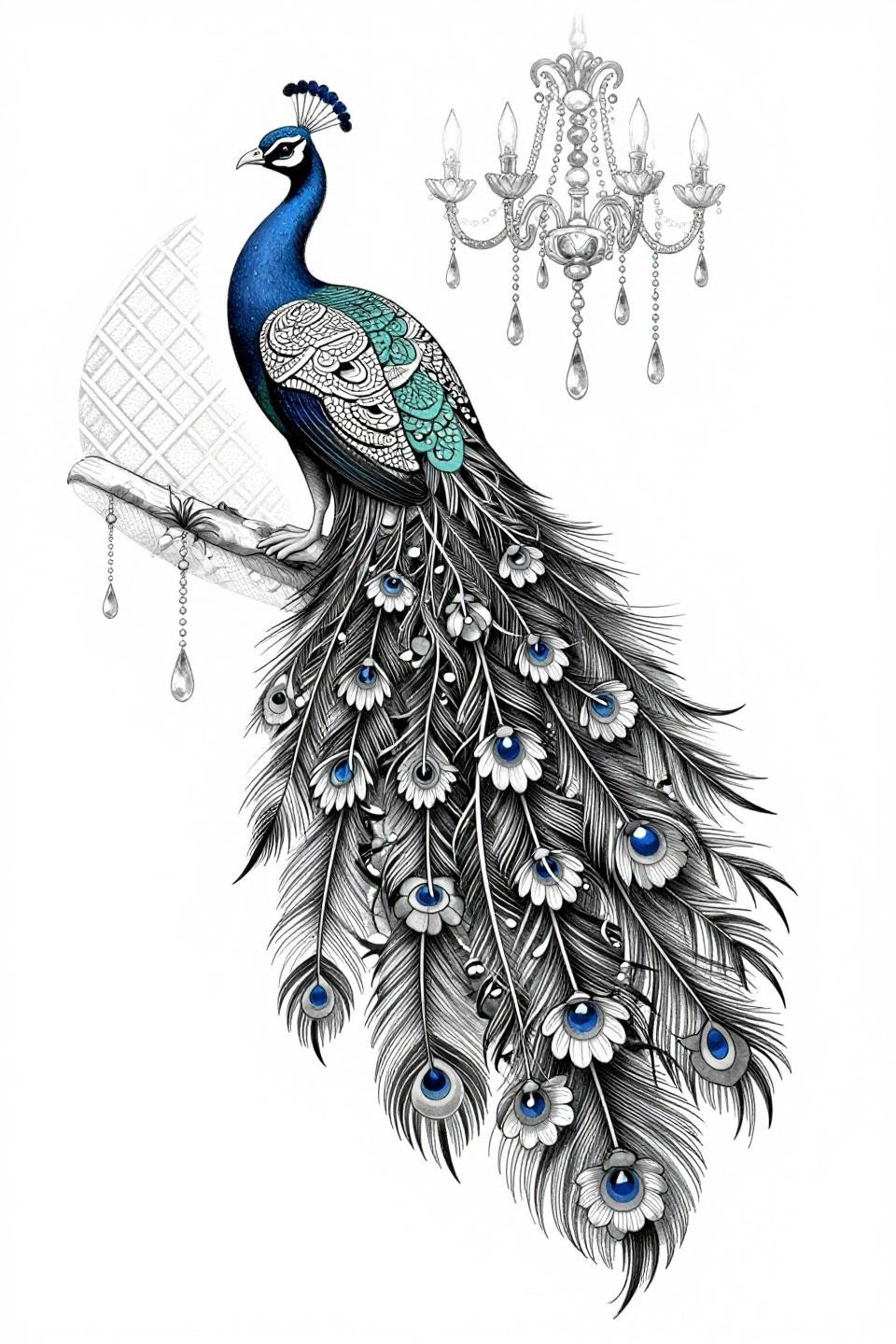
A peacock facing left unfurls into botanical vine fronds and geometric lattice, with chandelier droplet ornaments cascading in tiers below. Fine cone strokes and delicate dotwork embellishments keep the composition at illustration weight rather than solid-fill weight.
This is the strongest reference in the set for asymmetric placements like the forearm or upper chest panel. The left-facing peacock composition follows the natural directional flow of the inner arm without fighting limb orientation.
Filter these by placement first, composition second. A reference that maps the wrong direction on your arm wastes the consultation. Pull three to five that match your actual surface, send them together as a directional set, and let your artist solve the scale.