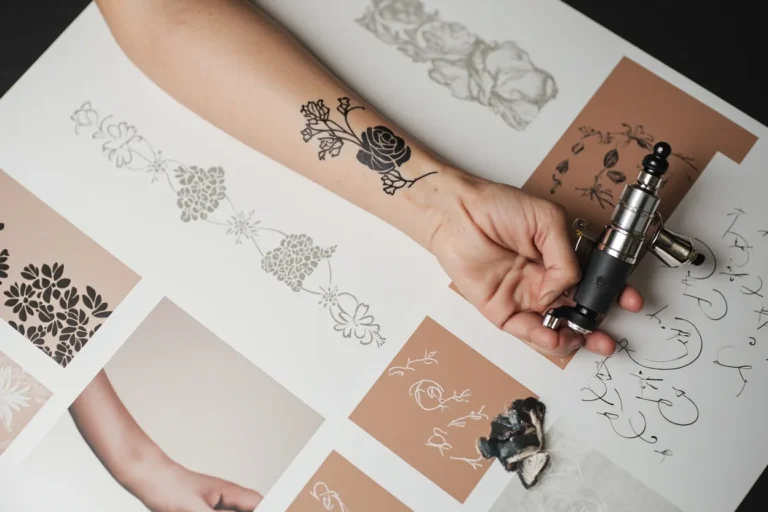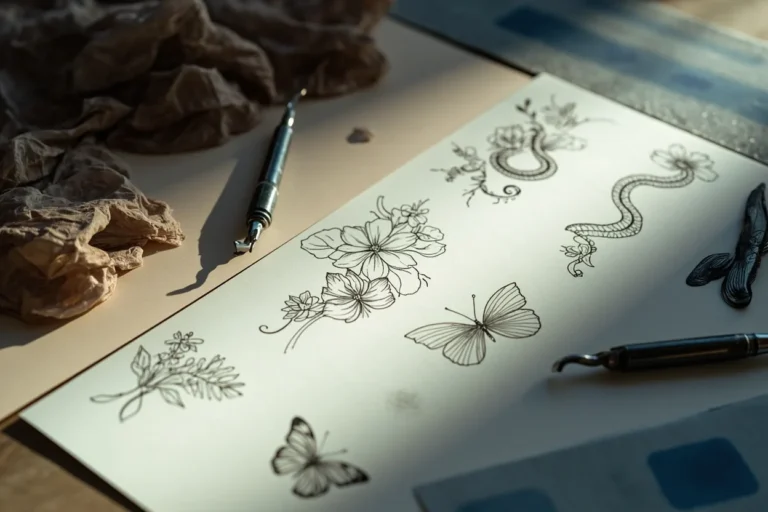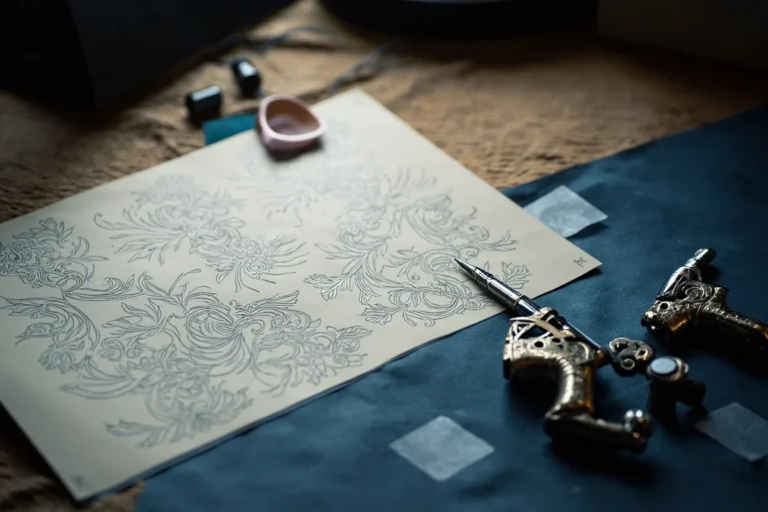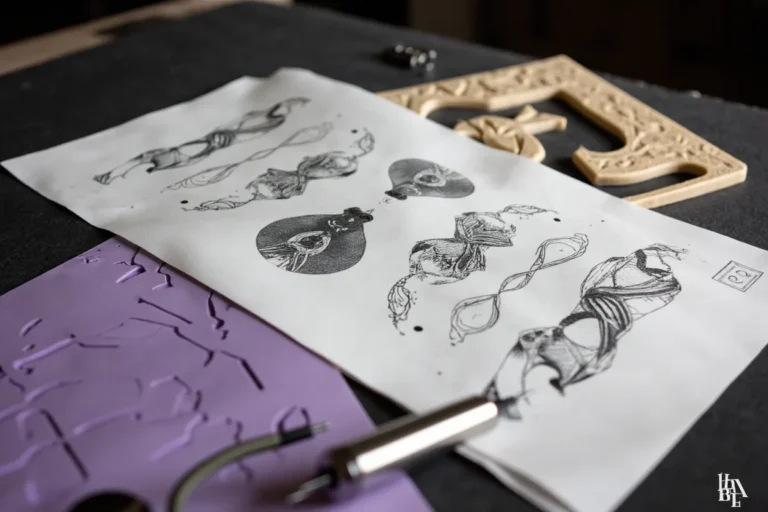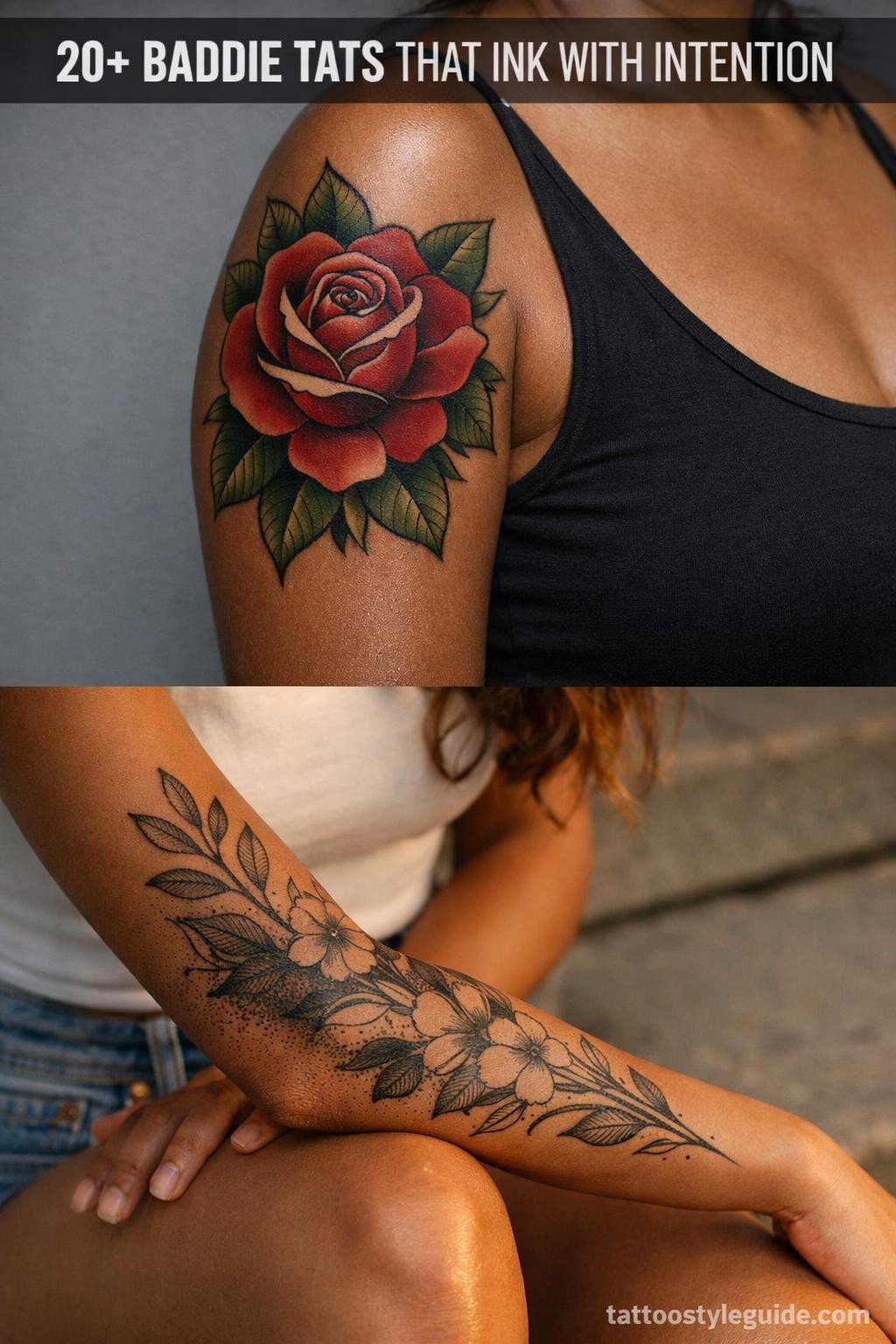
Baddie tats work because the aesthetic has a defined visual grammar: high-contrast motifs, deliberate symbolism, and compositions built to photograph clean. The problem is most people pick references based on vibes and end up with sizing or style choices that fail on skin.
The designs that hold up long-term share one trait. Bold outlines, usually 3RL weight or heavier, anchor the negative space that gives these motifs their edge. Fine line versions exist in this world too, but they demand a specific placement strategy to survive.
Woodcut Crown Flash That Photographs Like a Stamp
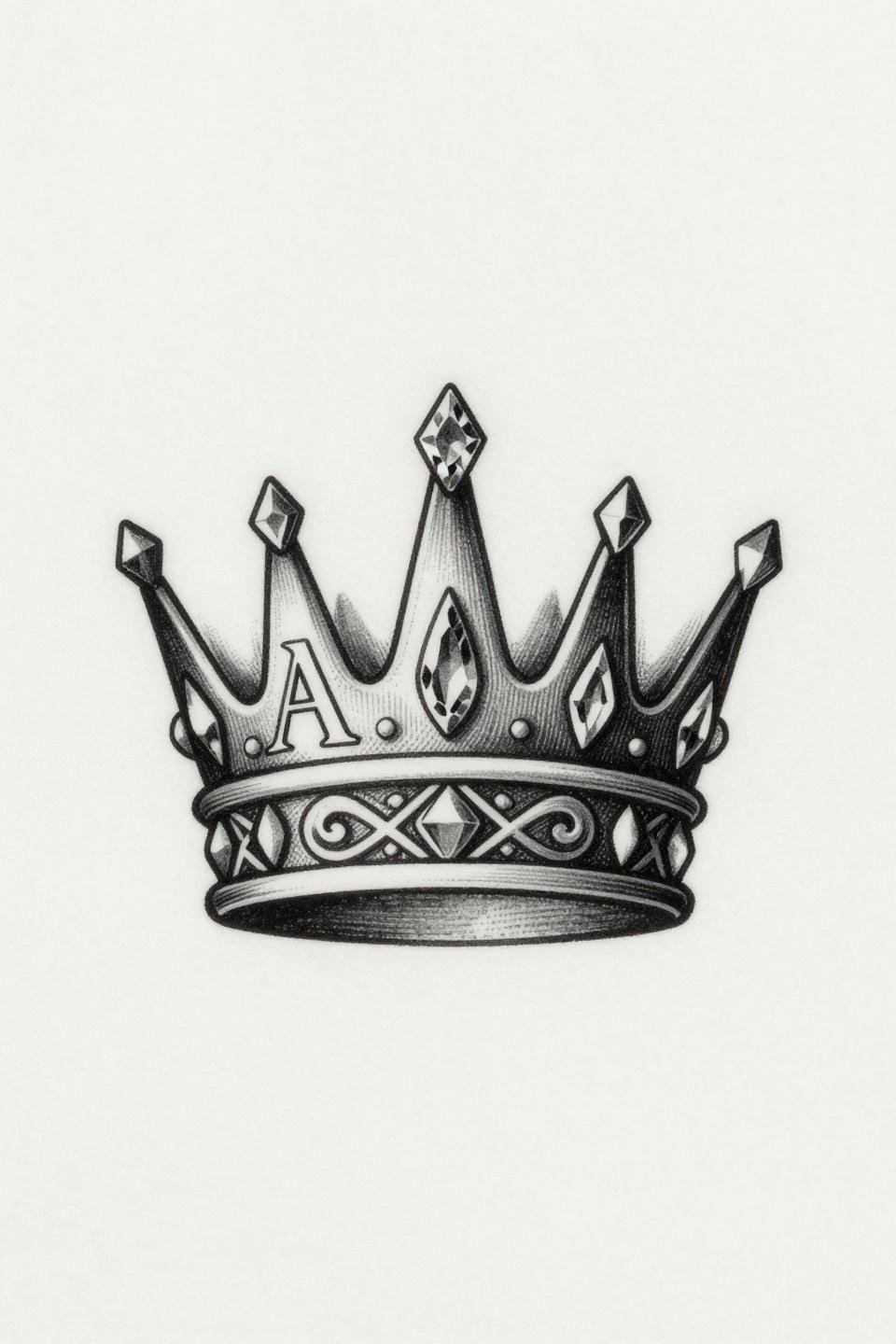
This woodcut-style crown uses dense crosshatch engraving to build shadow depth without grey wash, creating a print-block graphic weight that reads from across a room.
The bold black fields in this style age cleanly on all skin tones, because there is no fine gradient to break down. Solid saturation holds.
Celtic Knotwork Butterfly With Structural Logic Behind the Wings
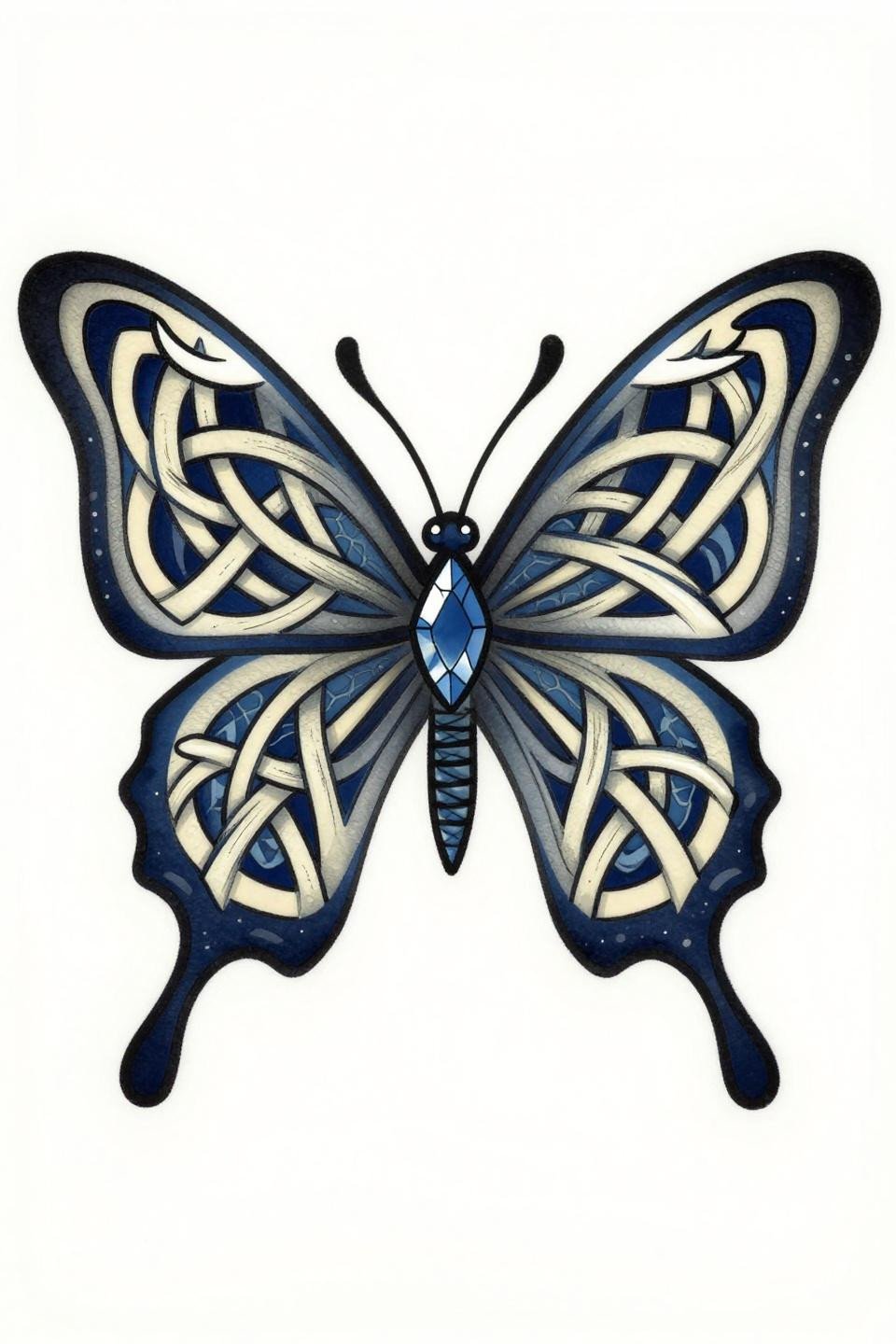
Celtic knotwork butterfly with nested hexagon tessellation in the wings and a diamond gem thorax, executed in navy and cream flat fills with bold 2-3pt outlines locking every interlaced ribbon.
This is one of the strongest candidates for back tattoo placement ideas for women, because bilateral symmetry along the spine reads as intended when the composition is this tightly mirrored.
Woodcut Lips: When a Simple Motif Gets a Technical Upgrade
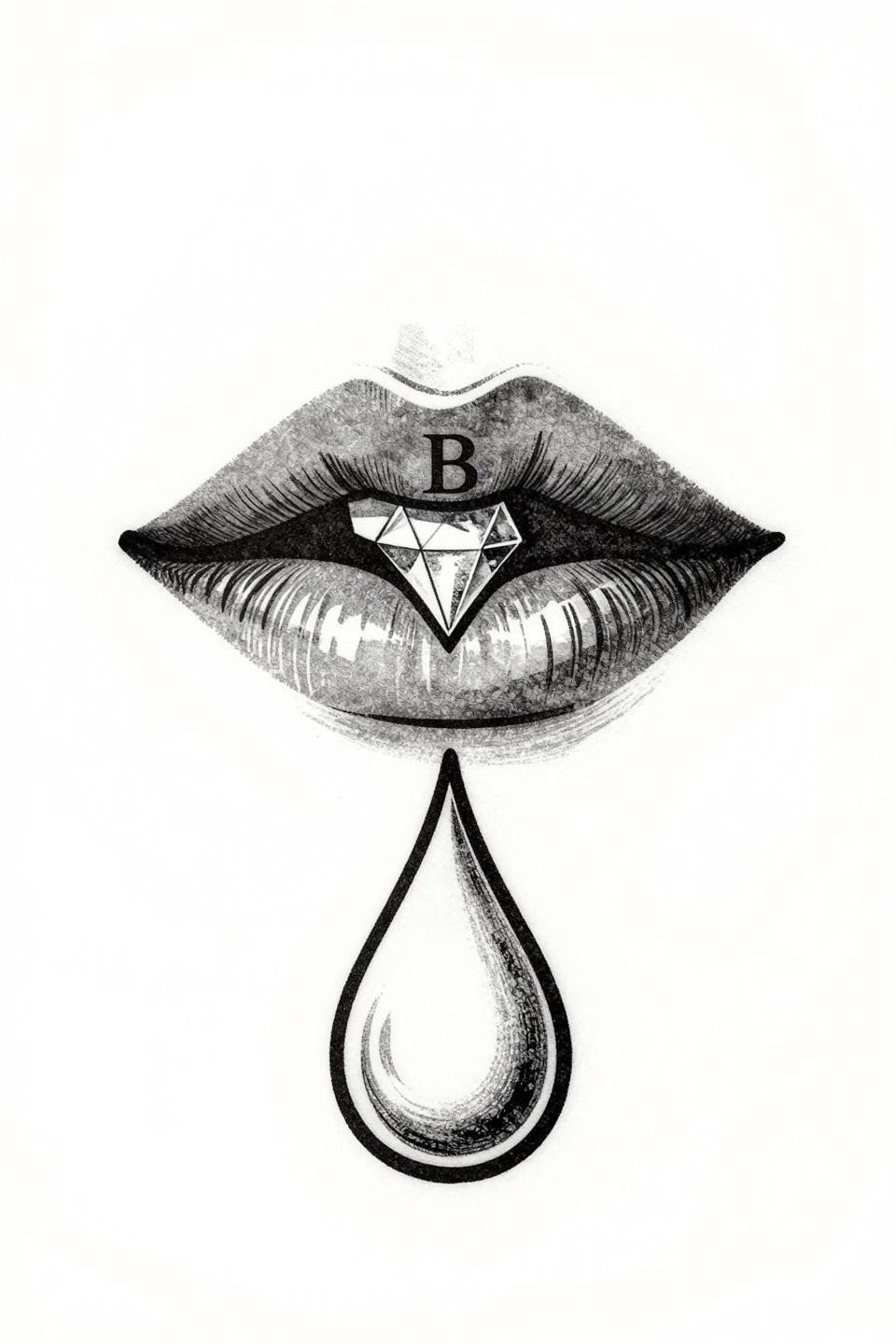
Lips in woodcut block print style, with sharp angular cupid peak points and a centered diamond cutout, rendered in parallel line engraving that builds shadow through density rather than wash.
On the forearm, this motif scales to roughly 2×3 inches without losing legibility. Below that, the crosshatch lines risk crowding as the skin moves.
Old School Dagger With the Color Restraint That Makes It Age
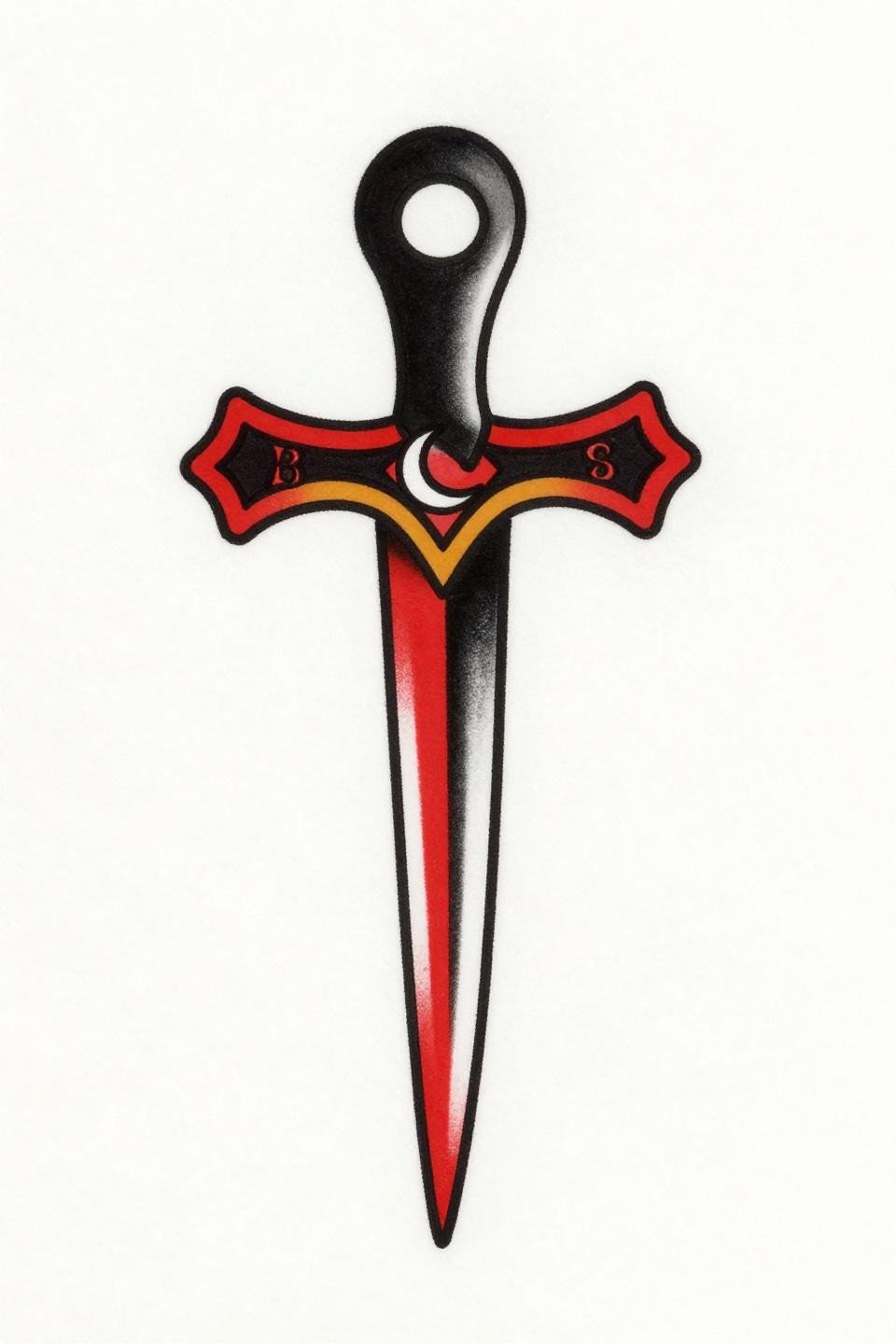
Old school sailor dagger with a crescent moon at the blade midpoint and ornate crossguard, executed in the two-color restraint of crimson red against solid black with flat fill construction.
Two-color traditional flash like this holds its legibility for decades. The red stays saturated longer on this style because there is no blending to muddy the field boundary.
Pistol Flash Where the Mandala Frame Does the Heavy Lifting
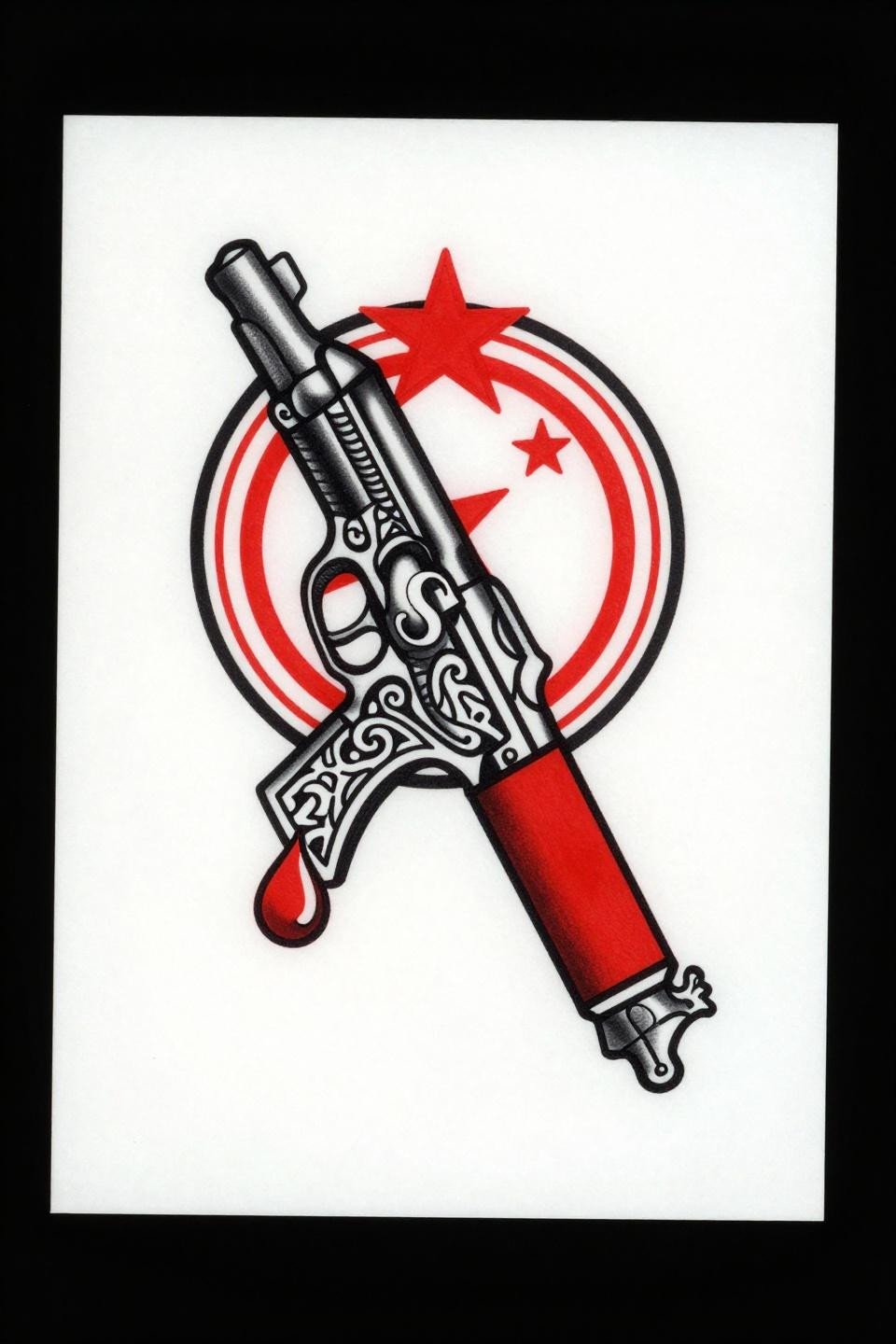
Old school pistol set inside a radiating star mandala frame, with filigree trigger guard and a teardrop below the muzzle, all in crimson red and solid black flat fill construction.
The circular frame makes this exceptionally versatile for upper arm or shoulder cap placement, where a contained shape sits better than a floating motif.
Fine Line Lips: The Instagram-Optimized Version Has a Shelf Life
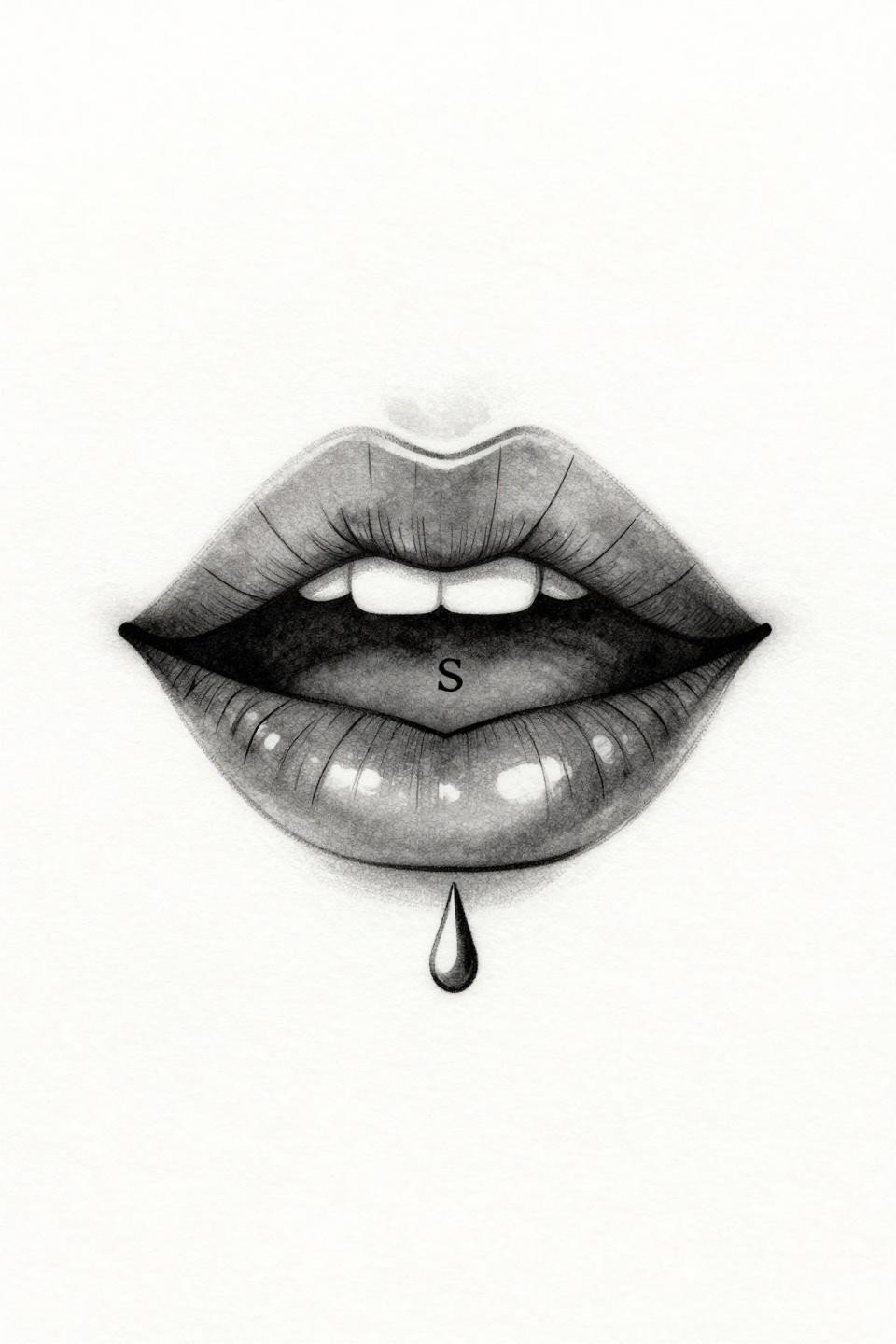
Fine line lips with geometric corner peaks and a diamond cutout at the center mouth line, executed in hairline 0.5mm single-needle strokes with open negative space throughout.
Single needle work like this needs placement away from high-friction zones. Ribcage, sternum, or upper back will hold the line weight far longer than wrist or collarbone.
Chicano Grey Wash Revolver: Where Tonal Skill Becomes Visible
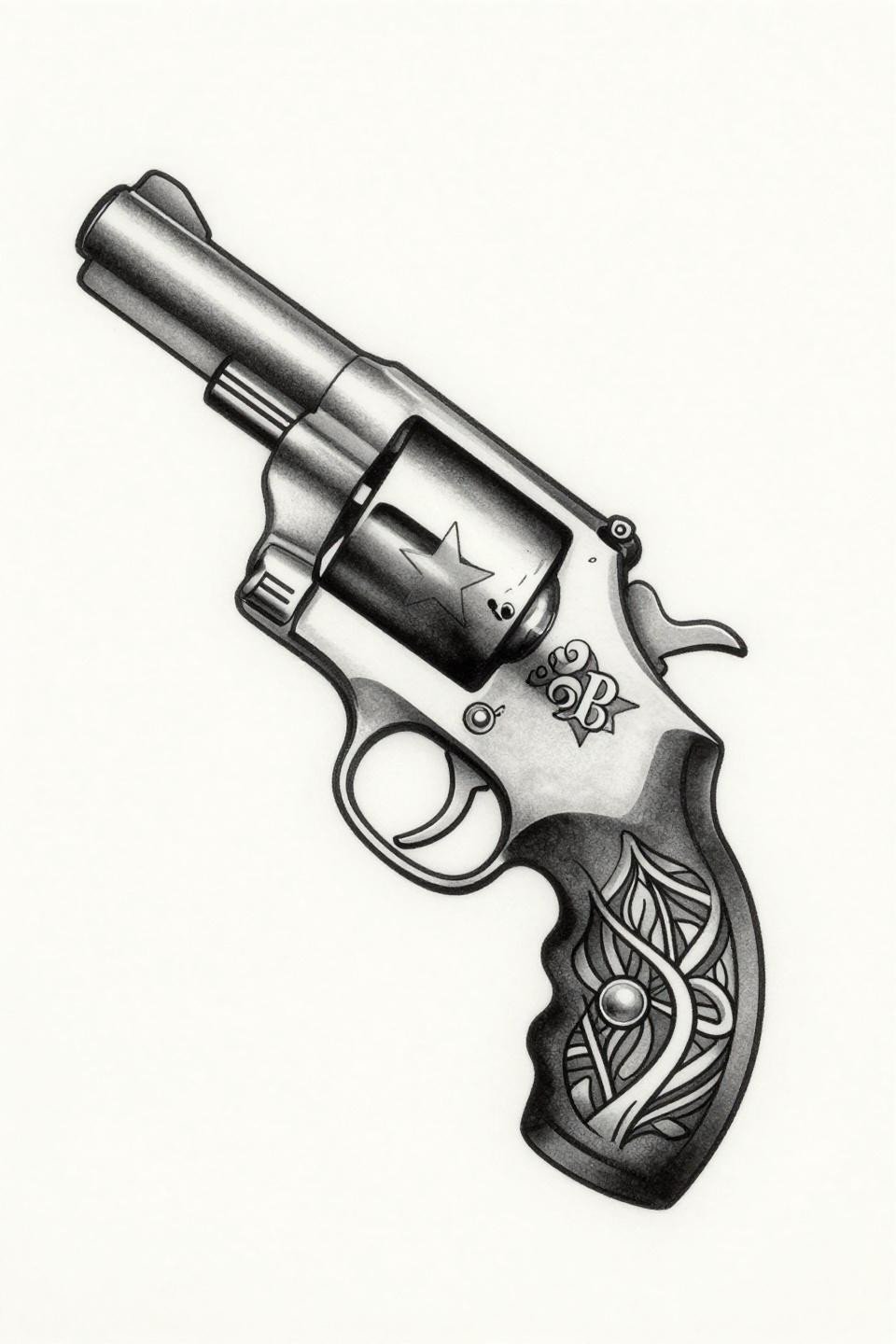
Chicano-style revolver with whip shading from dense black to open grey wash, filigree trigger guard, and a five-point star in the chamber, anchored by solid black outlines throughout.
Grey wash diluted this cleanly on white paper is the reference point. Ask your artist for their healed grey wash portfolio specifically, not just fresh shots.
Art Deco Butterfly Where Geometry Replaces Every Organic Curve
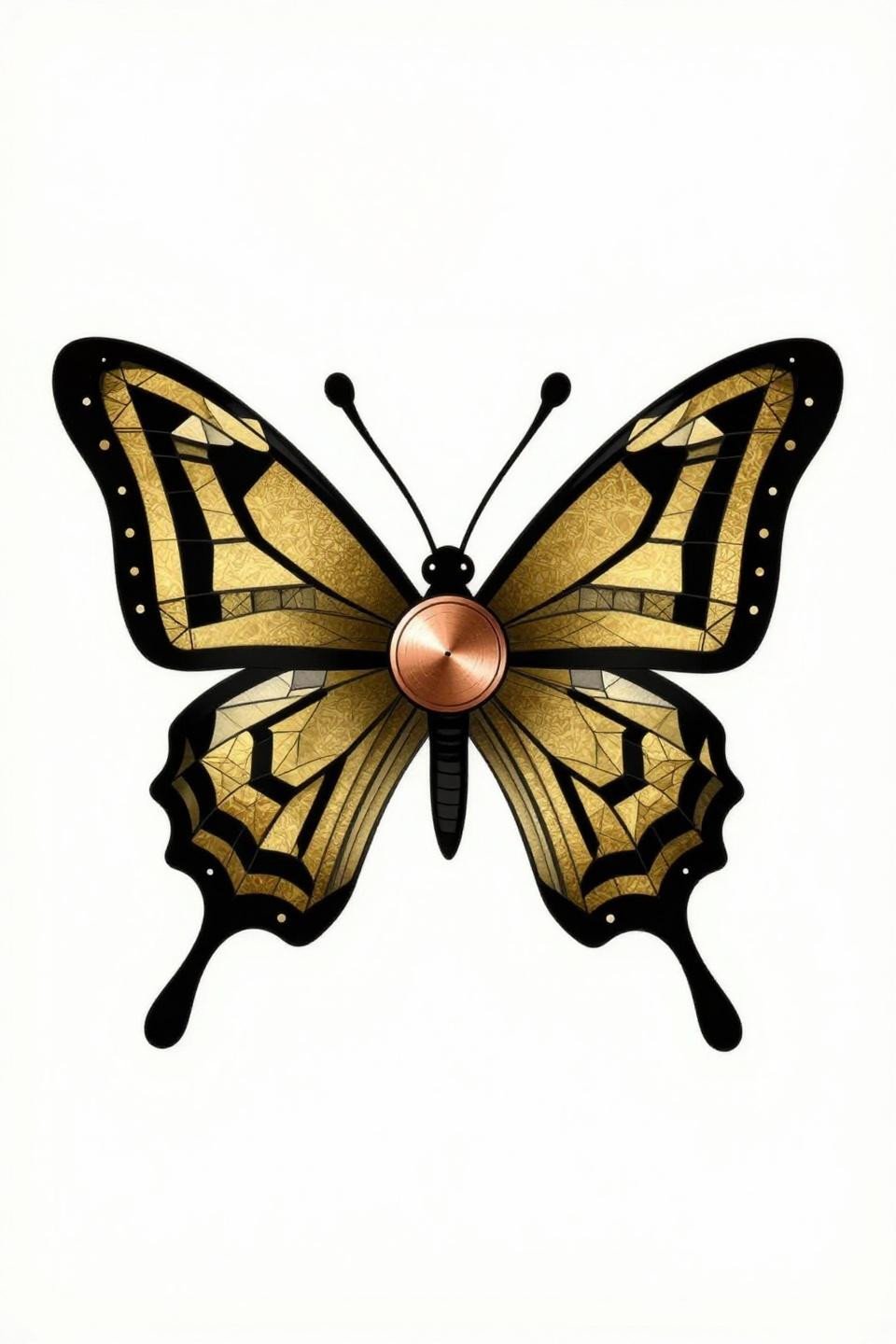
Art deco butterfly with angular wings built on nested diamond lattice and a copper medallion thorax, rendered in burnished gold and solid black with compass-drafted vector precision.
Gold ink on skin behaves differently than gold on flash paper. Confirm your artist has experience with metallic pigments before committing to the color story here.
Watercolor Pistol: The Style That Needs an Anchor or It Fades
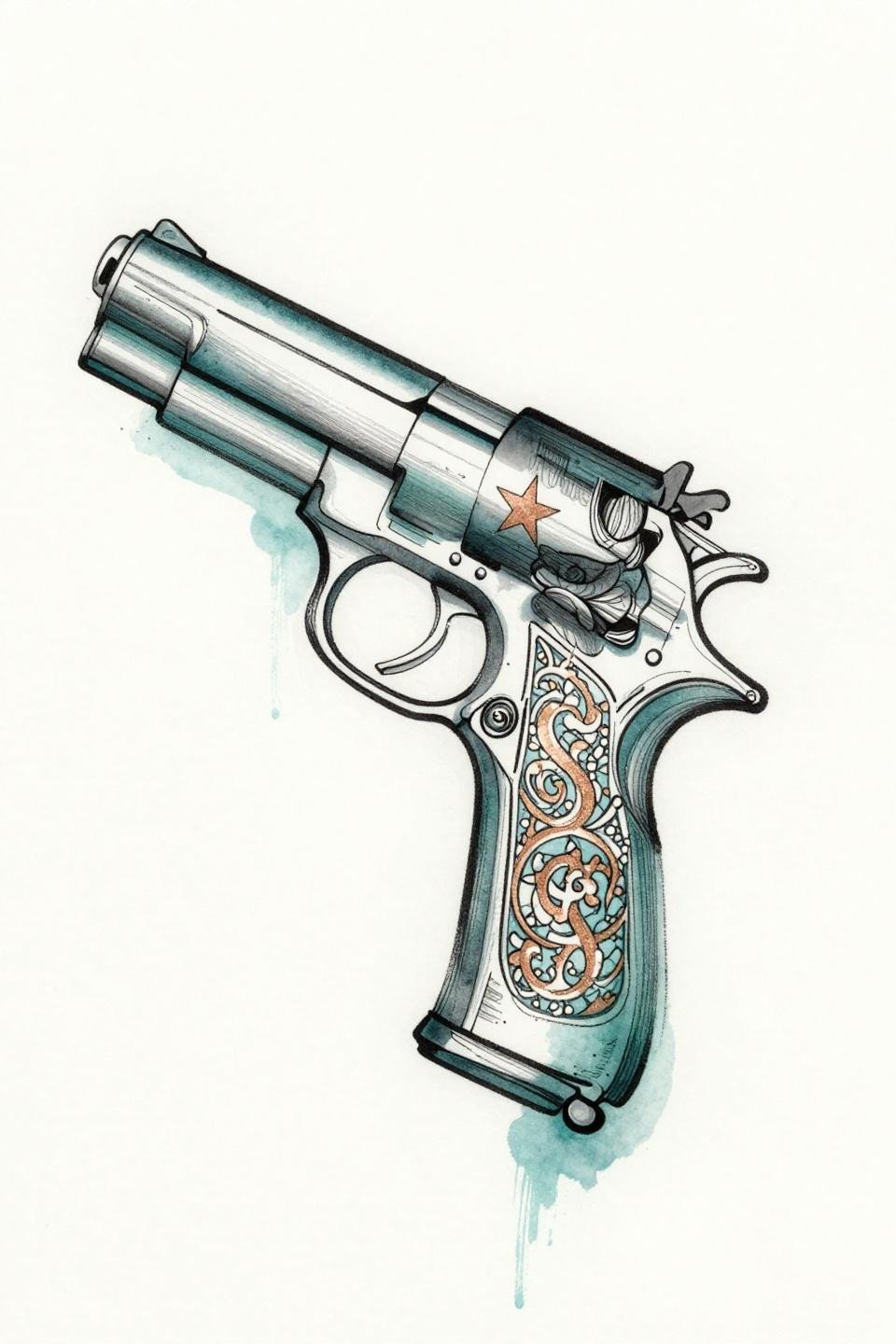
Watercolor pistol with teal splash fields bleeding behind clean linework, with a copper metallic accent and a teardrop below the muzzle, the calligraphic ink marks giving it a wet-brush quality.
Watercolor without a solid anchoring outline blurs by year three to five. The black linework here is what saves it. That outline is not decorative, it is structural.
Single Line Lightning Bolt Built for Sleeve Negative Space
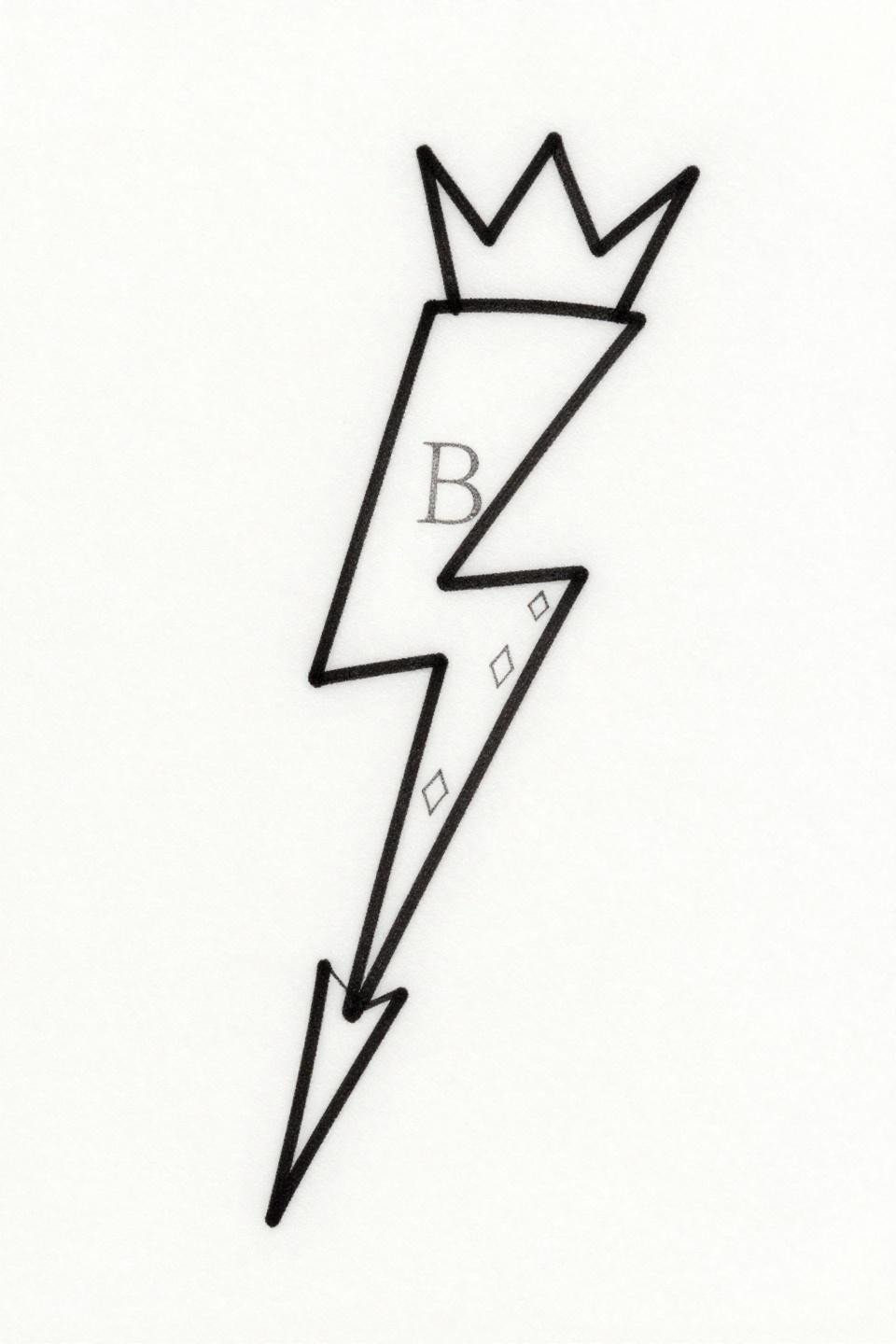
Lightning bolt executed in a single unbroken 0.5mm hairline stroke with a crown at the apex and negative space diamond cutouts along the shaft, zero fills and zero shading.
This is the strongest candidate in this collection for sleeve filler. The diagonal flow maps to the arm’s long axis, and the open negative space lets surrounding pieces breathe.
Minimalist Crown With Mandala Architecture Behind the Simplicity
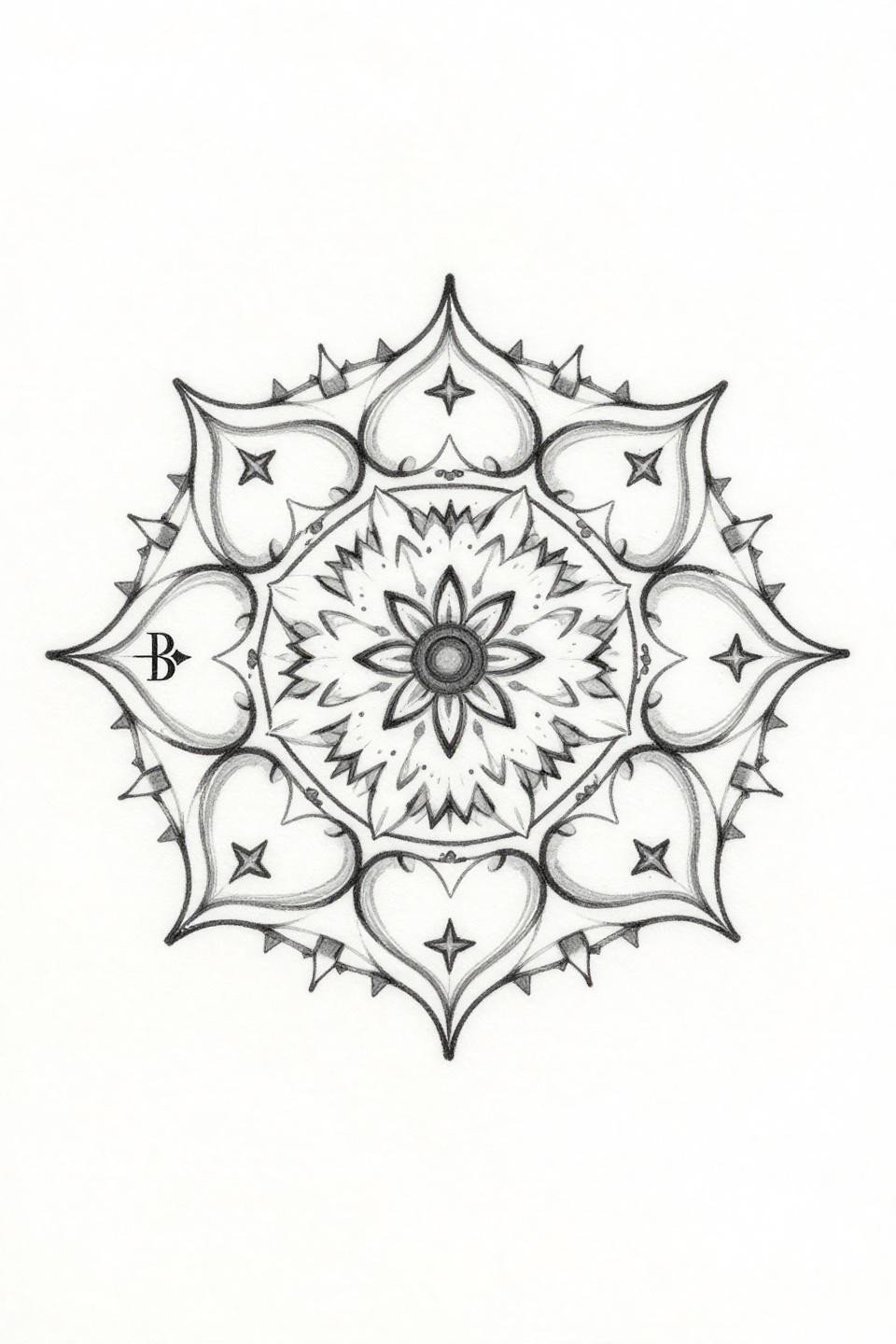
Single-line crown with five pointed peaks and four-point star symbols nested in the negative space between each peak, built on 0.5pt hairline strokes in a radial mandala composition.
This reads as an upper back or nape piece. The radial symmetry lands best when centered on the spine, where the body’s natural axis reinforces the composition’s logic.
Tribal Geometric Crown Where Negative Space Does the Design Work
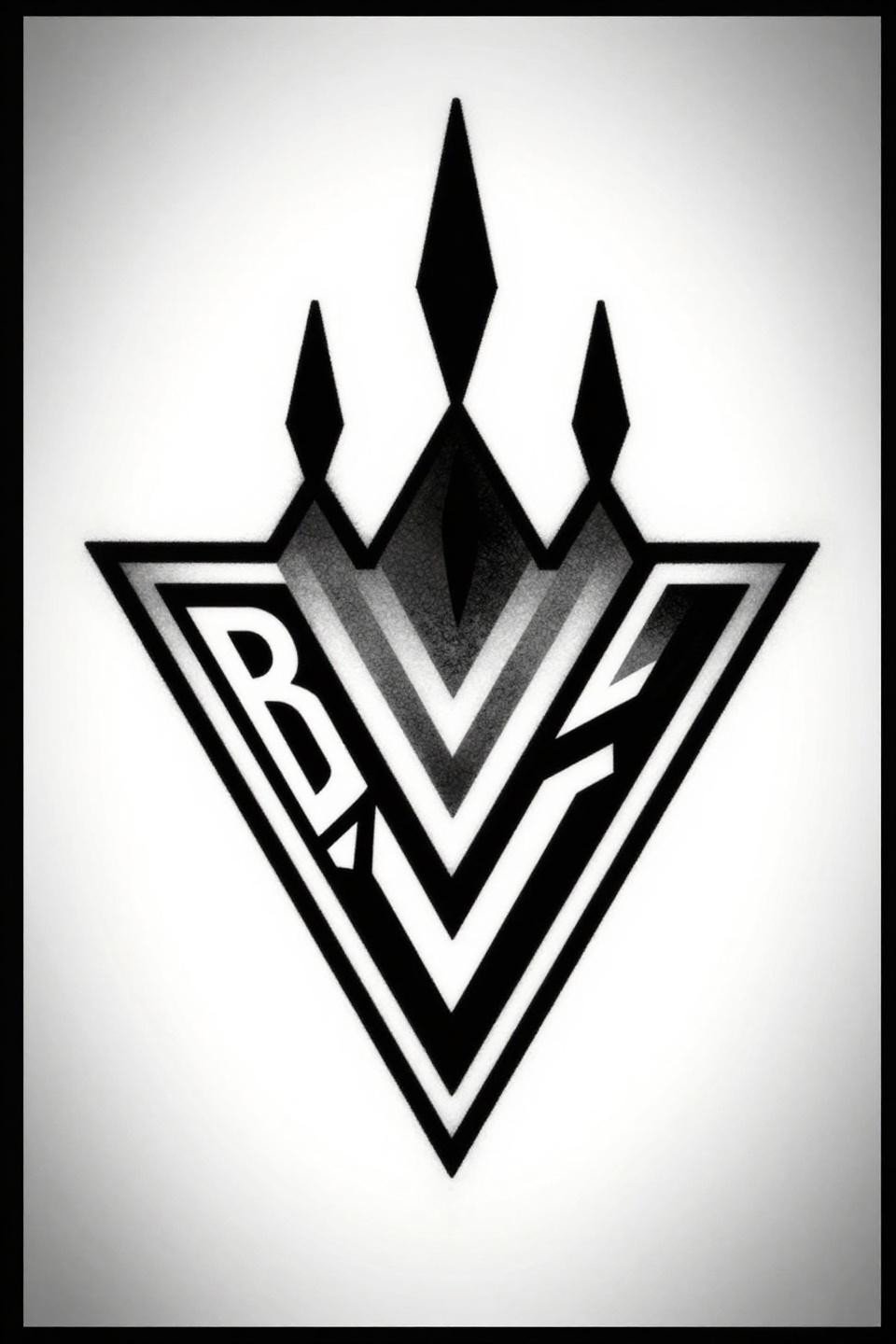
Tribal geometric crown with negative space gem cutouts at the peaks and angular triangle-based architecture, executed in bold 2-3pt black outlines with flat black fills and zero midtones.
On olive and darker skin tones, this high-contrast graphic approach outperforms any fine line version. The outline weight holds the silhouette where lighter-stroke designs can lose definition over time.
Crossed Revolvers in Traditional Flash: The Symmetry Is the Point
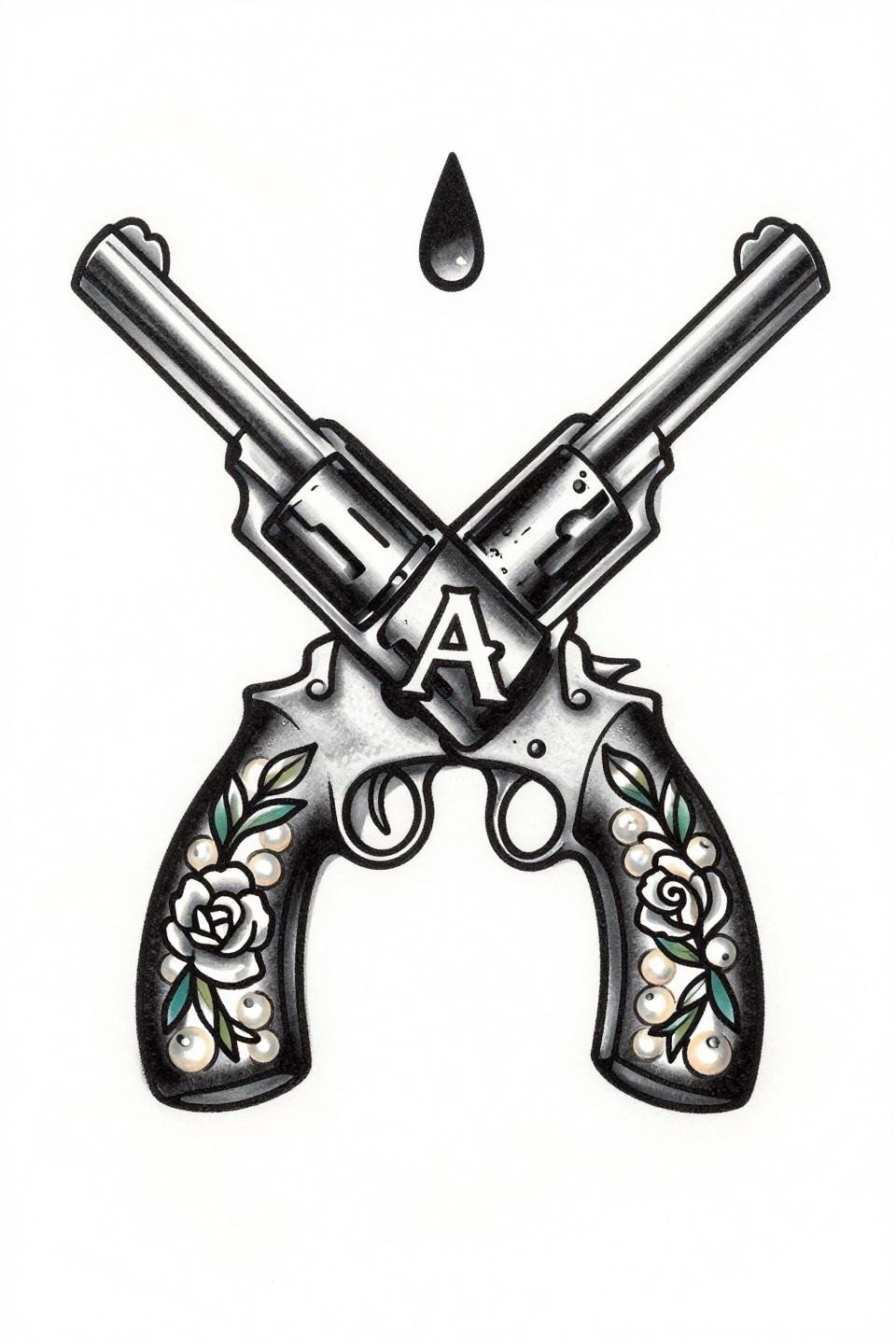
Twin revolvers crossed at the intersection with pearl handles engraved with rose vine detail, built in traditional American flash with bold 2-3pt outlines and flat solid fills, no grey wash at all.
The bilateral symmetry here demands exact placement. An artist who can center a piece by eye is good. One who uses a transfer grid for symmetrical flash is better. Check their portfolio for crossed-motif work specifically.
Fine Line Eye Geometry: When the Simplest Piece Has the Highest Stakes
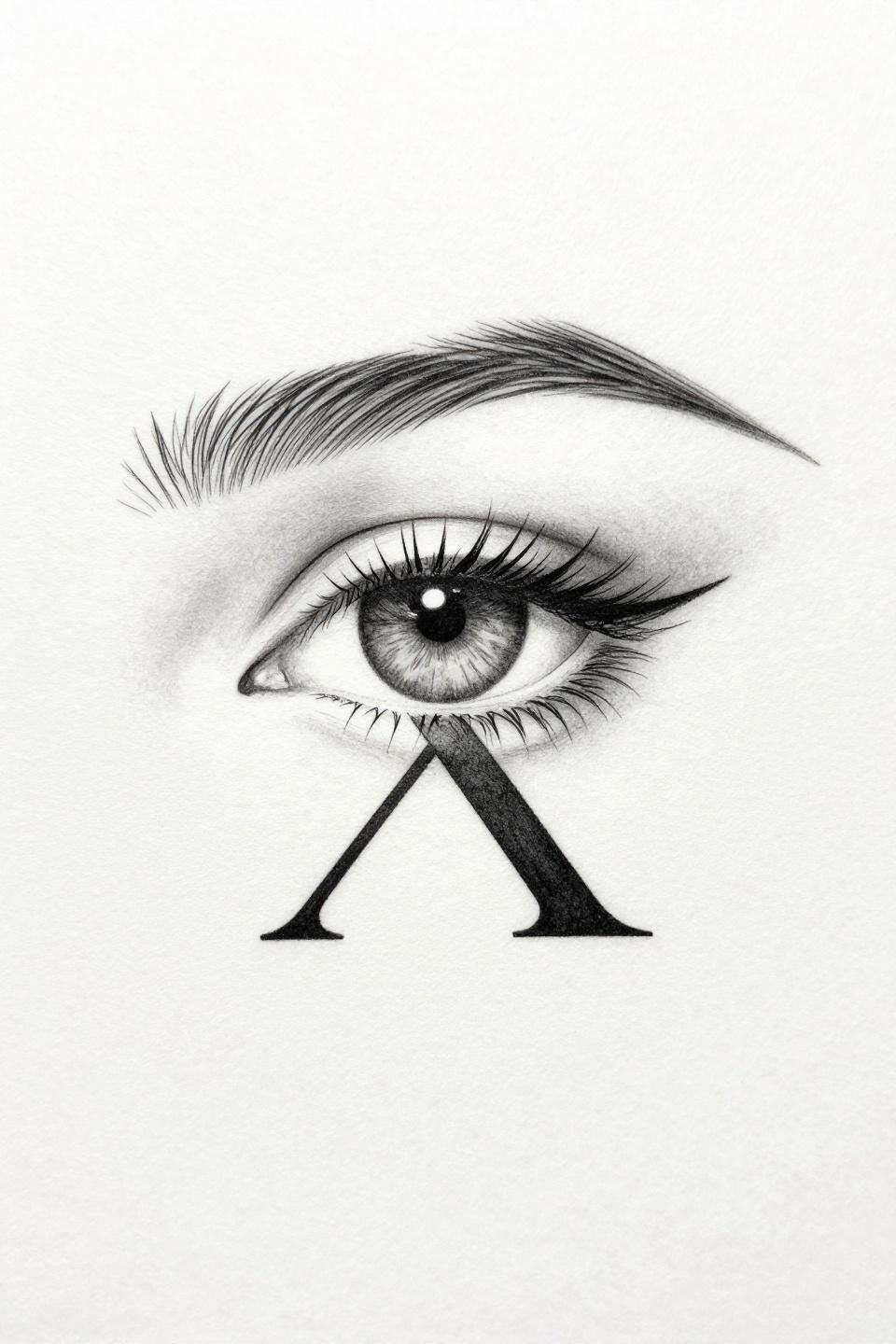
Minimalist eye in hairline 0.5mm single-needle linework, double-line brow arch, negative space iris with a single dot pupil, and a serif X overlaid at a 45-degree angle intersection.
Small single needle pieces like this need a protected placement to hold. Sternum, ribcage, or upper arm give this the shelf life the design deserves. Finger or wrist placement will require touch-up within two years.
Japanese Irezumi Serpent Crown Built for Longer Formats
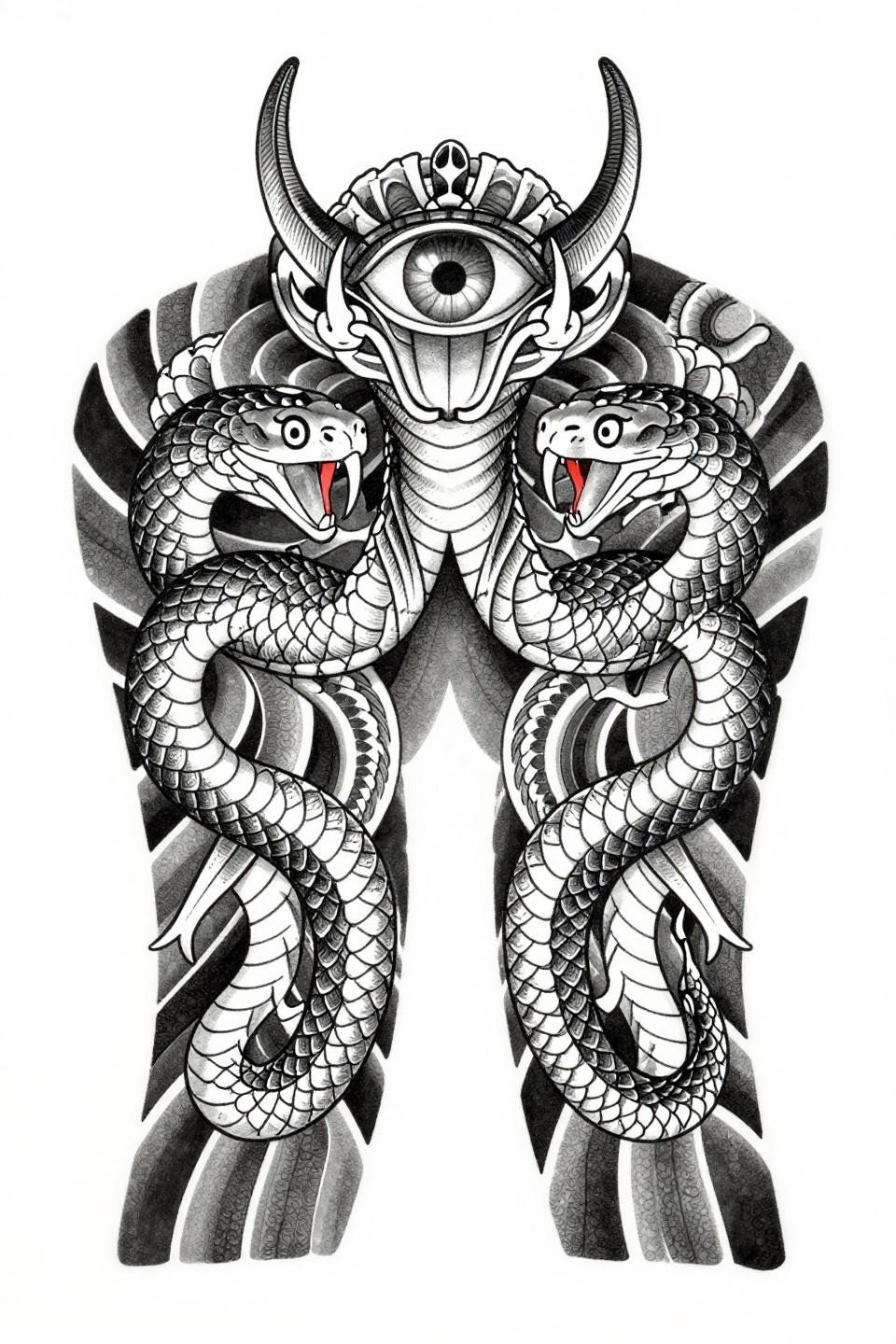
Japanese irezumi serpent crown with twin snakes coiling outward in bilateral mandala formation, scales built from parallel line engraving at 0.5mm precision, and a gemstone eye at the apex.
This composition has the vertical range to anchor a back piece or run the length of a thigh. Artists who specialize in irezumi will pack the scale detail tighter and cleaner than generalists. Portfolio check is non-negotiable here.
Trash Polka Revolvers: The Aggression Is the Design Language
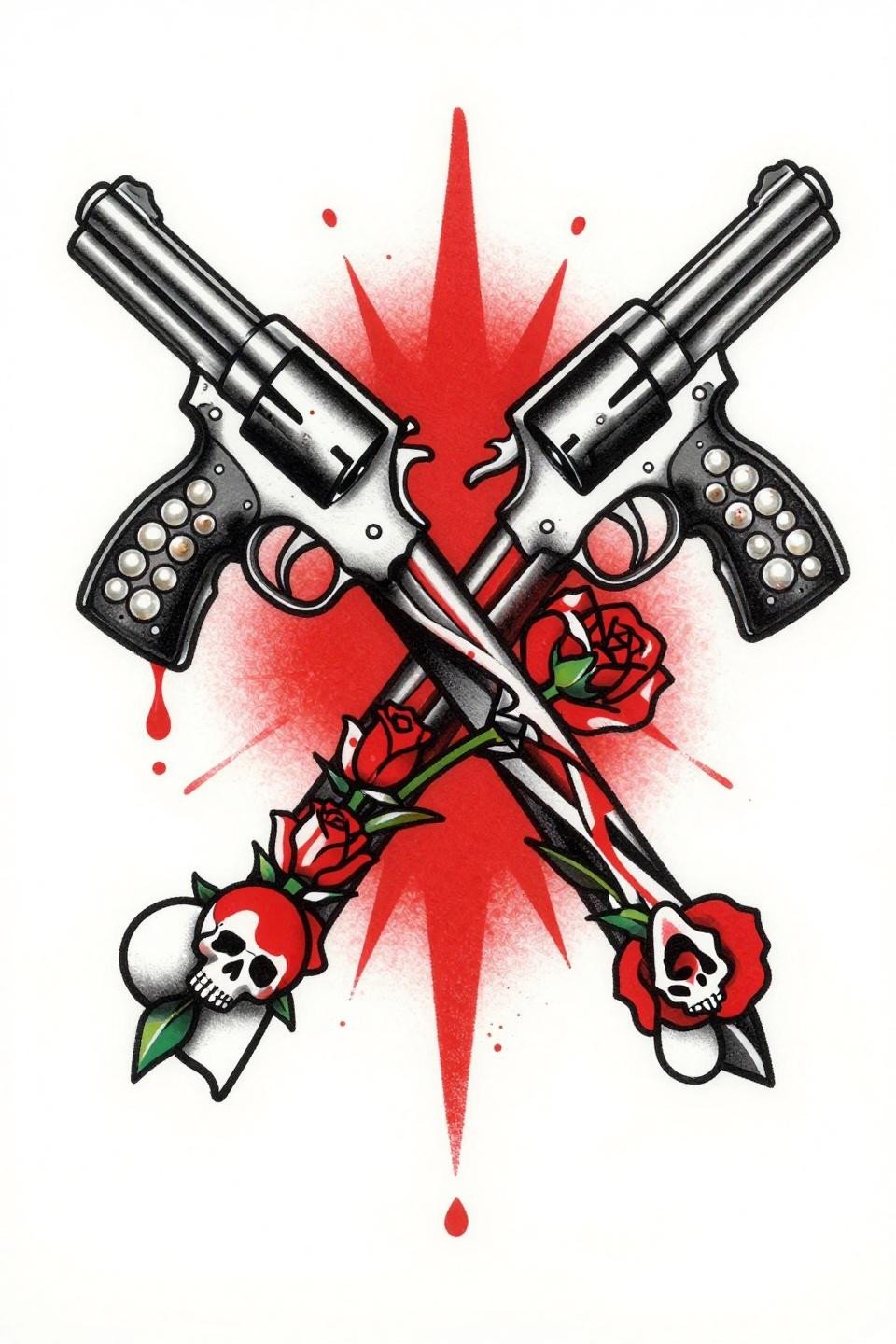
Crossed revolvers in trash polka with skull-inlay pearl grips, a rose stem weaving between triggers, blood dripping from each muzzle, and splattered crimson red accent fills against bold black linework.
Trash polka is one of the few styles where intentional asymmetry and ink splatter are structural, not sloppy. Find an artist who trained in this style specifically, the controlled chaos requires deliberate execution.
Art Nouveau Skull That Reframes the Motif Entirely
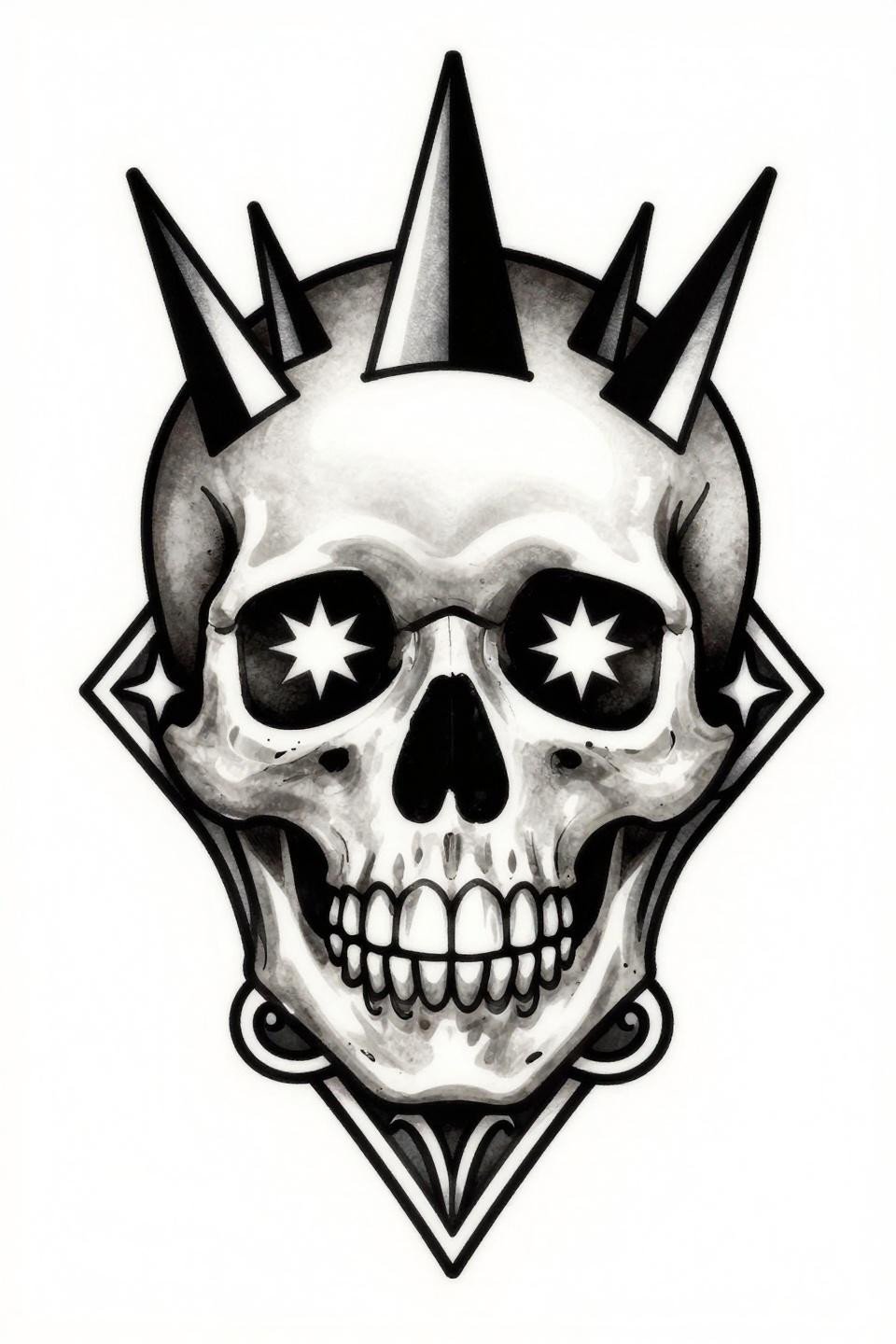
Art nouveau skull with geometric crown peaks, star symbols in hollow eye sockets, and ornate filigree scrollwork framing the base, built in bold 2-3pt outlines with grey wash midtones.
Grey wash dilution from dense to open, with no muddy midtones, is the skill signal here. Flat or patchy grey is the beginner tell on art nouveau shading. Check healed results.
Dotwork Dagger Serpent Where Stipple Density Does the Sculpting
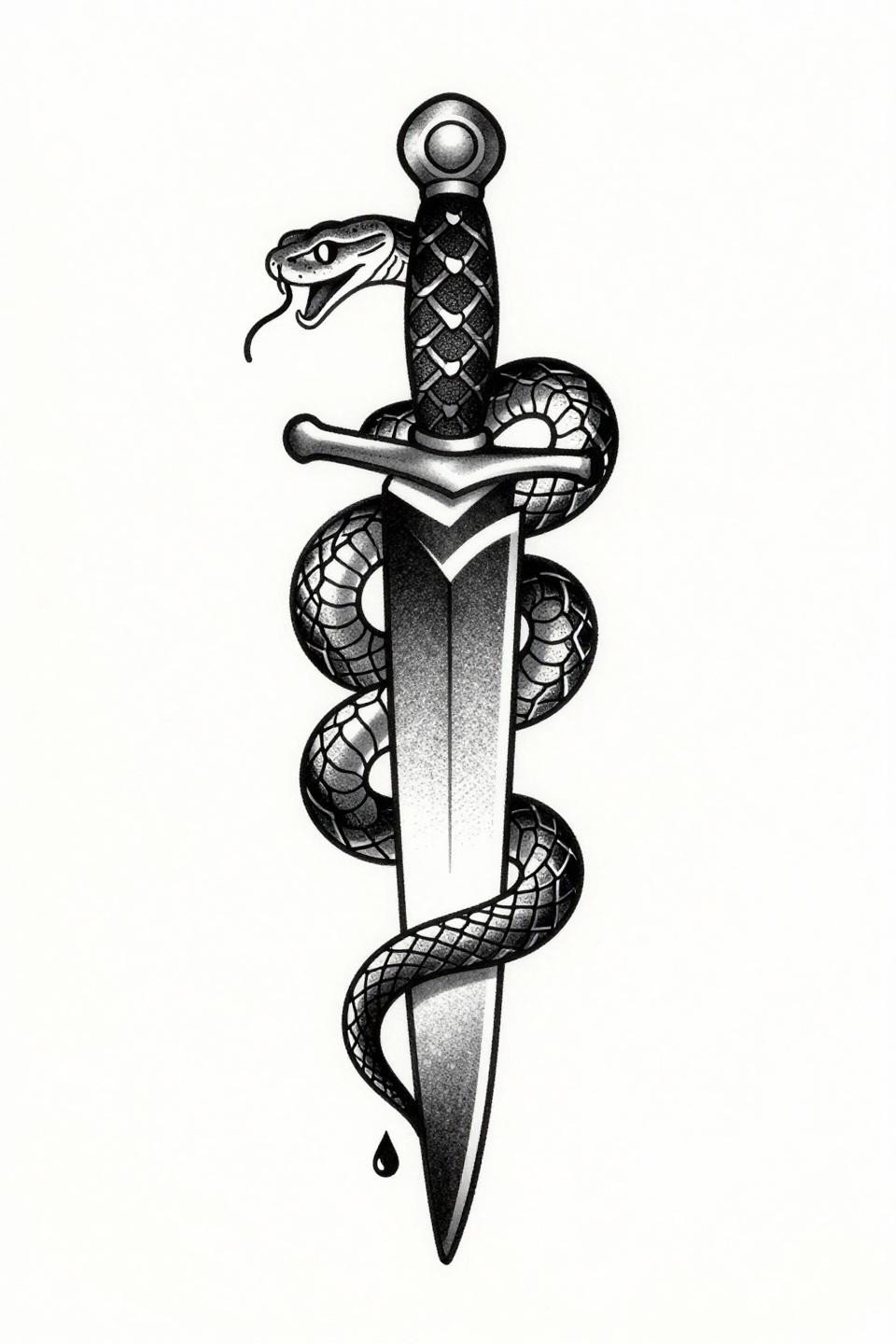
Blackwork dotwork dagger with a serpent coiling the blade, scales built from dense stipple clusters graduating to open dot fields, forked tongue at the hilt and a blood teardrop at the tip.
Consistent dot size across the full gradient is the quality signal in dotwork. Inconsistent dot size, where some clusters are heavier on one side, is the sign of an artist still developing speed control.
Single Line Crown Horns: Maximum Restraint, Maximum Risk
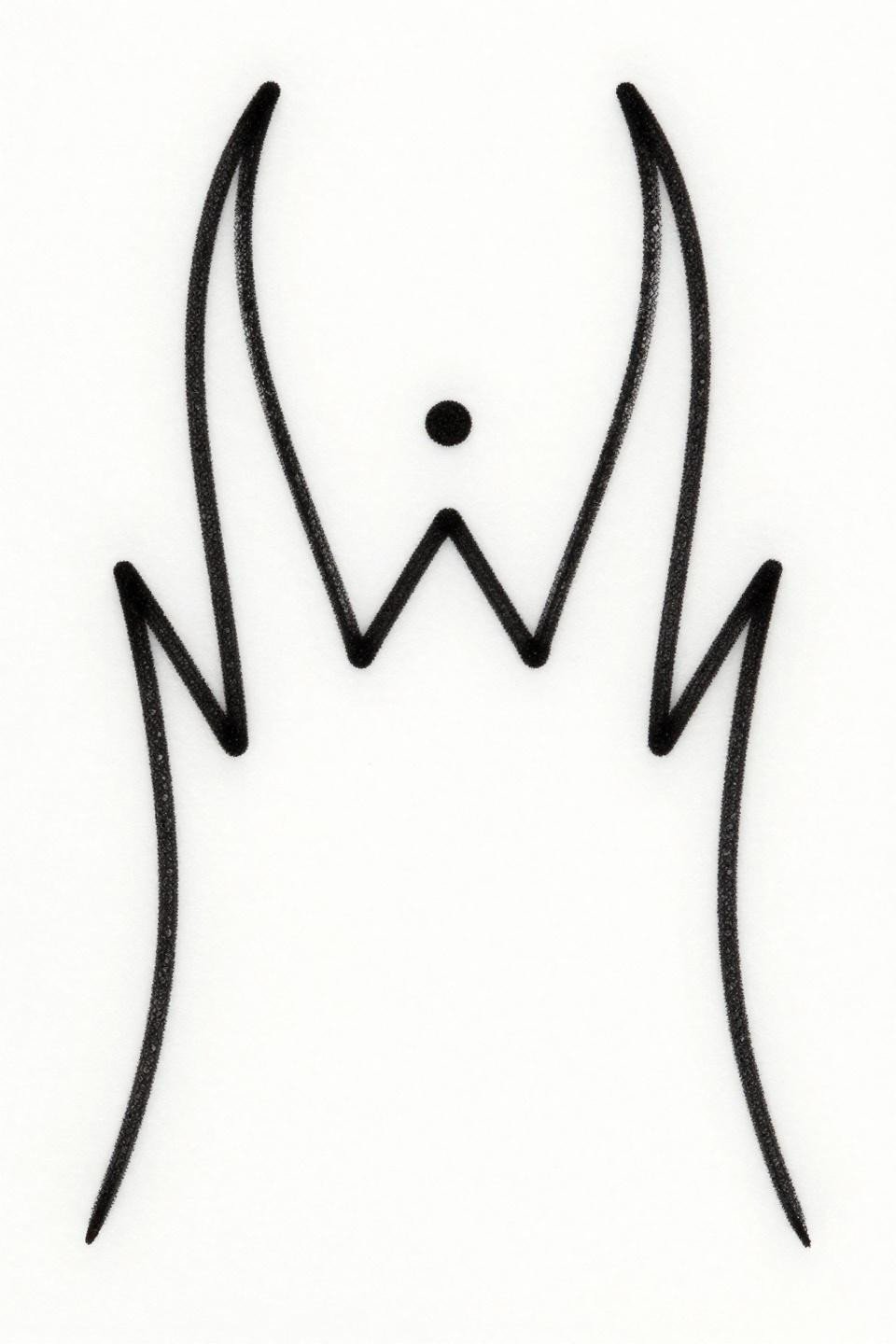
Twin crown horn peaks formed by a single unbroken 0.5mm hairline stroke with one geometric dot centered between them, zero fill and zero shading, pure line work only.
Continuous line pieces like this live or die by execution speed. An artist who pauses mid-stroke leaves a visible mark change. Ask specifically how they handle single needle continuous work before booking.
Neo-Traditional Rose Where the Thorns Signal the Aesthetic Shift
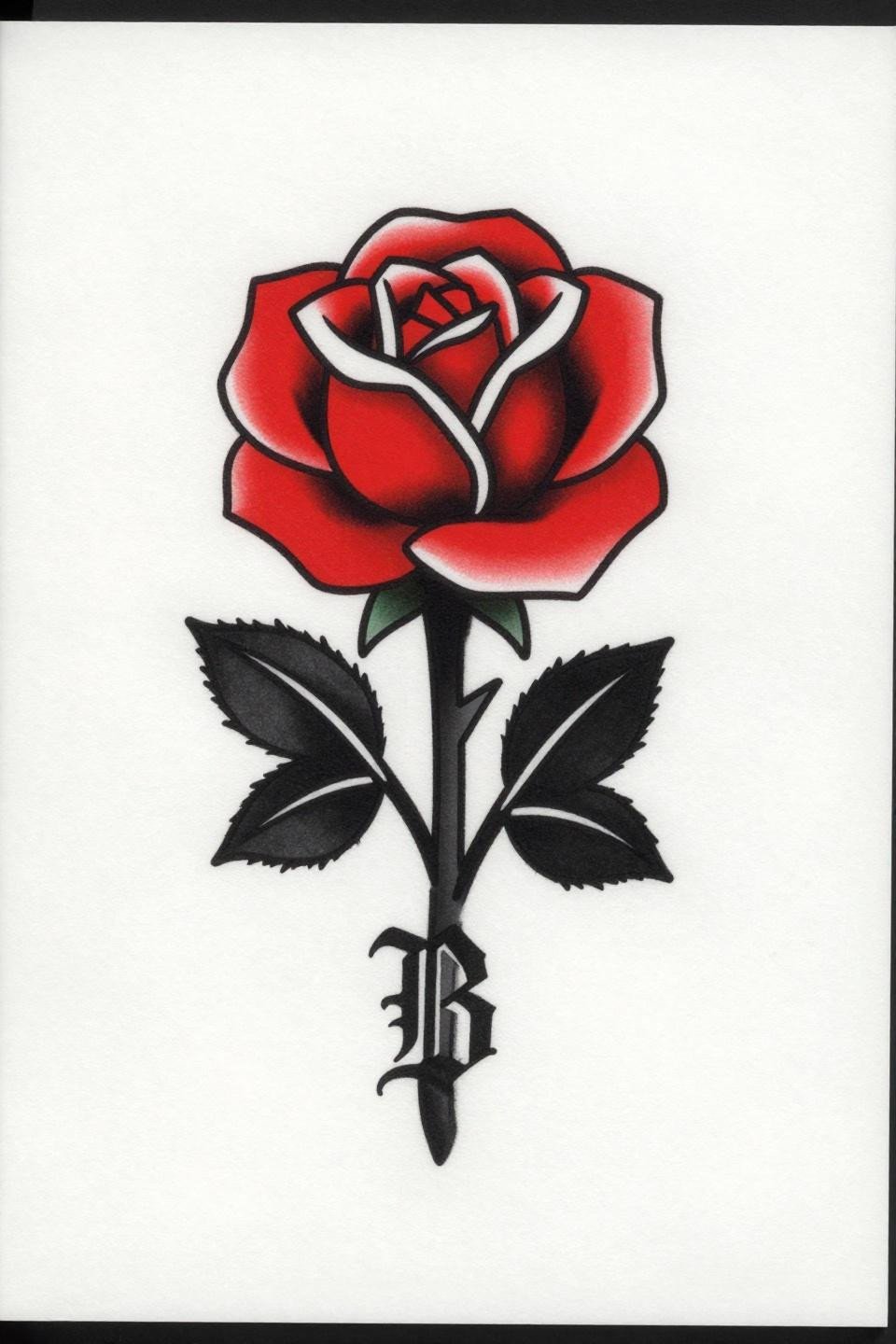
Neo-traditional rose with angular faceted petals, geometric sharp thorns on the stem, and a neo-gothic serif letter integrated at the base, executed in crimson red accents on solid black with 2-3pt outlines.
This is the piece that works as a standalone or as an anchor for back tattoo placement ideas for women who want to build outward from a single vertical motif over multiple sessions.
Save three to five of these references, not all twenty. Your artist needs a direction and a style target, not a full collection. Pick the ones where the motif, the technique, and your intended placement actually align, then book the consultation with that edit in hand.