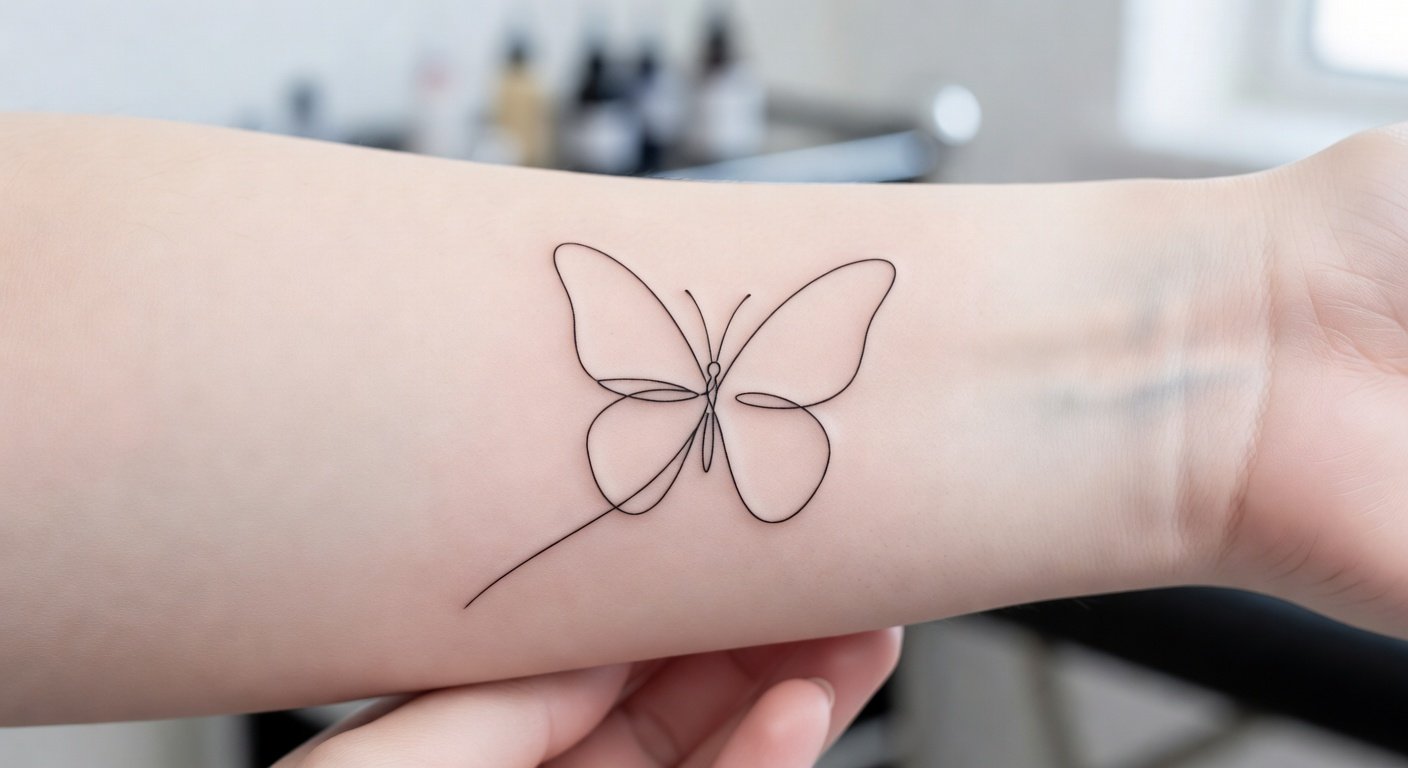
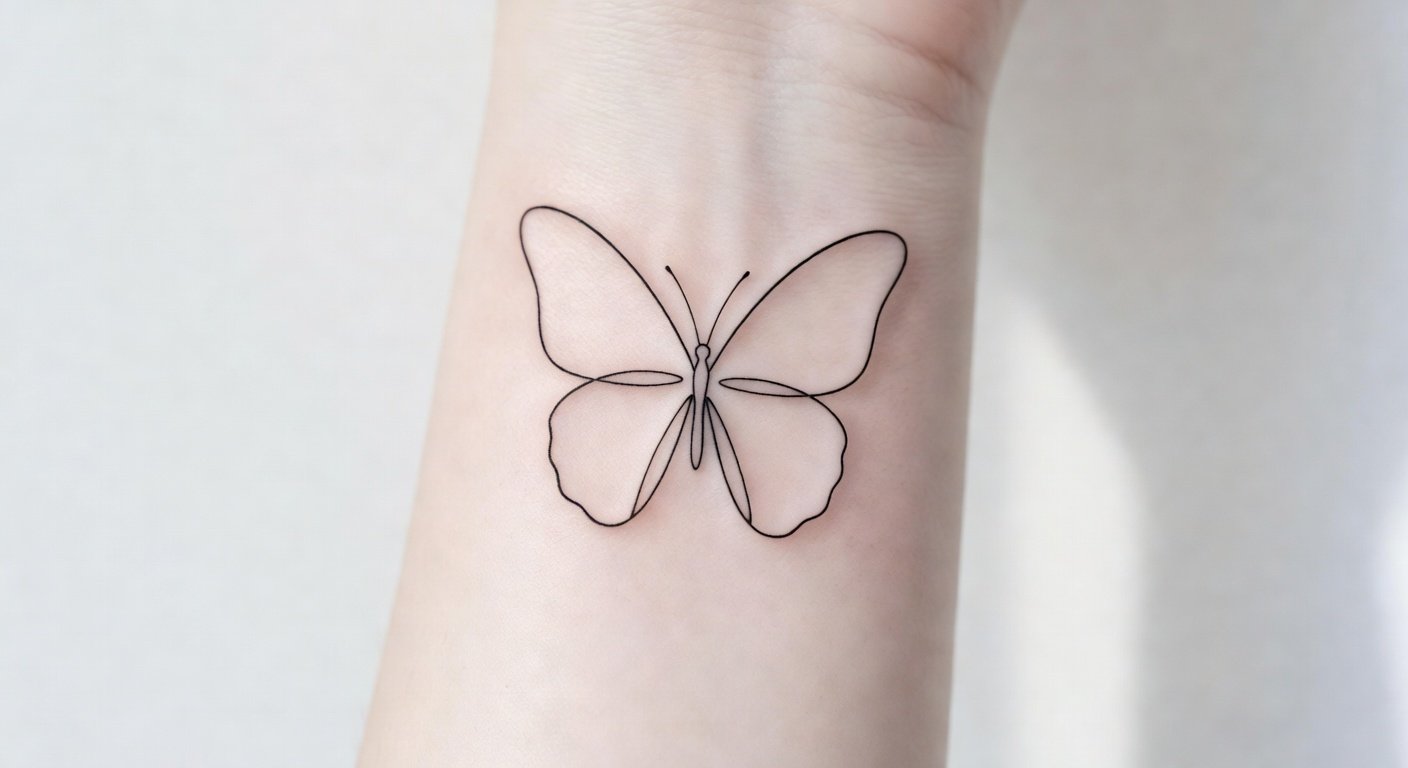
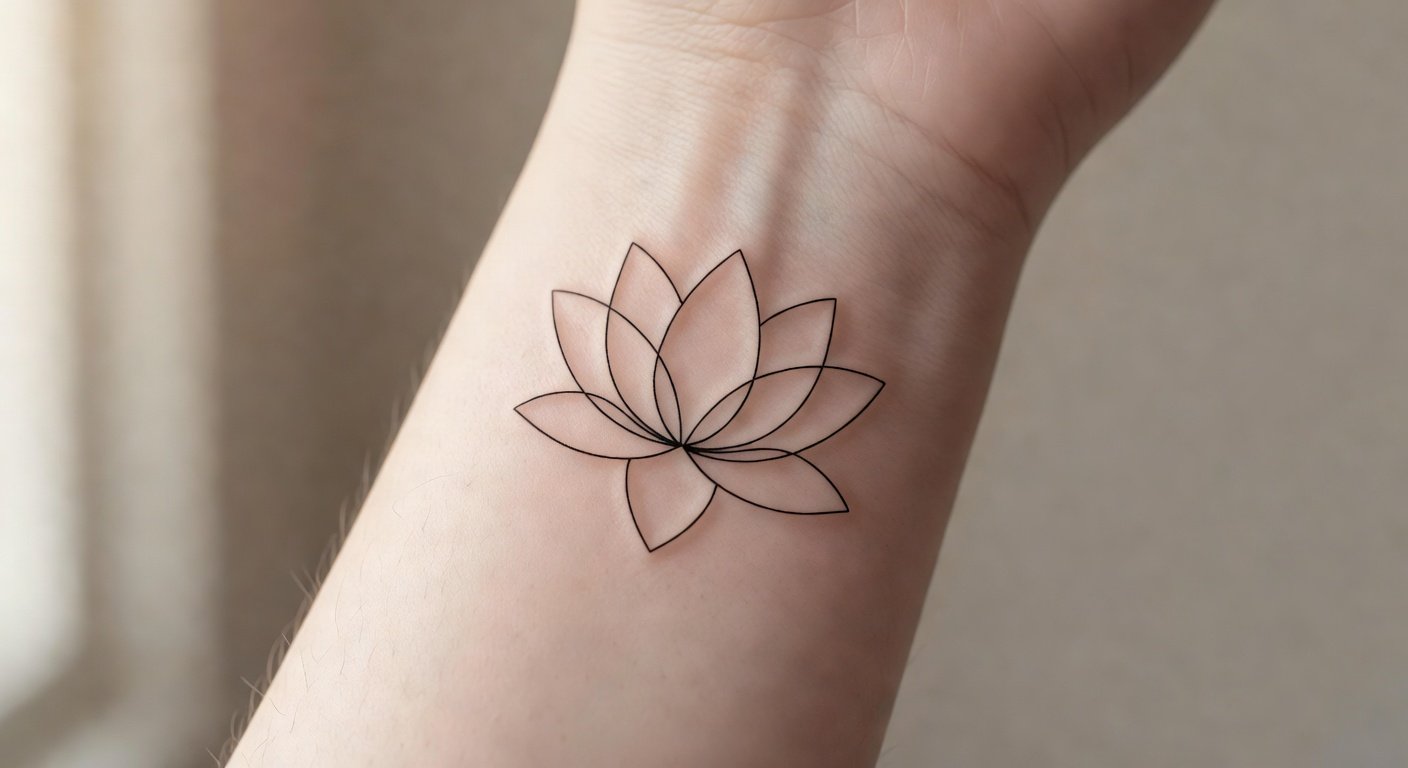
22+ Tattoo Stencil Outlines Worth Transferring Cleanly

• CURATED BY HAZEL VOSS •

13 min read

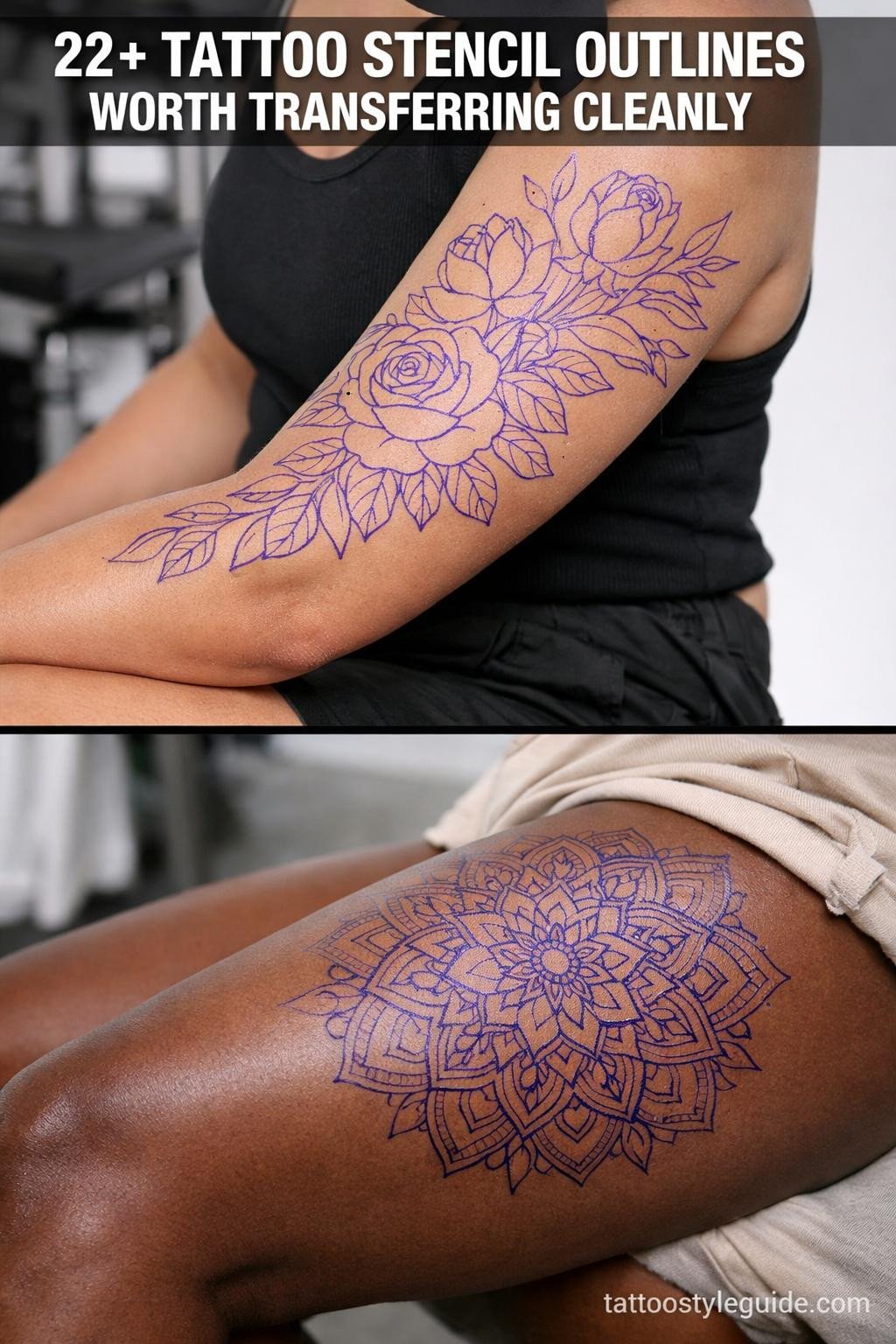
Tattoo stencil outlines transferred cleanly on skin, botanical and geometric designs, purple-blue hectograph lines on olive and dark brown skin, studio and daylight

A tattoo stencil outline is only as useful as the linework weight behind it. Thin registration lines that read clean on paper can vanish entirely once transferred to skin, leaving an artist guessing at borders mid-session. The references below are built for actual transfer work, not just visual browsing.

Every design here represents a different style discipline, each with distinct outline demands, fill logic, and placement behavior. Use them as working documents, not decoration.

Trash Polka Dragonfly: When Diagonal Geometry Demands Controlled Chaos

trash polka dragonfly tattoo stencil outline, geometric segmented abdomen, bold 2-3pt black outlines, crimson red accent, asymmetric diagonal flash

This trash polka dragonfly stencil converts the insect form into stacked diamond geometry, with wing veins built from nested rectangles and an explosive gestural scatter breaking the border edge. The bold 2-3pt outline weight is non-negotiable for this style: thinner lines lose the tension between the controlled geometry and the chaotic scatter marks.

On larger placements like the ribcage or thigh, the diagonal axis tracks with natural body movement rather than fighting it. The crimson accent placement should stay sparse or the color balance collapses into noise.

Single Needle Ginkgo: The Weight Problem Most Fine Line Artists Get Wrong

micro-realism ginkgo leaf tattoo stencil outline, hairline 0.5mm single needle strokes, deep teal ink, copper vein highlights, fine line flash

The ginkgo biloba form works here because the dual-lobe silhouette gives the single-needle 1RL linework a clear perimeter to anchor against, while the floating seed pods create depth through open negative space rather than fill. Hairline 0.5mm strokes and copper metallic highlights demand an artist who controls machine speed precisely.

On olive and darker skin tones, this level of fine line detail needs bolder outline weight to maintain long-term contrast. Request healed portfolio shots before committing to a 1RL build at this scale.

Sak Yant Cobra Pipe: Vertical Symmetry as a Stencil Registration Test

sak yant sacred style cobra snake charmer tattoo stencil outline, bold 2pt outlines, flat navy blue cream fills, diamond frame vertical symmetry flash

This sacred geometry stencil places the coiled cobra emergence within a diamond frame orientation, with the hood’s bilateral symmetry functioning as the primary registration check during transfer. The geometric band repeat along the pipe stem amplifies how well the artist placed the stencil: any tilt reads immediately.

Flat navy and cream fills at this outline weight hold clean for 10 or more years on protected placements like the sternum or upper back. Flash at this level of bilateral structure is unforgiving on curved surfaces, so placement planning matters before the stencil ever touches skin.

Ignorant Style Pocket Watch: Flat Gold and the Illusion of Craft

ignorant style pocket watch tattoo stencil outline, rough raw brush ink linework, bold 2-3pt outlines, flat gold and solid black fills, vintage flash

The ignorant style pocket watch stencil uses deliberately raw brush linework and visible stroke wobble to create the appearance of casual confidence, but the composition discipline underneath is tight: the baroque scrollwork case lid, filigree chain, and suspended dewdrop are all precisely weighted. Flat gold fills with no shading gradient separate this style from neo-traditional and keep the stencil buildable for a wider range of artists.

The rough line quality actually makes this design more forgiving to execute than it looks. Any minor hand wobble during tattooing reads as intentional within the ignorant style framework.

Peacock Feather Aperture: Whip Shading Logic for Single Motif Placement

surrealist peacock feather tattoo stencil outline, eye-spot as aperture rings, whip shading tonal gradient, forest green and gold palette, fine line flash

The peacock feather eye-spot rendered as concentric aperture rings turns a botanical form into something closer to an optical instrument, with whip shading building tonal gradients from the dense central eye out to the open barb edges. This is a single centered composition built for vertical placements like the spine, forearm, or calf where the natural axis of the feather aligns with body geometry.

Whip shading at this tonal range requires consistent pass speed across the full feather length. Inconsistent speed creates banding that no amount of touch-up corrects cleanly.

Mirrored Swallow Flash: Why Bilateral Stencils Expose Placement Error

traditional American swallow pair tattoo stencil outline, bold 3pt black outlines, crimson red flat fills, bilateral symmetry, banner ribbon, old school flash

The mirrored swallow pair connected by a curved banner ribbon is one of traditional American flash’s most demanding bilateral stencils: any asymmetry in the transfer becomes immediately visible at the beak connection point. Bold 3pt black outlines with flat crimson fills at this weight are the longevity signal in traditional flash, holding clean edge definition for decades on most skin types.

For chest placement, the mirror axis should align with the sternum before the stencil is pressed. Getting that vertical line wrong shifts the entire visual weight of the piece.

Woodcut Stag Beetle: How Thick Outlines Substitute for Tonal Complexity

etching woodcut stag beetle tattoo stencil outline, bold block print thick outlines, flat black ink fills, grey wash midtones, entomological flash

The woodcut stag beetle converts antler forms into oak tree branch geometry and uses thick block print outlines to carry all structural information, with grey wash midtones filling the role that cross-hatching would play in engraving. The flat black ink fills with zero fine detail inside the thorax plating are a deliberate style choice, not a shortcut. This is a design built for readability at distance.

Woodcut style transfers cleanly because the outline mass is large enough to survive minor stencil bleed without losing legibility. Good choice for artists building their first beetle flash.

Engraving Compass Rose: Crosshatch Density as the Artist Skill Signal

engraving style compass rose tattoo stencil outline, dense parallel crosshatch hatching, 0.3mm fine engraving strokes, circular mandala composition, black ink flash

This compass rose stencil uses dense parallel line hatching and crosshatch shadow fields built from 0.3mm engraving strokes to create full tonal depth without a single wash or gradient. The crosshatch shadow density is consistent across all eight cardinal point sections, which is the primary quality check on this design: uneven spacing between lines creates optical pulsing that reads as amateur work.

Look for consistent line spacing in the artist’s healed engraving portfolio, not just fresh shots. This style is technically demanding and degradation shows within two years if executed poorly.

Chicano Dagger in Grey Wash: Reading Dilution Ratios Off the Flash Sheet

chicano grey wash dagger tattoo stencil outline, whip shading technique, layered grey wash dilution, crisp black outlines, blood droplet, centered flash

The chicano grey wash dagger stencil demonstrates three distinct wash dilution tiers from the dense wrapped grip handle down to the near-open blade reflection field, with a single blood droplet below the point providing the focal anchor. The grey wash dilution range on this flash is wide enough that an artist can read the intended tonal map directly from the reference without a separate value study.

Grey wash at this dilution range ages well on lighter skin tones and holds midtone separation for five or more years on protected placements. On darker skin, the lighter dilution passes read muddy and need recalibration before execution.

Crescent Moon Continuous Line: One Stroke Logic at Compositional Scale

single continuous line crescent moon sleeping face tattoo stencil outline, unbroken hairline linework, celestial stars, asymmetric cloud forms, grey wash flash

The crescent moon cradling a sleeping profile face is executed as one unbroken hairline, with cloud forms and scattered stars built into the same single-stroke logic. Unbroken continuous line work at this compositional scale requires an artist who can plan the entire path before the needle hits skin, because backtracking creates visible line thickness doubling.

Finger and wrist placements common for this motif mean touch-up every two to three years minimum due to friction and UV exposure. Plan the scale accordingly: smaller means faster degradation on high-movement zones.

Neo-Traditional Phoenix: Why Mandala Framing Changes Placement Logic

neo-traditional phoenix tattoo stencil outline, circular mandala composition, bold 2-3pt black outlines, flat gold and black fills, bilateral wing symmetry flash

The neo-traditional phoenix set inside a circular halo frame converts a naturally asymmetric subject into a mandala composition, which changes the placement logic entirely: circular frames sit well on the shoulder cap, thigh, or back panel but fight against forearm and calf geometry. Bold 2-3pt black outlines with flat gold fills give this stencil a ten-year readability floor on most placement zones.

The tail feathers rendered as flame ribbons require the artist to maintain consistent ribbon weight across all trailing forms. Uneven ribbon width breaks the bilateral read of the overall composition.

Sketch Style Scorpion: Construction Marks as the Deliberate Signal

sketch raw style scorpion tattoo stencil outline, loose pencil linework, visible construction marks, crescent pincer forms, grey wash midtones, centered flash

The sketch raw scorpion stencil keeps visible hand-drawn construction marks in the final design as an intentional style element, with pincers built from opposing crescent forms and segmented body plates subdivided by geometric line divisions. The loose pencil stroke quality variation signals that line weight inconsistency is the goal, not the error, which is a distinction artists need to understand before executing this reference.

This stencil transfers with more visual information than a clean flash line, so the artist must decide during consultation which construction marks get tattooed and which are positioning guides only.

Dotwork Lion: Stipple Density Gradients Without a Single Hard Line

blackwork dotwork geometric lion head tattoo stencil outline, stipple dot gradient dense center to open edge, no solid outlines, angular mane triangular segments flash

The geometric lion built entirely from stipple dot gradients, dense at the facial center and opening toward the mane edge, is one of the more technically demanding stencil types because there are no solid outline registration lines. The stipple density gradient goes from approximately 90 percent fill at the facial planes to open negative space at the mane perimeter, requiring the artist to read tonal zones from dot distribution rather than linework.

Dotwork at this density holds well for five or more years on protected placements like the upper chest or back panel. On areas with constant UV exposure, the open-edge dots migrate first and the gradient compression begins within three years.

Art Nouveau Skull: Floral Scrollwork as Structural Engineering

art nouveau skull tattoo stencil outline, baroque filigree crown, floral scrollwork eye sockets, thorn vine mandible, bold 2-3pt outlines, deep teal copper fills flash

The art nouveau skull uses floral scrollwork to fill the hollow eye sockets and thorn vine forms to build the mandible, making the decorative elements do structural anatomical work rather than just surface decoration. Deep teal with copper metallic accents at this outline weight creates a color pairing that holds separation across most skin tone ranges without the fills bleeding into each other over time.

The diamond frame orientation makes this stencil read as a contained unit on the sternum, back panel, or thigh. Artists should check that the bilateral symmetry of the thorn vine mandible is mirrored precisely before transfer, because any offset reads loudly at this scale.

Botanical Moth Specimen: Scientific Symmetry as Stencil Precision Test

botanical scientific moth tattoo stencil outline, crosshatch etching parallel line hatching, woodcut bold outlines, eye-spot wing markings, bilateral symmetry, grey wash flash

The moth rendered as a pinned botanical specimen uses crosshatch etching and parallel line hatching inside woodcut bold outlines, requiring the artist to execute two technically distinct mark systems within the same piece. The bilateral symmetry along the vertical axis is the stencil precision test here: the feathered antennae spread and the eye-spot positions must mirror exactly, or the entomological reference reads as an error rather than a style.

Specimen-style compositions with high mark density age better than open fine line work because the crosshatch texture absorbs minor line spread without losing legibility. Check healed examples of the artist’s etching work specifically, not their other styles.

Old School Sailor Ship: Crimson and Black as the Longevity Formula

old school sailor ship tattoo stencil outline, bold 3pt black outlines, flat crimson red fills, compass rose hull inset, anchor chain central mast, traditional flash

The tall-masted sailing ship with anchor chain wrapped around the central mast and a compass rose inset on the hull is old school sailor flash executed at full structural complexity. Bold 3pt outlines with flat crimson fills on solid black is the longevity formula that gives traditional sailor flash its decade-spanning readability.

Wavy baseline placement means the bottom edge of this stencil needs to align with the natural curve of the placement zone, not sit parallel to the ground. The wave form should follow the forearm taper or the calf muscle line for the composition to read as grounded rather than floating.

Celtic Cross Knotwork: Why Geometric Lattice Breaks on Curved Skin

Celtic cross knotwork tattoo stencil outline, interlocking quadrilateral knot panels, central circular medallion, spiral finials, bold 2-3pt outlines, dense geometric lattice black flash

The Celtic cross with interlocking quadrilateral knot panels and spiral arm finials is a stencil that exposes placement error through its own geometry: any surface curvature distorts the dense geometric lattice at the knot panel intersections, making flat or near-flat placements like the upper back or sternum the only zones where the registration holds cleanly.

Dense black fills at this outline weight hold saturation indefinitely when the artist commits to layered passes. Single-pass attempts at flat black fields produce patchy fills that are visible within the first year of healing.

Watercolor Rose: Why the Black Outline Skeleton Is the Actual Stencil

watercolor splash style rose tattoo stencil outline, crimson red bleed behind bold black outline skeleton, brush ink calligraphic marks, wet ink quality, botanical flash

The watercolor rose stencil separates what actually transfers, the bold black outline skeleton of petals, thorned stem, and leaf veins, from what gets built on top: the crimson watercolor bleed fields applied freehand after the outline is set. The black outline skeleton is the functional stencil here, and it needs to be complete as a standalone drawing before any color work begins.

Watercolor fills without adequate outline anchoring blur significantly by year three to five. This reference is built correctly because the rose reads fully as a botanical illustration in black alone, which is the minimum requirement for this style to age at all.

Japanese Koi Irezumi: Scale Overlap Logic and the Diagonal Axis

Japanese irezumi koi fish tattoo stencil outline, overlapping circular scales dorsal length, silk ribbon fins sweeping arcs, concentric ring eye, bold 2-3pt outlines, grey wash flash

The irezumi koi ascending on a diagonal axis uses overlapping circular scales along the full dorsal length and trailing silk ribbon fins to create directional movement through form rather than speed lines. The curved water current lines spiraling outward from the body establish the ambient field that makes the fish read as in motion rather than static against a white ground.

Bold 2-3pt outlines with grey wash midtones on a koi at this scale hold structural integrity for a decade or more on the back or thigh. The scale overlap pattern is the artist’s technical fingerprint: consistent circular scale geometry from nose to tail separates apprentice work from journeyman execution.

Tribal Serpent Coil: Interlocking Triangle Scales as Negative Space Architecture

tribal geometric serpent coil tattoo stencil outline, interlocking triangle scales, diamond eye with center pupil dot, bold 3pt outlines, circular mandala composition, flat black fills flash

The geometric serpent coiled in a perfect spiral uses interlocking triangles as scale patterning, making the negative space between the body coils as compositionally active as the filled forms. The hollow diamond eye with center pupil dot is the focal control point: it directs the viewer’s gaze to center before the spiral form pulls attention outward.

Flat black fills at this outline weight require the artist to maintain consistent pressure across the entire coil body. Any pressure variation creates fill density differences that read as separate tonal zones, breaking the tribal flat-fill contract.

Fine Line Feather: Single Stem Logic for Placement Axis Decisions

fine line minimal feather tattoo stencil outline, hairline 0.5mm single needle strokes, barbs as leaf silhouettes, continuous flowing quill stem, open negative space, black ink flash

The fine line feather converts each barb into a delicate leaf silhouette branching from one continuous flowing quill stem, creating a vertical form that reads as both botanical and structural at the same time. Hairline 0.5mm single-needle strokes with weight variation along the barb edges demand precise machine speed control: faster passes produce lighter barbs, slower passes thicken them, and the gradient should read as intentional taper rather than speed inconsistency.

This stencil’s open negative space is its actual design feature. Artists who feel pressure to fill the empty field around the quill stem are misreading the reference.

Art Deco Mandala: Compass-Drafted Geometry as the Transfer Benchmark

art deco mandala tattoo stencil outline, nested geometric petals, concentric circles, eight-point star center, compass-drafted vector precision linework, grey wash midtones, black ink flash

The art deco mandala with nested geometric petals, concentric circle fields, and a central eight-point star is built to vector-precision standards, making it a benchmark reference for stencil transfer accuracy. The compass-drafted geometry has zero tolerance for transfer distortion: any skin stretch during stencil application shifts the concentric ring spacing and the petal symmetry collapses.

Apply this stencil on flat or minimally curved surfaces only and stretch the skin taut before pressing. Grey wash midtones at this geometric density read cleanly on lighter skin tones; on olive and darker tones, the midtone concentric rings need heavier ink concentration to maintain separation.

Screenshot the three to five stencils here that match your placement zone and intended scale. Send those with dimensions noted, not a folder of thirty. A focused reference with scale context is what actually speeds up a consultation.

Hazel Voss

About the author

Hazel Voss

Tattoo Consultant · Founder of Tattoo Style Guide


“If it doesn’t hold up over time, it doesn’t make it on the site.”

Hazel grew up around small tattoo shops in the Midwest. She spent more time watching healed tattoos than fresh ones. That’s where you learn the truth.

Some designs age beautifully. The lines hold. The composition still makes sense on real skin. Others start falling apart faster than anyone expected. That difference is what she pays attention to.

Tattoo Style Guide isn’t about trends. It’s about choosing something you won’t feel the need to explain five years from now.

Read the full story →

500,000+ Tattoo Ideas Curated Daily

Don’t Regret Your Tattoo

Most tattoo ideas look good online.
Not all of them look good on skin.
We help you choose designs that actually last.

No spam. Just real tattoo inspiration.