
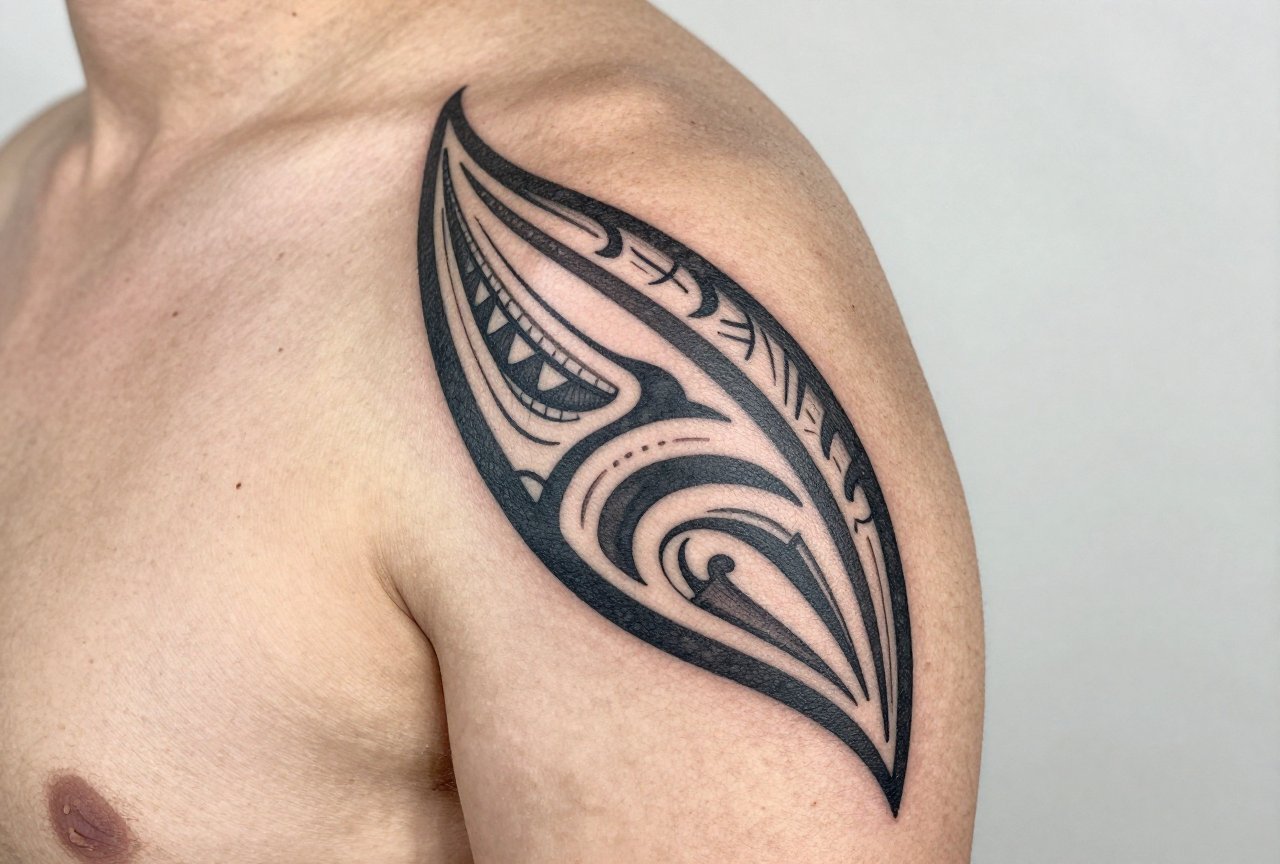
A Hawaiian tribal tattoo represents a profound connection to Polynesian heritage, ancestral lineage, and personal strength. These distinctive black-ink designs, known as kakau in Hawaiian tradition, communicate identity, social status, and spiritual protection through intricate geometric patterns. Modern wearers choose these tattoos to honor their roots, celebrate resilience, or embrace the warrior spirit embodied in the bold lines and symmetrical forms.
Symbolism & History
Hawaiian tribal art descends from ancient Polynesian tattooing practices that arrived in the islands centuries ago. Traditional kakau were applied using hand-tapped tools and natural inks, making the process both painful and spiritually significant. The designs served as living records of a person’s achievements, genealogy, and place within their community.
Core symbolic elements include:
- Triangles and spearheads: Represent courage, protection, and the warrior spirit of mana (divine power)
- Enata figures: Stylized human forms symbolizing ancestors, family bonds, and social relationships
- Ocean waves: Signify life’s continuous journey, adaptability, and connection to the sea
- Shark teeth (niho mano): Convey adaptability, strength, and guidance through dangerous waters
- Turtle shells: Represent longevity, fertility, and safe passage between worlds
The placement of these elements traditionally carried meaning as well. High-ranking individuals wore more elaborate designs, while specific patterns marked roles such as navigator, chief, or priest. The uni (tattoo artist) held respected status as both artisan and spiritual practitioner.
Common Variations & Styles
Contemporary Hawaiian tribal tattoos blend authentic motifs with modern techniques and personal customization. Artists today work with several established approaches:
- Traditional sleeve or leg band: Continuous patterns wrapping the limb, echoing historical kakau placement
- Shoulder-to-chest piece: The pu style, flowing from shoulder across the chest, traditionally signified strength and leadership
- Minimalist single motif: Isolated symbols like honu (turtle) or shark teeth for subtle, personal statements
- Fusion with other Polynesian styles: Samoan pe’a or Maori ta moko influences blended with distinctly Hawaiian patterns
- Negative space designs: Modern interpretations using skin as part of the pattern, creating lighter, more dynamic compositions
Color remains rare in authentic Hawaiian tribal work, though some contemporary artists incorporate limited red or brown tones to distinguish certain elements. The bold black ink maintains visual impact and honors the tradition’s aesthetic roots.
Best Placements
Body placement affects both the tattoo’s visual flow and its traditional resonance. Consider these locations:
- Upper arm/shoulder: Classic placement offering visibility and space for detailed pattern development
- Forearm: Increasingly popular for daily visibility and personal reminder of meaning
- Chest: Provides substantial canvas for symmetrical designs close to the heart
- Calf or thigh: Accommodates wrapping bands and protects detailed work from sun exposure
- Upper back: Ideal for larger compositions with central focal points and radiating patterns
The body’s natural curves influence how geometric patterns read, so experienced artists adapt designs to complement muscle structure and movement.
Who Chooses This Tattoo / Personal Meanings
Hawaiian tribal tattoos attract diverse wearers united by respect for the culture and personal resonance with the symbolism. Common motivations include:
- Heritage connection: Those with Hawaiian or Polynesian ancestry reclaiming cultural identity
- Resilience commemoration: Survivors of hardship who identify with the warrior symbolism
- Life transition markers: Graduations, sobriety milestones, or career changes marked with permanent intention
- Spiritual seekers: Individuals drawn to the protective and grounding associations of traditional patterns
- Aesthetic appreciation: Collectors who value the bold graphic quality and timeless appeal of blackwork
Many wearers research extensively before committing, consulting with cultural practitioners or knowledgeable artists to ensure respectful engagement with living traditions. The tattoo becomes a daily practice of remembrance and intention rather than mere decoration.
Similar Symbols
Related tattoo traditions share visual DNA with Hawaiian tribal work while maintaining distinct identities:
- Samoan pe’a: More densely packed patterns covering larger areas, with specific rules about placement and completion
- Maori ta moko: Curvilinear spirals (koru) and facial markings with unique cultural protocols
- Marquesan patterns: The ancestral source of many Polynesian motifs, featuring more figurative elements
- Tongan kupesi: Geometric designs with emphasis on symmetry and repeated angular forms
- Contemporary blackwork: Non-cultural geometric tattooing influenced by tribal aesthetics without specific heritage claims
Understanding these distinctions helps wearers make informed choices and avoid appropriating sacred or restricted designs from cultures not their own.
Final Thoughts
Hawaiian tribal tattoos endure because they balance striking visual power with layers of accessible meaning. Whether worn as cultural reclamation, personal talisman, or aesthetic statement, these designs demand thoughtful engagement with their origins. The best pieces result from collaboration between informed clients and artists who honor both tradition and individual expression. Research, respect, and clear intention transform a beautiful pattern into a meaningful lifelong commitment etched in skin and spirit.
Related Tattoo Meanings
- Hawaiian Tattoo Meaning: Heritage, Spirituality Island Identity
- Waves Tattoo Meaning
- Polynesian Tattoo Meaning
- Explore more









