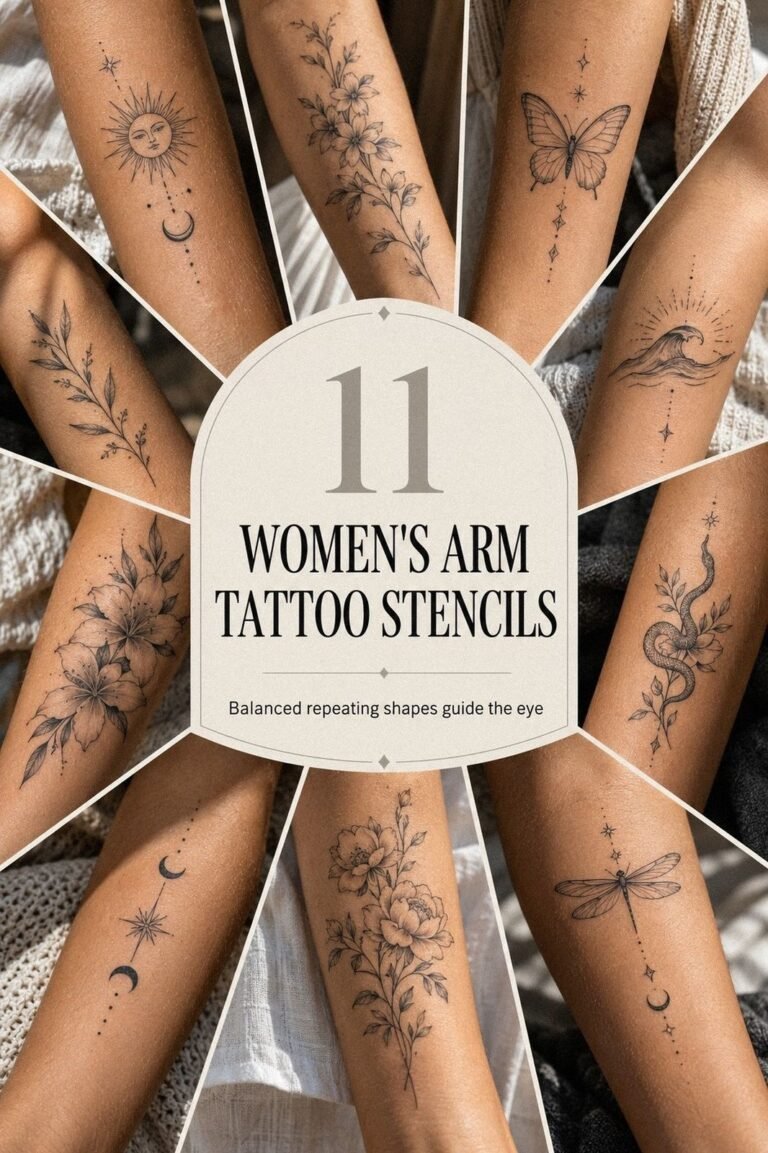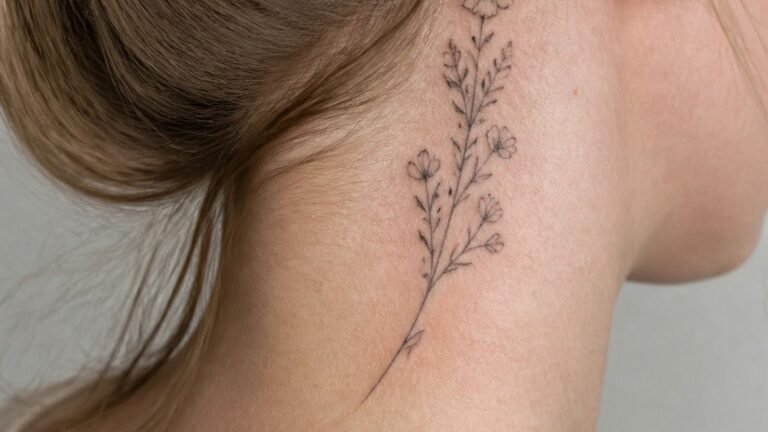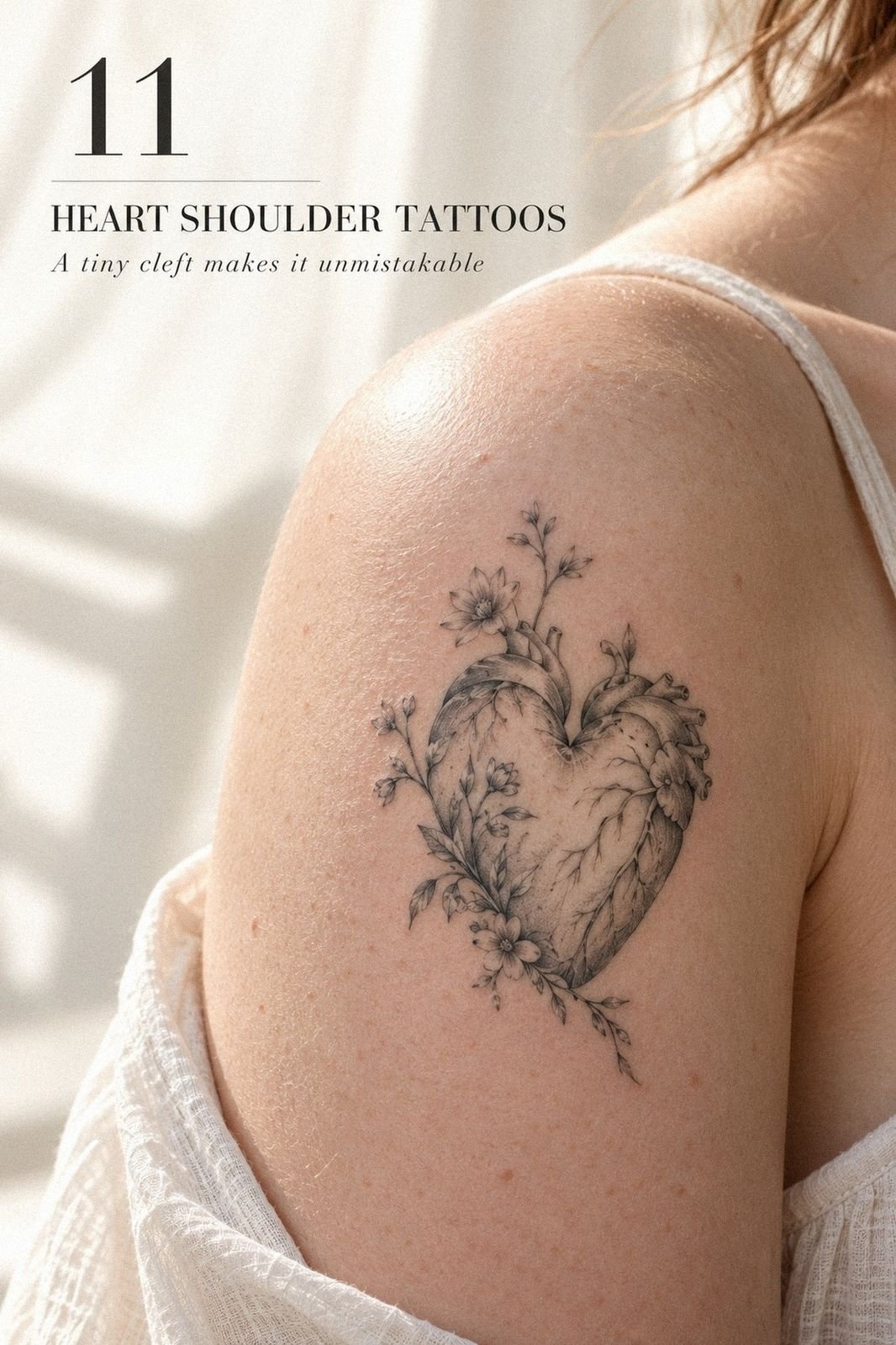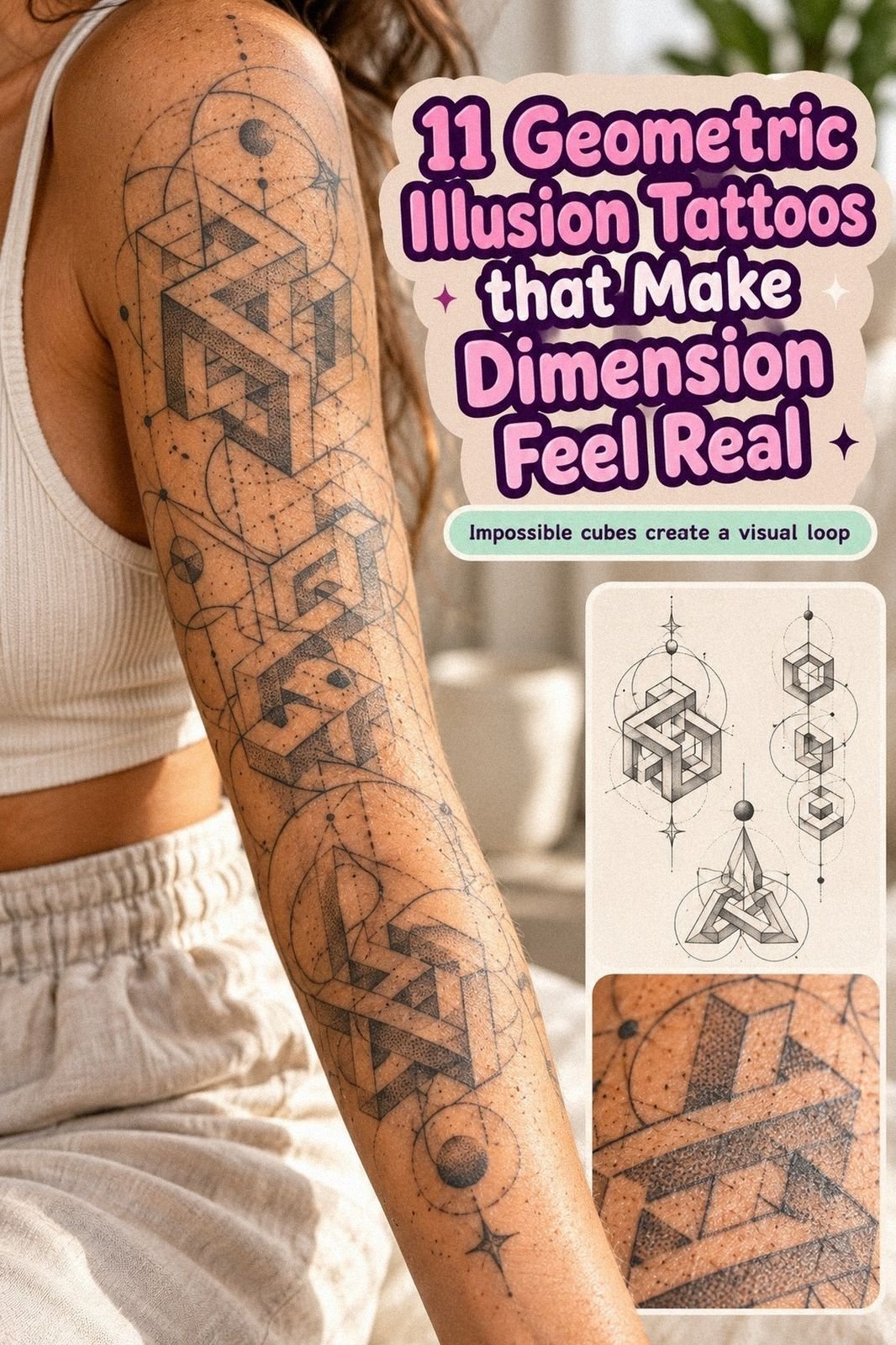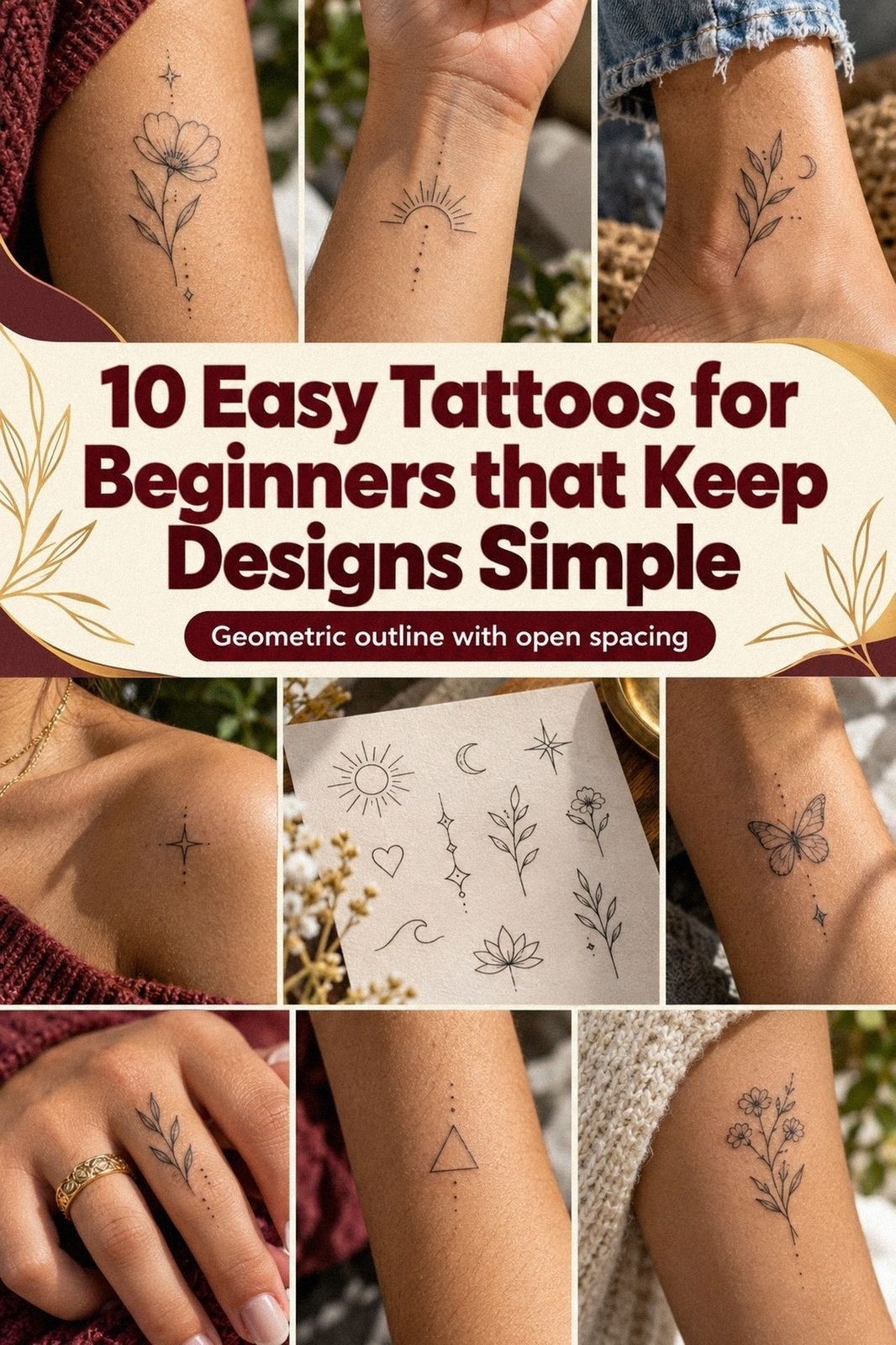
Arm tattoos for men live or die on two things: placement and line weight. I’ve watched guys walk out with crispy fresh ink that turned to soup in three years because nobody told them the truth about sizing. And I’ve watched simple, bold pieces from the 90s still read from across the room. This list is the stuff that holds up, the placements that heal nice, and the designs I’d actually put on your arm in 2026.
- Fine Line Forearm Bands That Stay Sharp Over Time
- Outer Forearm Placement for Maximum Visibility
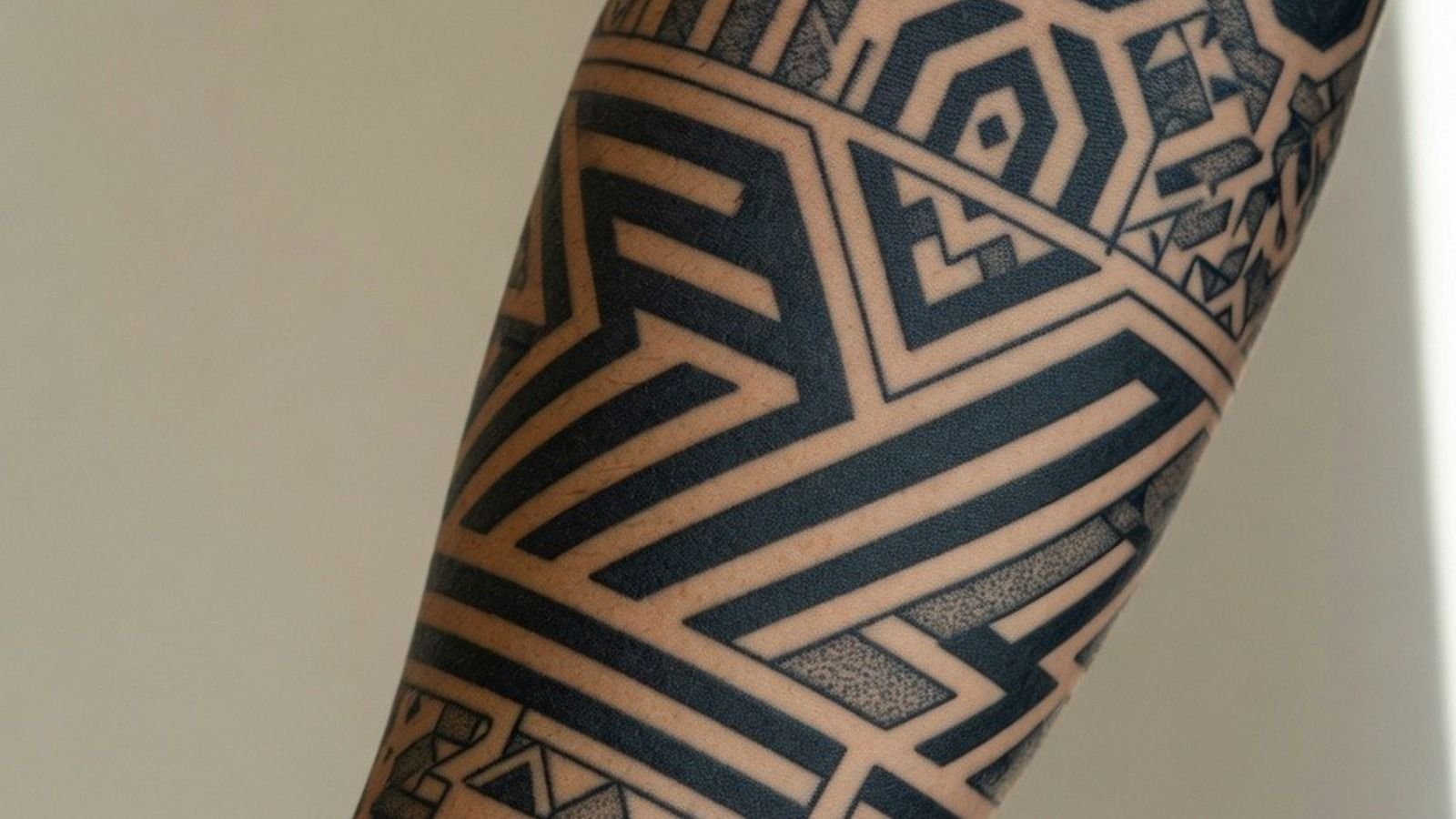
- Blackwork Sleeves Built From Bold Geometric Shapes
- Japanese Dragon Wrapping the Full Lower Arm
- Minimalist Single Needle Designs for a First Tattoo
- Realistic Portrait Ink on the Inner Bicep
- Traditional American Flash on the Upper Arm
- Roman Numeral Dates Running Along the Forearm
- Koi Fish Swimming Up the Outer Arm
- Script and Lettering Tattoos Men Actually Keep
- Half Sleeve Layouts That Flow With the Muscle
- Small Meaningful Symbols Behind the Forearm
- Samurai Armor Design Covering the Shoulder to Elbow
- Tribal Inspired Black Ink With Modern Linework
- Compass and Map Motifs for the Wrist to Elbow
- Angel Number Tattoos in Clean Red Ink
- Biomechanical Shading for the Inner Arm
- Forest and Mountain Scenery Across the Tricep
- Matching Arm Tattoos for Brothers and Close Friends
1Fine Line Forearm Bands That Stay Sharp Over Time
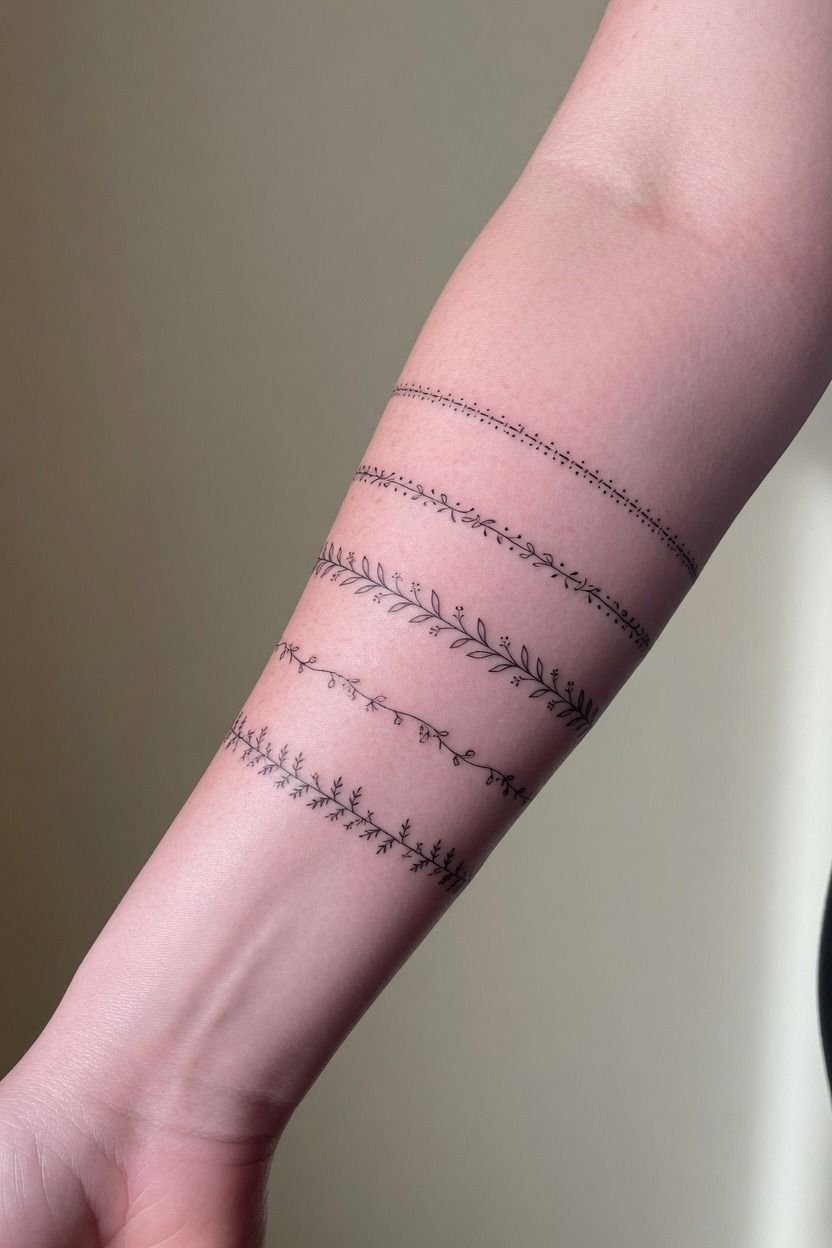
A single needle band around the forearm looks clean the day you get it, and that’s exactly the problem. Guys fall in love with the hairline version and skip the part where thin lines spread under the skin over time. If you want a band that still reads in ten years, ask your artist to build it at a medium line weight with a little breathing room between parallel lines.
Placement matters too. Wrap it where the forearm is flattest, about two inches below the elbow ditch, so it doesn’t warp when you flex.
I’d skip anything under 3mm spacing between lines. It looks delicate now and mushes together later.
2Outer Forearm Placement for Maximum Visibility
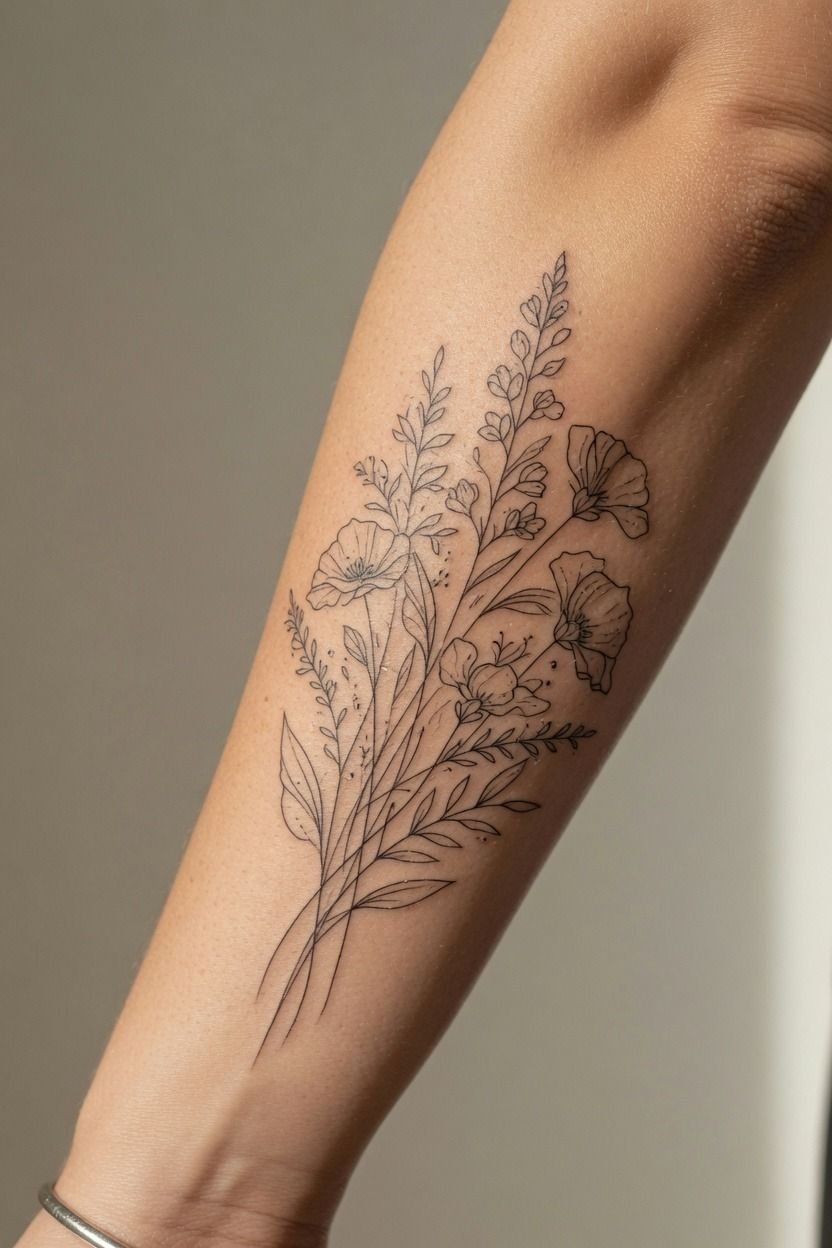
The outer forearm is the best real estate on your whole arm, full stop.
3Blackwork Sleeves Built From Bold Geometric Shapes
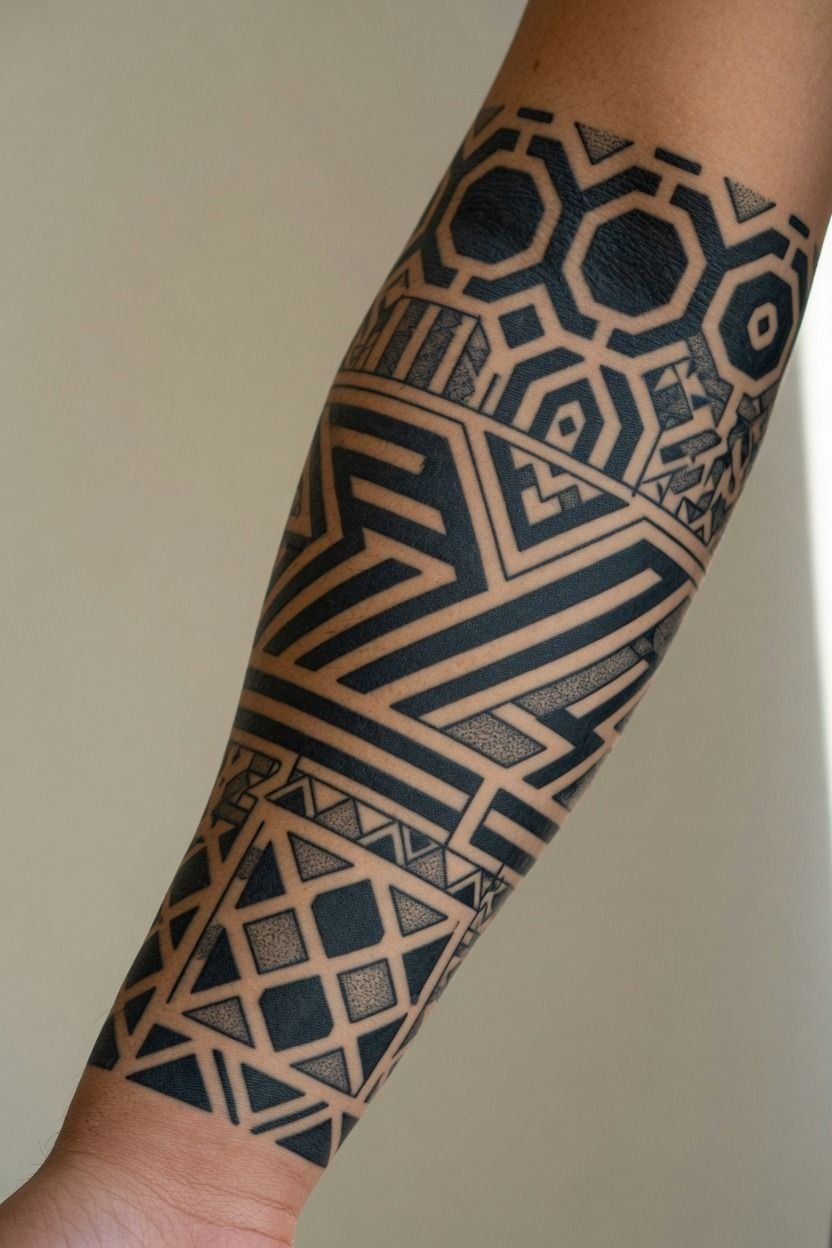
This is where I hand the mic to Marco, our blackwork guy, because bold blackwork is his religion. His take: big shapes, heavy saturation, and negative space you could drive a truck through. Solid fill in one confident pass with big mags, not scratchy little circles that chew the skin up.
Geometric blackwork ages better than almost anything because contrast is what survives. A packed black triangle reads in twenty years.
A fussy mandala at four inches does not. Expect two to four sessions for a full forearm sleeve, roughly four to six hours each, and don’t let anyone rush the fill.
4Japanese Dragon Wrapping the Full Lower Arm
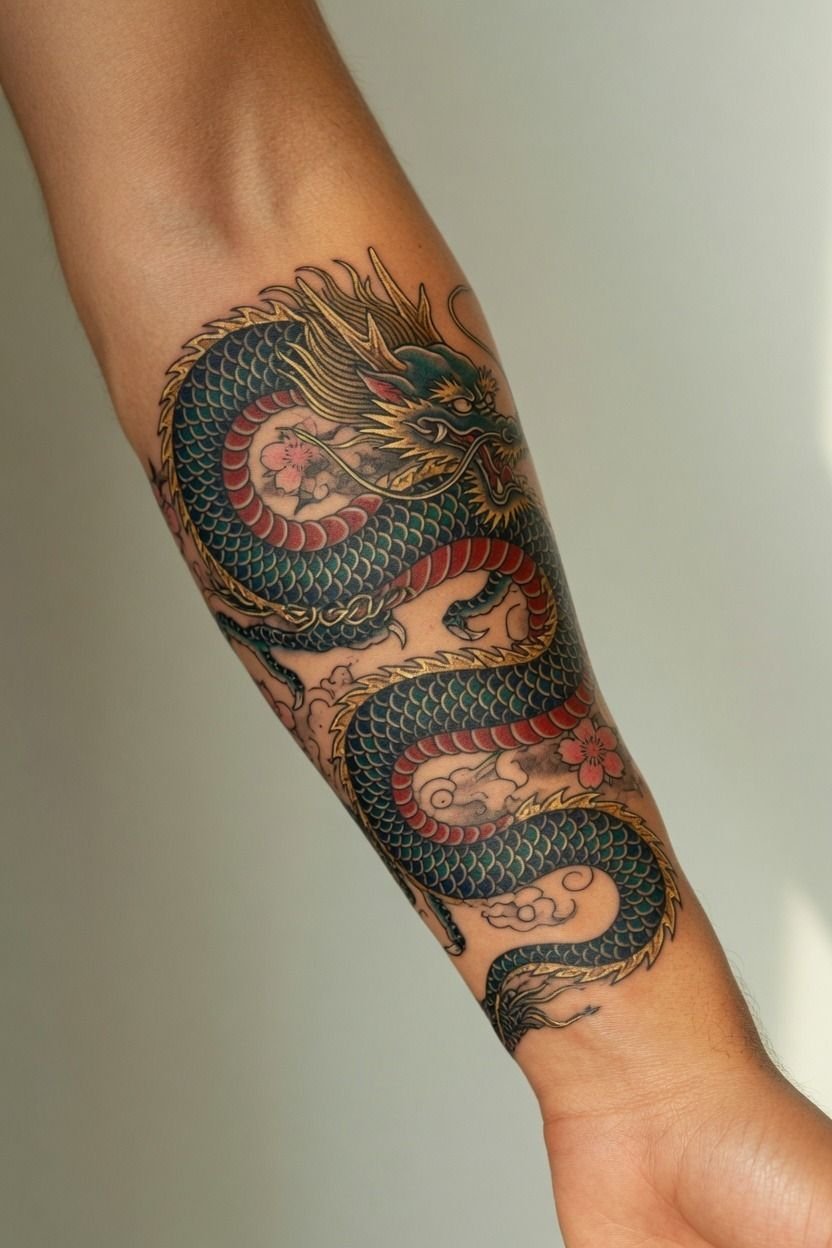
Marco trained in traditional irezumi in Japan, and he’ll tell you a dragon isn’t a sticker you slap on a forearm. It’s a composition. The body should wrap with the muscle, head pointing up the arm, claws and clouds filling the gaps so the whole thing moves when you move.
A proper Japanese forearm dragon runs eight to fifteen hours across multiple sessions. That’s normal.
If someone quotes you one session, walk away. The wind bars and background aren’t filler, they’re what keeps the piece readable from ten feet away in a decade.
5Minimalist Single Needle Designs for a First Tattoo
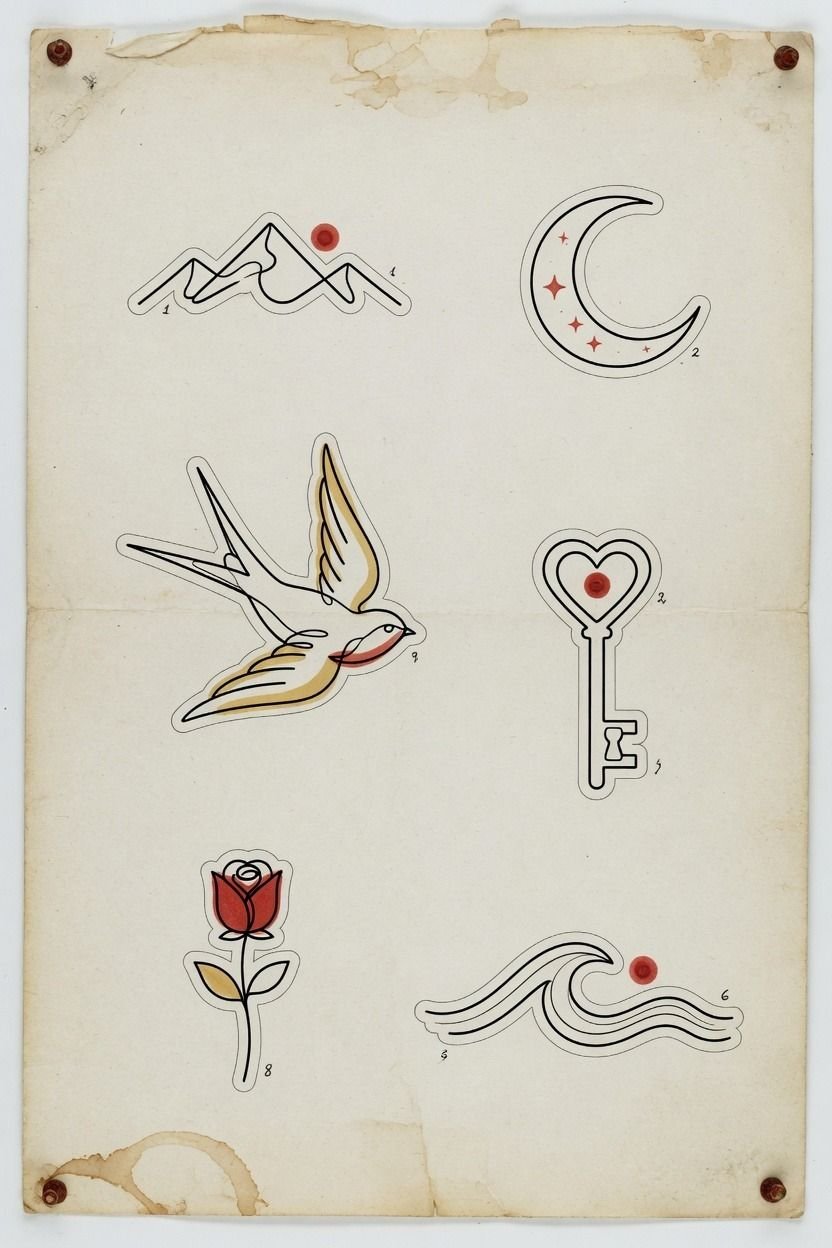
First tattoo? Keep it small and clean. A single needle piece at two to three inches on the inner forearm is the lowest-risk move you can make: an hour in the chair, tolerable pain, easy to hide if you ever need to.
One warning though. Pinterest is full of hyper-detailed micro designs, and a lot of them are future soup. Tiny text, tiny faces, tiny shading at that size will blur.
If you’re drawn to fine detail, read up on why tattoos blur over time before you pick a design. Give the design room to breathe and it’ll age cute on you.
6Realistic Portrait Ink on the Inner Bicep
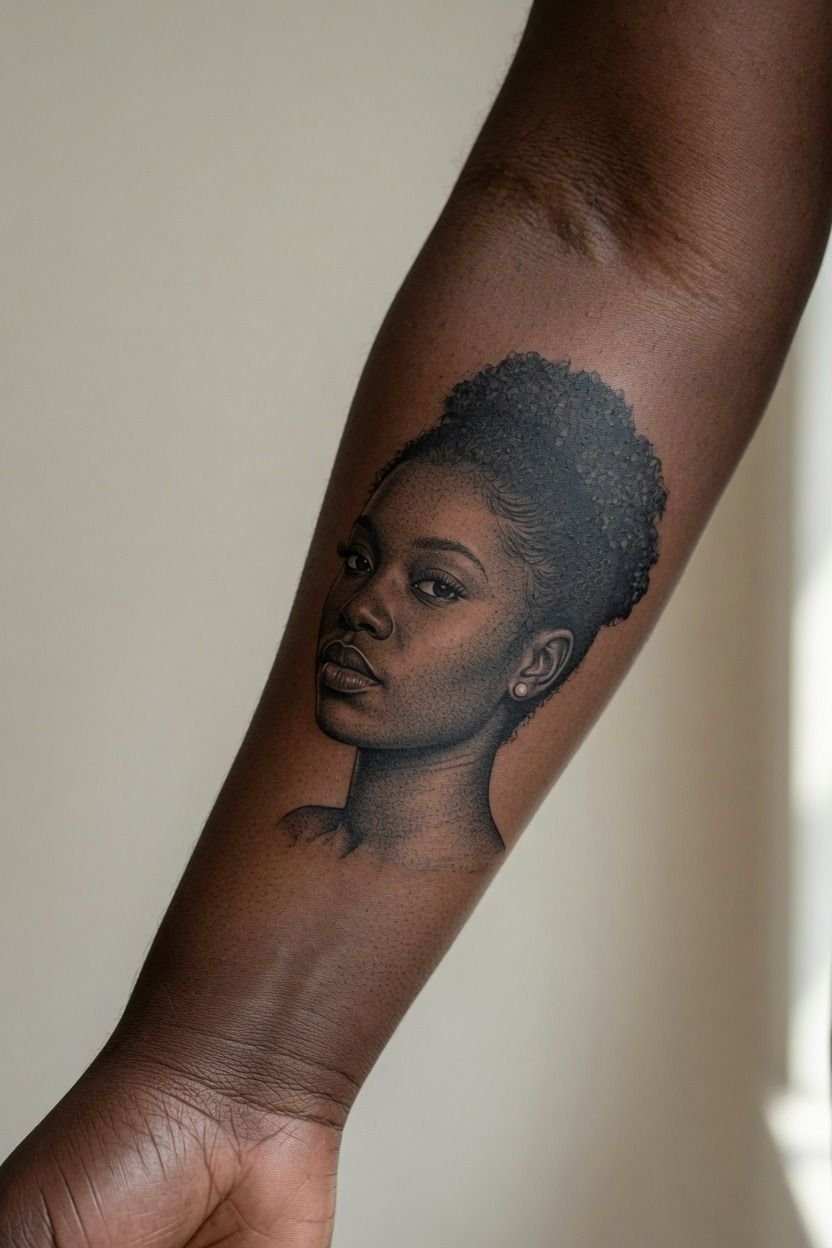
A portrait is the hardest thing to do well, so your artist choice matters more here than anywhere else on this list.
7Traditional American Flash on the Upper Arm
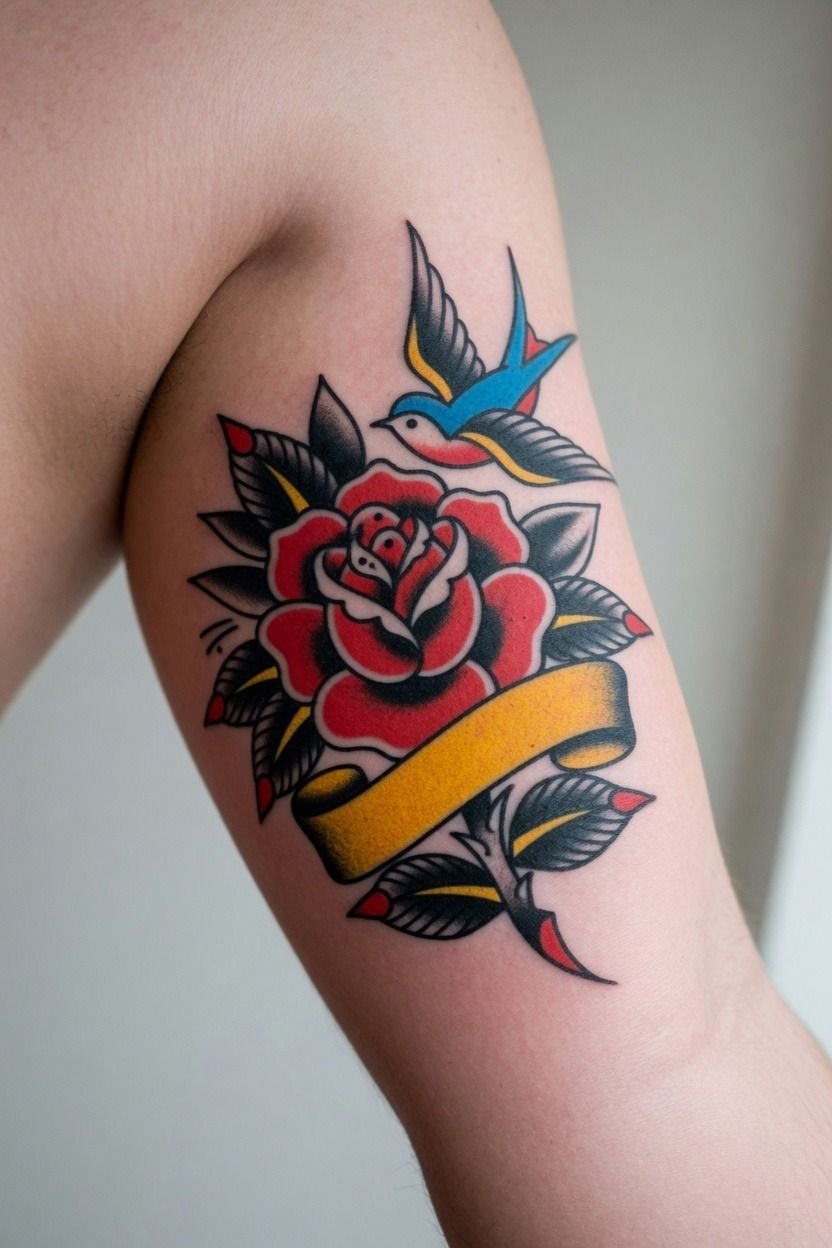
American traditional is the style that refuses to die, and there’s a reason. Bold outlines, limited palette, simple shapes.
Bold will hold! A trad eagle or dagger on the upper arm from 1995 still looks better today than most trendy work from 2019.
The upper arm is also prime low-wear placement, and the pain is about as chill as tattooing gets. My honest opinion: if you want one tattoo that you never think about again, trad flash on the upper arm is the answer. Pick a design off the wall, size it up, let the artist do their job.
8Roman Numeral Dates Running Along the Forearm
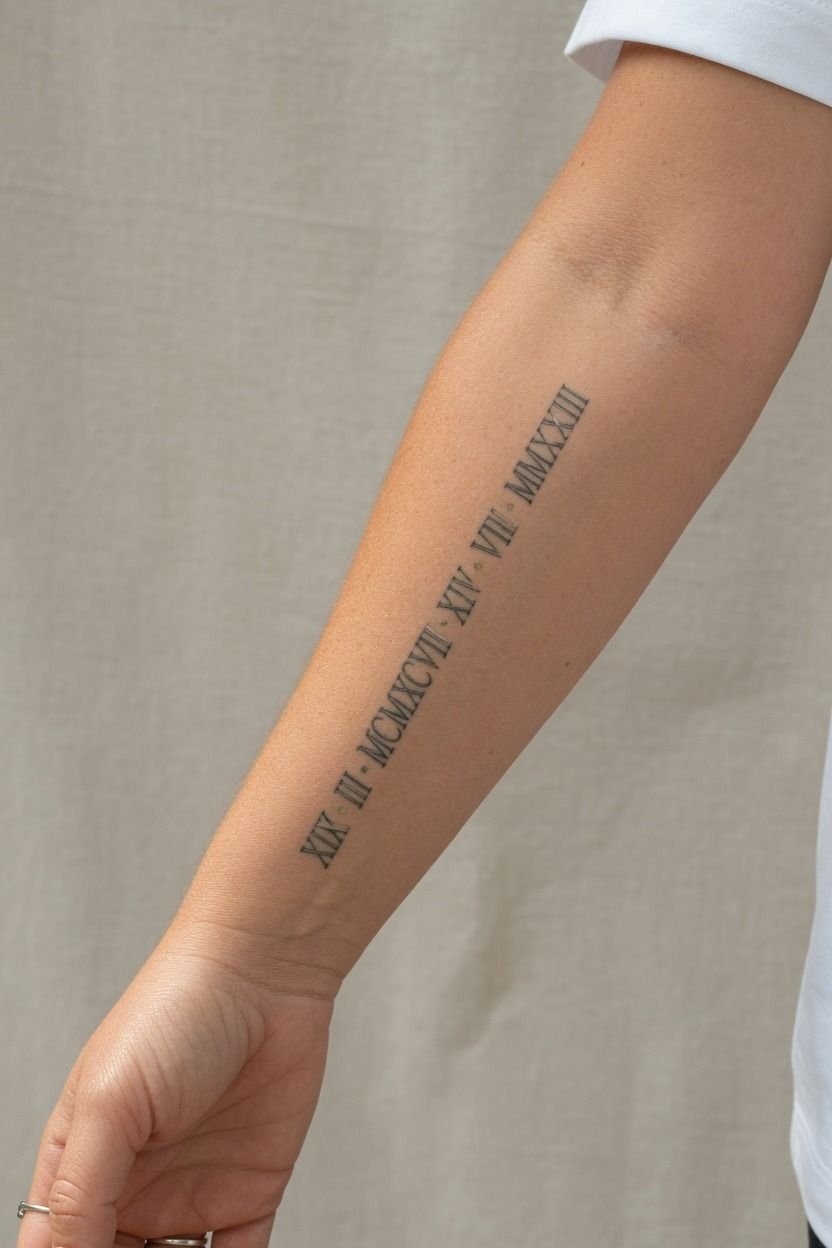
Numerals are the little black dress of men’s tattoos. Clean, personal, and they never clash with future work. Run them vertically along the outer forearm or horizontally just below the wrist bone, in a fine line weight with enough size to survive.
Here’s the trap: guys get them tiny, like one inch tall, and five years later the serifs merge into blobs. Go two inches minimum on the characters, single pass linework, and keep the font simple. A date that matters deserves to stay readable!
9Koi Fish Swimming Up the Outer Arm
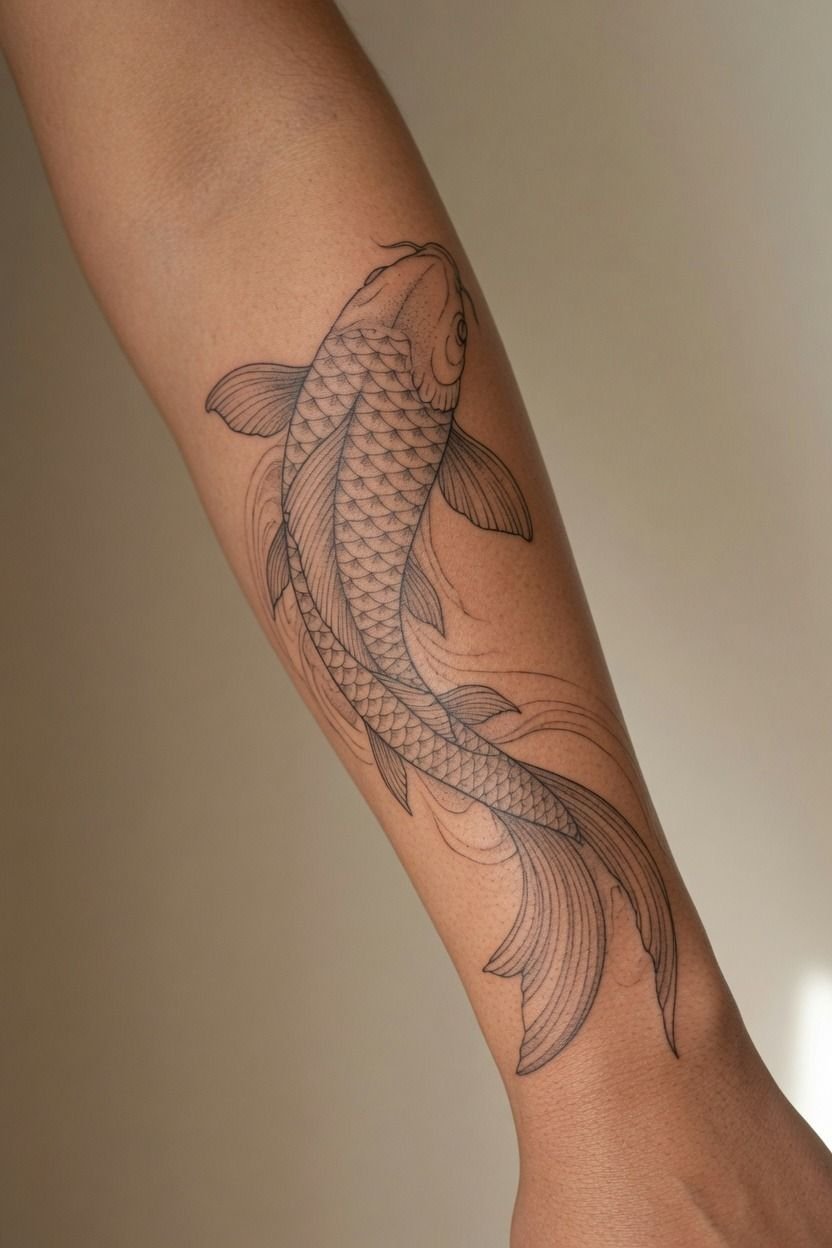
Back to Marco’s territory. In Japanese tradition the koi swims upstream, and the direction matters: up the arm means still fighting, down means you’ve made it. Most guys want upstream, and the outer arm gives the body a natural curve to follow.
Color koi (orange, red, gold against black and grey water) needs solid saturation, so expect the color packing to be the spiciest part of the session. Black and grey koi ages slightly easier if you’re worried about touch-ups. Either way, this is a six to ten hour piece done right.
10Script and Lettering Tattoos Men Actually Keep
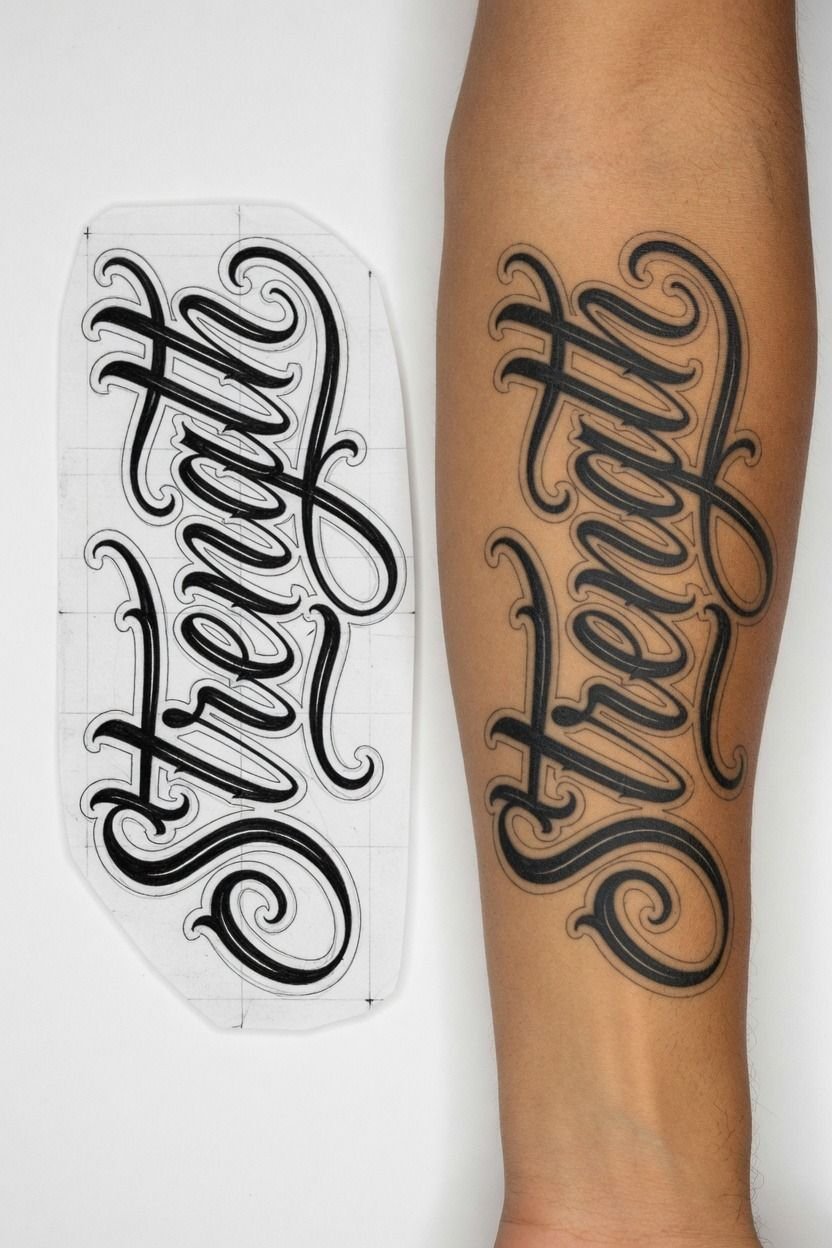
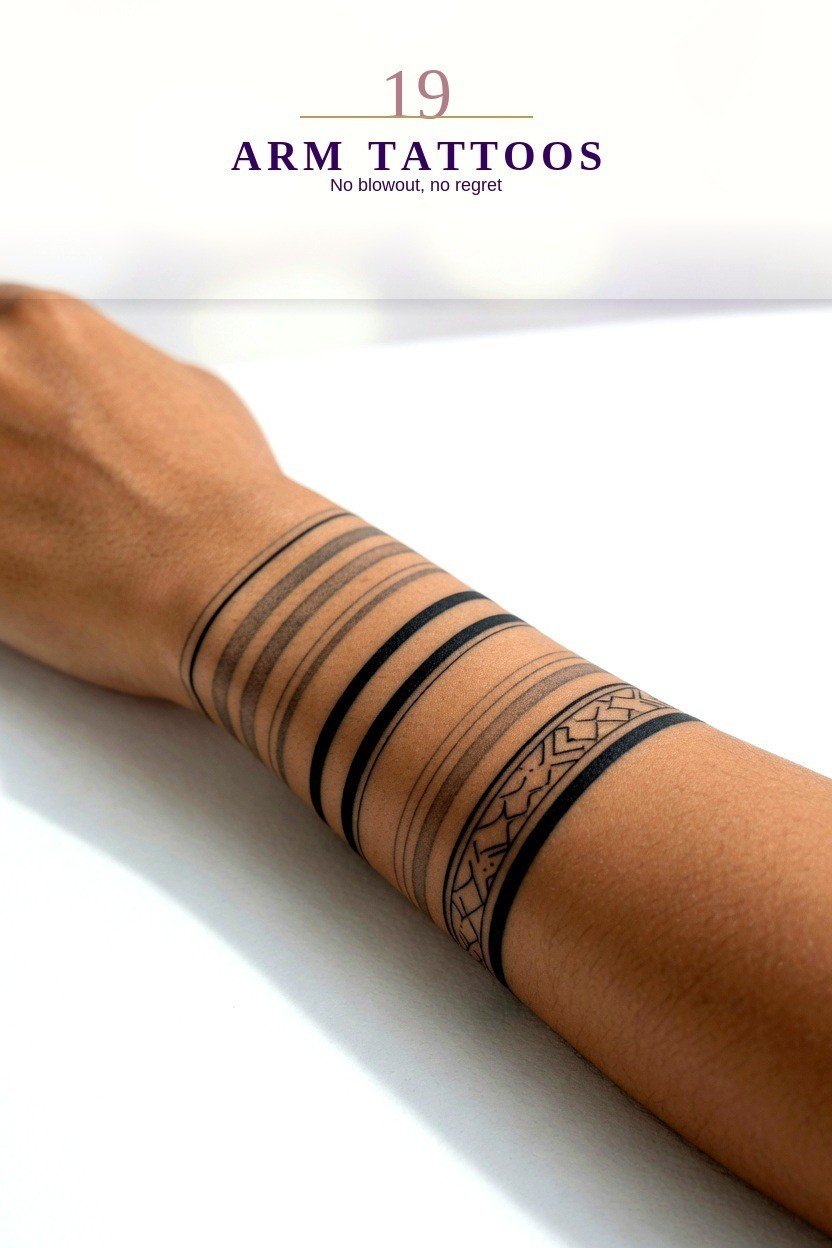
Lettering lives or dies on three things: font, size, and who holds the machine. A clean lettering piece with confident single-pass lines on the forearm will outlast trendy script every time. Skinny cursive at small sizes is the number one cover-up request I see.
Keep words short. One word or a short phrase reads from across the room; a paragraph turns to noise.
And please, skip the Pinterest-exact font file. Bring references for vibe, let your artist draw it for your arm’s actual shape.
11Half Sleeve Layouts That Flow With the Muscle
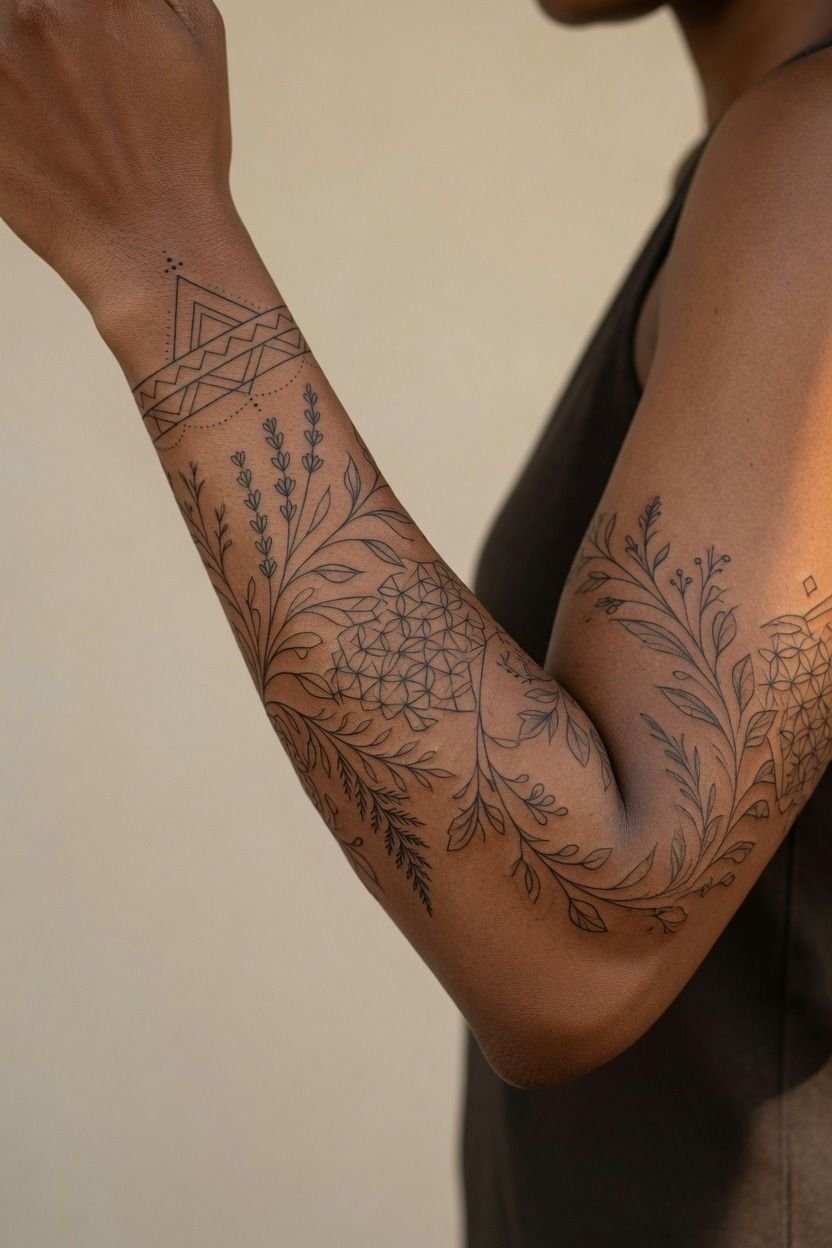
A half sleeve isn’t five small tattoos stacked together. It’s one composition, and the layout is everything. Whether it’s black and grey realism or illustrative work, the design should follow the muscle lines: bicep peak, forearm taper, elbow as a natural break point.
Plan it before session one. If you’re building toward a full sleeve, the guys in 18 arm tattoos for guys who build the full sleeve show exactly how to stage it. Budget three to five sessions for a solid half sleeve, and heal each one fully before layering more work on top.
12Small Meaningful Symbols Behind the Forearm
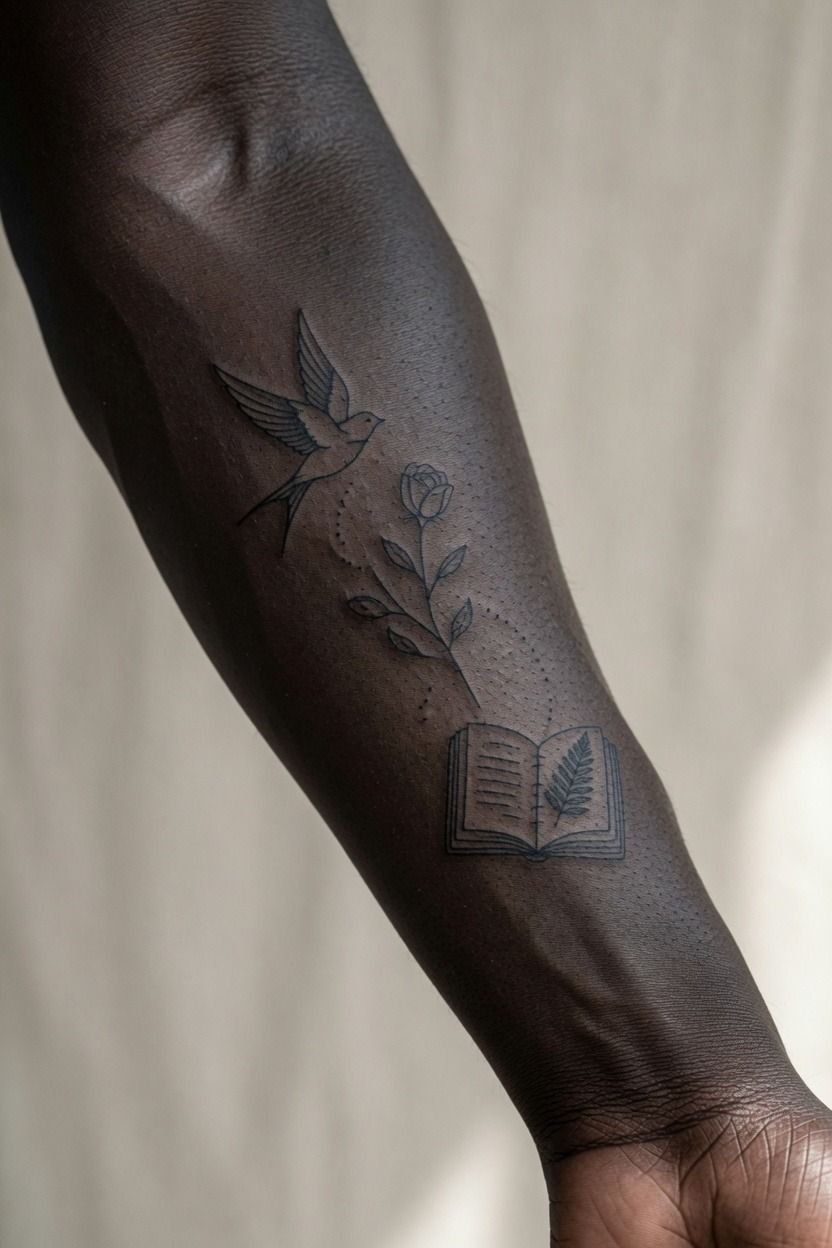
Small doesn’t mean low effort. A meaningful symbol at two inches on the back of the forearm (a compass rose, a mountain line, a family initial) hits different because you chose restraint. It’s also one of the easiest spots to heal: low friction, easy to wash, easy to moisturize.
My one rule: bold enough to hold. Even a tiny piece needs a strong outline and simple shapes.
If the design needs a magnifying glass to explain, simplify it. Symbolism ages well when the drawing does.
We covered similar small-work logic in small arm tattoos ladies and the sizing rules translate directly.
13Samurai Armor Design Covering the Shoulder to Elbow
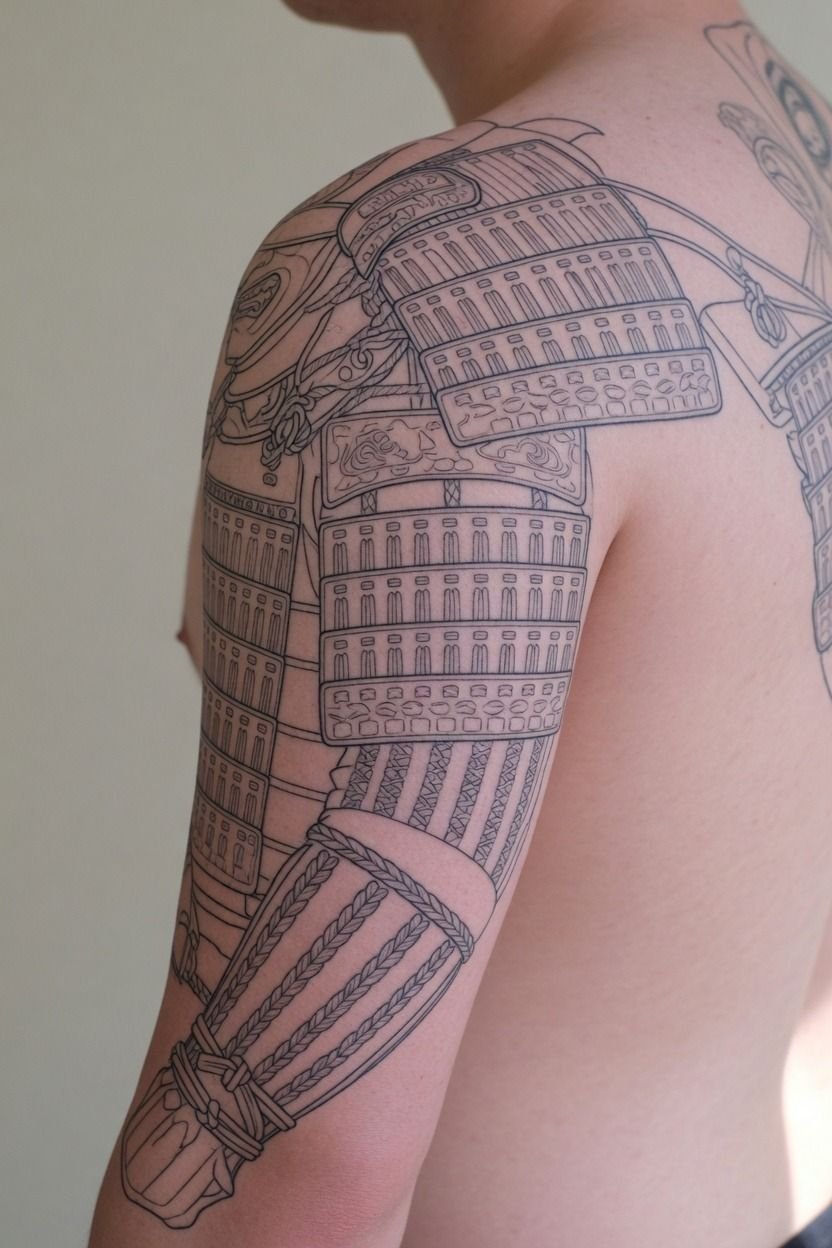
Marco’s samurai work is some of the best I’ve seen, and the shoulder-to-elbow zone is where it belongs.
14Tribal Inspired Black Ink With Modern Linework
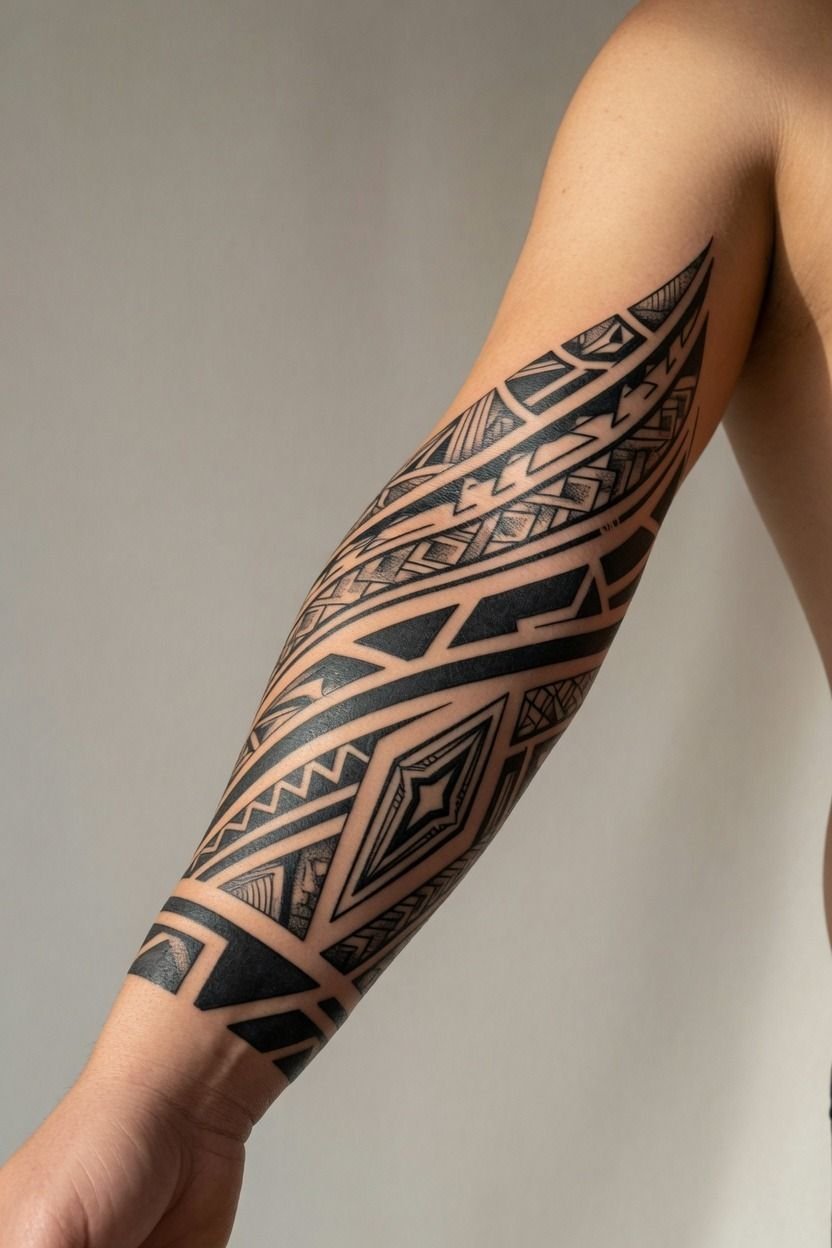
Let’s be real: 90s tribal gave this style a bad name, and most of it deserved it. But modern blackwork with tribal-inspired flow is a different animal. Clean curves that follow the muscle, intentional negative space, and saturation so solid it looks painted on.
The difference is the drawing. Old tribal ignored anatomy; new work is built around it. If you’re considering this style, look for an artist whose healed photos show even, velvety black with no patchiness.
Cheap tribal is forever, and not in a good way.
15Compass and Map Motifs for the Wrist to Elbow
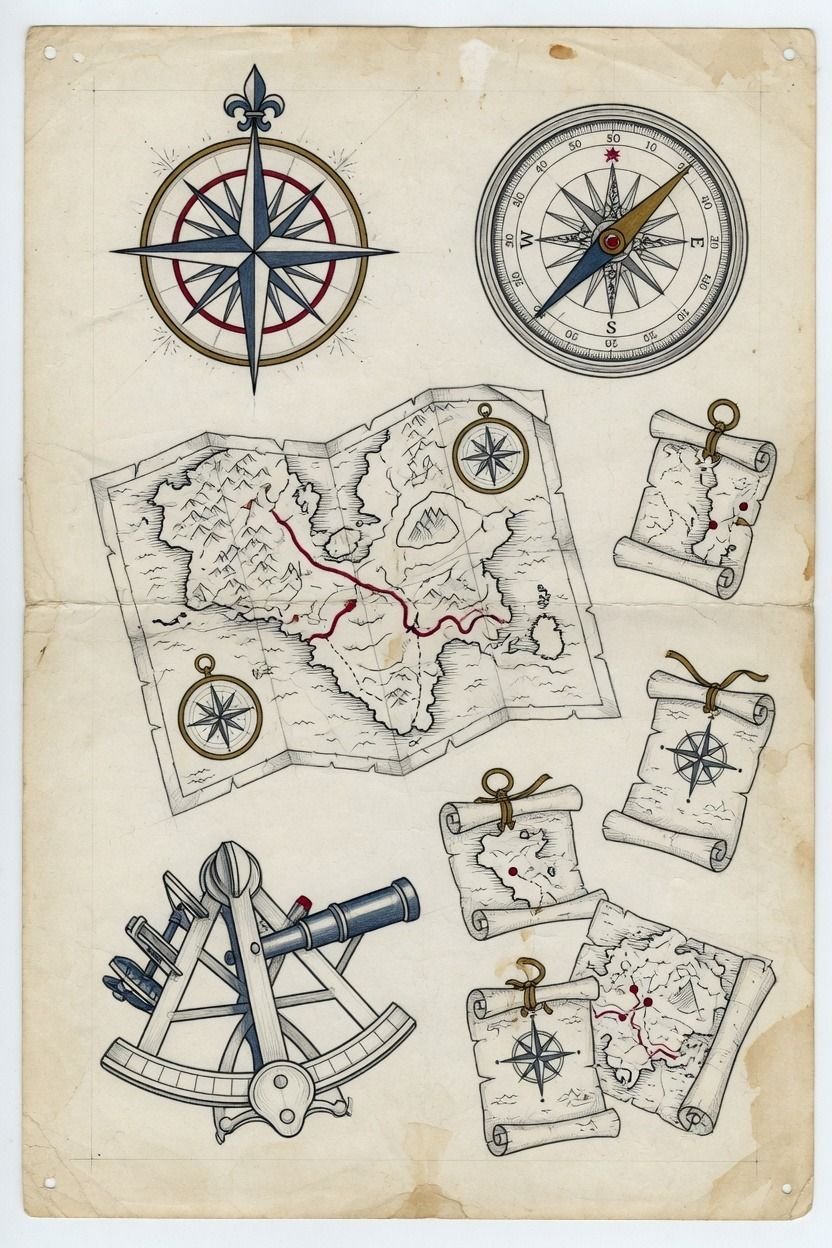
A compass design works because it’s built for the forearm’s shape: circular center, directional lines running up the arm, maybe a map contour fading out at the edges. It’s classic travel symbolism without the cliché if the drawing is strong.
Size it right. A compass under four inches loses the needle detail fast.
And watch the wrist end: the wrist is a high-wear zone, so keep the detailed work up the forearm where skin is calmer. Five to eight inches total length is the sweet spot for this layout.
16Angel Number Tattoos in Clean Red Ink
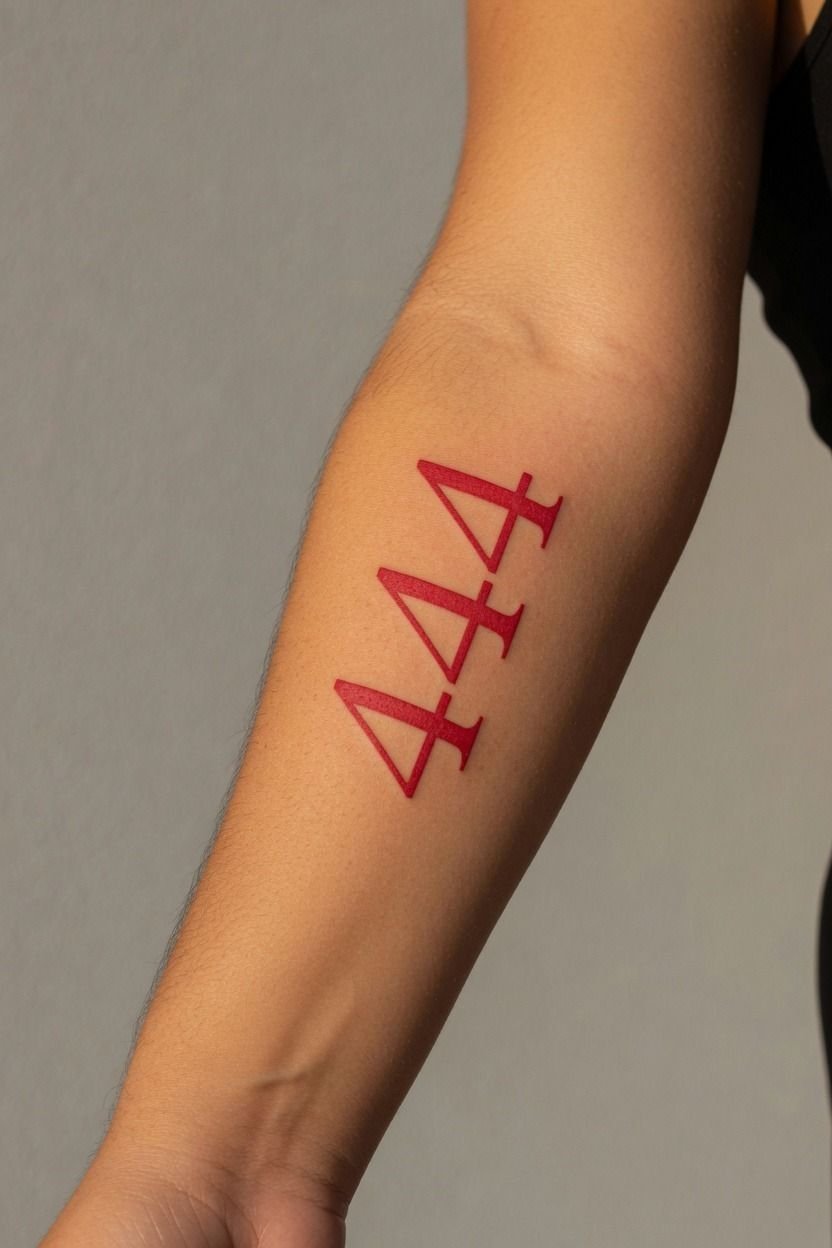
Honest caveat: red fades faster than black, and fine red fades fastest.
17Biomechanical Shading for the Inner Arm
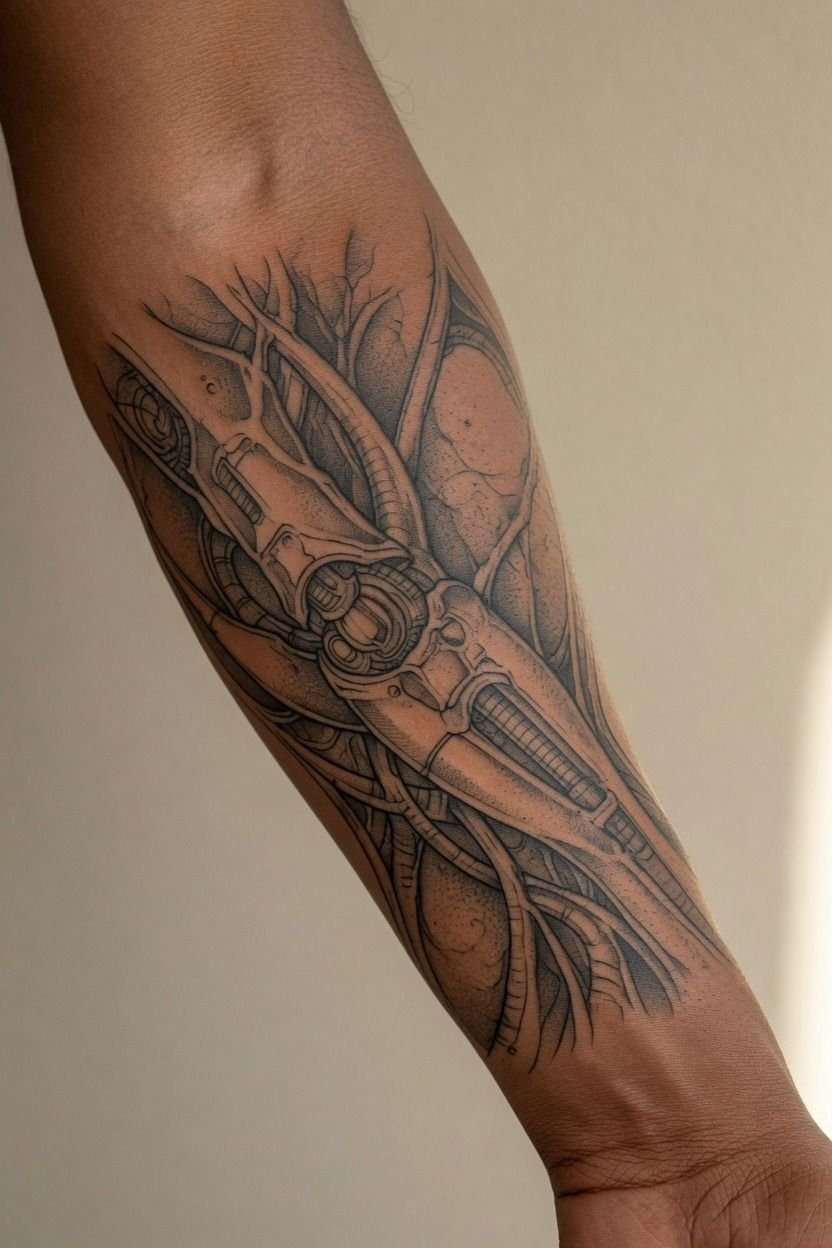
Biomech is all about the grey wash. Soft pepper shading, deep blacks pushed hard for contrast, and those mechanical shapes that look like they’re under the skin. Done well on the inner arm, it’s one of the most striking styles a guy can wear.
The inner arm is sensitive, so expect the session to feel spicy, more of a dull burn than the sharp line feeling. Sessions run five to eight hours for a solid inner-arm panel. The shading needs to be pushed dark enough to heal with contrast, or the whole piece goes flat in a year.
18Forest and Mountain Scenery Across the Tricep
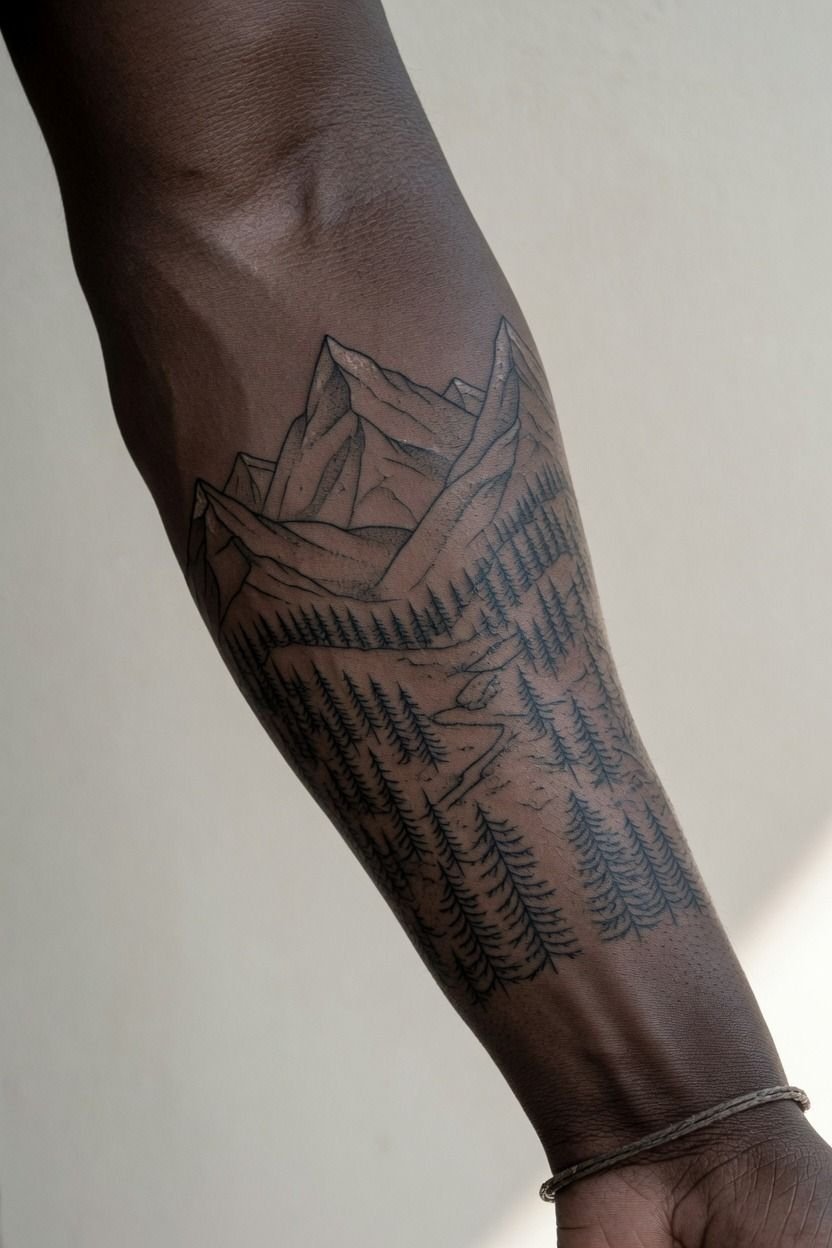
A landscape scene wrapping the tricep is underrated placement.
19Matching Arm Tattoos for Brothers and Close Friends
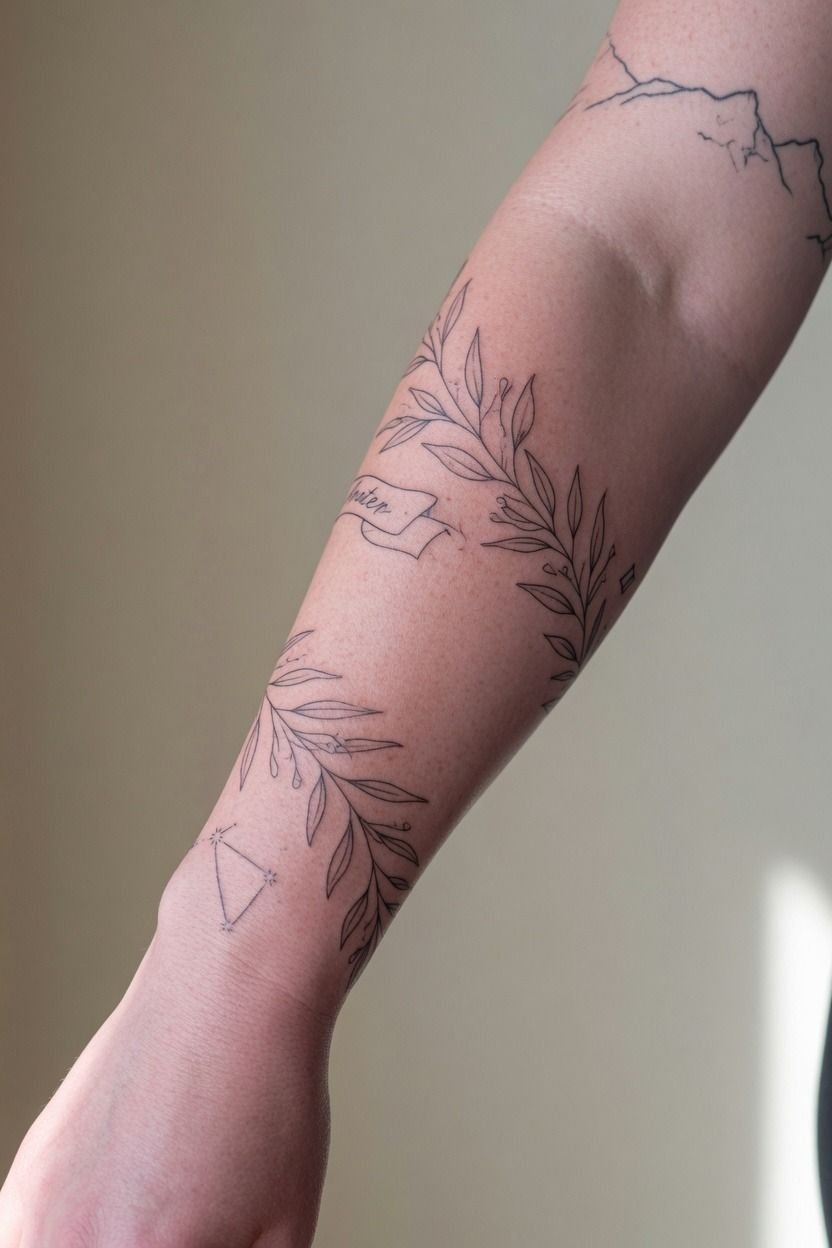
Matching tattoos work when the design is strong enough to stand alone. A matching symbol (coordinates, a shared date, a minimal design split across two arms) should look complete on your body even if the other person vanishes from your life. Design for yourself first.
Same rules as any small work: bold enough lines, simple shapes, smart placement. Inner forearm or tricep for easy healing.
And book together with the same artist so the linework weight matches. If matching ink has you browsing bigger ideas, the placement logic in back tattoos for men applies here too.
What Twenty Years of Watching Ink Age Has Taught Me
I want to get honest for a minute, because a list of ideas is useless without the framework underneath it. Every decision on this page comes down to one principle: your tattoo is a living thing on living skin, and skin changes.
It stretches, it tans, it ages, it sheds. The designs that survive aren’t the prettiest on day one.
They’re the ones drawn with that future in mind.
The mistake I see most (and I made it myself early on) is falling in love with detail at small sizes. My first forearm piece had lettering half the size it should’ve been because I wanted it “subtle.” Five years later the letters were merging and I paid more for the rework than the original tattoo.
Size up. Always.
The second mistake is chasing an artist’s fresh photos instead of healed ones. Any decent artist can make ink look good wet.
Ask to see work that’s two or three years old. If they can’t show you, that tells you something.
Here’s my actual decision framework. First, pick placement before design, because the arm’s anatomy should drive the drawing, not the other way around.
Outer forearm and upper arm for longevity, inner arm and wrist only if you accept maintenance. Second, pick style before subject, because a strong style carries an average subject but nothing saves a weak style.
Third, pick the artist for the style, not the subject. Marco doesn’t do fine line florals and I don’t do irezumi, and that’s exactly how it should be.
Budget-wise, expect a shop minimum around $50 to $100 for small work and $100 to $250 an hour for most US artists, more for specialists. A full forearm sleeve lands anywhere from $1,500 to $4,000 depending on the artist and the hours.
That’s real money. But spread across the twenty-plus years you’ll wear it, good ink costs less per year than your phone case.
Cheap ink costs forever.
One more trend note, and I’ll keep it short. Arms have become the default first canvas for men in 2026, partly because sleeve culture normalized visible ink and partly because the forearm is simply the best-behaving skin most guys have. That’s good news for you: artists are more practiced on arms than anywhere else right now.
A Few Things Worth Answering
How much do arm tattoos for men usually cost?
Most US shops run a minimum of $50 to $100, with hourly rates around $100 to $250 depending on the artist and region. A small forearm piece might be one to two hours; a half sleeve runs several sessions and $1,500 or more. Never pick on price alone.
Are arm tattoos a good idea for a first tattoo?
Yes, honestly the best idea. The outer forearm is one of the most tolerable spots for pain, it heals fast with low friction, and you can watch your aftercare happen. Start two to four inches, bold enough lines, and learn how your skin takes ink before committing to a sleeve.
How do I choose a tattoo artist for an arm piece?
Look at healed portfolio photos, not just fresh ones. Clean single-pass lines, even saturation, no blowout. Then match the artist to the style: a realism specialist for portraits, a trad artist for flash.
Studio hygiene and a real consultation matter as much as talent.
How much do arm tattoos hurt?
Honest scale: outer forearm and upper arm are chill, inner bicep is a dull burn, and the wrist, elbow ditch, and anything near bone gets spicy. Lines feel sharper, shading is a slow heat, color packing is the roughest part. Tap out for five minutes rather than pass out.
How long does an arm tattoo take to heal?
Surface healing runs two to three weeks, with full settling around two to three months. Gentle unscented soap, a thin layer of ointment, don’t suffocate it.
It’ll peel like a sunburn, and picking flakes pulls color out. Sun, pools, and gym friction are what kill fresh ink.
What’s the best placement on the arm for aging well?
The upper arm and outer forearm win: low-wear, low sun, tight skin. Wrist, hands, and elbows fade and blow out faster, so they’re for guys who accept touch-ups. If hands interest you anyway, read the real talk in hand tattoos for men first.
Where I’d Start First
If I had to pick one, I’d start with the outer forearm. It’s the lowest-pain, best-aging canvas you own, and every future piece builds off it. Bold lines, simple shapes, sized up.
Pin this for later and check thigh tattoos for men when you’re planning piece two.