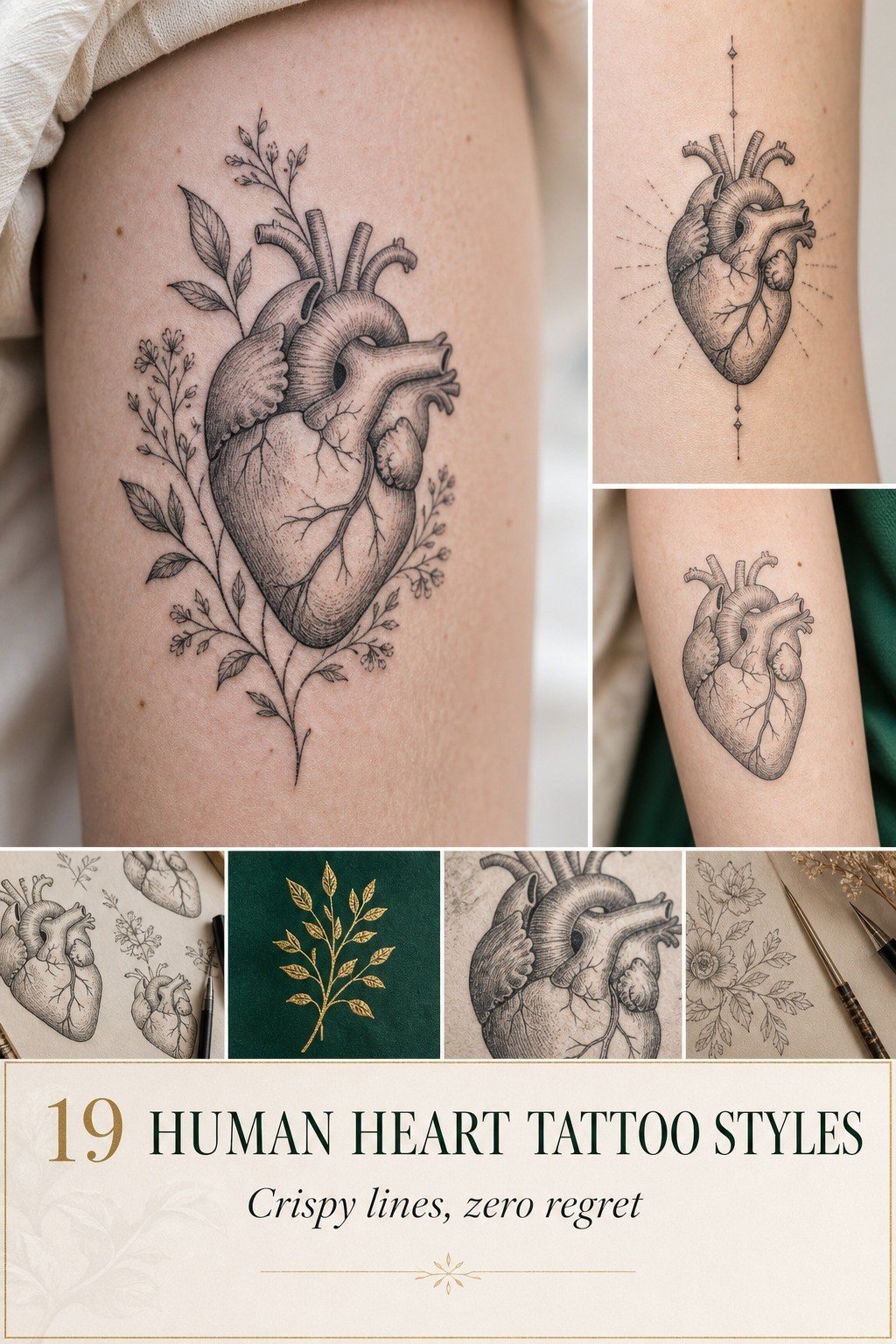
Human heart tattoo ideas hold up when you give the design room to breathe. I almost made my first anatomical heart too tiny, and I’m glad I stopped before the stencil went on. A clean 2-inch piece with confident lines will age far better than a microscopic bundle of veins. That’s the whole deal.
- Anatomical Heart With Fine Line Detail
- Realistic Human Heart In Black And Grey
- Human Heart Tattoo With Floral Surroundings
- Small Heart On The Inner Wrist
- Human Heart With Red Ink Accents
- Anatomical Heart Wrapped In Serpent Linework
- Real Heart Tattoo Across The Ribcage
- Human Heart With Anatomical Vein Shading
- Matching Human Heart Tattoos For Partners
- Human Heart Tattoo Behind The Upper Arm
- Watercolor Human Heart With Black Outlines
- Human Heart And Sacred Geometry Composition
- Anatomical Heart With Botanical Roots
- Realistic Heart Tattoo On The Chest
- Human Heart With Broken Chain Detail
- Micro Real Heart On The Finger
- Human Heart Tattoo With Handwritten Script
- Blackwork Anatomical Heart On The Forearm
- Human Heart With Butterfly Transformation Motif
1Anatomical Heart With Fine Line Detail
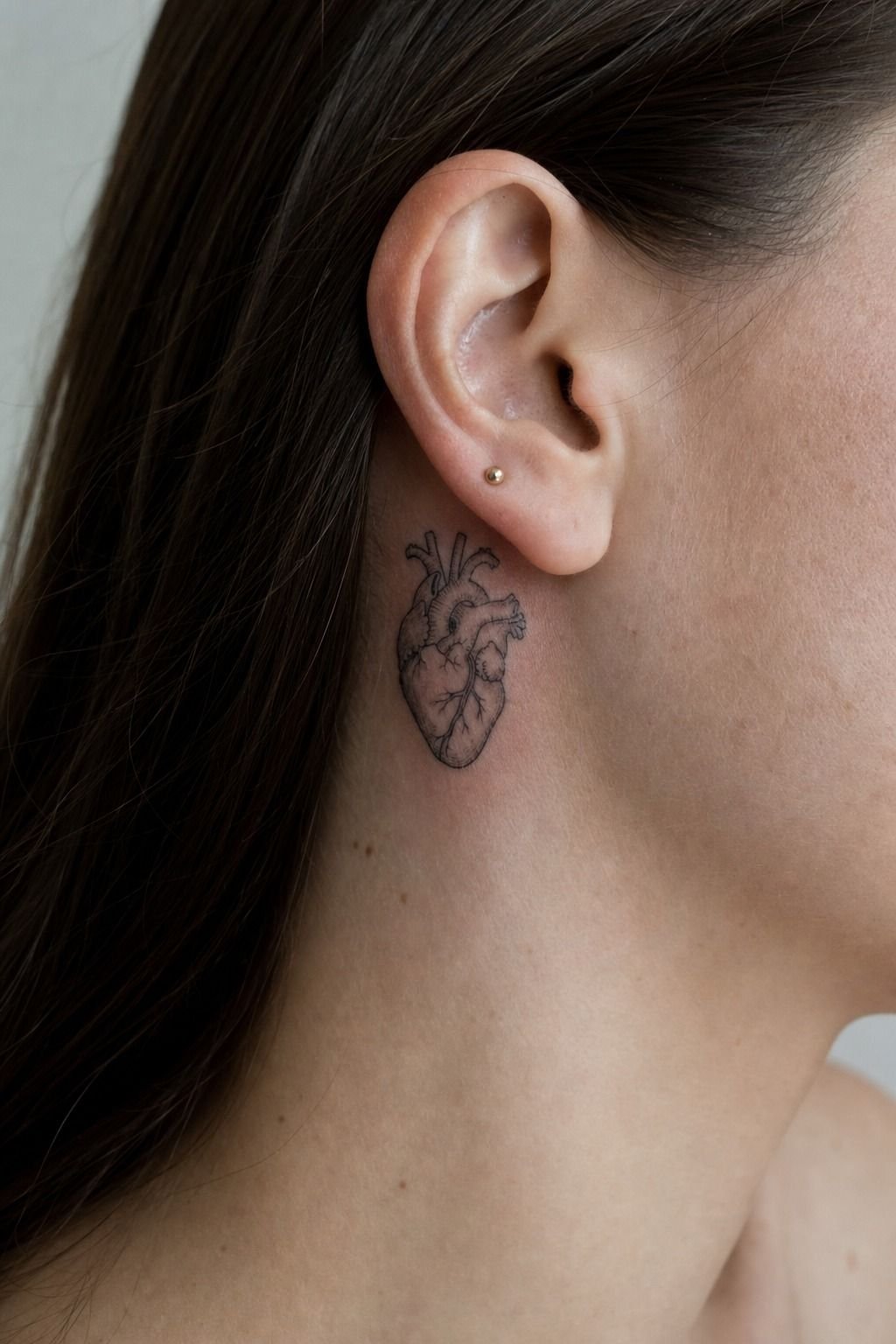
For a small anatomical heart tattoo behind the ear, keep the outer silhouette clean and let only a few arteries carry the detail. You need crisp linework here, because that curved skin gives an artist very little room to hide fuzzy pulls. I’d pick a 2-inch vertical design, not a dense postcard-sized drawing squeezed into a tiny patch.
Ask for single-needle lines with selective grey wash around the valves. Your tattoo should read from a few feet away, then reward a closer look.
Behind the ear is soft and intimate, but it gets rubbed by hair, headphones, and sunglasses, so you’ll need to keep your aftercare gentle. Don’t let anyone pack ten tiny veins into it. That turns to soup.
2Realistic Human Heart In Black And Grey
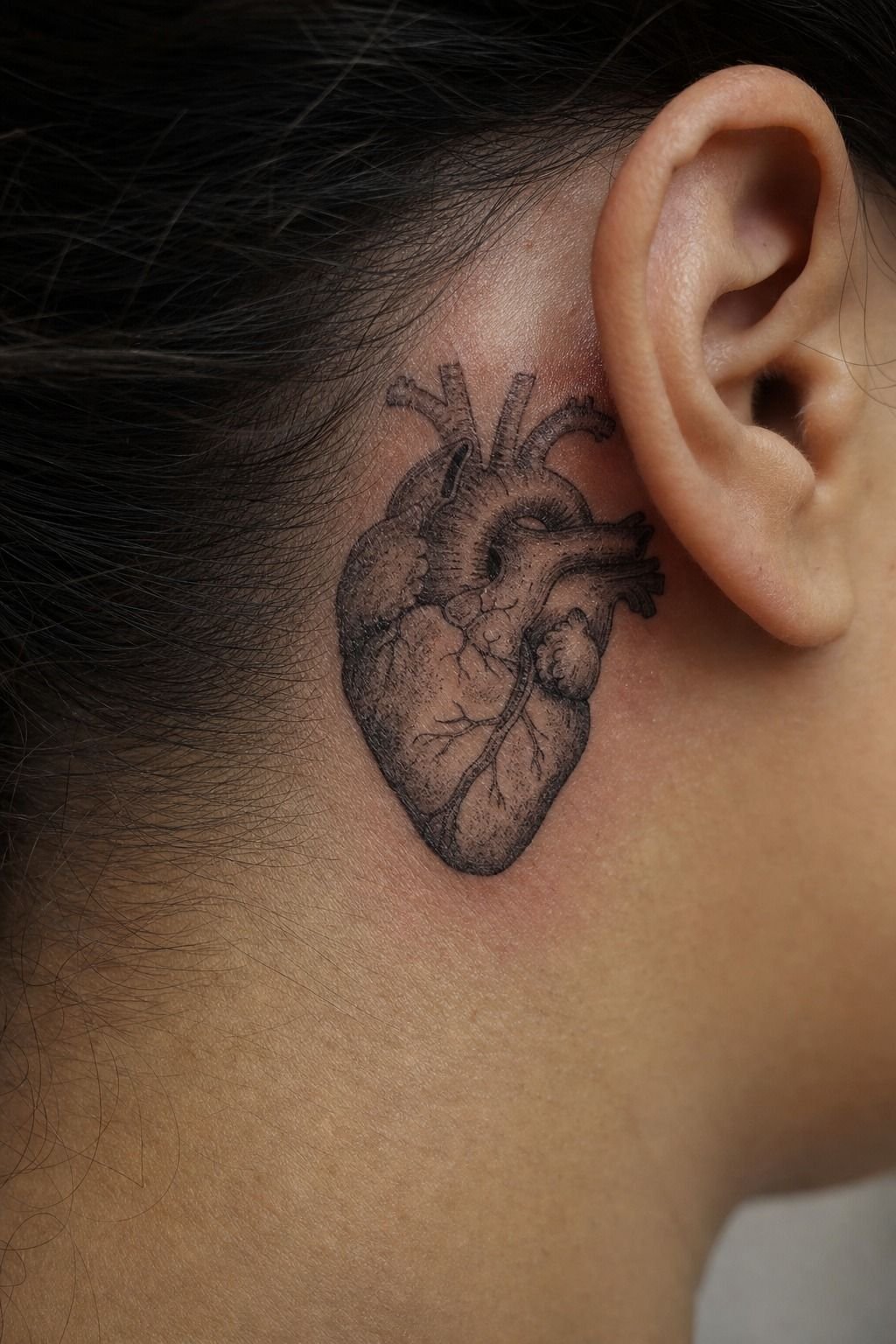
A realistic human heart in black and grey needs contrast before it needs detail.
3Human Heart Tattoo With Floral Surroundings
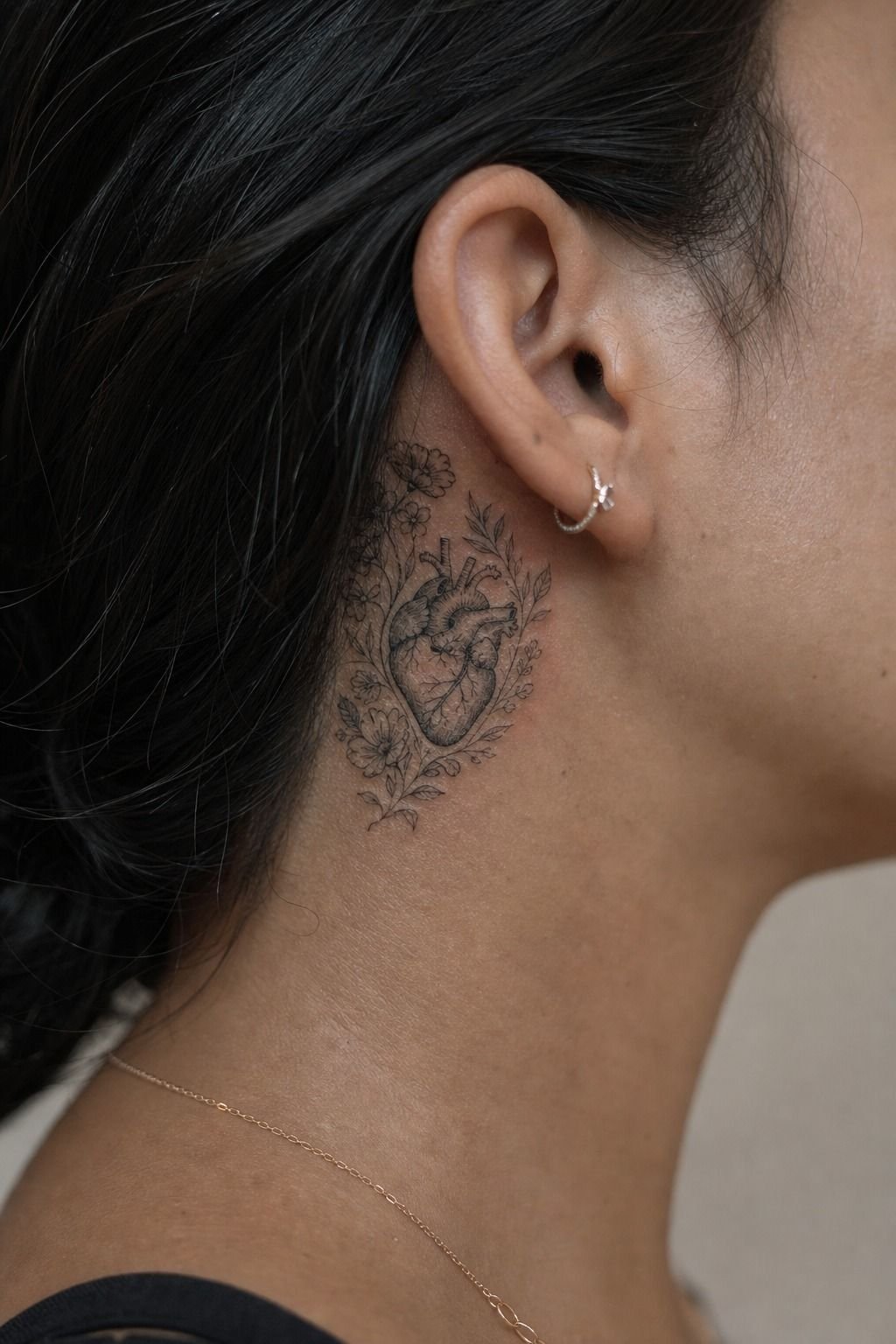
Floral anatomical heart tattoo designs work because the flowers soften a biologically intense subject without making it childish. For the healed botanical piece in the reference, use thin stems that wrap around the heart instead of cutting straight across it. Your eye should land on the heart first, then follow the leaves.
I usually like a few open wildflower stems over a heavy bouquet. The latter chews up the negative space and makes the heart’s outline harder to read later. You can choose birth flowers if the meaning matters, but don’t force six family members into one 2-inch tattoo.
Pick two flowers, give them air, and let the black linework do its job. It’ll age cute on you.
4Small Heart On The Inner Wrist
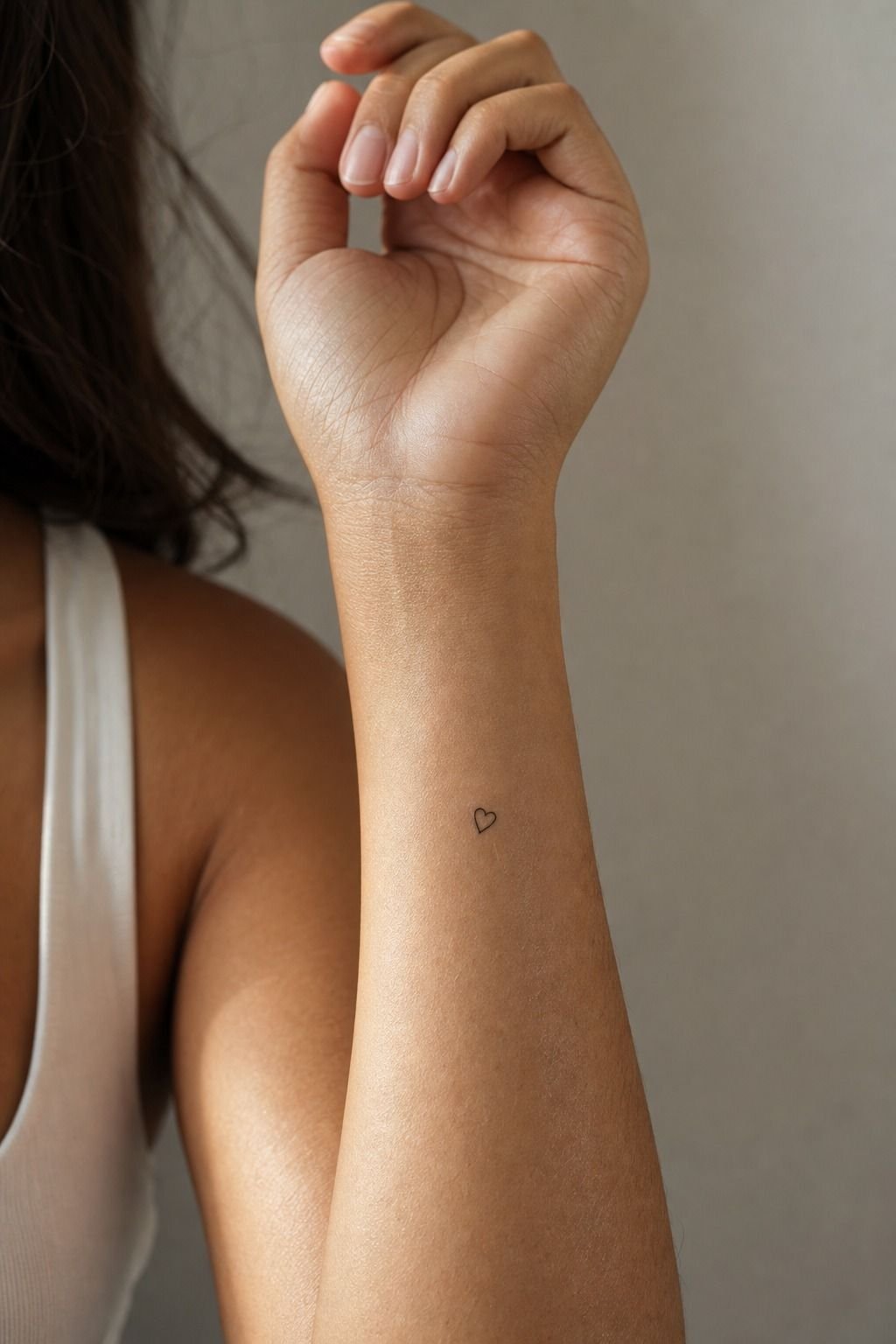
A small heart on the inner wrist feels personal because you’ll see it constantly. The catch?
Your wrist moves, bends, gets washed, and sees plenty of sun. Keep this fine line heart at least 1.5 to 2 inches tall, with a sturdy outer contour and fewer internal lines than you’d use on a forearm.
That size on a wrist is gonna mush out if you treat every vessel like a tiny illustration. Bump it slightly up the forearm so it breathes and ages nicer. Your wrist can be spicy near the tendon, though most people handle a short session fine.
Black is your best friend for longevity, while red is better as a small accent. But sunscreen matters more than people want to hear.
5Human Heart With Red Ink Accents
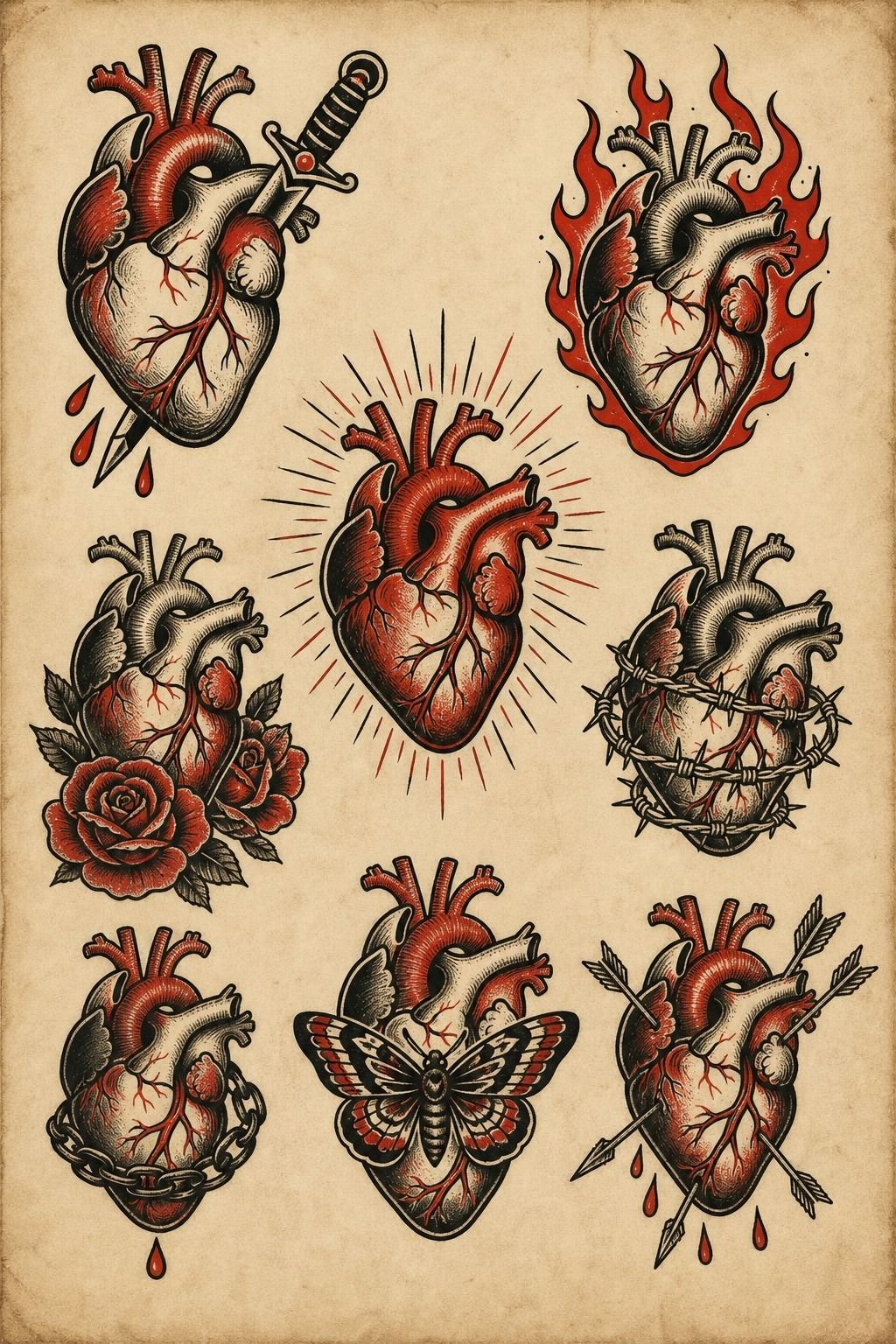
The flash-sheet version of a red-accent heart gives you a smart choice: pick and stick, or use it as a reference for a custom redraw.
6Anatomical Heart Wrapped In Serpent Linework
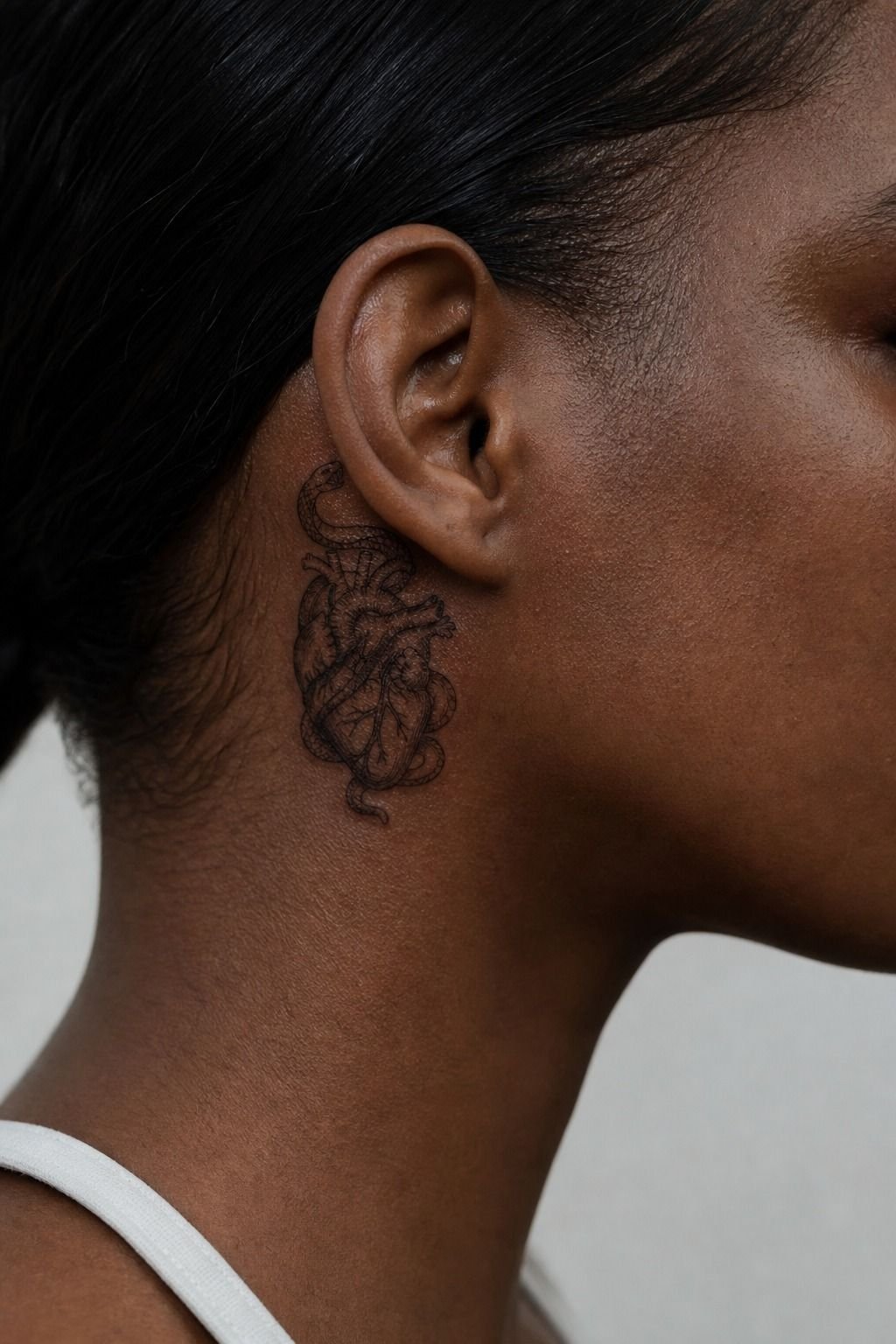
A serpent wrapped around an anatomical heart gives you movement, tension, and a clearer story than a random snake slapped beside a heart. On deep ebony skin, I’d use a bolder blackwork outline with open skin breaks instead of relying on whisper-thin grey shading. Your tattoo needs contrast that reads in natural light.
The serpent should curve with the heart’s silhouette, not cover every vessel. Leave one side of the heart visible, then let the snake’s body cross low near the base.
That composition feels dramatic without becoming cluttered. I’ve seen artists make the snake too thin, and it loses all authority after healing.
Go a little wider. Bold will hold, especially in a small behind-ear placement.
7Real Heart Tattoo Across The Ribcage
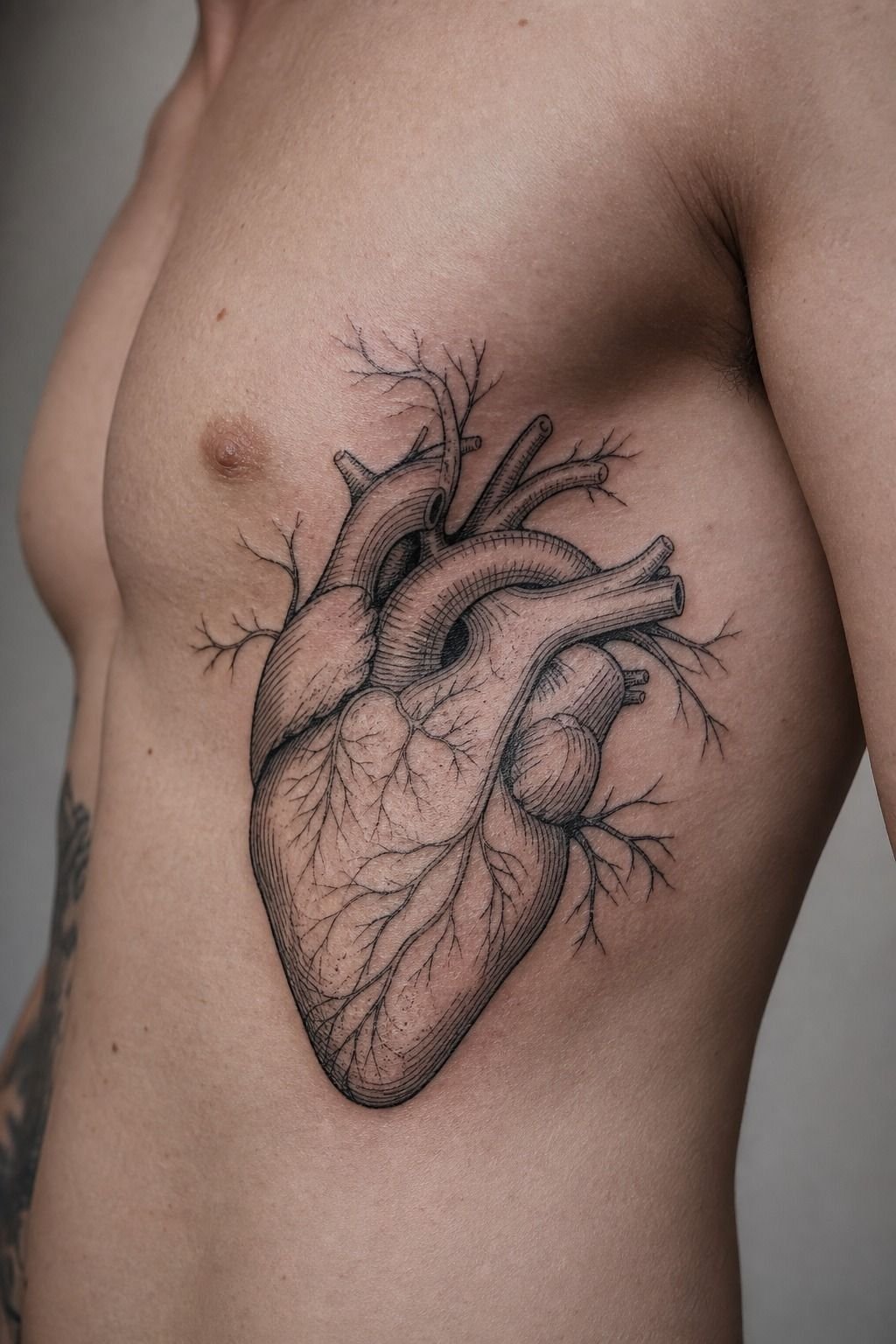
A real heart tattoo across the ribcage can look breathtaking, but I’m not going to pretend ribs are chill.
8Human Heart With Anatomical Vein Shading
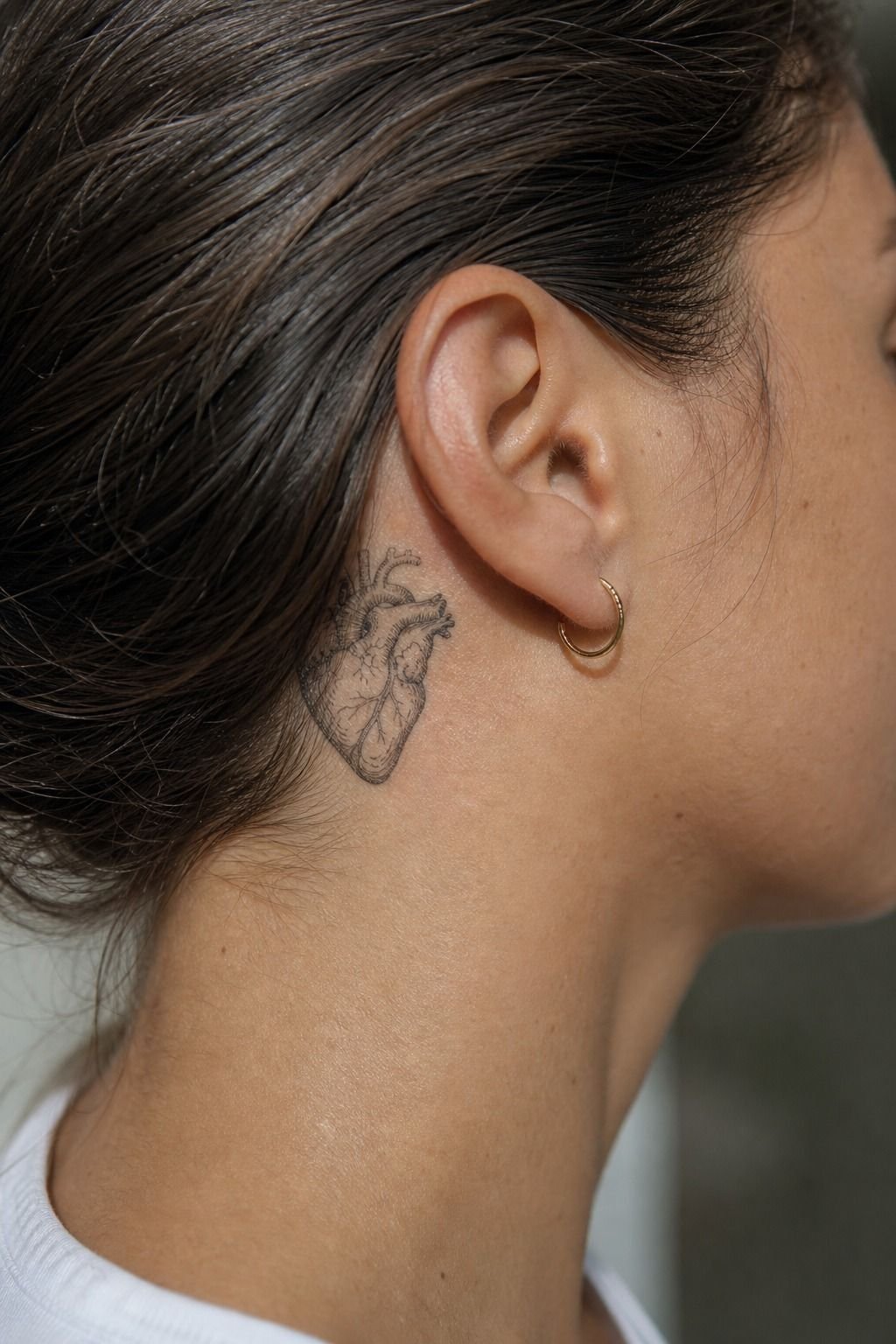
Vein shading works best when it’s soft enough to heal velvety, not patchy. For this healed behind-ear tattoo, your artist should use pepper shading in the recesses, then leave open skin around the outside edges. That creates depth without turning the design into a dark blob.
The single-needle needle grouping matters less than the artist’s hand pressure and patience. One clean pull, not ten fuzzy ones.
You should ask for healed photos of similar fine line work on different skin tones, because fresh pictures flatter everybody. But healed work tells you whether the artist understands spacing. I’d rather see three confident shaded veins than twelve tiny ones fighting for room.
9Matching Human Heart Tattoos For Partners
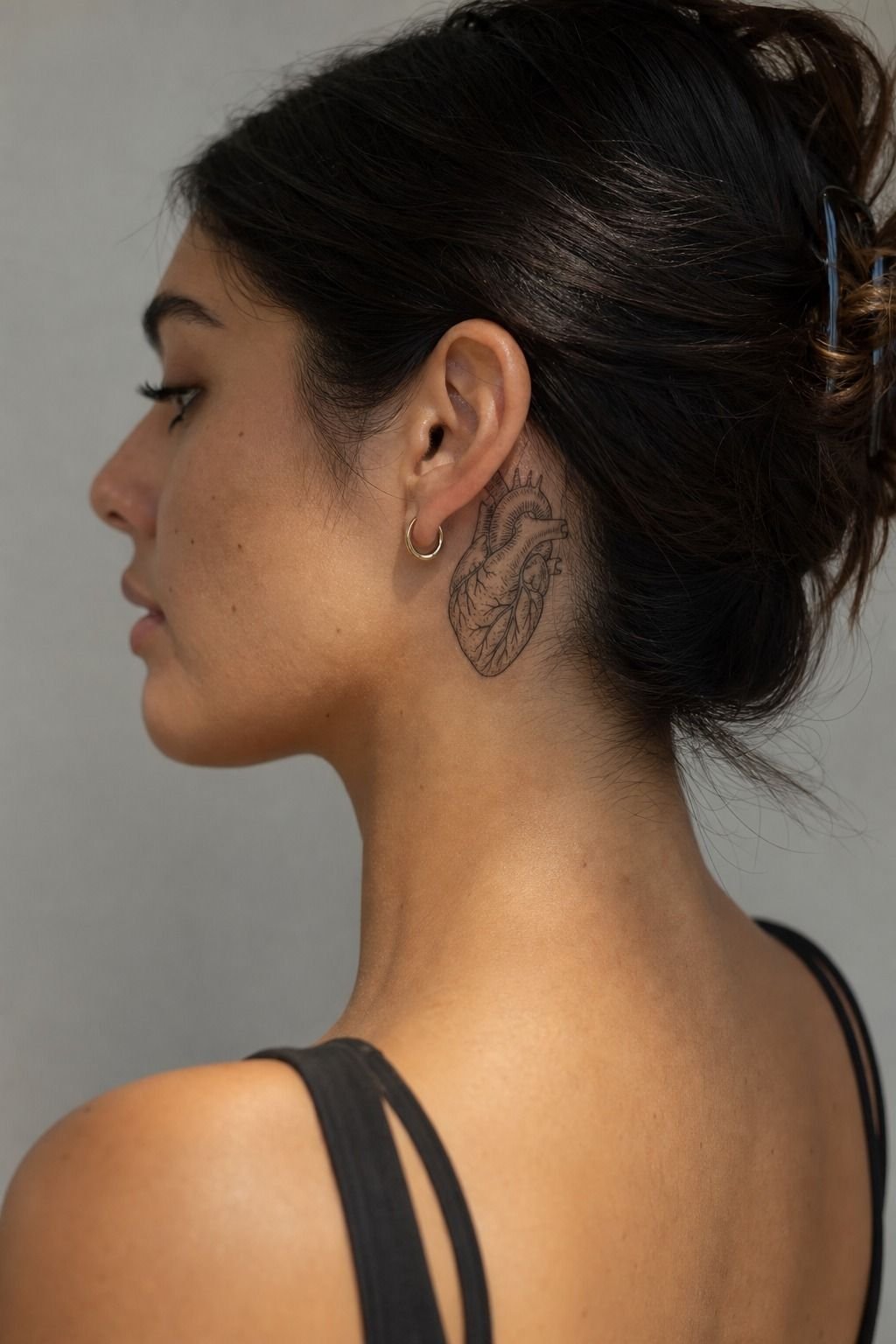
Matching human heart tattoos for partners don’t need to be identical to feel connected. Your shared element can be the same heart silhouette, while each person chooses a different placement, flower, date, or line detail. That keeps the tattoo personal instead of looking like a copied stamp.
For behind-ear placements, make sure both designs are adjusted to each person’s ear shape and skin tone. You can share a stencil concept, but your artist should redraw it for each body.
I’d skip each other’s names inside a tiny heart. Initials, a shared symbol, or matching vessel shapes will stay cleaner. If the relationship changes, the artwork can still mean something true about your life.
10Human Heart Tattoo Behind The Upper Arm
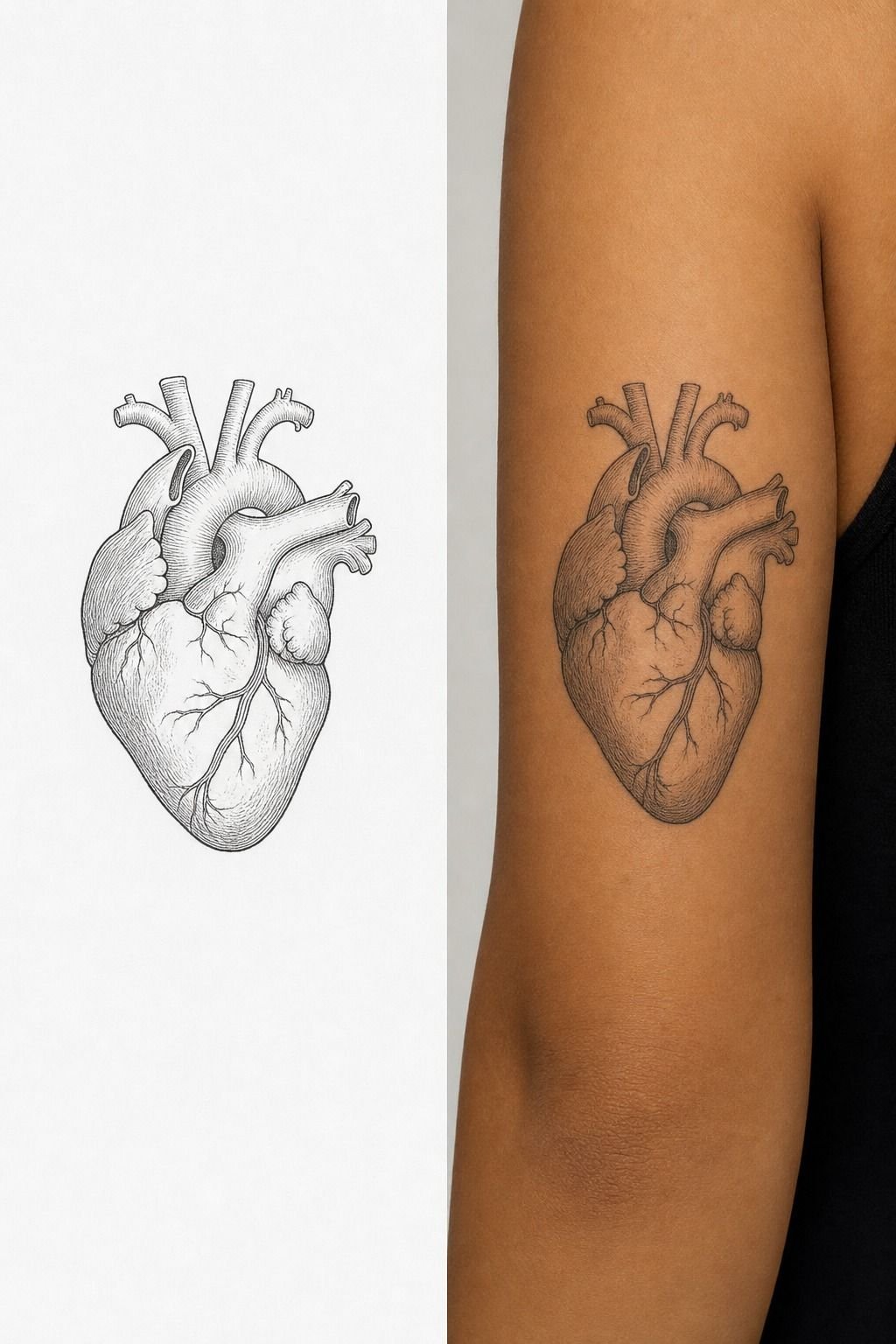
The upper-arm placement is one of my favorite low-wear choices for a human heart tattoo.
11Watercolor Human Heart With Black Outlines
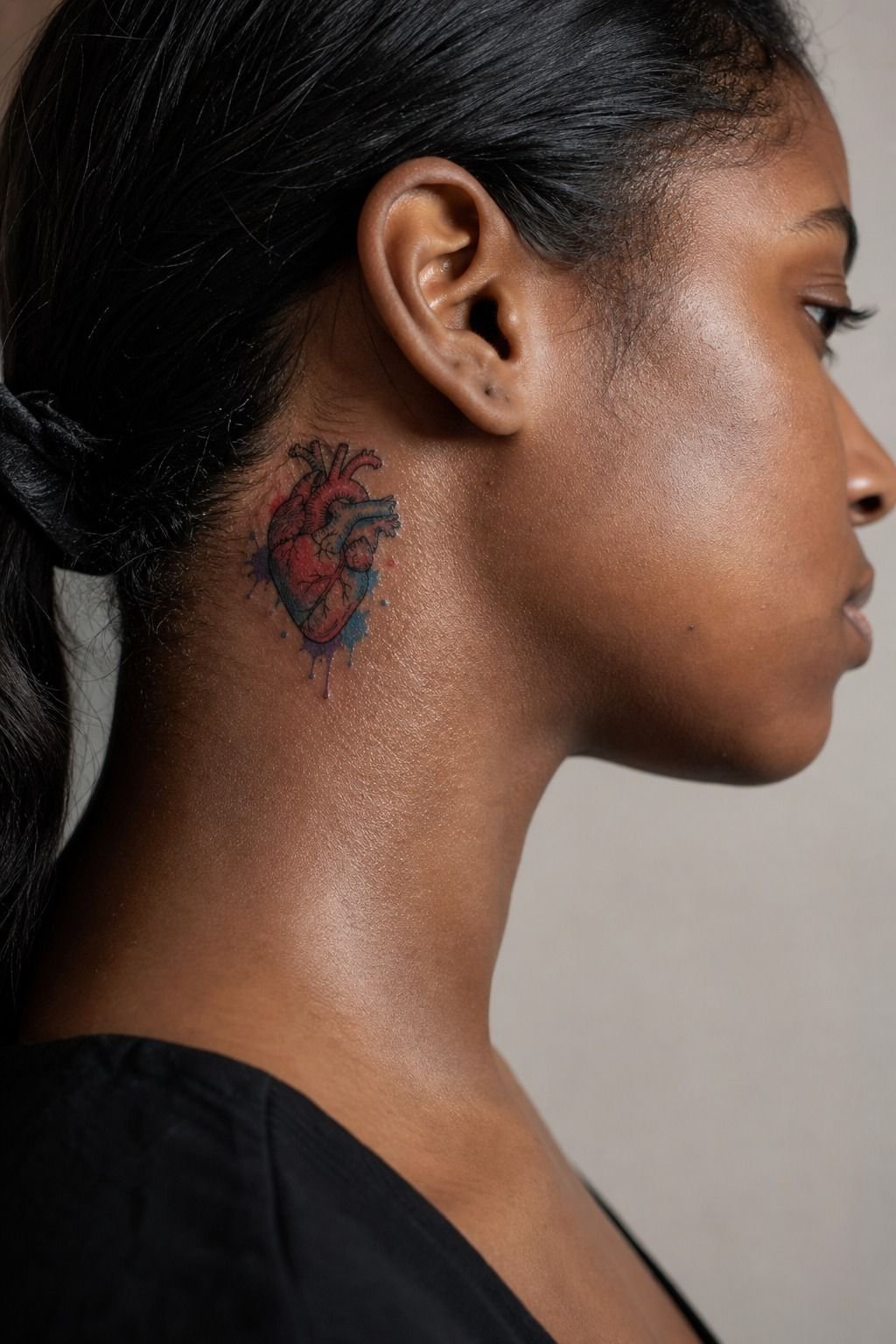
Watercolor human hearts can be gorgeous, but only when the color is anchored with line. Your black outline acts like a fence around the loose red, pink, and violet wash, keeping the heart readable when the brighter pigment softens. Without that structure, watercolor can heal flat.
Use a limited palette. Magenta ink, muted crimson, and a restrained blue-grey shadow are enough.
I don’t love rainbow splashes behind the ear because the placement is small and your skin needs visual rest. Let the color bloom around one side of the heart instead.
That gives you a soft, expressive result while the black structure stays solid. It’s a more timeless call than chasing every color at once.
12Human Heart And Sacred Geometry Composition
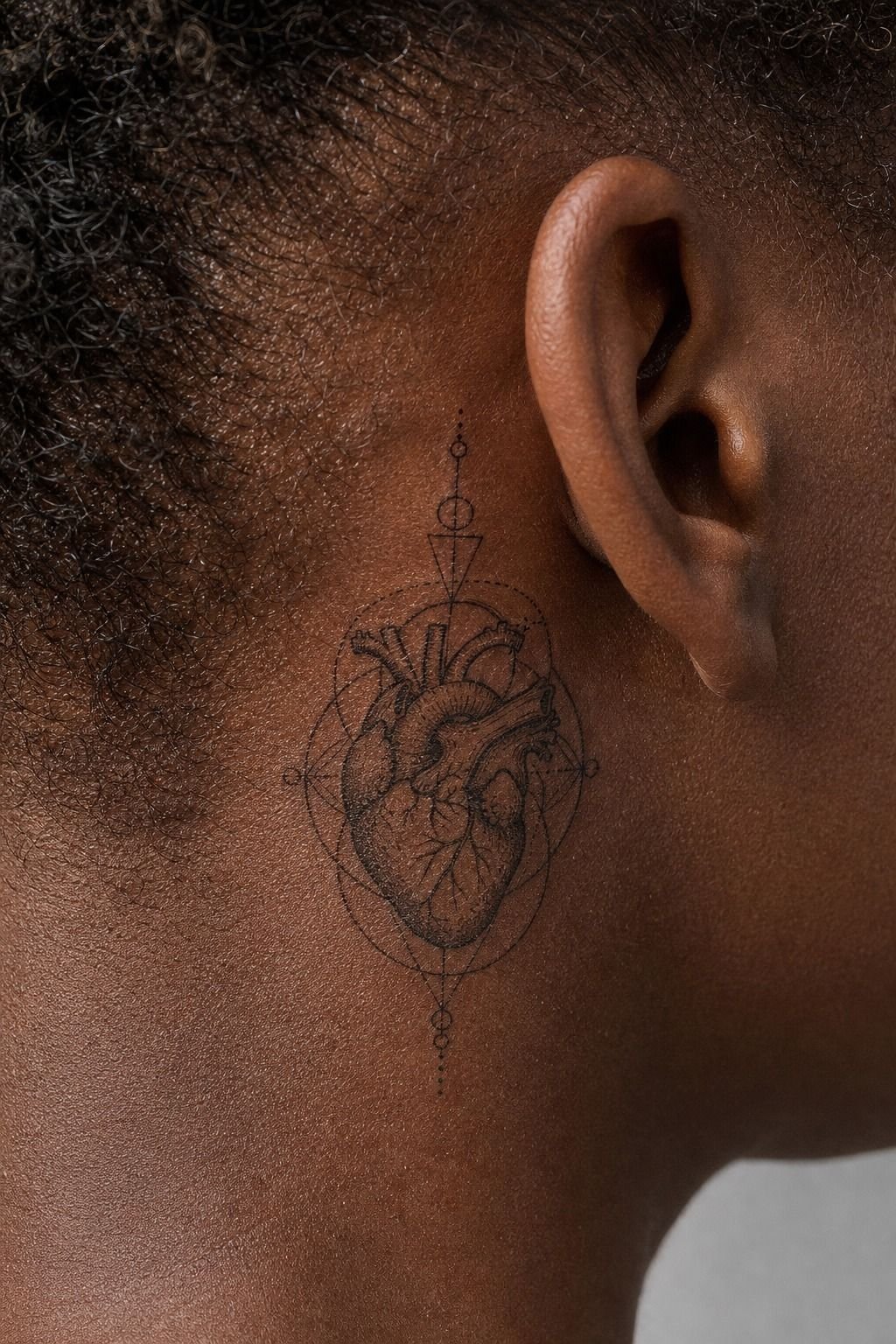
Sacred geometry can frame a human heart tattoo without making it look like a worksheet.
13Anatomical Heart With Botanical Roots
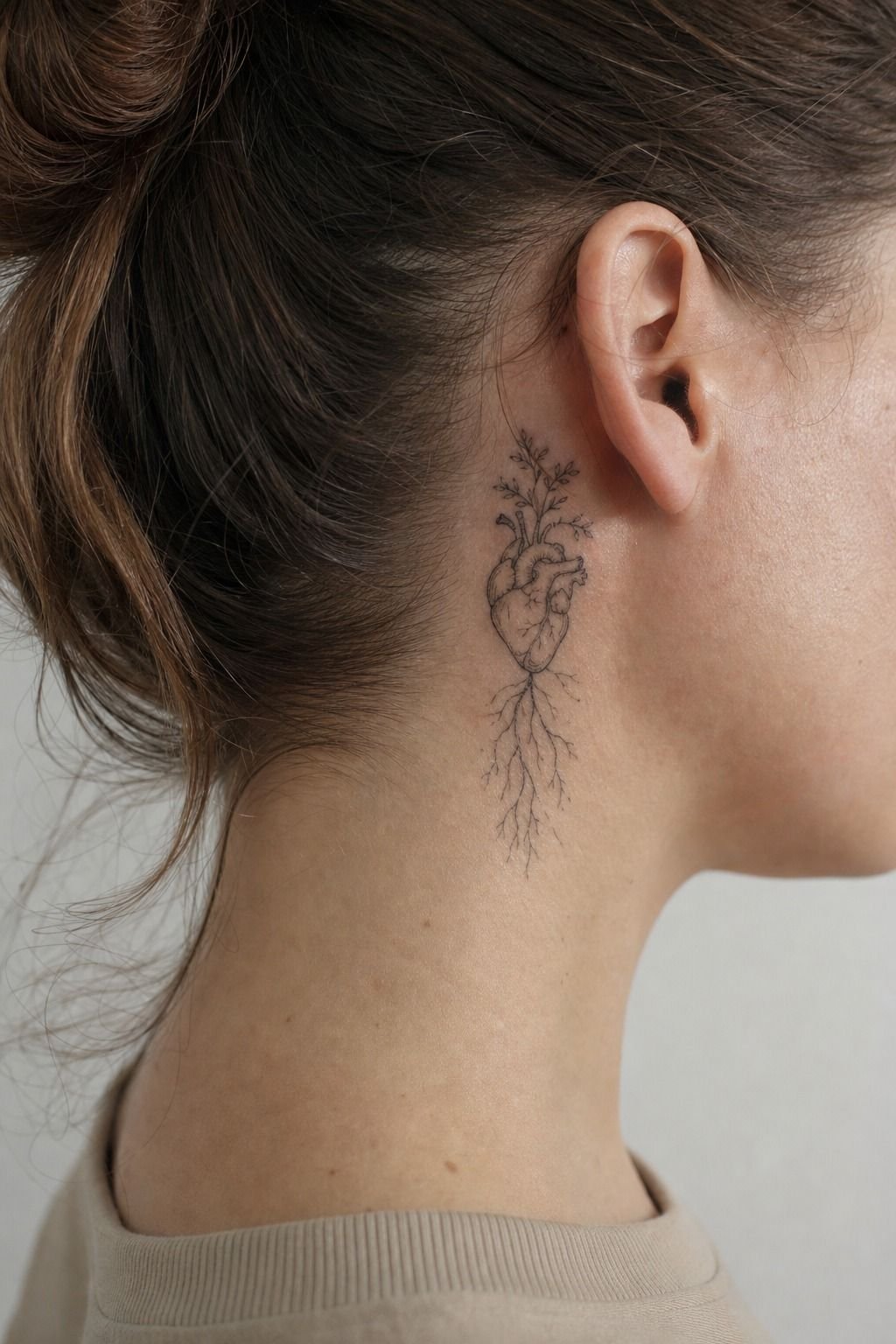
Botanical roots are a strong choice when you want the heart to stand for family, recovery, or starting over without writing a paragraph on your skin. Your heart sits at the top, then the root system trails down in a loose natural flow. It’s peaceful, but it still has edge.
Keep the roots thicker near the heart and taper them as they travel. A few fern fronds or fine leaves can blend into the roots, though I’d avoid making every line equally thin.
That’s where tattoos get scratchy. You’ll want enough black weight near the center to hold the piece together after years of sun and normal skin change.
Simple roots. Clear meaning. No visual clutter.
14Realistic Heart Tattoo On The Chest
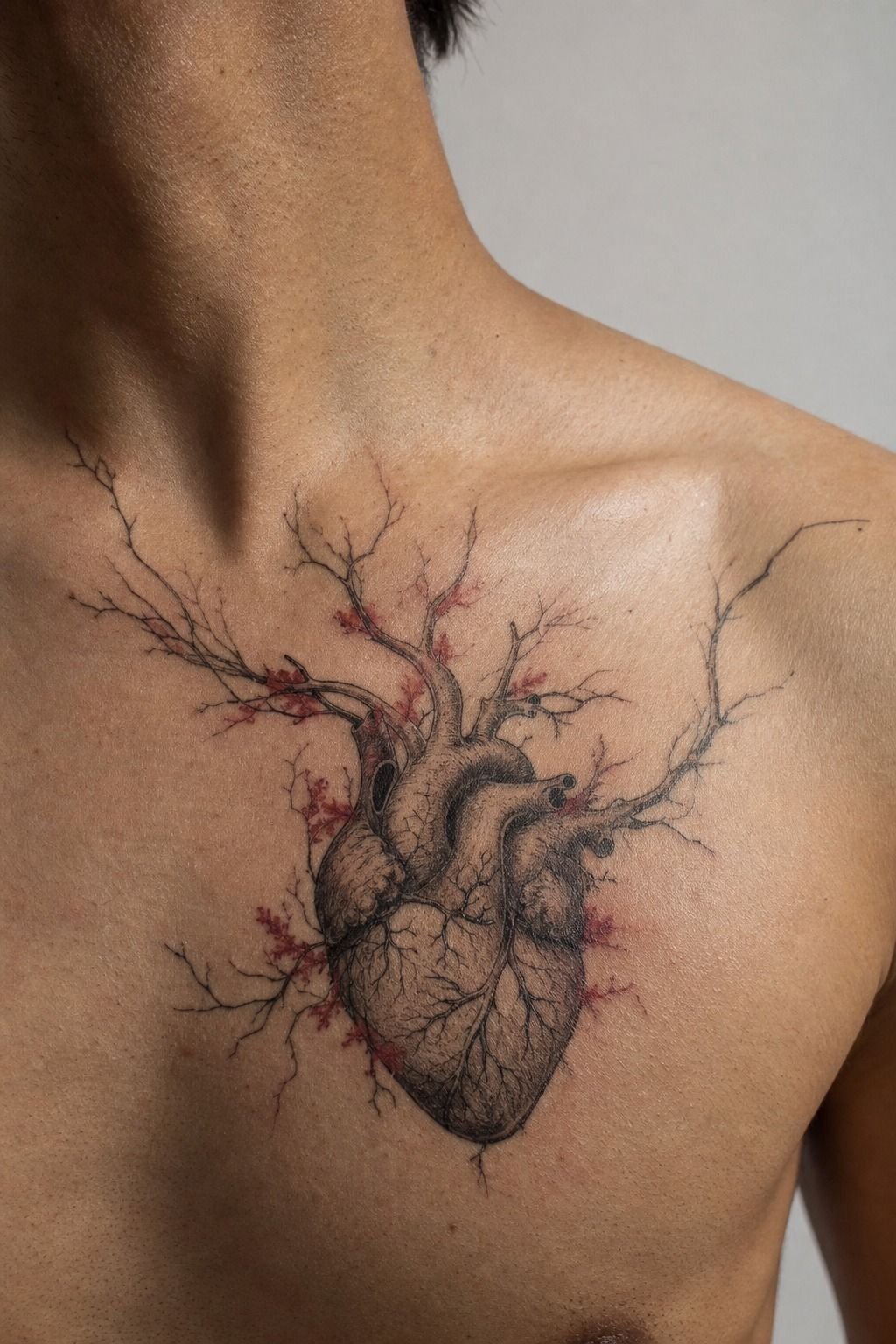
A realistic heart tattoo on the chest can be intimate and bold because it sits near the actual organ it represents. Your chest offers more canvas than behind the ear, so this is where micro-realism can become proper realism. A 4-inch heart gives the artist room for vessel texture, deep shadow, and a readable silhouette.
The sternum area can get spicy, especially near bone, but the outer chest is more tolerable. I’d place the heart slightly off-center rather than dead in the middle unless you’re building a larger symmetrical chest piece.
Your artist may need 2 to 4 hours depending on shading and detail. For a more symbolic route, compare it with flaming heart tattoo meaning.
But don’t chase a medical-photo copy at postage-stamp scale.
15Human Heart With Broken Chain Detail
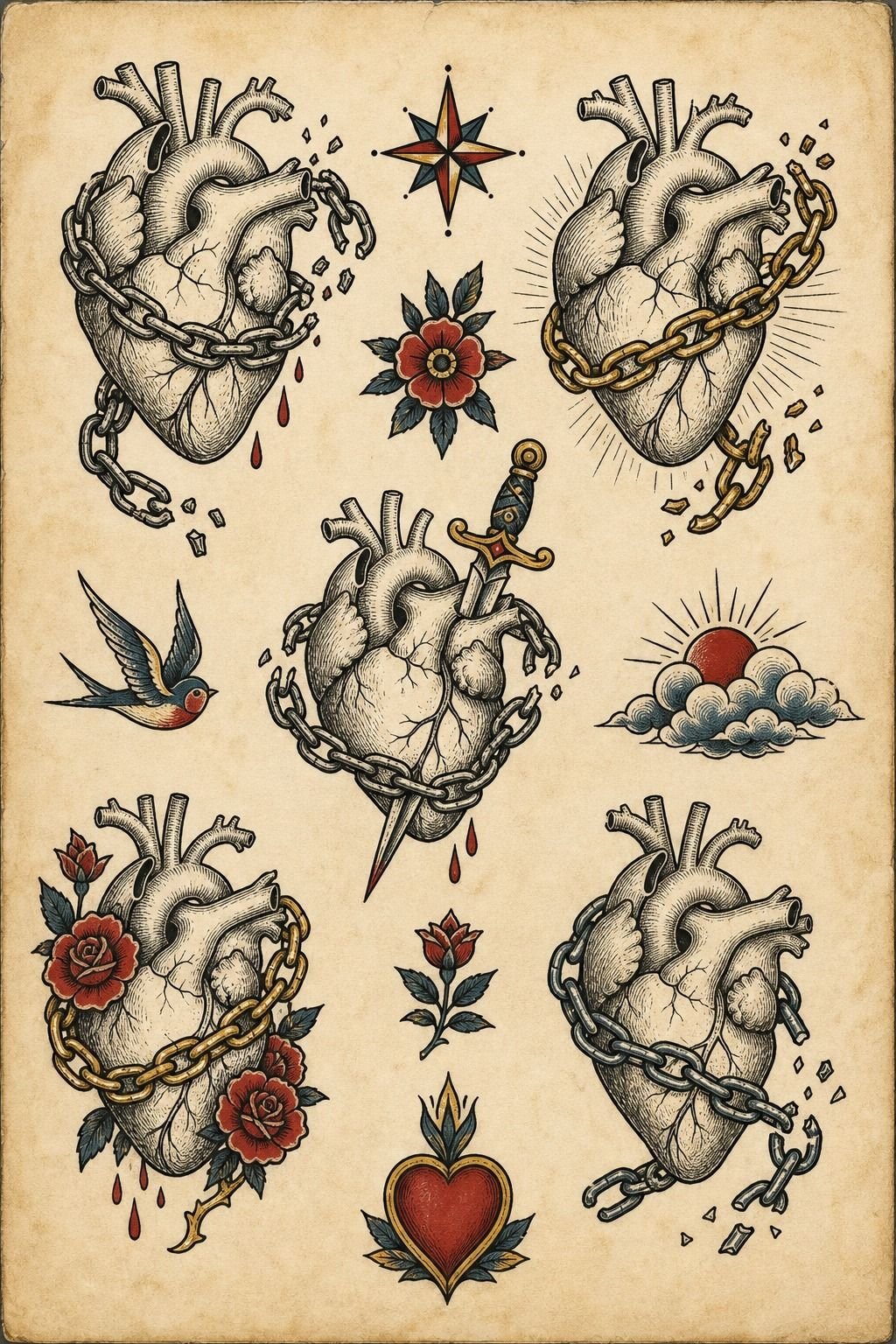
A broken chain around a human heart makes the message clear without needing words: release, survival, or walking away from something that had a grip on you. The flash-sheet approach is useful here because you can compare different chain weights before your artist commits ink to skin.
Your chain links should be few and readable. Traditional black linework with one or two broken links will heal cleaner than twenty tiny loops wrapped around every artery.
I’d put the chain low on the heart, like it’s falling away, rather than cinching the heart at the center. That placement keeps the anatomy visible and the story immediate.
You don’t need to explain it. The image already does.
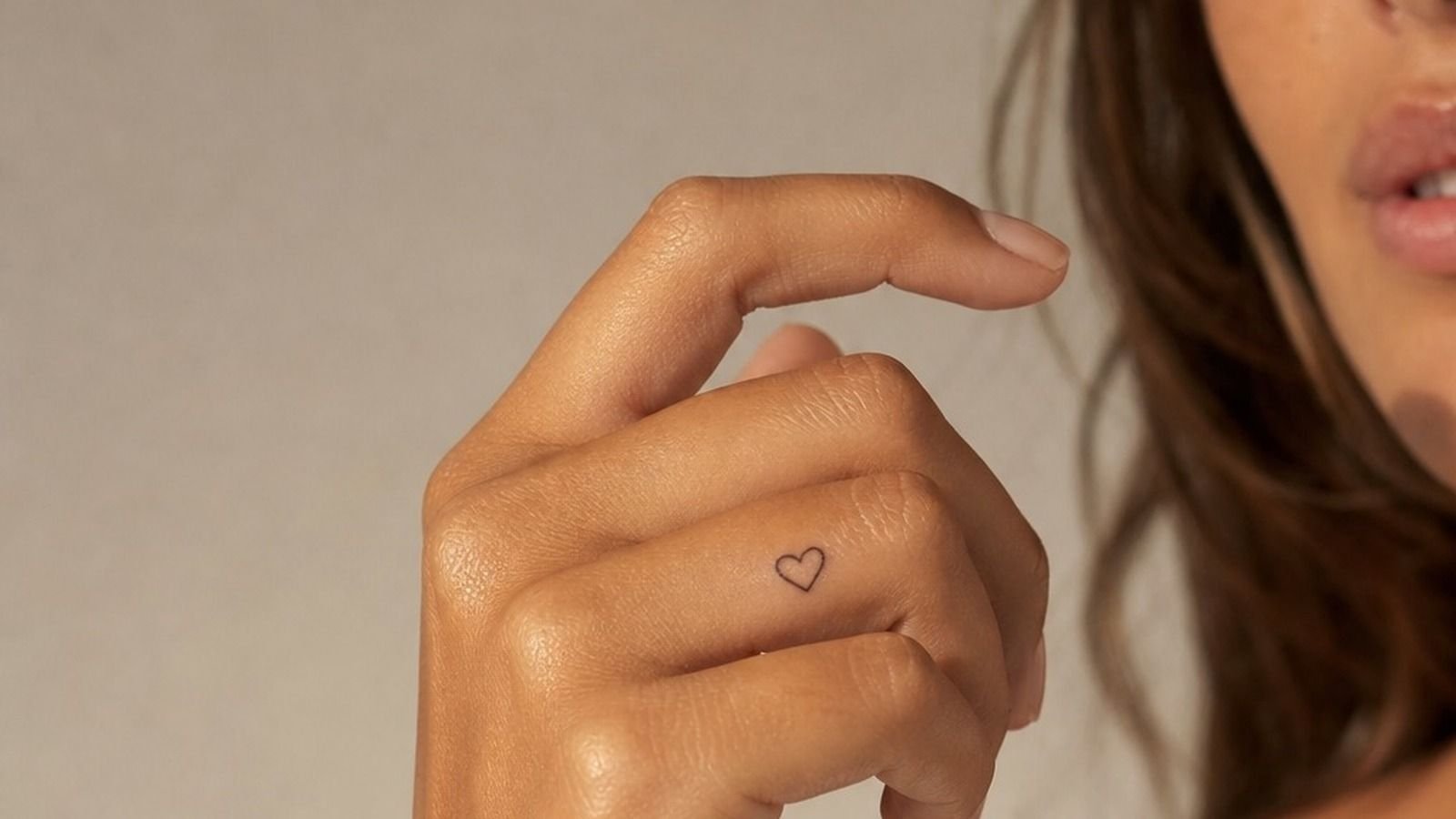
16Micro Real Heart On The Finger
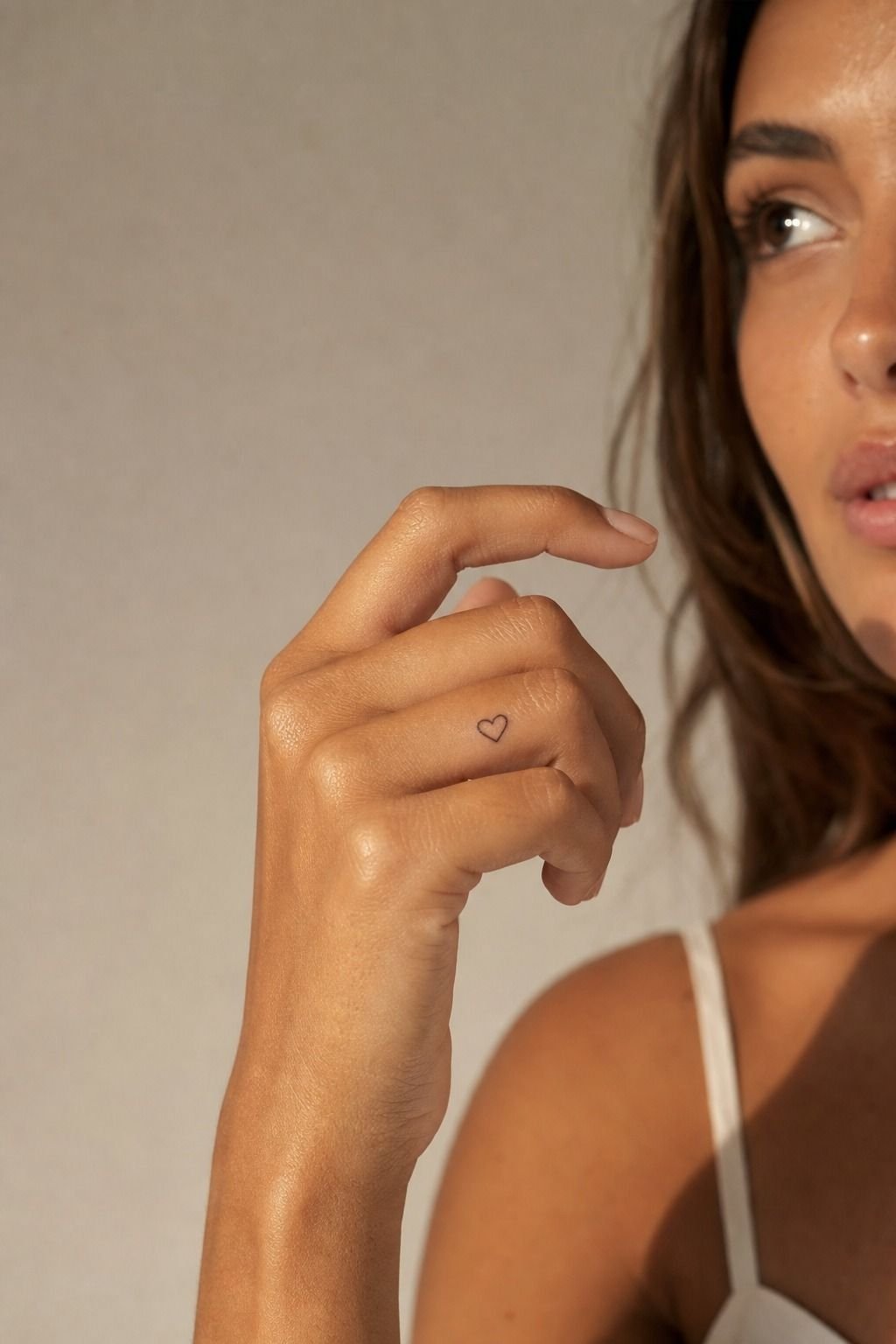
A micro real heart on the finger is for people who accept touch-ups. Your hands wash constantly, rub against everything, and see more UV than almost any other placement. The image can look charming in an editorial photo, but fine details on fingers are high-wear from day one.
Keep the design brutally simple: a compact outline, one valve suggestion, one tiny shadow. Finger tattoo ink needs a confident artist who knows how not to overwork thin skin.
I’d avoid color packing here, because it can fade unevenly and make the design look chewed up. If you want the same delicate idea with better longevity, move it to the side of your hand or lower forearm.
Your future self will thank you.
17Human Heart Tattoo With Handwritten Script
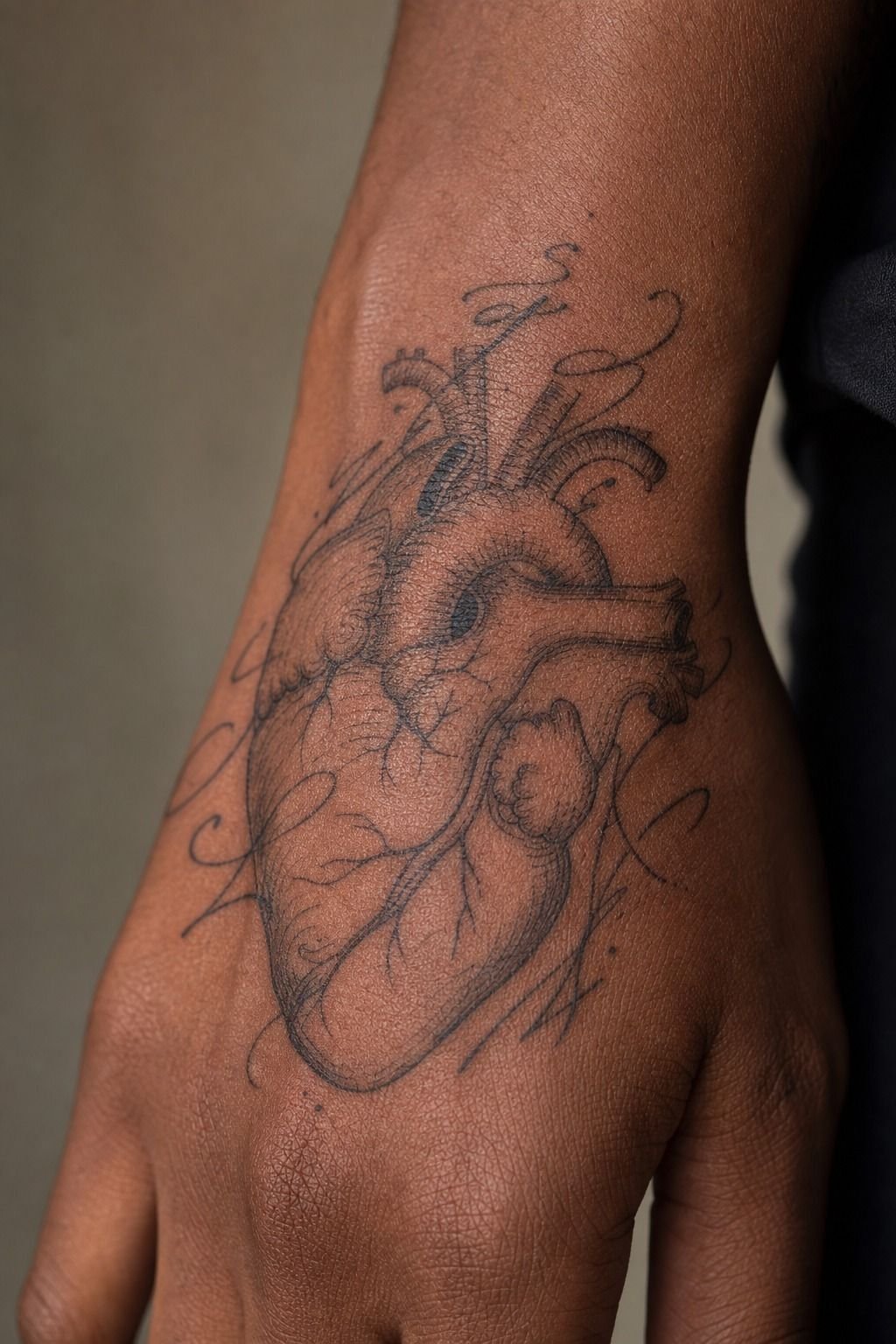
Handwritten script beside a human heart works when the words are short and the handwriting is genuinely yours.
18Blackwork Anatomical Heart On The Forearm
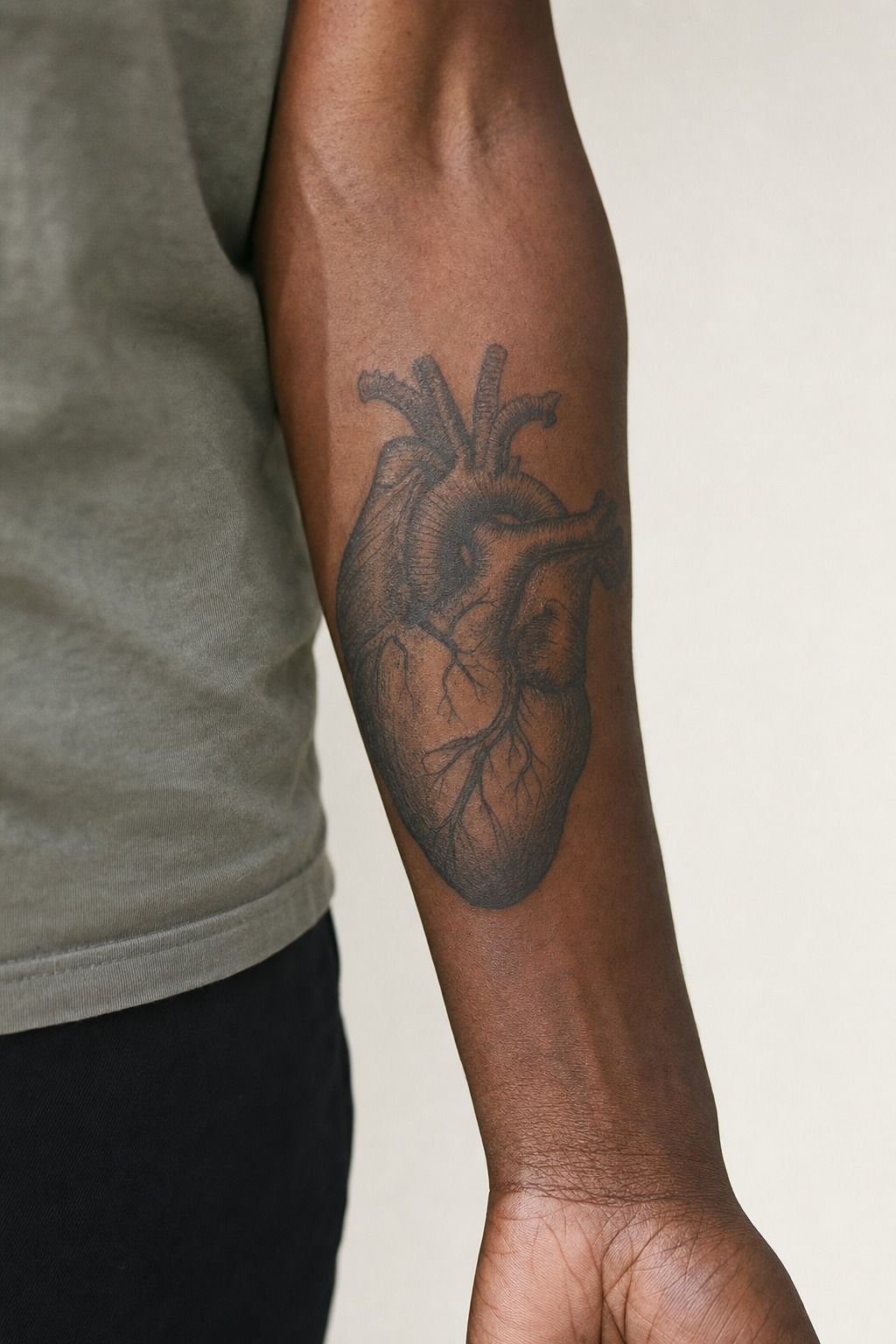
Blackwork anatomical hearts belong on the forearm when you want something that reads from across the room. Your forearm is low-wear, relatively chill pain-wise, and large enough for saturated black shapes with smooth grey shading. This is where you can go bigger without the tattoo becoming loud.
Use solid black fill in a few deep chambers, then leave skin breaks around arteries and veins. That negative space keeps the design airy, even with heavy ink.
I’ve watched overly detailed blackwork heal into one dark lump because nobody protected the silhouette. Don’t let that happen to yours.
A forearm heart around 4 to 5 inches can take contrast beautifully, and it’ll look strong in ten years.
19Human Heart With Butterfly Transformation Motif
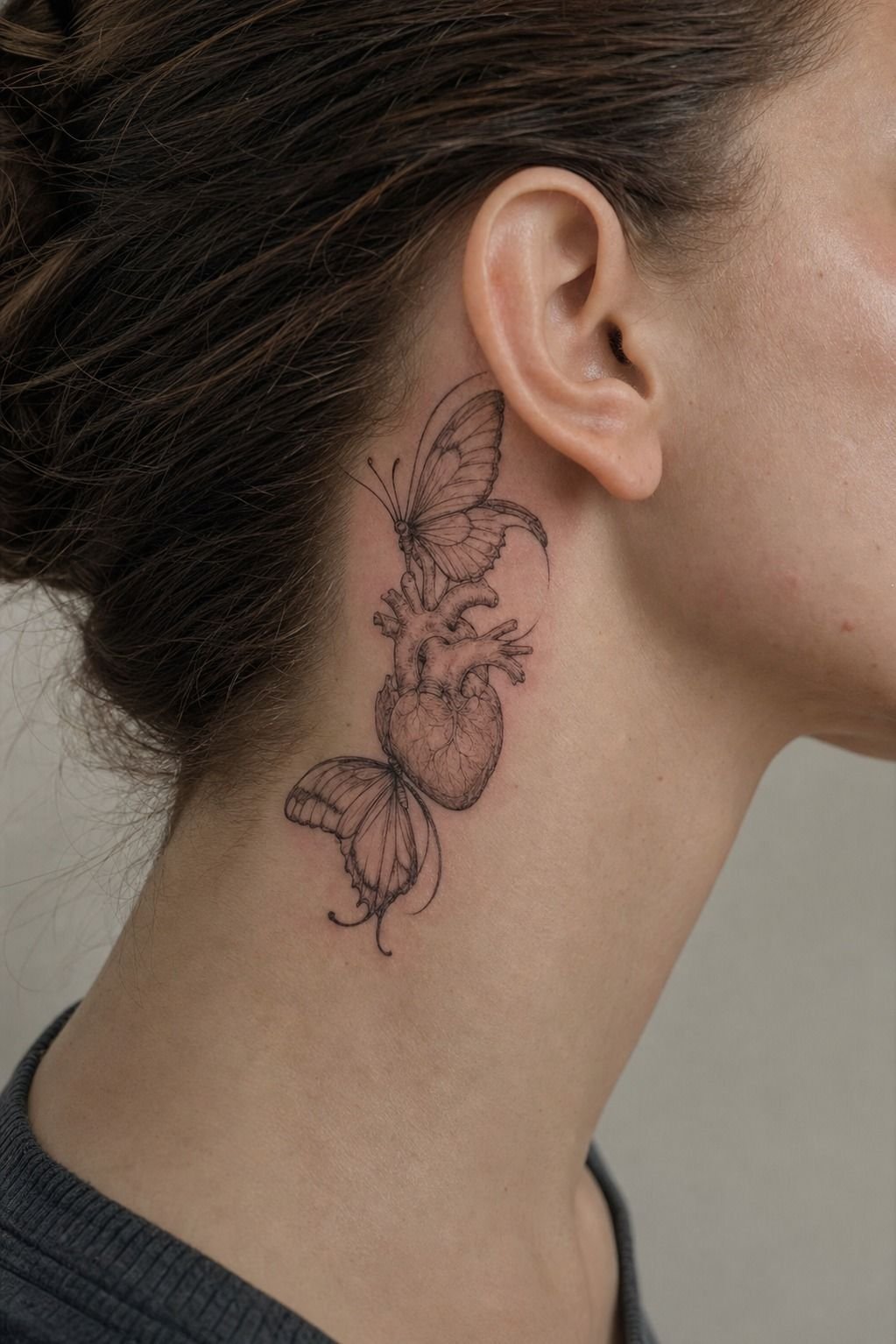
A butterfly transformation motif can get corny fast, so your composition needs restraint. Let the anatomical heart stay grounded, then have one or two butterflies lift from an open vessel line. Your design should feel like change in motion, not a sticker collage.
Behind the ear, use a fine line butterfly with open wings and minimal interior detail. The heart can sit lower, while the butterfly rises toward the hairline for a graceful flow. I’d skip five tiny butterflies.
They’ll crowd each other and lose their shape. One black butterfly, one softer second shape, and a heart with a clear outline gives you a gentle piece that still feels grown-up.
The Longevity Rule I Give Every Heart Client
I’ve had people bring me screenshots of tiny, hyper-detailed hearts and ask for the exact same thing on a wrist, finger, or behind the ear. I get it.
The image is intimate, delicate, and it feels like a little private object you can keep forever. But your skin isn’t paper, and good tattooing starts with respecting that.
The heart tattoos I trust most years later have a strong silhouette, real negative space, and one detail that means something to the wearer. Not every artery. Not every flower petal.
Not every sentence someone wants to carry. A tattoo needs room to settle into skin, especially if you’re choosing fine line work.
Lines spread a little over time. That’s normal. The goal isn’t to freeze the fresh photo forever.
The goal is for your tattoo to still read clearly when it has lived with you.
I also think people over-focus on pain and under-focus on placement. Yes, ribs, hands, feet, and sternum can be spicy.
But the real question is whether the design belongs there. A 1-inch heart on a finger may feel bold for a week, then need a touch-up sooner than you expected.
A 3-inch heart on the outer forearm can be visible, clean, and easy to care for. Your artist shouldn’t just say yes because you asked.
They should tell you when a design needs more size, more contrast, or a different spot.
First few days, it’s an open wound. Wash with gentle unscented soap, use a thin layer of ointment, and don’t suffocate it.
It’ll peel like a sunburn. Don’t pick the flakes or you can pull color out.
And keep it out of pools and direct sun while it heals.
The Questions I Get Asked Most
How much does a Human Heart Tattoo usually cost?
Most human heart tattoos cost about $100 to $300, depending on your size, placement, and artist. A clear design is worth budgeting for. Shop minimums often run $50 to $100, while many US artists charge $100 to $250 hourly. Your cheap option is rarely the clean option.
Are Human Heart Tattoo a good idea for a first tattoo?
Yes, if you keep your first human heart tattoo simple and place it well. A clean outline ages better than tiny realism. Your outer forearm, upper arm, or calf will be more comfortable than ribs or fingers, and you’ll have more room for crisp lines.
How do I choose a tattoo artist for Human Heart Tattoo?
Choose an artist whose healed portfolio matches the style you want. Healed linework tells the truth. Look for clean single-pass lines, healed black-and-grey photos, and a visibly clean studio. Your artist should explain why a design needs more space, not just take your money.
How much do Human Heart Tattoo hurt?
Human heart tattoos hurt more on ribs, feet, hands, and sternum than on your outer arm, thigh, or calf. Placement changes everything. Lines feel sharp, shading feels like a dull burn, and color packing can be the spiciest part. You can always take a short break.
How long does a Human Heart Tattoo take to heal?
The surface usually heals in 2 to 3 weeks, while full settling can take 2 to 3 months. Gentle care protects the linework. Your routine: unscented soap, a thin moisturizer layer, no picking, no pools, and no direct sun while your skin is fresh.
What’s the best placement for Human Heart Tattoo?
The outer forearm and upper arm are strong placements for most human heart tattoo ideas. They give your design room to age well. Your skin gets less friction there than fingers or feet, and you can size the heart around 3 to 5 inches without forcing detail.
Where I’d Start First
If I had to pick one, I’d start with the blackwork anatomical heart on the forearm. Your design gets enough skin for real contrast, and that’s what keeps a heart readable after years of wear. Pin that forearm placement for later and compare realistic heart tattoo options.