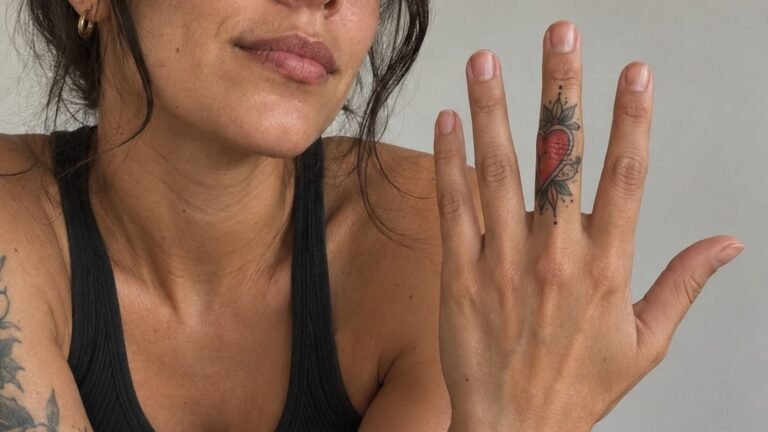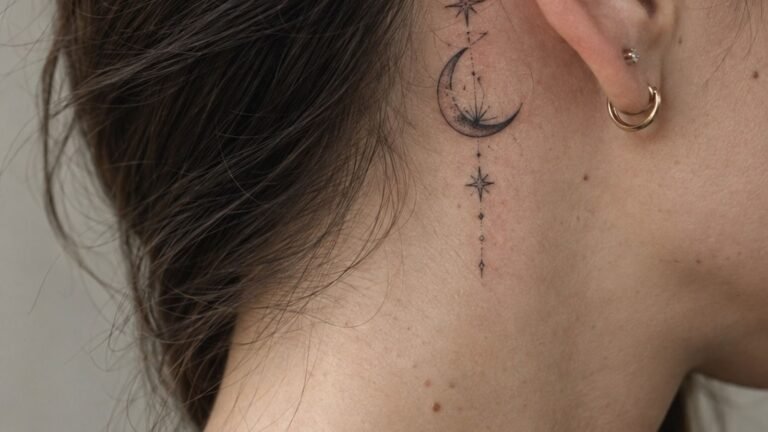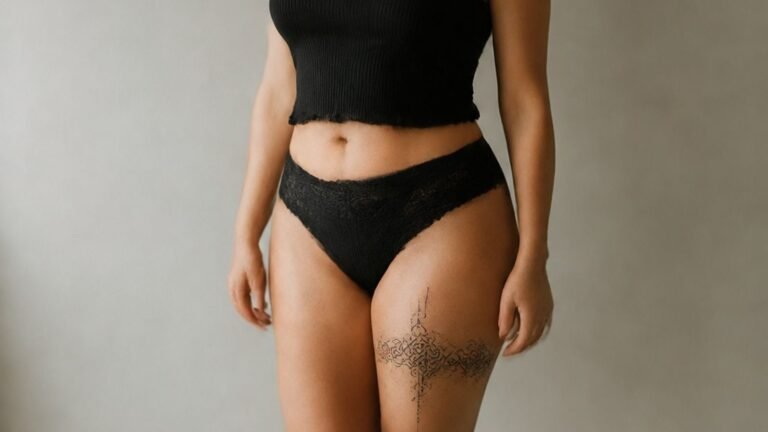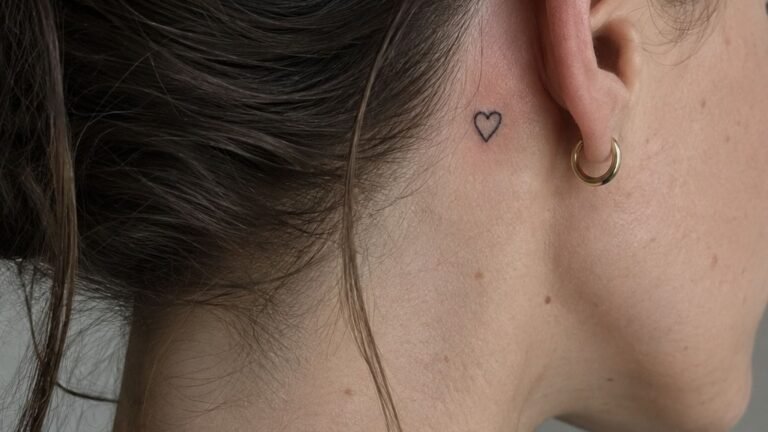
A Japanese peony tattoo ages well when you give the petals enough room, keep the black structure strong, and place it where skin does not constantly chew it up. I’ve watched tiny flower references turn into soup because nobody planned for skin. Start with the body, then build the flower around it.
- Start With Japanese Peony Tattoo Symbolism
- Pick Blackwork Japanese Peony Tattoo Contrast
- Choose Japanese Peony Tattoo Linework Density
- Plan Japanese Peony Tattoo Body Placement
- Match Japanese Peony Tattoo With Koi
- Build Japanese Peony Tattoo Around Wind Bars
- Use Japanese Peony Tattoo Color Accents
- Select Japanese Peony Tattoo Sleeve Scale
- Trace Japanese Peony Tattoo Stencil Shapes
- Balance Japanese Peony Tattoo Petal Layers
- Add Japanese Floral Tattoo Background Elements
- Compare Japanese Rose Tattoo And Peony Forms
- Set Japanese Peony Tattoo Pain Expectations
- Check Japanese Peony Tattoo Artist Portfolios
- Prepare Japanese Peony Tattoo Reference Images
- Keep Japanese Peony Tattoo Details Readable
- Protect Japanese Peony Tattoo During Healing
- Budget Japanese Peony Tattoo Sessions Honestly
- Review Japanese Peony Tattoo Before Booking
1Start With Japanese Peony Tattoo Symbolism
Start with what you want the peony to carry before you choose a petal shape. In Japanese tattoo imagery, the botan peony is often tied to beauty, prosperity, courage, and a certain bold softness. It looks rich beside a tiger, koi, lion, or warrior because it gives all that motion a calmer counterweight.
You should not treat symbolism like a quiz with one right answer. Your tattoo still needs to feel like yours. I’d read the peony tattoo meaning guide first, then tell your artist what part hits: resilience, abundance, memorial meaning, or simply the flower’s heavy layered form.
That gives them something real to draw from.
Keep the first reference simple. One open bloom, one tighter bud, dark leaves. Black Sumi ink and a warm red accent can make it feel traditional without making it look copied from a flash wall.
2Pick Blackwork Japanese Peony Tattoo Contrast
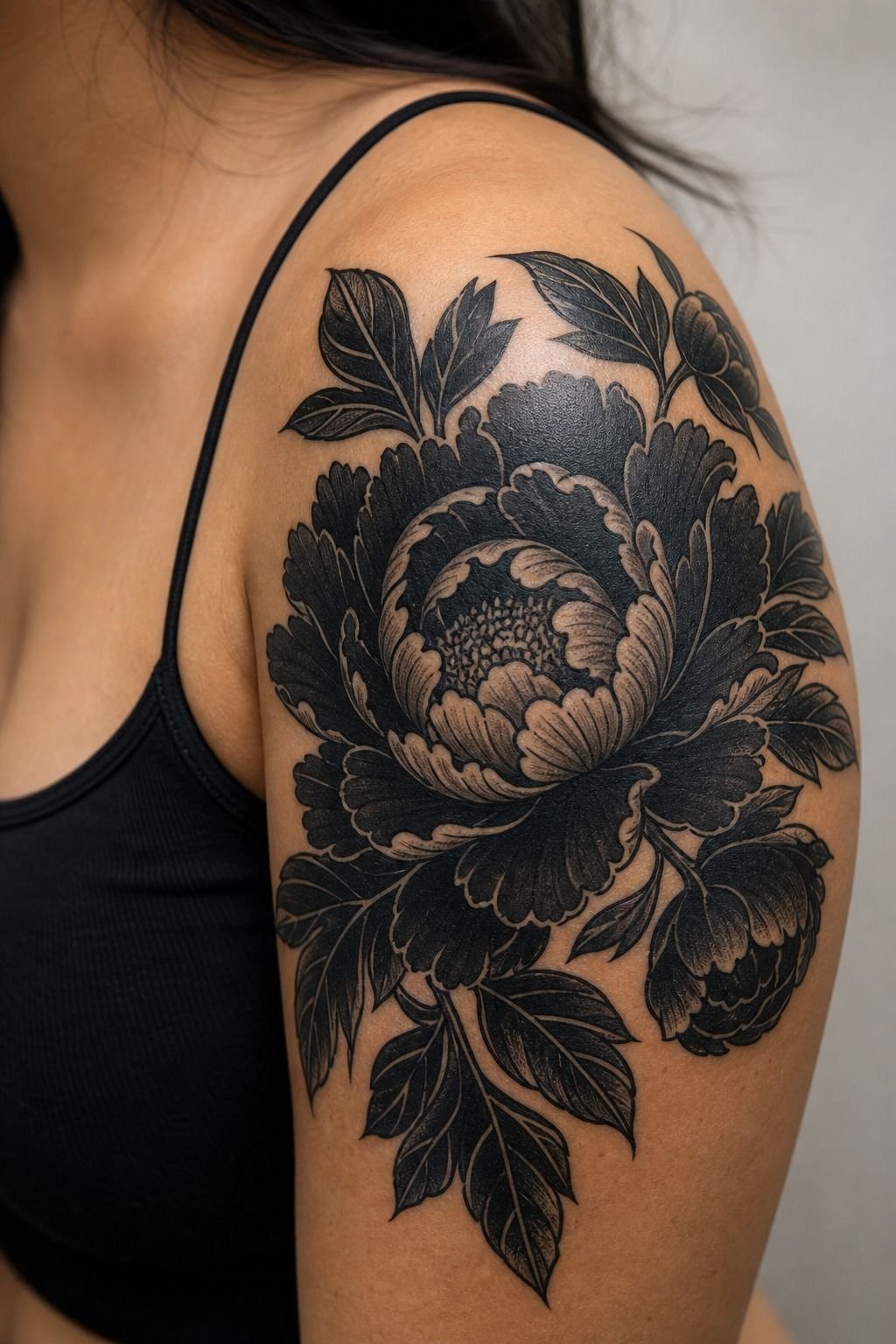
For a blackwork peony tattoo, contrast does more work than tiny detail. You want solid black leaves, clean negative-space petals, and enough skin breaks that the bloom reads from across the room. A shoulder is forgiving here because you can let the flower spread instead of squeezing it into a coin-sized circle.
Ask your artist to show you where the darkest blacks will sit. Dynamic Triple Black or another solid black pigment gives the design a strong base, but the win is placement, not the bottle. If every petal gets the same dark outline, the flower heals flat.
But don’t confuse blackwork with filling every inch. Let the inner petals stay soft with grey wash. That contrast is what keeps the piece bold, refined, and legible after the fresh shine is gone.
3Choose Japanese Peony Tattoo Linework Density
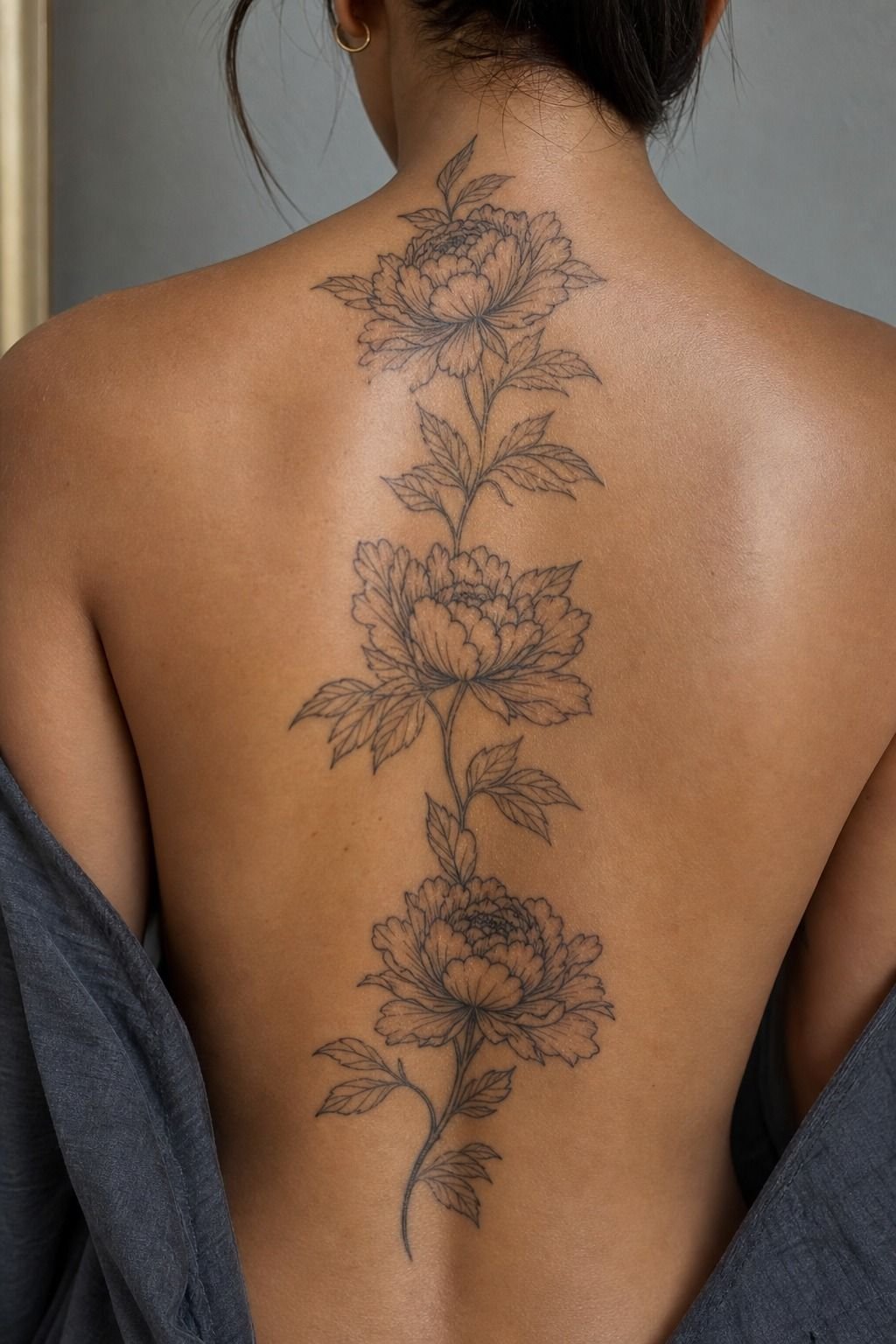
Choose linework density by looking at your skin from arm’s length, not by zooming into a Pinterest image.
4Plan Japanese Peony Tattoo Body Placement
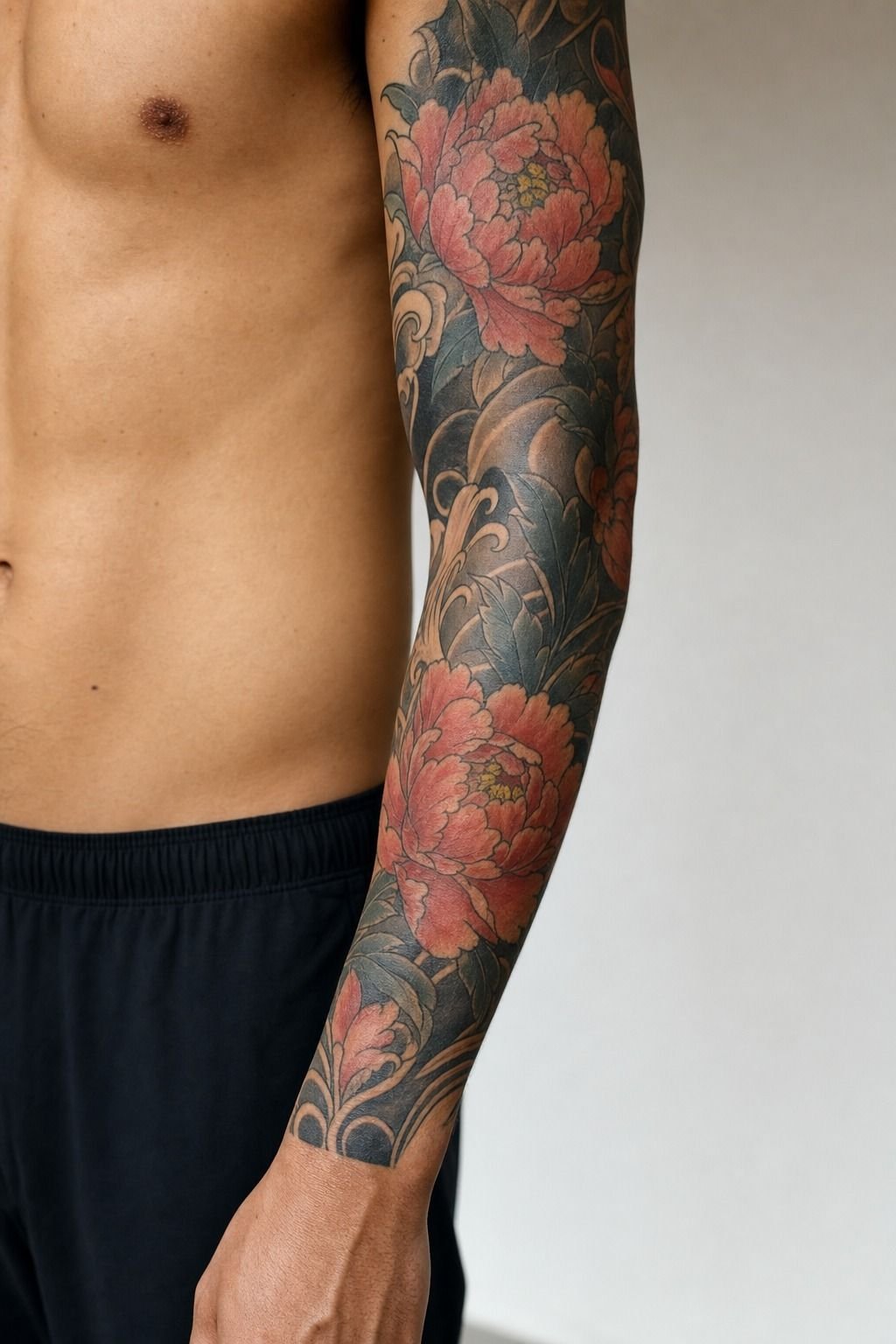
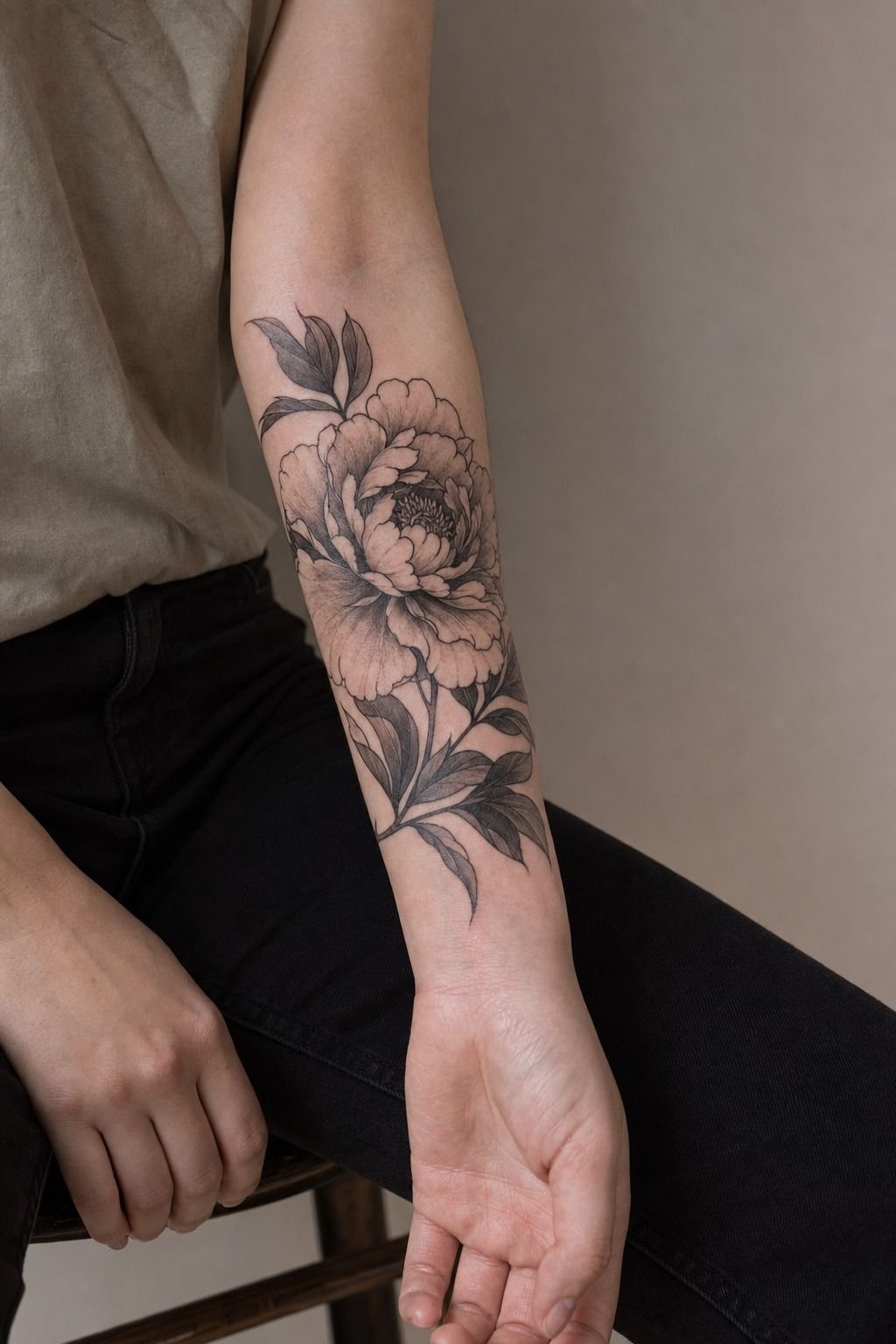
Plan placement with the flower’s flow, not where a flat phone screen says it belongs. A peony wrapping the forearm should follow the long axis of the arm, with the open bloom angled toward the outer forearm or elbow. If you rotate it sideways for a straight-on photo, it can look crooked every time you relax your arm.
The outer forearm is one of my favorite low-wear placements for this subject. You can see it, your artist gets room for leaves and wind bars, and the pain is usually manageable. A 4 to 6 inch composition gives petal layers enough air.
That size on a wrist is gonna mush out. Bump it up the forearm so it breathes and ages nicer. Your artist should stencil it standing, sitting, and with your elbow bent before they touch ink.
5Match Japanese Peony Tattoo With Koi
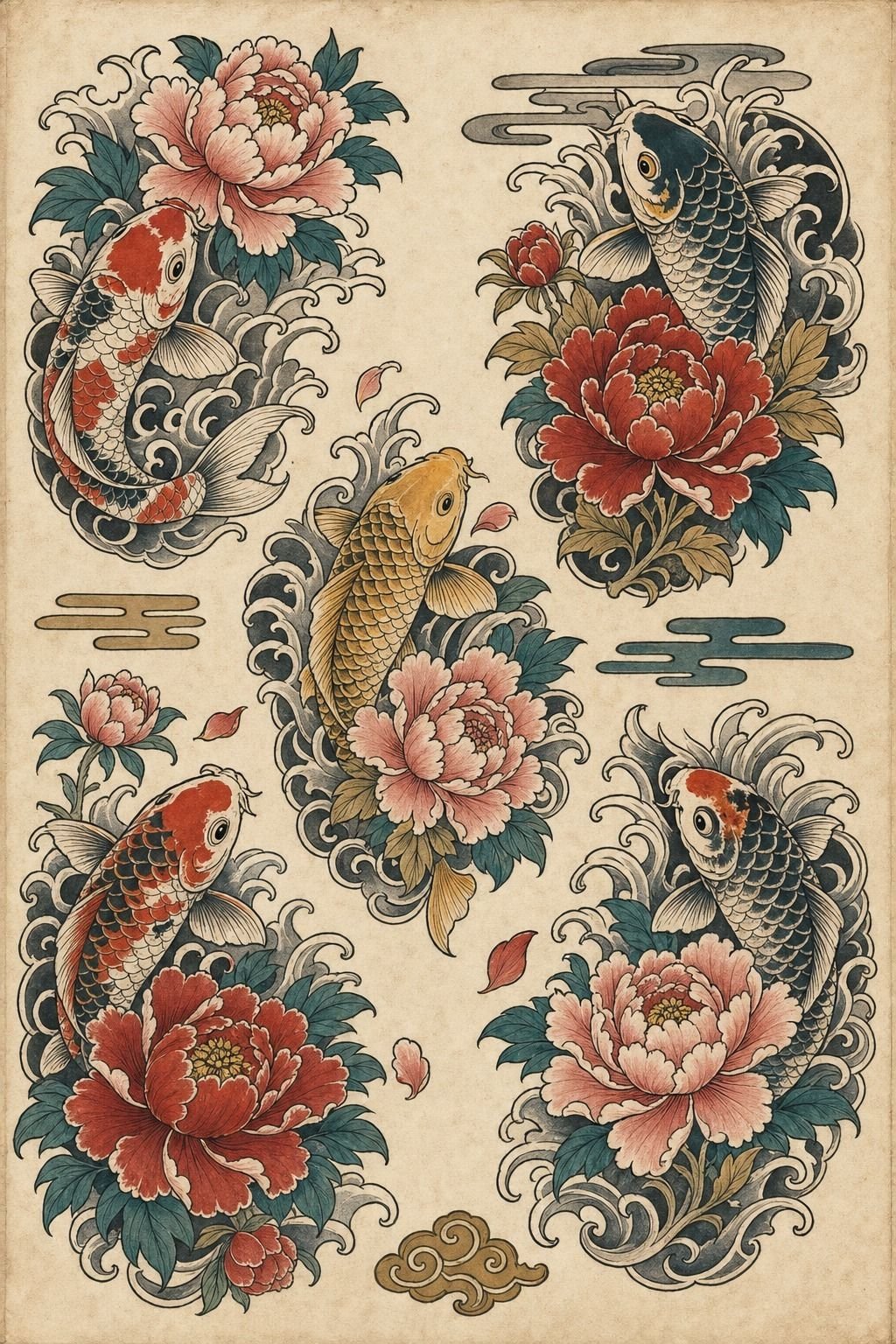
A koi and peony pairing works because both elements already have movement. Let the fish create the direction, then tuck the bloom into the current rather than pinning it beside the koi like a sticker. On a flash sheet, you’ll often see the tail, fins, petals, and water all moving on one diagonal.
Use one large koi scale pattern and one peony as the main read. You don’t need three flowers, waves, clouds, and a dragon in a palm-sized design. That is how a good idea becomes visual noise.
If you’re building a larger Japanese sleeve, check these Japanese tattoo ideas before booking. You’ll see how much stronger the pairing gets when the background supports the fish instead of competing with it.
The koi should swim. Your peony should frame the motion.
6Build Japanese Peony Tattoo Around Wind Bars
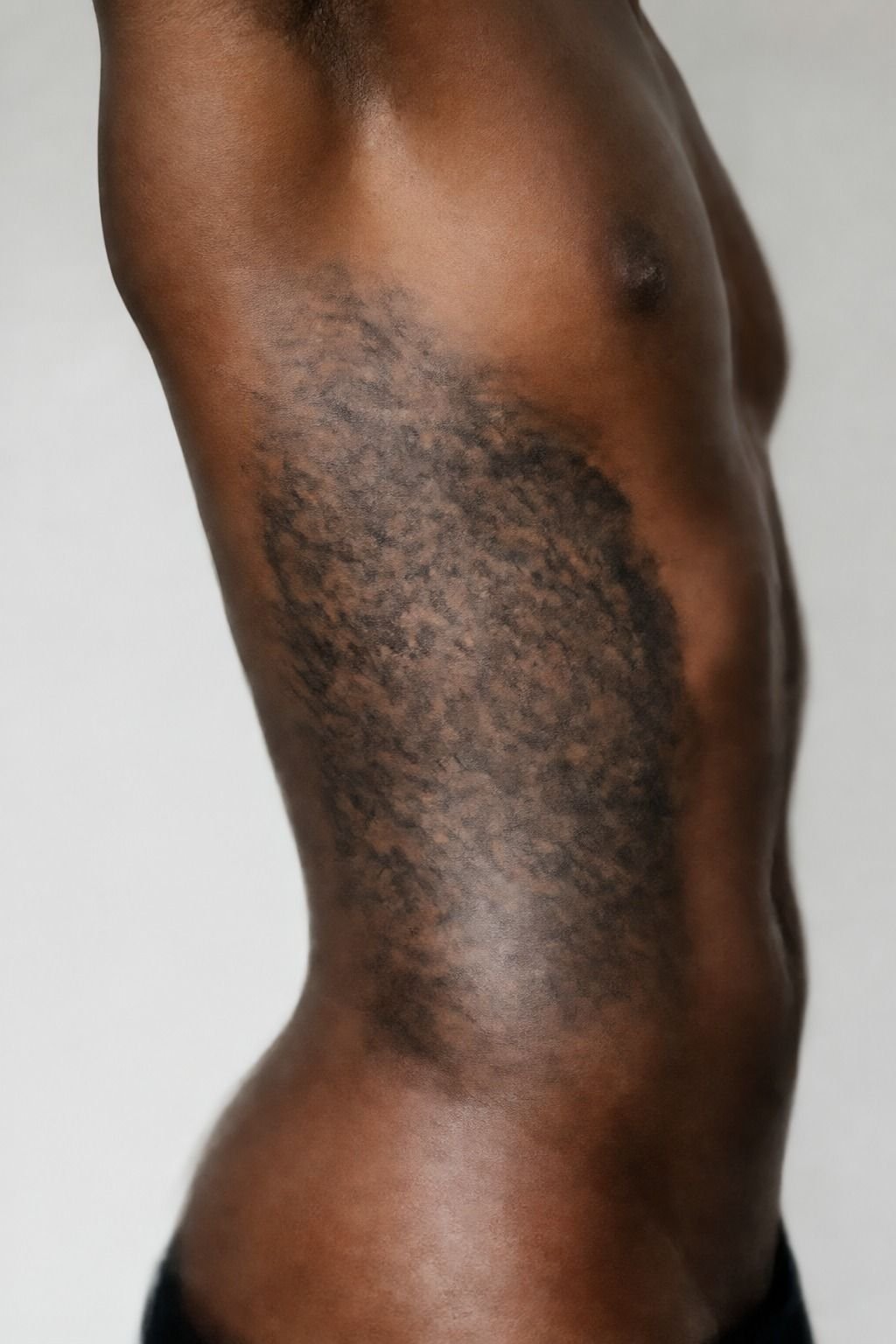
Build wind bars around the peony only after the flower’s silhouette is settled.
7Use Japanese Peony Tattoo Color Accents
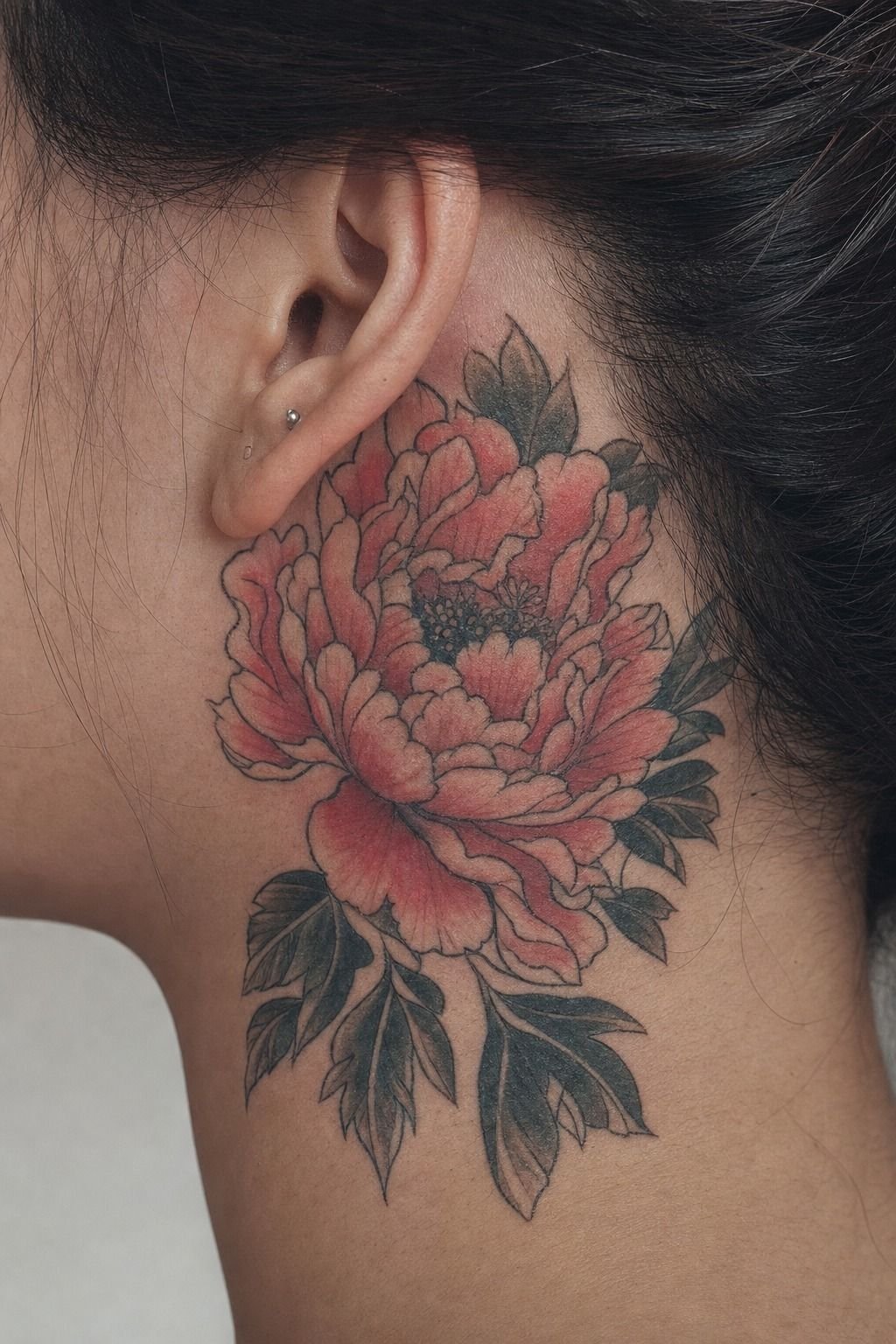
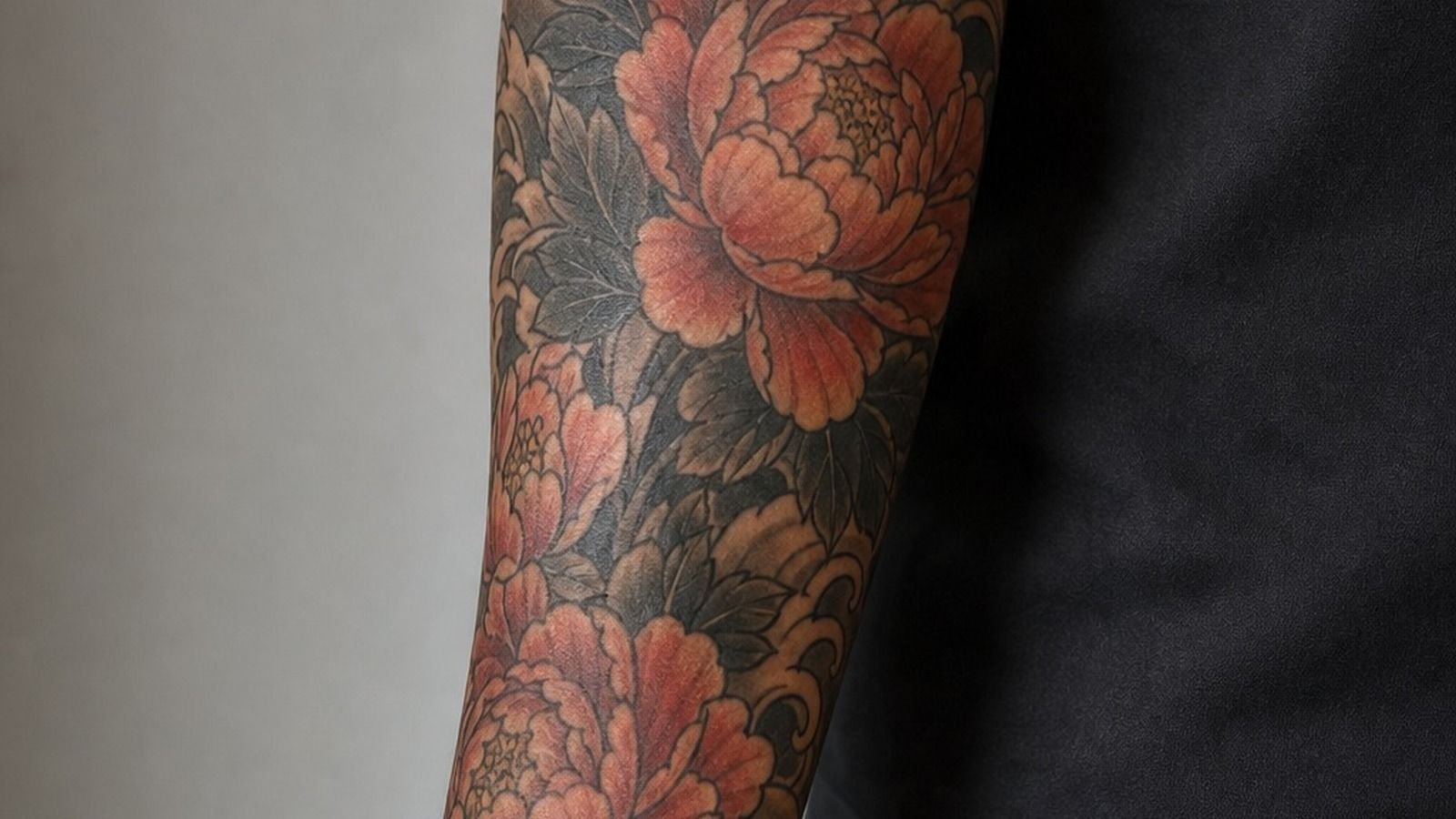
Use color accents like spice, not the whole meal. A red, coral, pink, or deep burgundy peony can look saturated and timeless when it has black outlines and dark leaves anchoring it. Behind the ear, though, you need restraint because the skin area is small and high-wear.
Ask for a limited palette such as Eternal Ink Deep Red, muted gold, and black. Two colors plus black often hold better than a rainbow of tiny petal shifts. Your artist should pack color in one solid pass, not scratch at the skin fifty times.
And protect that spot from sun. Hair can cover it sometimes, but UV still fades color fast.
Black is your best friend for longevity. Color is spice.

8Select Japanese Peony Tattoo Sleeve Scale
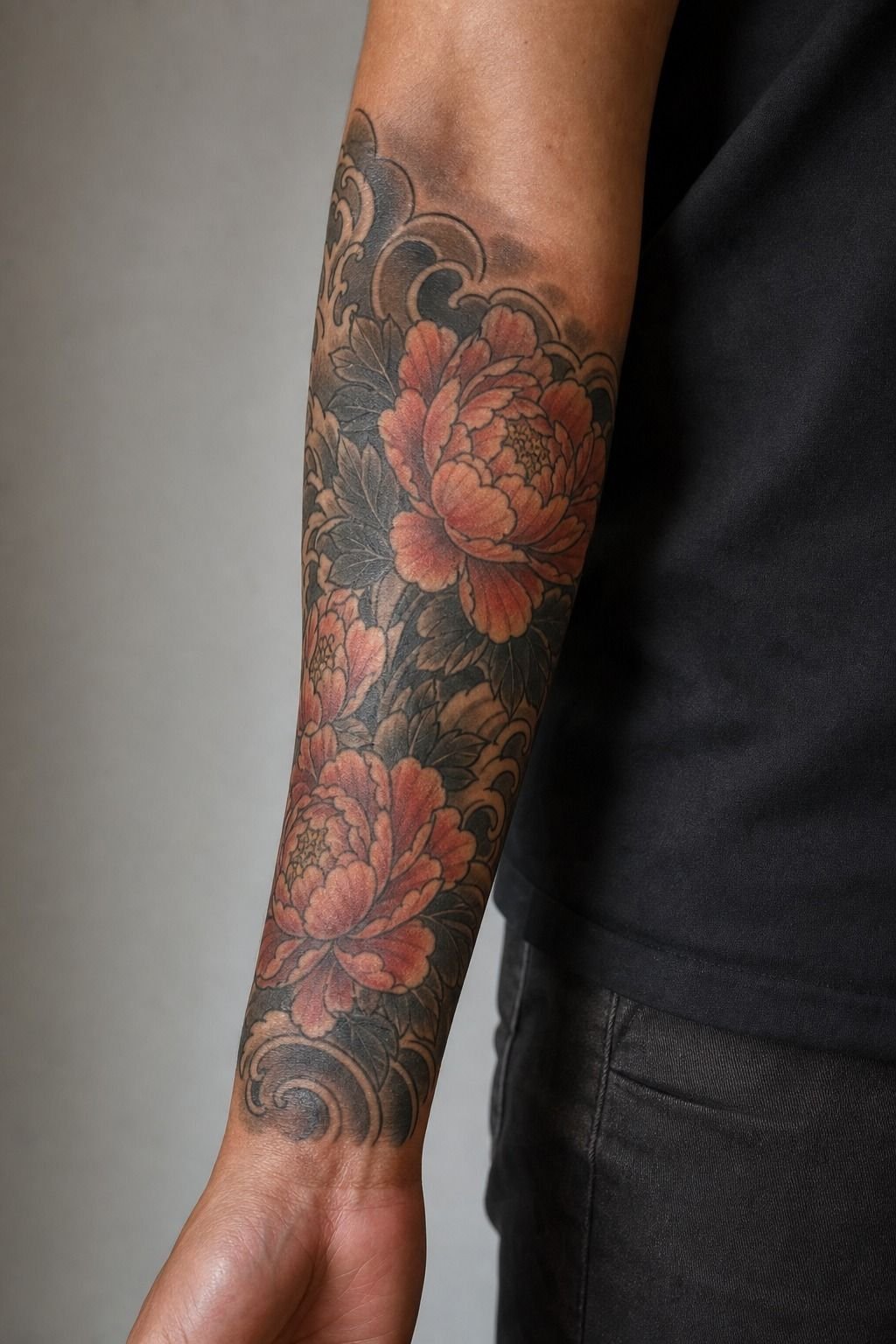
Select sleeve scale before you commit to a single forearm flower. A Japanese sleeve is a connected story, so a peony needs room for clouds, leaves, water, or another focal subject above and below it. Starting with a piece that is too small can leave you with a weird empty patch later.
A half sleeve often needs several sessions, depending on line density, shading, color, and your artist’s pace. Magnum needles help lay smooth background black and color, while smaller round liners define petals. You do not need to know needle groupings, but you should know why a sleeve cannot be rushed.
For your first appointment, ask for a placement map of the whole arm. You can tattoo it in stages. The plan should still be there from day one.
9Trace Japanese Peony Tattoo Stencil Shapes
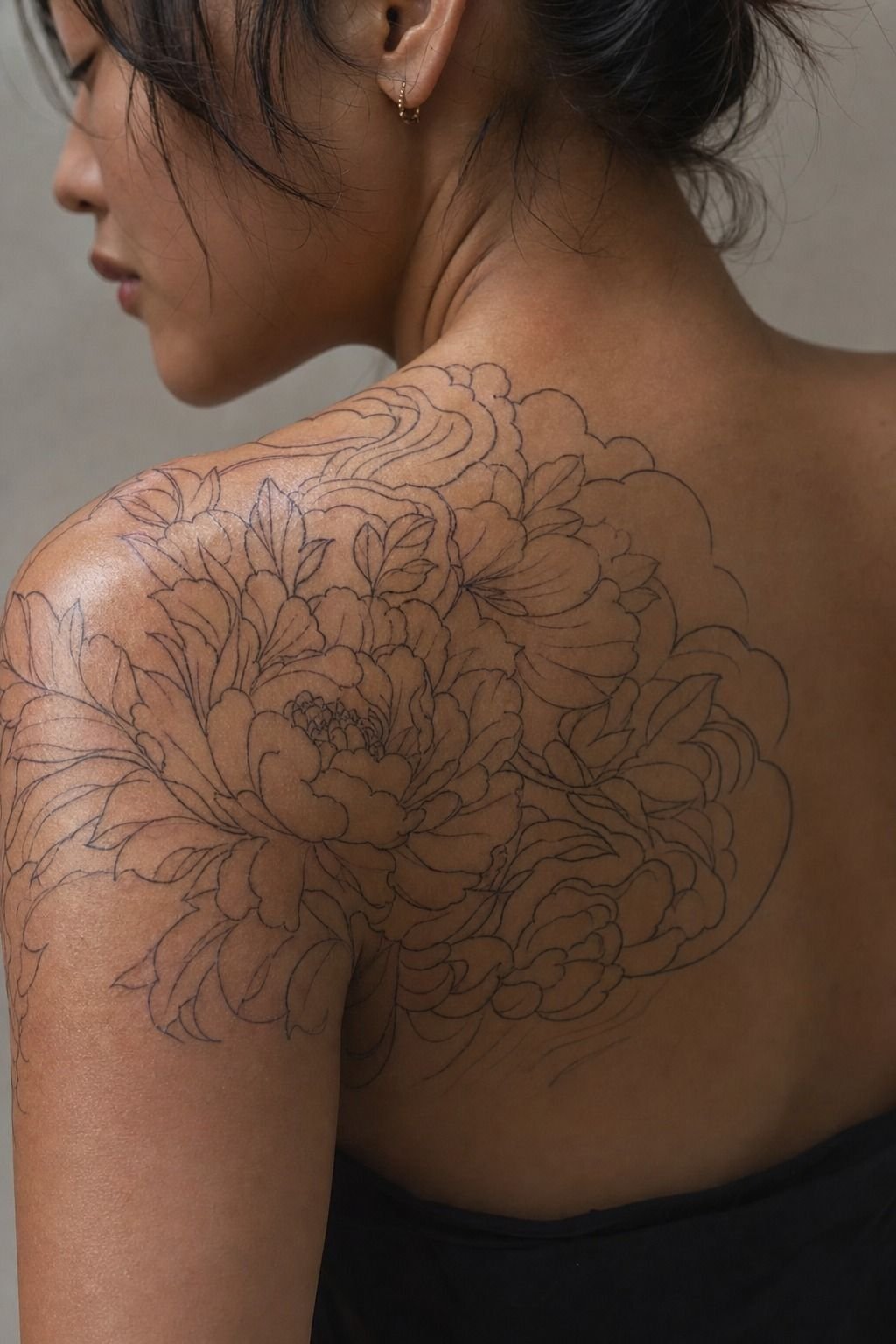
Trace stencil shapes on your shoulder before you get attached to a sketch. A peony flower tattoo design that looks balanced on paper may need its leaves widened or its bloom tilted once it meets your deltoid.
Bodies are curved. Paper is not.
Your artist should use a Spirit thermal stencil or equivalent transfer to test the full shape. Move your arm overhead, let it hang, and turn sideways. If a petal disappears into the shoulder cap, fix it now, not after the first line.
The Three-View Check matters here: relaxed, flexed, and photographed. You’re buying something that lives on a moving body. A good stencil makes that obvious before the permanent part starts.
10Balance Japanese Peony Tattoo Petal Layers
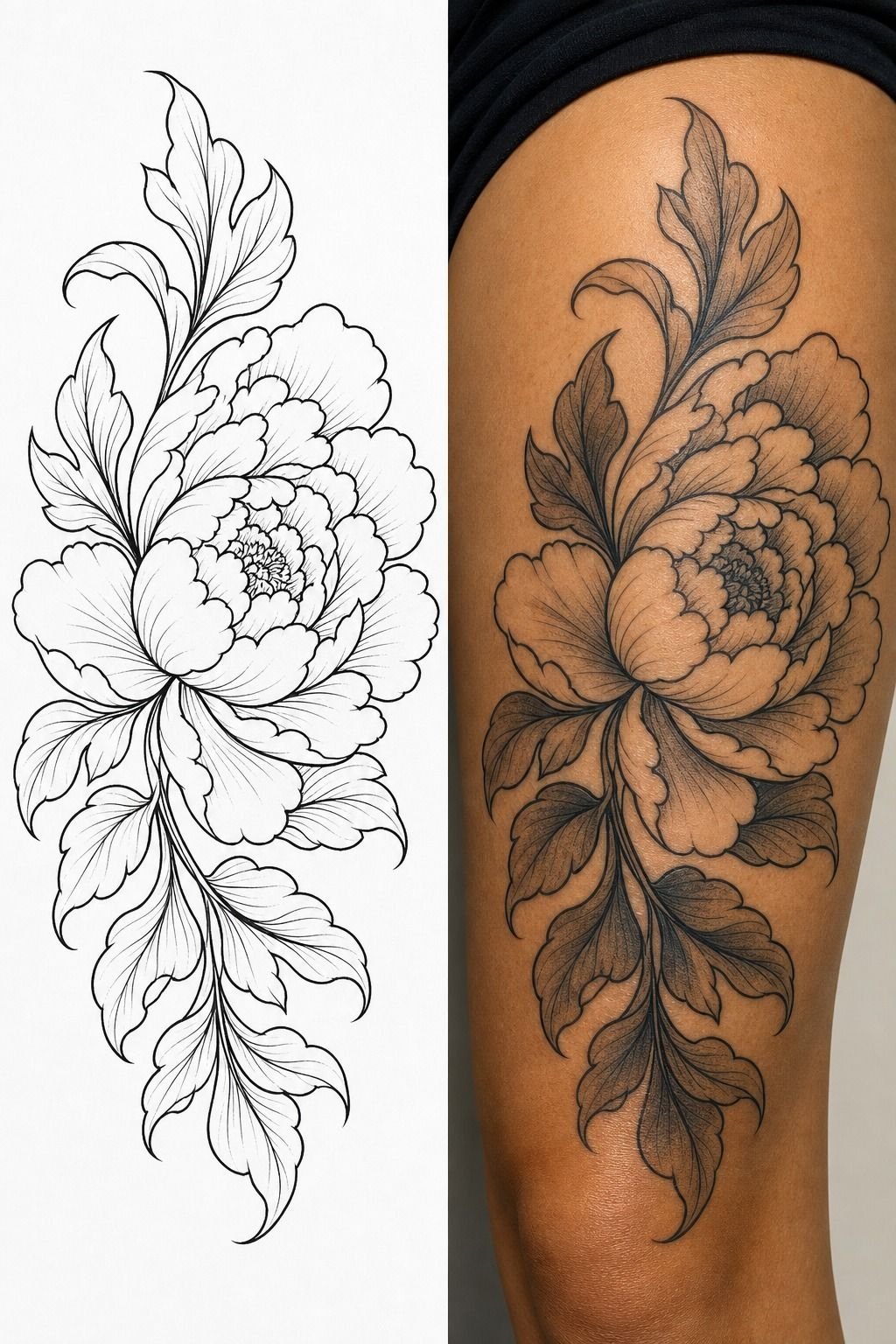
Balance petal layers with a clear hierarchy: big outer petals, fewer mid petals, selective dark folds near the center.
11Add Japanese Floral Tattoo Background Elements
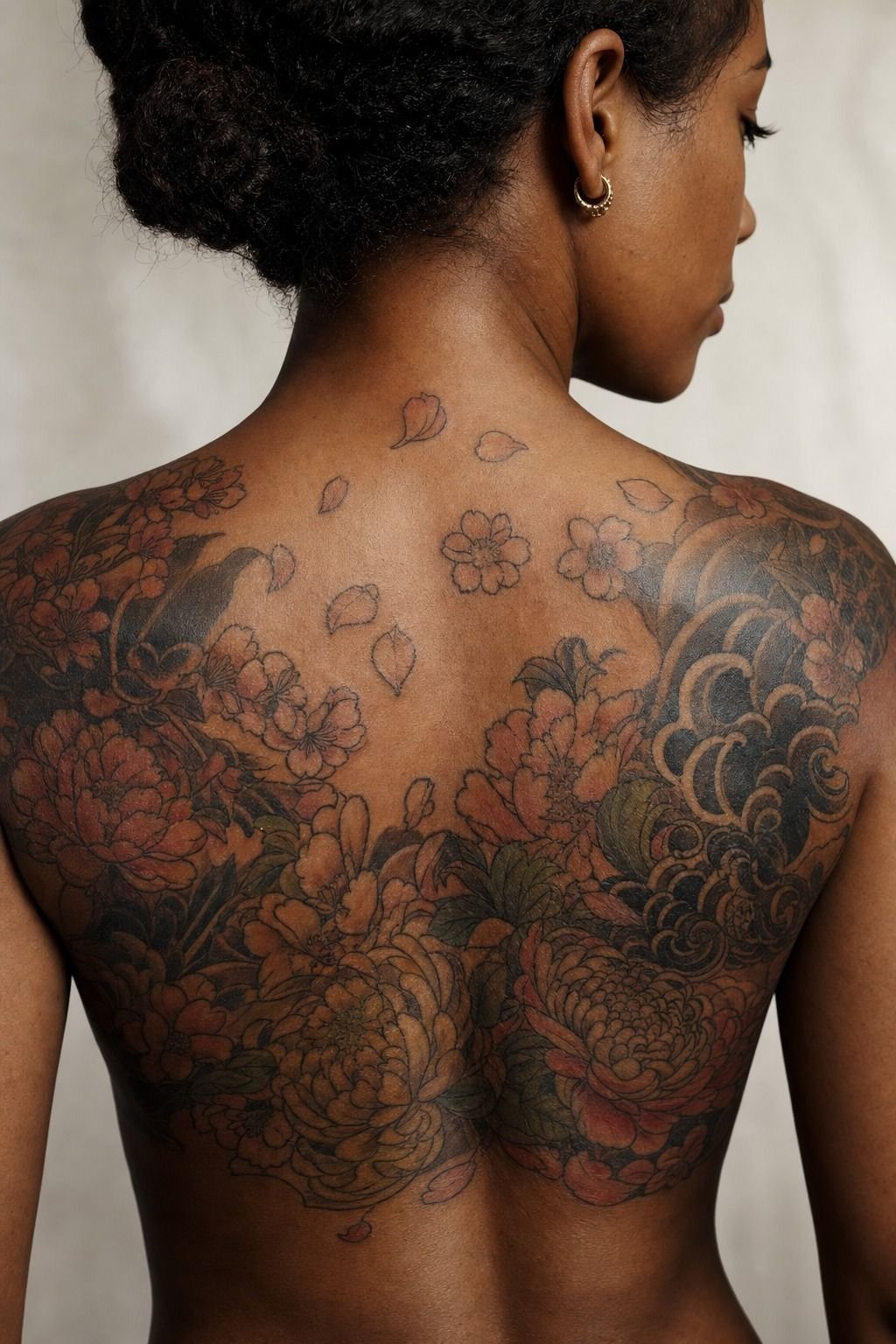
Add background elements that have a job. Maple leaves can signal season, clouds can soften a harsh edge, and water can connect a peony to koi. On an upper back piece, you have enough canvas to let these parts breathe without crowding the main bloom.
Use Japanese maple leaves sparingly if the peony already has busy petals. A few leaves crossing behind the flower can create depth; a leaf confetti pile just muddies the shape. Your upper back is low-wear, so it is a solid place for larger black-and-grey background work.
But keep the background lighter than the focal flower. The peony needs the strongest outline and clearest negative space. That is what your eye should land on first.
12Compare Japanese Rose Tattoo And Peony Forms
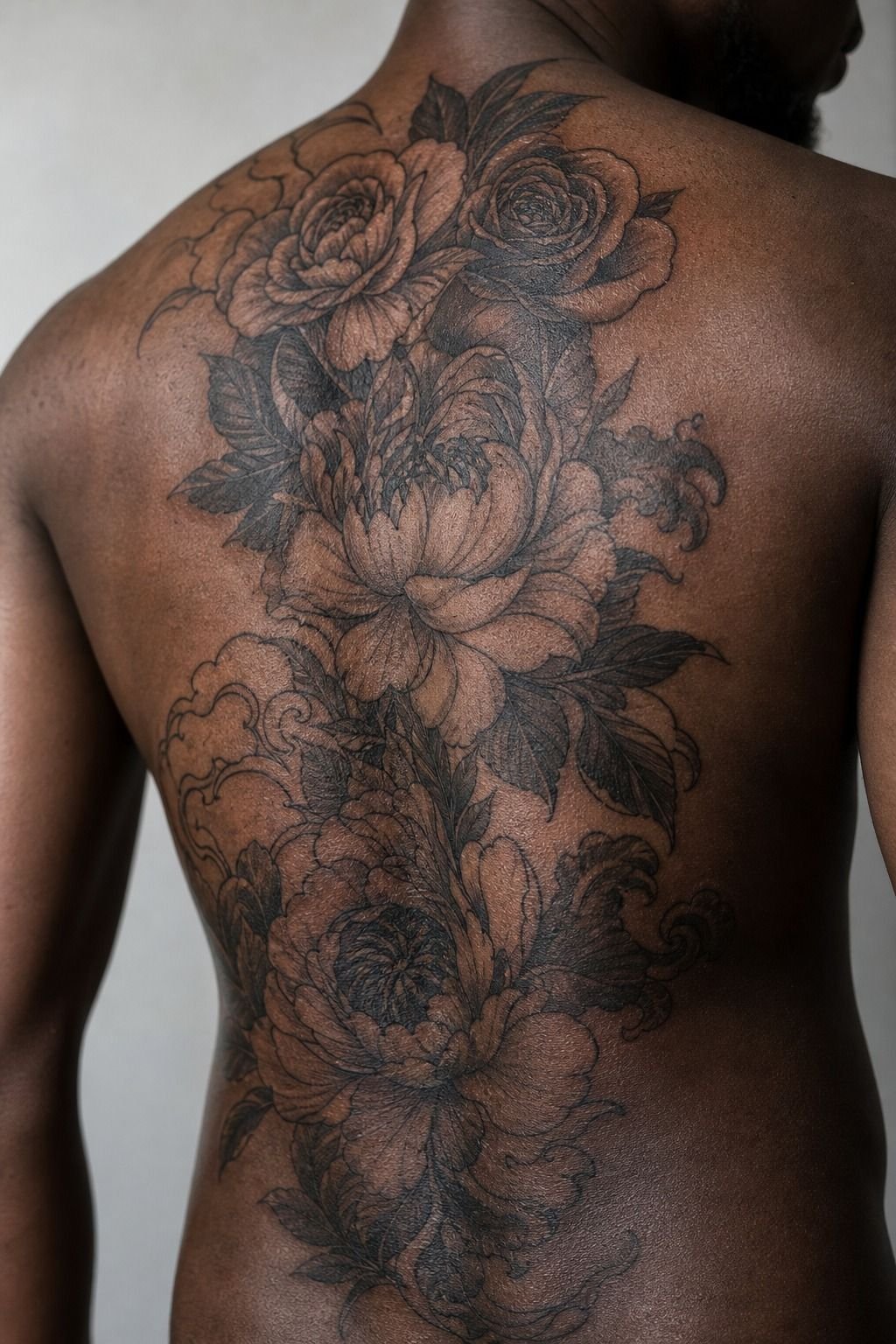
A Japanese rose tattoo and a peony are not interchangeable forms. Roses usually read tighter and more spiral-shaped. Peonies are fuller, looser, and more theatrical, with a big round face that can carry heavy Japanese linework.
Choose the peony flower design if you want a larger, open bloom that wraps the spine or fills a collarbone curve. Choose a rose if you want a more compact symbol with a sharper center. Both can look elegant, but the peony gives your artist more room for bold petals and soft whip shade.
Why force a rose shape into a peony brief? Don’t.
If you love both, ask for a separate rose in another placement. One strong flower is better than a confused hybrid.
13Set Japanese Peony Tattoo Pain Expectations
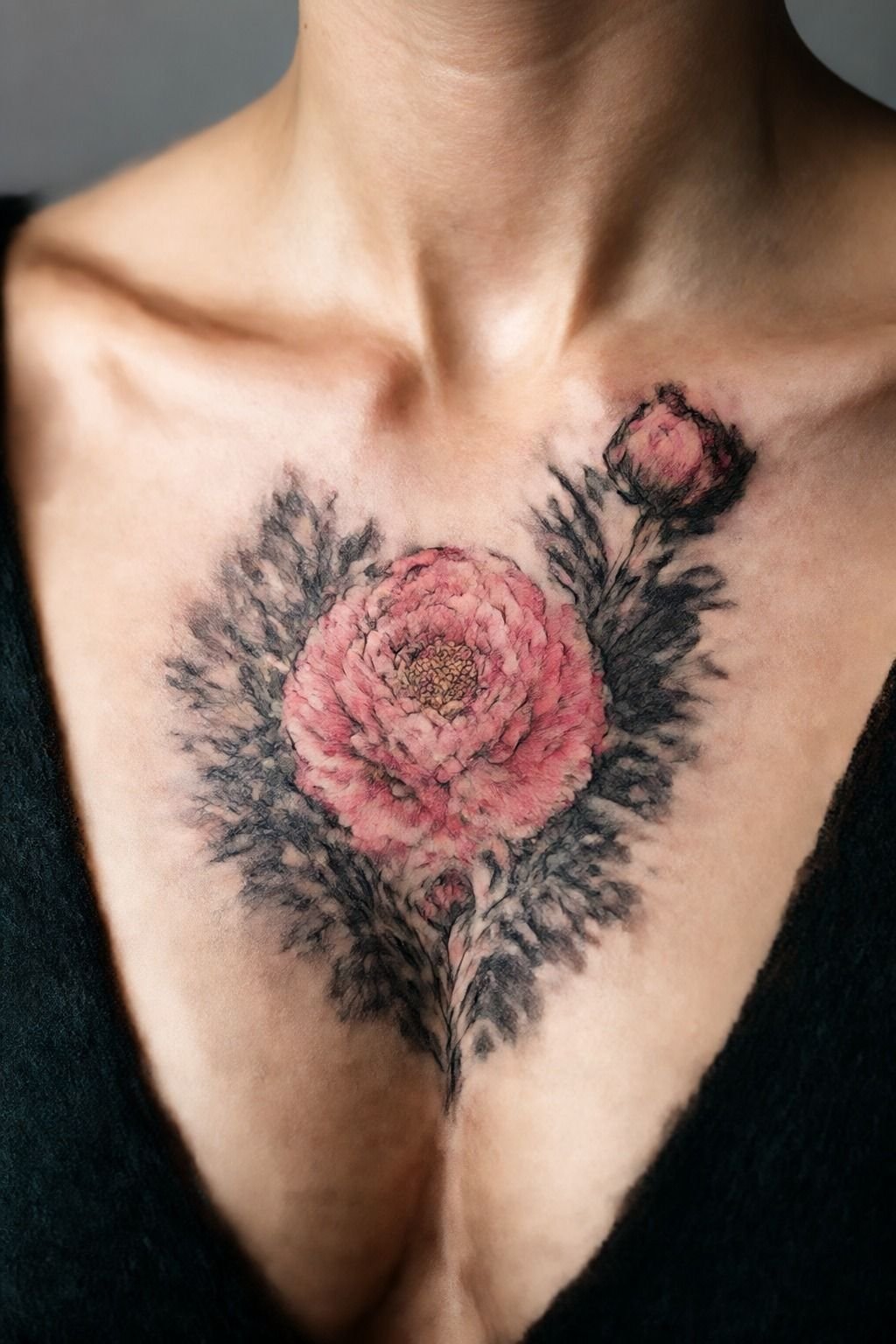
Set pain expectations before you book, especially for a sternum peony.
14Check Japanese Peony Tattoo Artist Portfolios
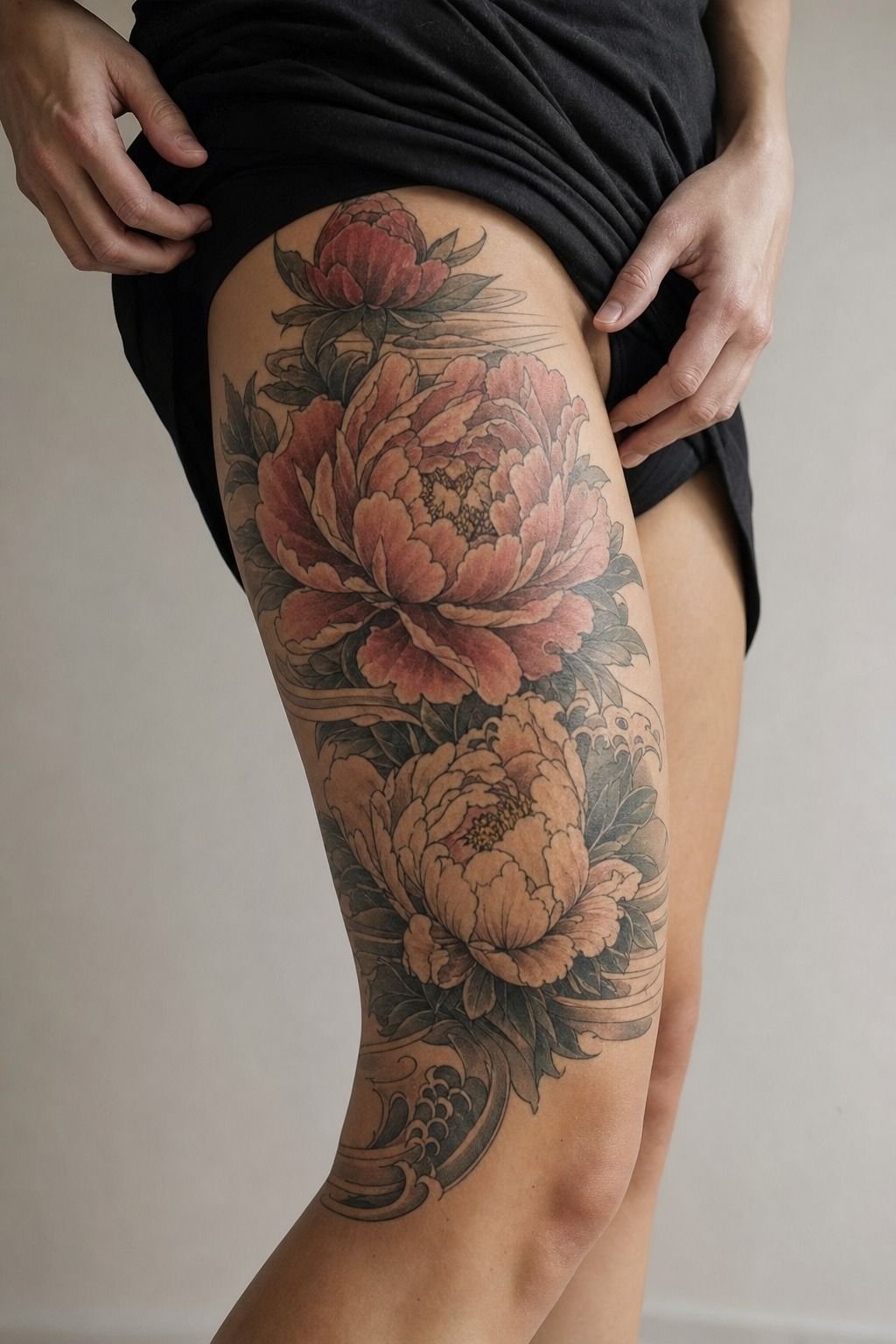
Check portfolios for healed work, not only glossy fresh tattoos. You want to see clean line weight, solid black that healed evenly, and Japanese-informed composition that follows a thigh or arm. A good artist should have more than one cherry blossom and call it irezumi.
Look through a traditional Japanese tattoo artists guide and compare portfolios with a critical eye. Check whether their flowers have bold outer shapes, whether backgrounds flow, and whether healed photos still read clearly. Healed blackwork tells you more than a studio-light photo taken ten minutes after a session.
And ask directly about custom work. Flash is fine if you love it.
If you want Pinterest-exact, though, I’m not your artist. References are for vibe, flow, and placement.
15Prepare Japanese Peony Tattoo Reference Images
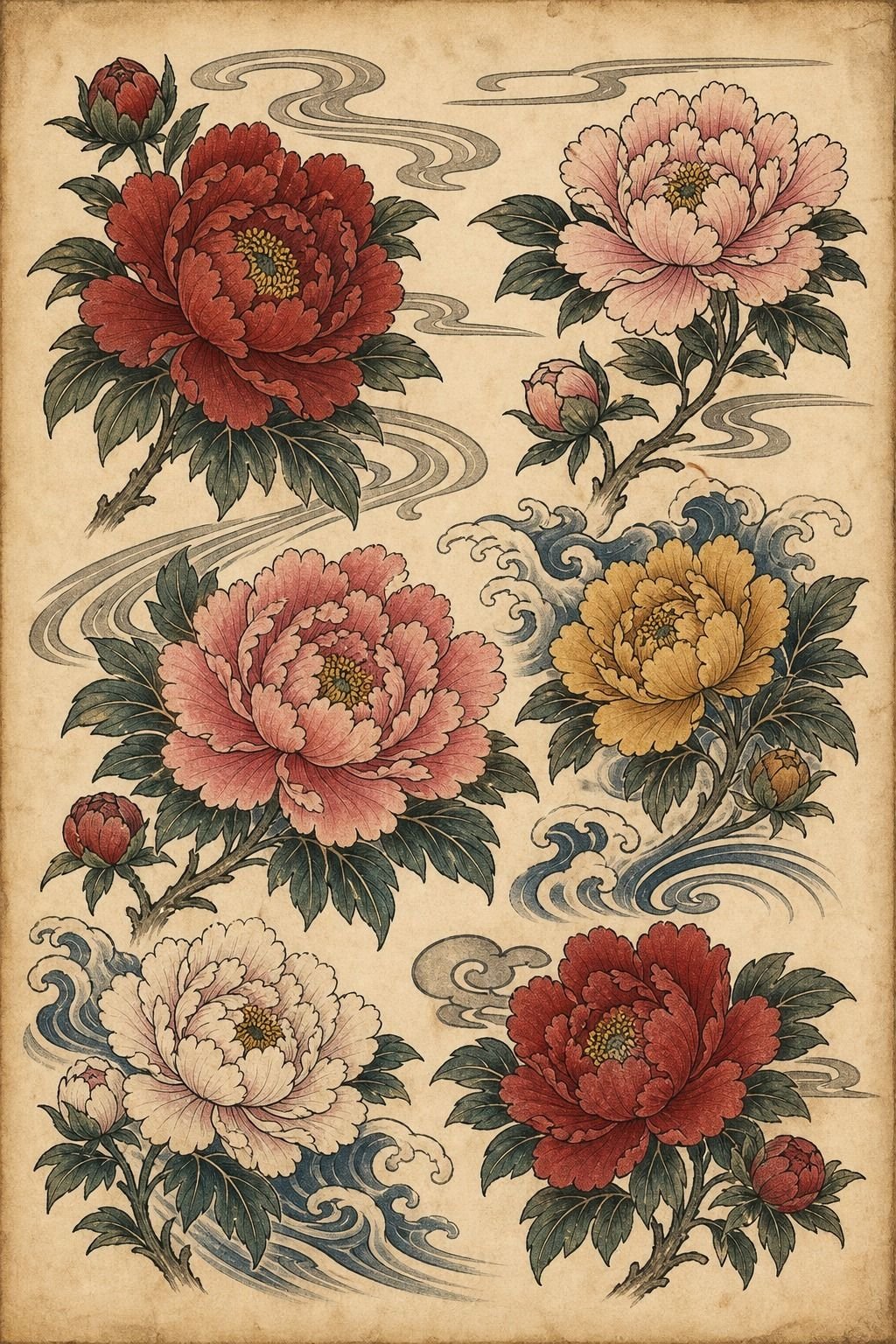
Prepare three to five references, not thirty screenshots fighting each other. Include one for petal shape, one for black-and-grey or color treatment, one for placement, and one for the overall Japanese composition you want. Your artist needs a direction, not a collage dump.
A useful reference packet might include aged flash paper, a healed forearm tattoo, and a photo of your own arm or thigh. Mark what you like in plain language: “big open petals,” “less background,” “black leaves,” “no tiny details.”
The Reference Triangle is simple: subject, style, placement. If each image answers one of those, your consultation gets easier. Your artist can then make a custom design that fits your anatomy instead of tracing a stranger’s tattoo.
16Keep Japanese Peony Tattoo Details Readable
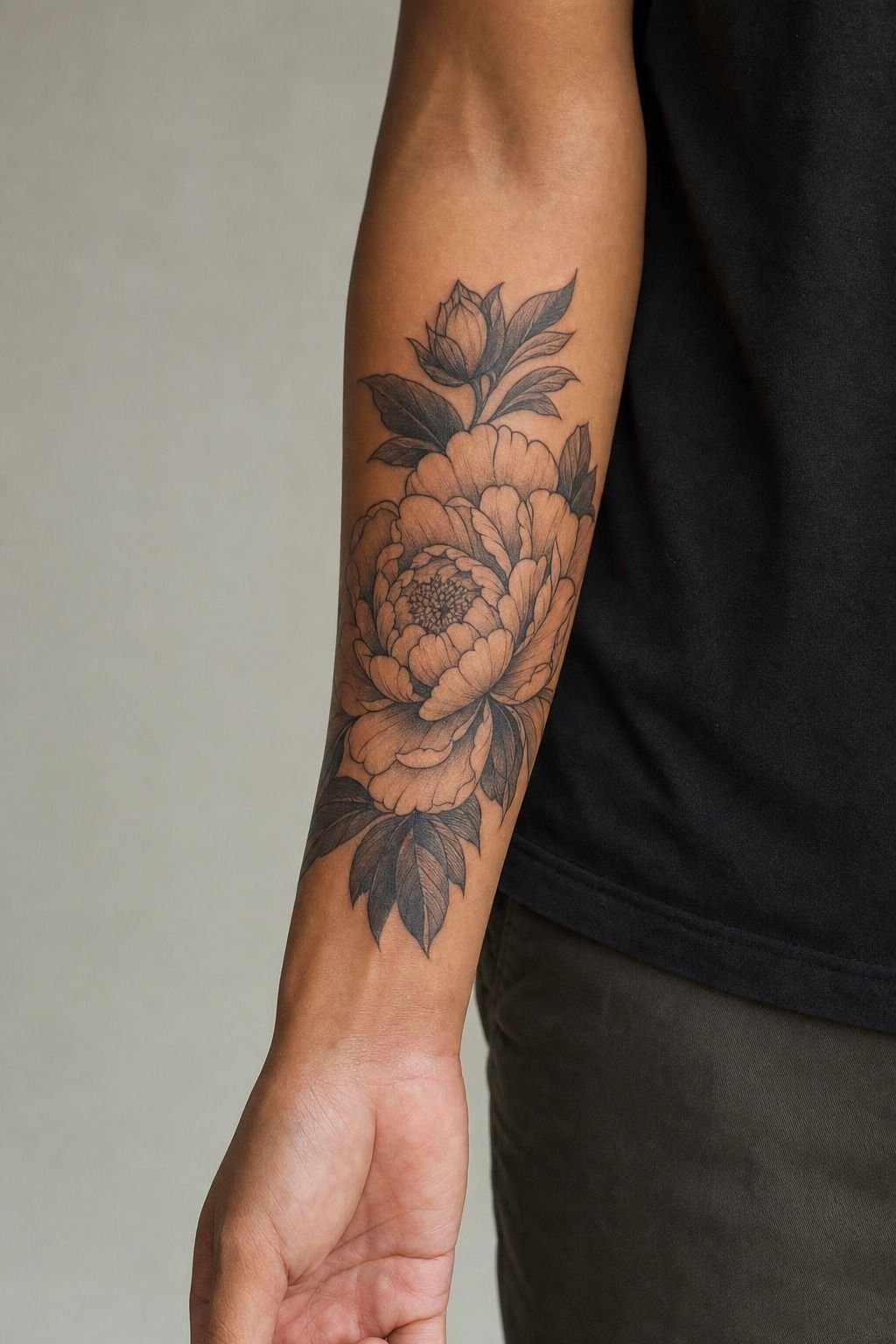
Keep details readable by choosing a strong silhouette first.
17Protect Japanese Peony Tattoo During Healing
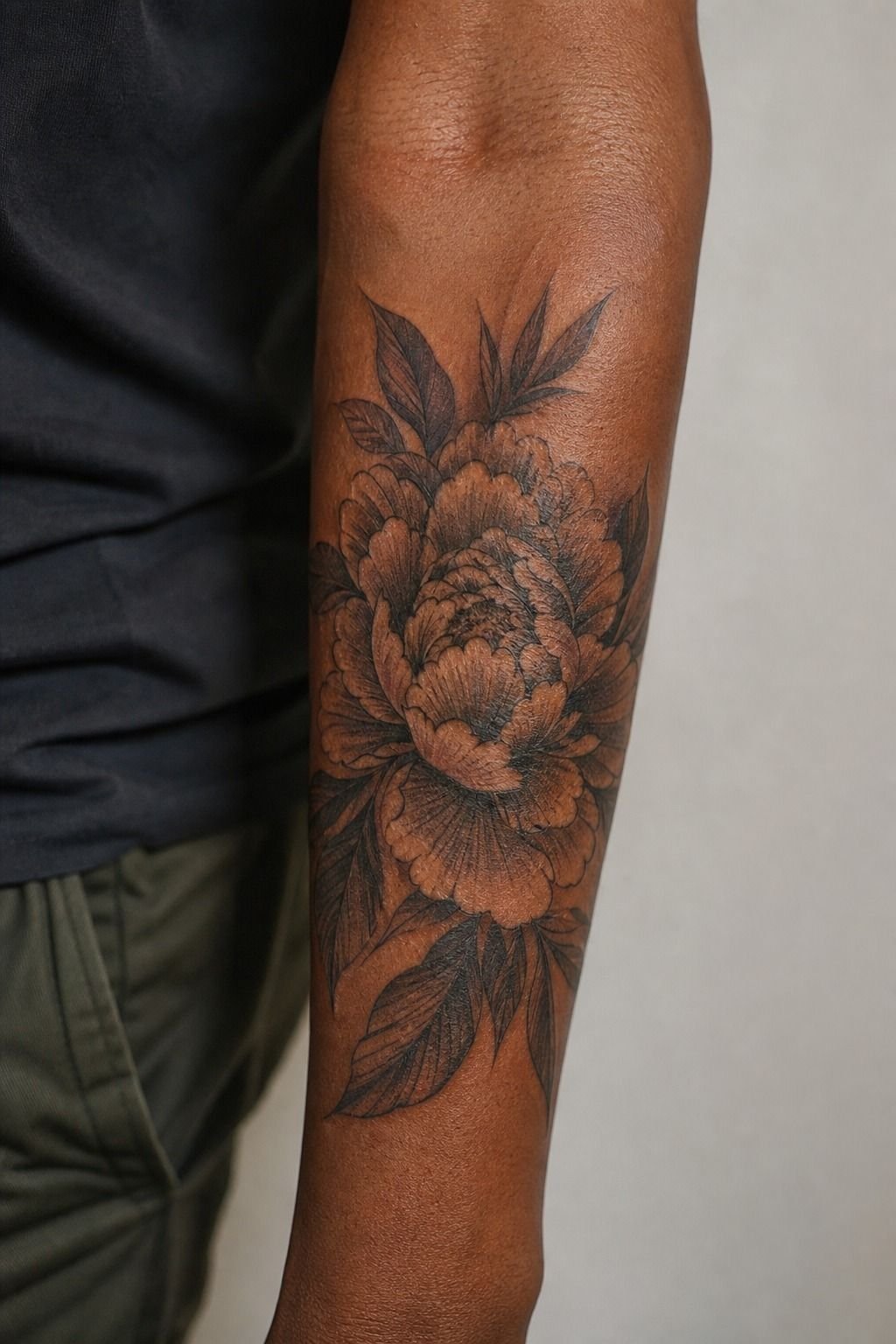
Protect your fresh tattoo like an open wound for the first few days, because that is exactly what it is. Wash with gentle unscented soap, pat it dry with a clean paper towel, and apply a thin layer of Aquaphor Healing Ointment or the aftercare product your artist recommends. Do not suffocate it.
Surface healing usually takes about 2 to 3 weeks. Full settling can take 2 to 3 months.
It will peel like a sunburn, and you should not pick flakes or you may pull color out. No pools, no hot tubs, no sun, and watch gym friction on forearms or ribs.
But do not panic at the silver-skin stage. It can look dull and shiny for a bit. Keep washing gently, use a light fragrance-free moisturizer, and let your skin finish the job.
18Budget Japanese Peony Tattoo Sessions Honestly
Budget honestly before you fall in love with a full sleeve reference.
19Review Japanese Peony Tattoo Before Booking
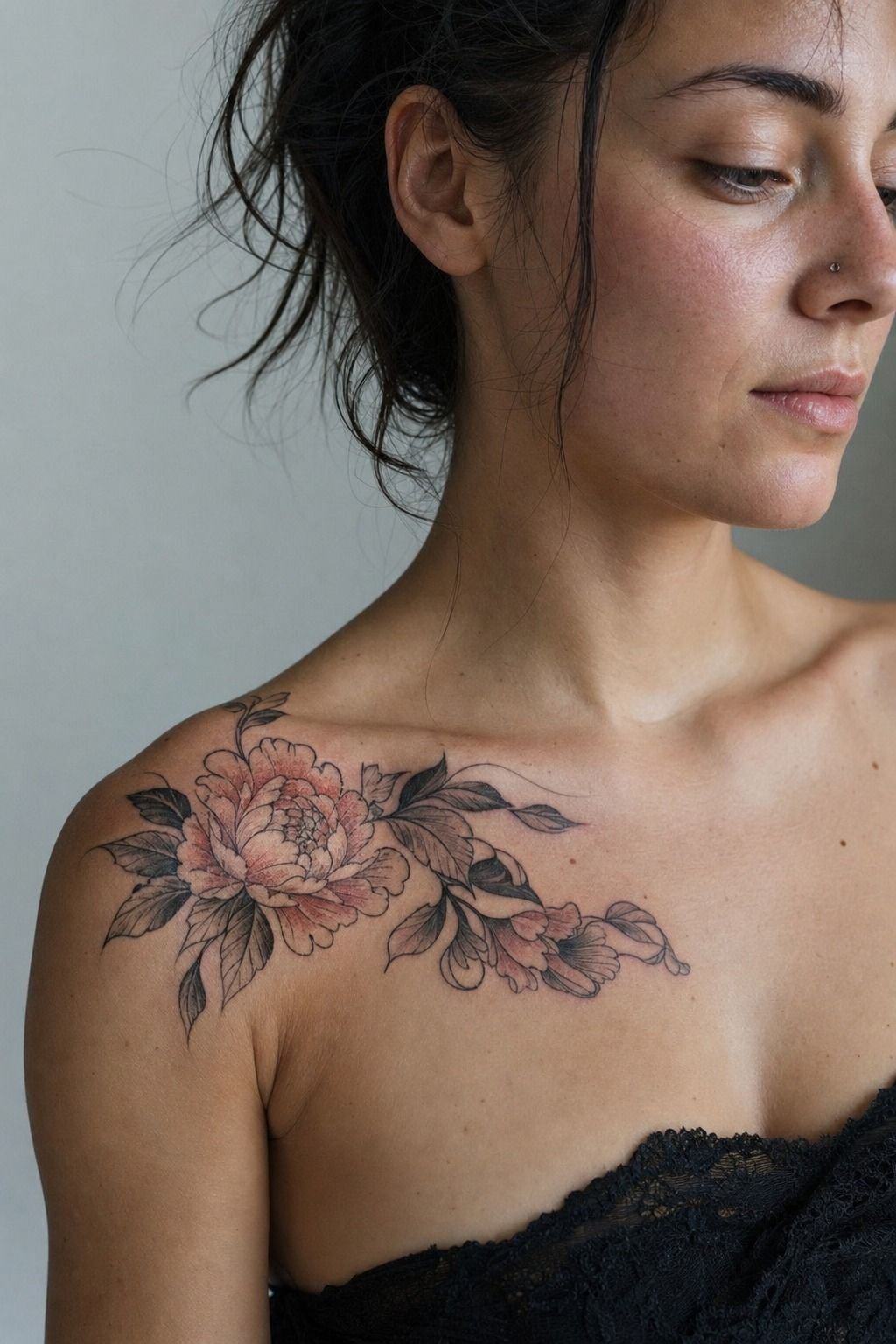
Review the final design in this order: placement, silhouette, size, black structure, then color. If you begin by nitpicking one tiny petal, you can miss the big problem, which is usually that the tattoo does not flow with your collarbone or arm.
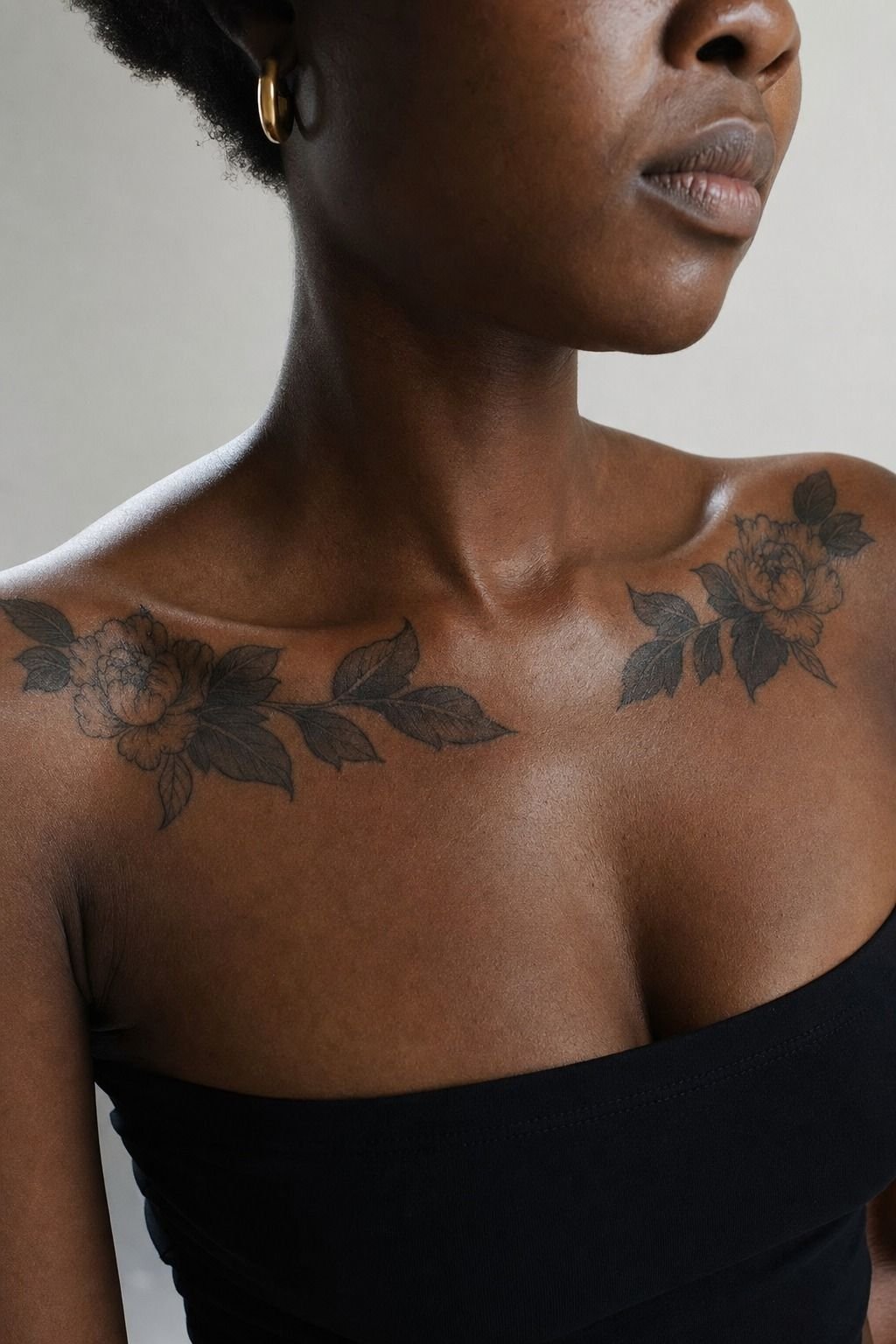
Ask your artist where the design will age fastest and what they would simplify. A collarbone peony needs enough room below the bone to avoid looking pinched. Collarbone linework should follow the curve, not sit like a flat badge across your chest.
Read through a neo trad Japanese tattoo guide if you are leaning toward a more illustrative version. Then book only when the design feels clear. Your skin deserves a confident yes.
The Part I’d Push Back On
I love Japanese peonies because they can be soft without being weak. But I push back when someone brings me a tiny reference packed with fifty petal lines, micro leaves, clouds, a koi, a dragon, and three colors, all meant for the wrist. That design looks good for one screenshot.
It does not have enough room to live on skin.
Here’s what I’ve learned from watching tattoos settle: your artist needs permission to simplify. People sometimes hear “simplify” and think they are getting less.
You are getting the part that lasts. A big, dark leaf can make a peony read clearly from several feet away.
A clean skin break can separate petals better than another hairline. A black outline can protect a color bloom from looking washed out later.
I would rather tattoo one well-built flower at 5 inches than five tiny flowers that blur into each other. That is not me being difficult.
Skin is not paper, and ink is not a vector file. It spreads a little.
It sees sunlight. It stretches, rubs, peels, and heals.
Your best move is to pick an artist whose healed work makes you pause. Look at their black saturation.
Look at whether their flowers have a crisp outer edge. Look at old healed photos, not only fresh work under bright studio lights.
Then let them redraw the concept for your body. A good Japanese peony tattoo should feel organic, balanced, and strong.
Not overloaded. Never overloaded.
The Questions I Get Asked Most
How much does a Japanese Peony Tattoo usually cost?
A Japanese peony tattoo commonly starts around $100 to $300 for a small piece, though many shops have a $50 to $100 minimum and artists may charge $100 to $250 hourly. Scale drives the bill. A forearm composition with background takes longer than a simple flower.
Are Japanese Peony Tattoo a good idea for a first tattoo?
Yes, especially on an outer forearm, upper arm, or thigh. Those placements are usually more tolerable and give your artist room for clear linework that ages better than a tiny packed design. Pick a size that lets the petals breathe.
How do I choose a tattoo artist for Japanese Peony Tattoo?
Choose an artist with healed floral work, clean black saturation, and compositions that follow the body. Healed portfolio photos matter most. You should also check studio hygiene, consultation style, and whether they understand Japanese-inspired background flow.
How much do Japanese Peony Tattoo hurt?
They can hurt a lot on ribs, feet, hands, sternum, and collarbone, while forearm, thigh, calf, and shoulder are often more manageable. Placement changes everything. Lines feel sharp, while shading and color feel more like a prolonged burn.
How long does a Japanese Peony Tattoo take to heal?
Surface healing usually takes about 2 to 3 weeks, while full skin recovery can take 2 to 3 months. Gentle aftercare protects color. Unscented soap, a thin layer of moisturizer, no picking, and no pools or direct sun during early healing.
What’s the best placement for Japanese Peony Tattoo?
The outer forearm and thigh are strong choices because they offer room, visibility, and generally lower wear. Larger low-wear placements let black outlines and petal layers age cleanly. Your artist should still stencil it around your actual body movement.
Where I’d Start First
If I had to pick one step, I’d start with placement. A peony can survive a color change, but it cannot escape a cramped spot that bends every line into a knot. Pin your favorite forearm flow, then let the flower breathe.