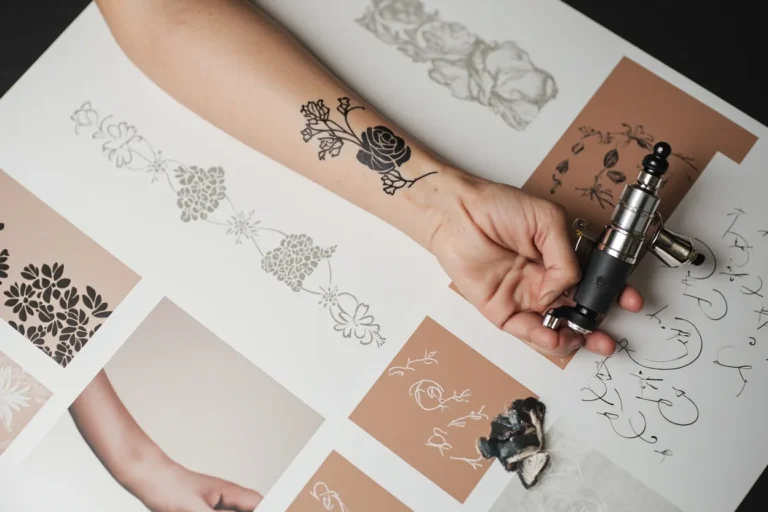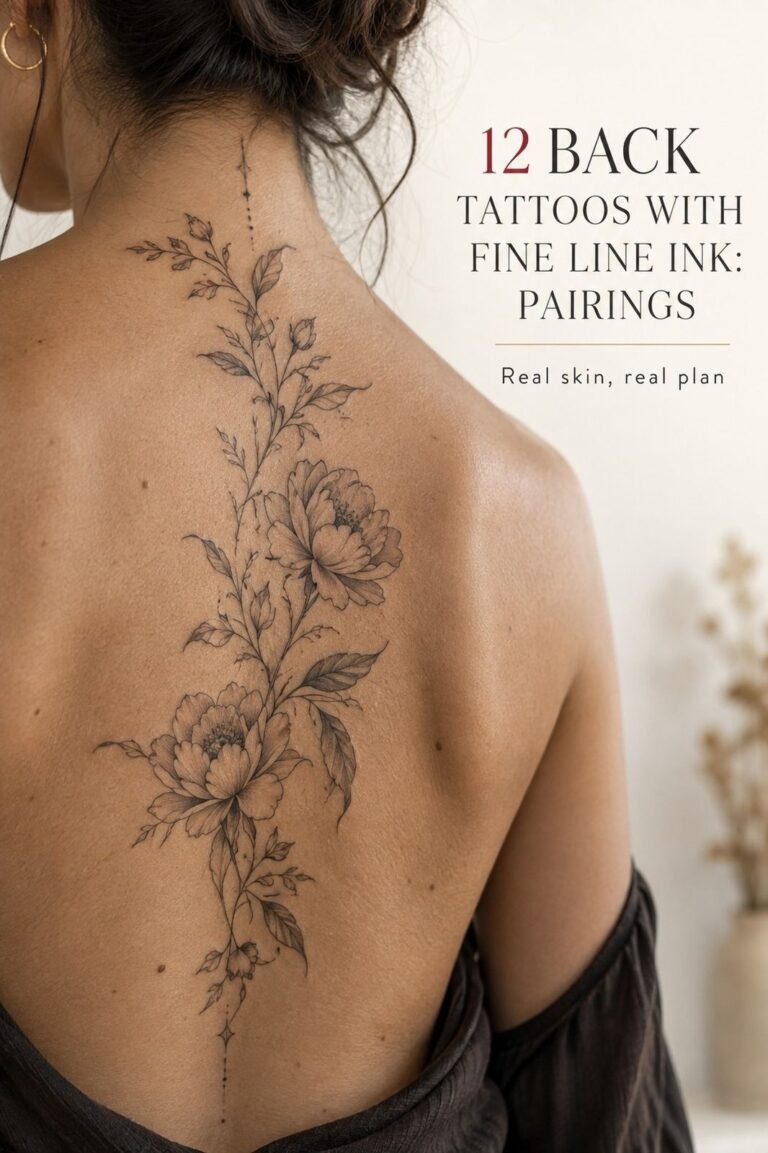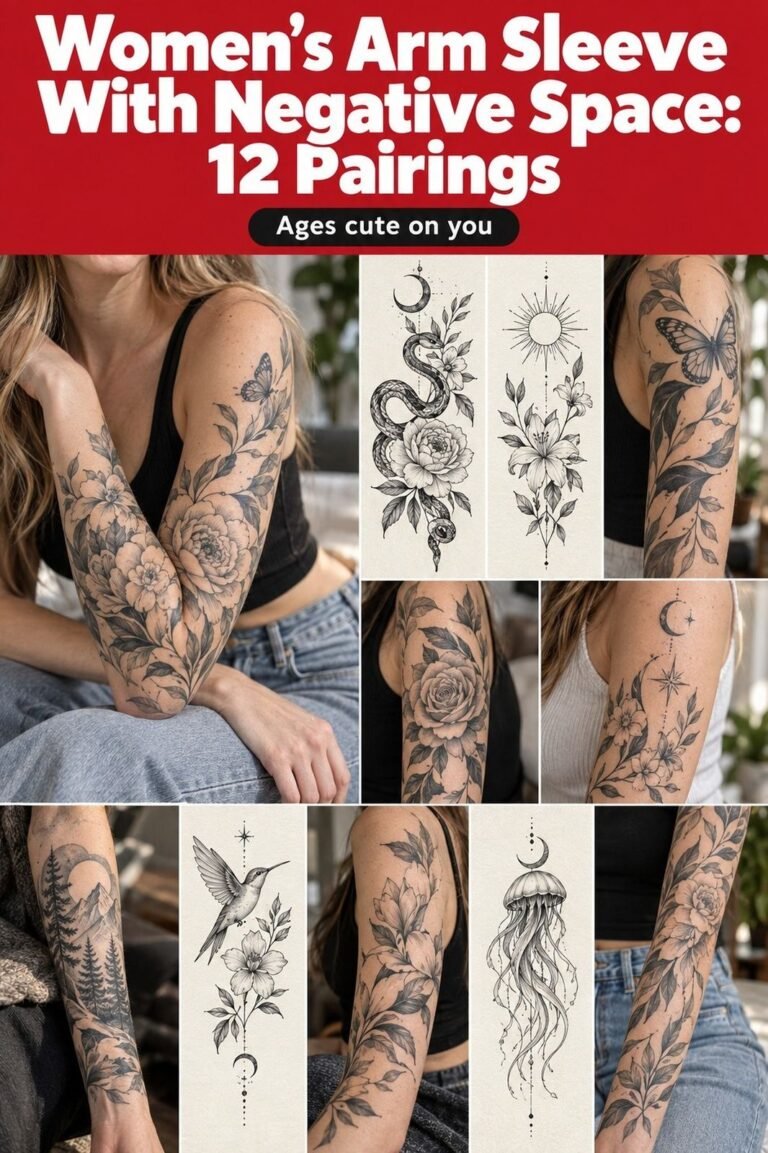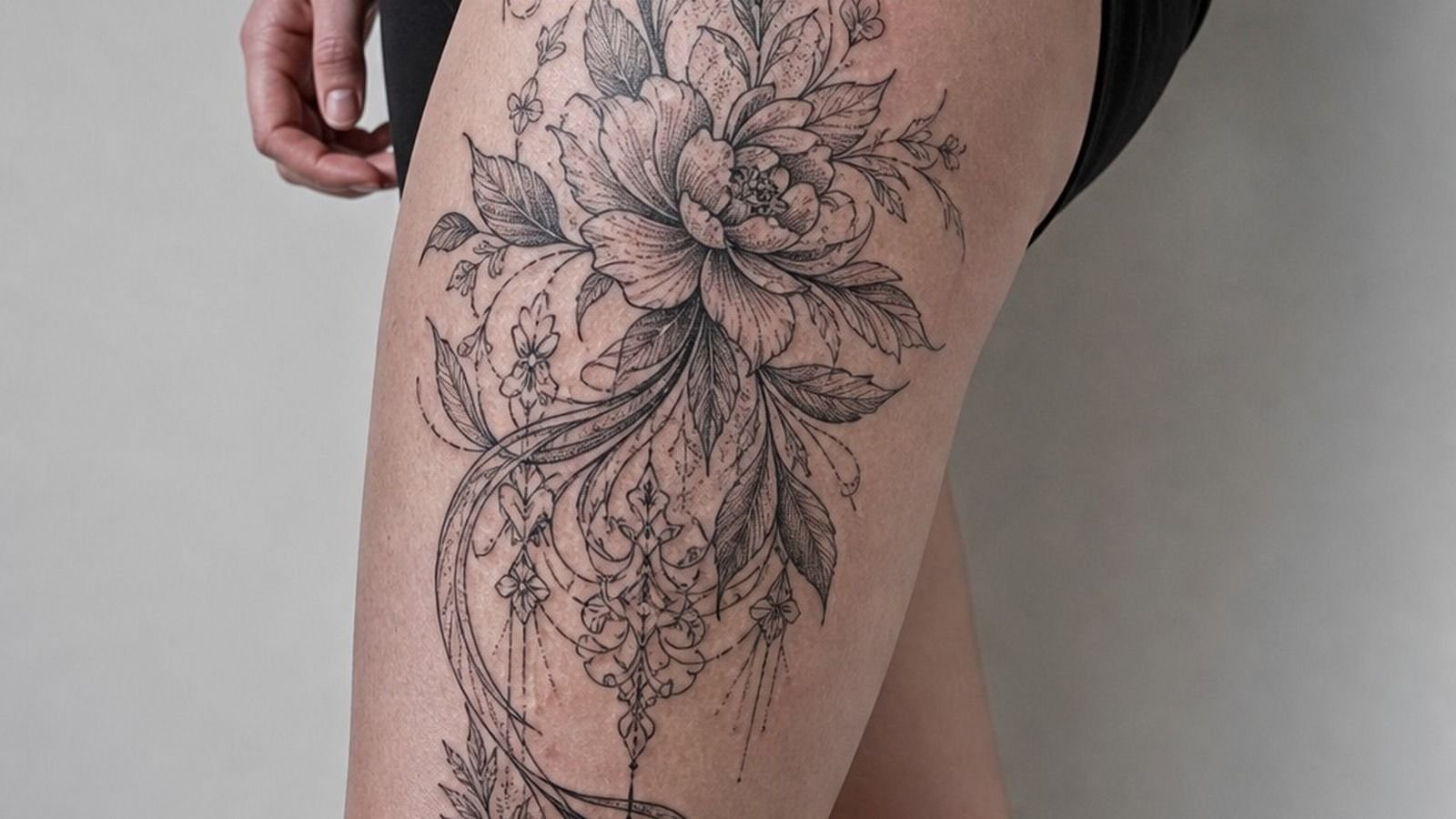
Full leg tattoos stay crisp when you plan the flow, leave breathing room, and choose a style your artist can carry from thigh to ankle. I’ve watched people bring in twenty unrelated Pinterest references, then wonder why the leg feels patchy. Start with one clear story. Your skin isn’t a sticker sheet.
- Start with a Full Leg Tattoo Concept
- Pick a Cohesive Full Leg Tattoo Style
- Map Your Full Leg Tattoo Flow
- Place the Focal Image Above Your Knee
- Build Contrast Through Full Leg Tattoo Shading
- Choose Botanical Elements for a Full Leg Tattoo
- Connect Upper and Lower Leg Tattoo Panels
- Balance Bold and Fine Full Leg Linework
- Start with a Full Leg Tattoo Concept
- Pick a Cohesive Full Leg Tattoo Style
- Map Your Full Leg Tattoo Flow
- Place the Focal Image Above Your Knee
- Build Contrast Through Full Leg Tattoo Shading
- Choose Botanical Elements for a Full Leg Tattoo
- Connect Upper and Lower Leg Tattoo Panels
- Balance Bold and Fine Full Leg Linework
- Plan Skin Breaks Around the Full Leg Tattoo
- Match Tattoo Scale to Your Leg Anatomy
- Select Blackwork for High Impact Leg Coverage
- Blend Japanese Motifs Across the Whole Leg
- Anchor Realistic Details in a Full Leg Tattoo
- Schedule Full Leg Tattoo Sessions Strategically
- Budget Honestly for a Whole Leg Tattoo
- Prepare for Full Leg Tattoo Pain
- Protect Fresh Ink Between Tattoo Sessions
- Follow Full Leg Tattoo Aftercare Carefully
- Review Your Artist’s Completed Full Leg Work
1Start with a Full Leg Tattoo Concept
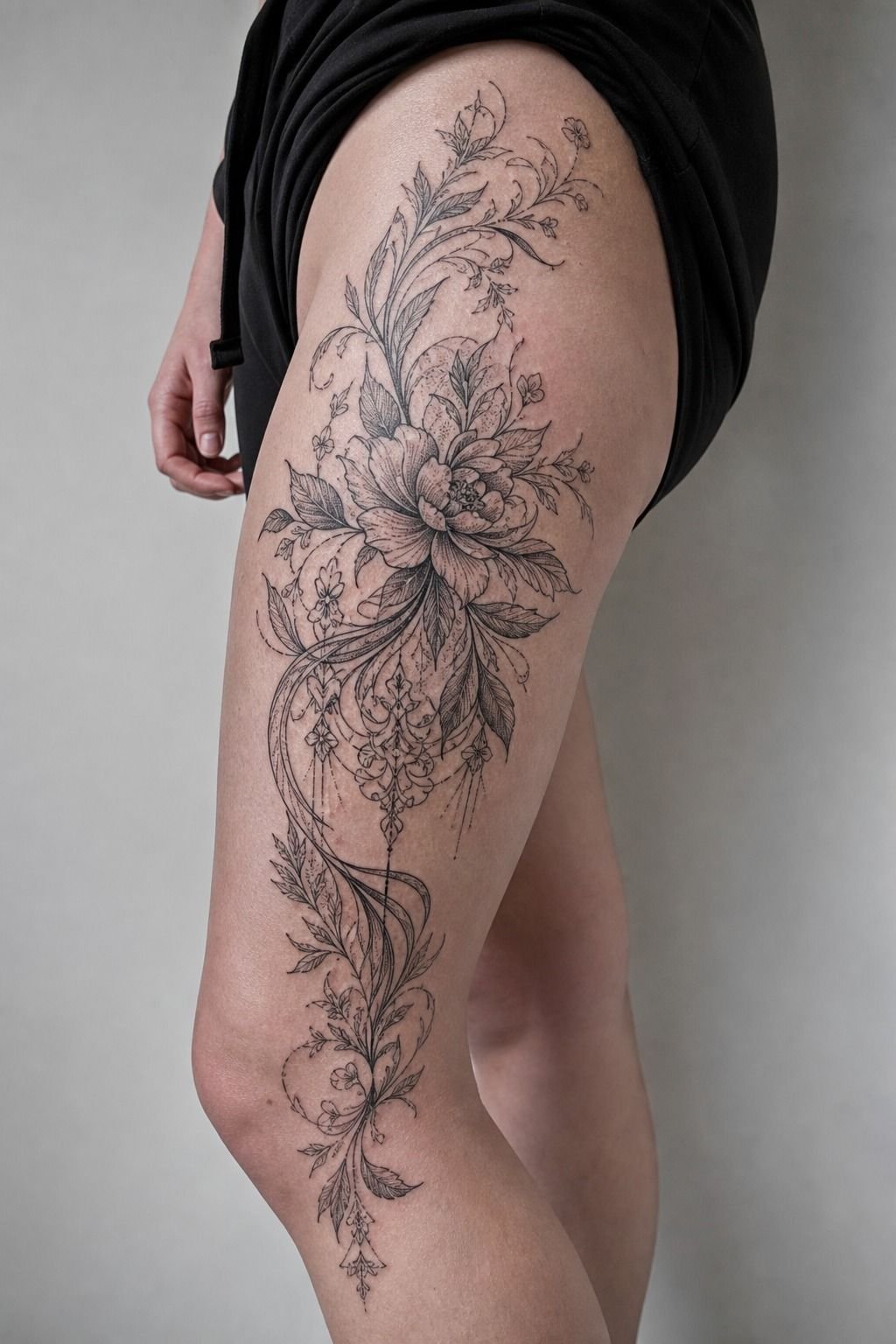
Pick one idea your whole leg can carry before you book anything. A botanical story, a blackwork creature, an illustrative myth, or a Japanese sleeve all give your artist a solid starting point. You need a focal image, supporting shapes, and a mood that won’t bore you after the first session.
Bring three to five references, not thirty. Moleskine sketch paper, a few saved healed tattoos, and notes about what you like in each image are enough. I’d skip the Pinterest-exact request because copying another tattoo line for line is awkward work and usually lands flat.
Ask yourself what your tattoo should say from six feet away. That answer keeps your whole leg tattoo from turning into soup later.
2Pick a Cohesive Full Leg Tattoo Style
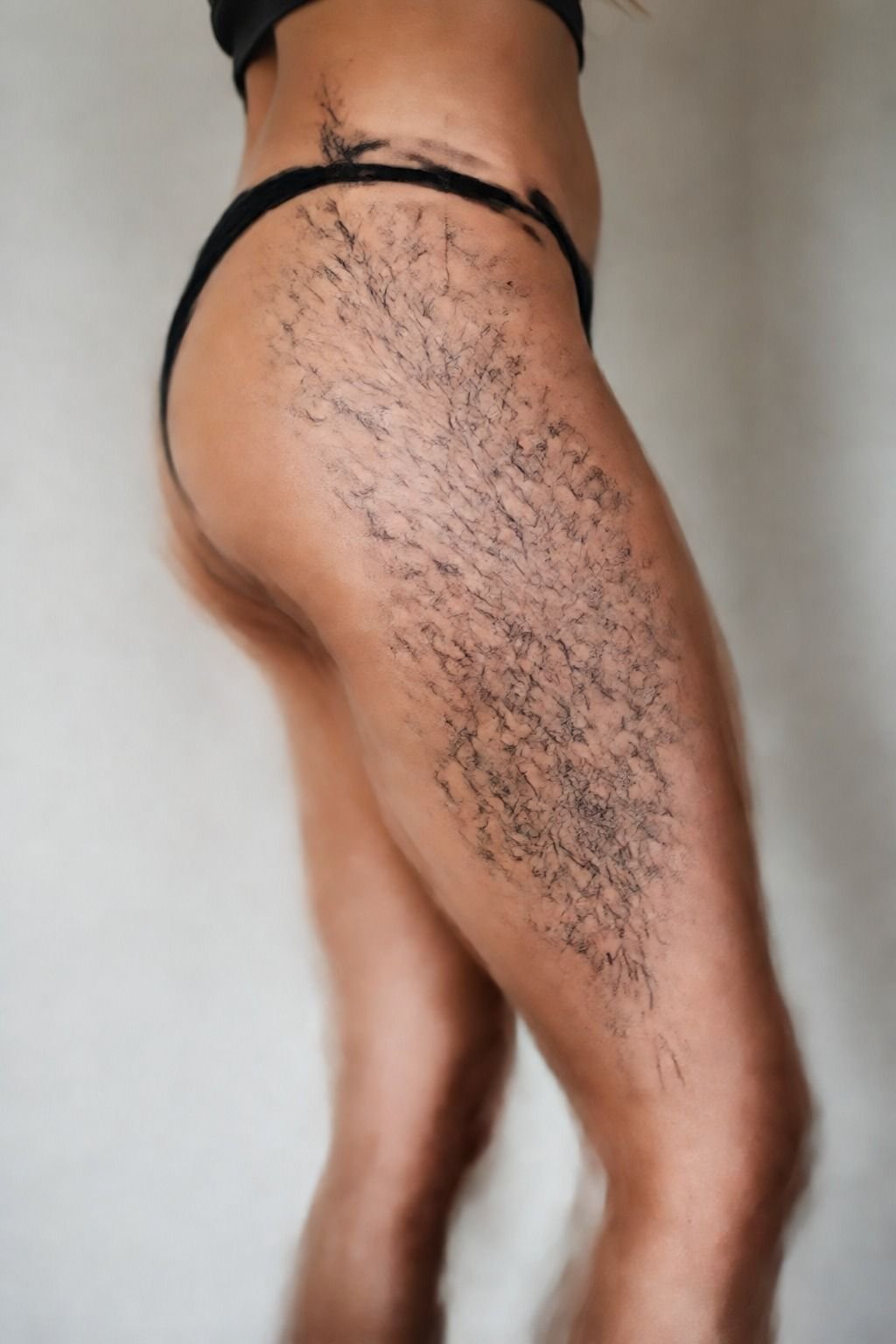
Choose one main style and let every later addition answer to it. Fine line florals can look soft and elegant across a thigh, while blackwork needs bolder black shapes and stronger negative space. Mixing both without a plan can get messy fast.
For a fine line full leg sleeve, ask for single-needle linework with a few heavier contour lines. Those thicker anchors help your tiny details read instead of disappearing into fuzzy grey. You’ll see the ink texture in healed close-ups, which is why you should ask for those photos.
But don’t chase micro-detail just because it looks captivating on a fresh stencil. Your skin moves, stretches, tans, and heals. Simple shapes win.
3Map Your Full Leg Tattoo Flow
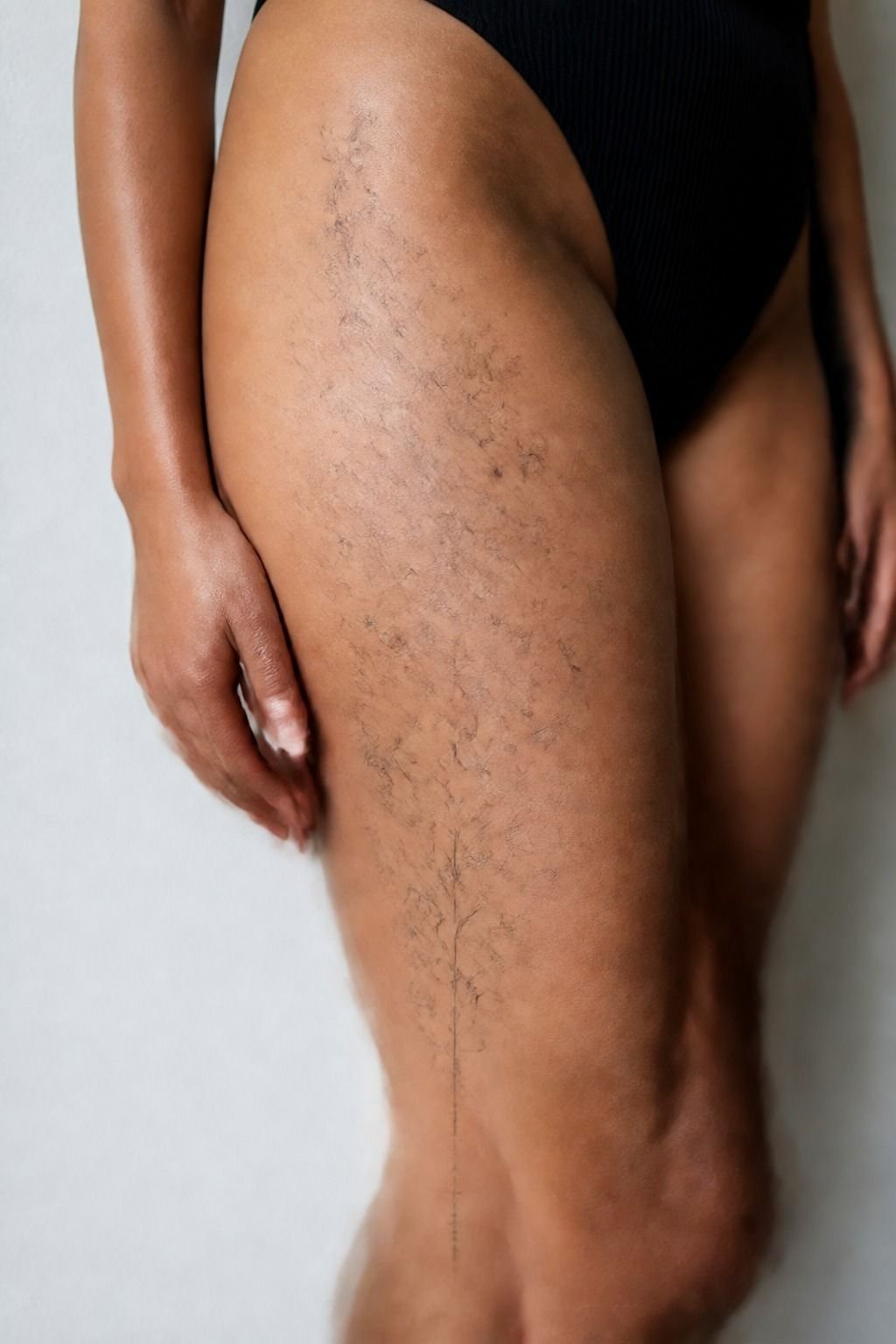
Trace the route from upper thigh to ankle before the needle touches skin.
4Place the Focal Image Above Your Knee
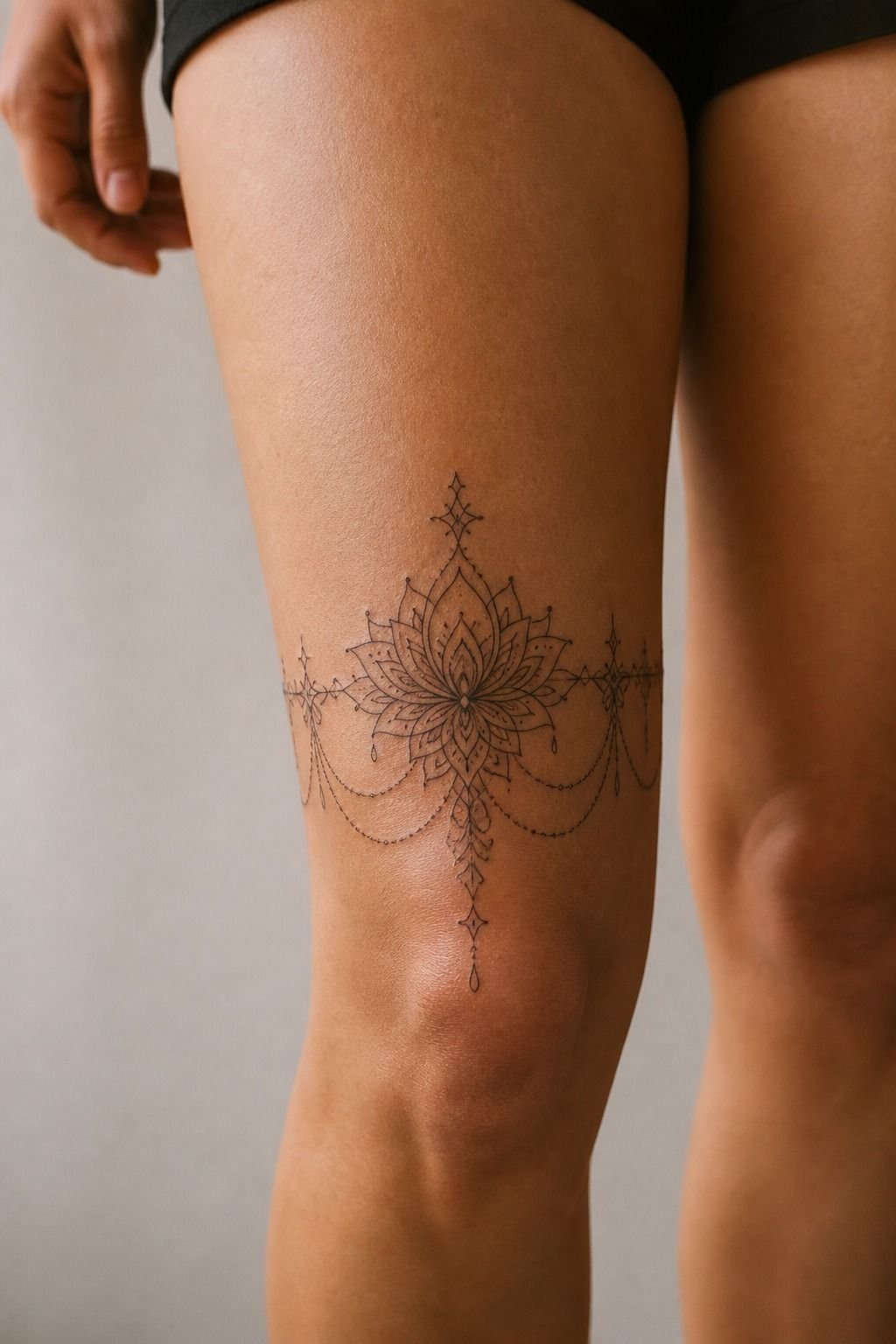
Put your biggest image where your leg gives it room. The outer or front thigh is usually the cleanest real estate, especially if you want a face, animal, flower cluster, or symbolic piece that needs clear proportions.
Aim for a focal shape at least 4 to 6 inches tall when it carries fine details. Dynamic Black tattoo ink holds a crisp dark outline, but no ink can rescue a portrait squeezed into a tiny space. That size on a knee is gonna mush out.
Your knee is a hinge. Keep the focal image above it, then let leaves, smoke, waves, or ornamental lines travel around it. It’ll read better while you’re standing and age nicer.
5Build Contrast Through Full Leg Tattoo Shading
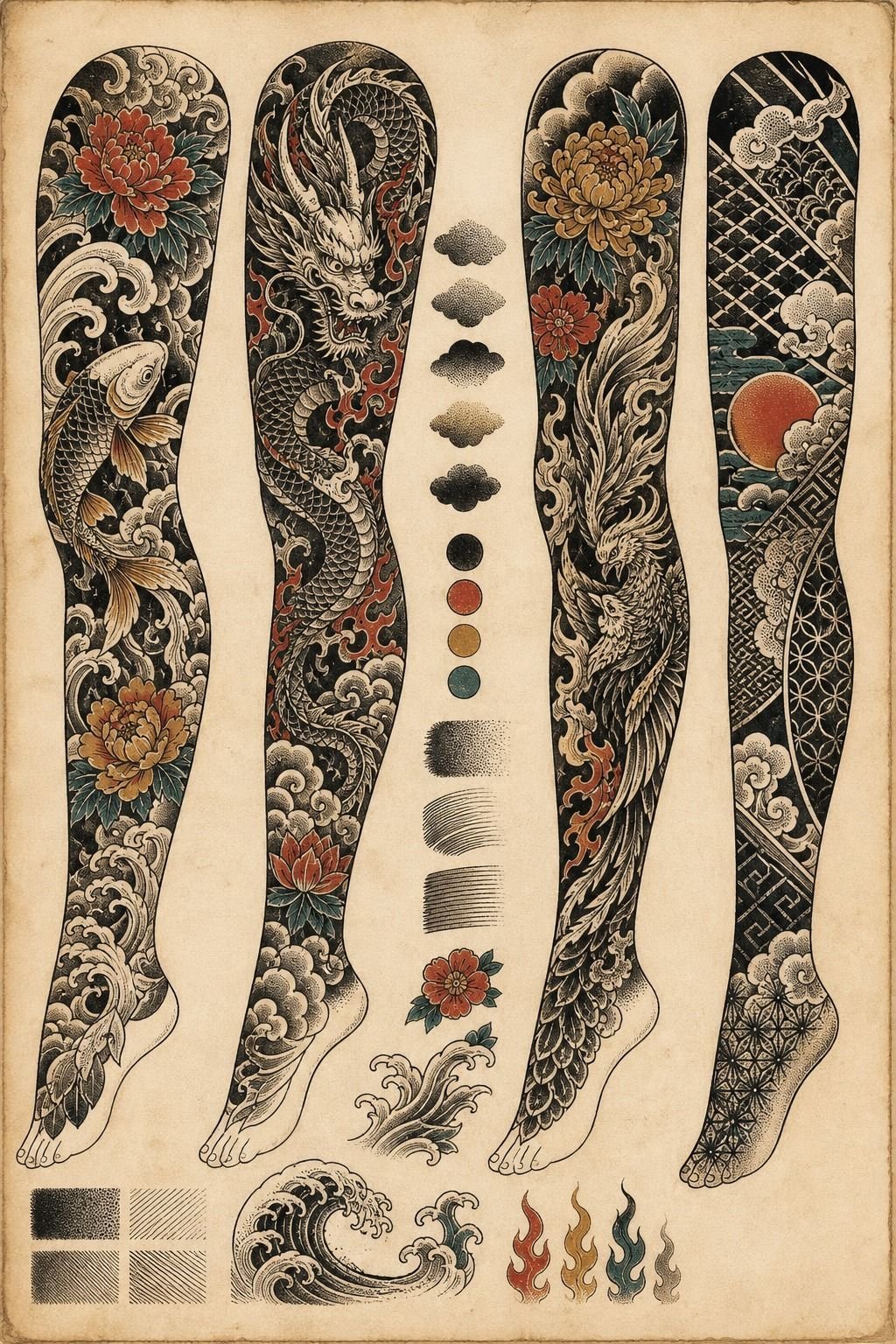
Plan your darks before you fall in love with the delicate bits. A traditional flash sheet makes this obvious: bold outlines, solid black pockets, and open skin all work together. Your finished tattoo needs that same rhythm.
Use whip shade or a soft grey wash behind fine line details so the design doesn’t heal flat. I’d skip a full blanket of pale shading because it often turns dull once healed, especially across large thigh coverage. Push contrast where your eye needs to stop.
Think in three values: black, soft grey, untouched skin. That’s enough to make a calming botanical sleeve or a dramatic blackwork composition feel intentional.
6Choose Botanical Elements for a Full Leg Tattoo
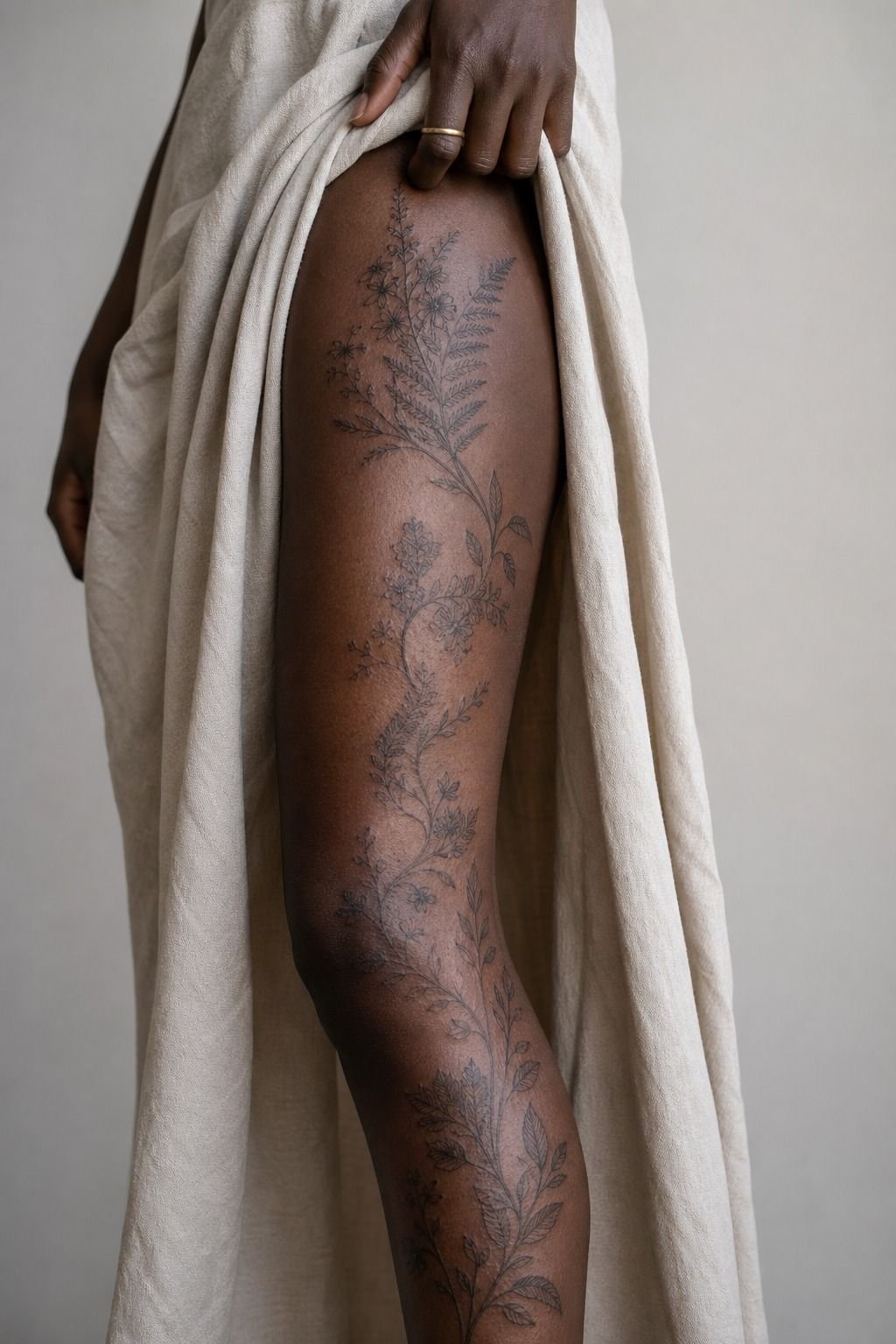
Botanicals work because they bend with your anatomy. Long stems can follow the thigh, petals can open around the knee, and leaves can bridge a gap without looking like filler. You’re building a living rhythm, not scattering clip art.
Choose two plant families max. Peony petals plus thorny rose stems work; peonies, lavender, mushrooms, butterflies, moons, and five random herbs usually don’t. I’ve seen that pile-up before.
It gets chewed up.
Keep your finest veins on lower-wear areas like the upper thigh and outer calf. For symbolism that stays personal without getting overly literal, look through meaningful feminine lower leg tattoo symbolism before you lock in the plant list.
7Connect Upper and Lower Leg Tattoo Panels
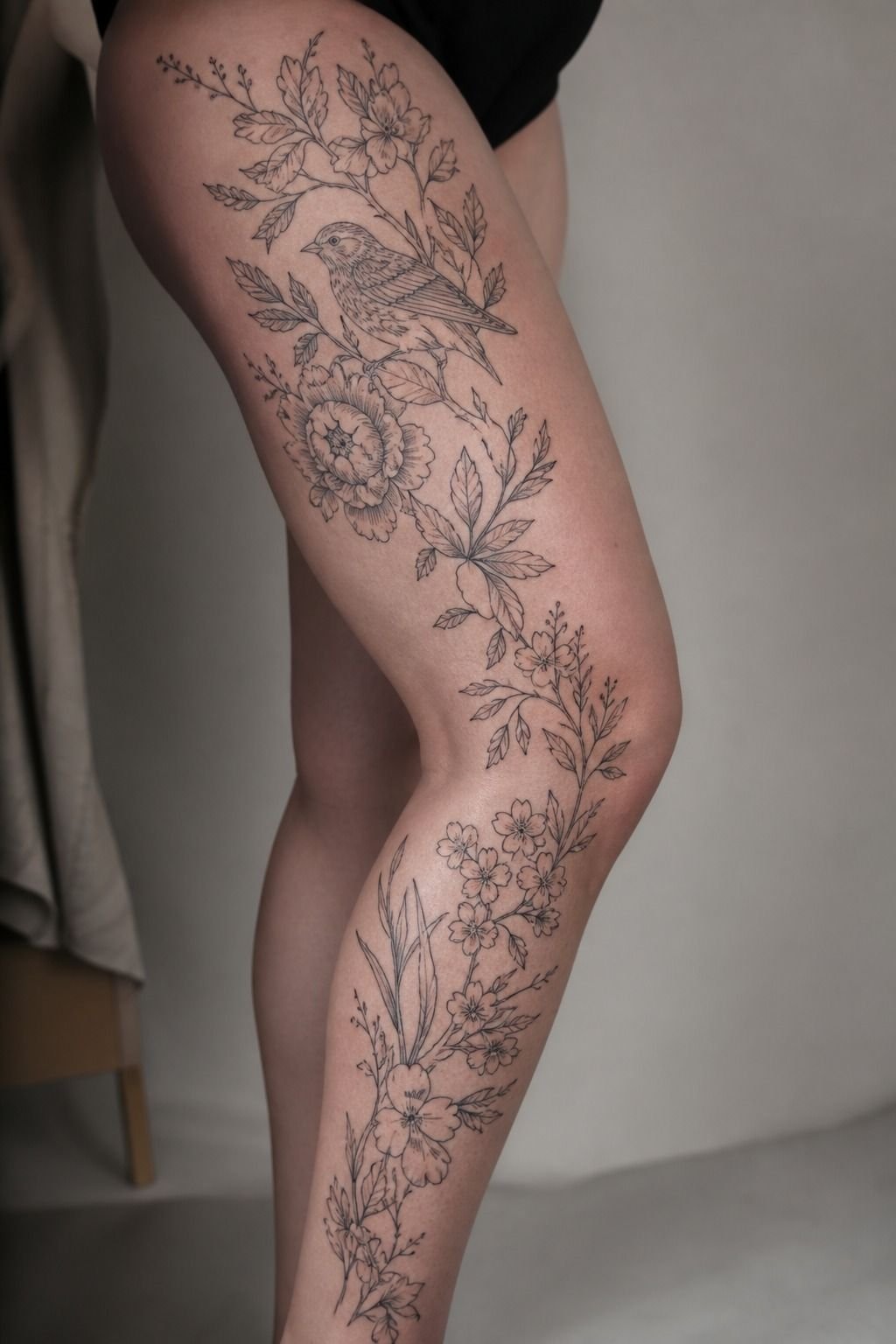
Use connector elements that belong to the same visual language.
8Balance Bold and Fine Full Leg Linework
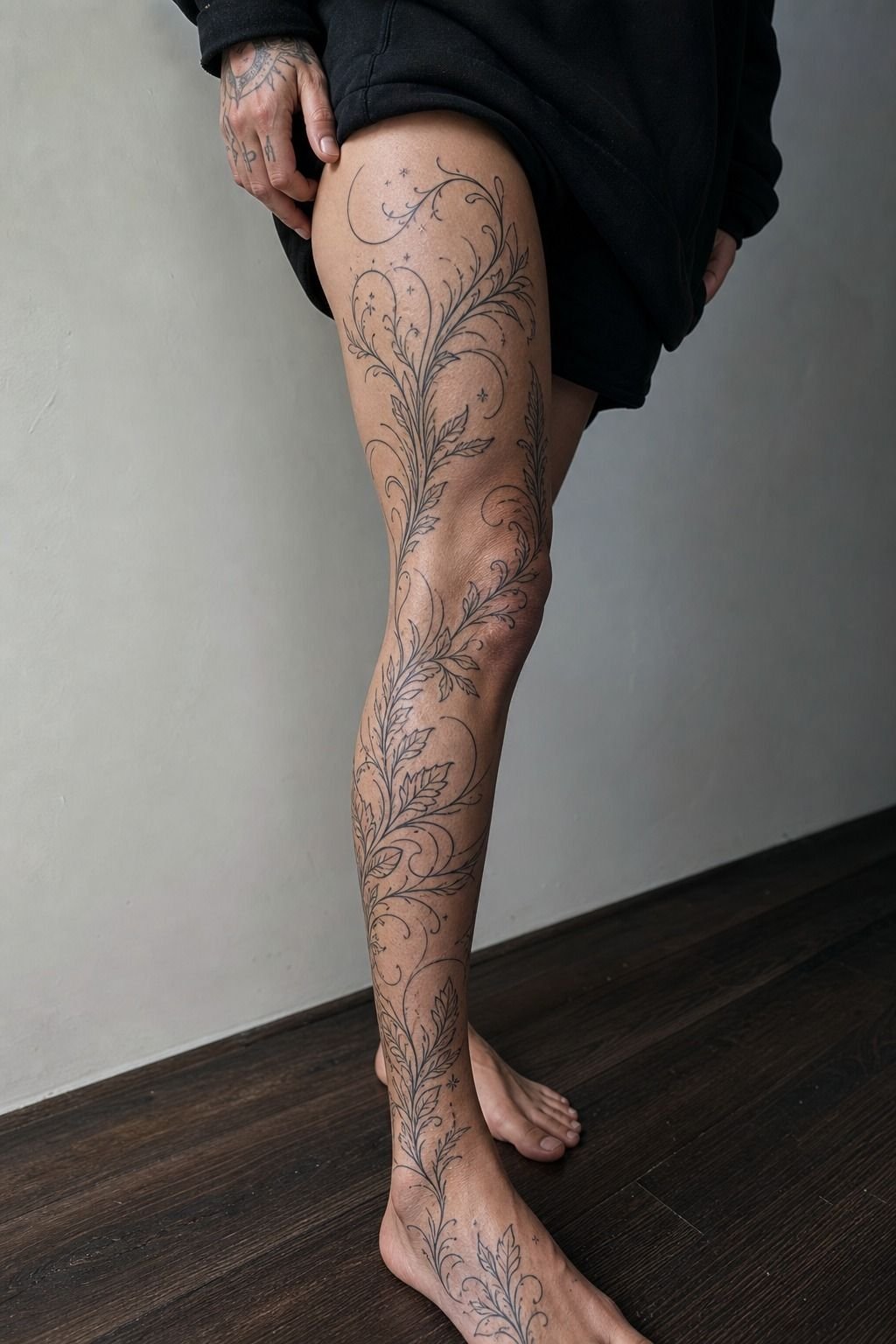
Pair delicate lines with a few bold structural lines. You need both. Fine line gives you soft detail, but a heavier outline around the main flower, animal, or mask gives the tattoo a backbone.
Ask your artist where they’ll use 3RL and 9RL needle groupings. You don’t need to dictate the setup, but the question tells you whether they’ve considered longevity. Crispy and confident lines come from one clean pull, not ten fuzzy ones.
I’d choose bold contours over an all-single-needle approach for big leg tattoos. The pure fine line look can be gorgeous fresh, but it’s less forgiving if your skin sees lots of sun or friction.
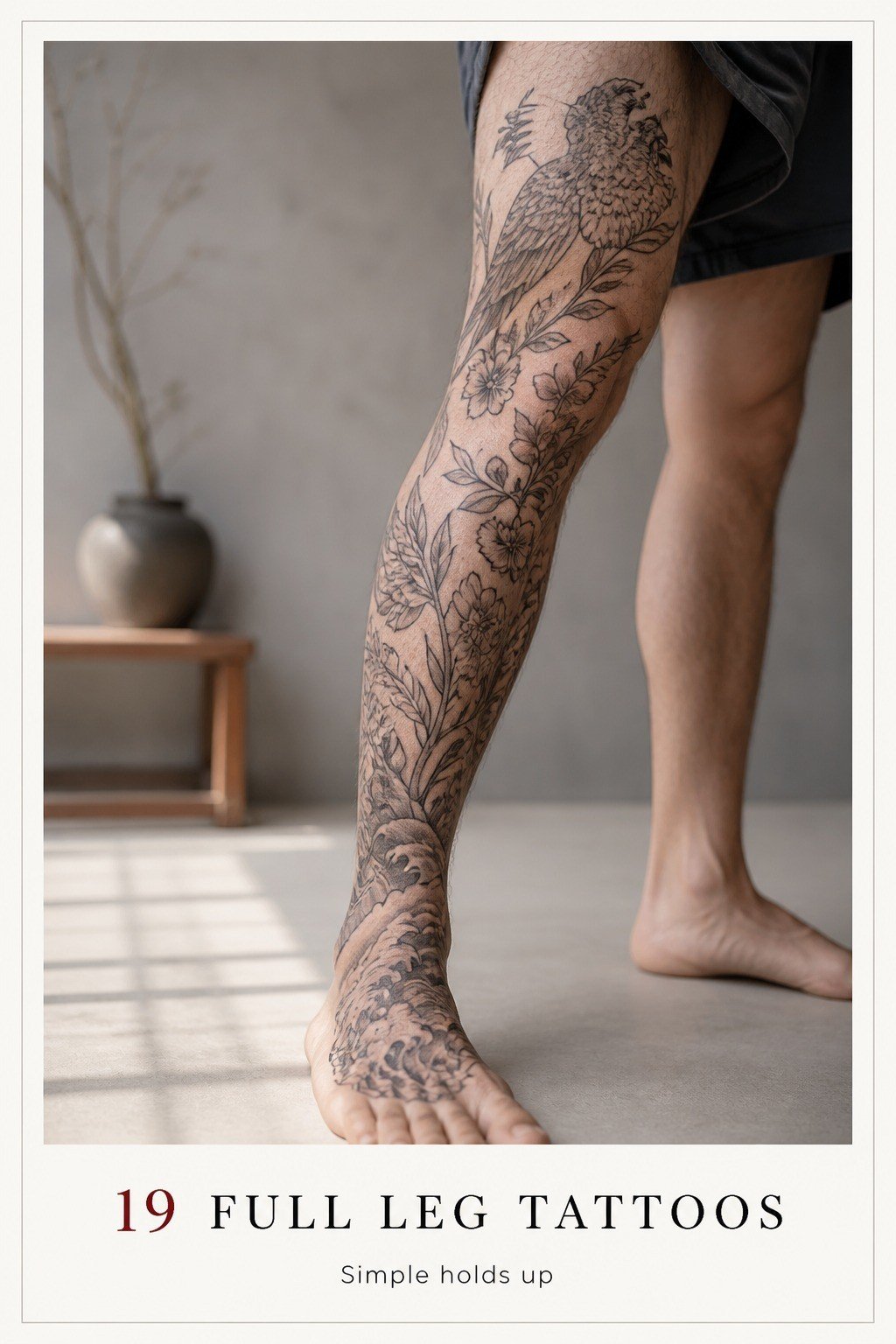
9Plan Skin Breaks Around the Full Leg Tattoo
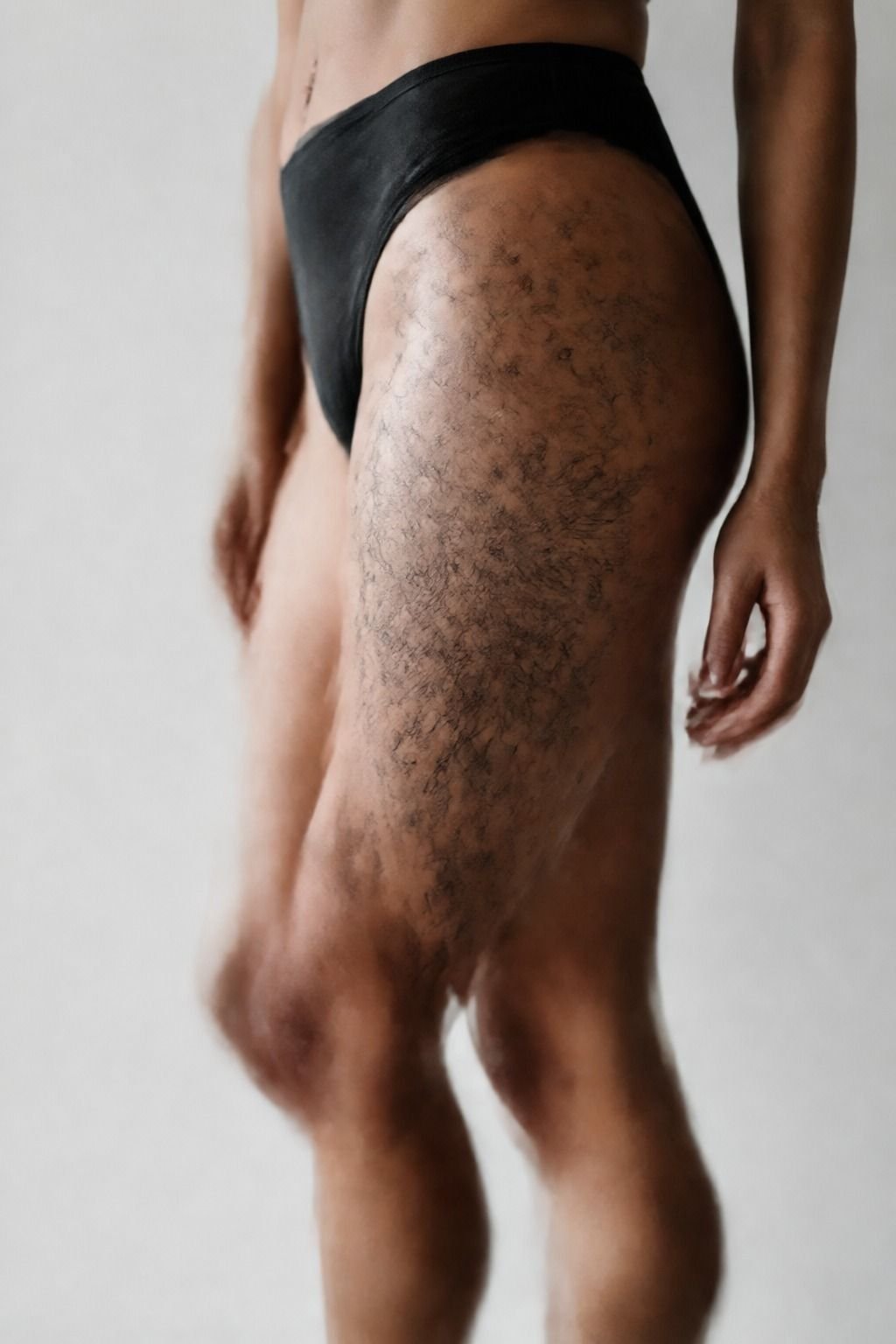
Reserve clean skin around joints and major focal points. Negative space is not unfinished work. It’s the part that lets your blackwork, florals, or illustrative panels breathe.
Keep a skin break near the kneecap, behind the knee, and around the ankle if your design is dense. White skin breaks can make black ink look brighter without relying on white ink, which often heals more subtly than people expect. That contrast is doing real work.
But don’t leave random blank holes because you ran out of ideas. Map each break like a frame around the art. Your leg will look airy, not incomplete.
10Match Tattoo Scale to Your Leg Anatomy
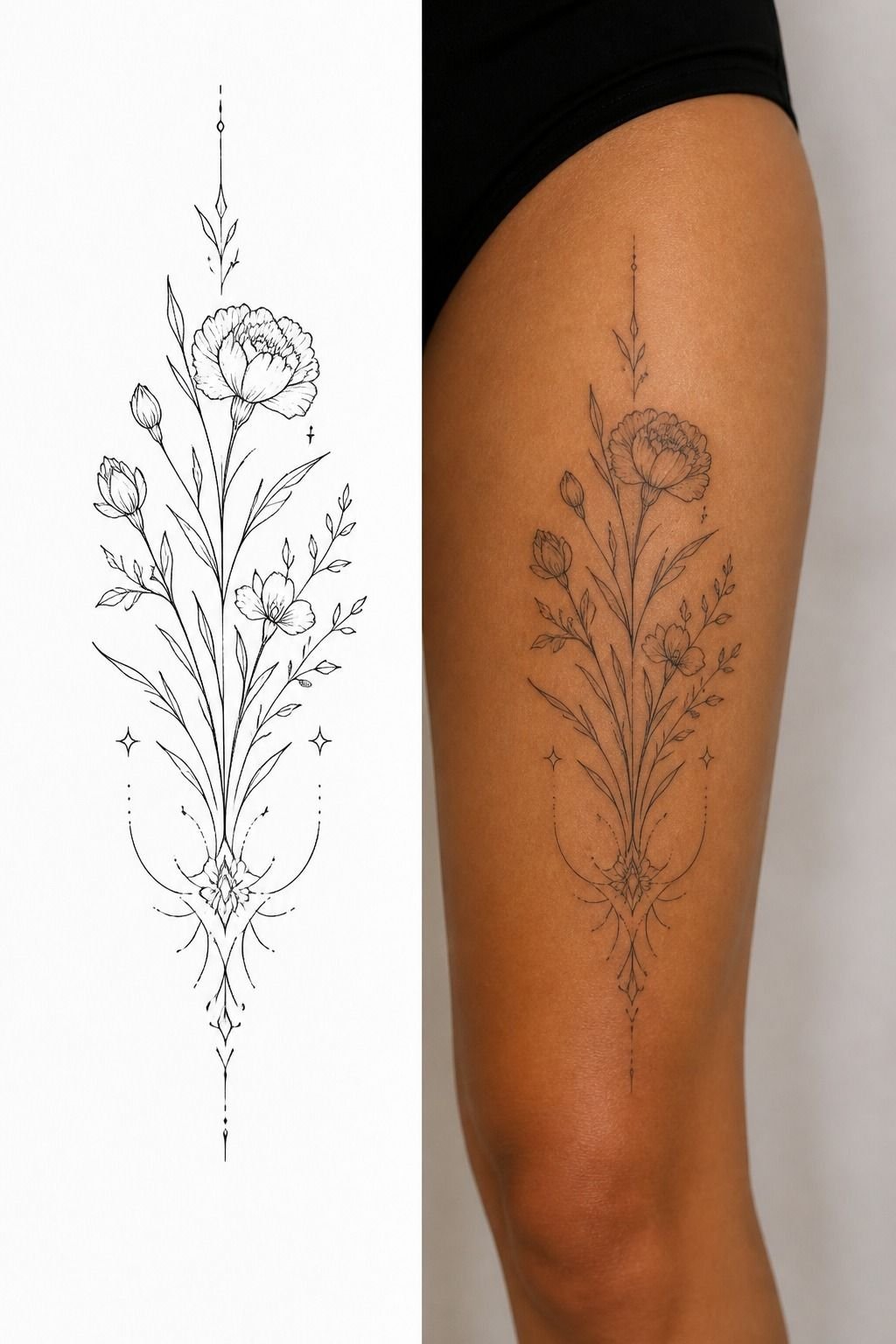
Compare the stencil to your actual leg, not just the drawing on paper. A design that fits a narrow stencil sheet may need more width once it wraps a fuller thigh or calf. Your artist should show you the placement standing up and seated.
A split view of stencil versus healed work is worth studying. Thermofax stencil lines look much thinner than healed pigment, so give tiny features more room than you think. If a petal needs a hairline gap, bump it up.
Why pay for a full leg sleeve only to make the center unreadable? Your anatomy is the template. Let it lead.
11Select Blackwork for High Impact Leg Coverage
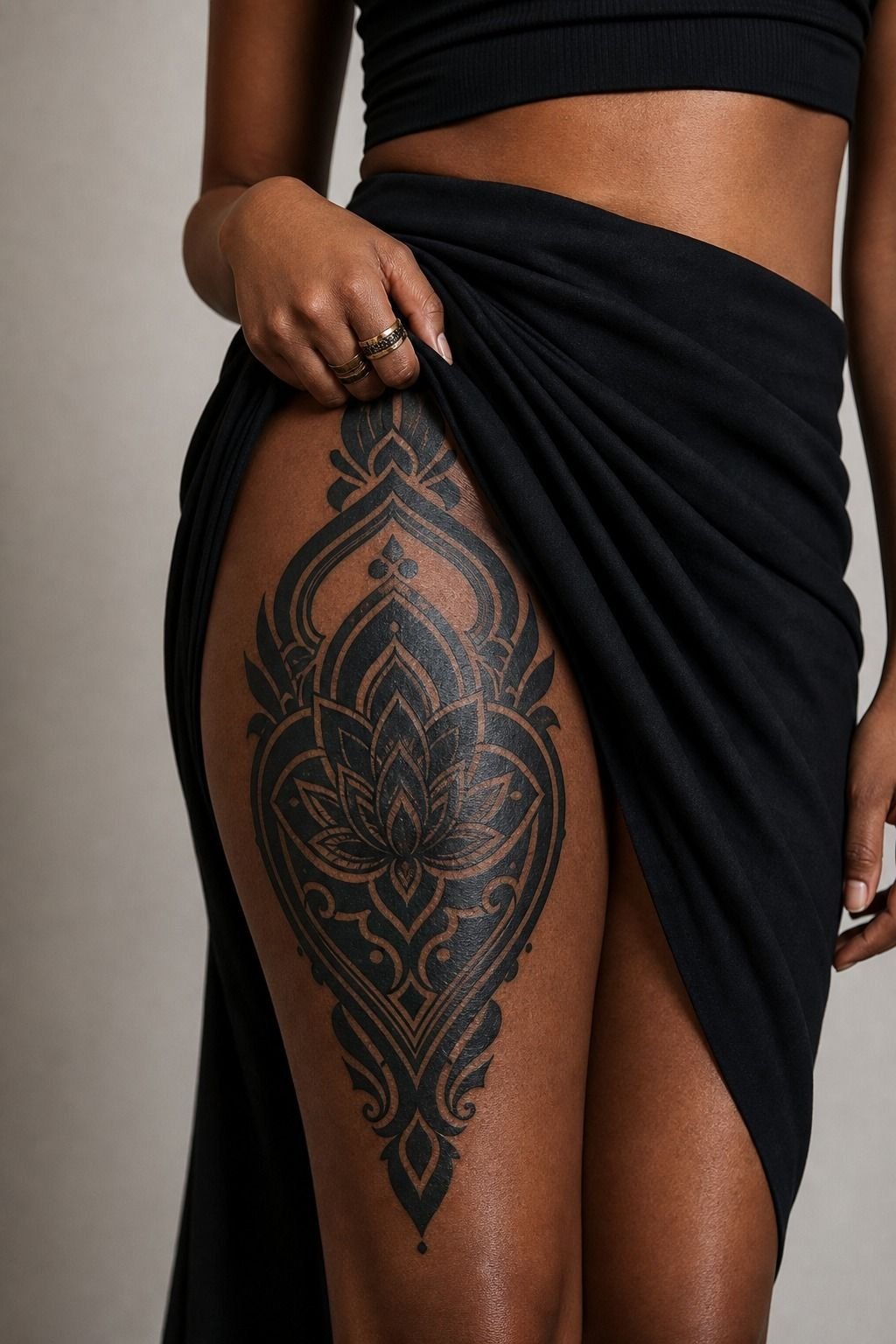
Choose blackwork if you want coverage that reads from across the room, sorry, across the street. It’s bold, graphic, and usually ages well when the artist leaves enough skin between black shapes.
Solid fill needs patience. Kuro Sumi black ink can look saturated, but your artist still has to pack it carefully with big mags and avoid overworking the skin. Color packing is spicy, and solid black can be too.
I’d skip tiny ornamental blackwork packed edge to edge on a high-wear shin. Bigger black fields, intentional gaps, and a readable silhouette will hold longer. Bold will hold.
12Blend Japanese Motifs Across the Whole Leg
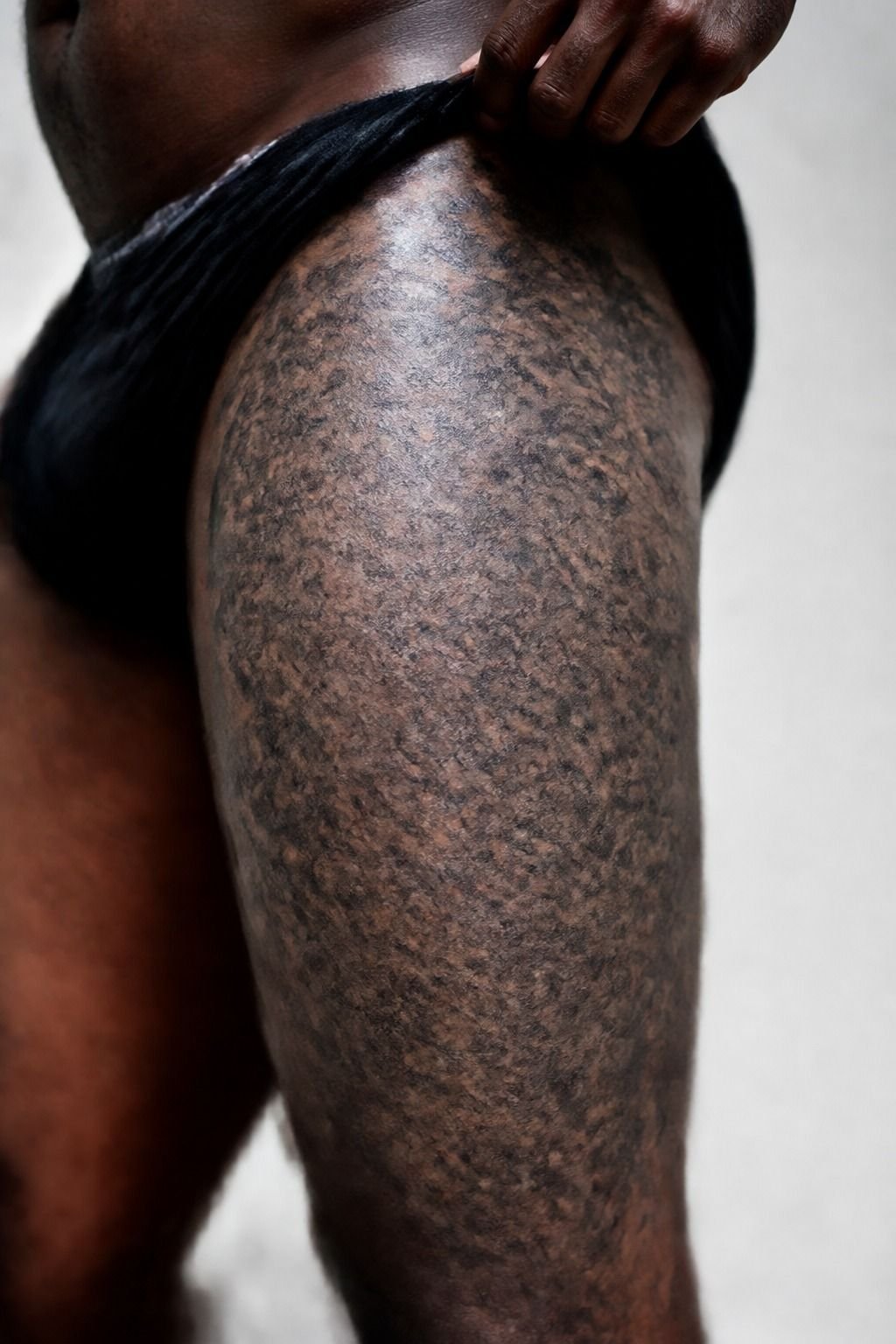
Use traditional Japanese motifs as one connected body composition, not separate tattoos stacked vertically. Koi, dragons, chrysanthemums, wind bars, clouds, and waves all have a job when the background travels through the leg.
Your thigh can carry the largest subject while wind or water moves around the knee toward the calf. Sumi-style black and grey backgrounds create flow, but they need enough contrast to keep the main motif visible. Marco’s rule is simple: background supports, never swallows.
If you’re drawn to this route, study Japanese tattoos that demand full commitment and yakuza tattoos that demand full-body commitment. You’ll understand why a whole leg tattoo benefits from one long plan.
13Anchor Realistic Details in a Full Leg Tattoo
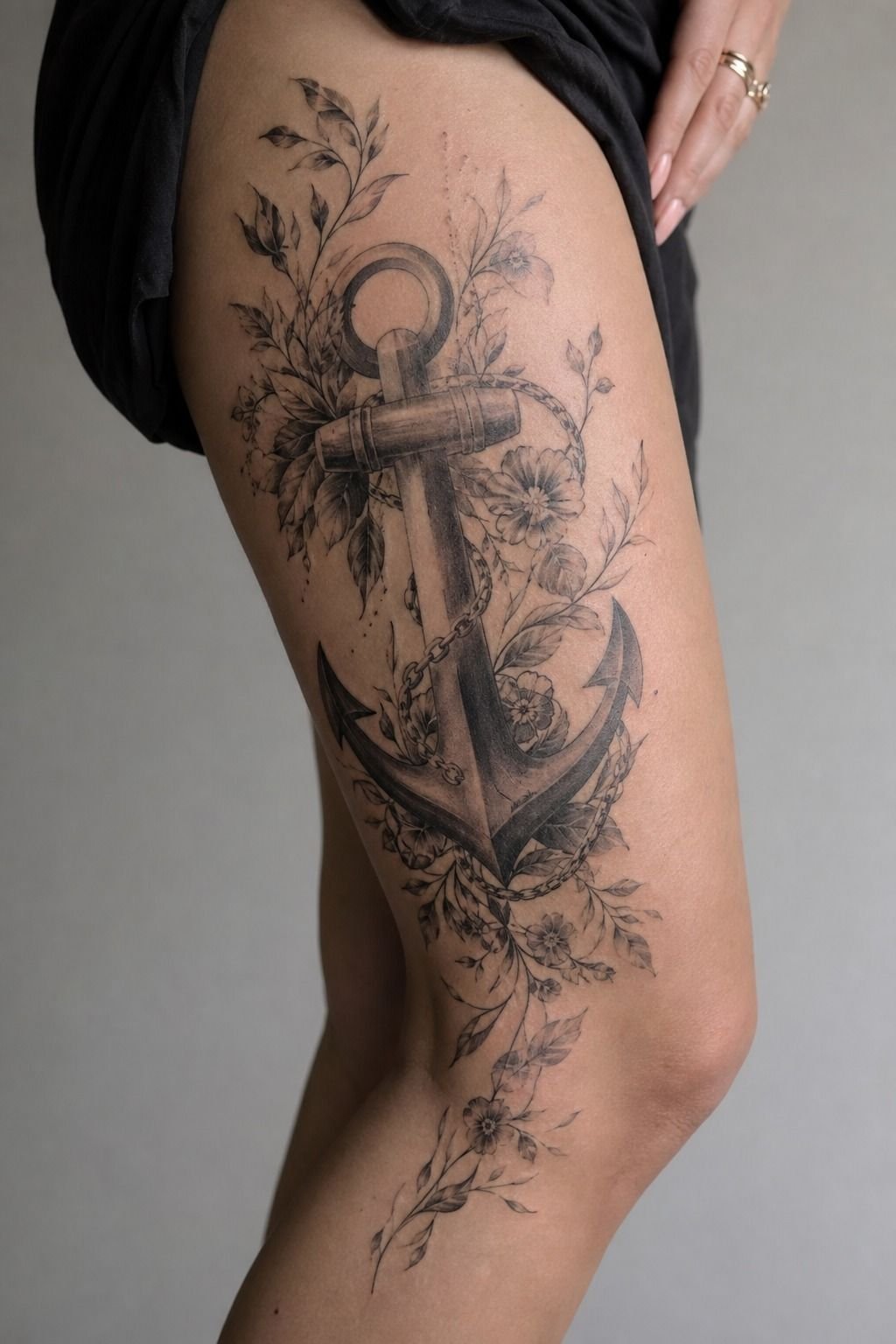
Keep realism inside a larger framework. A realistic eye, rose, animal, or portrait can be breathtaking, but it needs black anchors, skin breaks, and enough size to survive healing.
For a face, give your artist room for clear light and dark planes. A realistic portrait can take 8 to 15 hours across multiple sessions, depending on scale and detail. Carbon Black grey wash can make shadows look soft and velvety when it’s built patiently.
I’d skip micro-realism as the only language on a full leg. It photographs beautifully fresh, then risks losing the story from normal viewing distance. Use realism as the jewel, not the wallpaper.
14Schedule Full Leg Tattoo Sessions Strategically
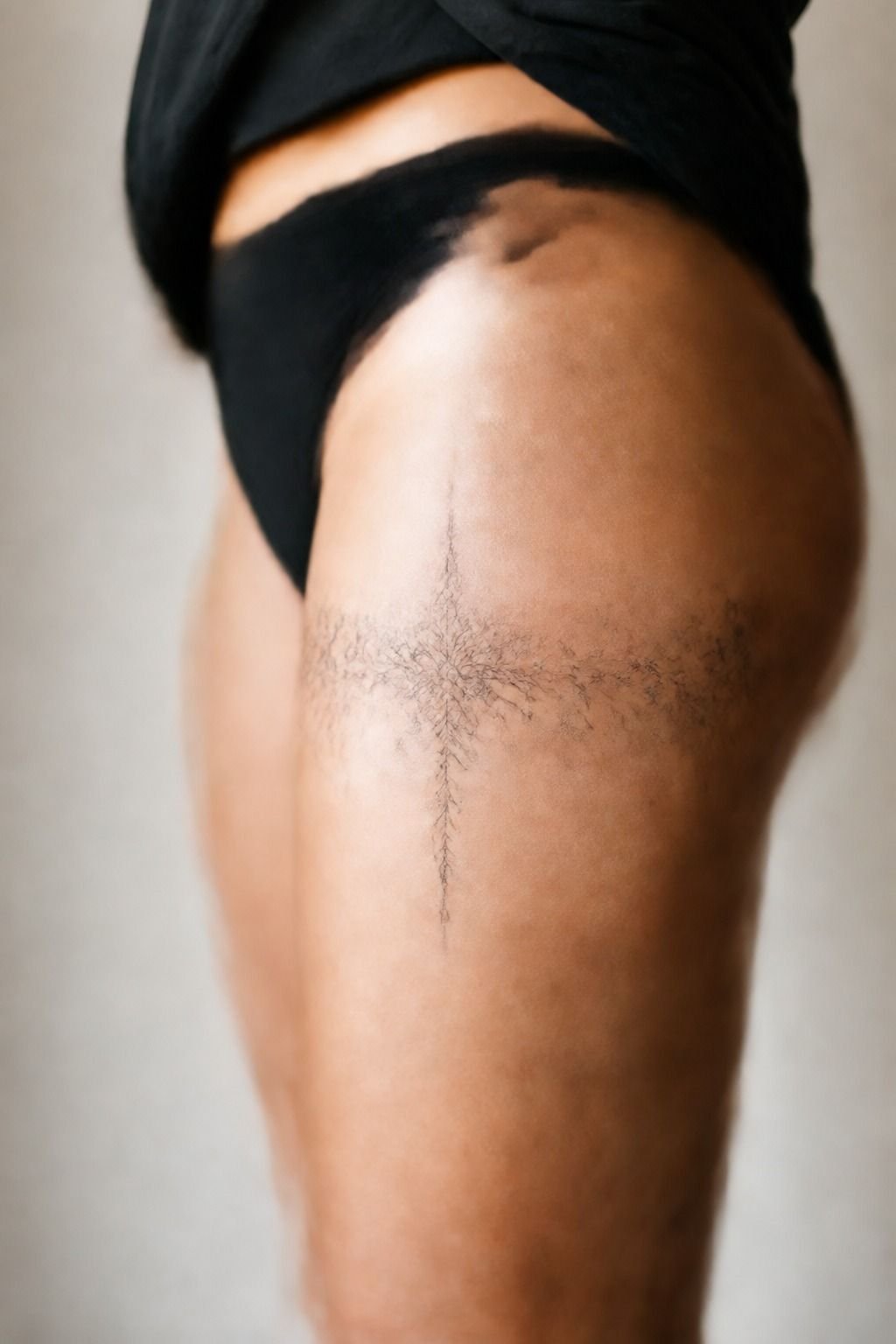
Book in sections your body can heal without making your life miserable.
15Budget Honestly for a Whole Leg Tattoo

Price your whole leg tattoo by time, not by a magic package number. Typical US shop minimums run about $50 to $100, while hourly rates commonly sit around $100 to $250 depending on the artist, region, and style.
A full leg sleeve often means multiple sessions, so ask what each session includes: design time, stencil changes, touch-up policy, and whether Saniderm bandage film is included. Cheap work that needs repair isn’t cheap. It’s just delayed spending.
Ask for a realistic session estimate, then save beyond it. Your tattoo deserves a calm budget, not a panic transfer halfway through.
16Prepare for Full Leg Tattoo Pain
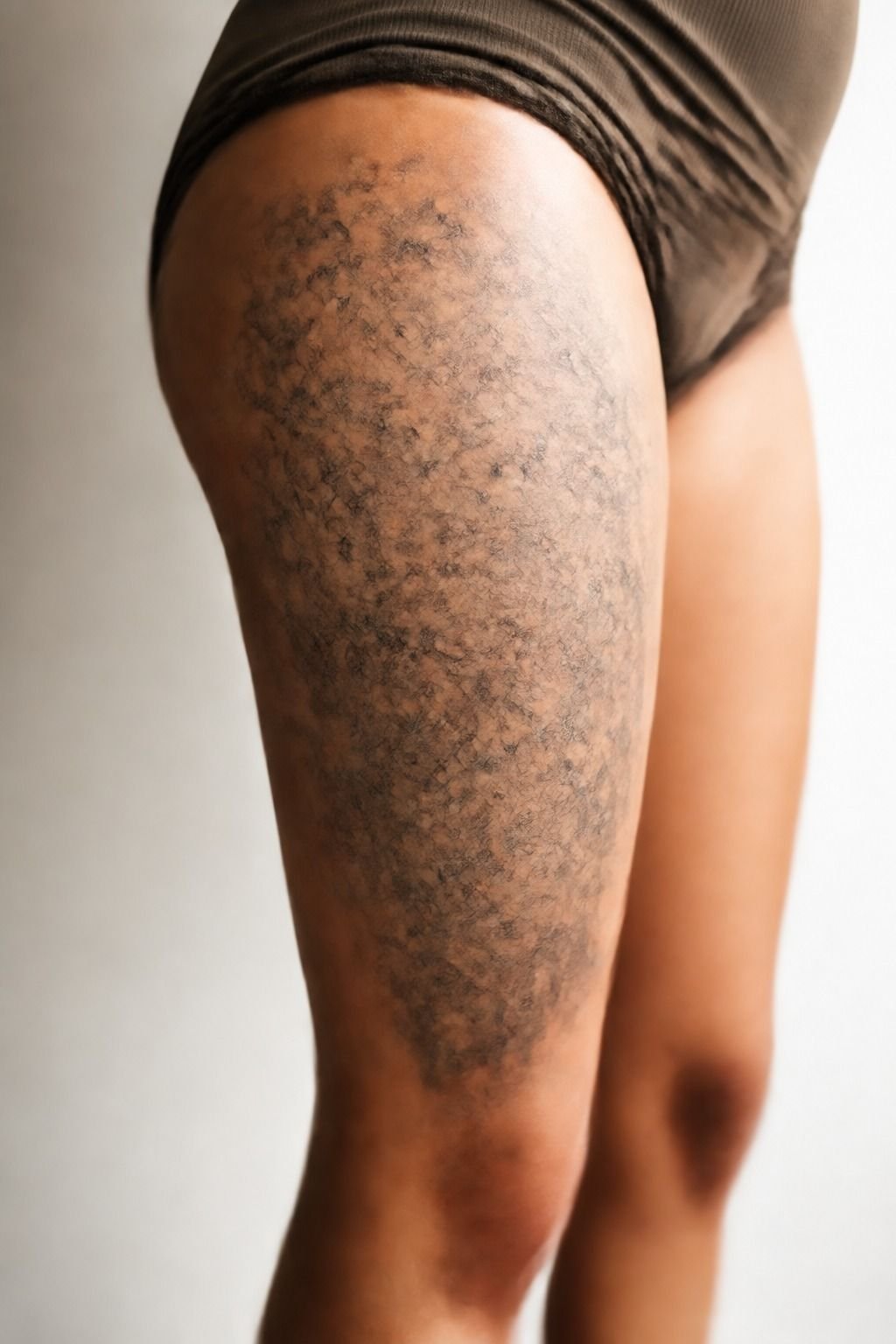
Expect different parts of your leg to feel different. Outer thigh and calf are usually more tolerable, while the knee, inner thigh, ankle, and shin can get spicy fast. Lines feel sharper; shading feels like a dull burn.
Eat a real meal, sleep well, and wear loose clothing that gives your artist access. Fragrance-free body lotion used in the days before your appointment can help keep skin from feeling dry, but don’t arrive greasy or slick. Your stencil needs clean skin.
I won’t tell you it doesn’t hurt. It does. But you can handle a planned session better than a surprise all-day ordeal, and your artist can pace it with you.
17Protect Fresh Ink Between Tattoo Sessions
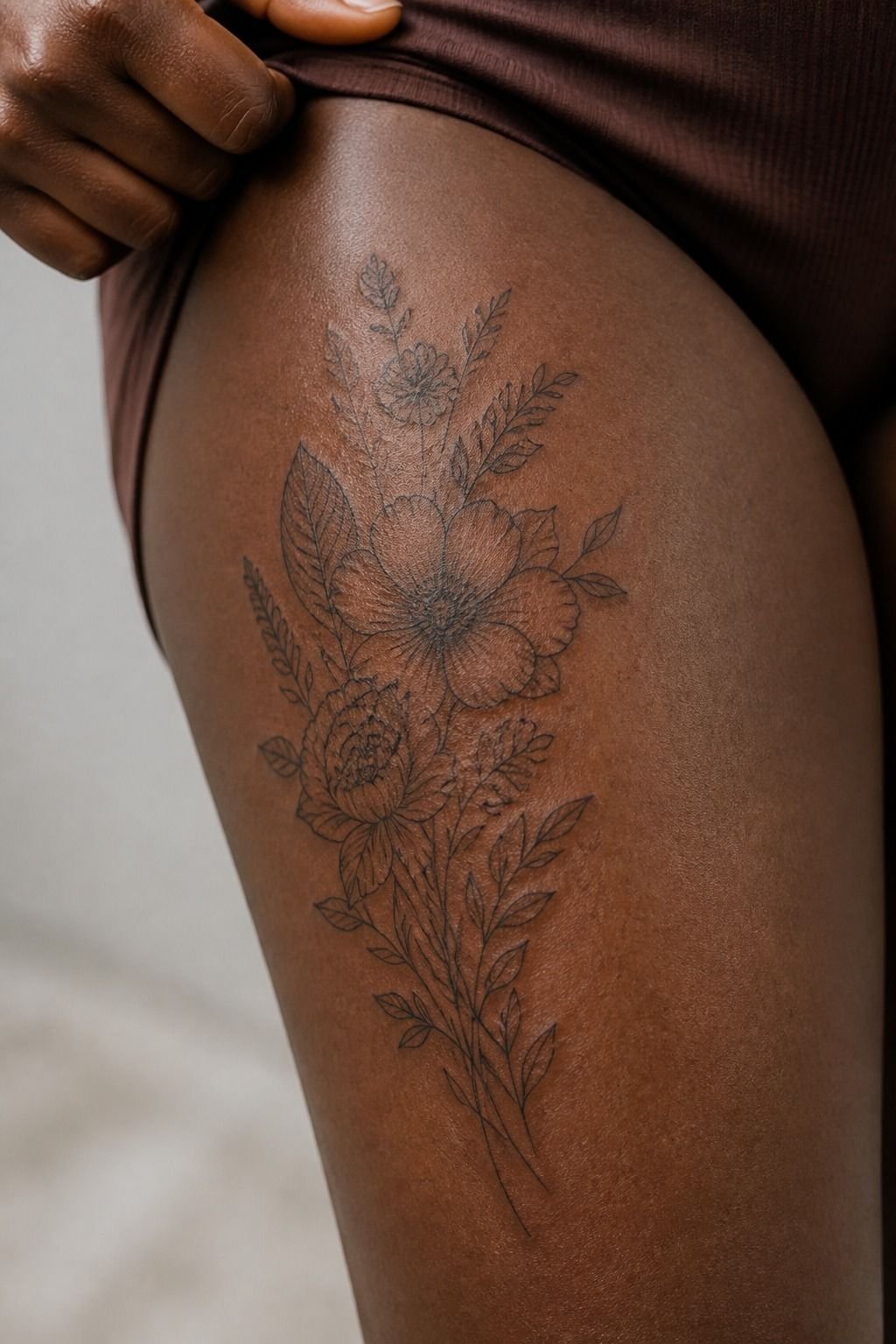
Treat every fresh panel like an open wound for the first few days. Your unfinished full leg tattoo still needs careful healing, because irritated skin makes the next stencil harder to place and can affect how clean the work looks.
Wash with gentle unscented soap, pat dry with a clean paper towel, then use a thin layer of ointment or artist-approved moisturizer. Don’t suffocate it. A thick shiny layer won’t make it heal faster.
Avoid pools, direct sun, tight gym leggings, and anything that rubs the new work. But keep moving gently if you can. A little normal motion is fine; sweaty friction is the part that causes problems.
18Follow Full Leg Tattoo Aftercare Carefully
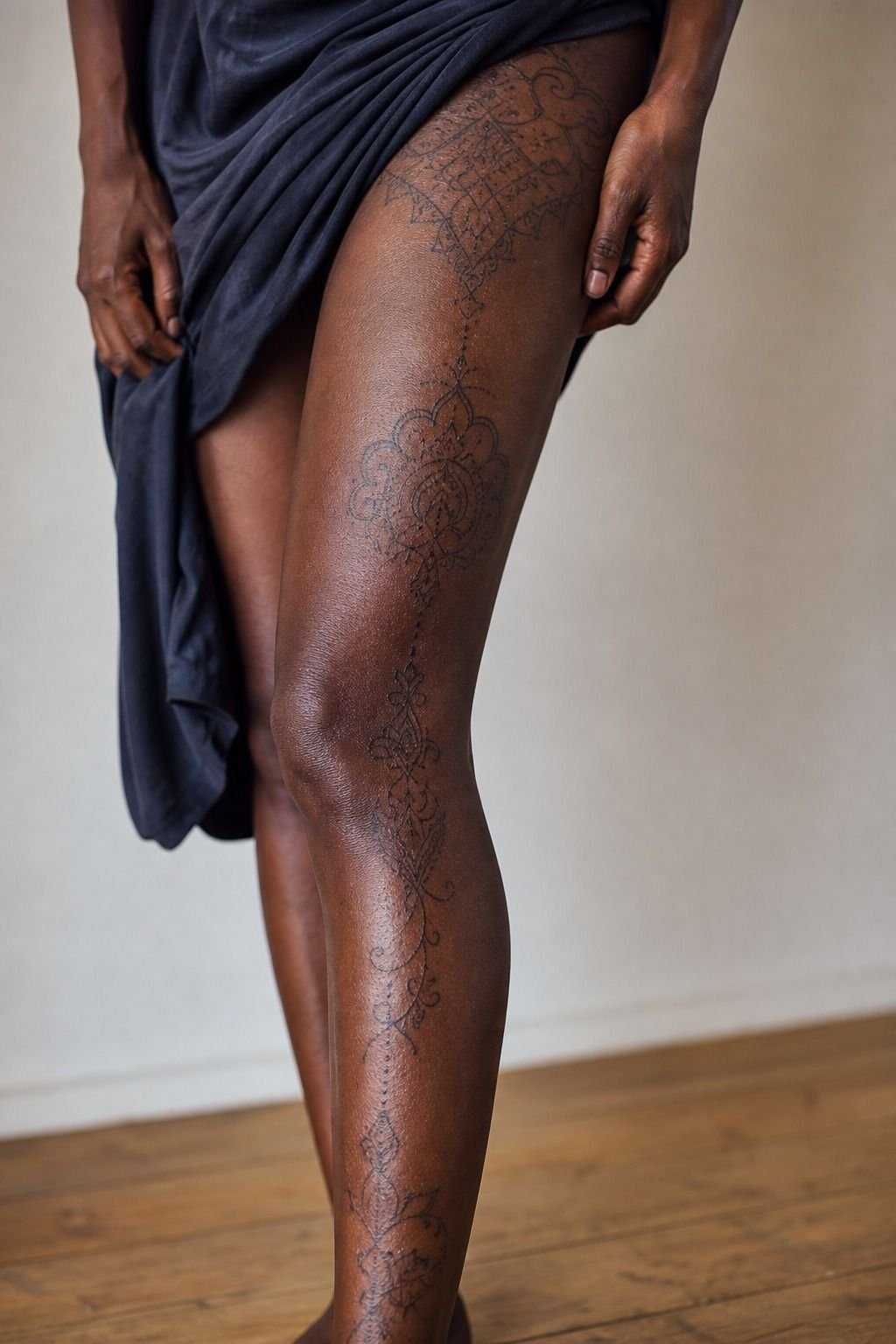
Your tattoo will peel like a sunburn around days 3 through 10. Let it. Don’t pick flakes, even when they look tempting, because you can pull color out and create patchy spots.
Use Dove Sensitive Skin Beauty Bar or another gentle unscented cleanser, then moisturize lightly after washing. Your skin may get that shiny silver-skin look before it settles. That’s normal, and it doesn’t mean the tattoo vanished.
Surface healing takes roughly 2 to 3 weeks, while deeper settling can take 2 to 3 months. Keep it out of UV, because sun fades ink faster than almost anything. Read more about why tattoos blur over time if you want the no-bullshit version.
19Review Your Artist’s Completed Full Leg Work
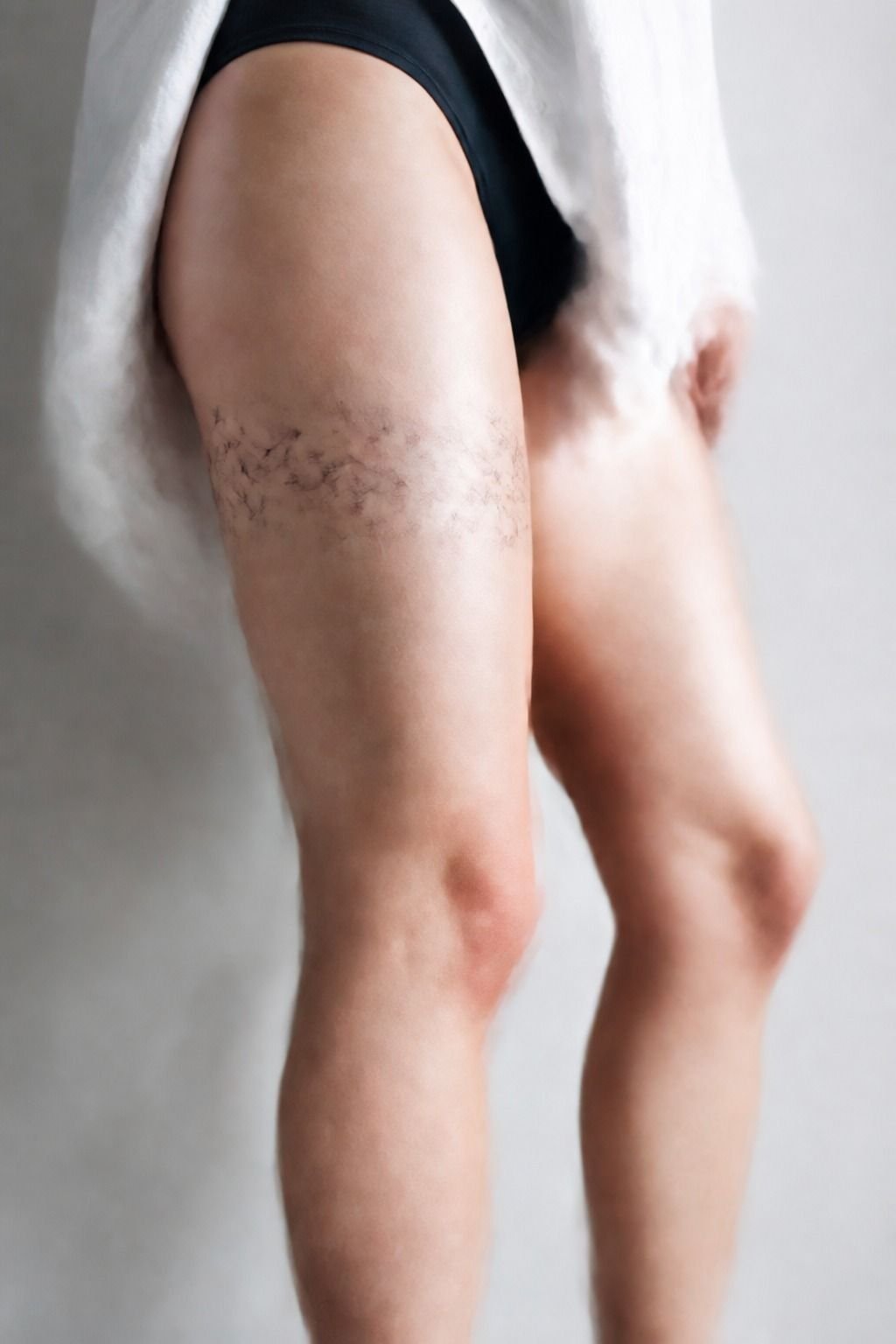
Look for completed, healed full legs in your artist’s portfolio. Fresh photos tell you they can make a clean stencil. Healed photos tell you whether their lines stay crispy, their black heals solid, and their shading stays soft instead of patchy.
Check whether their style matches yours. A great illustrative artist may not be your person for Japanese work, and a skilled blackwork artist may not be the right fit for delicate red ink. Healed portfolio photos matter more than a flashy reel.
Ask about studio hygiene, licensing, and how they handle touch-ups. If you want witchy details, these witchy tattoo ideas can help you refine the vibe before your consultation. Your artist should guide the execution, not just trace your phone.
The Long-Game Leg Rule
I’ve learned that the best full leg tattoos aren’t the ones with the most stuff in them. They’re the ones where every decision has room to work. You can feel the difference when an artist has thought about how the thigh turns, where the knee interrupts the picture, and what happens when you’re wearing shorts in bright daylight.
It reads clean. It feels settled.
Clients sometimes worry that open skin means they didn’t get enough tattoo for their money. I get it.
A big appointment is a commitment, and you want to walk out feeling like something happened. But filling every gap is how an airy composition turns heavy.
Skin breaks give your black areas contrast. They make botanical stems look like they’re moving.
They let a Japanese background travel without becoming a dark blanket.
I’ve also seen people rush into a full leg sleeve because they want the instant finished look. That’s usually where the regret starts.
Your body will tell you things after session one: whether the placement feels right, whether you want more shade, whether you love looking at that motif every day. Listen to that information.
You’re allowed to slow down.
And here’s my blunt opinion: choose an artist whose healed work makes you pause, not one whose fresh work only looks good under ring lights. Fresh tattoos are bright and dramatic.
Healed tattoos are the receipt. If their black stays solid, their lines don’t blow out, and their compositions still breathe months later, you’ve found the person worth waiting for.
The Questions I Get Asked Most
How much does a Full Leg Tattoos usually cost?
A full leg tattoo is usually priced by sessions, with typical US shop minimums around $50 to $100 and hourly rates around $100 to $250. A clear session plan keeps you from guessing.
– Multiple appointments – Artist and region differences – Custom drawing time
Are Full Leg Tattoos a good idea for a first tattoo?
Yes, if you’re ready for the commitment and start with a manageable thigh panel. The outer thigh is more tolerable than many bony placements, and you can build from there.
– Clear subject matter – Lower-wear placement – Time between sessions
How do I choose a tattoo artist for Full Leg Tattoos?
Choose an artist with healed examples in the exact style you want. A healed portfolio proves longevity, while clean studio practice protects your skin from day one.
– Crispy healed linework – Style-specific experience – Licensed, clean studio
How much do Full Leg Tattoos hurt?
Pain varies, but outer thigh and calf are usually more manageable than knees, ankles, feet, ribs, or sternum. Session pacing helps most when an area gets spicy.
– Sharper linework sensation – Dull shading burn – Breaks, water, and food
How long does a Full Leg Tattoos take to heal?
The surface usually heals in 2 to 3 weeks, while complete settling can take 2 to 3 months. Gentle aftercare protects the finish while your skin rebuilds.
– Unscented soap – Thin moisturizer layer – No pools or sun
What’s the best placement for Full Leg Tattoos?
The outer thigh is the strongest starting placement because it gives your main design room and generally heals nicely. The upper leg offers readable scale for florals, realism, and blackwork.
– Front-thigh focal point – Outer-calf secondary panel – Knee as transition zone
Where I’d Start First
If I had to pick one step, I’d start with mapping your full leg tattoo flow. A gorgeous drawing can’t fix a design that fights your knee and calf.
Get the route right first. Pin this plan, then bring only your strongest references to the consultation.