Forearm tattoos for men usually cost about $100 to $300 in the US, depending on size, artist, detail, and placement. I once chose a design before thinking about how it would age. That mistake taught me to judge line weight first. These 11 ideas keep the result personal, striking, and financially clear.
- Minimalist Black Line Forearm Tattoos
- Geometric Forearm Tattoos With Measured Lines
- Realistic Animal Portraits on Male Forearms
Editor’s note: decide the line before the symbol
My one rule is simple: choose the healed line weight before you fall in love with the reference. I keep small tattoos for men nearby when comparing scale, because a crisp design should still read clearly after the skin settles.
- Minimalist Black Line Forearm Tattoos
- Geometric Forearm Tattoos With Measured Lines
- Realistic Animal Portraits on Male Forearms
- Bold Traditional Forearm Tattoos
- Intricate Mandala Tattoos With Controlled Detail
- Meaningful Script That Can Age Well
- Dark Abstract Forearm Tattoos With Fine Linework
- Sacred Symbols With Personal Meaning
- Nature-Inspired Forearm Tattoos With Shading
- Sleeve Starter Tattoos With a Future Plan
- Small Matching Forearm Tattoos
1Minimalist Black Line Forearm Tattoos
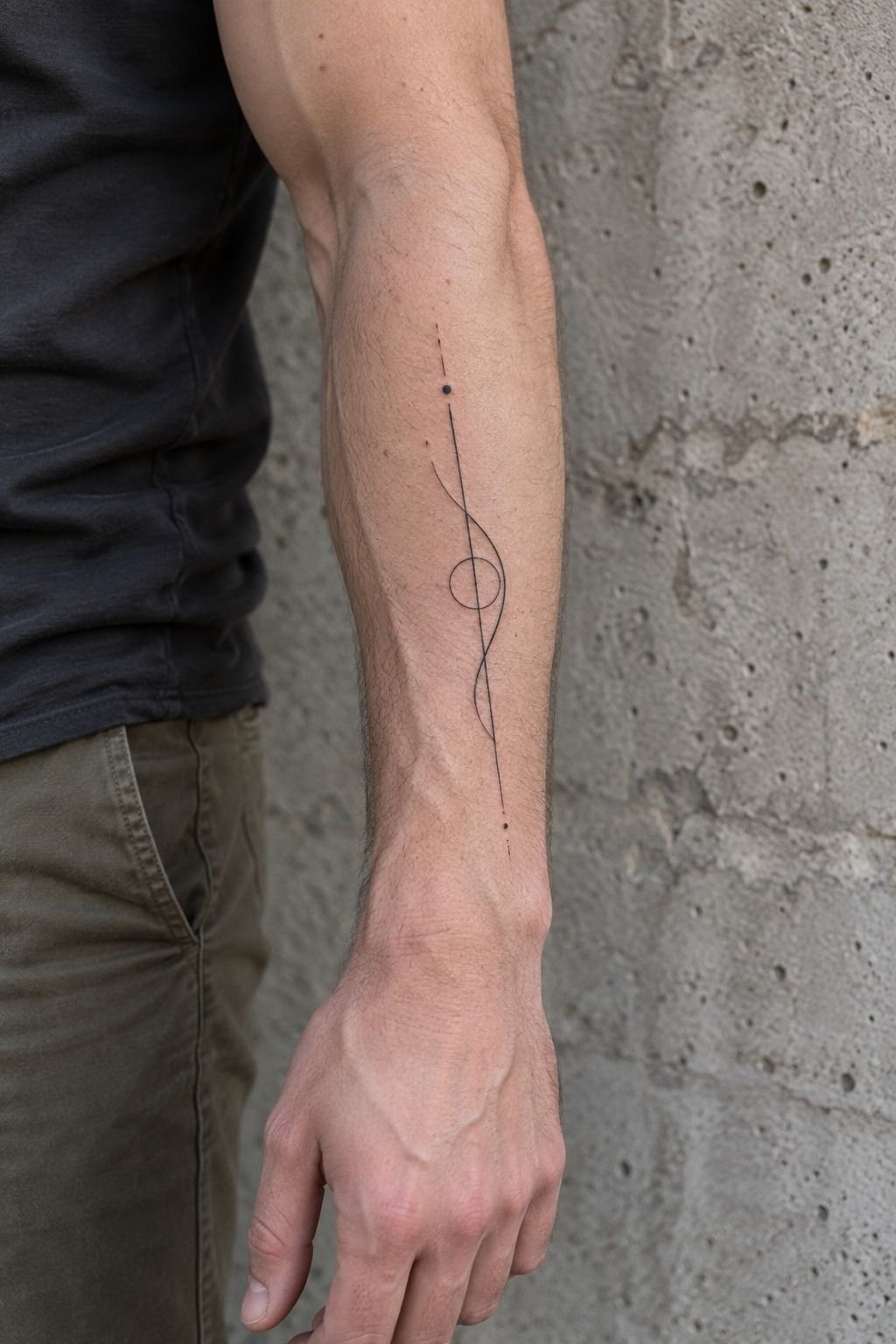
Minimal tattoos work best when the design has one clear idea instead of five competing symbols. A thin mountain, tiny compass, or curved mark can look elegant on the inner or outer forearm. You’ll want the composition measured before the needle touches skin.
I’d choose single-needle black ink only when the artist has healed examples to show you. Fine lines can spread as skin ages, so a slightly stronger outline may be the smarter choice. The result stays understated, but it shouldn’t be timid.
Keep the concept at a readable scale. A small shape can look sharp on the outer forearm, while an inner placement feels more private. Don’t copy a tiny design from the internet without checking how the details will translate onto your skin.
Use a washable marker to test three placements before booking. Ask about the shop minimum as well, which may range from $50 to $100 in the US. Paying for clean linework is often wiser than choosing the lowest quote.
I’d skip an overly detailed miniature because the lines may merge sooner than you expect. A minimal mark gives your skin room to age gracefully, and it’s easier to expand later if your taste changes.
2Geometric Forearm Tattoos With Measured Lines
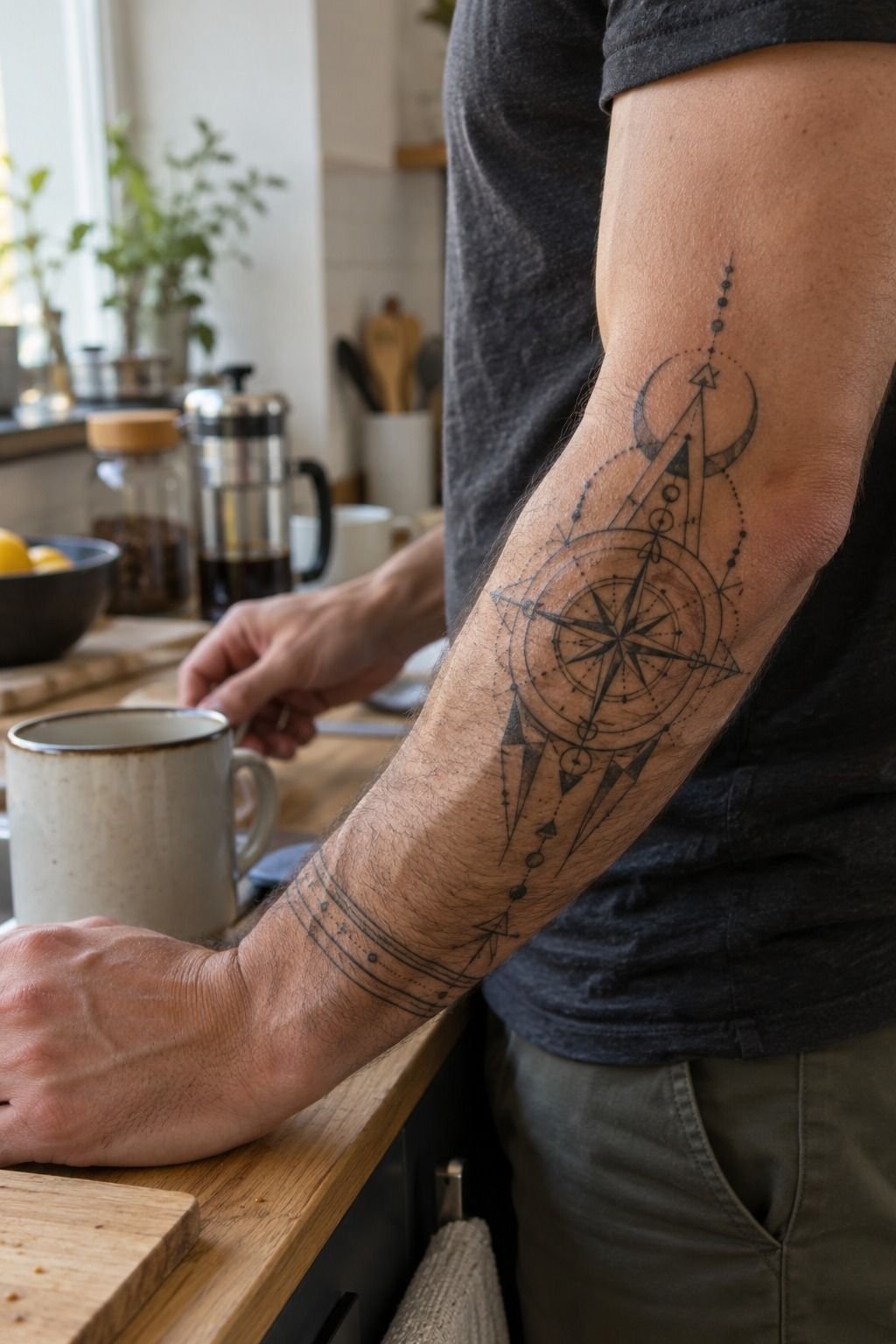
Geometric tattoos need accurate measurement more than dramatic shading. You’ll want the artist to account for the forearm taper, wrist movement, and the way circles or grids change when your arm turns.
A geometric stencil should be checked from several angles before you approve it. I’d stand naturally, rotate my arm slowly, and ask whether the lines still feel sleek. One crooked connection can change the entire impression.
Minimal geometry can feel meaningful when the pattern has a deliberate stopping point. You don’t need a full band, several symbols, and heavy shading to make the piece personal. Sometimes one triangle, arc, or interlocking shape is enough.
For a smaller budget, choose black linework with limited fill. If you’re unsure about scale, compare the idea with these men’s wrist tattoos and ask your artist which details will survive healing.
I’d avoid squeezing a geometric design too close to the wrist crease. Movement can make a precise pattern look uneven, especially when the tattoo wraps around the arm.
3Realistic Animal Portraits on Male Forearms
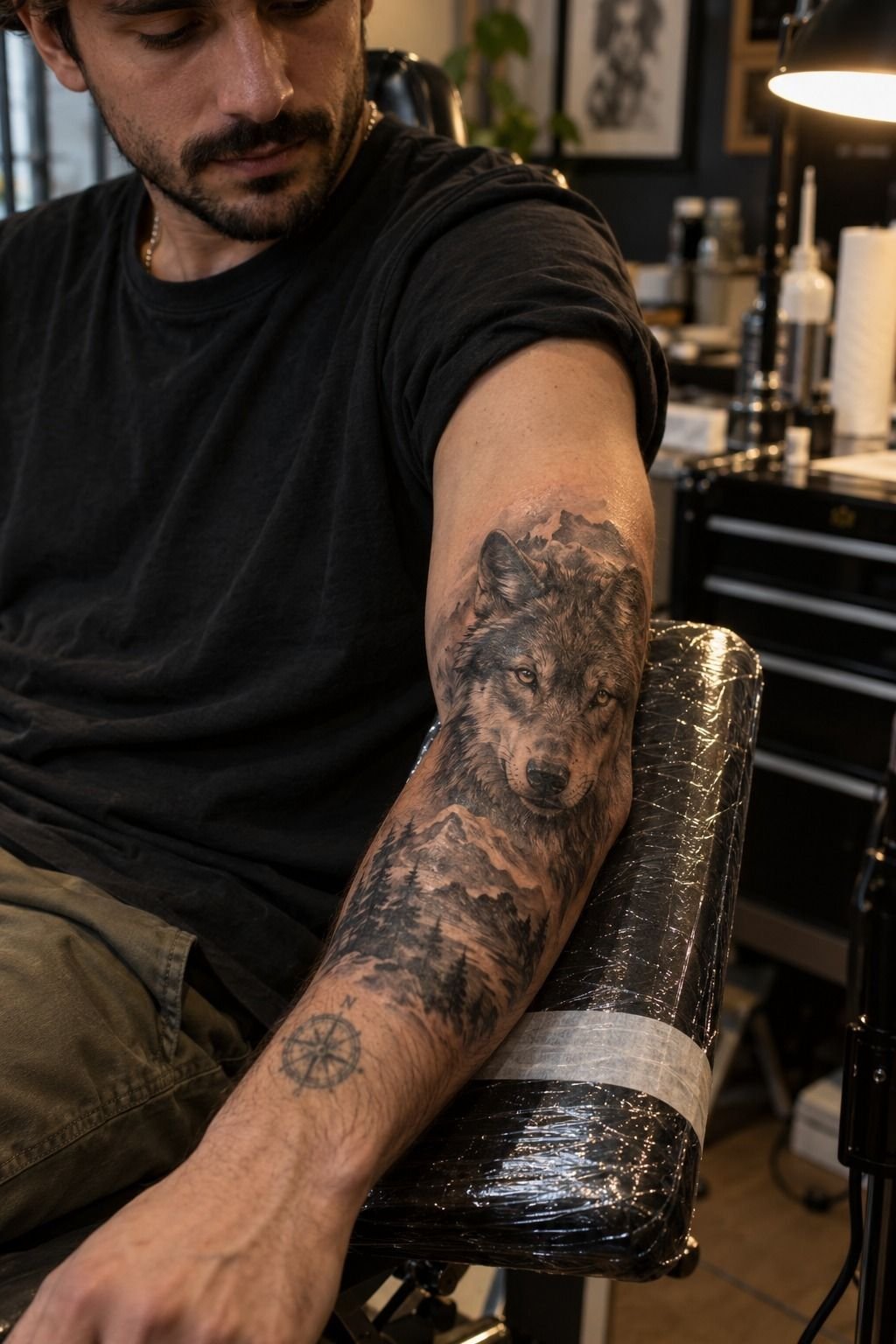
Animal portraits create a more expressive result than simple symbols, but they require thoughtful sizing. A wolf, raven, bear, or dog needs enough skin area for the eyes, muzzle, and fur texture to remain recognizable.
The animal portrait should face a direction that feels natural when people look at your arm. A fierce expression can look powerful, but the artist needs enough scale to preserve the eyes and mouth.
Micro-realism can be delicate, but it shouldn’t be vague. Grey-wash shading gives the artist room to create depth without filling the entire forearm with solid black. I’d avoid a portrait smaller than the artist recommends.
Look for healed examples, not only fresh photographs. Soft grey values may settle during healing, and the contrast can change after the skin calms. A fierce animal should still have readable eyes after two to three weeks.
A small portrait may fit the $100 to $300 typical US range, but an artist’s hourly rate can run about $100 to $250. Bring one strong reference instead of twelve mixed images. That choice keeps the consultation focused.
For more animal-inspired placement ideas, browse these thigh tattoos for men. The thigh offers more surface area, while the forearm keeps the image visible every day. I’d choose the forearm only if you’re comfortable with that visibility.
4Bold Traditional Forearm Tattoos
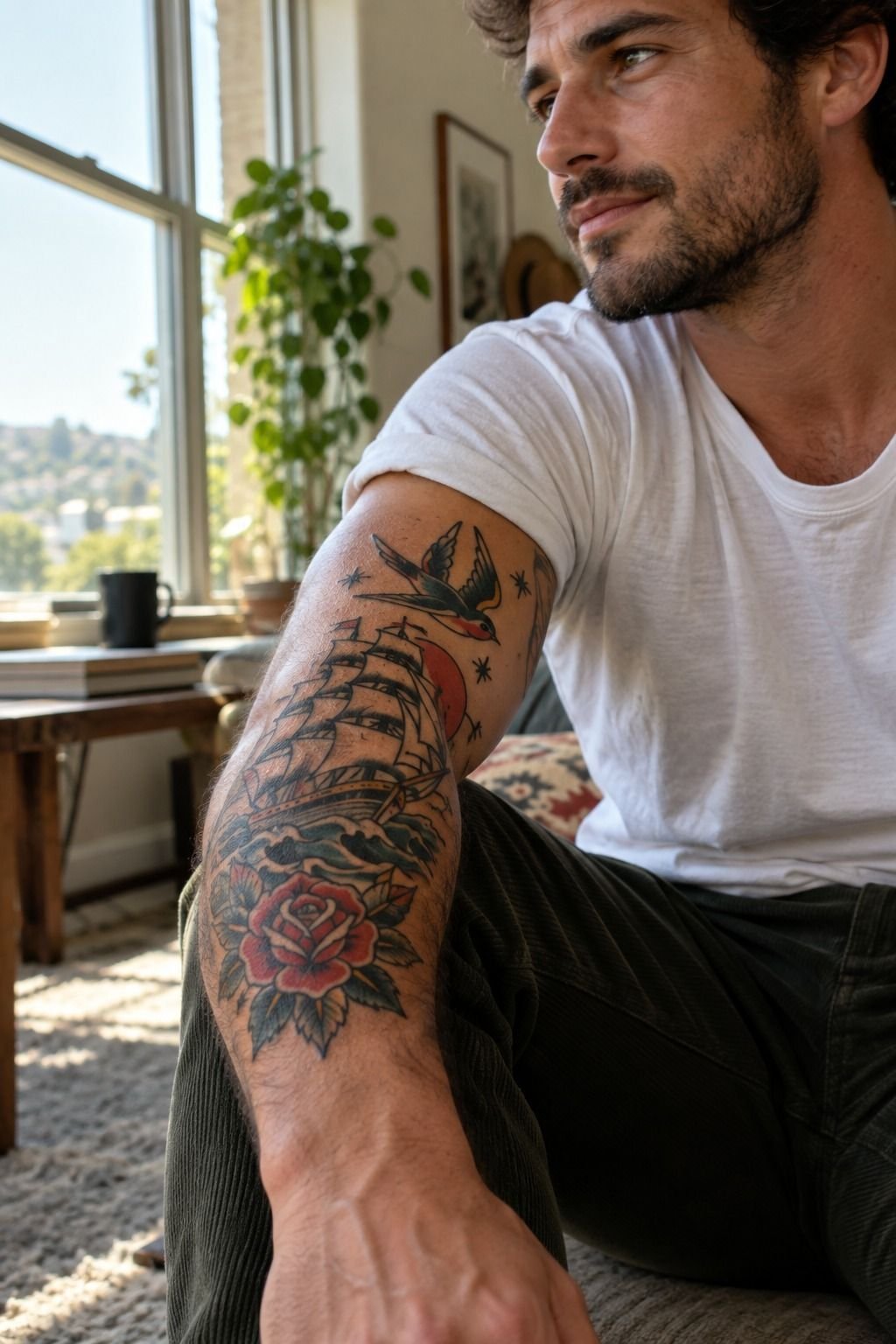
Traditional tattoos remain memorable because the shapes are direct, the symbolism reads quickly, and the outlines hold their presence over time. This is a classic choice when you want something recognizable from several feet away.
A strong American Traditional design might use a swallow, dagger, rose, eagle, or heart. Each subject carries its own visual language, so I’d choose one symbol with a personal connection instead of combining every familiar motif.
The style depends on bold outlines and controlled internal detail. That structure can make the appointment more predictable, but size still matters. A tiny traditional piece may lose its strongest feature if the artist has to compress the design.
Limited color can keep the cost easier to estimate. Black, red, yellow, or green may be enough to make the tattoo vibrant without extending the session unnecessarily. More color doesn’t automatically create a stronger result.
Ask to see healed color work from the same artist. Fresh ink can look polished and saturated, while healed work shows whether the outlines stayed readable.
I’d also consider a vintage flash-inspired subject if you want a design with a clear silhouette. The best traditional tattoo feels iconic without needing a long explanation.
5Intricate Mandala Tattoos With Controlled Detail
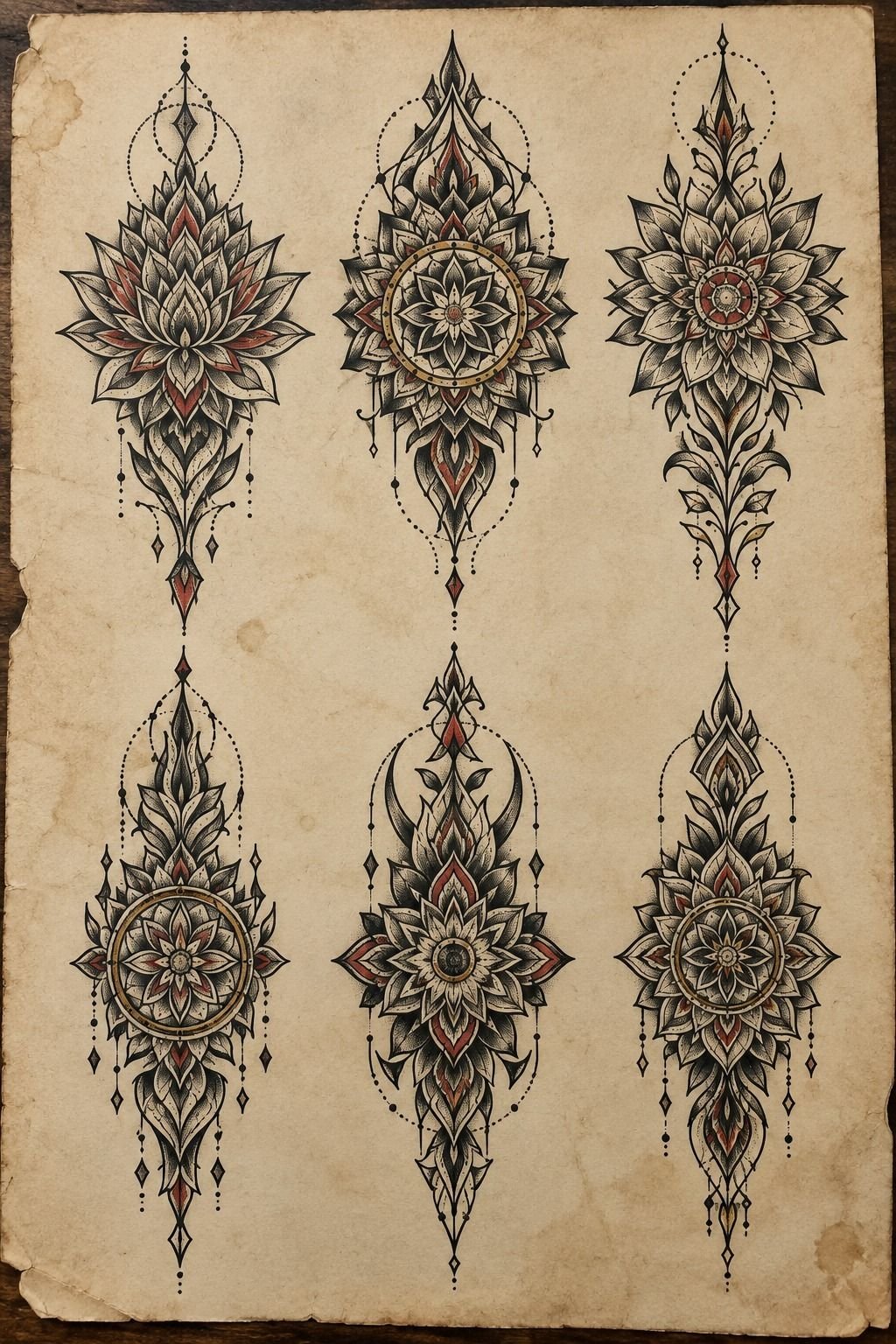
Mandala tattoos depend on repetition, spacing, and patient stencil placement. A mandala can move from the wrist toward the elbow, sit as a centered medallion, or wrap gently around the arm.
A mandala stencil should be checked while your arm is relaxed and while it rotates. The central point needs to follow the forearm’s natural direction, or the design may appear tilted from certain angles.
Fine black geometry can look ornate without using color. The strongest designs combine open skin, repeated petals, and darker anchor sections. I’d skip an extremely dense pattern if you want the tattoo to stay crisp.
Ask whether the design is meant to be viewed straight on or from multiple angles. A symmetrical front-facing mandala can be striking, while a wraparound version needs careful planning around the arm.
Check the central axis before the needle starts. One uneven segment can pull attention from the whole design, especially in an intricate tattoo where every repeated line is visible.
Print the design at two sizes and compare both against your arm. A smaller mandala can still feel sacred and graceful when the spacing is deliberate. Your artist should tell you when the chosen scale is too ambitious.
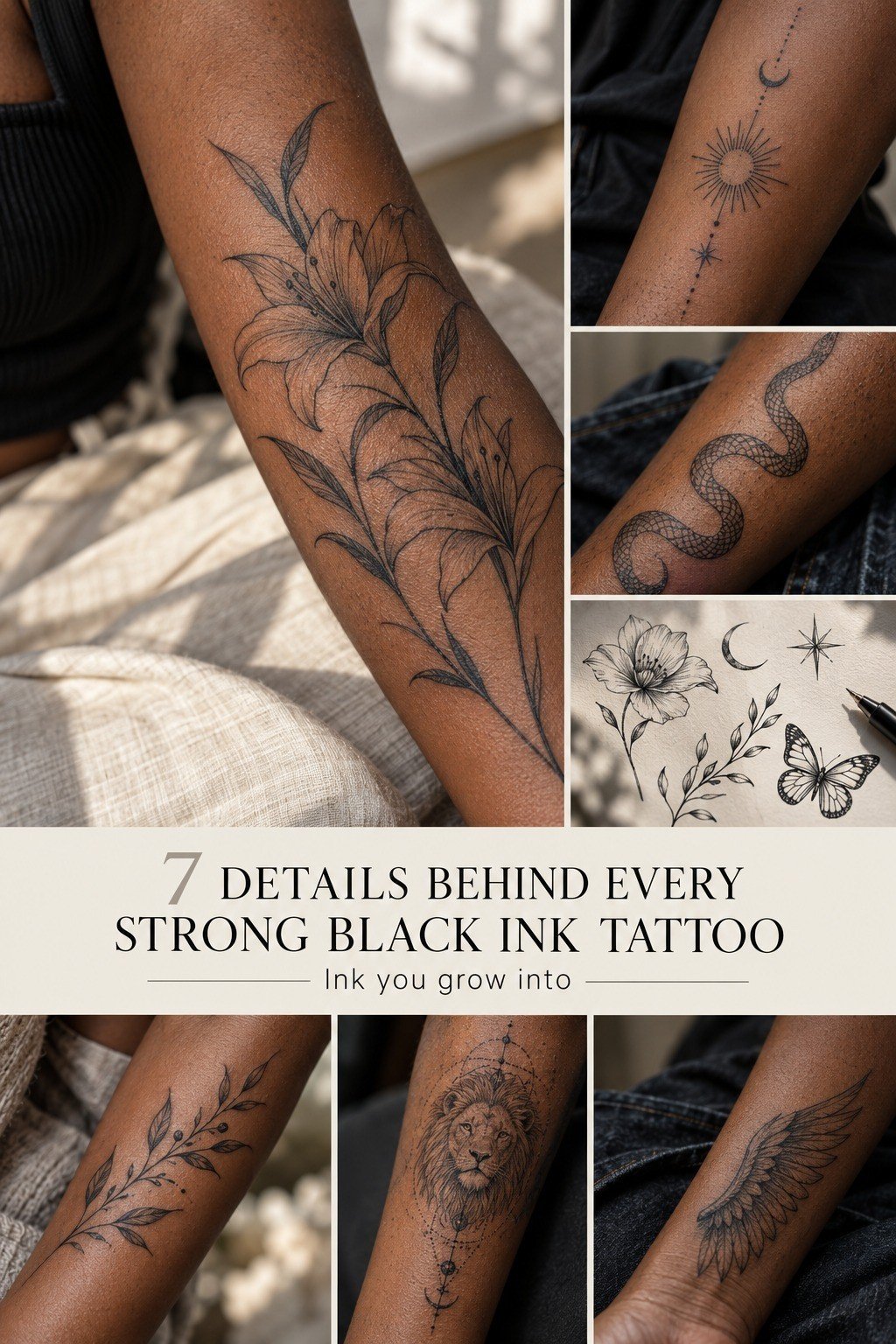
6Meaningful Script That Can Age Well
Script tattoos can hold a name, date, lyric, or private sentence, but typography is less forgiving than people think. You’ll want to check every letter, accent, translation, and line break before the stencil is printed.
A lettering proof should be read aloud and checked by someone you trust. I’d avoid squeezing a long sentence into a narrow strip, especially near the wrist. Check every letter twice!
Pay close attention to the line break. A phrase that looks balanced on a screen may feel awkward when it follows the forearm’s length. Ask the artist to show the lettering at the actual size.
Choose enough separation between characters. Black lettering ink can soften slightly over time, so letters that touch in the stencil may become harder to read after healing.
A meaningful phrase can feel romantic, empowering, or quietly personal without being oversized. Check the translation proof yourself before the appointment, even if the phrase came from someone you trust.
If you’re comparing scale, look at these small tattoos for guys before deciding whether every word truly belongs on your forearm.
7Dark Abstract Forearm Tattoos With Fine Linework
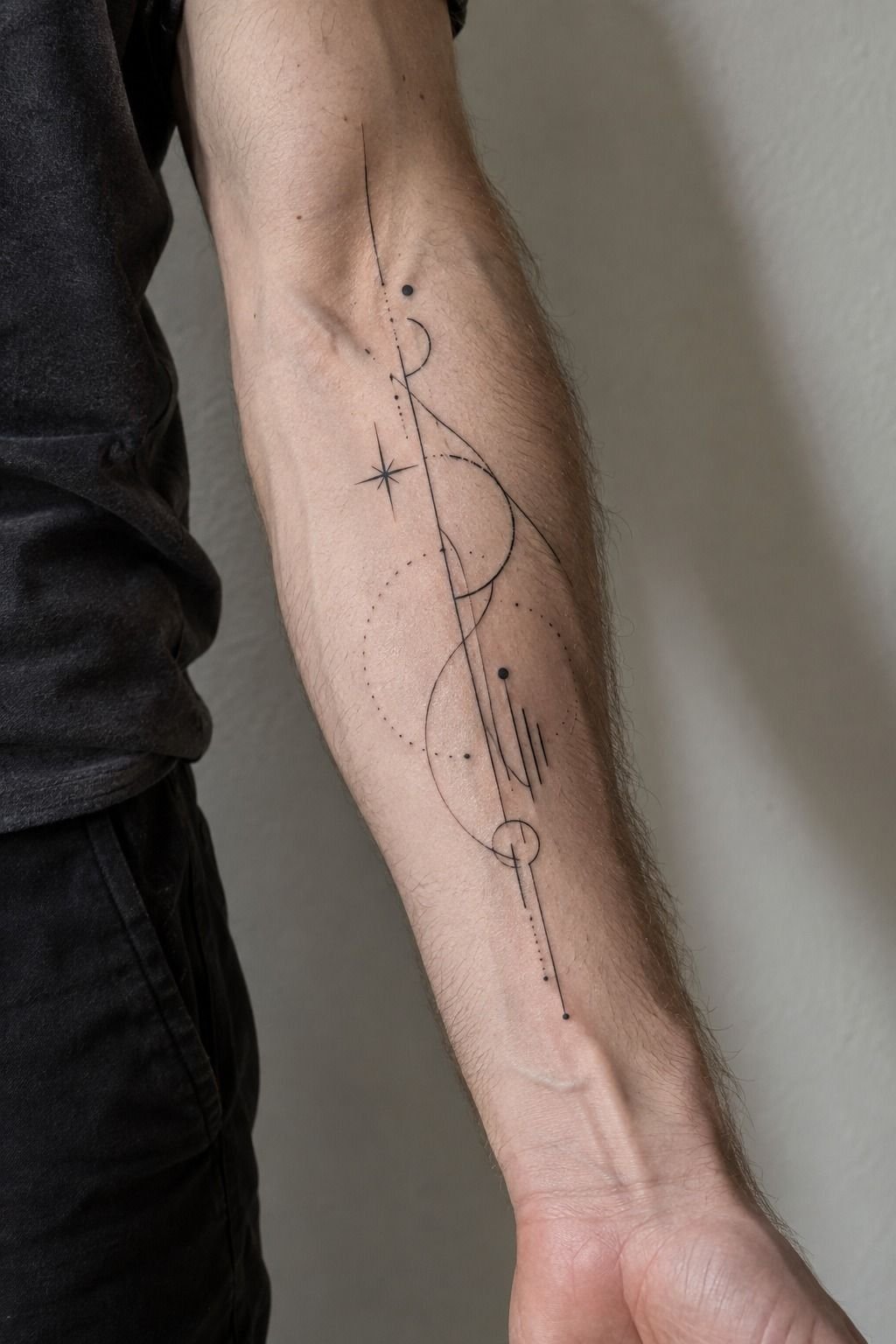
Abstract tattoos give you more freedom than literal imagery. They can follow the arm’s length, break into sharp fragments, or combine flowing marks with heavier black areas. That flexibility makes the style daring, but it also demands a strong visual plan.
Start with one abstract anchor, such as a curved blade shape, fragmented oval, distorted eye, or uneven band. I’d rather see one raw gesture developed with confidence than several unrelated marks competing for attention.
Negative skin helps the design breathe. Negative skin also protects the smaller lines from becoming a single dark mass as the tattoo settles. Your artist should explain which gaps need to remain open.
The contrast matters more than the number of details. Black-and-grey contrast can make a dark design feel edgy while preserving movement along the forearm. Too much fill may hide the original gesture.
Ask how the design will look when your arm turns. A healed texture can soften tiny transitions, so the artist may need to simplify the darkest areas.
That’s the point! The tattoo should still have a readable rhythm after healing.
I’d choose this style when you enjoy ambiguity and don’t need everyone to identify the subject immediately. A haunting abstract mark can become more meaningful as you live with it.
8Sacred Symbols With Personal Meaning
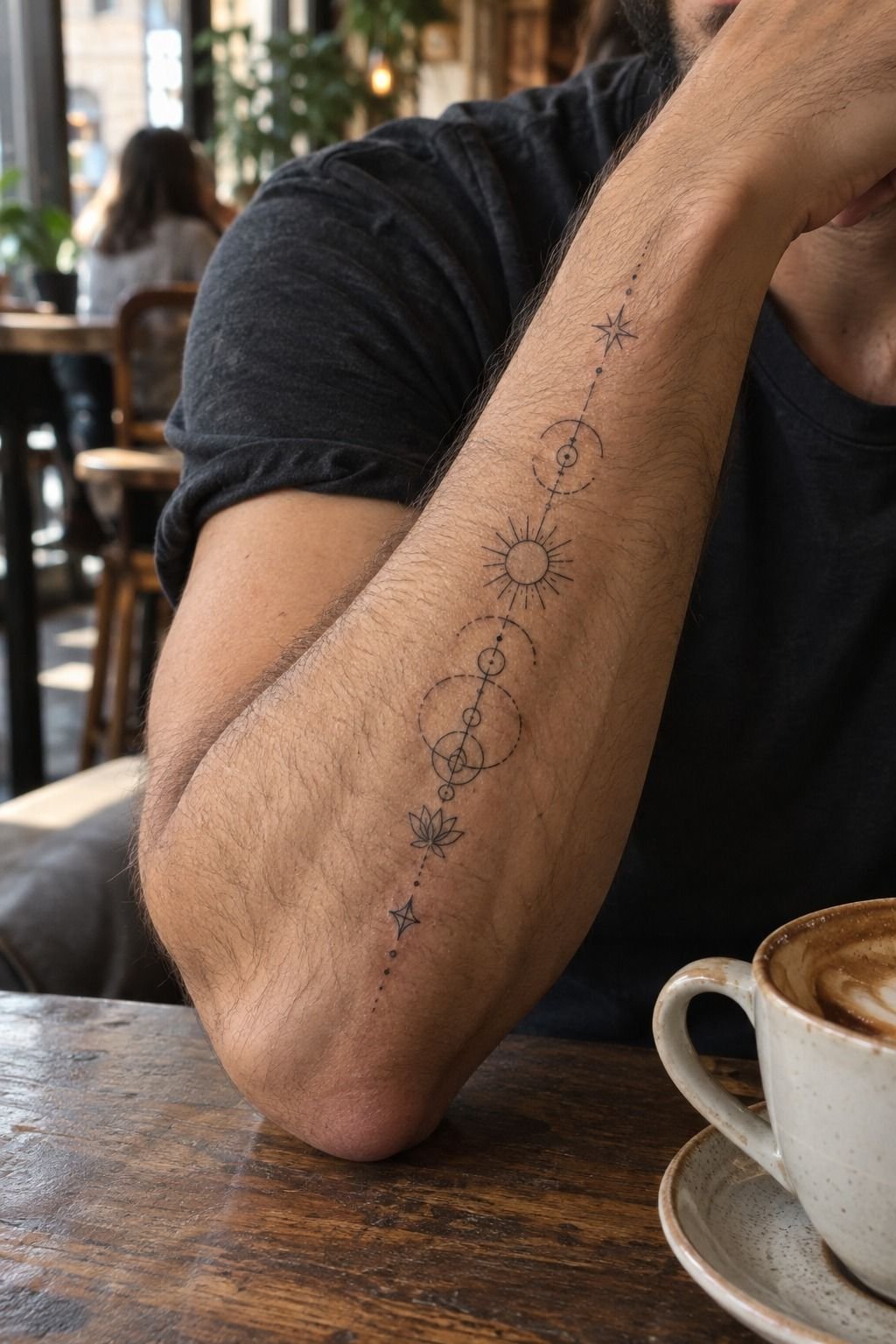
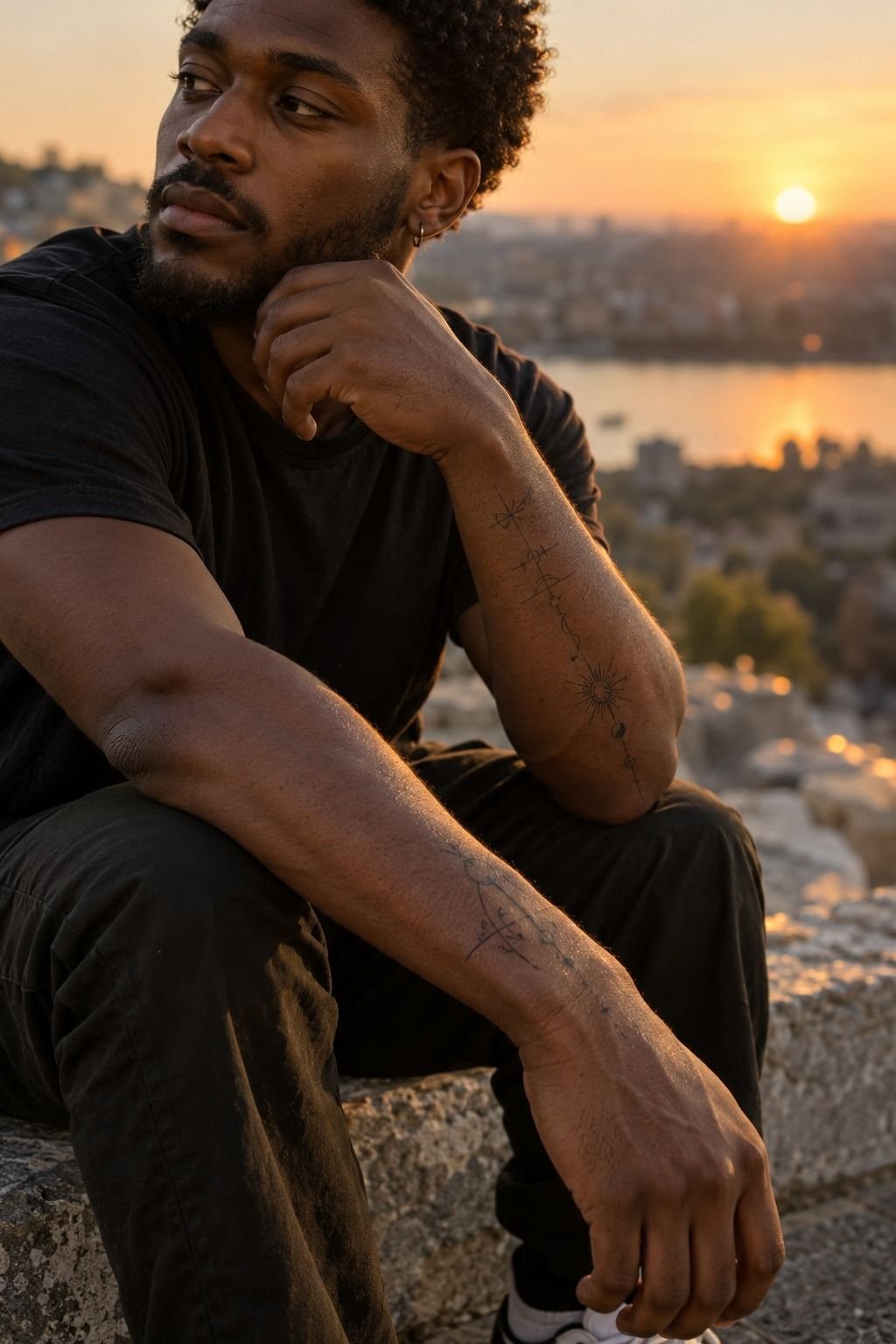
Sacred symbols can include a cross, eye, sun, rune-inspired mark, or another image connected to your beliefs. The strongest designs explain their importance through restraint. A sacred image should feel intentional, not like a collection of borrowed icons.
Begin with one sacred symbol and write down why it matters. That sentence will help your artist understand the emotional center of the tattoo.
Cultural research matters before you use a symbol from a tradition that isn’t yours. Check the history, variations, and current meaning. Visual impact alone isn’t enough when the mark carries spiritual weight.
Fine-line sacred geometry can look ethereal when the lines remain open and the central symbol has enough breathing space. I’d avoid adding extra icons simply because they fill an empty area.
Placement changes the message. An inner forearm symbol feels private and reflective, while an outer forearm placement feels more declarative. Choose based on who you want to see it.
Write down one-sentence meaning before your consultation. Choose one symbol with restrained shading, and consult an artist who can redraw the design instead of tracing an image with unclear origins.
A sacred mark can be symbolic and timeless without being oversized. It shouldn’t be so tiny that the important details disappear during healing.
9Nature-Inspired Forearm Tattoos With Shading
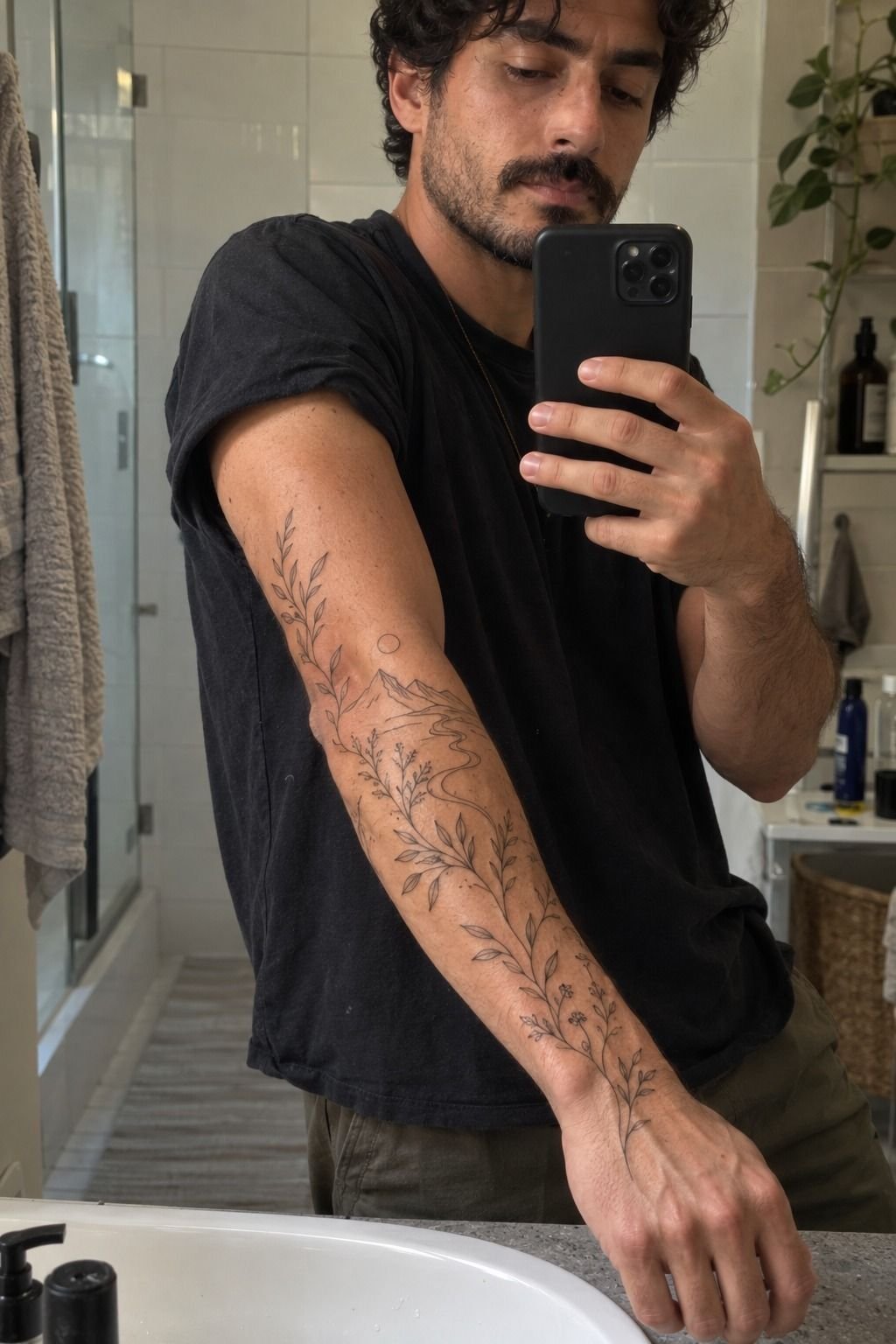
Nature tattoos can bring together leaves, branches, mountains, insects, waves, or a single animal track. The strongest concepts usually begin with one natural subject and one clear direction along the arm.
Choose a nature motif that has personal weight. A branch from a childhood tree, a particular moth, or a mountain outline can feel more meaningful than a generic collection of leaves.
Fine detail needs a sensible scale. Leaf veins and insect wings may look intricate in a reference image, but they need enough separation to remain readable after healing. I’d simplify the smallest marks first.
Shading can create depth without making the tattoo heavy. Grey shading works well for bark, feathers, rocks, and water when the artist preserves the main silhouette.
Ask whether the subject is botanically or zoologically accurate if that matters to you. A species reference can prevent small errors in a plant, bird, or insect design.
I like nature tattoos that leave some visual movement along the forearm. A flowing branch can guide the eye naturally, while a compact mountain or wave can feel crisp and understated.
10Sleeve Starter Tattoos With a Future Plan
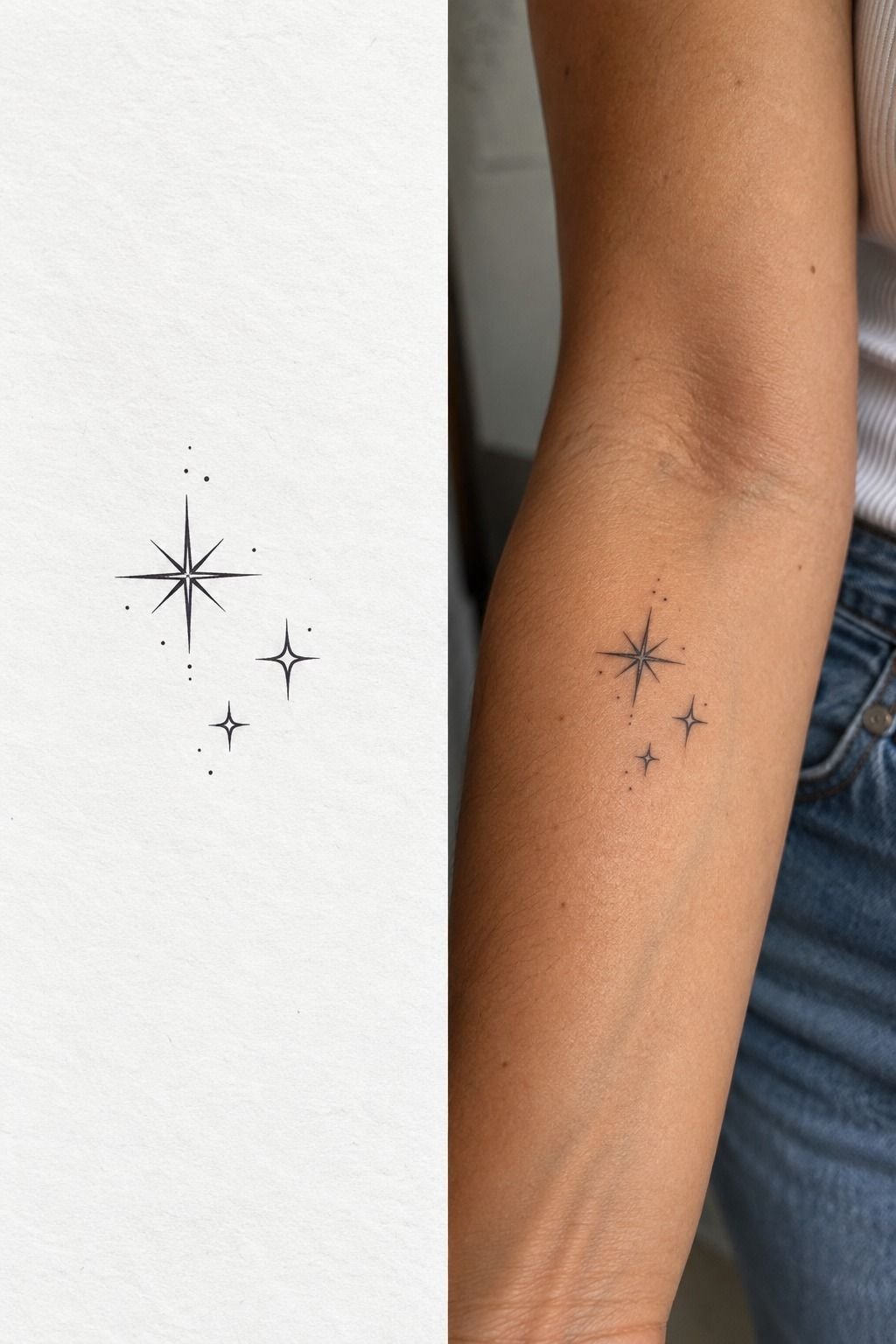
Sleeve starter tattoos need a future plan, even if you’re booking one small session today. The first tattoo should leave options for later additions without forcing you into a full sleeve immediately.
Create a simple sleeve map before choosing the subject. Mark the wrist, elbow, inner forearm, and outer forearm so you can see which areas remain available.
A vertical design can guide the eye toward the elbow, while a compact piece near the wrist creates a clear starting point. The anchor placement matters because the first tattoo often influences every later decision.
I’d avoid filling every gap immediately. Open skin gives you flexibility, and it lets you learn how your taste changes after living with the first piece.
A symbol, animal, or geometric mark can become the beginning of a powerful sleeve when the scale feels intentional. Don’t choose a huge design simply because you’re afraid the first tattoo will look too small.
Map future placements with paper cutouts before booking. Start with one black-and-grey piece, then plan the next session later.
A consultation with an artist whose healed sleeves show consistent spacing and line weight is worth the fee. If you’re unsure whether a sleeve is right for you, compare these forearm tattoos for women for placement variety rather than gendered rules.
11Small Matching Forearm Tattoos
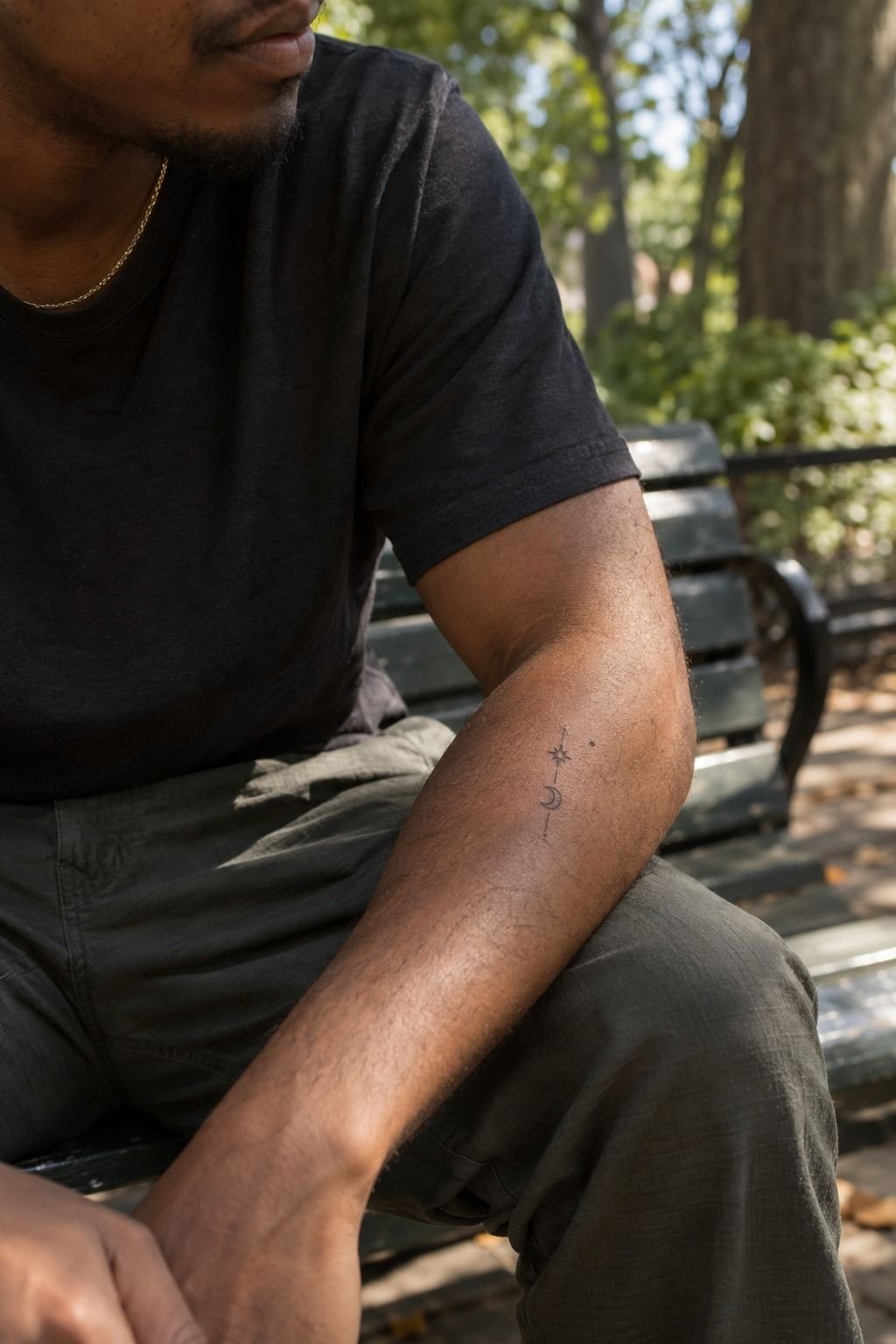
Matching tattoos work best when the shared idea matters more than identical execution. Two friends might use paired coordinates, mirrored arrows, small initials, or symbols that complete each other.
Start with matching symbols that still make sense to each person separately. Life can change, and each tattoo should remain personal even if the relationship changes direction.
Fine-line symbols can feel dainty, crisp, and understated. I’d avoid choosing a design only because it looks good in a group photograph.
Placement deserves a real conversation. Inner forearm tattoos are easier to monitor during healing, while outer forearm pieces are more visible. A design around 2 to 3 inches can stay discreet, but fragile details may require more scale.
Ask whether the shop minimum applies to each person, each session, or each tattoo. That detail can change the total cost immediately.
Book the same experienced artist when possible. Consistent line weight makes the pair feel connected, even if the placements aren’t perfectly identical.
For smaller paired ideas, explore these front wrist tattoos. Don’t rush because someone else is ready to book. A meaningful match should feel bold enough to stand alone.
Make the Decision Before the Appointment
Test the forearm curve
A stencil can look perfect while your arm is still. Ask your artist to check it with your elbow relaxed, your wrist turned, and your hand hanging naturally. You’ll notice different problems in each position.
The stencil check costs nothing, but it can prevent an expensive correction. I’d take a few phone photos from the front and side before the needle starts. You deserve a clear decision!
Pay attention to long lines, circles, lettering, and anything that wraps around the arm. A flowing design may need small adjustments so it doesn’t appear broken when your forearm turns.
Get a transparent quote
A quote should tell you whether the price covers the consultation, stencil, session, color, touch-up policy, and aftercare instructions. If you’re only given one number, ask what could change it.
A written quote helps you compare artists fairly. One artist may charge hourly while another may price by the piece. Neither approach is automatically cheaper.
Ask whether the appointment includes aftercare instructions. Clear guidance matters because poor healing can create costs and frustration later.
Compare line weights honestly
Fine lines can look delicate and stylish, while heavy outlines can feel powerful and iconic. The better choice depends on your subject, skin, placement, and willingness to accept future touch-ups.
Your line-weight plan should happen before you choose the final size. A tiny design with heavy lines may lose delicate details, while a large design with wispy lines may age unevenly.
If you’re choosing between the two styles, ask which details matter most to you. I’d rather preserve one meaningful feature than keep every minor mark and make the tattoo harder to read.
Ask about the touch-up policy before paying a deposit. A reputable artist should explain what counts as normal healing and what would require a later correction.
Judge the healed result
Healing can soften edges, settle grey values, and change the contrast between nearby marks. You’ll want your artist to explain what the tattoo may look like after two to three weeks, not just on appointment day.
A healed portfolio tells you more than a fresh photograph. Look for examples completed months or years earlier, and ask how the linework changed.
Skin tone also affects how contrast appears. I’d ask to see similar skin tones when possible, because the same grey values can read differently from one person to another.
Remove any detail that doesn’t improve the symbol, portrait, lettering, or movement. That edit often saves money and makes the result stronger.
Choose visibility deliberately
The outer forearm offers stronger visibility, while the inner forearm feels more private and is easy for you to monitor during healing. Your work, clothing, and comfort with questions should influence the decision.
An outer forearm placement can make a tattoo feel more declarative. It’s easier for other people to notice, so I’d choose that location only when you’re comfortable discussing the design.
An inner forearm placement can feel more personal and easier for you to inspect. It may still be visible in short sleeves, so don’t assume it will stay completely private.
Think about sun exposure, work requirements, and how often you want to see the tattoo. Placement affects daily life as much as appearance.
My Three-Moment Test Before Booking
I’ve learned to judge a forearm tattoo across three moments: the first stencil, the healed surface, and the design after I’ve lived with it for a while. The stencil shows placement.
Healing shows whether the line weight was realistic. Daily life shows whether the meaning still feels like yours.
My first mistake was treating a tattoo reference like a finished instruction sheet. I liked the shape, copied the size, and ignored the fact that the original sat on a completely different arm.
The result wasn’t terrible, but it wasn’t mine either. That changed how I book!
I now ask three blunt questions. Can I explain why I want this subject? Will the main shape remain readable after healing?
Am I choosing the artist because of healed work or because the quote is low?
The consultation decision deserves the same honesty as the design itself. A typical US shop minimum may sit around $50 to $100, while hourly rates often land around $100 to $250. A small forearm tattoo may cost about $100 to $300, depending on region, complexity, and session length.
Healing is part of the design decision. The surface commonly heals in about 2 to 3 weeks, while complete healing can take roughly 2 to 3 months. Gentle washing, light moisturizing, avoiding direct sun, and skipping swimming help protect the work.
I prefer a bold concept with controlled detail over a complicated design that needs constant explanation. That’s why I’d rather see one crisp symbol, one meaningful phrase, or one expressive animal than a crowded group of unrelated marks.
A clear personal reason usually makes the final choice easier. If the tattoo still feels right after you’ve considered cost, placement, healing, and visibility, you’re probably close to a confident decision.
The Questions I Get Asked Most
How much does a forearm tattoo usually cost?
I’d budget about $100 to $300 in the US for a small or medium forearm tattoo. A shop minimum may be around $50 to $100, while hourly rates can reach $100 to $250. The final price depends on size, artist, region, detail, and session time.
Is the forearm a good first-tattoo placement?
I think the forearm is often a practical first placement because it offers usable skin area and generally tolerable discomfort. The outer forearm can provide visible, readable results without beginning on the ribs, feet, hands, or sternum.
How do I choose the right tattoo artist?
I’d choose an artist with clean healed examples, a style that matches my idea, and clear hygiene practices. A healed portfolio matters most to me. I’d also ask about linework, aftercare, touch-ups, and experience with my preferred skin tone.
How painful is a forearm tattoo?
I’d expect a forearm tattoo to feel manageable for many people, although pain varies by person and placement. The outer forearm is often easier than areas close to the wrist bone or elbow. I’d plan breaks if the session runs long.
How long does a forearm tattoo take to heal?
I’d expect the surface to heal in about 2 to 3 weeks, with complete healing taking roughly 2 to 3 months. Gentle washing and light moisturizing support the process, while sun exposure, scratching, and swimming can create problems.
Where I’d Start First
If I had to pick one, I’d start with a minimalist black line tattoo. It’s easier to size, easier to price, and easier to expand later if your taste changes. Before booking, compare it with these men’s wrist tattoos to judge nearby placement and scale.