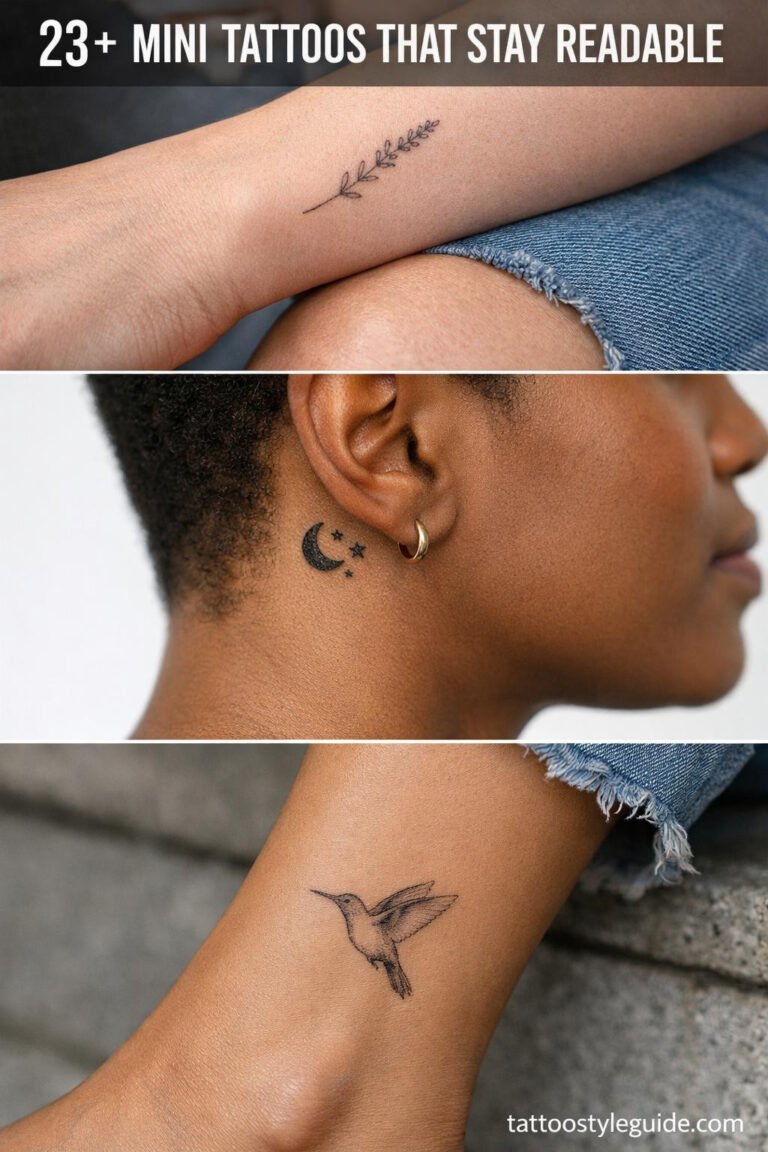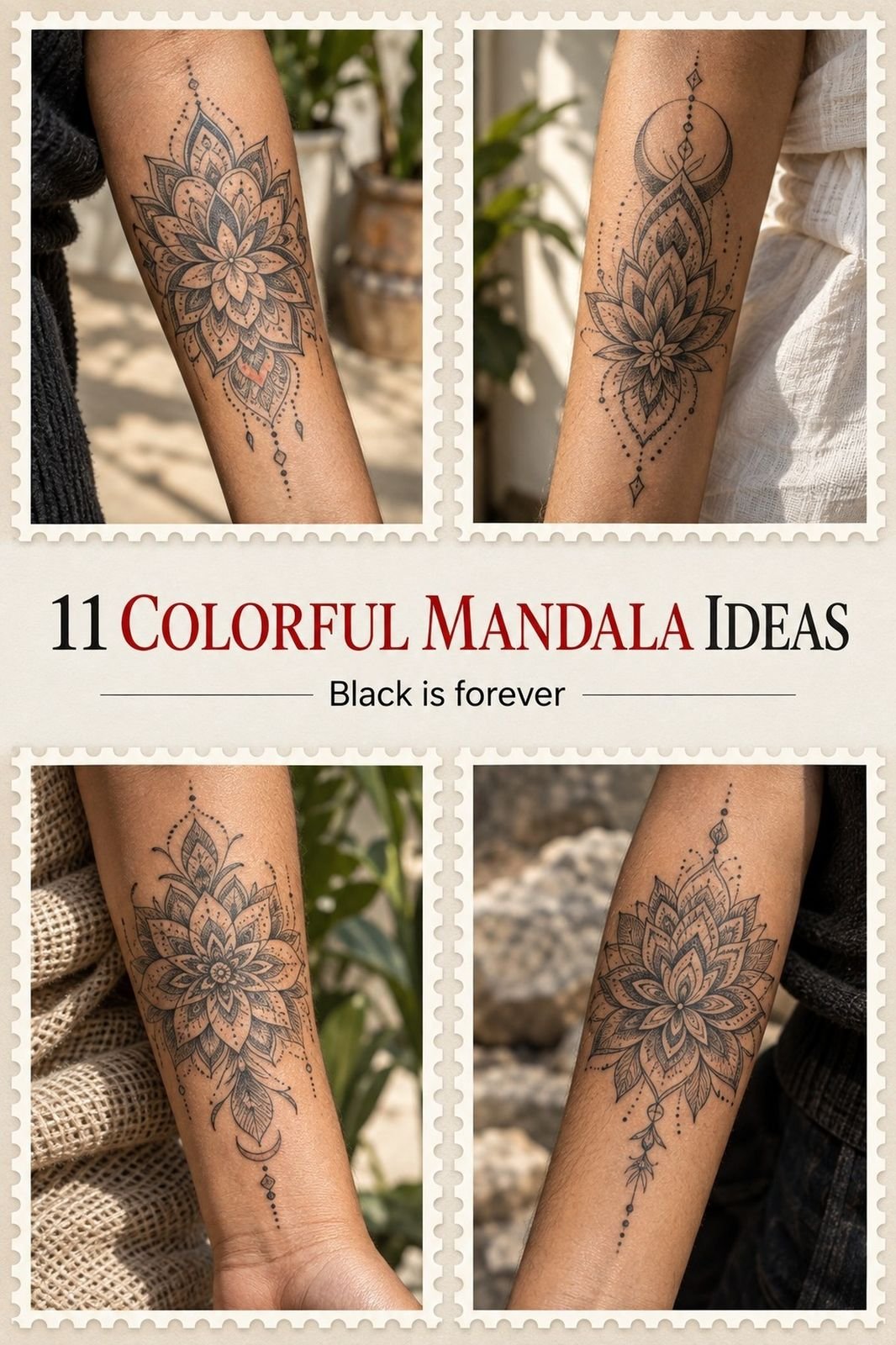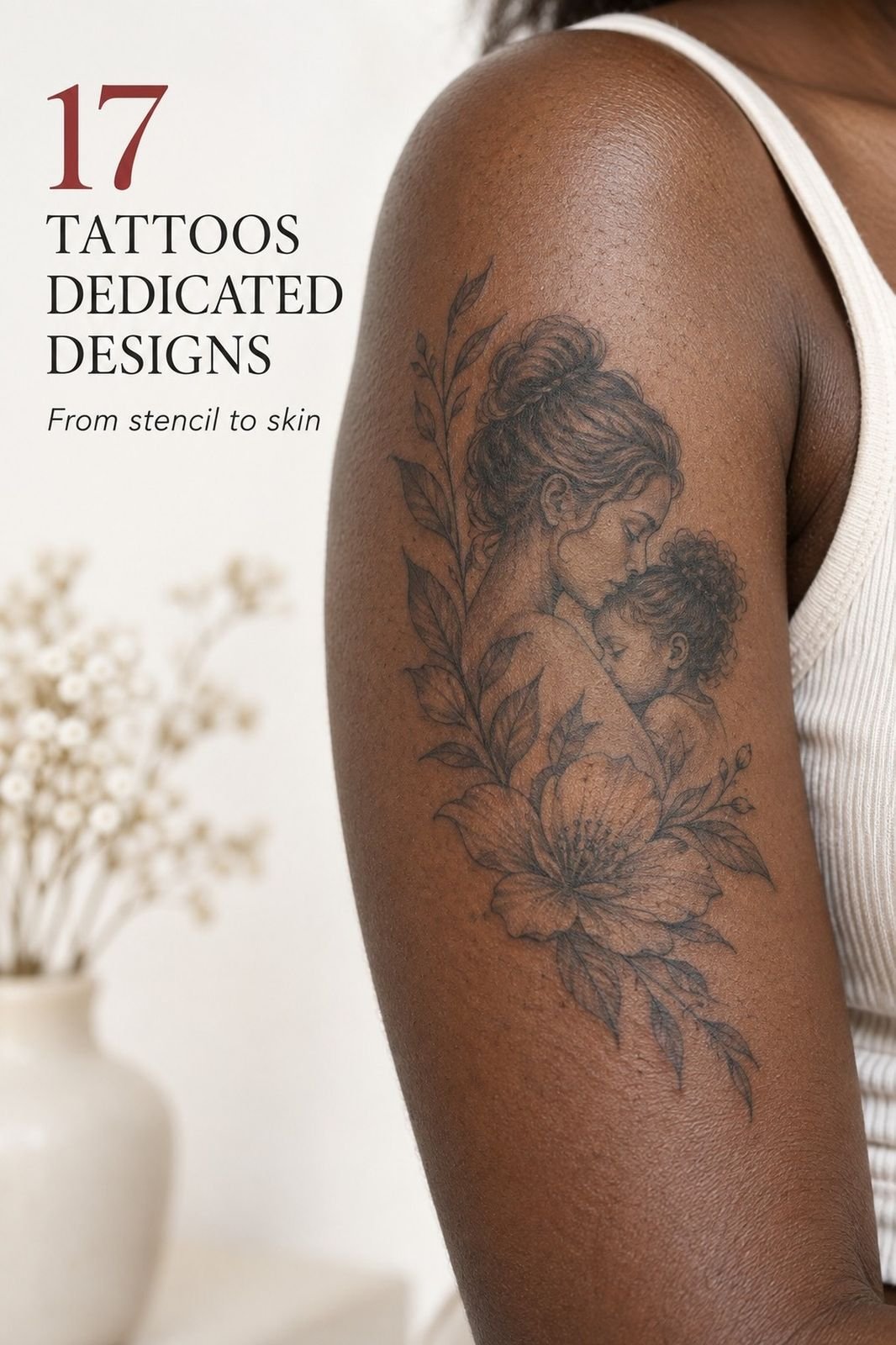
Small Tattoos For Guys can stay crisp for years when the mark, placement, and line weight agree. I learned that after choosing a delicate symbol that looked striking on day one but lost some definition as it healed. These ideas keep the result minimal, personal, and readable without turning your skin into a crowded story. Start with the mark, not the trend!
- ✓ Keep a Minimalist Wrist Tattoo Crisp
- ✓ Geometric Hand Tattoos: Is the Commitment Worth It?
- ✓ What Makes a Meaningful Forearm Tattoo Last?
- Keep a Minimalist Wrist Tattoo Crisp
- Geometric Hand Tattoos: Is the Commitment Worth It?
- What Makes a Meaningful Forearm Tattoo Last?
- Mountain Lines, Open Space
- Choose a Tiny Animal With Symbolic Weight
- Inner-Arm Script: Clarity Over Cursive
- Build Bold Blackwork Around One Shape
- Can Delicate Finger Tattoos Stay Readable?
- Let a Compass Point Somewhere Personal
- Botanical Forearm Ink: One Stem, No Clutter
- Sacred Symbols Need Meaning First
1Keep a Minimalist Wrist Tattoo Crisp
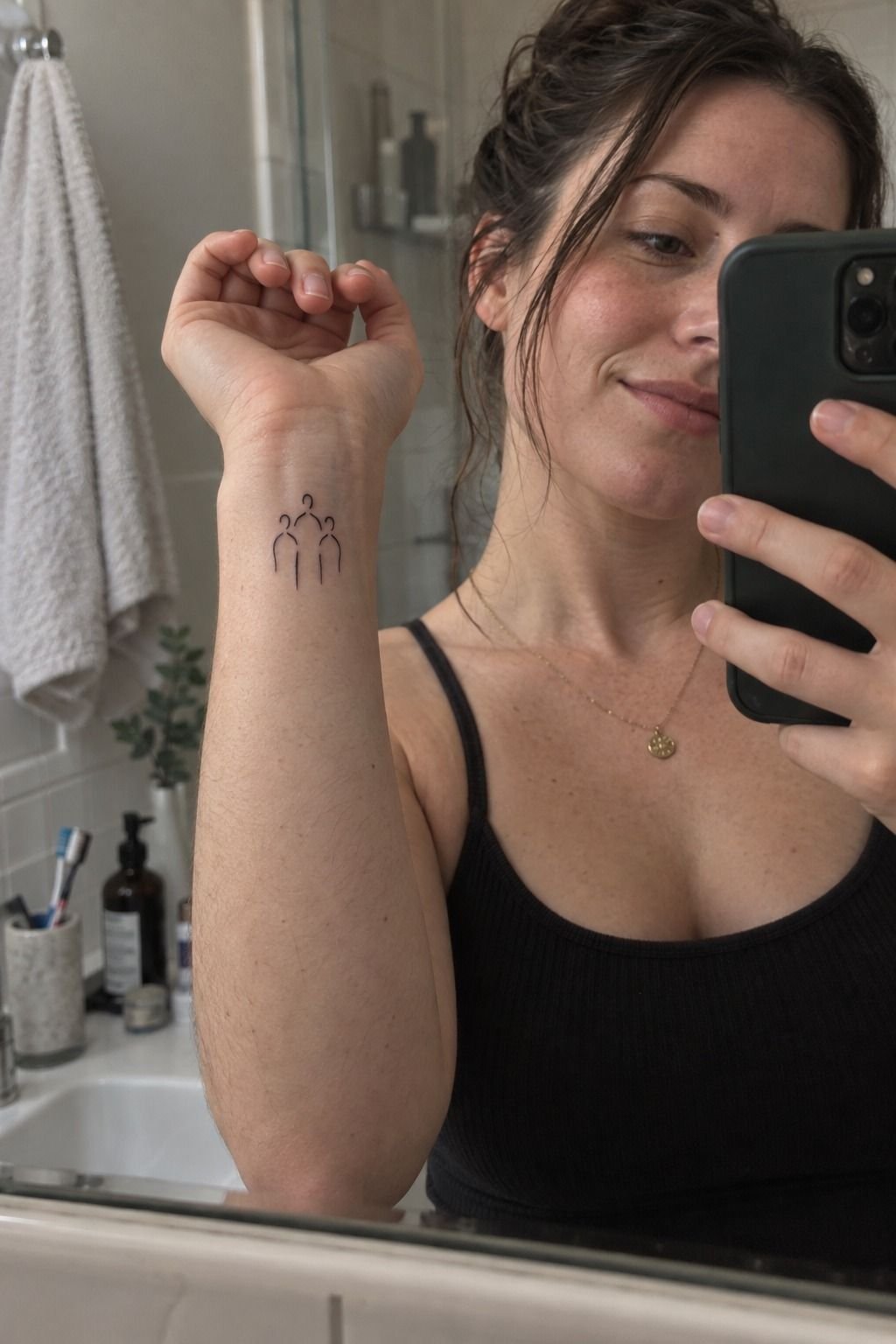
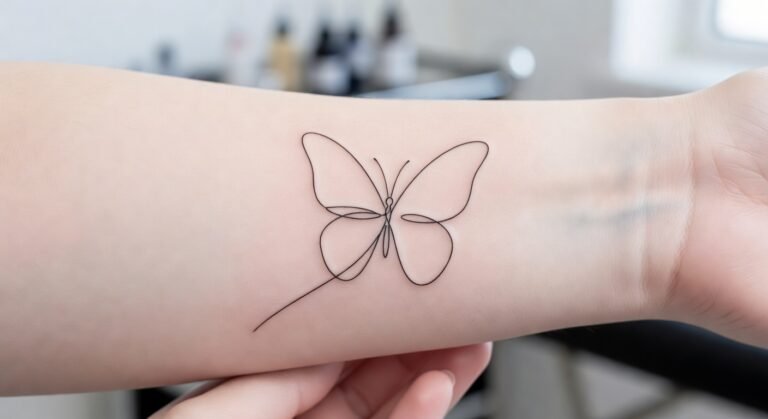
A wrist piece works best when the shape is striking and uncomplicated. I’d choose one clean symbol, not a cluster, because your wrist moves constantly and crowded lines can lose their edge.
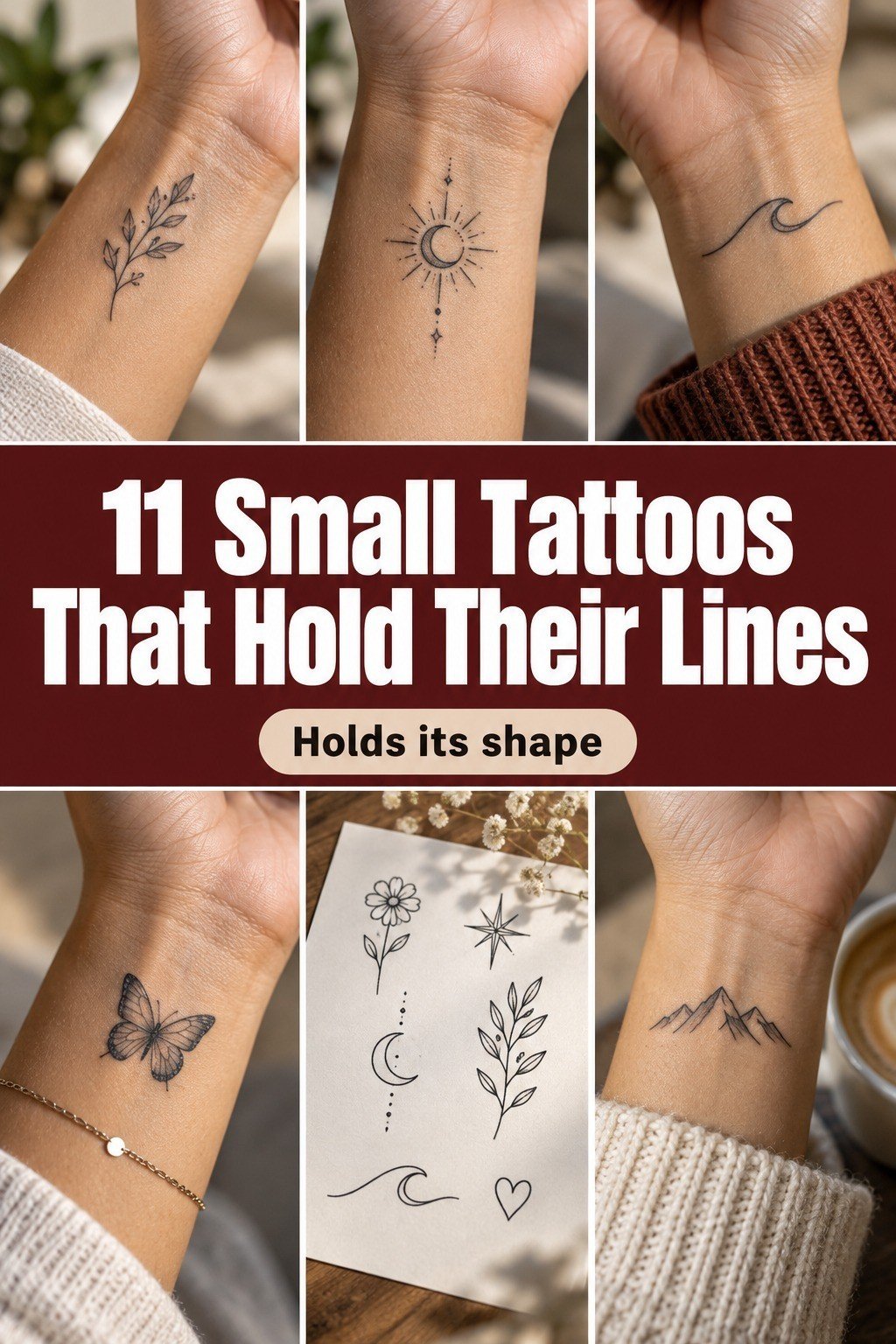
The Wristline Rule is simple: follow the natural direction of your wrist instead of forcing a horizontal design across it. A narrow arrow, short bar, tiny initial, or crisp crescent can look sleek from the side and understated from above. If you’re comparing placements, this guide to small minimalist tattoos can help you judge visual weight.
Your artist should leave breathing room between every mark. With a black carbon ink design under 2 inches, negative space does more work than extra detail. I’d skip tiny shading here, since wrist movement can make soft gradients look muddy after healing.
– One symbol with clean spacing. – Thin outline with no micro-text. – Placement above the wrist crease. – Crisp black ink instead of several gray tones.
You’ll also want to think about visibility. A visible wrist tattoo is easy to show, but you can’t hide it from yourself while typing, driving, or washing your hands. That makes this placement empowering when the symbol still feels personal six months later.
2Geometric Hand Tattoos: Is the Commitment Worth It?
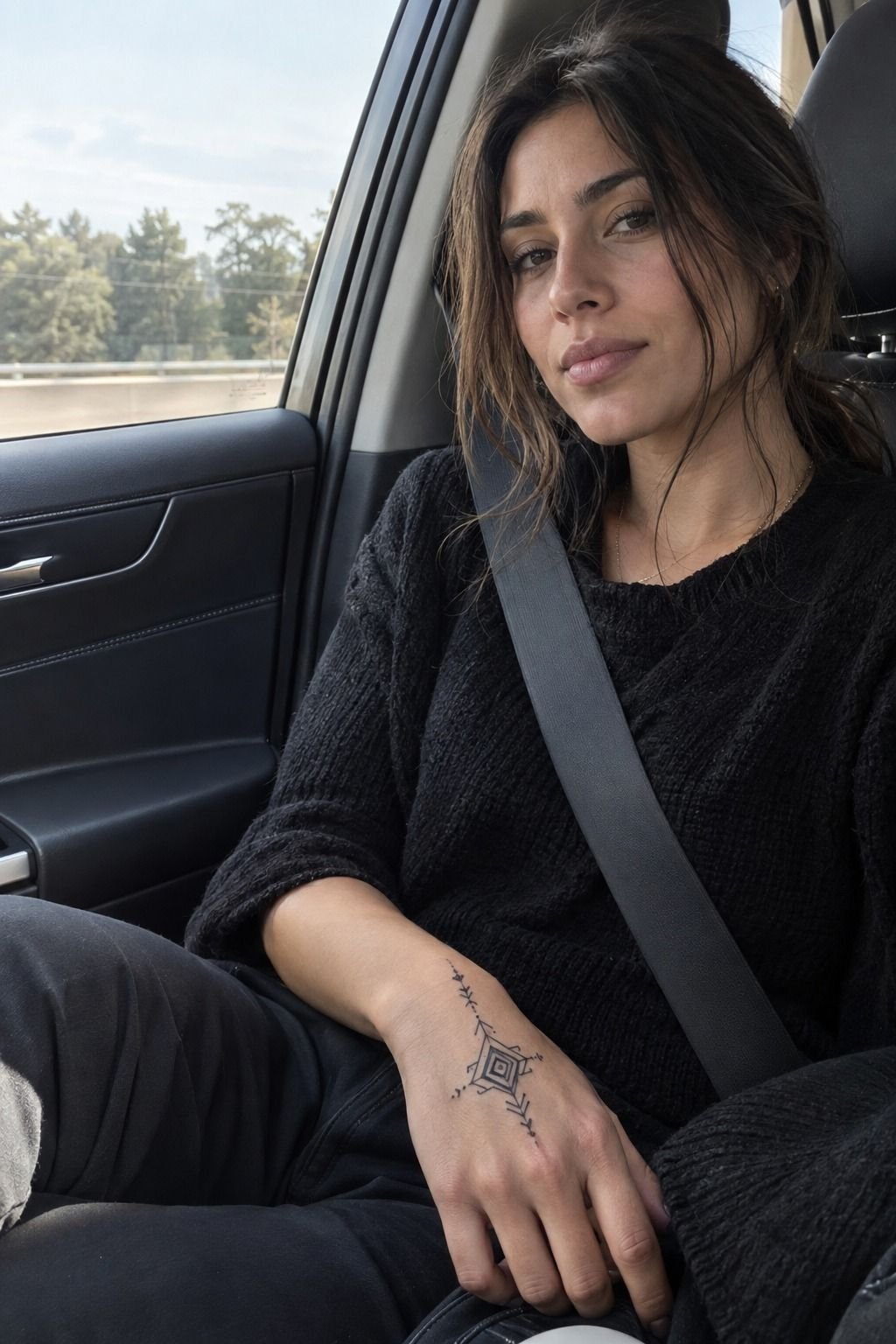
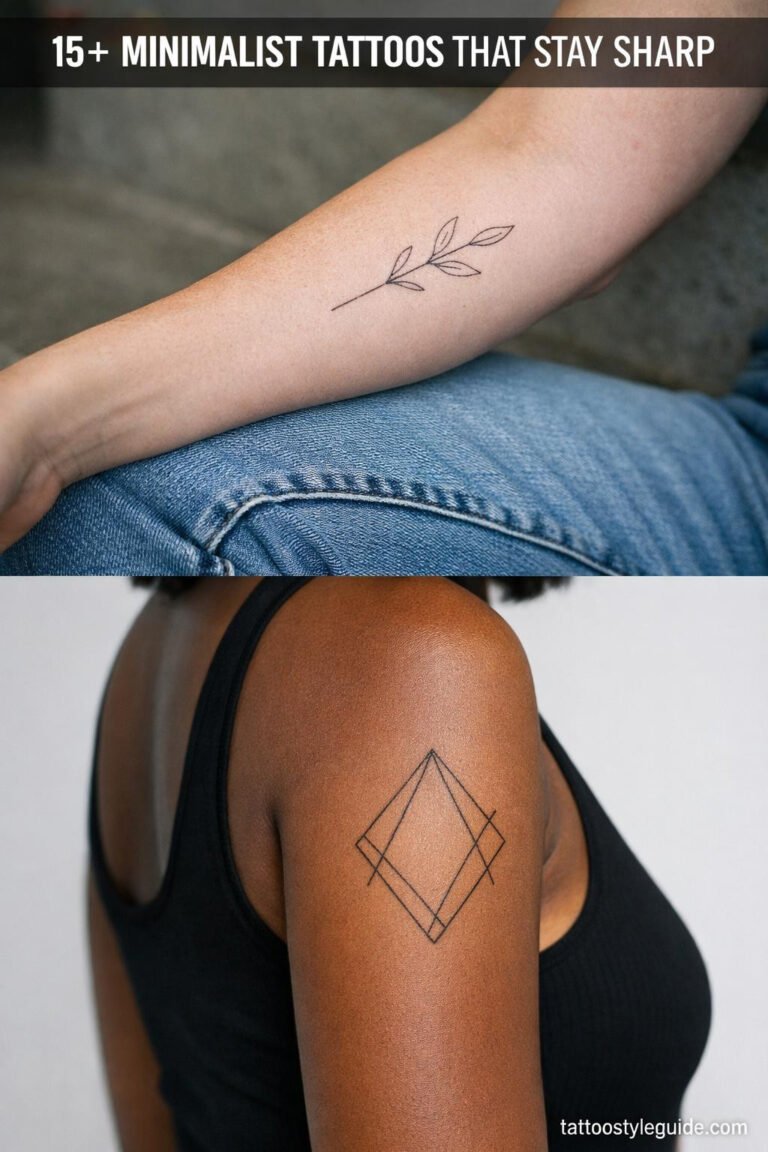
Geometric hand tattoos need precision more than size. The hand is a demanding location, so a sharp triangle, compact grid, or single angular mark will usually age better than an elaborate pattern.
My advice is to test the design at its actual size on paper, then hold it against the exact part of your hand where it will sit. If the interior lines merge at arm’s length, they will probably become frustrating after healing. The Scale Before Ink reference is useful here: remove one line, then remove another, until the structure still reads.
A small hand tattoo can feel edgy and expressive, but it deserves an artist with consistent spacing. Ask to see healed geometric work rather than trusting only fresh results. Fresh ink can make every corner appear sharper than it will after the skin settles.
I’d choose the back of the hand only when visibility is part of the decision. For a more discreet version, the side of one finger or the upper wrist can preserve the same sleek geometry with less daily exposure. Hands can be meaningful, but they should never be an impulsive choice!
3What Makes a Meaningful Forearm Tattoo Last?
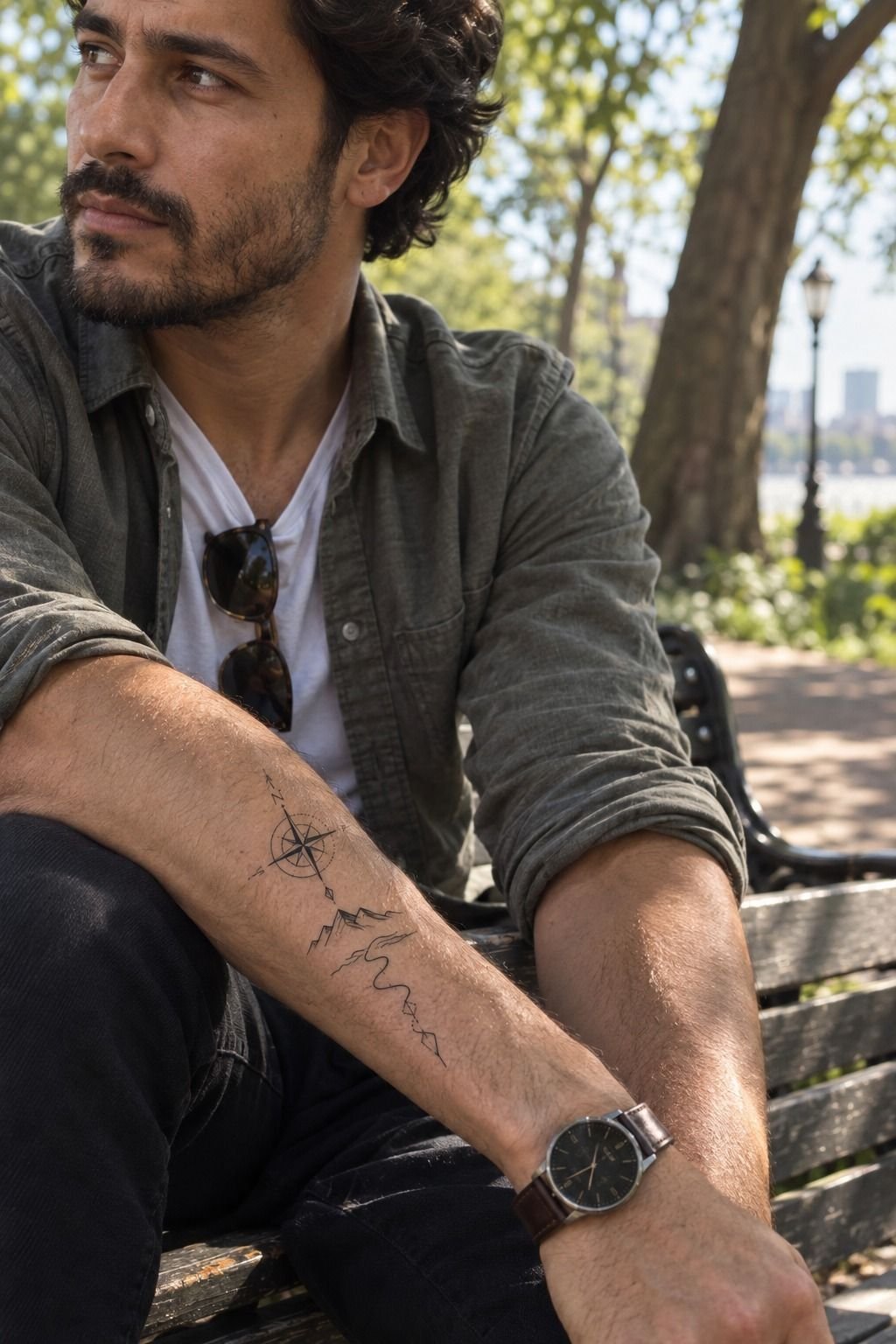
The forearm gives a meaningful tattoo enough room to breathe. Choose a forearm placement that lets the symbol remain readable from a normal distance, especially if the idea carries family history or a private promise.
The One-Symbol Test keeps the idea focused: if you need three explanations before someone understands the design, simplify it. Your tattoo doesn’t need to explain your entire history. A meaningful tattoo can be a small fine-line compass, a date in restrained lettering, or a tiny outline of something you carried through a difficult year.
You’ll get more flexibility here than on the hand. The forearm is usually more tolerable than ribs, feet, hands, or sternum, and you can cover it when needed. For more ideas, browse these small meaningful tattoos and notice which concepts still feel personal without extra decoration.
I’d skip overly realistic portraits at this scale. They’re meaningful, sure, but facial detail often needs more room than a small forearm allows. Instead, choose a 7-round liner outline with one recognizable feature, such as a mountain peak, open book, or simplified animal profile.
You should ask your artist to show healed examples, not only fresh work. Fresh ink looks sharp on everyone. Healed lines tell you whether the artist understands spacing, skin movement, and the quiet difference between delicate and disappearing.
4Mountain Lines, Open Space
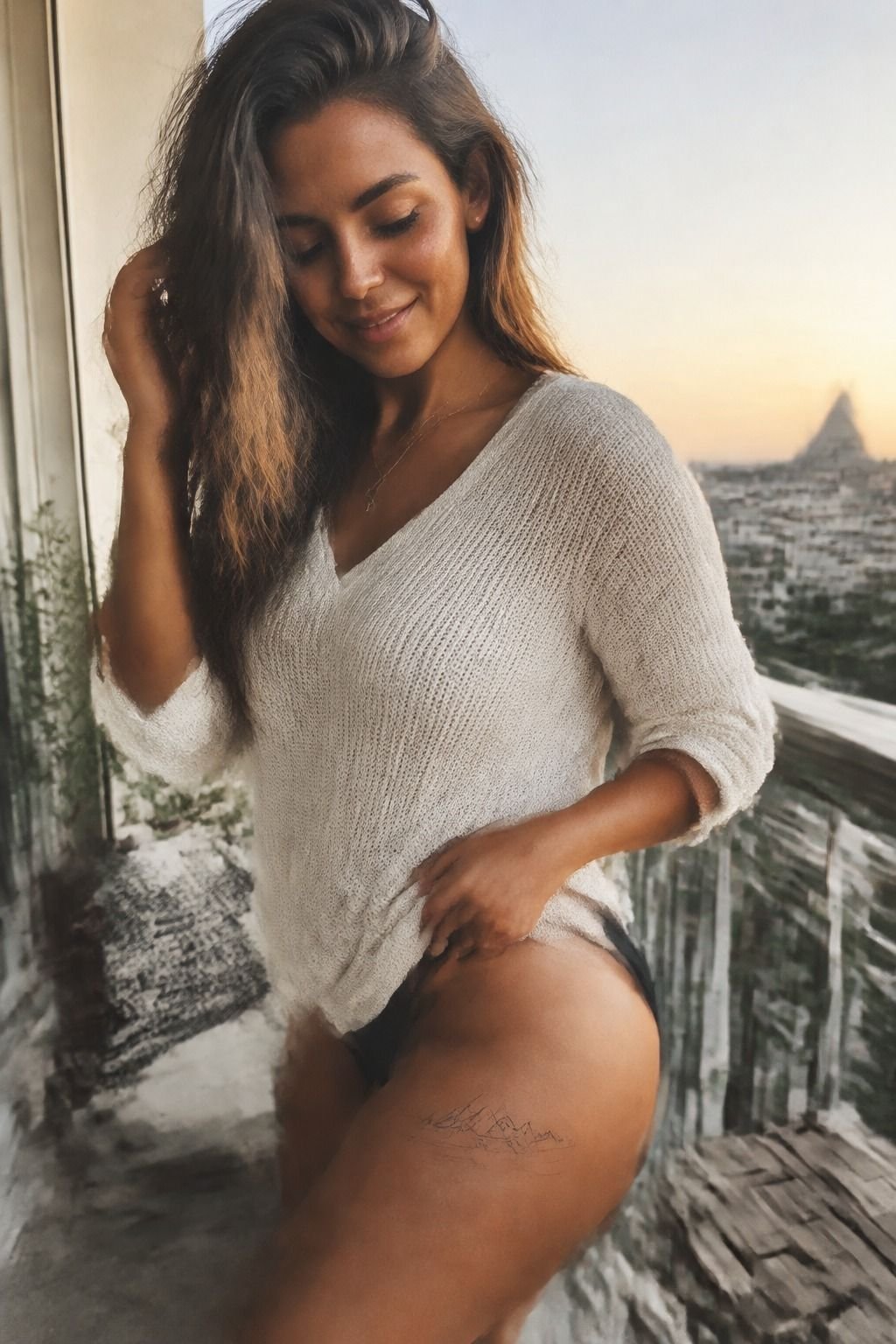
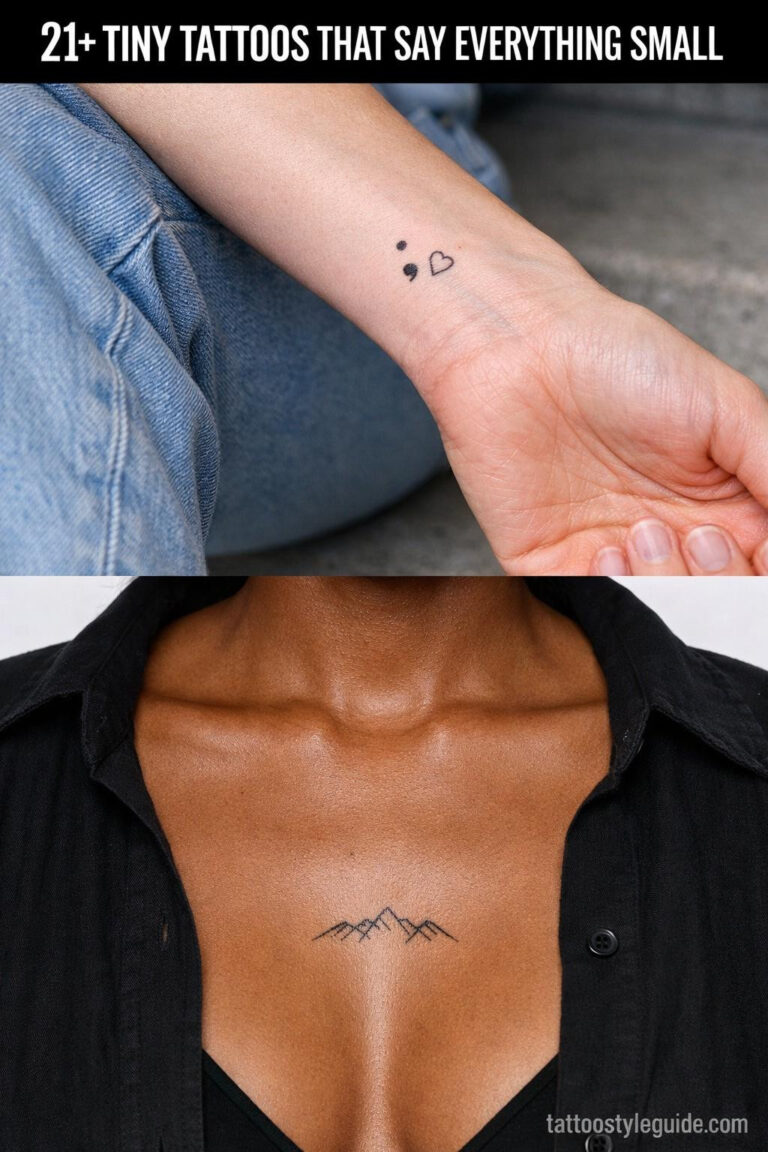
A mountain outline gives you a graceful, flowing shape without demanding heavy shading. It can feel raw and personal when the peaks refer to a real place, a difficult season, or a goal you are still pursuing.
I’d use the Mountain Horizon Check before booking: cover the lower half of the sketch and see whether the peaks still have a clear rhythm. If the outline turns into a random zigzag, simplify it. One dominant summit usually feels more iconic than five equally loud peaks.
Ask for a named reference from the artist’s healed portfolio, such as a healed fine-line landscape or a compact single-line mountain. That gives you something specific to compare. I would rather see one bold ridge with a graceful dip than a tiny cabin, moon, forest, and quotation squeezed into the same mark.
Placement changes the mood. A horizontal mountain line suits the upper arm or forearm, while a narrow vertical range can work along the inner arm. Keep the design personal, and let the empty skin carry some of the meaning.
5Choose a Tiny Animal With Symbolic Weight
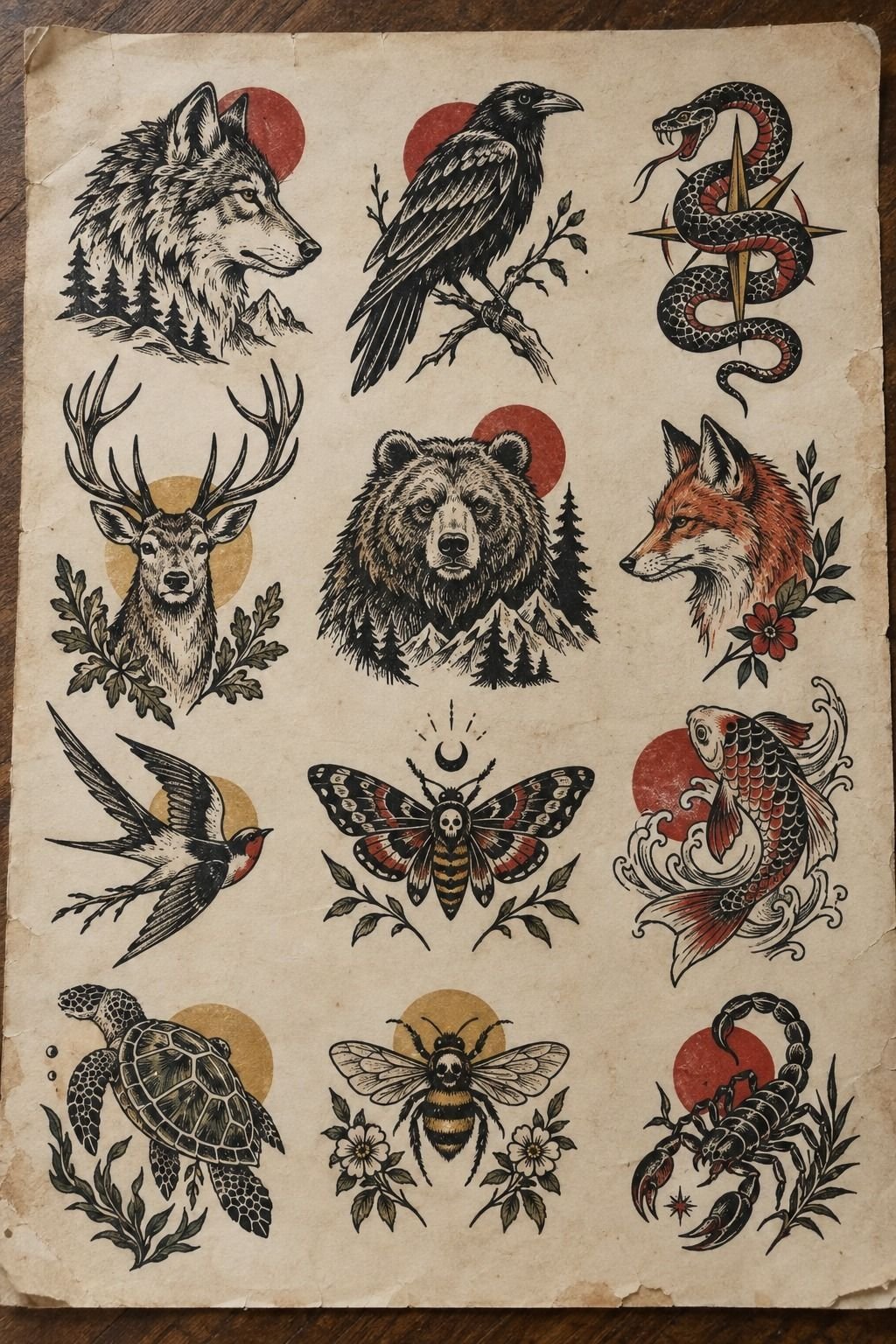
A tiny animal tattoo can feel whimsical or fierce depending on the silhouette. Start with an animal silhouette that remains recognizable without relying on tiny internal marks.
The Two-Read Test helps here. Your animal should read first as a silhouette, then reveal one meaningful feature when you look closer.
A fox gets one pointed ear, a bear gets a strong shoulder shape, and a swallow gets a sharp wing. That’s enough for an iconic design.
Choose a traditional flash outline if you want the image to stay readable. Fine black lines can work, but your artist should avoid six tiny whiskers or a dozen feather marks. If you’re drawn to winged subjects, these small butterfly tattoo ideas can help you compare open wings with a compact animal profile.
Don’t choose an animal only because it photographs well. Ask yourself what you’ll still connect with when the trend passes. A symbolic animal can carry memory, independence, grief, or loyalty, but the meaning should belong to you.
That restraint matters!
A flash-sheet design often costs less time than a custom illustration because the composition is already solved. Your final price still depends on the artist, region, and studio minimum. In the United States, a shop minimum often lands around $50 to $100, even for a quick piece.
6Inner-Arm Script: Clarity Over Cursive
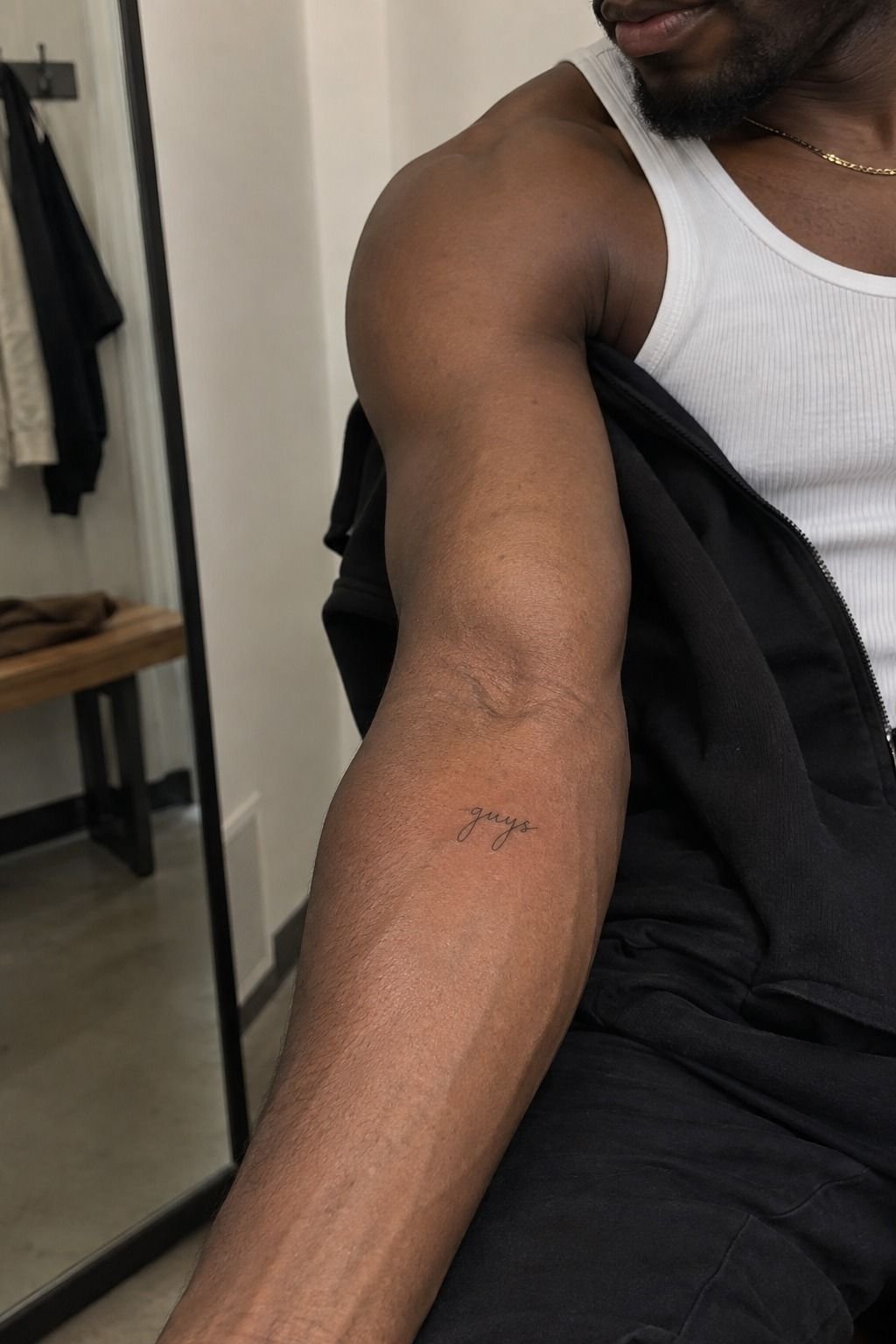
Small script needs more room than most people expect. The inner arm can support a short word or date, but the lettering should remain graceful at the size you will actually wear.
My concrete rule is eight characters or fewer unless the artist recommends a larger scale. Write the phrase in your own handwriting, then compare it with three lettering styles. If the phrase only works in an ornate script, it may be too long for a crisp small tattoo.
The Read-Aloud Reference is simple: look at the lettering from several feet away and say what you see before you remember what it says. If you have to decode every letter, the design is already too intricate. I prefer a clear serif, restrained handwritten line, or compact block style.
Ask your artist about healed script specifically. A fresh line can look dainty and romantic, while a healed line may widen enough to close the counters in letters such as “a,” “e,” or “o.” Leave space between letters and avoid stacking multiple words vertically.
A short word can feel empowering when it belongs to you. The best script is not the most ornate. It is the one you can still read on an ordinary morning.
7Build Bold Blackwork Around One Shape
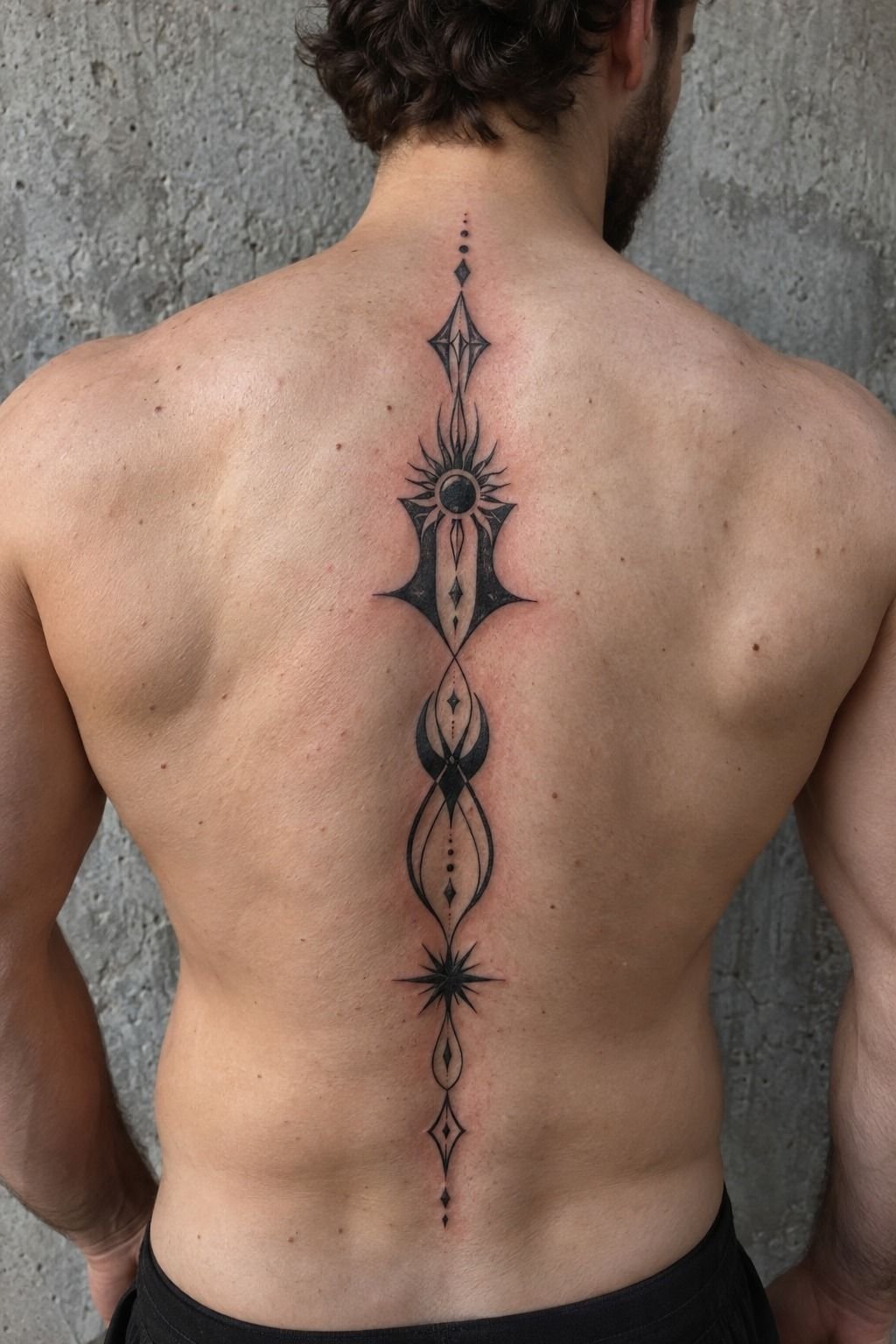
Bold blackwork can be small and still feel fierce. Build bold blackwork around one strong anchor instead of several competing marks, particularly when the tattoo sits along the spine or another narrow area.
The Contrast Anchor is the principle I’d use: one black shape, one open area, and one edge that gives the eye direction. A small vertical bar, thorn-like symbol, abstract flame, or solid crescent can look powerful without becoming bulky.
A solid black fill generally holds its presence better than extremely fine shading, especially where clothing creates friction. Still, blackwork needs careful saturation. Patchy fill can look uneven while healing, so ask to see healed examples from the same artist.
If you’re unsure about the spine, compare the idea with small tattoos for men and notice how the same shape changes on the arm or chest. I’d skip a crowded vertical pattern if moles, scars, or natural contours would interrupt the design.
But bold doesn’t mean enormous. A compact 1 to 2-inch mark can create more visual authority than a larger piece with weak contrast. You’ll want UV protection after healing because sunlight can soften black edges over time.
8Can Delicate Finger Tattoos Stay Readable?
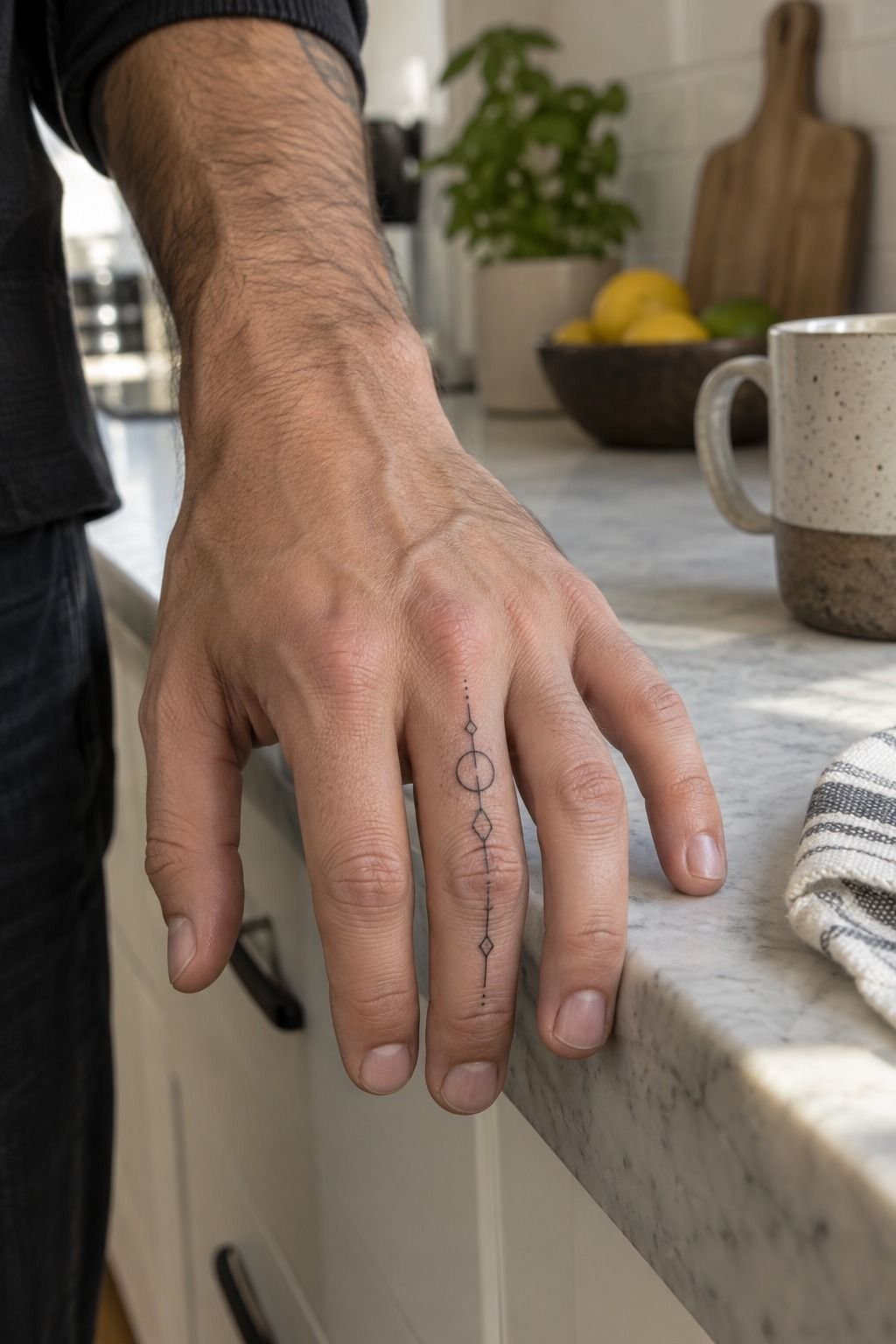
Finger tattoos look polished when the design respects the narrow finger surface. A small ring shape, single symbol, or short vertical mark will work better than a miniature scene.
The Finger Band Rule keeps the design from wrapping too tightly. Leave a small break in the line, especially around the side of the finger, because constant bending and friction can make a closed band blur unevenly. Your artist may recommend a slightly thicker hand-poked black line for durability.
This is one of the more visible and demanding placements. If you’re considering a tiny symbol rather than a band, look through small finger tattoo references and compare designs after healing.
I’d avoid tiny portraits, micro-words, and intricate stars between the knuckles. They’re delicate, but delicate isn’t the same as durable. A crisp dot, small cross, narrow line, or open diamond gives you a sharper long-term read.
Your hands also see more washing, sun, and movement than most tattooed areas. You may need a touch-up sooner than you’d like. That isn’t a failure, but it should be part of the decision before you pay the deposit.
9Let a Compass Point Somewhere Personal
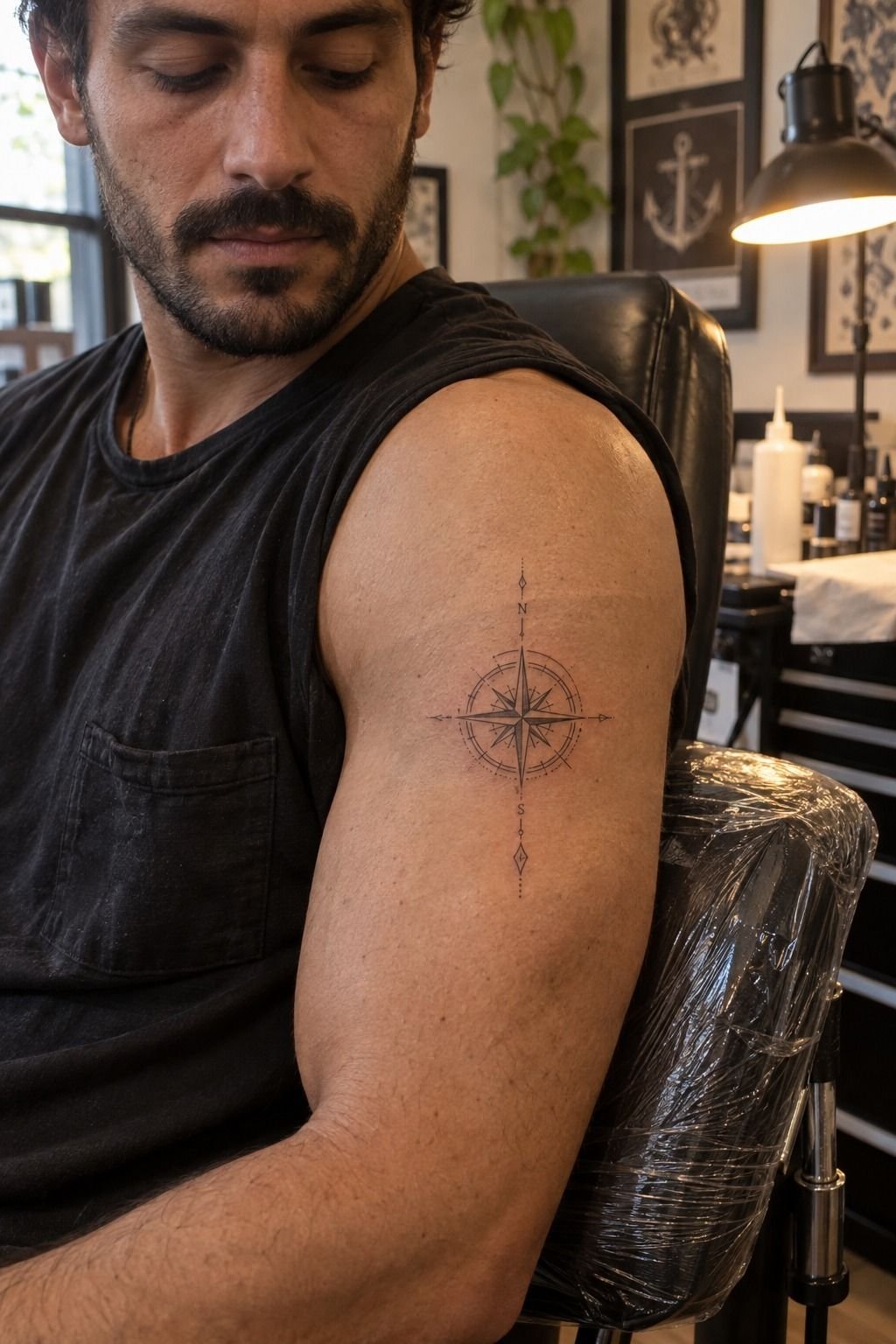
A compass tattoo can feel daring without becoming theatrical. Choose a compass tattoo with a dominant north point and enough open skin around the directional marks.
The North-Point Test is useful: cover the outer ring with your hand and see whether the center still reads as a compass. If it does, the design has a strong core. A single-needle outline with four major points will usually age better than a navigation chart packed with degrees.
Upper-arm placement gives you a solid balance of visibility and coverage. You can show it in a sleeveless shirt, cover it for work, and avoid some friction that affects hands and feet. If you’re weighing other visible options, these small neck tattoo ideas show how much more commitment a central placement can carry.
I’d skip adding coordinates, waves, mountains, and a quote all at once. One small location mark can make the compass personal, while four extra symbols can turn it into visual noise. The strongest adventurous tattoos often leave something unsaid.
A typical small piece may take less than an hour, though setup, stencil placement, and artist pace vary. Ask for a shop quote before booking, especially if the studio charges an hourly rate rather than a fixed minimum.
10Botanical Forearm Ink: One Stem, No Clutter
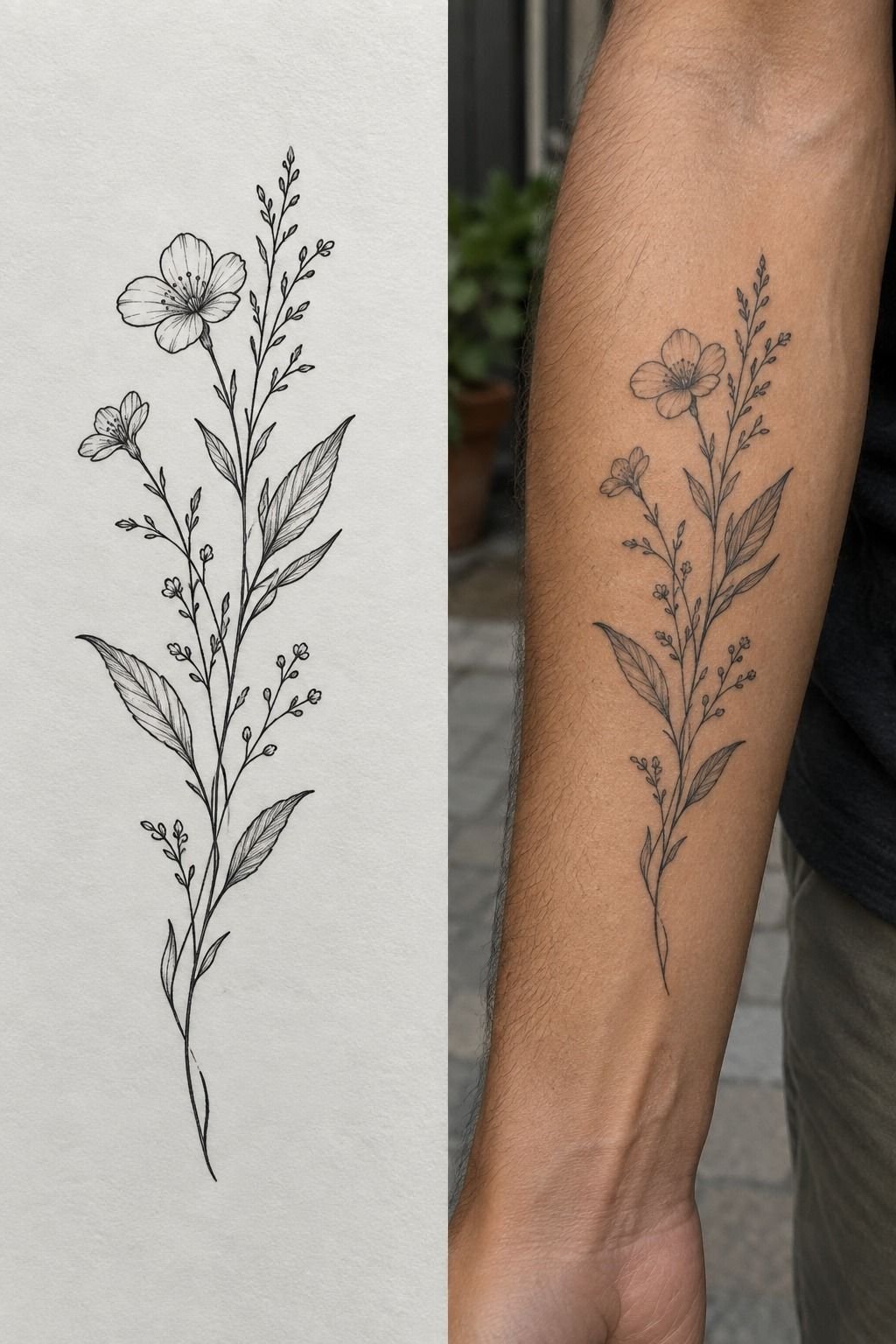
Botanical tattoos can look expressive when the leaf structure stays crisp. Start with a botanical tattoo whose silhouette remains recognizable without dense internal veins.
The Healed-Line Rule is more important than the fresh stencil. Healed ink tells you whether the stem remained distinct from the veins. A botanical stencil with three or four leaves often beats a crowded bouquet at a small scale.
Your forearm gives the plant room to follow the body’s length. A curved stem can feel organic without needing extra detail, while a straight branch feels modern and refined. For related inspiration, explore small minimalist tattoo designs and pay attention to spacing rather than copying a specific flower.
I’d choose one plant with a recognizable silhouette. Olive branches, fern fronds, rosemary, and small wildflowers each have different line demands. A fern needs more internal marks, while a simple stem can stay clear with fewer passes.
Ask whether your artist has healed botanical work in the same size range. Fine lines can widen, especially with sun exposure. Apply sunscreen once the tattoo has fully healed, and keep the first 2 to 3 weeks focused on gentle washing and light moisturizing.
11Sacred Symbols Need Meaning First
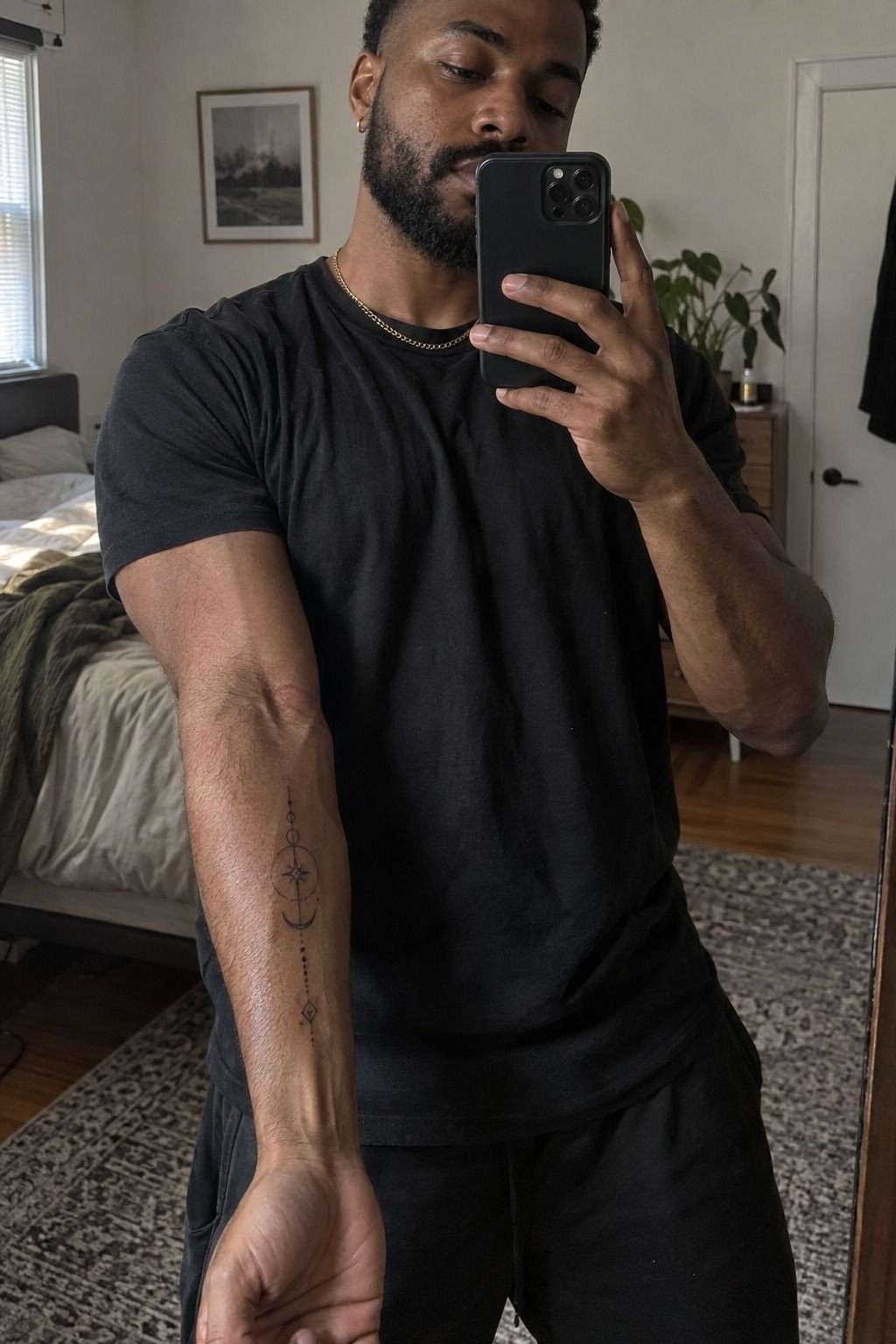
Sacred symbols need respect, clarity, and restraint. Choose sacred symbols that remain identifiable without squeezing too much detail into a tiny mark.
The Meaning Before Ornament rule keeps the tattoo personal. A cross, small star, prayer bead shape, eye, or other sacred symbol can feel powerful when you understand its history and connection to your life. Your design doesn’t need ornate borders to feel significant.
A single-needle sacred symbol can work beautifully on the inner forearm because you’ll see it often without making it the first thing everyone notices. If you want more examples with emotional weight, compare these small meaningful tattoo ideas before narrowing your sketch.
I’d avoid borrowing a symbol only because it looks stylish. Research its cultural context, then decide whether your relationship with it is genuine. A timeless mark carries more strength than a trendy shape you’ll need to explain away later.
Your artist should also check how the design sits against your natural skin texture and any existing marks. What good is a sacred symbol if the lines are so crowded that its identity disappears? Keep the shape readable, give it room, and let the meaning do the heavy work.
Pick an Artist by Healed Work
Start with a healed portfolio, not only fresh tattoos taken under flattering light. Look for consistent line width, clean saturation, and examples photographed several weeks or months after the appointment.
The artist’s style should match the design you want. A painterly specialist may not be the best choice for precise geometric work, while a fine-line specialist may not be comfortable with saturated blackwork. That distinction protects your budget and your skin.
Ask about sanitation practices without apologizing. A professional artist should explain their setup, disposable supplies, stencil process, and aftercare instructions clearly. The right studio should feel calm, direct, and respectful.
Send the artist the approximate size, placement, and reference direction before you book. A good artist can tell you when a favorite sketch is too detailed for the intended scale. That conversation is more valuable than chasing the lowest available price.
What Should a Small Tattoo Cost?
Ask for the full quote before you book! A small tattoo may cost around $100 to $300 in the United States, while a shop minimum can fall near $50 to $100. A custom design, difficult placement, or highly booked artist may raise the total.
Hourly rates often land around $100 to $250, though region and reputation change the number. The cheapest option isn’t always the best value if weak linework leads to an early correction or cover-up.
Bring a realistic budget that includes the deposit, tip, and a possible touch-up. A clear quote helps you decide whether the tattoo is worth it now or whether you should wait for the artist you actually trust.
Do not let a low price rush you into a permanent decision. A meaningful, well-planned tattoo is worth postponing when the right artist is unavailable.
Placement Changes the Long-Term Read
Friction points matter. Fingers, hands, feet, and areas beneath tight clothing may fade or soften faster than the forearm, upper arm, thigh, or shoulder. That doesn’t make demanding placements wrong, but it changes the maintenance value.
Sun exposure also affects longevity. After the tattoo has fully healed, regular sunscreen can help preserve contrast and line clarity. Ask your artist when it’s safe to return to your usual products.
Think about your daily life before choosing a visible location. A polished neck or hand tattoo may feel expressive, while an upper arm or thigh gives you more control over work and family settings.
For a first tattoo, I’d favor the forearm or upper arm unless the location itself carries the meaning. Comfort, visibility, and future flexibility are practical concerns, not signs that the idea is less daring.
Questions Worth Asking Before You Book
Ask to see healed work in the exact style and approximate size you want. You can also ask how the artist handles stencil placement, especially on curved areas such as wrists, ribs, and upper arms.
Discuss the expected healing timeline and the aftercare plan before the appointment begins. You should know what products to use, what activities to avoid, and when normal peeling stops being a concern.
Finally, ask about revisions, deposits, and touch-ups. A clear revision policy protects both sides and helps you understand the studio’s expectations before you commit.
Ask whether the artist would change the design for your skin, placement, or daily routine. A confident professional should be willing to recommend a thicker line, fewer details, or a slightly larger scale when that creates a better result.
The Editorial Call: What Actually Makes Small Ink Last
I used to think small automatically meant easy. It doesn’t.
A small tattoo concentrates every decision into a few lines, so weak spacing becomes obvious and unnecessary detail has nowhere to disappear. The most successful pieces are the ones where the artist, placement, and line weight agree before the appointment begins.
That is why I keep returning to the forearm, upper arm, thigh, and shoulder for first tattoos. These locations offer enough room for a readable mark, reasonable comfort, and some control over visibility. They are not automatically better than ribs, feet, hands, or sternum, but they give a beginner more margin for error.
I also prefer one meaningful idea over a collection of symbols. A compass can point to a place.
A mountain can stand for a difficult climb. A small animal can hold a private memory.
Once the design needs a caption to make sense, I would remove something.
Fresh ink can make almost any tattoo seem crisp, vibrant, and complete. The real test comes later, when the surface shine is gone and the lines have settled. That is why a healed portfolio matters more to me than a dramatic appointment-day result.
There is no shame in choosing a slightly larger tattoo to protect the design. A dainty word that cannot be read is less elegant than a clear, understated word with enough room around each letter. A fierce black shape can be more timeless than a delicate composition that depends on perfect conditions.
Aftercare still matters, but it should not dominate the creative decision. Follow the artist’s instructions, keep the area clean while it heals, and protect settled ink from excessive sun. The bigger decision is made before the needle starts: choose an artist who understands your style and knows when to simplify.
My final judgment is straightforward. If this is your first piece, choose one personal symbol on the forearm, keep the composition crisp, and let the empty skin do some of the work. That combination is meaningful, masculine, and far more likely to remain readable than a crowded design chosen in a hurry.
What People Always Want to Know
How much does a Small Tattoos For Guys tattoo usually cost?
A small tattoo usually costs about $100 to $300 in the United States, though a shop minimum may be $50 to $100 and hourly rates often run $100 to $250. Your artist, region, placement, and custom detail will shape the final quote.
Are Small Tattoos For Guys a good idea for a first tattoo?
Yes, small tattoos can be a smart first choice because you can test the experience without committing to a large session. The forearm, thigh, and upper arm are often more tolerable, while hands, feet, ribs, and sternum can hurt more.
How do I choose a tattoo artist for Small Tattoos For Guys?
Choose an artist with clean healed work in your preferred style, not only attractive fresh results. Look for consistent linework, clear hygiene practices, and a portfolio that matches your idea. These small tattoo ideas for men can help you identify the style you want.
How much do Small Tattoos For Guys hurt?
Pain varies by person and placement. Ribs, feet, hands, and sternum are often more painful, while the forearm, thigh, and shoulder tend to be more tolerable. A short session can still feel intense, especially over bone or thin skin.
How long does a Small Tattoos For Guys tattoo take to heal?
The surface often heals in about 2 to 3 weeks, but complete settling can take roughly 2 to 3 months. Wash gently, moisturize lightly, avoid swimming, and keep it away from direct sun. Good aftercare protects crisp lines while the skin repairs.
Where I’d Start First
If I had to pick one, I’d start with a small meaningful forearm tattoo: one symbolic shape, clear spacing, and an artist with healed work to prove the style. That is the most balanced choice for readability, comfort, and long-term confidence. Check the healed portfolio, ask the direct questions, and book only when the design still feels personal.