Small butterfly tattoos remain one of the most requested designs in shops across the country. Their appeal is straightforward: the shape reads instantly even at dime-size, the wing structure offers endless variation, and the silhouette flatters nearly any placement on the body. For women considering their first piece or adding to an existing collection, butterflies offer a rare combination of recognizability and room for personal interpretation. This guide covers what actually works at small scale, where the ink holds up best, and how to avoid the common pitfalls that turn a delicate design into a blurry blob five years down the line.
Popular Styles That Work at Small Scale
Not every tattoo style shrinks gracefully. Bold traditional imagery with heavy outlines can turn to mud below two inches. Butterflies, however, adapt well to several approaches when the artist understands the constraints of skin real estate.
Minimalist Line Work
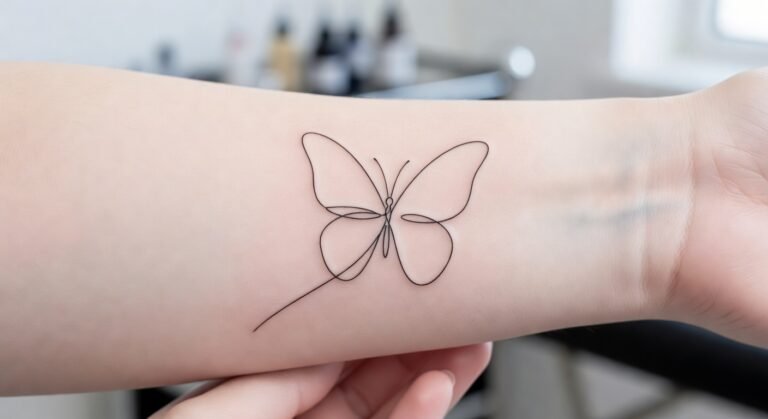
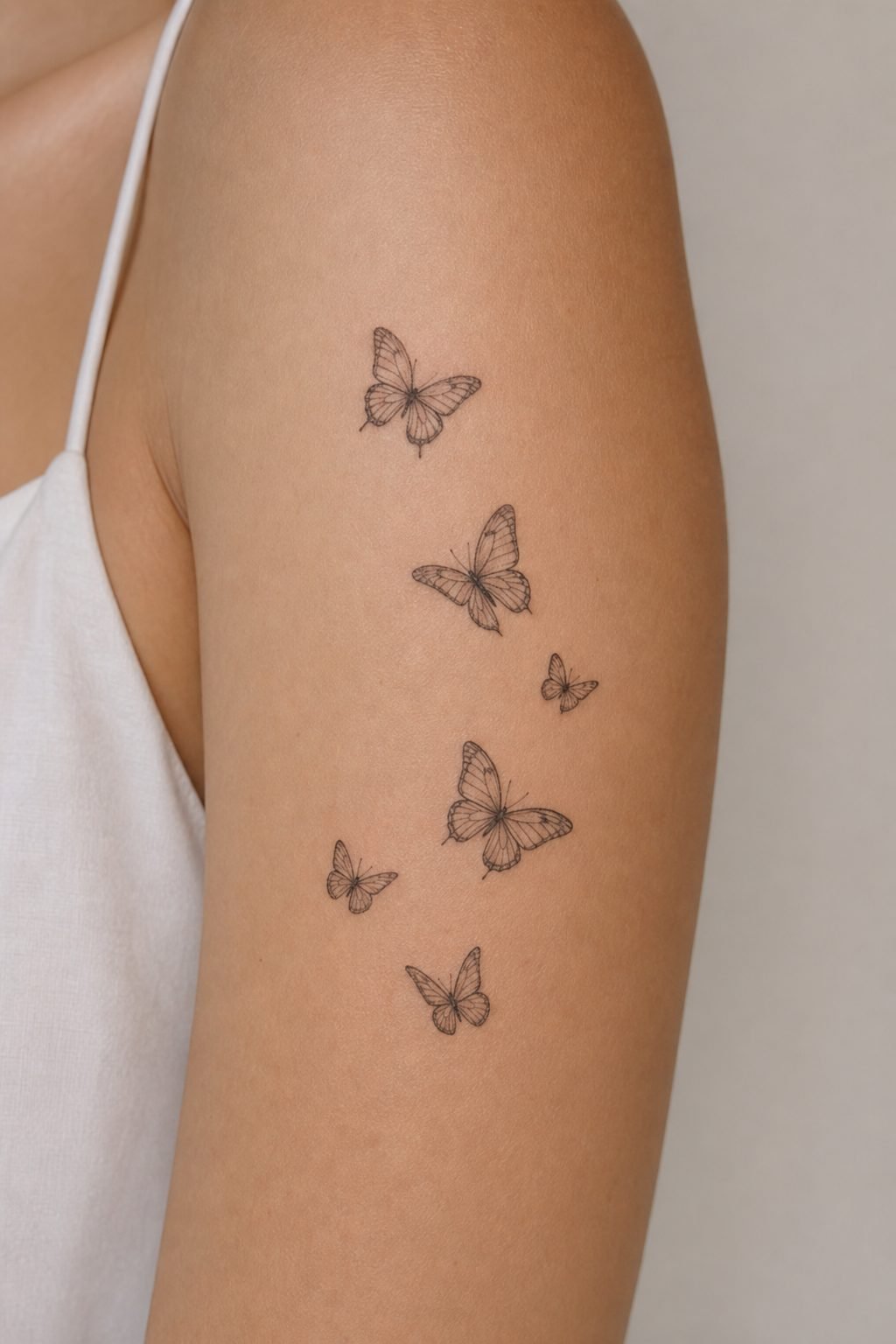
Single-needle or fine-line butterflies use hair-thin strokes to suggest wing shape without filling large areas. These read as elegant and modern, though they demand precision. The artist must vary line weight slightly, thicker where wings meet the body, tapering toward the edges, or the whole thing flattens into a uniform squiggle. Best for placements with minimal friction: inner wrist, behind the ear, along the collarbone.
Illustrative and Sketch-Style
Loose, drawing-like marks with visible “imperfections” can look intentional and artistic rather than sloppy. Crosshatching for shadow, stippled dots for texture, or slightly asymmetrical wings give the piece hand-drawn character. These styles forgive minor aging better than ultra-crisp geometric versions because the slight blur mimics pencil on paper.
Micro-Realism
Some artists specialize in shockingly detailed tiny portraits and natural subjects. A monarch or blue morpho rendered at under an inch with accurate color gradation is possible in the right hands, but this is specialist territory. The artist’s portfolio should show multiple healed examples at actual size, not fresh, swollen photos where detail looks sharper than it will settle.
Design Ideas Beyond the Basic Silhouette
The butterfly shape is a framework. What you build into it determines whether the piece feels generic or specific to you.
- Partial or broken-wing compositions: One wing complete, the other dissolving into particles, florals, or negative space. Creates visual interest without requiring more skin.
- Multiple tiny butterflies in flight: Three to five specimens at varying sizes, arranged to suggest movement. Works beautifully trailing from behind the ear down the neck, or across the shoulder blade.
- Butterfly merged with other imagery: Wings formed from leaves, petals, or geometric facets. The body might be a tiny dagger, a moon phase, or a simple bar. These hybrid designs reward close viewing.
- Side-profile resting position: Wings folded vertically, the butterfly at rest. Reads differently than the spread-wing icon, more contemplative, less celebratory.
- Negative-space butterfly: The shape defined by surrounding blackwork or pattern, the butterfly itself left as bare skin. Striking in solid black compositions.
Avoid cramming text, dates, or excessive surrounding ornament into a small butterfly. The form competes with additions rather than complementing them. If words matter, consider a separate adjacent piece rather than forcing lettering inside wing membranes where it will distort and age poorly.
Best Placements for Small Butterfly Tattoos
Where you put the ink matters as much as what’s in it. Small tattoos face specific aging challenges: high-friction areas blur faster, and spots that sunburn regularly fade to gray-green within a few years.
High-Visibility, Low-Friction Zones
The inner forearm, upper outer arm, and shoulder blade see moderate sun but minimal rubbing against clothing. These areas allow for slightly more detail since the skin stays relatively stable. The collarbone, specifically the flat plane just below, offers a natural frame for a centered butterfly, though the bone proximity can make the session sting more than fleshier spots.
Intimate and Concealed Options
Behind the ear, the nape of the neck, inner bicep, hip bone, and ankle all carry a sense of privacy. The ankle and foot, however, deserve caution: shoes, socks, and sandal straps create constant abrasion. A butterfly on the outer ankle often needs touch-up within two to three years. The ribcage and side-boob area allow for slightly larger small-scale pieces with room for subtle surrounding elements, though the stretching and compression from breathing means the design should stay simple.
Finger and Hand Realities
Finger butterflies trend hard on social media but age notoriously. The combination of thin skin, heavy use, and near-constant sun exposure means even solid black outlines fade to hazy gray within eighteen months. If you’re committed to a hand piece, expect maintenance. Some artists simply won’t do them, knowing the result disappoints.
Color Choices: What Lasts and What Fades
Butterflies invite color. The natural world offers iridescent blues, saturated oranges, and velvety blacks. Translating that to skin requires understanding how pigments behave at small scale and over time.
Black and gray offer the longest clarity. A well-saturated black butterfly with subtle gray shading can still read crisply after a decade. The contrast of dark ink against skin tone does the visual work; detail isn’t always necessary.
Color demands more commitment. Yellows and light greens fade fastest, often becoming muddy or disappearing entirely. Blues and purples, cobalt, violet, royal, hold better but can shift tone as they settle. Reds and oranges occupy the middle ground: visible longevity with some softening. For a small butterfly, limiting color to one or two accent areas rather than full wing coverage often ages more gracefully. A black-outline monarch with orange patches and white dots reads clearly even as the orange warms to a softer peach.
White ink deserves specific mention. Used for highlights on wings, it can add dimension fresh out of the chair. Within two to five years, white typically yellows or disappears into the surrounding skin tone. Relying on white for essential structure, wing veins, body segmentation, risks the design losing its architecture as the white vanishes.
Tips for Choosing Your Artist and Design
Small doesn’t mean simple to execute. The best artists for tiny butterflies often have waiting lists and premium rates. Here’s how to evaluate whether someone can deliver.
- Check healed photos, not just fresh work: Instagram and portfolios emphasize fresh, red-free images. Ask to see the same piece at six months or a year. Reputable artists keep these records.
- Look for consistent line quality at actual size: Zoom in on portfolio examples. Shaky edges, blown-out lines that spread beyond their boundaries, or uneven fill indicate technique that won’t improve on your skin.
- Discuss stencil placement before committing: A butterfly angled slightly wrong on the wrist can look like a random smudge from the wearer’s perspective. The artist should offer multiple placement options and mirror-check with you.
- Size realistically: Below half an inch, most detail becomes unachievable. A butterfly the size of a pencil eraser will age to an indistinct dark spot. Aim for at least one inch in wingspan for any hope of recognizable form.
- Plan for the long term: Small tattoos blur. Factor in future touch-ups or the possibility of integrating the butterfly into a larger piece later. A lone tiny insect can feel stranded; leaving adjacent space for future additions provides flexibility.
Trust your gut on the consultation. An artist who rushes, dismisses your size concerns, or can’t explain why a particular color won’t work small-scale is signaling their limitations. Good tattooers turn down work they know won’t hold up rather than take your money for a guaranteed fade.
Final Thoughts
Small butterfly tattoos endure because the form is inherently satisfying, a symmetry that reads as balanced, a silhouette that communicates transformation without requiring explanation. The difference between a piece you’ll love in fifteen years and one you’ll want covered comes down to restraint: in size, in detail, in color ambition. Pick an artist whose healed small work impresses you. Choose a placement that respects how you actually live in your body. Let the butterfly be enough on its own rather than loading it with symbols it can’t carry. Done well, a tiny butterfly doesn’t need to shout. It simply belongs where it’s placed.
Frequently Asked Questions
How small can a butterfly tattoo be before it starts to blur?
Below one inch in wingspan, most butterfly tattoos lose their recognizable shape within a few years. Fine details like antennae and wing veins often spread or disappear entirely. For longevity, aim for at least one to one-and-a-half inches with simplified rather than intricate linework.
Do butterfly tattoos on the ankle fade faster than other placements?
Yes, ankle tattoos face constant friction from shoes, socks, and sandal straps, plus regular sun exposure if you wear cropped pants or skirts. This combination typically causes faster fading and blurring compared to upper body placements like the shoulder or upper arm.
Is a black and gray butterfly better than a colored one for small sizes?
Black and gray generally ages more predictably and stays readable longer at small scale. Color can work beautifully but requires more maintenance; light colors like yellow and pale green fade fastest. If you want color, limit it to one or two accent areas rather than full wing saturation.
How much should I expect to pay for a small, detailed butterfly tattoo?
Pricing varies widely by region and artist experience, but skilled specialists in fine-line or micro-realism often charge premium rates regardless of size. A small, well-executed butterfly from an in-demand artist might cost more than a larger, simpler piece from a less experienced shop. Quality at small scale demands precision that takes years to develop.
More Tattoo Ideas
- Son Tattoo Designs for Dads
- Pinterest Tattoo Ideas for Women That Actually Work
- Virginia Tattoo Ideas: Mountains, Rivers Ink
- Explore more