Getting a tattoo for your son is one of the most common reasons men walk into a shop for the first time. The design needs to hold up for decades, work with your body as it changes, and actually mean something when you look at it in the mirror. Here’s what works, what doesn’t, and how to get it right.
Popular Styles That Actually Work
Not every style suits a father-son piece. Some age badly, others read as feminine or trendy in ways that don’t fit most dads. These are the styles that consistently deliver.
Black and Gray Realism
Portraits of your son, rendered in smooth black and gray shading, remain the gold standard. A good artist can capture the softness of a newborn’s face or the structure of an adult son’s features. The key is finding someone who specializes in portraits, not just someone who says they can do it. Bad portrait work is immediately obvious and nearly impossible to fix. Expect multiple sessions for large pieces, and budget accordingly.
Traditional and Neo-Traditional
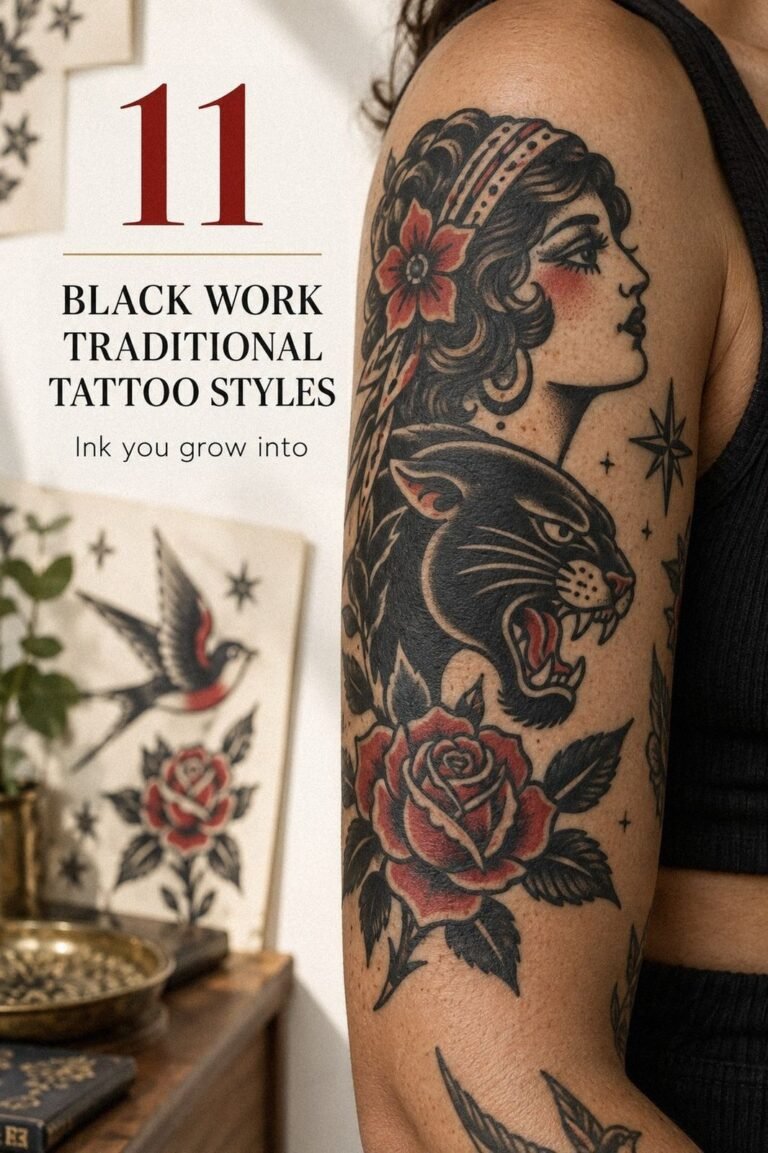
Old-school bold lines and limited color palettes age exceptionally well. A traditional heart with a banner reading your son’s name, a ship with his initials on the hull, or a dagger through a rose with his birthdate, these designs have been worn by fathers for generations. The heavy black outlines prevent bleeding and fading over time. Neo-traditional allows slightly more detail and softer color transitions while keeping that same structural integrity.
Fine Line and Minimalist
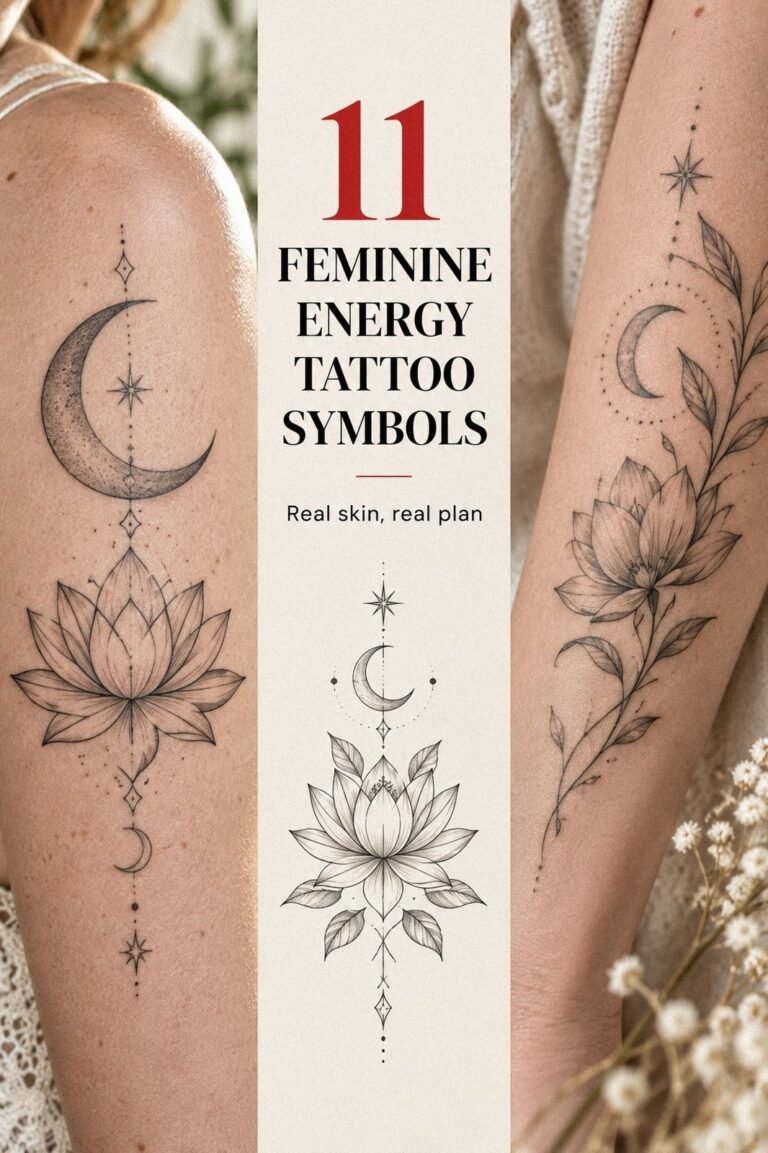
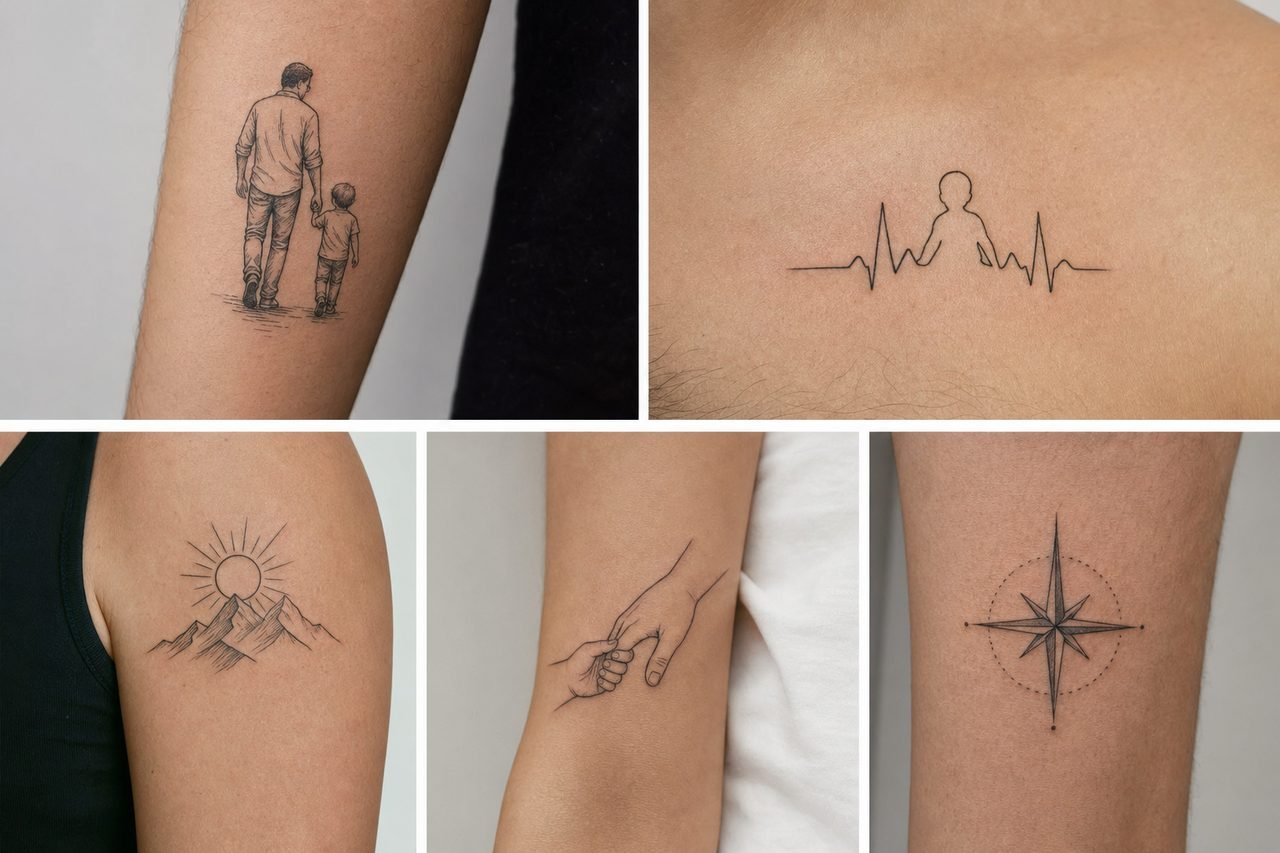
Single-needle work and delicate linework have exploded in popularity, but they come with warnings. Fine line tattoos on areas that see sun or friction (forearms, hands) can fade to nothing within five years. If you want minimalist work, your son’s handwritten name, his tiny footprint at actual size, a simple constellation of his birth stars, place it where it’ll be protected: inner bicep, ribcage, upper chest. Touch-ups are inevitable with this style, so choose an artist who offers them.
Design Ideas Beyond the Obvious
Names and dates are fine, but there’s more territory to explore. The best designs often come from your actual relationship, not a Pinterest board.
- Handwriting reproductions: Your son’s actual signature, scrawled at age five or written as an adult, copied exactly by a skilled artist. This requires high-resolution source material and someone experienced in replicating organic letterforms.
- Coordinates: The exact latitude and longitude of the hospital where he was born, your childhood home, or the place you taught him to fish. Clean numbers in a simple typeface, small enough to hide or large enough to feature.
- Shared objects: The model of car you rebuilt together, the breed of dog he grew up with, the specific lure you always used. These read as personal without requiring explanation.
- Soundwave tattoos: The visual waveform of his first words, his laugh, or a message he left you. Be aware these are visually abstract and often need accompanying text to remain meaningful to others.
- Matching or complementary pieces: If your son is old enough, designs that connect, half a heart each, interlocking geometric patterns, or split quotes that complete each other when you stand together.
Avoid anything too tied to a specific age. The cartoon character he loved at four won’t resonate when he’s thirty, and neither will you.
Best Placements for Fathers
Where you put this matters for visibility, pain, and how the tattoo ages alongside your body.
Upper Arm and Shoulder
The classic dad placement. Muscle and fat cushion the needle, making the session tolerable. Skin here doesn’t stretch as dramatically with weight changes, and the area tans evenly if you protect it. Sleeves can cover it for conservative workplaces; short sleeves reveal it easily. A portrait on the outer upper arm reads as proud, visible, declarative. The inner bicep is more private, more intimate, something you show deliberately.
Chest and Ribcage
Over the heart is literal but effective. Chest skin holds detail well, though it can stretch with significant muscle gain or weight fluctuation. The sternum itself is painful, thin skin over bone, but the surrounding pectoral area is manageable. Ribcage work hurts more, heals slower due to constant movement from breathing, but offers large, flat canvas space for meaningful compositions. Many dads choose the chest for their first child’s piece, adding ribs for subsequent children.
Forearm and Wrist
Impossible to miss, impossible to hide. Forearm tattoos are statement pieces, you’re announcing this relationship to everyone. Wrists are smaller, more vulnerable to sun and wear, and limit future employment in some fields. Fine line work here fades fast. If you need concealment, these are the wrong placements. If you want daily visibility and don’t care who sees, they’re perfect.
Back and Calf
Large areas for ambitious pieces, full back pieces incorporating multiple sons, family trees, or complex scenes. Calves are surprisingly tolerable for pain and hold color well. Both placements are easy to cover, which suits men in professional environments or those who prefer personal significance over public display.
Color Choices and Longevity
Black and gray lasts. It’s that simple. Color can be beautiful, but it demands commitment.
Reds and yellows fade fastest, often turning muddy or disappearing entirely within a decade. Blues and greens hold better. White ink is nearly invisible on most skin tones within a few years, and turns yellowish on others. Skin tone dramatically affects how color reads, what pops on pale skin disappears into darker complexions. A skilled artist will adjust saturation and contrast accordingly, not just copy a design from lighter skin.
If you want color, commit to sunscreen every single day on that area. UV radiation is the primary destroyer of tattoo pigment. A colored piece on a dad who works outdoors without protection will look washed out in five years. Black and gray is more forgiving but not immune.
Tips for Choosing the Right Artist
The design lives or dies by who applies it. Here’s how to choose without getting burned.
- Specialization over convenience: A shop ten minutes away with a generalist will not produce the same portrait as a specialist three hours away. Drive for the right person.
- Healed photos, not fresh: Instagram shows fresh work, swollen, saturated, perfect lighting. Ask to see healed pieces from a year or more ago. That’s your future.
- Consultation chemistry: You need to trust this person with something permanent. If they rush you, dismiss your ideas, or can’t explain their technical choices, walk.
- Budget realism: Good work is expensive. Portraits start around $500-800 for small pieces and climb rapidly. Quotes that seem too good usually are. This is not the place to bargain hunt.
- Size appropriately: Tiny portraits become unrecognizable blobs. A face needs minimum space for eyes, nose, and mouth to read correctly. Trust your artist’s minimum size recommendations.
Bring reference photos with good lighting, clear focus, and genuine expression. The photo of your son laughing at his birthday party will translate better than a stiff school portrait with flat lighting.
Final Thoughts
A tattoo for your son is a permanent marker of a relationship that keeps changing. The baby you hold becomes a man who holds his own children. The design you choose now should honor who he is, not freeze him at one age. Prioritize timeless over trendy, placement over impulsiveness, and artist over convenience. The best tattoos for sons are the ones that still feel right when you’re both old men.
Frequently Asked Questions
How soon after my son is born can I get a tattoo using his footprint?
Wait until the hospital footprint card is fully dried and you’re certain of the exact size you want. Many dads wait six months to a year, both to be sure the design choice holds up emotionally and to let the early chaos of new fatherhood settle. There’s no rush.
Will a portrait of my son look weird as he gets older?
A portrait captures him at one moment, which becomes a document of that time. Most fathers find this becomes more meaningful, not less. If you prefer something timeless, consider symbolic designs rather than literal likenesses.
Is it okay to get matching tattoos with my son if he’s a teenager?
Most reputable artists won’t tattoo minors, and matching pieces work best when both parties are adults making independent choices. Consider waiting until he’s of legal age and can participate fully in the decision.
How do I add to a son tattoo if I have more children later?
Plan for expansion from the start. Leave compositional space, choose a location with room to grow, or select a design structure that accommodates additions, like a tree adding branches, or a banner with room for more names.
More Tattoo Ideas
- Pinterest Tattoo Ideas for Women That Actually Work
- Virginia Tattoo Ideas: Mountains, Rivers Ink
- Washington DC Tattoo Ideas
- Explore more