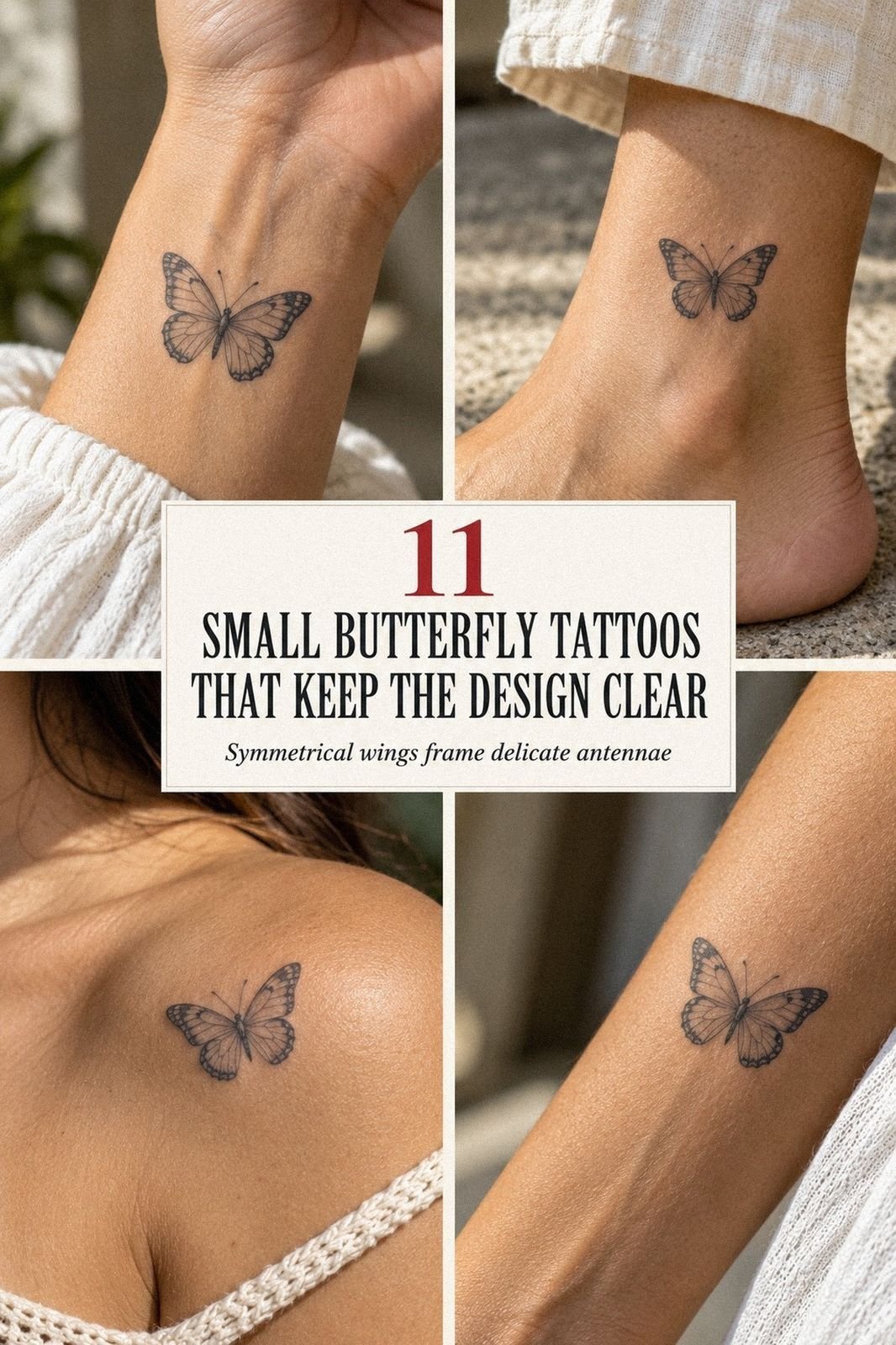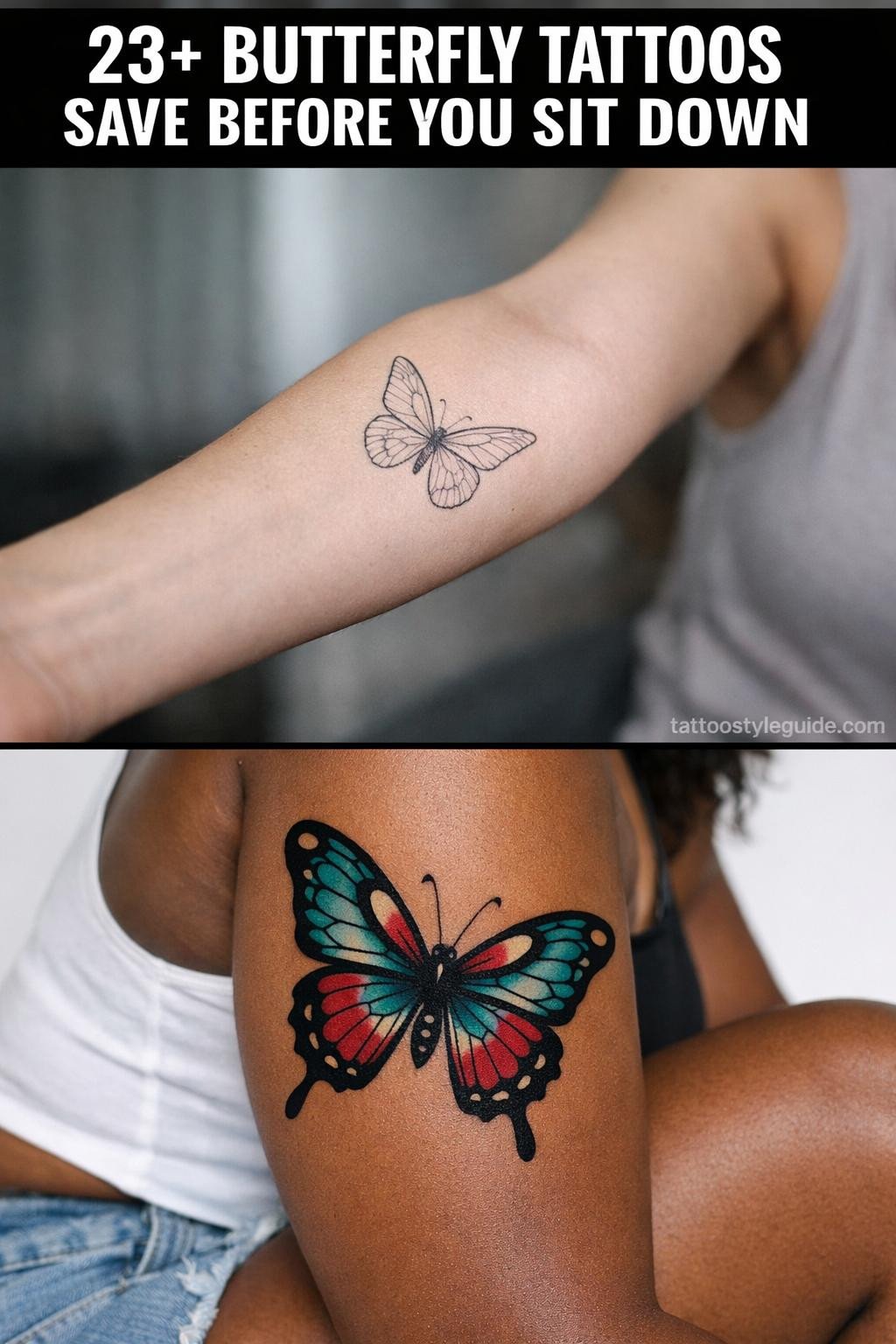
Butterfly tattoo designs fail collectors more often than the subject deserves. The motif is common enough that bad versions get lost in the noise, and most people pull references without checking whether the style they like actually holds on their skin tone or placement. Scale matters too. A 2-inch butterfly reads completely differently than a back-spanning piece, even in the same style.
The 23 flash references below cover a deliberate range of styles, from bold traditional outlines to single-needle continuous line work. Each one signals something specific about execution difficulty and longevity.
Art Deco Geometry Locks the Swallowtail Into Decade-Long Clarity
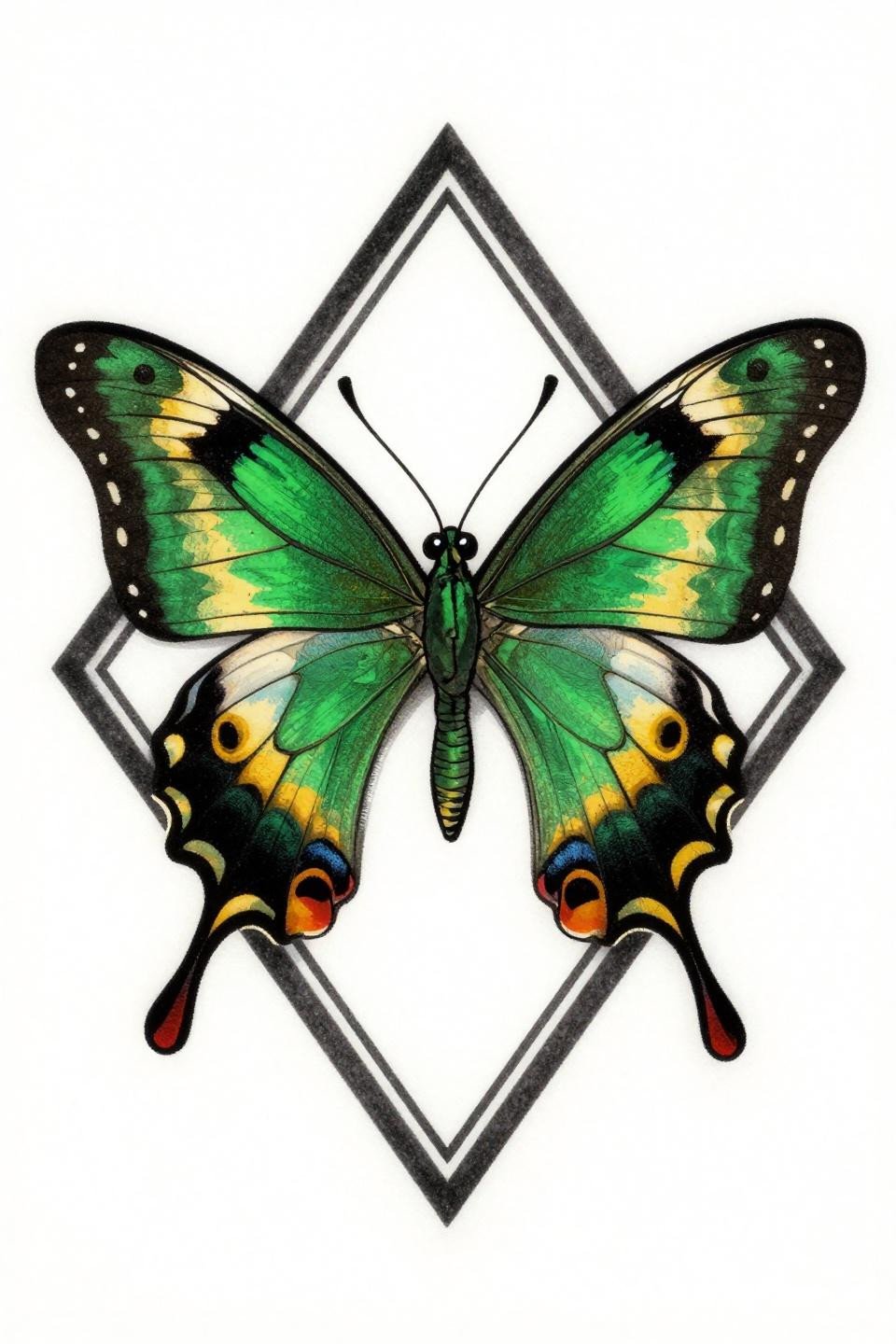
This art deco swallowtail sits inside a geometric diamond frame, with flat forest green and gold fills bounded by 2-3pt black outlines that give the design its structural permanence.
Bold outlines at this weight hold clean for 10 or more years, making art deco one of the more forgiving styles for collectors who want longevity without constant touch-ups.
Sak Yant Mandala Turns Eyespot Geometry Into Sacred Structure
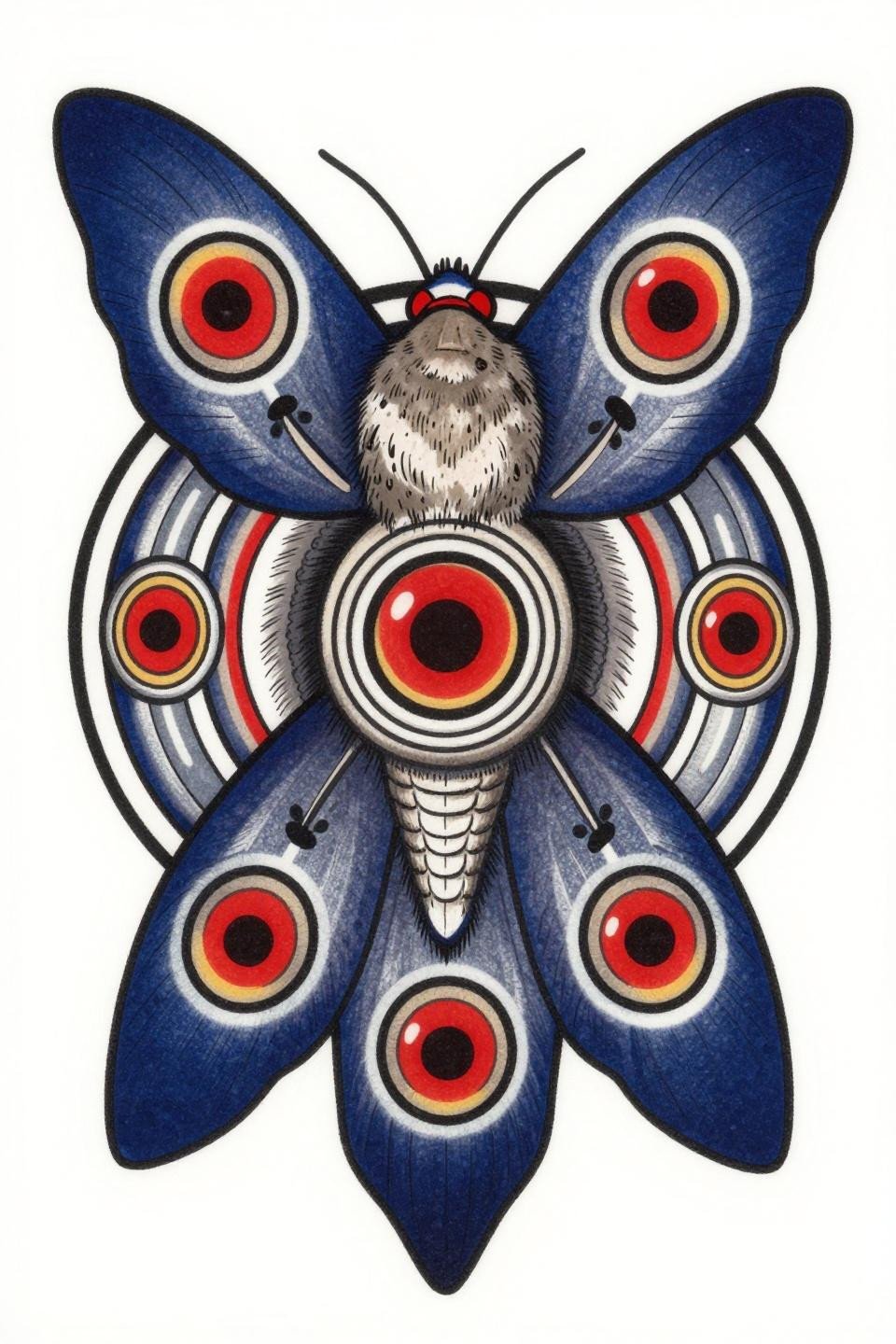
The io moth eyespots are redrawn as concentric sacred geometry rings inside a circular mandala, executed in deep indigo and crimson with rigid bilateral symmetry along the vertical axis.
Flat color blocking in two-color Sak Yant work ages cleanly because there are no color transitions to blur. On olive skin, the indigo reads darker than on lighter tones, so discuss ink density with your artist before committing.
Ignorant Style Red Lacewing Built for Maximum Contrast
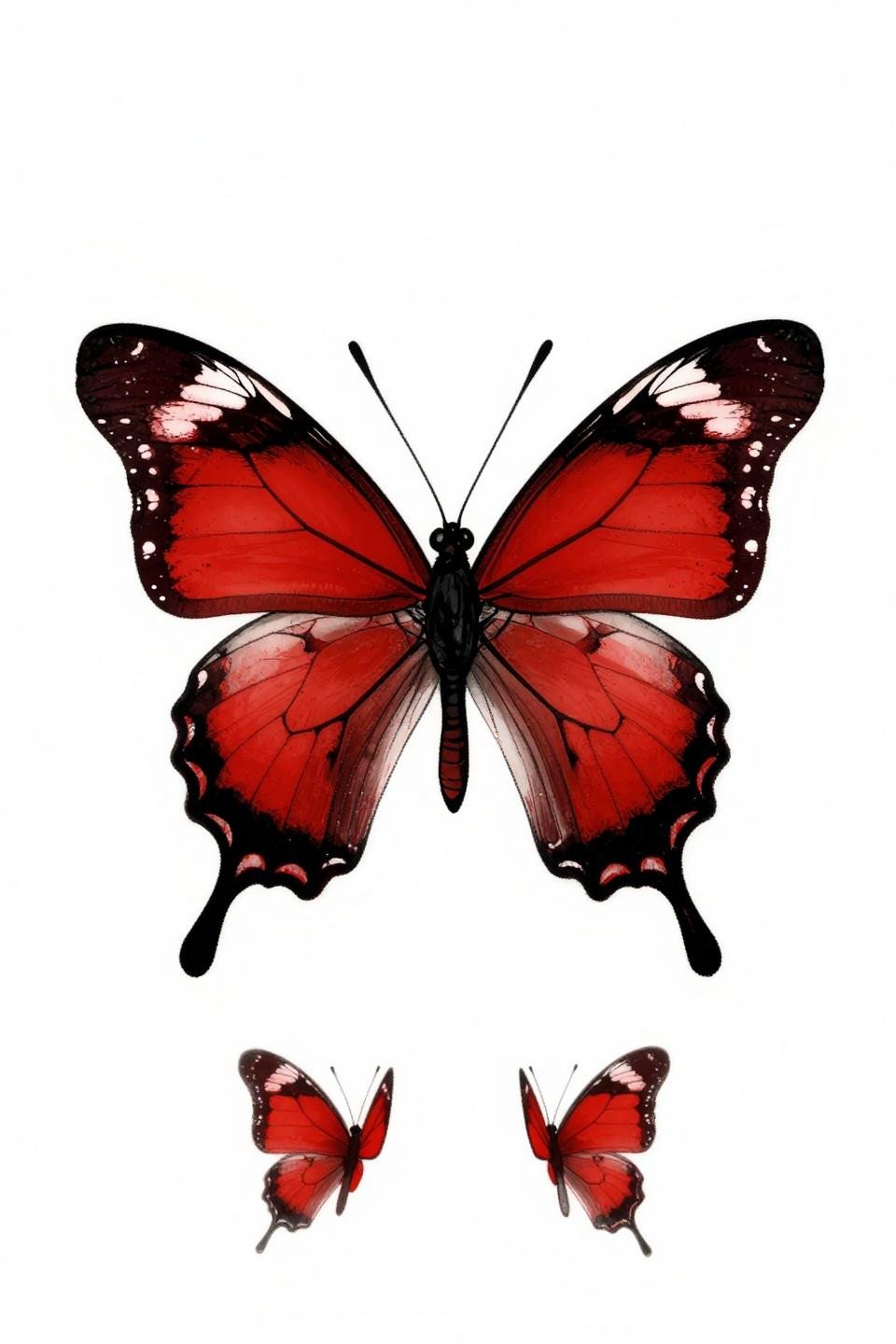
Heavy 4pt outlines and zero shading define this ignorant-style lacewing. Crimson and solid black, no gradients, no midtones.
The heavy outline weight here is the longevity signal. Ignorant-style pieces with outlines this thick rarely need structural touch-ups, even on high-friction placements like forearms or calves.
Sketch Raw Morpho: When Gestural Marks Replace Perfect Symmetry
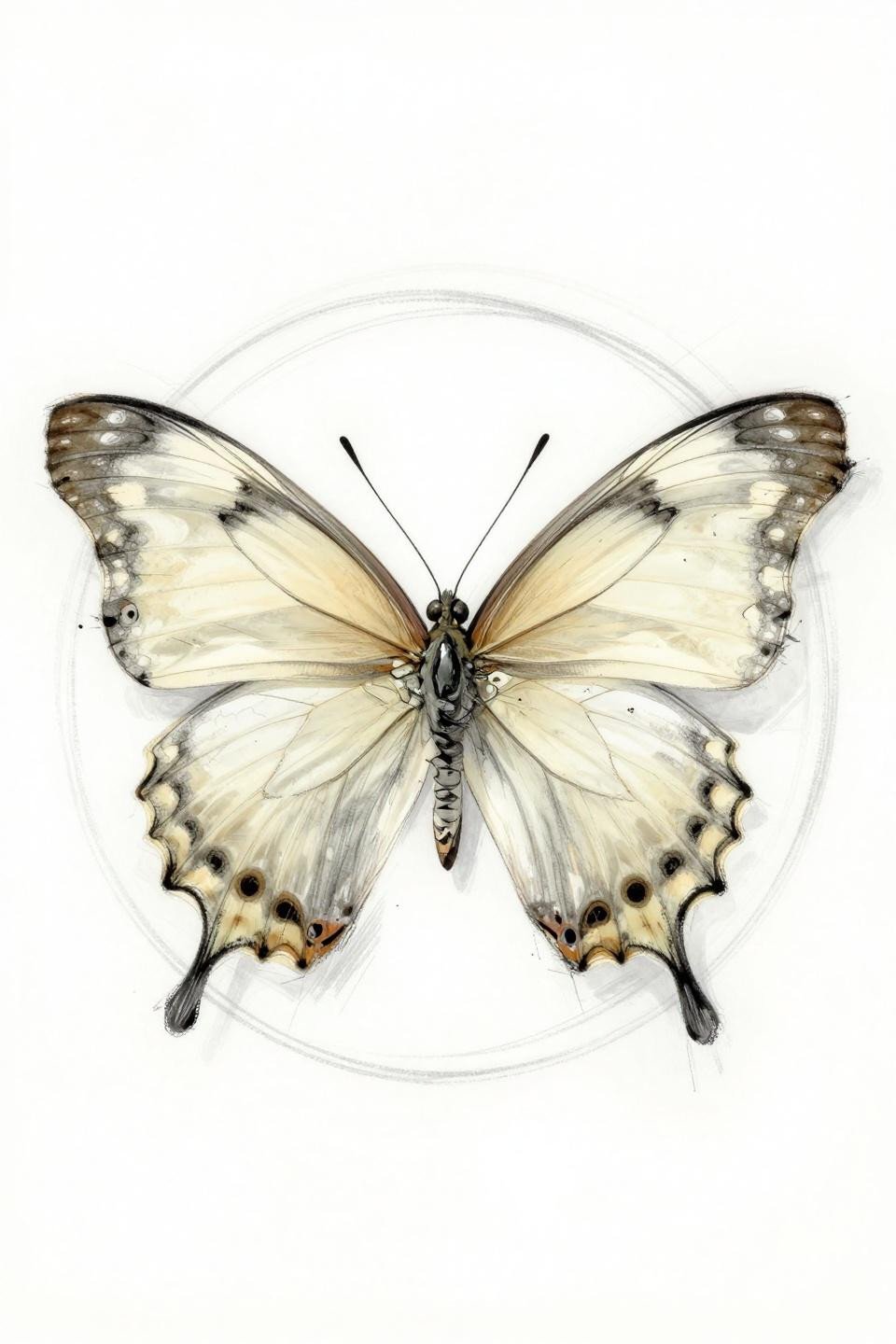
This cream morpho uses loose gestural linework and rapid pencil hatching, with a calligraphic brush-and-ink quality that reads raw rather than refined.
Sketch-style work lives and dies on controlled line variation. Check the artist’s healed portfolio specifically for sketch work. Fresh shots hide the settling that reveals whether those loose strokes were intentional or rushed.
The Resting Swallowtail Pose That Solves Vertical Placement Problems
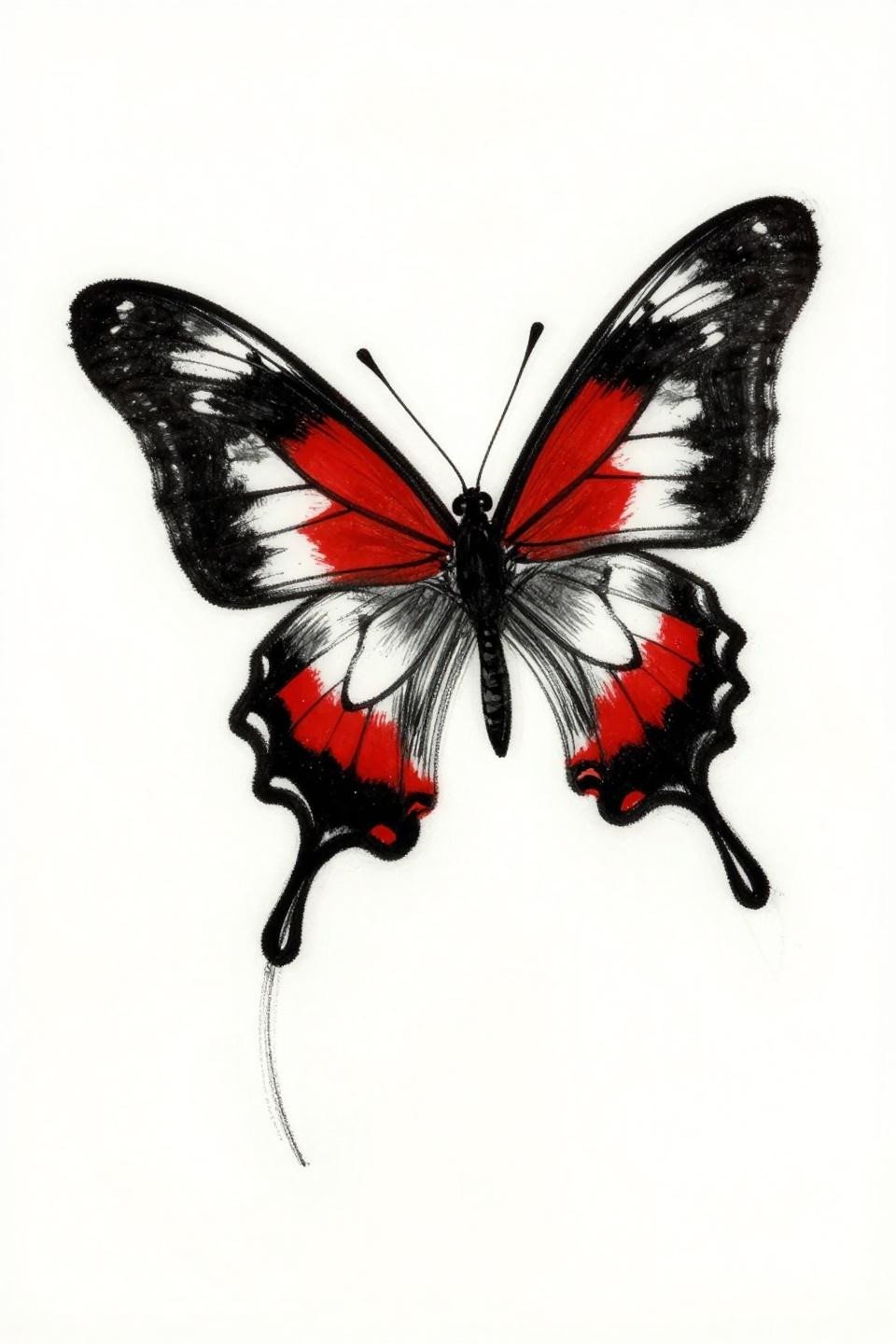
The lateral resting pose with tent-folded wings creates a stacked vertical composition, suited to forearms, shins, or sternum placements where spread-wing designs lose proportion.
Crimson accent on black in a two-color scheme holds contrast longer than multi-color palettes. The vertical format also makes this one of the cleaner borboleta-style references for narrow placements.
Surrealist Morpho With Mandala Frame: Style Mismatch or Deliberate Tension
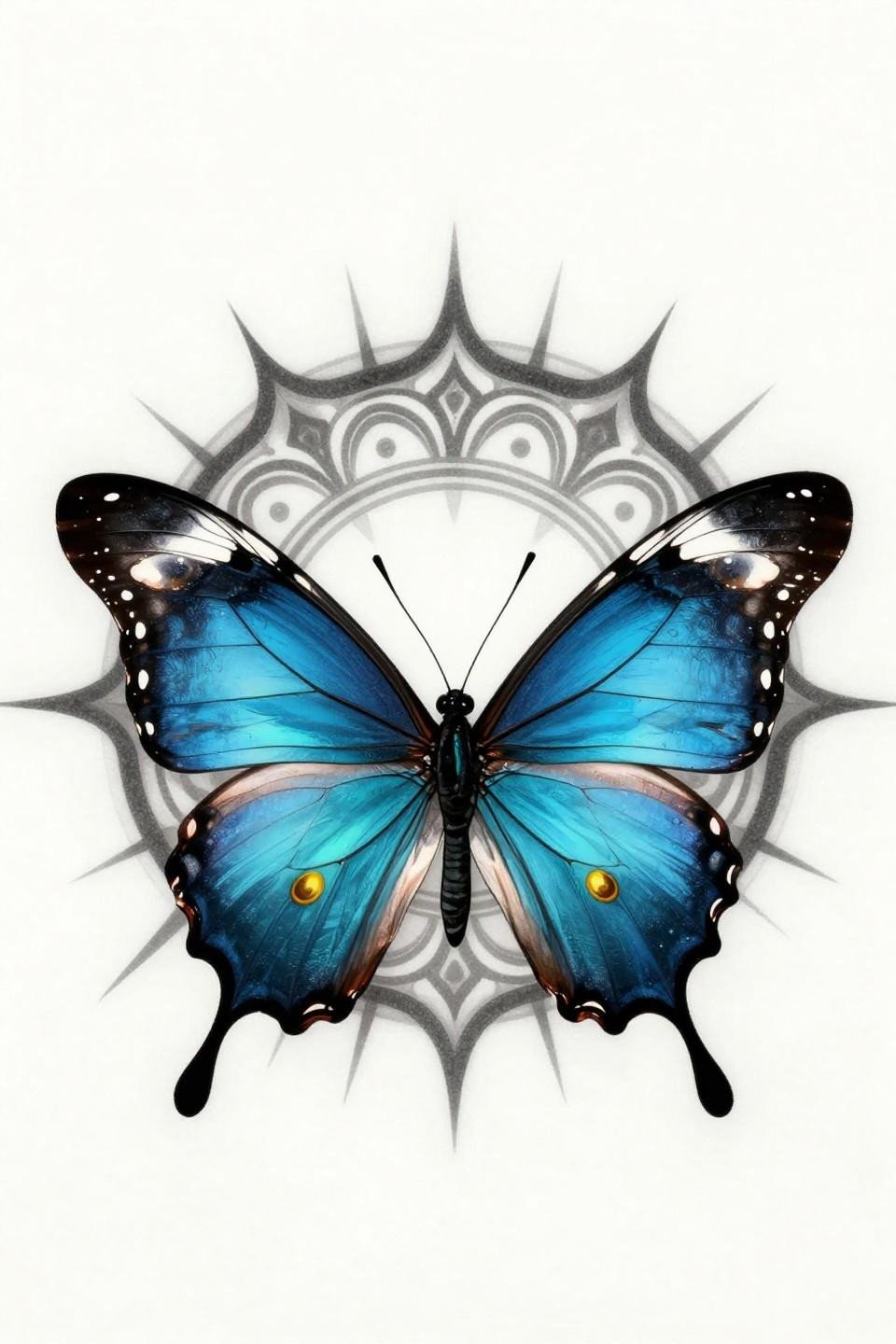
Electric blue forewings and metallic cyan hindwings sit inside a radiating mandala frame, with copper accent tones pulling the surrealist and sacred geometry influences into one composition.
Teal and copper palettes require artists who understand pigment layering. Poorly sequenced color passes turn copper into brown within two years, so request healed examples of metallic tone work before booking.
Chicano Grey Wash Swallowtail: Whip Shading as the Only Texture
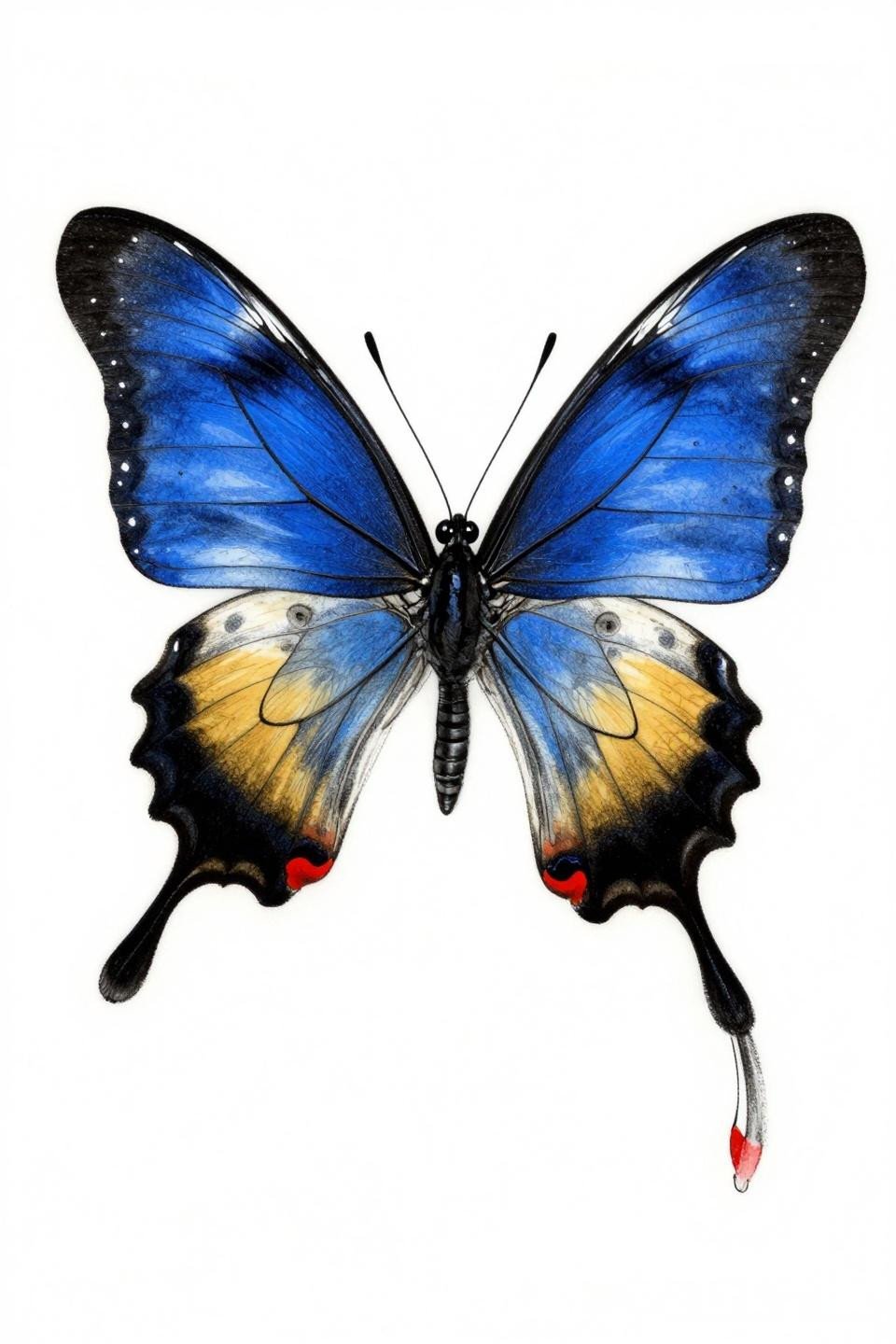
Dense charcoal grey wash dissolves from the thorax outward to open white, with navy blue and black as the only ink colors.
Whip shading at this density reads sharp on lighter skin tones but can lose midtone separation on deeper olive and brown skin. Artists with strong grey wash portfolios on darker skin are worth the longer wait list.
Celtic Knotwork Wing Fields Demand a Single Specialist Skill Set
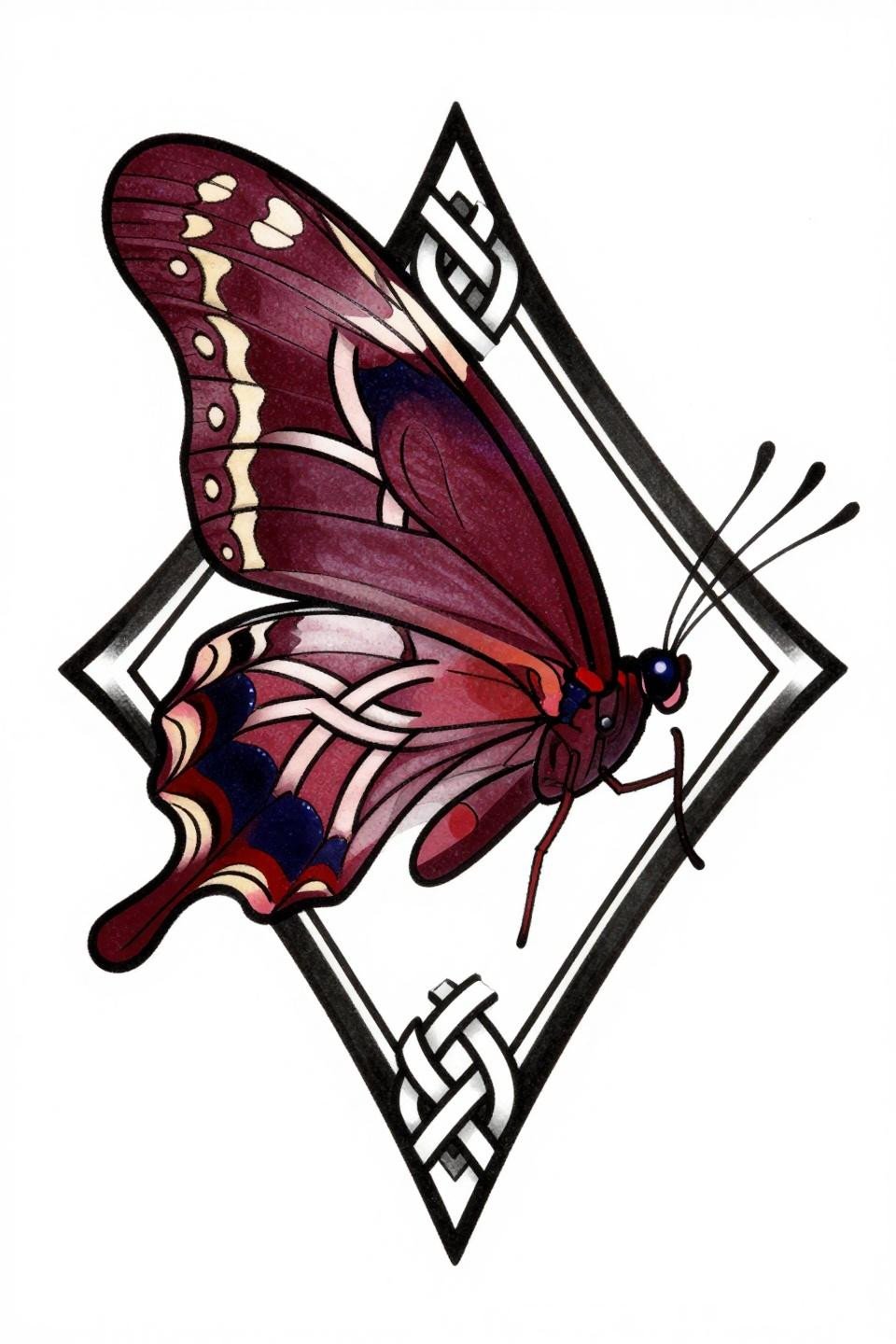
Continuous knotwork fills the entire wing surface of this mourning cloak, set inside a diamond frame of interlocking knot borders. Deep indigo and crimson, bold outlines, no open negative space.
The technical signal here is whether the knotwork terminates correctly at every junction. Continuous line integrity across a complex fill is the marker that separates artists who can actually execute Celtic work from those who approximate it.
Old School Purple Emperor: Flat Fills That Outlast Every Trend Cycle
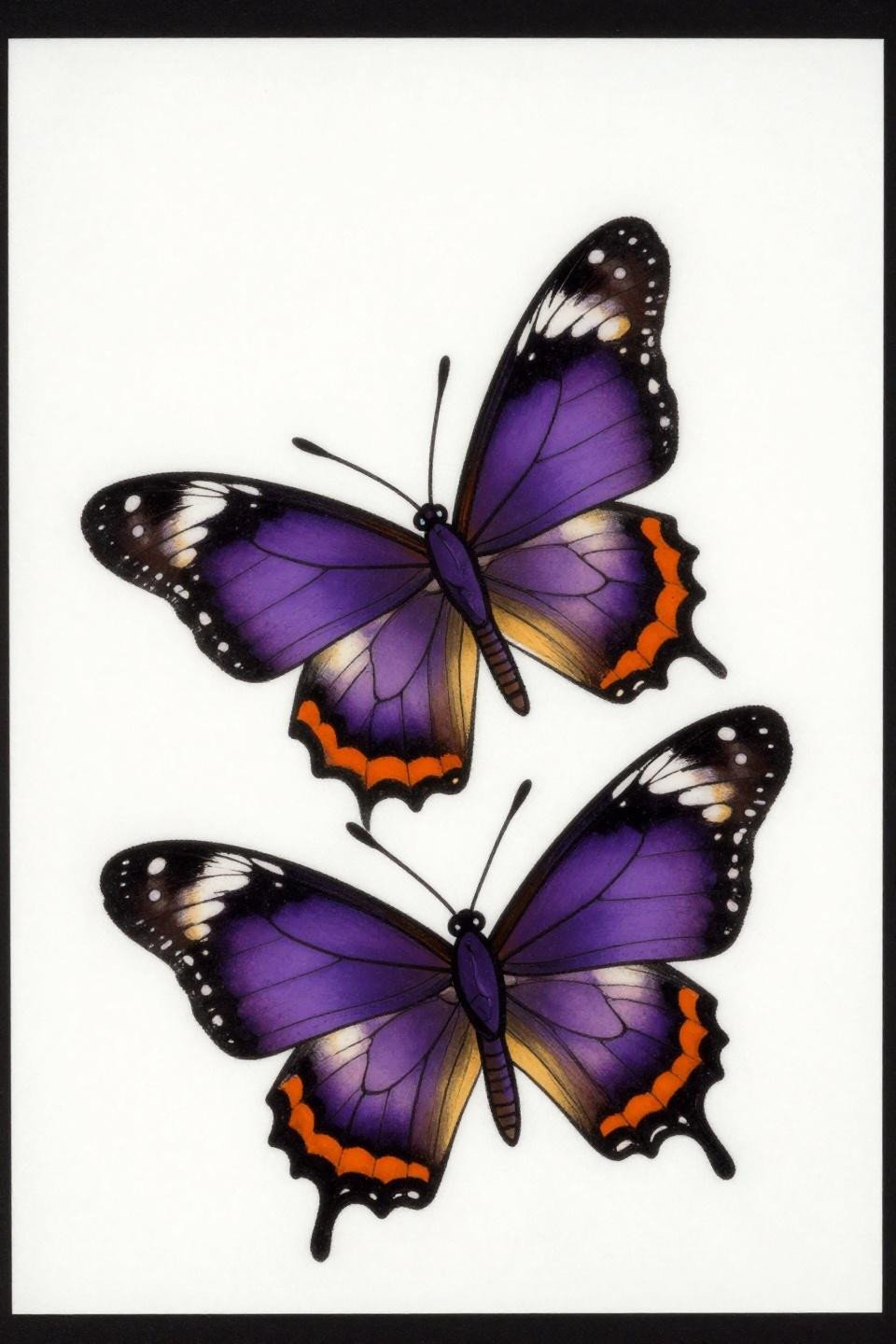
Deep purple forewings, burnt orange hindwing patches, and golden ochre accents, all held inside 3pt traditional outlines that define classic sailor flash structure.
Traditional flat fills with no patchiness separate veterans from beginners. For back tattoo placement options for women, this resting-pose format scales well to upper back and scapula without the wingspan demands of dorsal spread designs.
Traditional American Flight Pose Solves the Asymmetry Problem
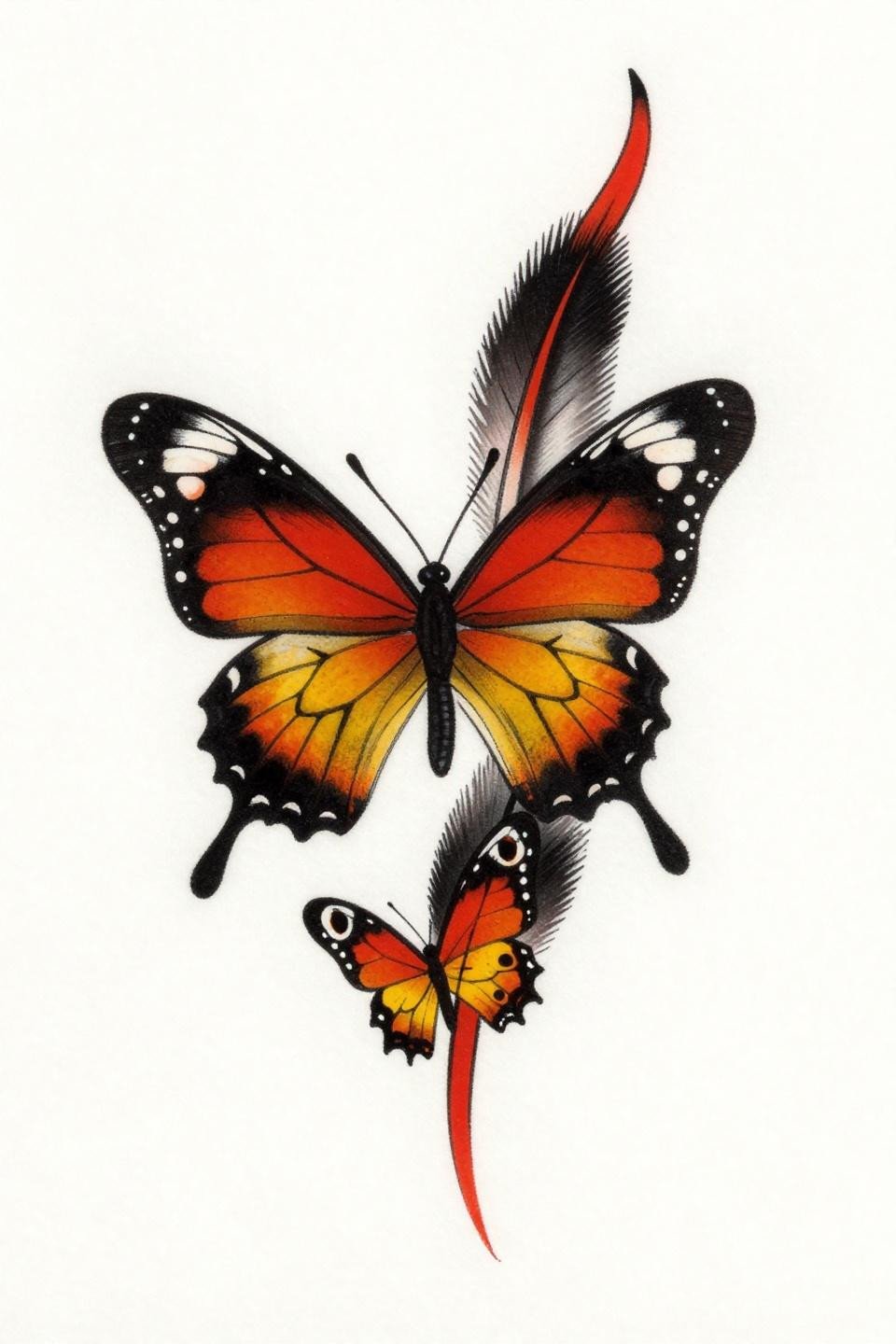
The ascending diagonal composition breaks from the static spread-wing format. Cadmium red-orange and golden yellow fills inside bold 3pt outlines give this clearwing swallowtail the visual weight to read at a distance.
Dynamic flight compositions require artists who can manage diagonal tension without losing balance. A wobble in the asymmetric layout reads immediately once healed, more so than in a centered spread-wing piece.
Tribal Geometric Frame That Works Only If the Fill Is Fully Saturated
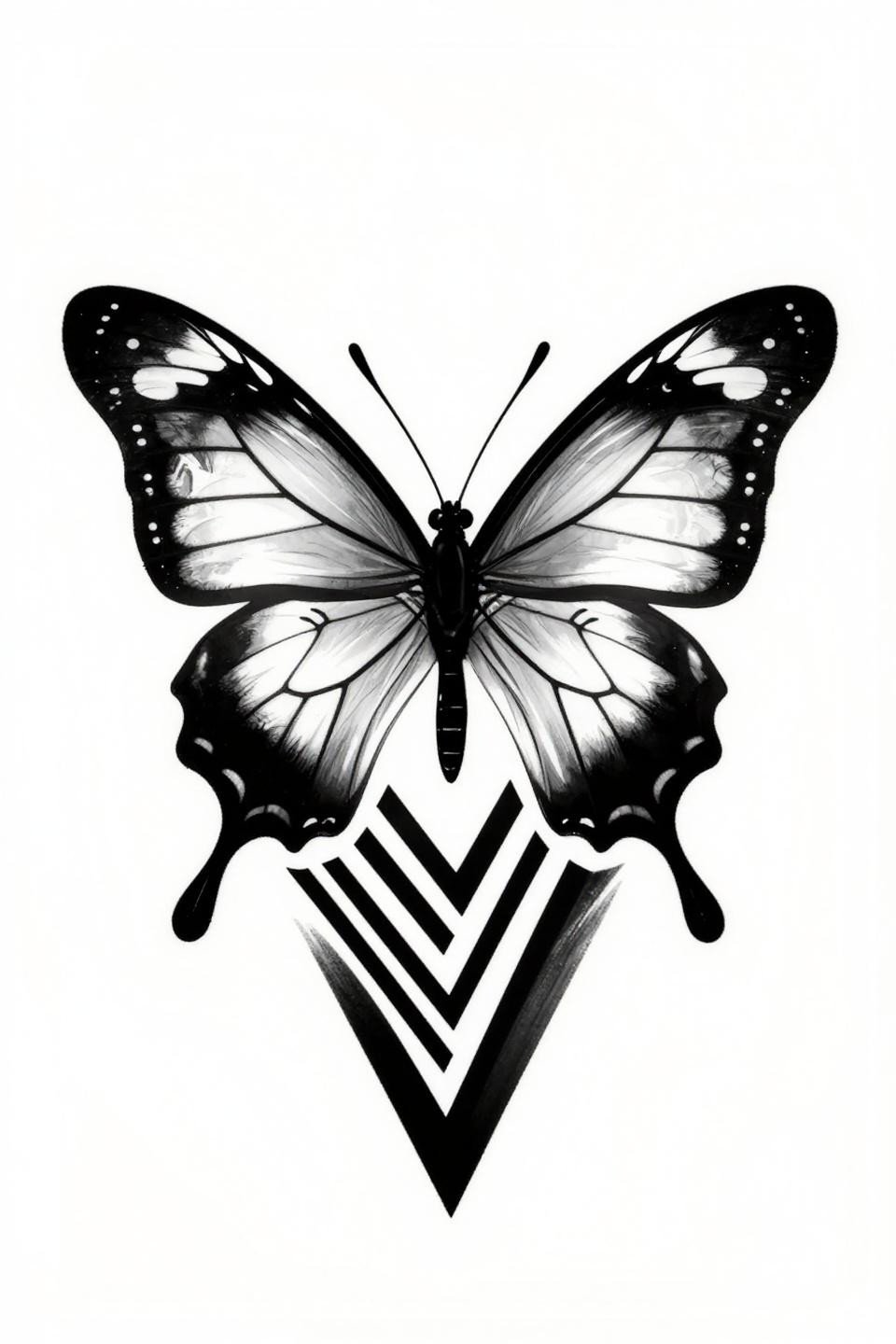
Dense solid black tribal geometry frames a clearwing butterfly, the transparent hindwing vein architecture contrasting against fully opaque black-filled forewings.
Blackwork saturation at full density holds indefinitely when the artist commits to layered passes. Under-saturated tribal fills turn patchy grey within five years, which destroys the contrast logic this design depends on.
Woodcut Crosshatch Longwing: Etching Technique as Aging Insurance
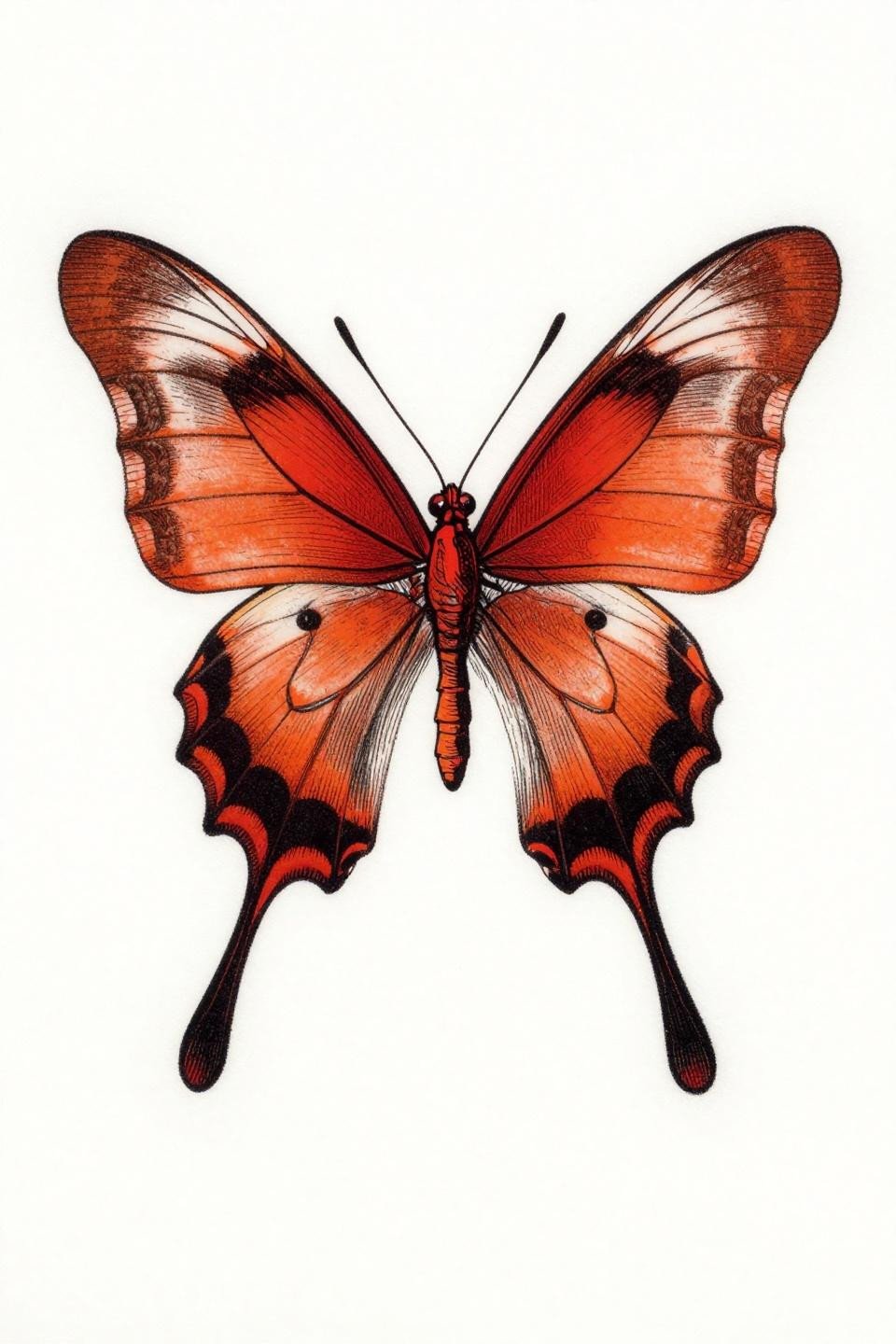
Parallel-line engraving and dense crosshatch shadow zones define this longwing, with crimson accent against solid black as the only color relationship.
The crosshatch shadow structure in woodcut-style work ages more predictably than grey wash because the lines either hold or they don’t. No murky midtone blending to go wrong.
Single Needle Fine Line Viceroy: The Reference That Requires a Caveat
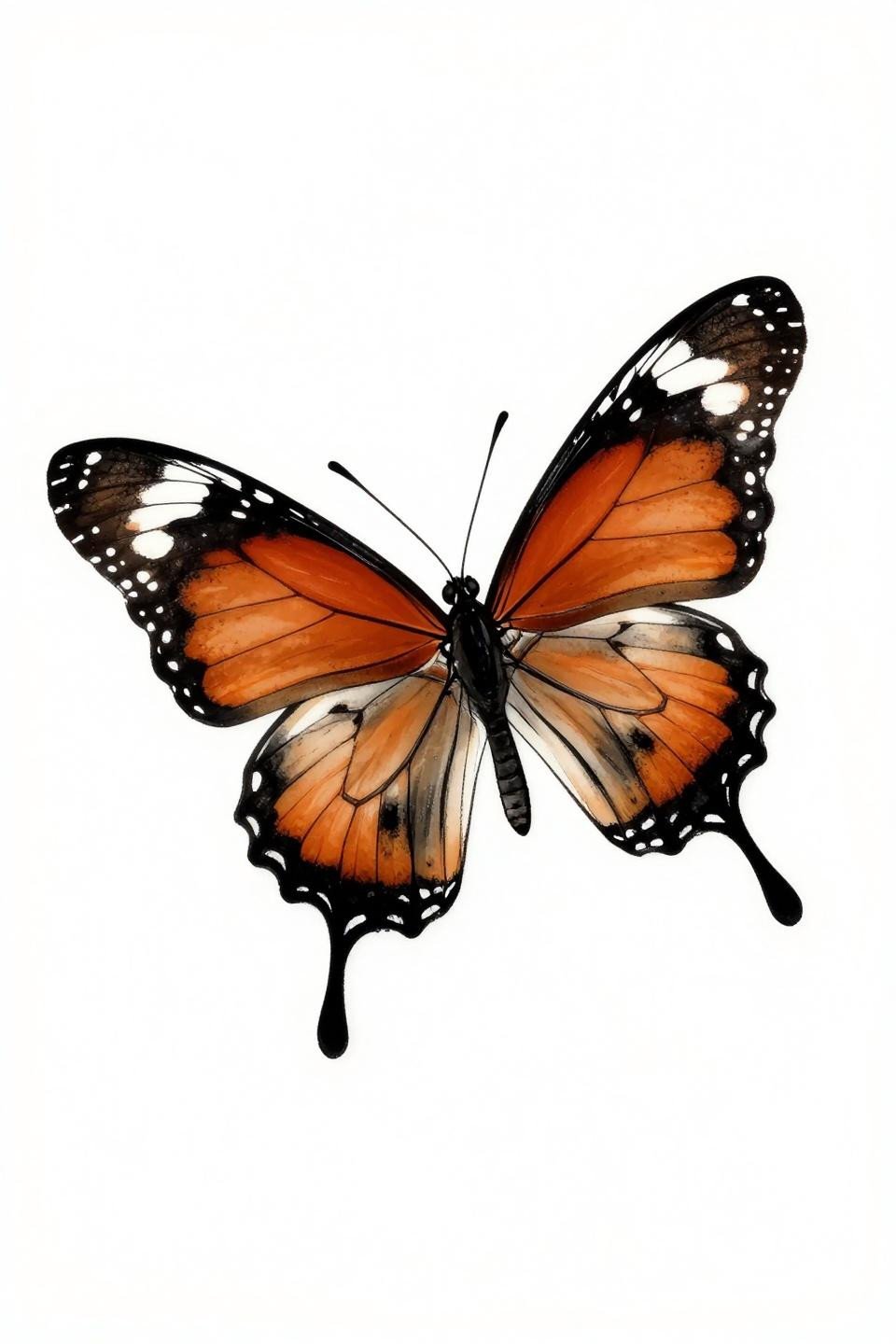
Hairline 0.5mm single-needle strokes with zero fills and zero shading. Open negative space throughout, relying entirely on line weight consistency to read as a coherent form.
Single-needle work at this scale needs a protected placement, inner upper arm, sternum, or upper back, to have any shelf life. On fingers or hands, this design would need touch-ups within 18 months.
Trash Polka Peacock Butterfly: Aggression Geometry Around a Quiet Motif
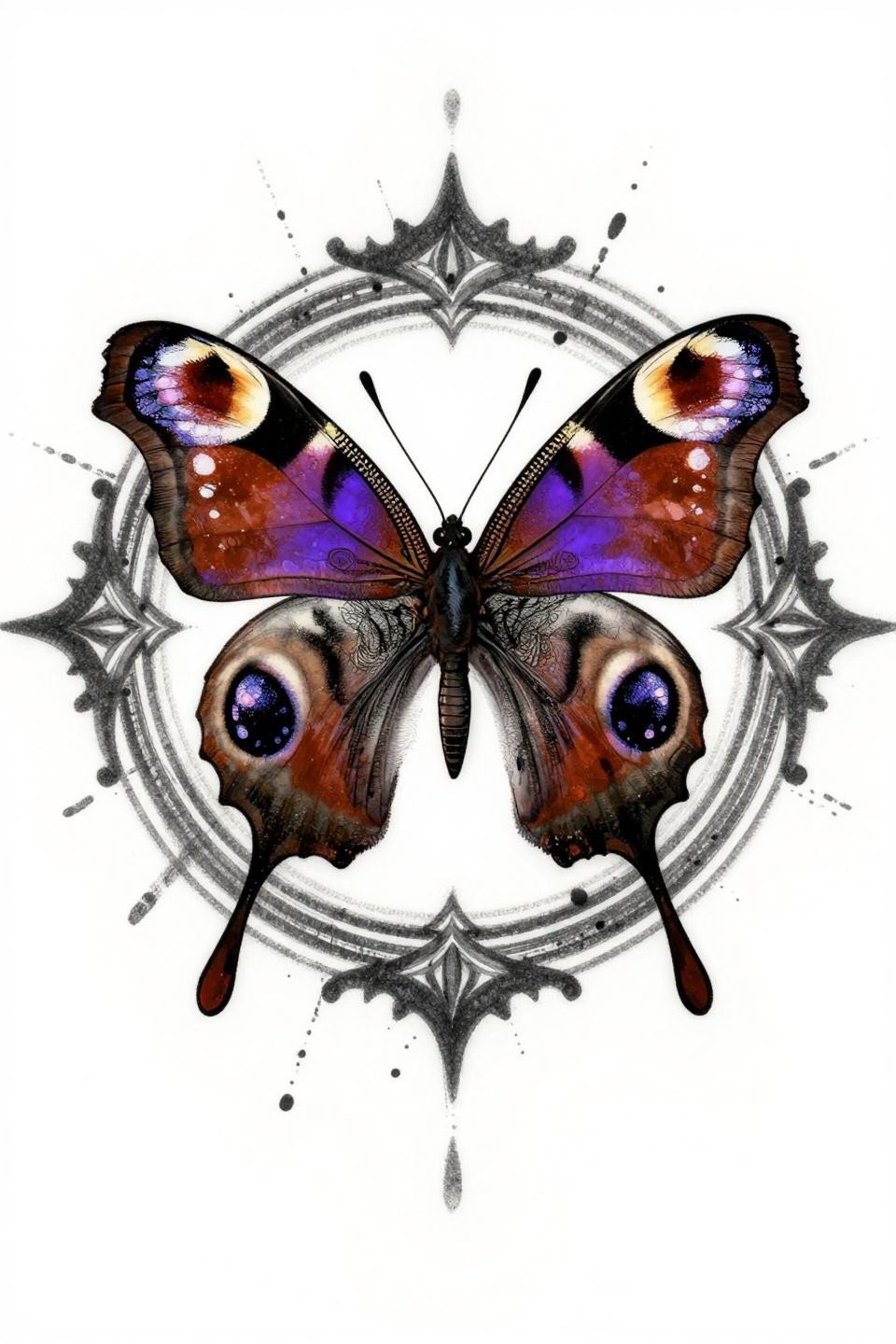
Aggressive paint splatter marks radiate from the peacock butterfly’s eyespot geometry, set inside a circular frame with whip-shaded charcoal fields.
Coral and charcoal palettes in trash polka work require artists with experience in that specific combination. Coral shifts toward muddy pink on some skin tones within three years if the pigment base isn’t high-quality.
Micro-Realism Owl Butterfly: Grey Wash Dilution as the Whole Design Logic
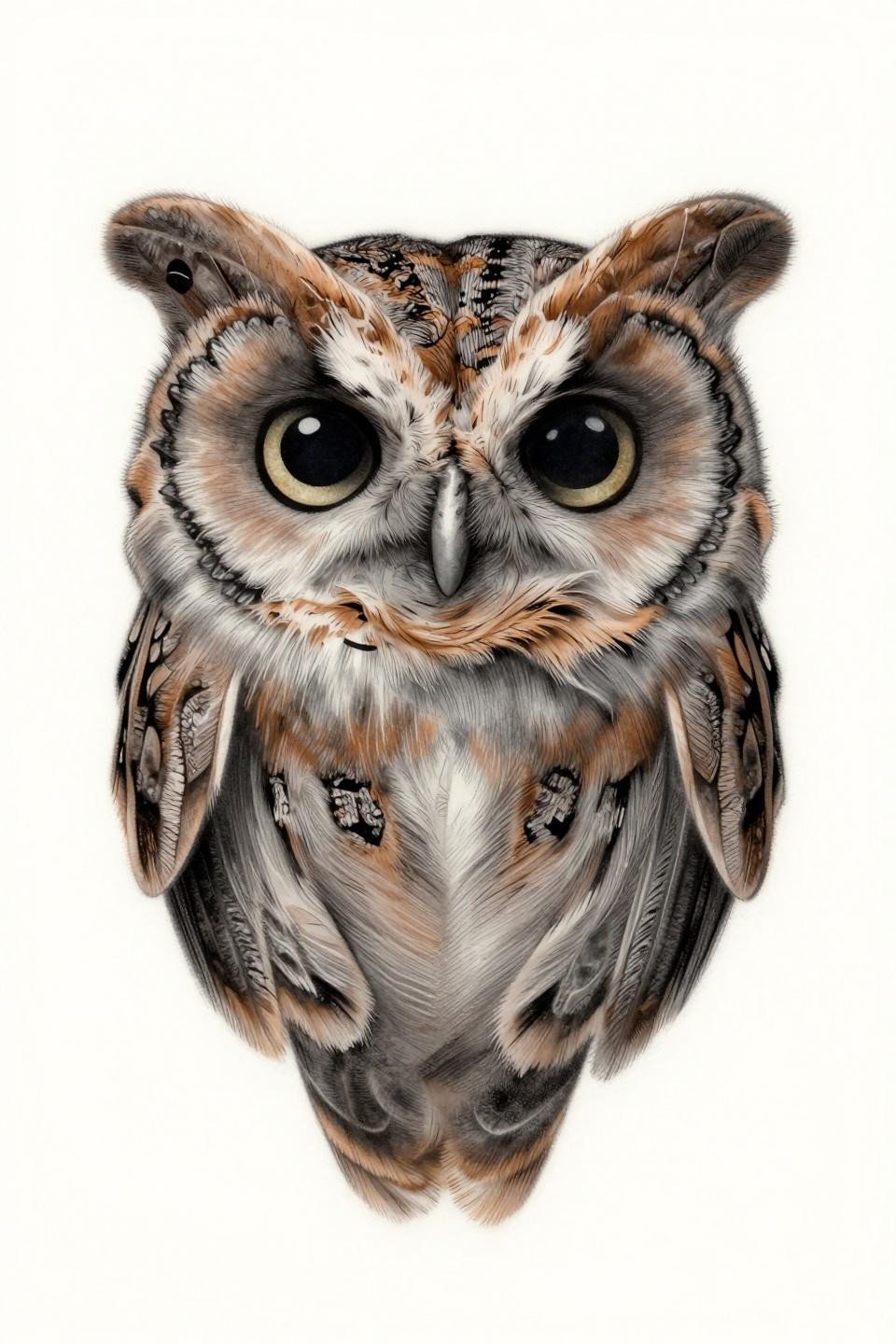
A tight frontal portrait of the owl butterfly, grey wash diluting from dense thorax to open wing margins, with hairline detail strokes rendering the cryptic bark-texture wings.
On olive skin, grey wash dilution from dense to open loses contrast faster than on lighter tones. Artists who have healed micro-realism on medium to darker skin tones are not interchangeable with those who only have lighter skin portfolios.
Art Nouveau Glasswing: When Botanical Framing Justifies the Style Choice
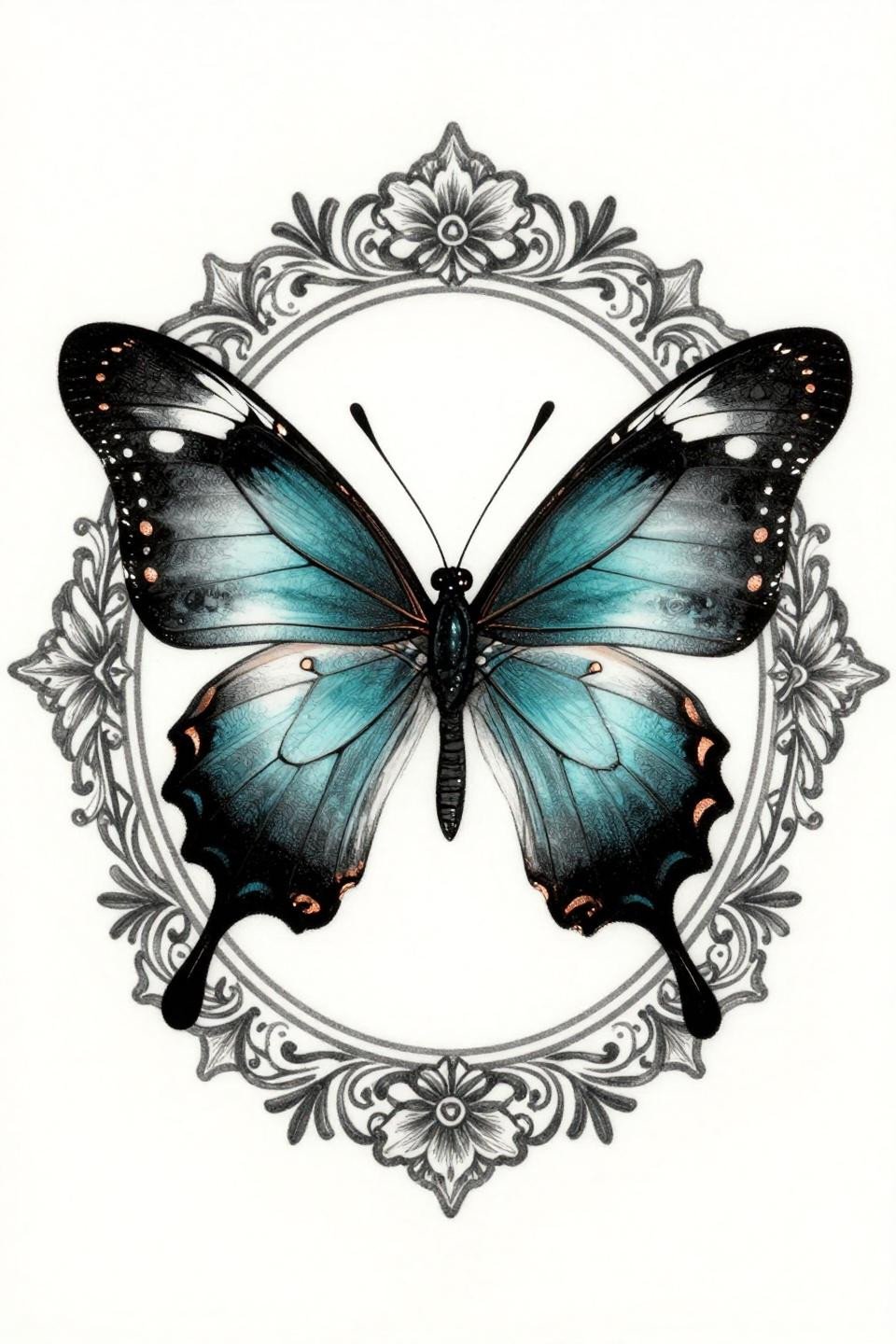
The glasswing’s transparent hindwing architecture sits inside a circular botanical mandala border, with fluid tapered whip-shading strokes and deep teal and copper accents.
Art Nouveau framing justifies itself here because the botanical border logic mirrors actual wing vein structure. Tapered whip strokes are the execution signal: flat, uniform strokes in this style indicate an artist who traced rather than drew.
Luna Moth Botanical Engraving: Scientific Precision as Tattoo Longevity
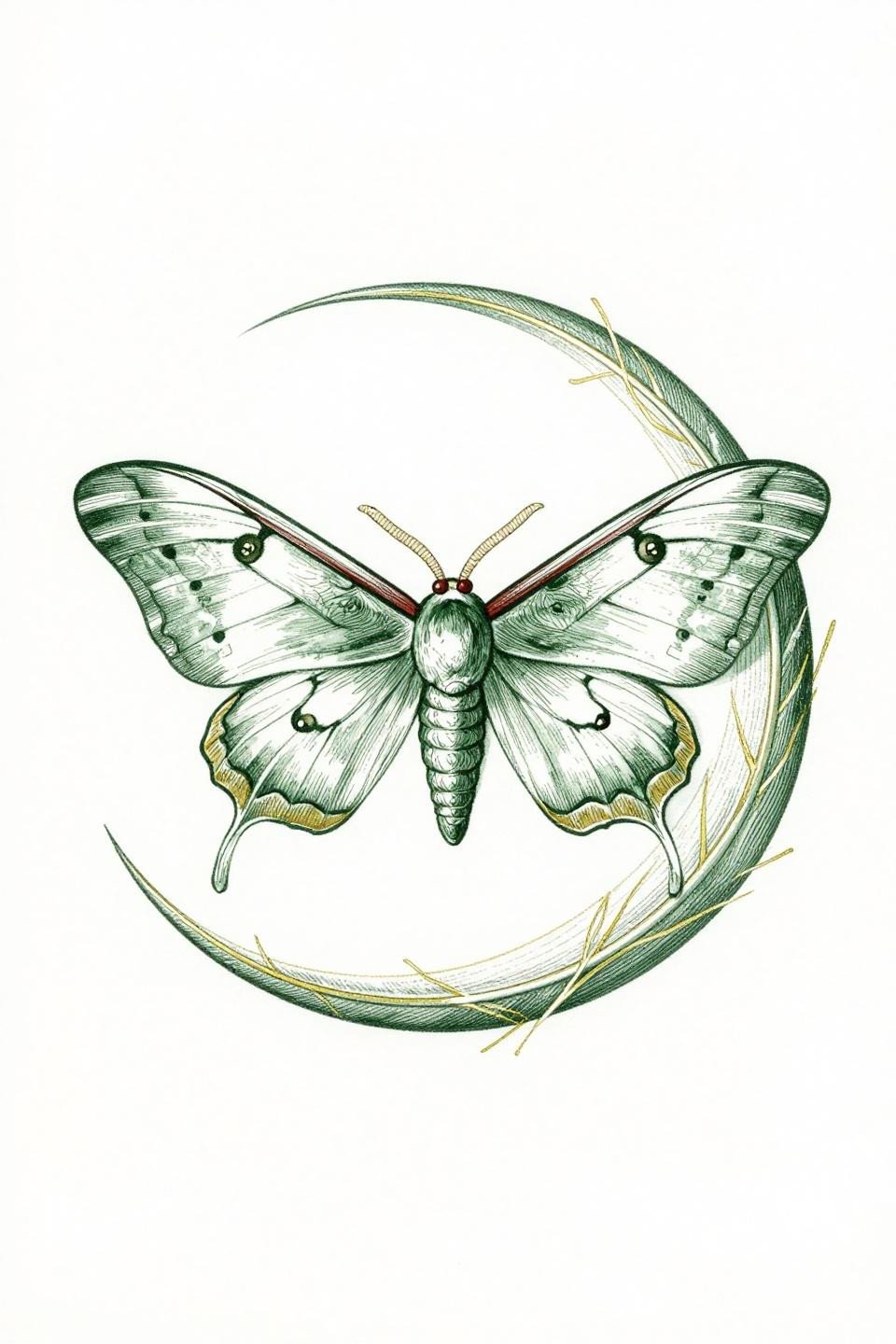
Fine 0.4mm ruled strokes and crosshatch shadow gradients render this luna moth in full botanical illustration style, forest green ink with gold vein filaments through each wing.
Scientific botanical engraving ages well because the parallel line structure holds even as individual hairlines soften. The gold filament lines require a saturated golden yellow, not a diluted warm wash, or they read as beige within a year.
Irezumi Swallowtail in Flight: Brush Stroke Quality as the Entry Point
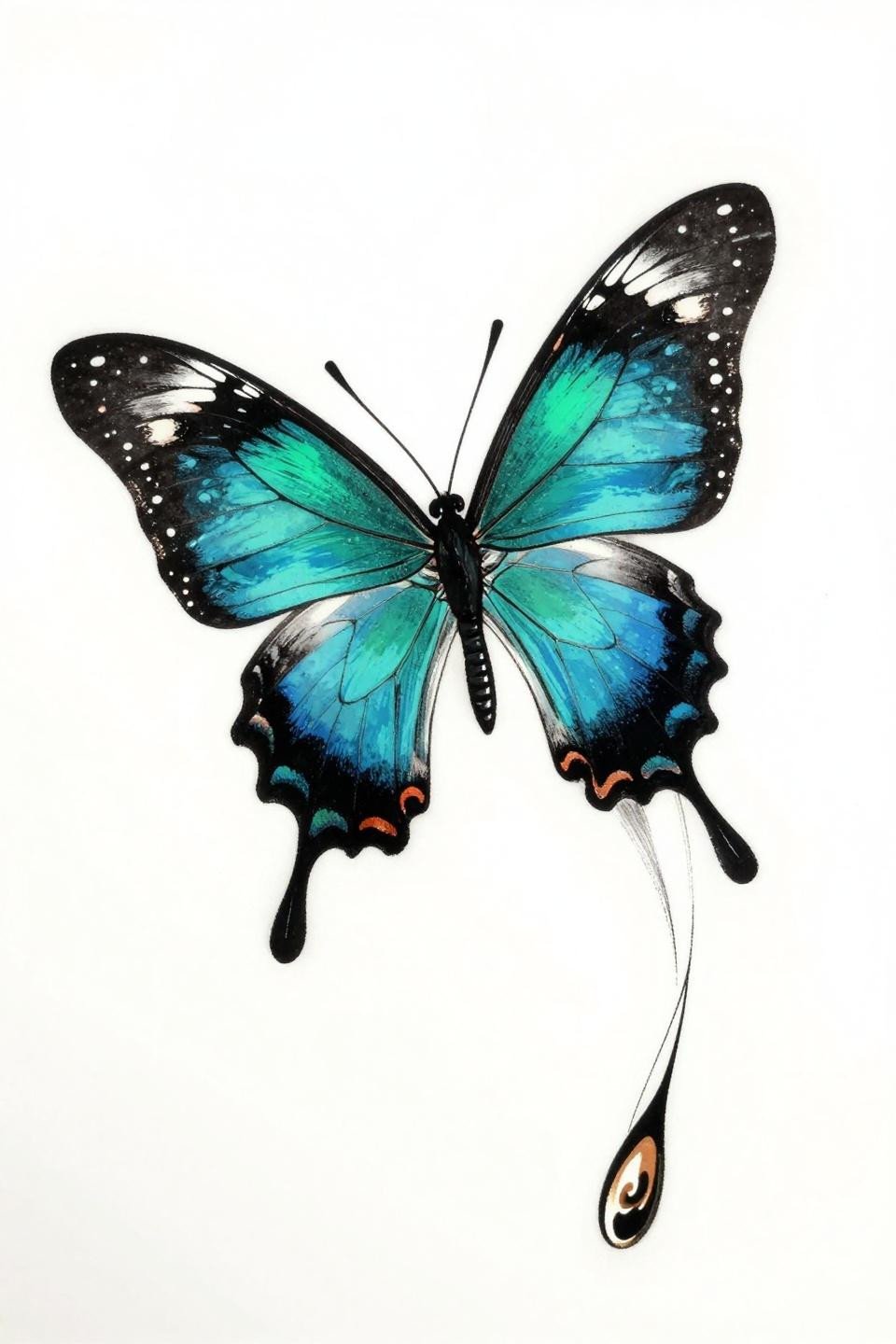
A three-quarter mid-flight composition in irezumi style, flat teal and copper fills inside bold 2-3pt brush-quality outlines, asymmetric diagonal flow across the page.
Brush stroke outline quality in Japanese-influenced work is the immediate skill signal. The taper at each stroke end should vary by intention, not by accident. Ask to see healed irezumi-adjacent work before booking.
Blackwork Dotwork Sphinx Moth: Stipple Density as the Whole Structure
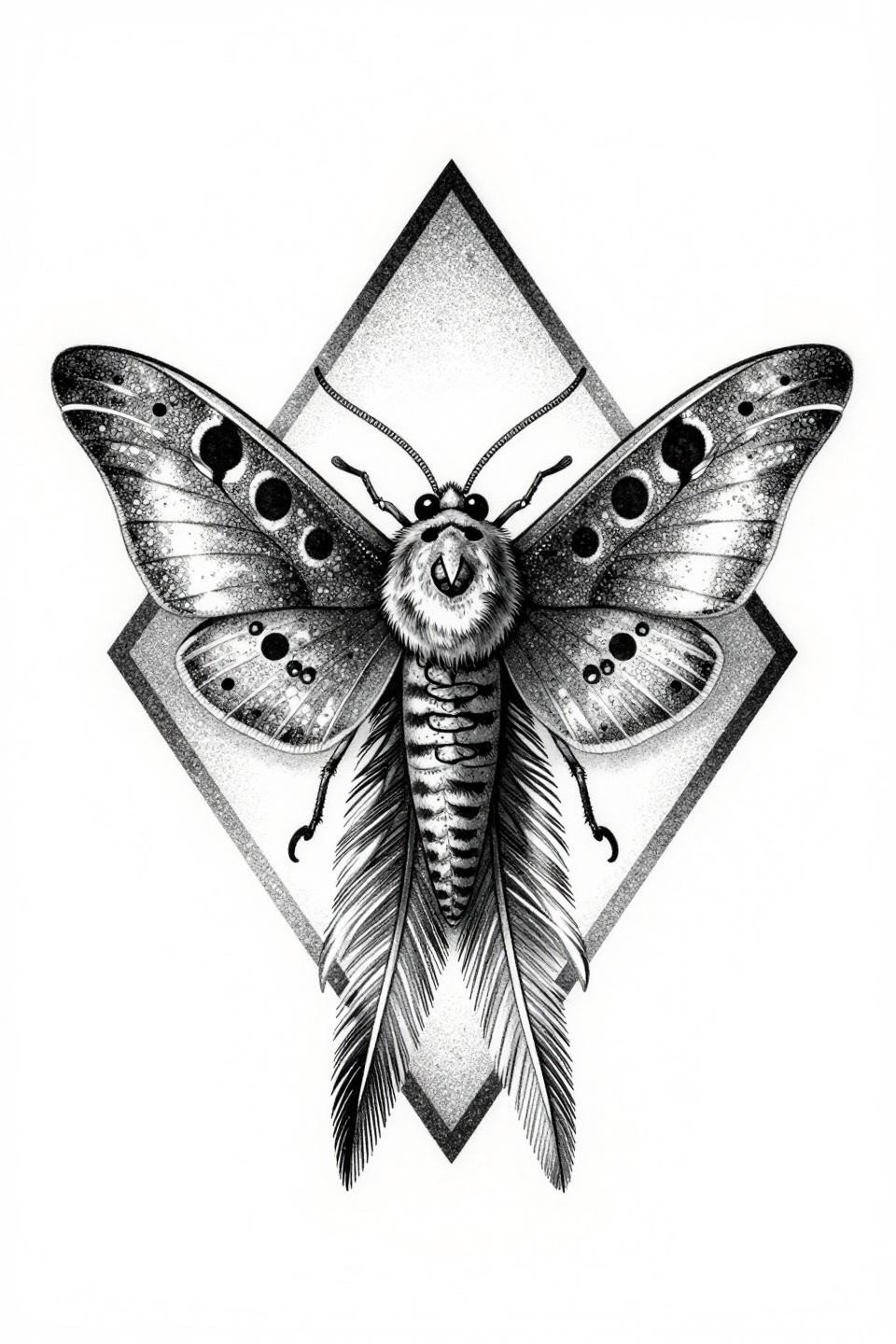
The sphinx moth is built entirely in stipple, dense dot clusters at the thorax fading to open white at the wing margins, contained inside a diamond geometric frame.
Look for consistent dot size across the full gradient. Inconsistent dot size, where clusters vary in diameter rather than spacing, indicates a speed issue that shows worse on healed skin than on fresh work.
Neo-Traditional Forward-Facing Morpho: Symmetry as the Technical Test
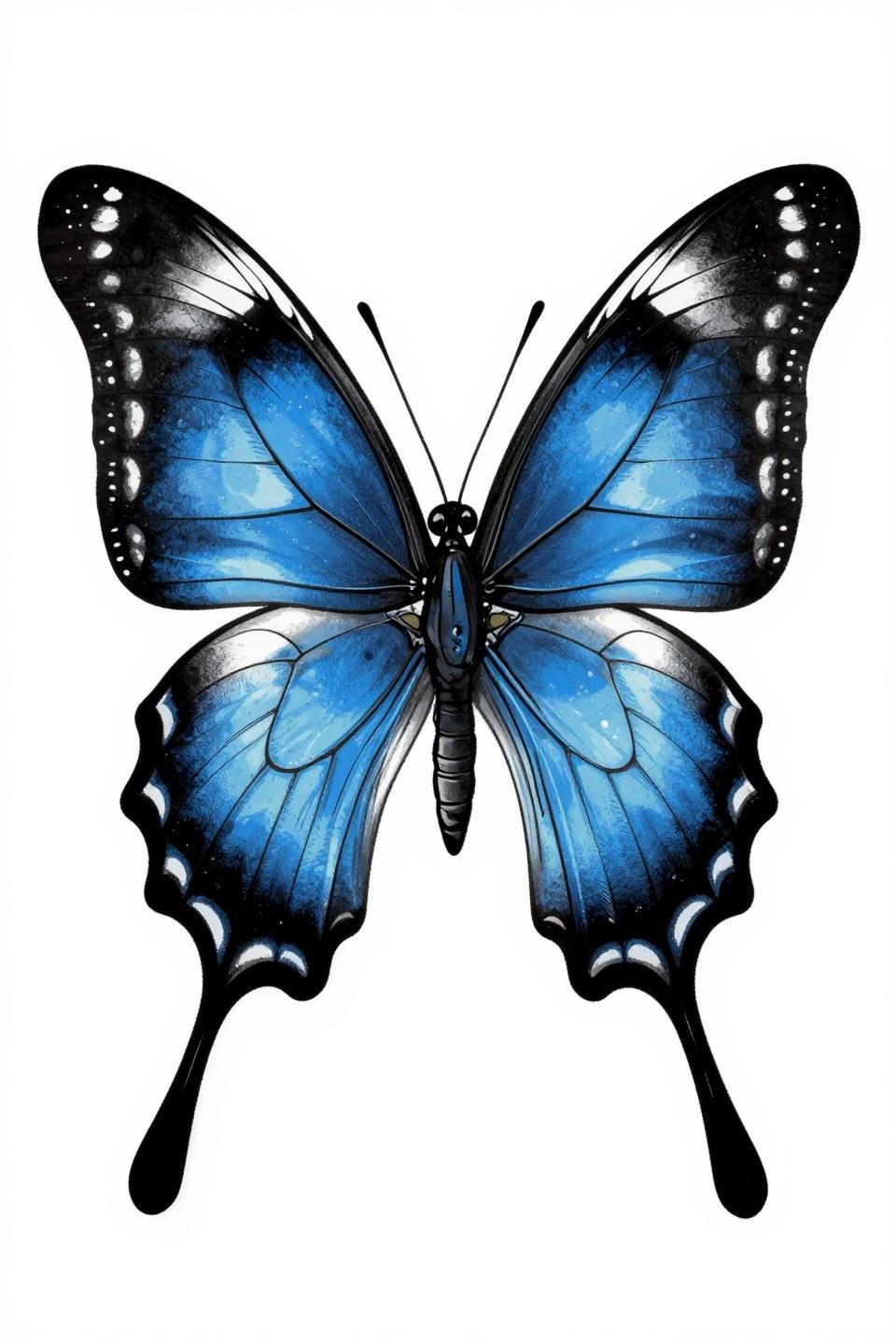
Forward-facing bilateral symmetry with compound eye detail, navy blue flat fills, and neo-traditional shading depth inside bold 2-3pt outlines.
The forward-facing pose is one of the harder butterfly compositions to execute cleanly because any asymmetry in the wings reads immediately at eye level. This is a reference that requires a consultation review of the artist’s symmetry work specifically.
Watercolor Monarch Without an Anchor Outline: Know the Trade-Off
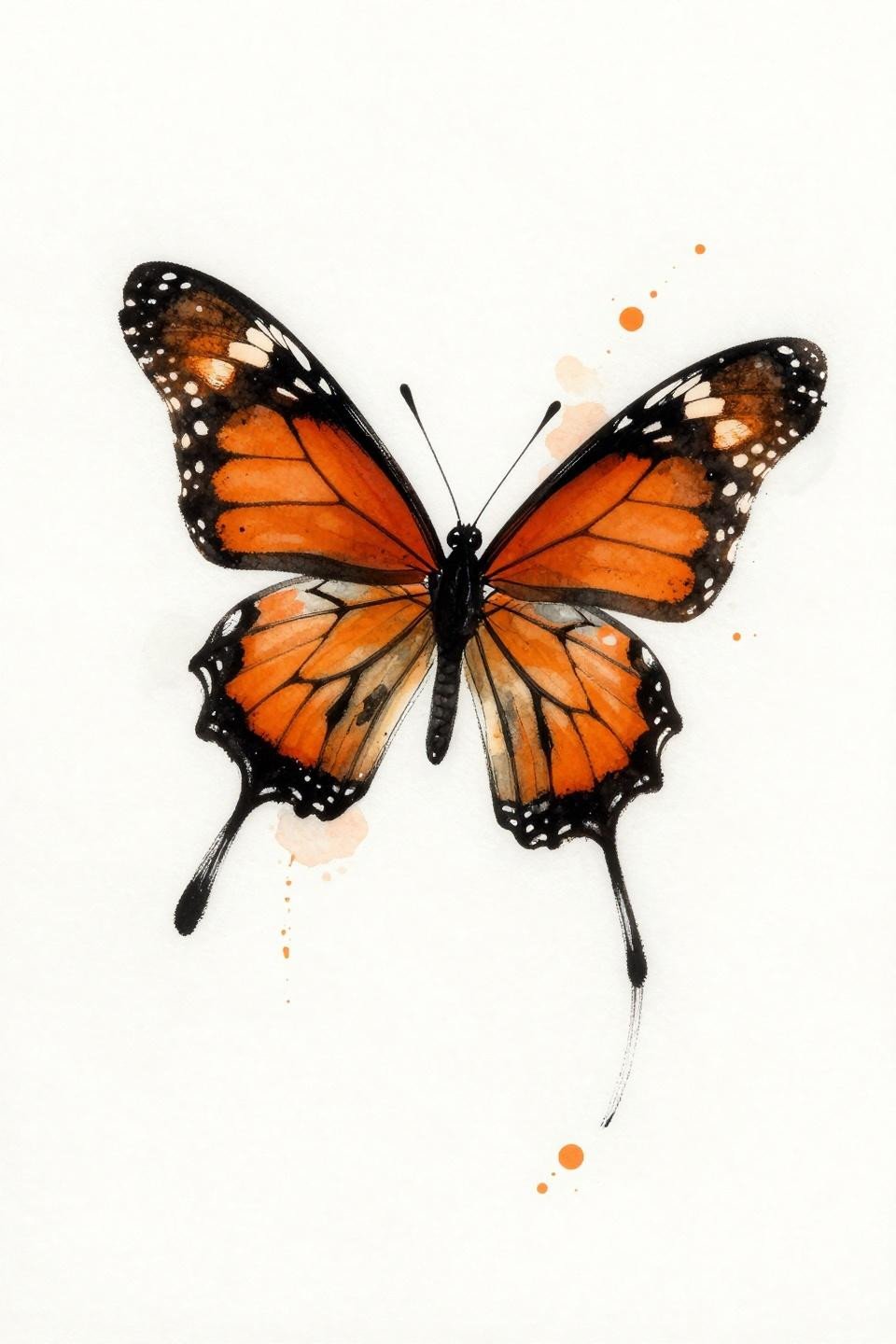
Loose burnt orange watercolor wash bleeds behind bold black vein linework in this mid-flight monarch, with an asymmetric dynamic composition and calligraphic brush marks at the wing edges.
This design survives longer than most watercolor references because the black vein linework anchors the color. Pure watercolor without any black structure blurs by year three to five. The anchor here buys significantly more longevity.
Continuous Line Swallowtail: One Stroke, Zero Room for Error
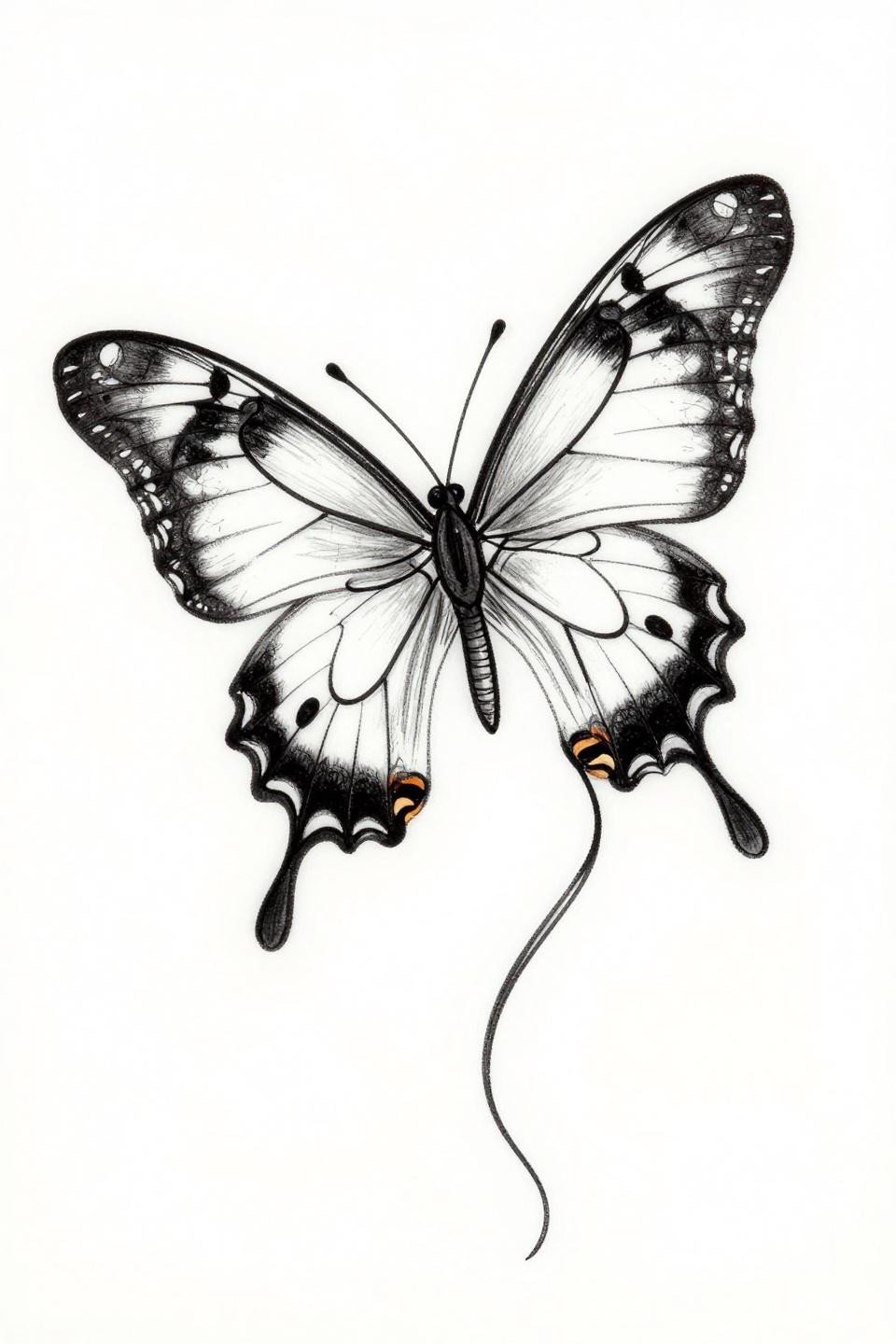
A single unbroken 0.5mm line traces the entire swallowtail form, tail streamers and antennae included, with open negative space and no fill of any kind.
Single continuous line technique requires an artist who controls needle speed through direction changes without lifting. Any hesitation mark reads as an intentional notch. Verify this specifically in healed portfolio examples.
Geometric Monarch With Tessellated Scales: Precision Over Personality
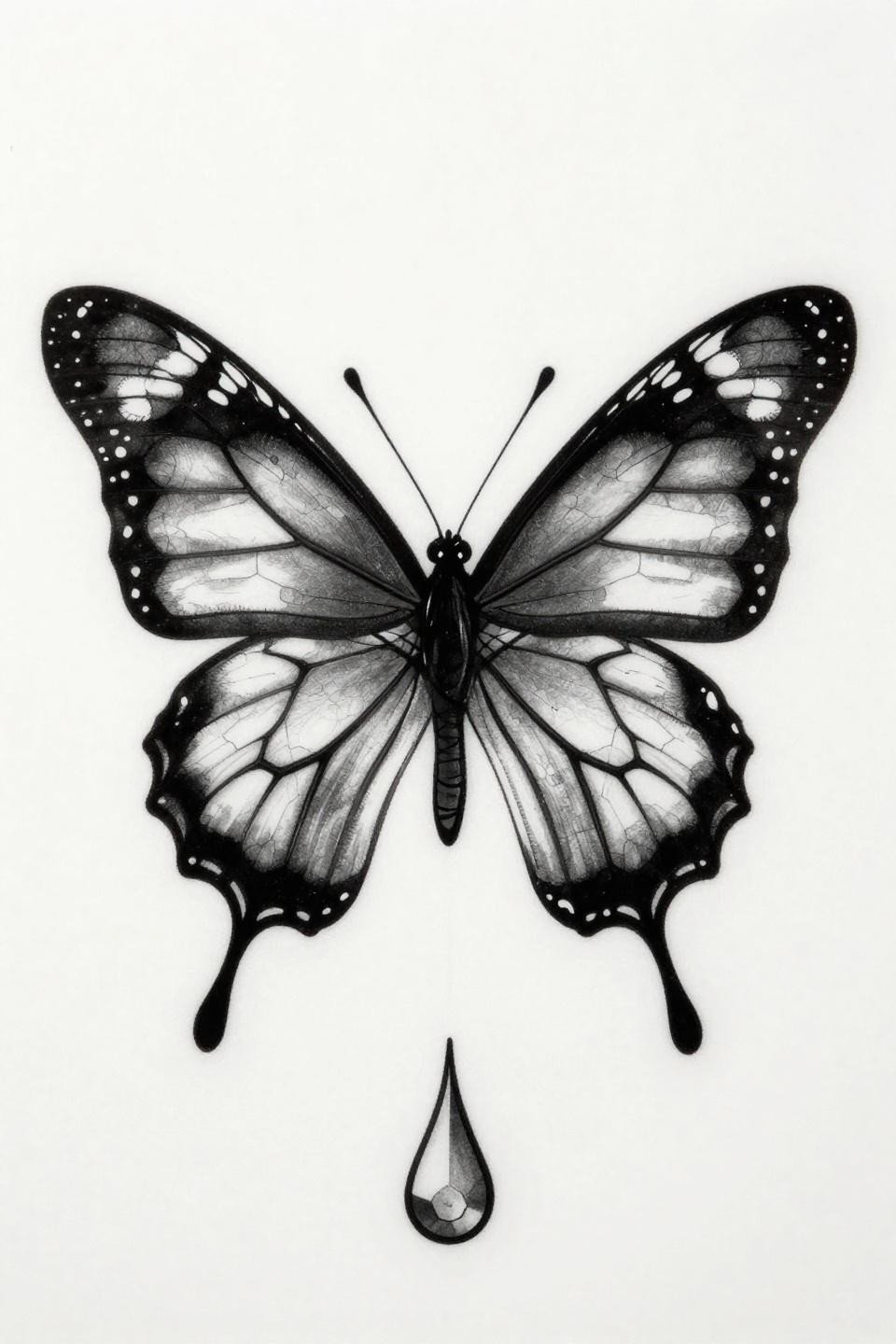
Wing scales rendered as a tessellated hexagon grid, compass-drafted linework, flat fills, and grey wash midtones inside a closed vertical wing form.
The vector-precision line quality is the execution bar here. Any deviation from clean geometric intersections collapses the design logic. This is a reference for artists with documented geometric work, not general fine line portfolios.
Pick three of these references, not fifteen, and filter by placement first. A design that works on a mid-back scale will not translate to a wrist. Match the style to the skin tone, match the scale to the placement, and send your artist a tight reference set.