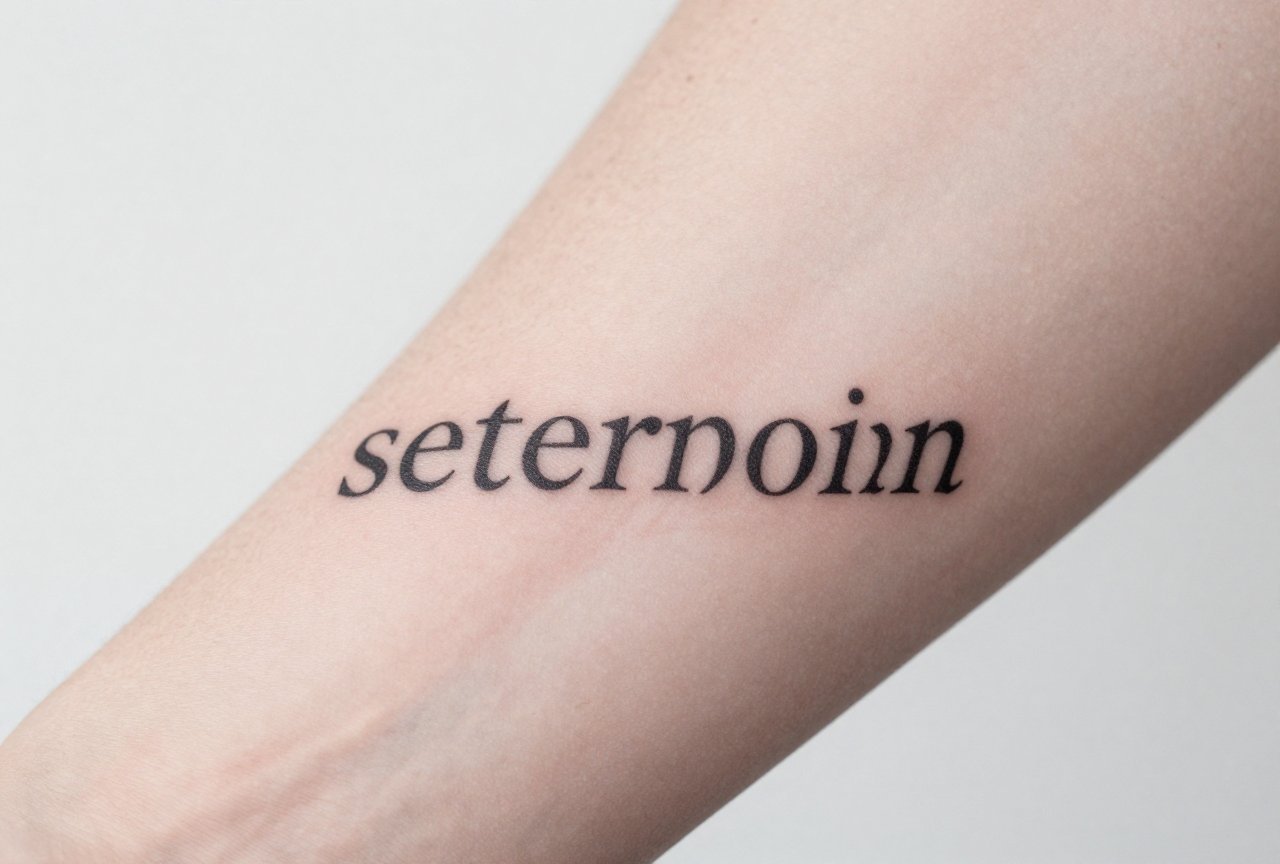
Serotonin Tattoo Meaning: Chemistry, Hope, and Honest Skin
The serotonin molecule has become one of the most requested scientific designs in contemporary tattooing. Two hexagons and a single pentagon, connected by oxygen and hydroxyl groups, carry weight far beyond their structural simplicity. For many, this geometric arrangement represents something deeply personal: the biological basis of wellbeing, the chemical reality of mental health struggles, or a commitment to survival through difficult periods. Understanding what this tattoo actually depicts, where it sits in broader culture, and how it translates to skin helps you make informed decisions about placement, style, and whether this symbol genuinely serves your intentions.
What the Structure Actually Represents
Serotonin, or 5-hydroxytryptamine, functions as both neurotransmitter and hormone in human physiology. The molecule itself consists of an indole ring structure attached to an ethylamine side chain. Tattoo renditions typically simplify this into recognizable hexagonal and pentagonal rings with connecting lines representing chemical bonds.
Biologically, serotonin influences mood regulation, sleep cycles, appetite, and cognitive function. Roughly 90% of the body’s serotonin resides in the gastrointestinal tract, with the remainder synthesized in the brainstem’s raphe nuclei. This dual distribution matters symbolically: the molecule governs both embodied experience and mental state, gut feeling and conscious emotion.
The Gap Between Symbol and Science
Popular understanding often oversimplifies serotonin’s role. The “chemical imbalance” theory of depression, heavily promoted in pharmaceutical marketing, has faced significant scientific challenge in recent years. Research published across psychiatry and neuroscience journals suggests the relationship between serotonin levels and depression is far more complex than simple deficiency. Some studies find no consistent correlation between cerebrospinal fluid serotonin metabolites and depressive diagnosis.
This scientific nuance doesn’t invalidate the tattoo’s meaning. Rather, it shifts the symbolism from “I lack this chemical” toward “I acknowledge the biological dimension of mental experience.” The molecule becomes a reminder that suffering and recovery both have physical substrates, not merely personal failings or triumphs of will.
Placement and Scale Considerations
Serotonin molecular structures suit particular locations better than others. The linear arrangement of rings and bonds rewards certain anatomical geometries while fighting others.
- Forearm and wrist: The horizontal span of the molecular structure aligns naturally with these areas. Visibility allows for personal reminder and public conversation. Inner forearm placement offers slightly more privacy while maintaining readability.
- Ribcage and sternum: The vertical orientation possible here accommodates larger, more detailed renditions. Proximity to the actual anatomical heart creates layered meaning for some wearers, though this association is biologically imprecise.
- Behind the ear and nape: Compact versions work well here, though detail loss increases at very small scales. Single-needle or fine-line techniques become necessary for legibility.
- Ankle and foot: These locations present challenges. Skin texture changes, sun exposure, and friction from footwear accelerate aging of fine lines. The molecular structure’s precise geometry suffers disproportionately.
Size Thresholds for Clarity
Below approximately 5 centimeters in width, the hexagonal rings compress and bond lines blur. At 3 centimeters, most artists struggle to maintain the distinction between single and double bonds that chemically differentiate the structure. For minimalist interpretations, stylization becomes necessary: some artists omit hydroxyl groups, others abstract the ring system into connected geometric shapes that suggest rather than replicate the molecule.
Stylistic Approaches and Their Implications
The same molecular structure supports radically different aesthetic treatments, each carrying distinct connotations.
Technical scientific illustration employs precise bond angles, correct atom labeling, and proper stereochemistry. This approach signals respect for the science itself. It appeals to those with chemistry backgrounds, medical professionals, or individuals who want the tattoo to withstand scrutiny from knowledgeable viewers. The trade-off is visual complexity and potentially clinical coldness.
Minimalist line work strips the structure to essential connectivity. No atom labels, reduced detail, consistent line weight. This style dominates current social media representation. Its accessibility and elegance come at the cost of chemical accuracy; many minimalist serotonin tattoos would be unidentifiable to a chemist without context.
Integrated illustrative work weaves the molecular structure into larger compositions: growing from soil, dissolving into particles, connected by vines or neural pathways. These designs sacrifice some scientific legibility for narrative richness. The molecule becomes one element within a broader symbolic vocabulary.
Abstracted or deconstructed versions break the ring structure into color fields, dot patterns, or fragmented geometries. These push the boundary of recognition. Effective examples maintain enough structural DNA that informed viewers can identify the reference; unsuccessful ones become generic abstract tattoos with lost connection to their source.
Cultural Context and Critical Considerations
The serotonin tattoo’s popularity emerged alongside broader cultural conversations about mental health destigmatization. Its rise tracks with increased pharmaceutical treatment visibility, social media disclosure of depression and anxiety experiences, and the proliferation of neuroscientific language in everyday discourse.
Biological Essentialism and Its Risks
Some critics note that reducing mental health experience to a single molecule risks what philosophers call “biological essentialism”, the belief that complex phenomena are fully explained by underlying physical mechanisms. This framing can inadvertently minimize social, economic, and relational contributors to psychological distress. The tattoo, worn individually, cannot resolve this tension. Awareness of it, however, allows more intentional engagement with the symbol.
Commodification and Trend Dynamics
Scientific tattoos have cycled through popularity phases. DNA double helices, dopamine structures, and serotonin molecules have each experienced peak visibility. This pattern raises legitimate questions about whether a serotonin tattoo will feel personally resonant in ten or twenty years, or whether it will mark a specific cultural moment rather than enduring individual significance.
Countering this concern: the molecule’s specific association with your lived experience, if genuine, transcends trend status. The tattoo’s meaning derives from your relationship to it, not from its prevalence. What matters is whether you chose it from interior necessity or exterior influence.
Technical Execution for Longevity
Molecular structure tattoos present specific technical challenges that affect how they age. The precise geometric requirements reward certain approaches and punish others.
- Line weight consistency: Uneven lines in hexagonal rings become visually obvious immediately and worsen with age. Experienced artists maintain uniform stroke weight throughout the structure.
- Negative space preservation: The rings’ interior spaces must remain clean and uninked. Blowout or shading drift destroys the molecular readability.
- Color choices: Traditional black and grey offer the most predictable aging. Color additions, when used, should serve structural clarity rather than decorative impulse. Some artists use subtle blue tones to reference serotonin association with calm or stability, though this is interpretive rather than scientifically grounded.
- Aftercare specifics: Geometric tattoos with fine lines benefit from meticulous aftercare. Scabbing that pulls ink from precise edges, sun exposure that blurs fine detail, and moisture imbalance that affects healing all disproportionately impact molecular structures compared to softer, more organic designs.
Consultation with artists who specifically demonstrate geometric or scientific tattoo experience yields better outcomes than generalist selection. Portfolio review should reveal clean hexagonal work, consistent line quality, and healed photographs showing how precision holds over time.
Final Thoughts
The serotonin tattoo occupies a meaningful intersection: legitimate scientific structure, personal psychological narrative, and contemporary visual culture. Its power depends entirely on the depth of your relationship to what it represents. A molecule cannot cure depression, guarantee happiness, or fully explain consciousness. What it can do is mark a decision to acknowledge the biological reality of mental experience, to honor survival, or to maintain visible connection to ongoing self-care.
The best serotonin tattoos result from honest self-assessment about why this specific symbol, why now, and whether its scientific simplifications align with your actual understanding. The worst emerge from uncritical adoption of a recognizable motif. Between these poles sits the work of choosing: researching the structure, considering placement carefully, selecting an artist with demonstrated technical precision, and accepting that skin will carry this mark through changing scientific understanding and personal evolution alike.
What remains on skin is geometry. What lives beneath it is yours alone.
Frequently Asked Questions
Is the serotonin molecule scientifically accurate in most tattoos?
Most tattoo renditions simplify the structure significantly. Accurate representations include correct bond angles, stereochemistry, and functional group placement. Many popular minimalist versions omit atom labels and abstract connections to the point where chemists might struggle to identify them without context. If scientific accuracy matters to you, bring reference diagrams to consultation and verify the artist’s comfort with technical illustration.
Does a serotonin tattoo trivialize mental health conditions?
This depends on individual intention and context. The tattoo can function as genuine acknowledgment of biological dimensions of mental health experience, or as superficial aesthetic adoption. The critical distinction is whether the wearer has substantive personal connection to what the symbol represents. No tattoo inherently trivializes or honors; the meaning emerges from lived relationship to the symbol.
How well do fine-line molecular tattoos age?
Fine-line geometric work ages more visibly than bolder traditional styles. Lines blur, spread slightly, and lose crispness over years. Molecular structures with precise ring systems suffer particularly from this aging. Mitigation strategies include slightly larger scale, consistent line weight without extremely thin passages, placement on low-friction skin areas, and rigorous sun protection throughout the tattoo’s life.
What alternatives exist if I want scientific symbolism but broader meaning?
Several related structures carry different connotations. Dopamine molecules emphasize motivation, reward, and pleasure pathways. Oxytocin structures connect to bonding and social connection. Norepinephrine relates to alertness and stress response. Some choose neurotransmitter receptor illustrations rather than molecules themselves, or integrate multiple structures into composite designs. Others move toward entirely different symbolic vocabularies: botanical references, celestial imagery, or abstract forms with personal rather than scientific reference.