Mythology & Folklore
George R.R. Martin’s sprawling universe draws deliberately from medieval European history, Norse sagas, and classical mythology. The Stark direwolf echoes the wolf companions of Odin and the legendary beasts of Anglo-Saxon poetry. Targaryen dragons, meanwhile, carry the weight of millennia of fire-serpent lore across cultures, from the Mesopotamian mushussu to the Chinese lung, though Martin’s interpretation often linked to Western traditions of chaotic, hoarding wyrms.
Three-eyed ravens and weirwood trees incorporate shamanic traditions of spirit animals and sacred groves. The Faceless Men’s worship of death itself resembles aspects of the Hindu goddess Kali and various psychopomp figures who guide souls between worlds. Understanding these layers matters for tattoo selection; a design rooted in Martin’s specific reinterpretation carries different resonance than one drawing directly from historical source material.
House Sigils and Their Historical Echoes
Each major house sigil functions as heraldic device, borrowed from medieval European traditions of visual identity. Lions, stags, krakens, and falcons all appeared in actual coats of arms, though Martin’s combinations (a kraken versus a lion, for instance) create specifically Westerosi tensions. The Lannister lion specifically references both the Plantagenet lions of England and the more sinister connotations of gold and predation that Martin develops.
Minor houses and their sigils offer less-recognized options for those seeking something beyond the most common choices. The Mormont bear, the Reed crannogman, or the Blackfish’s personal sigil provide conversation points and visual distinction without sacrificing recognizability entirely.
Symbolism & Core Meaning
Game of Thrones imagery operates on multiple symbolic registers simultaneously. The most enduring designs typically engage with at least two of these layers: narrative significance, personal identification with character arcs, and broader thematic resonance about power, mortality, or moral complexity.
Dragons symbolize not merely power but its corrupting, consuming nature. Daenerys’s arc transforms the dragon from liberation emblem into destruction incarnate, a duality that sophisticated designs can acknowledge. Wolves, by contrast, often represent loyalty to place and family, though the Stark children’s scattered fates complicate even this apparently straightforward reading.
Valar Morghulis and Permanent Ink
The High Valyrian phrase “all men must die” serves as both memento mori and narrative prophecy. As tattoo text, it functions similarly to traditional Latin mortality reminders, though with the added layer of fictional context. The conventional response, “valar dohaeris” (all men must serve), introduces thematic tension between individual death and collective obligation that some choose to incorporate as paired phrases or complementary imagery.
Other textual options include house words (“Winter is Coming,” “We Do Not Sow,” “Unbowed, Unbent, Unbroken”), though these carry varying degrees of ironic weight given narrative outcomes. The Night’s Watch oath, in its full length, offers textual density that works well as band or sleeve designs.
What to Expect
Placement significantly affects how these designs read over time. Intricate house sigils with fine linework require sufficient flat surface area; the forearm, upper arm, and calf provide better canvas than fingers or behind-ear placement for detailed heraldic work. Text-heavy designs need linear space; spiraling phrases around limbs often become illegible as aging occurs.
Scale demands consideration. A three-inch direwolf silhouette reads clearly; a three-inch dragon with full wing spread and flame detail becomes muddled. Artists generally recommend simplifying complex imagery or committing to larger pieces where detail remains possible.
- Small, simple sigils: 1-2 hours, heal relatively quickly, touch-ups occasionally needed for fine line weight
- Medium house shields with color: 3-4 hours, more involved aftercare, color saturation critical for gold and crimson accuracy
- Large narrative scenes (Iron Throne, major battle compositions): multiple sessions, significant planning, substantial investment
- Text pieces: highly dependent on lettering style, script fonts require more frequent refreshing than bold sans-serif
Healing considerations parallel other tattoos, though areas with heavy black fill (Night’s Watch motifs, certain Targaryen designs) may experience longer initial healing phases. Red pigments, heavily used in Lannister and Targaryen imagery, historically showed higher reaction rates in some individuals, though modern formulations have reduced this concern.
Common Variations & Styles
Traditional American styling translates surprisingly well to house sigils, with bold outlines and limited color palettes matching heraldic origins. A Sailor Jerry-influenced kraken or stag gains vintage gravitas while remaining immediately legible.
Blackwork and Nordic techniques suit Stark and Night’s Watch imagery particularly, the heavy black and geometric patterns resonating with northern cultural associations. Some artists develop entire sleeves combining runic borders with weirwood faces or raven motifs in this visual vocabulary.
Realism and Portrait Work
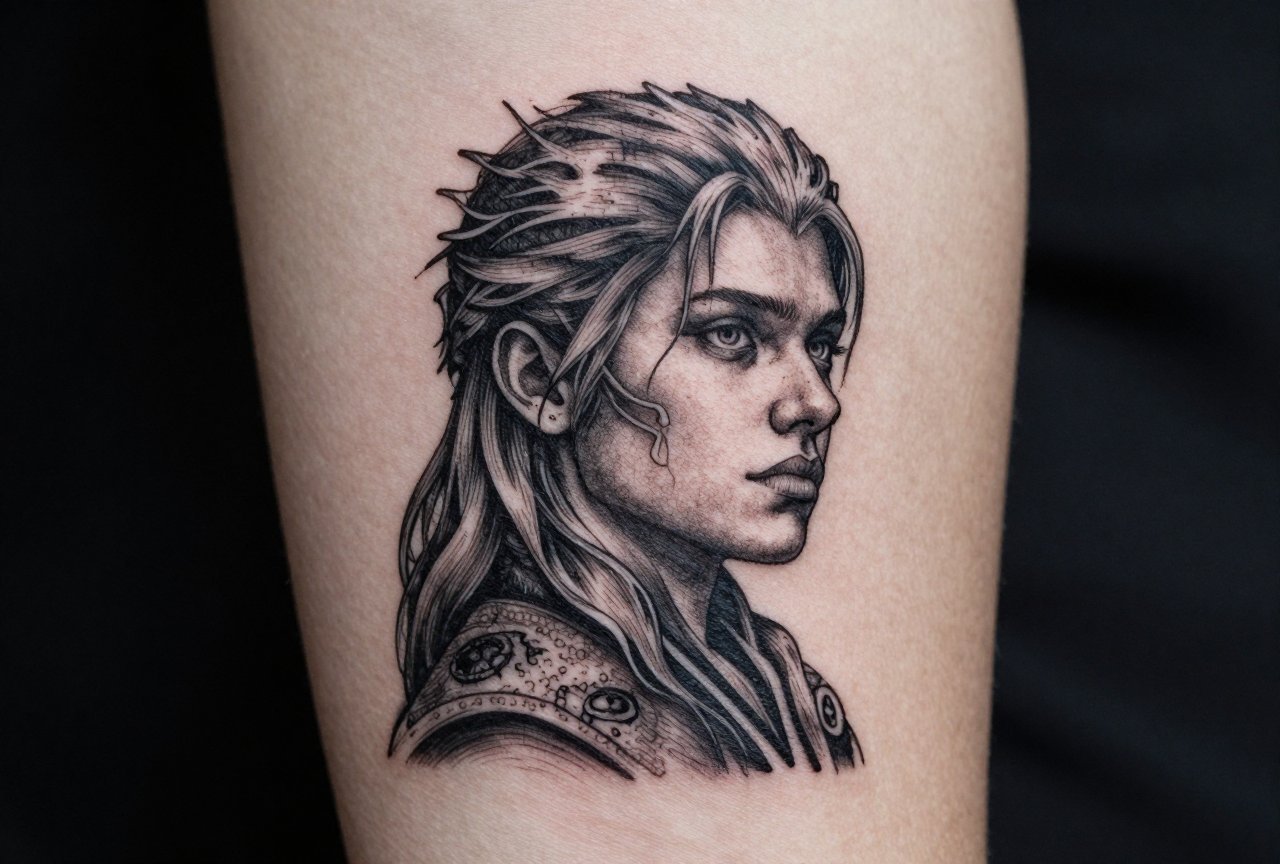
Character portraits from screen captures or promotional photography present specific challenges. These images were lit for dramatic effect, not anatomical tattoo translation. Skilled artists typically reconstruct rather than directly copy, adjusting contrast and simplifying for skin’s different reflective properties. Aging presents additional concerns; a photorealistic Emilia Clarke or Kit Harington portrait becomes increasingly abstract as the subject ages in public memory and the bearer ages physically.
Abstract or stylized character representations often prove more durable. Silhouettes, symbolic objects associated with characters (Needle for Arya, the coin for Arya’s Faceless Man journey), or composite designs incorporating multiple reference points age more gracefully than direct portraiture.
Similar & Related Symbols
Medieval and fantasy tattoo traditions provide substantial overlap. Lord of the Rings imagery shares similar appeal and demographic, though Tolkien’s more explicitly moral universe produces different symbolic weight. Wolves appear extensively in Norse, Native American, and general nature tattooing, often with more straightforward symbolism than Stark-specific associations.
Dragons pervade virtually every tattoo tradition globally, from Japanese irezumi to Celtic knotwork to contemporary fantasy art. Choosing specifically Targaryen dragons versus generic dragon imagery involves deciding how much narrative specificity matters to the design’s meaning.
- Heraldic tattoos from historical families or personal created coats of arms
- Medieval bestiary creatures (griffins, basilisks, manticores) with longer artistic tradition
- Literary raven/crow imagery from Poe, mythology, or general gothic tradition
- Map and cartography tattoos, particularly for those drawn to the opening credits geography
Some collectors extend into broader fantasy tattooing, incorporating elements from multiple fictional universes. Others deliberately maintain Game of Thrones as isolated collection within larger tattoo narratives, the specific imagery contained and contextualized.
Color vs Black and Grey
House color schemes present both opportunity and constraint. Lannister crimson and gold, Targaryen black and red, Stark grey and white: these combinations carry immediate recognition but also limit compositional flexibility. Strict adherence to house colors can produce visually jarring tattoos if personal aesthetic preferences diverge from those specific palettes.
Black and grey approaches often suit the narrative’s darker tonalities. Winter, the Wall, the Night King, the more morally ambiguous character arcs: these all translate effectively without color. The Iron Throne itself, in its television visualization, already reads as black and grey mass; color additions can feel superfluous or distracting.
When Color Serves the Design
Dragon fire, Targaryen hair, Lannister gold, Martell sun spear imagery: certain elements genuinely require color for recognition. Strategic color placement against black and grey backgrounds can create focal points without overwhelming composition. A single red eye in a direwolf portrait, gold accents on a crown, or isolated flame elements provide color impact while maintaining overall restraint.
Skin tone significantly affects color choices. What reads as Stark white on pale skin becomes invisible or ashy on darker complexions; skilled artists adjust value and saturation accordingly, sometimes substituting light grey or strategic negative space for pure white highlights.
Final Word
Game of Thrones tattoos occupy an interesting cultural position: simultaneously mainstream phenomenon and genuinely complex narrative source. The best designs acknowledge both, using recognizable imagery as entry point while incorporating personal meaning through placement, modification, or combination with non-franchise elements.
Consider longevity deliberately. This franchise will age, its cultural prominence already shifting from active phenomenon to completed narrative. Tattoos chosen for genuine connection to specific themes, character struggles, or visual elements tend to satisfy longer than those chosen during peak enthusiasm without deeper consideration. The imagery that endures in personal satisfaction often differs from what seemed most urgent during initial viewing.
Work with artists who understand both the source material and tattoo-specific constraints. Fantasy imagery, particularly from screen adaptations, requires translation rather than direct transfer. The most successful pieces result from collaborative interpretation rather than faithful reproduction of images created for entirely different media and purposes.
Frequently Asked Questions
How do I choose between house sigils and character-specific imagery?
House sigils generally age better and carry broader symbolic flexibility. Character portraits tie you to specific performances and narrative outcomes that may feel different over time. Consider whether your connection is to themes (house words, sigil symbolism) or to specific performances and moments. Many collectors find hybrid approaches most satisfying: a house sigil with small personal detail, or a character-associated object rather than direct portraiture.
Are there copyright concerns with getting Game of Thrones tattoos?
Personal tattoos fall under generally accepted practice within the industry; you’re not reproducing and selling merchandise. However, directly copying promotional photography, specific HBO visualizations, or artist-created concept art without adaptation raises ethical considerations. Most reputable tattoo artists modify reference material significantly as standard practice, creating original interpretation rather than reproduction. Discuss with your artist if you have specific concerns about source material origins.
What makes a Game of Thrones tattoo look dated rather than timeless?
Direct quotation of specific dialogue, direct screen capture reproduction, and designs that rely heavily on temporary cultural enthusiasm rather than enduring visual interest tend to age poorly. Tattoos that engage with broader visual traditions (heraldry, medieval bestiary, memento mori) through the Game of Thrones lens typically maintain satisfaction longer. Consider whether your design would interest you as fantasy or historical imagery even without the specific franchise association.
How should I research an artist for this specific style of work?
Look for portfolios demonstrating relevant technical skills rather than specifically seeking Game of Thrones experience. Heraldic precision requires clean linework; fantasy realism requires strong black and grey or color saturation; text requires consistent lettering. Ask potential artists how they would adapt your reference material for tattoo medium specifically. Their answer reveals whether they understand the translation challenges from screen or page to skin.