Japanese Tattoo Shops in Japan: A Real Shop Guide
Walking into a Japanese tattoo shop for the first time carries a weight that studios elsewhere rarely match. The tradition stretches across centuries, yet the contemporary scene operates with codes and expectations that catch many visitors off guard. If you are planning a full back piece or a small commemorative design, understanding how these shops actually function will shape every decision that follows.
How Traditional Japanese Tattooing Differs
Tebori, the hand-poking method that predates electric machines, remains the defining technique of Japanese tattoo culture. Practitioners use a slender rod of bamboo or steel fitted with needles, tapping ink into skin through rhythmic, controlled motion. The result sits differently in the body: colors often heal with a softer, more integrated quality, and the skin texture preserves a subtle dimension that rotary work cannot replicate.
The Role of the Horishi
A horishi is not simply a tattooist. The title carries connotations of dedicated apprenticeship, often spanning years of menial work before touching a needle. Many still refuse to use stencils, drawing freehand directly onto skin with sumi ink. This demands trust on a level that template-based work never requires. You are commissioning an artist who will interpret your body in real time, adjusting flow around bone structure and muscle movement as the session unfolds.
Subject Matter and Its Rules
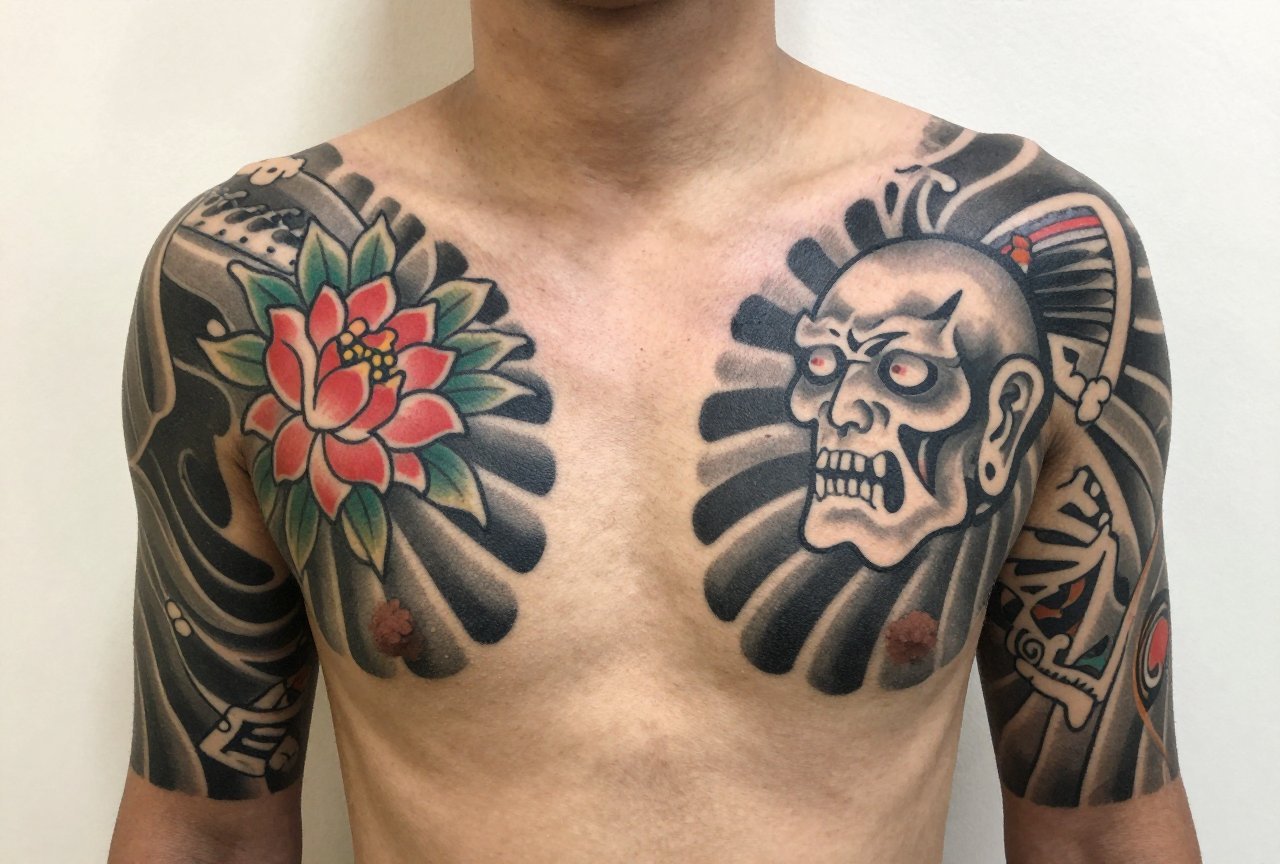
Certain motifs carry strict conventions. Koi swimming upward signal ambition and struggle; descending dragons often linked to wisdom achieved through hardship. Cherry blossoms paired with samurai evoke the transience of life, a Buddhist concept woven into warrior culture. Skulls, snakes, and peonies each occupy specific symbolic territories that a knowledgeable horishi will not casually rearrange. Discussing these associations beforehand prevents awkward corrections mid-process.
Finding and Selecting a Shop
Japan’s tattoo scene fragments sharply between visible and hidden. Major cities host established studios with international reputations, while countless skilled practitioners work from discreet locations, discoverable only through referral or deliberate searching.
Research Methods That Actually Work
- Instagram and personal websites remain the primary portfolios for younger artists; older horishi may maintain minimal online presence
- Conventions in Tokyo and Osaka offer concentrated exposure to multiple styles, though booking on the spot rarely succeeds for sought-after names
- Specialist publications like Tattoo Burst or Skin Deep Japan feature shop directories and artist interviews
- Word-of-mouth through collectors who have completed large pieces carries more weight than any review platform
Language barriers present genuine obstacles. Many excellent artists speak minimal English; conversely, some foreign-language-fluent practitioners have built followings specifically through accessibility rather than technical distinction. Determining which priority matters to you will narrow the field considerably.
Booking Etiquette and Expectations
Initial contact should be respectful and concise. Long autobiographical explanations rarely help. State your concept, approximate size, preferred placement, and reference to the artist’s existing work that resonates with you. Response times vary from days to weeks; persistence without pushiness demonstrates serious intent.
Deposits are standard for substantial appointments, sometimes 30-50 percent of the projected total. Cancellation policies tend toward strict, reflecting the difficulty of filling large blocked sessions. Clarify these terms explicitly before transferring funds.
What to Expect During Sessions
Japanese tattooing traditionally progresses through multiple extended sessions, particularly for bodysuit-scale work. Single-sitting pieces certainly occur, yet the culture valorizes patience and the gradual transformation it enables.
The Physical Reality of Tebori
Hand-poking generally produces less immediate trauma than aggressive machine work, but sessions run longer to compensate. Four to six hours represents a common daily limit, with larger projects unfolding across dozens of appointments. Pain distribution follows anatomical logic: fleshier areas tolerate better, while bone proximity intensifies sensation. The sound of the needle bar tapping creates a meditative rhythm that some collectors find helps manage discomfort, others find maddening.
Aftercare Specific to the Method
Horishi aftercare instructions often diverge from Western conventions. Many advise leaving the initial wrap in place for extended periods, sometimes 24 hours, with minimal washing thereafter. Heavy moisturization is frequently discouraged; the goal is a dry, scab-free heal rather than a moist wound environment. Follow your specific artist’s guidance even when it contradicts general tattoo aftercare wisdom. Their method and their healing expectations are calibrated to each other.
Navigating Social and Legal Context
Japan occupies an uncomfortable position regarding tattoo legality. The practice itself is not criminal, yet a 2001 Ministry of Health interpretation classifies it as a medical procedure requiring physician licensure. Enforcement has been inconsistent and geographically variable, creating genuine uncertainty for shop operations.
Current Operating Conditions
Some regions have seen police raids and prosecutions, particularly where shops appeared to operate without medical credentials. Others maintain live-and-let-live arrangements. Many studios avoid ground-floor locations and conspicuous signage. Discretion protects both practitioner and client; photography of shop interiors or artist faces without explicit permission is considered poor form.
Public visibility of tattoos carries social consequences that foreign visitors sometimes underestimate. Onsen, gyms, and certain workplaces maintain exclusion policies. A fresh, unhealed piece should never enter communal bathing facilities for infection control reasons, but even fully healed traditional work may trigger refusal. Planning around these restrictions becomes part of the collector’s life.
Foreigner-Friendly Versus Authentic Experience
A tension exists between shops that actively court international clientele and those that maintain exclusively Japanese-speaking, referral-only practices. Neither category is inherently superior. The former offers accessibility and often transparent pricing; the latter may provide deeper immersion in tradition but requires substantial Japanese language skill or trusted intermediary assistance. Assess honestly which experience aligns with your preparation and intentions.
Pricing and Project Planning
Japanese tattoo pricing resists the hourly-rate transparency common in North American or European markets. Established horishi typically quote by the completed piece or by the session block, with total costs emerging only as work progresses.
Cost Structures to Anticipate
- Small, single-session designs: ¥30,000, 80,000 depending on artist recognition and complexity
- Half-sleeve or substantial back pieces: ¥300,000, 800,000 across multiple sessions
- Full bodysuit projects: ¥1,500,000, 3,000,000+ over several years
These figures represent genuine investment. The cultural expectation is that serious collectors commit fully, not that they bargain or compare aggressively. Payment plans are occasionally available for extensive work with established trust, but never assume this option.
Time Commitment Realities
Large traditional pieces unfold across years, not months. Scheduling constraints, healing requirements, and the artist’s existing backlog all contribute. International collectors must plan for multiple trips or extended stays. Some maintain relationships with Japanese horishi across decades, returning annually for continued progress. This rhythm becomes part of the work’s meaning, though it demands logistical dedication that casual tattoo tourism rarely accommodates.
Final Thoughts
Japanese tattoo shops offer something increasingly scarce: an art form where technical mastery, cultural continuity, and personal transformation remain inseparable. The experience demands more preparation, more patience, and more resources than conventional tattooing. What returns to you is participation in a living tradition rather than mere consumption of a service.
Research thoroughly, communicate respectfully, and commit fully if you choose to proceed. The best Japanese tattoo relationships develop slowly, built on mutual recognition between artist and collector. That slowness is not an obstacle to overcome but the very texture of the tradition itself.
Frequently Asked Questions
Do I need to speak Japanese to get tattooed in Japan?
Not strictly, but it significantly expands your options. Many internationally recognized artists work with translators or have basic English skills. For deeper engagement with traditional horishi, especially those operating referral-only, Japanese fluency or a trusted intermediary becomes nearly essential.
Is tebori more painful than machine tattooing?
Pain perception varies individually, but tebori generally creates less acute trauma per insertion while requiring longer overall session duration. The sensation differs, more of a deep, rhythmic pressure than the rapid vibration of machine work. Most collectors describe it as manageable but not mild.
Can I visit a Japanese tattoo shop just to look or ask questions?
Generally no. Japanese tattoo culture values privacy and serious intent. Walk-in inquiries without appointment or referral are often unwelcome. Initial contact should be purposeful and respectful, ideally with a clear project concept already developed.
Are tattoos legal in Japan?
Tattooing itself is not illegal, but a 2001 health ministry interpretation classifies it as a medical procedure requiring physician licensing. Enforcement varies dramatically by region. Most shops operate in a legal gray area, which explains the discretion and low-profile locations common throughout the industry.