
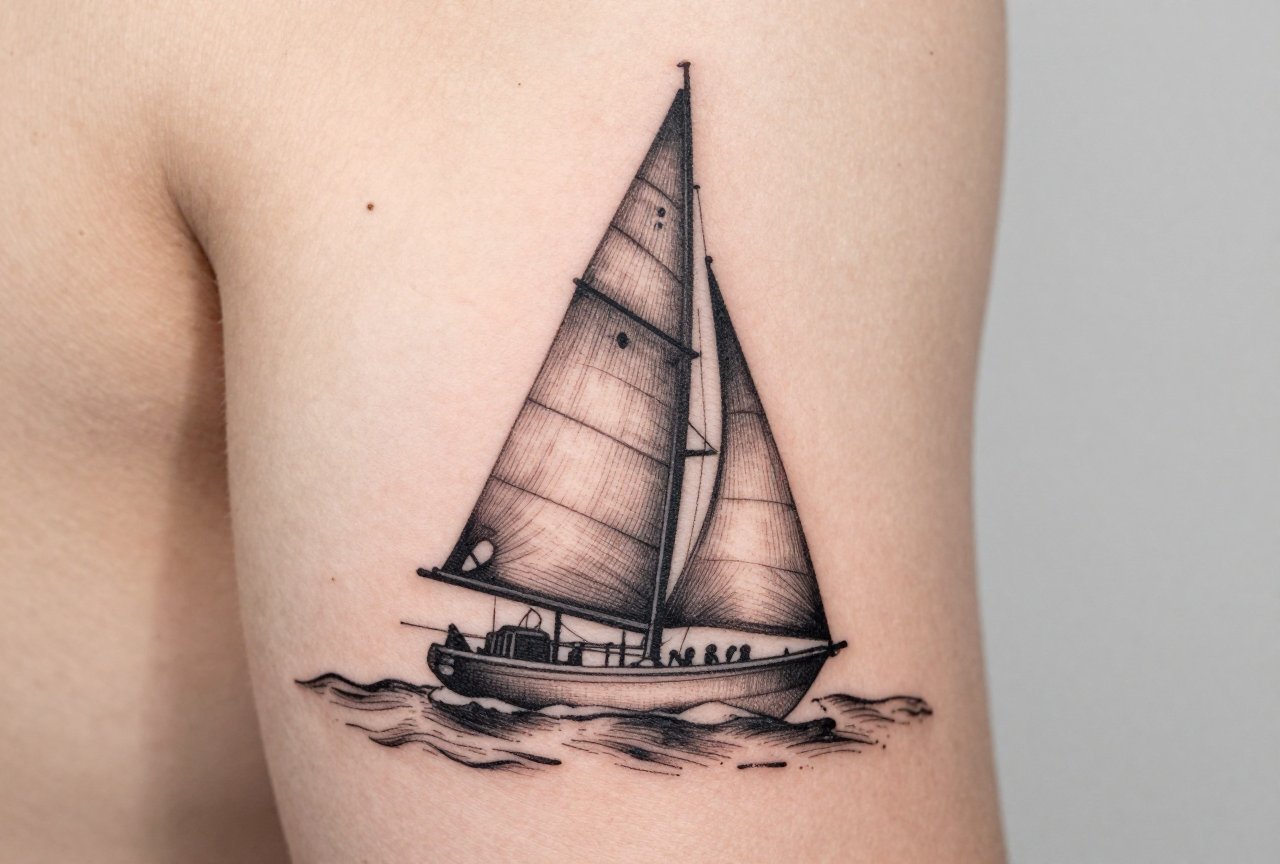
A sailing tattoo represents the journey of life itself, capturing the spirit of exploration, resilience, and the pursuit of freedom. For centuries, sailors have marked their bodies with maritime imagery to commemorate voyages, protect against the unknown, and express their deep connection to the sea. Today, these designs resonate with anyone who values adventure, personal growth, and the courage to chart their own course through uncertain waters.
Symbolism & History
The sailing tattoo carries layered symbolism rooted in nautical tradition and universal human experience.
- Freedom and escape: Sails catching wind represent liberation from constraints, whether physical, emotional, or societal. The open horizon promises infinite possibility.
- Resilience through adversity: Storms, rough seas, and challenging navigation mirror life’s hardships. A sailing vessel enduring these elements speaks to inner strength and perseverance.
- Direction and purpose: The compass, helm, and stars guiding a ship reflect the search for meaning and the deliberate choices that shape our paths.
- Transformation and growth: Every voyage changes the traveler. Sailing tattoos often mark significant life transitions or personal evolution.
Historically, maritime tattooing flourished among sailors from the 1700s onward. British and American naval traditions, Polynesian influences from Pacific voyages, and later merchant seafaring cultures all contributed to a rich visual vocabulary. Sailors earned specific tattoos for accomplishments: crossing the equator, surviving storms, or completing particularly dangerous passages. These marks served as identity, resume, and talisman simultaneously.
Common Variations & Styles
Sailing tattoo designs range from minimalist to elaborate, each carrying distinct nuance.
- Traditional tall ships: Full-rigged vessels with billowing sails dominate classic American traditional style. Bold lines, limited color palettes, and iconic imagery honor the heritage of sailor Jerry and other pioneering maritime tattoo artists.
- Small sailboats: Simple, elegant silhouettes suit minimalist aesthetics. These often emphasize the quiet beauty of solitary sailing rather than grand adventure.
- Ships in storms: Dramatic waves, lightning, and distressed vessels convey struggle and survival. These designs resonate with those who have weathered significant life challenges.
- Ships with compass or map: Combining navigation tools with the vessel emphasizes purposeful journey and self-determination.
- Sunken or ghost ships: These melancholic variations honor lost loved ones, past versions of oneself, or the acceptance of impermanence.
- Realistic maritime scenes: Modern tattooing techniques allow stunning detail in ship portraits, water textures, and atmospheric effects.
Color choices also carry weight. Traditional navy, red, and gold reference historical palettes. Black and grey emphasize timelessness and gravity. Bold sunsets or turquoise waters evoke specific emotional tones, from peaceful reflection to passionate wanderlust.
Best Placements
The body placement of a sailing tattoo can reinforce its meaning.
- Forearms and wrists: Highly visible locations for those who wear their journey openly. Small ships or compass details work well here.
- Chest and ribs: Larger compositions suit these expansive canvases. The proximity to the heart suits deeply personal significance.
- Back: Ideal for detailed full ships with elaborate backgrounds. The broad surface allows narrative complexity.
- Calves and thighs: Popular for medium-sized designs, offering visibility control and manageable pain levels.
- Behind the ear or ankle: Subtle placements for private reminders of one’s personal voyage.
Flowing designs that follow muscle contours or wrap limbs can enhance the sense of movement inherent to sailing imagery.
Who Chooses This Tattoo / Personal Meanings
While professional mariners still honor this tradition, sailing tattoos now attract diverse individuals.
- Actual sailors and boat enthusiasts: Those with genuine maritime connections use tattoos to document experience and express identity.
- Travelers and wanderers: People drawn to exploration, whether literal or metaphorical, find sailing imagery speaks to their values.
- Survivors of hardship: The ship weathering storms resonates powerfully with those who have overcome illness, loss, or trauma.
- Career changers and life transitioners: New directions, retirement, graduation, or relocation often prompt sailing imagery representing the next chapter.
- Philosophical thinkers: The metaphor of life as sea voyage, present in countless cultures and literatures, appeals to those who contemplate existence consciously.
Personal meanings often layer: a ship might simultaneously honor a sailing grandfather, commemorate a divorce that brought freedom, and express hope for future adventures.
Similar Symbols
Related imagery often appears alongside or instead of sailing tattoos.
- Anchors: Stability and grounding, sometimes paired with ships to balance movement and stillness.
- Compasses and nautical stars: Guidance and direction without the vessel itself.
- Swallows and sparrows: Traditional sailor tattoos representing safe return and miles traveled.
- Waves and water: The elemental environment, often more abstract and fluid than ship imagery.
- Lighthouses: Hope, guidance, and safe harbor rather than the journey itself.
- Kraken and sea monsters: The unknown dangers and mysteries beneath the surface.
Final Thoughts
The sailing tattoo endures because it speaks to fundamental human experiences: the desire for freedom, the necessity of courage, and the beauty of transformation through challenge. Whether rendered in bold traditional style or delicate contemporary minimalism, these designs carry weight beyond their visual appeal. They connect wearers to centuries of maritime heritage while remaining deeply personal. In choosing a sailing tattoo, one joins a lineage of travelers who have marked their skin to declare: I have voyaged, I have endured, and I continue onward. The sea remains vast, the horizon calls, and the ship, in whatever form it takes, sails ever forward.
Related Tattoo Meanings
- Navy Tattoo Meaning: Service, Honor The Deep Bond
- Russian Mafia Tattoo Meaning: A Guide to Prison Ink Symbolism
- Russian Jail Tattoo Meaning: Codes of Criminal Underworld
- Explore more









