
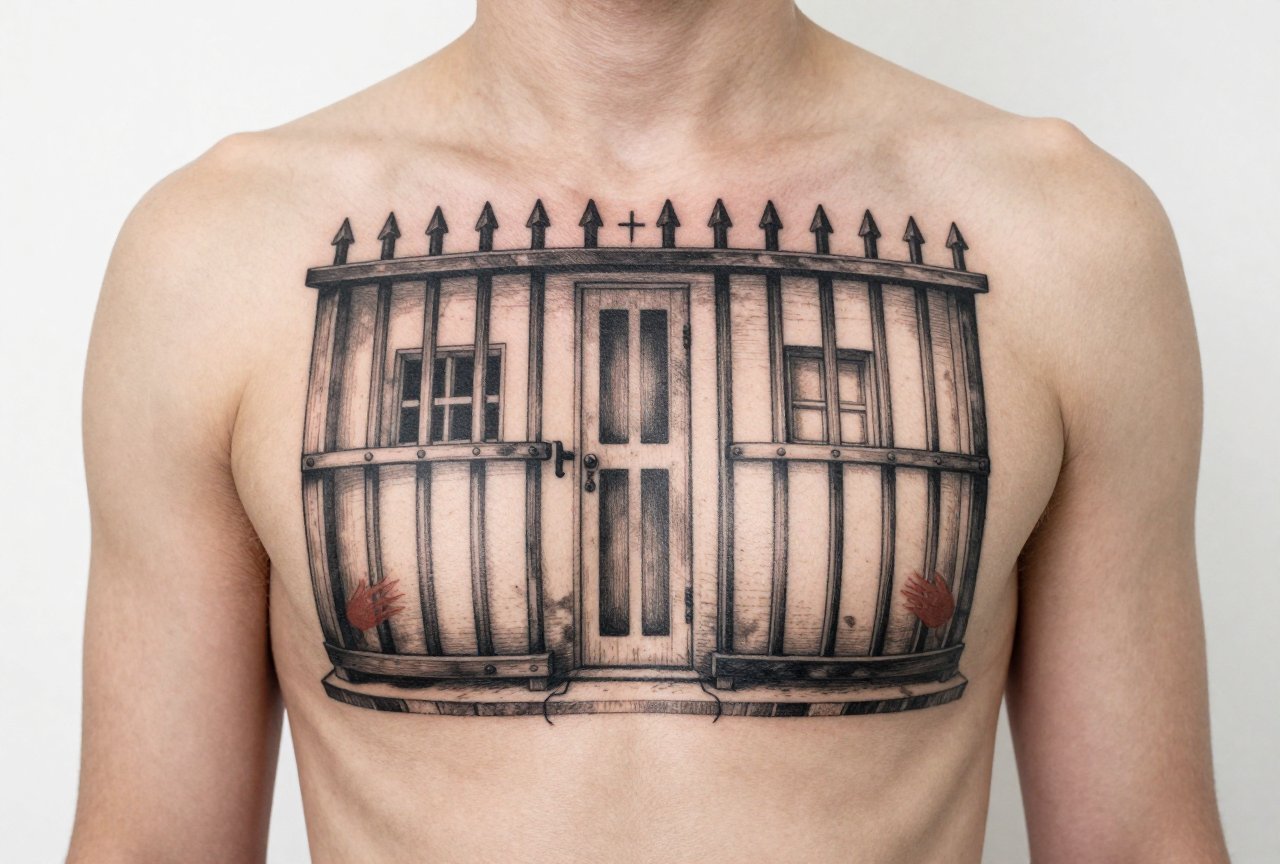
Russian jail tattoos are a complex visual language developed within the Soviet and post-Soviet penal system, where each design communicates specific information about the wearer’s criminal history, rank within the prison hierarchy, and personal achievements or transgressions. Far from decorative art, these tattoos functioned as identity documents in a closed society where verbal disclosure could be dangerous. The meanings are precise and strictly coded, with intentional misrepresentation often punishable by violence or death.
Symbolism & History
The tradition emerged during the Stalinist era when millions passed through the Gulag system. Prisoners used improvised tattooing methods, including melted boot heels for ink and sharpened guitar strings for needles. The imagery drew heavily from Russian Orthodox iconography, military insignia, and criminal folklore, creating a hybrid symbolic system.
Core symbols include:
- Stars on knees or shoulders: Signify refusal to kneel before authority; shoulder stars indicate higher rank
- Cathedrals with domes: Each dome represents a completed prison sentence
- Skulls and daggers: Mark convicted murderers
- Barbed wire: Indicates length of sentence, with each loop representing a year
- Spider webs: Signal drug addiction or thief status depending on positioning
The vor v zakone (thief-in-law) occupied the apex of this hierarchy, their tattoos displaying elaborate religious scenes that paradoxically celebrated criminal life through sacred imagery. Crosses on the chest denoted higher status, while specific facial tattoos marked the most hardened criminals.
Common Variations & Styles
Traditional Russian jail tattoos favor bold black linework with limited shading, a practical constraint of primitive tools. The aesthetic is deliberately raw and immediate. Contemporary interpretations have diverged significantly from these origins.
Modern variations include:
- Documentary reproductions: Exact copies from archival photographs and prisoner drawings
- Stylized adaptations: Cleaner linework with added ornamental elements
- Contemporary fusion: Blending Orthodox iconography with neo-traditional or blackwork techniques
- Minimalist interpretations: Reduced symbols stripped of context for aesthetic appeal
Some tattoo artists specializing in this style deliberately maintain the rough, handmade quality that authentic prison pieces possessed. Others translate the imagery into more polished forms suitable for mainstream clientele.
Best Placements
Placement historically carried as much meaning as the imagery itself. The body functioned as a structured document with designated zones for specific information.
Traditional placement rules:
- Face and hands: Reserved for committed criminals with extensive records; voluntary facial tattoos marked irreversible dedication to criminal life
- Chest and back: Primary canvas for major biographical pieces and religious scenes
- Shoulders: Status indicators, particularly star designs
- Knees: Political statements of defiance against authority
- Fingers and wrists: Smaller markers of specific crimes or affiliations
Contemporary wearers often choose the forearm, upper arm, or calf for visibility control, allowing coverage in professional contexts. Full back pieces remain popular for those seeking dramatic presentation of cathedral or religious imagery.
Who Chooses This Tattoo / Personal Meanings
Modern adoption spans several distinct groups with varying motivations. Understanding these distinctions matters, as uninformed wear can invite serious misunderstanding from those familiar with authentic codes.
Primary contemporary adopters:
- Heritage seekers: Individuals with Russian or Eastern European ancestry exploring cultural history
- Documentary enthusiasts: Those fascinated by criminology and subcultural anthropology
- Aesthetic collectors: Drawn to the raw visual power and distinctive graphic quality
- Former Soviet bloc residents: Personal or familial connections to the prison system
Critical ethical considerations exist. Wearing specific symbols without corresponding criminal biography constitutes fraud within the original context and can provoke hostile reactions from informed observers. Many reputable tattoo artists refuse certain designs or modify them sufficiently to sever criminal associations. Responsible practitioners emphasize education before application.
Similar Symbols
Several tattoo traditions share conceptual territory with Russian jail tattoos while maintaining distinct identities.
Comparable symbolic systems:
- Japanese irezumi and tebori: Criminal marking in yakuza culture with similarly rigid iconographic rules
- American prison tattoos: Gang affiliation and sentence documentation, though less codified than Russian systems
- Old school maritime tattoos: Achievement recording through nautical imagery
- Sailor Jerry military pieces: Service and experience markers with established symbolic vocabulary
- Contemporary gang tattoos: Regional and organizational codes serving comparable communicative functions
The Russian system remains uniquely comprehensive in its integration of religious imagery with criminal identity, creating a visual paradox that continues to fascinate researchers and collectors.
Final Thoughts
Russian jail tattoos represent one of the most extensively documented criminal symbolic systems in history, preserved through the dedicated work of prison researchers and photographers. Their meanings are specific, historically grounded, and not freely transferable to contemporary aesthetic use. For those genuinely drawn to this imagery, thorough research and consultation with culturally informed artists constitute essential preparation. The visual power of these designs is undeniable, but their weight demands respectful engagement with their origins. Whether approached as historical documentation, cultural heritage, or artistic inspiration, Russian prison tattoos reward serious study while punishing casual appropriation. The best contemporary work honors this complexity rather than erasing it.
Related Tattoo Meanings
- Gang Tattoo Meaning: Symbolism, History, and Personal Expression
- Spiritual Symbols Tattoo Meaning: Sacred Ink Across Cultures
- Russian Prison Tattoo Meaning: Codes of Criminal Ink
- Explore more









