
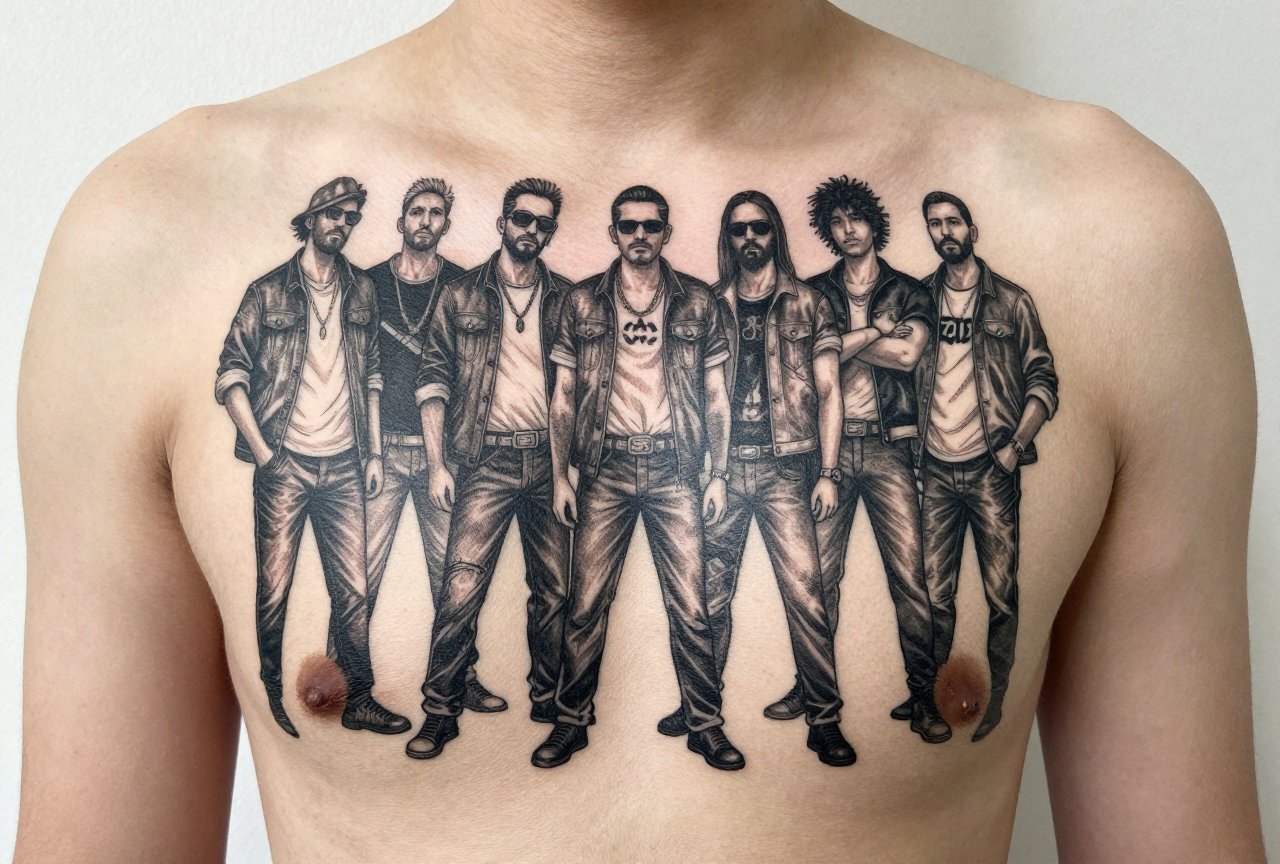
A gang tattoo traditionally served as a permanent marker of affiliation, rank, and commitment within organized street groups or prison gangs. These tattoos communicated loyalty, criminal history, territory, and status to those who understood their coded language. While rooted in subcultural identity, some people today choose gang-inspired imagery for personal reasons unrelated to criminal activity, such as marking survival, transformation, or reclaimed power from past involvement.
Symbolism & History
Gang tattoo symbolism emerged from necessity in environments where verbal communication was restricted or dangerous. In American prison systems dating to the early 20th century, tattoos became a visual language that conveyed sentences served, crimes committed, and gang allegiance without words. The teardrop tattoo, for example, became widely recognized as indicating time served or a violent act, though specific meanings varied dramatically by region and gang.
Street gangs adopted and expanded these visual codes. The Mexican Mafia (La Eme), Aryan Brotherhood, Black Guerilla Family, and numerous street gangs developed intricate systems where placement, color, and specific imagery carried precise meanings. Three dots in a triangle (“mi vida loca” or “my crazy life”) appeared across gang cultures. Spider webs on elbows often signaled time in prison or commitment to the criminal lifestyle. Numbers replaced letters to spell out gang names covertly, such as 14 or 88 in white supremacist contexts, or 13 for Sureño affiliation.
These symbols functioned simultaneously as badges of honor and tools of intimidation. They created instant visual hierarchy and group cohesion while warning rivals. The permanence of tattoos made them particularly powerful commitment devices, separating casual participants from fully initiated members.
Common Variations & Styles
Gang tattoo imagery spans numerous styles and regional traditions:
- Teardrop designs: Typically placed near the eye, with variations in filled versus empty drops, number of drops, and specific placement carrying different meanings across regions
- Numerical codes: Specific numbers representing gang names, alphabet positions, or significant dates in gang history
- Geographic and territorial markers: Area codes, street names, neighborhood boundaries, or regional symbols
- Religious iconography: Praying hands, crosses, or saints adapted with gang-specific modifications
- Prison-style black and grey: Bold lines, limited shading, improvised techniques reflecting available materials and artists
- Chicano black and grey realism: Highly detailed portraits, religious figures, and decorative elements emerging from Mexican-American gang culture
- White supremacist symbols: Celtic crosses, swastikas, SS bolts, and Nordic runes adapted by racist prison gangs
Style often reflected available resources. Prison tattoos frequently showed rougher execution due to improvised equipment, while street-affiliated artists might produce more polished work. The distinction between gang-specific tattoos and broader working-class or street tattoo traditions was not always clear, as imagery frequently crossed boundaries.
Best Placements
Placement historically carried as much meaning as imagery itself. Highly visible locations like the face, neck, and hands signaled complete commitment and often marked individuals who had progressed through gang hierarchy. These locations made concealment impossible, demonstrating that the bearer had fully embraced the identity.
More hidden placements allowed strategic revelation. Chest and back pieces could be shown selectively. Upper arms and shoulders provided moderate visibility. Some prison systems and gang traditions favored specific locations, such as the “peckerwood” patch on the upper arm for certain white gangs, or specific hand placements for gang signs integrated with tattoo design.
Today, those choosing gang-inspired imagery for personal rather than affiliative reasons often select placements based on aesthetic preference rather than traditional code, though awareness of historical placement significance remains important for informed decision-making.
Who Chooses This Tattoo / Personal Meanings
Several distinct groups engage with gang tattoo imagery today:
- Former members: Individuals who have left gang life but retain tattoos as historical markers, sometimes covered or modified as part of transition
- Survivors and family members: Those who lost loved ones to gang violence, using related imagery for memorial purposes
- Artists and collectors: Tattoo enthusiasts drawn to the bold visual language and technical traditions of Chicano black and grey or prison art styles
- Reclaimers: Individuals transforming symbols of past involvement into personal narratives of growth and change
Personal meanings frequently diverge from historical gang usage. Someone might choose a teardrop to represent grief and loss generally, or spider web imagery to symbolize feeling trapped and subsequently breaking free. These reclamations remain contested, as the imagery retains strong associations that can affect employment, relationships, and safety.
Similar Symbols
Several tattoo traditions overlap visually or conceptually with gang tattooing:
- Russian prison tattoos: A distinct but parallel system with its own elaborate iconography, including stars on knees (symbolizing authority), cathedral domes (representing time served), and numerous criminal profession markers
- Japanese yakuza irezumi: Full-body traditional Japanese designs marking organized crime affiliation, though increasingly separated from criminal activity as tattoo art
- Military unit tattoos: Group identification markers, though typically without criminal connotation
- Street tattoo and working-class traditions: Bold traditional designs, names, and memorial pieces that share visual territory without gang-specific meaning
- Chicano art and lowrider culture: Closely related aesthetic traditions that share imagery but exist independently of gang affiliation
The distinction between gang-specific and adjacent cultural tattooing requires careful attention, as imagery flows between these contexts and meanings shift across time and location.
Final Thoughts
Gang tattoo meanings remain complex, contested, and deeply contextual. What served as a marker of criminal commitment in one setting might represent cultural heritage, artistic tradition, or personal transformation in another. Anyone considering gang-associated imagery should thoroughly research specific symbols, understand regional variations in meaning, and recognize that these tattoos carry lasting social consequences regardless of personal intent. The visual language of gang tattooing has undeniably influenced broader tattoo art, contributing techniques and bold aesthetic approaches that extend far beyond criminal subculture. Yet the weight of these symbols, born from real violence and incarceration, demands respectful and informed engagement rather than casual adoption.
Related Tattoo Meanings
- Russian Prison Tattoo Meaning: Codes of Criminal Ink
- Deep Finger Symbols Tattoo Meaning: Hidden Messages at Your Fingertips
- Tear Drop Left Eye Tattoo Meaning: Symbolism History
- Explore more









