Scorpio Tattoo Meaning: Power, Mystery & Transformation
Scorpio tattoos carry weight. The eighth sign of the zodiac commands attention through symbolism that runs deeper than surface aesthetics. Whether you connect with the scorpion, the serpent, the eagle, or the phoenix, this imagery offers layered possibilities for permanent body art. The following explores what makes Scorpio symbolism distinctive, how different cultures have shaped its meaning, and practical considerations for translating this energy into a tattoo that endures.
The Core Symbolism of Scorpio
Scorpio operates through intensity. Fixed water, ruled by Pluto and Mars, this sign governs what lies beneath: hidden motives, emotional depths, cycles of death and rebirth. A Scorpio tattoo typically channels one or more of these currents.
The Scorpion as Guardian and Warning
The arachnid form serves as the most direct representation. Its curved tail and raised stinger communicate readiness, boundaries, and the capacity for decisive action when provoked. In Mesopotamian contexts, scorpion imagery often linked to protective spirits. The Egyptian goddess Serqet, depicted with a scorpion headdress, presided over venomous creatures and healing from their effects. This dual nature, poison and cure, runs through Scorpio symbolism still.
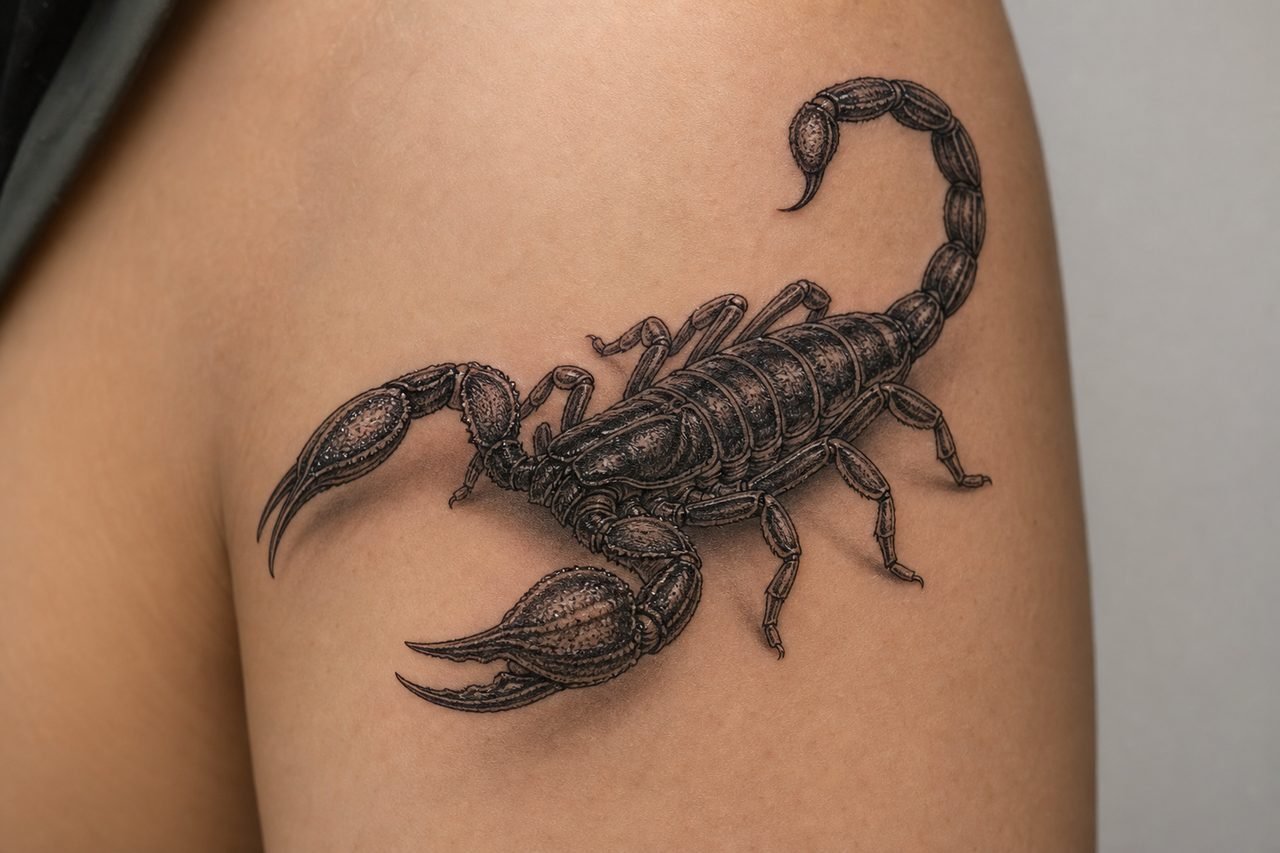
For tattoo purposes, the scorpion silhouette offers strong graphic potential. The natural geometry of its body, pincers, and segmented tail translates well to multiple styles: bold traditional, fine-line minimalist, or heavily shaded realism. Placement considerations matter. The scorpion’s form works exceptionally across shoulder blades, following the natural curve of the spine, or wrapping around forearms where the tail can arc dynamically.
The Eagle and Phoenix as Raised Forms
Astrological tradition often describes Scorpio’s evolutionary arc through three symbols: the scorpion grounded in survival instinct, the eagle soaring through perception and power, and the phoenix transcending through transformation. Not every practitioner uses this framework, but it remains widely recognized in tattoo culture.
- Eagle imagery suits those drawn to strategic vision, emotional mastery, and commanding presence without overt aggression
- Phoenix imagery resonates with major life transitions, recovery from trauma, or deliberate identity reconstruction
- Combined imagery (scorpion morphing into either form) creates narrative progression within a single piece
Cultural and Historical Dimensions
Scorpio symbolism extends beyond Western astrology. Understanding these threads allows for more informed design choices and avoids superficial appropriation.
Mesopotamian and Early Mediterranean Roots
The constellation itself carries ancient recognition. Babylonian astronomers identified what we call Scorpio as a scorpion figure, sometimes associated with the underworld or with Ishara, a goddess of oath and prophecy. Greek tradition placed the scorpion in the sky as the creature that defeated Orion, creating the astronomical arrangement where the two constellations never appear together. This mythological backdrop of necessary confrontation, of forces that cannot coexist, adds psychological depth to tattoo interpretations.
Indigenous and Global Perspectives
Scorpion imagery appears across numerous traditions. In some Mexican folk contexts, particularly surrounding Día de los Muertos, scorpions accompany other natural symbols in complex cosmological artwork. Certain North African and Middle Eastern textile and ceramic traditions incorporate scorpion motifs as apotropaic symbols, meant to turn harm away.
If drawing from specific cultural traditions, research matters. A generic scorpion carries different weight than one executed in the visual language of a particular heritage. Working with artists who understand these distinctions, or who share that heritage, produces more respectful and visually coherent results.
Design Approaches and Stylistic Choices
The same symbol rendered in different styles communicates entirely different energies. Consider how technique shapes meaning.
Black and Gray Realism
Photographic rendering of scorpion anatomy emphasizes the creature’s alien beauty: the jointed legs, the granular carapace texture, the precise curve of the stinger. This approach suits larger pieces where detail can breathe. Realism demands technical precision; the exoskeleton’s reflective quality challenges even experienced artists. Expect longer sessions and higher investment for quality execution.
Traditional and Neo-Traditional
Bold lines, limited but saturated color palettes, and stylized proportions create immediate visual impact. Traditional scorpion tattoos often read as more aggressive, more confrontational. The simplified forms communicate faster from distance. Neo-traditional approaches introduce more color variation, ornamental elements, or surrounding flora and fauna, softening the intensity while maintaining graphic strength.
Fine Line and Minimalist Interpretations
Single-needle or fine-line scorpion tattoos have gained substantial traction. These pieces reduce the form to essential geometry, sometimes abstracting the tail curve or pincer shape into near-calligraphic marks. The result reads as more cerebral, more controlled, less overtly threatening. Scale limitations apply; extremely fine detail may blur or fade faster, particularly on high-movement areas.
Incorporating Secondary Elements
Scorpio tattoos frequently integrate complementary imagery:
- Floral elements: Dark blooms (poppies, black dahlias, nightshade) create contrast between organic softness and armored exoskeleton
- Celestial imagery: The constellation pattern, lunar phases, or Pluto’s glyph anchors the astrological connection
- Water and wave motifs: Acknowledges Scorpio’s water element, introducing fluidity against the creature’s rigidity
- Skull or bone elements: Emphasizes the death-rebirth cycle, common in transformational narratives
Placement and Longevity Considerations
Where a Scorpio tattoo lives on the body affects both its visual logic and its aging trajectory.
Anatomical Harmony
The scorpion’s natural posture invites specific placements. The tail curve mirrors the cervical spine’s shape, making neck and upper back placements visually intuitive. The body’s spread aligns with the scapular width. Forearm placements allow the tail to wrap toward the wrist or elbow crease, creating movement.
Consider how the piece ages with body changes. A scorpion across the lower abdomen may distort significantly with weight fluctuation or pregnancy. Joint-adjacent placements experience more friction and sun exposure, accelerating fading.
Visibility and Professional Context
Scorpio imagery, particularly realistic renderings, carries assertive energy. Hand, neck, or face placements make bold statements about identity prioritization. More concealed placements allow personal significance without constant external interpretation. Neither approach is superior; alignment with your actual life circumstances matters more than theoretical ideals.
Working With Your Artist
Effective collaboration produces better tattoos. Arrive with clear reference material but openness to professional adaptation. A scorpion’s natural proportions may not suit your chosen placement; the artist might adjust the tail curve or leg spread for anatomical fit.
Discuss ink choices explicitly. Some red formulations carry higher allergy risk; if incorporating crimson elements, ask about brand specifics. Black ink varies in warmth and density; view healed examples of the artist’s black work, not just fresh tattoos.
Healing protocols deserve attention. Scorpio tattoos often involve dense black saturation or fine detail requiring careful aftercare. Follow your artist’s specific instructions over generalized advice. The intensity of the finished piece depends significantly on proper healing.
Final Thoughts
Scorpio tattoos resist casual interpretation. The symbolism demands engagement with shadow, with intensity, with the full spectrum of human experience rather than comfortable surfaces. Whether you choose the armored scorpion, the soaring eagle, or the burning phoenix, the image carries obligation: to honesty about your own depths, to willingness to transform when necessary, to hold boundaries with precision.
The best Scorpio tattoos do not merely announce identity. They create reminders of capacity, the sting and the healing both available when circumstances require. Permanent marks on living skin, they participate in the same cycle the symbol represents: creation, endurance, inevitable change, and whatever arises next.
Frequently Asked Questions
What does a Scorpio tattoo symbolize?
Scorpio tattoos typically symbolize intensity, transformation, emotional depth, and protective boundaries. The specific meaning varies by chosen imagery: the scorpion emphasizes survival instinct and decisive action, the eagle represents raised perception and mastery, and the phoenix embodies death-rebirth cycles and major life transitions.
Which zodiac symbol is best for a Scorpio tattoo?
The scorpion remains the most recognized symbol, but astrological tradition often describes three evolutionary forms. The scorpion suits those honoring raw authenticity and protective instincts. The eagle appeals to those emphasizing strategic growth and emotional control. The phoenix resonates with individuals marking significant personal transformation or recovery.
Where should I place a Scorpio tattoo?
The scorpion’s natural anatomy suits several placements particularly well. The curved tail mirrors the cervical spine, making neck and upper back positions visually coherent. The spread body aligns with shoulder width. Forearm placements allow dynamic wrapping. Consider aging factors: joint-adjacent areas experience more wear, while torso placements may distort with body changes.
What tattoo styles work best for Scorpio imagery?
Black and gray realism captures the exoskeleton’s textural complexity but requires significant technical skill and larger scale. Traditional and neo-traditional approaches offer bold, readable graphics with strong color presence. Fine-line and minimalist interpretations reduce the form to essential geometry, reading as more controlled and cerebral, though they may fade faster on high-movement areas.