A butterfly tattoo arm stays clean when you give the wings enough skin, contrast, and room to move. Fine line can heal soft and elegant, but tiny wing veins crammed onto a wrist will blur into soup. I’d plan the arm first, then pick the butterfly.
- Start with a Butterfly Arm Tattoo Direction
- Pick Fine-Line Wings for a Feminine Forearm
- Place a Black Butterfly Above the Elbow
- Plan a Butterfly Sleeve with Connected Blooms
- Choose Symmetrical Butterflies Across the Outer Arm
- Match Wing Detail to Your Arm Shape
- Use Red Ink for a Delicate Butterfly Accent
- Add Botanical Stems Behind the Butterfly Wings
- Scale the Butterfly for Your Forearm Width
- Build a Blackwork Butterfly with Bold Negative Space
- Keep the Wing Pattern Readable at Distance
- Pair Butterflies with Meaningful Lettering on the Arm
- Test Placement for Arm Movement and Sun Exposure
- Plan Layered Butterflies Along the Upper Arm
- Choose Watercolor Wings Anchored by Fine Lines
- Protect Fresh Butterfly Ink During Arm Healing
- Compare Butterfly Designs Before Booking Your Artist
- Ask for Healed Photos of Arm Tattoos
- Budget for a Detailed Butterfly Arm Tattoo
1Start with a Butterfly Arm Tattoo Direction
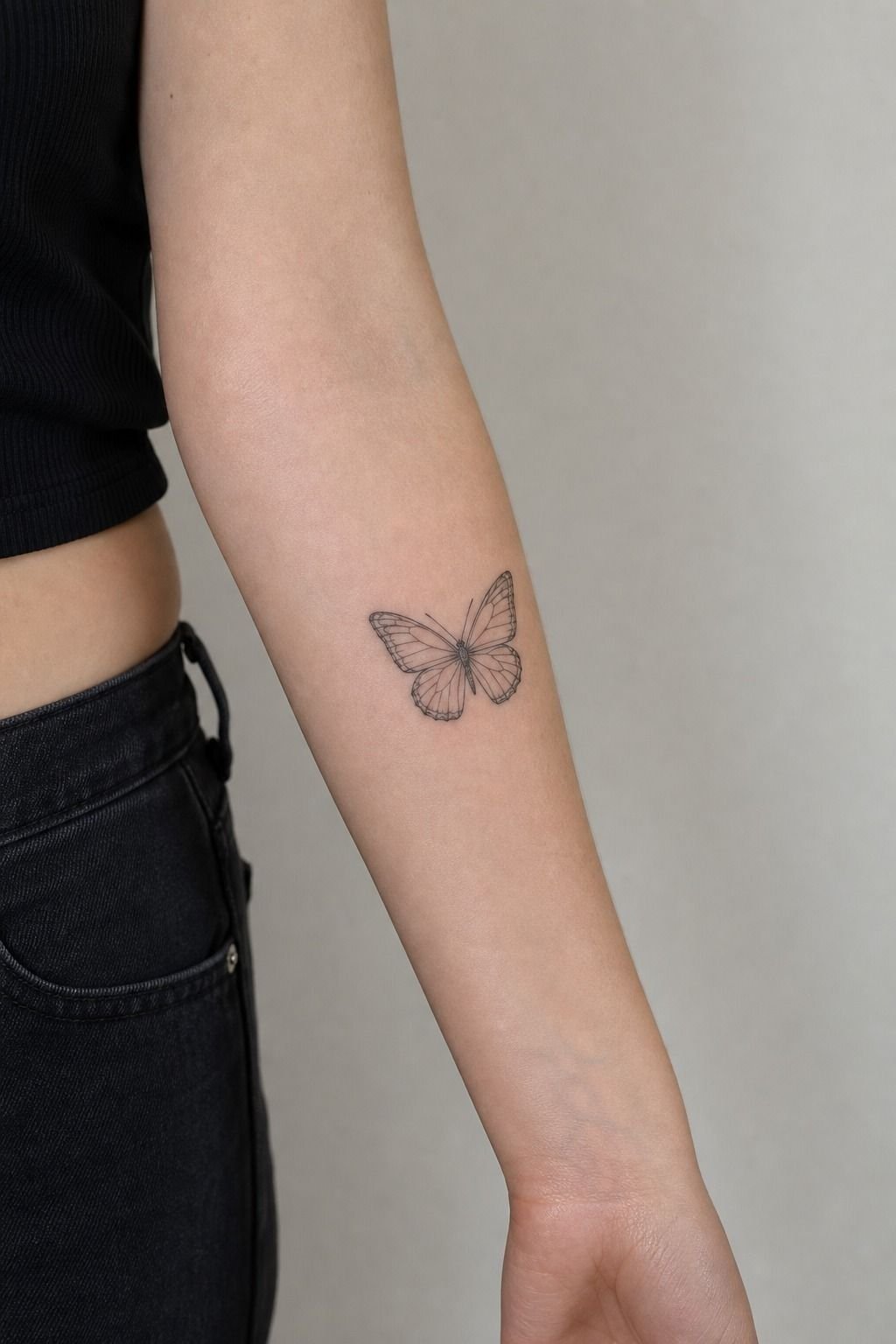
Pick one direction before you save fifty unrelated references. You can go soft botanical, crisp black and grey, red-ink accent, or bold blackwork, but mixing all four on one forearm usually makes your idea feel chewed up.
Bring your artist three to five images, not a Pinterest dump. Tell them what you like in each: single-needle linework, open wing shapes, a stem that follows your arm.
You’re giving vibe, not demanding a copy. If you want Pinterest-exact, I’m not your artist.
2Pick Fine-Line Wings for a Feminine Forearm
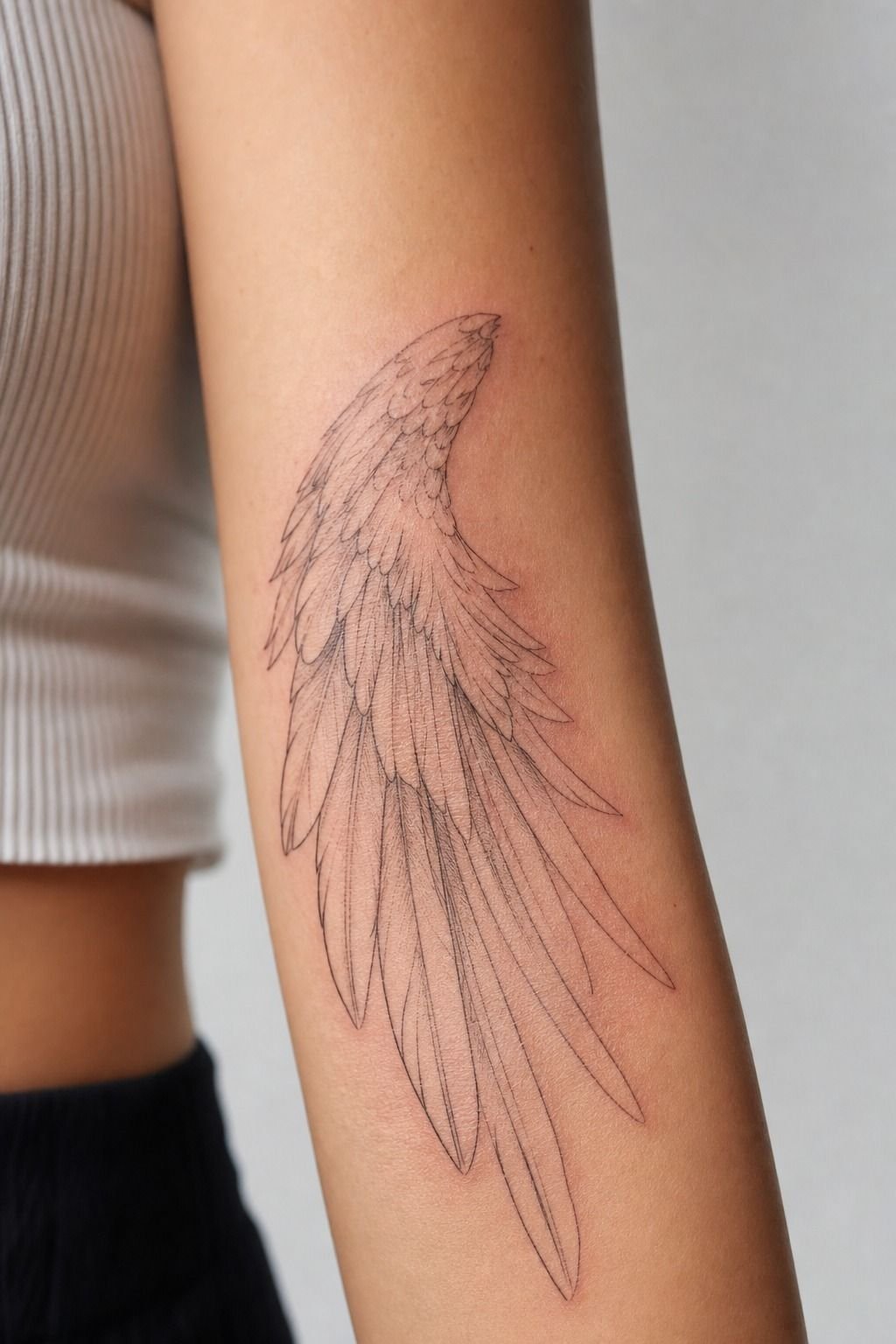
Fine-line wings work well on the forearm because you’ve got a long, low-wear stretch of skin for them to breathe. Keep the outer silhouette clear, then let the smaller details sit inside it. That’s how you get crispy and confident lines instead of ten fuzzy ones.
I’d use black over pale grey for the main outline. Your artist can soften the interior with grey wash, pepper shading, or a few open cells in the wings. You’ll get a gentle look that still reads from across the room.
Small doesn’t have to mean timid!
3Place a Black Butterfly Above the Elbow
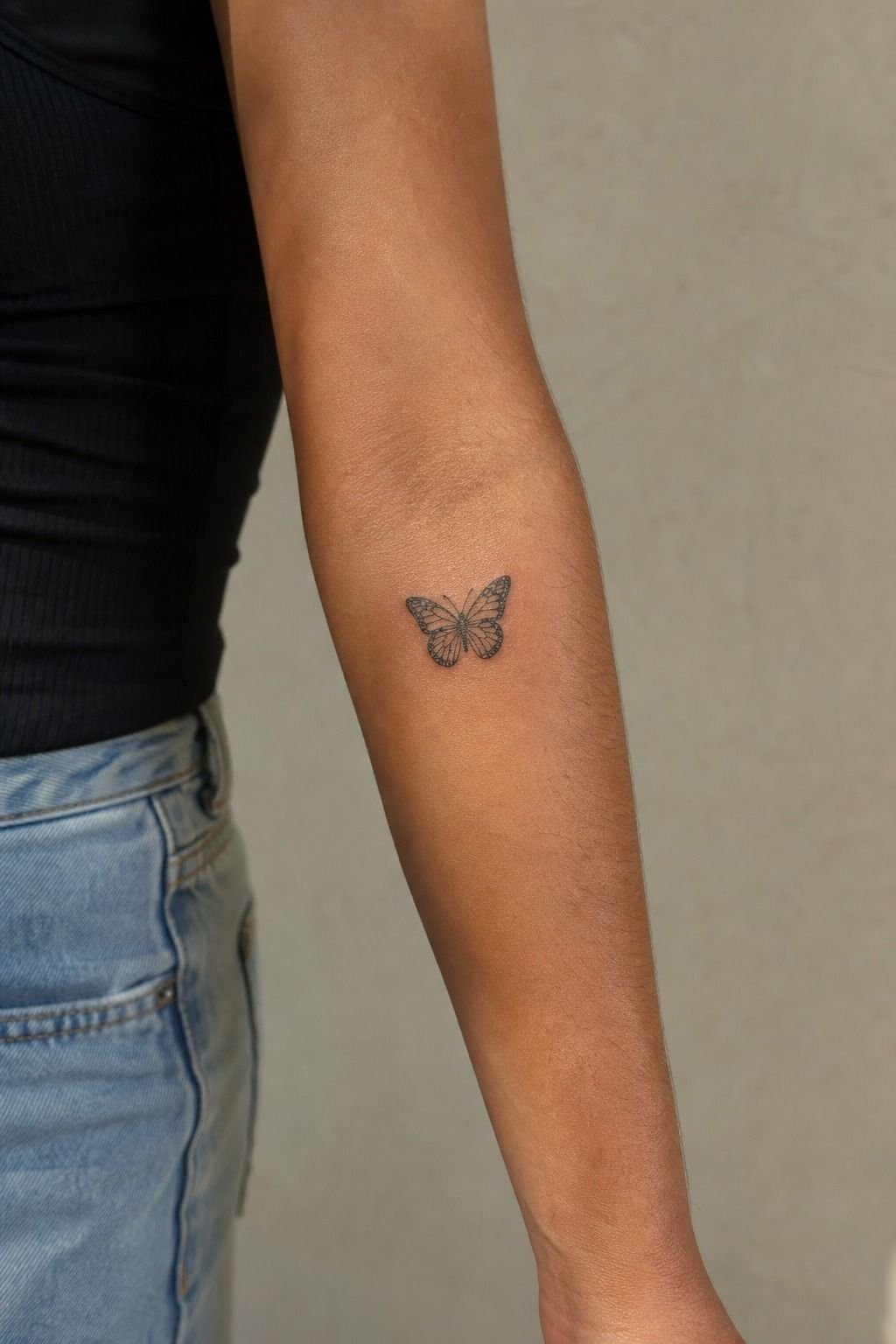
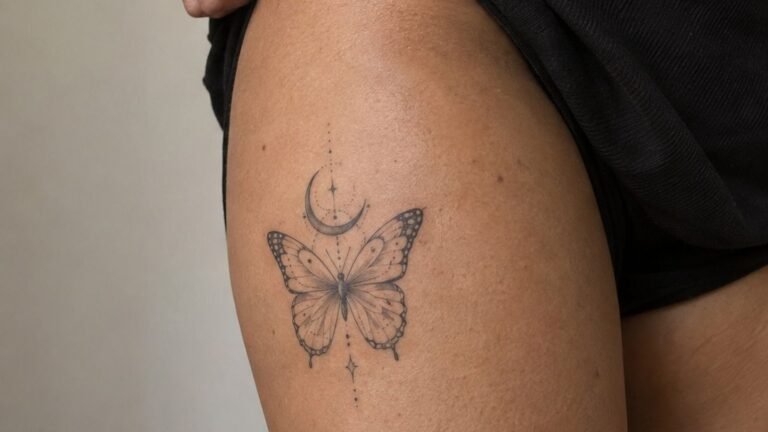
A black butterfly tattoo just above the elbow gets a strong little frame from the joint without sitting directly on the spicy elbow ditch.
4Plan a Butterfly Sleeve with Connected Blooms
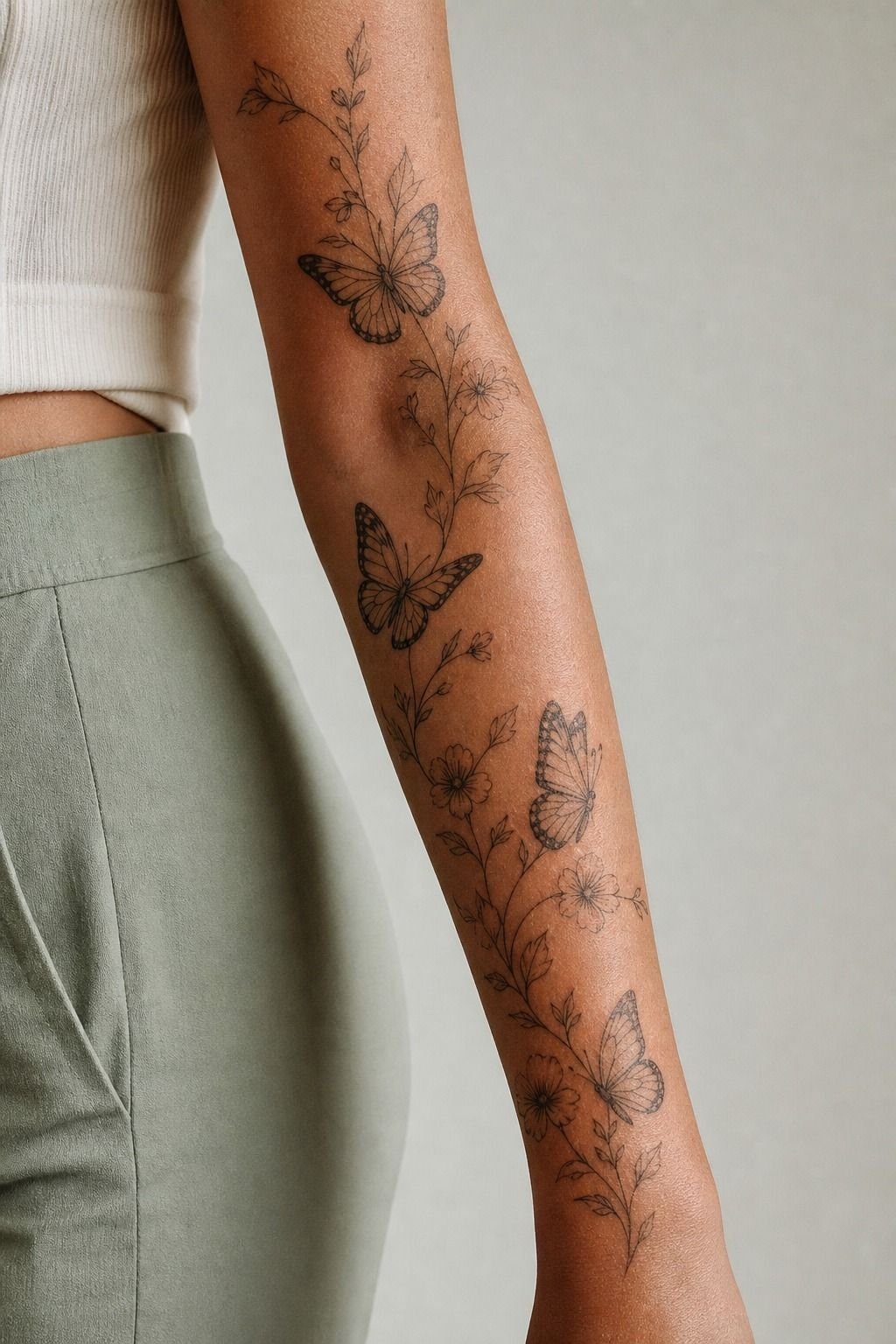
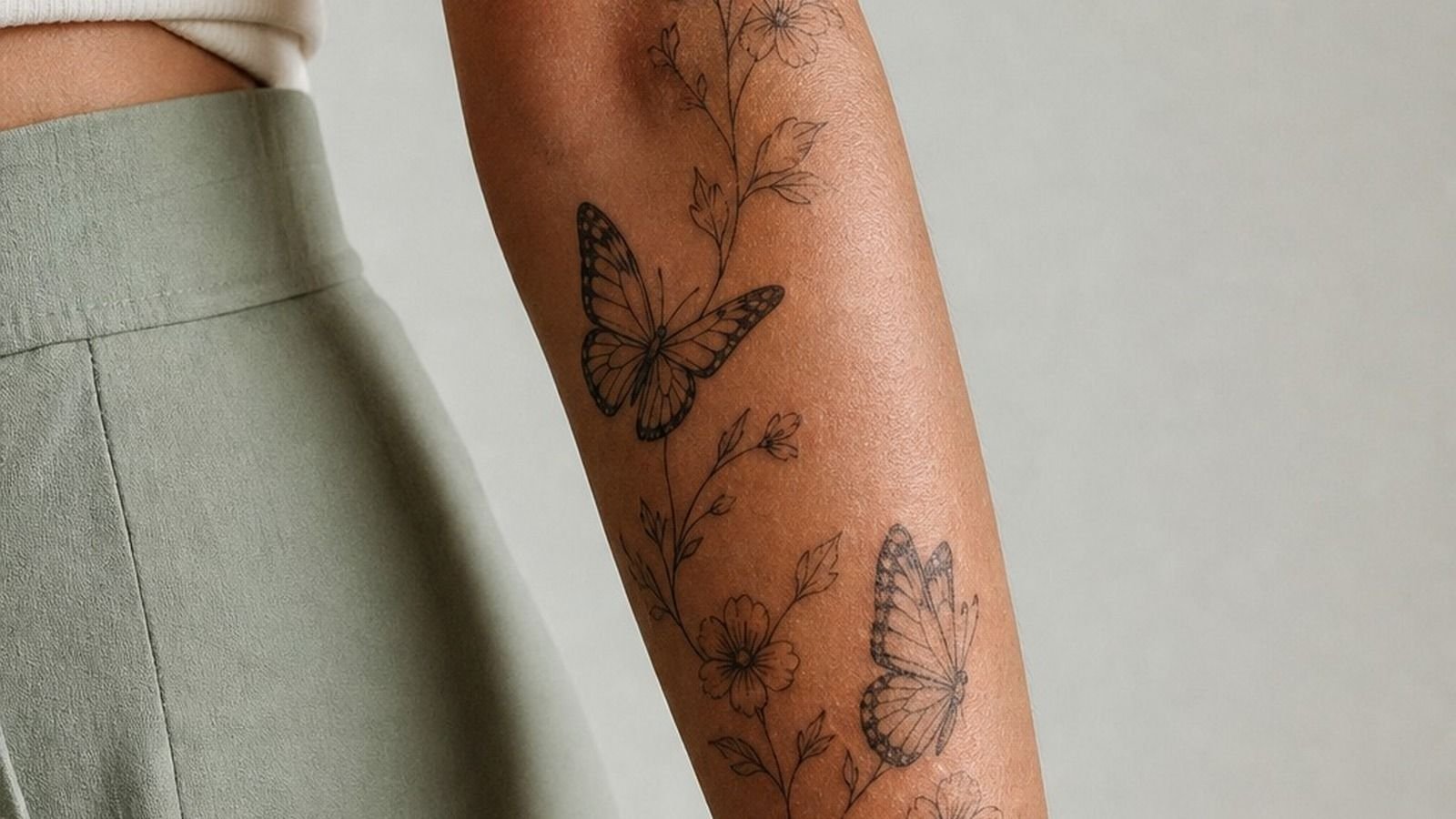
For a butterfly sleeve tattoo, map the big pieces before anyone starts tattooing. One butterfly near the wrist, one around the outer forearm, then stems and blooms that connect the gaps. You want flow, not a pile of stickers.
I like botanical illustrative linework for this because it can wrap with your arm’s shape. Ask your artist to mark your elbow, wrist crease, and inner-arm turn before drawing the stems.
You’ll avoid a flower face-down near the elbow and a sleeve that looks flat from every angle. For more planning help, see this tattoo map arm guide.
5Choose Symmetrical Butterflies Across the Outer Arm
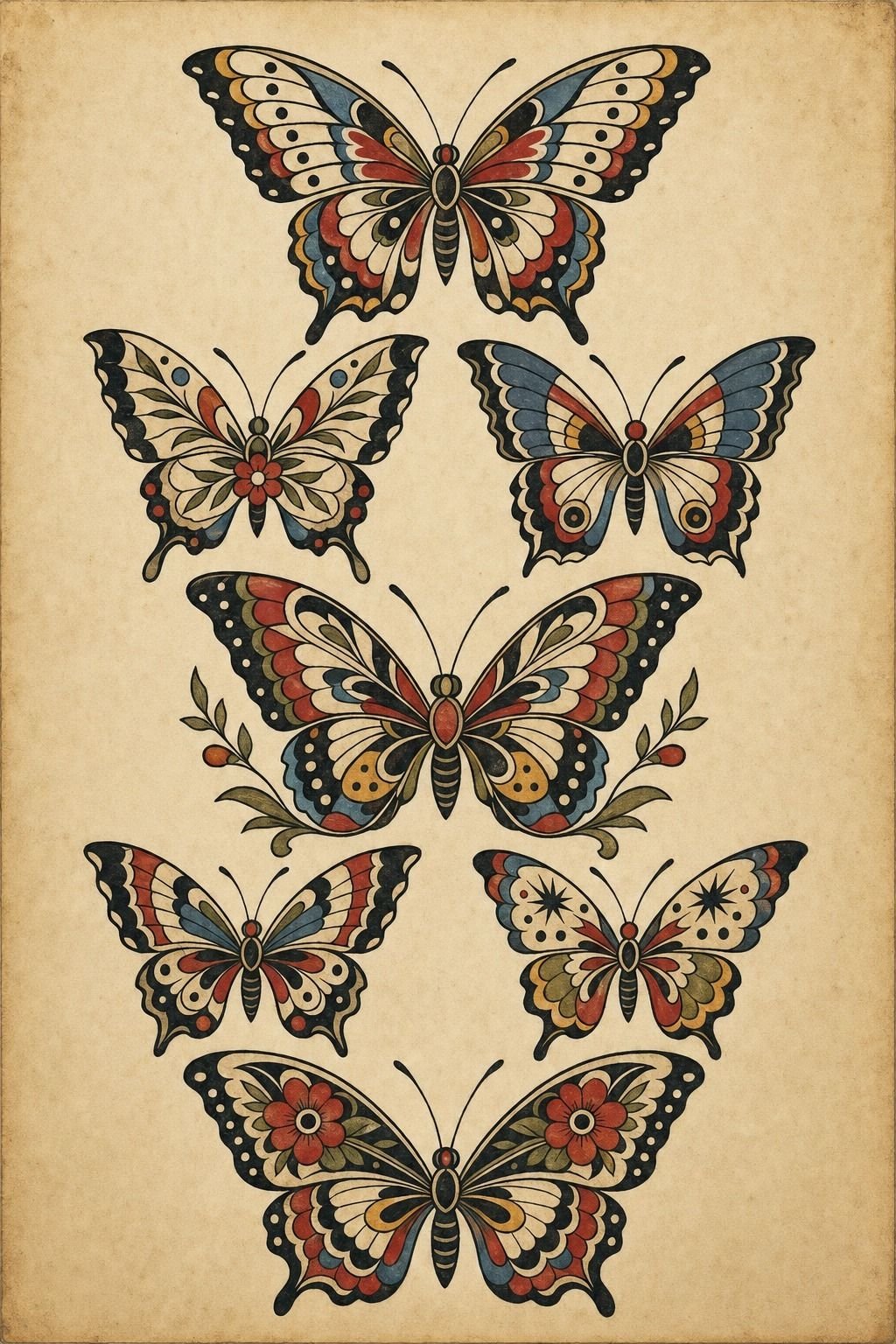
Symmetry looks clean on a flash sheet, but your arm isn’t flat paper.
6Match Wing Detail to Your Arm Shape
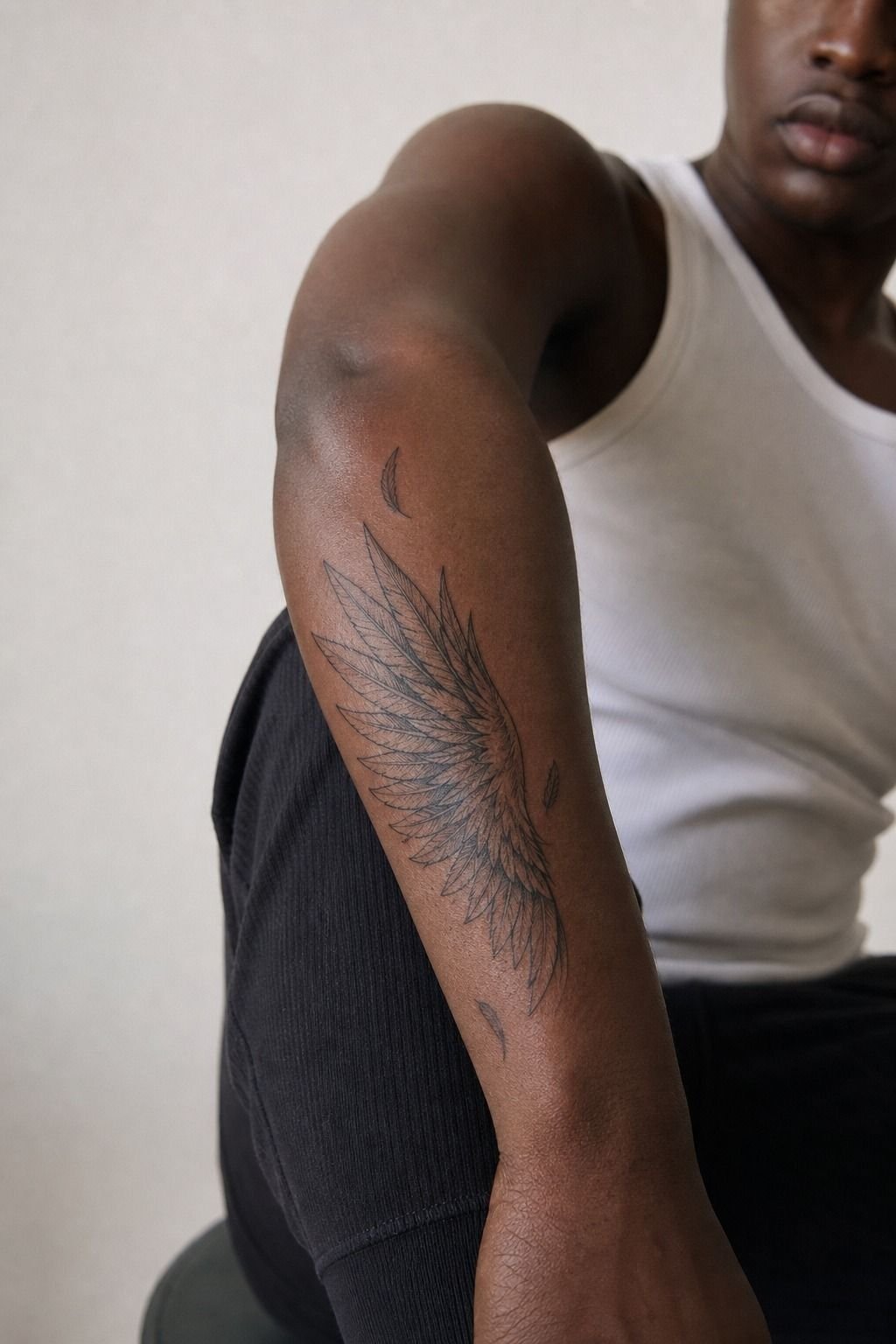
Your arm width decides how much detail you can carry. A narrow forearm needs fewer wing cells and bolder edges; a broader outer arm can handle layered spots, veins, and a soft halo of dotwork. Don’t force the same reference onto every body.
The Two-Width Rule is simple: keep the butterfly body centered, then leave enough open skin outside both wings so they don’t feel pinched. On deep skin tones, I’d push the contrast with solid black ink rather than rely on pale grey shading. It heals clearer, and you’ll thank yourself later.
7Use Red Ink for a Delicate Butterfly Accent
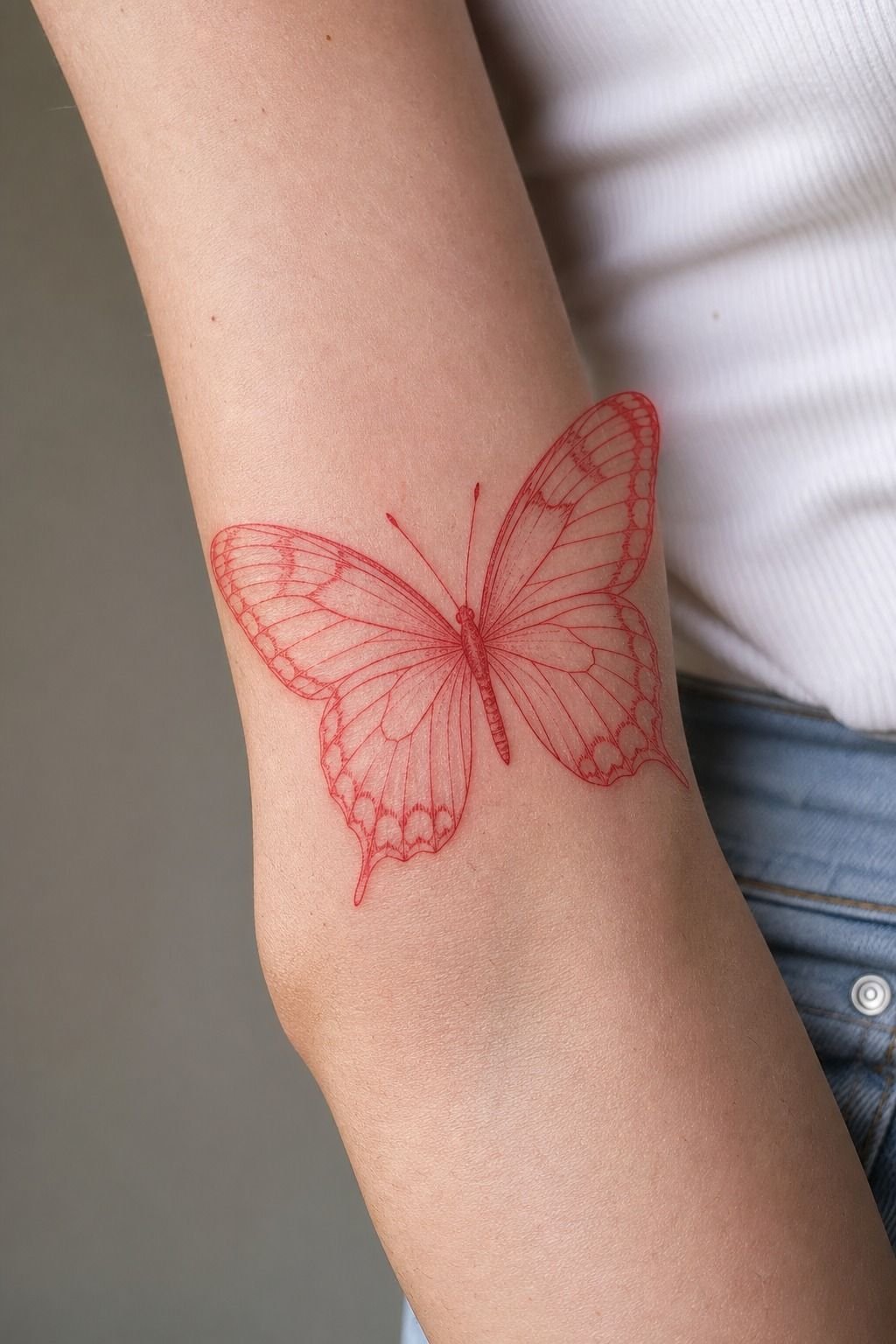
Red ink can make a butterfly forearm tattoo feel intimate without turning it into a full-color piece. Use it as spice: a thin wing edge, tiny dots, or one small red butterfly beside a black outline. Saturated red needs a clean, deliberate pass.
Ask what red pigment your artist uses and look at healed examples on skin similar to yours. Dynamic Triple Red and other professional red pigments can heal bright, but red reactions do happen for some people.
I’d skip a full tiny red butterfly with ultra-fine detail. Keep the shape open, soft, and readable.
8Add Botanical Stems Behind the Butterfly Wings
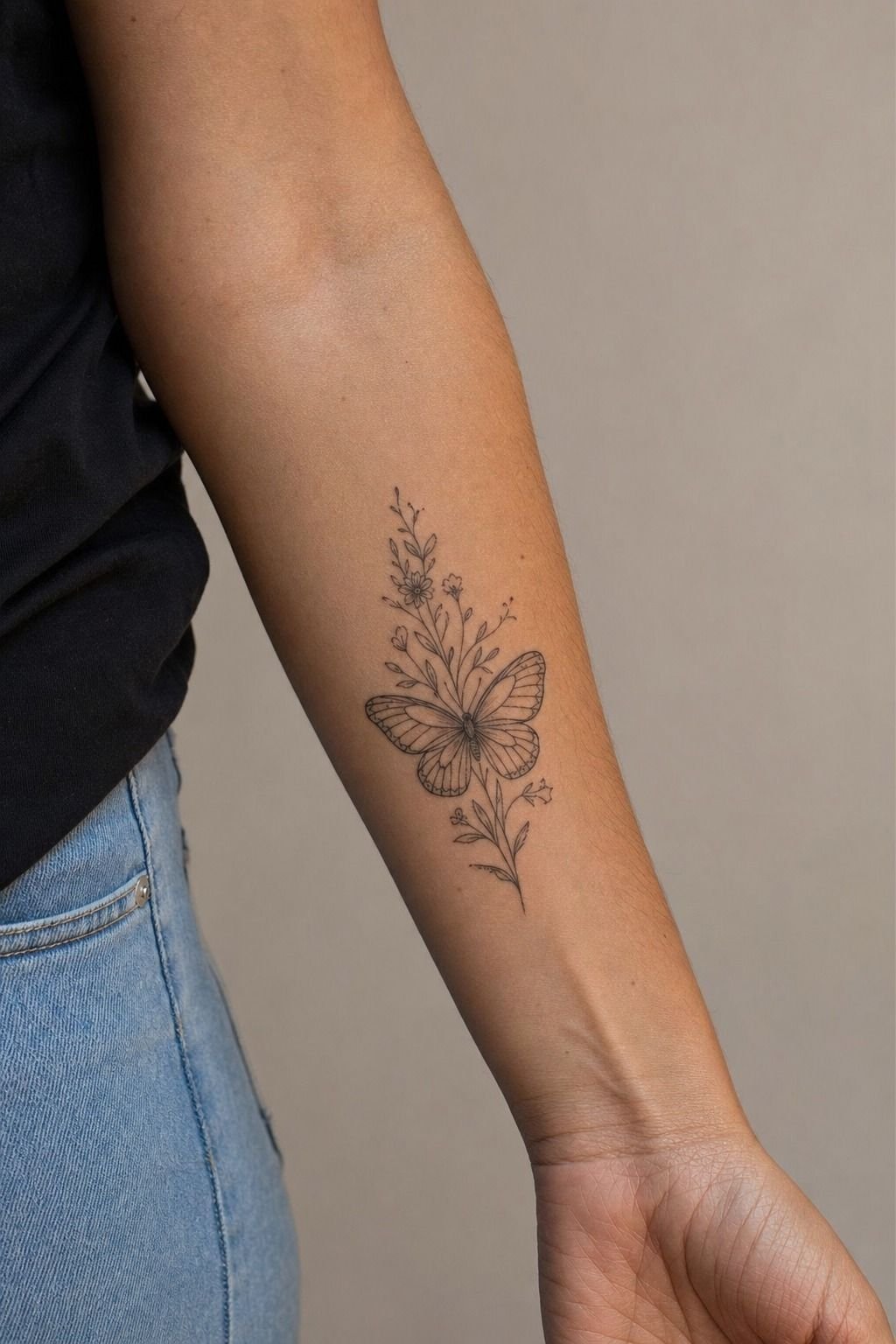
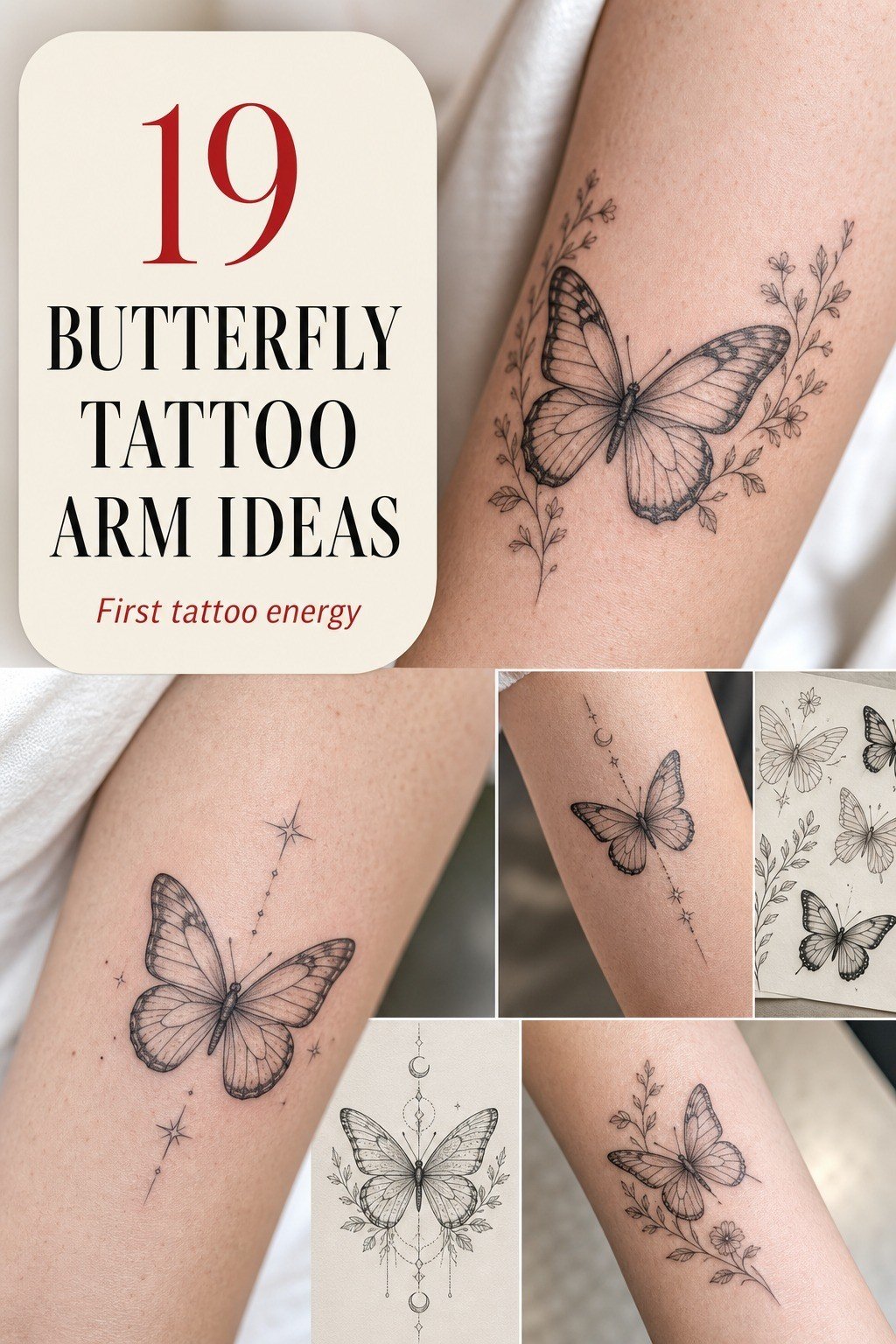
Botanical stems give a butterfly arm tattoo motion. Instead of placing leaves like wallpaper, let one curved stem begin near the wrist and travel behind the wings toward the elbow. Your arm already has a direction.
Follow it.
Use fine-line olive branches or small wildflower stems with enough negative space between leaves. You don’t need every petal shaded.
In fact, I’d skip dense filler flowers because they turn a light tattoo into a busy one fast. Your butterfly should still be the first thing you see.
9Scale the Butterfly for Your Forearm Width
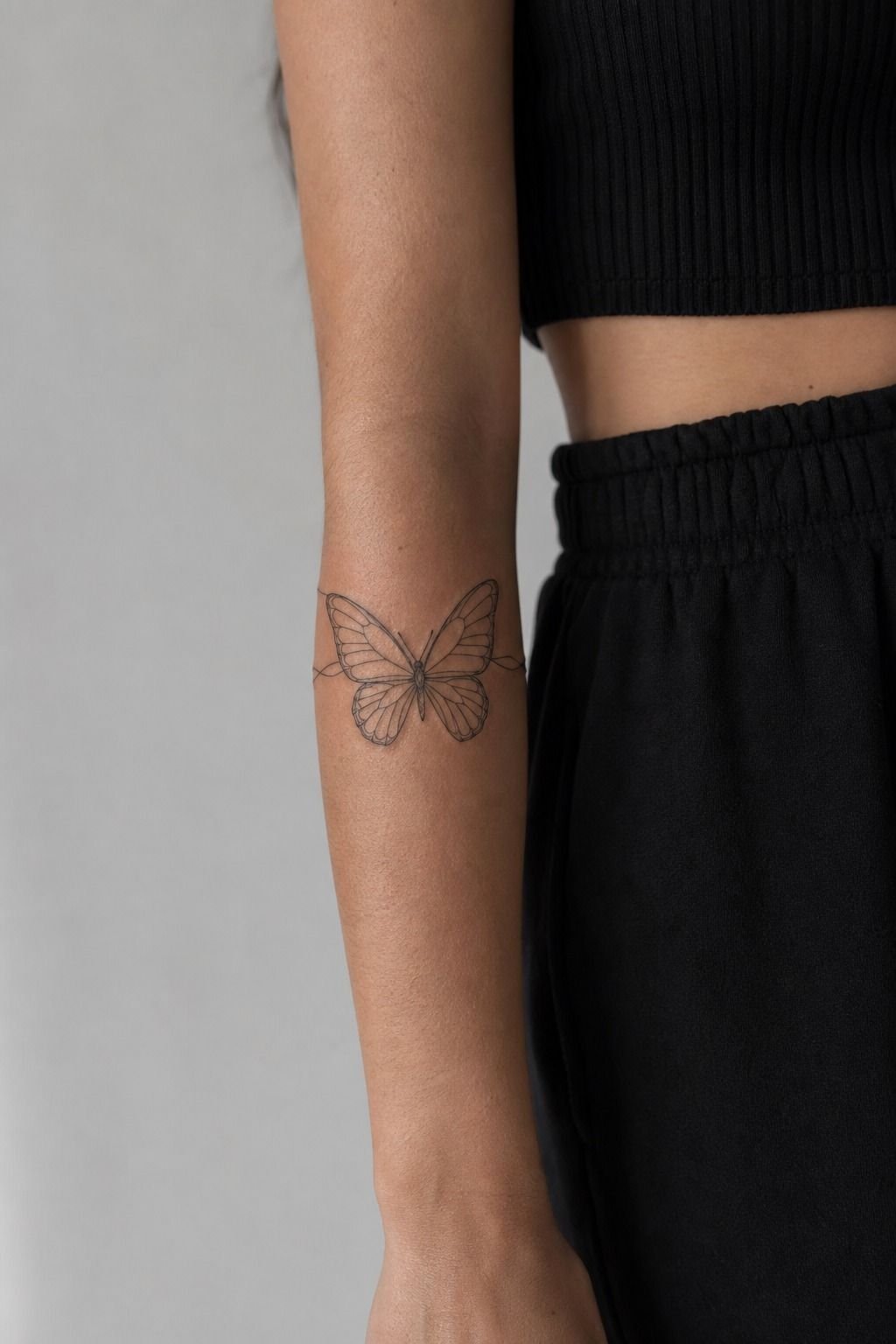
Measure your usable skin, not your whole arm. The clean central panel of most forearms is usually the place where a 2.5- to 4-inch butterfly can sit without wrapping too far into the inner arm. That’s a solid range for detail that won’t mush out.
The Forearm Breathing Rule matters here. Leave a finger-width of skin around the outer wing edge whenever you can. That size on a wrist is gonna mush out, so bump it up the forearm if you want it to age nicer.
You’re not losing delicacy. You’re buying longevity.
10Build a Blackwork Butterfly with Bold Negative Space
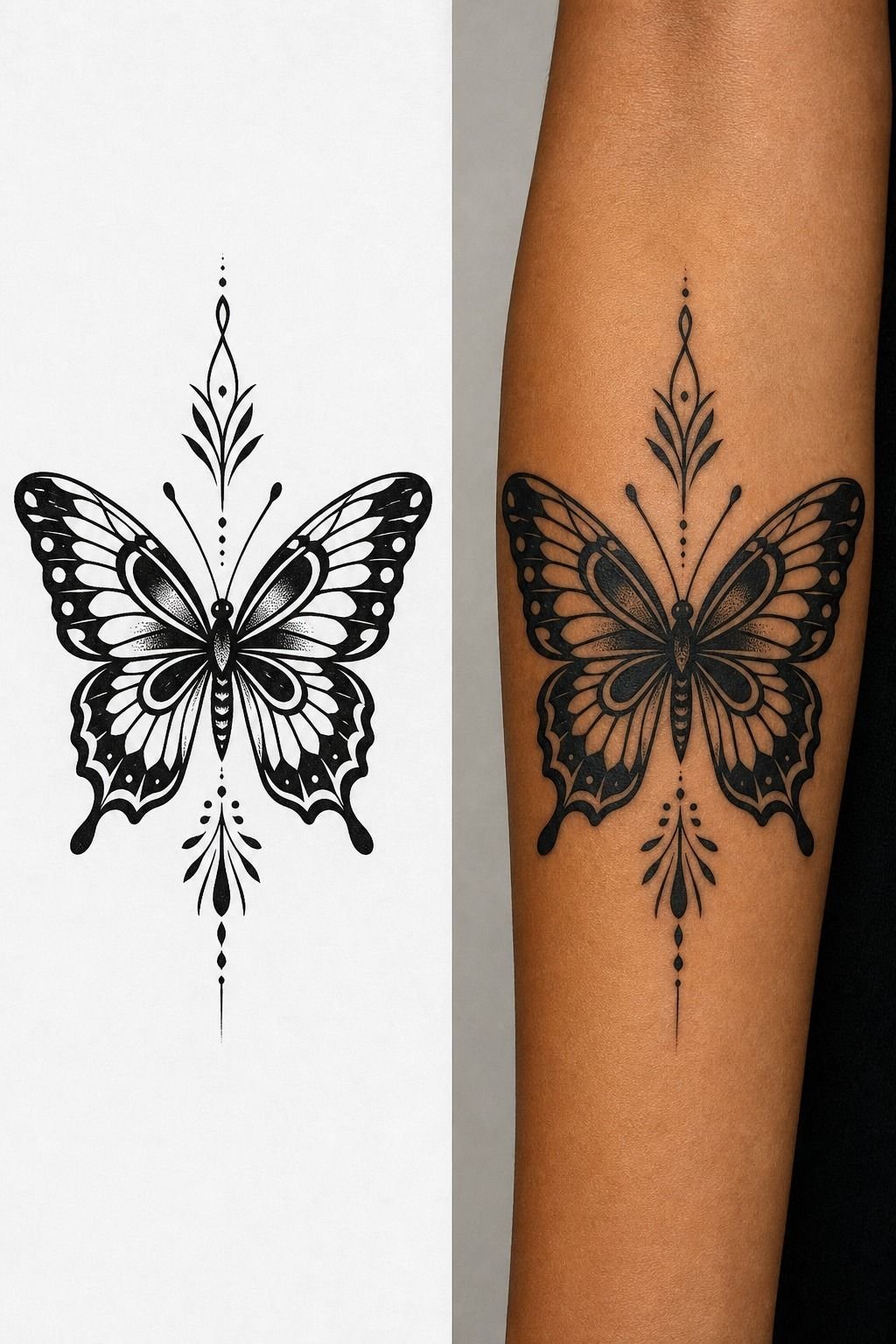
Blackwork is the move if you want a butterfly that stays visible for years.
11Keep the Wing Pattern Readable at Distance
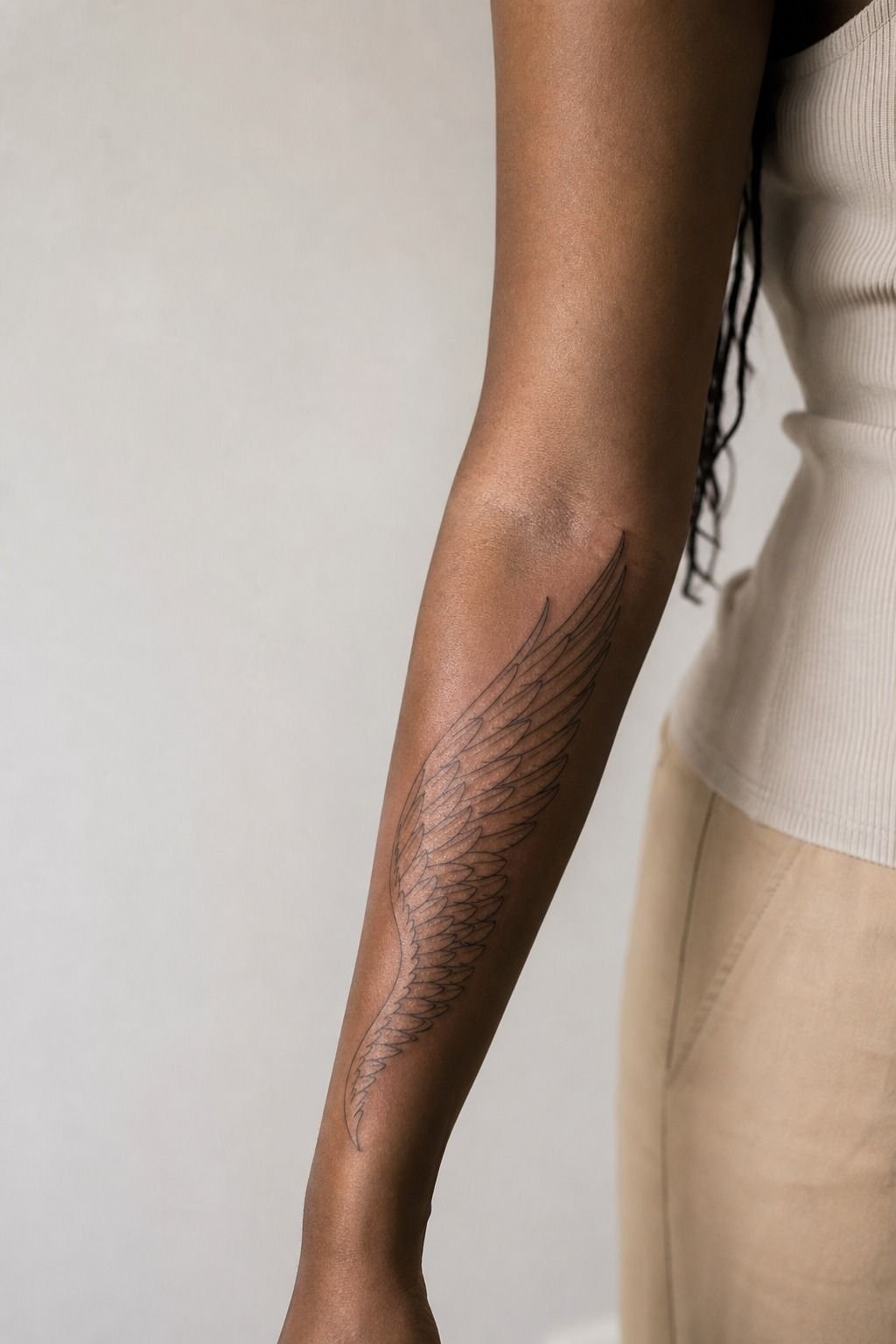
Step back from your reference photo. If the wing pattern disappears at arm’s length, it’s too fussy for the size you picked. Fine line can be captivating up close, but a tattoo also has to work when someone sees you from six feet away.
Use three layers only: outer wing shape, a few large interior cells, then selective dotwork. I’ve watched artists rescue designs by deleting half the details before tattooing. But that edit is where the design gets stronger.
You can explore simpler forms in this butterfly tattoo stencil guide.
12Pair Butterflies with Meaningful Lettering on the Arm
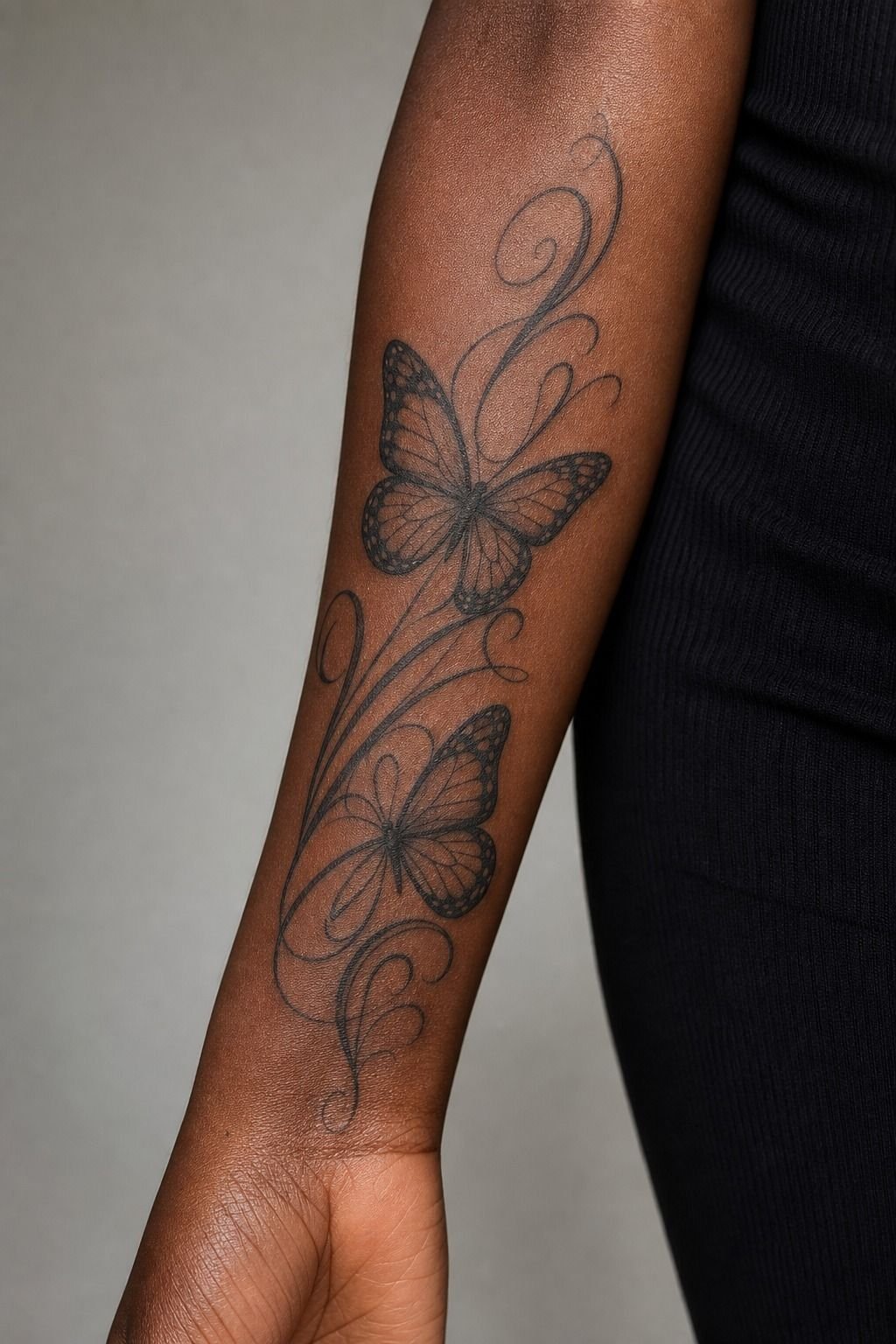
Lettering and butterflies can look refined together if you let one lead.
13Test Placement for Arm Movement and Sun Exposure
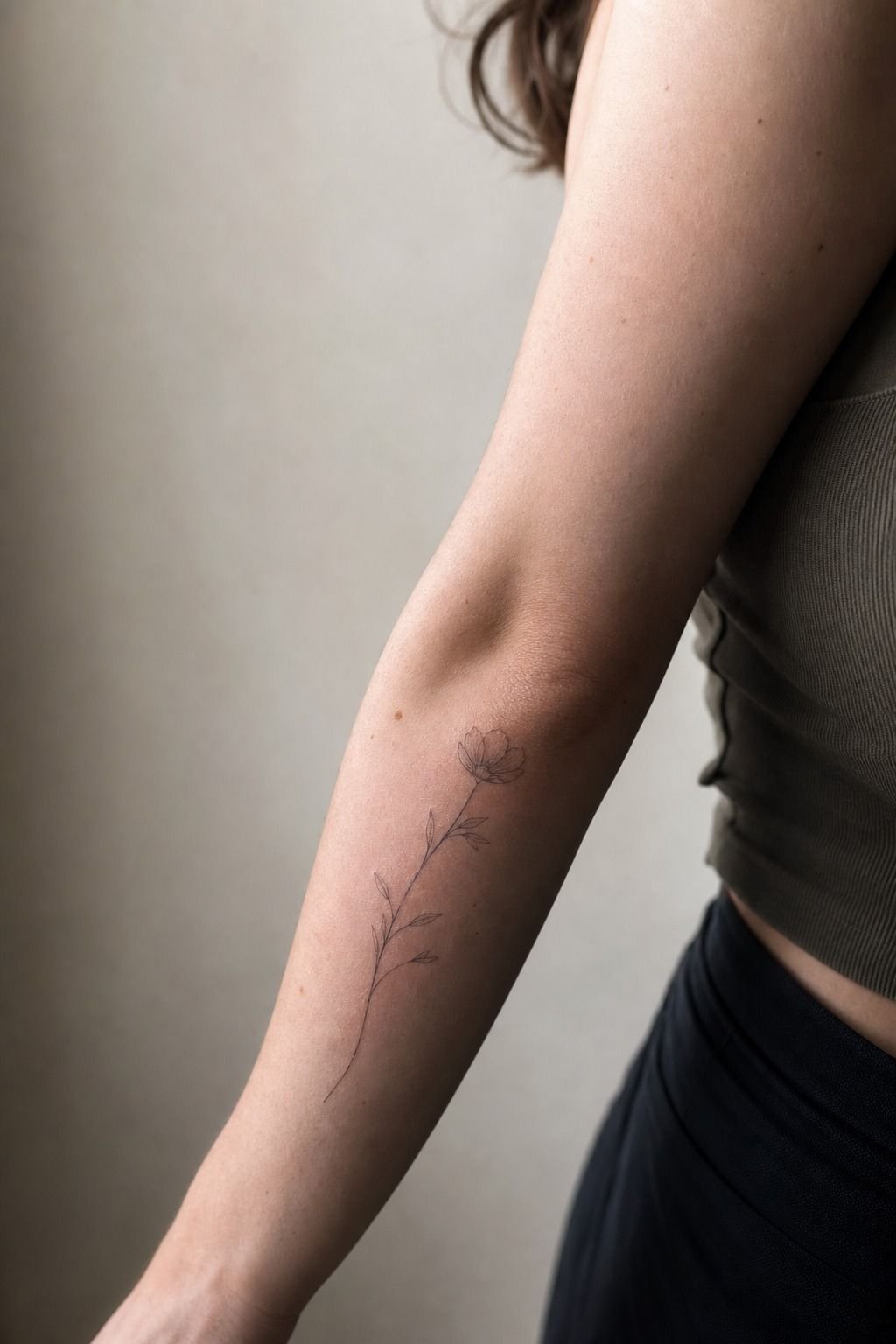
Before your appointment, tape a paper version where you want the butterfly and move for a day. Reach for a cup, bend your elbow, hold your phone. You’ll learn fast whether the wings fold into a crease or sit in a clean panel.
The outer forearm is chill for pain and easy to see, but it gets plenty of UV. The inner arm gets less sun yet more rubbing and movement.
Use SPF 30 or higher after the tattoo is fully healed, especially in summer. Sun fades soft tattoos fast.
No debate.
14Plan Layered Butterflies Along the Upper Arm
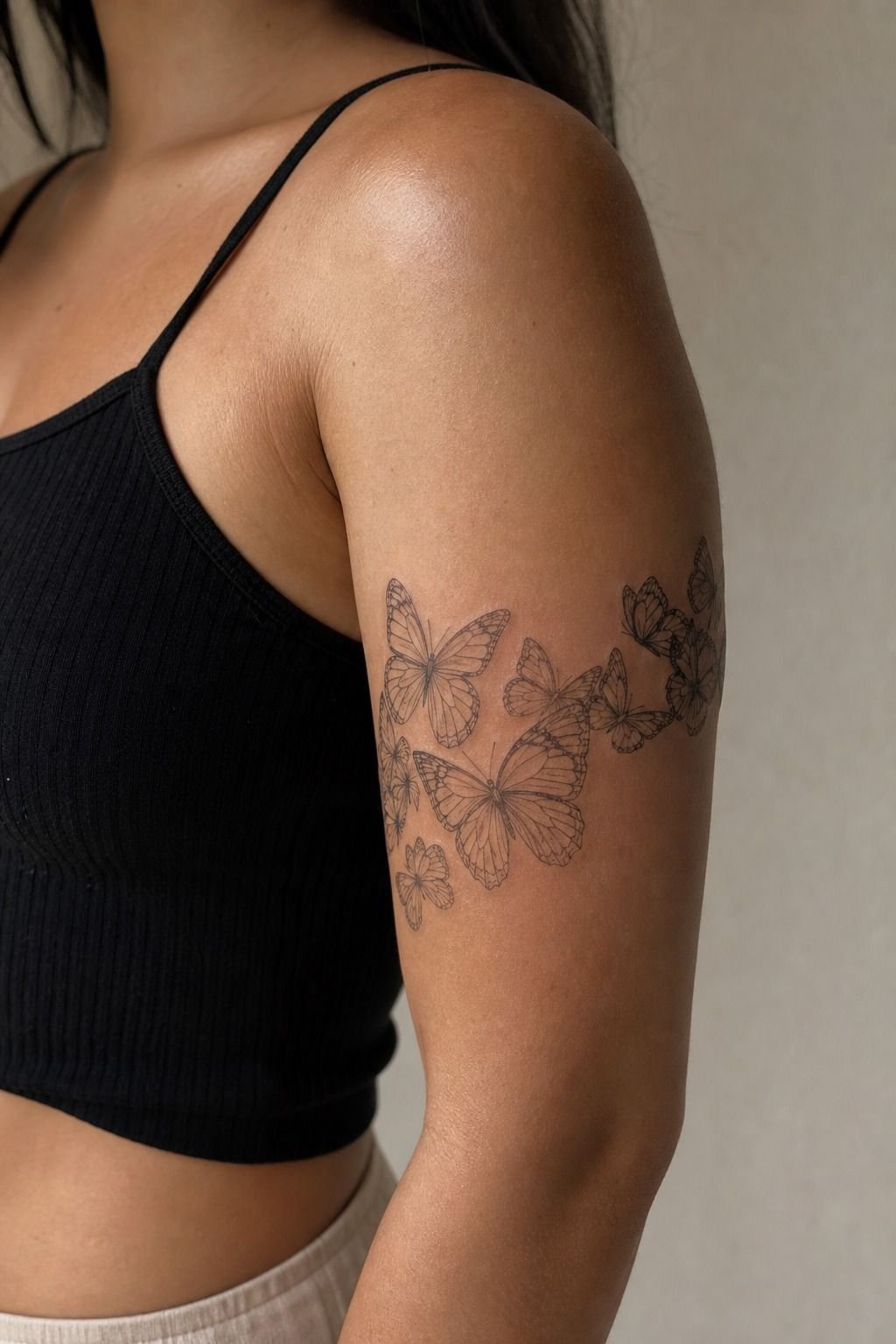
An upper-arm cluster is a good choice when you want several butterflies without committing to a full sleeve. Start with one larger butterfly on the outer bicep, then trail two smaller ones toward the shoulder or elbow. That gives your eye a calm path.
Vary the angle, not the style. Keep all three in black-and-grey fine line or all three in red-and-black accents. I’d skip making every butterfly identical because it looks stamped on.
For more placements that wear well, check these upper arm tattoo ideas.
15Choose Watercolor Wings Anchored by Fine Lines
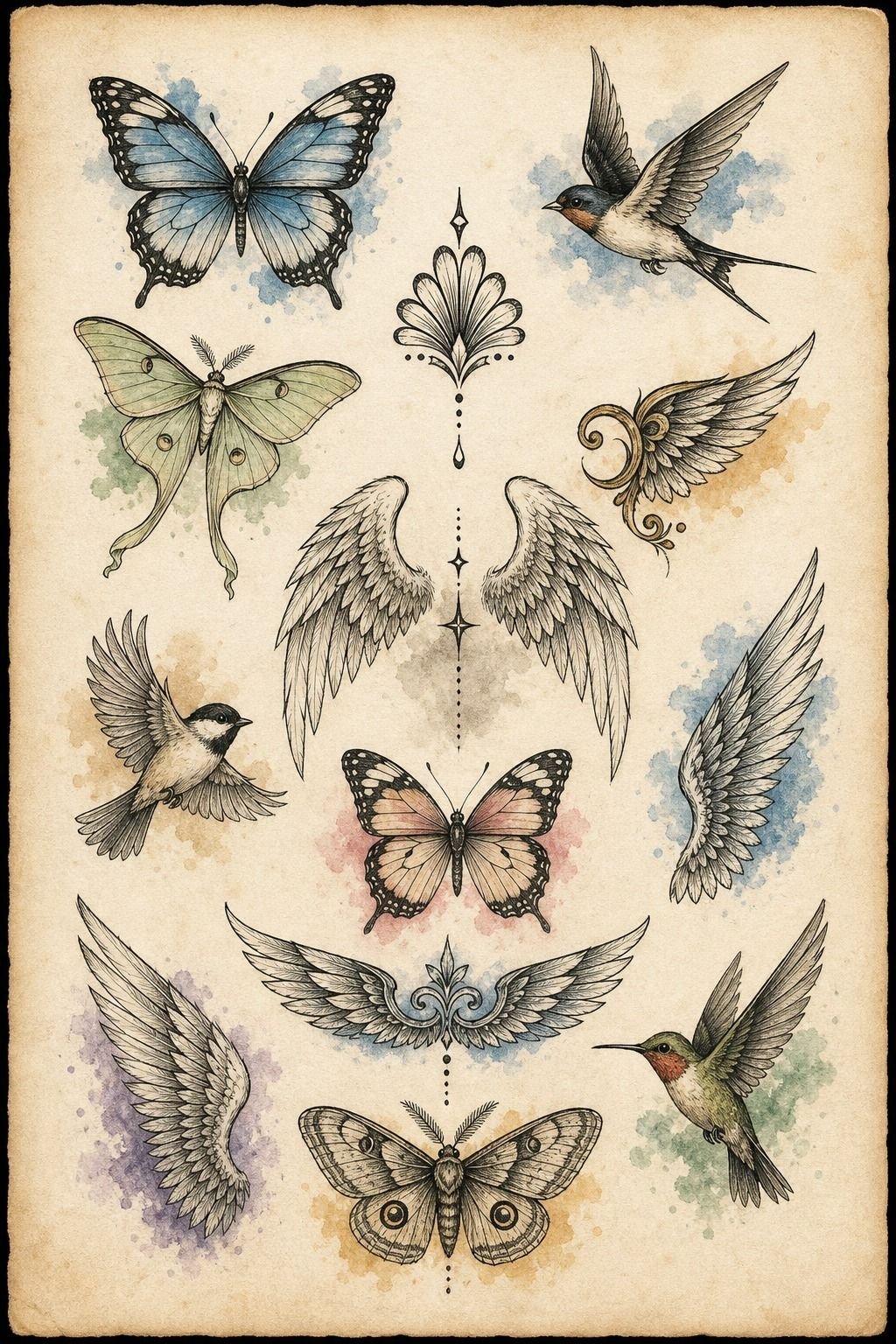
Watercolor wings can look dreamy, but only when they’re anchored with line. A wash of violet, blue, or pink behind an outlined butterfly gives you movement without relying on blurry color alone.
Color is spice. The line is structure.
Ask for watercolor pigment washes that stay inside a clear black outline. Your artist may use a soft magnum and whip shade to fade the edges, then return with a single needle for the wing veins.
But don’t choose watercolor just because the photo looks airy. Healed work is what counts.
16Protect Fresh Butterfly Ink During Arm Healing
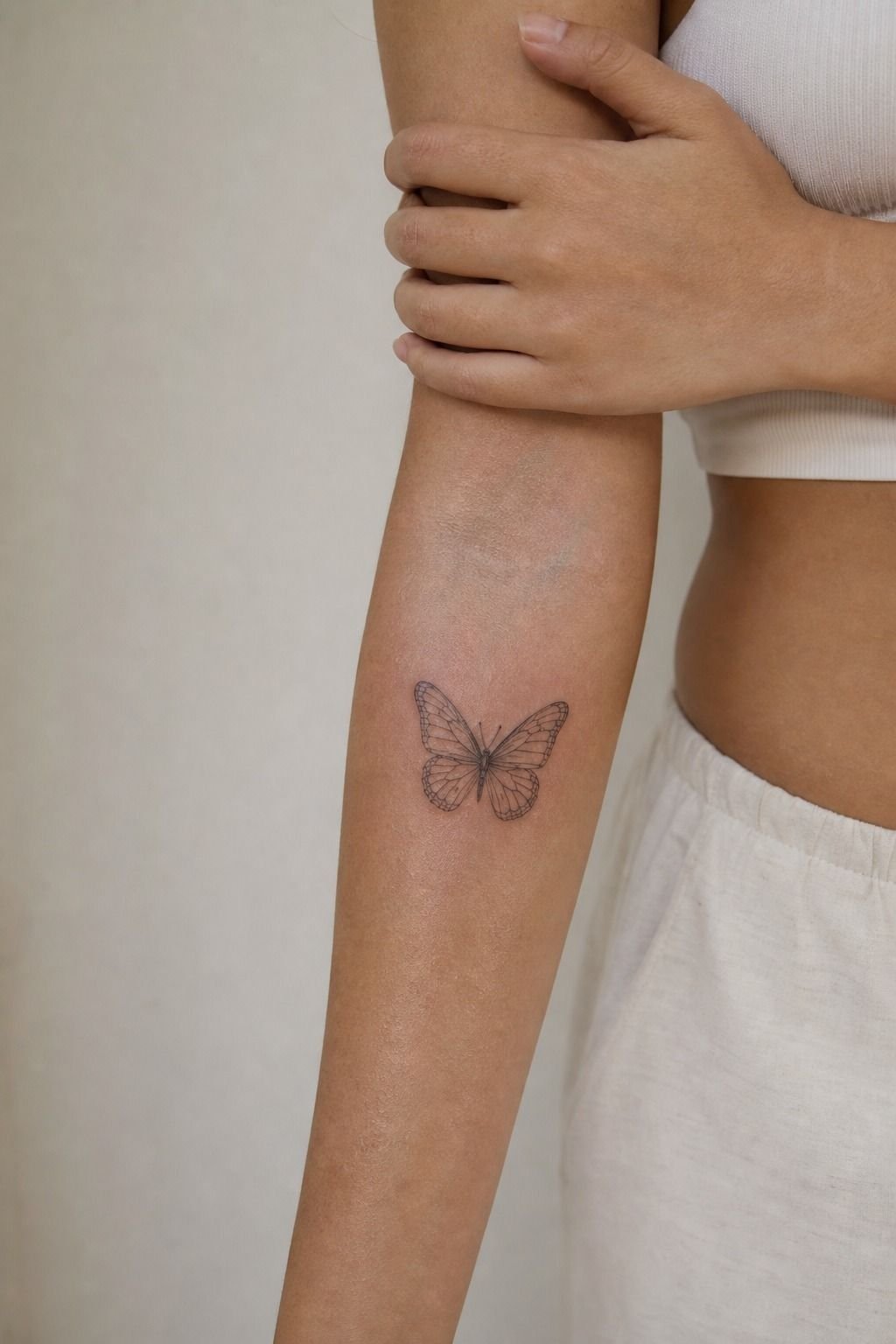
First few days, it’s an open wound. Treat it like that.
Wash your butterfly tattoo arm with gentle unscented soap, pat it dry with a clean paper towel, then use a thin layer of fragrance-free tattoo ointment. Don’t suffocate it.
Surface healing usually takes 2 to 3 weeks, while full settling can take 2 to 3 months. It’ll peel like a sunburn.
Don’t pick the flakes or you’ll pull color out. Skip pools, hot tubs, hard gym friction, and direct sun while it heals.
Boring? Yep.
Worth it!
17Compare Butterfly Designs Before Booking Your Artist
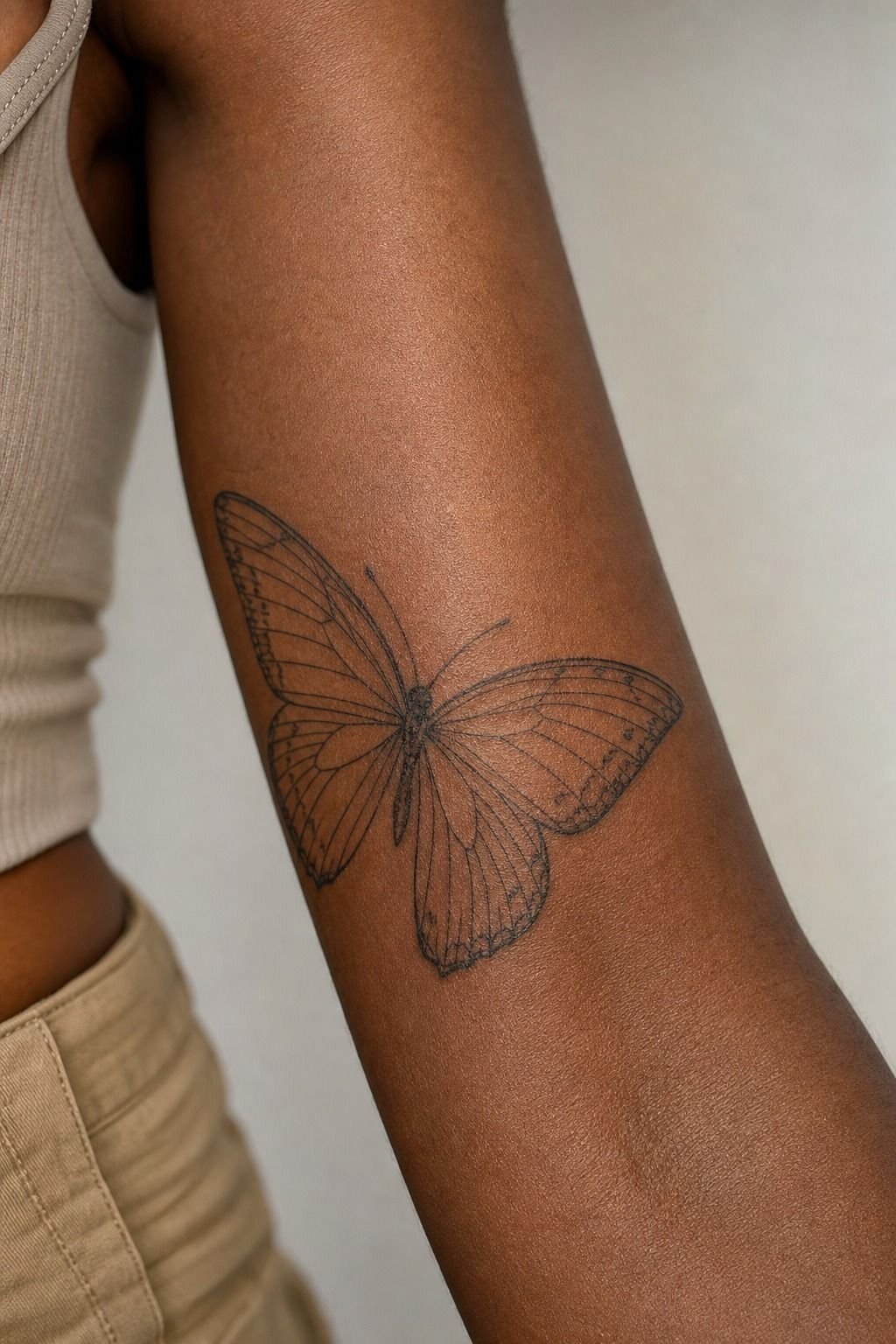
Compare designs by healed readability, not by how polished the fresh photo looks. You should ask: does this artist’s fine line stay even?
Do their blacks heal solid? Are their butterflies drawn for real arms, or copied from flat digital art?
The Three-Photo Check helps. Look at one fresh tattoo, one healed tattoo, and one tattoo shown from farther back. If the artist only posts close-up fresh work, I’d keep looking.
Your future tattoo deserves more than a pretty appointment-day photo. For a different approach, browse this realistic butterfly tattoo guide.
18Ask for Healed Photos of Arm Tattoos
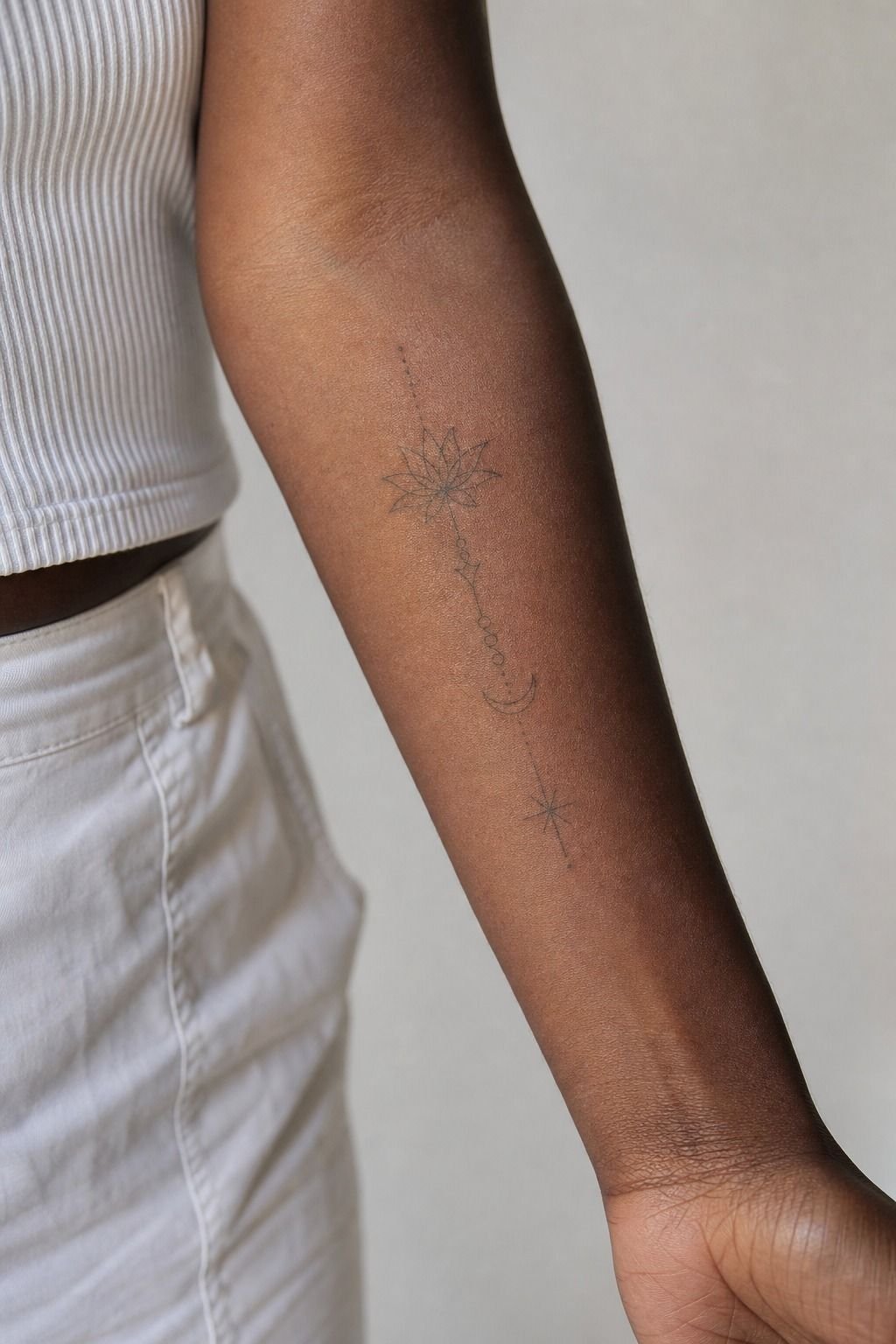
Ask for healed photos. Every time.
A fresh tattoo is swollen, shiny, and full of extra contrast, so it can hide scratchy lines or patchy packing. Healed work tells you whether an artist makes tattoos that age cute on you.
You’re looking for smooth black, crisp edges, and shading that healed velvety instead of patchy. Ask to see arm tattoos healed at least several months, especially if you want a butterfly bicep tattoo or fine lettering.
But don’t be shy about it. A solid artist expects that question.
19Budget for a Detailed Butterfly Arm Tattoo
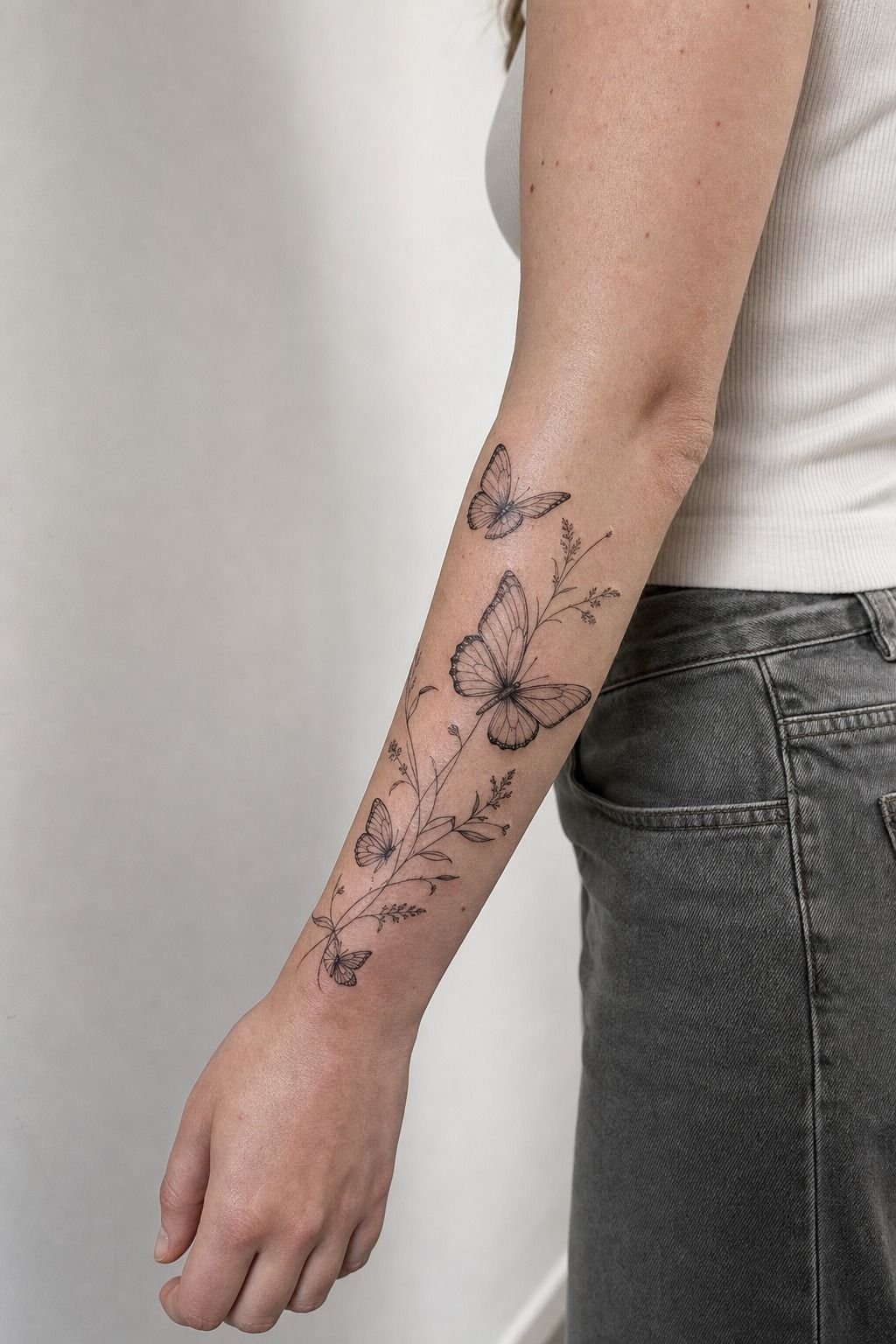
Budget for skill, not just minutes in the chair. A small clean butterfly may meet a shop minimum, while a detailed forearm composition can take several hours over one or more sessions. You’re paying for drawing, stencil placement, setup, tattooing, and a safe studio.
Don’t bargain-shop this one. I’d rather see you wait, save, and book an artist whose healed linework is clean than spend less on a scratcher and pay for a cover-up later.
Why I Push Back on Tiny Butterfly Arms
I love a small meaningful tattoo. I also spend a lot of time explaining why a tiny butterfly with thirty wing veins, a birth date, a flower bouquet, and a quote won’t stay tiny and crisp forever.
Skin isn’t paper. Ink settles under it, lines widen a little, and high-wear spots get rubbed, washed, flexed, and sun-exposed every day.
When someone sits with me wanting a micro butterfly on the wrist, I don’t automatically say no. I ask what matters most: the exact detail, the delicate scale, or the fact that it still reads clearly years from now. You usually get to keep two.
That’s not me killing the fun. That’s me protecting your skin and your money.
I’ve seen the best results when clients let the design breathe. One clean butterfly, maybe 3 inches tall, a few meaningful leaves, and an outline with enough contrast to survive the silver-skin stage.
It feels subtle on the day, then settles into something elegant and personal. That’s the good stuff.
And there’s another practical point. Your tattoo artist isn’t only placing ink; they’re reading the movement of your arm, the stretch of your skin, and how the design will turn when you walk around.
A reference can inspire you, but it can’t do that job. Let your artist redraw the idea for your body.
You’ll end up with something that looks like it belongs there.
The Questions Worth Answering First
How much does a Butterfly Tattoo Arm usually cost?
Most butterfly arm tattoos cost about $100 to $300, depending on size, detail, artist, and region. A clean design is worth budgeting for.
– Shop minimums, roughly $50 to $100 – US hourly rates, roughly $100 to $250 – Detailed forearm sessions, several hours
Are Butterfly Tattoo Arm a good idea for a first tattoo?
Yes, an outer forearm butterfly can be a solid first tattoo because you can see it heal and the pain is usually manageable. Clear placement makes the experience easier. Keep the design simple, and avoid packing tiny details into a small wrist area.
How do I choose a tattoo artist for Butterfly Tattoo Arm?
Choose an artist with healed fine-line work, clean studio practices, and butterflies that fit the body. Healed photos matter more than fresh photos. Check their line consistency, their stencil placement, and whether their portfolio matches your direction. You can also review inside arm tattoo ideas before deciding.
How much do Butterfly Tattoo Arm hurt?
Outer forearm, upper arm, and shoulder are usually more tolerable than ribs, feet, hands, or sternum. Placement changes the pain more than the design does. Lines feel sharper, shading is a dull burn, and color packing is the spiciest part. Tap out for five rather than pass out on me.
How long does a Butterfly Tattoo Arm take to heal?
Surface healing takes about 2 to 3 weeks, though full healing can take 2 to 3 months. Gentle aftercare protects the result. Use unscented soap, a thin layer of moisturizer, clean clothing, and no pools or sun while your skin is fresh.
What’s the best placement for Butterfly Tattoo Arm?
The outer forearm and upper arm are my top picks because they offer visible, low-wear skin and enough room for a readable design. More breathing room means better aging. If you want a more private placement, look through these inner arm tattoo ideas.
Where I’d Start First
If I had to pick one step, I’d start with scaling the butterfly for your forearm width. Tiny details don’t stay tiny once ink settles under skin. Give those wings room to breathe, then pin your favorite placement before you book.