How to Make a Tattoo Map on Your Arm: A Complete Guide
A tattoo map transforms your arm into a living cartography of memory, place, and personal geography. Whether tracing coastlines from a childhood home, charting migration routes, or marking coordinates that altered your course, these designs reward careful planning and technical precision. This guide covers everything from conceptual groundwork to the specific challenges of arm placement.
Understanding Tattoo Map Styles
Map tattoos occupy a spectrum from literal reproduction to highly abstract interpretation. Recognizing where your vision falls on this spectrum shapes every subsequent decision.
Topographic and Geographic Maps
These replicate actual terrain with contour lines, elevation shading, and recognizable landforms. They demand reference material of sufficient resolution; blurry or low-detail source images produce muddy tattoos. Satellite photography, USGS quadrangle maps, or OpenStreetMap exports offer excellent starting points. For arm placement, consider how the cylindrical surface distorts flat projections. A map wrapping the forearm behaves differently than one confined to the outer bicep.
Nautical and Celestial Charts
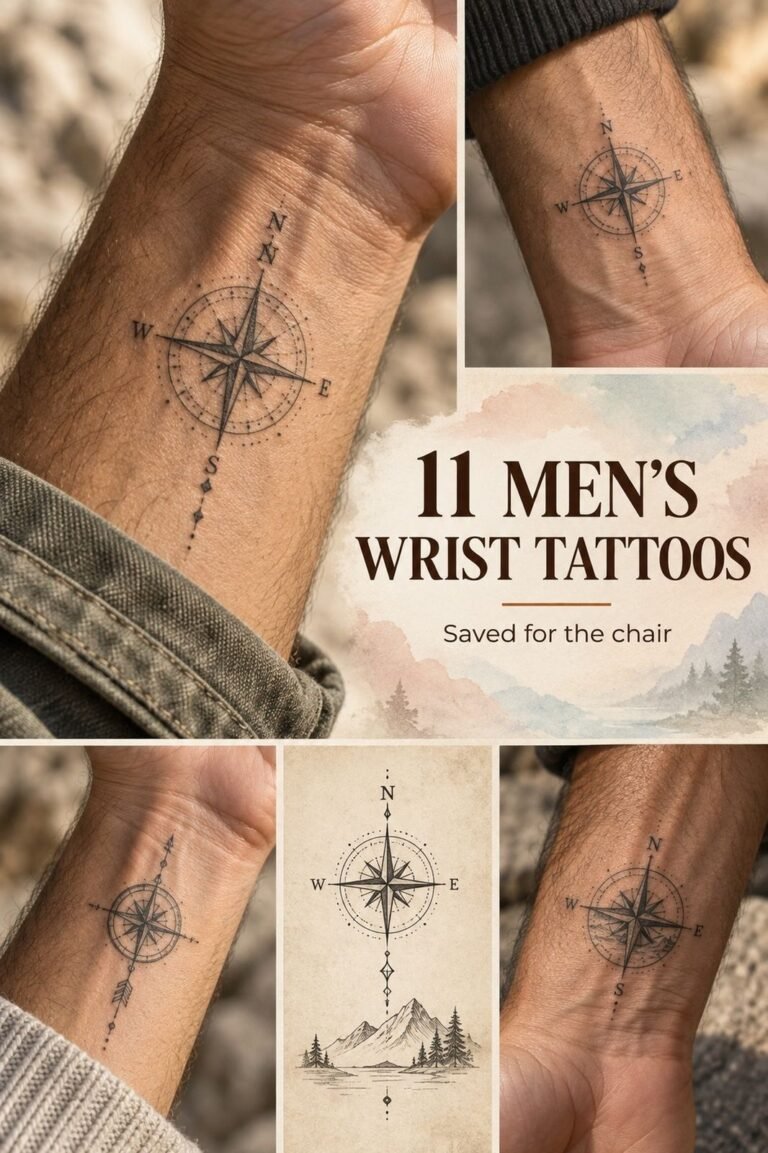
Historical maritime charts often linked to exploration narratives carry decorative conventions: rhumb lines, compass roses, sea monsters, and ornate cartouches. Celestial maps invert the perspective, mapping stars onto the body rather than land. Both styles accommodate aging better than dense geographic detail because their linework tends toward bold illustration rather than fine topography.
Abstract and Conceptual Maps
Subway diagrams, flowcharts, or entirely invented geographies fall here. These prioritize symbolic relationships over spatial accuracy. The London Underground map, for instance, sacrifices geographic truth for navigational clarity, a useful precedent if your map represents emotional or relational territory rather than physical space.
Selecting Your Geographic Subject
The most enduring map tattoos emerge from specificity rather than generality. “Europe” rarely carries the weight of a particular Alpine valley or Aegean harbor.
- Scale and detail: A city neighborhood allows street-level granularity; a continent forces simplification to coastlines and major rivers. Match scale to available skin real estate.
- Personal resonance: Locations tied to formative experience, where you learned a craft, survived difficulty, or met someone essential, sustain meaning across decades.
- Visual character: Some places tattoo better than others. Archipelagos, winding rivers, and irregular coastlines offer natural movement along arm contours. Rectangular political boundaries often fight the body’s curves.
Working with Multiple Locations
Connecting disparate places requires design solutions: dashed routes, flight paths, or nested insets resembling traditional cartographic conventions. A sleeve might progress chronologically from shoulder to wrist, each zone representing a life chapter. Alternatively, locations can overlap or interweave, creating palimpsest effects where one place ghosts through another.
Designing for the Arm’s Anatomy
The arm presents distinct zones with different visibility, pain profiles, and aging characteristics. Your map’s design should respond to these constraints rather than ignore them.
Forearm Considerations
The outer forearm (radial side) offers flat, stable skin with minimal distortion during movement. It ages relatively well and remains visible in most social contexts. The inner forearm (ulnar side) experiences more flexion and friction, accelerating detail loss. Maps here benefit from bolder linework and higher contrast.
Wrapping a map around the forearm creates a cylindrical panorama. Continuous coastlines or routes that traverse from outer to inner surface require careful planning to avoid the “seam” where the design disappears around the edge. Experienced tattooers often compensate by exaggerating certain features or accepting that some portion remains hidden from any single viewpoint.
Upper Arm and Shoulder
The bicep’s rounded mass suits centralized compositions: compass roses, circular projections, or regional maps with the subject centered on the muscle belly. The deltoid/shoulder cap allows larger-scale work but introduces significant distortion when the arm hangs versus flexes. Designs here should read clearly in both states.
Hand and Wrist Extensions
Extending map elements into the hand or across the wrist creates dramatic continuity but commits to high-visibility placement. Finger tattoos of coordinates or miniature compass points have gained popularity, though they require frequent touch-ups due to rapid cell turnover and sun exposure.
Technical Execution and Tattooer Selection
Map tattoos test technical skills across multiple domains: line consistency, negative space management, and the translation of two-dimensional reference onto three-dimensional form.
Evaluating Artist Portfolio
Seek evidence of fine linework held to geometric standards, not merely illustrative ability. Ask specifically about experience with technical or scientific illustration, architectural drawing, or previous cartographic work. Some tattooers specialize in “scientific” or “technical” styles that align naturally with map precision.
Request to see healed results, not just fresh photographs. Fine lines in map tattoos blur predictably; you want an artist who anticipates this and designs accordingly. Lines that read as crisp when fresh may need intentional weight to survive five years of sun and skin regeneration.
Color versus Black and Grey
Traditional cartography employed color semantically: blue for water, green for low elevation, brown for high, red for boundaries or routes. Tattooed maps can honor this convention or subvert it. Watercolor techniques create atmospheric, non-literal interpretations but sacrifice long-term legibility. Solid black linework with selective color accents often proves most durable.
Skin tone significantly affects color choices. Yellows and pale greens disappear on deeper skin; saturated blues and reds maintain visibility. A knowledgeable tattooer adjusts traditional cartographic palettes for individual clients rather than applying uniform schemes.
Aftercare and Long-term Preservation
Map tattoos with fine detail demand meticulous aftercare to preserve their information density.
- Initial healing: Follow your tattooer’s specific instructions, typically involving gentle washing, thin moisturizer application, and avoidance of soaking or friction. Disturbing healing skin damages fine lines irreversibly.
- Sun protection: UV radiation degrades tattoo pigment disproportionately, and map tattoos rely on subtle tonal variations that disappear when contrast drops. Consistent SPF application on exposed arm tattoos isn’t optional maintenance; it’s essential preservation.
- Moisturization: Dry skin reflects light differently, making healed tattoos appear faded. Regular, non-fragranced lotion maintains optical clarity.
- Touch-up timing: Most map tattoos benefit from evaluation at 3-5 years, with selective reinforcement of routes, boundaries, or text before overall degradation becomes severe.
Anticipating Age-Related Changes
Skin loses elasticity and collagen over time; tattoos soften and spread. Design choices made now echo across decades. Extremely fine text (coordinates, place names below 8-10 point equivalent) often blurs beyond readability. Consider whether abbreviation, symbolic substitution, or slightly larger scale preserves your intentions longer.
Final Thoughts
A tattoo map on your arm commits you to carrying place with you, transformed through the particular alchemy of cartographic selection and skin. The best results emerge from honest assessment of what locations genuinely anchor your sense of self, combined with technical choices that respect both the medium’s limitations and its possibilities. Work slowly through design development; consult multiple tattooers if needed; and prioritize the map’s function as personal document over its appearance as decorative object. The arm offers generous space but also constant exposure, ensure what you place there sustains the scrutiny you will inevitably give it, morning after morning, for years to come.
Frequently Asked Questions
How much does an arm map tattoo typically cost?
Pricing varies dramatically by geographic market, artist experience, and design complexity. Small forearm pieces from established artists generally start around $400-800, while full sleeves or highly detailed technical maps can reach several thousand. Most reputable tattooers price by the hour for large projects; request a consultation for specific estimates rather than relying on generic pricing.
Can any map be tattooed, or are there copyright concerns?
Modern maps from sources like Google or Ordnance Survey carry copyright protections. Historical maps published before 1929 in the United States typically reside in the public domain. OpenStreetMap data operates under open licenses permitting adaptation. Many clients commission original stylized interpretations rather than direct reproductions, solving both copyright and personalization concerns simultaneously.
How do I prevent my map tattoo from looking blurry over time?
Prevention begins at the design stage: avoid extremely fine lines, minimal contrast between adjacent areas, and text smaller than roughly 8-point type. Select an artist experienced with how tattoos age. Afterward, consistent sun protection with SPF 30+ and avoidance of prolonged soaking or friction preserve clarity longer than any single aftercare product.
Will the map look distorted when I move my arm?
Some distortion is inevitable given skin’s elasticity. Skilled tattooers design with arm positions in mind, often optimizing for the pose in which you’ll most frequently display the tattoo (typically arm relaxed at side). Wrapping designs account for the cylindrical form; centralized designs exploit rounded muscle contours. Discuss specific movement concerns during your design consultation.