
Ladybird Tattoo usually costs about $100 to $300 in the US for a small design, although shop minimums1, placement, color, and artist experience can change the quote. I once chose a placement before thinking about aging, and I regretted it fast. These 11 ideas connect style with practical budget choices. Your future self will notice!
Editor’s note: the best ladybird tattoo is the one that still makes sense when the fresh redness disappears. I’d compare healed work, ask direct questions, and choose the detail level before I choose the exact size.
You don’t need the biggest design. You need one that can survive real skin, movement, and your actual budget.
- Delicate Ladybird Tattoo Fine Line Ideas (The Single-Stroke Rule)
- Traditional Ladybird Tattoo With Bold Color (Color Over Clutter)
- Tiny Ladybird Tattoo Behind The Ear (How Small Can You Go?)
- Ladybird Tattoo Crawling Across The Wrist (Movement Over Symmetry)
- Whimsical Ladybird Tattoo With Wildflowers (The Botanical Drift)
- Geometric Ladybird Tattoo In Blackwork (The Negative-Space Grid)
- Ladybird Tattoo With Meaningful Birth Symbols (What Will You Still Mean?)
- Realistic Ladybird Tattoo On The Shoulder (The Soft-Edge Method)
- Matching Ladybird Tattoos For Best Friends (Ink One Idea, Two Ways)
- Ladybird Tattoo With Botanical Linework (Fine Line Over Heavy Fill)
- Feminine Ladybird Tattoo On The Ankle (The Dainty Placement Rule)
1Delicate Ladybird Tattoo Fine Line Ideas (The Single-Stroke Rule)
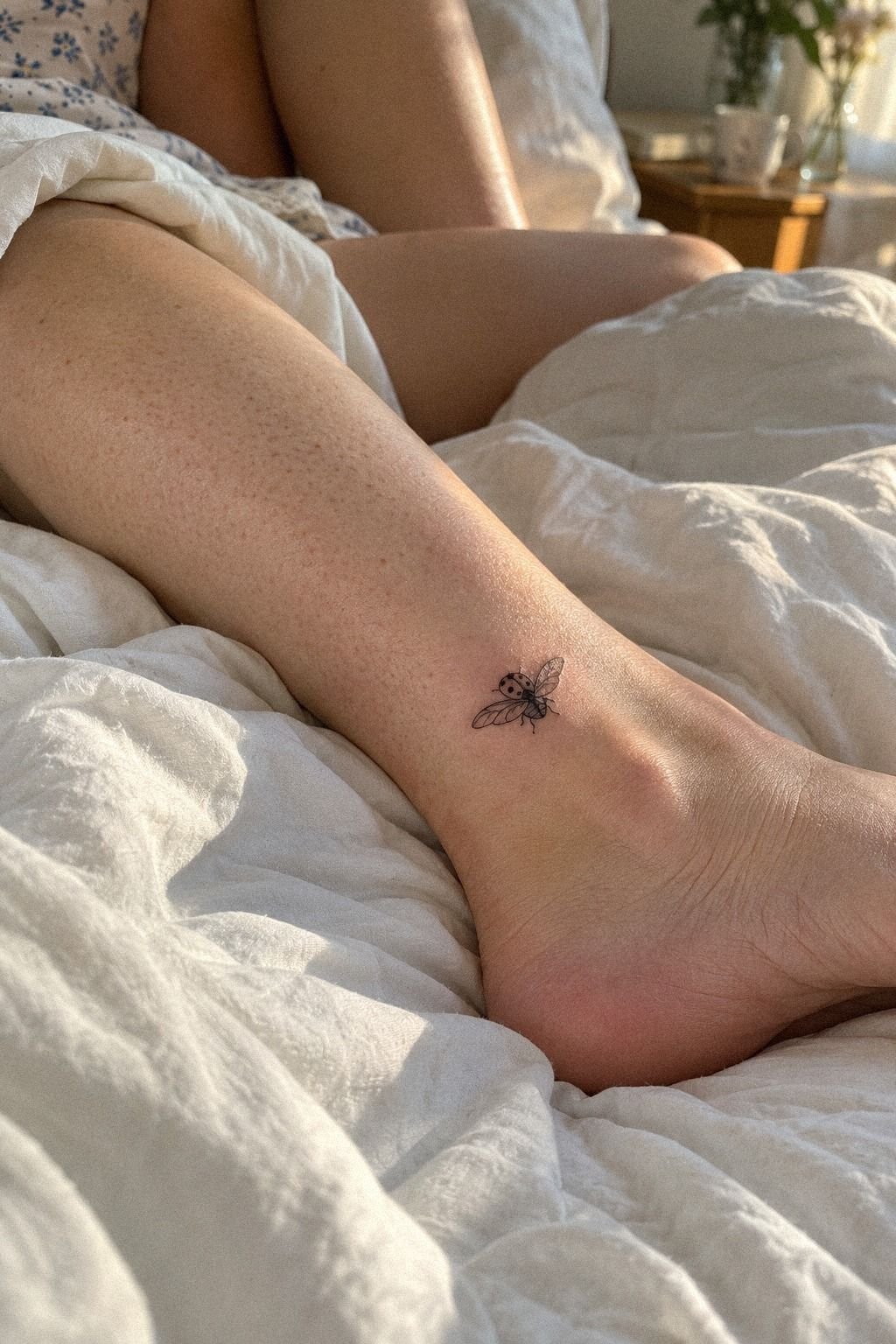
A fine-line ladybird tattoo works best when the fine-line silhouette stays readable from a few feet away. On an ankle, an open-wing design can look delicate, sleek, and graceful without becoming a blur. Ask your artist for a clean outline, restrained interior marks, and enough open spacing between the wings.
The design should preserve the ladybird’s lift instead of flattening it into a sticker shape. A 3RL needle can create crisp detail, but finer isn’t always better.
I’d skip crowded wing marks because they may soften as your skin changes. You’ll get more impact from one confident curve.
A small design still needs thoughtful scale. Your artist may suggest about 1 to 2 inches depending on your ankle’s shape and the detail you want. Smooth black ink, pale greywash, and a tiny open gap can keep the piece understated while giving it a symbolic edge.
If you’re comparing meanings before booking, read this ladybird tattoo meaning guide. It’ll help you decide whether your design should feel protective, lucky, romantic, or quietly personal. Save the reference, mark the placement, and ask how the lines may look after healing.
For my budget, I’d choose a simpler outline over extra marks that exist only for visual complexity. A consultation should tell you whether negative space will remain visible at your chosen size. If the answer is uncertain, reduce the detail before you reduce the artist’s rate.
2Traditional Ladybird Tattoo With Bold Color (Color Over Clutter)

Traditional color gives this inner-forearm idea a bold, vibrant, iconic presence. The strongest version uses a clear body shape, confident wing divisions, and a palette that won’t compete with the ladybird.
Ask how the artist approaches red saturation on your skin. Traditional red can look fierce and expressive, but the final result depends on undertone, pigment choice, and how much color the design can hold without becoming dense.
A color tattoo may cost more than a black outline because the artist has to build clean edges and an even color deposit. I’d rather pay for controlled saturation than add several shades that make the ladybird harder to read.
If you want a classic flash feeling, keep the spots simple and let the bold outline carry the structure. A small star, leaf, or banner can work, but extra symbols should earn their place. The design should feel timeless, not crowded.
3Tiny Ladybird Tattoo Behind The Ear (How Small Can You Go?)
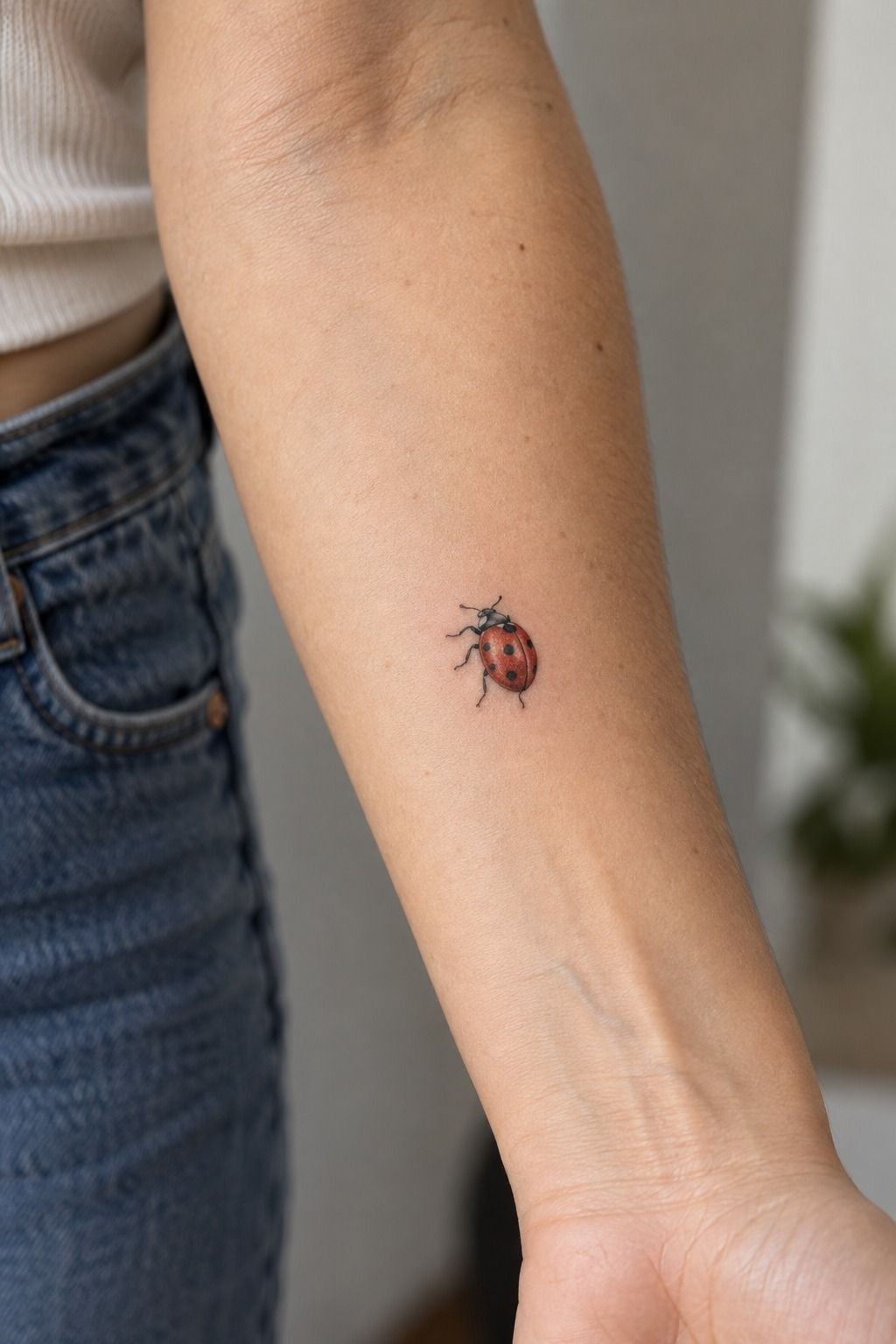
Behind the ear, a tiny ladybird tattoo feels minimal, dainty, and sharp.
4Ladybird Tattoo Crawling Across The Wrist (Movement Over Symmetry)

A wrist design can suggest motion through wrist movement, angling the ladybird diagonally instead of placing it perfectly upright. The body can look flowing, expressive, and edgy when it follows the natural direction of the wrist.
I’d skip a rigid front-facing pose here. The wrist already moves, and your tattoo should cooperate with it. A curved body, slightly open wings, and a few tapered marks can make the design feel like it’s crossing your skin rather than sitting on top of it.
Wrist tattoos also face regular washing, rubbing, and sunlight. Ask whether your artist prefers solid black ink or a restrained greywash for the detail. Black usually gives the strongest long-term anchor, while grey can make the first result feel more subtle.
And don’t choose the exact spot from a reference alone. Your wrist bends, rotates, and changes shape throughout the day.
Look at the Yant tattoo meaning page if you’re interested in a protective direction for the design. Your artist can adjust the stencil without losing the original gesture.
Before you book, rotate your wrist with the stencil on. Check how the wrist crease affects the body, wing tips, and any nearby lettering. I’d move the design slightly away from a deep fold if that protects the silhouette and makes aftercare easier.
5Whimsical Ladybird Tattoo With Wildflowers (The Botanical Drift)

A wildflower pairing can give the ladybird a whimsical, playful, romantic character. The best interpretation won’t look digitally perfect. Think loose stems, uneven petals, and a ladybird that feels drawn by hand.
You could pair the ladybird with a small daisy, yarrow sprig, or curved flower stem. Keep the supporting botanical linework lighter than the main ladybird, or the composition may become busy. I’d avoid adding five different flowers just because they look attractive together.
For a budget-conscious appointment, ask for one central motif and one supporting stem. A flash-style composition may take less time than a custom sleeve concept, but the artist still needs open spacing around every line.
The yantra tattoo meaning guide may help if you’re drawn to symbolic geometry beside organic flowers. If your idea feels too sweet, ask for a darker stem, sharper leaf tips, or a black outline around the ladybird. That contrast can make the final piece feel elegant instead of childish.
I’d choose one flower with a reason behind it. A personal bloom can make the tattoo more meaningful than a crowded bouquet, and your artist can spend that saved time protecting petal spacing. The result can be understated while still carrying an expressive story.

6Geometric Ladybird Tattoo In Blackwork (The Negative-Space Grid)

Blackwork gives an inner-forearm design a fierce, gritty, powerful direction. It can feel sharp and graphic when the ladybird is built from strong shapes rather than delicate texture.
The main decision is how much blackwork fill you actually want. Heavy pigment creates a daring result, but a small insect can become visually dense if the body, spots, and wings are all filled.
A geometric approach works best when the negative space is measured carefully. Open wing sections, clean gaps, and a limited number of angles can make the design feel intricate without making it noisy.
Ask your artist how the geometric structure will respond to wrist rotation or forearm movement. A design that looks aligned on a screen may need small adjustments on skin. I’d approve the stencil from several angles before choosing the final size.
7Ladybird Tattoo With Meaningful Birth Symbols (What Will You Still Mean?)
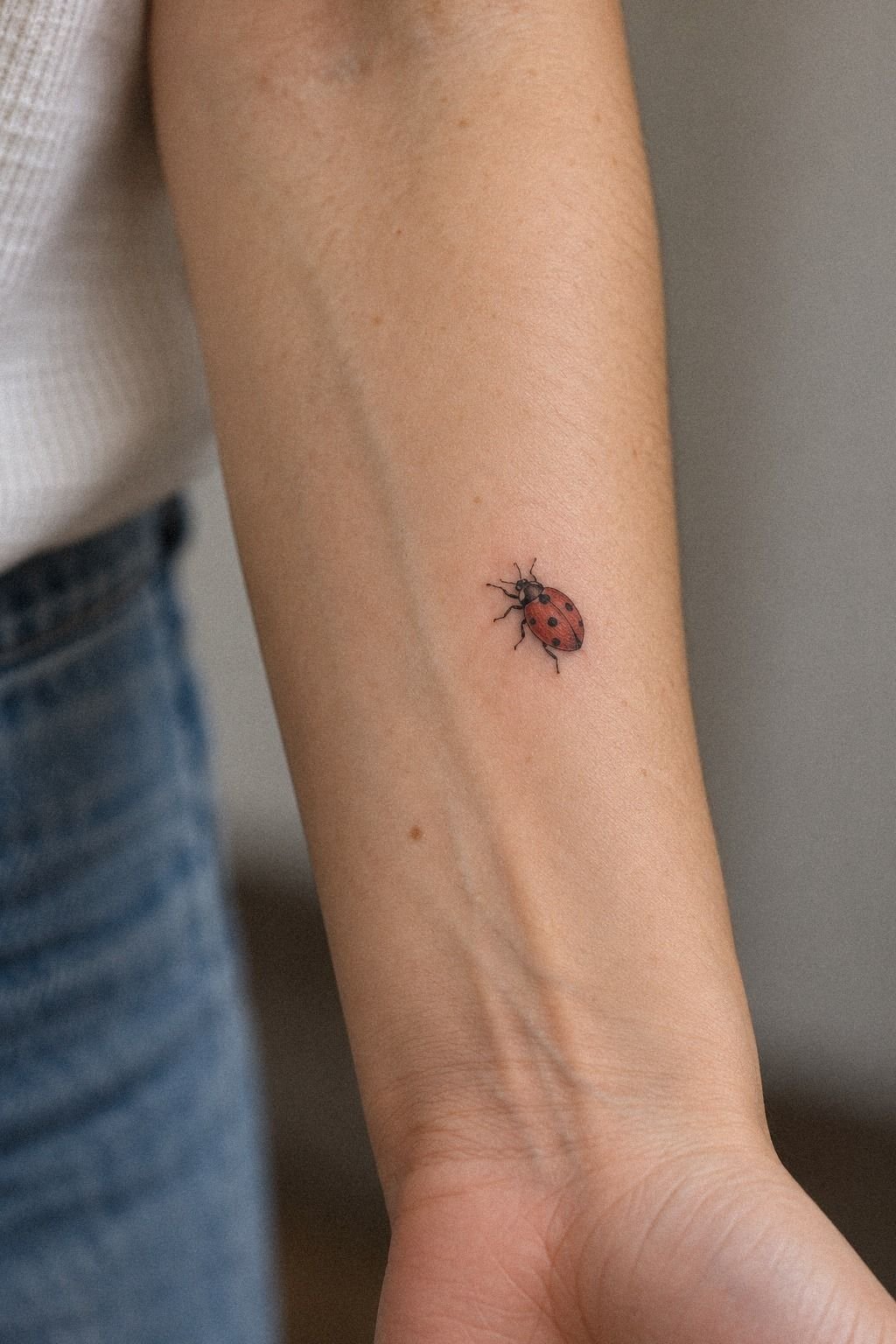
A birth-symbol design can turn a small ladybird tattoo into something meaningful, sacred, and empowering. The upper-back placement gives you room for a flight path, a small birth flower, or a single star connected to a family date.
What will you still mean five years from now? That’s the question I’d ask before adding initials, dates, or several symbols.
Choose one birth flower, one number, or one tiny celestial mark. Your tattoo will feel more personal when every element has a reason.
You can keep the cost controlled by limiting the number of custom components. A ladybird, one flower, and one small date may fit within a standard appointment, while a full symbolic map takes more drawing time. Your artist should quote after seeing the actual design.
If you want to explore a spiritual angle, the YHWH tattoo meaning guide may help you think through sacred lettering and personal boundaries. Don’t copy a symbol you haven’t researched. A meaningful tattoo should feel like yours before it ever reaches the stencil.
I’d write down the private meaning before I send the reference. That helps me separate a symbol I truly want from one that simply looks symbolic online. Your artist can then create a cleaner design with fewer revisions and a more predictable quote.
Ask whether a date will be written as numerals, Roman numerals, or a small birth symbol. Each option changes readability and spacing. I wouldn’t squeeze a long date beside delicate wings just to keep the tattoo tiny.
8Realistic Ladybird Tattoo On The Shoulder (The Soft-Edge Method)

Micro-realism on the shoulder can look intricate, refined, timeless, and quietly dramatic. The open-wing form should include tonal variation, a believable body shape, and soft grey shading rather than a cartoon outline.
Realistic work needs space. If you squeeze natural shading into a tiny design, the values can collapse as the tattoo heals. I’d choose a slightly larger shoulder piece over a smaller one packed with texture.
Ask how the artist handles solid black, greywash, and skin breaks. A realistic tattoo isn’t only about adding more pigment. The uninked areas create the highlights, and those spaces need to remain intentional.
For this style, I’d budget for greywash shading and a longer appointment. The price may exceed a simple outline because the artist has to build values gradually. That extra time can create a more polished and ethereal result.
The Zeus tattoo meaning guide is useful if you like realistic mythic imagery and want to compare visual weight. Shoulder skin can tolerate many designs, but strong UV exposure still matters after healing.
Check the artist’s healed portfolio from several months later. I’m looking for preserved highlights, readable spots, and edges that haven’t turned muddy. Fresh work can be striking, but healed work tells you more.
9Matching Ladybird Tattoos For Best Friends (Ink One Idea, Two Ways)

Matching tattoos don’t need to be identical to feel connected. You and your friend could choose the same ladybird in different poses, split one flight path between two placements, or use matching wing patterns with different body outlines.
The budget depends on whether the artist repeats one stencil or creates two custom drawings. Ask whether the quote includes two appointments, two deposits, and separate touch-up policies. You’ll both want those details in writing before anyone books travel.
I’d avoid copying a friend’s placement automatically. Your wrists, ankles, and shoulders may have different curves, and the same design can need different line weight on each body. A shared idea can remain personal when the artist adjusts each body placement.
If your connection has a spiritual meaning, you can compare the ladybird guide with the yellow rose tattoo meaning guide. A tiny flower or color detail may distinguish the two tattoos without making them look unrelated.
Matching tattoos are exciting, but you should still choose a design you’d love alone. If the friendship changes, the personal meaning should remain yours. That’s why I prefer a shared visual language over identical names or dates.
10Ladybird Tattoo With Botanical Linework (Fine Line Over Heavy Fill)

The healed result matters more than the fresh result.
11Feminine Ladybird Tattoo On The Ankle (The Dainty Placement Rule)
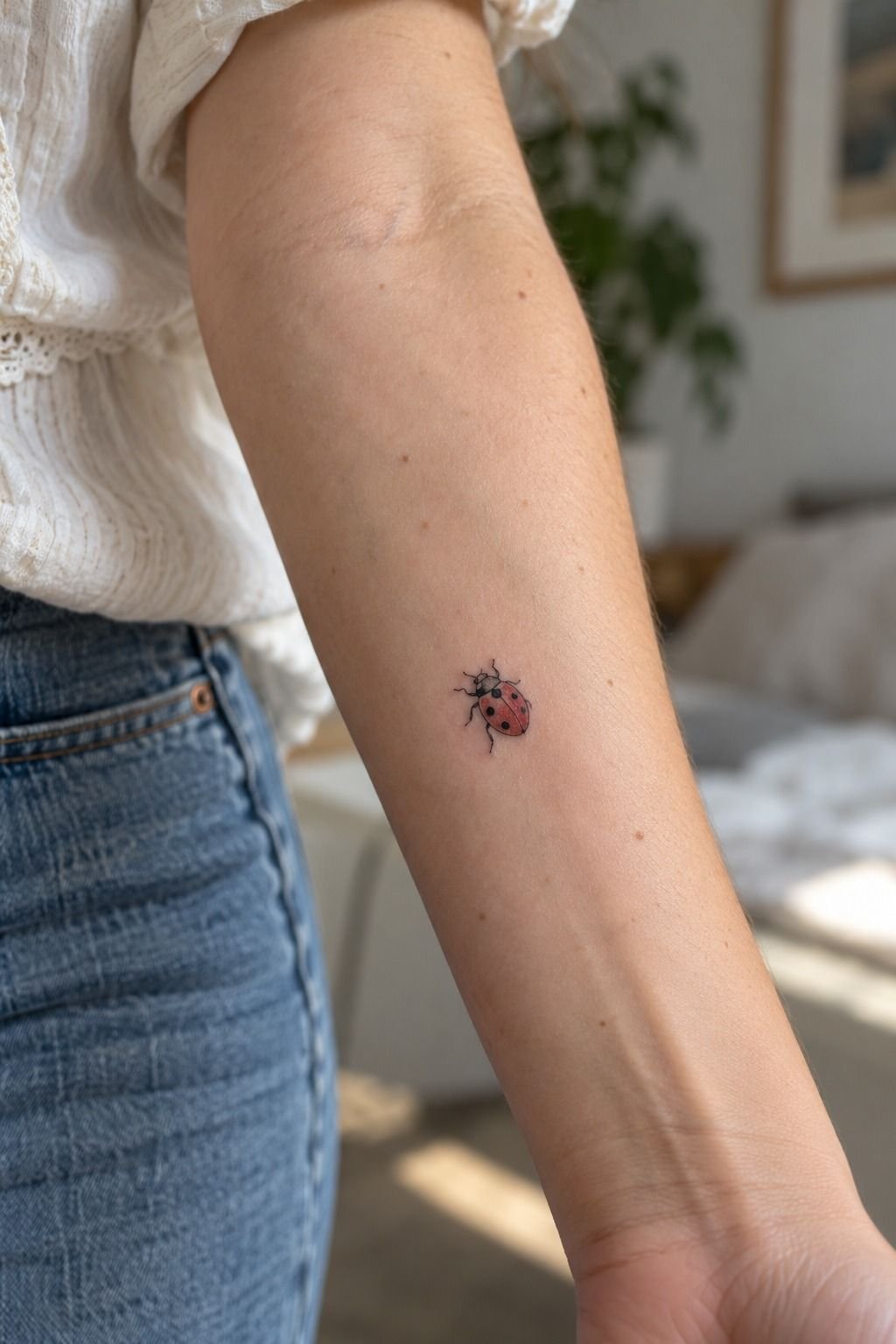
A fine-line ankle tattoo can feel feminine, delicate, stylish, and timeless without becoming overly ornate. The ankle gives the ladybird a discreet location, but the curve means your artist must check the design from several angles.
I’d keep the body slightly elongated and the wings open enough to survive healing. A tiny flower, star, or dot can add a romantic touch, but extra marks should never crowd the ankle contour.
Ankle tattoos can rub against socks and shoes during early healing. Ask your artist how to protect the area, whether you should change footwear, and when normal exercise is reasonable. The quote may be simple, but your aftercare still needs attention.
If you’re choosing between an ankle and a more visible placement, revisit the ladybird tattoo meaning guide. I’d choose the ankle when I want a personal reminder rather than an always-visible statement.
The final style can be crisp, dainty, or slightly raw depending on the outline and skin breaks. I’d ask to see the stencil while standing, sitting, and walking. An ankle design should look balanced through movement, not only in one position.
Before You Book: The Numbers That Shape the Quote
The price range below is a planning tool, not a promise. Your city, artist, appointment length, placement, color, and custom drawing time can move the number. Ask for a written estimate before paying a deposit.
A small tattoo isn’t automatically cheap. Your shop minimum may apply even when the design takes only a short appointment. I’d ask whether the minimum includes the consultation, drawing time, and touch-up discussion.
Custom work can also add a design fee. Some artists include it in the deposit, while others charge separately. Your custom drawing fee should be clear before you approve the sketch.
Here’s the quick budget math I’d use: a $125 minimum, a $50 deposit, and a possible $25 aftercare purchase means you may need $200 available before the appointment. A larger color or realism piece can quickly move toward $350 or more.
If you’re comparing symbolic additions, the yin yang tattoo meaning guide may help you decide whether a second motif is worth the extra drawing time. That question matters!
Place the Stencil, Then Judge the Design
A stencil check can reveal problems that a digital drawing hides. Ask to see the stencil placement while your body is relaxed, then check it again while standing, walking, or rotating the relevant area.
Don’t approve the final size until you’ve watched the design move with your body curve. A ladybird may look perfectly balanced in one position and oddly tilted in another.
I’d also ask whether the design needs a small adjustment for visibility, clothing friction, or healing. A slightly different final size can protect the silhouette without changing the core idea.
Placement Changes More Than Pain
Forearm, thigh, and shoulder areas are often easier for many people than ribs, feet, hands, or sternum, though everyone responds differently. I wouldn’t promise a painless appointment. Your pain tolerance is personal, and your artist can only help you prepare.
Sun, friction, and movement matter too. Hands and wrists receive frequent washing, while ankles meet socks and shoes.
Behind the ear can experience hair products and headphone pressure. Your friction exposure should influence both the design and the aftercare plan.
Ask the artist to place the stencil on your actual body rather than relying on a flat drawing. Bend, rotate, and relax the area. I’d watch how body movement changes the ladybird’s direction before I approve anything.
Visibility is another honest consideration. A tiny behind-ear piece may be discreet, while a forearm tattoo can be noticed immediately. You should choose based on your work, family, and comfort, not only on what looks best in a saved reference.
For more symbolic placement ideas, browse the Yant tattoo meaning page before you settle on a location. The design’s meaning can stay powerful even when the placement is understated.
How I’d Compare Artists
I’d look for healed work first, then fresh work. Fresh tattoos can appear darker, sharper, and more dramatic than they will after the surface settles. Your healed portfolio gives you better evidence.
Match the artist to the style you want. Fine-line work, traditional color, blackwork, botanical composition, and realism each require different control. An artist who does one style beautifully may not be the right choice for another.
Ask these questions before you deposit:
– How long have you worked in this style? – Can I see healed ladybird or insect tattoos? – What line weight would you use at my chosen size? – Does the quote include a touch-up? – What should I avoid during healing? – How will you adapt the design to my skin tone?
A professional answer should feel direct, not defensive. I’d rather hear that a design is too small than pay for a result the artist already doubts. Your artist consultation is part of the decision.
You can also ask how the artist handles color on your skin. Saturated red, greywash, and black may read differently depending on undertone and placement. A thoughtful skin-tone assessment can prevent surprises.
The yantra tattoo meaning guide can help if the artist suggests adding geometric symbolism. I’d still keep the central ladybird clear and personal.
Read the Quote Before You Deposit
A written quote should separate the design cost from the deposit, aftercare, and any possible touch-up. Ask whether the deposit terms change if you reschedule or simplify the tattoo.
Confirm what the price includes. Some artists include the drawing and consultation, while others price custom work separately. You’ll want the touch-up policy in writing before the appointment.
Ask how the estimate changes if the session runs longer than expected. A realistic piece, saturated color, or several symbolic details can increase the appointment length. Clear expectations make the budget easier to protect.
Aftercare Can Protect the Budget
The surface usually heals in about 2 to 3 weeks, while deeper settling can continue for about 2 to 3 months. Follow your artist’s instructions because products and bandage methods vary. Your aftercare instructions are not optional details.
Wash gently with lukewarm water and mild soap, then pat the tattoo dry. Avoid picking, soaking, swimming, and strong sun exposure during early healing. You’ll want to protect the design while the healing barrier repairs itself.
Do not apply a thick layer of random lotion because you think more moisture is better. Ask your artist which aftercare product they recommend and how often to use it. Too much product can irritate the area or leave it constantly damp.
A touch-up isn’t always a failure. Small areas may heal lighter, and some artists include one minor touch-up after the tattoo settles. Before booking, ask about the touch-up policy and the required touch-up window.
The Zeus tattoo meaning guide may be useful if your concept has a larger mythic theme, but the budget still depends on actual size, detail, and healing needs.
When a Small Tattoo Stops Being Small
A tattoo stops being a small project when you add several symbols, multiple colors, dense shading, or a custom background. The design scope matters more than the insect’s physical size.
A one-inch ladybird with a flower and date may require more planning than a larger black outline. Ask your artist to rank the details so you’ll know what can be removed if the quote rises.
Think about the future placement too. A tiny design may feel personal now, but it should leave enough visual clarity for any later additions. I’d protect the long-term composition before squeezing in one more extra mark.
The Questions Worth Answering First
How much does a Ladybird Tattoo usually cost?
A small Ladybird Tattoo usually costs about $100 to $300 in the US, while a shop minimum may be about $50 to $100 and an hourly rate may run about $100 to $250.
Size and placement affect the quote. Your artist, region, color choice, and detail level can shift the total, so ask for a personalized estimate before paying a deposit.
Are Ladybird Tattoos a good idea for a first tattoo?
Yes, a Ladybird Tattoo can suit a first appointment because a small design offers clear choices around placement, line weight, and detail.
Forearm, shoulder, and thigh placements are often more tolerable than ribs, feet, hands, or sternum. Choose a subject that feels personal, then ask about healed linework.
How do I choose a tattoo artist for a Ladybird Tattoo?
Choose an artist after reviewing healed work, style-specific work, and studio hygiene practices.
A strong portfolio should show clean fine lines, controlled color, or smooth blackwork, depending on your reference. Ask how the artist handles your skin tone and how they expect the design to age.
How much do Ladybird Tattoos hurt?
Pain varies, but ribs, feet, hands, and sternum are often more uncomfortable than forearm, thigh, or shoulder placements.
Placement matters most for many people. Your appointment may feel manageable when the design is small, though you should still plan rest and follow the artist’s aftercare advice.
How long does a Ladybird Tattoo take to heal?
The surface usually heals in about 2 to 3 weeks, while complete healing can take about 2 to 3 months.
Gentle washing and light hydration support aftercare. Avoid swimming and strong sun exposure during the early healing period, and follow your artist’s specific instructions.
What’s the best placement for a Ladybird Tattoo?
The forearm, shoulder, thigh, and ankle can all work, depending on your visibility, pain tolerance, and preferred style.
Forearm and shoulder placements often give fine lines more space, while an ankle or behind-ear tattoo feels smaller and more discreet. Your artist should position the stencil on your actual body.
Where I’d Start First
If I had to pick one, I’d start with the delicate fine-line ankle design. It keeps the ladybird readable without demanding a large commitment, and the open wings give the artist space to protect the shape as it heals.
My second choice would be a traditional inner-forearm version if I wanted color and stronger visual impact. I’d bring the reference, the yin yang tattoo meaning guide, and a short list of questions to the consultation.
Before I pay a deposit, I’d confirm the final size, placement, estimated price, deposit terms, aftercare plan, and touch-up policy. If the artist’s healed work feels crisp and trustworthy, I’d book. If it doesn’t, I’d keep looking!