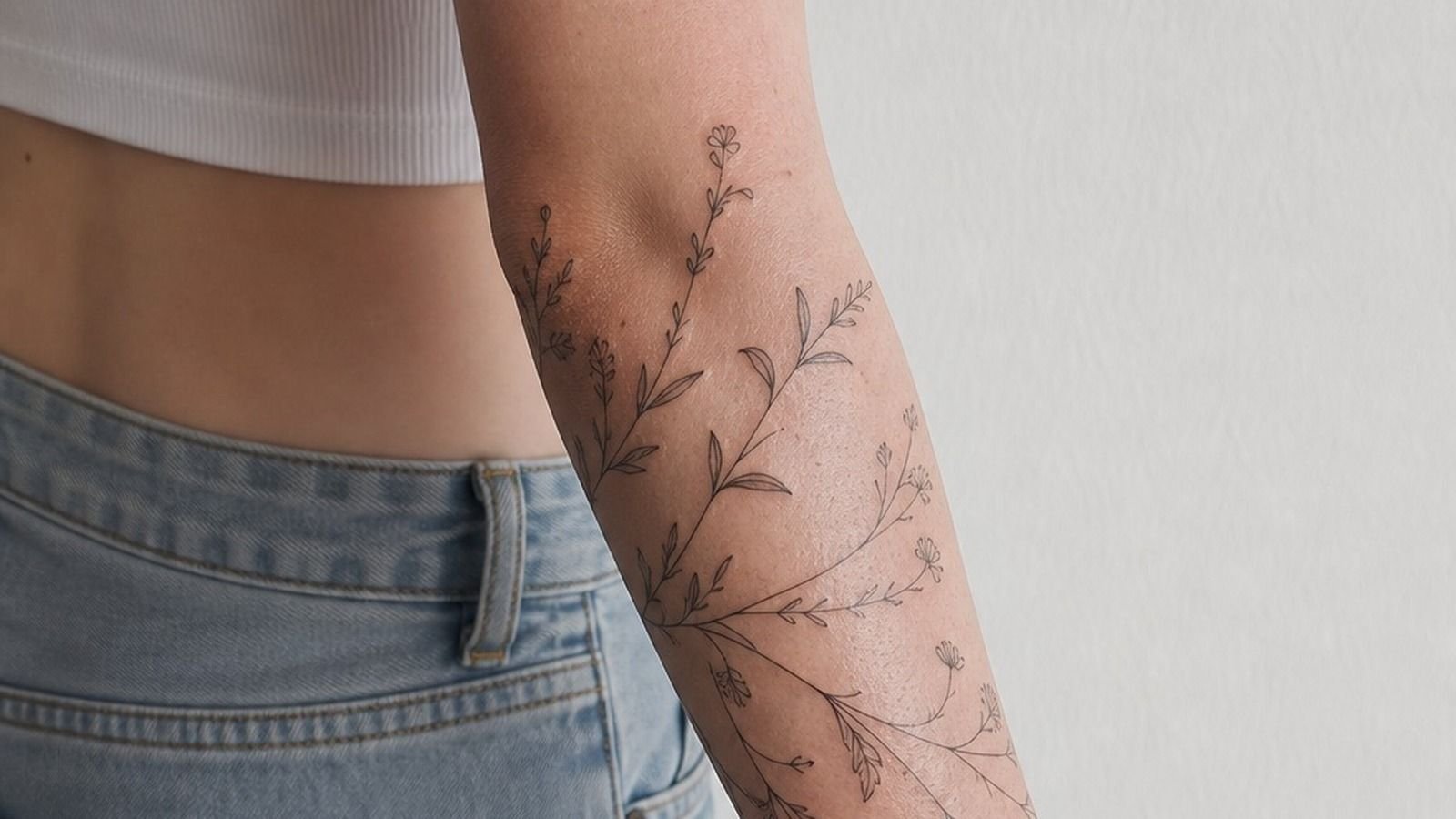
Wrap Around Forearm Tattoo Women can stay clean for years, but only if you plan the flow before the needle touches skin. I’ve seen a pretty vine turn into a tight little soup because it was squeezed too close to the wrist. Give your design room. Your forearm is one of the more chill placements, and it rewards a smart layout.
- Start With A Botanical Forearm Wrap Concept
- Pick Fine Line Vines For Natural Movement
- Place The Main Motif On Your Outer Forearm
- Plan A Design That Connects Around Your Arm
- Choose Black Ink For Stronger Visual Contrast
- Keep Negative Space Between Overlapping Elements
- Add Small Florals Along The Forearm Edge
- Match The Wrap To Your Wrist Placement
- Balance Detail Across Front And Outer Forearm
- Test The Stencil Before Committing To Ink
- Position Lettering Along The Forearm’s Natural Curve
- Select A Meaningful Symbol For The Center
- Plan Bicep Connections Without Losing Forearm Focus
- Keep Fine Lines Away From High Friction
- Prepare For Moderate Forearm Tattooing Discomfort
- Choose An Artist With Wraparound Portfolio Examples
- Protect Fresh Ink During Daily Arm Movement
- Follow Aftercare For Clean, Even Healing
- Review The Finished Wrap From Every Angle
1Start With A Botanical Forearm Wrap Concept
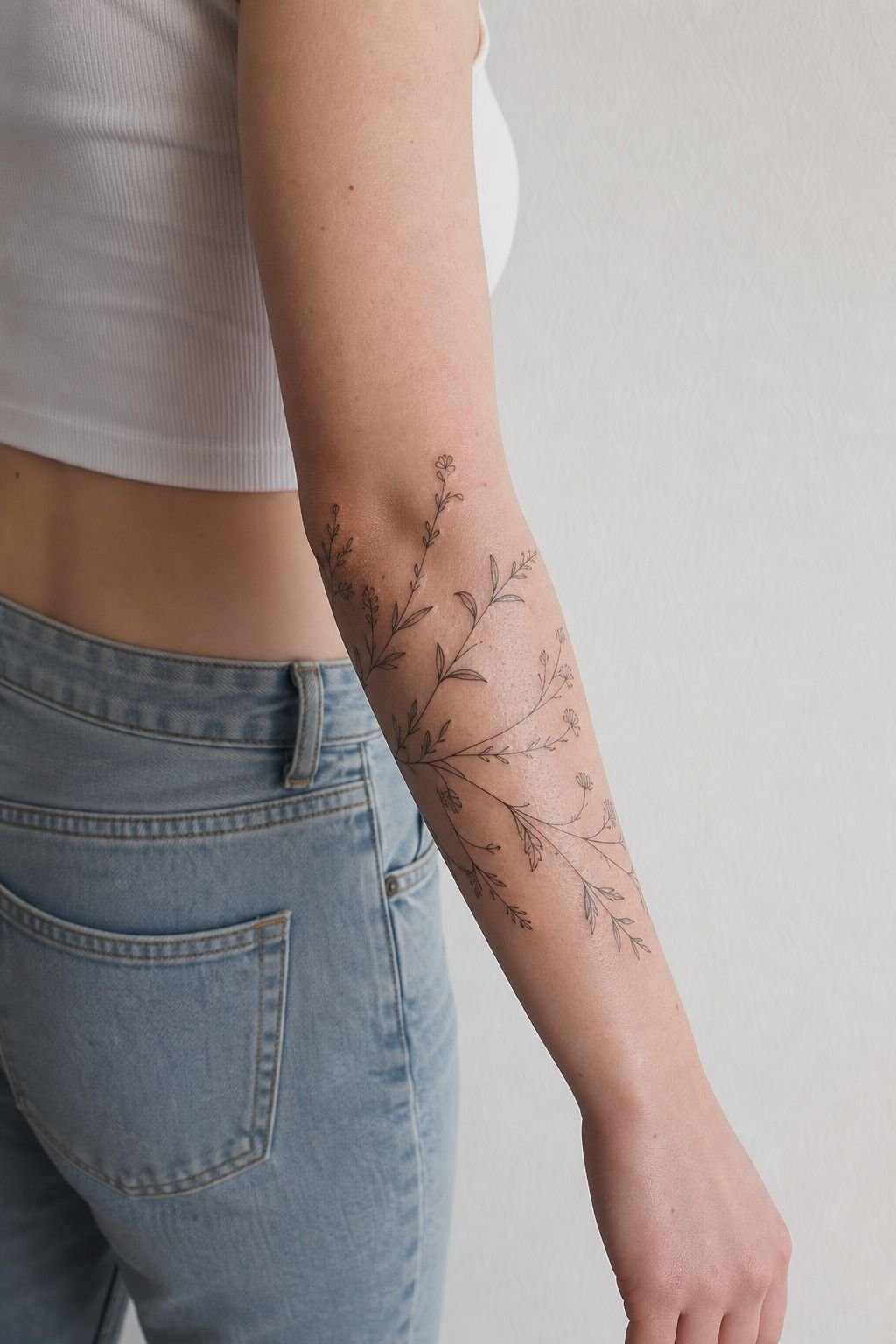
Start with one botanical idea you’d still want on your arm five years from now. A single-needle peony, olive branch, fern, or loose wildflower stem gives your artist a clear visual language before tiny details pile up.
I’d skip a Pinterest collage with six unrelated flowers. It looks busy on paper, then gets chewed up once it wraps.
Pick one hero bloom and two supporting leaves. Your artist can use the stems to pull your eye from wrist toward elbow, which makes the whole tattoo feel organic instead of pasted on. For more reference sorting, save a few tattoo ideas for women that share the same line weight.
2Pick Fine Line Vines For Natural Movement
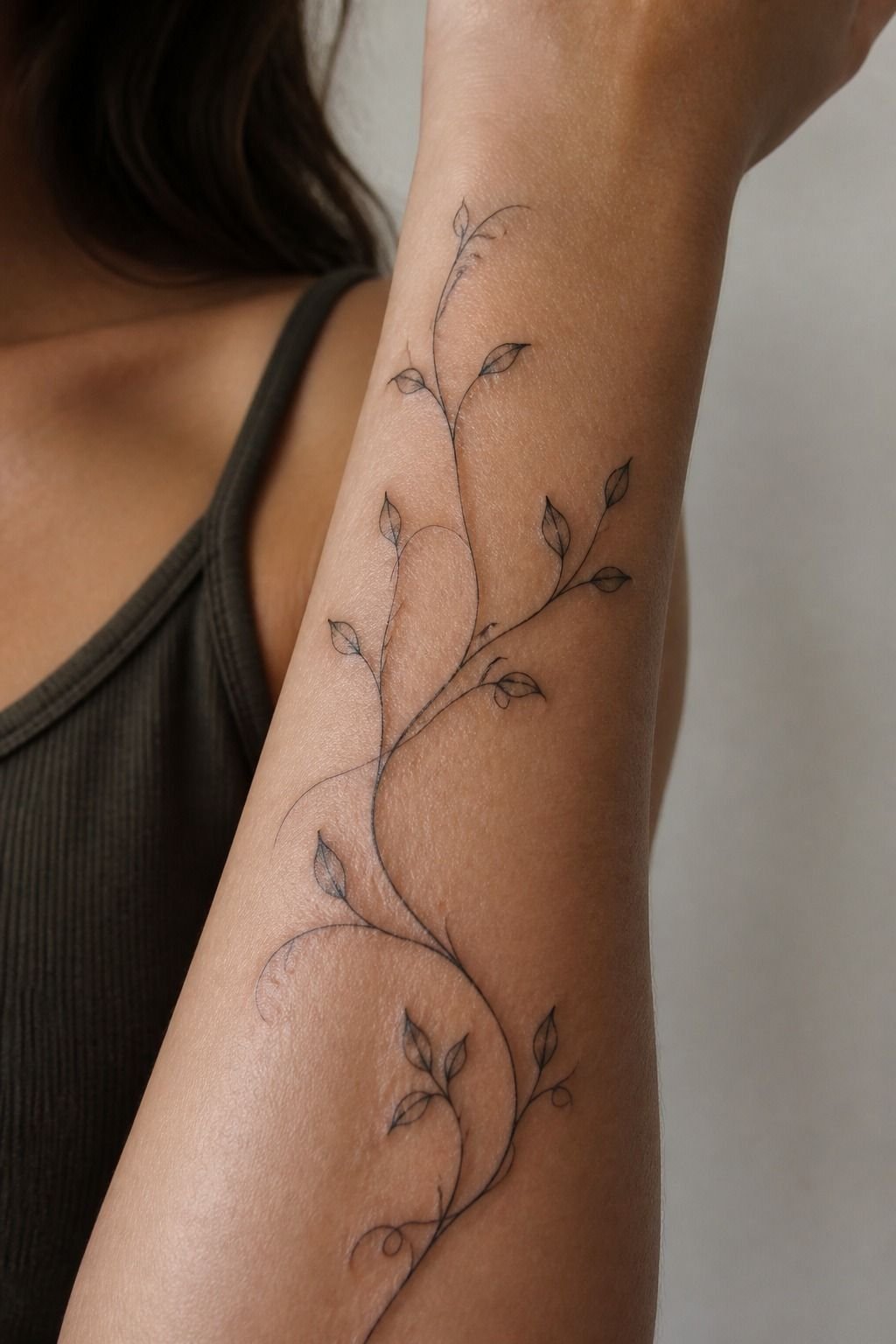
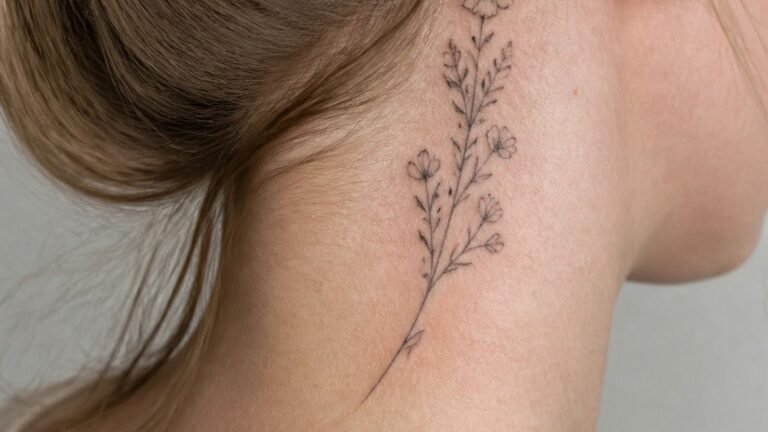
Fine line vines work because they follow your arm’s natural turn. Ask for 0.25 mm to 0.35 mm linework where the vine needs to feel airy, then let the artist vary pressure so every curve doesn’t look stamped. You want movement, not a bracelet drawn with a ruler.
But don’t make every stem hair-thin. I’ve watched delicate vines heal soft and elegant when the main stem has enough weight to hold. A vine with one clean pull reads better than ten fuzzy ones, especially on a moving forearm.
3Place The Main Motif On Your Outer Forearm
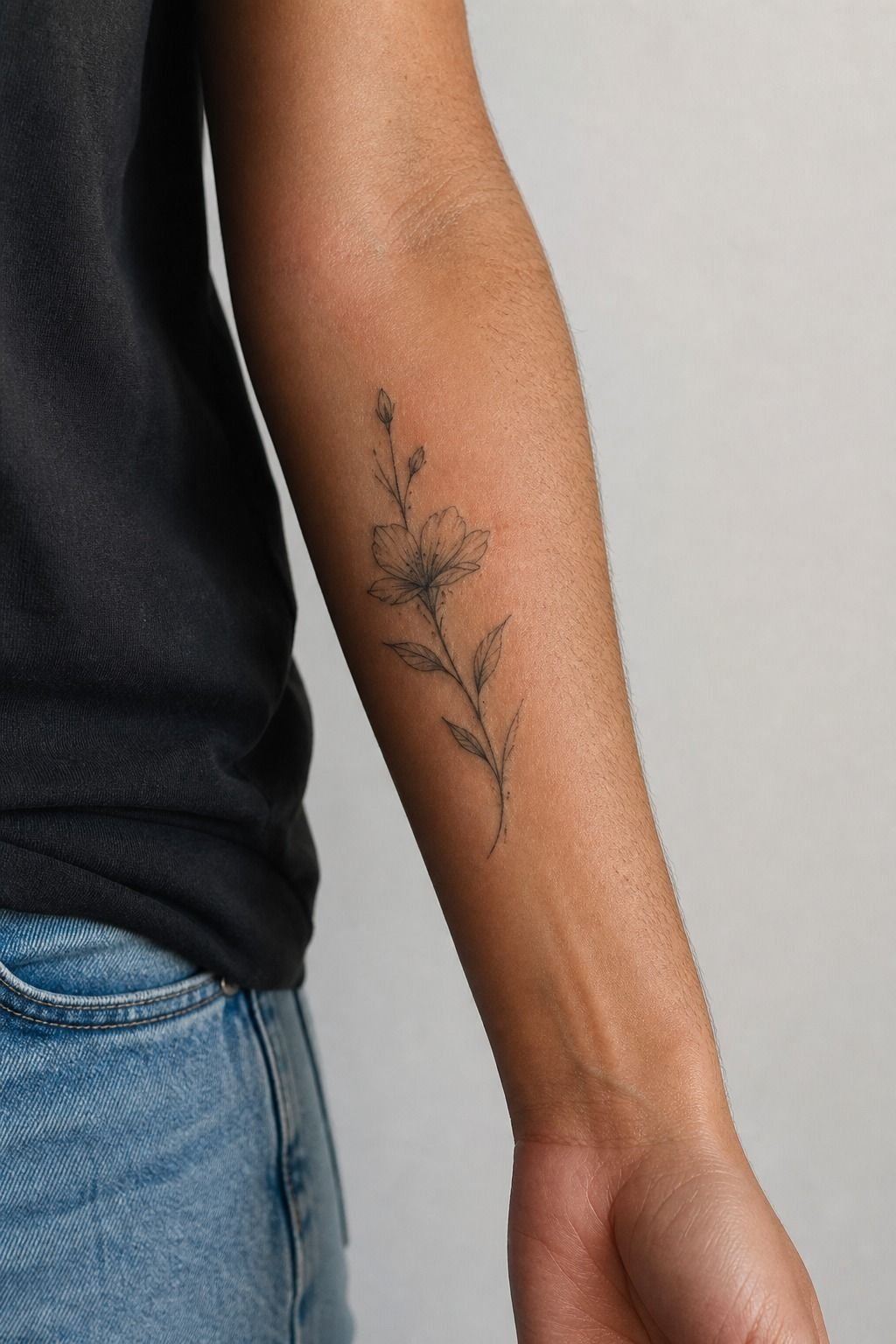
Put your main flower, moon, or symbol on the outer forearm first. That’s the cleanest, lower-wear area, and it’s where your tattoo will read from across the room. A black-and-grey rose placed about 2 to 3 inches above the wrist crease usually has more breathing room than one jammed into the bend.
Your inner forearm is softer and more personal, but it gets more friction from desks, sleeves, and daily movement. I’d let the outer side carry the strongest contrast, then wrap lighter details inward. That balance ages cute on you.
4Plan A Design That Connects Around Your Arm
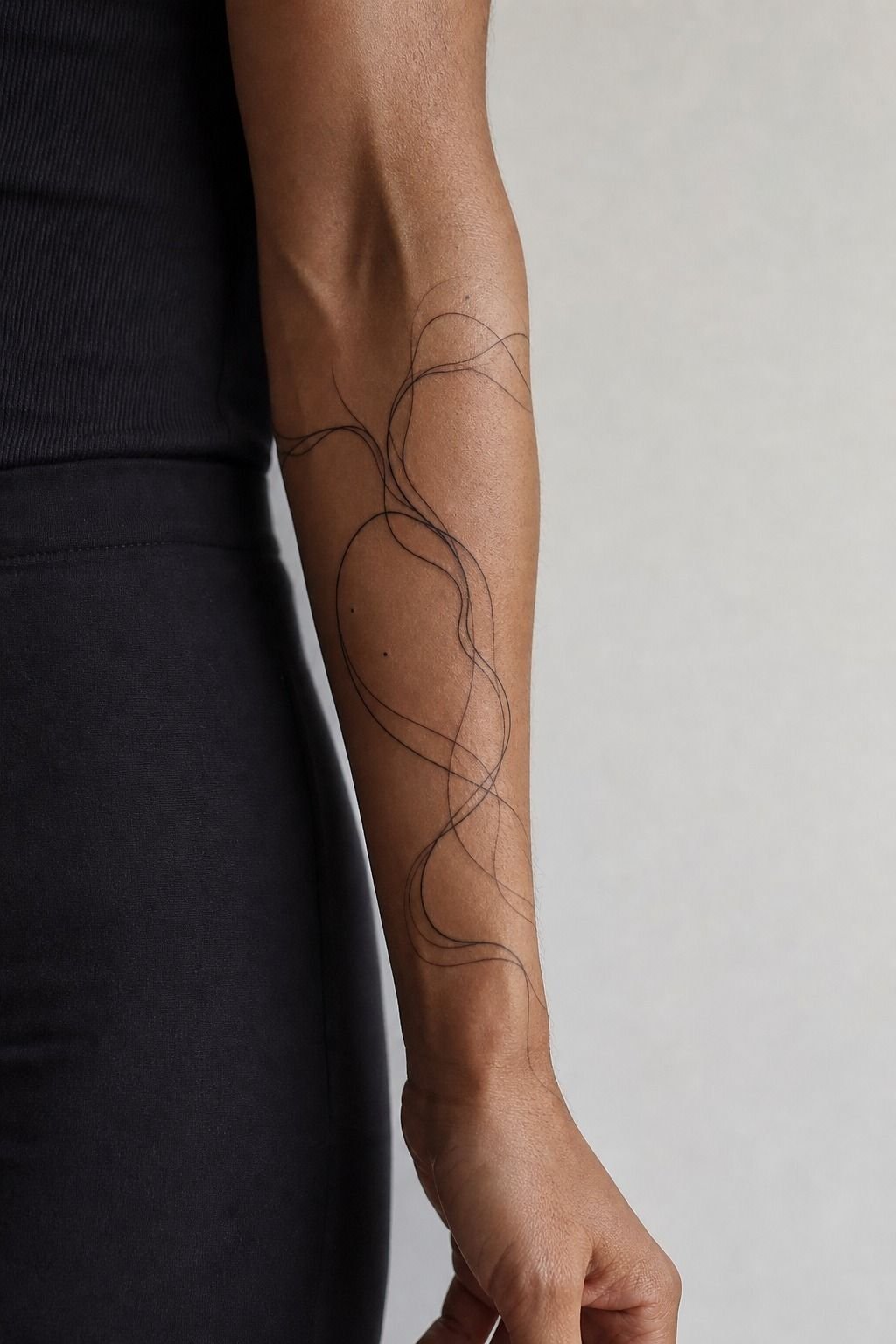
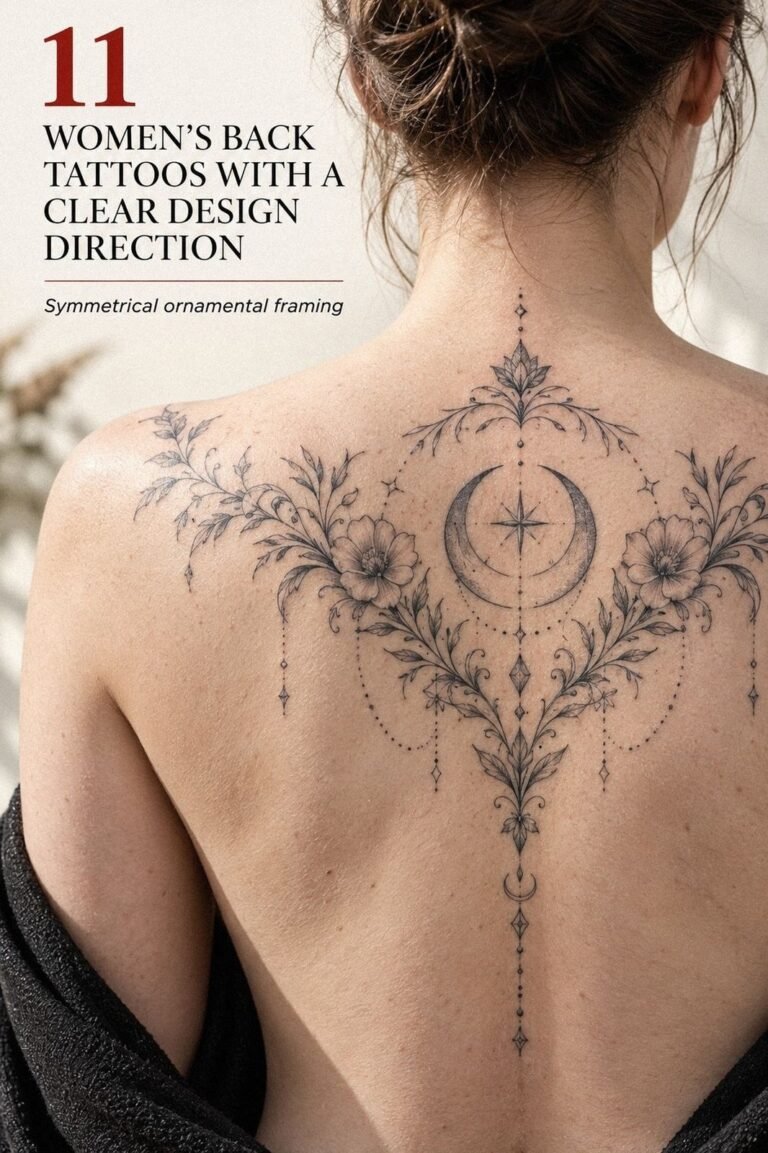
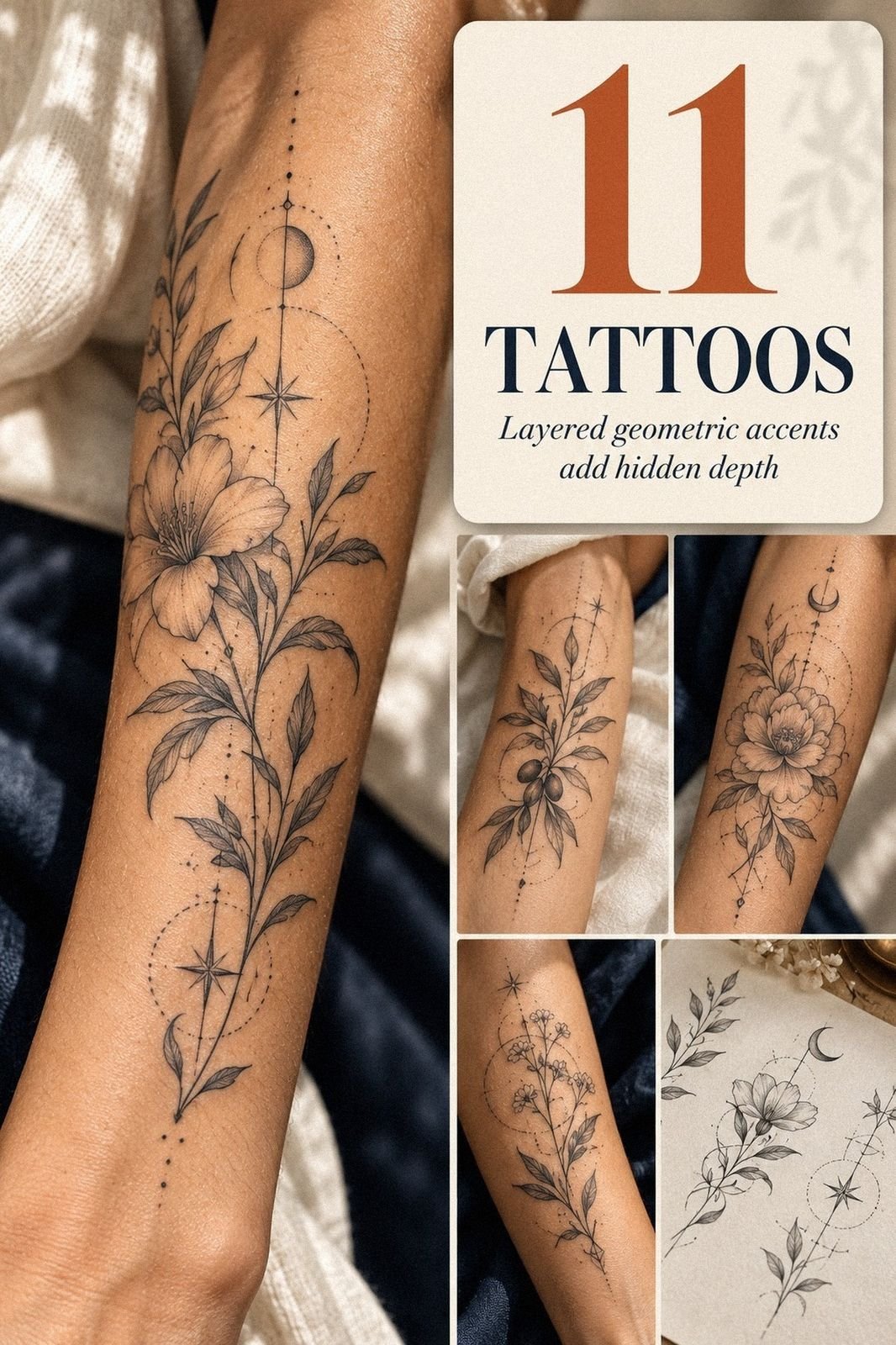
Use what I call the Continuous Ribbon Rule: your design should have one obvious route around the arm, even if each element isn’t touching. On a golden-tan forearm, a leaf tip can point toward the next bloom, while a small gap keeps the whole wrap crisp.
Ask your artist to mark front, outer, and inner views on the stencil. You’ll see whether the tattoo reads as one piece when your palm faces up, down, or sideways. If you can’t follow the route with your eye, your design needs editing.
5Choose Black Ink For Stronger Visual Contrast
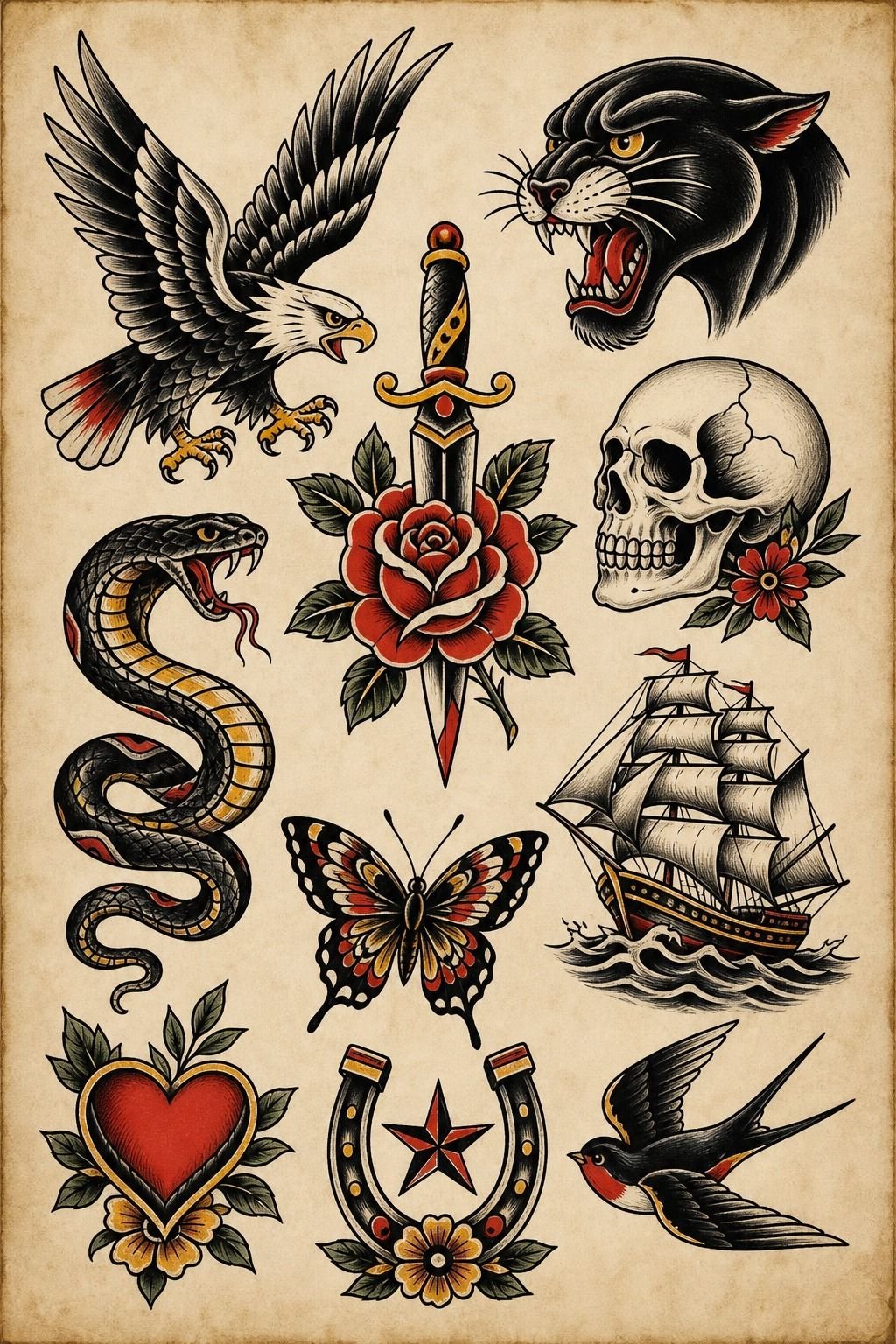
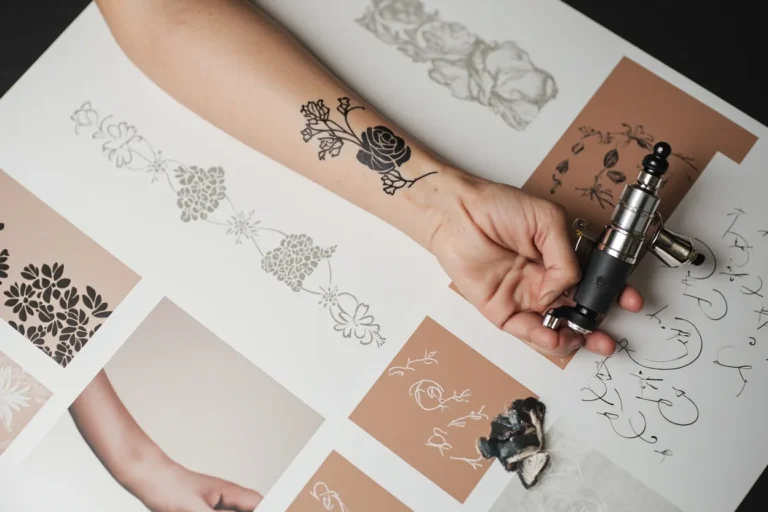
Black ink is your best friend for longevity. A flash sheet full of carbon black linework shows why: black gives fine details enough contrast to survive healing, sun exposure, and the slow natural widening that happens in skin. Color is spice, not the structure.
I’d skip pale grey-only outlines for a first forearm wrap. They can look refined fresh, but a line that starts too light may heal flatter than you expected. A soft grey wash behind solid black lines gives you a gentler finish without losing the bones of the design.
6Keep Negative Space Between Overlapping Elements
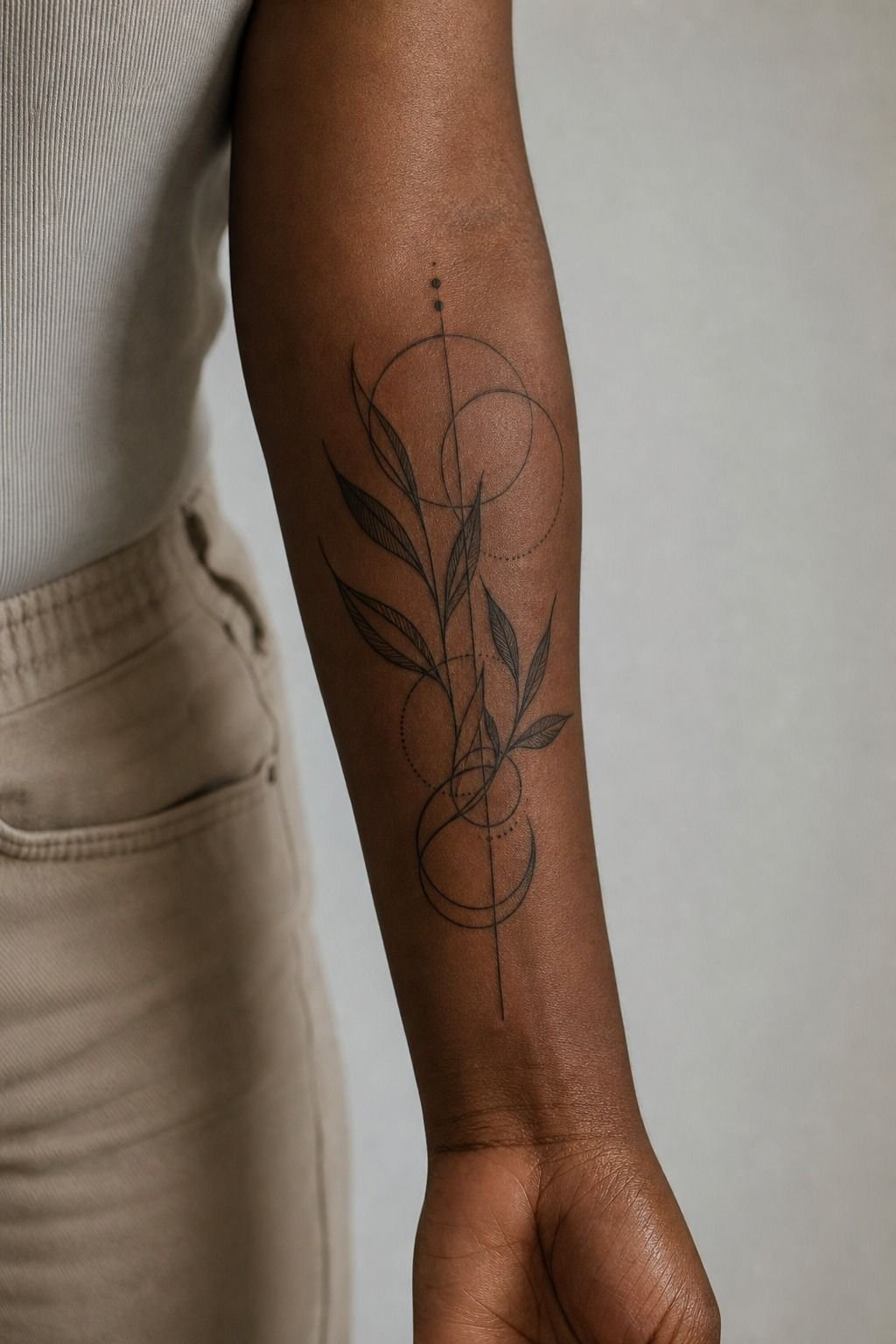
Negative space is doing half the work here. Leave a visible skin gap between petals, leaves, lettering, and small symbols, especially on deep ebony skin where clean contrast can look incredibly bold. Your artist should be able to point to every shape without tracing it.
The Open Skin Buffer is simple: if two details are meant to stay separate, don’t let them kiss. I’d rather make a flower 10 percent larger than cram six tiny petals together. Tiny super-detailed work turns to soup later.
No argument.
7Add Small Florals Along The Forearm Edge
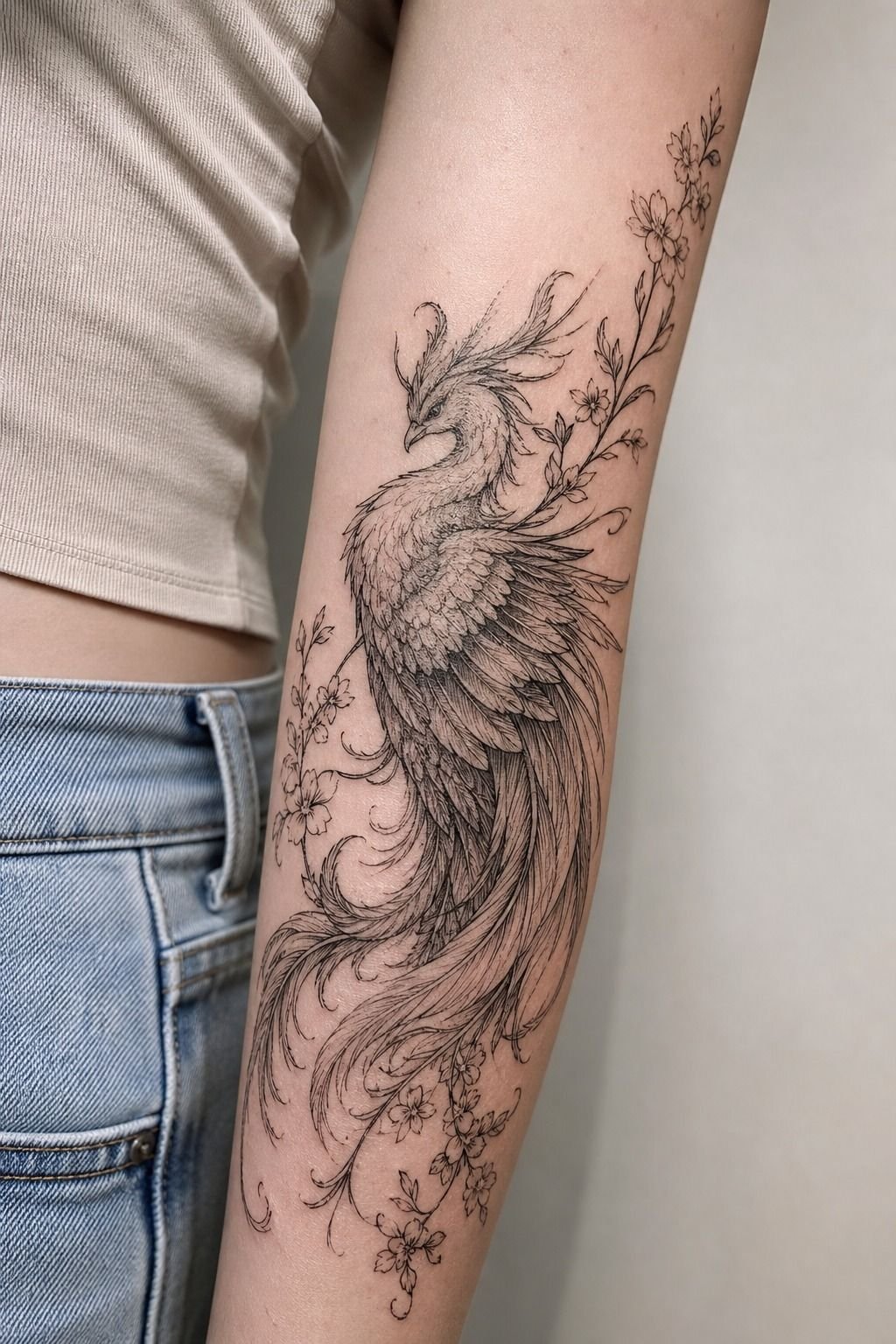
Add small florals along one edge only, then let the rest of the wrap breathe. A baby’s-breath cluster near the outer forearm can soften a larger rose or fern without making the tattoo look like floral wallpaper. Keep those accent blooms around 0.5 to 1 inch wide.
You don’t need a flower every inch. And that restraint is what makes the finished tattoo look elegant. I usually prefer three uneven accents over seven matching buds, because nature doesn’t repeat itself like a border print.
8Match The Wrap To Your Wrist Placement
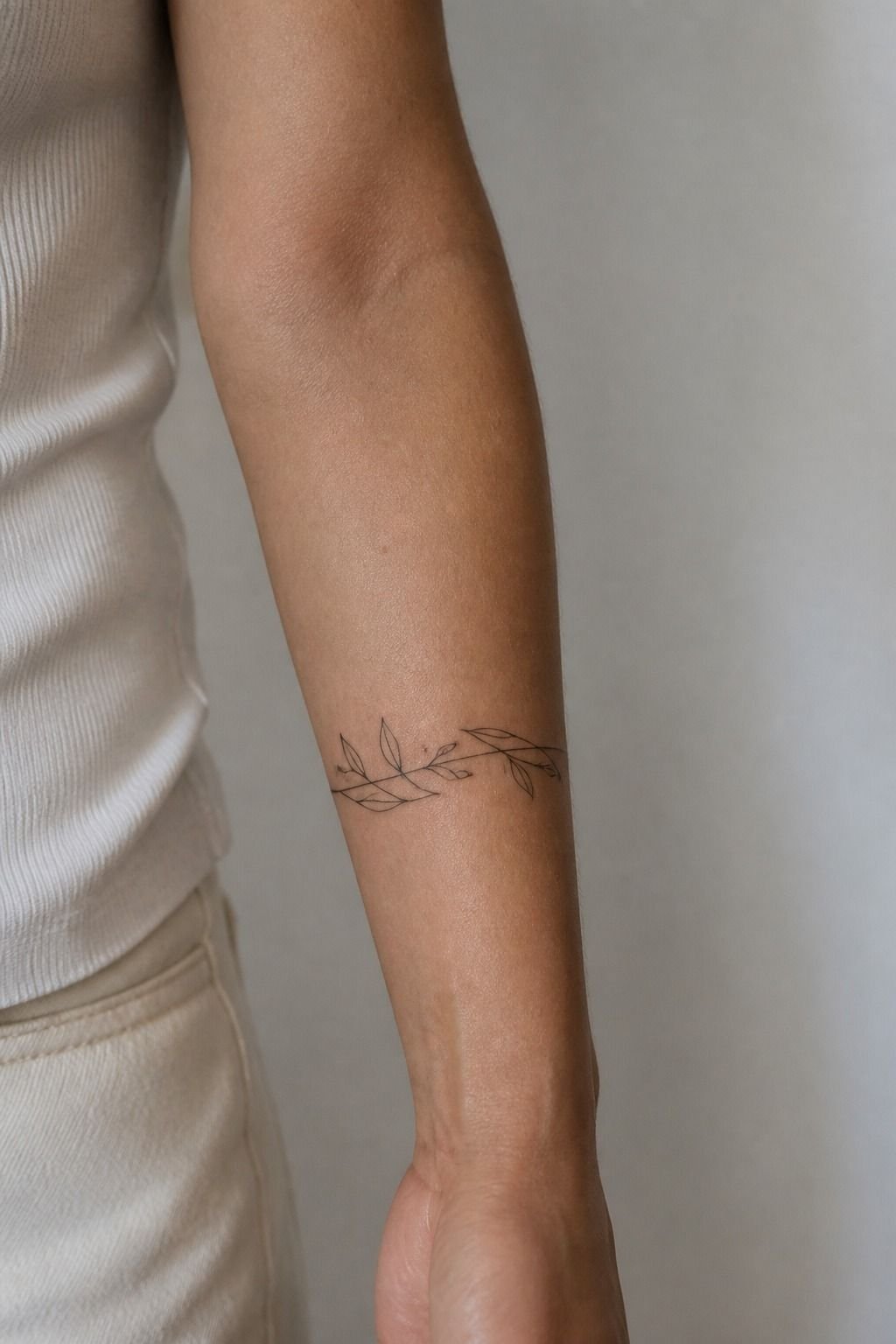
Your wrist placement decides where the wrap should begin and stop. Keep the main line at least a little above the crease if you want it to heal clean, especially if you wear watches, bracelets, or long sleeves. A fine-line cuff that lands directly in the fold can fade faster from constant friction.
For Wrap Around Wrist Tattoos For Women, I’d make the ending intentional: a leaf tip, dot cluster, or small crescent. Don’t let the line simply run out. Your wrist is a high-wear zone, so give that edge a little more weight than you think you need.
9Balance Detail Across Front And Outer Forearm
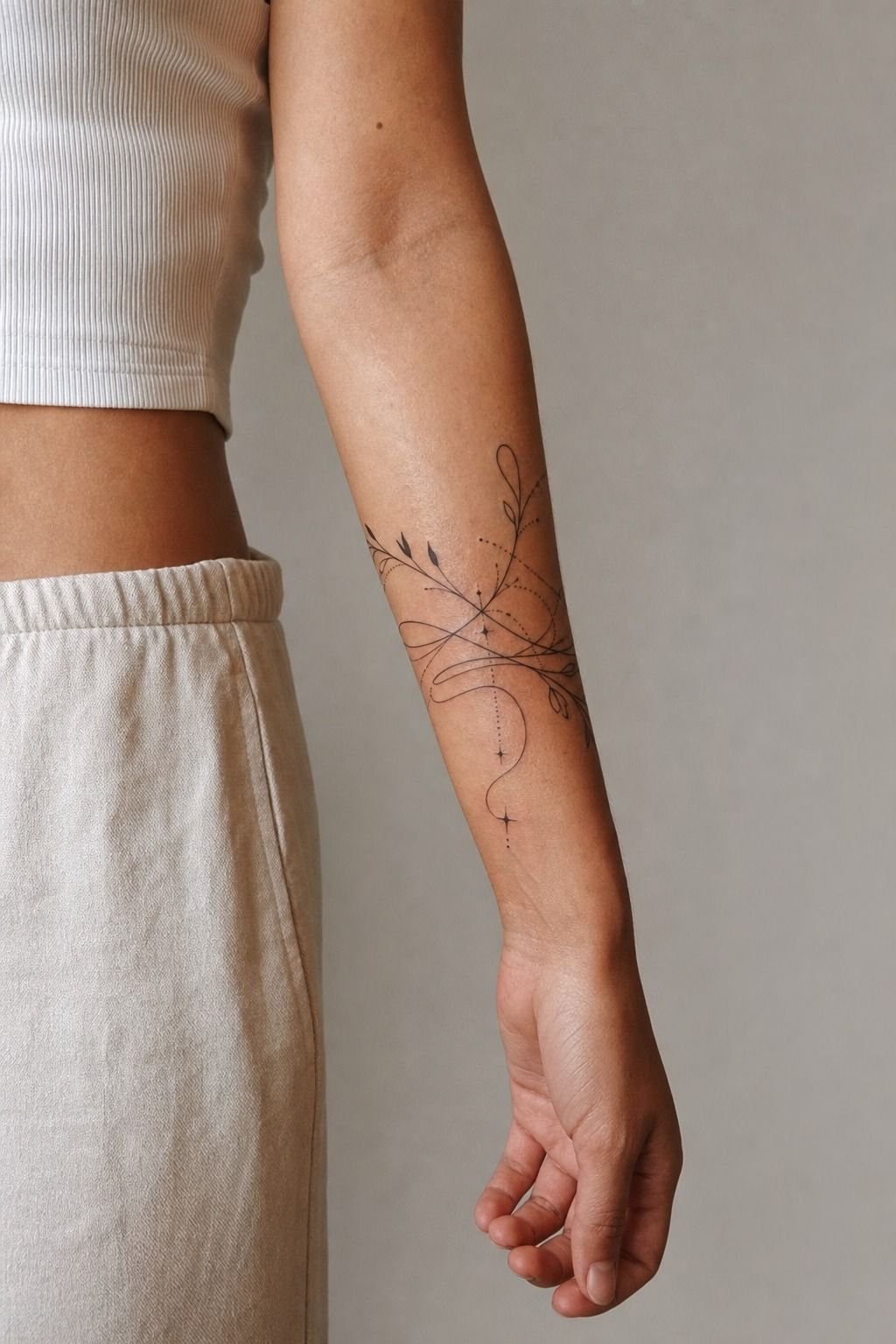
Balance detail across the front and outer forearm, but don’t mirror it exactly. Put the richest illustration on the visible outer plane, then use lighter stems or tiny leaves on the front. Your arm isn’t flat, so a symmetrical drawing can look weird once it turns.
The Three-View Check helps: look at your stencil with palm down, palm facing you, and palm up. If every view has one clear focal point, you’re good. If one side feels empty, add a connecting leaf, not another full flower.
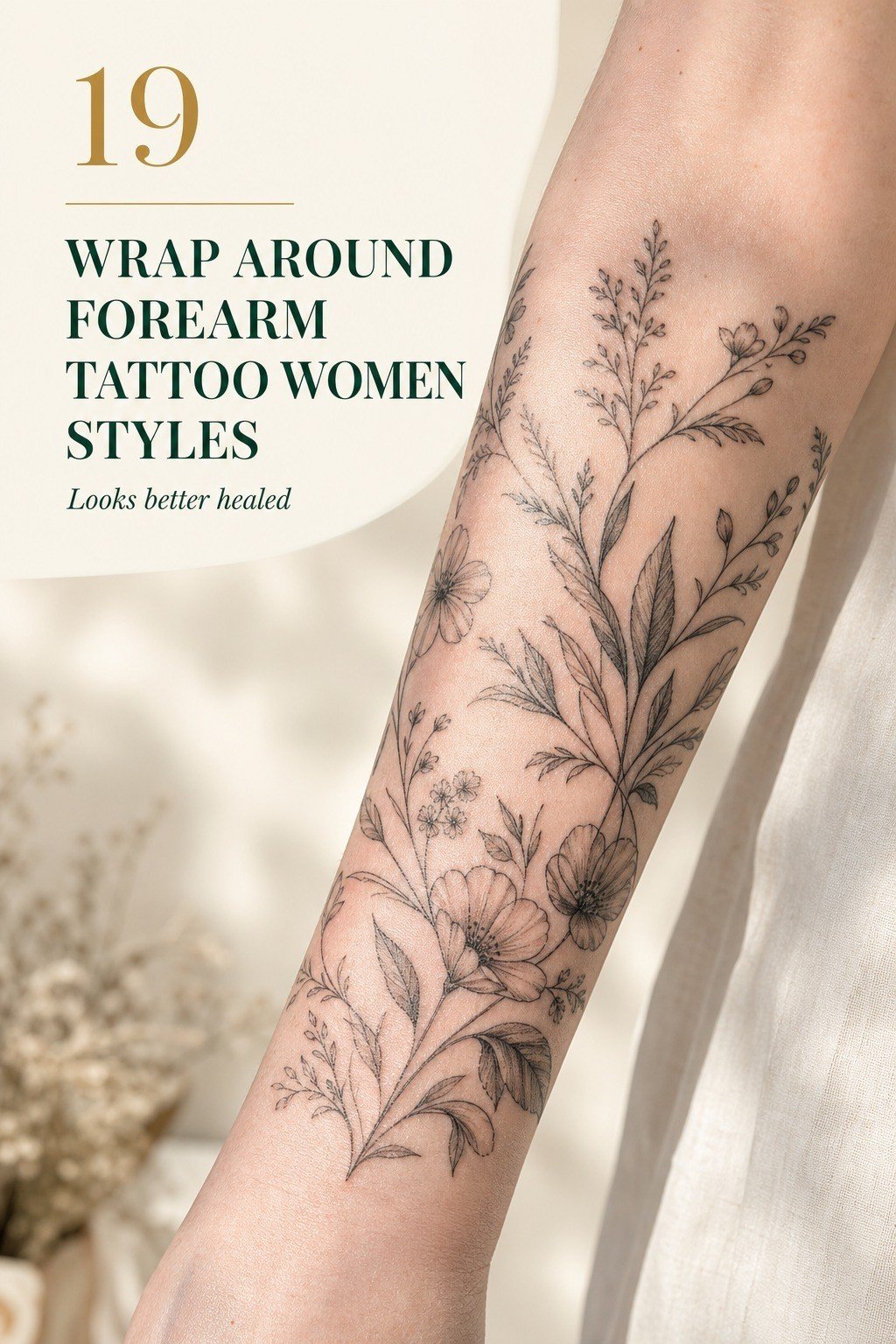
10Test The Stencil Before Committing To Ink
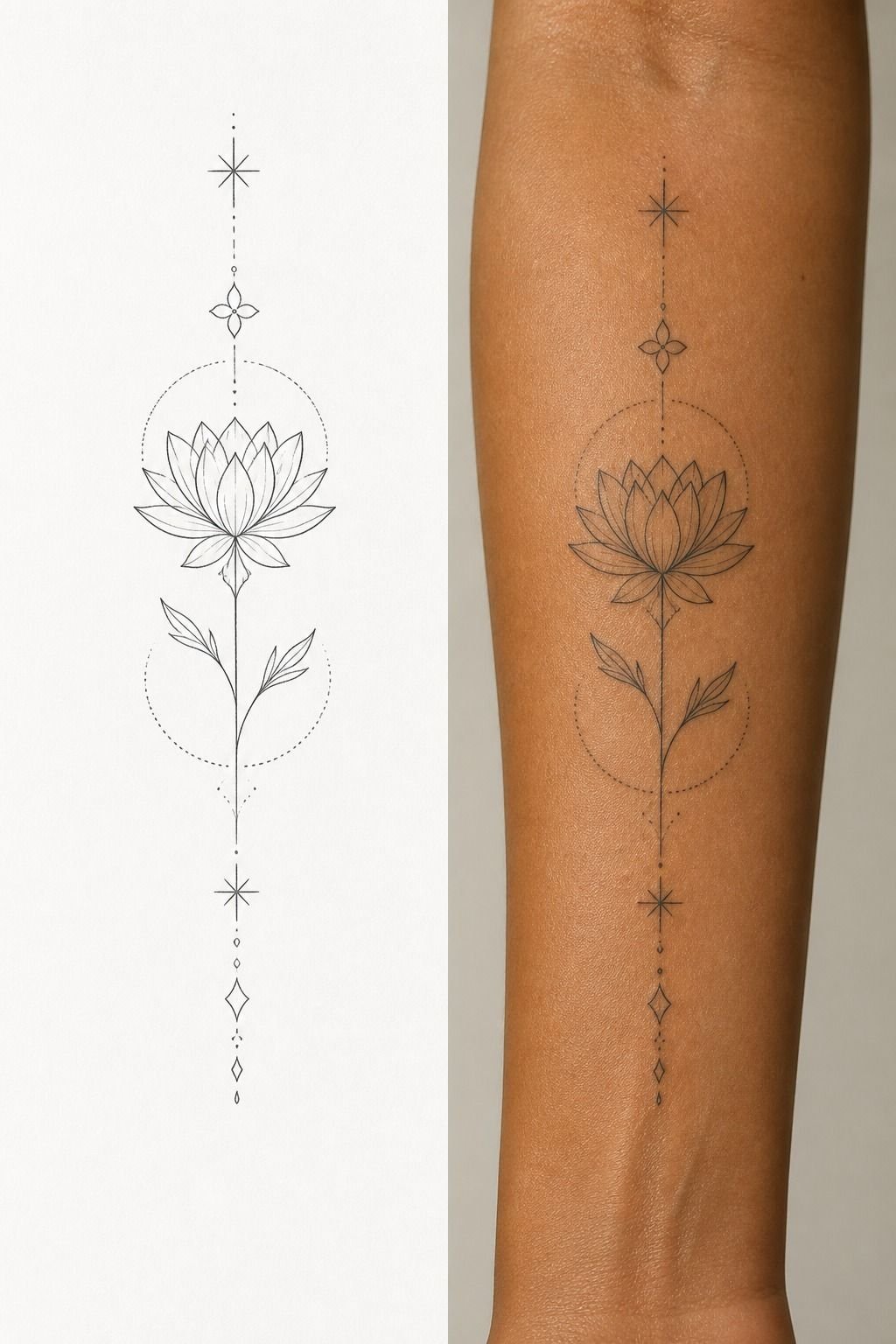
Test the stencil standing up, sitting down, and with your elbow bent.
11Position Lettering Along The Forearm’s Natural Curve
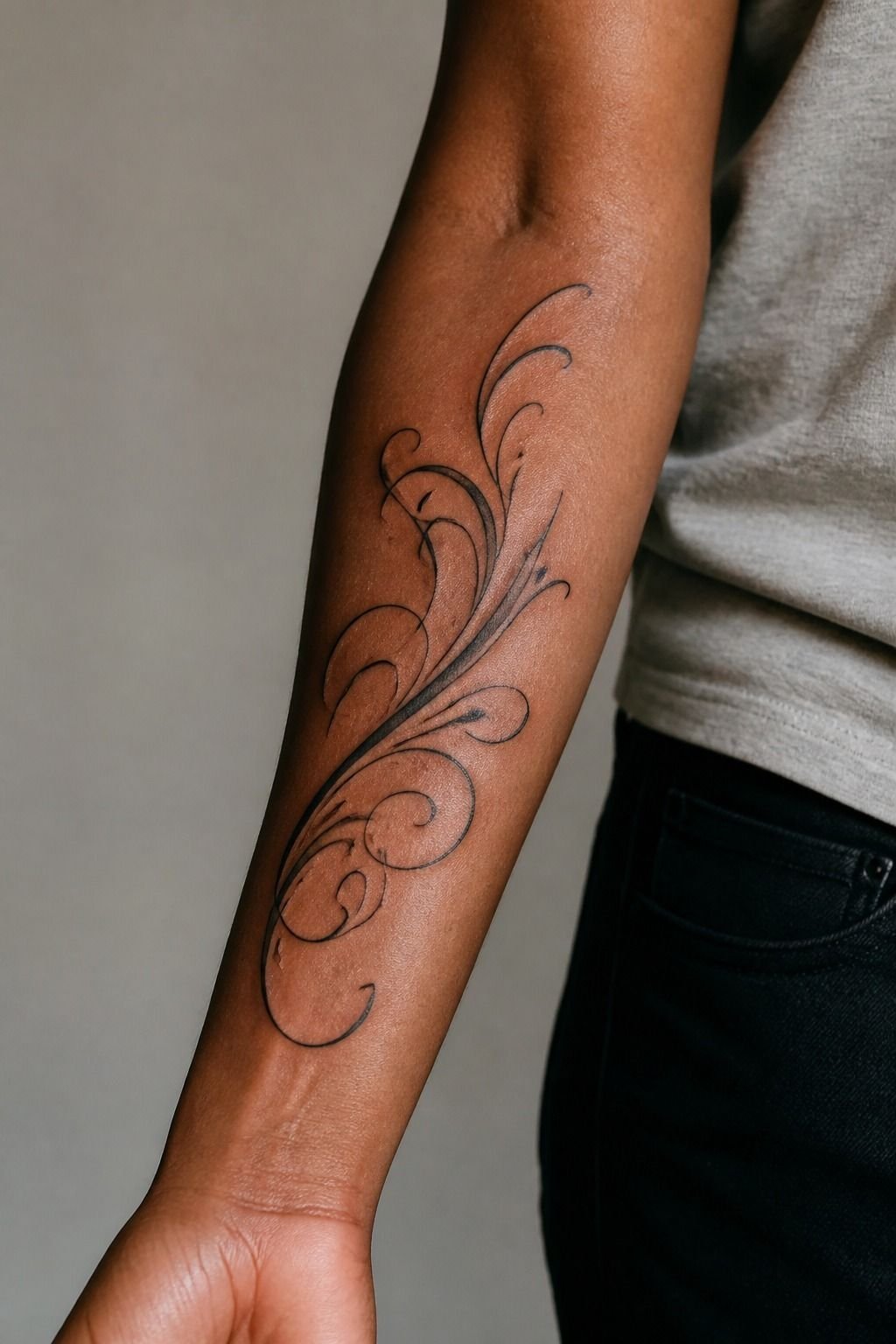
Position lettering along a gentle natural curve, never across a tight bend. On deep brown skin with warm undertones, a black script line needs enough spacing between letters to stay readable after healing. Lettering can be soft, but it can’t be timid.
Choose a short phrase, name, or date that your artist can draw at a readable size. I’d skip long quotes in micro script.
They look charming on a screen, then turn scratchy in real life. If you want a number-focused piece, see how a forearm two lines tattoo meaning can shape a simpler design.
12Select A Meaningful Symbol For The Center
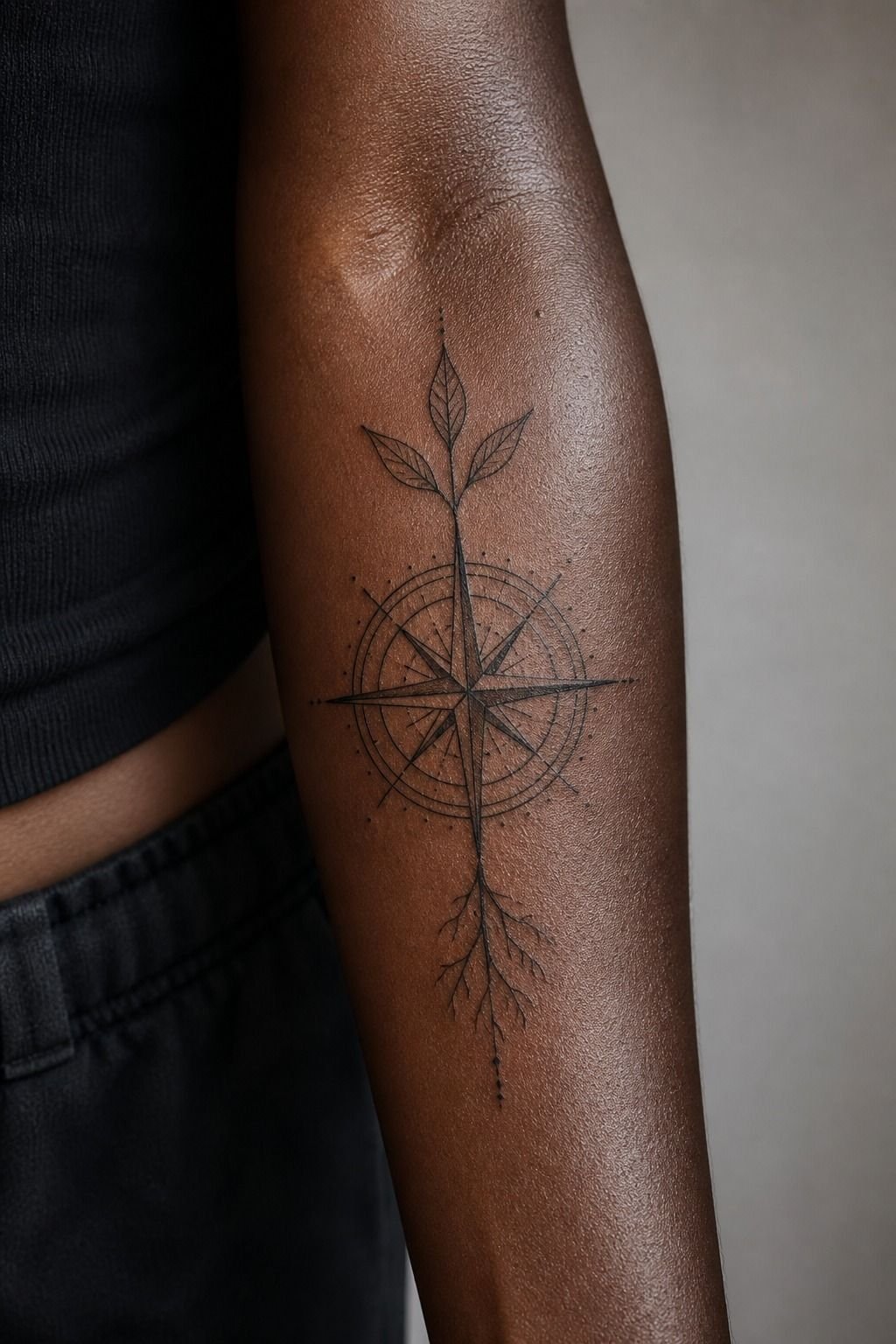
Choose one meaningful symbol for the center of your wrap. A tiny crescent moon, moth, heart, initial, or protective eye can anchor the floral movement without turning the tattoo into a scrapbook. Your center symbol should be the visual pause, not the busiest part.
What do you want someone to notice first? That’s your answer. I like a symbol placed on the outer-middle forearm, with vines arriving from both directions.
It feels intentional, and you won’t have to explain a dozen tiny references every time someone asks.
13Plan Bicep Connections Without Losing Forearm Focus
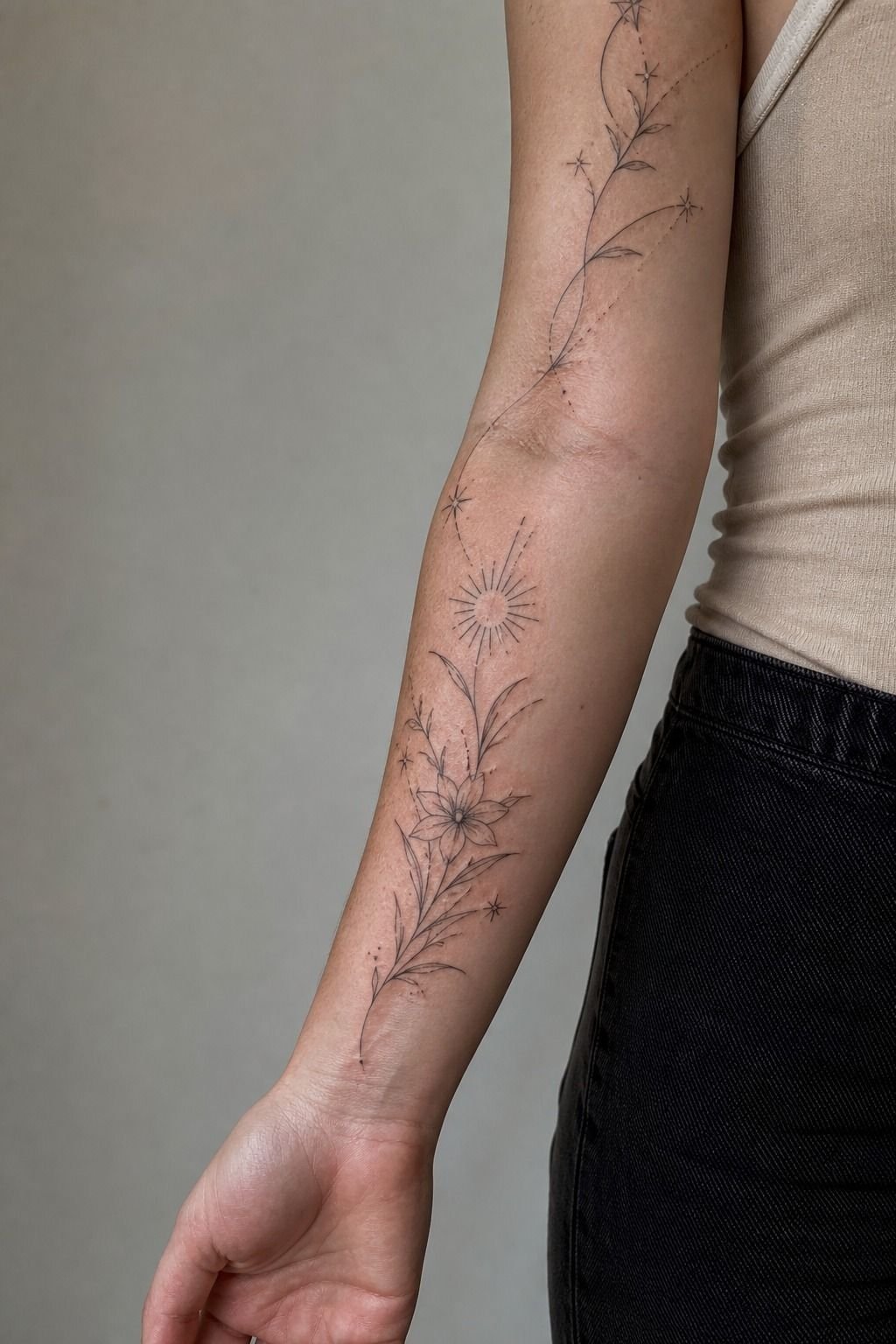
If you’re planning a Wrap Around Bicep Tattoo Women addition later, leave a soft exit route near the elbow.
14Keep Fine Lines Away From High Friction
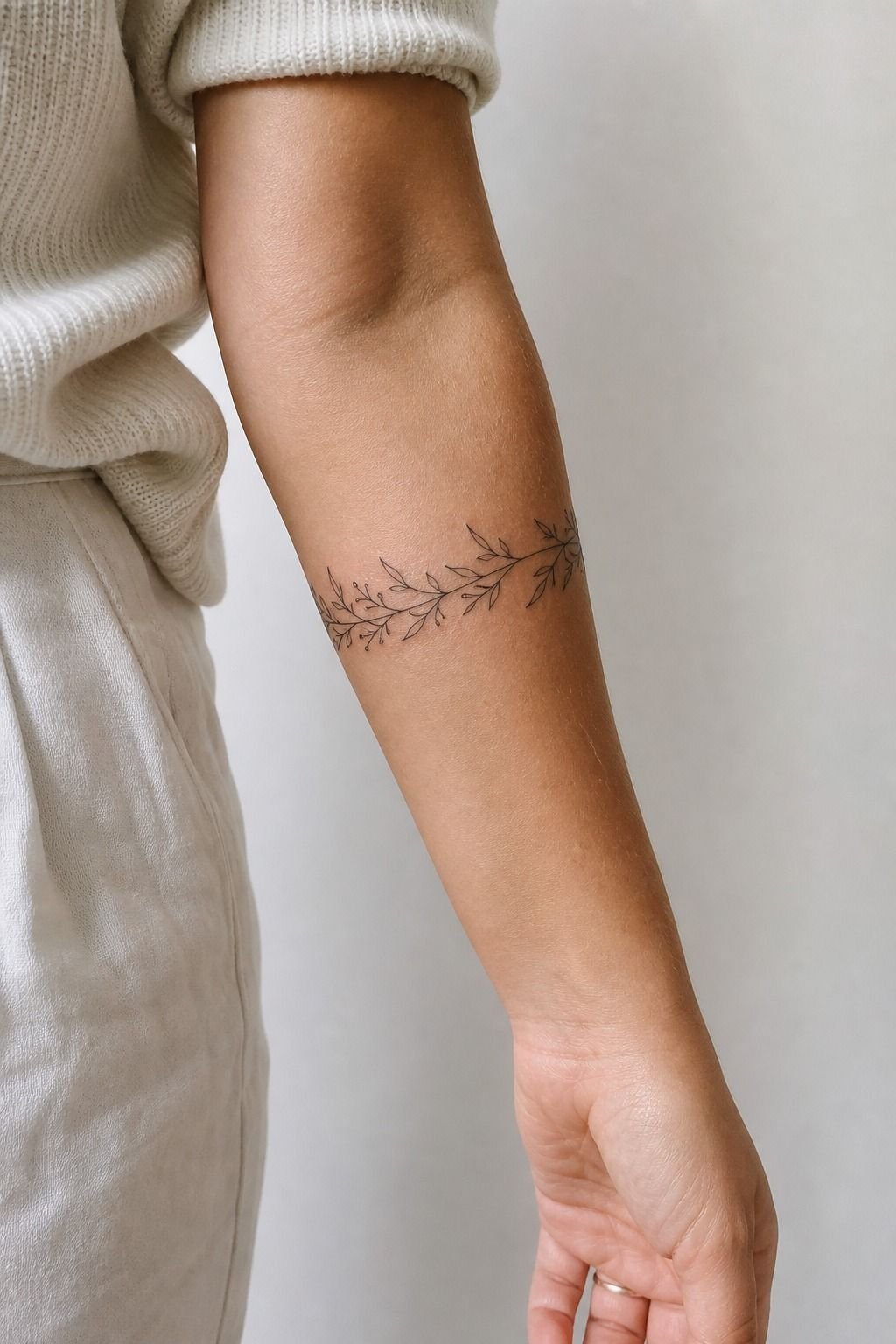
Keep your finest lines away from high-friction spots. Fingers, hands, feet, elbows, knees, and the very inner bicep all wear faster, while outer arm, calf, thigh, and upper back usually age more peacefully. Your forearm is solid, but the wrist crease still needs respect.
That size on a wrist is gonna mush out, so bump it up the forearm so it breathes and ages nicer. A healed blackwork outline with a slightly thicker main stem will hold better than a fragile cuff packed into a high-wear zone. Bold will hold.
15Prepare For Moderate Forearm Tattooing Discomfort
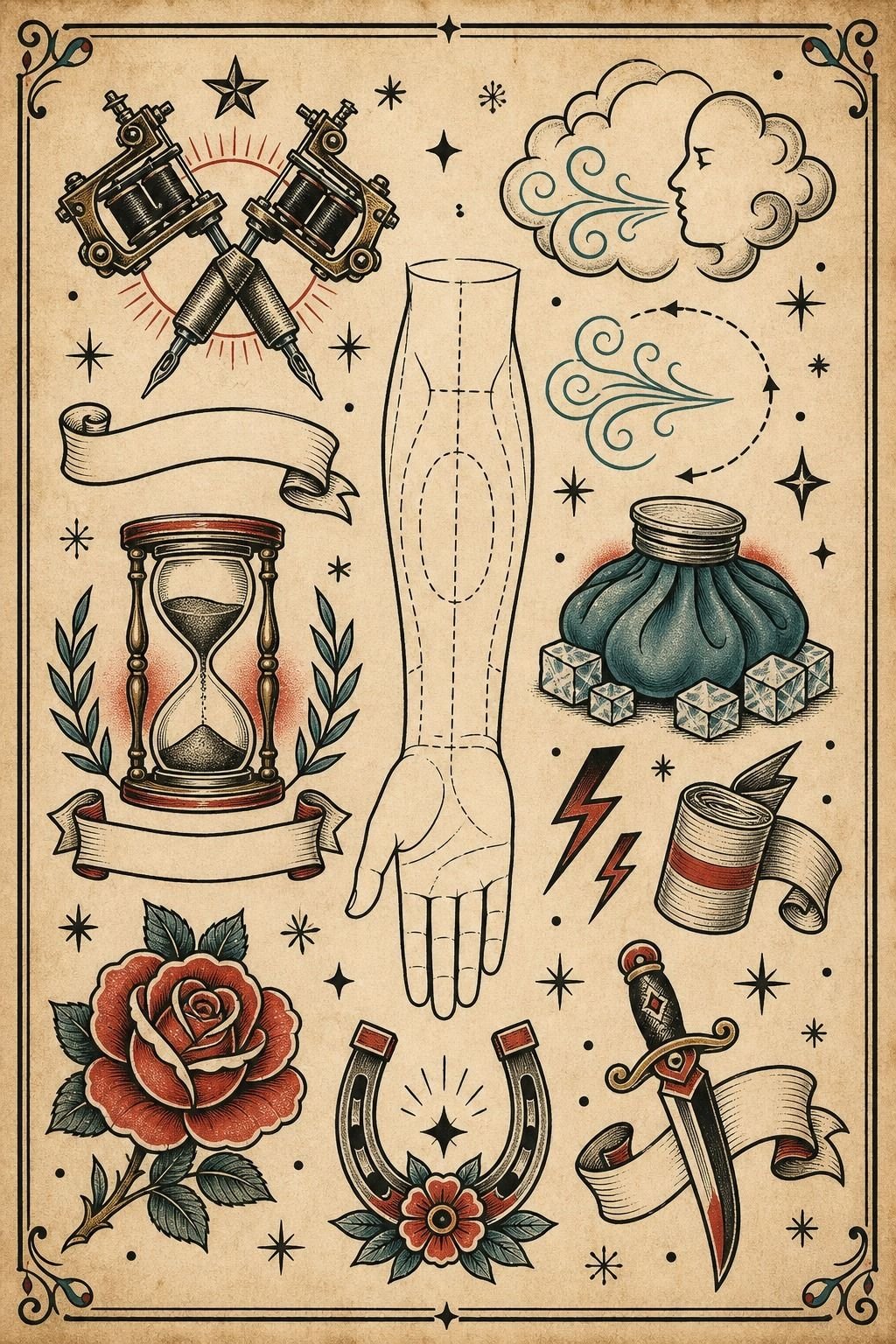
Forearm tattooing is usually moderate and manageable. Lines feel sharper, shading is a dull burn, and color packing is the spiciest part, but the outer forearm is generally easier than ribs, sternum, feet, hands, or stomach. Eat first, drink water, and wear a sleeve that rolls up cleanly.
Bring unscented lotion for afterward only if your artist says so, plus water and a snack for longer work. A simple fine-line wrap may take 1 to 3 hours depending on detail. Tap out for five rather than pass out on me!
16Choose An Artist With Wraparound Portfolio Examples
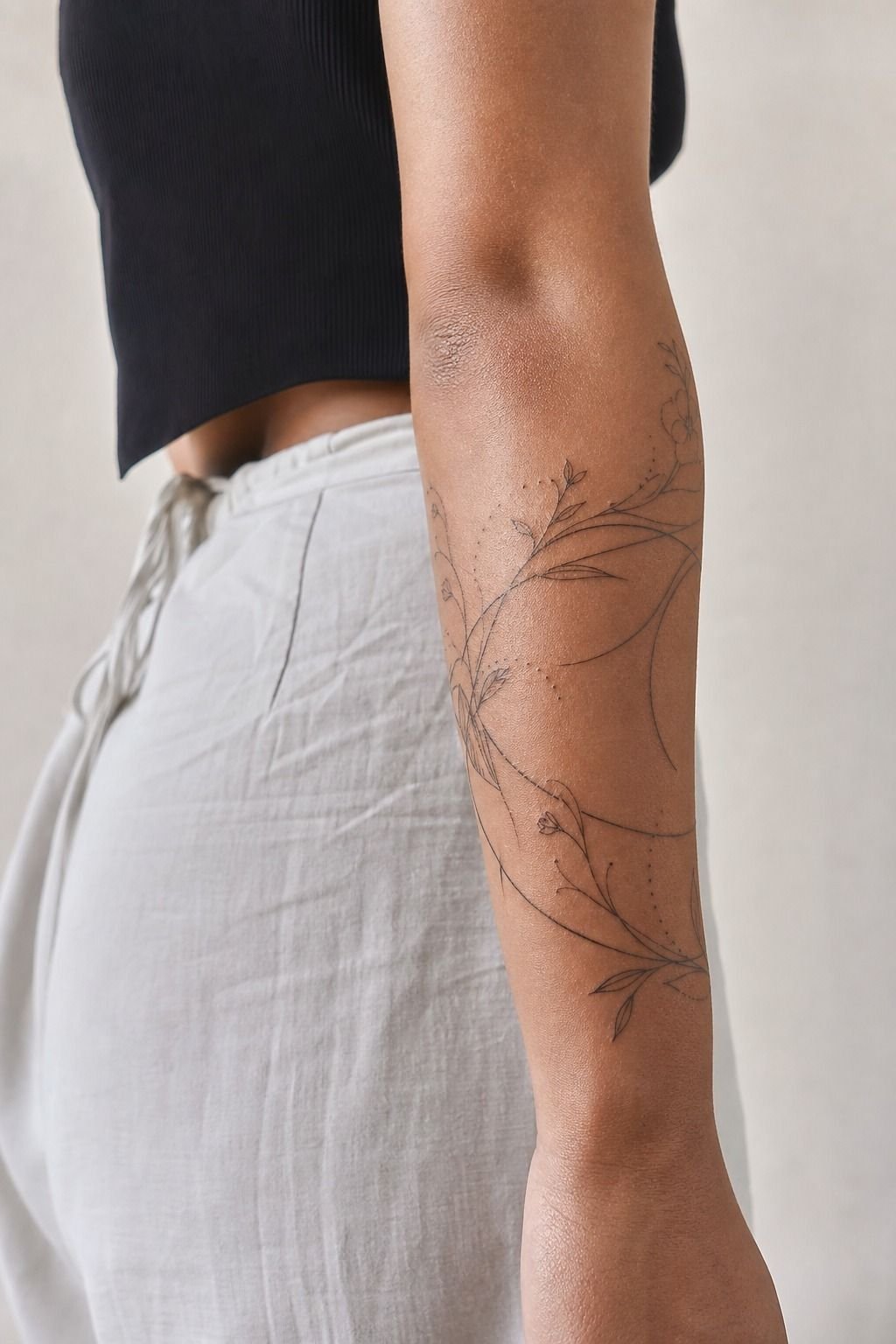
Choose an artist with healed wraparound examples, not just fresh close-ups. You’re looking for crispy and confident lines around an actual arm, plus photos that show how the tattoo flows from different angles. A single-needle portfolio should show spacing, healed contrast, and clean joins.
Ask how they approach stencils on curved placements. If an artist dismisses your questions or promises Pinterest-exact copying, walk.
References are for vibe only. You want someone who can redraw the idea for your skin, your undertone, and your arm shape. That’s the job.
17Protect Fresh Ink During Daily Arm Movement
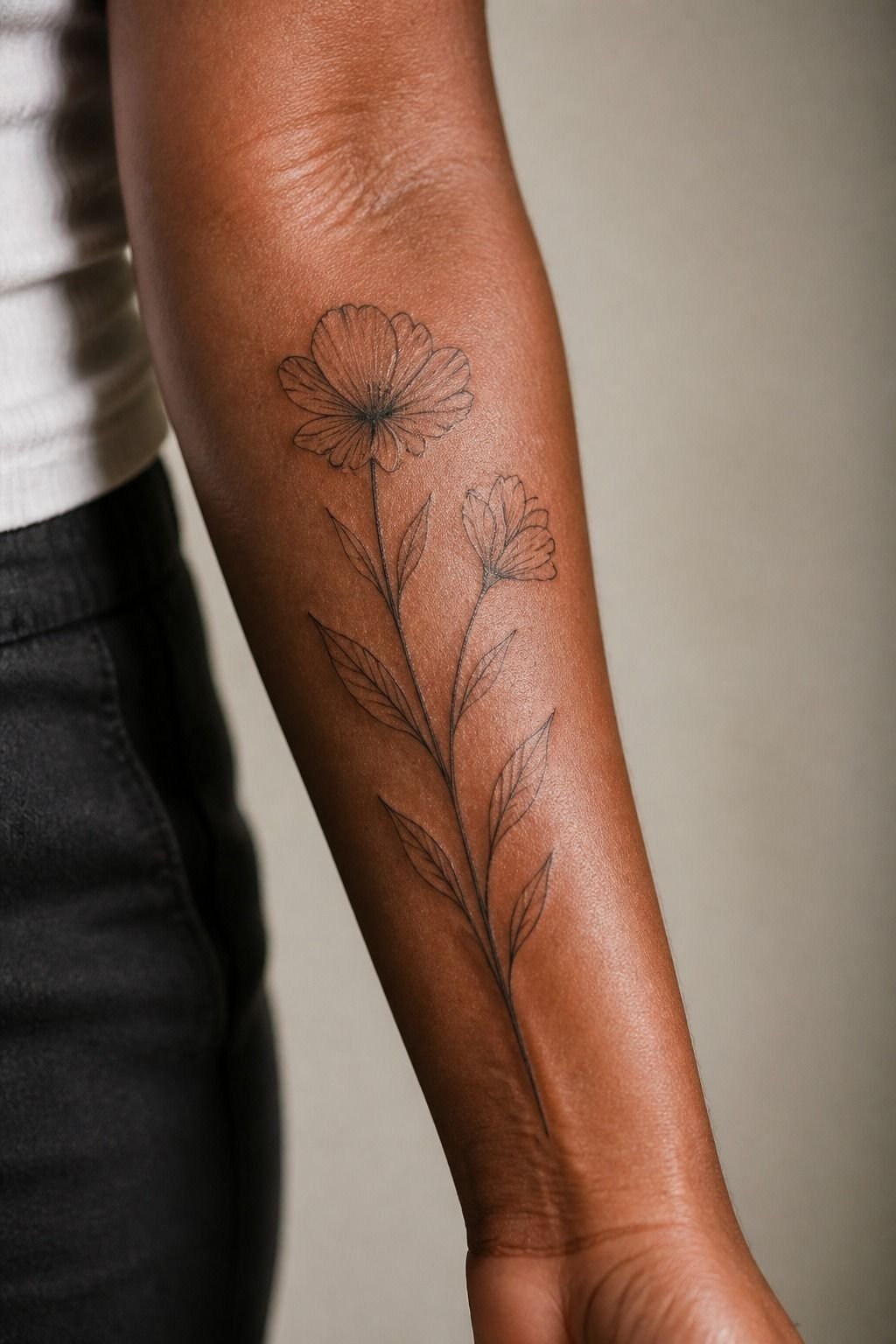
Protect fresh ink from the boring stuff that ruins healing: gym friction, tight cuffs, desk rubbing, sun, pools, and picking.
18Follow Aftercare For Clean, Even Healing
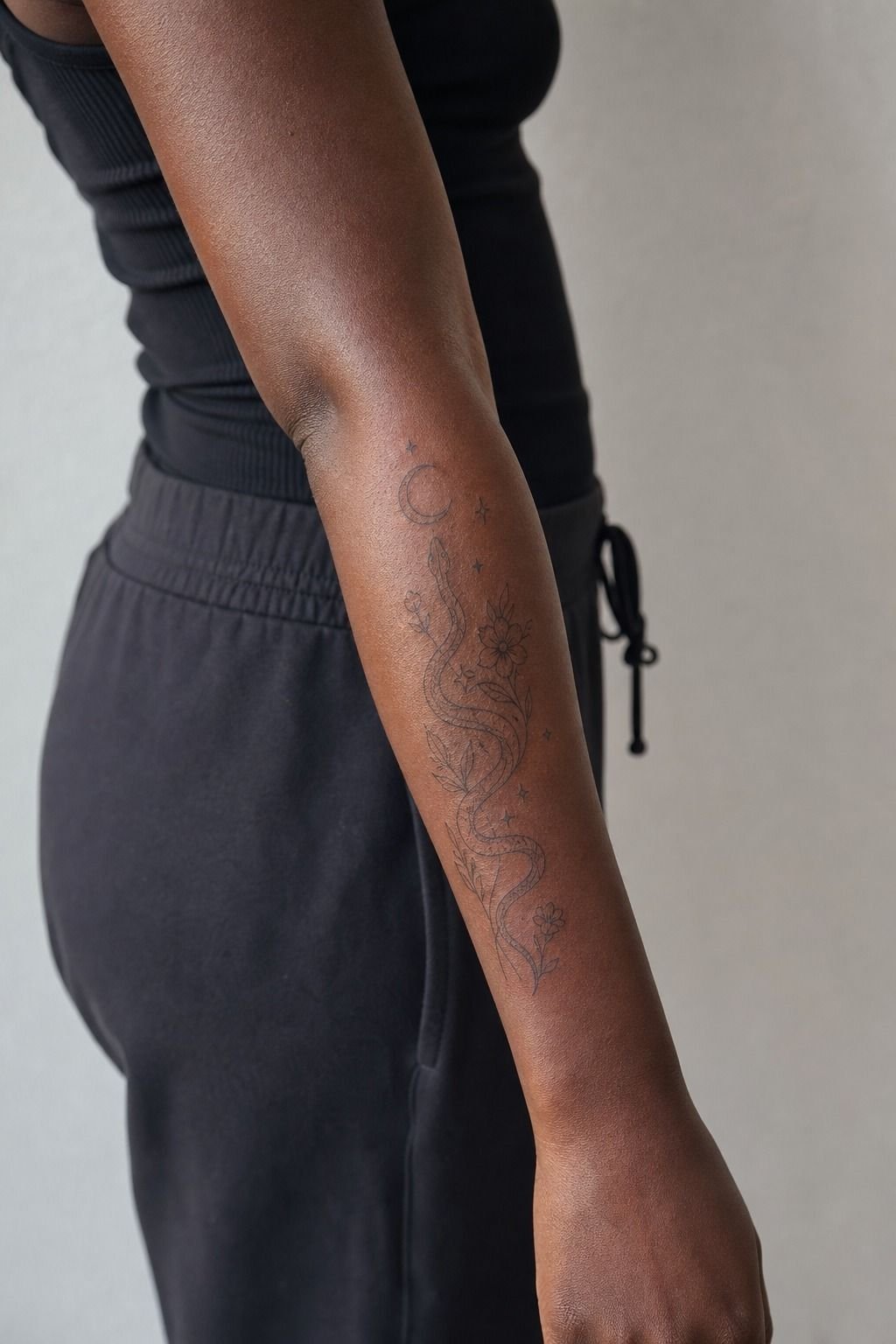
Follow your artist’s aftercare instructions over anyone’s comment section. Your tattoo will peel like a sunburn around days 3 to 7, and you can’t pick those flakes without risking color loss or patchy healing. Silver skin can look shiny after peeling, but that stage settles.
Use fragrance-free moisturizer in a thin layer once the tattoo needs it. Avoid soaking, swimming, and direct UV while it heals.
For wrap-specific questions, compare the guidance on how long to keep a tattoo wrap on and plastic wrap timing. Your skin needs calm, not twenty products.
19Review The Finished Wrap From Every Angle
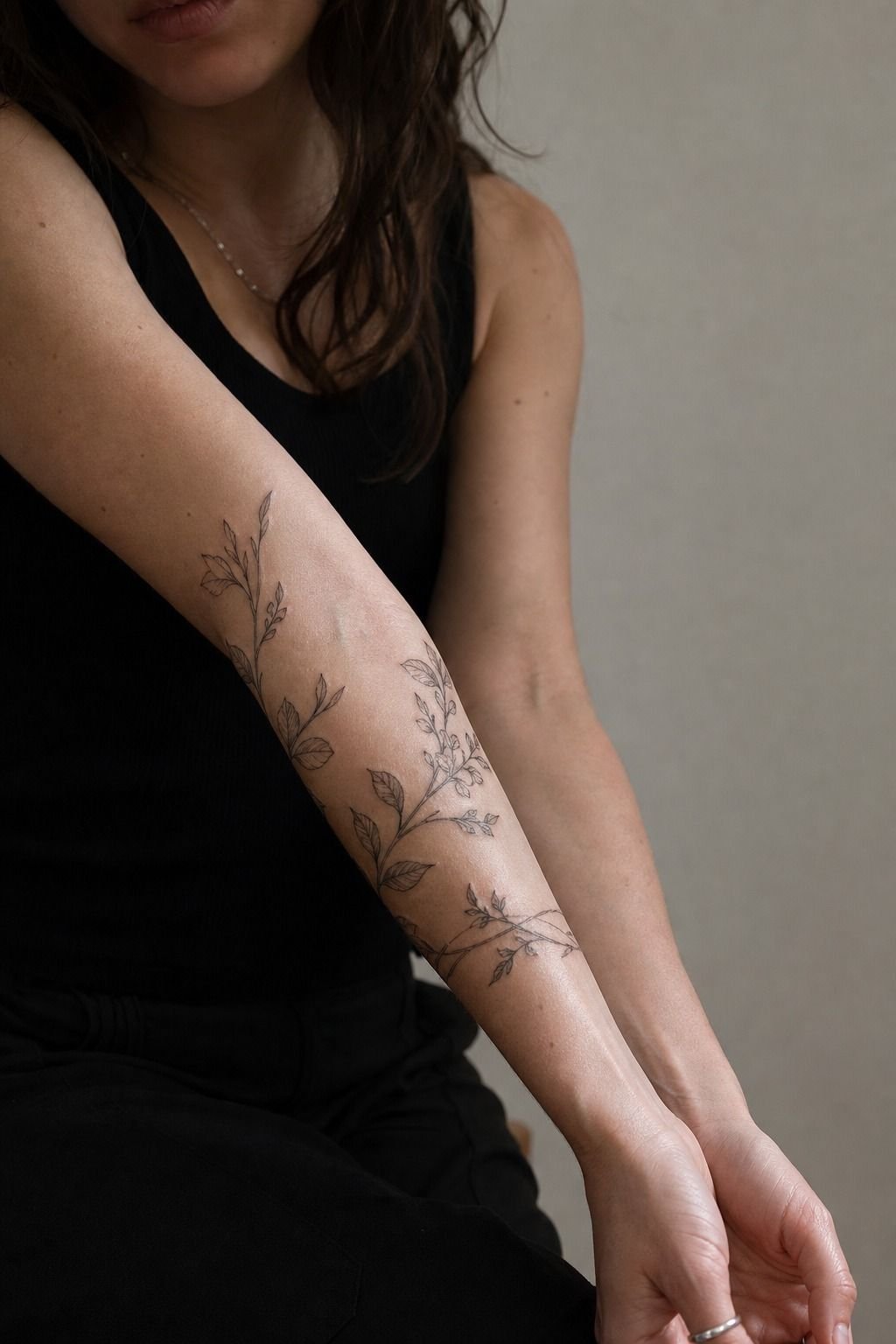
Review the finished wrap from every angle before you leave the studio. Rotate your forearm, bend your elbow, check the wrist edge, then look at the design in a mirror from a few feet away. A healed fine-line forearm wrap should have a clear route even when you aren’t staring at it inches from your skin.
I always tell clients to judge the whole composition, not one microscopic leaf. Fine line is subtle by nature. If the tattoo has flow, contrast, and open skin around the details, it’ll look refined from close up and still read at normal distance.
Why I Push Back on Overstuffed Forearm Wraps
I’m Hazel, and I push back when a forearm wrap tries to carry every memory, every birth flower, every date, every quote, and a full garden in one narrow strip of skin. I get why.
Tattoos are personal, and you don’t want to leave something meaningful out. But your skin isn’t a mood board.
It moves, stretches, gets sun, and heals with a mind of its own.
The best wraps I’ve seen aren’t the ones with the most symbols. They’re the ones with a clear first read.
Maybe it’s a rose and a name. Maybe it’s a lunar cycle with two vines. You see it from across the room, then you notice the smaller parts when you’re close.
That layered read is what gives a tattoo longevity.
I made the mistake early on of thinking “more meaningful” had to mean “more detail.” It doesn’t. Sometimes the most intimate choice is leaving a little skin visible around the important part.
That empty space lets the image breathe, and it gives your future self room if you ever want another piece. Smart collecting matters.
Your artist should guide you here. If they say a wrist detail needs to move upward, or a word needs to get larger, they’re protecting the tattoo you’ll wear after the fresh-photo glow is gone.
Listen. A clean design heals nice, photographs well, and doesn’t need a complicated explanation. That’s the whole point.
The Questions I Get Asked Most
How much does a Wrap Around Forearm Tattoo Women usually cost?
Most Wrap Around Forearm Tattoo Women cost about $100 to $300, depending on size, detail, artist, and region. A clear budget range helps you avoid rushing into a cheap appointment.
– Shop minimums, about $50 to $100 – Typical US hourly rates, $100 to $250 – Fine-line sessions, often 1 to 3 hours
Are Wrap Around Forearm Tattoo Women a good idea for a first tattoo?
Yes, they’re a good first tattoo if you keep the design readable. The outer forearm is usually tolerable and gives your artist a broad, low-wear surface for clean lines.
– Outer forearm visibility – Botanical flow – Simple black outlines
Browse small tattoo ideas for women if you want to start with less coverage.
How do I choose a tattoo artist for Wrap Around Forearm Tattoo Women?
Choose an artist whose healed work shows clean wraps, not only fresh stencil photos. Healed portfolio proof tells you whether their fine lines stay solid and their spacing stays open.
– Healed forearm photos – Consistent line weight – Clean studio practices – Custom redraws for your arm
How much do Wrap Around Forearm Tattoo Women hurt?
They usually feel moderate, especially on the outer forearm. The placement is more manageable than ribs, feet, hands, sternum, or the elbow ditch, though your inner forearm can feel sharper.
– Outer forearm, chill to moderate – Inner forearm, sharper – Wrist crease, more spicy – Long shading passes, dull burn
How long does a Wrap Around Forearm Tattoo Women take to heal?
Surface healing usually takes 2 to 3 weeks, while full settling can take 2 to 3 months. Gentle care protects crisp linework while your skin rebuilds.
– Gentle unscented soap – Thin moisturizer layer – No pools or sun – No picking flakes
What’s the best placement for Wrap Around Forearm Tattoo Women?
The outer and upper forearm are the best starting spots for most wraps. They give your design room to age well while staying visible and generally less painful than high-friction wrist or hand placements.
– Outer forearm hero motif – Front forearm connection – Wrist crease kept clear
Where I’d Start First
If I had to pick one step, I’d start with the outer-forearm hero motif. It gives the whole wrap a direction before tiny flowers and symbols start fighting for attention.
Get that focal point right first. Your tattoo will stay readable long after the fresh ink settles.