An Oni Samurai Tattoo can age well when you build around a readable silhouette, forgiving placement, and black that stays legible after healing. The hard part isn’t choosing an oni; it’s stopping tiny armor lines and crowded symbols from turning muddy. I’ve made that mistake. Start with your body, then the mask, then the ink.
- Choose a Fierce Oni Samurai Tattoo Pose
- Pick Intricate Japanese Samurai Armor Details
- Plan Bold Oni Mask Facial Expressions
- Select Sharp Katana Linework For Contrast
- Place Flowing Tattoos Along Muscular Anatomy
- Balance Ornate Armor With Bare Skin
- Add Symbolic Kanji Beside The Oni
- Compare Ronin And Samurai Tattoo Silhouettes
- Build A Striking Full Sleeve Composition
- Keep Delicate Details Readable During Healing
- Match Vibrant Colors To Oni Features
- Personalize Sacred Elements With Meaning
1Choose a Fierce Oni Samurai Tattoo Pose
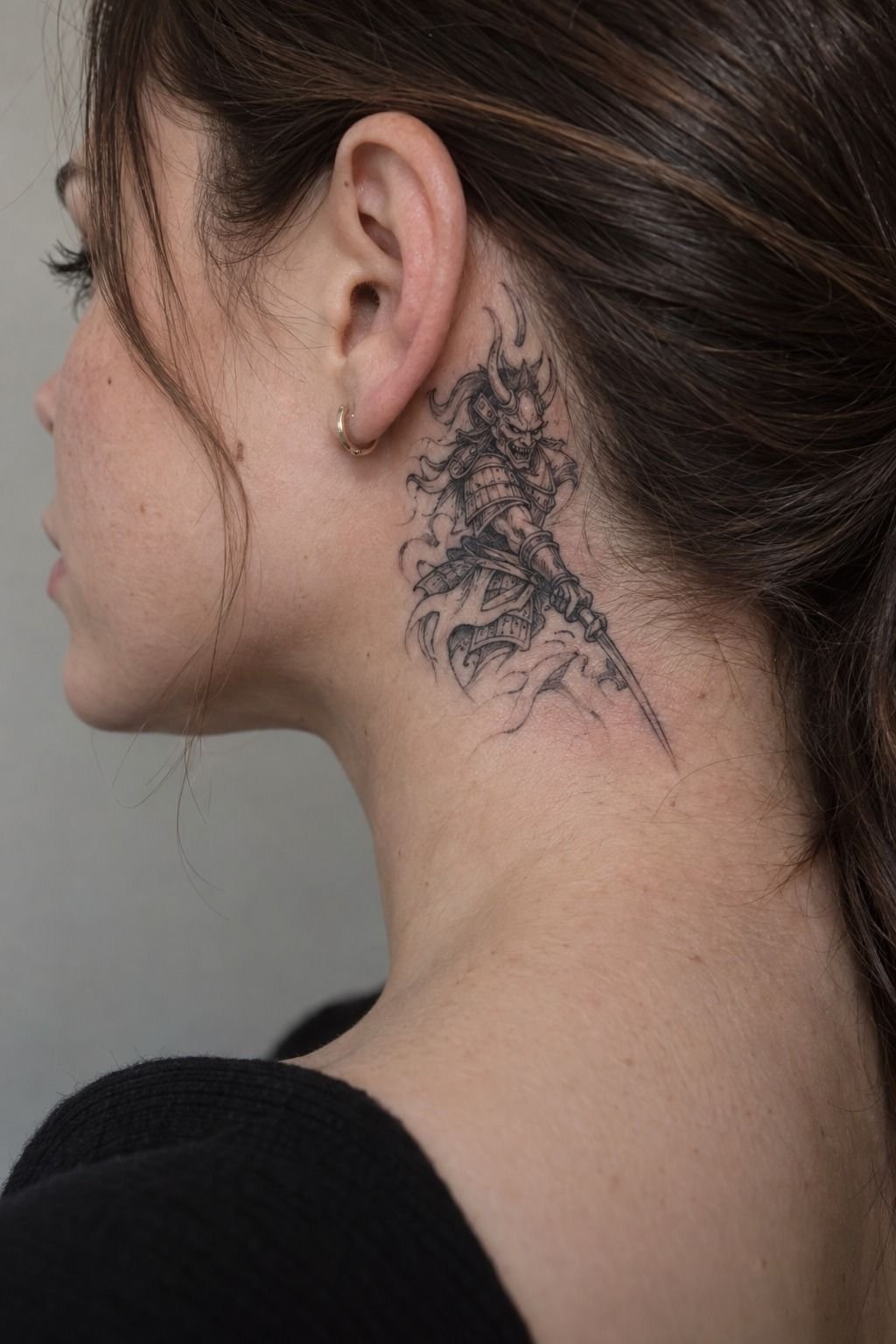
Start by choosing the pose, not the face. For a Japanese Tattoo Art Samurai concept, I’d keep the samurai in a compact three-quarter turn, with the brow, jaw, and blade creating what I call the Three-Anchor Pose. Your eye should read the silhouette before it finds the armor.
The fair, cool-pink skin in the photo gives the behind-the-ear placement a crisp edge, but you’ll still want a shape that survives natural movement.
Print the design at the size you’ll wear it. Hold the paper stencil behind your ear, turn your head, and check it in a mirror.
If the blade disappears when you tilt your chin, the pose isn’t doing enough work. I’d rather see an iconic profile than a crowded miniature that loses its jawline before it has healed.
Behind-the-ear tattoos can be sensitive because the skin is thin and close to bone. A short session may still meet a shop minimum of about $50 to $100, while hourly rates in the US often run about $100 to $250, depending on the artist and region. You don’t need to book on price alone, but you should know what you’re comparing.
Before you book, decide whether your samurai is guarding, turning, or striking. Those choices change the emotional read more than another row of scales will. I’d compare the pose with this guide to samurai tattoo meaning so your reference has a reason behind it, not just a sharp profile.
2Pick Intricate Japanese Samurai Armor Details
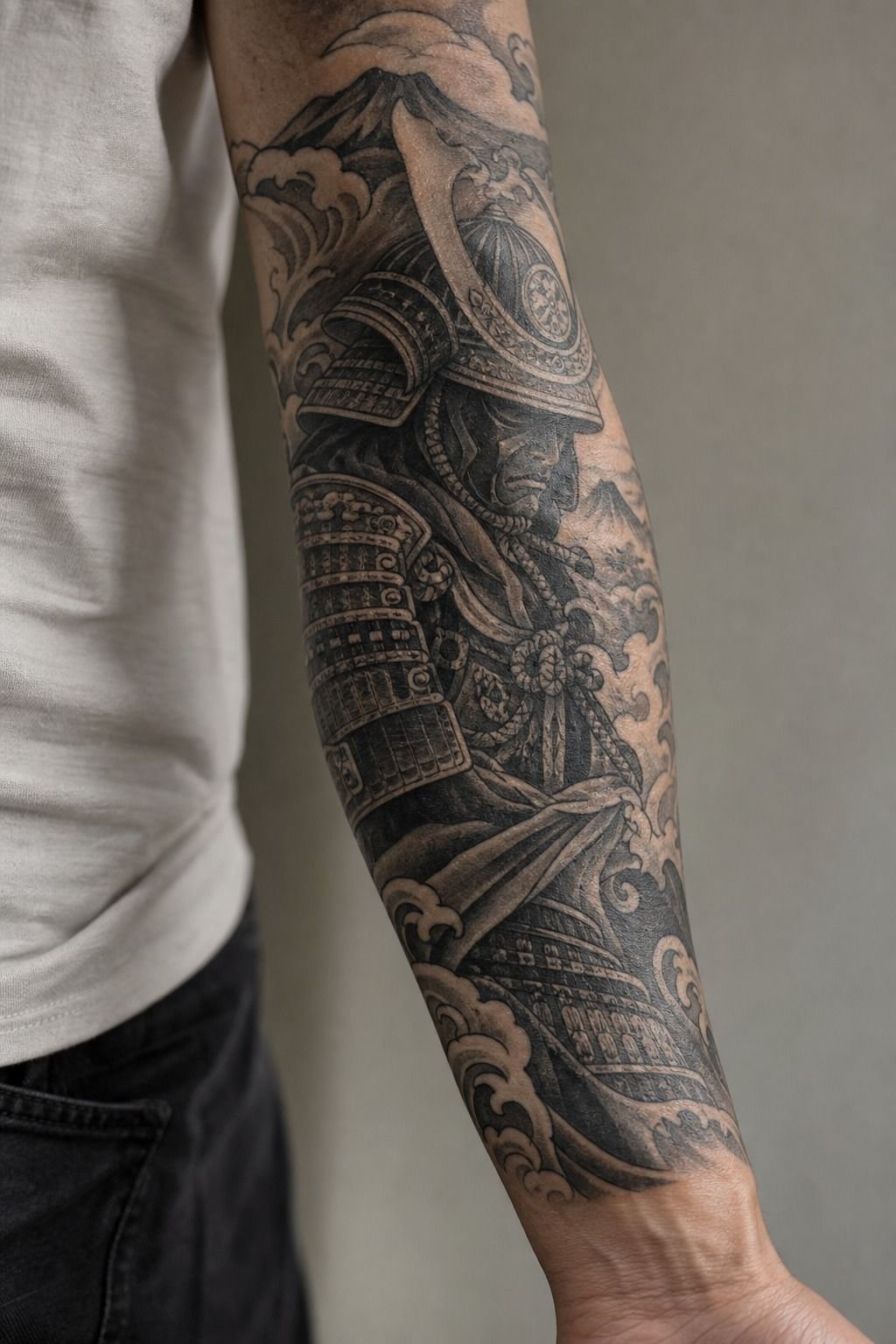
Once your pose is set, build armor in layers your eye can rank. In the macro forearm reference, the lamellar armor fills most of the frame, yet the shoulder plate, lacing, and helmet remain separate. You don’t need every scale; you need a clear order from helmet to hand so your eye knows where to stop.
I’d start with one large plate, two medium bands, and a few small scale marks. A Cheyenne 3RL cartridge gives you a useful conversation point with your artist, but you shouldn’t prescribe a grouping from a photo. Skin, hand pressure, and healed results matter more than a label, and you’ll want the artist to choose what holds on your skin.
Dynamic Triple Black ink is another named reference worth discussing if you want dense black sections. The goal isn’t to make your forearm look flat; it’s to keep the armor readable when the tattoo is viewed from a few steps away. I’d skip outlining every tiny plate, and I’d use the oni tattoo guide to compare larger armor structures before you commit.
Keep the armor lacing lighter than the main plates so the pattern can breathe. The graceful version has one dominant rhythm, then a few ornate interruptions around the wrist or elbow. And if you’re tempted to copy every detail from a reference, remember that your skin will move while the paper won’t.
3Plan Bold Oni Mask Facial Expressions
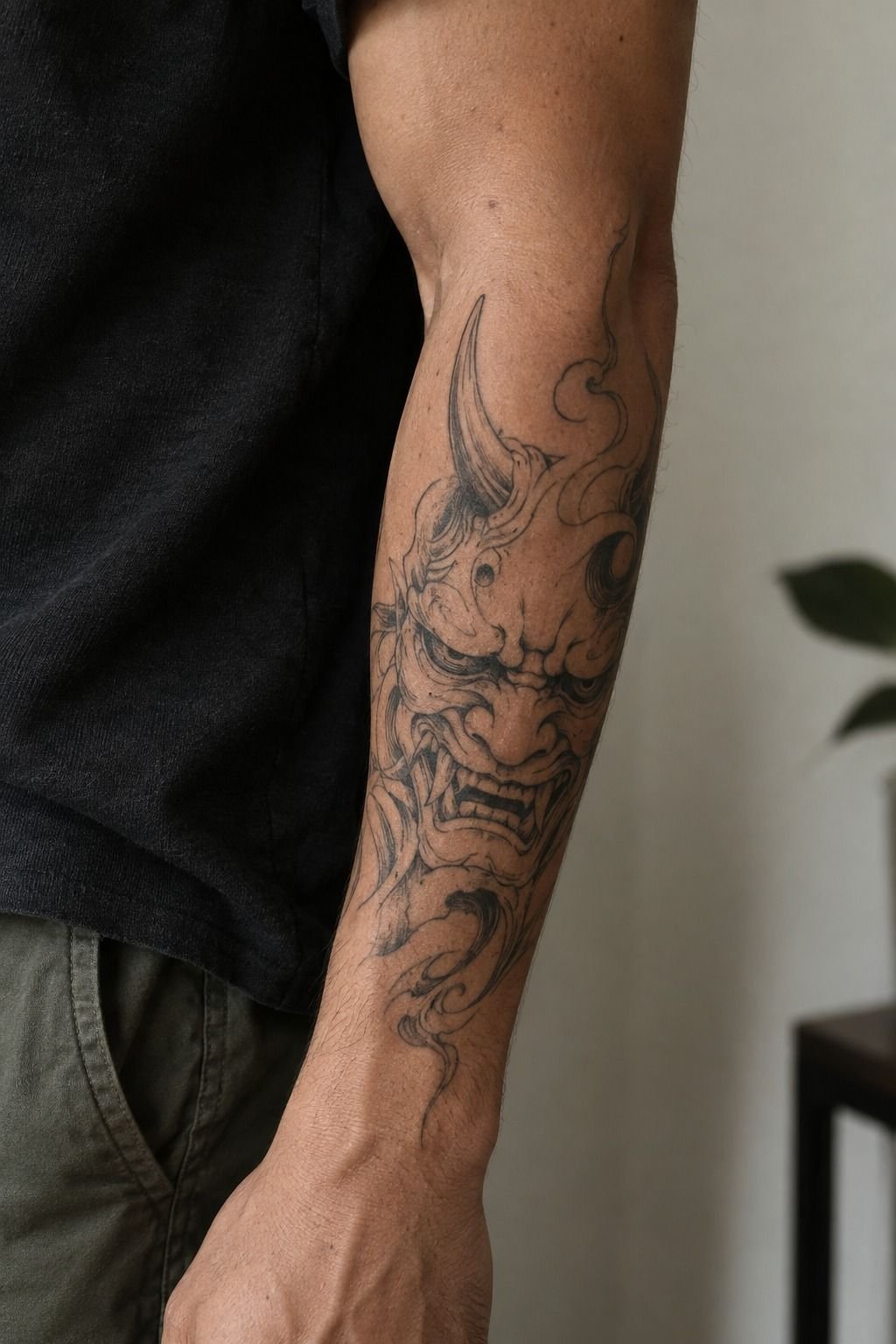
Plan the expression as a hierarchy: brow first, eye second, teeth last. The healed forearm reference shows why healed black ink matters. Medium olive skin, natural daylight, and a lived-in surface reveal whether the face still communicates after the first bright weeks have passed.
Your Oni should look expressive without depending on microscopic hatch marks.
Let the brow ridge do the first emotional job. In Japanese Tattoo Art Oni work, a lowered brow can feel threatening while a lifted angle can make the mask seem watchful.
If you’re choosing from several Oni mask tattoo examples, look for healed images, not only fresh studio close-ups. A fierce face shouldn’t need a caption to explain it.
What should a stranger read first, the eyes or the teeth? I’d give the eyes the larger share of your visual attention, then let the teeth sharpen the expression underneath.
A haunting mouth can work, but too many pointed teeth turn the face into noise. Your artist should be able to cover the mouth with a finger and still leave an expressive mask.
Ask for a healed photo from the artist’s portfolio before you approve the final expression. And don’t let a dramatic stencil persuade you into a face that loses its planes once the skin settles. Your best option may be less raw on paper, because the healed version will carry more weight than the fresh outline.
4Select Sharp Katana Linework For Contrast
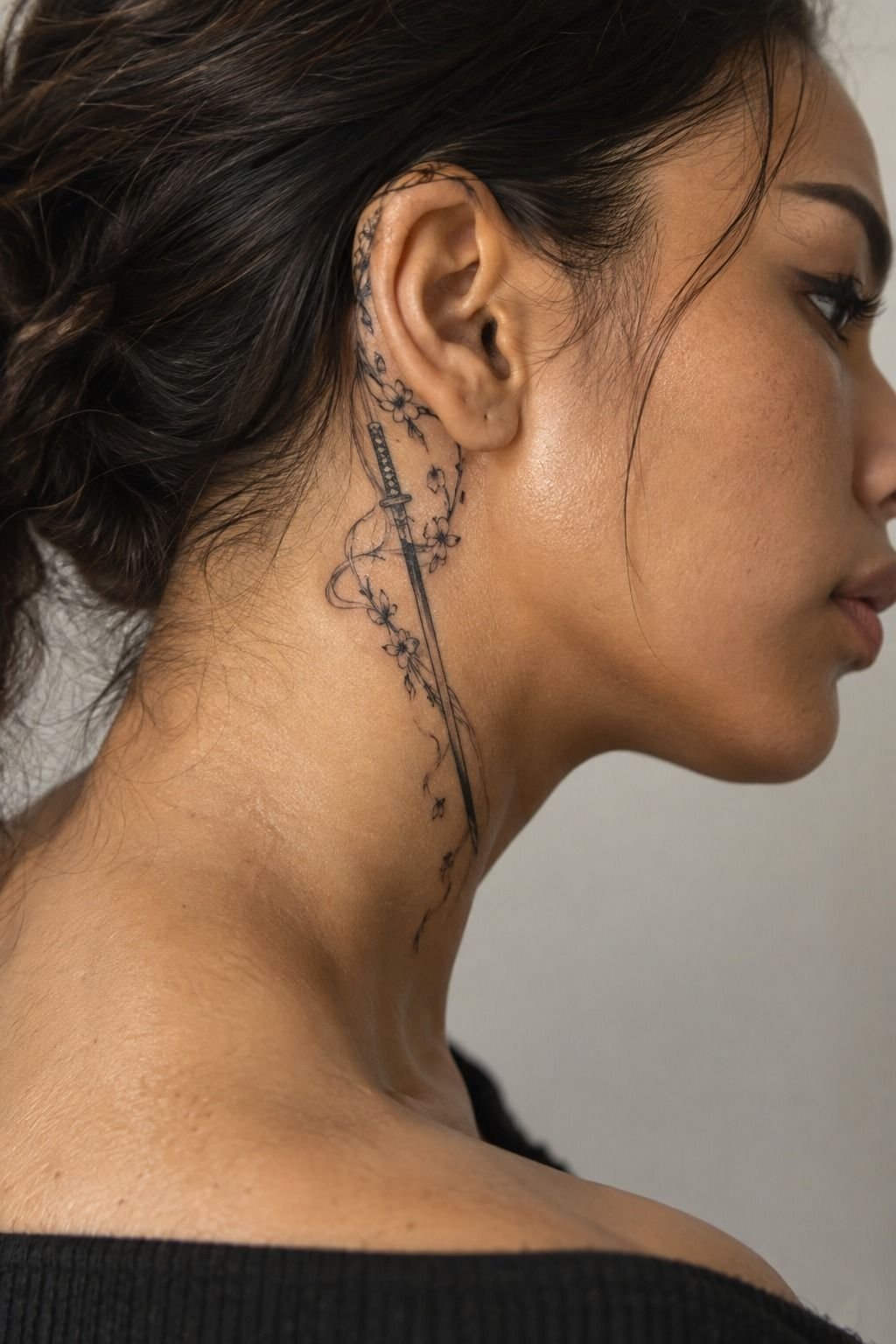
For a Japanese Samurai Tattoo Design behind the ear, map the katana blade before you decorate the handle. The golden tan skin in the reference gives the anatomical placement guide a clear sense of scale, but you’re still working around a curved edge, hair movement, and a sensitive area. The blade should support the head’s direction rather than point awkwardly into the neck.
A 5RL needle grouping can give your artist a useful starting point for a stronger line than the smallest single needle. That doesn’t mean every edge needs the same weight. Ask where the line should be firm, where it can taper, and where your skin needs a pause so the blade doesn’t read like a dark stripe.
I like a katana with one clear outer edge and a quieter inner line. That contrast lets your eye separate steel from sleeve, especially when the tattoo wraps slightly behind the ear. You’ll find more useful comparisons in the oni mask tattoo meaning guide, where the weapon can support the character instead of competing with the face.
Skip a floating blade that has no relationship to the body. Give the black outline a beginning near the shoulder of the design and a controlled ending near the hairline. If you’re chasing an edgy look, make the angle do the work; I’d rather see one daring diagonal than five decorative scratches.
5Place Flowing Tattoos Along Muscular Anatomy
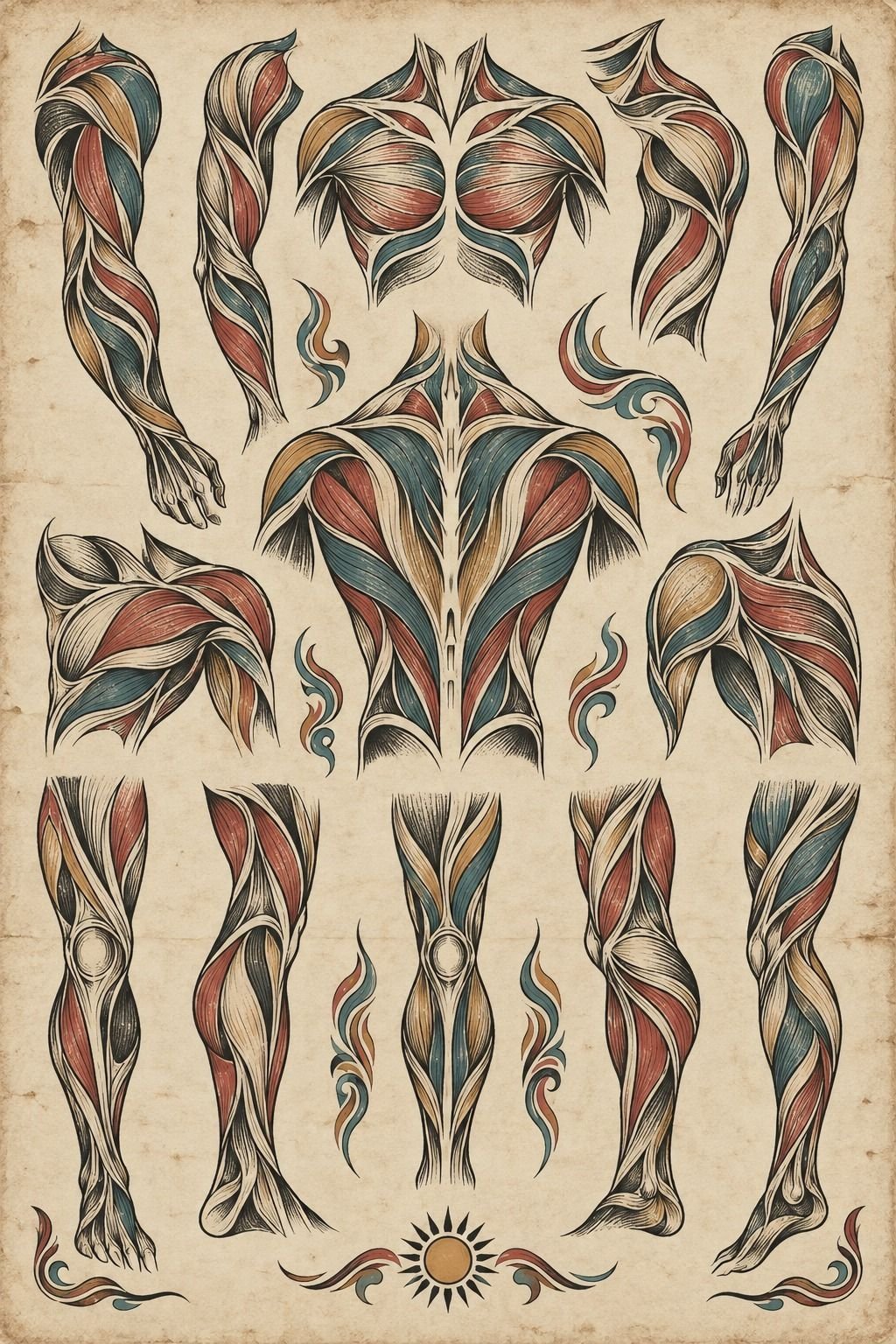
The Japanese Tattoo Art Samurai reference should be planned from movement, not from a flat rectangle.
6Balance Ornate Armor With Bare Skin
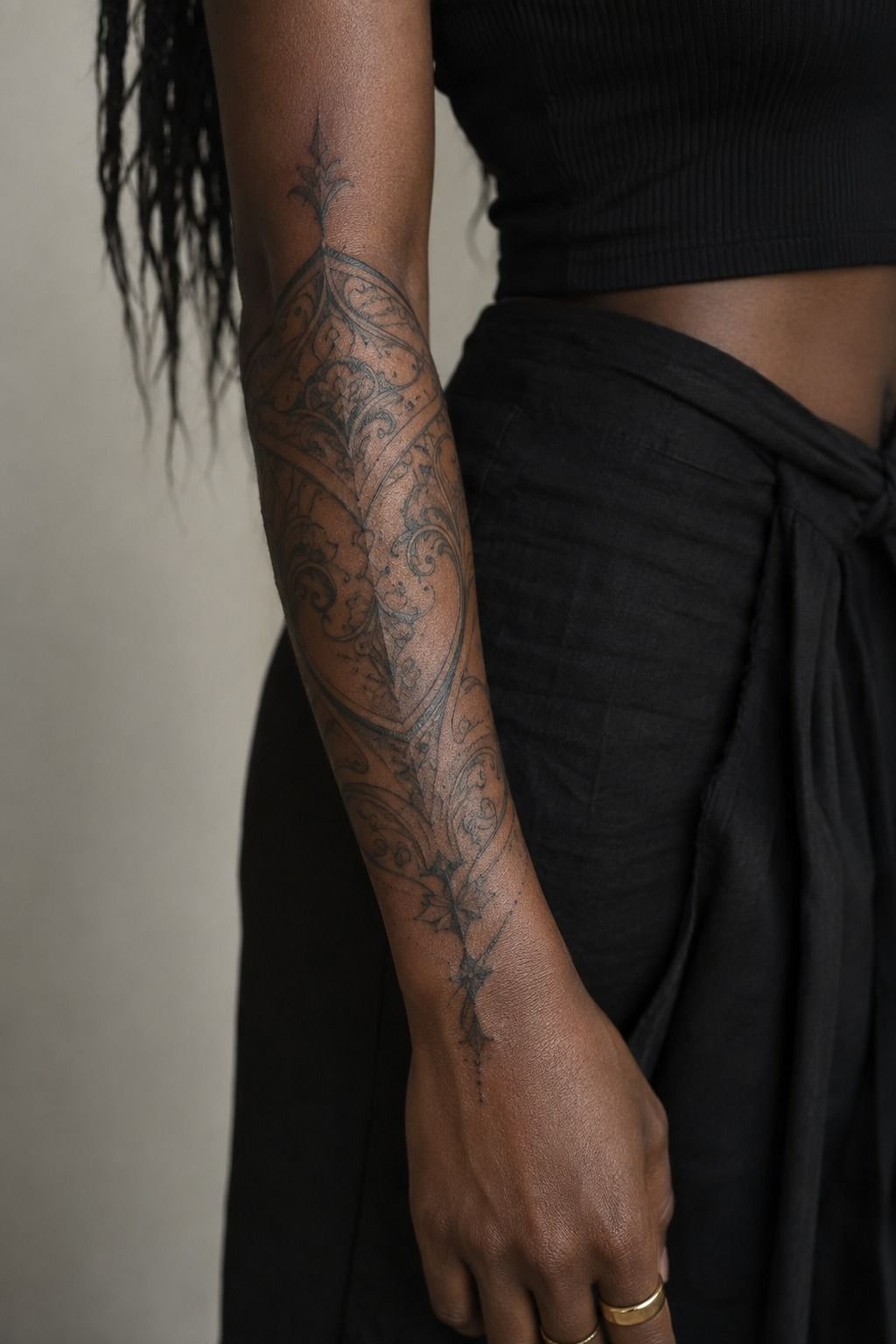
On deep ebony skin, the contrast between packed black ink and untouched skin needs deliberate planning. The forearm image makes black saturation look powerful because the armor has room around it. Your artist should test how the linework reads under the studio’s lighting and in ordinary daylight, since the healed result won’t stay under a bright photo lamp.
Ask to see a healed portfolio from the same artist, ideally on a range of skin tones. You’re looking for edges that remain crisp, dark areas that stay even, and gaps that don’t close into accidental blocks. The oni mask tattoo page can help you compare masks, but your artist’s healed work matters more than any saved image.
Bare skin isn’t empty space. A negative-space channel can separate the helmet from the cheek, keep the forearm from feeling sealed shut, and give your eye somewhere to rest. That pause makes the raw parts of the design feel intentional rather than unfinished, especially when the armor is dense.
I’d skip packing every inch of the forearm with solid black armor. The understated version will age with more clarity because your marks have room to remain distinct. But if you want one powerful dark block, place it where the body can support it, then let the surrounding skin do the contrast work.
7Add Symbolic Kanji Beside The Oni
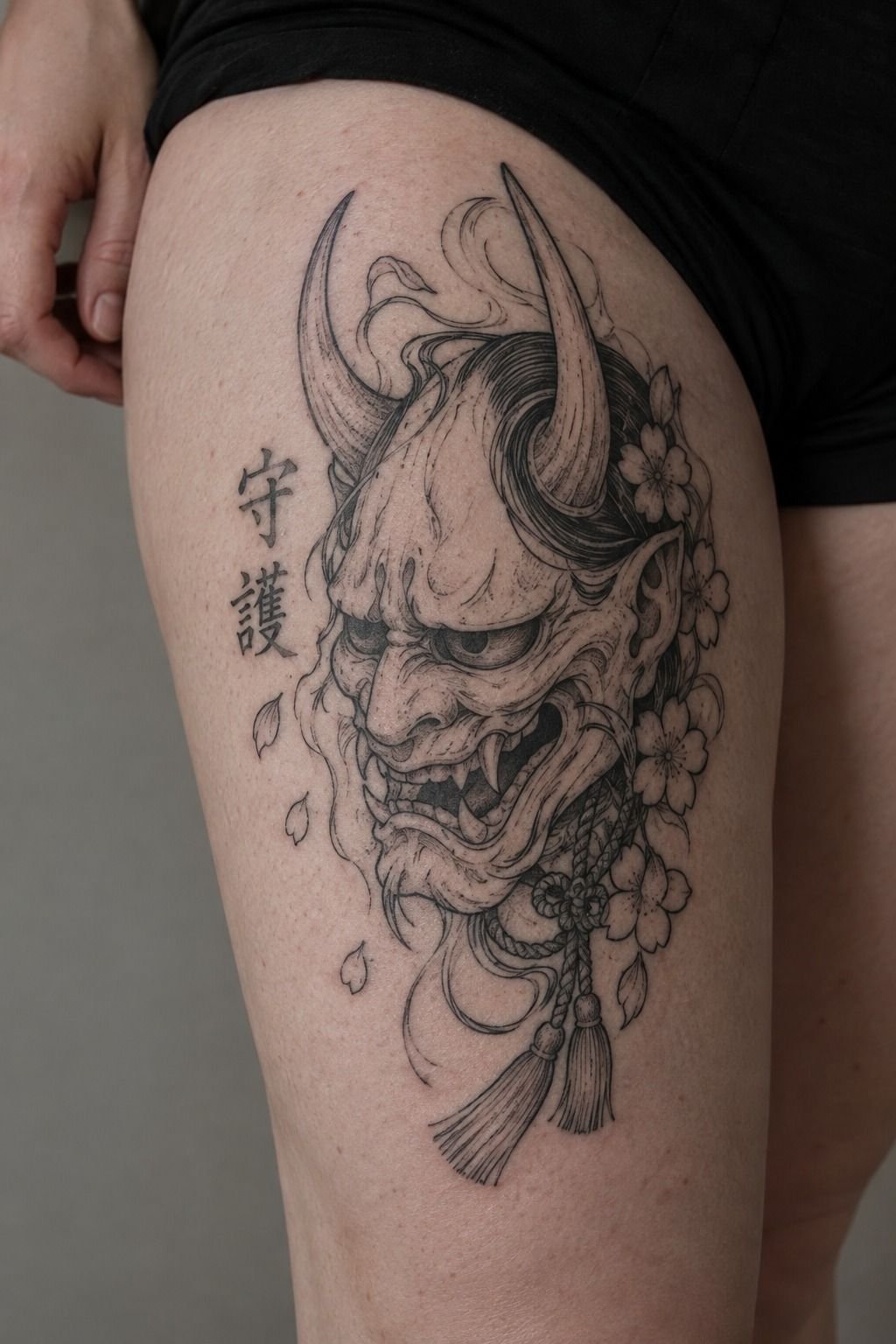
Treat kanji as language before treating it as decoration. In a thigh placement, kanji lettering can sit beside the mask without fighting the face, but the character has to be correct, legible, and chosen for its meaning. Your symbolic idea deserves more care than copying a random image from a search result.
Check the translation with a reliable Japanese-language source and ask your artist whether the reference is written naturally. Don’t rely on a single caption. The oni mask tattoo meaning guide can help you think through the mask’s role before you pair it with a word, while your artist should still verify the lettering.
Place the stencil transfer on your thigh in more than one direction. You’ll want to see whether the character follows the leg, faces outward, or reads best when your body is relaxed. Fair cool-pink skin may show fresh lines clearly, but your final choice should be based on the healed orientation, not only the appointment photograph.
Your symbol should connect to your own reason for getting the tattoo. A meaningful word can mark protection, discipline, grief, or a promise without becoming literal.
If you’re pairing two opposing ideas, the yin yang tattoo meaning guide may give you a useful comparison. I’d avoid adding kanji merely to fill a gap beside the Oni.
8Compare Ronin And Samurai Tattoo Silhouettes
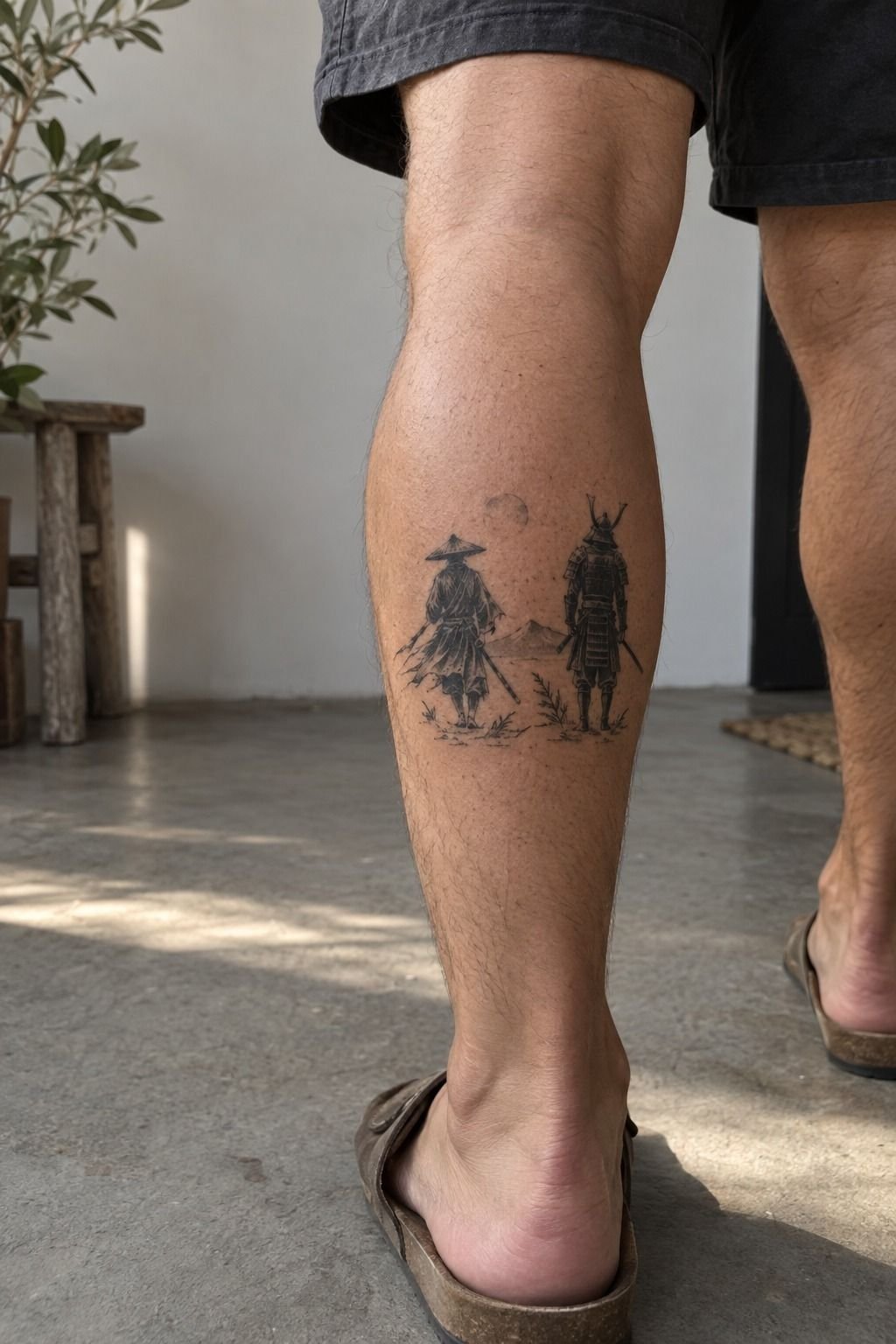
Compare the silhouettes before you choose facial details. Which figure fits your reason for getting the tattoo, the ordered warrior or the independent fighter?
A ronin silhouette on the calf can feel classic and open, while a samurai profile usually gives you more armor structure. Your answer should shape the pose, not arrive after the drawing is finished.
A samurai needs a readable samurai helmet, shoulder line, and weapon relationship. A ronin can rely more on a loose robe, lowered head, or uneven stance. Neither choice is automatically stronger.
If you want a masculine design with clear authority, the samurai may suit you; if you want movement and personal distance, the ronin may say more.
On a calf, the calf contour changes as you walk, sit, and point your foot. Ask your artist to show the design with the leg straight and relaxed, then check whether the face twists when your ankle moves. You’ll find useful symbolism in this guide to samurai tattoo meaning, but your anatomy should make the final call.
And if your reference sheet contains both figures, don’t merge them into an unclear hybrid. Choose the pose that reads fastest, then let the armor or robe carry the distinction. I’d choose a ronin over a rigid frontal samurai when the calf needs more movement, because the healed silhouette will stay legible through ordinary walking.
9Build A Striking Full Sleeve Composition
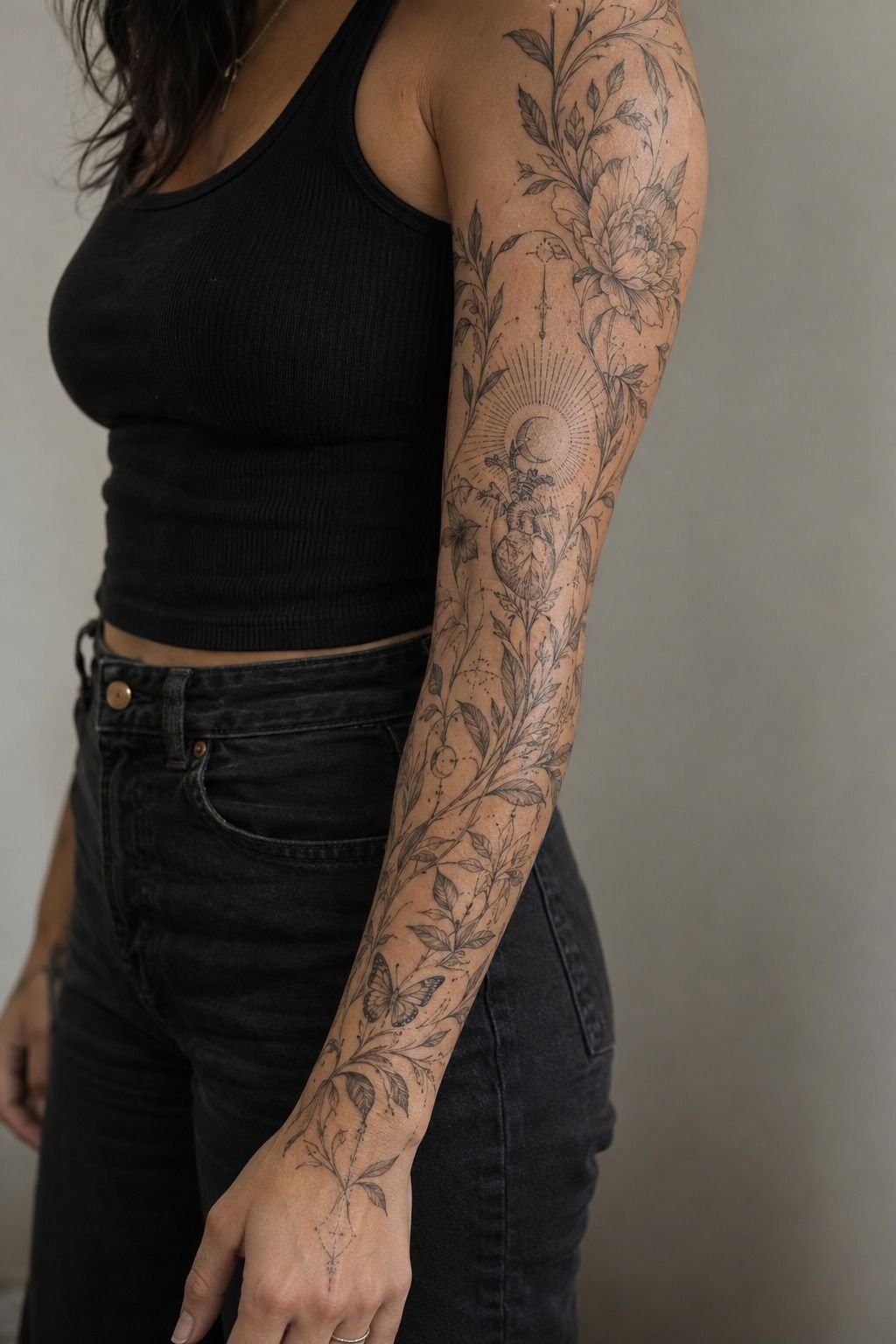
A full sleeve needs a map before it needs more drawings. On the olive forearm reference, the forearm sleeve map follows the anatomy instead of stacking separate stickers.
I call this the Spiral-Pillar Method: one main figure travels along the limb, while secondary marks turn around it. You’ll want to print that map and rotate it before you approve any final stencil.
Start with the anchor motif, usually the face, helmet, or blade that carries the most visual weight. Place it where your eye naturally lands, then connect the wrist and elbow with smaller decisions.
Don’t begin with filler. If the main image has no direction, adding waves or smoke won’t give it one.
An Oni Back Tattoo would need a much larger movement plan, but the same rule works on your forearm. Keep one negative-space channel open from the wrist toward the elbow, and let the oni tattoo guide help you compare how masks, weapons, and armor share attention. You’re designing a sequence, not twelve isolated icons.
But don’t force every favorite reference into the sleeve. One daring face, one weapon, and a controlled set of supporting marks will look more polished than a crowded collection. A blackwork filler should solve a real gap in your composition, not exist because the skin feels unfinished.
10Keep Delicate Details Readable During Healing
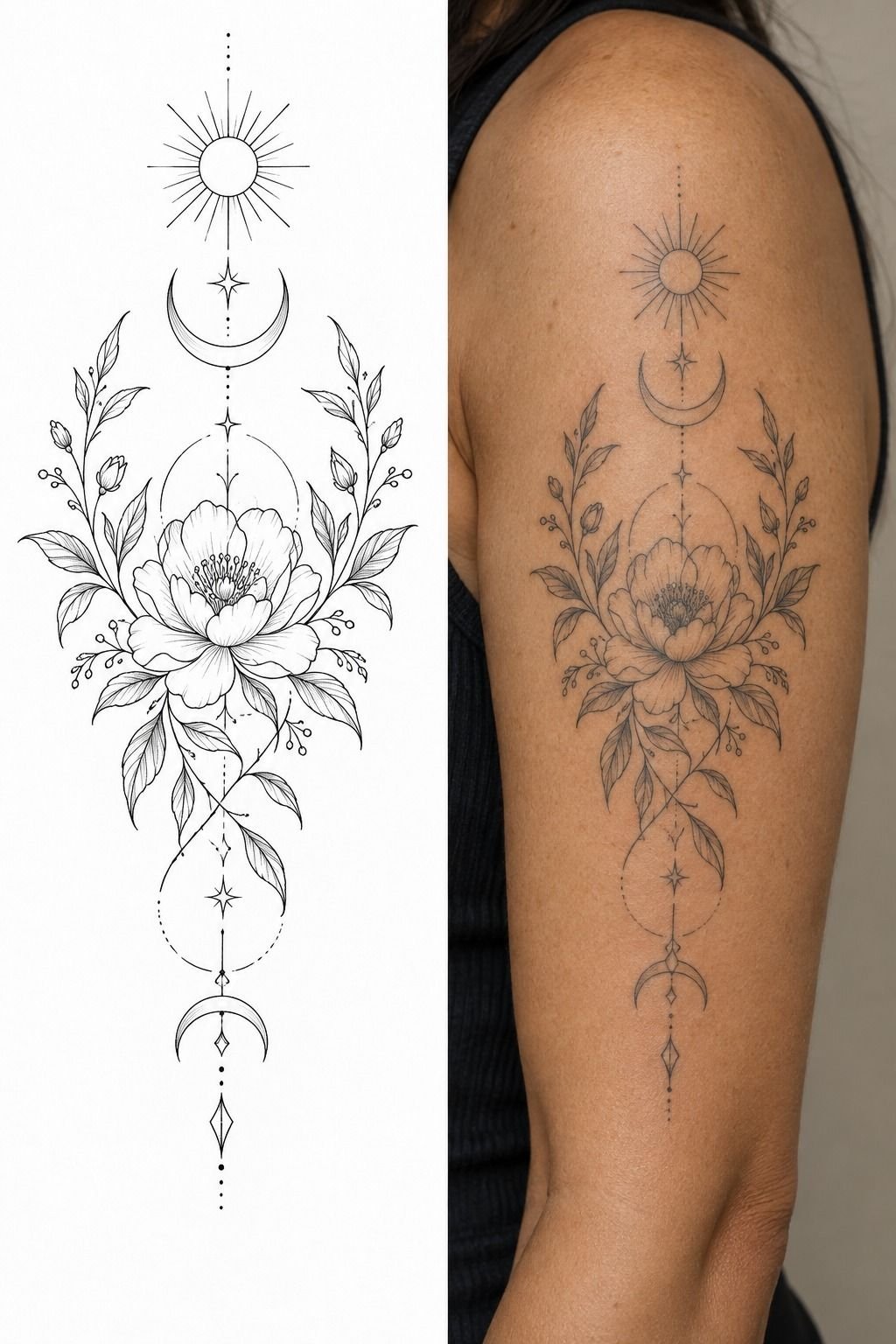
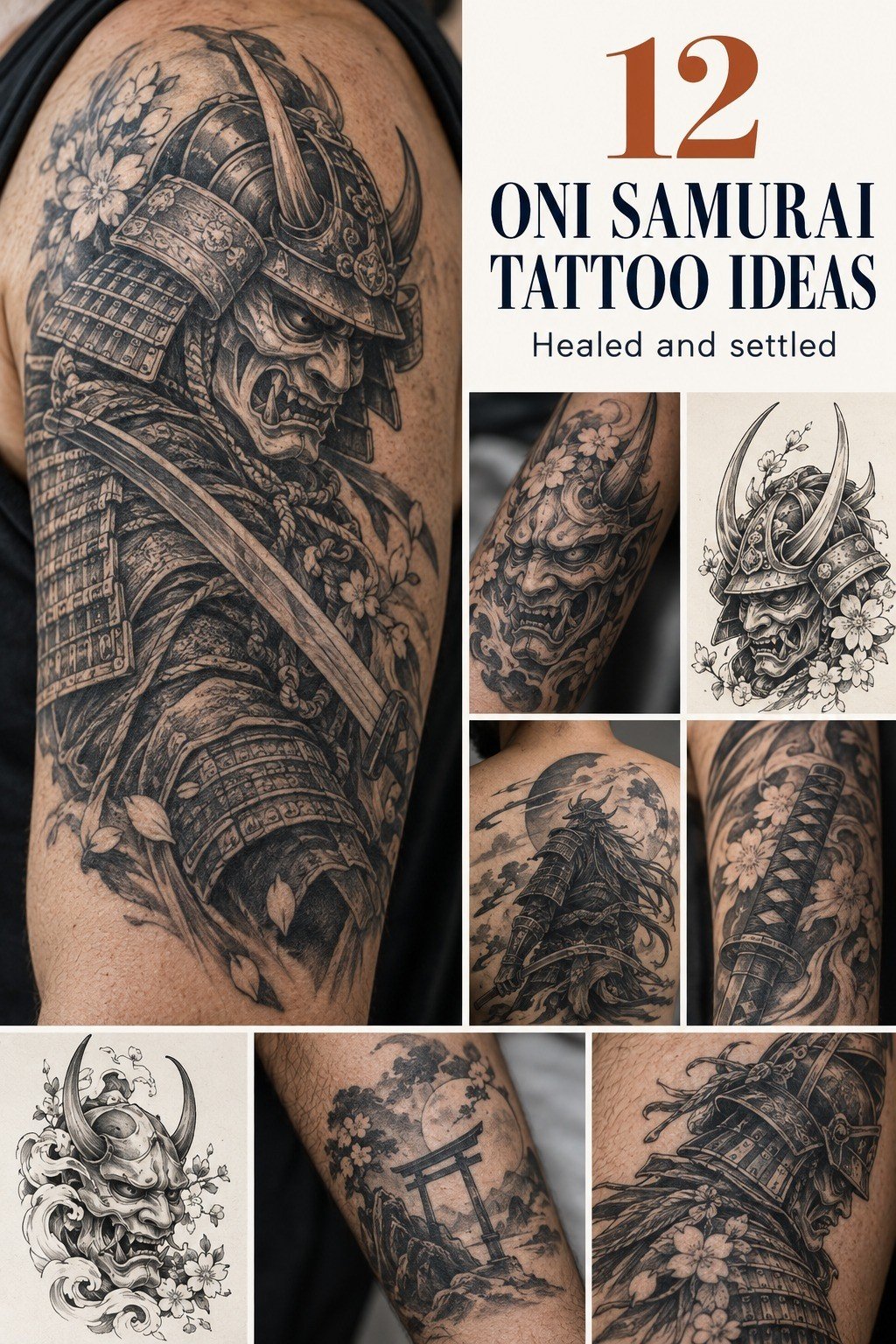
The split reference gives you the comparison most people skip: the left side shows a clean stencil or illustration, while the right side shows the healed design.
11Match Vibrant Colors To Oni Features
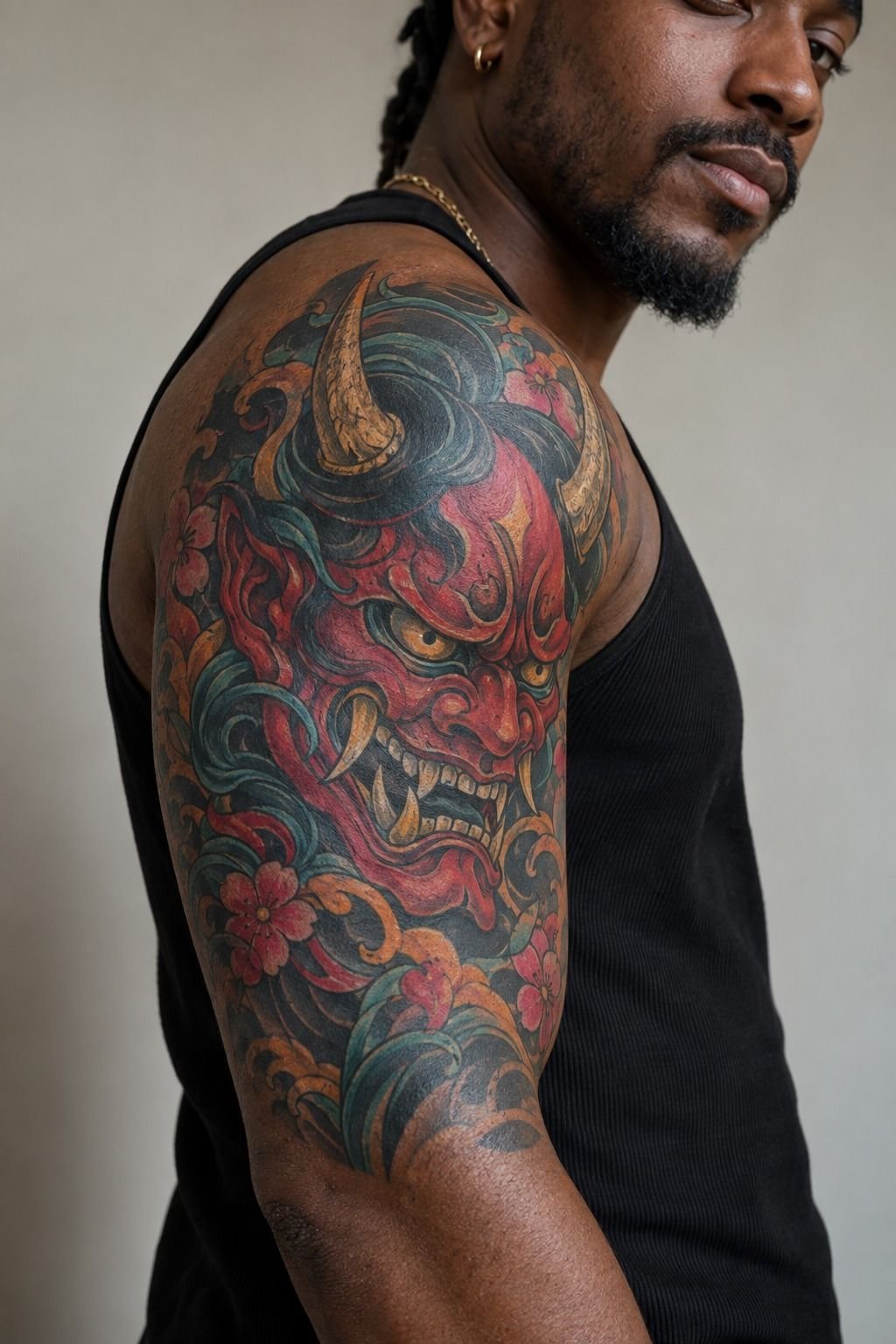
Color should sharpen the Oni’s features, not cover every line. On the deep brown upper-arm reference, a small field of burnt vermilion gives the mask a vibrant center while the black structure stays visible. If you’re choosing color for warm undertones, ask your artist to show healed examples on similar skin rather than trusting a fresh swatch.
Use one main accent and one supporting note. Ochre ink can warm a helmet detail, while a controlled red can pull attention to the eyes, mouth, or cord.
You won’t need five colors to make the design feel daring. Too many saturated sections can flatten the expression, especially when the face already has heavy black marks.
I wouldn’t put bright color in every armor plate. Let the solid black base carry the shadow, then use color where you want the viewer to look first. The oni mask tattoo meaning guide can help you decide whether the color supports protection, anger, or transformation, while your artist decides what will heal well.
Aftercare still matters for colored ink, especially when the upper arm sees regular sun. Use sensible UV protection after the tattoo has healed, and don’t treat fading as something color alone can solve. I’d rather see one stylish flash of red placed with restraint than a washed-out face that once had too many competing accents.
A controlled flash of red can make the mask feel fierce without swallowing the face!
12Personalize Sacred Elements With Meaning
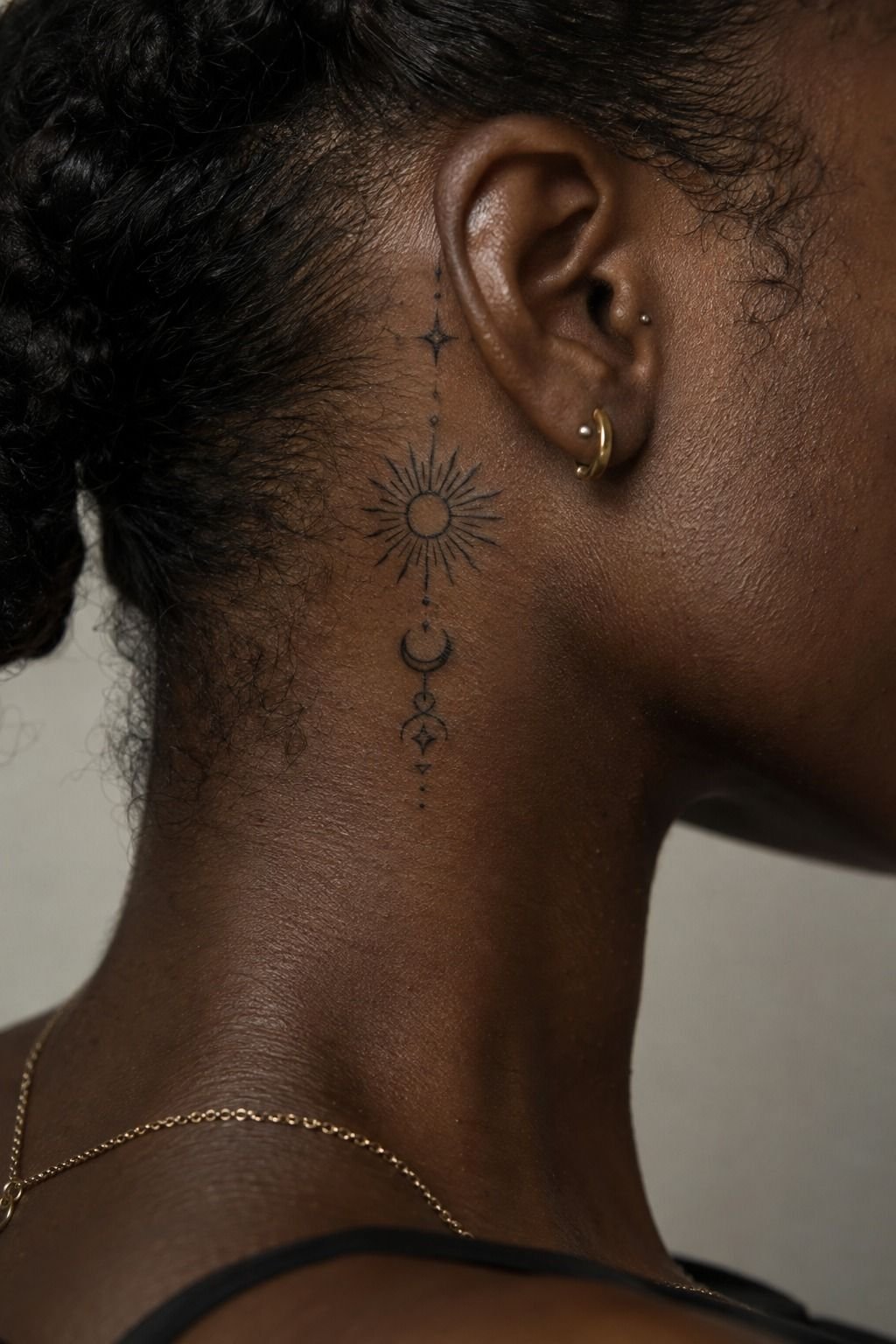
A sacred element can give the behind-the-ear design a quieter center.
The Rule I Use Before Anyone Books
I’ve learned to judge tattoo designs twice, once while they’re fresh and again after the skin has settled. I used to think single-needle linework was the whole point of a refined Oni, but fresh ink flatters tiny detail. Your decision should survive the quiet stage, when the surface has healed and the design has to carry its own structure.
I’ve seen a simple profile outlast a busier composition every time.
The rule I use now is simple: make the silhouette earn the detail. If your Oni reads cleanly before anyone notices the kanji or armor, you’re building in the right order.
I went back and forth on fine-line versus heavier blackwork, but I’d choose stronger accents near joints and lighter marks in protected areas. That’s a small decision with a long payoff!
I also ask artists for a healed portfolio, not only close-ups taken immediately after a session. You can’t judge spacing, line spread, or color settling from a fresh photograph. Look for work photographed in ordinary daylight, then ask how the artist adjusts designs for your skin, your movement, and the placement you chose.
The cultural part matters just as much as the drawing. I don’t want a symbol copied because it looks mysterious; I want to know why it belongs beside the Oni.
A Japanese reference book or a careful language source can keep your kanji and sacred elements respectful. Your personal meaning can be intense without pretending every symbol means the same thing.
Finally, I treat aftercare as part of the design rather than an afterthought. UV protection won’t freeze a tattoo in time, but it can help you protect the clarity you’ve paid for once the skin is fully healed. If you’re patient with the healing stage, your bold choices have a better chance of remaining readable, personal, and empowering for years.
What People Always Want to Know
How much does an Oni Samurai Tattoo usually cost?
A small or medium Oni Samurai Tattoo commonly falls around $100-$300 in the US, though the shop minimum may be about $50-$100 and hourly rates often run about $100-$250. Your artist, region, placement, size, and detail level will change the quote.
Are Oni Samurai Tattoos a good idea for a first tattoo?
Yes, especially if you choose a tolerable placement and a readable design. An forearm placement can give you clear lines, manageable visibility, and enough space for the subject. You’ll still want an artist with healed linework, because your first tattoo deserves careful planning.
How do I choose a tattoo artist for an Oni Samurai Tattoo?
Review the artist’s healed portfolio for clean linework, strong silhouettes, and consistent hygiene practices. You should also look for experience with Japanese-inspired imagery, then ask direct questions about placement, needle choices, aftercare, and how the artist adapts designs to your skin.
How much do Oni Samurai Tattoos hurt?
Pain varies by person and placement. Rib placement, feet, hands, and sternum are often more painful because they have less padding, while the forearm, thigh, and shoulder are usually more tolerable. Your session length and sensitivity will matter too.
How long does an Oni Samurai Tattoo take to heal?
The surface usually settles in about 2-3 weeks, while complete healing can take about 2-3 months. Use a fragrance-free cleanser, moisturize as directed, avoid picking, and stay away from direct sun and swimming while the skin is healing.
What’s the best placement for an Oni Samurai Tattoo?
The forearm, thigh, and upper arm are strong choices because they offer readable skin and manageable contours. A forearm silhouette gives you visibility and useful length, while behind-the-ear placement feels more discreet. Your artist should check movement and long-term line spacing before booking.
Where I’d Start First
If I had to pick one step, I’d start with the pose. A clean silhouette survives healing, movement, and changing taste better than crowded armor ever will. Pin that pose for later, then ask an artist to compare it with a healed reference before you book.