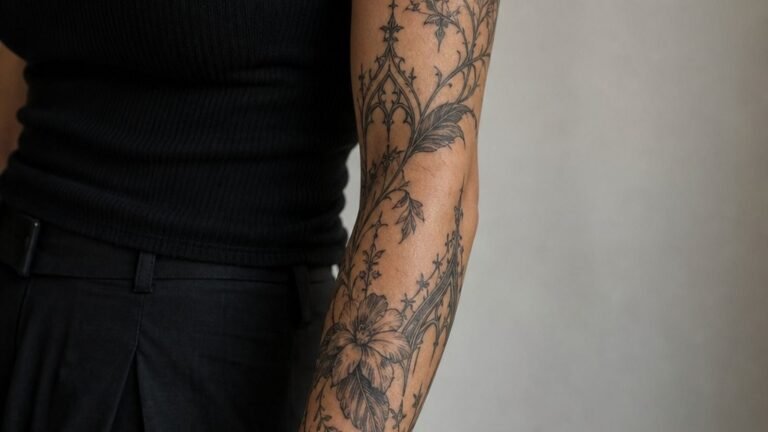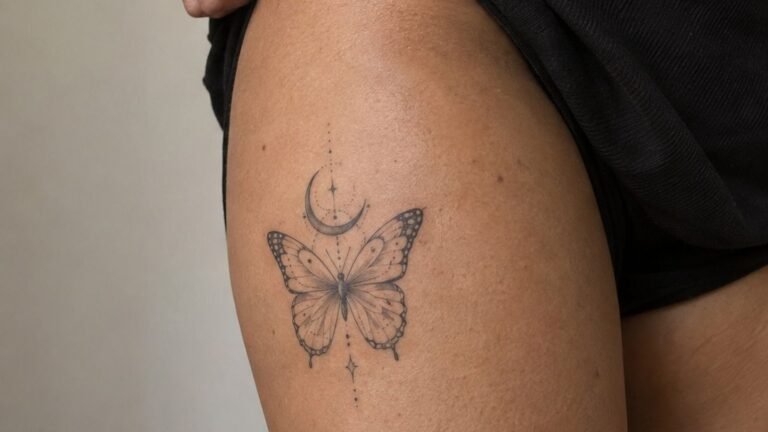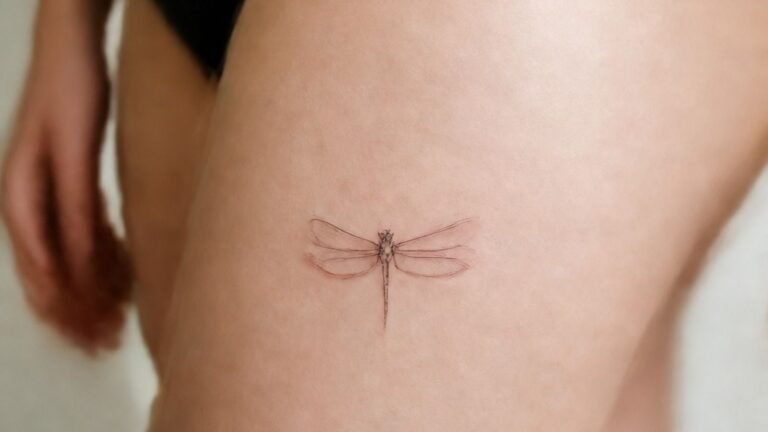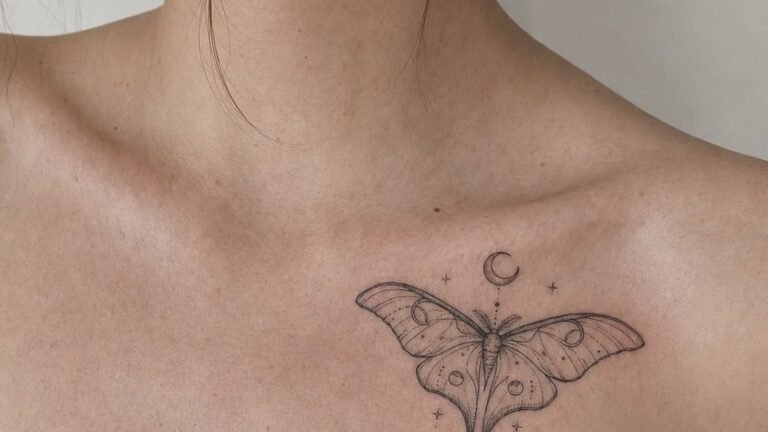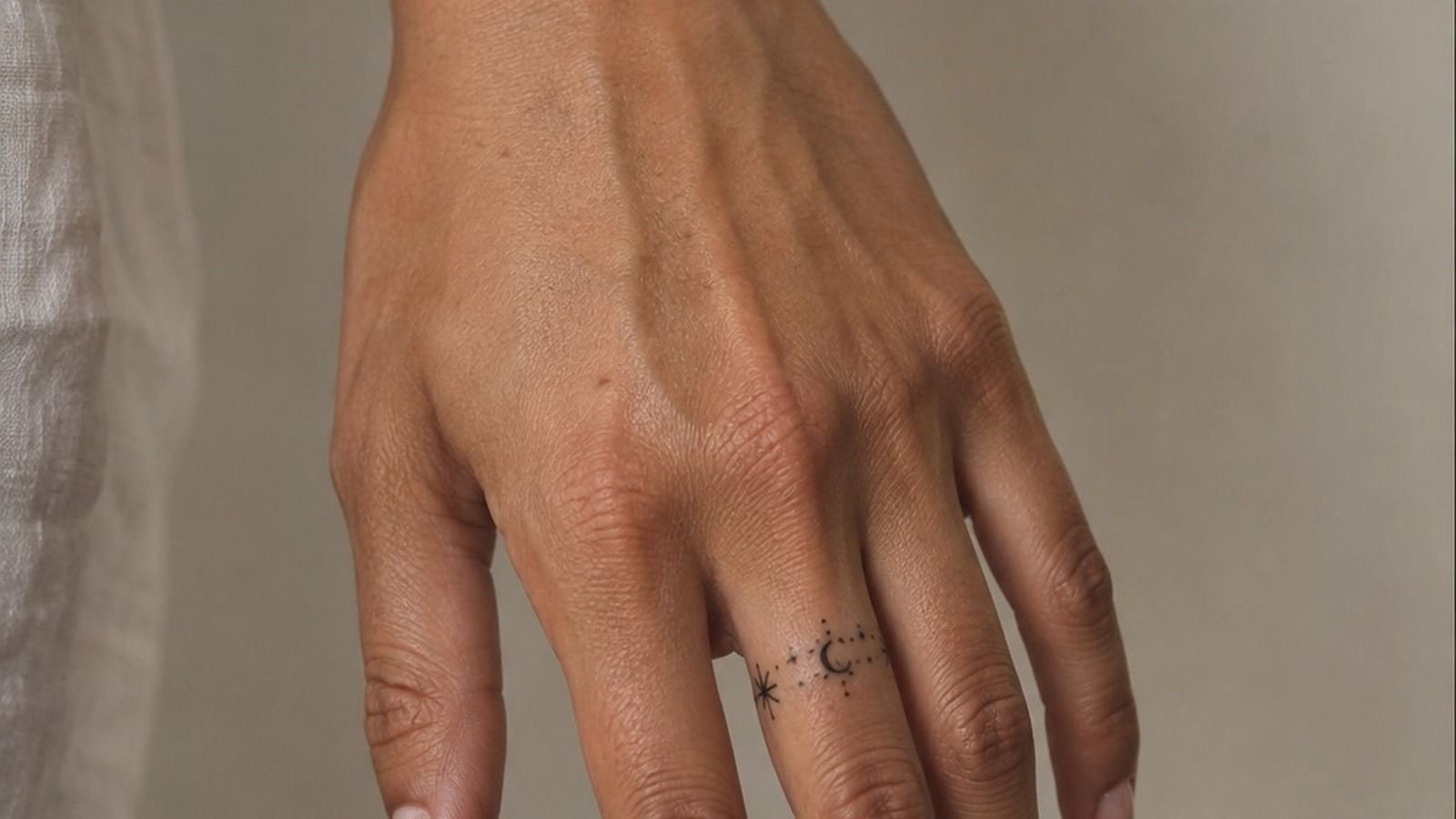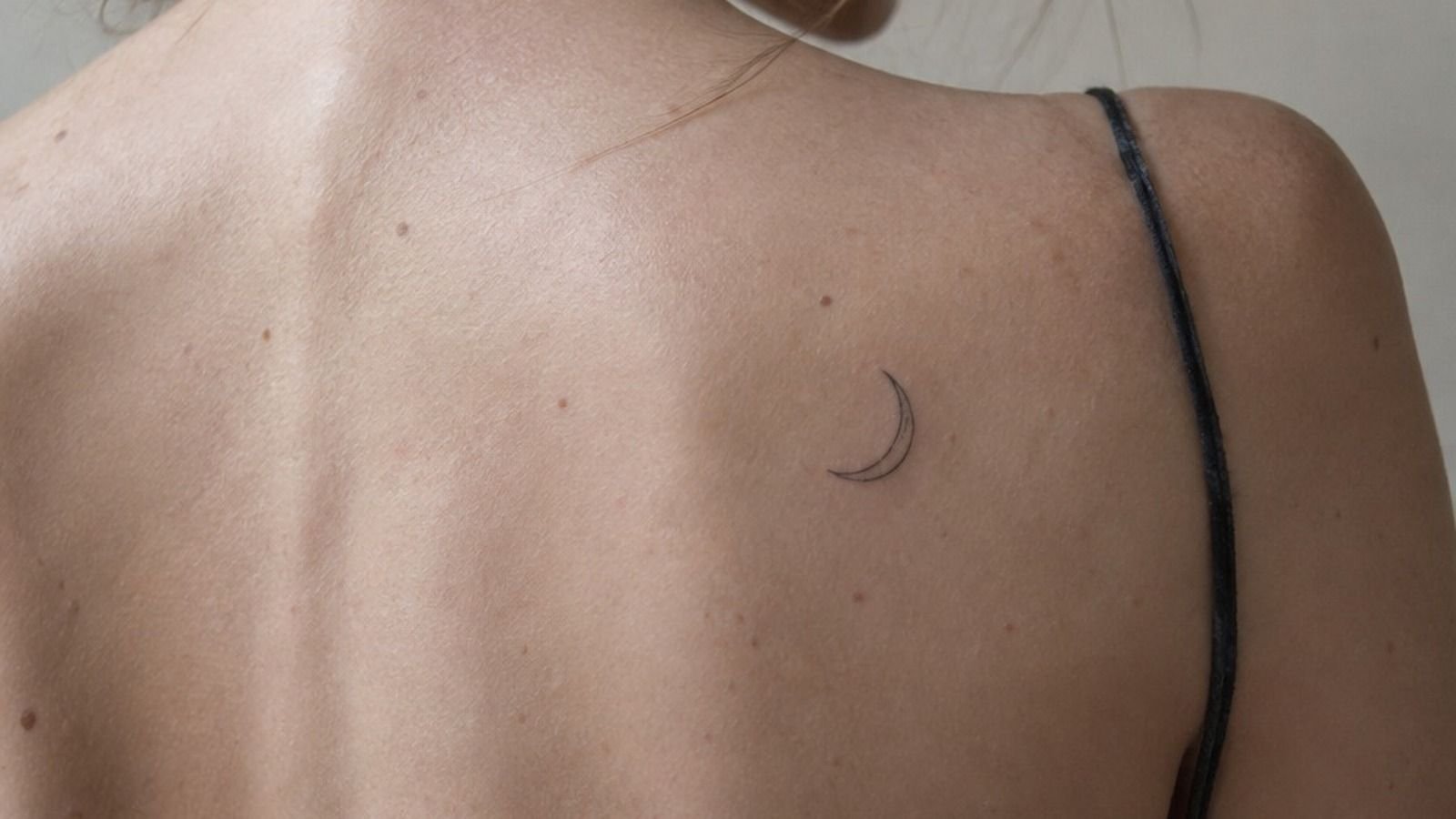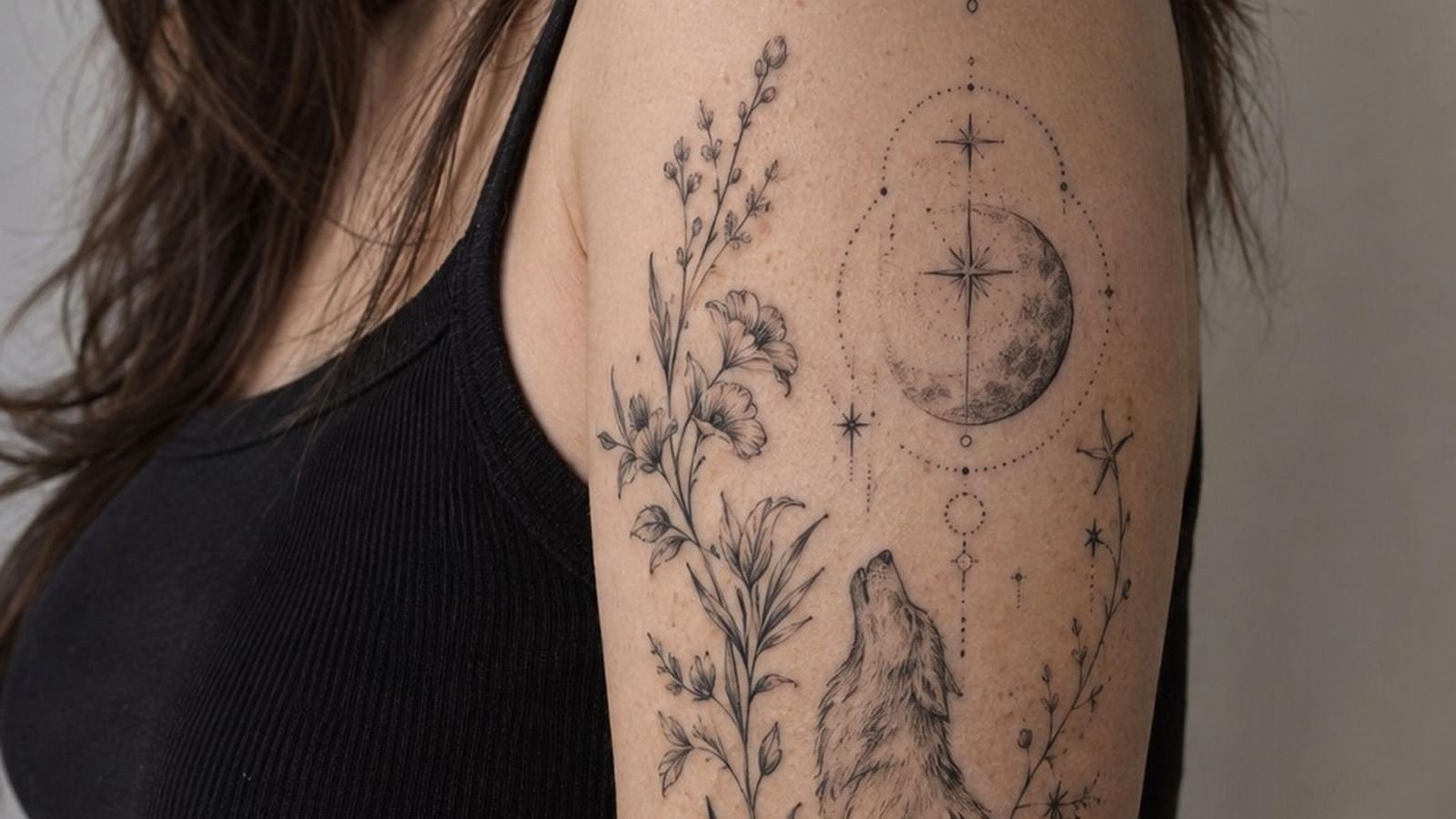
Tattoo design drawings unique helped me stop scrolling and choose ink I’d still recognize as mine years later. I wanted meaning without a predictable symbol, so I brought rough sketches to an artist and rebuilt them around my skin, movement, and scar tissue. The result felt personal, crisp, and worth the wait.
Here’s what it looked like before:
Before the appointment, I had a patch of blank skin I’d been saving for the right idea. It wasn’t dramatic. It was simply untouched, pale, and strangely intimidating whenever I looked at it.
My notes held a fish, a moon, three tiny stars, and a curved line borrowed from an old journal sketch. None of them worked alone. I kept rejecting polished flash because it felt stylish but distant, while the rough drawings felt raw enough to mean something.
I also had no finished size, no final placement, and no clear answer about pain. That uncertainty mattered. You’re choosing something permanent, so your first draft should be allowed to look awkward before it becomes meaningful.
- I Sketched Three Unique Tattoo Concepts
- I Turned a Fish Into Fine Linework
- I Mapped Celestial Symbols Across My Forearm
- I Combined Tattoo Art Drawings With Meaning
- I Chose An Intricate Snake And Moon
- I Tested Bold Linework Against My Skin
- I Refined The Design Around My Scar
- I Selected A Striking Shoulder Placement
- I Prepared The Stencil For Crisp Details
- I Managed Pain Through The Long Session
- I Protected The Unique Design While Healing
1I Sketched Three Unique Tattoo Concepts
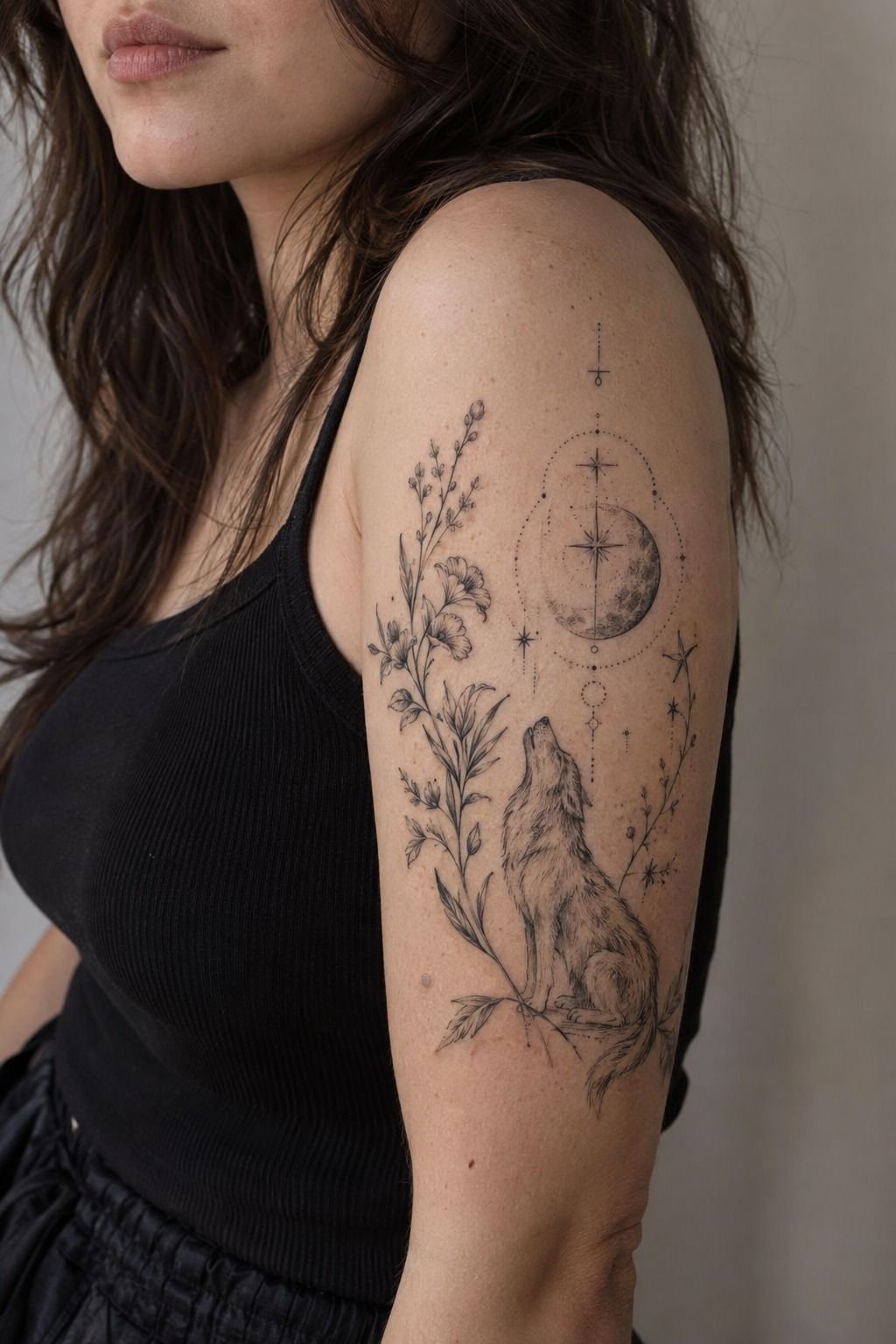
I started with three concepts on separate sheets, then held each one against my upper arm under natural light. The photo shows a finished sketch tattoo on fair, cool-pink skin, but the real decision happened earlier, when I noticed which outline still felt expressive after I stopped explaining it.
The first drawing was a small wave, the second was a thorned stem, and the third combined a fish with a crescent. I marked the graphite sketch with arrows showing where the line should stay open. That simple step made the final design less ornate and more readable.
I chose the fish and crescent because the pairing felt symbolic without becoming obvious. You don’t need every personal detail translated into ink. Sometimes one flowing shape carries more emotional weight than five tiny references.
The artist cleaned the outline with a fine-line stencil, and I watched the composition become sharper without losing its delicate quality. I’d skip any drawing that needs a paragraph of explanation after you see it. Start with unique tattoo ideas and keep only the concept you’d recognize from across the room.
2I Turned a Fish Into Fine Linework
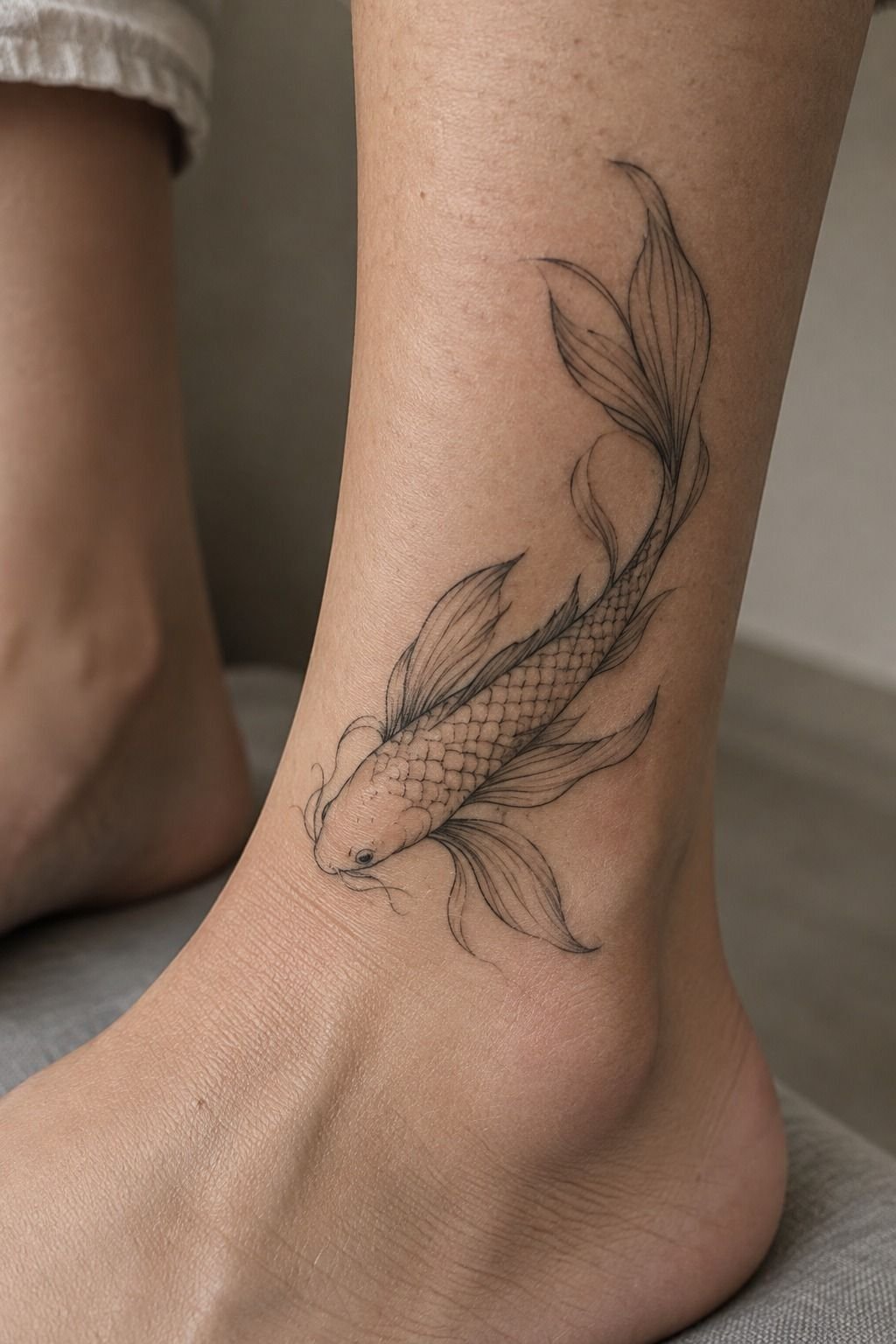
The ankle photo shows a close macro view of a fine-line fish on medium warm-ivory skin.
3I Mapped Celestial Symbols Across My Forearm
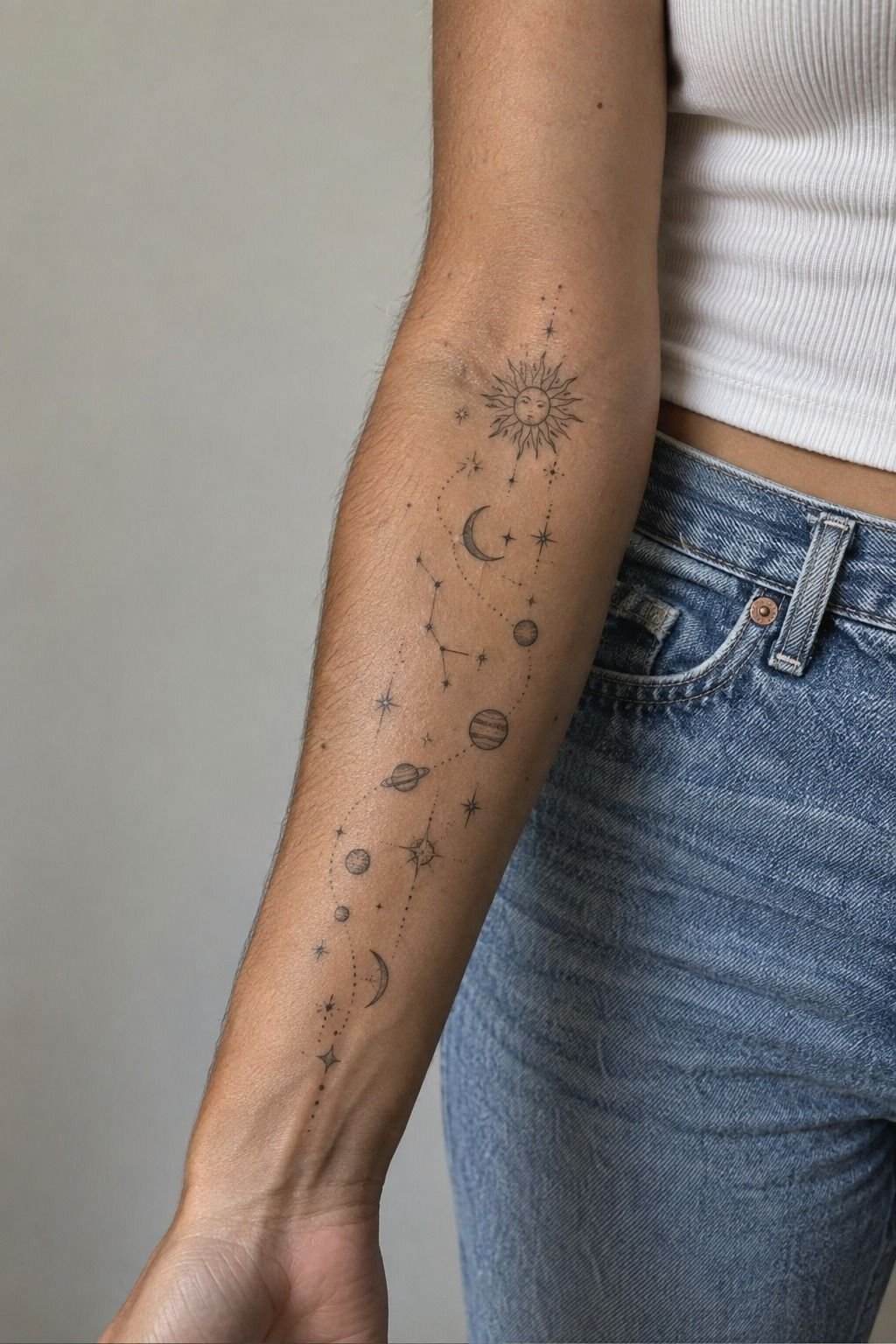
For the forearm design, I placed a small moon near the wrist, two stars above it, and a narrow orbit line that followed the arm’s natural length. The healed photo shows medium olive skin in daylight, and that lived-in quality was important to me.
I used black tattoo ink with open skin between each celestial mark. The result felt ethereal rather than crowded, and the spacing gave the symbols room to breathe when my wrist moved. You’ll want to check the design while your arm is relaxed and while it’s bent.
I made one early mistake: I kept adding stars because the page looked empty. On skin, that empty space became the most powerful part. The final arrangement was more elegant because I removed three marks instead of adding another.
And if you’re choosing a celestial tattoo, ask your artist to photograph healed linework, not only fresh work. Fresh ink can look bold and vibrant before the skin settles. My unique sun tattoo ideas helped me compare symbols without losing the minimal feeling I wanted.
4I Combined Tattoo Art Drawings With Meaning
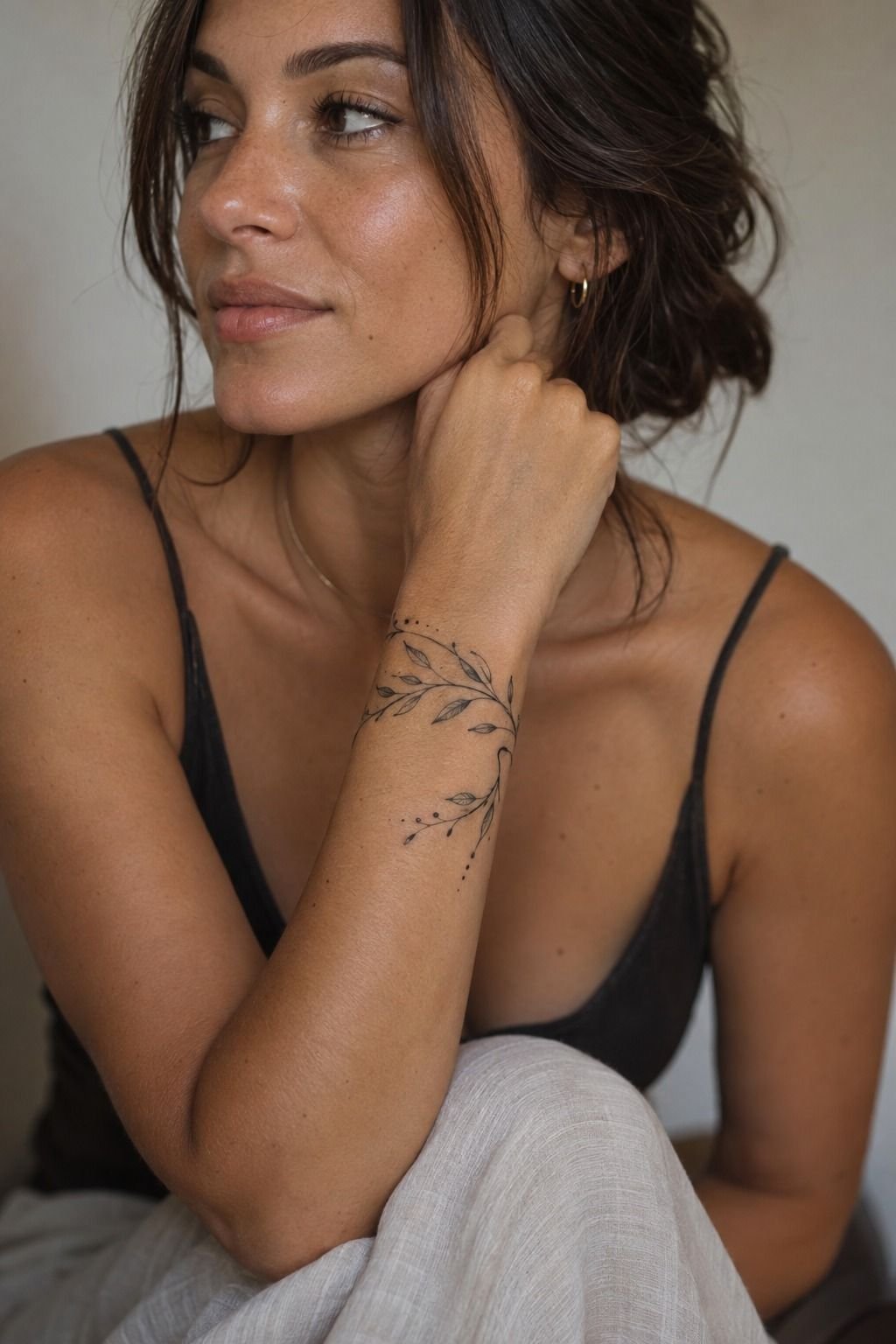
The wrist design needed a meaning I could carry without announcing it.
5I Chose An Intricate Snake And Moon
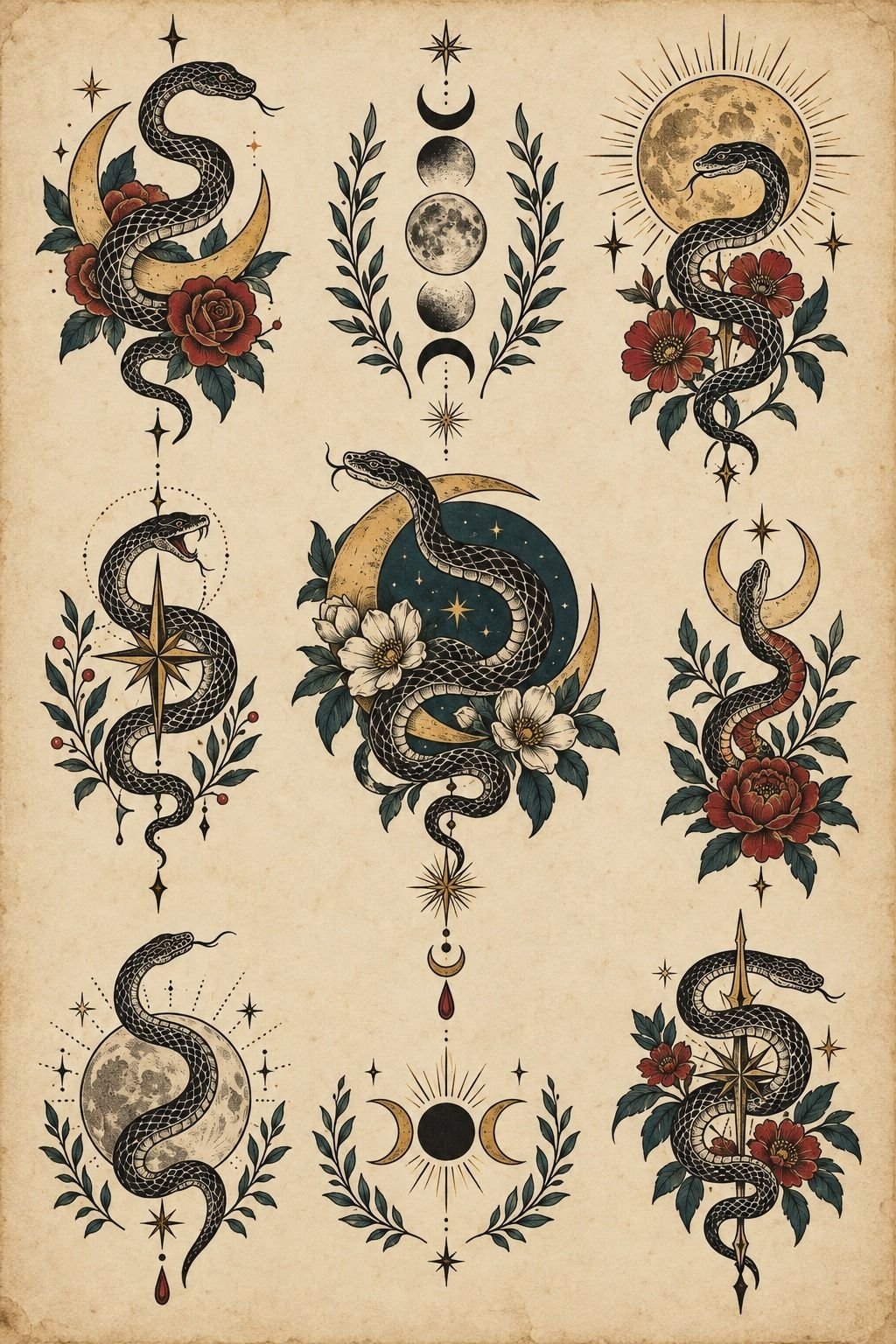
The snake and moon began as a page of tattoo sketches unique drawings, spread across aged off-white paper in the flash-sheet photo. I liked the fierce posture of the snake, but I didn’t want a heavy traditional piece with dense black packing.
I selected the aged off-white flash sheet because the paper made every variation feel tangible. One snake curled too tightly, another looked playful, and the third had the right balance of sharp eyes and flowing motion. You’re allowed to choose the drawing that makes you pause, not the one that photographs most dramatically.
The moon became a thin crescent above the snake’s head. That small change made the composition more symbolic and less literal. I asked the artist to keep the scales selective, since too many tiny marks would blur as the tattoo ages.
This was the most intricate option, but it still felt personal because the gesture came from my sketch. If you like the subject but want stronger weight, compare it with unique American traditional tattoo designs, then decide whether bold blackwork or delicate linework suits your skin and patience.
6I Tested Bold Linework Against My Skin
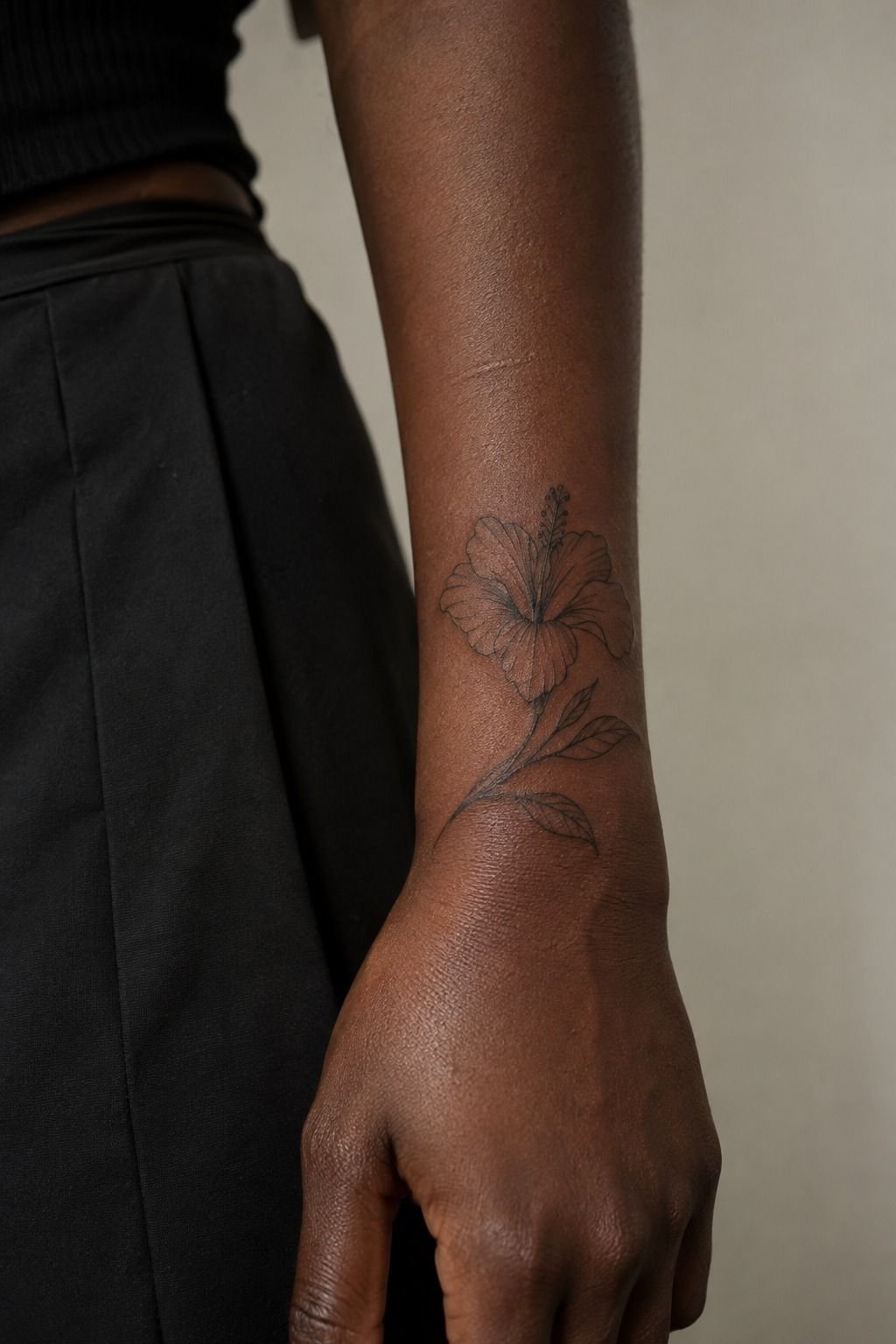
I assumed bold linework would overpower deep ebony skin, and I was wrong. The wrist photo shows a finished fine-line tattoo with enough contrast to read clearly, while the surrounding skin keeps the image grounded and expressive.
The artist used black linework ink with deliberate spacing instead of outlining every interior shape. That choice made the design feel polished and powerful without turning it into a solid block. You’ll get better visual clarity when the darkest marks have a job.
And I changed the design after seeing the stencil on my wrist. The lower curve felt too thin against the natural fold, so we widened it slightly and removed a decorative notch. That small edit made the final result more graceful.
I’d never choose line weight from a screen alone. Skin tone, placement, and the artist’s healed portfolio matter more than a saved image. You can browse watercolor tattoo design for color ideas, but ask yourself whether bold black would give your concept a longer visual life.
7I Refined The Design Around My Scar
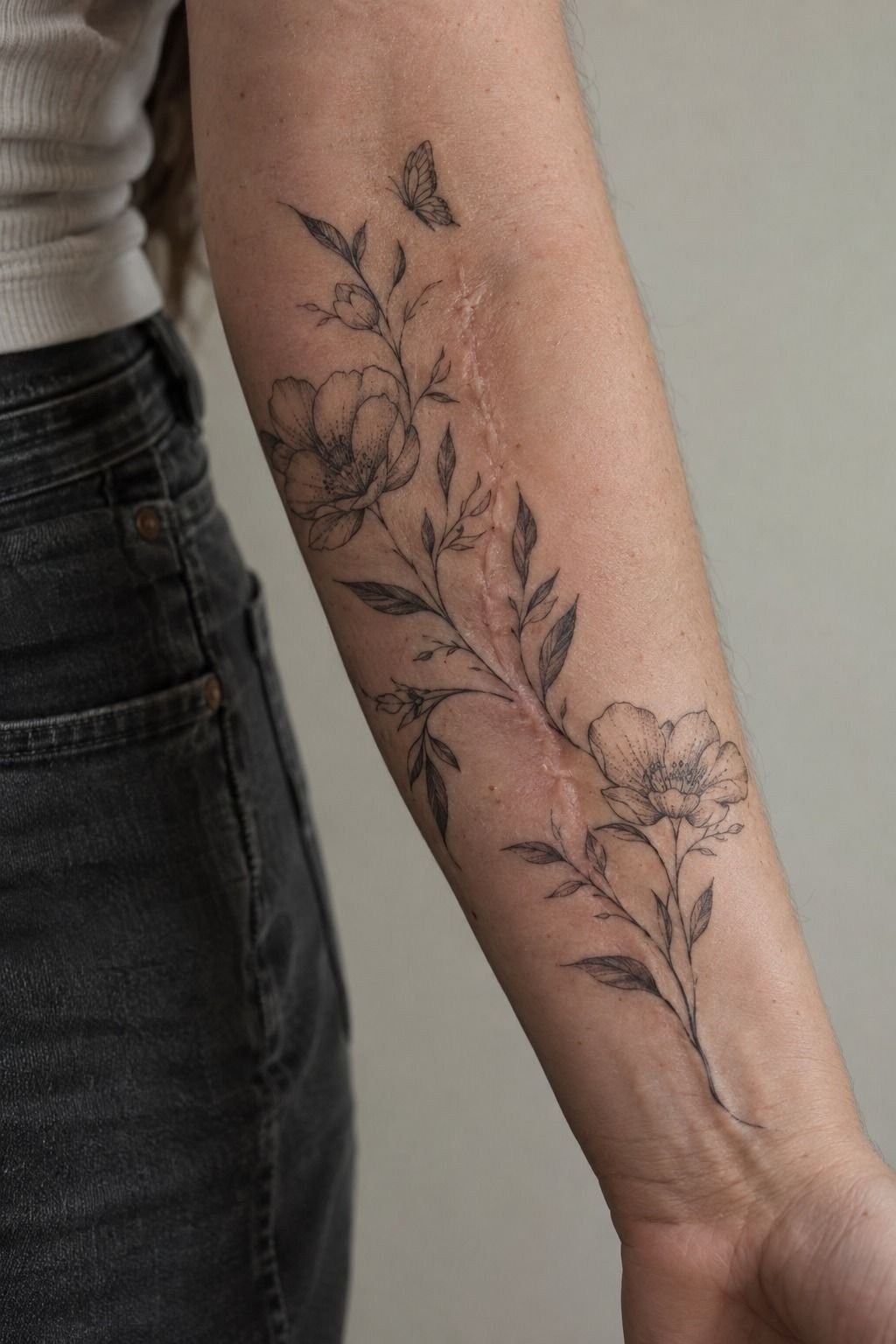
My scar changed the design completely. The macro photo shows fine-line ink on fair, cool-pink forearm skin, with the marks moving beside and across the healed area rather than pretending it wasn’t there.
I brought the artist a healed scar map and explained where the texture felt tight. We avoided forcing one straight line through the most uneven section, then used a curved botanical mark to make the interruption look intentional. You should never let a reference image overrule how your skin has healed.
The final result felt raw but controlled. I’d planned an identical pair of lines, yet the asymmetry became the meaningful part. It gave the tattoo a personal edge that no perfect stencil could have supplied.
Ask about healed work if your skin has scars, stretch marks, or uneven texture. Your artist may suggest a slightly larger design or softer spacing. I also compared tattoo outline drawing stencil designs before choosing a drawing that could flex around the scar.
8I Selected A Striking Shoulder Placement
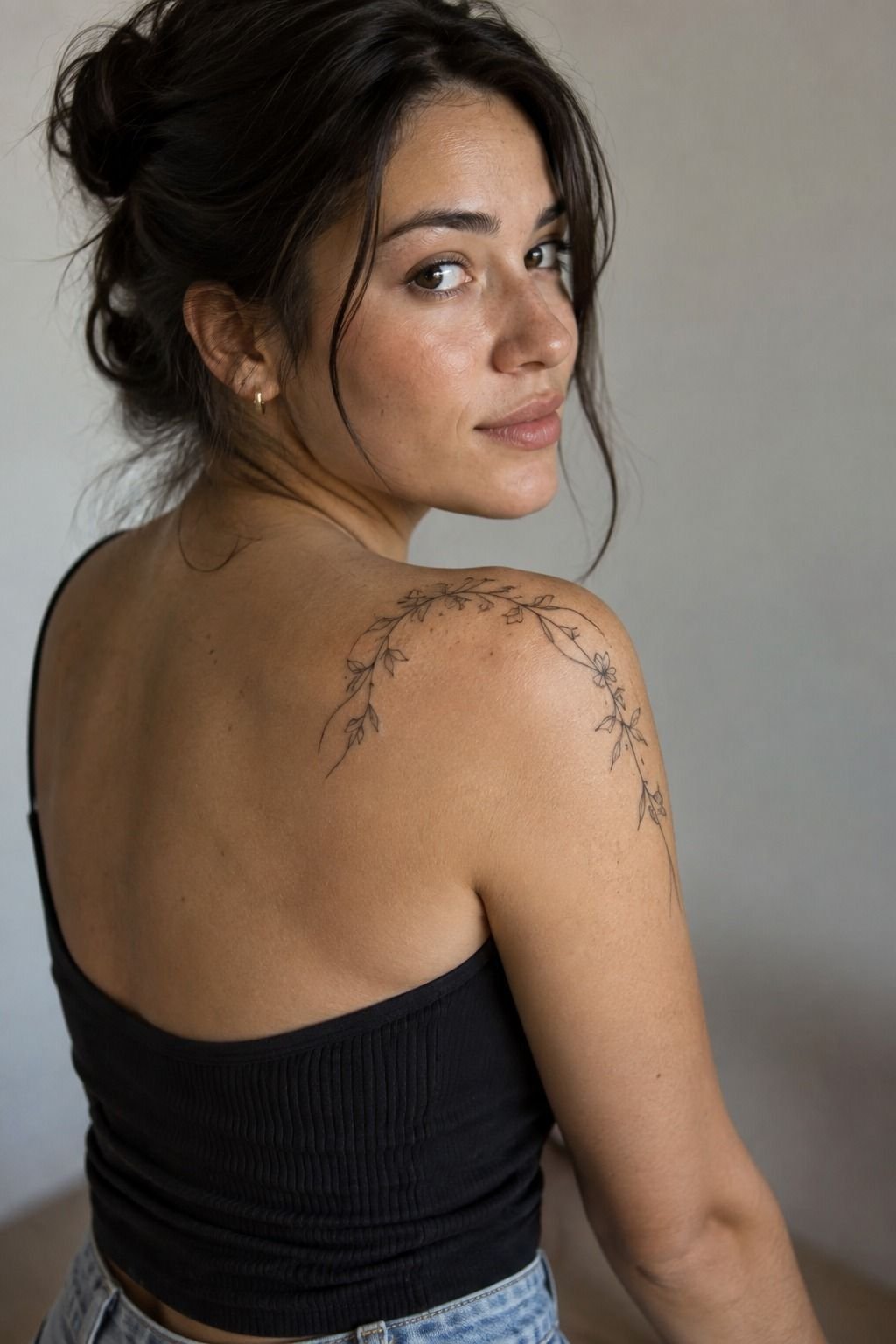
The shoulder placement looked striking in the healed photo because the design follows the curve instead of sitting flat in the center.
9I Prepared The Stencil For Crisp Details
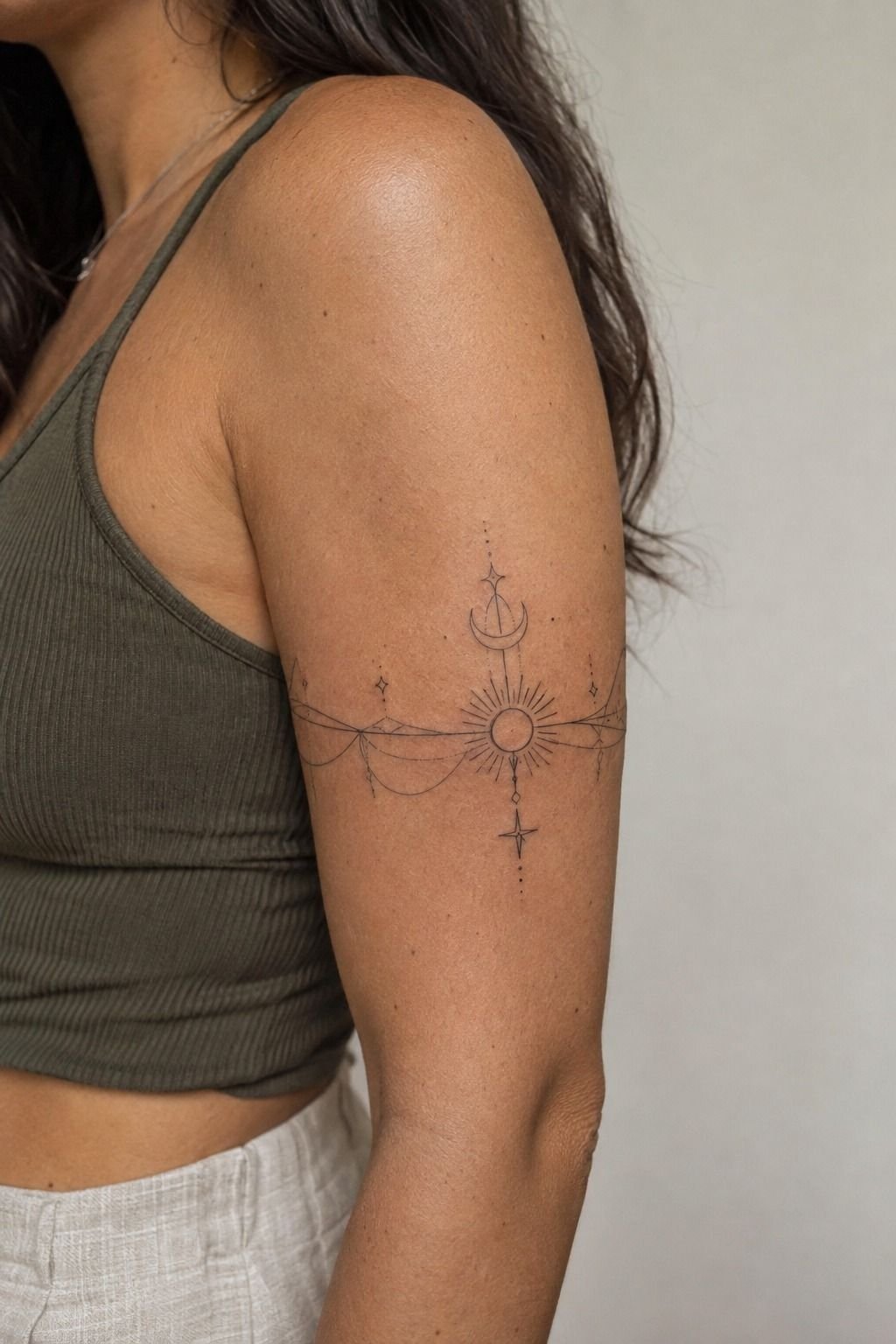
The upper-arm photo shows a fine-line design wrapping around medium olive skin, with an anatomical placement guide explaining how the stencil sits over the arm. That guide changed my opinion about wraparound tattoos.
I used a stencil transfer gel and asked the artist to keep the main symbol facing forward. The smaller marks curved toward the side, so the tattoo didn’t become unreadable whenever my arm turned. You’ll want to check the image from the front, side, and mirror view.
But the stencil was initially too busy. I removed a tiny star and widened the negative space near the elbow, which made the remaining shapes feel more iconic. A crisp tattoo isn’t created by adding every detail you love.
The final design had a sleek rhythm, with enough room for the skin to remain part of the composition. I’d rather see three clear marks than ten crowded ones. For practical stencil references, I returned to tattoo outline drawing stencil design and compared how different artists protect open space.
10I Managed Pain Through The Long Session
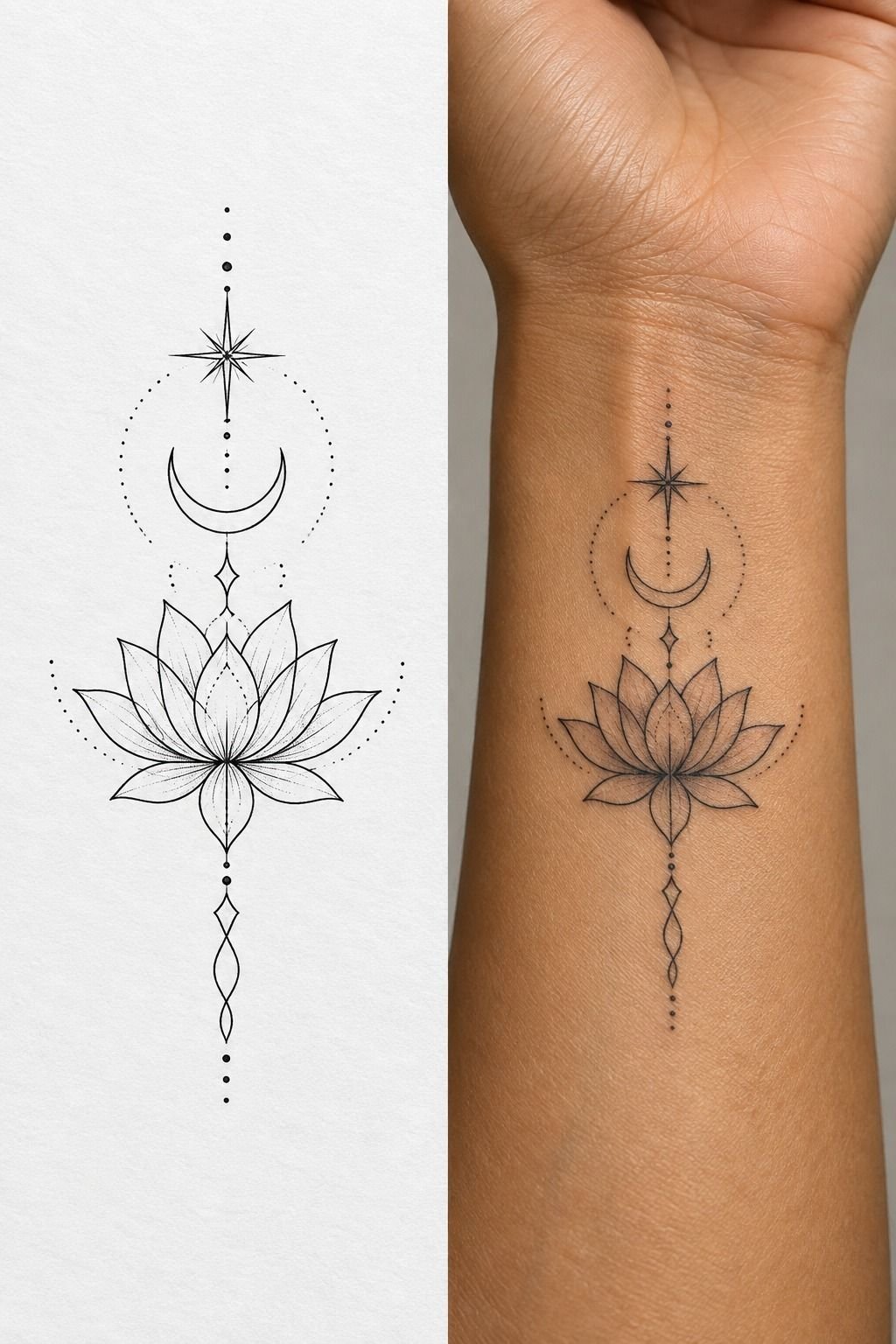
The split image shows the stencil on white paper beside the healed wrist tattoo.
11I Protected The Unique Design While Healing
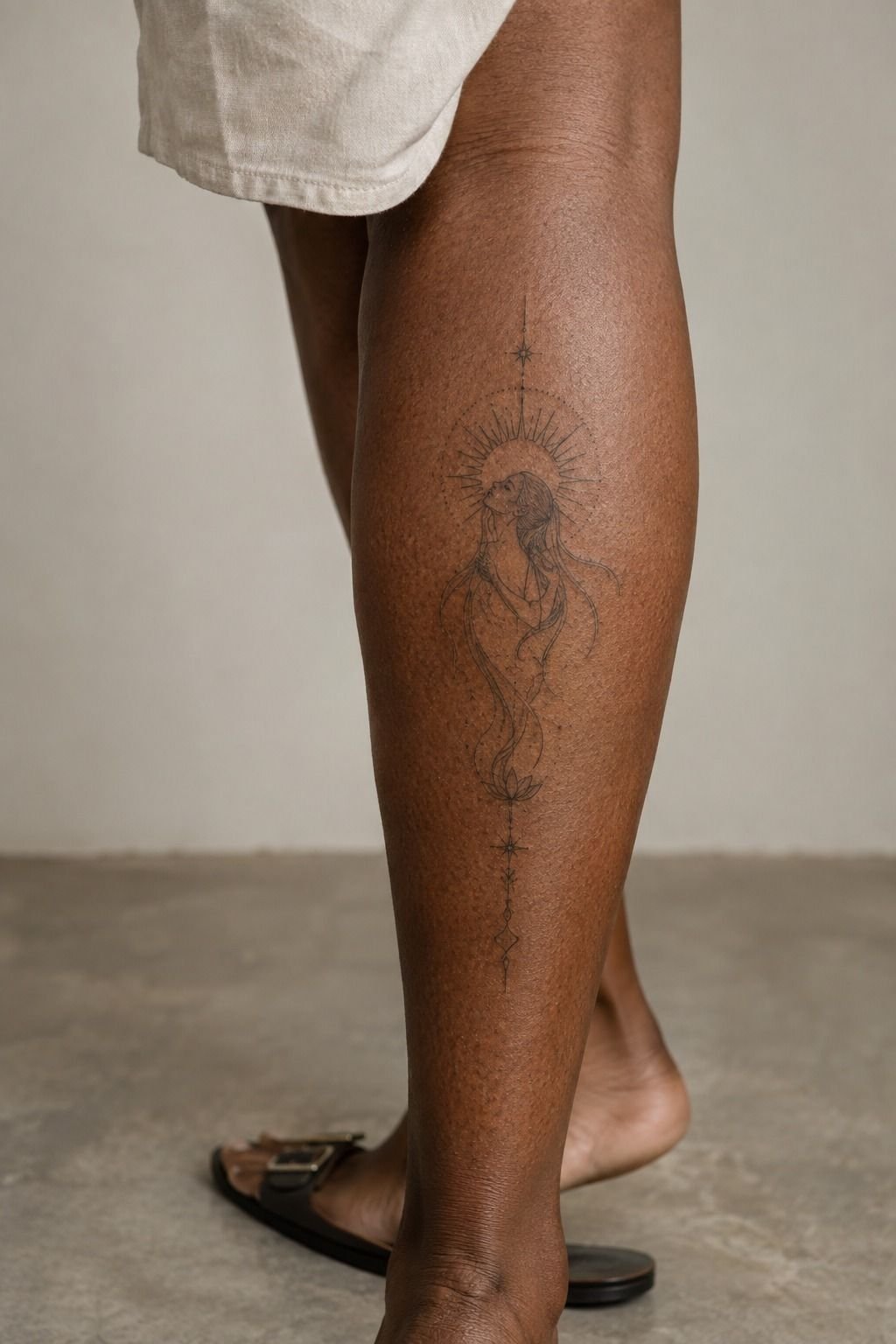
The calf photo shows a finished fine-line tattoo on deep brown skin with a warm undertone. The design reads cleanly because the main outline stays bold enough to hold its shape, while the inner marks remain delicate and expressive.
After the appointment, I washed the fresh tattoo gently with fragrance-free cleanser and applied a thin layer of the recommended moisturizer. I didn’t soak it, scratch it, or expose it to unnecessary sun. You’ll need patience because the surface often heals in about 2 to 3 weeks, while complete healing can take about 2 to 3 months.
The hardest part was leaving the peeling skin alone. It looked imperfect for a few days, and I wanted to judge the result too soon. Your tattoo is still changing during that stage, so wait before deciding whether a line needs adjustment.
Long-term care matters more than the first photograph. UV exposure can fade ink, and very fine lines may widen with age. I saved cool tattoo design drawings for future reference, but I’m protecting this one with sunscreen and realistic expectations.
How much it cost
I planned the budget around a typical US shop minimum and the artist’s hourly rate, not a fantasy number from a social post. A small custom design may begin around $50 to $100, while experienced artists commonly charge about $100 to $250 per hour.
My custom tattoo drawing cost more in time than a simple flash piece because I revised the fish, tested the placement, and removed details that wouldn’t age well. You should ask whether drawing time is included in the appointment price before booking.
I’d spend more on a clean portfolio and careful hygiene than on a larger design. A lower quote isn’t useful if the artist can’t show healed work. For planning, compare your idea with tattoo design website ideas and bring a clear reference folder.
A tattoo can be meaningful at a modest scale, so you don’t need to chase the biggest possible piece. I’d rather choose a crisp three-inch concept from the right artist than rush into a sprawling design that loses its shape.
What I Learned Before I Chose the Needle
I used to think originality meant finding a symbol nobody else had used. That idea sent me into endless scrolling, where every image began to look familiar.
The better question was quieter: what combination of shapes would still feel personal after the trend moved on? My answer came from the fish, moon, and scar, not from one rare object.
I also learned that meaning doesn’t need to be visible to strangers. My favorite part is the small curve near the wrist, because I know why it’s there. You can choose a symbolic detail that only makes sense to you, and that privacy can make the tattoo feel more intimate.
The practical lesson was less romantic. Fine lines need room, contrast, and sensible placement.
I wanted delicate marks everywhere, but I accepted a few stronger lines where the skin folded or moved. That compromise made the tattoo more timeless and readable.
If I could restart, I’d spend less time searching for the most dramatic reference and more time studying healed portfolios. Ask your artist what will change over the years. A polished fresh photo is useful, but honest advice about aging, sun, and spacing is what protects your choice.
And I’d keep the first sketch messy. The rough page gave the artist something expressive to refine, while a finished reference would have made me copy someone else’s voice. Your tattoo should feel bold enough to claim and understated enough to remain yours.
The Questions Worth Answering First
How much does a Tattoo Design Drawings Unique usually cost?
A custom tattoo usually costs about $100 to $300 for a small or medium design, though a shop minimum may be around $50 to $100 and hourly rates may run about $100 to $250. Your artist, region, detail, and placement will determine the final quote. A clear estimate protects your budget.
Are Tattoo Design Drawings Unique a good idea for a first tattoo?
Yes, unique tattoo drawings can work well for a first piece when the design stays readable and the placement feels tolerable. Forearms, thighs, and shoulders are often gentler choices than ribs, feet, or hands. A personal symbol helps you commit without copying a trend.
How do I choose a tattoo artist for Tattoo Design Drawings Unique?
Choose an artist with clean linework, healed photographs, strong hygiene practices, and a portfolio that matches your idea. Ask how they handle revisions and whether they’ve worked with your placement. A healed portfolio tells you more than a perfect fresh photo.
How much do a Tattoo Design Drawings Unique hurt?
Pain depends on your placement and sensitivity. Ribs, feet, hands, and sternum are often more painful, while forearms, thighs, and shoulders are commonly more tolerable.
Take breaks if you need them. Good pacing can make a long session feel manageable.
How long does a Tattoo Design Drawings Unique take to heal?
The surface usually heals in about 2 to 3 weeks, while complete healing can take about 2 to 3 months. Wash gently, moisturize as directed, and avoid pools and strong sun during early healing. Consistent aftercare protects crisp linework.
What’s the best placement for Tattoo Design Drawings Unique?
The outer forearm and shoulder are strong choices because they offer visibility, workable skin, and usually more tolerable sessions. Your artist should check how the design moves when your arm bends. Good placement helps fine lines stay readable longer.
Where I’d Start First
If I had to pick one, I’d start with the crescent fish on the outer forearm. The open spacing gives fine lines room to age, and the curve still reads when your arm moves. Save the idea, show your artist, and let the final sketch become yours.