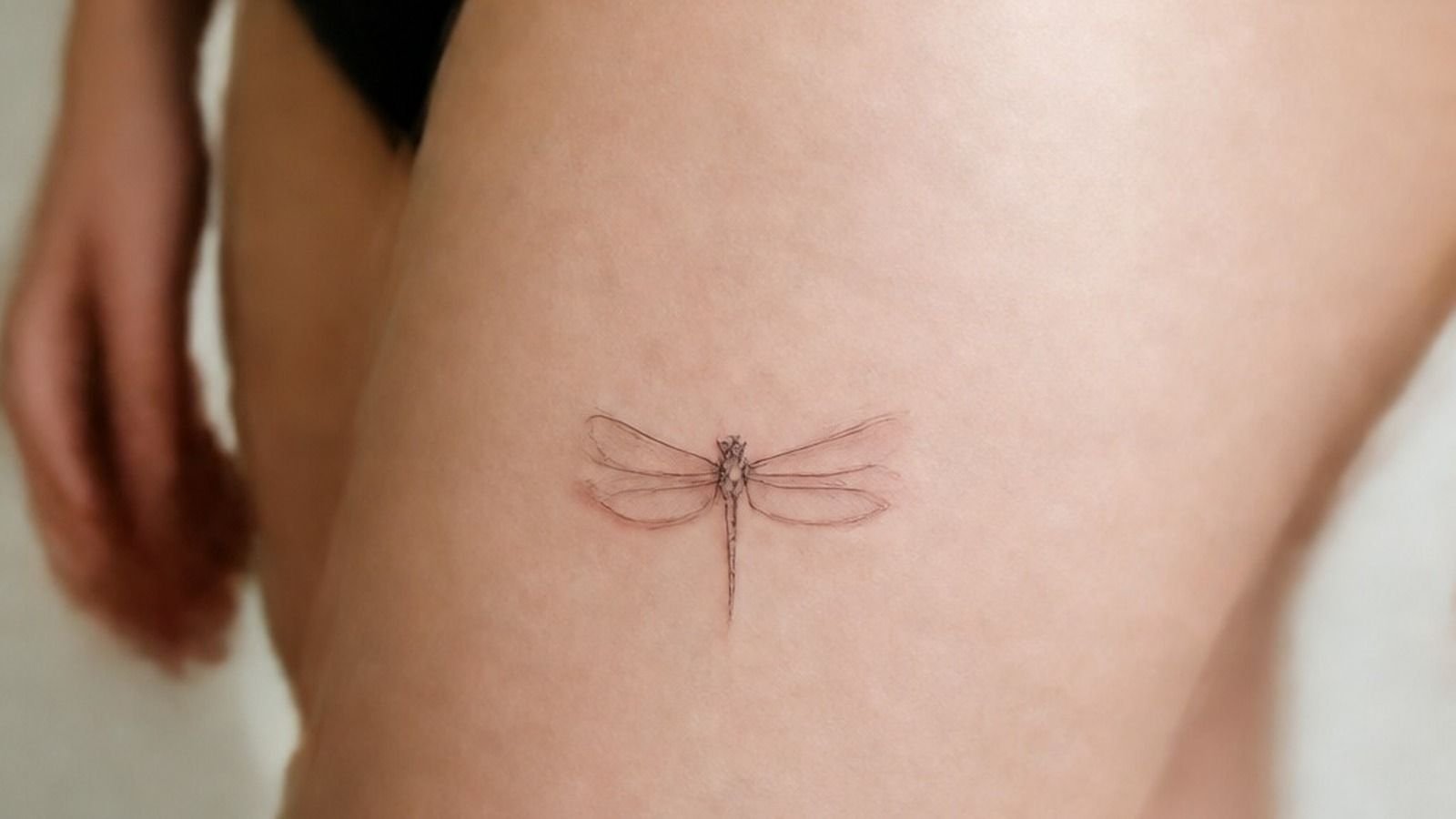
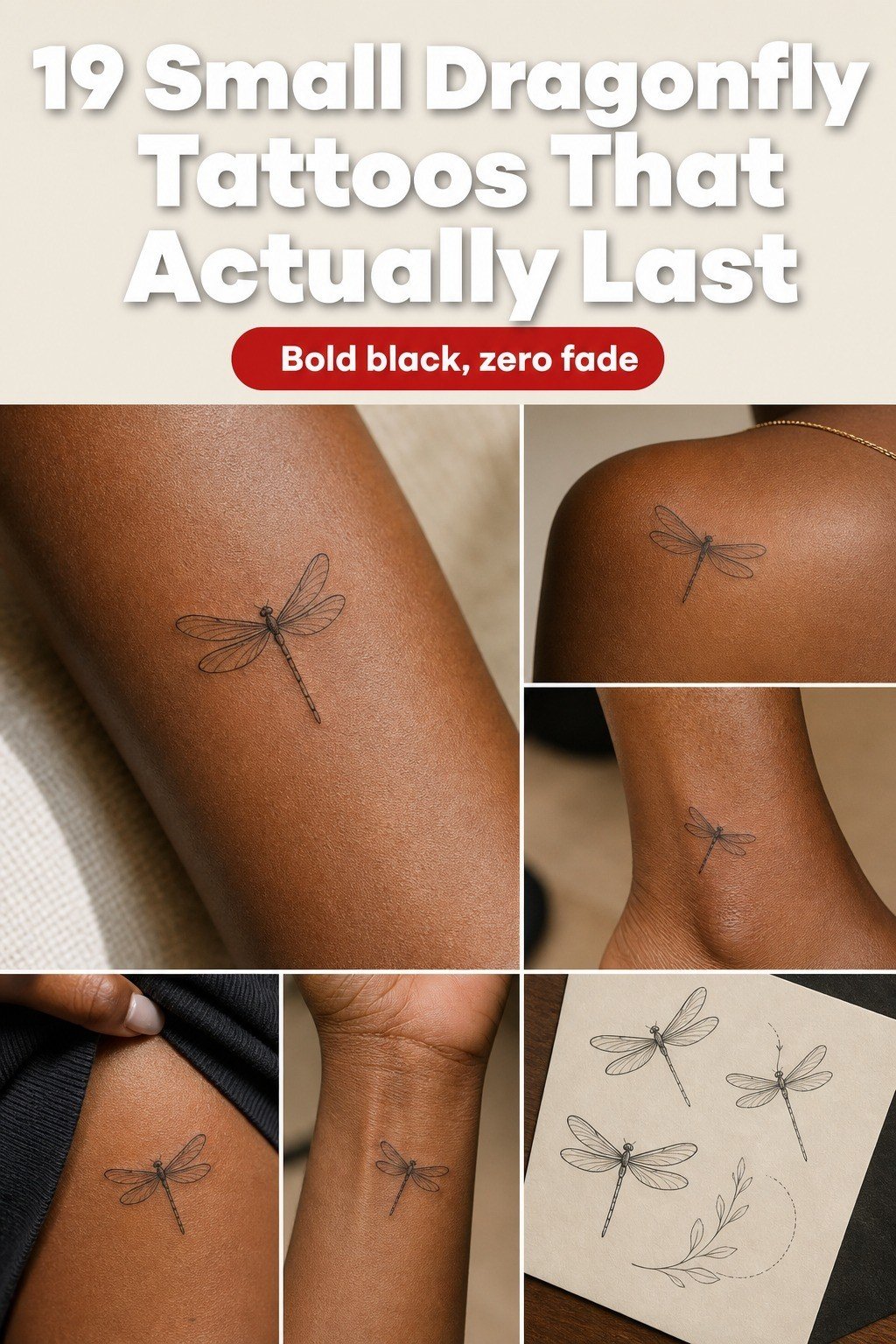
Small dragonfly tattoos can stay clean for years if you give the wings enough breathing room. I almost made my first tiny winged design too small, and I’m glad my artist pushed back. Fine line isn’t fragile. Bad sizing is.
- Build a Minimalist Dragonfly Tattoo With Single-Line Wings
- Tuck a Tiny Dragonfly Tattoo Behind the Ear
- Let a Dragonfly Wrist Tattoo Breathe
- Layer Botanical Accents Without Making Soup
- Choose Black Ink for an Ankle Dragonfly
- Follow the Collarbone’s Natural Flight Line
- Anchor Watercolor With Fine Outlines
- Skip the Finger for Dense Micro Linework
- Add Birthstone Color With Restraint
- Use the Soft-Shadow Rule on the Ribs
- Match the Shape, Not Every Sister Tattoo Detail
- Keep Initial Lettering Away From the Wing Tips
- Push Contrast in a Black-and-Grey Shoulder Piece
- Stretch the Forearm Flight Path
- Use Red Ink Like a Highlight, Not a Fill
- Use the Wing-Grid Method on the Hip
- Frame Wildflowers Around the Wrist, Not Through Them
- Give Meaningful Symbolism One Clear Job
- Choose Airy Linework Over Detail on the Foot
1Build a Minimalist Dragonfly Tattoo With Single-Line Wings
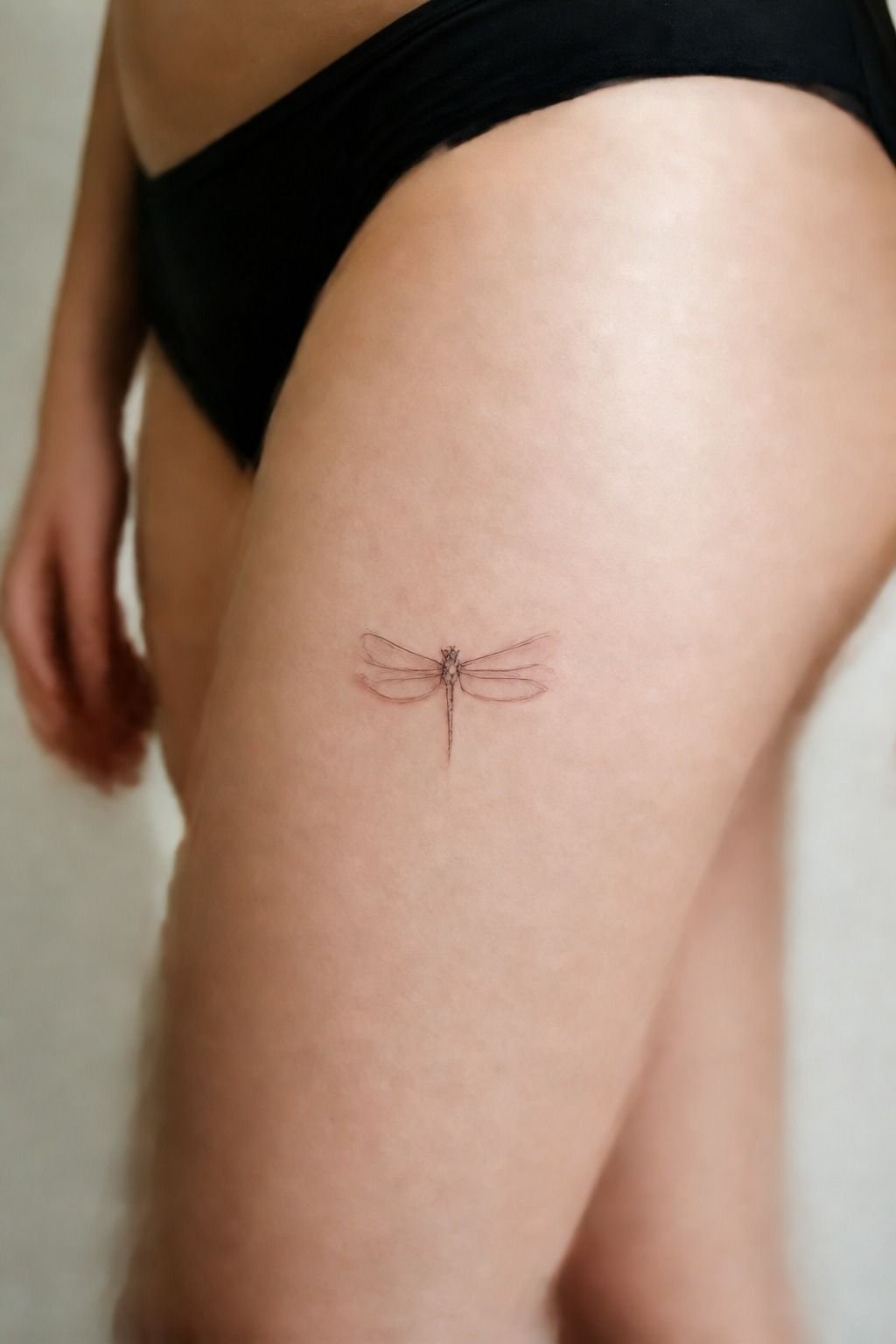
Keep this single-needle dragonfly simple: one confident body, four open wings, no fussy interior veins. On a thigh, you’ve got room to let each wing sit about 1 to 1.5 inches wide, so your tattoo reads as a dragonfly instead of a tiny ink smudge.
I’d choose black ink over pale grey here. Your artist can make one clean pull through each wing rather than going over it ten times and turning crisp lines fuzzy.
You want airy negative space, not a little patch of soup. If you’re deciding between placements, these small tattoo ideas for women give you more low-wear options.
2Tuck a Tiny Dragonfly Tattoo Behind the Ear
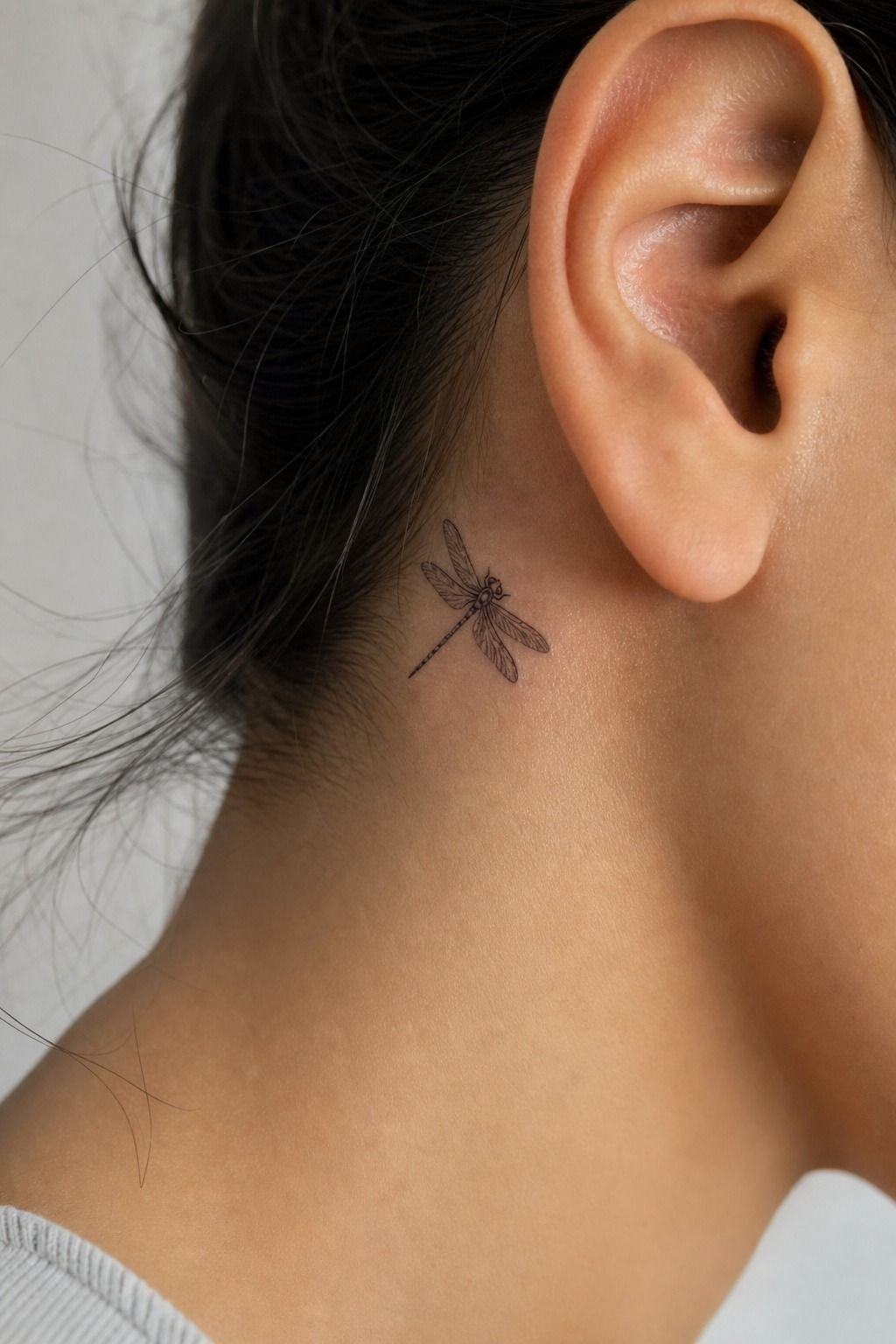
A behind-the-ear tattoo looks delicate because the placement does the work for you.
3Let a Dragonfly Wrist Tattoo Breathe
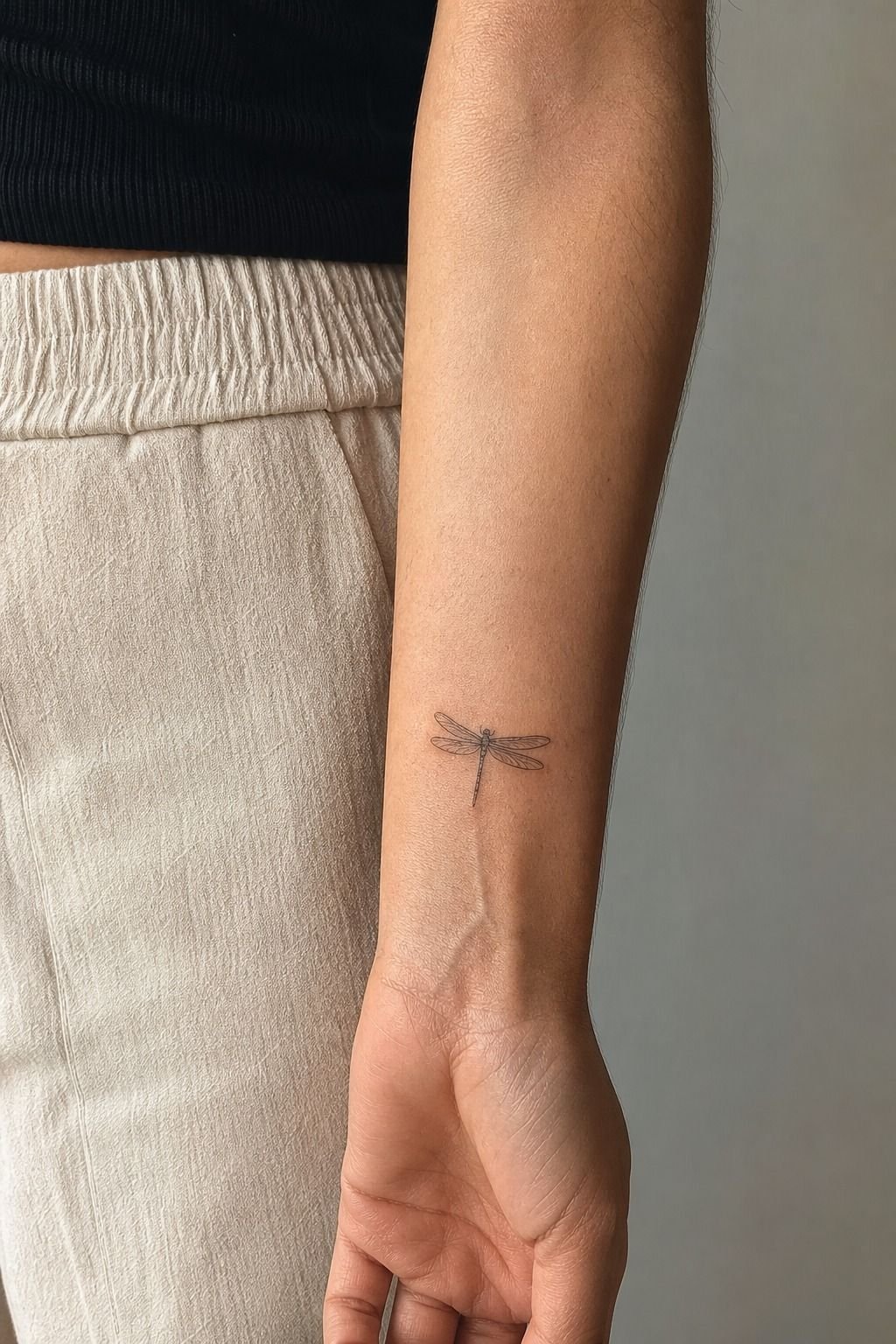
For a dragonfly wrist tattoo, bump the design slightly up the forearm instead of crowding the wrist crease. That size on a wrist is gonna mush out if you pack every wing with detail. Give it 2 inches of vertical room, and your artist can keep the antennae, body, and wings distinct.
Your wrist moves constantly, so clean placement matters more than Pinterest-exact copying. I’d use a fine black outline with tiny dots near the wing roots, not full shading.
It feels subtle, but it still reads from across the room. Browse small wrist tattoo ideas before you lock in the angle.
4Layer Botanical Accents Without Making Soup
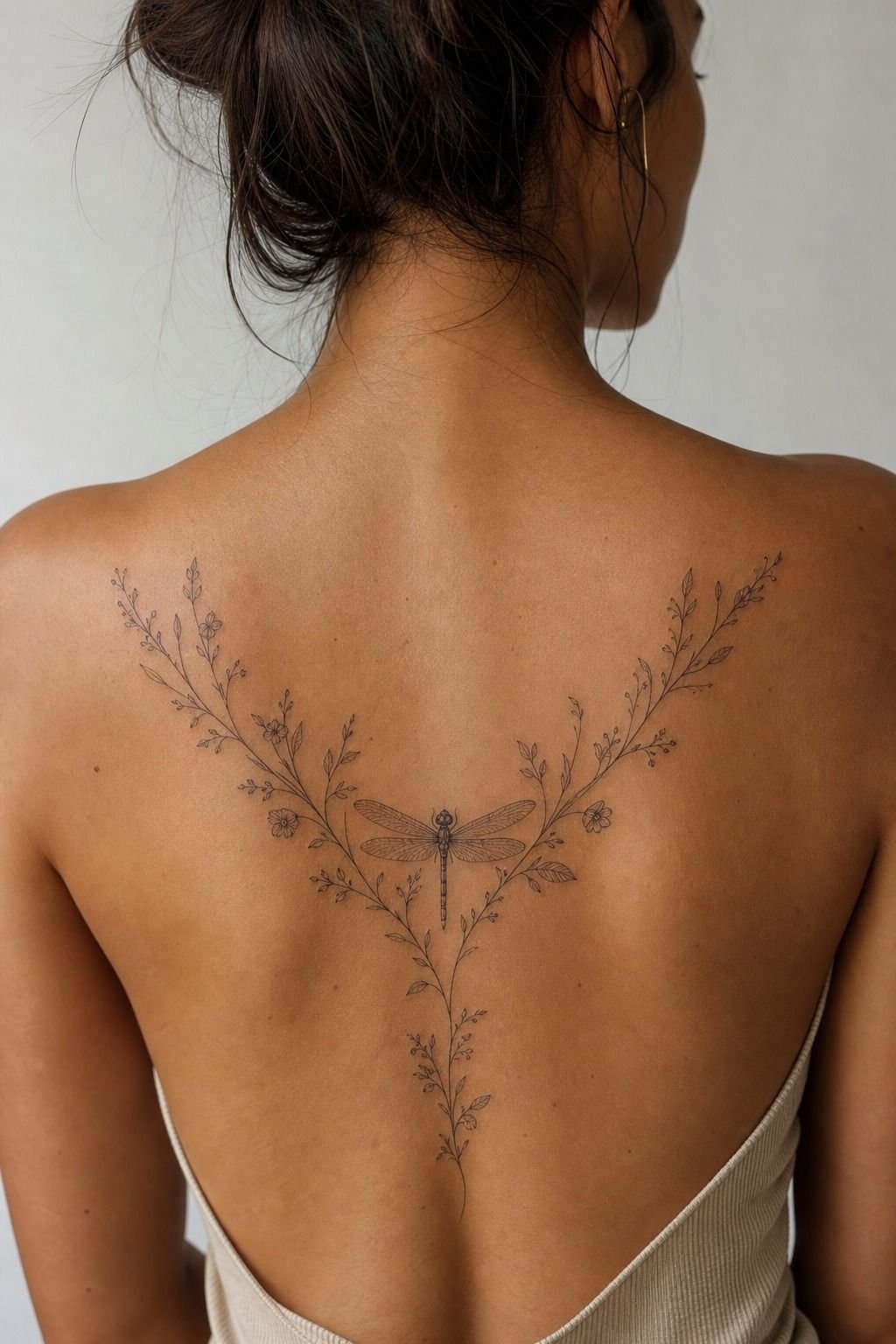
A dragonfly with botanical linework can look soft and meaningful on your upper back.
5Choose Black Ink for an Ankle Dragonfly
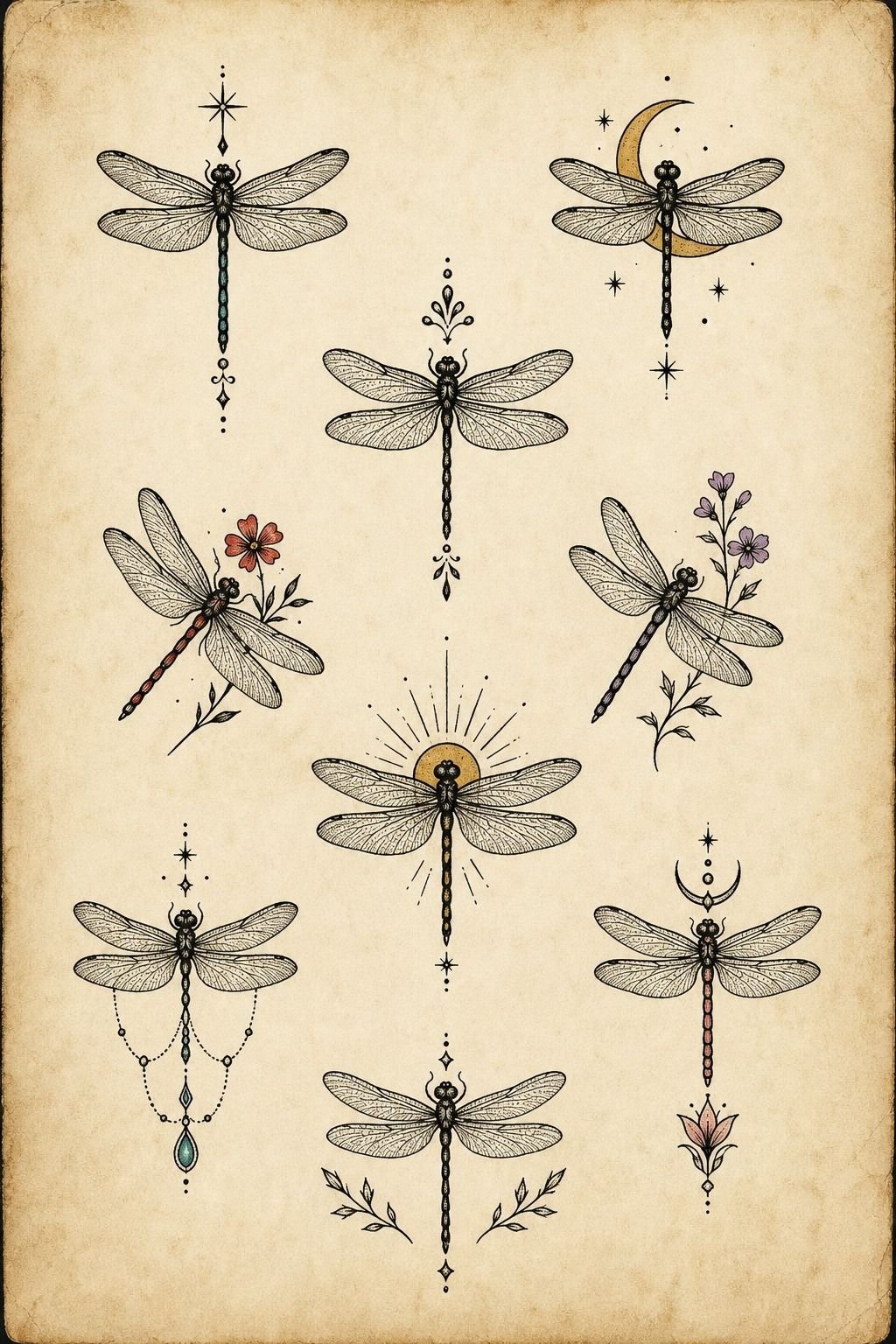
A small black dragonfly on the ankle is a solid flash-style choice. Use carbon black ink with a slightly bolder outer contour, then reserve the inside of the wings for a few short lines. Your ankle gives you a narrow canvas, so a vertical body with wings angled upward keeps the shape readable.
This placement can be spicy around the ankle bone, and your socks may rub it during healing. I’d wear loose shoes and avoid a design that wraps too far onto the foot.
Black is your best friend for longevity here. Color can be fun, but a clean black dragonfly will hold its own.
6Follow the Collarbone’s Natural Flight Line
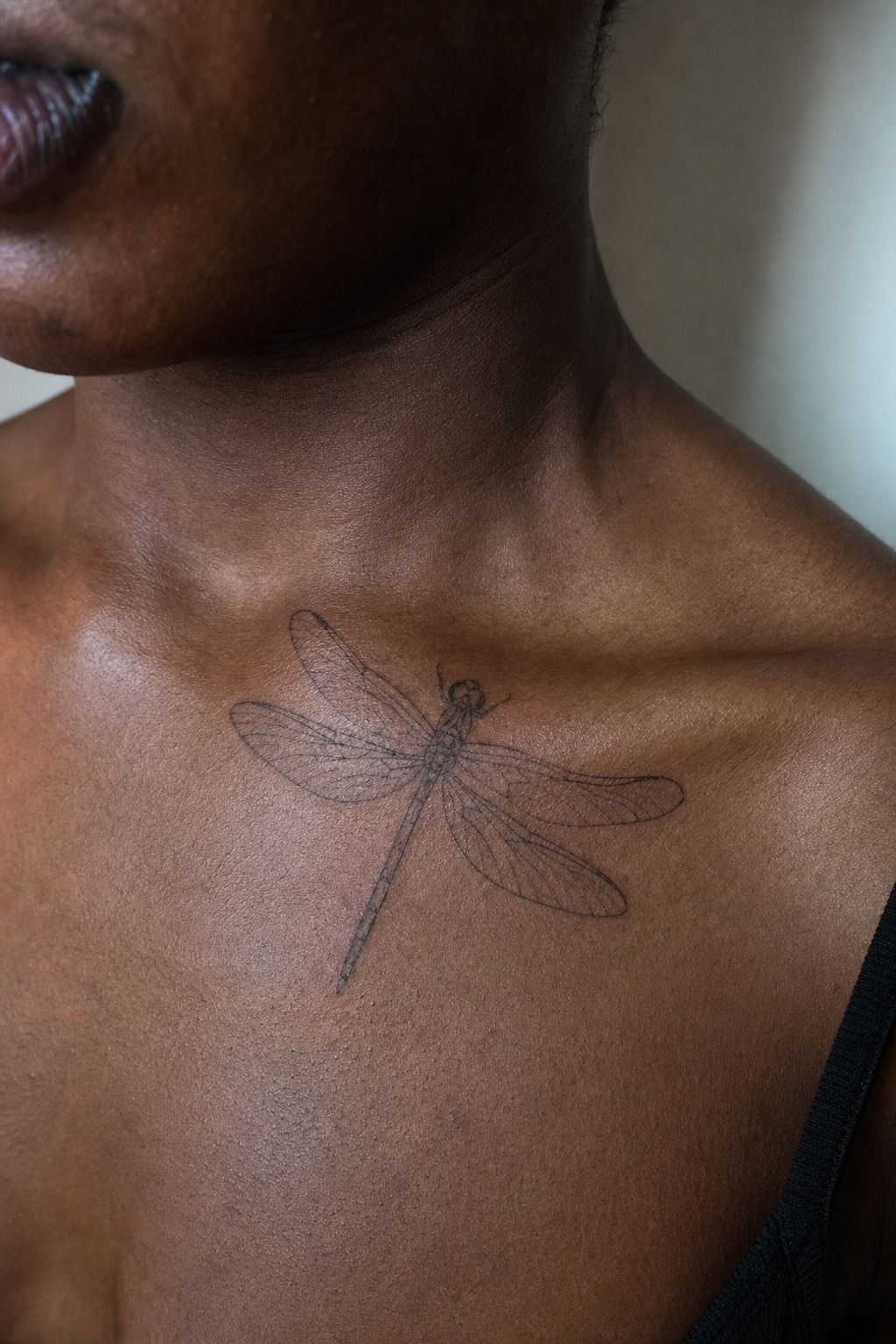
A collarbone dragonfly should follow your anatomy, not fight it.
7Anchor Watercolor With Fine Outlines
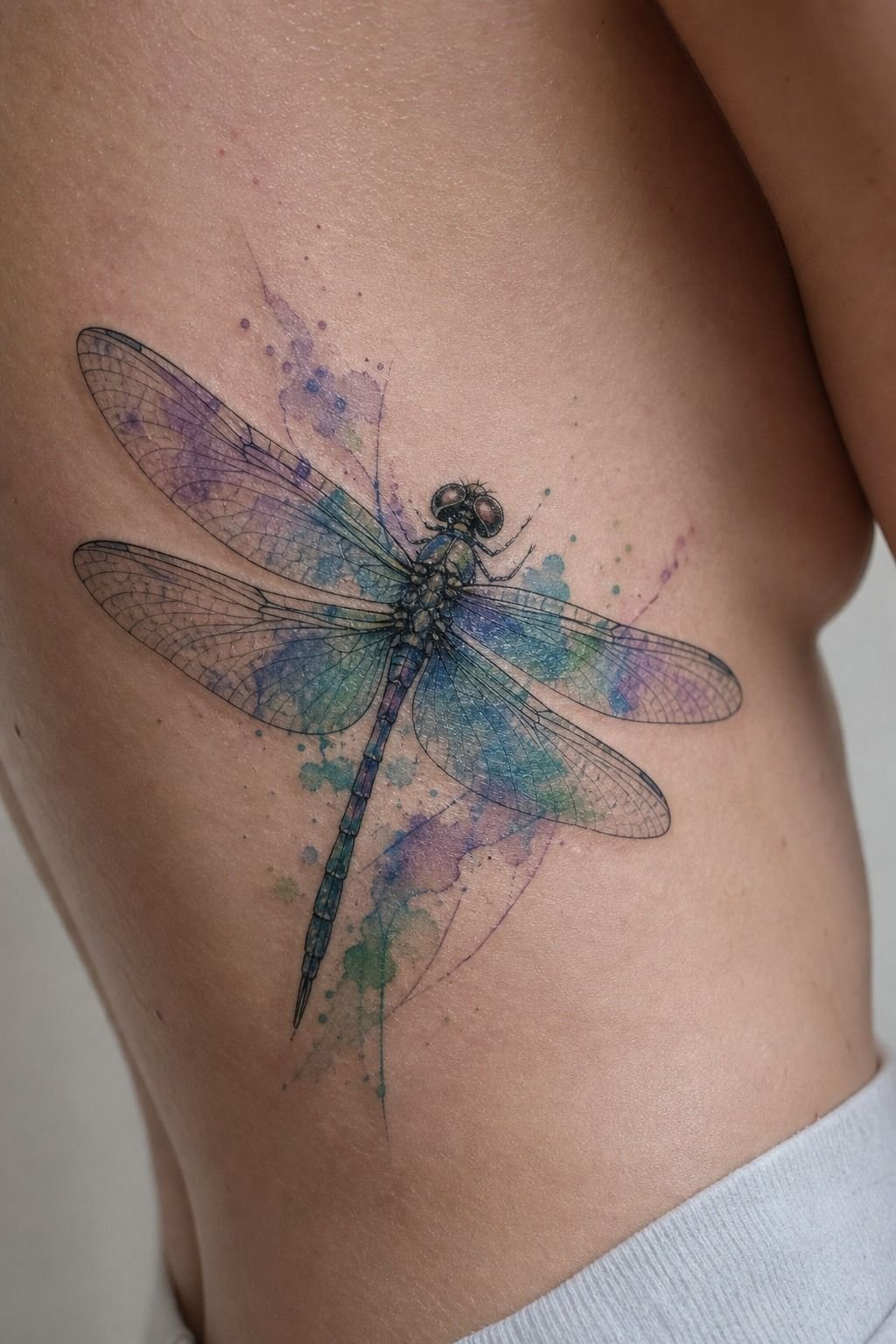
A watercolor dragonfly needs black fine-line outlines underneath it. Full stop. Soft blue, violet, or teal washes look captivating when they sit inside a defined wing shape, but loose pigment without structure can heal flat and muddy.
On the ribs, keep the color limited to two shades and let bare skin act as your highlight. Your artist can use diluted color for a gentle wash, then push black contrast through the body and wing edges. Ribs are spicy, especially during color packing, so don’t book this right before a beach weekend.
Check colored small tattoo ideas if you want a palette that won’t swallow the drawing.
8Skip the Finger for Dense Micro Linework
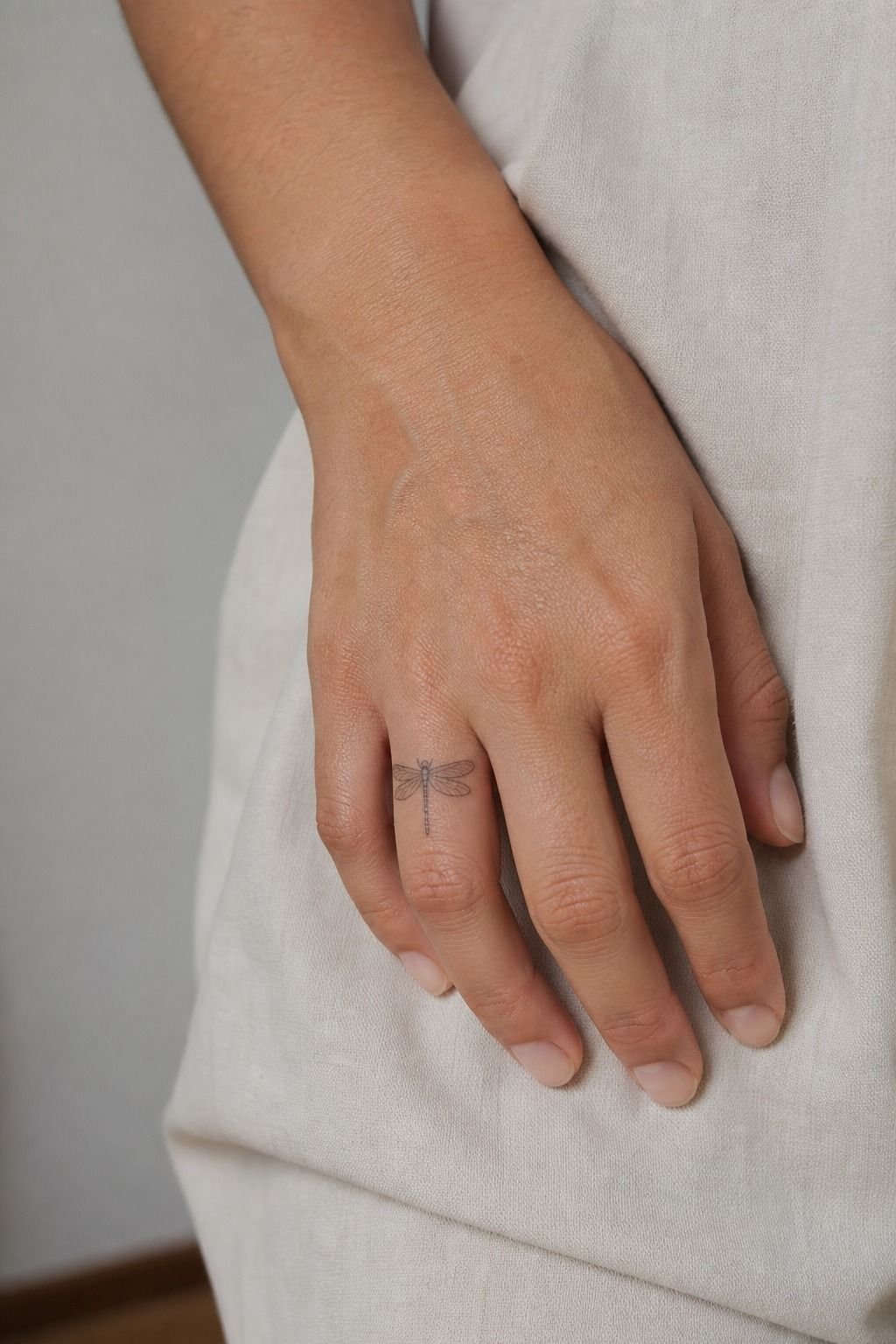
A finger dragonfly can be charming, but only if you accept touch-ups.
9Add Birthstone Color With Restraint
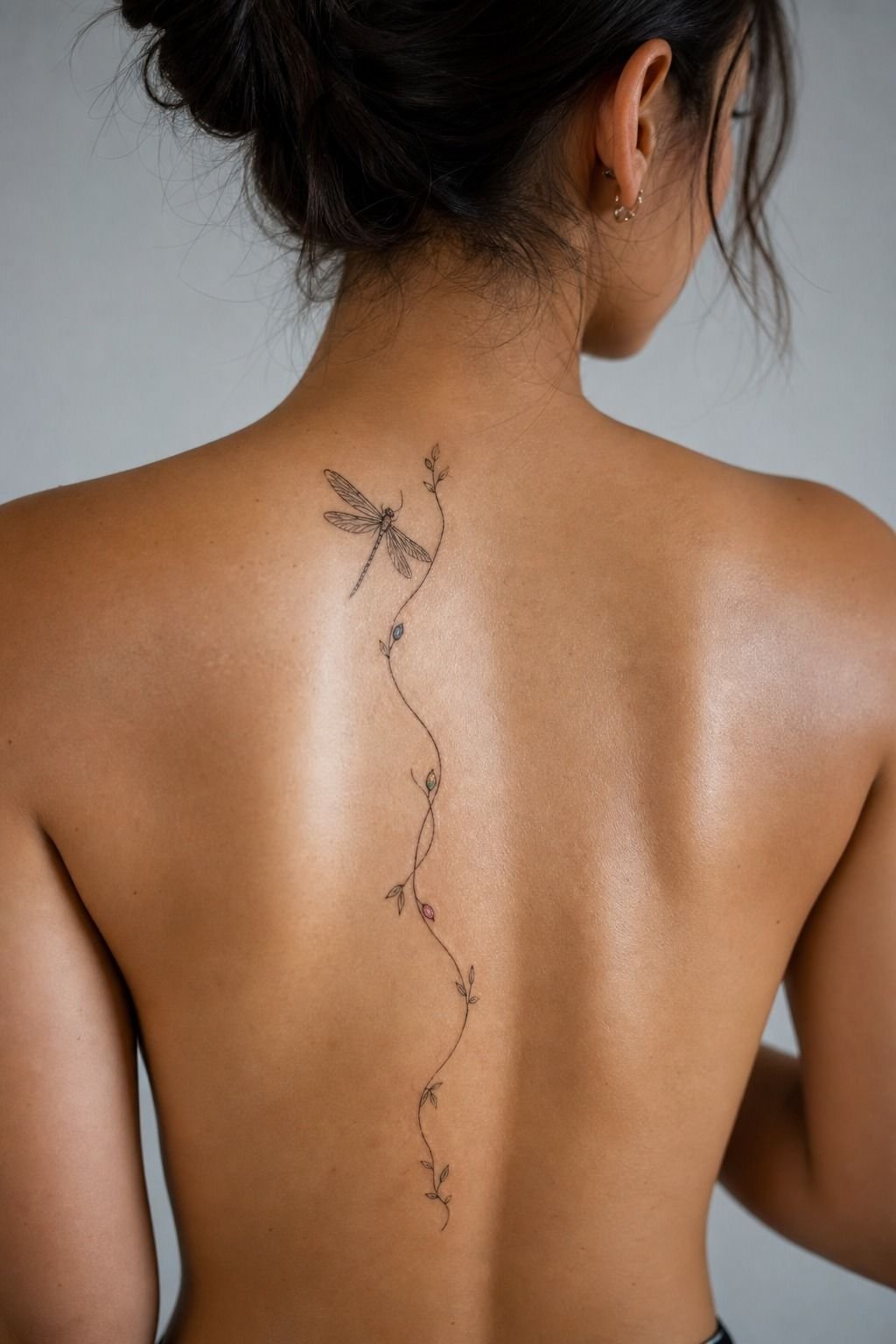
A spine placement gives a birthstone-color dragonfly a calm, vertical look. Use a black body, thin wing lines, then add one controlled jewel-toned dot or translucent wash near the center. Garnet red, sapphire blue, or amethyst purple can work without turning every wing into a rainbow.
You’ll want the color to be spice, not the whole meal. A saturated little accent heals more reliably than pale pastel wings, especially if you’re going small.
The spine can feel spicy over each vertebra, but the surrounding skin gives your artist enough room to keep the wings breathable. Who needs twelve colors on a one-inch insect?
10Use the Soft-Shadow Rule on the Ribs
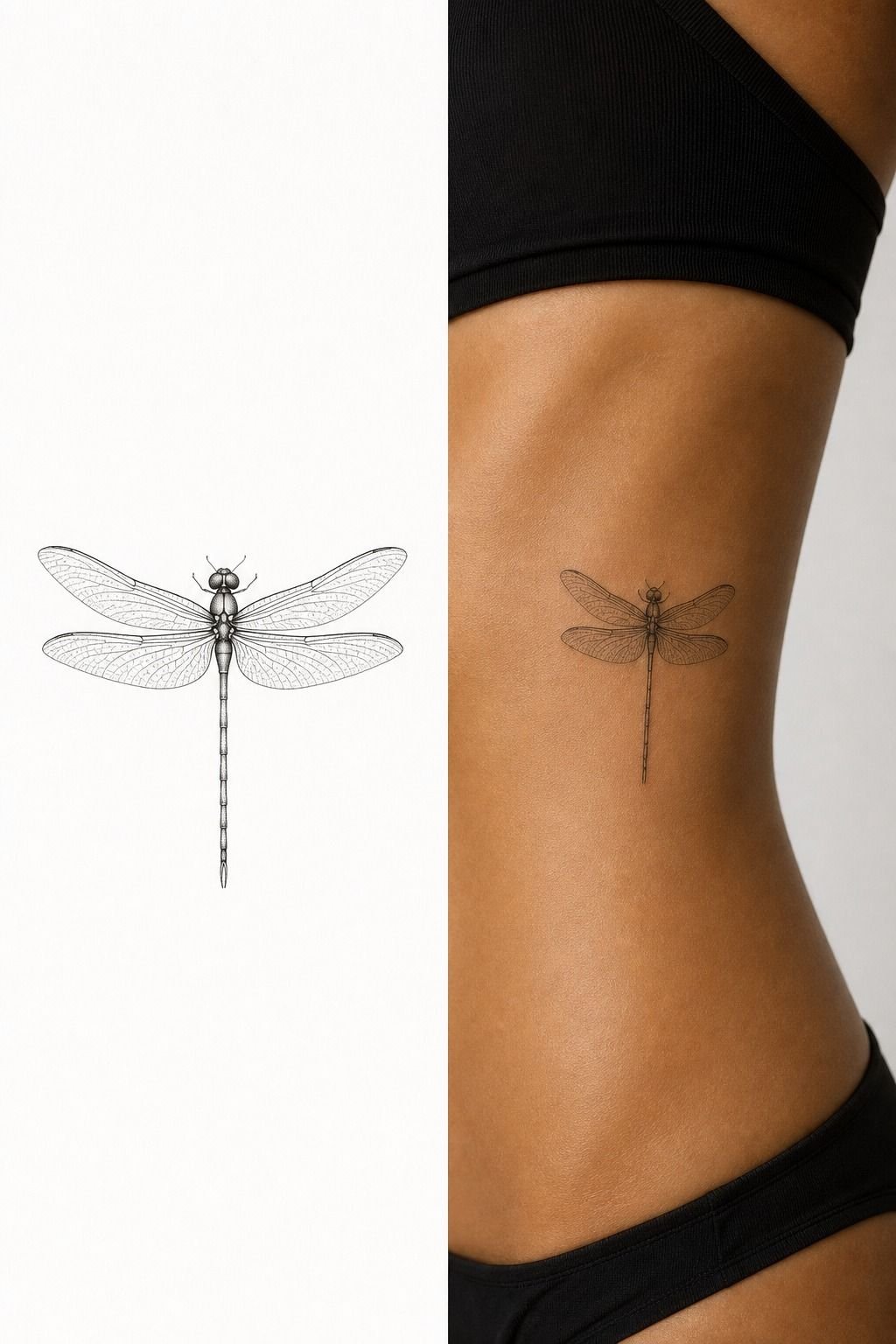
The Soft-Shadow Rule is simple: outline first, then add only enough pepper shading to separate wing layers. A rib dragonfly with a soft grey wash can look refined and light, especially when the body sits at a slight diagonal with your natural rib flow.
Your stencil may look darker than the healed tattoo will. That’s normal.
Grey wash settles softer after the surface heals, so ask to see healed work, not just fresh photos under studio lights. I’d avoid heavy black wing panels on ribs unless you want a much bolder tattoo. Fine line with velvety shading gives you movement without making the piece feel dense.
11Match the Shape, Not Every Sister Tattoo Detail
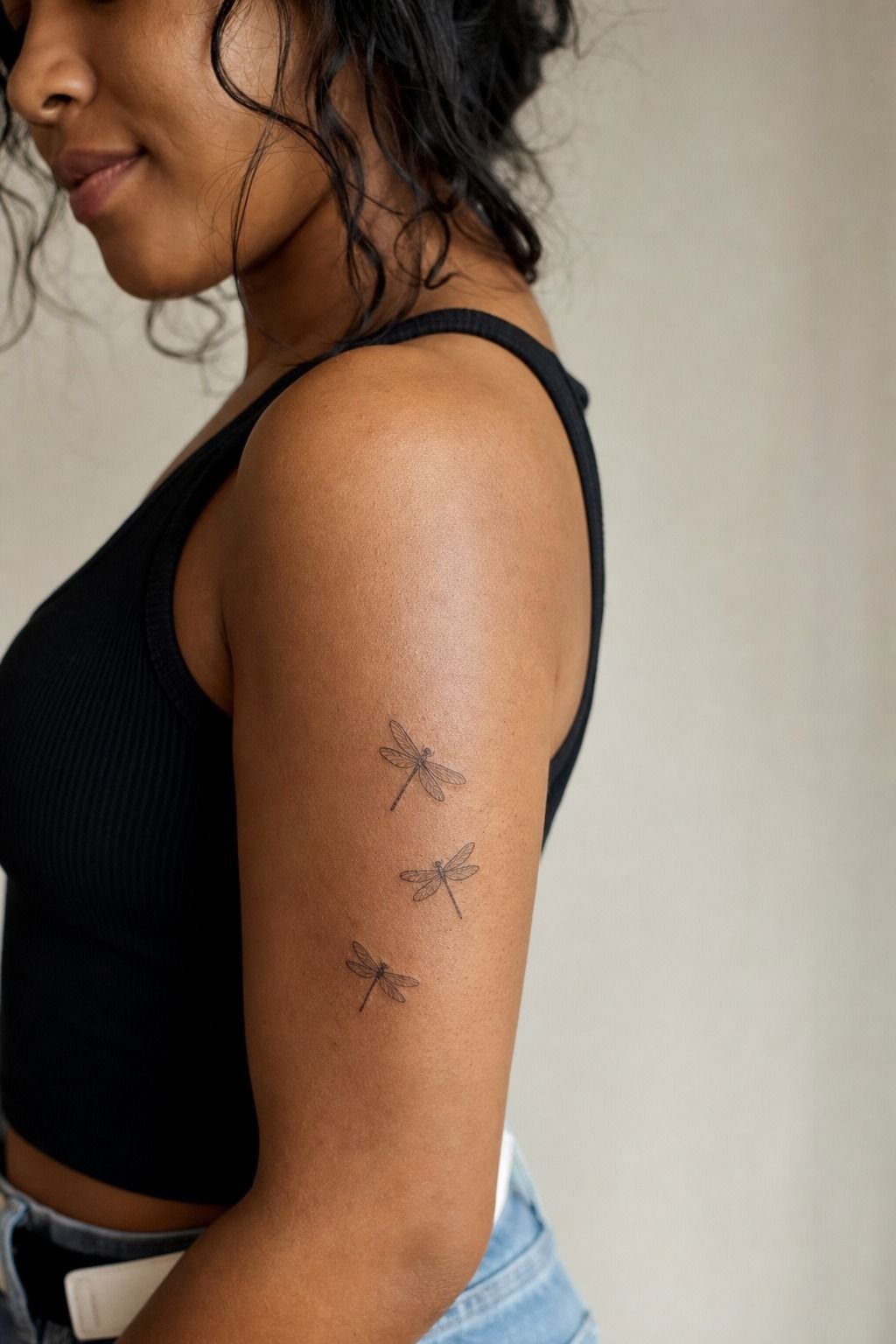
Matching small dragonfly tattoos for sisters don’t need to be identical. Pick the same dragonfly silhouette, then let each person choose a different placement or tiny detail. One upper arm version may have dotwork, while the other stays clean black linework.
That’s usually the better call. Your bodies aren’t the same, and forcing identical angles can make one tattoo look awkward. I’d agree on the wing shape and body length first, then let the artist fit each design to your skin.
A shared meaning still lands when the tattoos aren’t copy-pasted. See small trad tattoo ideas if you both want a more graphic version.
12Keep Initial Lettering Away From the Wing Tips
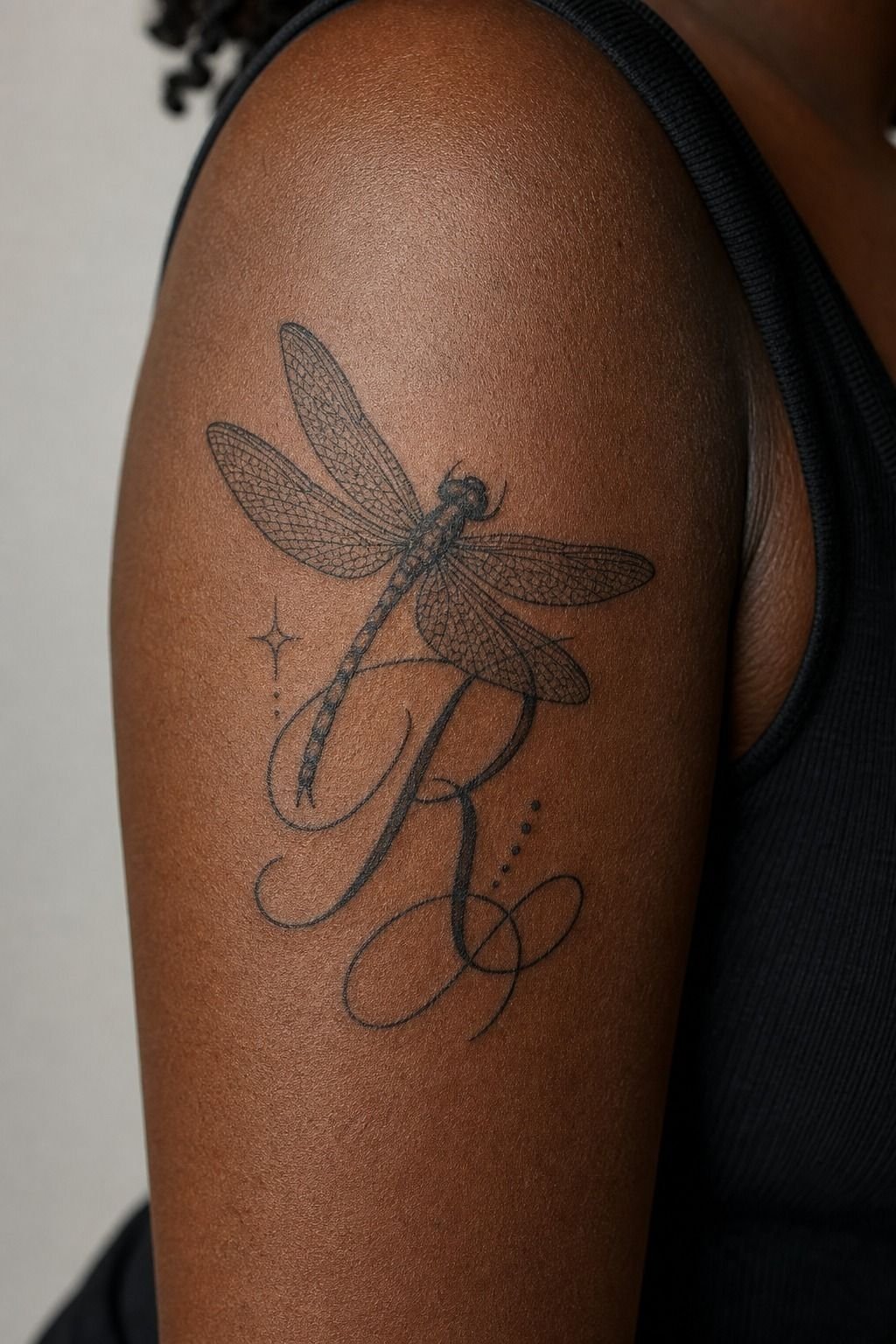
A dragonfly with an initial can be intimate without looking like a memorial label.
13Push Contrast in a Black-and-Grey Shoulder Piece
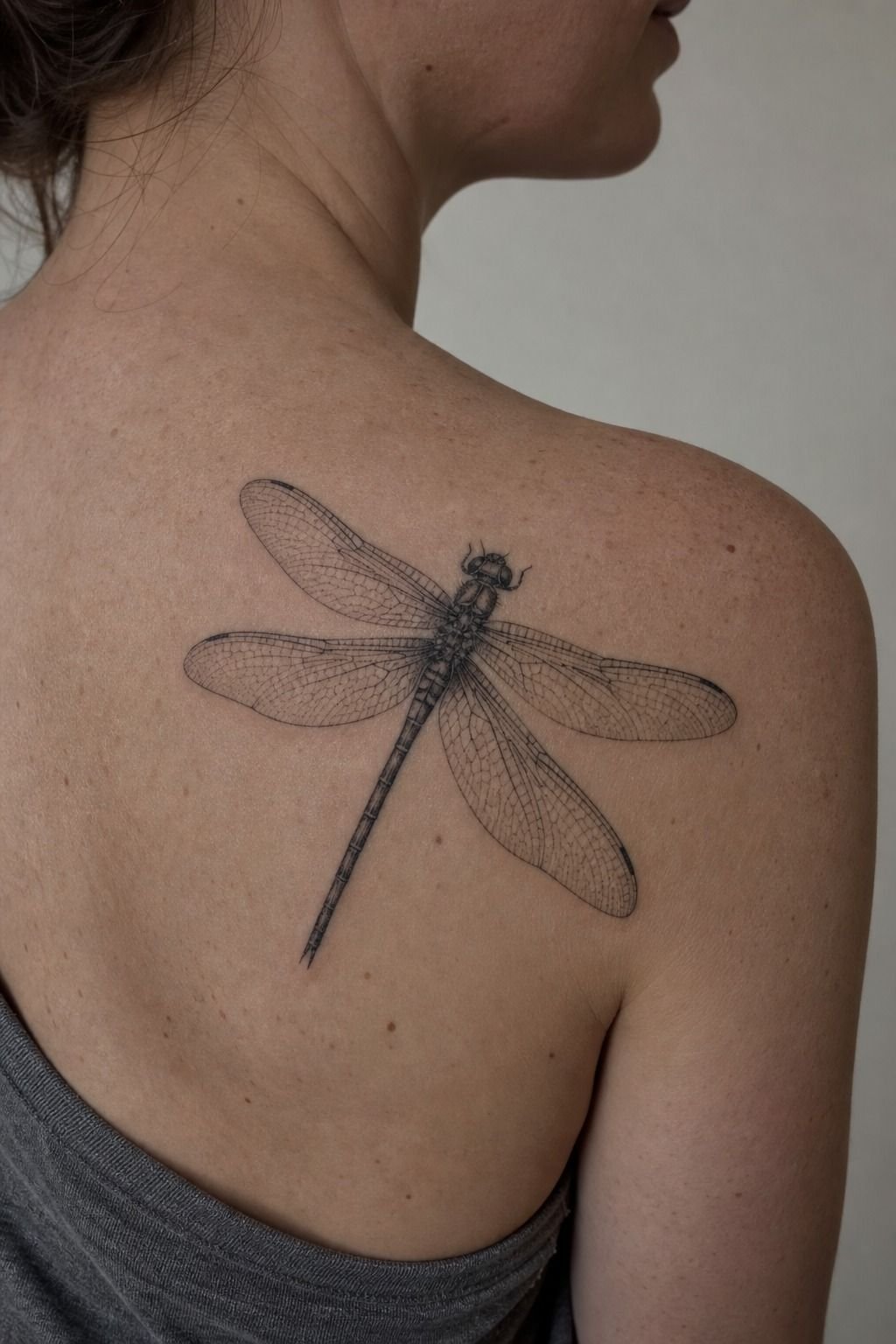
A shoulder dragonfly can take more contrast than a wrist or finger tattoo. Use black-and-grey shading through the thorax, then soften the wings with grey wash and open gaps. Your shoulder has low wear, which makes it a forgiving place for a first tattoo.
But don’t let “small” become “barely visible.” I’d make the body dark enough to hold the whole design together, especially on a curved shoulder. A dragonfly with no anchor point can look washed out after healing.
This one should have a bold center and soft wings. That contrast is what keeps it readable in ten years.
14Stretch the Forearm Flight Path
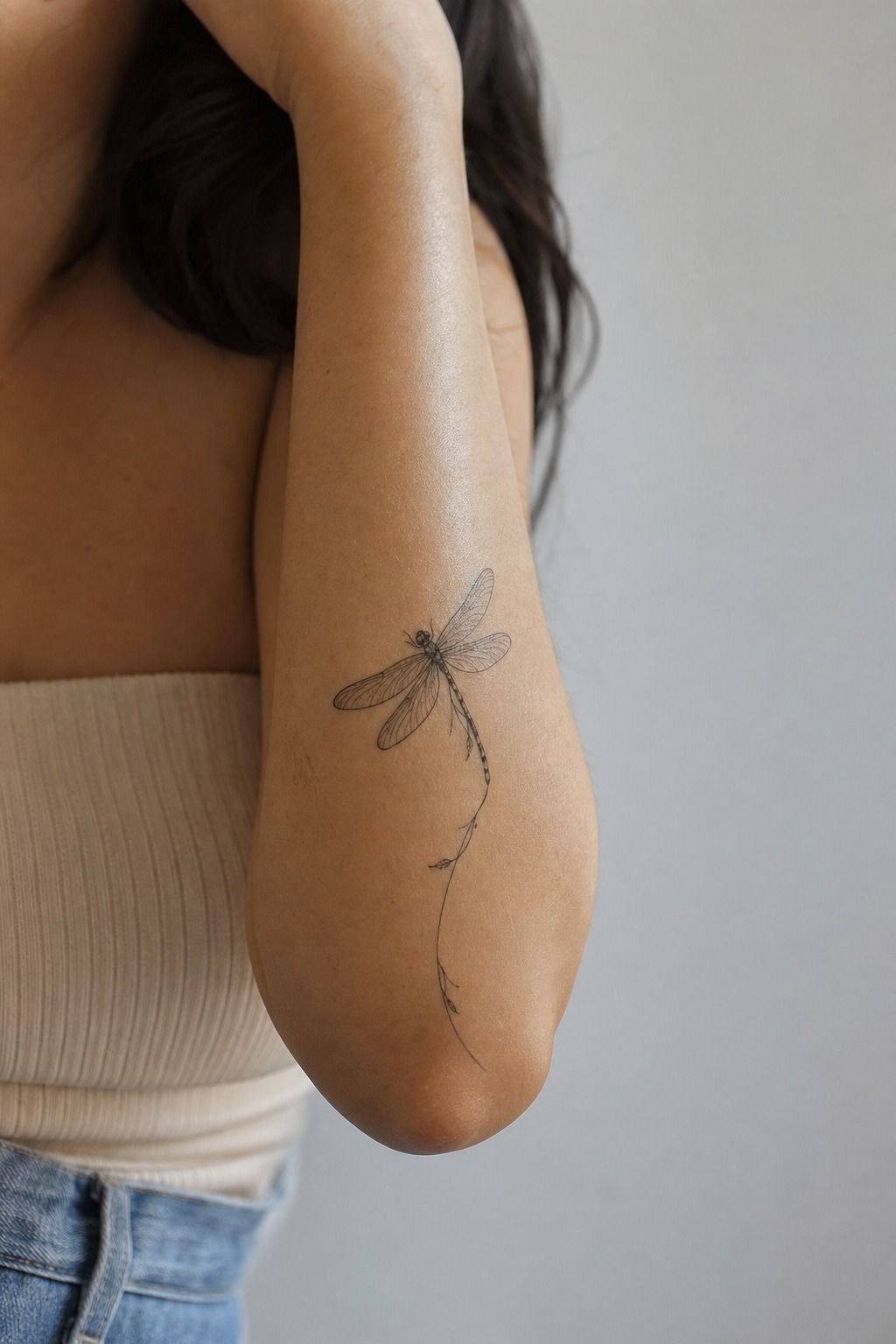
A forearm dragonfly doesn’t need to sit dead center. Angle it along the inner forearm line, like it’s moving toward your elbow, and let the wings open across the wider part of the arm. You get better visibility, easier healing, and more room for clean line spacing.
This is one of the more chill placements for pain. Your artist can work steadily, and you can see the stencil before committing.
I’ve had clients choose a wrist tattoo, then move it 2 inches upward after seeing how much better it breathes. Trust that adjustment.
Your future tattoo will thank you.
15Use Red Ink Like a Highlight, Not a Fill
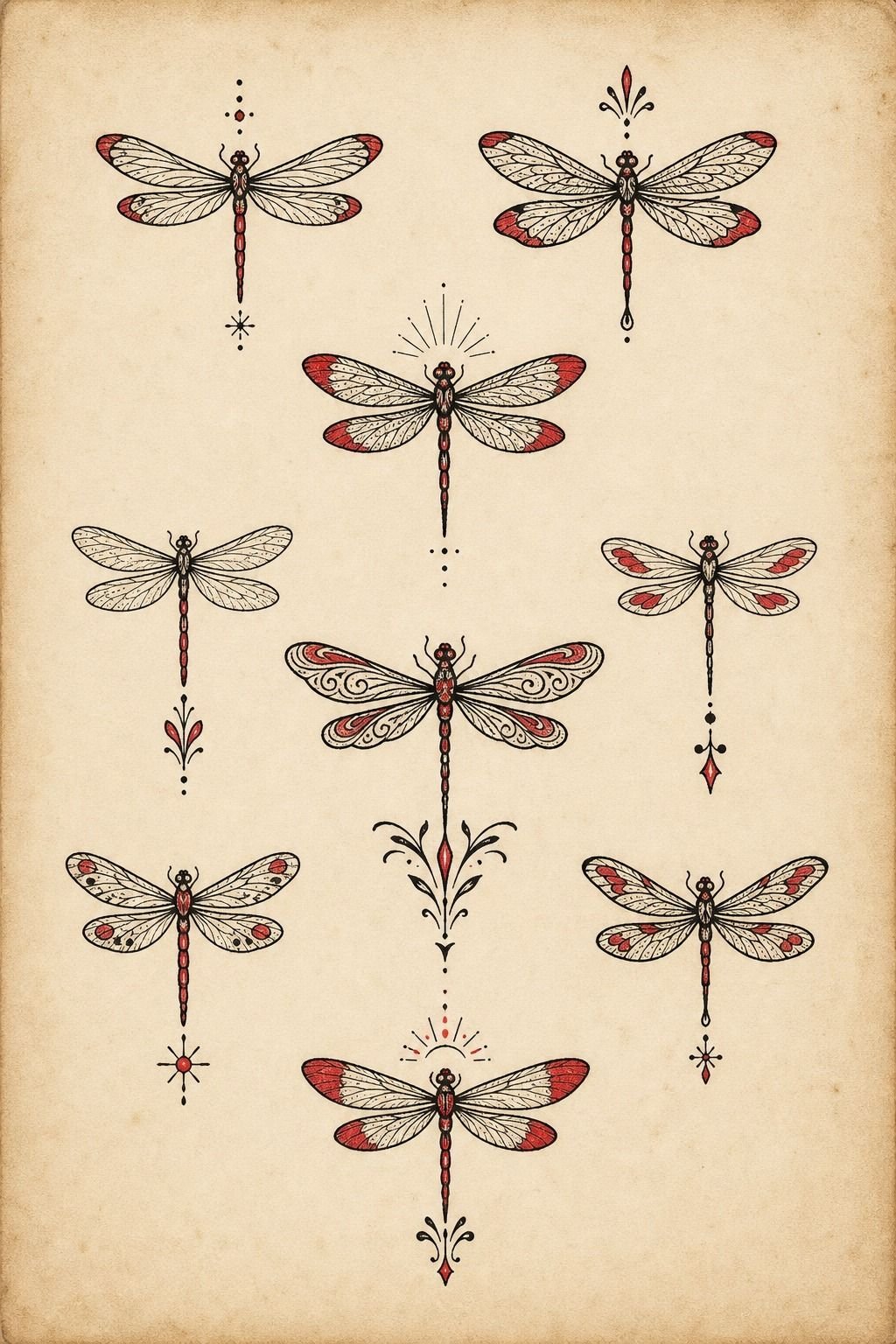
A small red ink dragonfly can look modern and striking, especially from a flash sheet approach. Keep the red pigment to the body, a tiny heart-shaped center, or two short wing marks. You don’t need a full red outline to make it feel bright.
Red can heal differently from person to person, so tell your artist about known pigment sensitivities before the appointment. I’d pair red with black, because the black structure keeps the design readable if the red settles softer over time. Fresh red is loud.
Healed red should still have a job to do.
16Use the Wing-Grid Method on the Hip
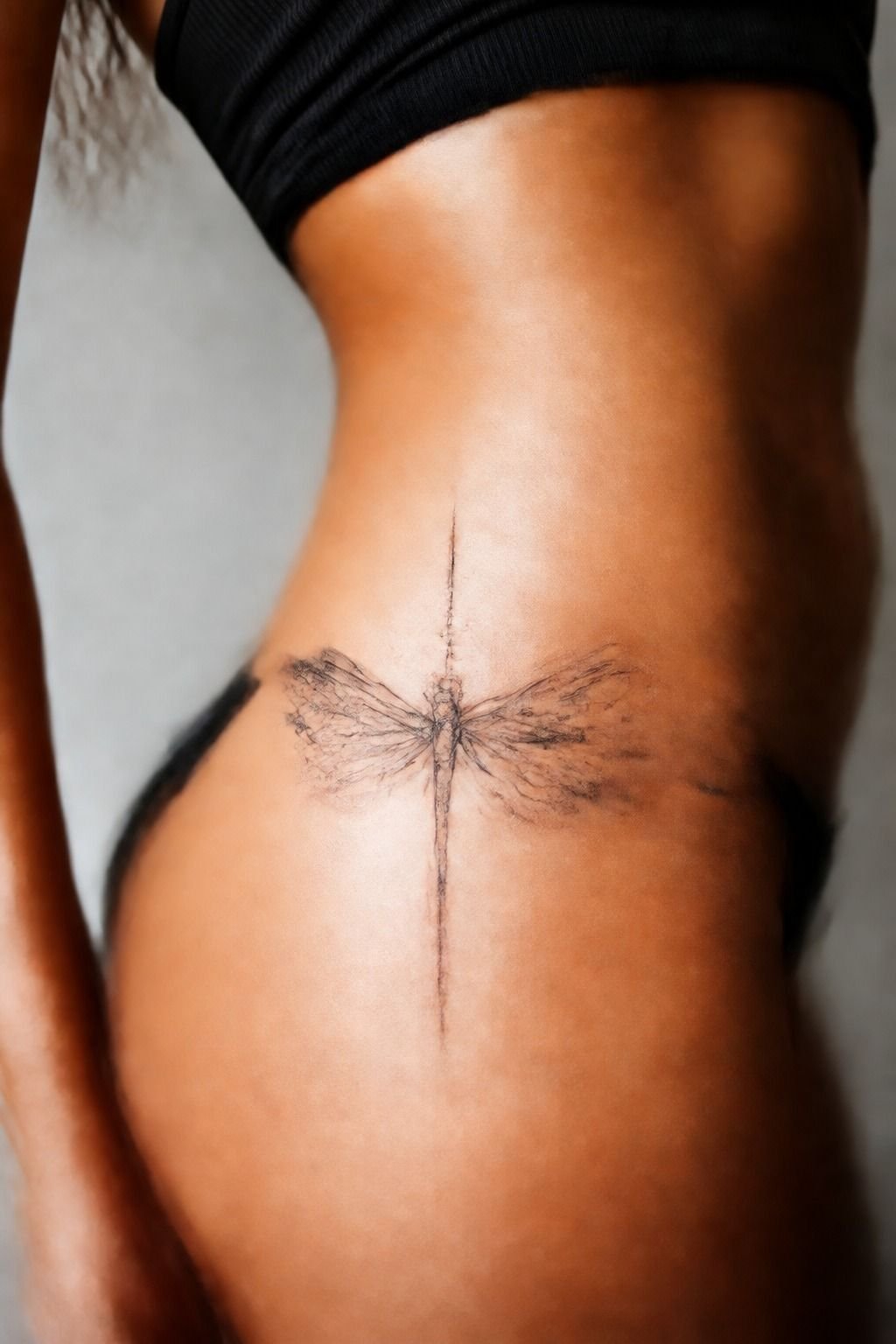
The Wing-Grid Method gives a geometric dragonfly enough order without making it stiff. Build each wing from a few clear triangles or diamond sections, then use a black central body to keep the design grounded. On the hip, the shape can sit slightly wider than a wrist piece and still feel delicate.
Your hip has room, but it also gets friction from waistbands and fitted jeans. Keep the outer wing points away from the exact waistband line while it heals. I’d skip ultra-thin geometry if you want a long-lasting result.
Slightly thicker lines look more intentional and won’t disappear into each other later.
17Frame Wildflowers Around the Wrist, Not Through Them
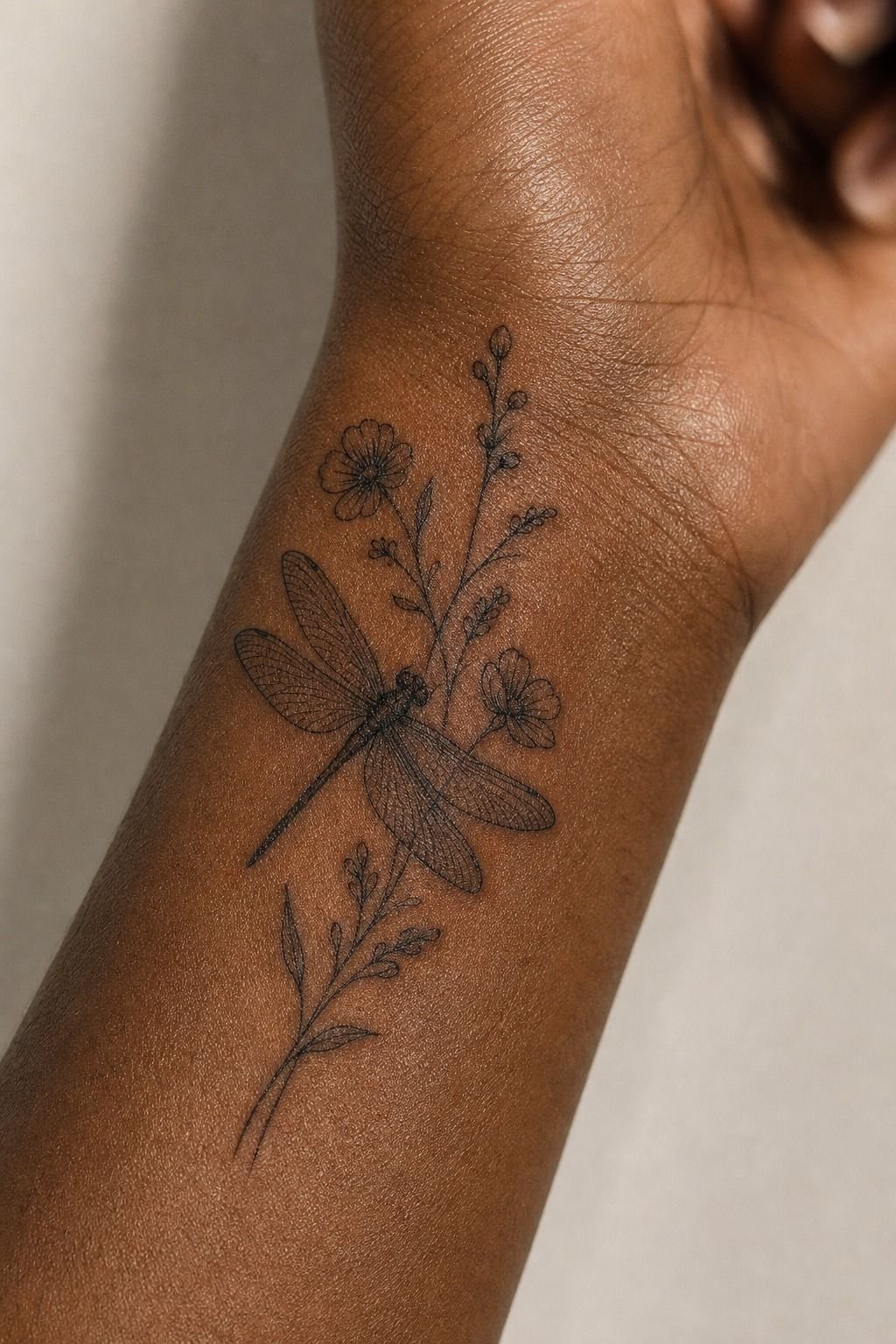
A wildflower dragonfly on the wrist works when the flowers frame the insect instead of cutting through every wing.
18Give Meaningful Symbolism One Clear Job
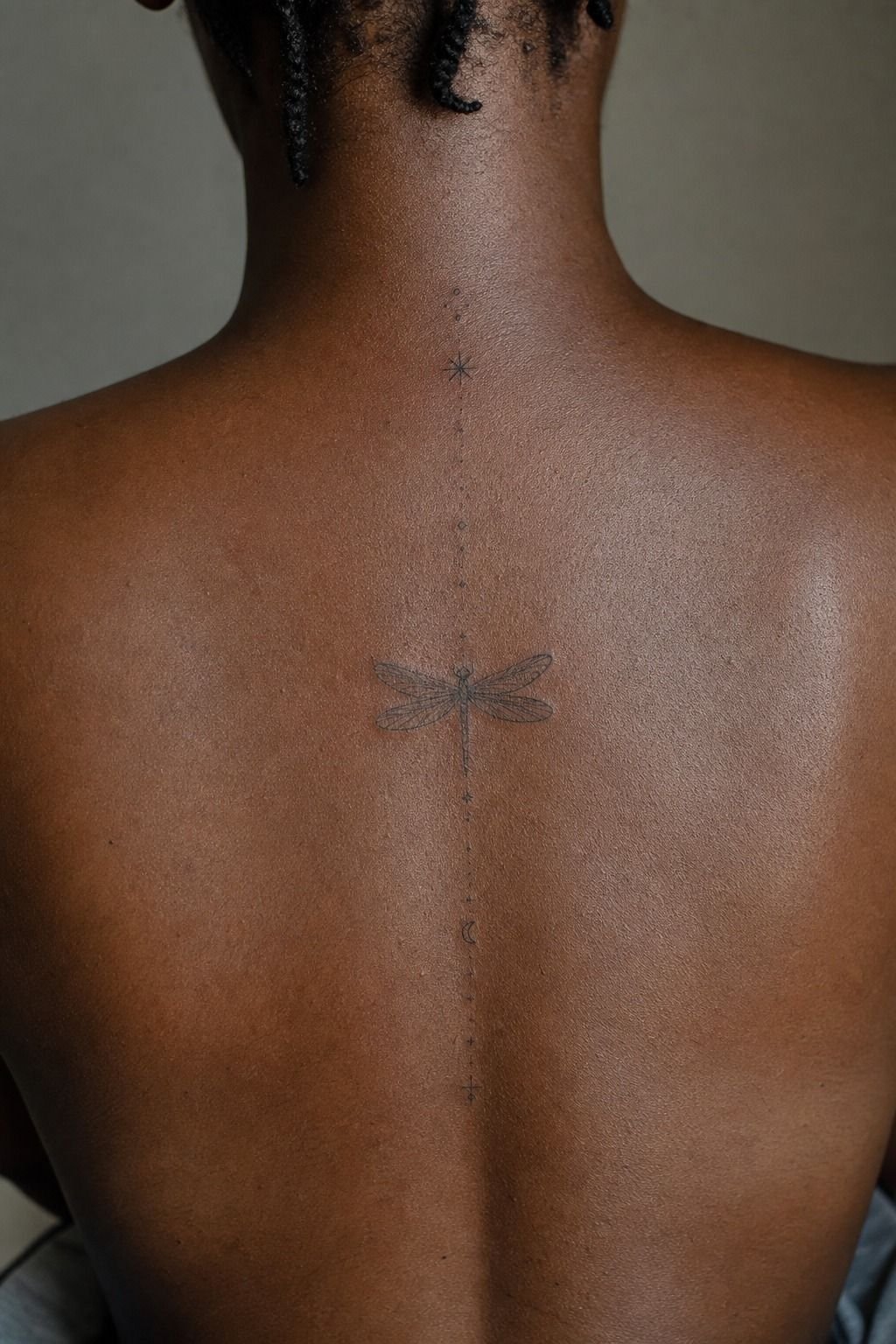
A meaningful dragonfly tattoo can stand for change, resilience, a loved one, or a season you survived. The design doesn’t need to explain your whole life. Pair the dragonfly outline with one small symbol, such as a date, tiny crescent, or simple yin-yang dot.
I’d skip stacking three symbols into a design this small. Your meaning is still yours if strangers don’t decode every inch of it. A spine placement gives the dragonfly a quiet, centered feel, while an upper arm version feels more visible and personal.
Read our dragonfly tattoo meaning article if you’re still choosing what yours should carry.
19Choose Airy Linework Over Detail on the Foot
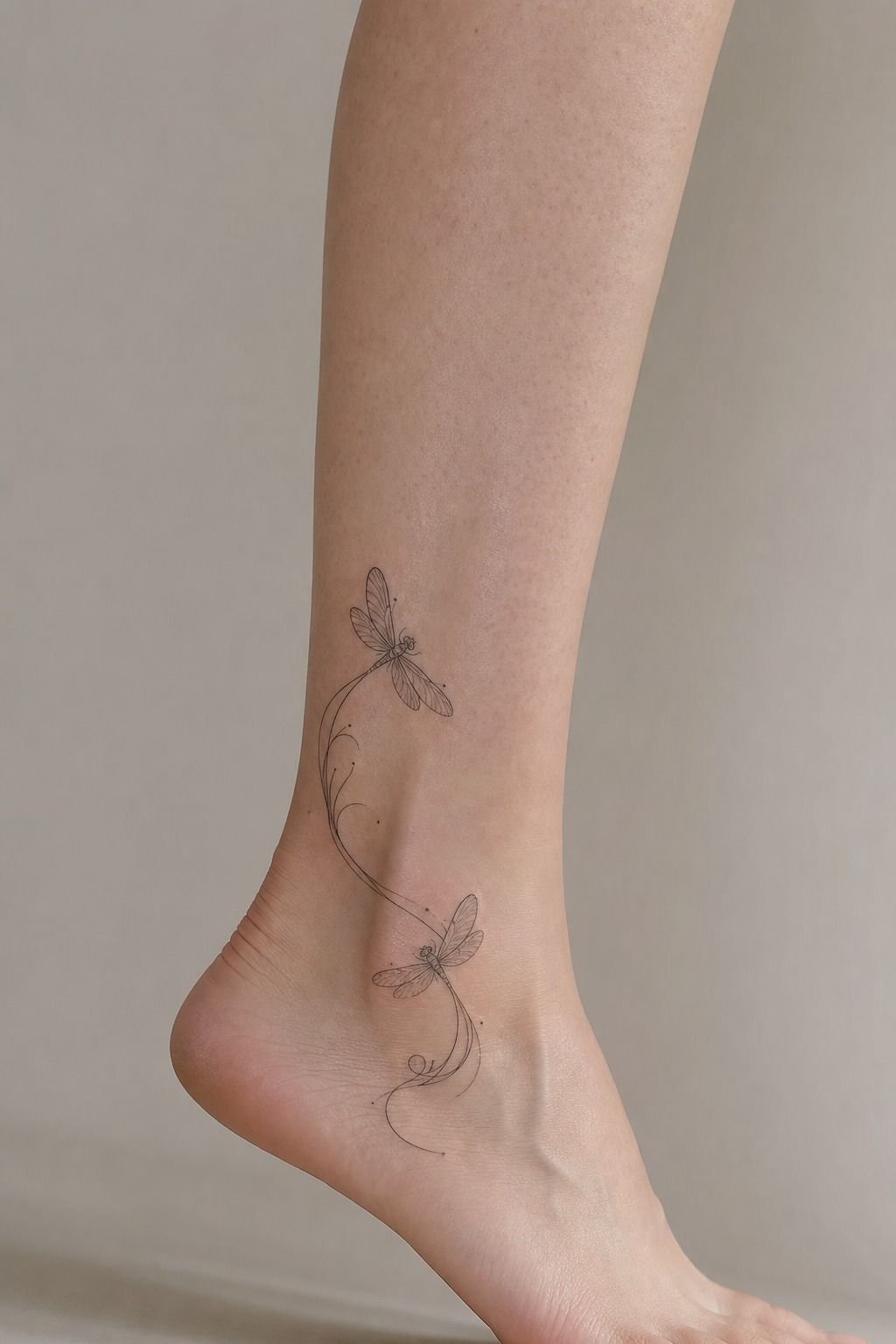
A foot dragonfly needs open wings and a dark little body.
The Longevity Check I Give Every Small Tattoo Client
I’m Hazel, and I don’t think small tattoos need to be boring to last. I do think people get sold a fantasy where every Pinterest reference can be shrunk to the size of a coin with zero consequences. It can’t.
Ink sits in skin, skin moves, and fine lines slowly widen. That’s physics, not a failure.
When you bring me a dragonfly reference, I’m looking at three things first: the distance between wing lines, the darkness of the body, and the placement’s daily wear. A tiny wrist dragonfly can work if we open the wings and move it away from the crease.
A finger version can work if you’re cool with touch-ups. A rib tattoo can look dreamy, but you need to sit still through the spicy part and give it real aftercare.
First few days, it’s an open wound. Wash it with gentle unscented soap, pat it dry, and use a thin layer of ointment or tattoo-safe moisturizer.
Don’t suffocate it. It’ll peel like a sunburn, and picking flakes can pull color out.
No pools, long sun exposure, or gym friction while the surface is healing.
Here’s the part I’m firm about: choose the artist for healed work, not for viral fresh tattoos. Fresh ink always looks sharp. Healed work tells you whether that artist understands line weight, saturation, and restraint.
Your dragonfly doesn’t need more detail. It needs better decisions.
The Questions I Get Asked Most
How much does a Small Dragonfly Tattoo usually cost?
Most small dragonfly tattoos cost about $100 to $300 in the US, though some studios have a $50 to $100 minimum. A clean healed result matters more than chasing the lowest quote. Your final price depends on placement, line detail, artist rate, and local demand.
Are Small Dragonfly Tattoo a good idea for a first tattoo?
Yes, especially on your forearm, thigh, or shoulder. Those placements give you more room and manageable pain while keeping the dragonfly visible. Choose a simple wing shape, and look through small tattoo ideas for women if you want similar beginner-friendly placements.
How do I choose a tattoo artist for Small Dragonfly Tattoo?
Look for healed fine-line portfolio photos, not just fresh work. Your artist should show clean outlines, consistent black saturation, and a hygienic studio.
Ask whether they’d resize or simplify your reference if needed. If they say yes, that’s usually a good sign.
How much do Small Dragonfly Tattoo hurt?
Forearm, outer thigh, and shoulder tattoos are usually more tolerable. Ribs, feet, hands, and sternum feel spicier because you’re closer to bone or thinner skin. Lines feel sharp, shading feels like a dull burn, and color packing can be the hottest part.
How long does a Small Dragonfly Tattoo take to heal?
The surface usually heals in 2 to 3 weeks, while full settling takes about 2 to 3 months. Gentle washing and sun protection protect the lines you paid for. Skip pools, don’t pick flakes, and use a thin layer of moisturizer once your artist says it’s time.
What’s the best placement for Small Dragonfly Tattoo?
Your outer forearm, upper arm, thigh, and shoulder are strong choices because they’re lower-wear and give your lines room. A little extra space helps fine details last longer. For more design directions, see our dragonfly tattoo design guide.
Where I’d Start First
If I had to pick one, I’d start with the forearm flight-path dragonfly. Your artist gets enough skin to separate every wing, and the placement doesn’t get chewed up like fingers or feet. Pin that shape for later and compare it with small wrist tattoo ideas.