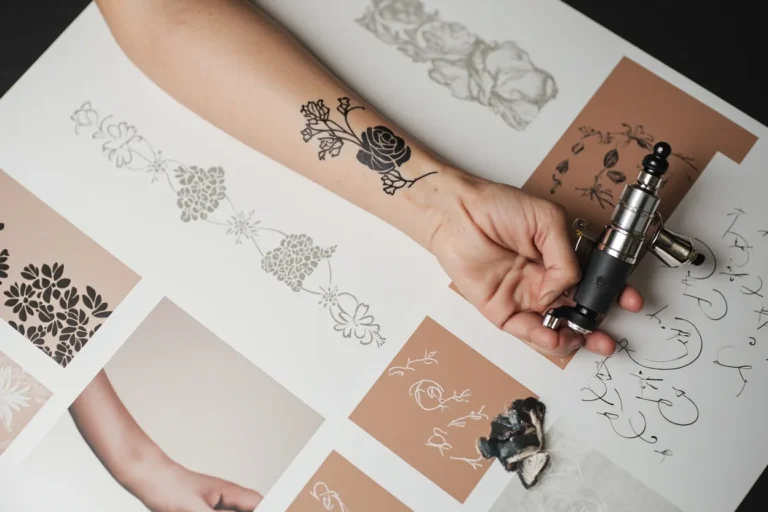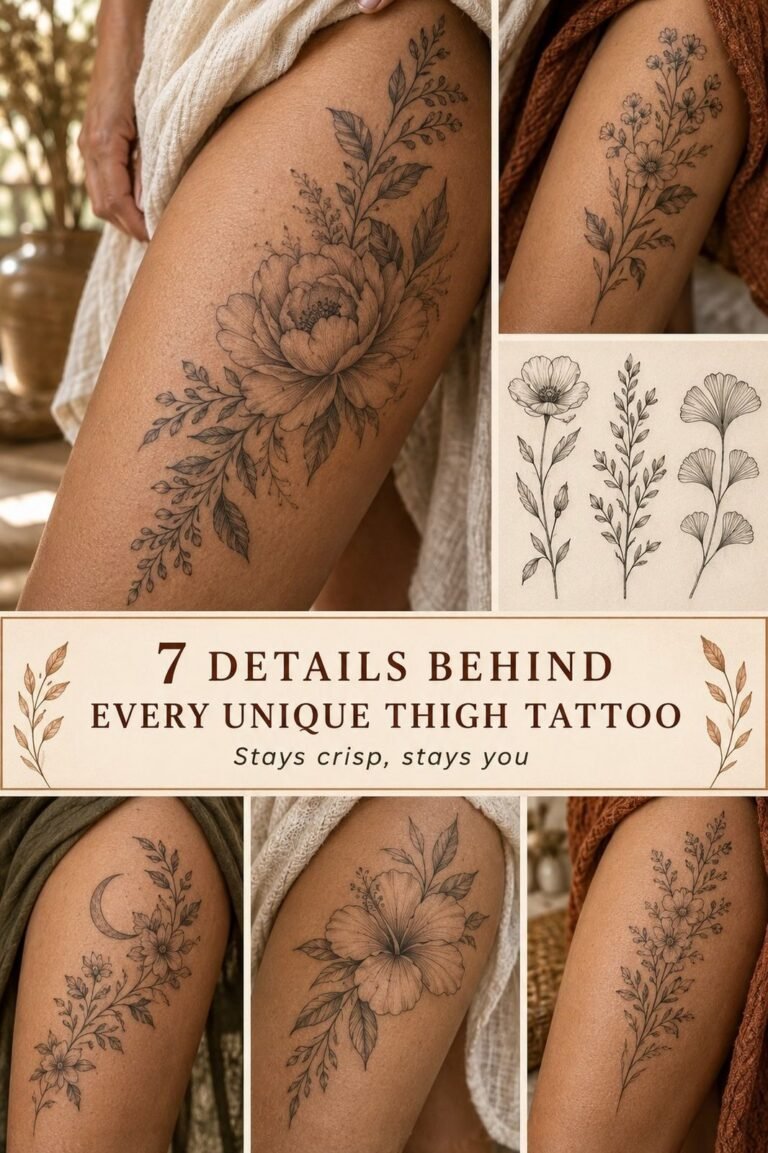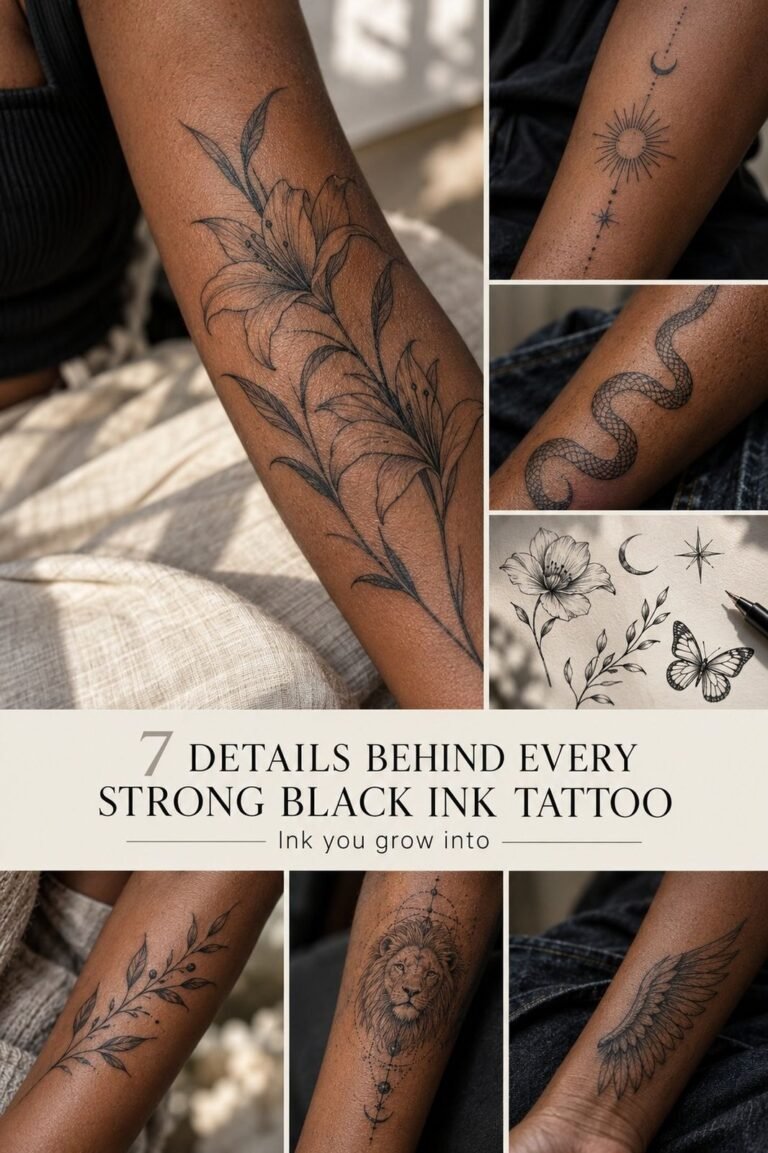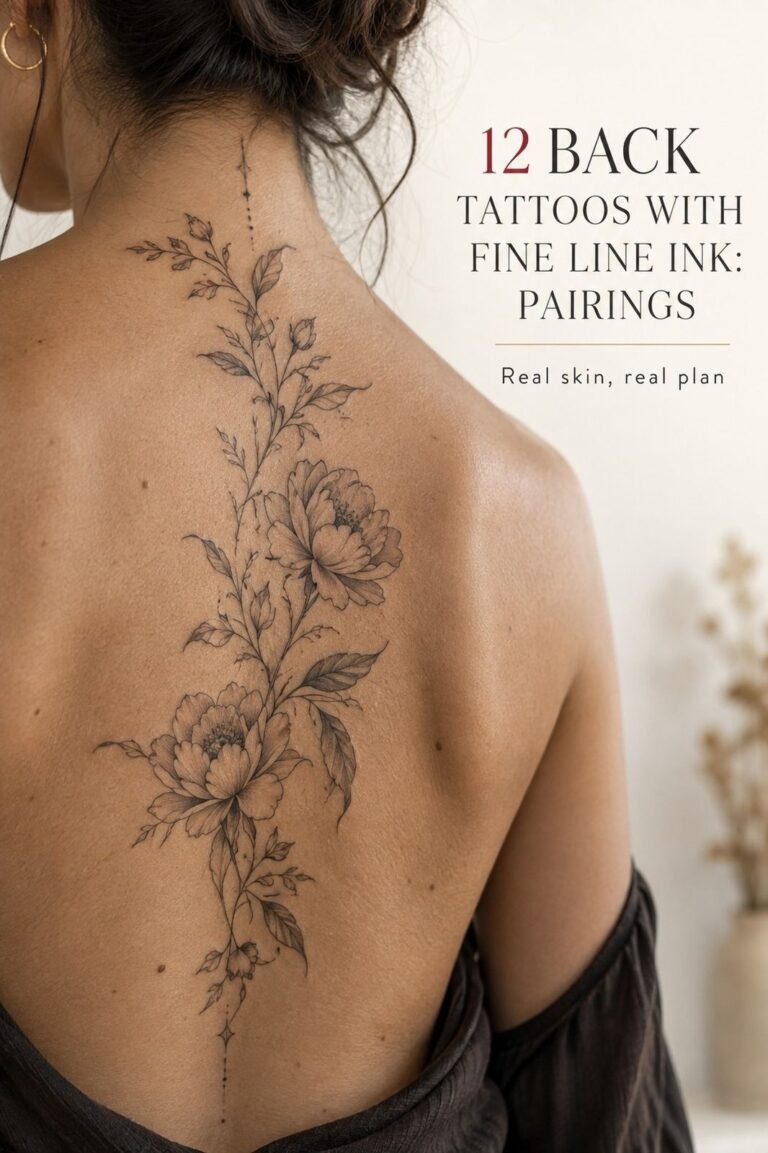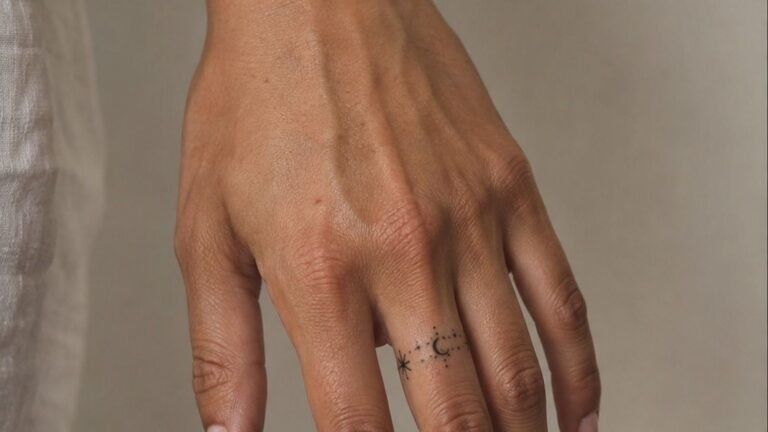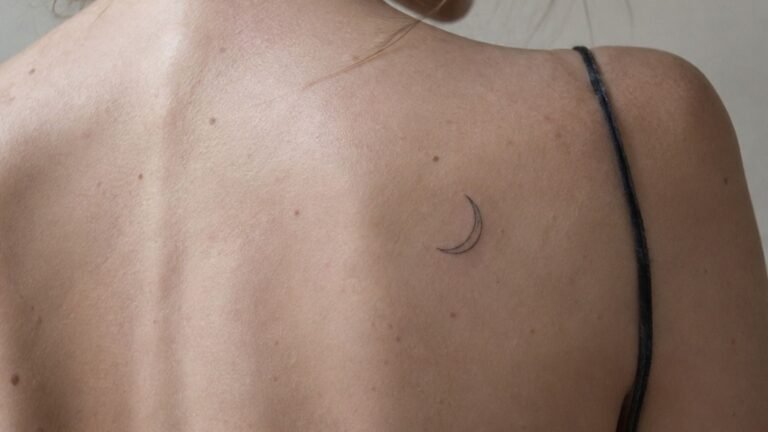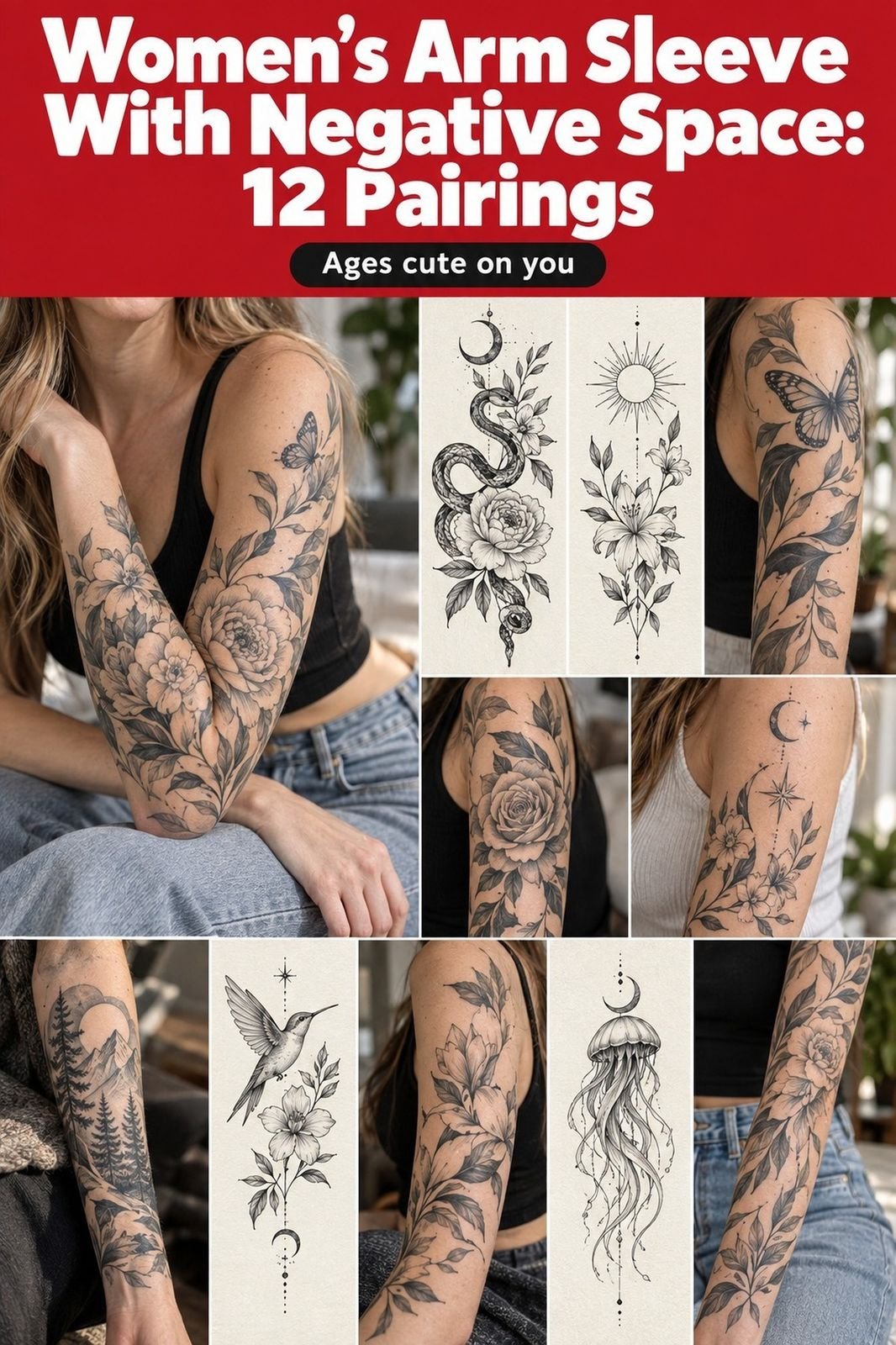
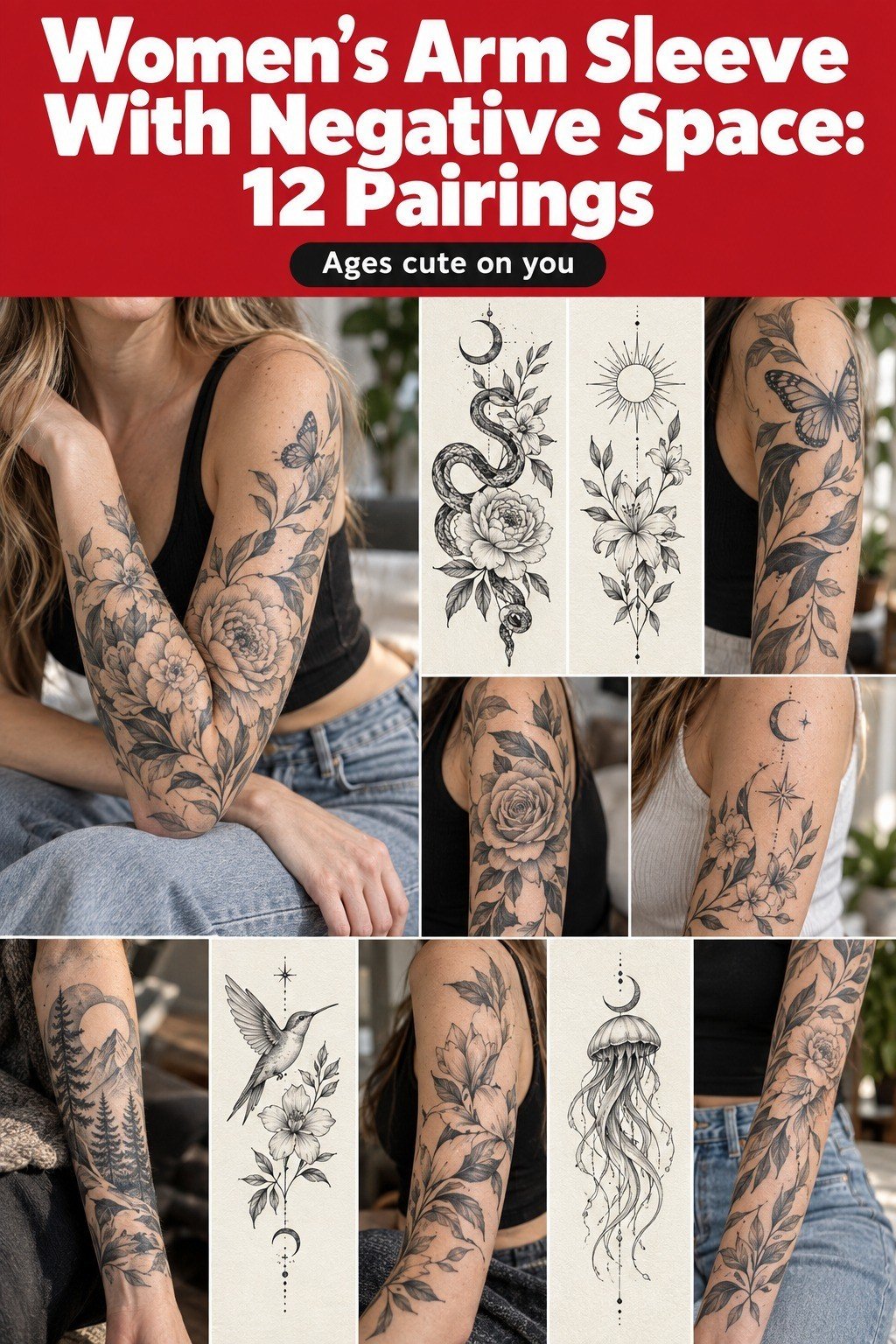
A women’s arm sleeve works best when the theme, flow, scale, and healing plan agree. You’ll want readable linework, thoughtful placement, and a design that still feels personal years later. Surface healing usually takes 2 to 3 weeks. Complete healing can take 2 to 3 months. Start with a clear idea!
- Start With a Striking Arm Sleeve Theme
- Which Intricate Linework Creates Cohesive Flow?
- The Curve-First Method for Bold Motifs
- Delicate Details or Dense Ink Over Time?
- Plan Meaningful Symbols Across Each Section
- Fierce Contrast or Soft Linework?
- Ornate Elements, Minimal Accents
- The Floral Shoulder-to-Wrist Map
- Quarter Sleeve or Half Sleeve?
- Protect Fresh Ink During Healing
- Can You Refine Your Personal Style Before Booking?
1Start With a Striking Arm Sleeve Theme
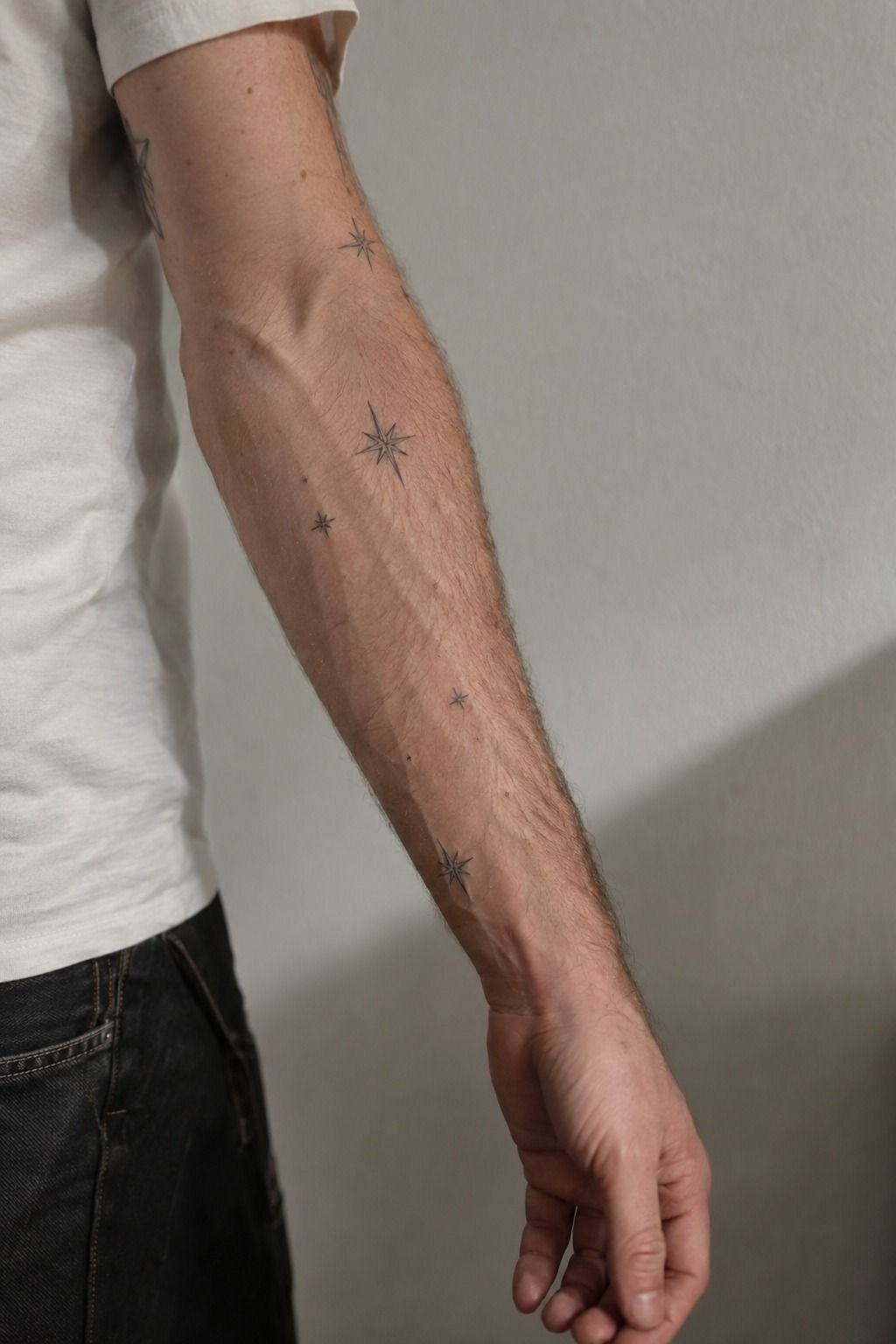
Begin with one emotional idea, not eleven unrelated pictures. A fine-line star tattoo can feel striking when the symbols share one visual language.
They don’t need to match perfectly. They do need to feel connected from wrist to upper arm.
I call this the Three-Anchor Rule. Choose three repeating signals before you sketch.
They might be celestial shapes, botanical stems, and ornamental dots. Or they might be feminine, symbolic, and delicate imagery with crisp black outlines.
Your theme can be romantic or edgy, but it shouldn’t change personality every few inches. Write down five words before your consultation. Personal symbolism might lead you toward stars, initials, dates, or a small moon.
A more powerful direction could use snakes, eyes, flames, or thorned flowers. If you’re drawn to an understated quarter sleeve, study these quarter sleeve tattoos for women before committing to a larger plan.
Then remove the weakest idea. That’s where most first sleeves improve.
I’d rather see four meaningful symbols repeated with intention than twelve beautiful images fighting for attention. Your theme should still make sense when your arm turns sideways.
That matters!
2Which Intricate Linework Creates Cohesive Flow?
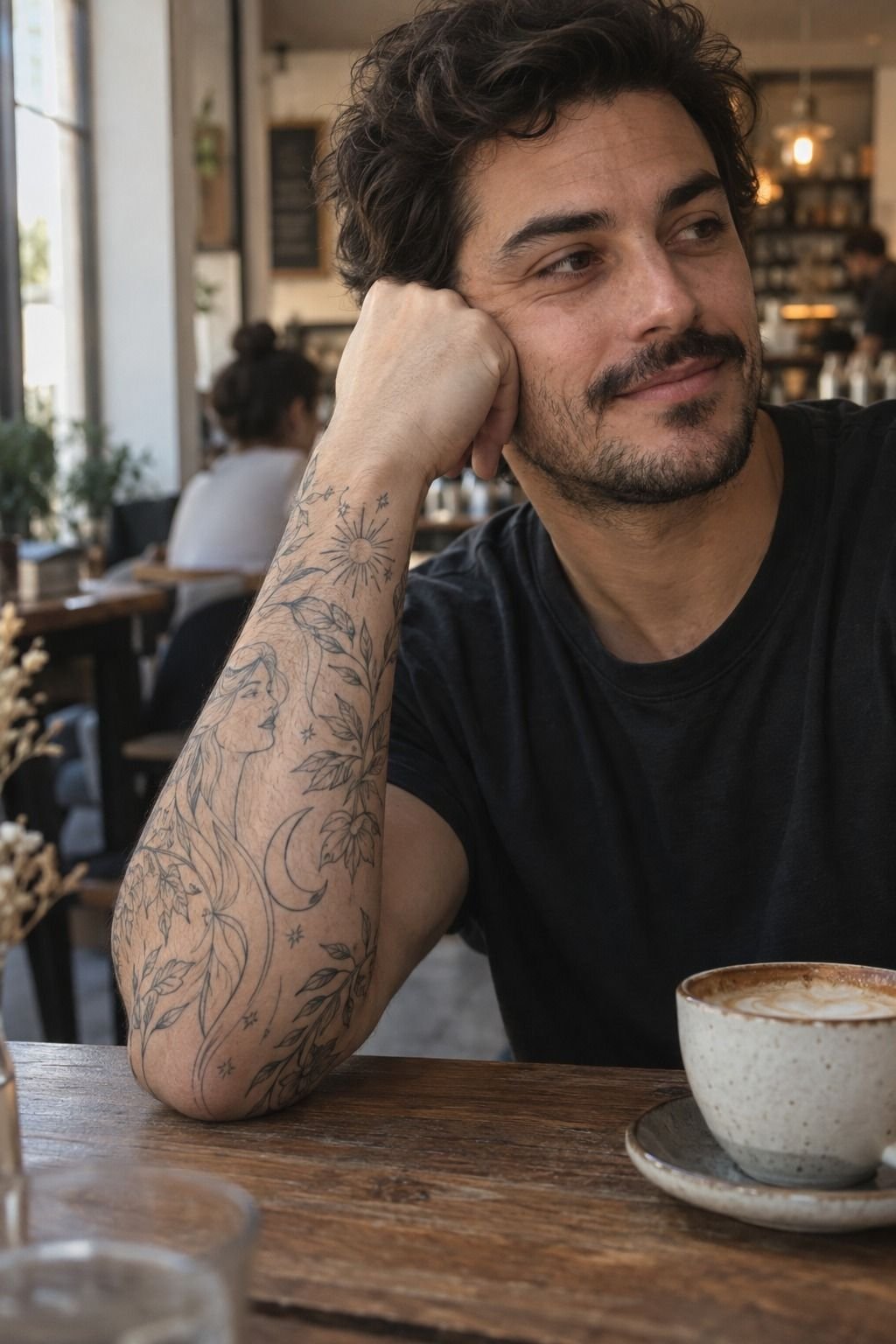
Fine linework needs a clear route across the arm. Hair-thin marks can create a flowing impression, but they shouldn’t form one crowded block.
Look at your arm from the front, side, and back. Then decide where the eye should travel first.
The single-needle linework can carry tiny details, but it isn’t a license to pack every inch. Give the artist open skin around faces, hair, leaves, and ornamental curves. On skin, the smallest marks need separation to stay readable.
Ask your artist to show healed examples, not only fresh photographs. Fresh ink can look intricate and sharp, while healed ink may soften and widen. Black tattoo ink gives strong structure when the design includes wispy hair or tiny stars.
You’re choosing a mark that has to live through time, sun exposure, and ordinary movement. That makes healed work more valuable than a stylish portfolio full of fresh tattoos.
Keep your reference folder focused. One folder for linework, one for placement, and one for symbols is enough. These arm sleeve tattoos for women can help you judge how repeated lines connect across a fuller design.
3The Curve-First Method for Bold Motifs
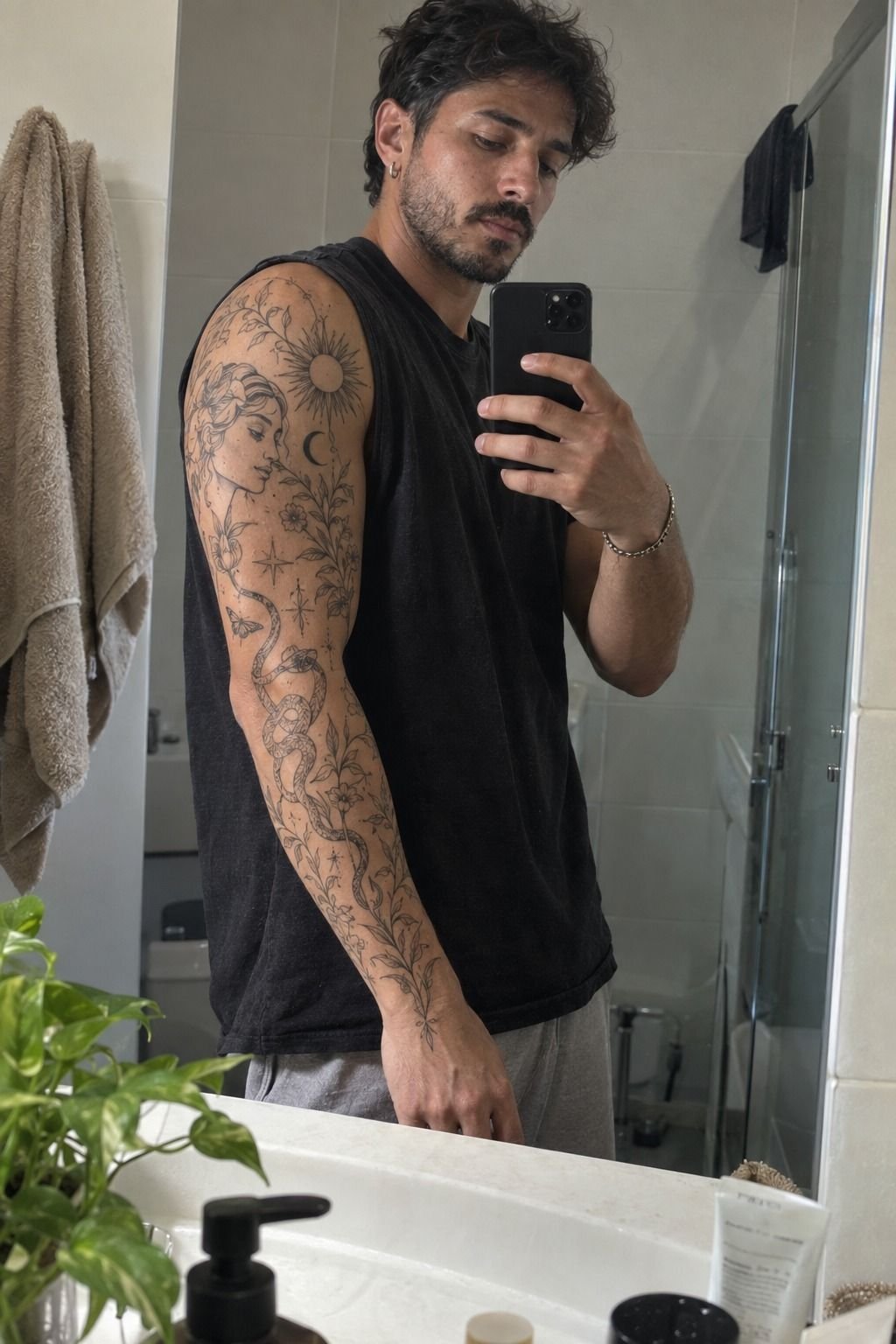
Place your strongest motif where the arm gives it the clearest visual route.
4Delicate Details or Dense Ink Over Time?
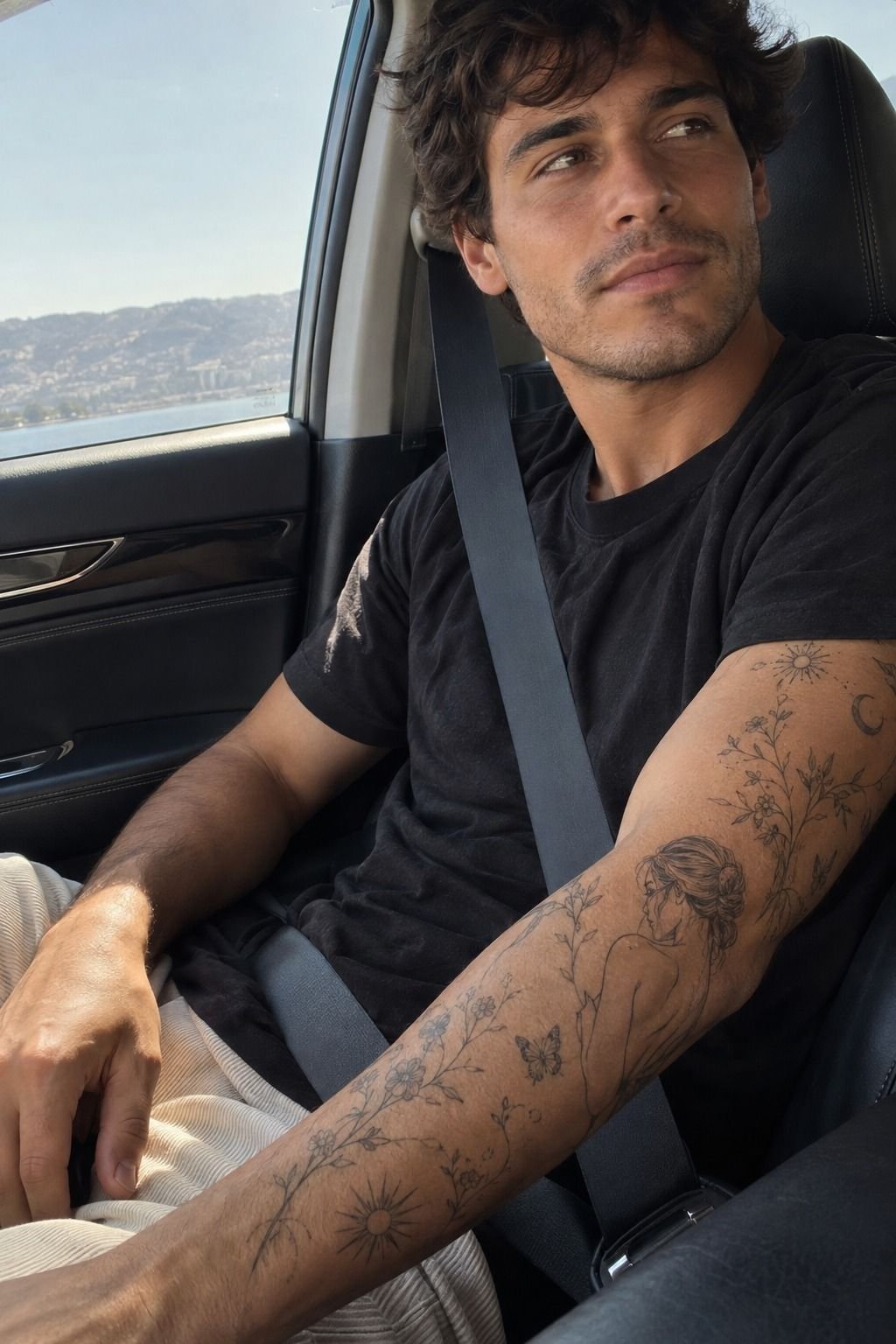
Delicate tattoos stay readable when you protect the spaces between lines. If two marks look almost connected on paper, ask whether they should be separated on skin. That small edit can preserve a crisp result.
The negative-space plan is simple. Fine lines can soften and widen as they age, especially with repeated ultraviolet exposure. A sharp, understated design often lasts better than an overcrowded one.
Ask about line weight, needle choice, and healed results in plain language. UV protection matters after the tattoo heals, so sunscreen becomes part of your long-term plan.
I’d skip any artist who promises that extremely thin lines will stay unchanged forever. Skin is living tissue. Honest advice is more valuable than a dramatic promise.
Take close photographs of healed work in ordinary light. Your eye should still find the stars, petals, or facial features without zooming in. If you’re weighing a smaller first tattoo against a broader project, compare these half sleeve tattoos for women.
5Plan Meaningful Symbols Across Each Section
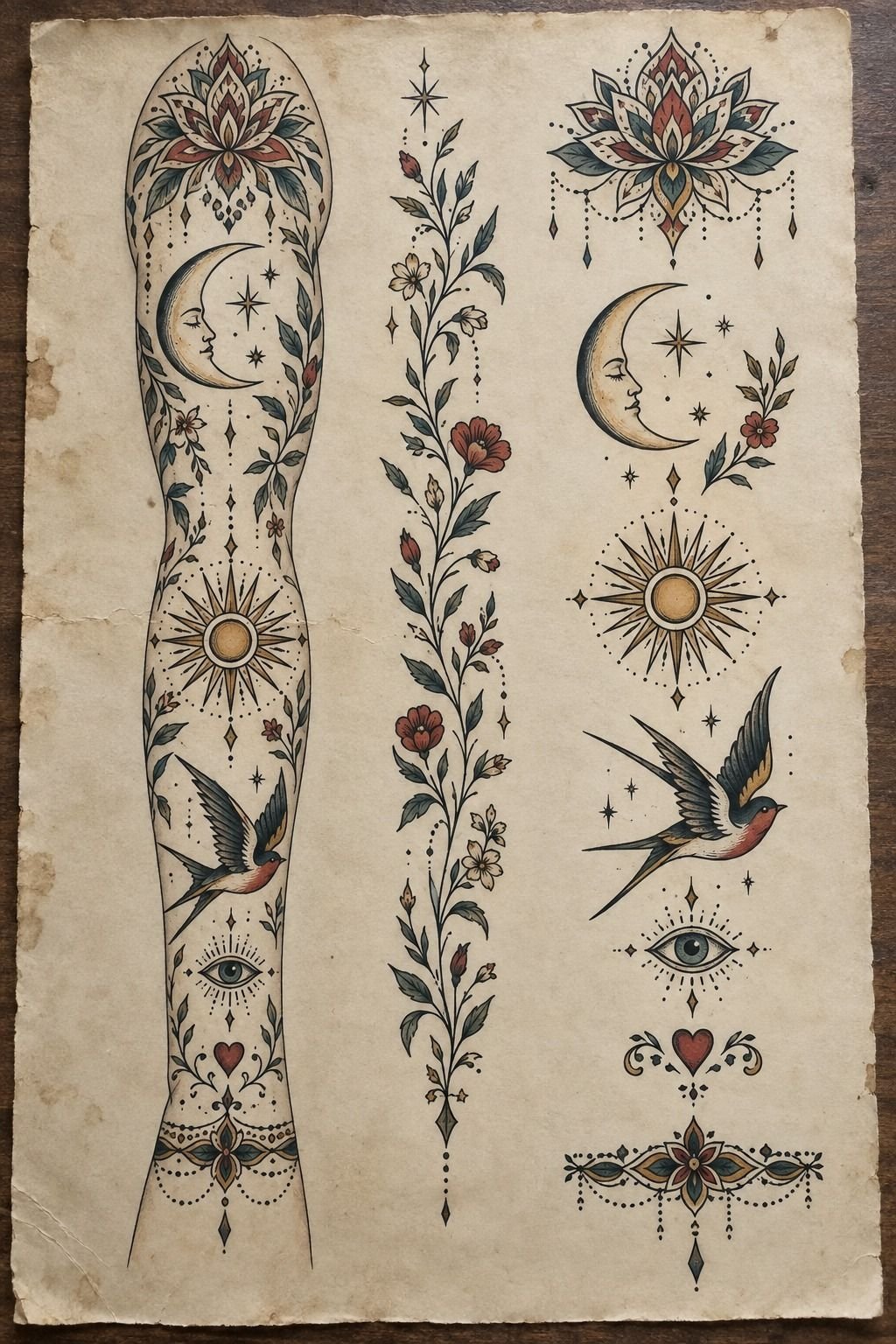
Treat each part of the arm as a chapter. The wrist can hold a small opening symbol.
The forearm can carry the main story. The upper arm can hold the boldest or most personal mark.
A symbol placement plan keeps the sleeve from becoming a collection of isolated images. Think about which symbols should be seen first, which ones should stay private, and which ones can connect two areas.
You might place a sacred moon near the inner arm, a fierce serpent along the outer forearm, and delicate stars near the wrist. That balance creates movement without making every mark compete.
Leave room for the design to grow. A personal sleeve doesn’t need every meaningful symbol on the first day. Sometimes the most empowering choice is saving one idea for later.
Before booking, explain what each major symbol means to you. Your artist doesn’t need a full autobiography.
They do need enough context to preserve the emotional tone. Browse these arm tattoos for women for examples of different symbolic placements.
6Fierce Contrast or Soft Linework?
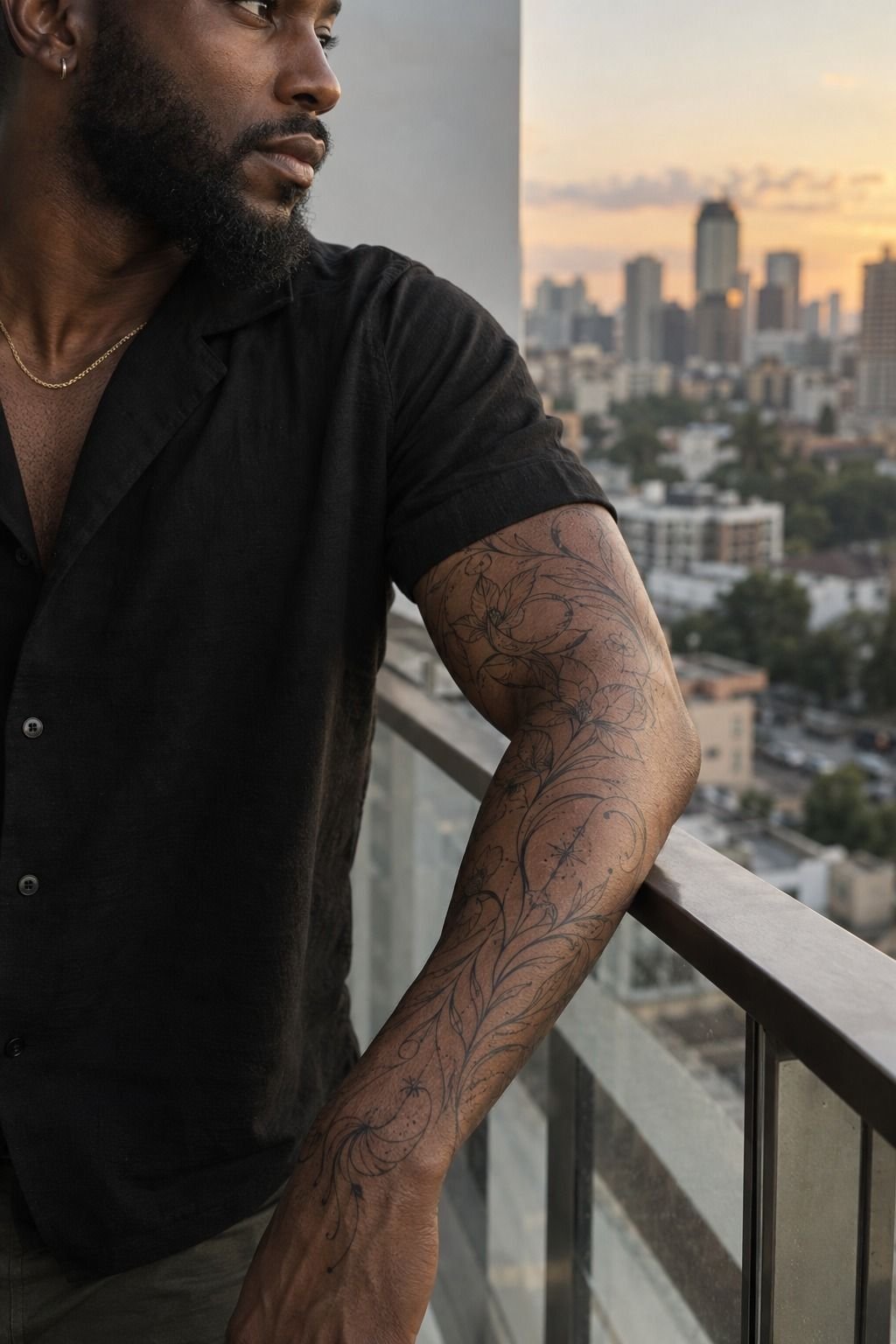
Contrast helps fine linework remain visible across different skin tones.
7Ornate Elements, Minimal Accents
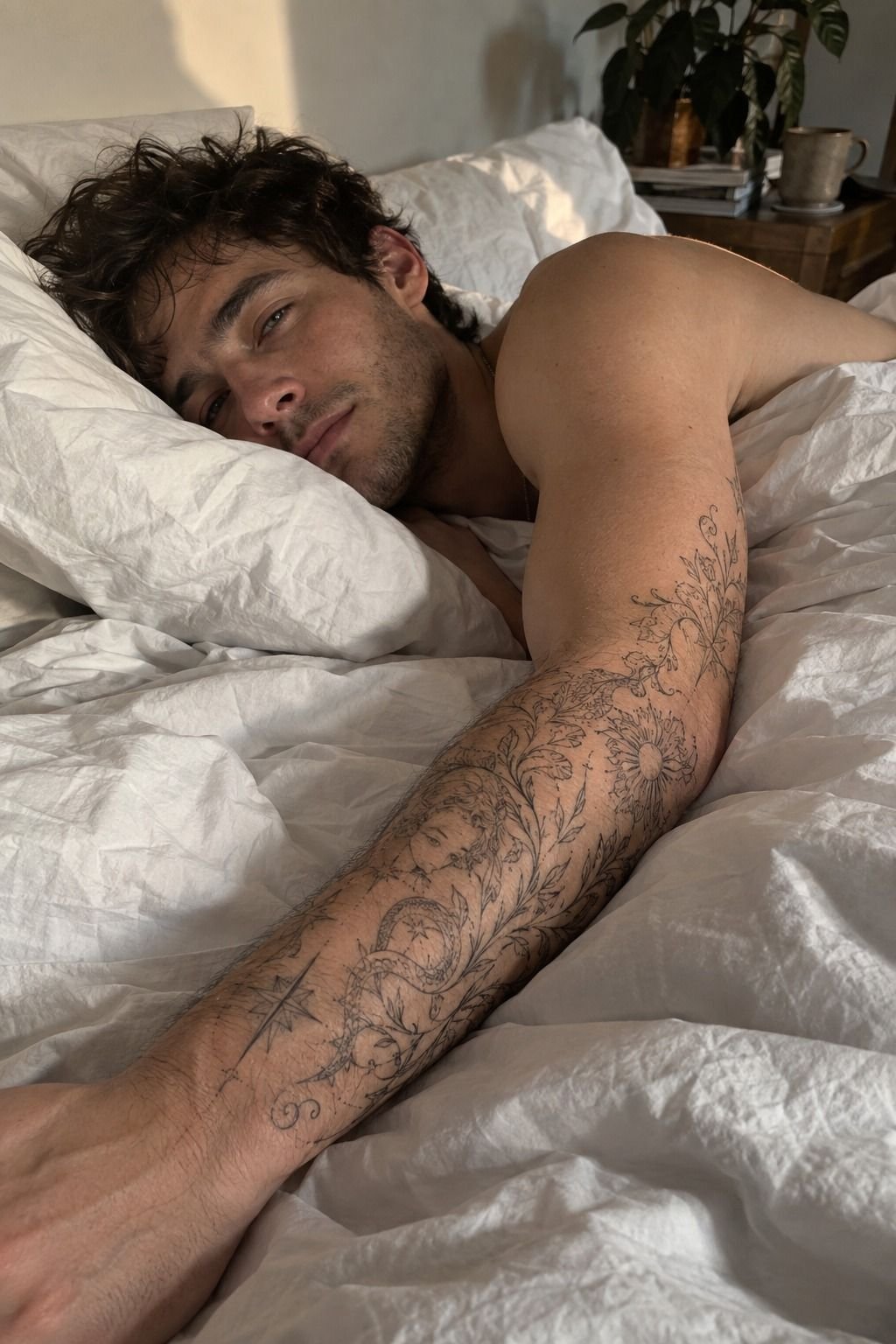
Pair one ornate area with quieter marks so your eye has somewhere to rest. A detailed face, flower, or ornamental frame needs simpler neighbors. Otherwise, the whole sleeve can feel equally loud.
The ornate-to-minimal ratio is a useful planning tool. Tiny dots, a clean crescent, or a single graceful stem can create rhythm without competing with the focal image.
Fine-line blackwork can look both delicate and edgy depending on the surrounding open skin. I’d skip adding another elaborate motif just because the arm looks empty during the stencil stage.
Open skin may be doing important visual work. It can make a symbolic detail feel more meaningful and give future additions a clear place to land.
Look at the arm from several feet away, not only from your phone screen. These 22 half sleeve tattoos for women worth the commitment can help you compare fuller compositions.
8The Floral Shoulder-to-Wrist Map
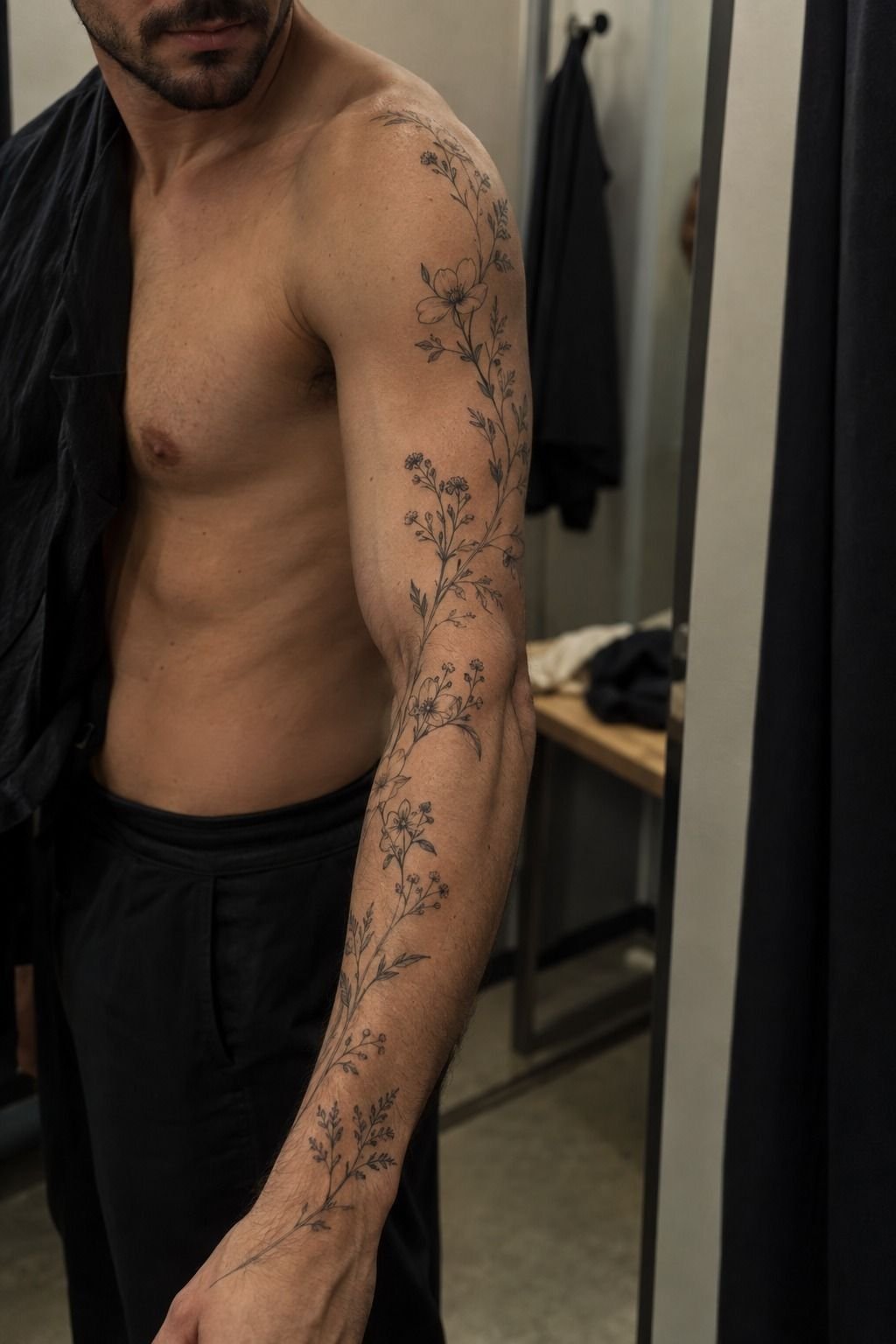
Let a botanical sleeve move like a stem, not like a row of separate symbols. A flowing branch can guide the eye from shoulder to wrist. Smaller leaves can fill turns without overwhelming the main flower.
A floral movement map starts with the largest bloom. Decide where that bloom should face. Then mark the direction of the stem, the gaps between leaves, and the points where the arm changes angle.
A graceful botanical design may include romantic petals, sharp thorns, and minimal leaves. It can also feel vintage, playful, or haunting. The style depends on line weight, spacing, and the artist’s editing.
Keep the most expressive detail away from areas that bend constantly. A flower can cross a curve, but its key features shouldn’t disappear when your arm moves.
If you want to compare smaller botanical layouts, these shin tattoos for women offer useful examples of long-form movement and narrow placement.
9Quarter Sleeve or Half Sleeve?
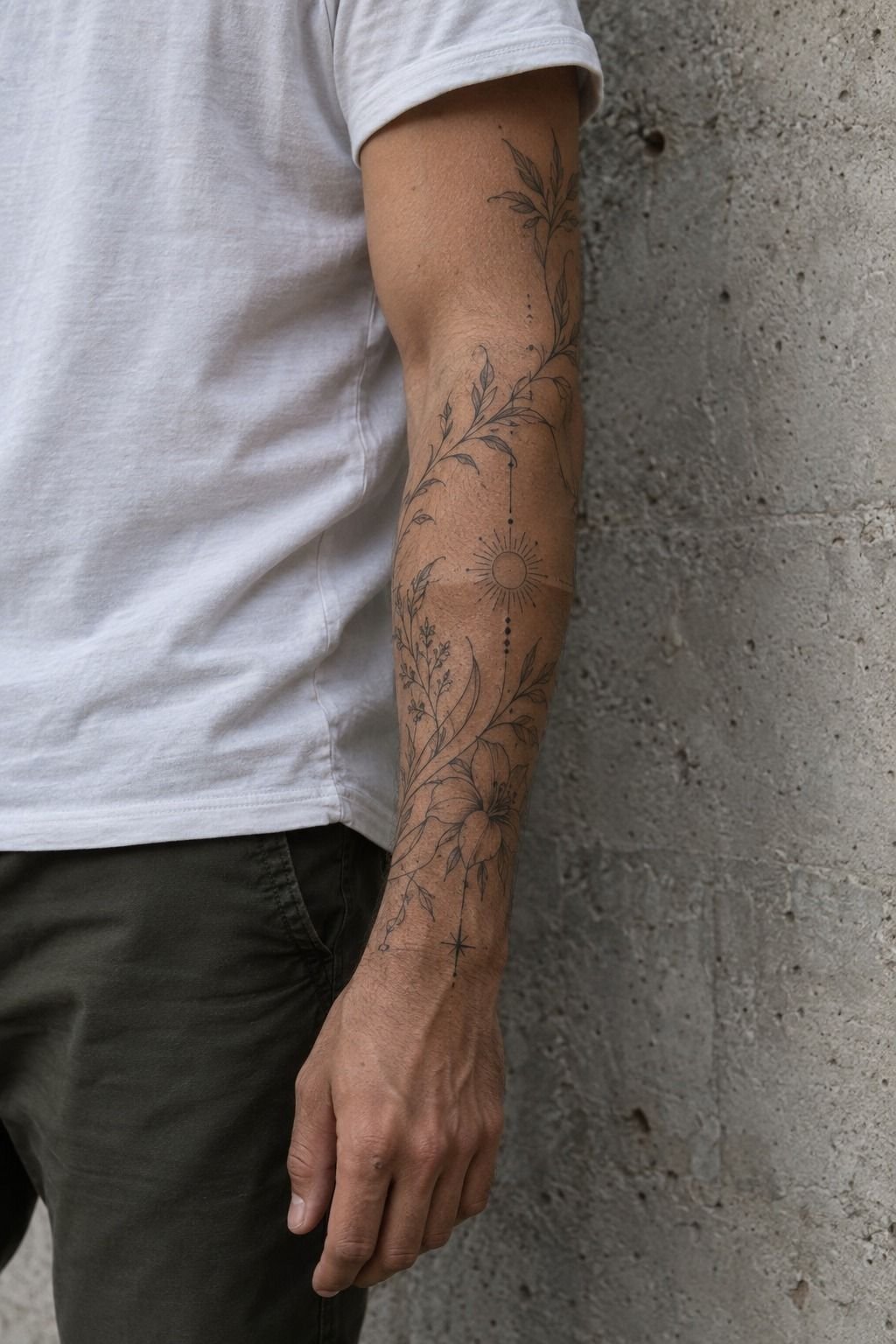
A quarter sleeve needs a clear stopping point. Decide whether your design ends near the elbow, above the wrist, or at another natural boundary. A clean endpoint makes the choice feel intentional.
Quarter-sleeve placement can be discreet or highly visible depending on the side of the arm, sleeve length, and orientation. An inward-facing design may feel personal. An outward-facing composition reads more publicly.
Use the stencil to judge proportion against your own arm. Don’t choose the smallest size only to reduce the cost. A dainty design that’s too compressed can lose its readable structure.
Here are practical planning ranges for a typical US consultation:
The final cost depends on the artist, region, size, and detail. Compare the value of healed craftsmanship, not just the lowest quote. Do the math!
If you’re deciding between a quarter and half sleeve, compare these quarter sleeve tattoos for women at the same viewing distance. That makes the difference easier to judge.
10Protect Fresh Ink During Healing
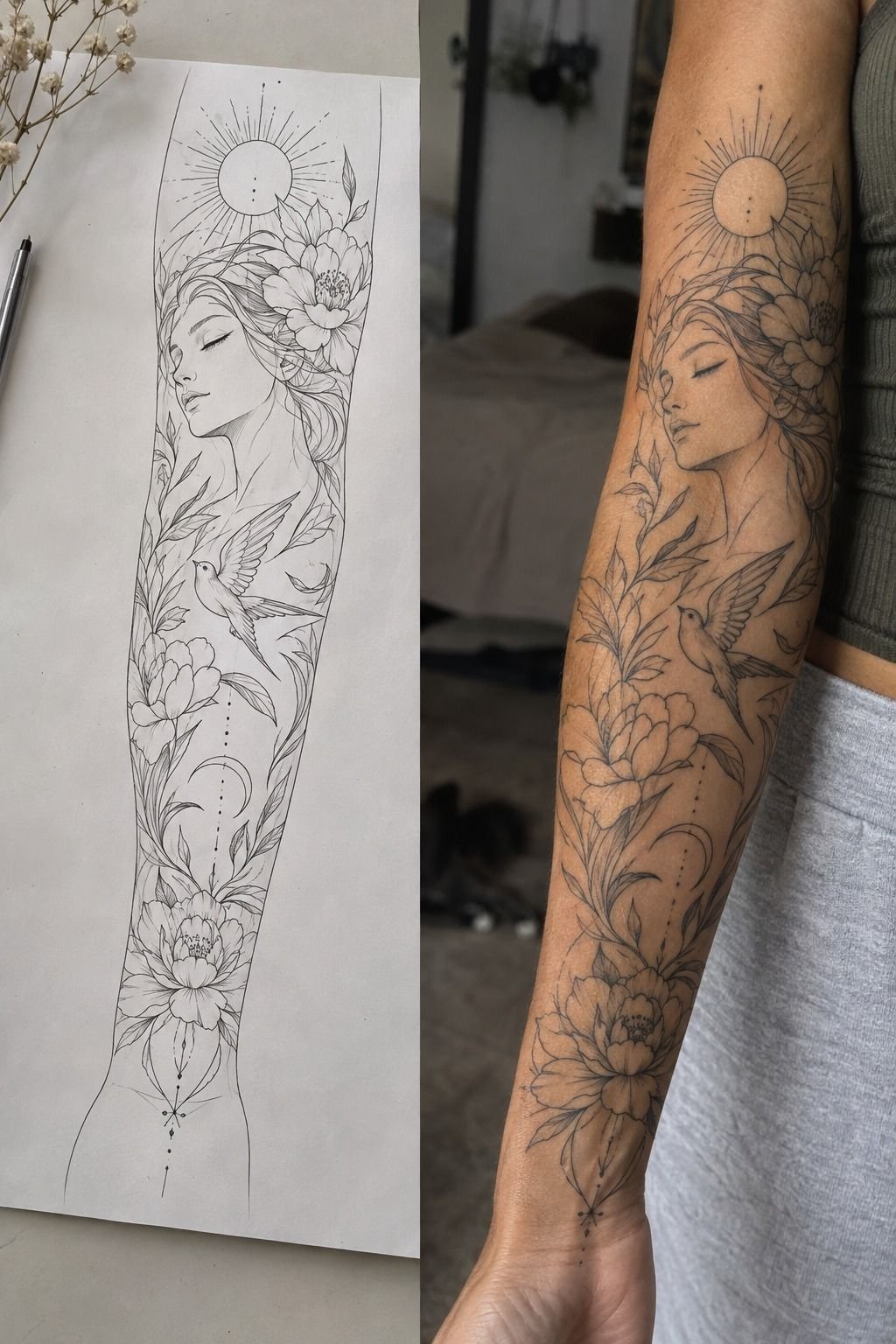
Fresh ink needs a simple aftercare plan. Follow the artist’s instructions for washing, moisturizing, clothing, and sun exposure. Don’t improvise with harsh products.
Gentle tattoo aftercare protects the design while deeper layers settle. Wash with clean hands, pat dry, and use only the product your artist recommends.
Avoid swimming, soaking, strong sun, and unnecessary friction during early healing. Don’t pick peeling skin. It’s annoying, but patience protects the final result.
Ask how long you should wait before returning to workouts, outdoor activities, or work that creates heavy friction. Protect it! A short interruption now can preserve delicate details later.
The surface may look healed before the deeper layers finish settling. Wait before judging softness, saturation, or line quality. If anything feels unusually painful or irritated, contact a qualified medical professional.
11Can You Refine Your Personal Style Before Booking?
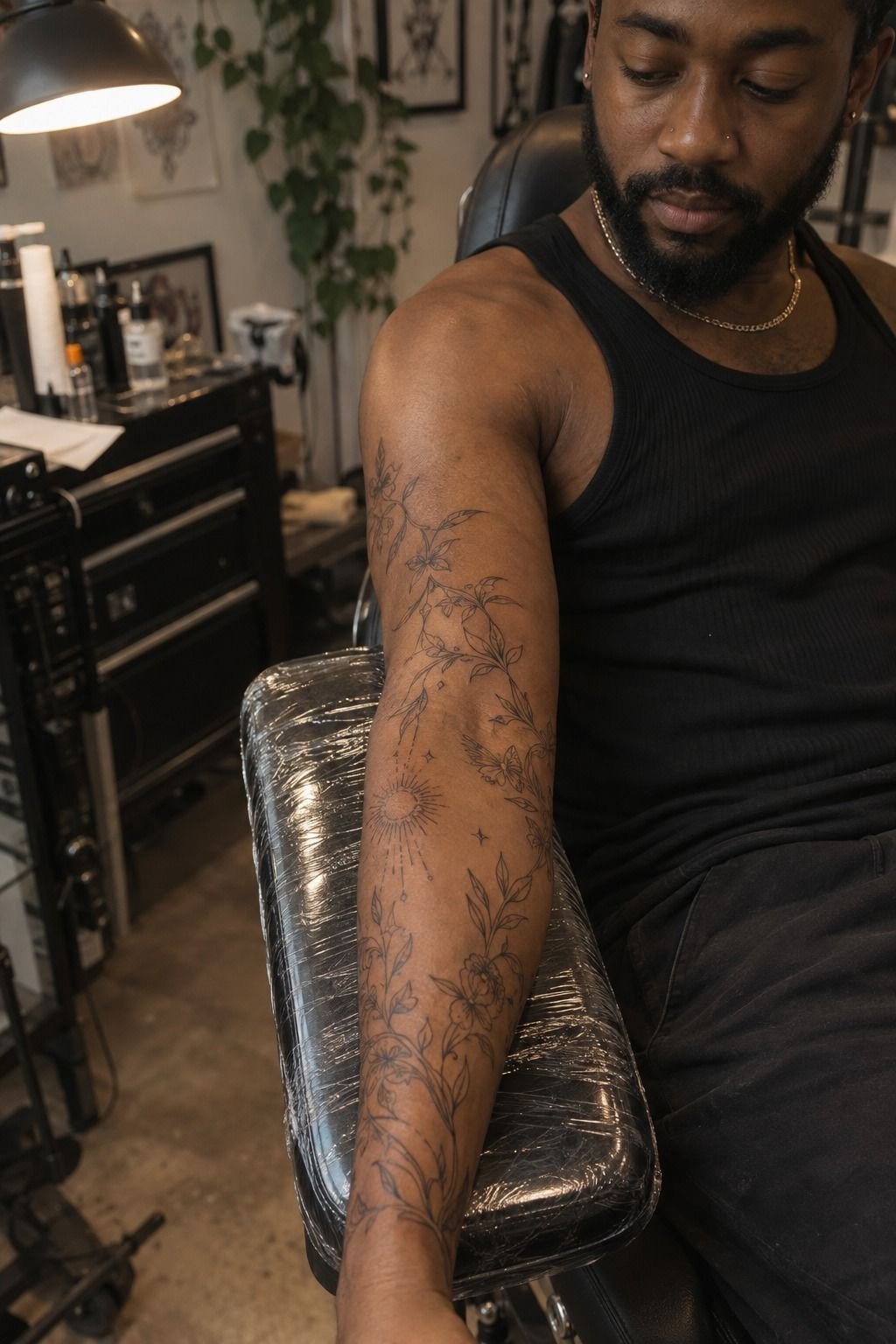
Before booking, reduce your reference folder to the images that still feel personal after the excitement fades. Your style may lean bold, vintage, sacred, playful, raw, or understated. Name that direction clearly so your artist isn’t guessing.
Use the Artist-First Check: portfolio, healed work, style match, and studio hygiene. Artist portfolio evidence should show more than one impressive tattoo. It should show a repeatable quality standard.
Prepare a short consultation note with your theme, preferred placement, symbols, and non-negotiables. Tell the artist what you don’t want, too. Maybe you dislike heavy shading, crowded backgrounds, or overly feminine ornament.
A polished tattoo can still feel personal when the artist edits your references instead of copying them. You’re allowed to pause if the conversation feels rushed.
Ask about the deposit, scheduling, session plan, and possible touch-up policy before you pay. Prices vary by region, artist, and design complexity, so a generic estimate won’t replace a consultation.
For another comparison set, browse these half sleeve tattoo ideas for women. Notice which designs still look like you.
A Consultation Checklist
Bring your theme, placement preference, approximate size, and three must-have symbols. Consultation notes help the artist understand your priorities before discussing the final design.
Ask how the artist handles fine lines, darker skin tones, touch-ups, healing changes, and session breaks. Clear answers are a meaningful sign of professionalism.
You can also ask whether the artist thinks your idea is worth it at the proposed size. A smaller design may cost less, but it might not preserve the detail you care about.
If the artist suggests simplifying one element, listen carefully. Editing can make a sleeve more elegant, more readable, and more timeless.
Compare healed examples with the artist’s current portfolio, especially if you’re considering an intricate or ethereal style. These half sleeve tattoo ideas for women can help you identify the scale and density you prefer.
Budget Questions Worth Asking
A tattoo budget should include the deposit, session cost, aftercare products, travel, and possible touch-ups. Tattoo budgeting becomes easier when you ask for the likely total instead of focusing only on the hourly rate.
Ask whether the shop has a minimum charge. Ask when payment is due. Ask whether a multi-session plan changes the cost or simply spreads it over several appointments.
The cheapest quote isn’t always the best value. Healed linework, thoughtful placement, and consistent hygiene matter. Paying for skilled editing can be worth it when the design will stay with you for decades.
Never let a limited budget pressure you into a rushed appointment. Save longer if you need to. A personal tattoo deserves a calm decision.
For scale comparisons before you request a quote, review these quarter sleeve tattoo ideas and note how much detail each design carries.
How Healing Changes Your Plan
Healing affects how you judge line weight, color, contrast, and spacing. Healed tattoo results may look softer than fresh ink. That change is normal, but your artist should explain it before the session.
Ask to see healed work from at least several months earlier. Pay attention to whether fine details remain crisp, whether black areas stay even, and whether the design still looks balanced.
Your skin type, sun exposure, placement, and aftercare all affect the result. No artist can control every variable. A strong artist can control preparation, technique, and honest communication.
Wait until healing is complete before deciding whether a touch-up is needed. Your first impression may change as the skin returns to its normal texture.
These shin tattoos for women also show why long lines and fine details need careful spacing as the skin settles.
The Three-Anchor Rule I Use Before Booking
I’ve seen first sleeves become complicated because the wearer tried to preserve every reference. One had stars, roses, a portrait, a snake, a quote, and several ornamental borders. Each symbol was attractive alone, but the arm had no shared rhythm.
The better version kept the stars, one botanical element, and the portrait. Everything that made the eye hesitate was removed. Open-skin planning gave the remaining symbols more impact.
My Three-Anchor Rule is simple: choose one subject family, one line language, and one spacing habit. A subject family might be celestial, botanical, symbolic, or figurative.
A line language might be delicate fine line with selective black accents. A spacing habit might keep open skin around every focal point. Those decisions make later choices easier.
Use arm sleeve tattoos for women to compare how repeated motifs create a cohesive sleeve without making every section identical.
Why Open Skin Is Part of the Design
Open skin isn’t unfinished work. It can separate a delicate symbol from an intricate one. It can also keep a bold design from becoming visually heavy.
A negative-space strategy gives the arm rhythm. Your sleeve can feel expressive without covering every available inch.
This approach is especially useful for a first tattoo. You may want to add a meaningful symbol later. Leaving space now gives you more options and protects the value of the original composition.
Ask your artist to show the design with open areas clearly marked. If the plan only looks complete when every gap is filled, it may need stronger editing.
These upper arm tattoo ideas can help you compare designs that use open skin as part of the composition.
When a First Sleeve Should Stay Smaller
A smaller first sleeve can be a smart choice when you’re still learning your pain tolerance, healing response, or style preferences. Starter sleeve planning lets you test the artist and the process.
You don’t need to prove commitment through maximum coverage. A polished quarter sleeve can feel iconic when the composition has a clear beginning and endpoint.
A smaller project may also fit your budget better. It can be worth it if the design stays readable and leaves room for future work.
Compare quarter sleeve tattoos for women with upper arm tattoo ideas before choosing your scale. Look at both from the same distance.
What People Always Want to Know
How much does a Women’s Arm Sleeve usually cost?
A Women’s Arm Sleeve often costs about $100 to $300 or more for a smaller project. A shop minimum may be about $50 to $100. Common hourly rates may run around $100 to $250 in the US.
The total changes with artist, region, size, and detail. Typical tattoo pricing is only a starting point, so ask for a consultation estimate before booking.
Are Women’s Arm Sleeves a good idea for a first tattoo?
Yes, a Women’s Arm Sleeve can suit a first tattoo when you choose a manageable placement and a clear design. The forearm, upper arm, and shoulder are often more tolerable than ribs, feet, hands, or sternum.
Start with a personal, readable composition rather than maximum coverage. Comfortable tattoo placement can improve the experience and help you understand how your skin heals.
How do I choose a tattoo artist for a Women’s Arm Sleeve?
Choose an artist with clean linework, healed photographs, relevant style experience, and visible studio hygiene. Look for work on skin tones and placements similar to yours.
A strong consultation should feel collaborative, not rushed. Healed tattoo photography tells you more than a perfect fresh-ink image, so request it directly.
How much do Women’s Arm Sleeves hurt?
Pain varies by person and location. The forearm, thigh, and shoulder are often more tolerable than the ribs, feet, hands, or sternum.
Your session length, rest, hydration, and expectations all matter. Forearm tattoo placement is often a practical first choice, but your artist can help you compare exact locations.
How long does a Women’s Arm Sleeve take to heal?
The surface usually heals in about 2 to 3 weeks. Complete healing can take about 2 to 3 months. Wash gently, moisturize as directed, and avoid swimming and strong sun during early healing.
Don’t judge the final line quality too quickly. Tattoo healing time varies, so follow your artist’s instructions and wait before evaluating the finished result.
What’s the best placement for Women’s Arm Sleeves?
The forearm, upper arm, and shoulder offer useful space, manageable visibility, and often more tolerable pain than the ribs, feet, hands, or sternum.
Choose inward or outward orientation based on how private you want the tattoo to feel. These upper arm tattoos for women can help you compare visibility and scale.
Where I’d Start First
If I had to pick one step, I’d start with the theme. A clear theme stops pretty symbols from turning into visual noise. It also gives your artist room to edit weak ideas before they reach your skin.
Save this guide, write your three anchors, and book a consultation when the plan feels personal rather than rushed.