Quarter sleeve tattoos for women can age clean if you give the design enough skin, enough contrast, and the right artist. I almost talked myself into cramming my first sleeve idea too small because I wanted every flower, every line, every little symbol. Bad call! The cleanest quarter sleeves are not louder, they are edited, and I’ll show you 11 that hold up.
Is a quarter sleeve actually worth the commitment?
Yes, if you treat it like a real project and not a quick add-on. A quarter sleeve lands roughly between a half and a full forearm piece, usually 5 to 7 inches tall and running from above the elbow crease down toward the wrist. That gives you enough real estate for one clear visual story without locking you into a back piece or a chest plate.
What you’re really committing to is time, not just money. Plan on 3 to 7 hours of tattooing, often split into two sessions so the skin can rest between passes.
You’re also committing to wear: the outer forearm and upper arm are forgiving, while the inner arm, wrist ditch, and elbow crease take more sun, more friction, and more fading. If you’re not ready to think about sun, gym friction, and lotion for the next two to three months of healing, scale down to a forearm band first. That’s not a cop-out, it’s a smart test drive.
Where the budget and the session time actually go
The biggest cost driver is time, not the design itself. Most US shops run a shop minimum of $50 to $100, an hourly rate of $100 to $250, and split detailed pieces across two appointments.
A quarter sleeve with strong linework and soft shading usually lands $300 to $1,500, depending on artist, city, and how much background you add. Color or micro-detail pushes time, and time pushes price, every single time.
Sessions break down like this: the first pass is structure, single-needle linework or 3-round liner building the backbone of the piece. The second pass is fill, grey wash shading or packed black ink depending on the style.
The third, if you need it, is color packing with big mags so the saturation lands in one clean pass instead of fifty scratchy ones. A solid artist plans those three passes before they touch you, not after. If they can’t tell you how many hours each pass takes, they’re not done designing yet.
- Fine Line Floral Quarter Sleeve Wrap
- Black And Grey Upper Arm Botanicals
- Minimalist Mandala Quarter Sleeve Tattoo
- Lower Arm Wildflower Quarter Sleeve
- Ornamental Lace Quarter Sleeve Design
- Soft Shaded Rose Quarter Sleeve
- Geometric Forearm Quarter Sleeve Tattoo
- Butterfly And Vine Quarter Sleeve
- Script And Floral Quarter Sleeve
- Blackwork Peony Quarter Sleeve Tattoo
- Watercolor Quarter Sleeve With Linework
1Fine Line Floral Quarter Sleeve Wrap
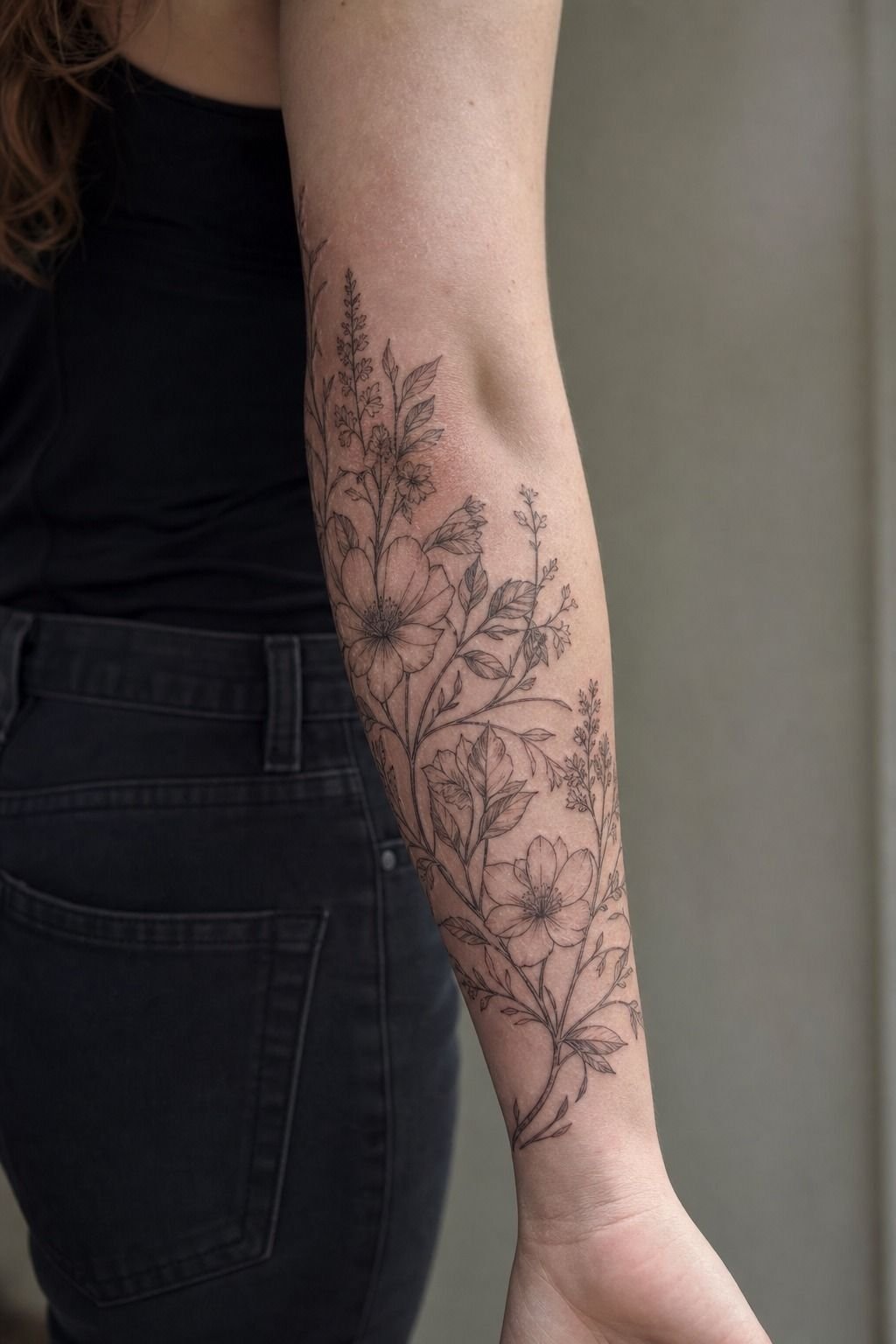
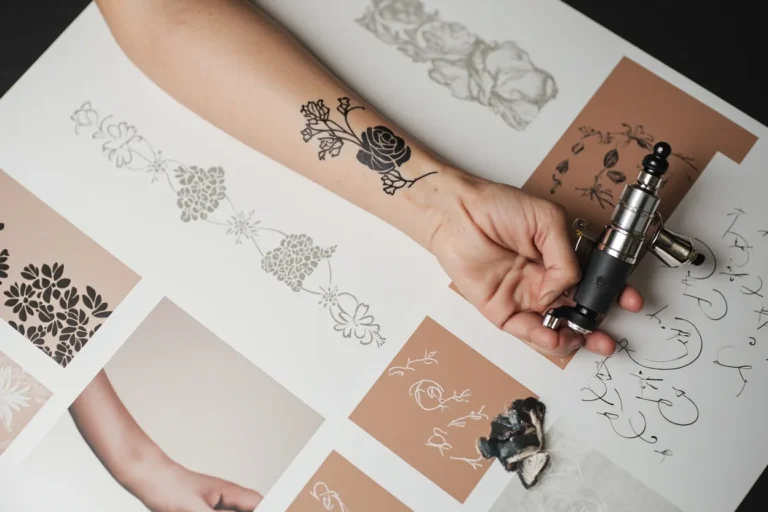
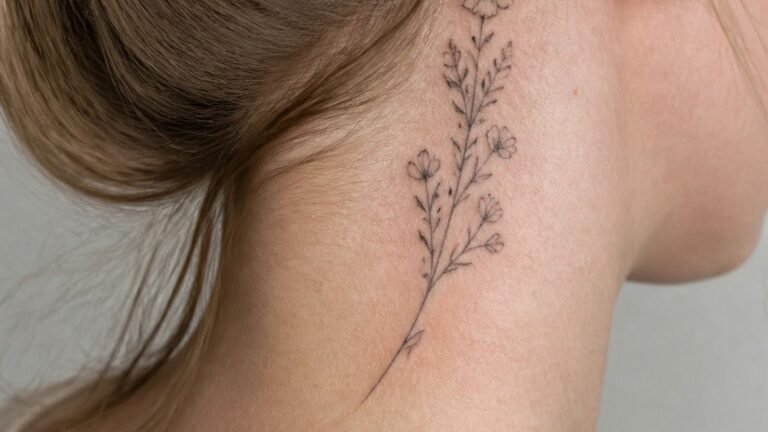
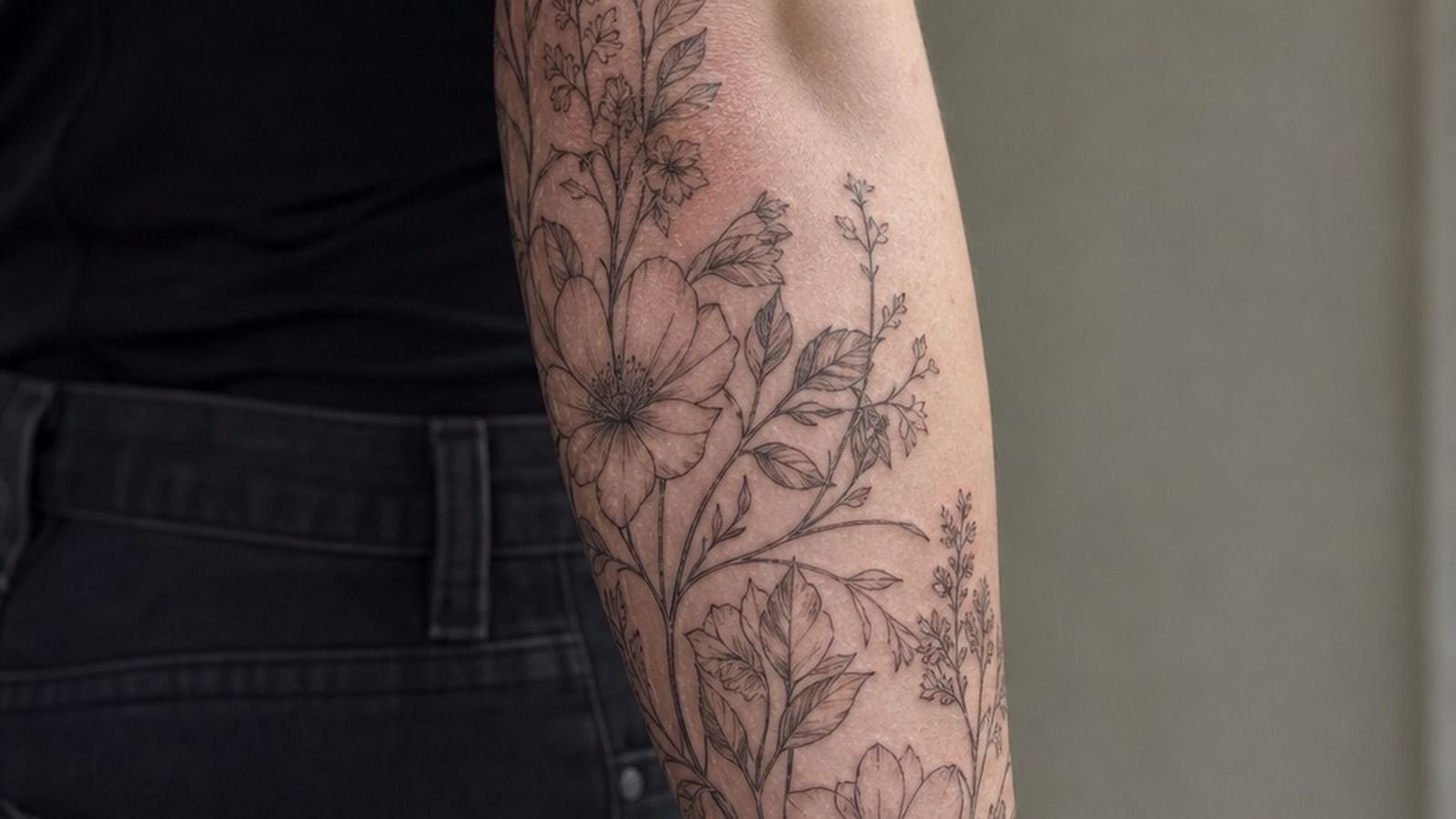
Start with a floral wrap if you want quarter sleeve tattoos for women that feel soft but still read clean at a glance. This look works because the flowers travel with your forearm instead of fighting it, and you can see that flow clearly in the wrap.
On fair cool-pink skin, thin black lining ink stays elegant when the artist leaves enough clearance between petals and stems. That is the part people skip.
I tell clients to build this kind of piece around the lining first, not tiny filler details. A quarter sleeve usually looks best around 5 to 7 inches tall, depending on your arm, because you need enough length for the vine to move.
But I wouldn’t pack six flower species into that span. One hero bloom, a secondary sprig, open skin.
If you love feminine sleeve planning, the placement notes in forearm tattoos for women help you picture the wrap before you book.
2Black And Grey Upper Arm Botanicals
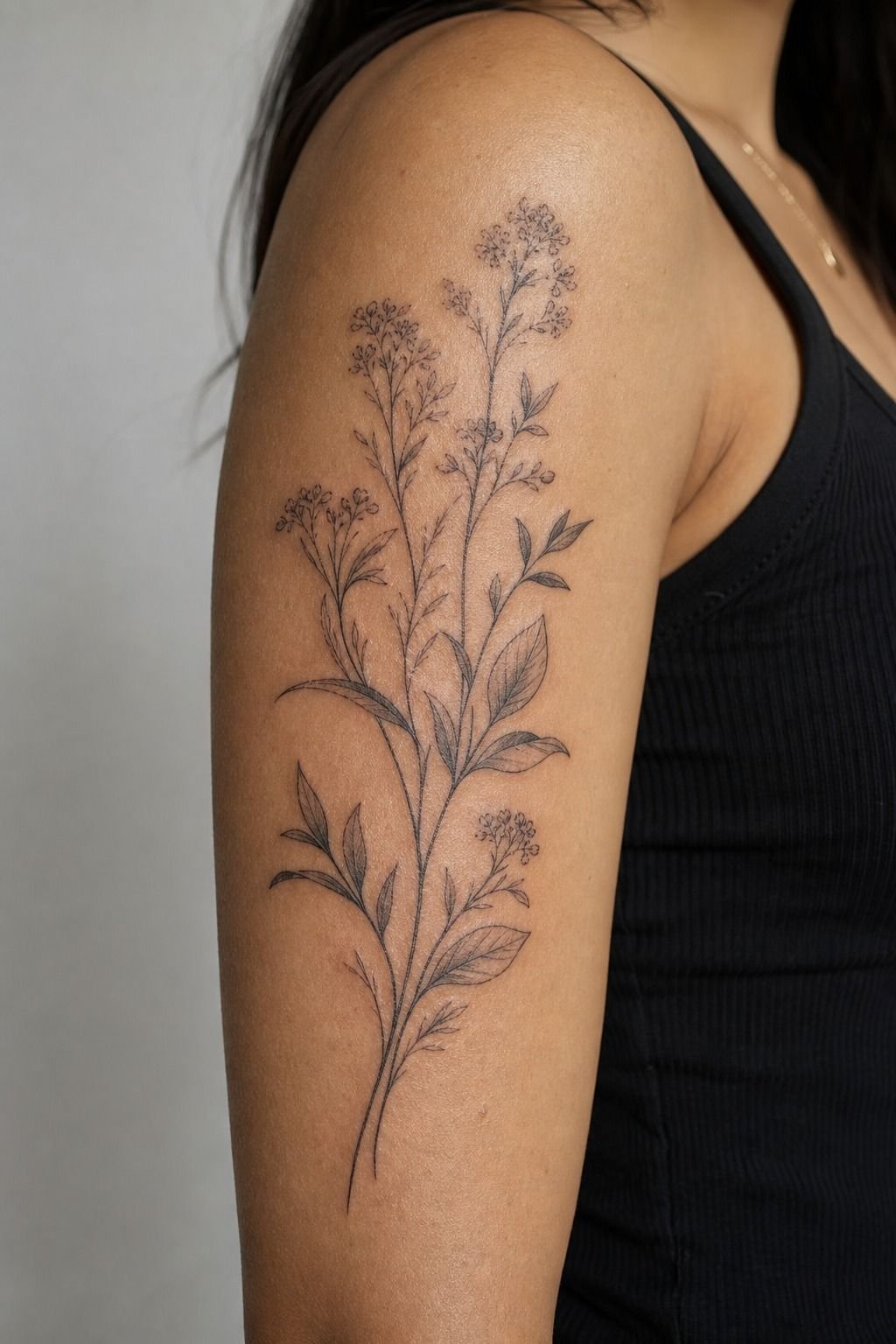
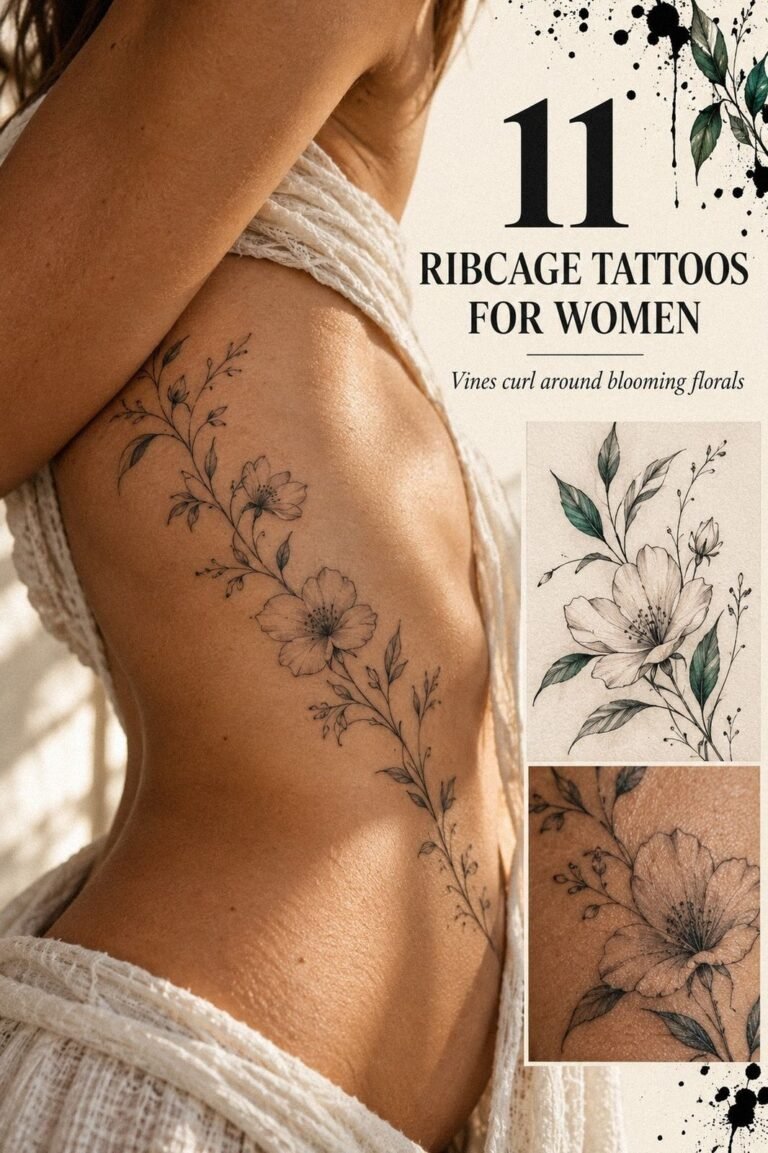
Lean into black and grey botanicals when you want a half-sleeve energy that heals soft, not flat. The upper arm gives you more low-wear skin than the wrist or inner forearm, so the linework stays cleaner longer.
On medium warm ivory skin, healed grey wash shading can look velvety if your artist pushes enough contrast into the leaves. If they don’t, the whole thing turns sleepy fast.
For this style, I look for grey wash that sits behind the linework instead of muddying it. You want leaf edges that feel crispy, then soft shadow tucked underneath.
Think eucalyptus, olive branch, peony leaf, not a pile of random filler. A piece this size often takes 3 to 5 hours total, sometimes split into two sessions if the artist works slow and clean.
But I’d skip an artist who only shows fresh photos. Healed black and grey tells the truth.
If upper-arm placement is calling you, upper arm tattoos for women is worth a look too.
3Minimalist Mandala Quarter Sleeve Tattoo
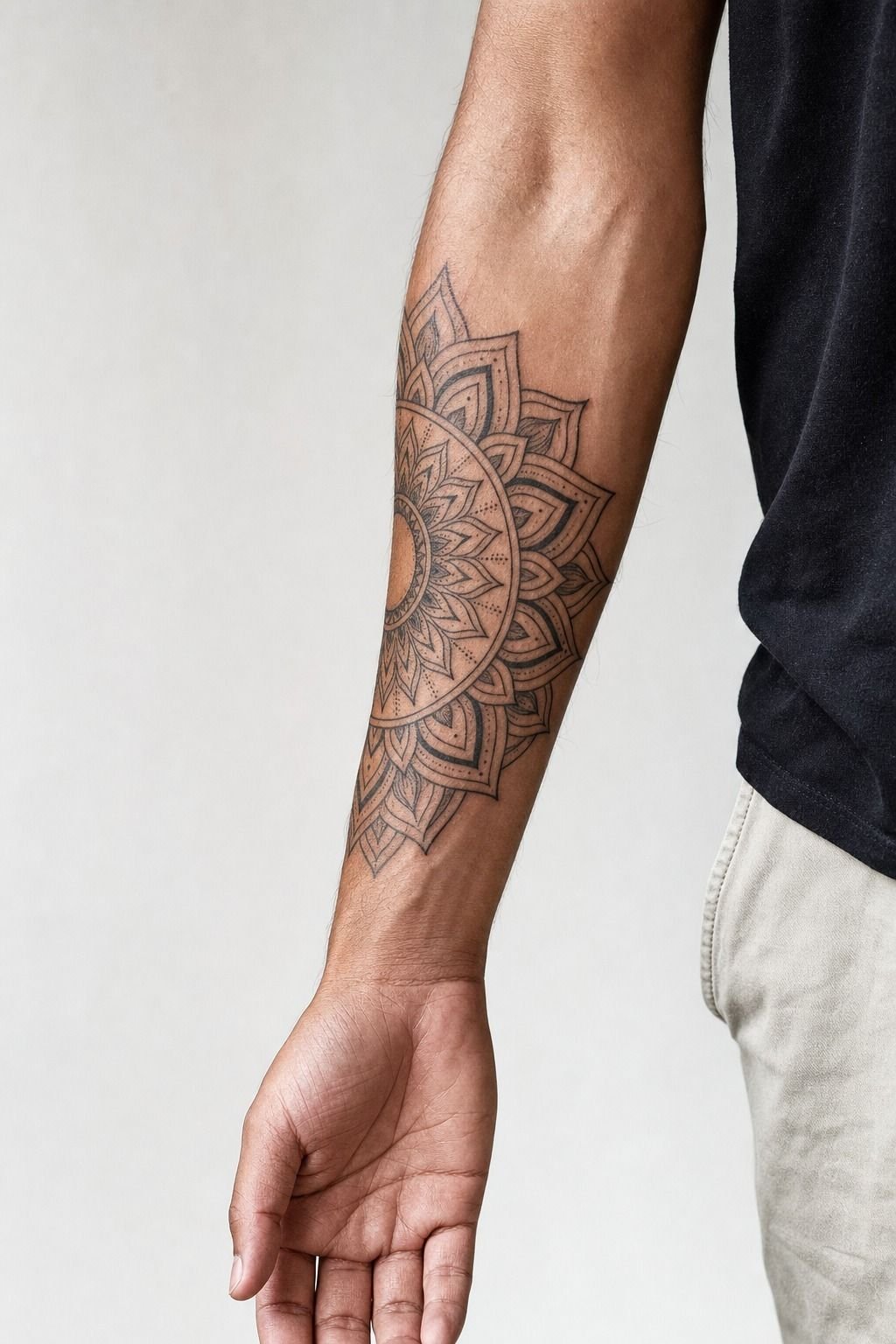
Anchor the whole quarter sleeve with a minimalist mandala if you want symmetry without making your arm look chewed up. This is one of those lower-sleeve ideas that only works when the geometry is disciplined.
Medium olive skin gives a healed mandala nice definition, but only if the artist pulls each spoke in one clean pass, not ten fuzzy ones. You can spot hesitation from a mile away.
I like a mandala quarter sleeve best when the center sits slightly off the wrist and the outer ring stops before the elbow crease. That spacing matters because joints distort circles. Single needle linework can work here, but I still want enough black to hold the pattern together in ten years.
Tiny dots, airy petals, clean negative breaks. That’s the formula.
But do not chase micro detail just because Pinterest made it look delicate. Tiny overbuilt geometry turns to soup later.
If you want another placement comparison, side tattoos for women shows how pain and flow change when the body curve changes.
4Lower Arm Wildflower Quarter Sleeve
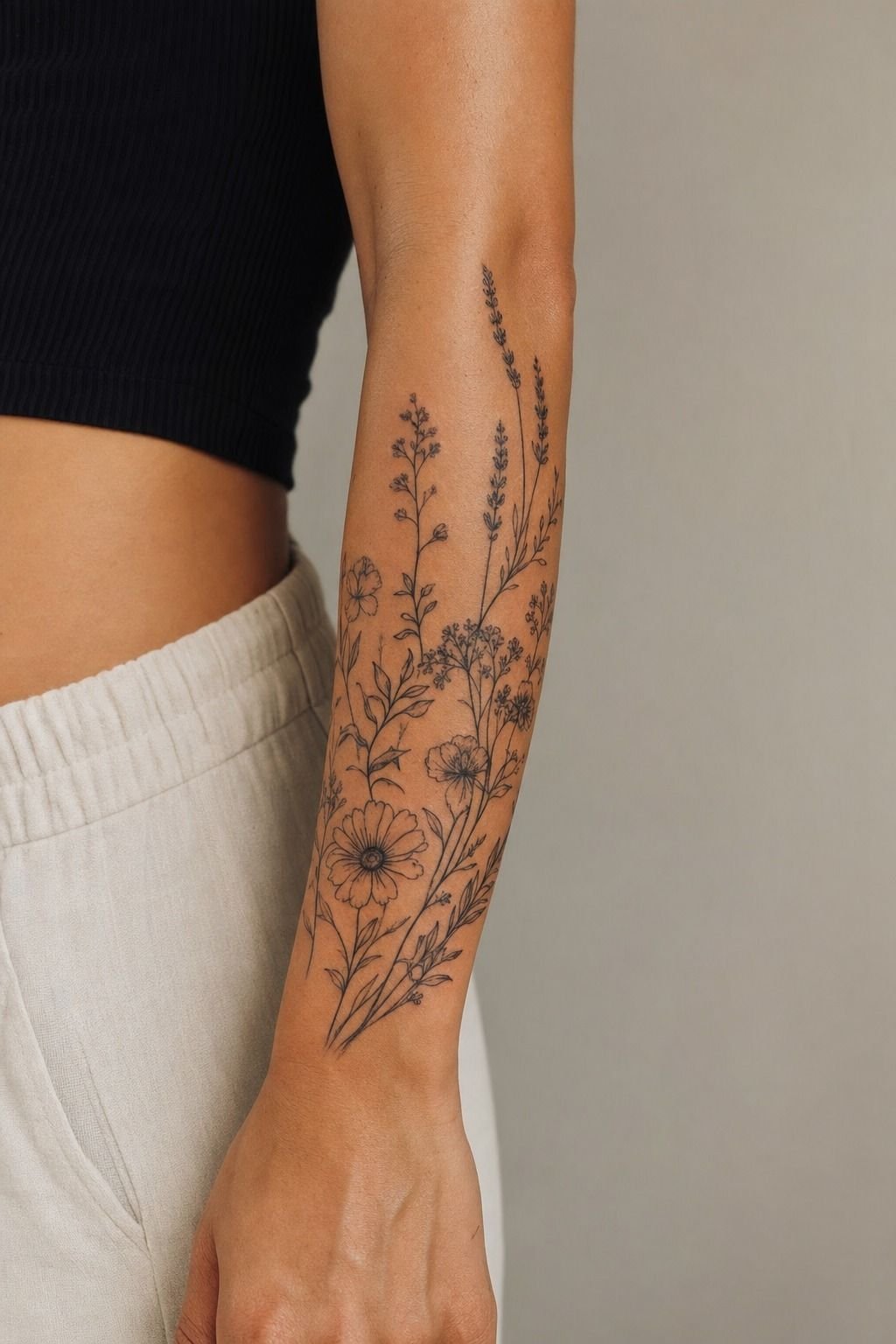
Let wildflowers climb the lower arm when you want movement without a heavy sleeve feel. The trick here is restraint on the wrist, where skin is thin and lines blow out fast if the needle sits too deep. Cap the highest bloom about an inch below the elbow crease so the piece reads as one wrap, not a forearm plus a separate flower.
A good wildflower run uses three to five species max, all sharing one consistent line weight so the eye doesn’t stumble across the arm.
5Ornamental Lace Quarter Sleeve Design
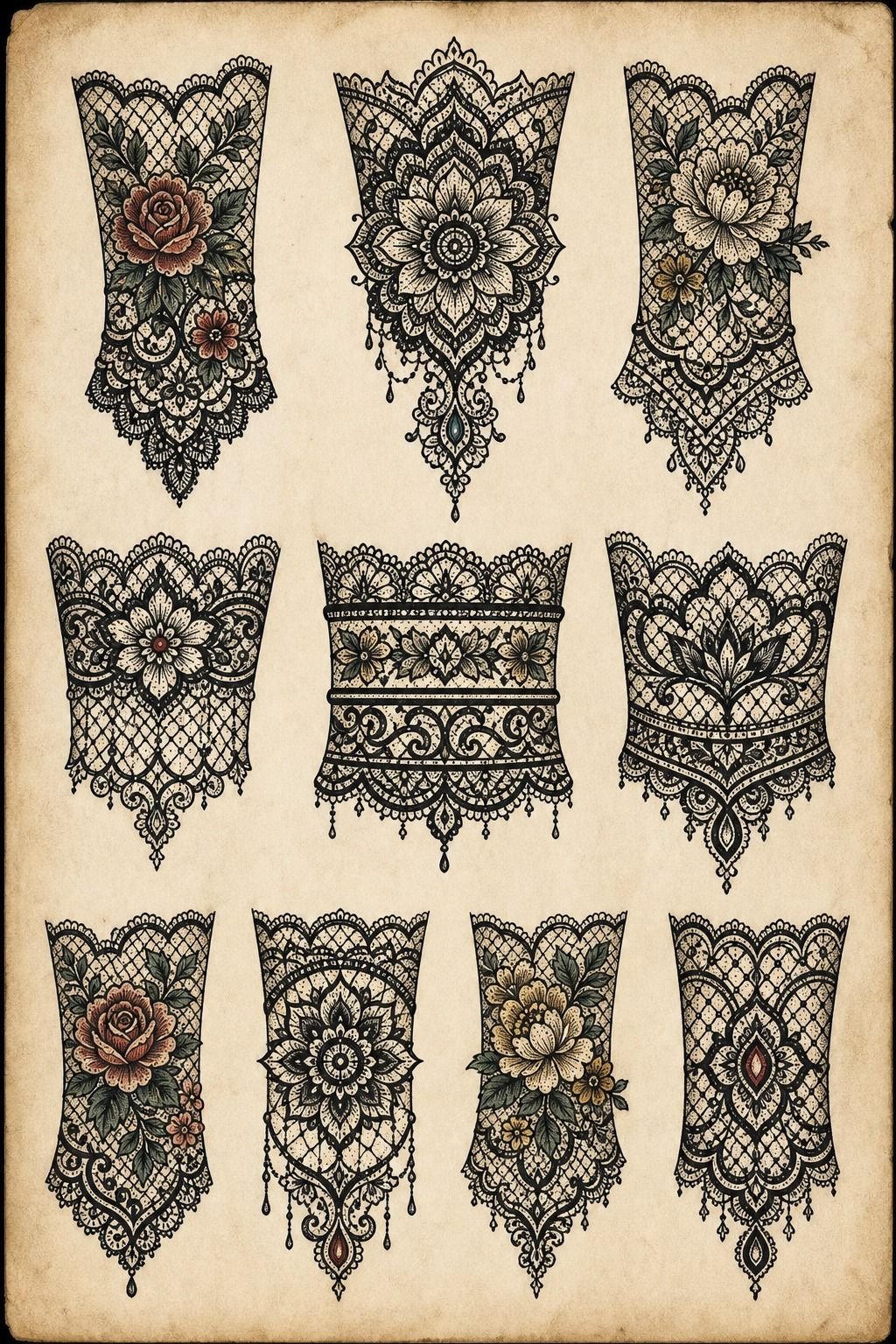
Study the flash first if you’re choosing an ornamental lace quarter sleeve. Why? Because this style lives or dies on spacing, not on how fancy the pattern looks on paper.
A clean lace concept should show repeat shapes, bead-like drops, and tidy arches that still make sense before they ever hit skin. If the flash looks busy on aged off-white paper, it’ll look worse once it’s wrapped on a real arm.
When I draw or review this style, I want ornamental blackwork with rhythm. Not random filigree. Not six different lace languages jammed together.
Pretty sleeve work goes wrong when the artist keeps adding curls instead of designing one clear backbone, and that backbone should be visible from a few feet away. But I’d skip super-light lace if you know you live in tanks and sun.
Thin ornamental edges can fade faster on exposed skin, which means touch-ups. Compare it with bolder feminine placements in neck tattoos for women if you want to see how much contrast matters when visibility goes up.
6Soft Shaded Rose Quarter Sleeve
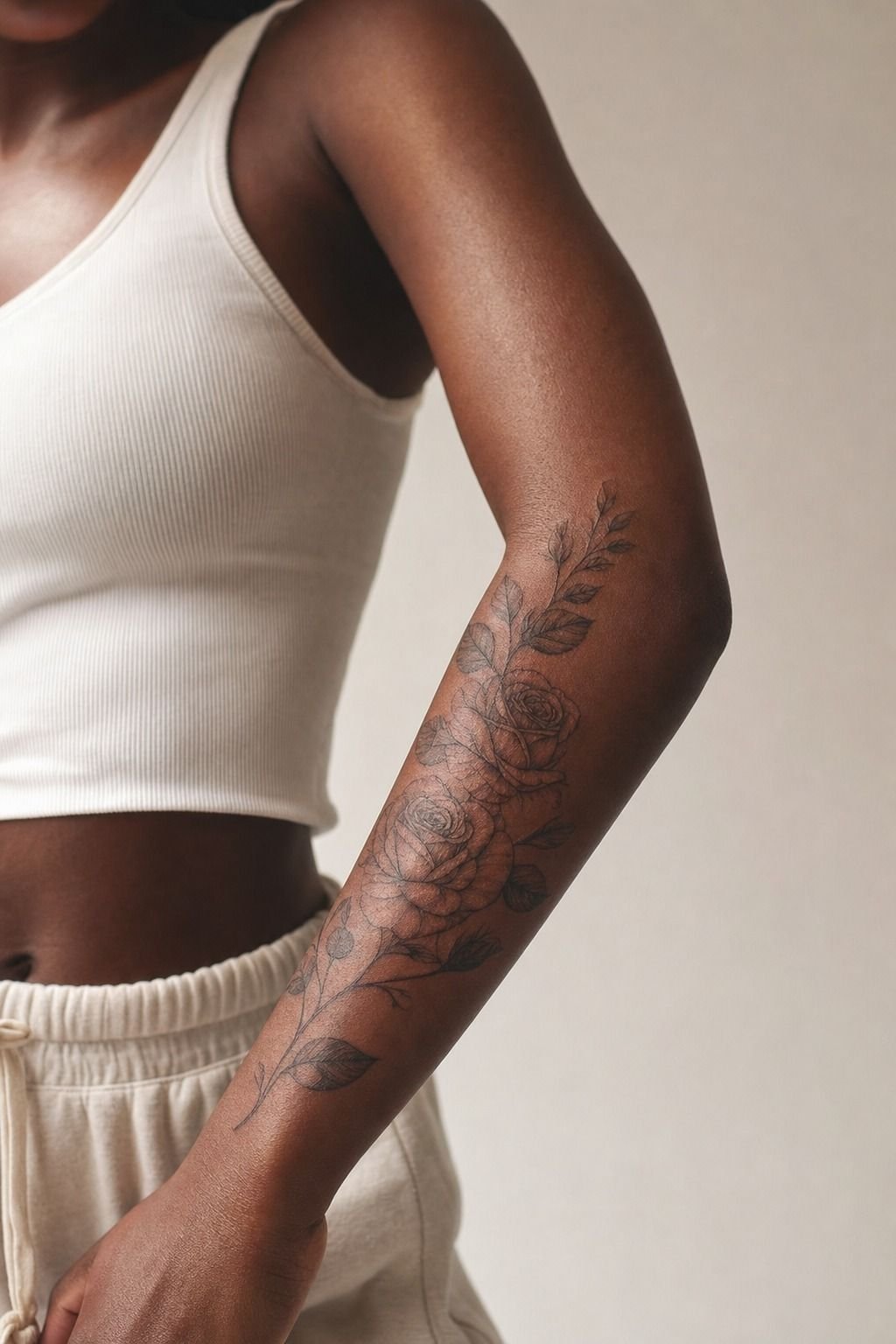
Build the quarter sleeve around one rose if you want softness with more staying power than people expect. On deep ebony skin, this style sings when the artist respects contrast and doesn’t get timid with the darks.
You need the outer petals light enough to feel soft, then a real anchor in the deeper leaves and center folds. Otherwise the whole tattoo heals flat.
I love this look in black and grey ink because a rose gives you shape, shadow, and line all in one subject. A good artist will use smooth grey wash, not scratch at the skin fifty times trying to fake softness. And yes, that matters more on darker skin where weak shading disappears.
A quarter sleeve rose piece can take 4 to 7 hours depending on how much background you add, but I almost always tell people to skip smoky filler clouds. One rose, two leaf clusters, maybe thorned stem work.
That’s enough! For another body area where florals hit differently, thigh tattoos for women shows how scale changes the mood.
7Geometric Forearm Quarter Sleeve Tattoo
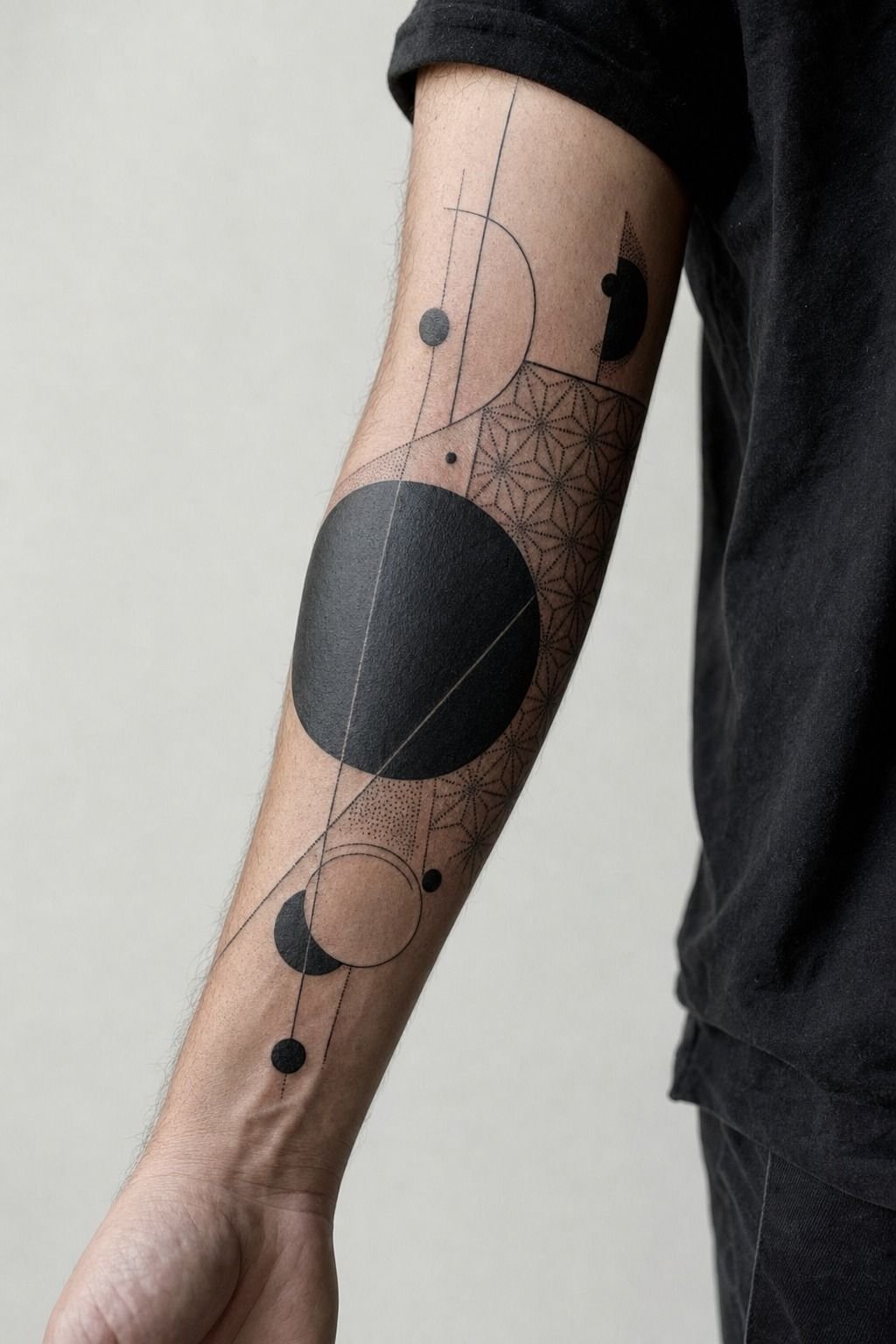
Use geometry when you want a sharper, cleaner read on the forearm without losing feminine flow. Stick to flat planes along the outer forearm and avoid bending a hard-edged pattern across the elbow crease, where circles collapse and squares warp into wedges. 3 to 5 mm line weight is the safe band: thin enough to feel modern, thick enough to survive ten years of sun.
8Butterfly And Vine Quarter Sleeve
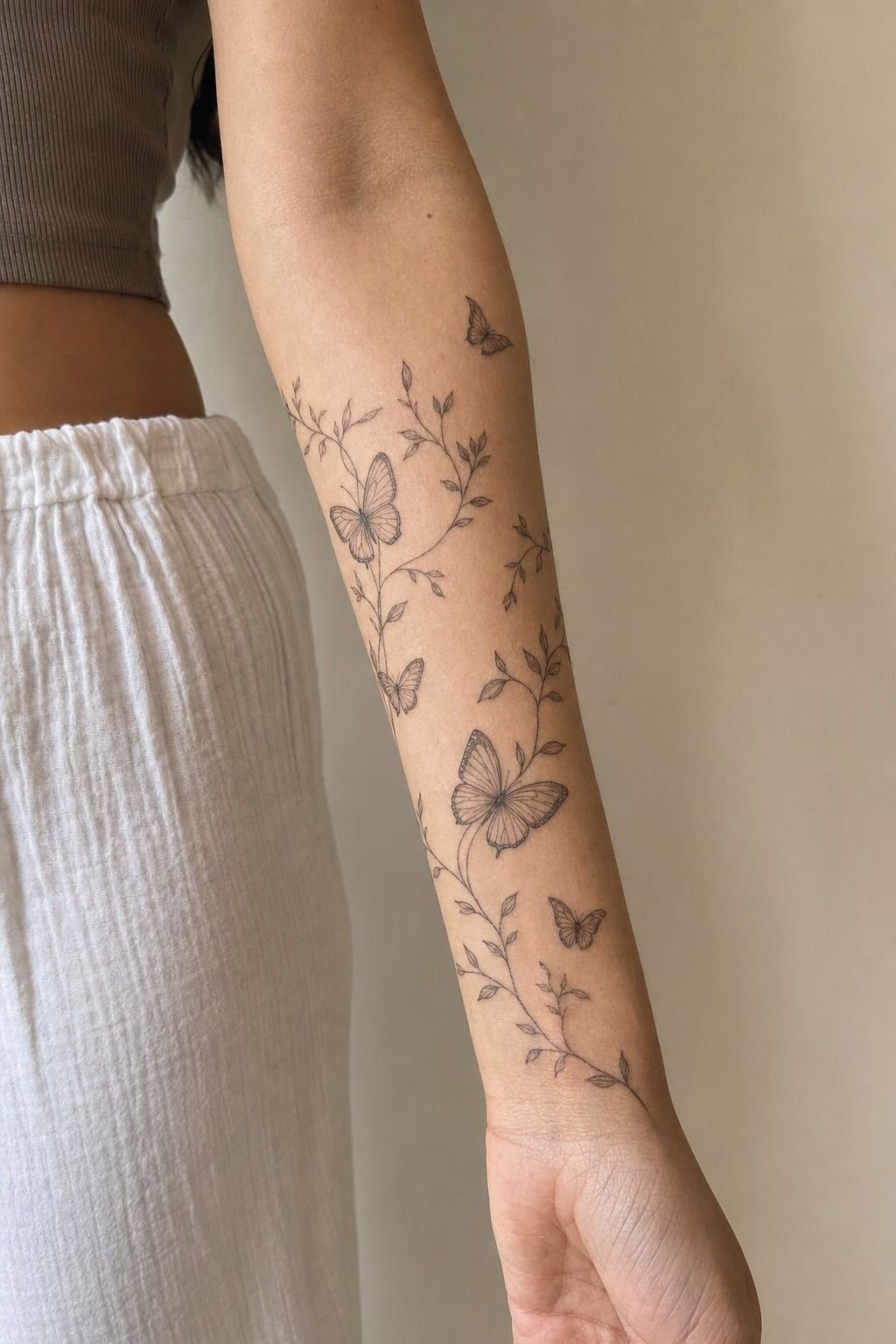
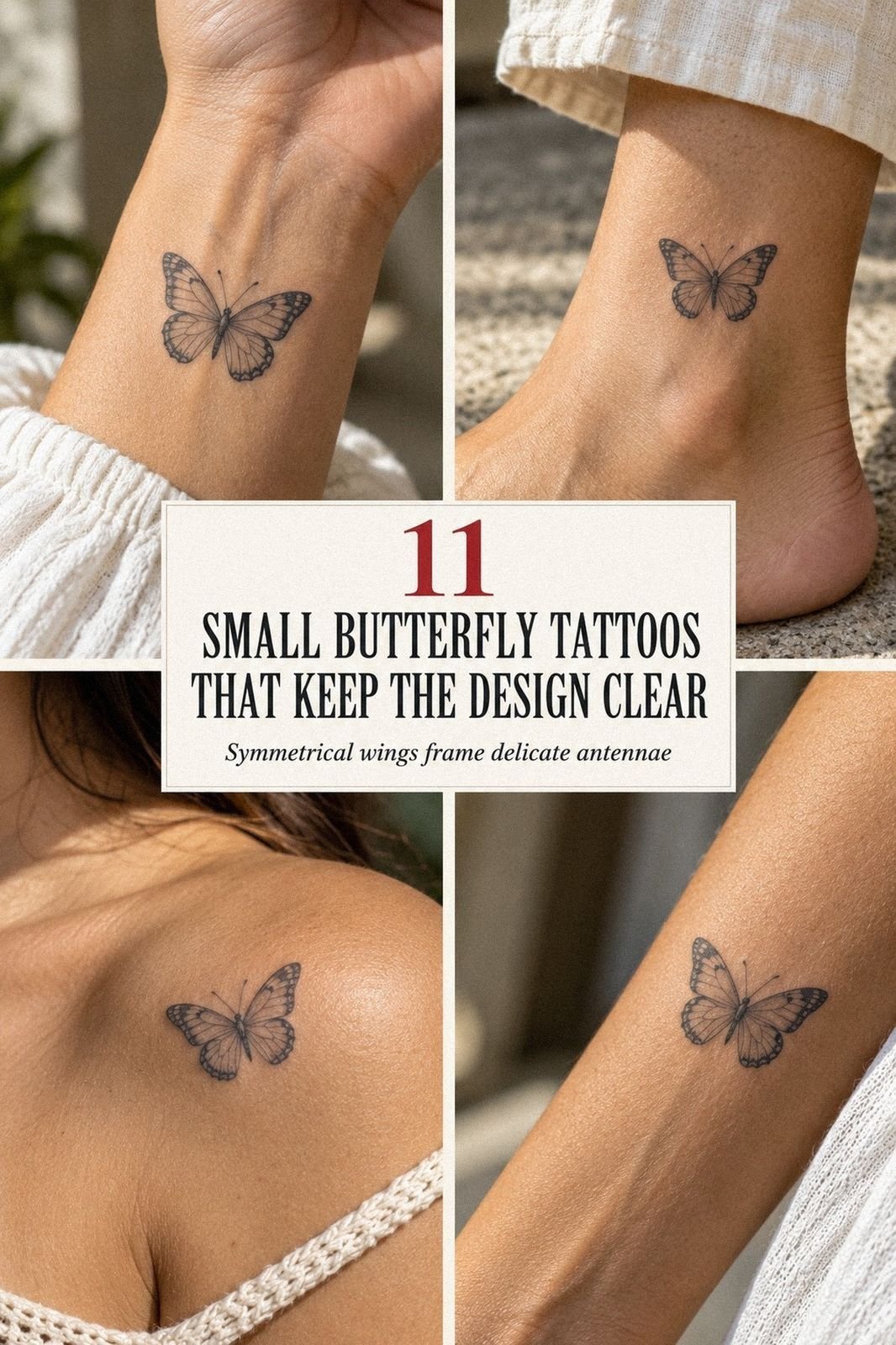
Mix butterfly wings with vine movement if you want sleeve work that feels feminine without turning syrupy. This look heals nicest when the butterfly stays simple and the vine does the traveling. On medium warm ivory skin, a healed fine line butterfly can stay clean if the wing pattern isn’t overbuilt.
But if every wing cell gets extra dots, curls, and micro stars, you’re asking for soup.
I prefer fine line needles for the wing outline, then a touch more weight in the vine so the whole quarter sleeve doesn’t float apart. One butterfly near the upper forearm.
One secondary vine crossing lower. Maybe two tiny buds. That’s plenty!
You want a tattoo that still makes sense when your arm is bent and moving, not only when it’s posed for a photo. And if symbolism matters to you, butterfly work can carry change or recovery without getting corny when the drawing stays restrained. For women comparing visible but softer placements, shoulder tattoos for women gives a useful contrast.
9Script And Floral Quarter Sleeve
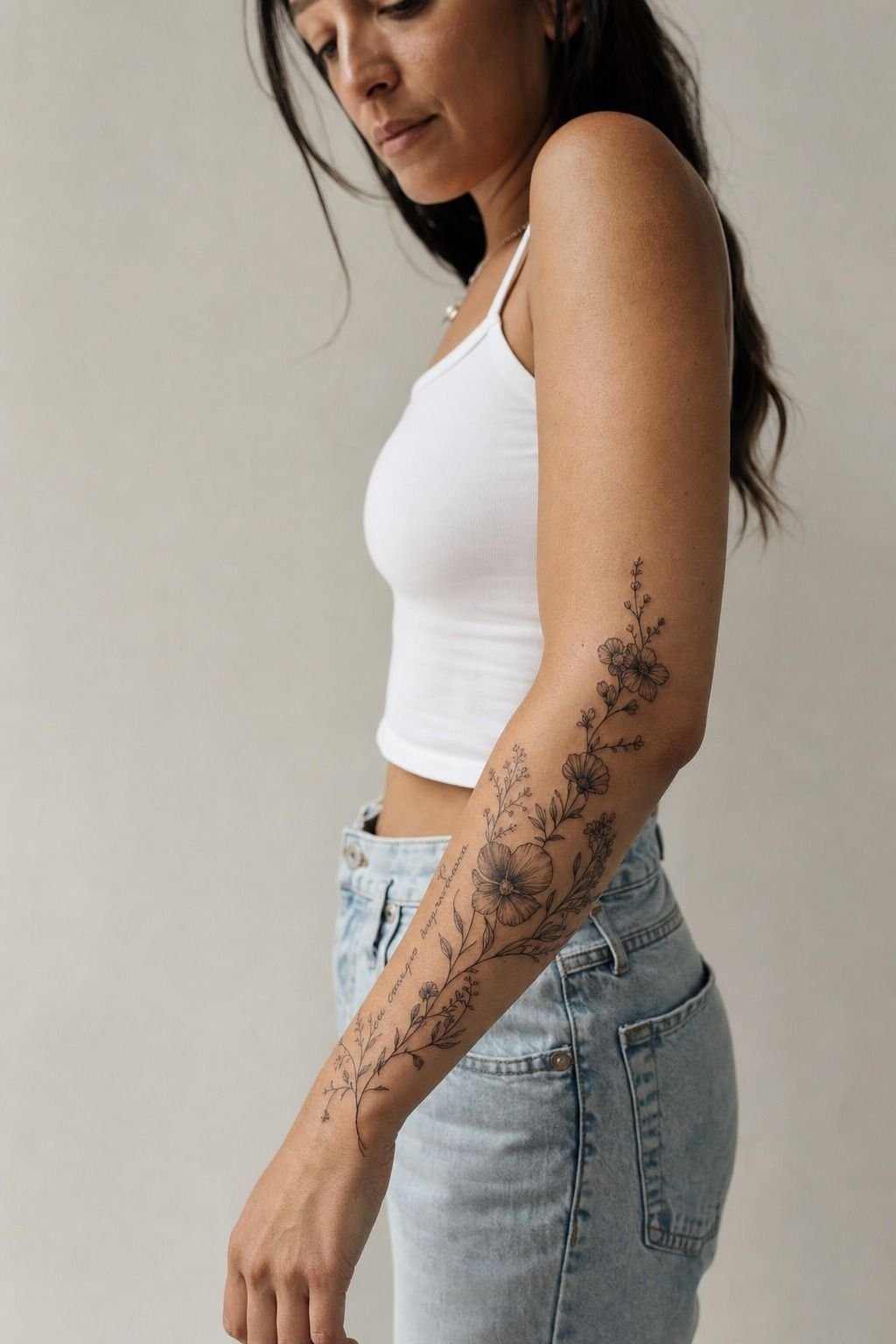
Frame the script first, then let the florals support it. The mistake I see constantly is the lettering getting squeezed between two flowers and shrinking to fit.
Set the script on its own clear band along the outer forearm where the skin is flat and the line can breathe, then tuck one or two florals above or below as accents. If the words won’t fit at a readable size, your quarter sleeve is too short, not your font.
10Blackwork Peony Quarter Sleeve Tattoo
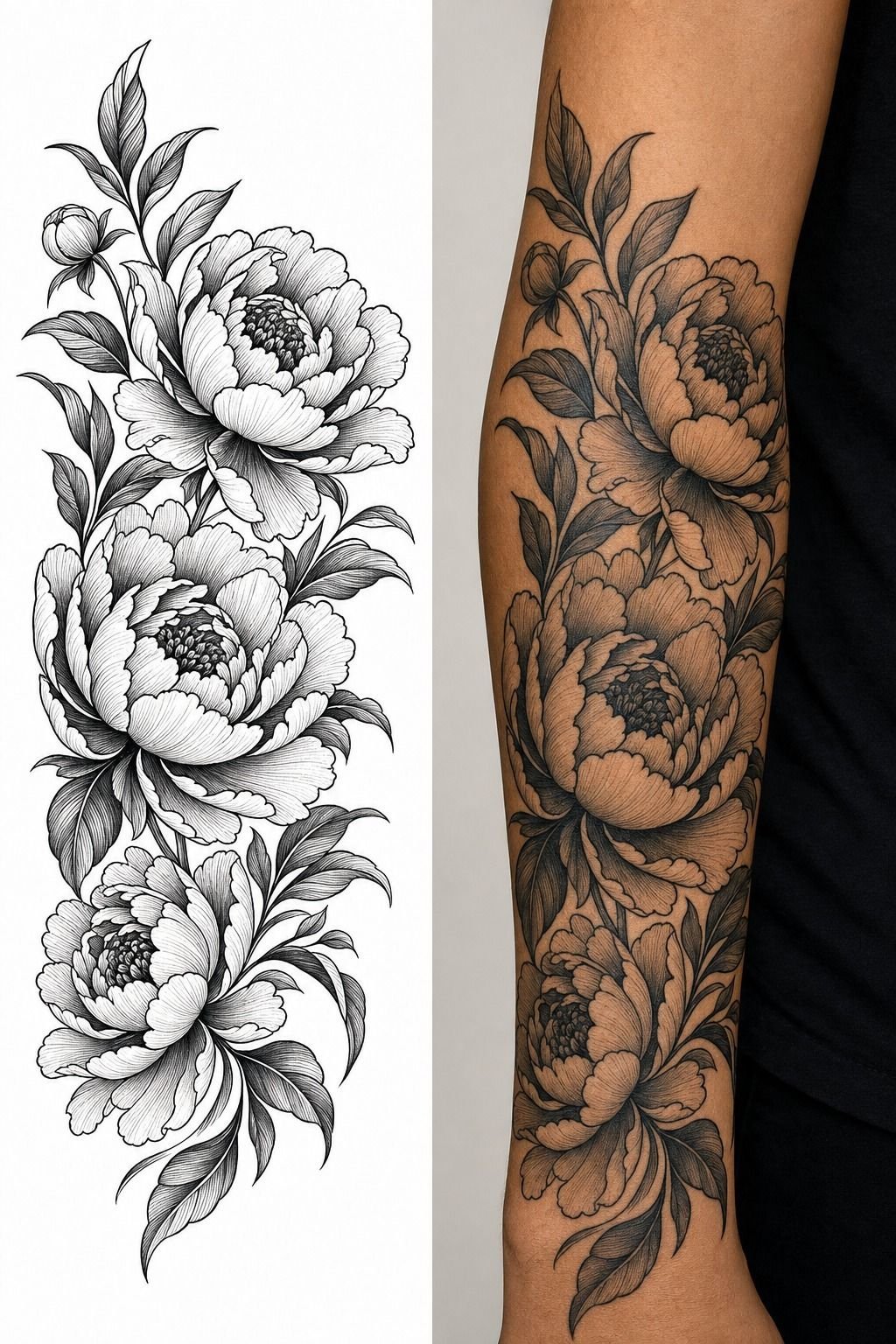
Compare the stencil to the healed result before you commit to blackwork peony work. That split view tells you more than a polished fresh photo ever will.
A strong peony should keep its petal direction, black mass, and leaf shape from paper to healed skin. If the healed side looks mushier, patchier, or smaller than the stencil promised, the artist may be overworking the skin or underpacking the black.
This is one of my favorite blackwork references even when it lands on the forearm, because bold petals and packed black ink read beautifully across skin tones. Packed black is your best friend for longevity, and blackwork peonies prove it.
But don’t confuse blackwork with heavy everywhere. You still need open skin breaks so the petals don’t fuse into one blob later. A quarter sleeve like this often needs 4 to 6 hours, maybe more if you want dense background.
If you’re tempted by bold coverage in a tougher zone, stomach tattoos for women shows how pain and healing shift when the body moves more.
11Watercolor Quarter Sleeve With Linework
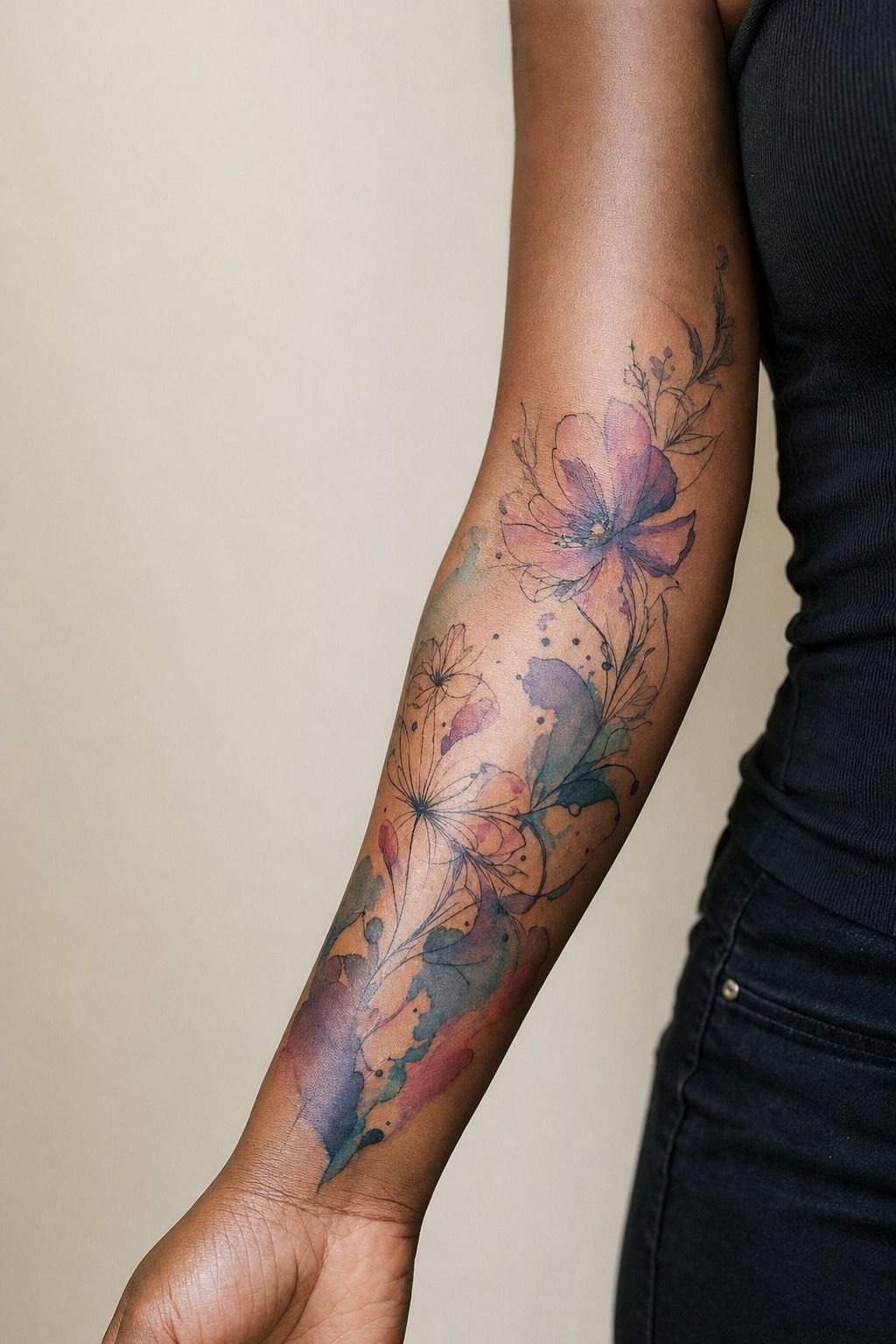
Keep watercolor anchored with linework if you want color without that washed-out, floating look. This matters even more on deep brown skin with a warm undertone, where contrast does the heavy lifting.
Good watercolor tattoos aren’t random splashes. They’re built on clean drawing, then pushed with selective color so the piece still reads after the fresh shine is gone.
For a quarter sleeve, I like watercolor pigment tones tucked into petals, butterflies, or abstract smoke behind black structure. Magenta, teal, violet, maybe a hit of golden orange.
But the black lines need to lead. Always.
A solid artist will pack the color in one clean pass with mags and stop before the skin gets angry. First few days, it’s an open wound, treat it like that. Gentle unscented soap. Thin layer of ointment.
No pools, no tanning, no gym friction. If you’re still torn between color and black and grey, 22 half sleeve tattoos for women worth the commitment can help you sort the commitment level.
The studio essay: how I actually build a quarter sleeve
I’ve watched a lot of clients overthink quarter sleeves because Pinterest flattens everything into one perfect angle. On a real arm, the issue isn’t whether the idea is feminine enough or trendy enough.
It’s whether the tattoo has a backbone. That’s why I build quarter sleeves with a bold-then-soft framework.
First, something structural that holds the eye: a rose center, a peony mass, a mandala ring, a script lane, a geometric block. Then the softer pieces can move around it without turning the whole tattoo into visual soup.
You don’t need a huge arm to make this work. You do need restraint. A quarter sleeve usually gives you just enough real estate to tell one clear story, maybe one and a half if the artist is disciplined.
When clients bring me six reference screenshots and want every petal, every butterfly, every tiny symbol, I slow the whole thing down. I print it. I wrap it.
I make them look at it standing up, not just on a screen. And yes, that changes minds all the time.
Before any of that, I run the clean-read rule. Step back, drop your phone, look at the design in a mirror at arm’s length.
If the main shapes disappear, the tattoo is too small, too busy, or too soft. Every concept on the list above passed that test for me.
None of them were pitched at me with a magnifying glass.
The other thing nobody respects enough is wear. Outer forearm, upper arm, and shoulder-adjacent skin are fairly forgiving. Fingers, hands, elbows, and anything brushing denim or gym gear all day are a different conversation.
Fine line can heal nice, but not if it’s living in a high-wear zone and drawn too small. Bold will hold.
Black is still your best friend. Color is spice.
That brings me to the two-zone placement plan. Split the design into one hero zone and one quieter support zone.
Outer forearm with upper side wrap is the easiest version to wear and heal. But the inner forearm can still work if you accept a little more spice and a little more fade risk from friction. I wouldn’t force every idea into the same map.
Florals want flow. Geometry wants flatter planes.
Script wants calm skin and enough width to breathe.
And honestly, artist choice beats concept choice. A decent idea from a specialist heals better than a brilliant sketch from a scratcher. Look for healed photos. Look for confident linework.
Look for shading that stays soft instead of patchy. If you want Pinterest exact, I’m probably not your artist. References are for vibe. Your arm needs a design that fits your anatomy, your pain tolerance, and how you want the piece to age.
That’s the grown-up version of tattoo planning, and it saves you money later.
Here’s the quick reality check in numbers.
What People Always Want to Know
How much does a quarter sleeve tattoo for women usually cost?
About $300 to $1,500 is common in the US, depending on size, artist, and whether you finish in one session or two. The biggest cost driver is time.
– Shop minimums around $50 to $100 – Hourly rates around $100 to $250 – Detailed linework and color, more hours
Is a quarter sleeve tattoo for women a good idea for a first tattoo?
Yes, it can be, especially if you keep the design edited and place it on the forearm or upper arm. Those zones are easier to sit through than ribs or feet. See forearm tattoos for women if you want a placement-heavy first pass.
– Clear visibility during healing – Lower-wear skin than hands – Enough length for the design to breathe
How do I choose a tattoo artist for a quarter sleeve for women?
Pick the artist whose healed work matches your style, not the one with the prettiest fresh photos. Healed linework tells you who is clean and who is guessing.
– Portfolio with healed examples – Fine line, blackwork, or watercolor specialty – Studio hygiene, consent, calm communication
How much does a quarter sleeve tattoo for women hurt?
Most quarter sleeves land in the tolerable range, but parts near the wrist, elbow, or inner arm get spicier. Lines feel sharper, shading feels like a dull burn.
– Outer forearm, fairly chill – Inner forearm and ditch, hotter – Tap out for five, then reset
How long does a quarter sleeve tattoo for women take to heal?
Surface healing usually takes 2 to 3 weeks, and the tattoo can take 2 to 3 months to fully settle. Gentle aftercare keeps the skin from getting chewed up. The healing notes in back tattoos for women apply here too.
– Unscented soap, light wash – Thin ointment layer, then simple lotion – No sun, pools, picking, or heavy gym friction
What’s the best placement for a quarter sleeve tattoo for women?
The outer forearm is my favorite for first-timers because it shows well, wears well, and gives you flatter skin for cleaner linework. Upper arm is a close second if you want easier hiding. If you want more visible-versus-private contrast, compare shoulder tattoos for women and side tattoos for women.
– Outer forearm for flow and visibility – Upper arm for softer wear – Skip hands if you hate touch-ups
The forearm-flow pick
If I had to pick one, I’d start with the Fine Line Floral Quarter Sleeve Wrap. The wrap path runs from just above the elbow crease, curves around the outer forearm, and tapers toward the inner wrist with the vine trailing last.
At roughly 6 inches tall, it gives the hero bloom room to breathe without crushing the secondary sprig. The fine line needle weight keeps the piece soft on fair skin while the heavier vine stem does the structural work, so the whole thing reads across a room in ten years instead of dissolving into dots. Pin that idea for later and compare it with forearm tattoos for women.